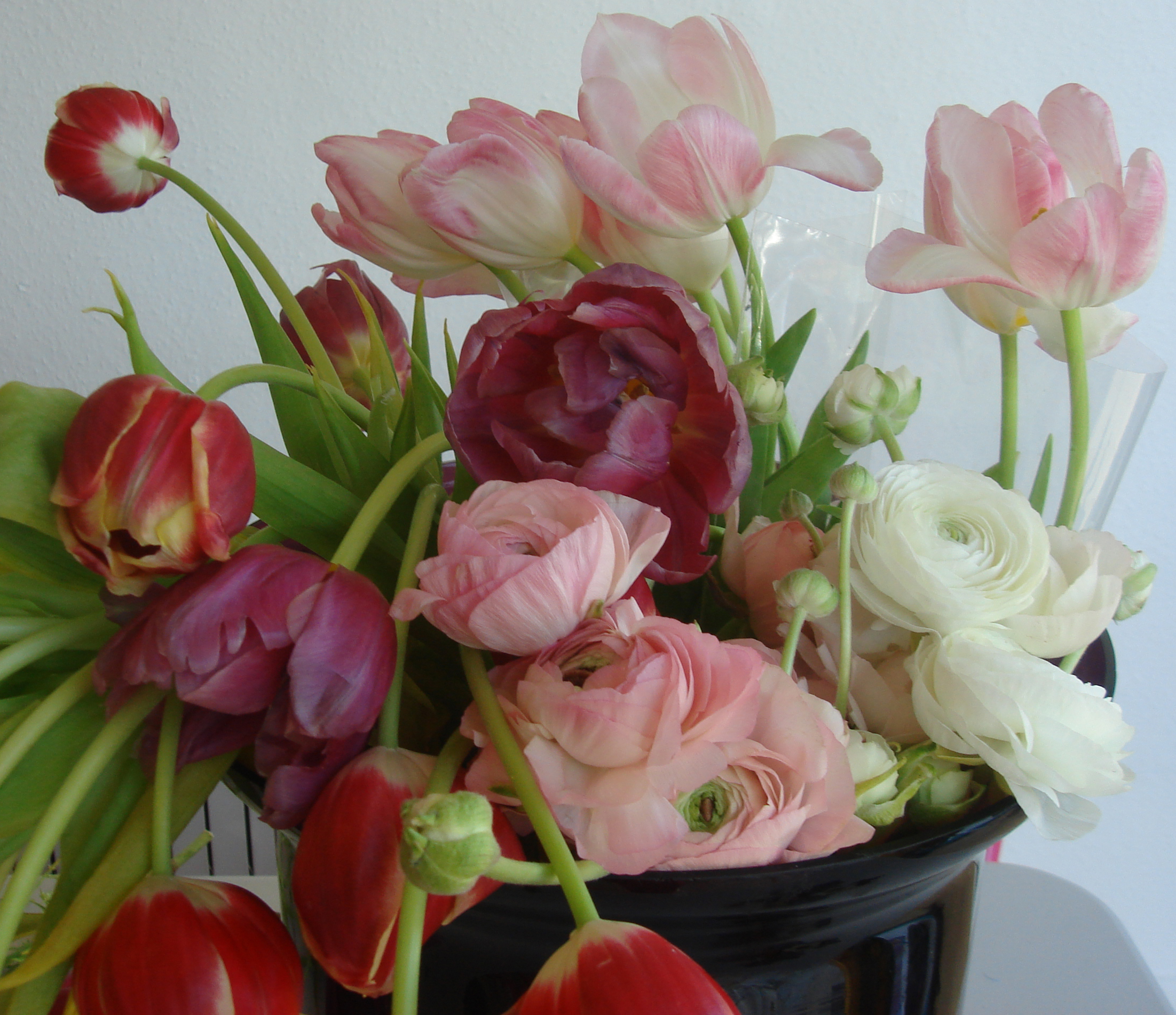
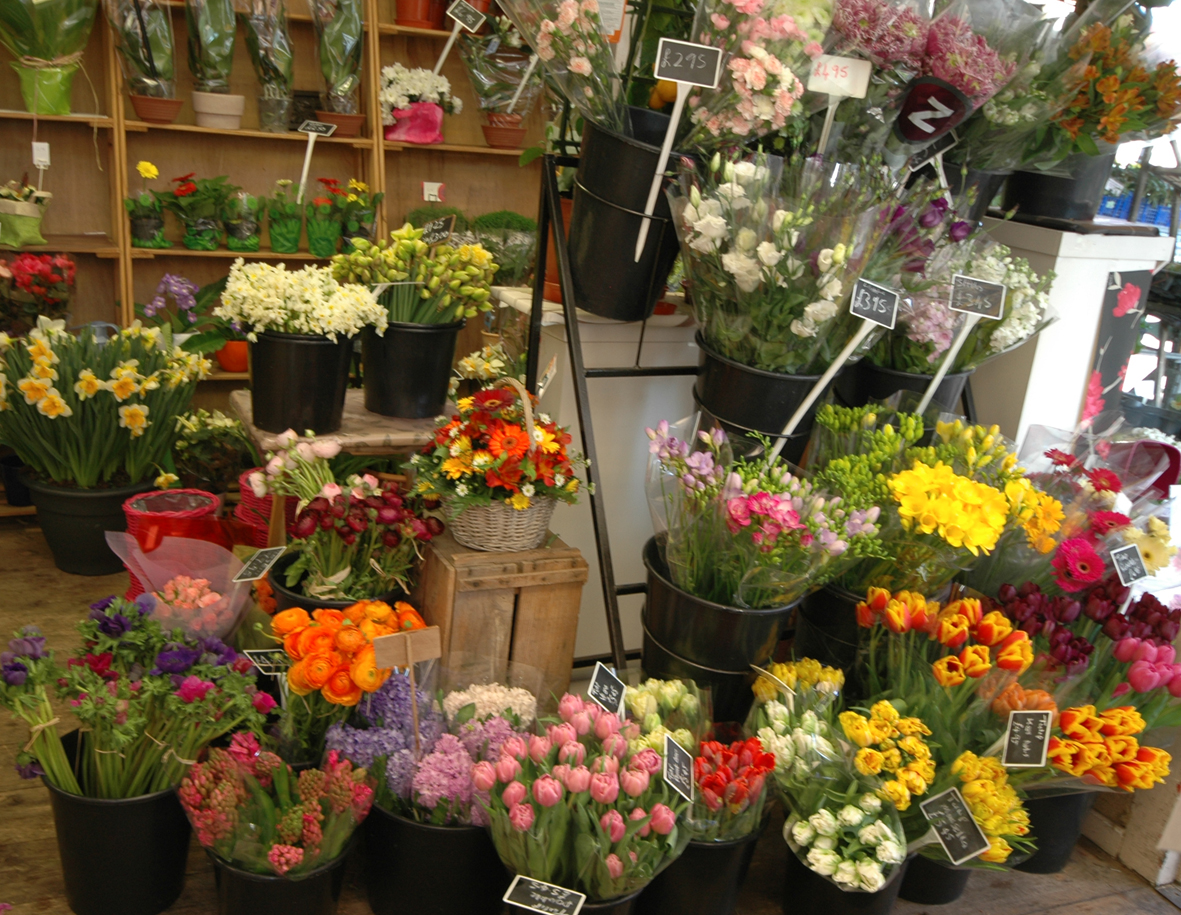
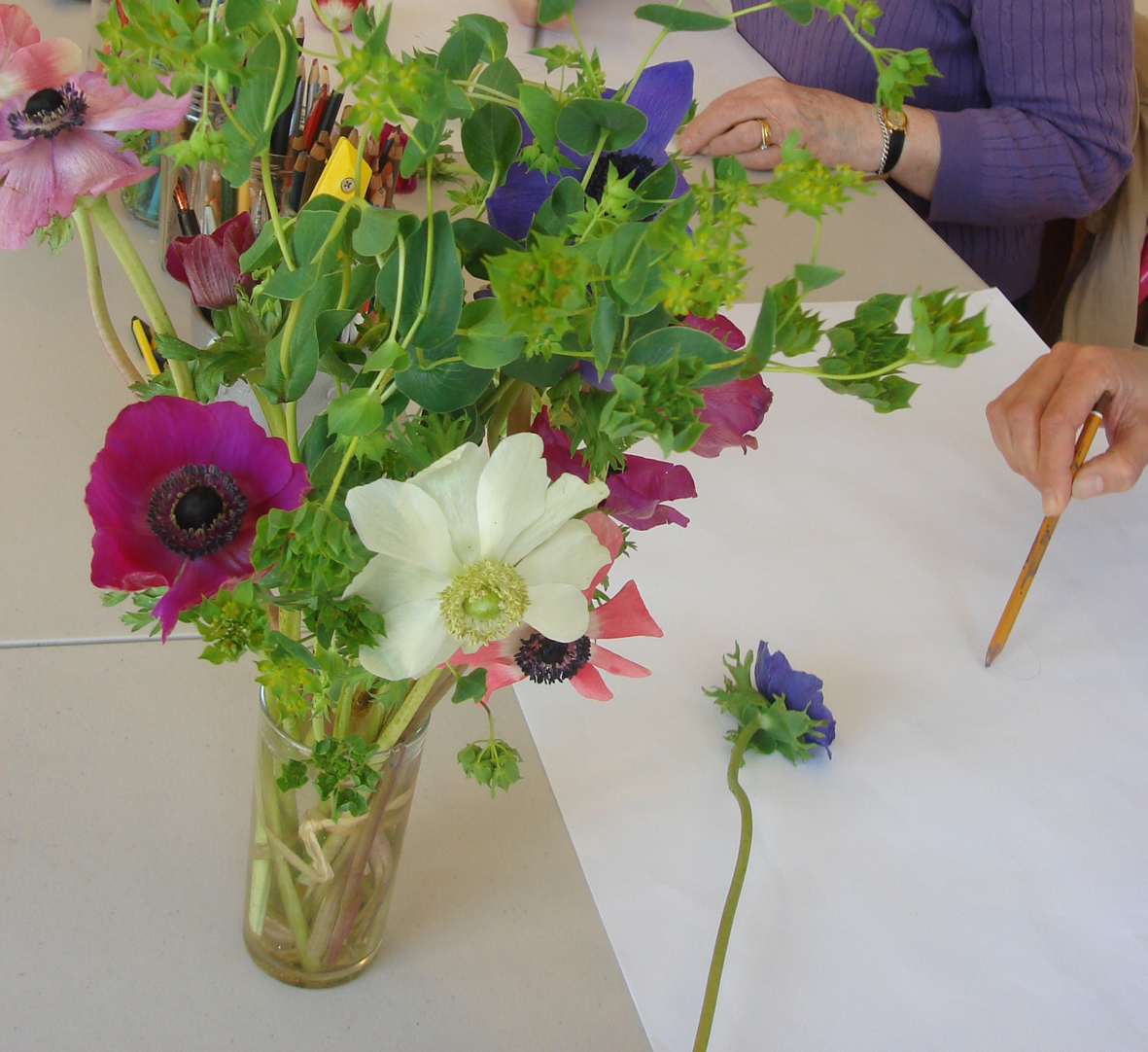
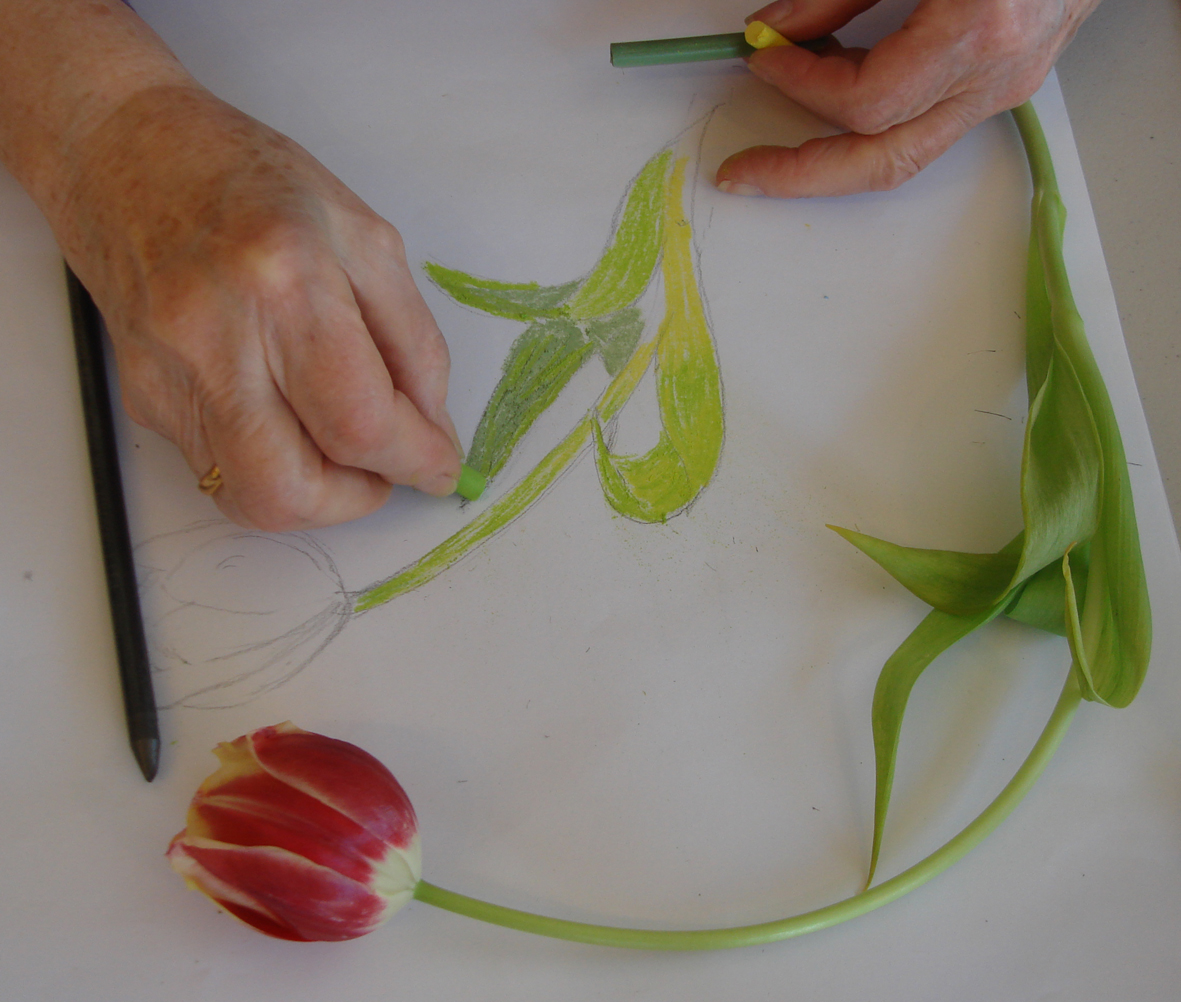
I have just given my first “Flower Drawing for Stitching” class at Heart Space Studios – to just 2 people – still early days for the new textile workshops but I have committed to teaching everyone, regardless of numbers, for the taster days, ie. one day workshops to whet the appetite for the longer 6 and 10 week classes. But the first thing I had to do was to go and buy the flowers – always a treat. I asked the local florist, Barry Toogood, for some dying tulips and he didn’t look at all fazed but immediately went to the back of the shop and produced 2 lovely bunches of floppy stemmed tulips – for free.
I also bought, ranunculas large pinks and whites, and a bunch of my favourite florists flowers ( on account that I cannot grow them myself) anemonies – in MIXED COLOURS – these are difficult to find now as the style police seem to have gained control over anemone growers so that they are often sold in bunches of one single colour – what a ludicrous thing to do – surely what everyone loves about anemonies – apart from the sooty black centres, the undulating stems and their ruff of brilliant green petals – is the wonderful mixture of glowing clashing colours; magenta, purple, crimson, palest mauve, softest pinks and whites suffused with lime and pistachio.
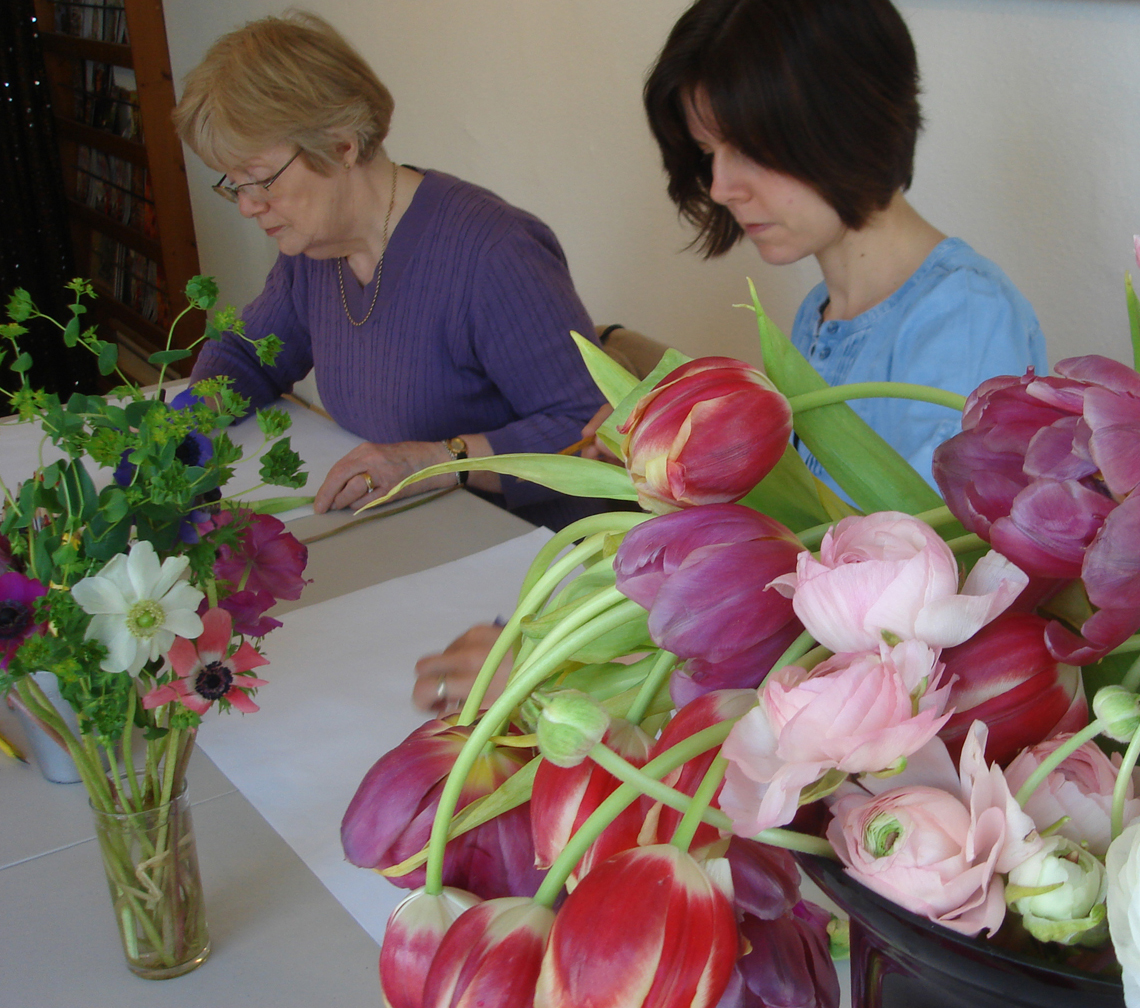
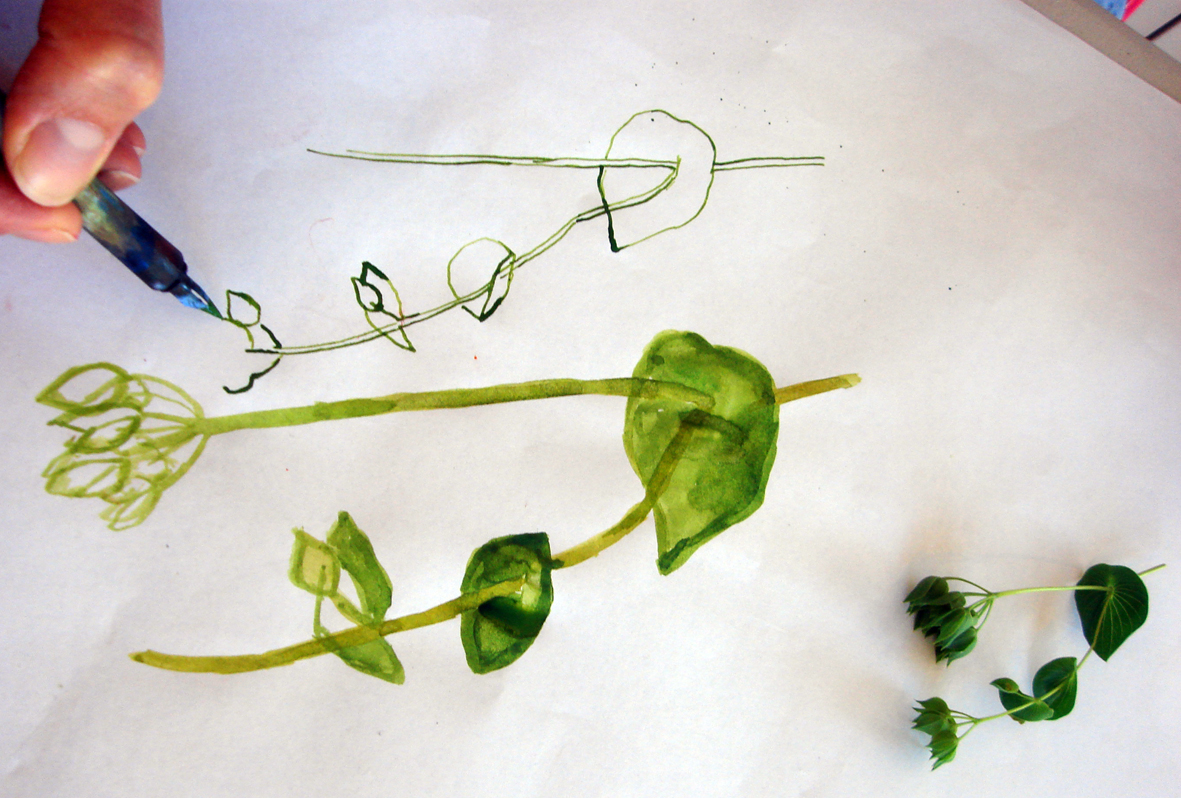
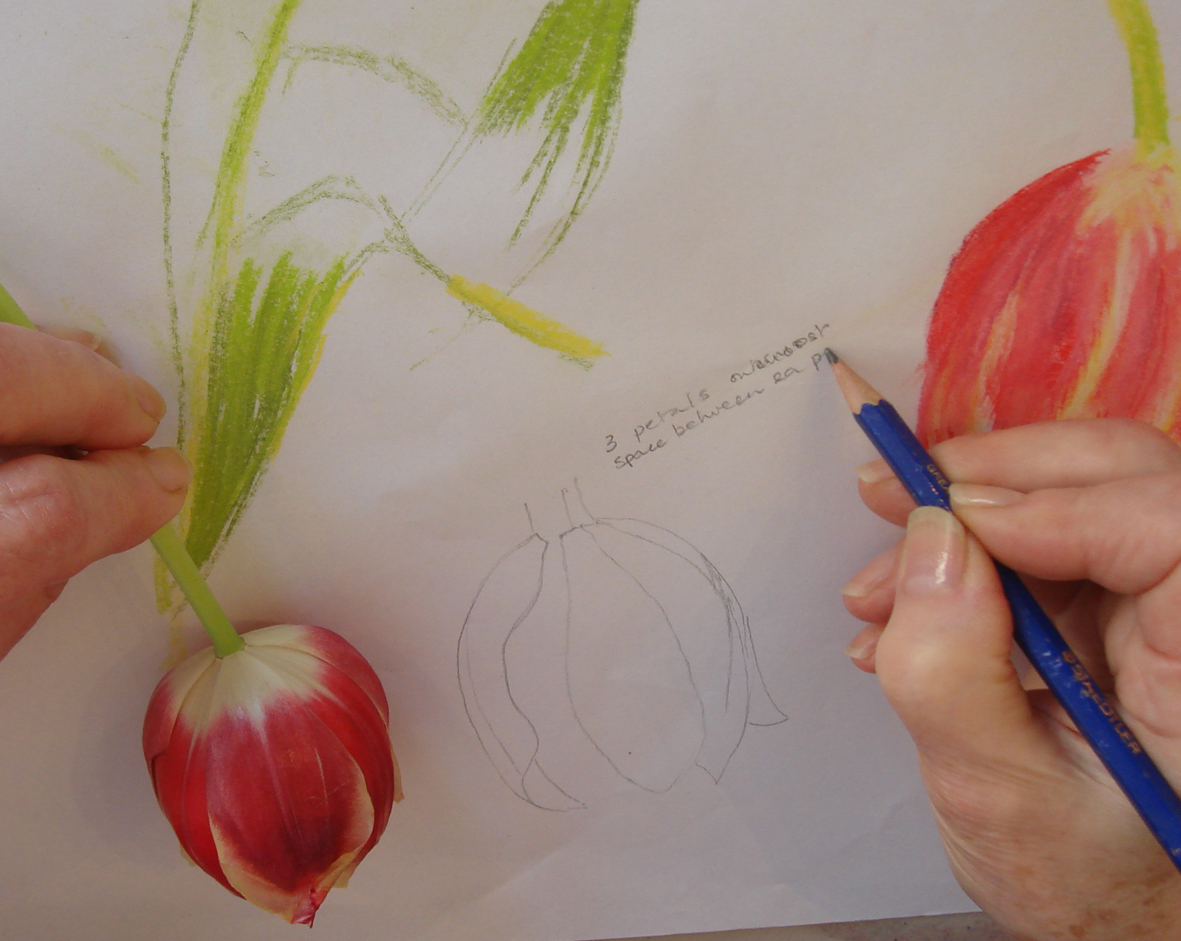
My two students had totally different attitudes to the flowers and the way they worked; but they both started off in exactly the same way when I asked them to choose one flower and just draw it for 10 minutes ( I always like to see just what people do when left alone, it tells me so much even though everyone is always very nervous when they start to draw in classes).
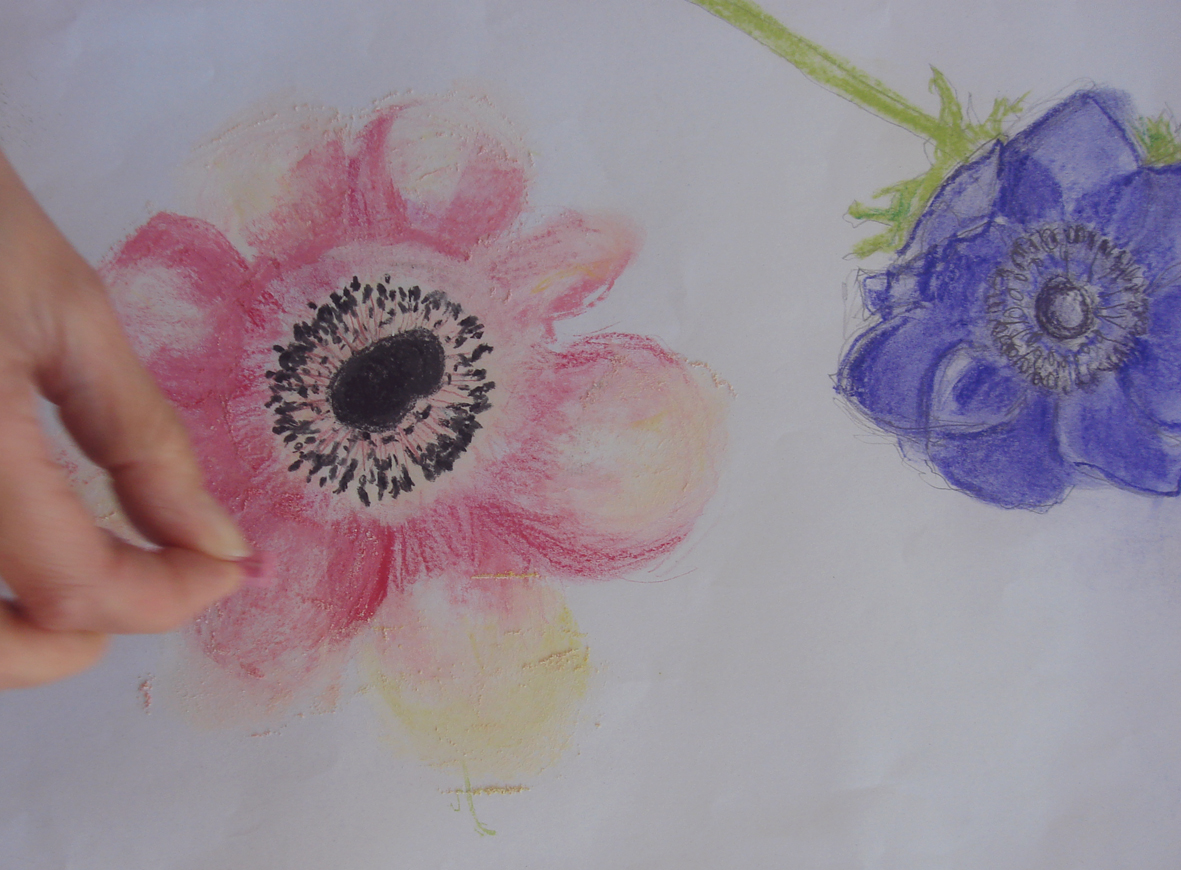
And 99% of people I teach always pick up a pencil, draw a shape and fill it in with colour, which is a waste of time and deadens the drawing by “filling in syndrome”
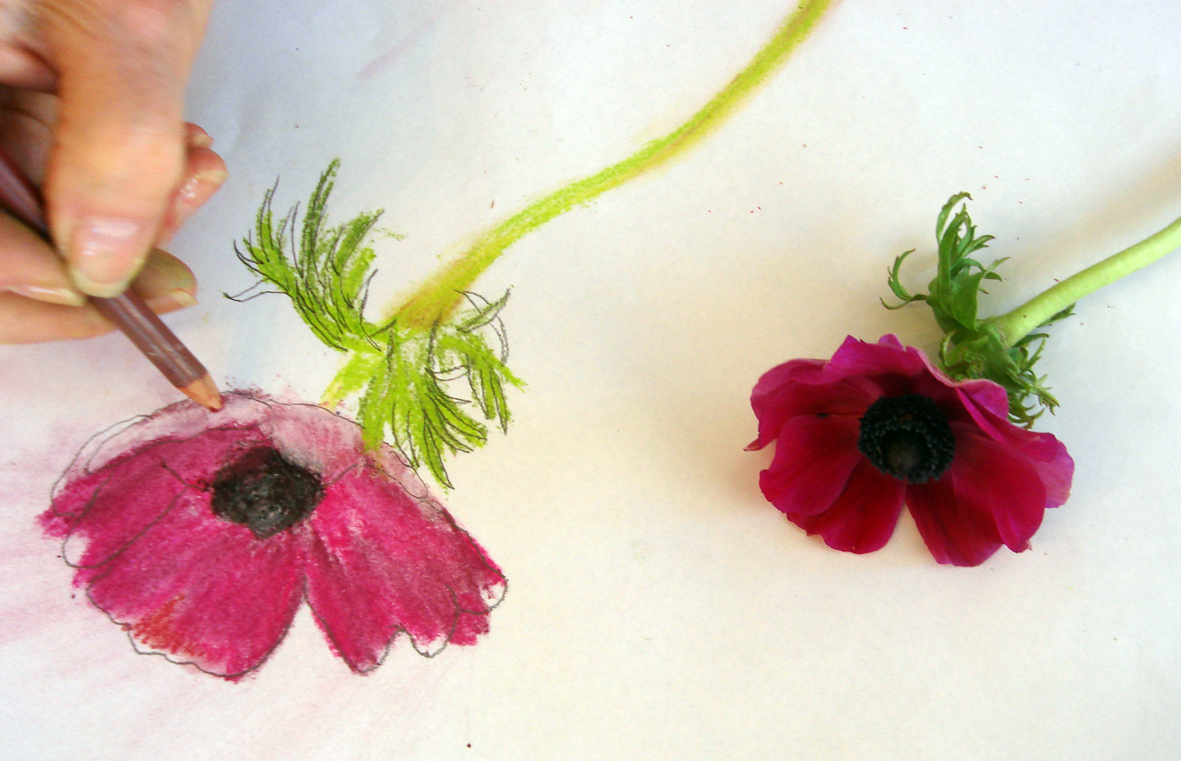
Occasionally, very occasionally, the colours are picked up first but I always start with the colours – I mean – what is your first response to most flowers, apart from scent which we aren’t dealing with here? So my first exercise in drawing classes is usually colour blocking then drawing outlines.
I must admit they were both very diligent with my ‘strict mistress’ teaching style, and were soon developing lively studies to develop embroideries later.
Choosing different media to suggest different surfaces also controls the scribbly or nervous “one of these lines must be correct” type of drawing.
In the afternoon each student had to choose a drawing to stitch…and put the flowers away….this really tests the observational studies.
Ann White carefully made some line drawings and notes about petal sequences and the results of her studies carry her through to the applique stage where she was able to use her lovely marbled silk that she had brought with her from another course.
I learnt a lot from this class myself, timing is essential if students are to achieve a decent piece of work in a day…it proved impossible to finish such an intensive set of research and sampling in the time, even though these students were experienced before they came to the class – so I need to adjust my way of working for the short classes but observational colurs and line drawing will always remain the starting point for flower embroidery.
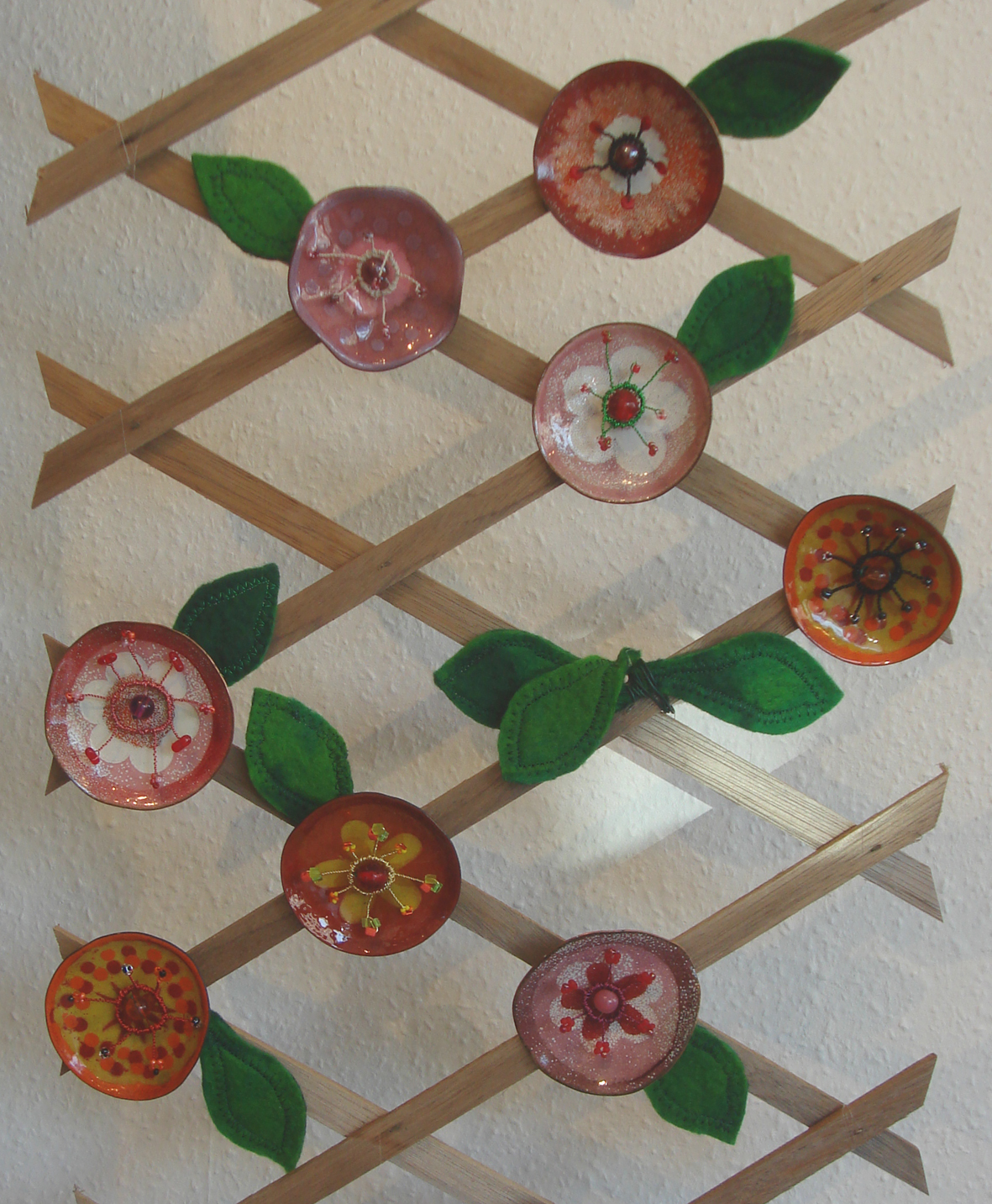
But one of the real joys of teaching in this new studio, is meeting like-minded people, and to prove this point Sue brought a piece of vitreous enamel flowers on a trellis that she had made at another series of classes in Bristol. I was so impressed and delighted and not a little envious of her work – as it seems much wittier than my own enamel flowers – that they now hang in the Heart Space Studios window.
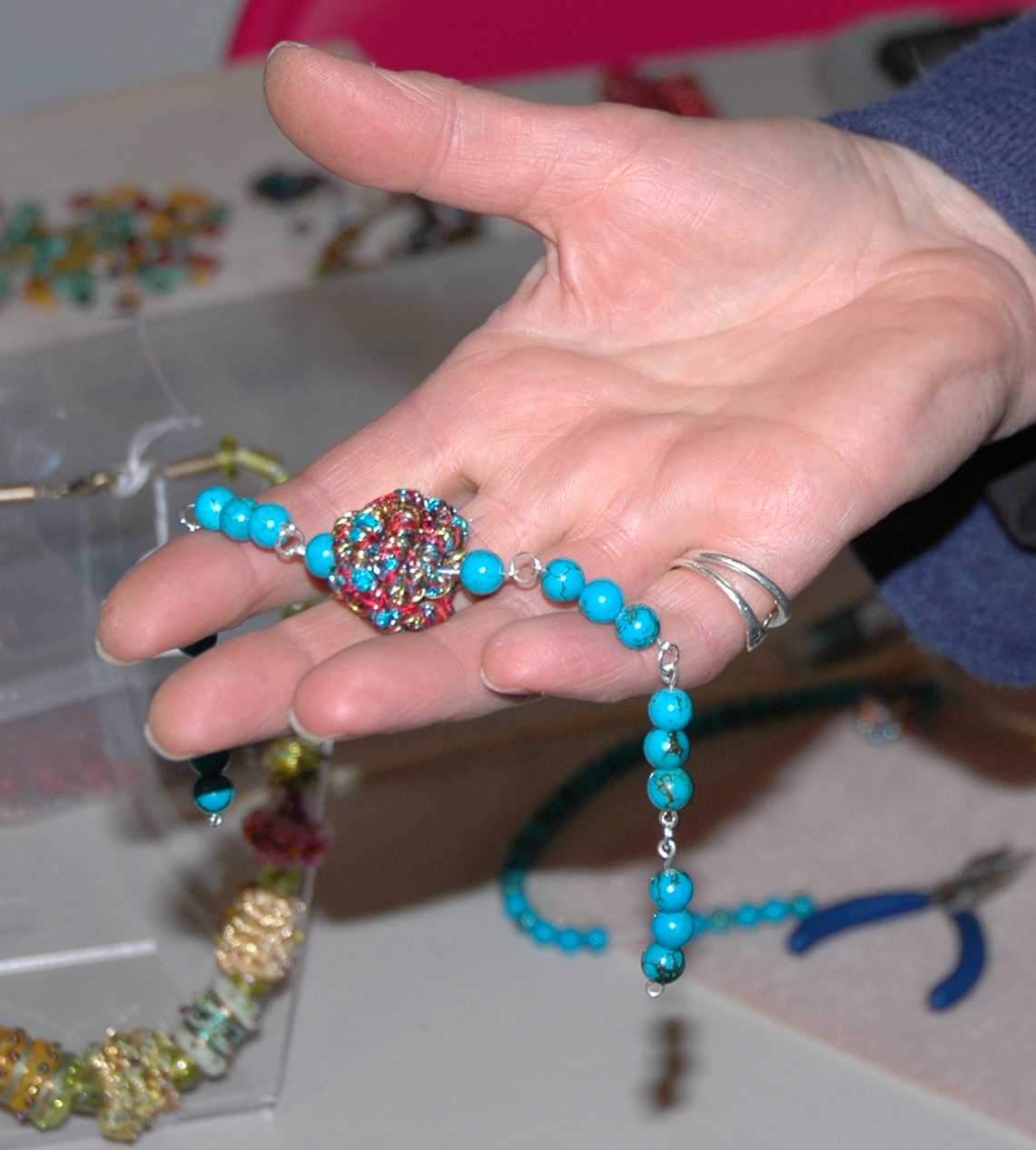
I have recently been interviewed at Fairfield School in Bristol for possible inclusion in a programme for the BBC School service, where local news and events are recorded and made into broadcasts by pupils throughout the country. I was being interviewed by 4 teenagers who were asking me questions about Heart Space Studios and what we did there. I had taken samples of what we were making, a felt vessel and some beads that had been made at the workshop with Patricia Brownen one morning and then developed into jewellery by Sharne Lott in the afternoon.
beaded bracelet made in one day at Heart Space Studios.
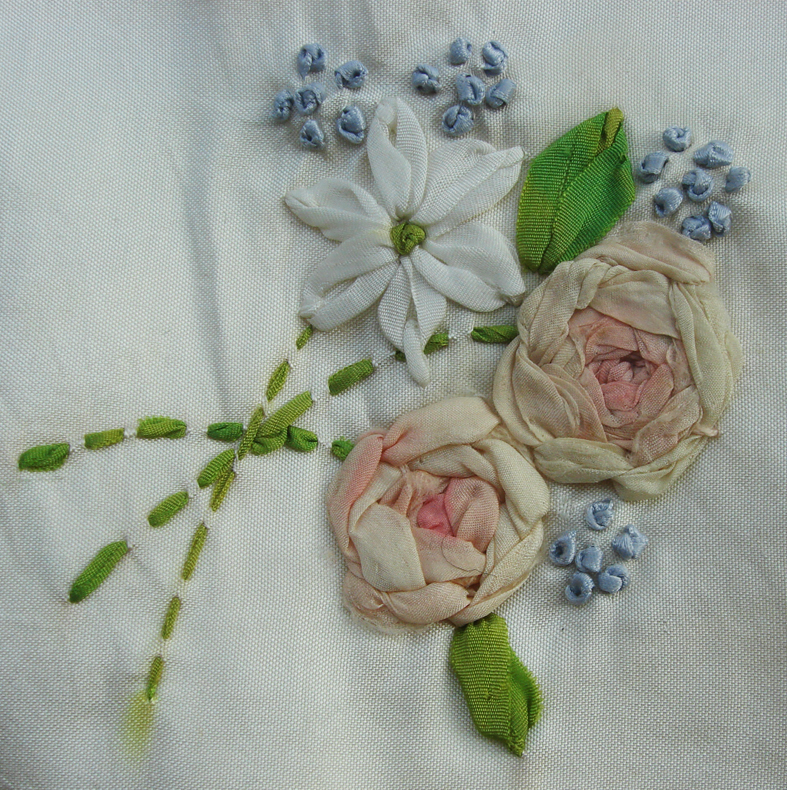
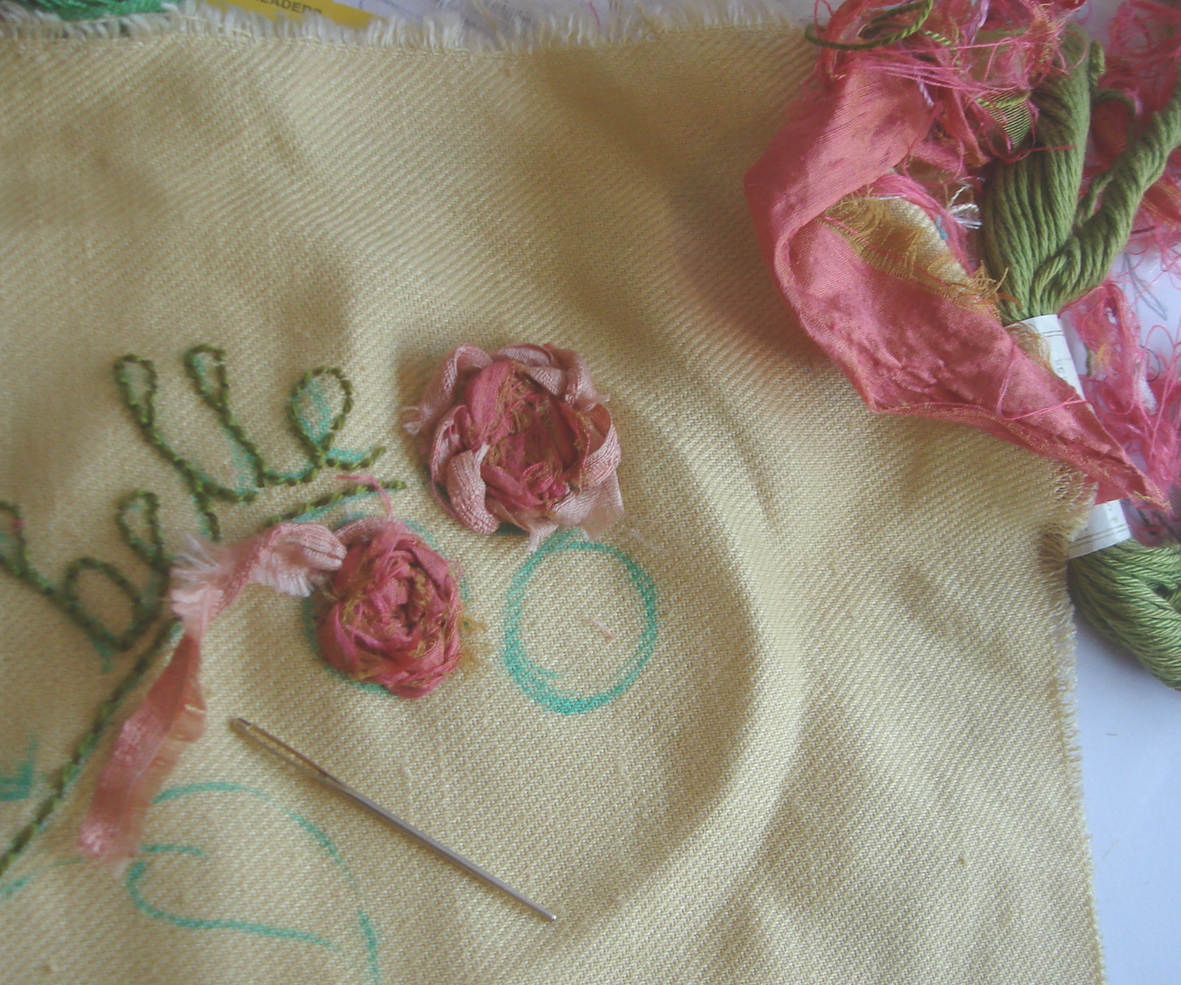
I also took some old fabric designs of mine which I thought would make a good idea for a workshop. I had been reminded of them last week in the Sew Personal workshop ‘ stitching messages’ when I was teaching people how to stitch all kinds of writing into fabric. One of the students found an old satin embroidered fabric in my stash and wanted to adorn her message with the woven roses.
sewing ribbon roses into written message
fabric stash at studios with a vintage embroidered rose material
I asked the pupils who were interviewing me which of the things they would like to make given the opportunity – market research – and they were intrigued by the fabric samples
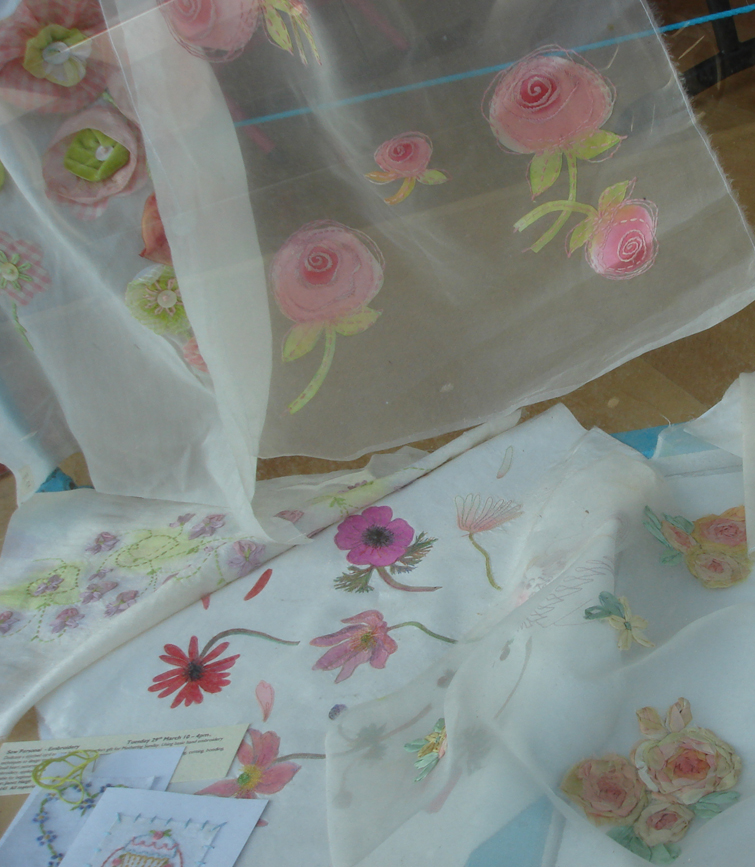
my embroidered flower fabric samples
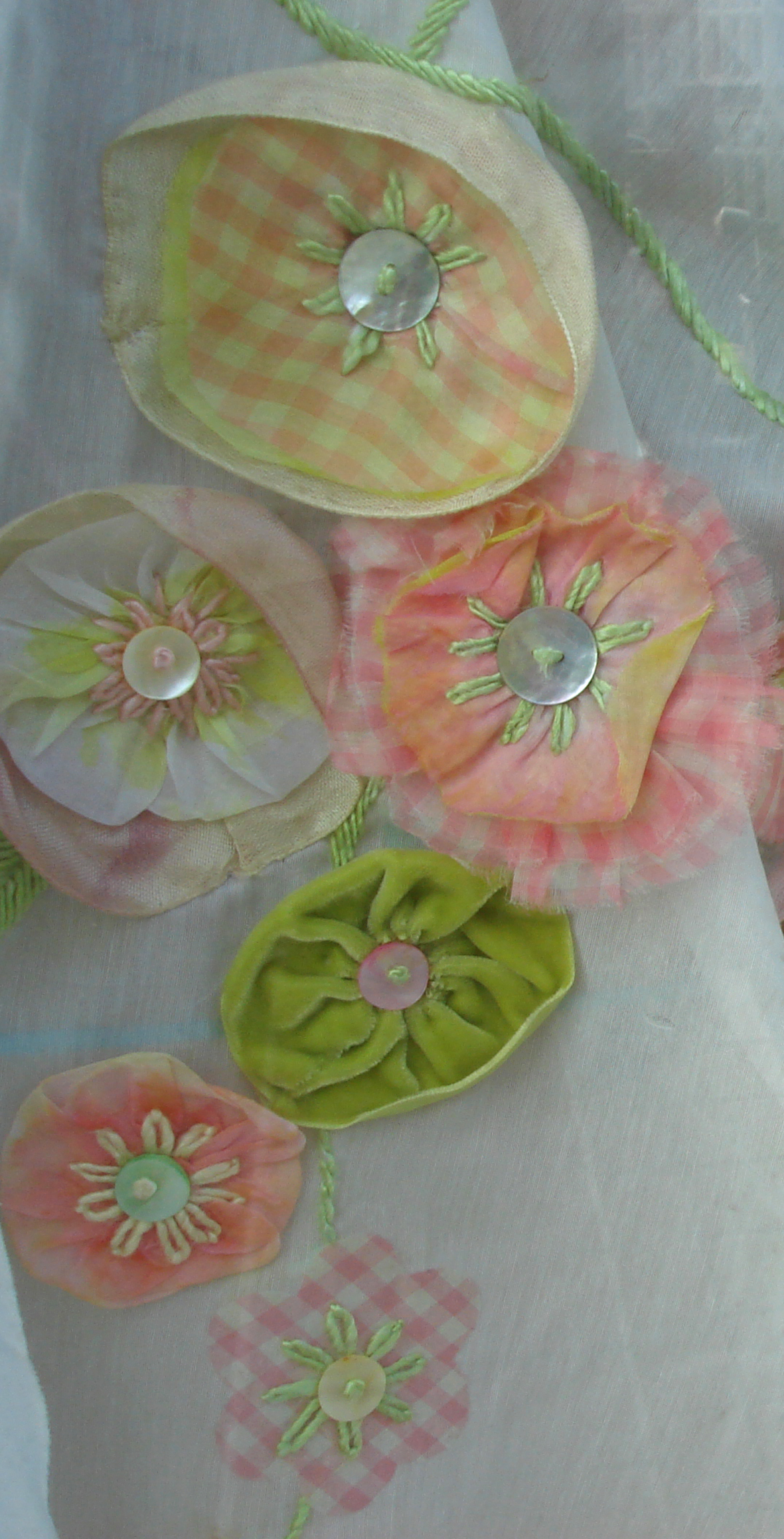
detail of applique flower fabric
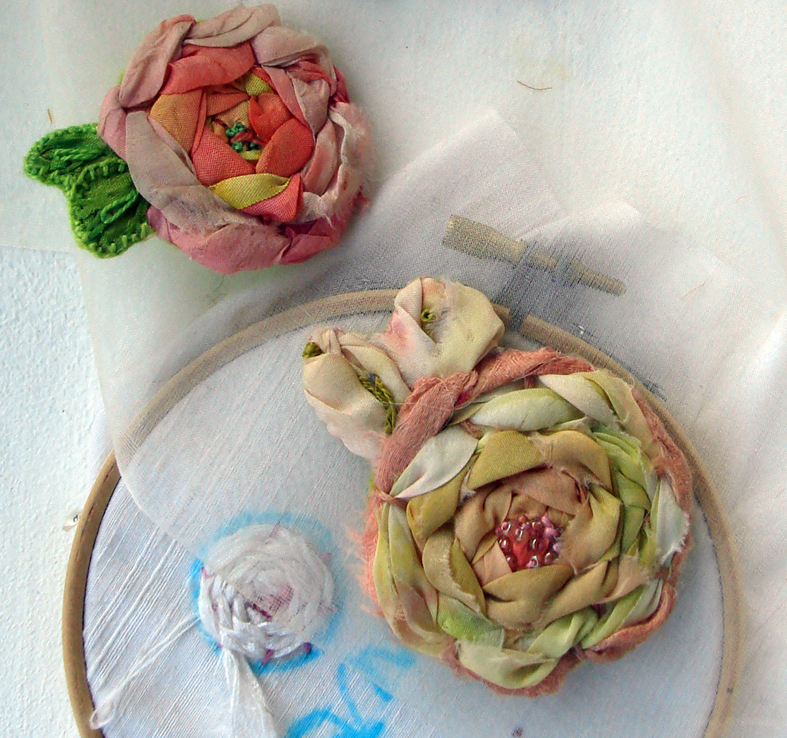
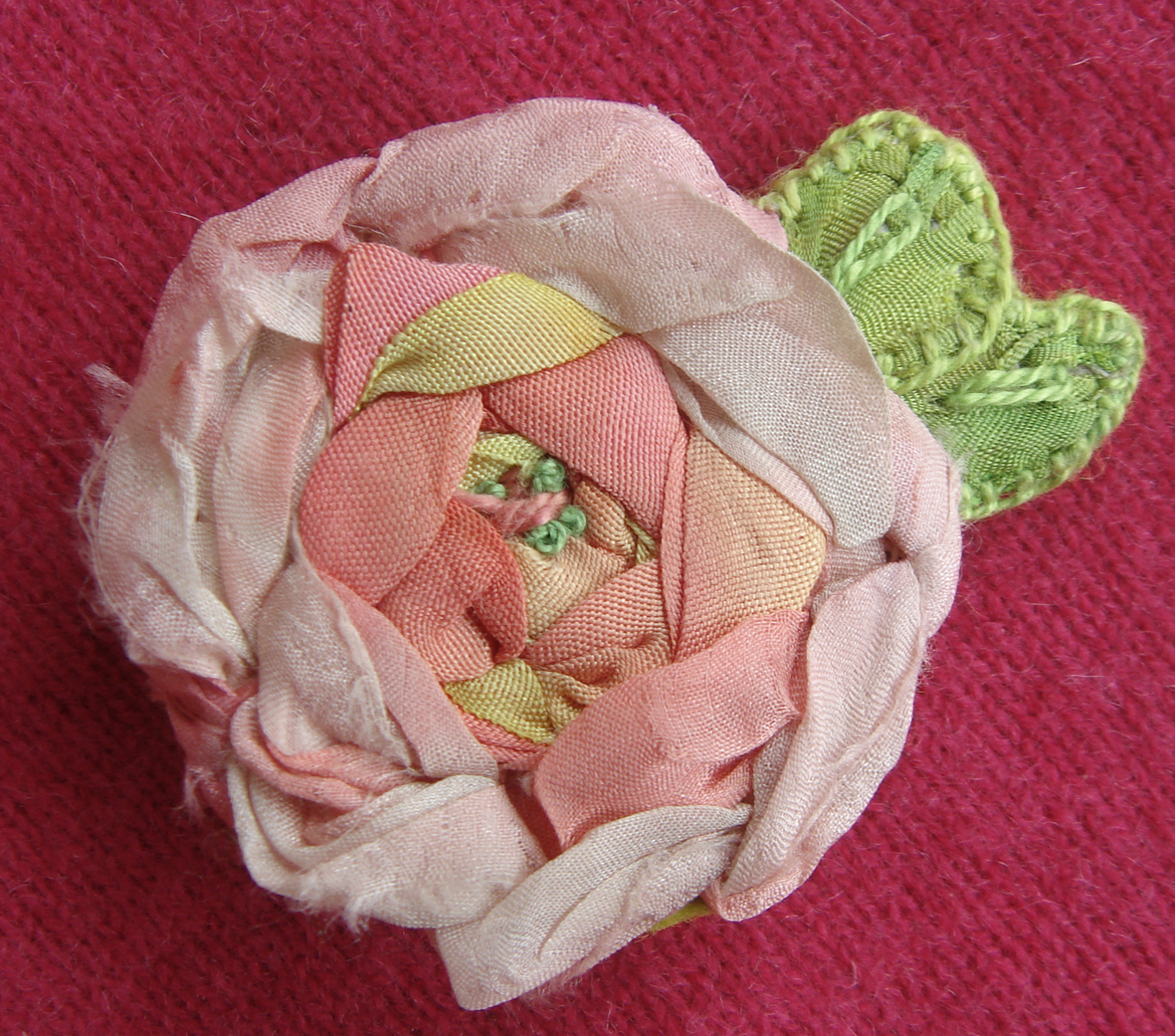
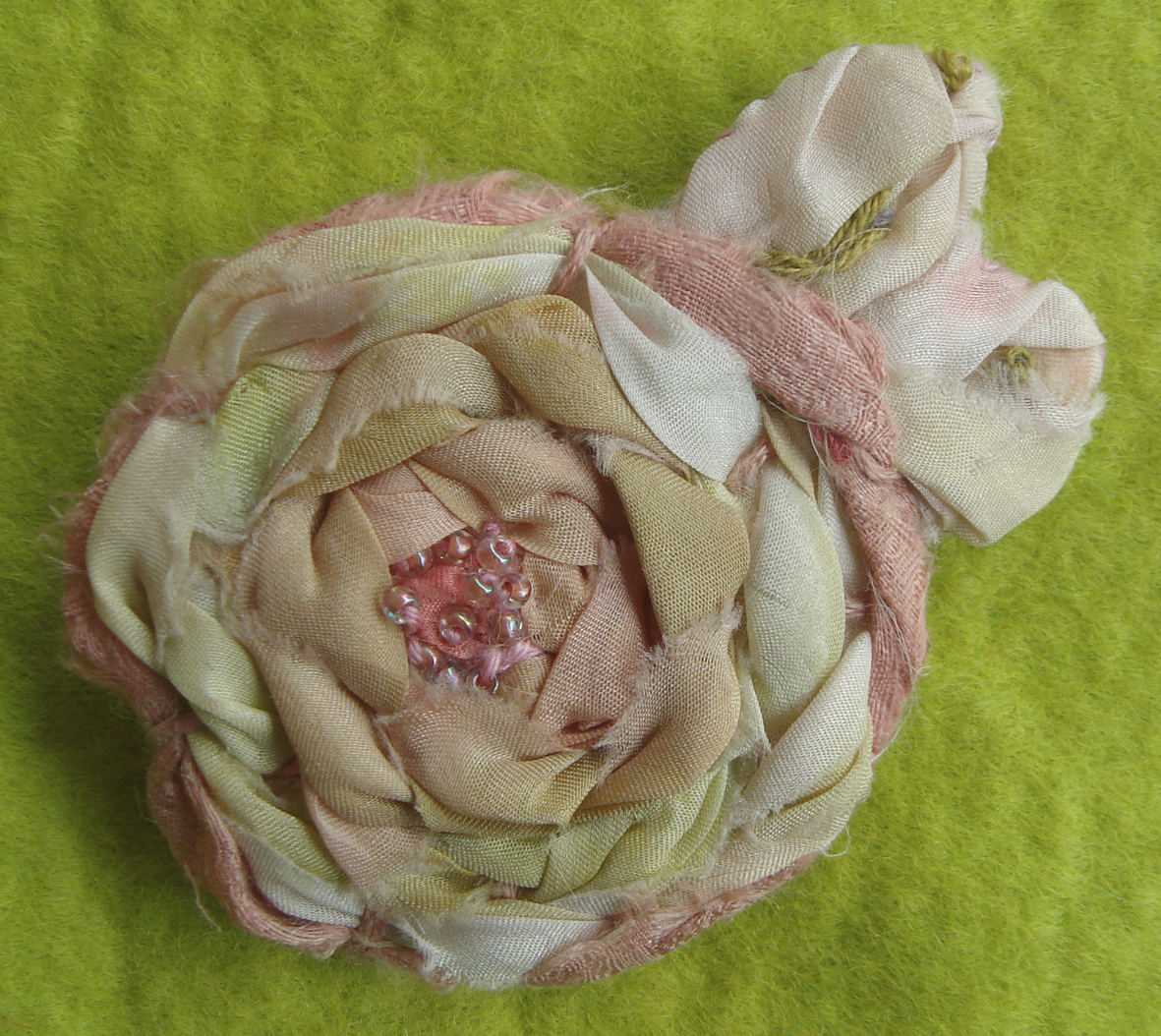
I asked them what they would want to do with the finished embroidery and one said stitch it onto a t shirt, another to make a hair slide out of it – or a brooch – That’s a good idea I thought…so went back to the studios and made some brooch samples.
ribbon flowers cut out and backed ready for brooches
So a big thank you to the girls at Fairfield and their teacher Caroline Sutch who invited me to talk about the new studios and for giving me a really good idea for a new workshop at Heart Space.
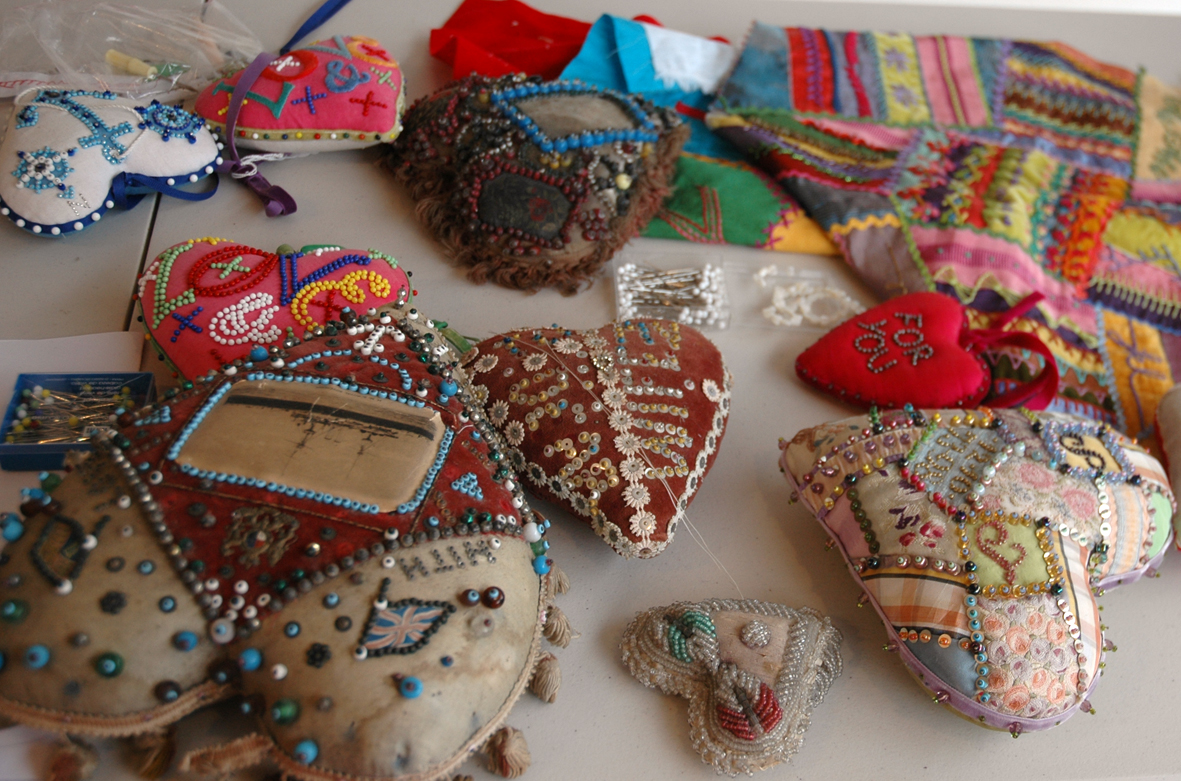
selection of old and some of my new beaded heart pincushions
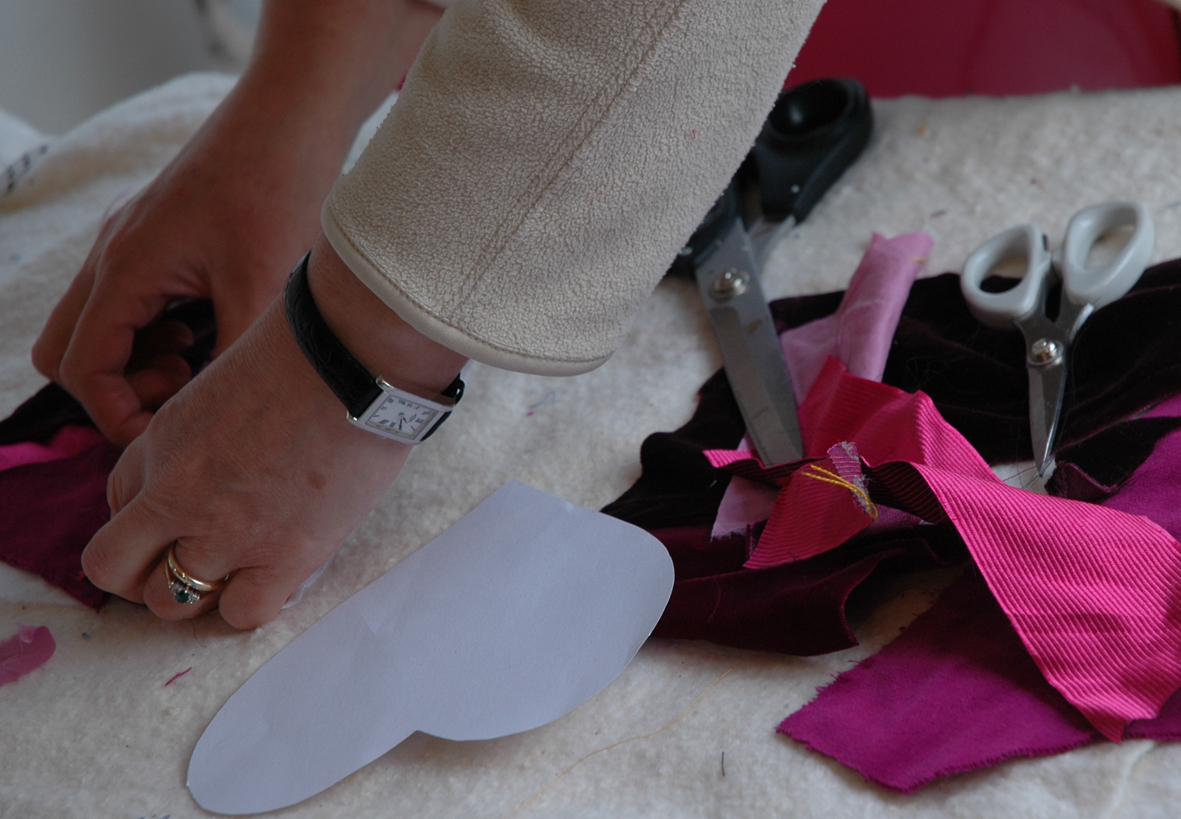
Although I have not set out to just make hearts at the classes at Heart Space Studios they are proving very popular in several different textiles workshops. I decided to make my first teaching workshop on how to make the stuffed and beaded hearts that were popular to give as love tokens or birth presents in the late 19th century. Hand made with pinned patterns and messages they were often made by men away in the forces as presents for those left behind. Now they make small gifts for all sorts of occasions and are highly pleasurable to make.
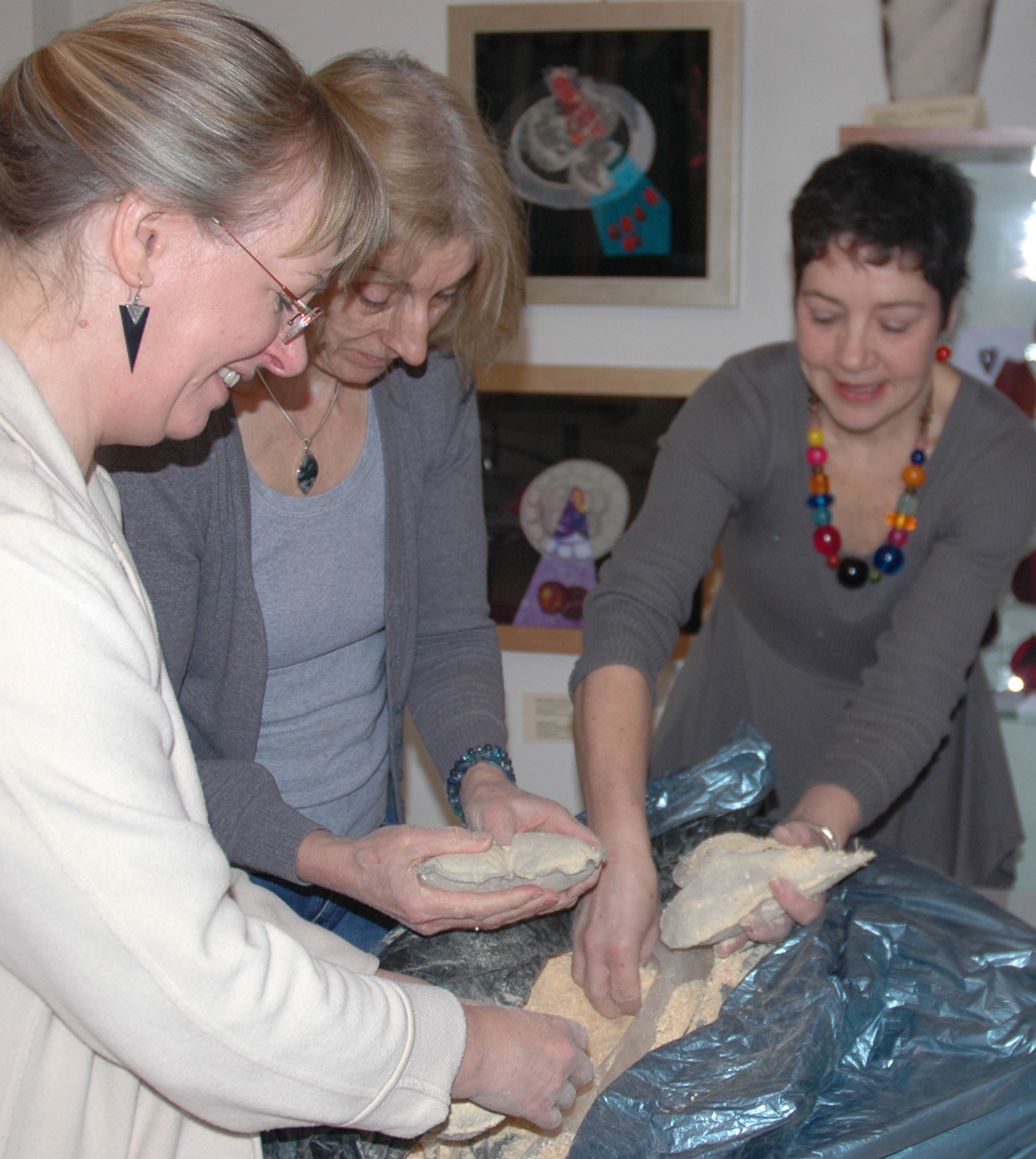
But before the fun of pinning the beads starts you have to make them and this takes quite a bit of manipulation and a lot of sawdust. They need to be so full that a straight pin will stay put when stuck into the surface to hold the beads. I always have to stuff and stitch them several times to get the tension correct.
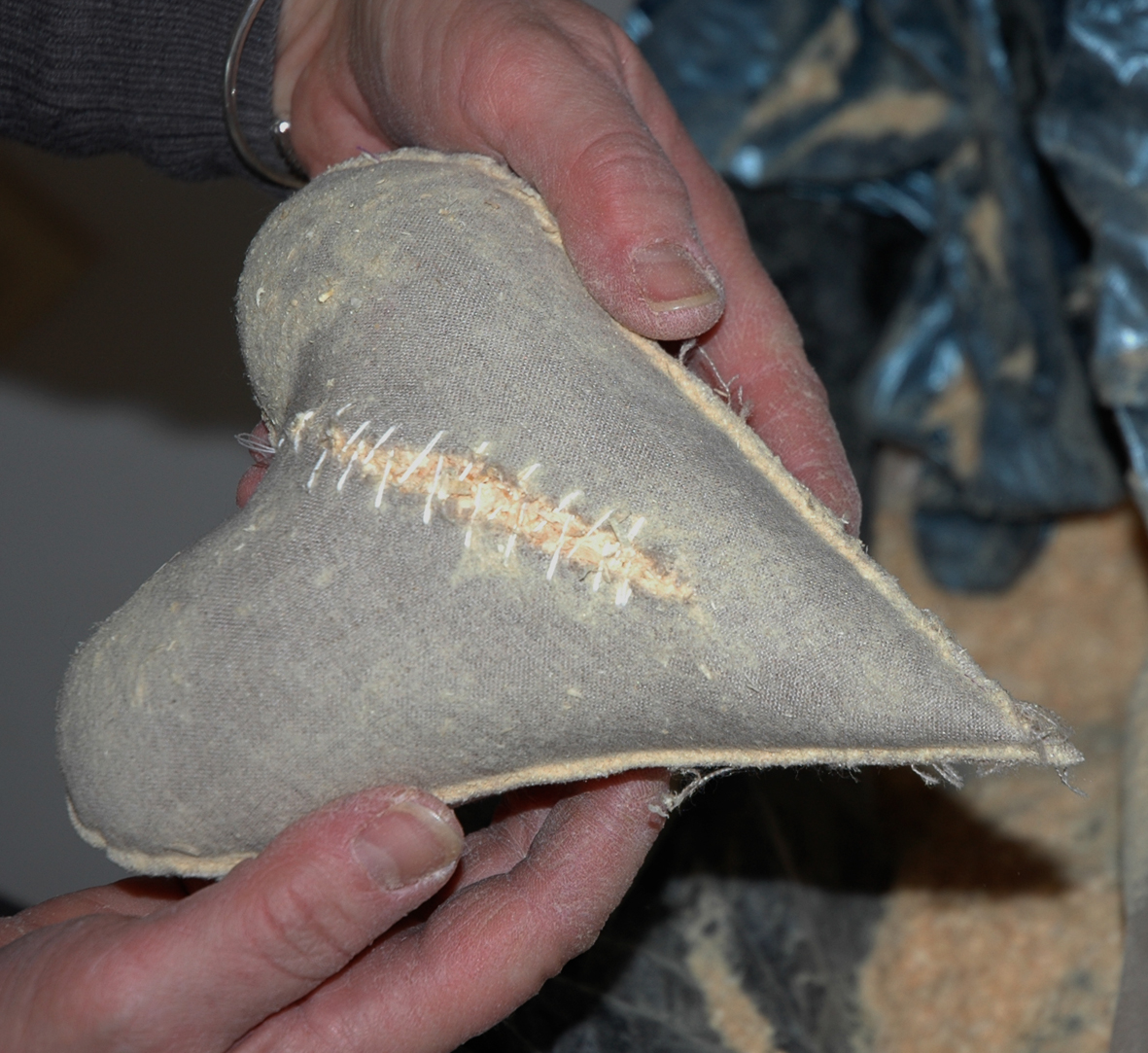
They also need strong stitching to hold the stuffing in and I always like this “scar” that is made – it looks very surgical and one of the hearts made at this class retains this scar idea on the front of the finished heart to great effect.
stitches holding sawdust in place.
Getting a good shape to the hearts takes some pulling and punching as well as a few retaining stitches, it was interesting how different and individual the hearts looked even at this stage. Maybe we all have a perfect heart shape within us.
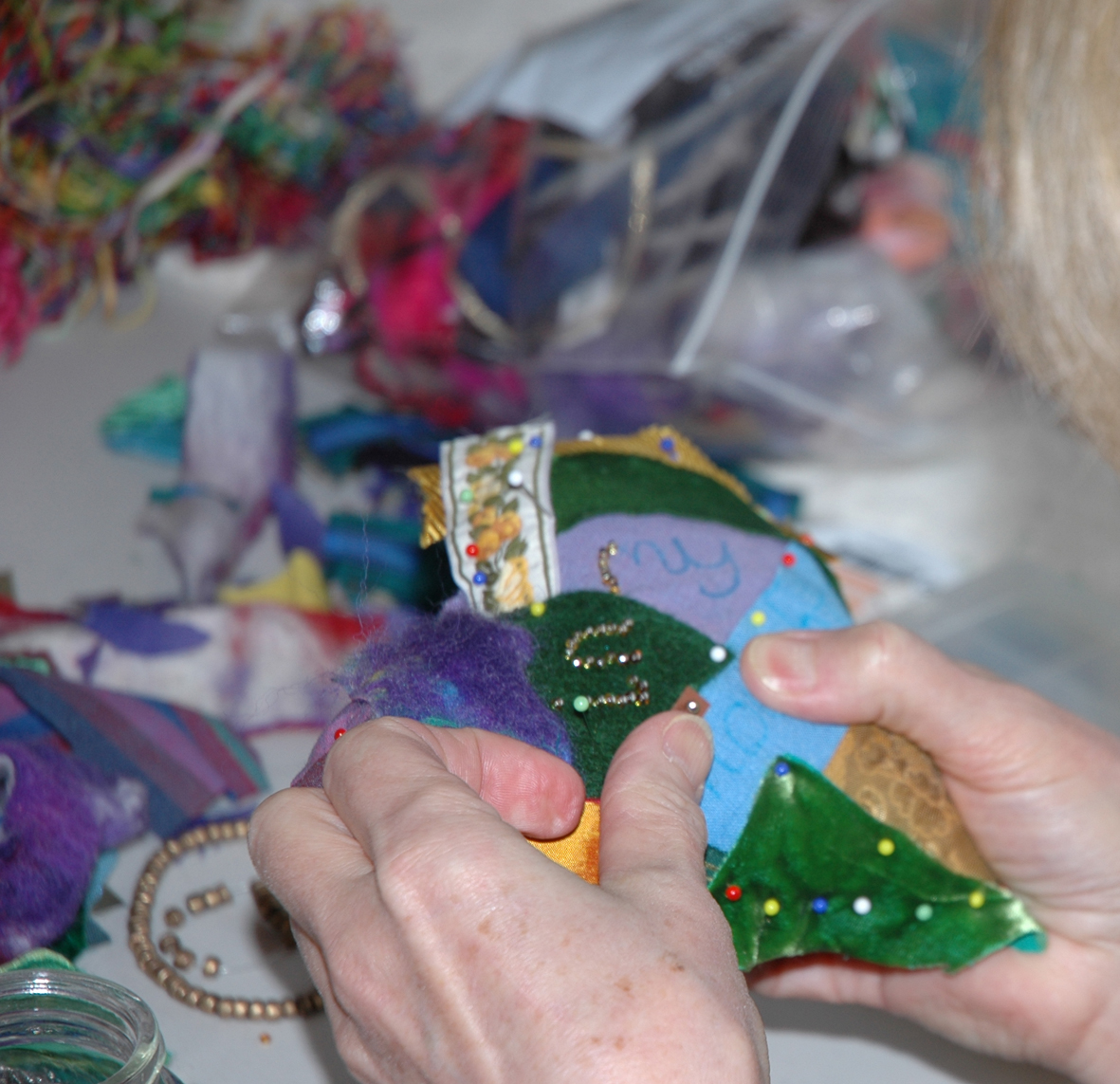
pinning messages in place on Crazy patchwork base.
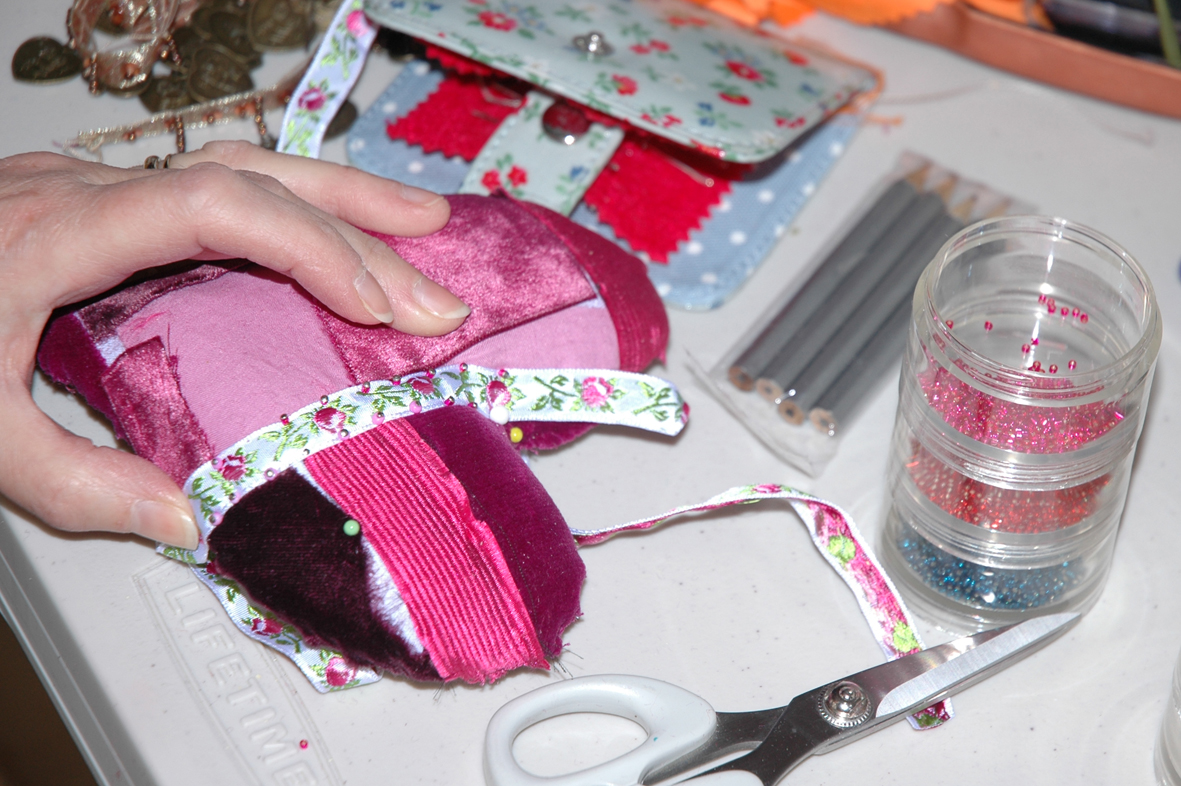
Two of the class decided to make “Crazy” hearts – small pieces of fabric are pinned into place and them the edges covered with ribbons or beads. One of these hearts was made by a mother for her son who is a soldier, and she made it to remind him of home – a nice reversal of the original soldier and sailor makers sending them home.
this Crazy heart was made for the sheer joy of playing with the luscious fabrics, ribbons and beads
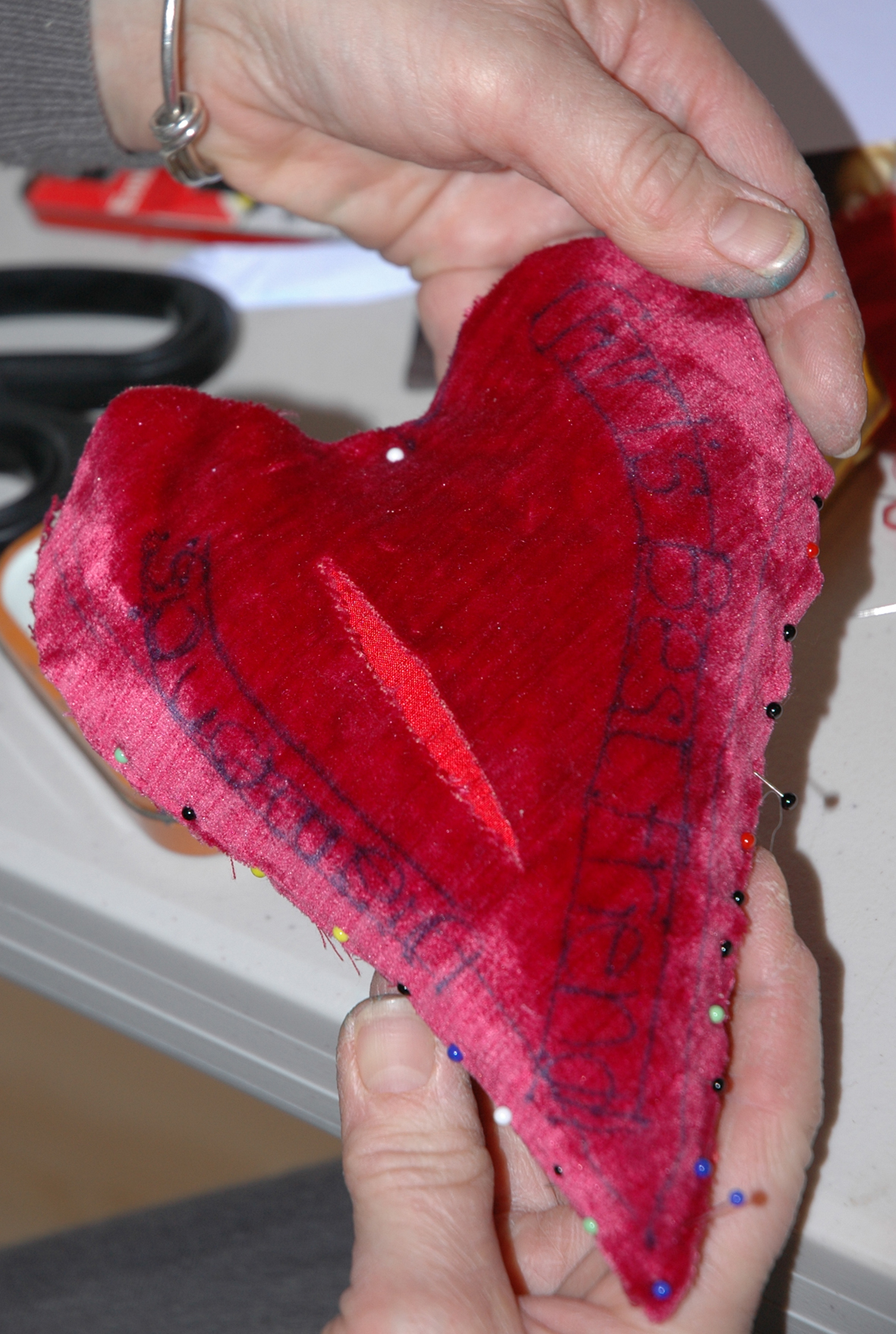
Another heart had a message pinned in to it a rueful comment about the maker, first the message needs to be written in place though and this is quite a tricky piece of designing so it is back to the drawing board before she was able to get her message to fit perfectly in the elegant shape.
writing in position ready to pin - Jan Connet,
The finished heart was brought to me to photograph later when she had finished it – I like the difference the livid scar gives to the well-known saying.
mended but rueful heart.
By coincidence Jan Connet and Liz Hewitt, 2 of the makers shown in the post are responsible for organising a conference for TFSW to be held later this month in Taunton Somerset it involves Mapping and Networking and as I chair TFSW I am shamelessly adding the flyer to this post in the hope of attracting even more people to enjoy a textile networking day.
And by an even happier co-incidence the mended ceramic pitcher shown in “mending goddess fights back” will also be exhibited.
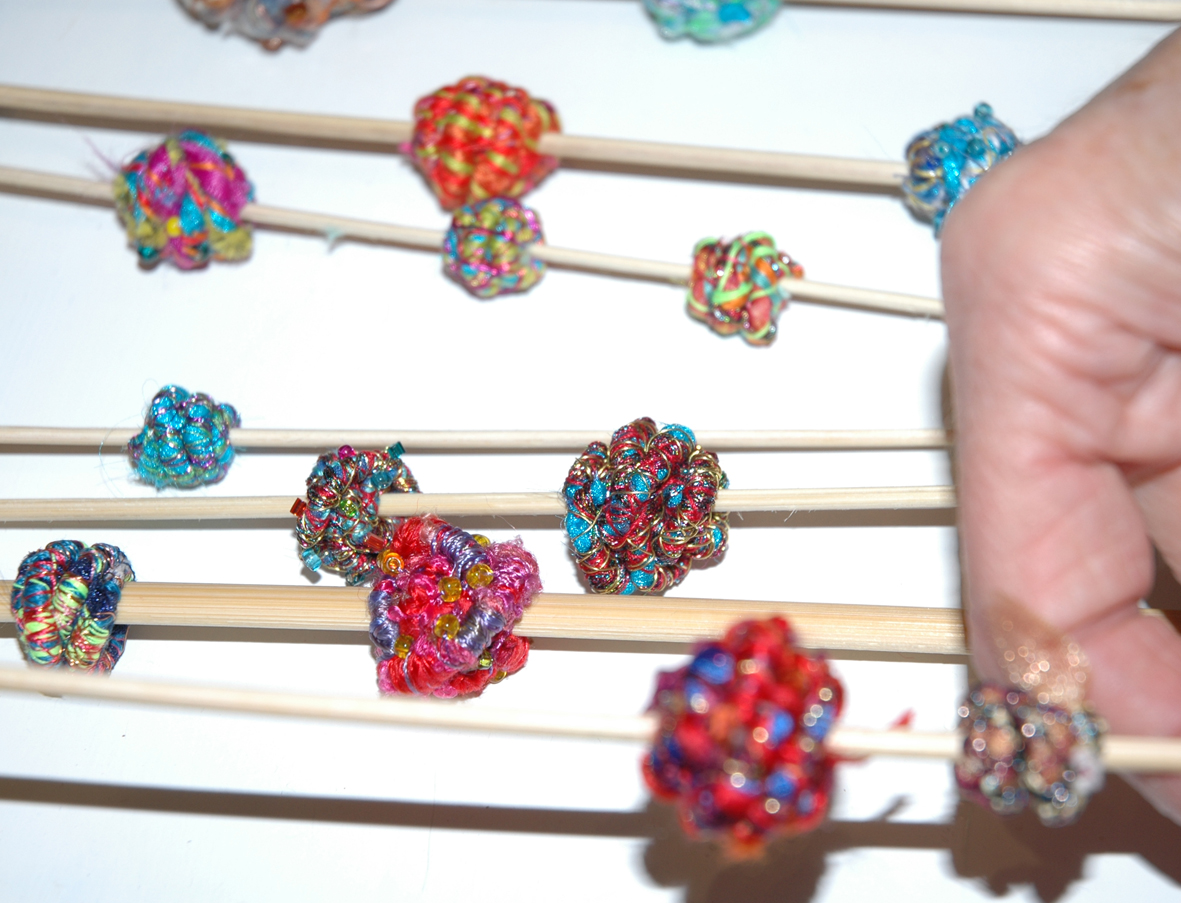
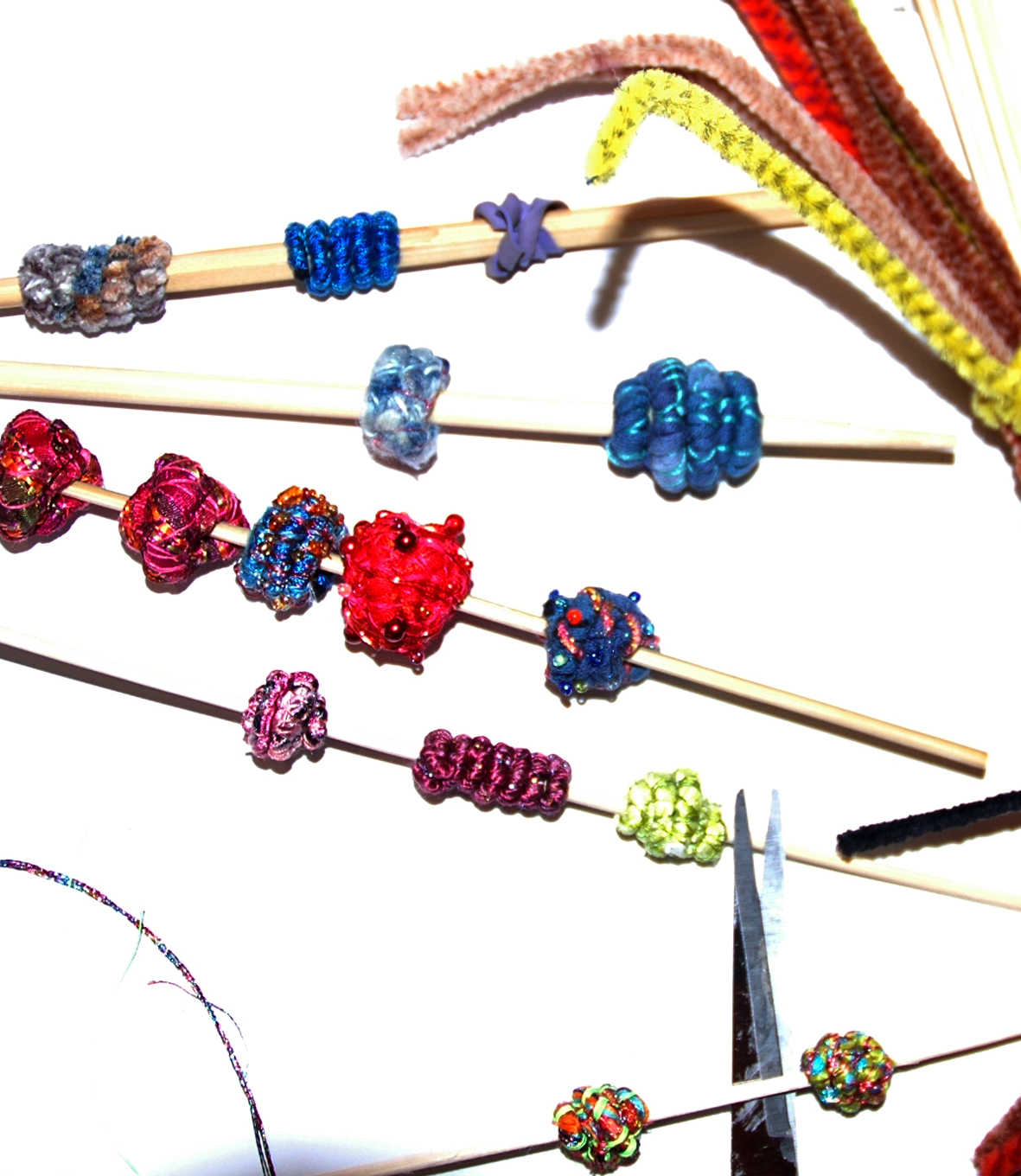
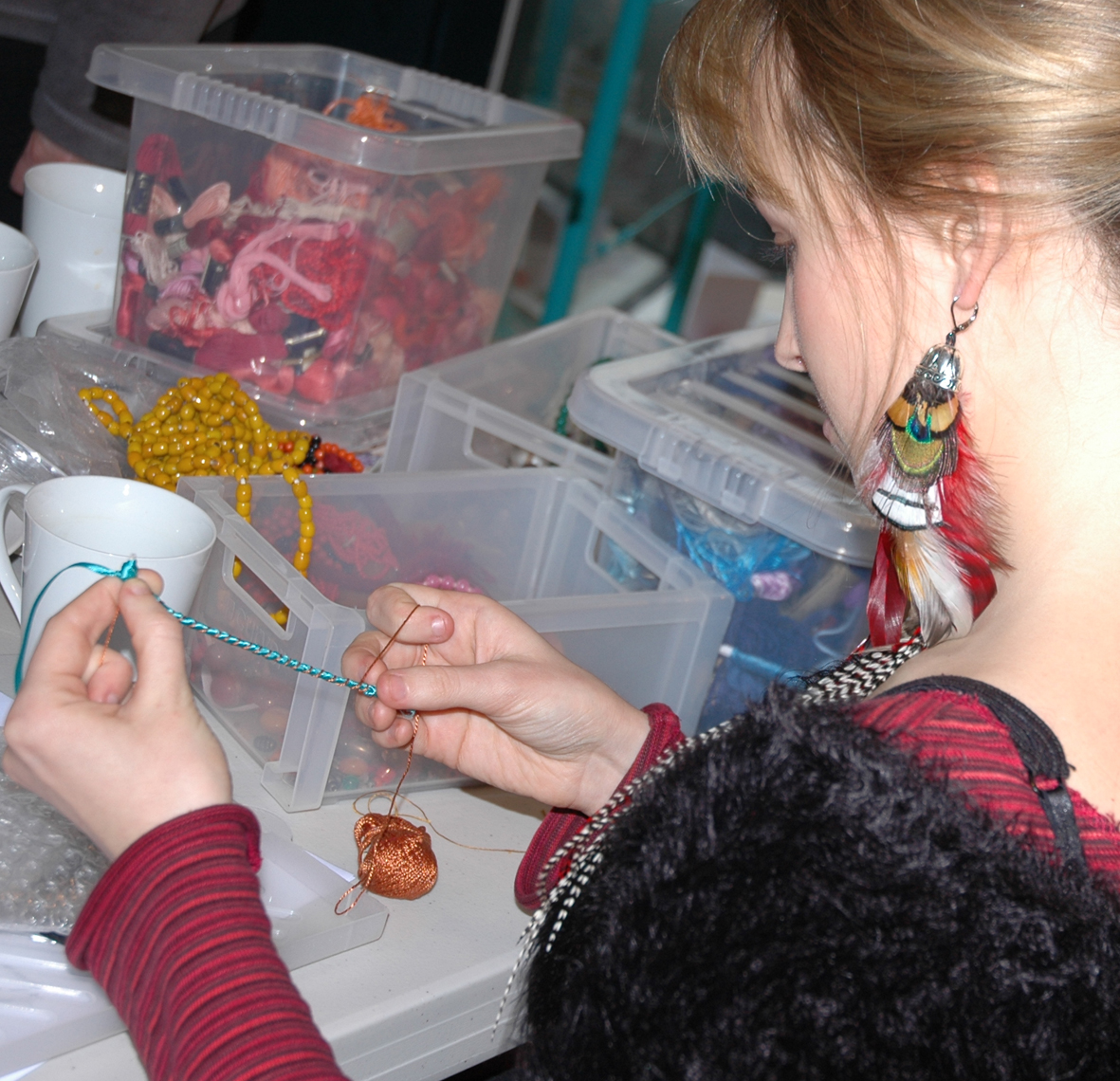
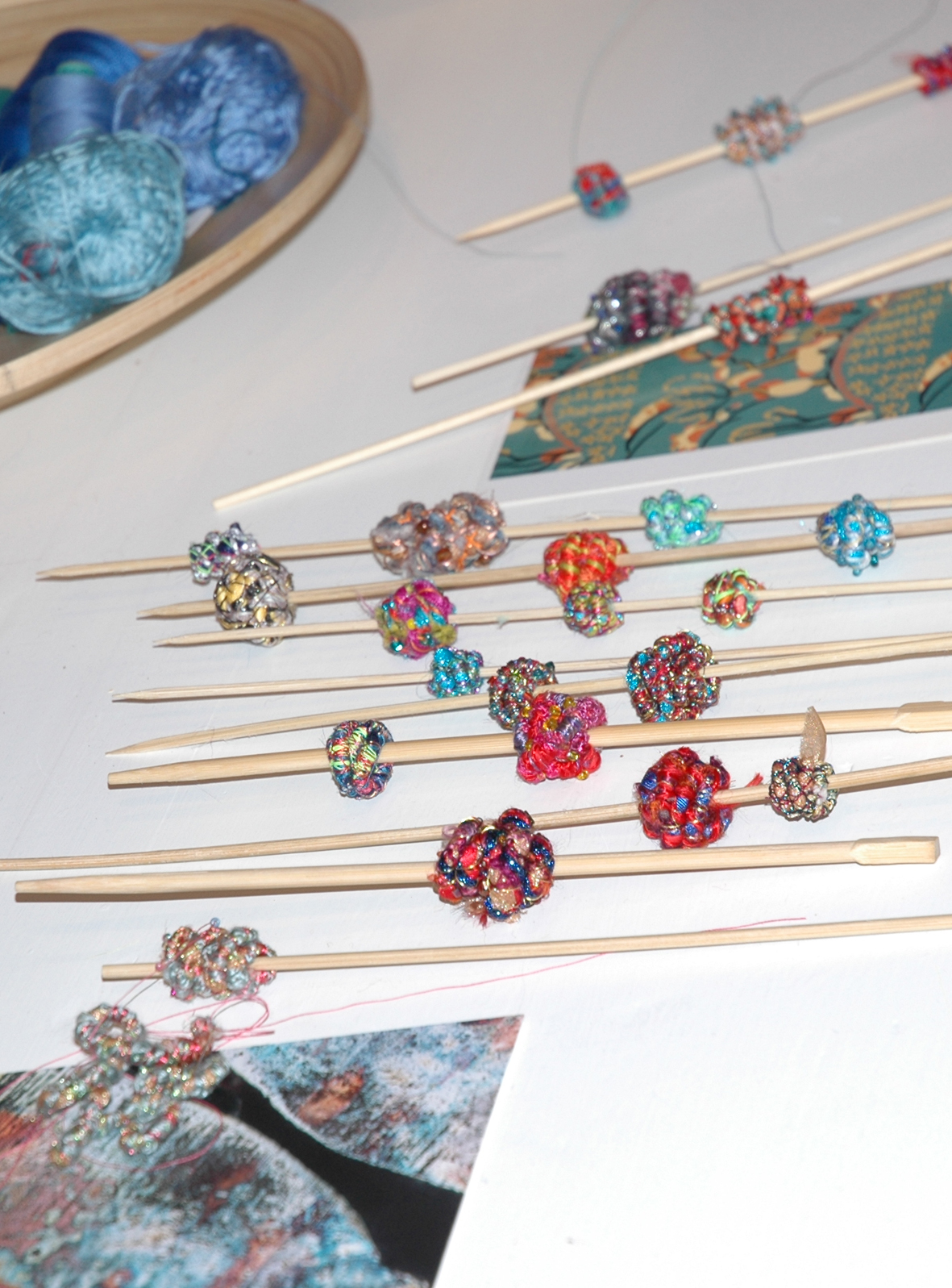
The first day of classes for Heart Space Studios – making beads in the morning and jewellry from them in the afternoon. The first tutor Patricia Brownen gave us all a demonstration using pipe cleaners, strips of fabrics, threads, wires and tiny beads. Above are several of the first beads we made, still on the skewers, waiting to be threaded.
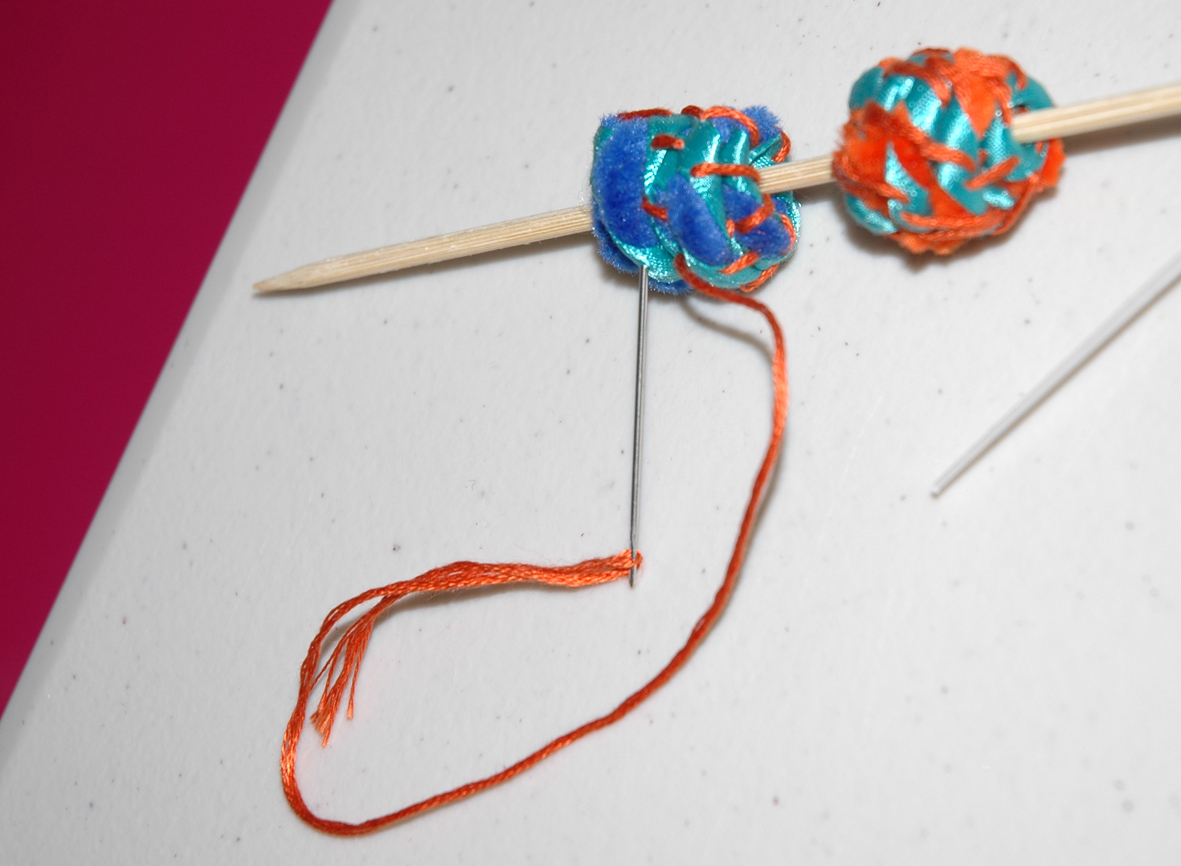
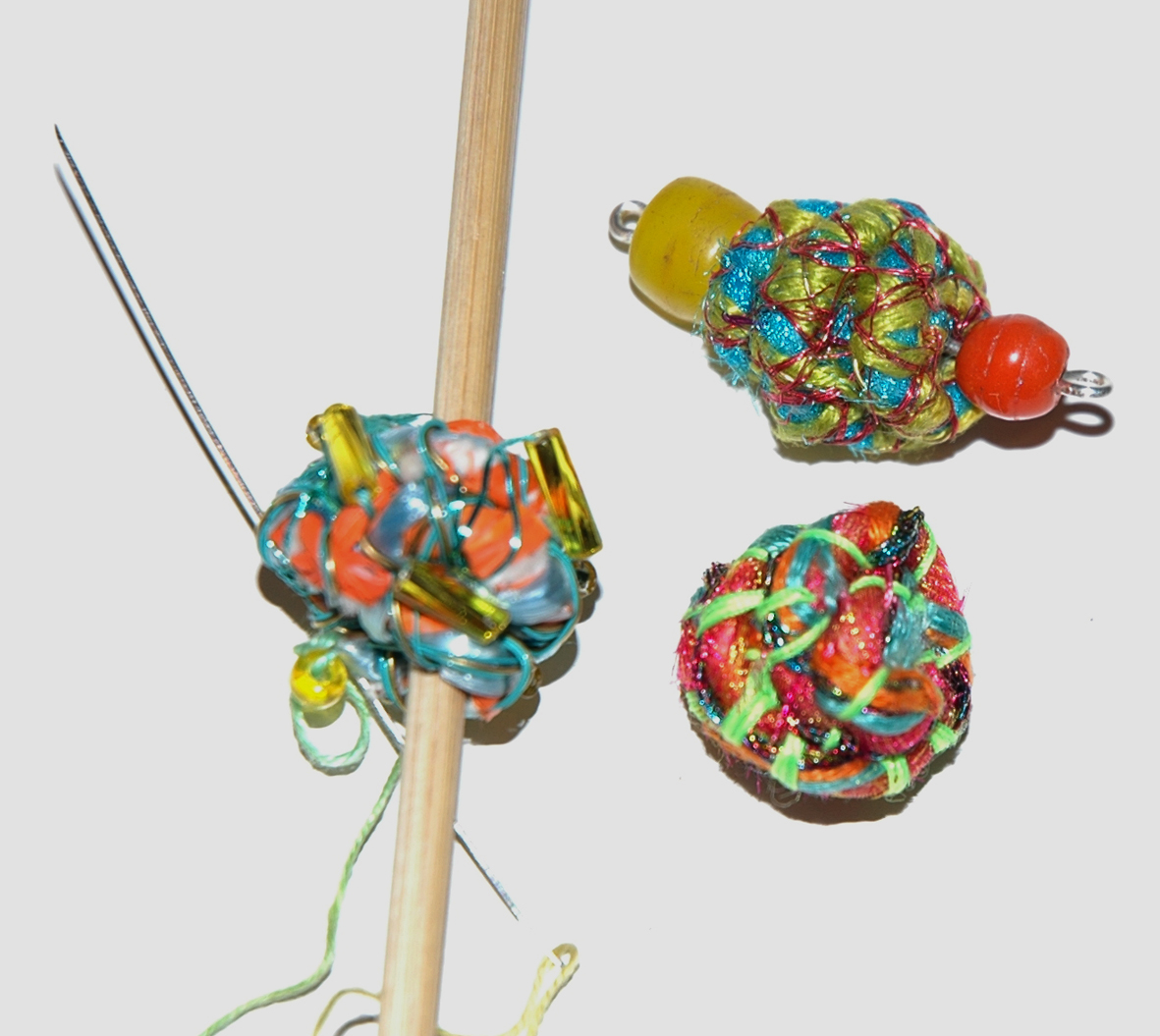
We were given a wooden skewer to wrap the materials around (pencils can also be used) and Patricia demonstrated how the beads were made using several fabrics, threads and wires and secured by stitching. Then she let us loose on a variety of sumptuous fabrics and threads she had brought along – the pipe cleaners determine the size of the bead
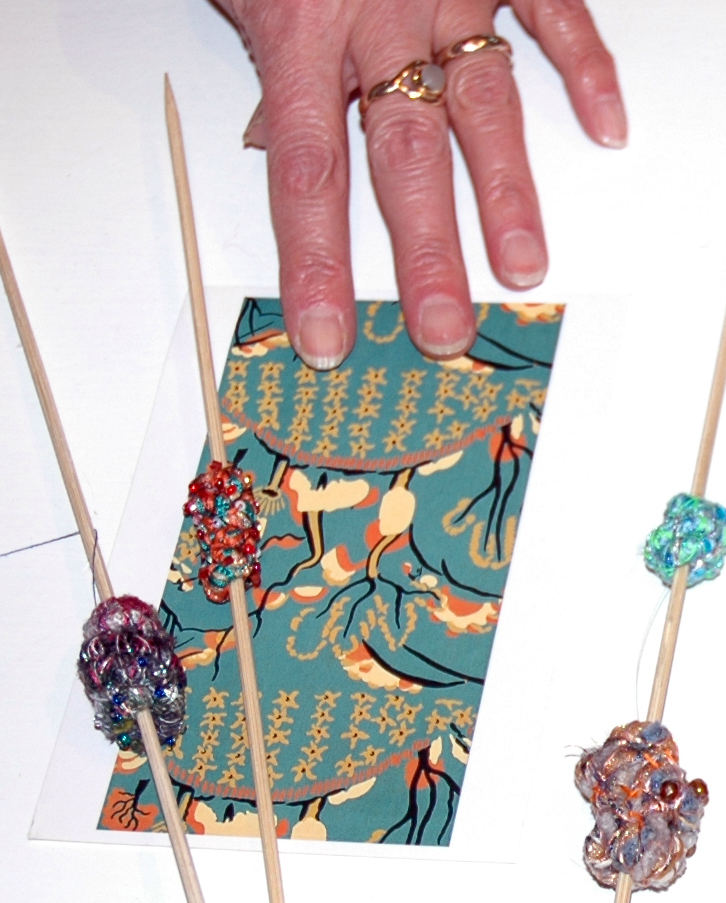
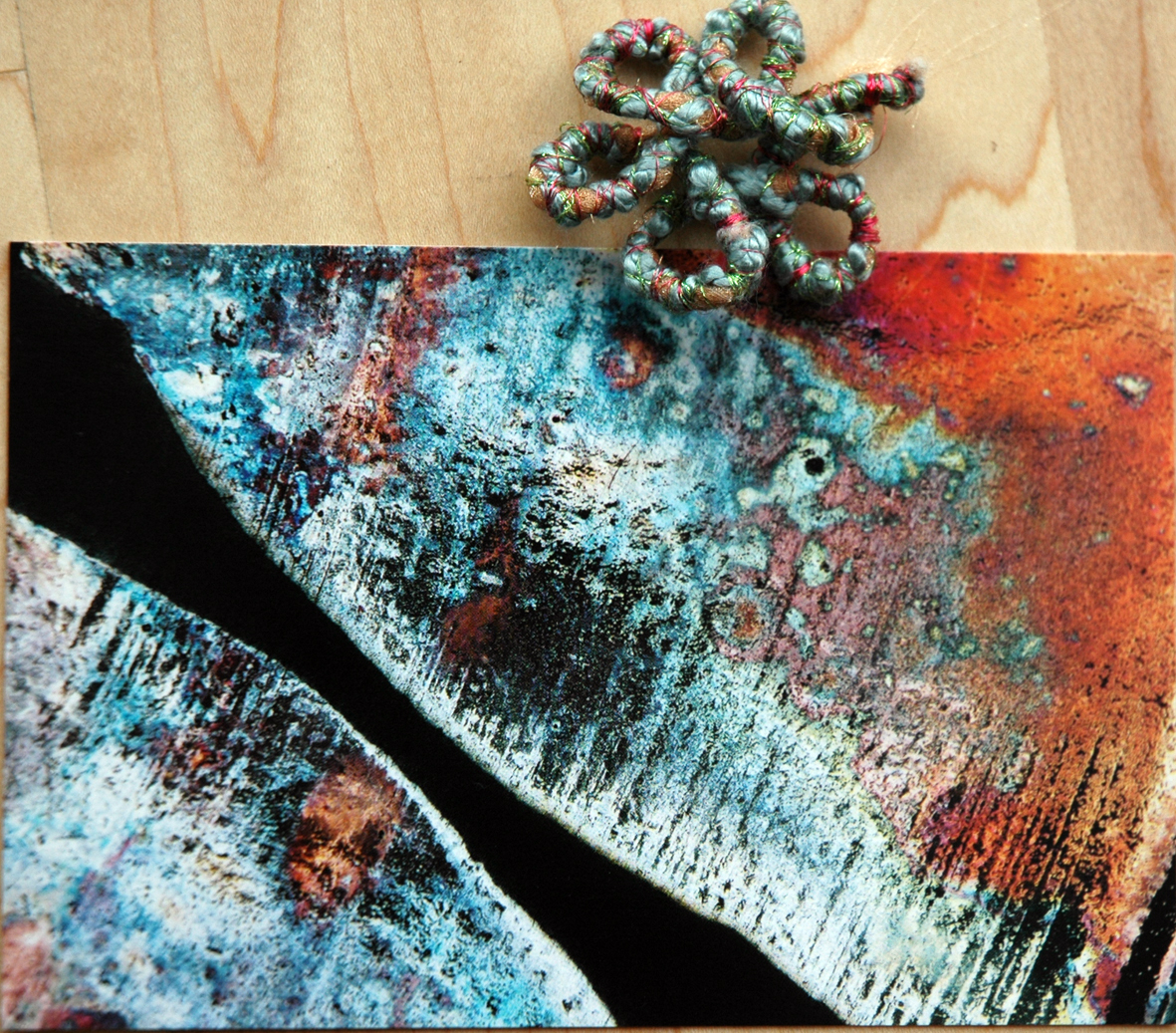
To get us started she supplied some postcards with beautiful coloured images that she had collected, several people developed their colours using these. I thought it was useful if you then made a whole series of beads just using different variations of the chosen colours, then all the beads would co-ordinate for a necklace – once a designer……
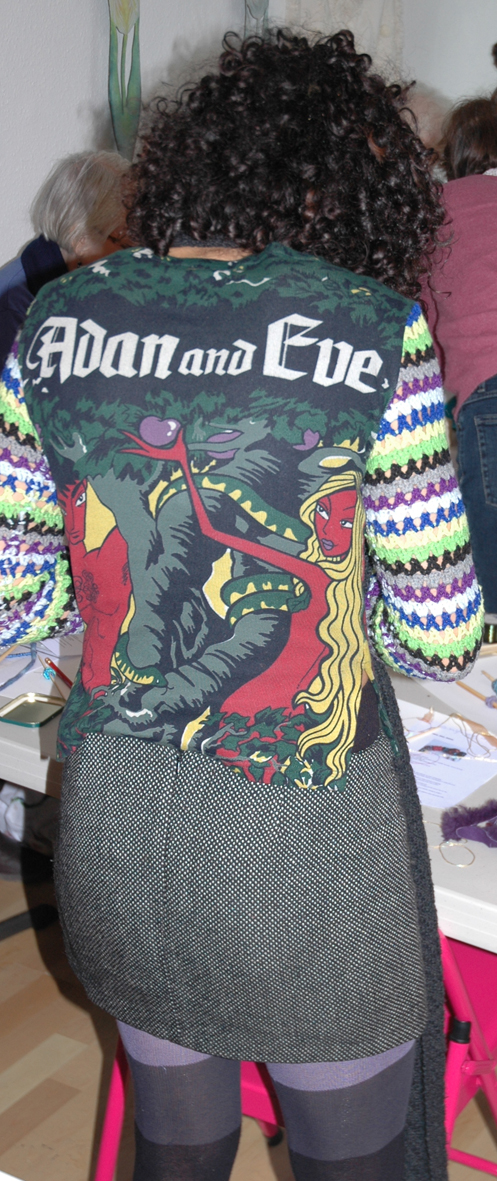
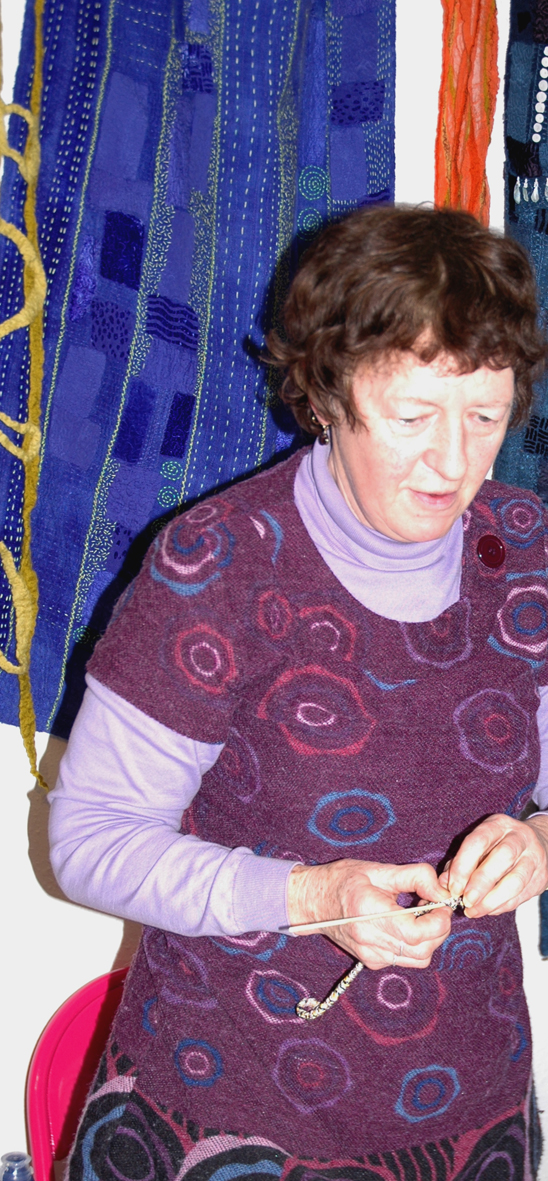
Some of the students were as interesting to look at as the beads we were making and several people stood up to make, as I do when in my own studio.
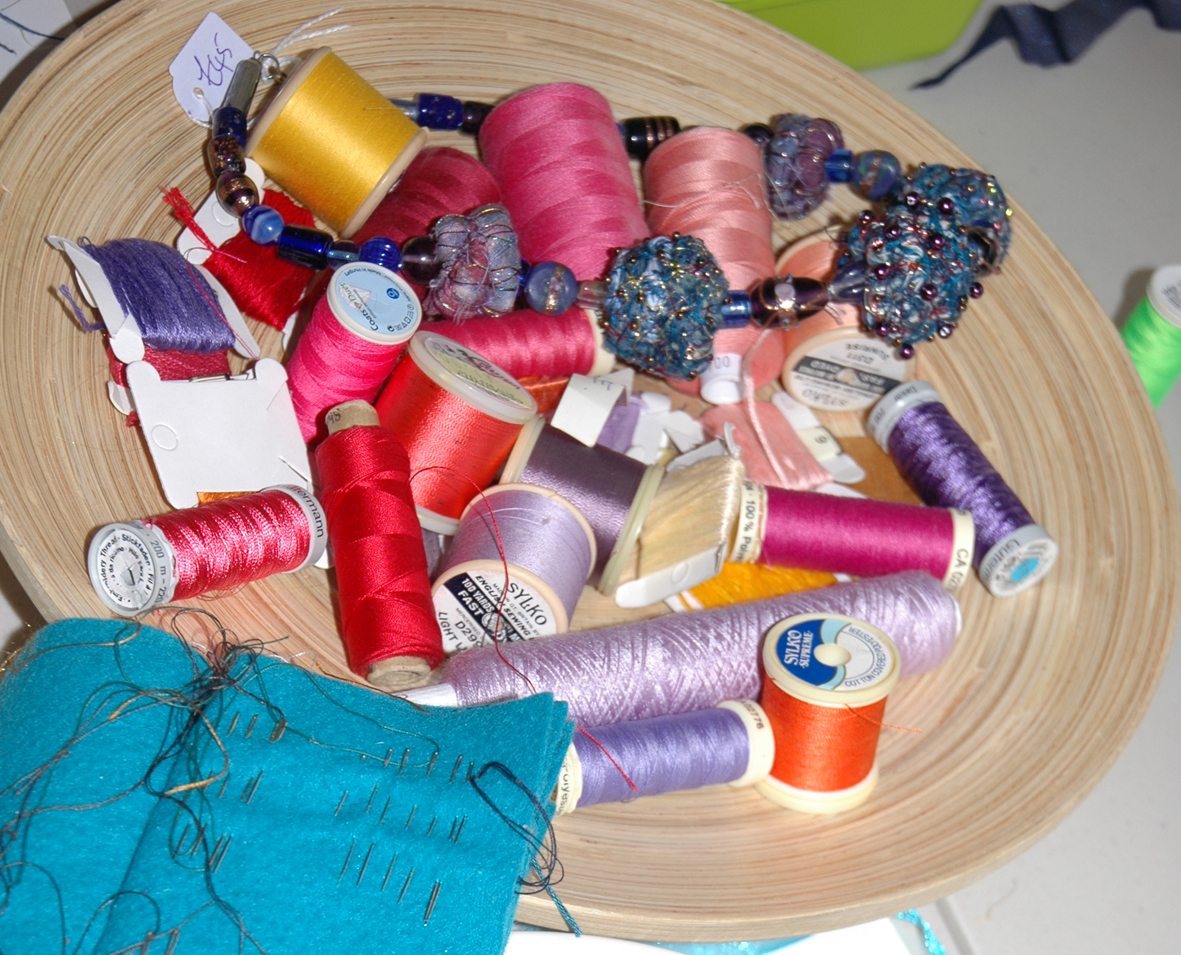
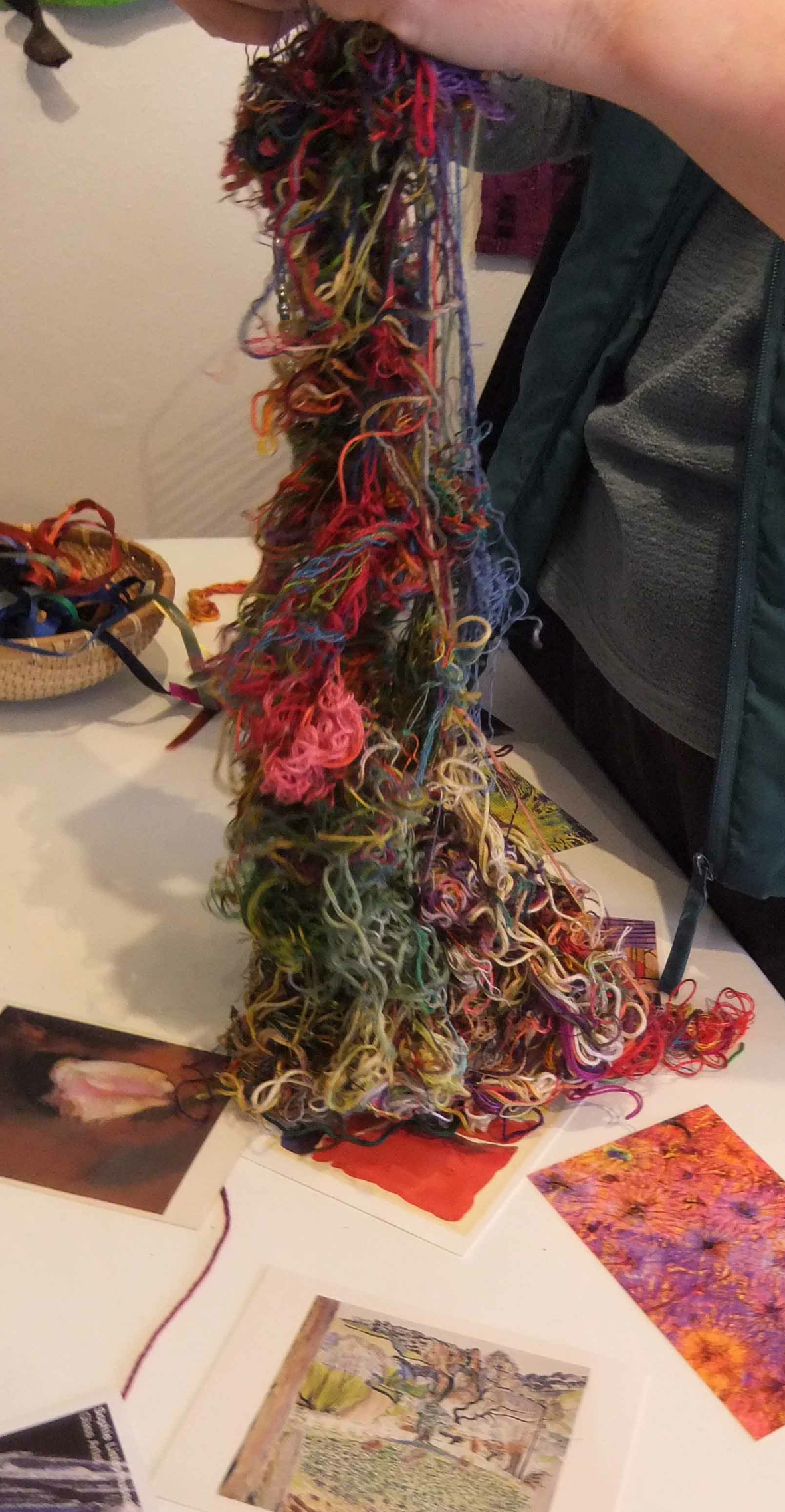
I had brought in my ravel of silk ends, which looks like a bower bird’s nest but is the leftovers of 30 years stitching in silk, people swooped on it for single threads of shining colour
By the end of the morning we had all made about 3 or 4 beads and here are a selection, some of the students stayed on to make jewellery from them at the afternoon class
Even I managed to make 3 beads between serving teas, checking phone calls, ordering food for lunch and everything else that goes into an enjoyable day’s making for the students at Heart Space.
The afternoon’s jewellry making will be posted on my next blog…….
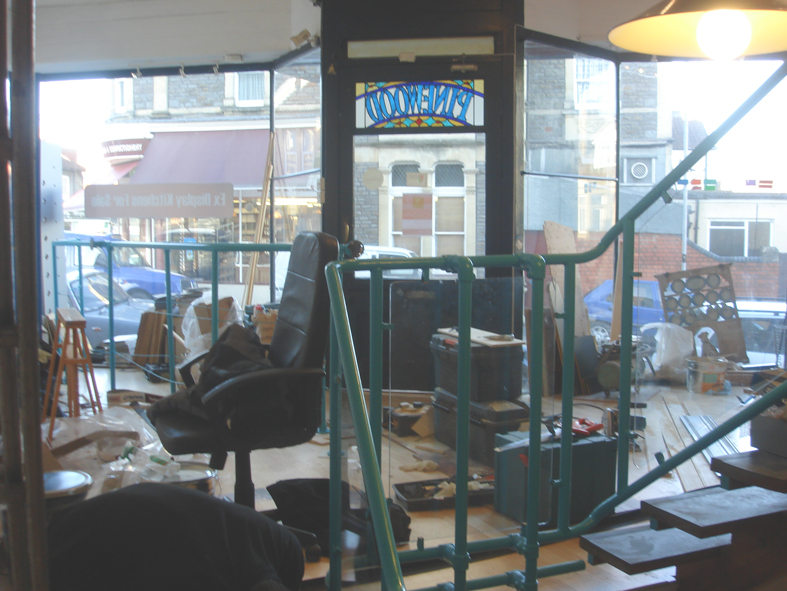
Above is my latest “work in progress” – Heart Space Studios – where all things textile will be taught, designed, drawn, made, displayed and sold. It is in the Redland district of Bristol and last week it looked like this.
the week before the opening, new floor being laid
I decided to open this studio after I was asked several times by several people for drawing and stitching classes. So late last year I took the plunge and just 3 months later here we are at the opening day of our new venture – in what was a kitchen showroom and obviously, given the name, as close to Valentine’s day as possible. Last Saturday, 12th February, saw us with the first studio space up and running. Most of the last few months have been stripping out and selling kitchens and bathrooms ripping up floors and wallpaper and applying for planning permission and then putting down floors, repainting and decorating and making timetables and buying signs and chairs and tables and tea urns and cups and having websites built and changing telephones and email addresses and NOT STITCHING.
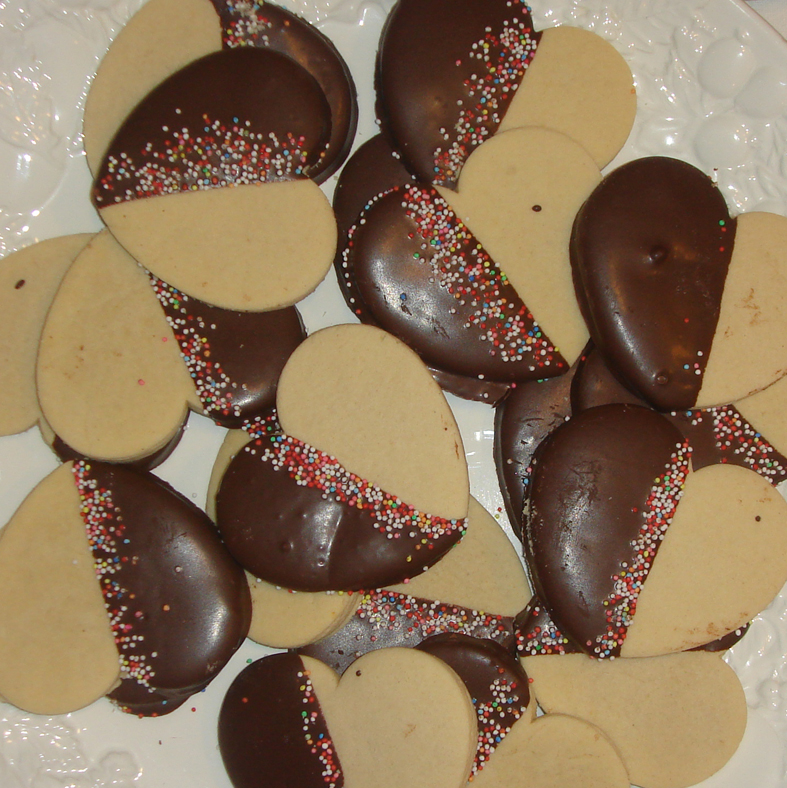
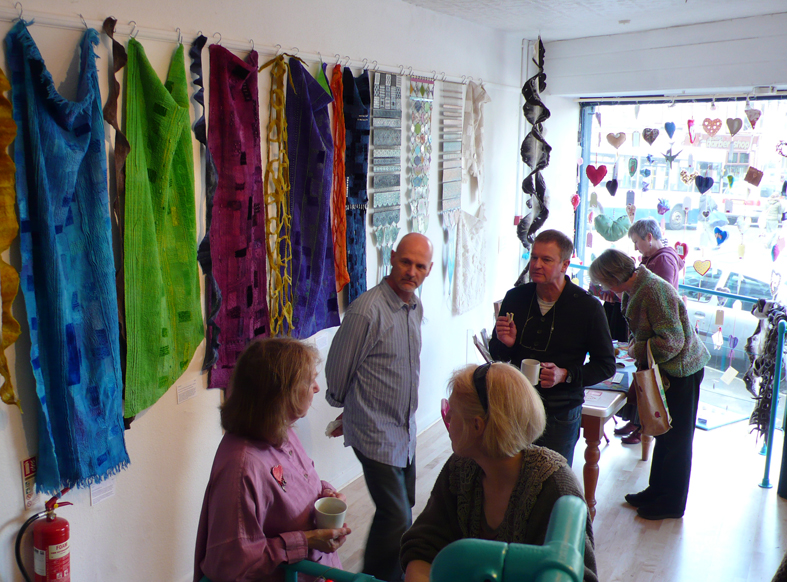
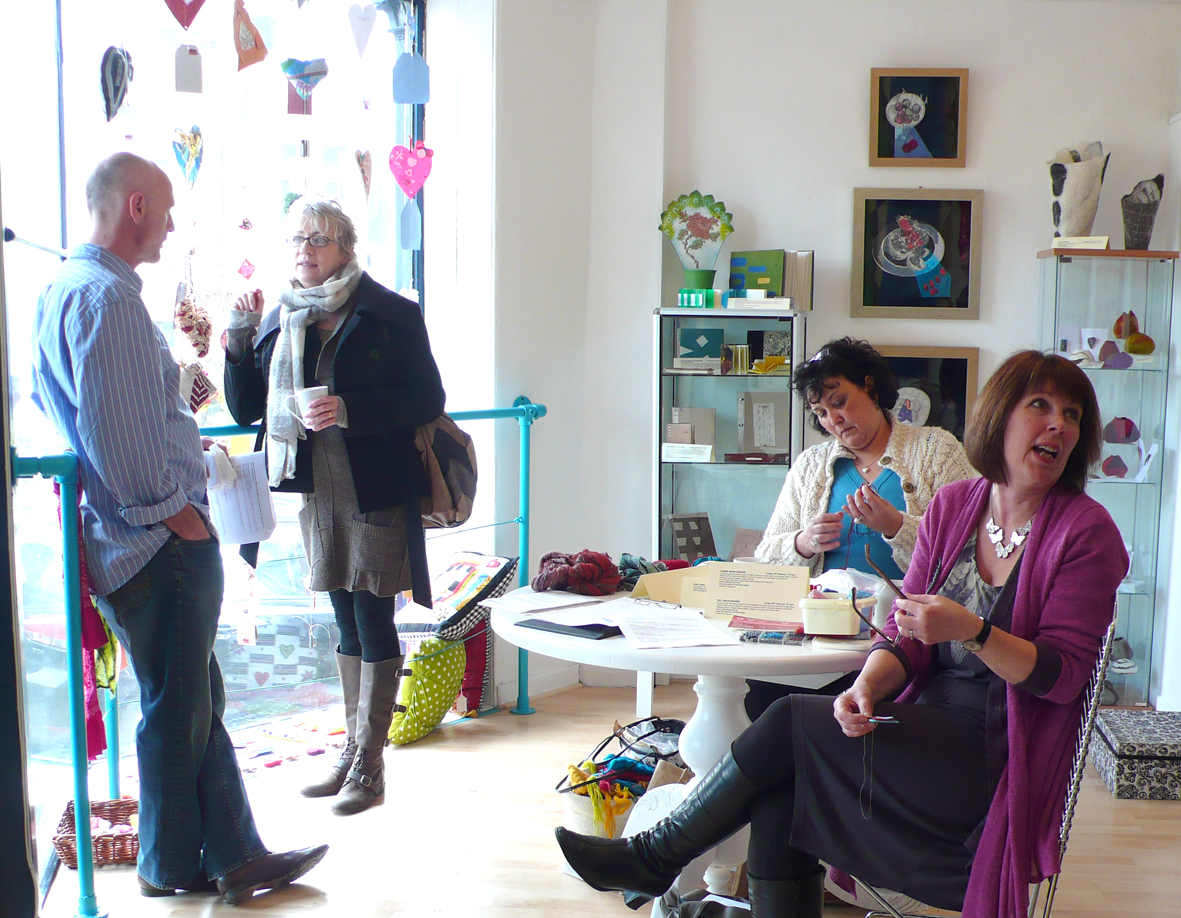
One of the several fellow tutors in this venture decided to have a Tea and Textiles opening, which is a regular meeting event for Textile Forum South West. The teas were served with an array of the most lovely cakes and biscuits, either bought locally or brought by friends, who all rallied round to help on the day.
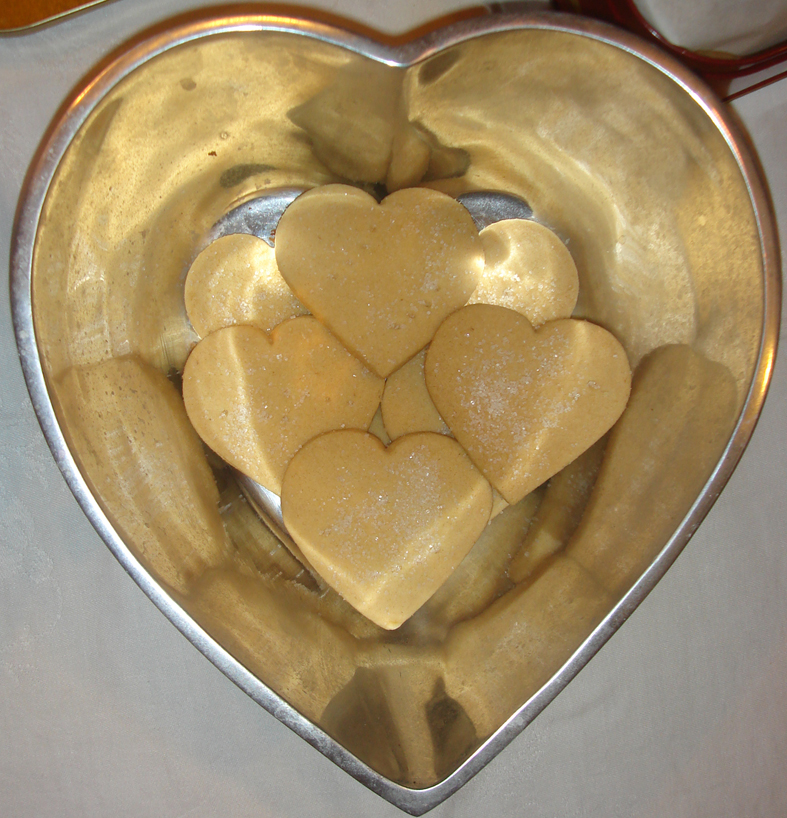
Rosemary's tiny heart cakes
Rebecca's delicious shortbread
bought from the Split Tin bakery opposite the studios
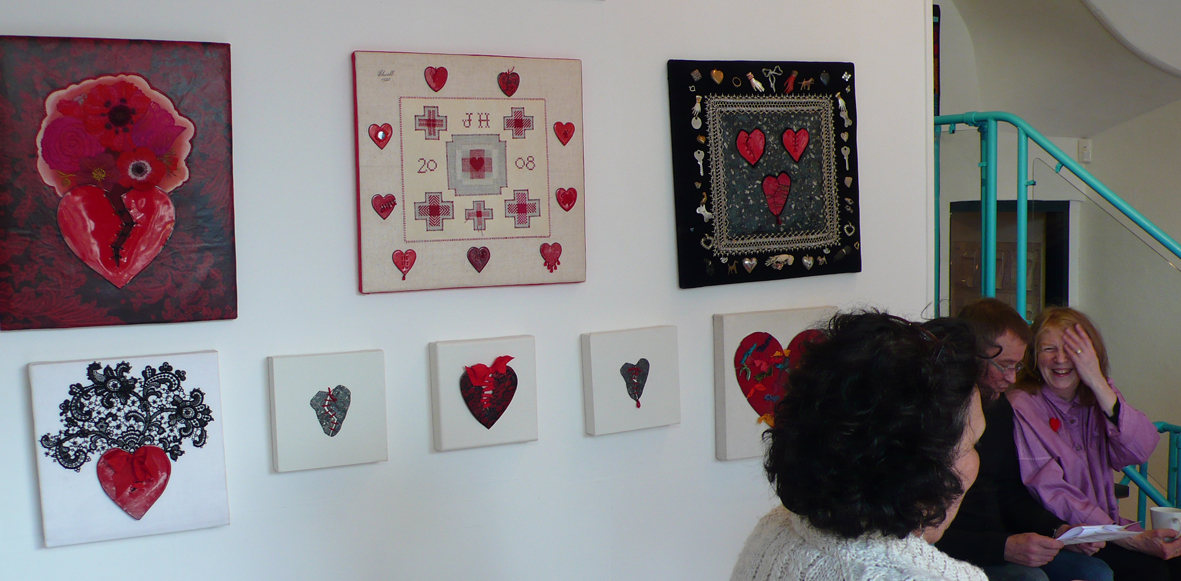
We put up an exhibition of the work by some of the tutors who will be teaching the classes, a mixed bag of stuff so I just went for colour.
wall of hangings, Liz Hewitt's dyed and embroidered cottons, Janet Clarke's felts
as did many other people in one form or another..
Liz Hewitt and Teresa Searle with patchwork quilt by Jan Hassard between
There were lots of samples of other workshops displayed so that people could see what they were signing up for..
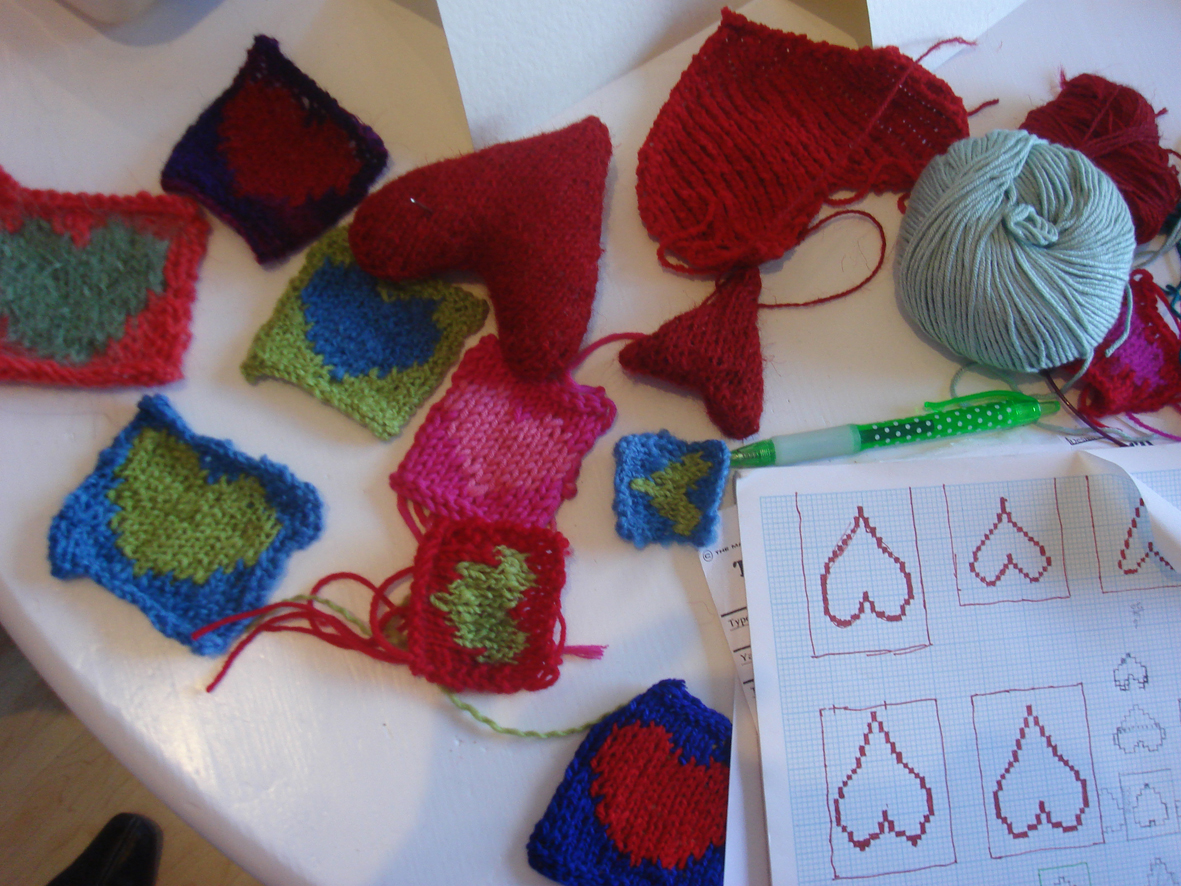
knitted heart patches by Sharne Lott
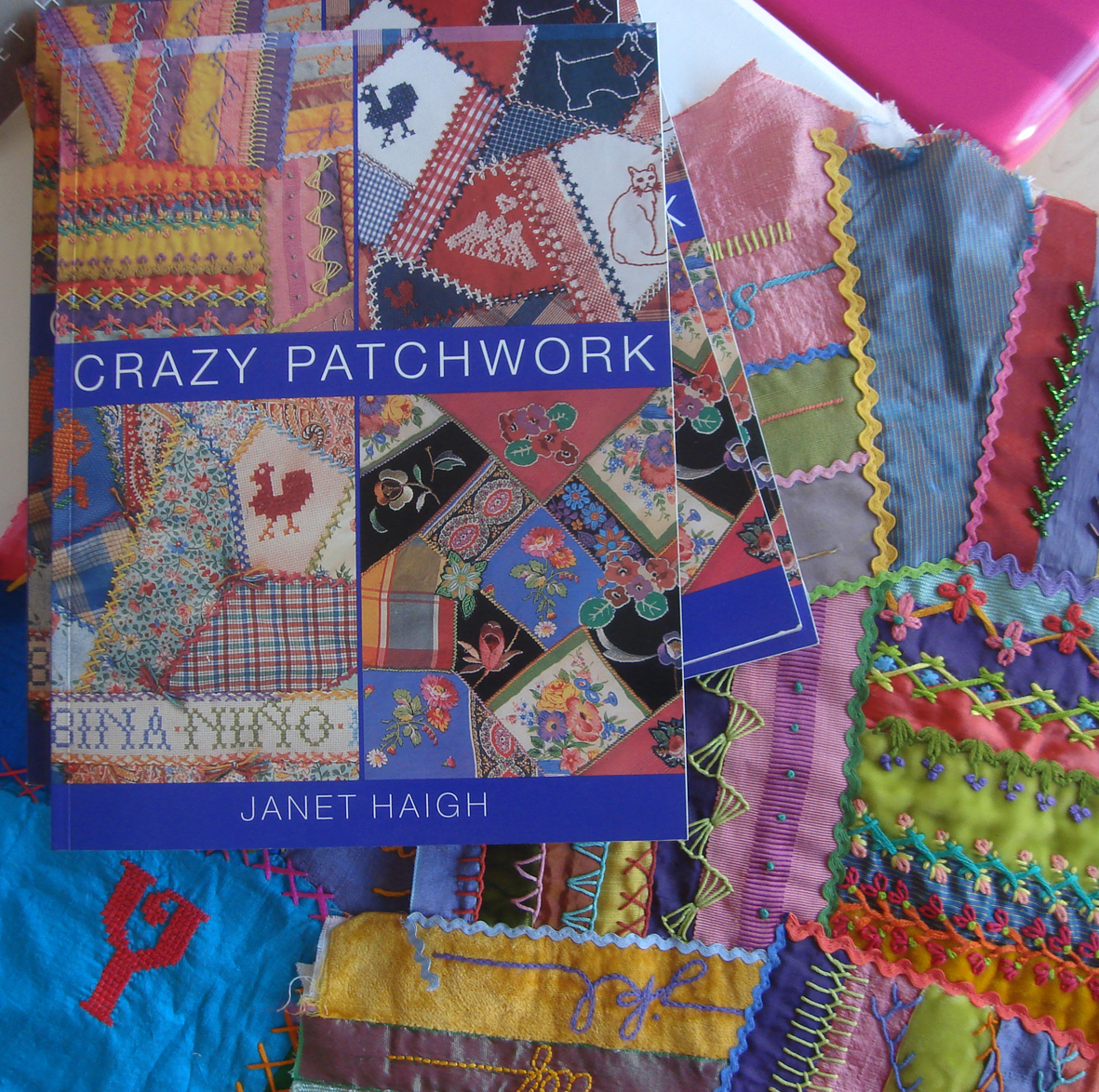
my crazy patchwork samplers and book
Sharne Lott, knitter turned jeweller and Debbie Bird, applied artist, made things…..
Sharne knitting and Debbie talking
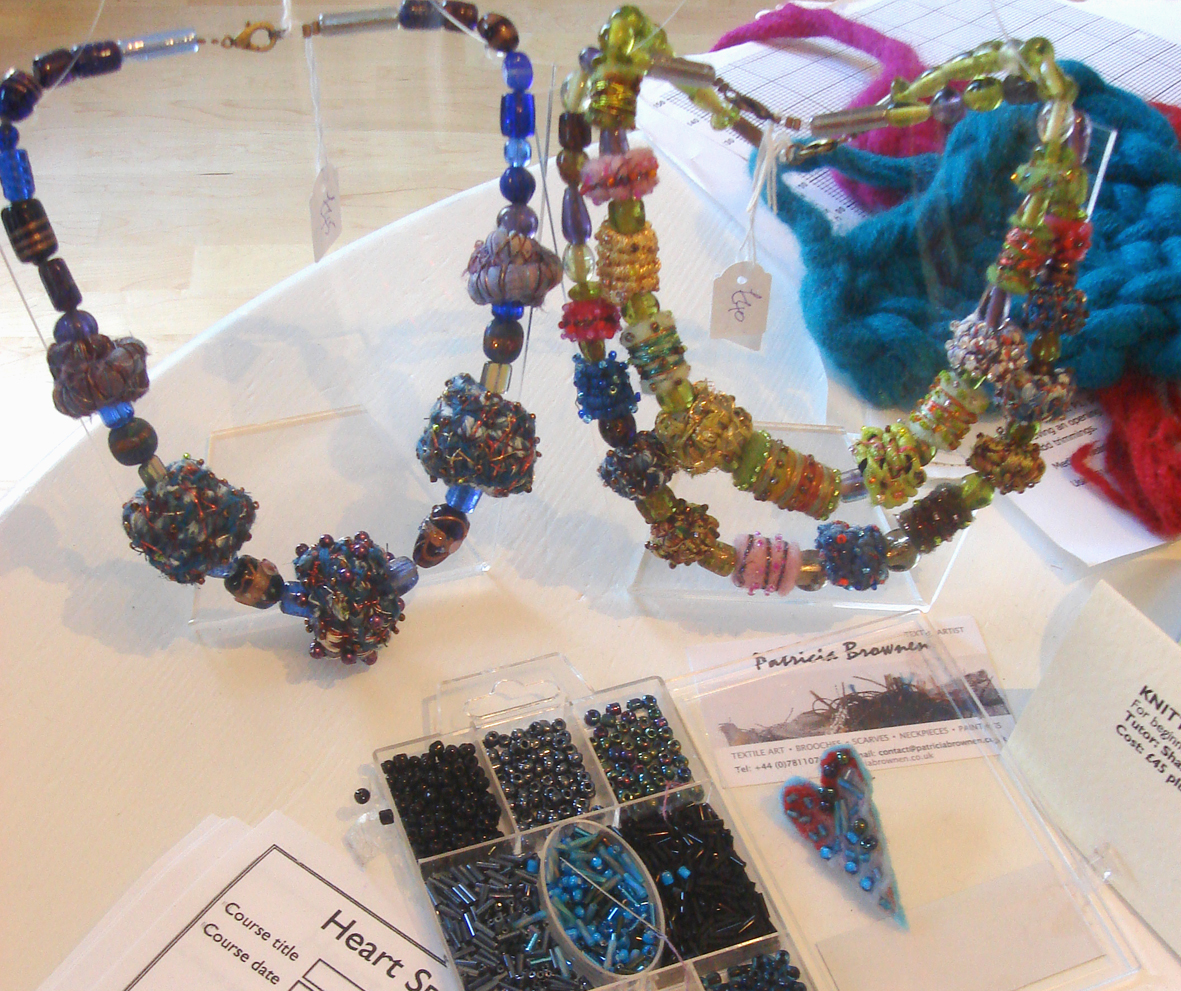
Later some hand-made beads arrived from Patricia Brownen who had come to my first drawing class wearing one of her necklaces – I signed her up on the spot for our first workshop on Friday 18th February…we have already got several people signed up for this – me included!
hand embroidered beads by Patricia Brownen.
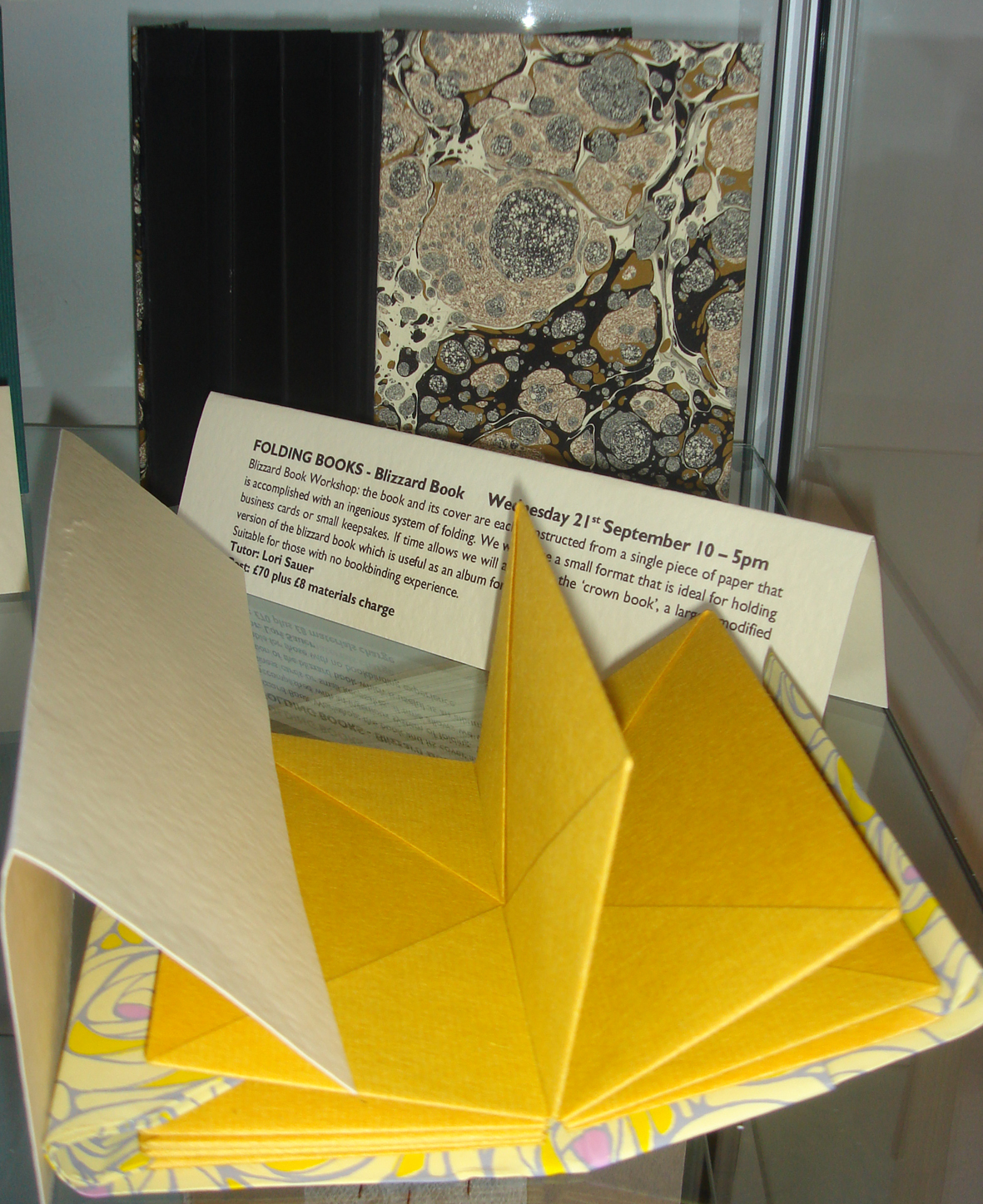
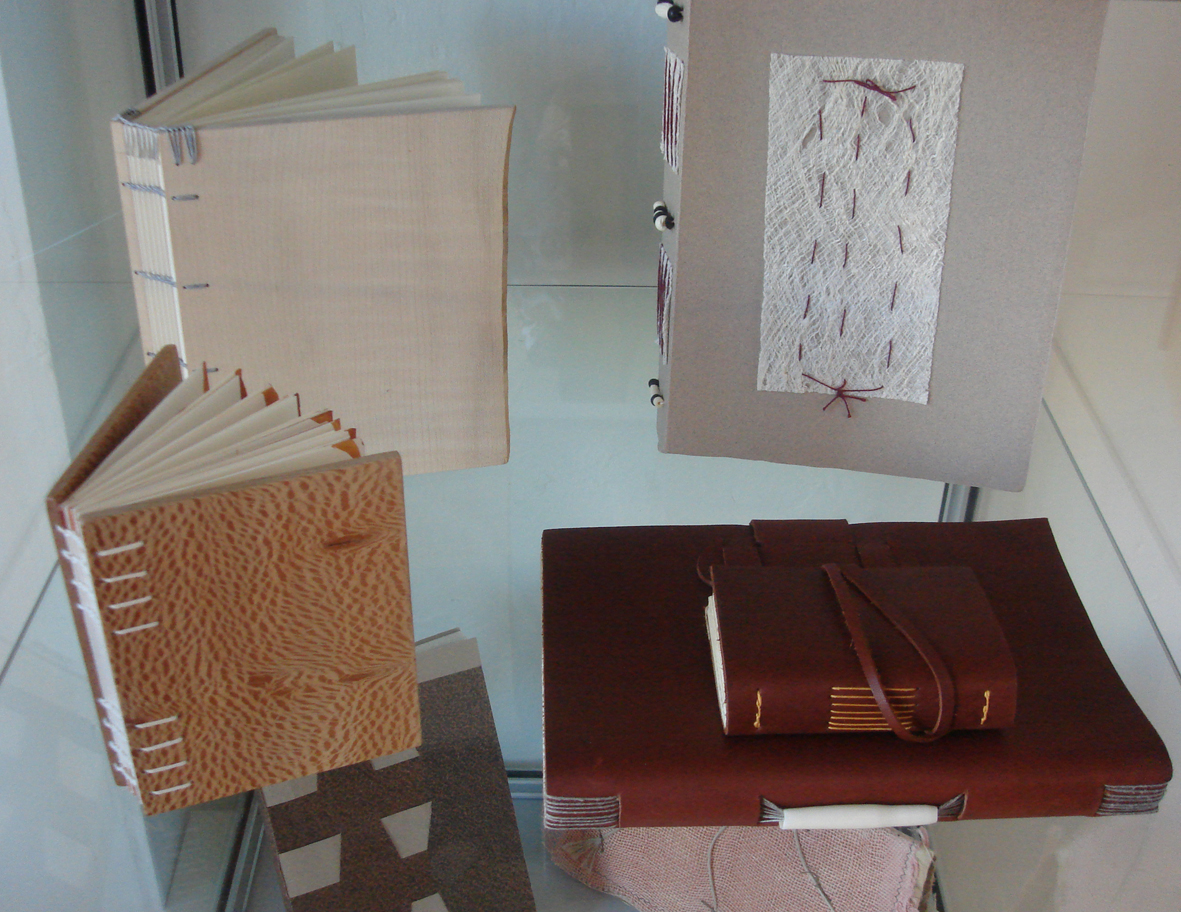
Textile is such a wide discipline to me that absolutely anything involving stitching will be taught, so I was extremely pleased when bookbinder Lori Sauer expressed an interest in conducting classes at Heart Space later in the year.
samples of books made by Lori Sauer
stitched leather and wood book bindings by Lori Sauer
Felt making is very popular and many people are wanting to sign up to these classes, we are making them a regular weekly class along with stitching, drawing and patch-working. Janet Clarke, who I first met last year at an Xmas party, is taking the major wet – felting workshops; but she also turned out to help get the studio together, putting up the Heart Felt exhibition in the windows with jeweller Hazel Sutton.
felt hanging and vessels by Janet Clarke.
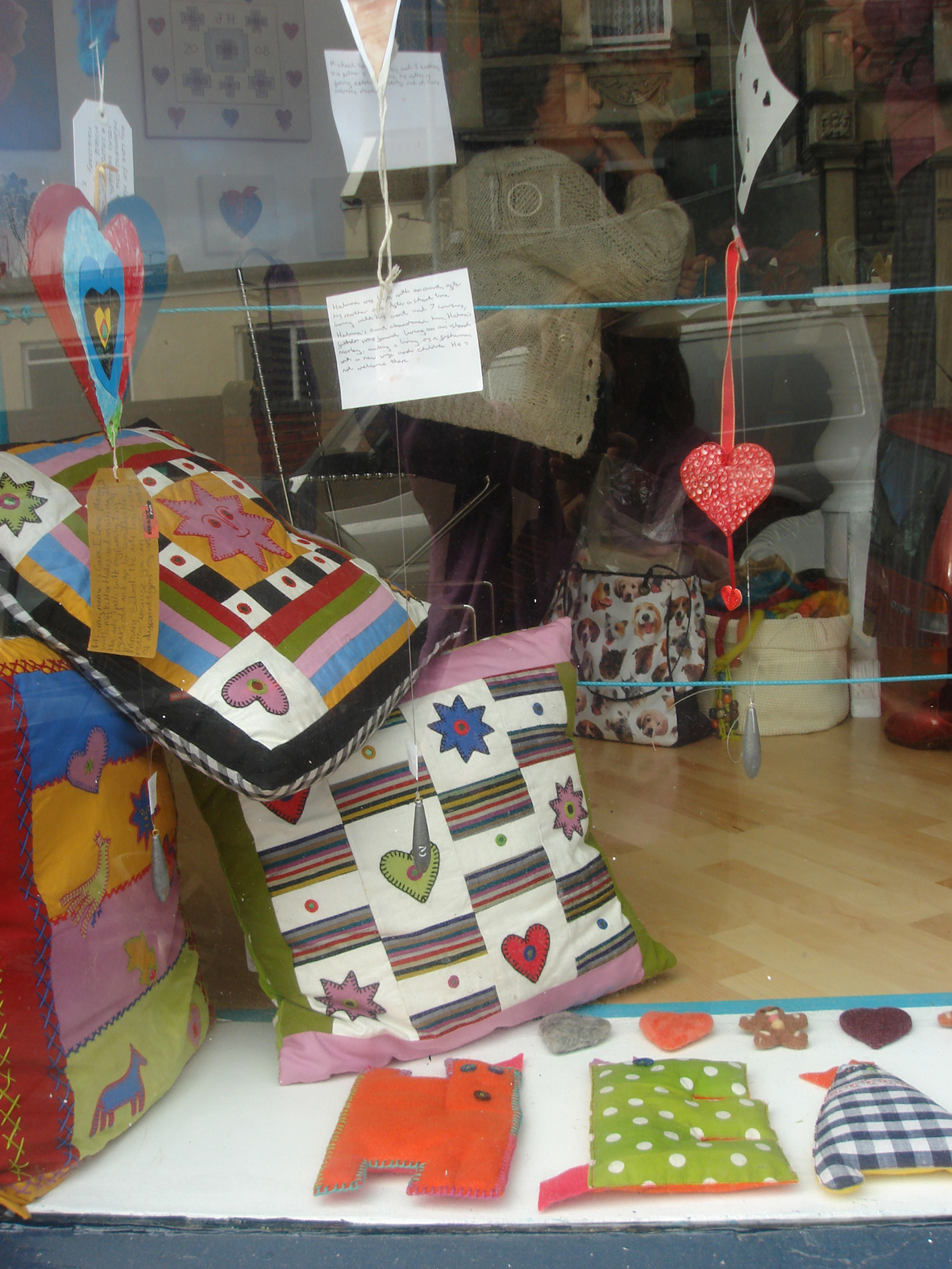
One of the main things I want to achieve with Heart Space workshops is to introduce people to the basics of designing textiles, not just making for making’s sake – nothing wrong with this – but I feel that designing for a purpose is a surer way to focus and develop ideas and skills, so one of the simplest of our one day taster workshops will be to design and make cushion covers – and here are some of mine in the window, plus the alphabet animals I designed for the parent and child’s Saturday classes.
cushions and alphabet animals in window
I have to show this rare photograph of me laughing with Martin Remmers, an old friend and book seller, who has offered to help set up a reference library of all things stitch-based for the students to use.
my hearts exhibition and me laughing with Martin Remmers
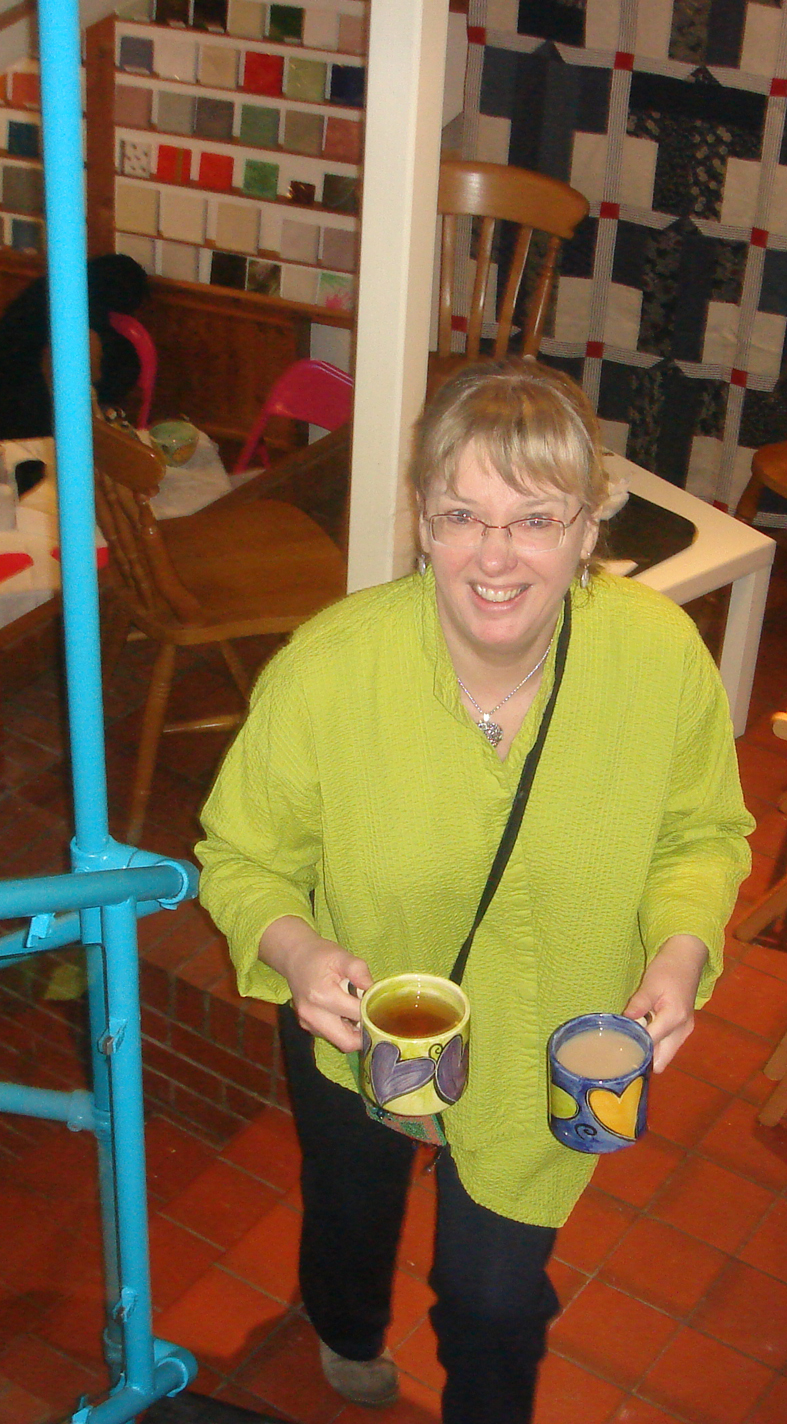
Also a typical picture of partner Liz Hewitt, who organises everything and who goaded me into taking all this on in the first place.
Liz with heart mugs of tea.
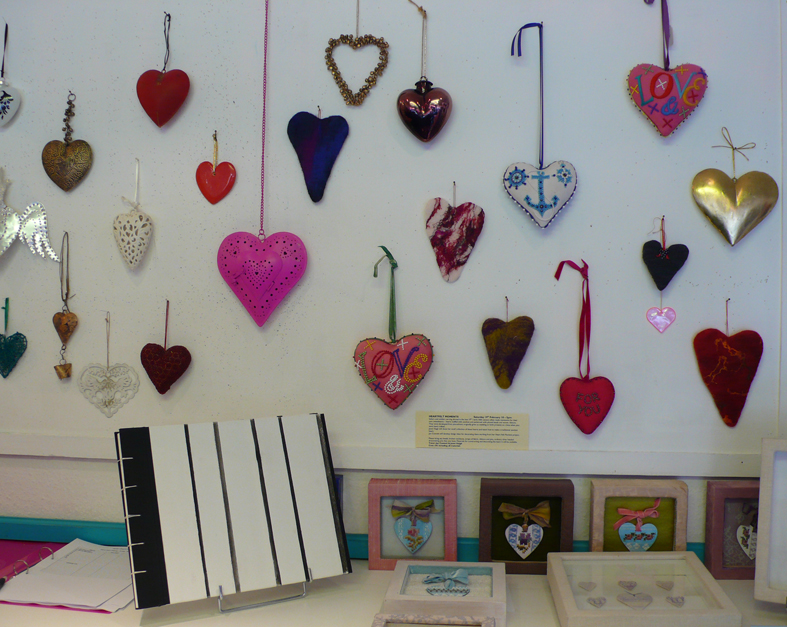
And last but not least, my temporary display of hearts from different people – this is being taken down today Valentine’s day, and shelving for the fabrics, yarns and ribbons will be put up – as inspiration and use for all the students of Heart Space Studios
heart wall with examples of stuffed and beaded hearts our first Saturday workshop
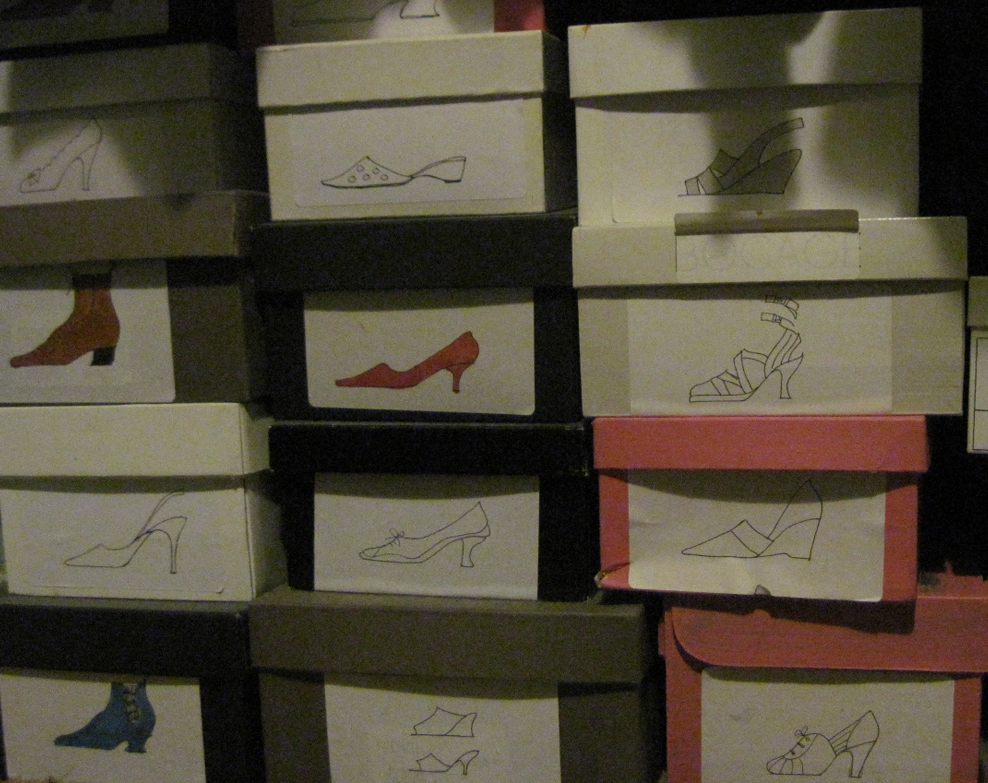
This is the story of my friend Irene Bohan, she of the teeny tiny feet, and a shoe lover of the highest order – I mentioned her in my shoes dream on the Ongoing Work pages ( scroll down through to the 5th post) here is her own sad story – but with a hopeful ending! So we know we are dealing with a serious collector when we look at her shoe cupboard below – she actually draws each shoe and pastes this onto the boxes – which I must admit is a better system than mine – I use the boxes for storage in my studio and the shoes get chucked into the bottom of the wardrobe.
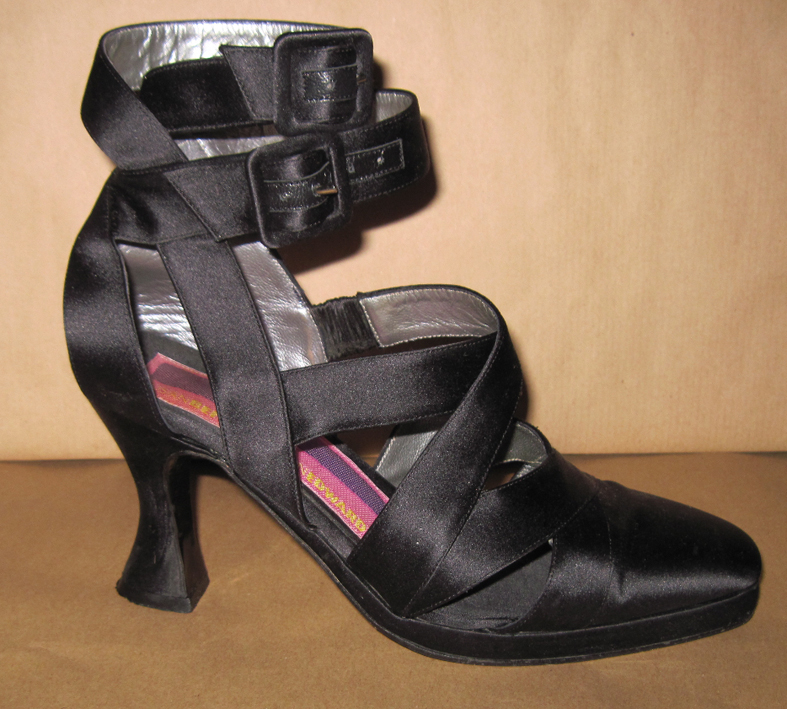
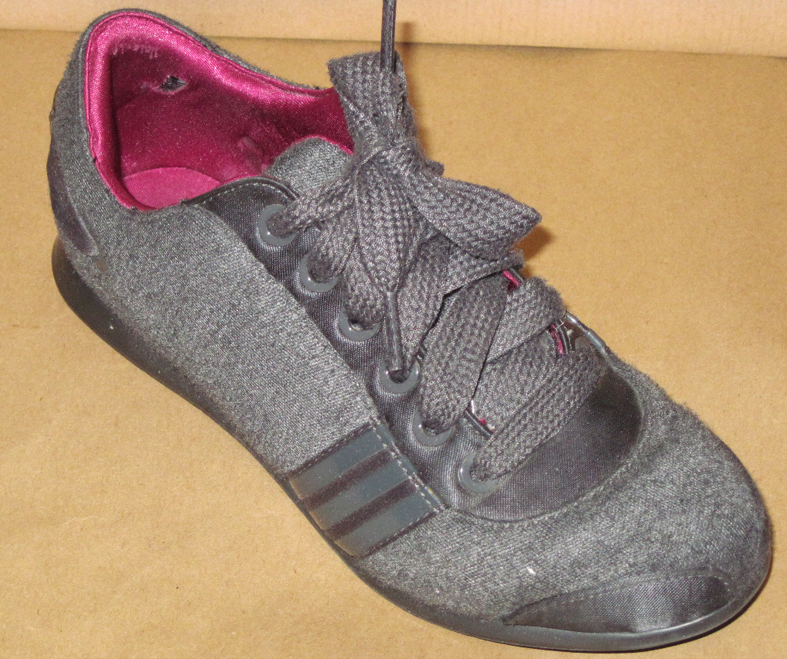
Her comment on this practice of labeling is “yes I am that sad that I draw pictures of the shoes and stick them on the boxes, but each shoe has its own story” . So the beautiful shoes at the head of the page were “bought for the opening night of the first show I ever did on Broadway – I was meant to buy a present for the set designer but bought these instead and he was more thrilled by these than a gift – I arrived at the after show party and said ‘your first night gift is on my feet’ “.
Oh yes did I mention that she works in the theatre – we are talking the type of work where you are expected to wear shoes like this!
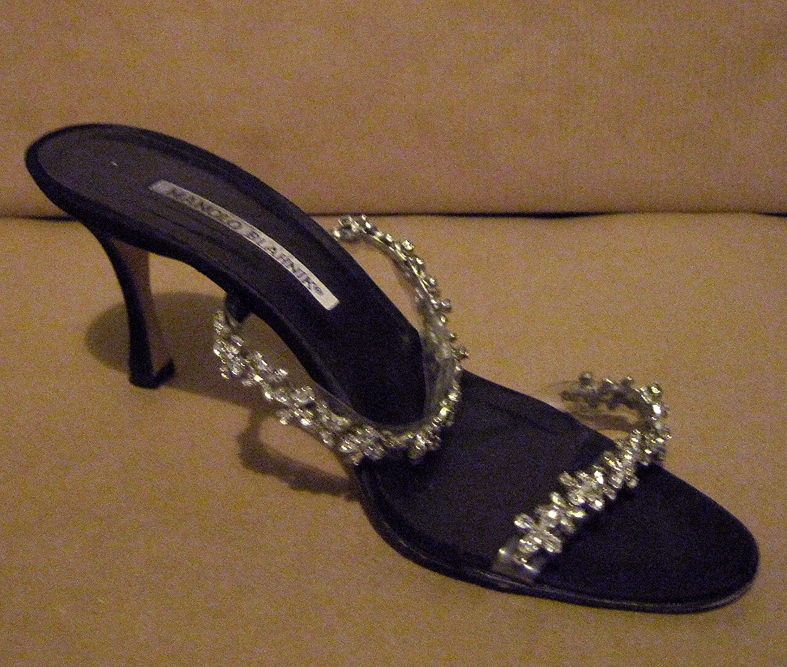
Now it is a terrible truth but I have what a good friend used to call “Grunewald feet” do you know the artist? – think of the ripped, torn and nailed feet in 16th century German paintings of crucifixions – I wear shoes as camouflage. So these beautiful Manolo’s above are my idea of shoe heaven – not only could I never have afforded them I never ever could have worn them…….however Irene didn’t buy them ” These were a first night present from the same designer – several years later – also in new York – I didn’t take them off my feet for 36 hours ! Yes I did sleep in them”
So now IMAGINE how she feels when she is diagnosed with Morton’s Neuroma, which is basically a damaged nerve and probably caused by constant high heel wearing – it is flats from now on
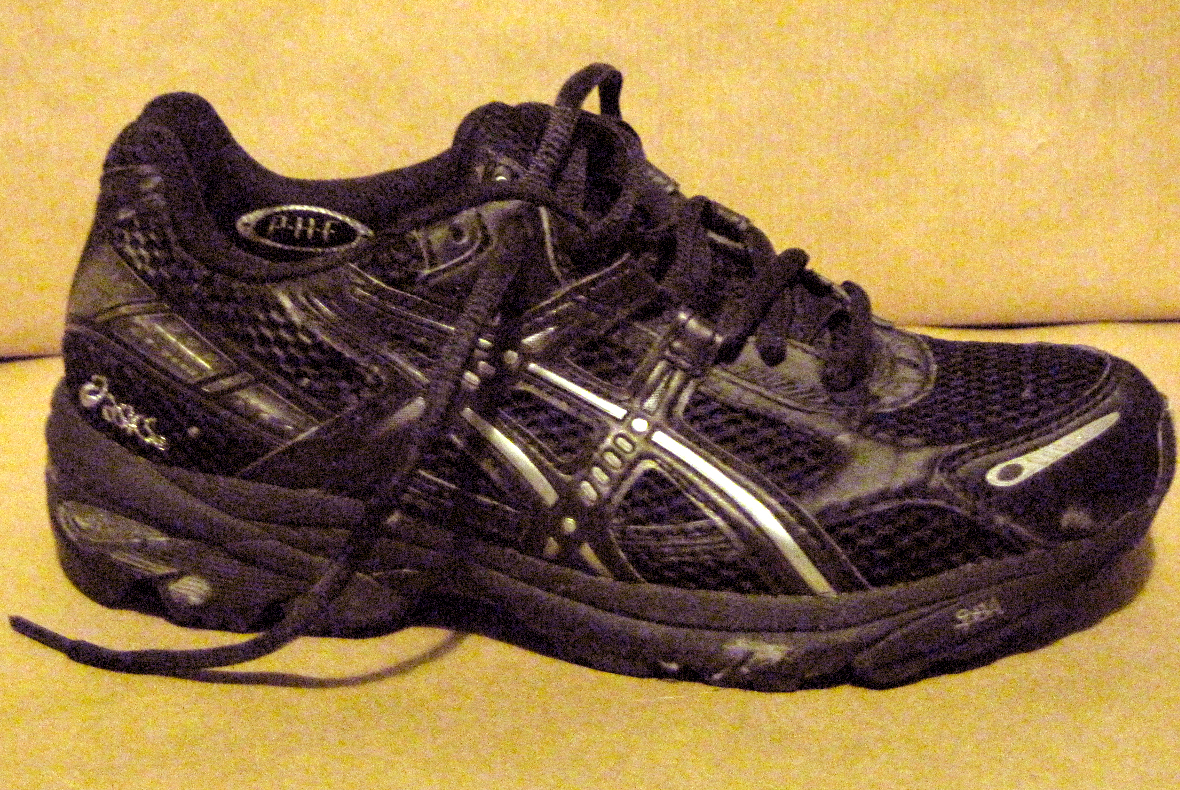
the full horror revealed – the shoes that made her cry.
” Can you imagine – when the podiatrist said – well you have to wear trainers – I cried – but I did what I was told went and got measured for proper trainers came home – cried again – threw them in the bin and went and spent a fortune on Stella McCartney trainer-ish shoes – so there are ways round it but I do miss my heels !
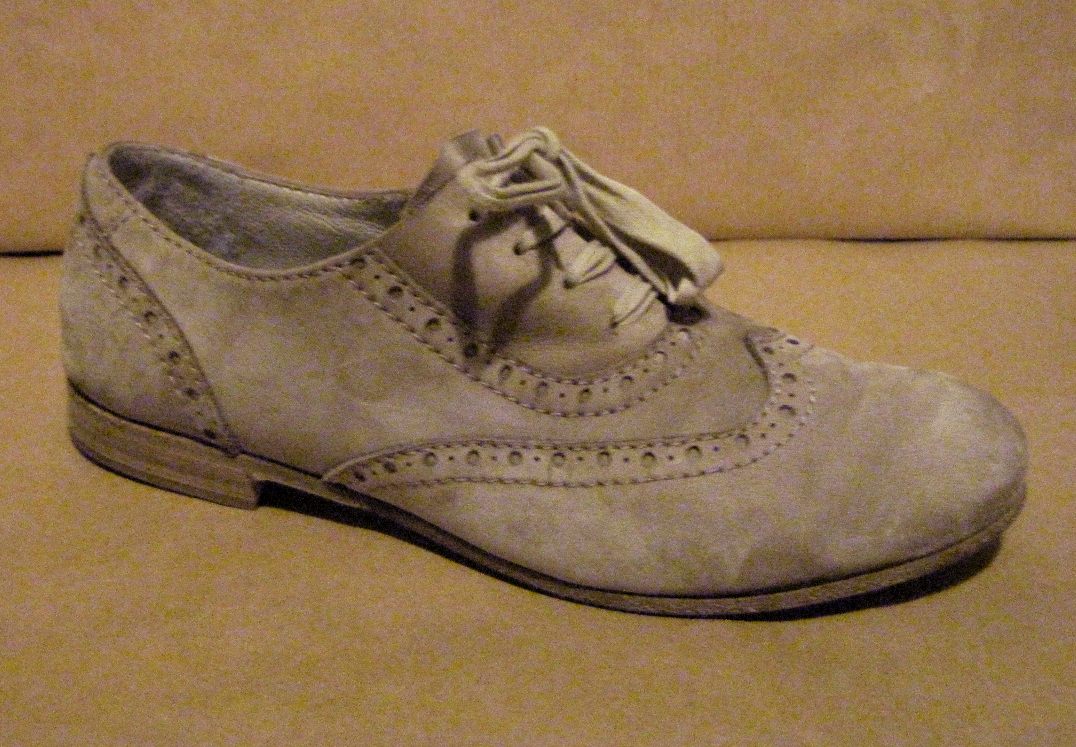
So – she is now developing a rather good selection of gorgeous brogues and riding boots but sometimes just takes a pain-killer and puts on the Manolos !!! These brogues are lovely but I can’t imagine her dollying down Broadway to a premier in them……
P.S. when we were emailing one another to put this post together Irene sent me this heart- felt message “I’m sure people think I’m shallow being so upset by it – but my shoes are so much part of what I am – and now I’m a suede brogue, albeit a stylish one, not a killer Manolo ! my answer to her is this quote from the Rev. Sydney Smith
“Do not assume that because I am frivolous I am shallow: I won’t assume that because you are grave that you are profound” – Thanks Irene I have been waiting years to use this quotation – which I think just about sums me (and you) up………….
drawing and embroidery for my pink shoes- Ann Rippin
Welcome to my new world – I am starting something completely different this year – opening a space in Bristol for textile based workshops called – not surprisingly – Heart Space Studios. I have been asked so many times to conduct drawing and/or stitching workshops that I decided to take the plunge and with 2 other stitchers, Liz Hewitt and Jan Connett have committed to developing series of workshops and courses from complete beginners to master classes for all things textile.
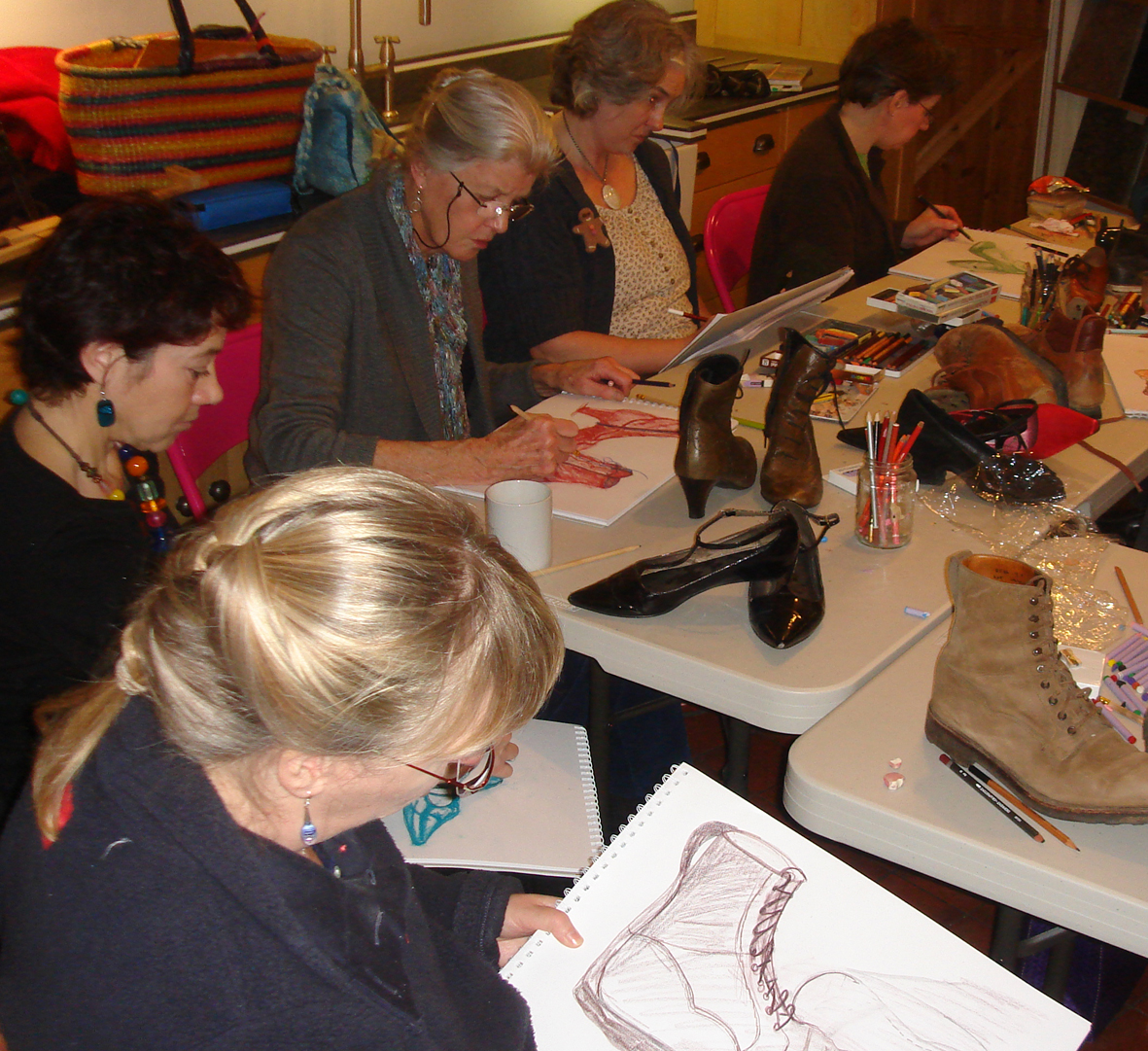
complete concentration at the first workshop - drawing shoes. Jan and Liz are seen here at the bottom left hand side of the table
I conducted this first drawing class for a disparate group, most are established textile makers, some teach classes them selves, some had never been to a drawing class before and Liz Bishop, informed me that she was unteachable, she had tried and failed to draw at countless classes…I had a plan for her – but as you can see below it was totally un-necessary. I meet with this “I can’t draw” problem all the time by people who are perfectly capable of drawing but who have at some time in their lives been told they can’t – by what standards they have been judged is hard to fathom – my response to them all is – if you can write your name the same way twice – you can be taught to draw. But this is such a sensitive drawing that I really was perplexed when I saw it.
first drawing by the woman who "couldn't draw"
I have taught design and drawing, usually observational drawing, for many years as a senior lecturer in textile design at UWE Bristol – from life drawing through fashion illustration to drawing for design outcomes. I have worked with private clients, costume students at the Bristol Old Vic Theatre School as well as drawing practically every day in one form or another. I feel that drawing is my first language, English my second and stitching my third.
And what was my first drawing class about – shoes – well why not? Practically everyone I know has an attitude to shoes either their own or other peoples’ – I have been drawing and stitching them for the past few months and I had a lot of ideas about them to relay to anyone who would listen
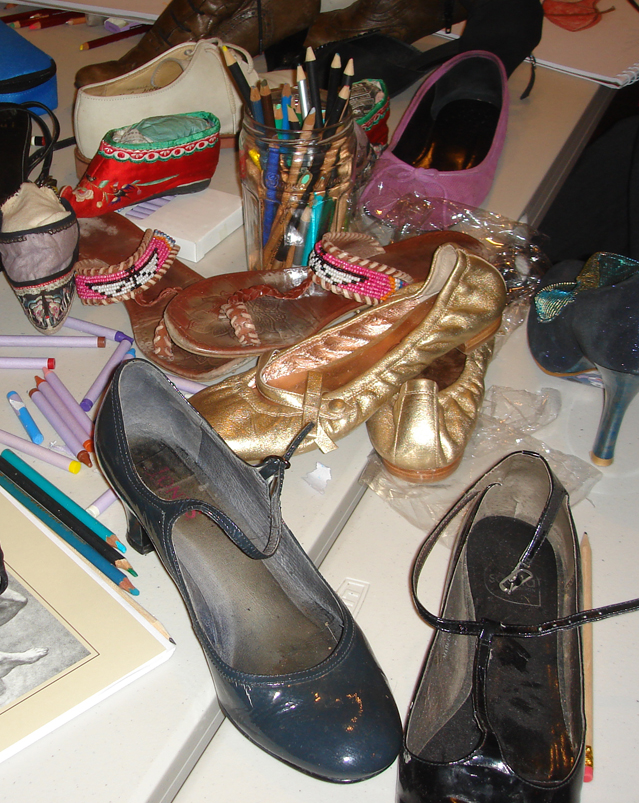
shoe selection, from Chinese bound feet covers to Jan Connet's "staggers"
I called the first class How to Look, and I set about it in the usual way of quickly getting everyone relaxed for working by doing 2 minute studies of various shoes and being extremely strict about how they drew them – like not taking the pencil off the page for a continuous line drawing, how to use various angles of the pencils and crayons to create textured lines, pushing not pulling the pencils, drawing with an eraser….most people were amazed that I was teaching drawing skills, not just setting up poses – I was amazed they were amazed.
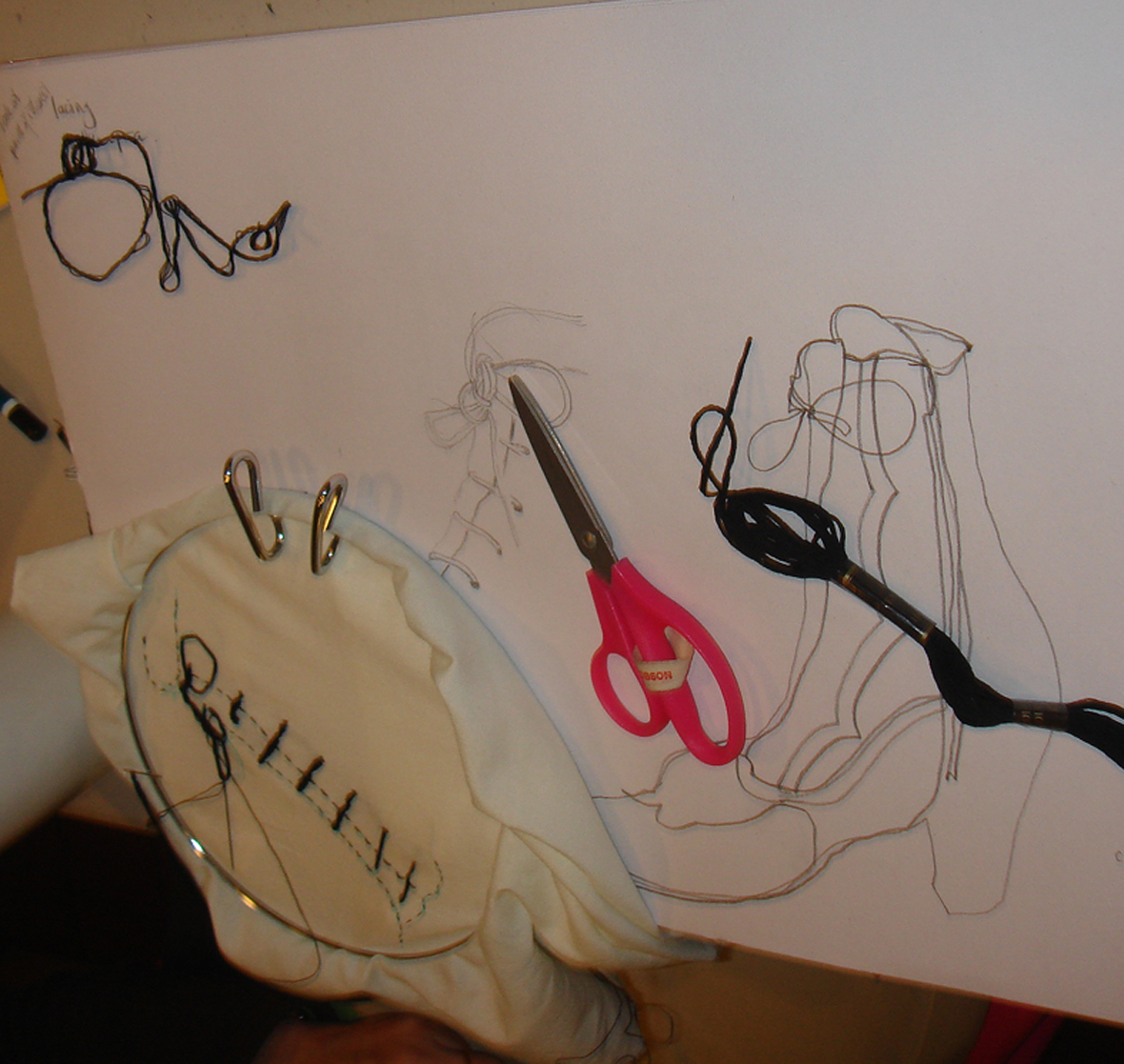
first simple drawings being used for stitched shoes - Janet Clarke
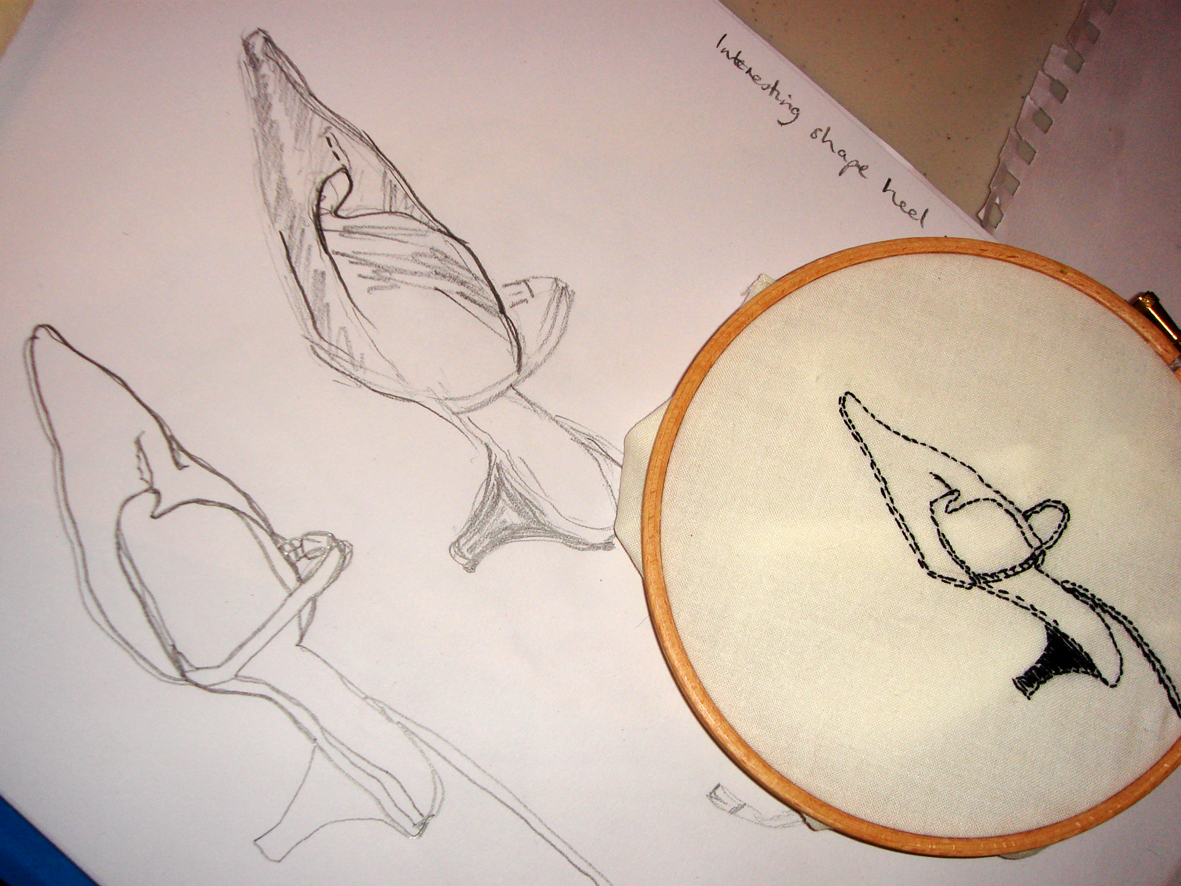
I have very few images of these early drawings – I was far too busy watching and teaching to remember to take photos…but happily several people returned to their simple line drawings for the stitched drawing later in the day. One of the most elegant drawing and embroidery transitions, below, was done by Sally Payne who “doesn’t stitch at all” and is a musician, she just came along with a friend.
an early drawing with transition into stitch - Sally Payne
Several people brought shoes, Jan Connett brought the most fascinating pair of all – a fabric and glitzy suede confection which almost everyone wanted to draw, but they would have taken the whole day to have done justice to them – the person who captured their spirit if not their fabrication was our only male student, Mike -who is just re-learning to draw after a very early retirement,
everyone's favourite fabric and leather shoes
coloured character drawing of the glitzy shoes, Mike Kersopp
But Jan’s own simple line drawing and embroidery caught something more refined which she could see in them – but then she has worn them and is very alive to their curious allure.
drawing and stitched transition drawing or her own shoe Jan Connett
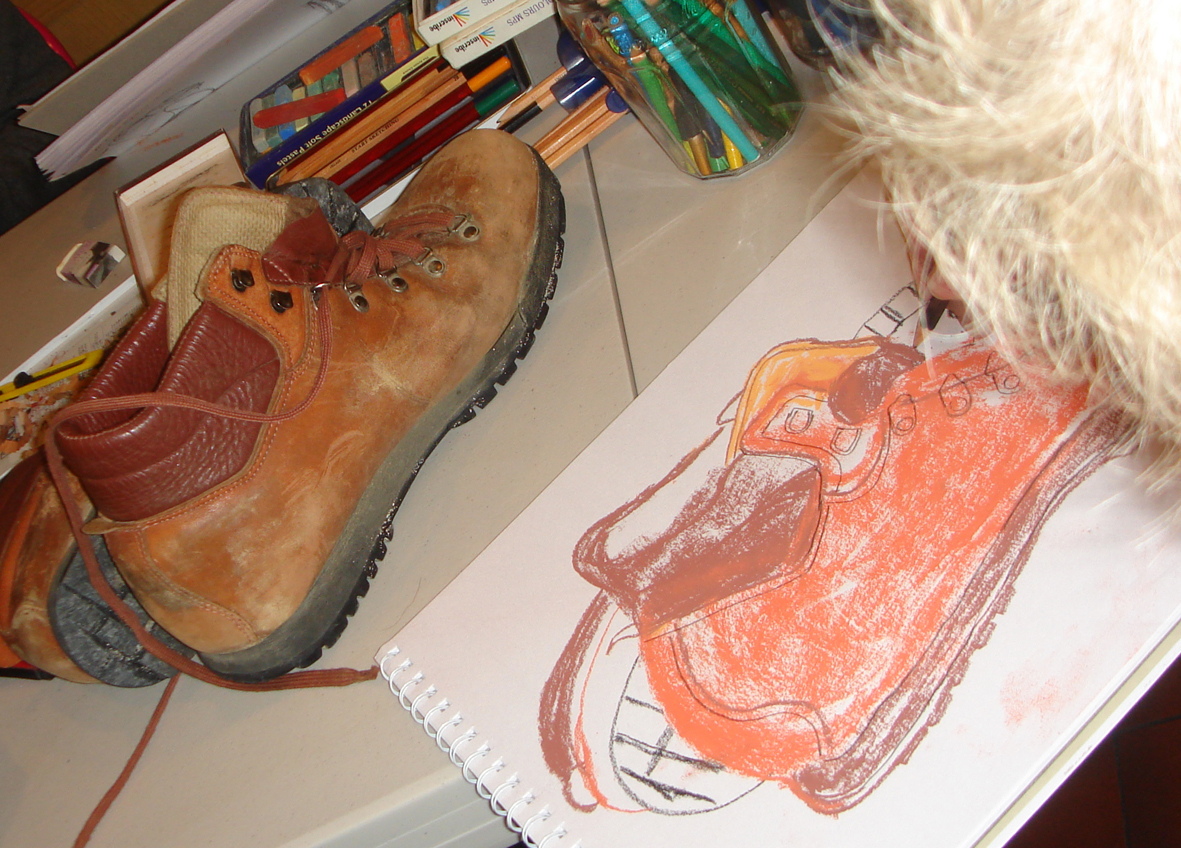
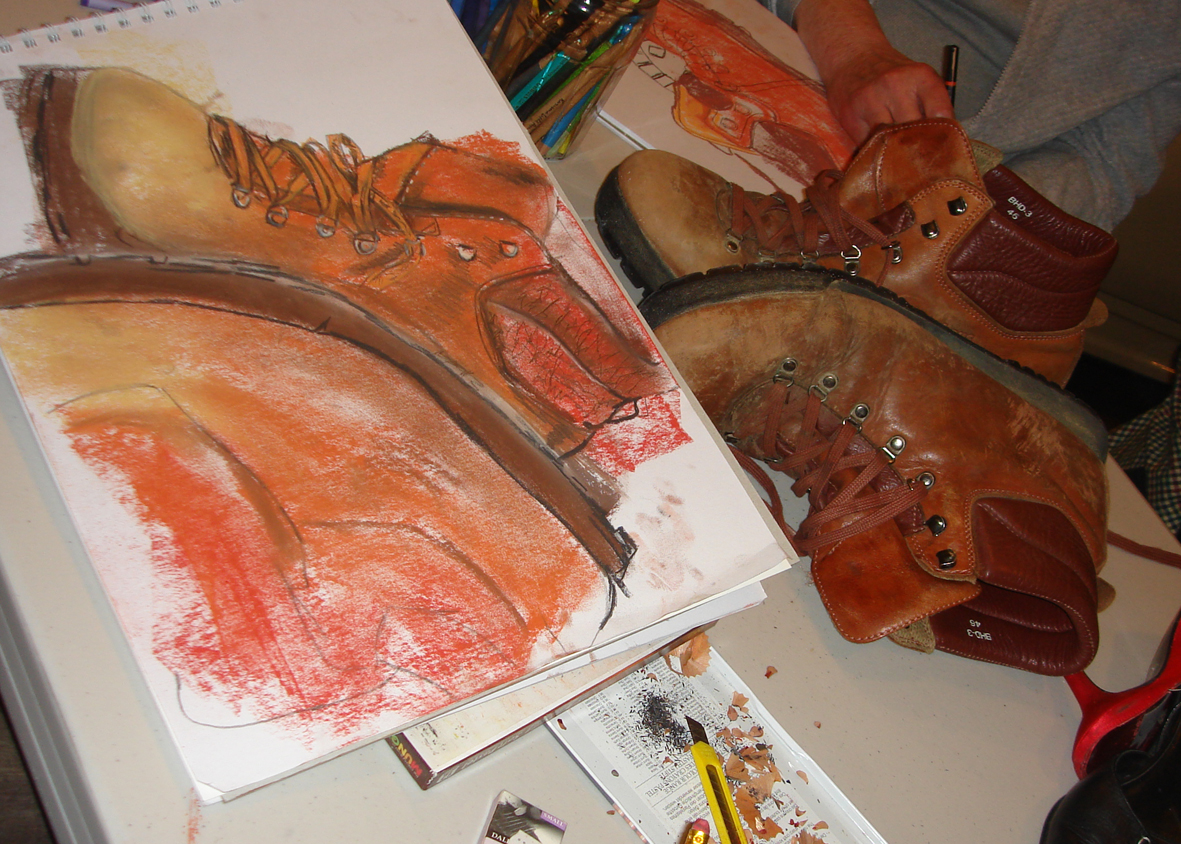
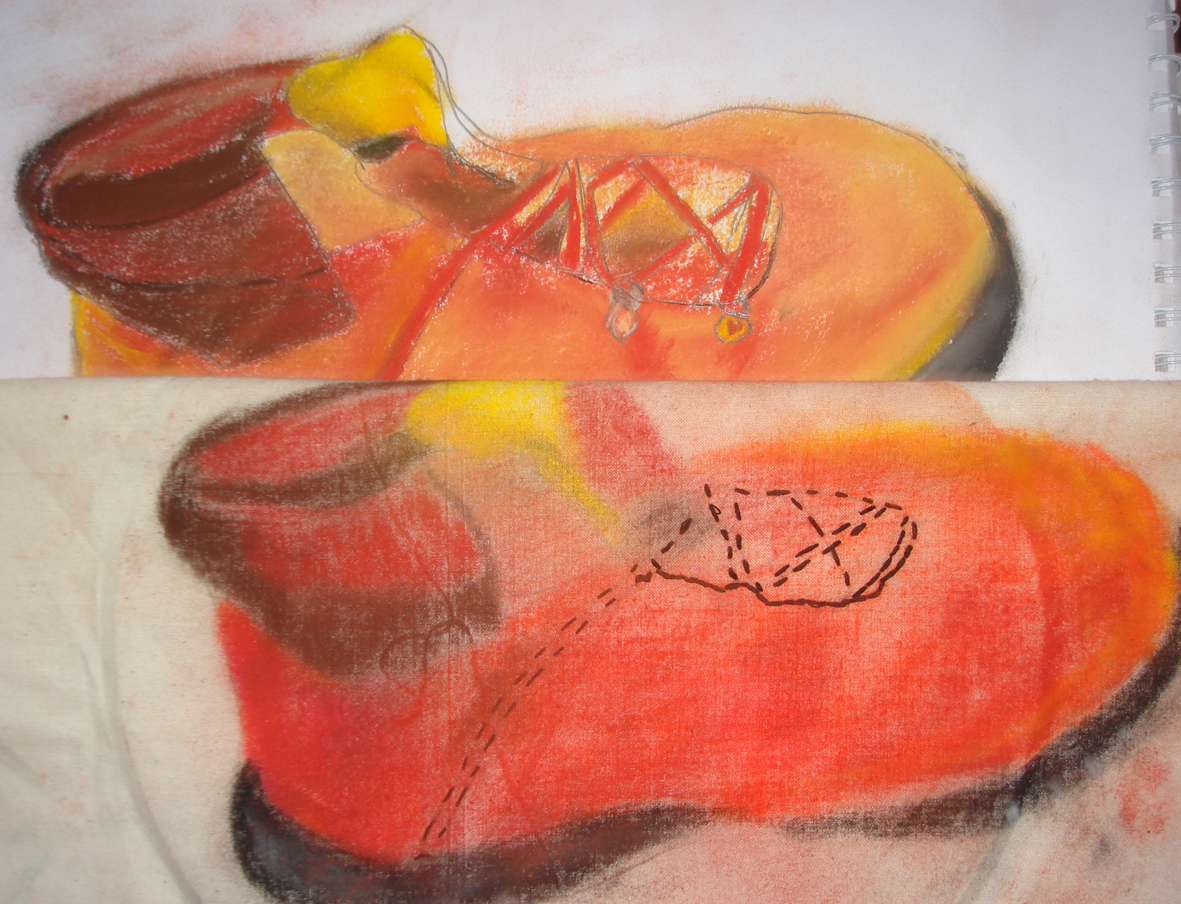
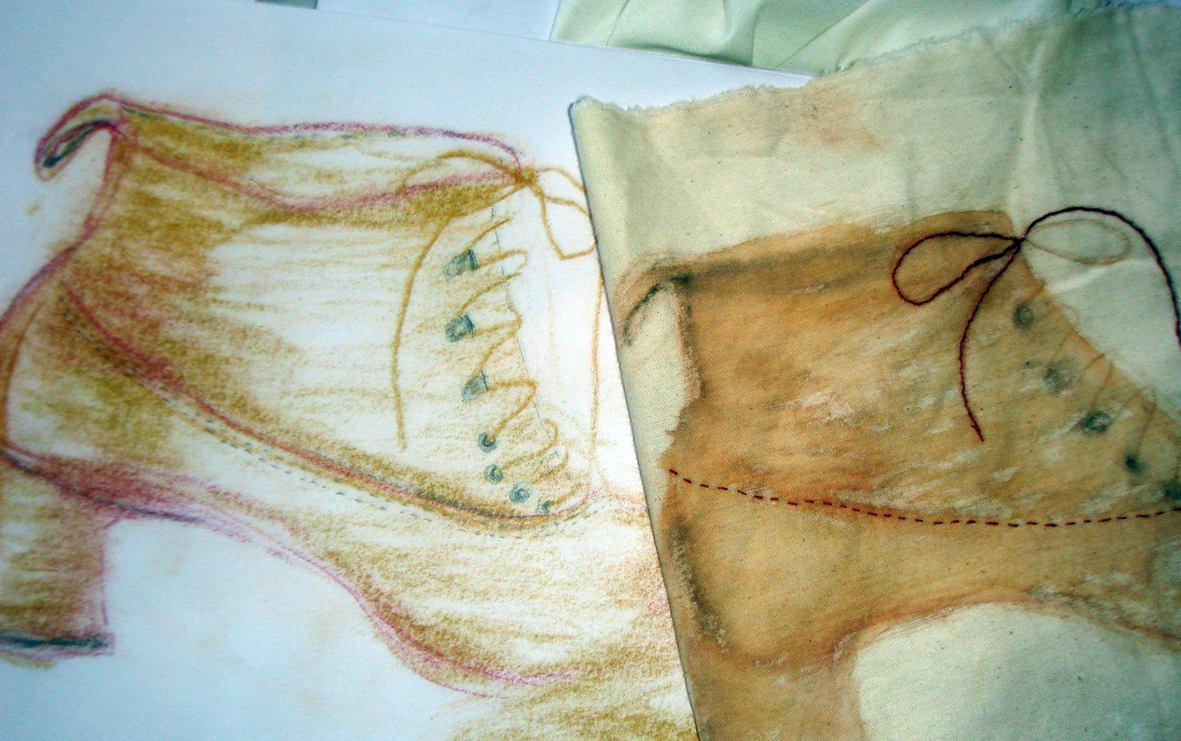
Another shoe or rather boot, that proved to be the inspiration for several wonderful drawings, were Mike’s suede boots – their rugged rough exterior made everyone who saw them reach for oil pastels to draw really big – they turned quite a few people into confidant illustrators and their subsequent embroidered versions carried through the initial conviction.
work boot drawing, Ira Wood
work boots, Kirsten Hill-Nixon
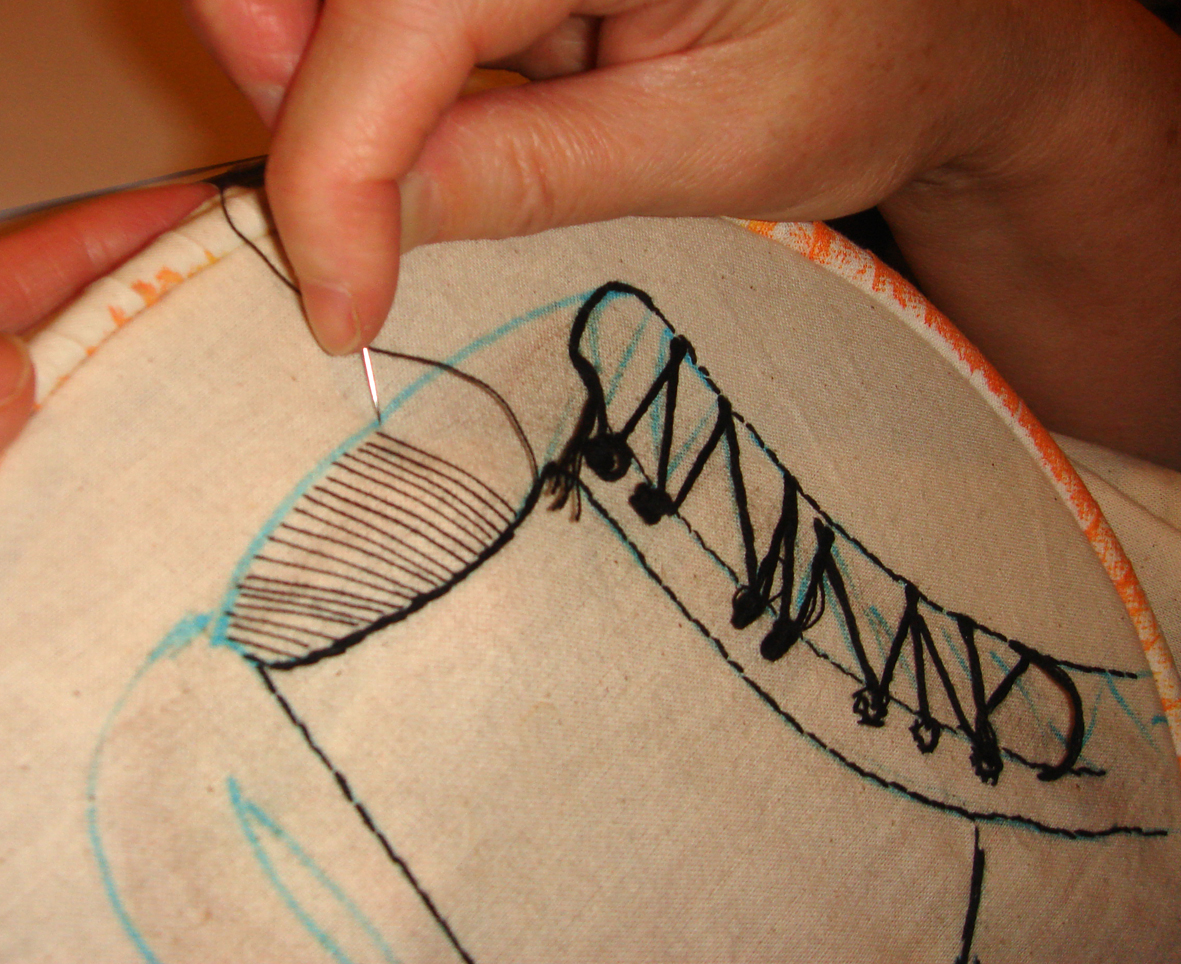
However Mike really won the “bravery in face of the experts” award for his first attempt at stitching from his study of his own boot, I had to explain the rudiments of running, back and split stitches. It is not surprising that such a rugged boot should elicit good drawings, there is a lot to record in them and the shape isn’t too refined!
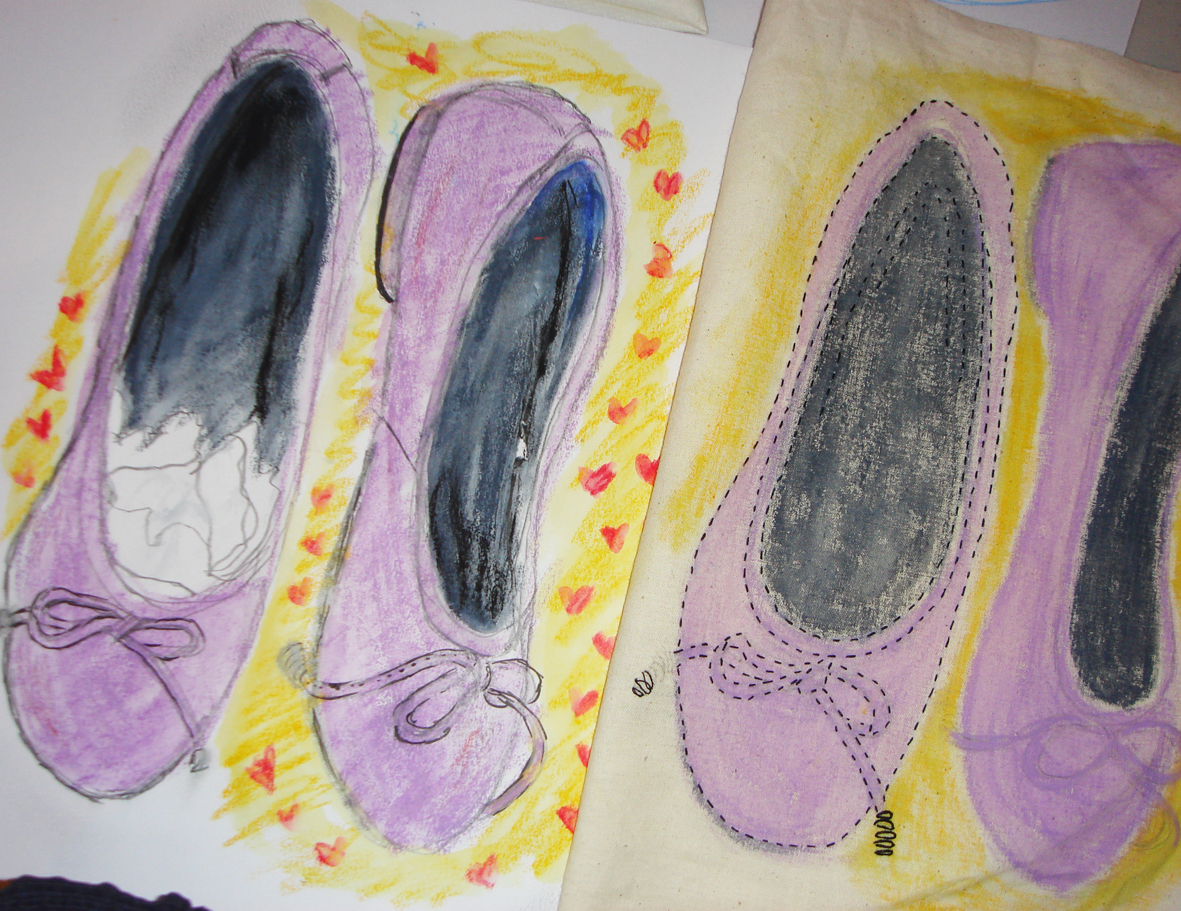
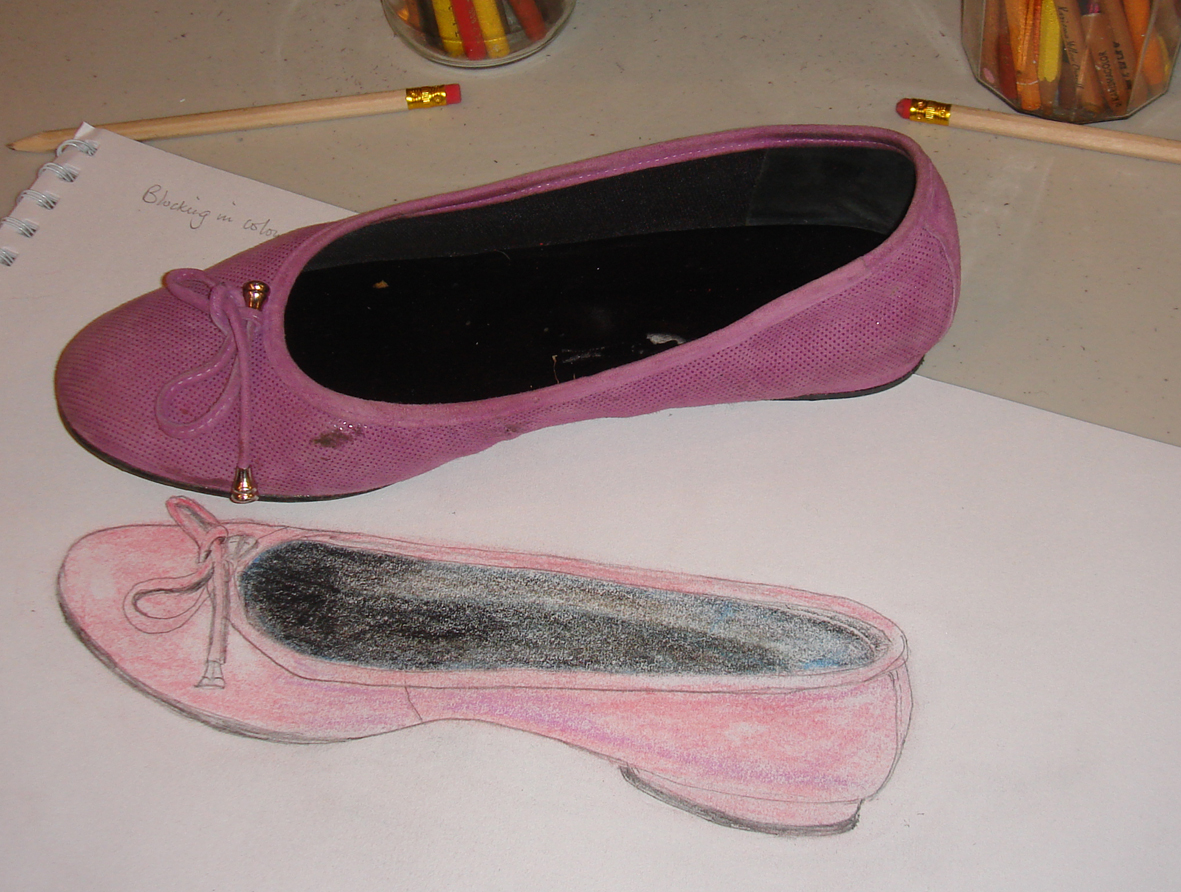
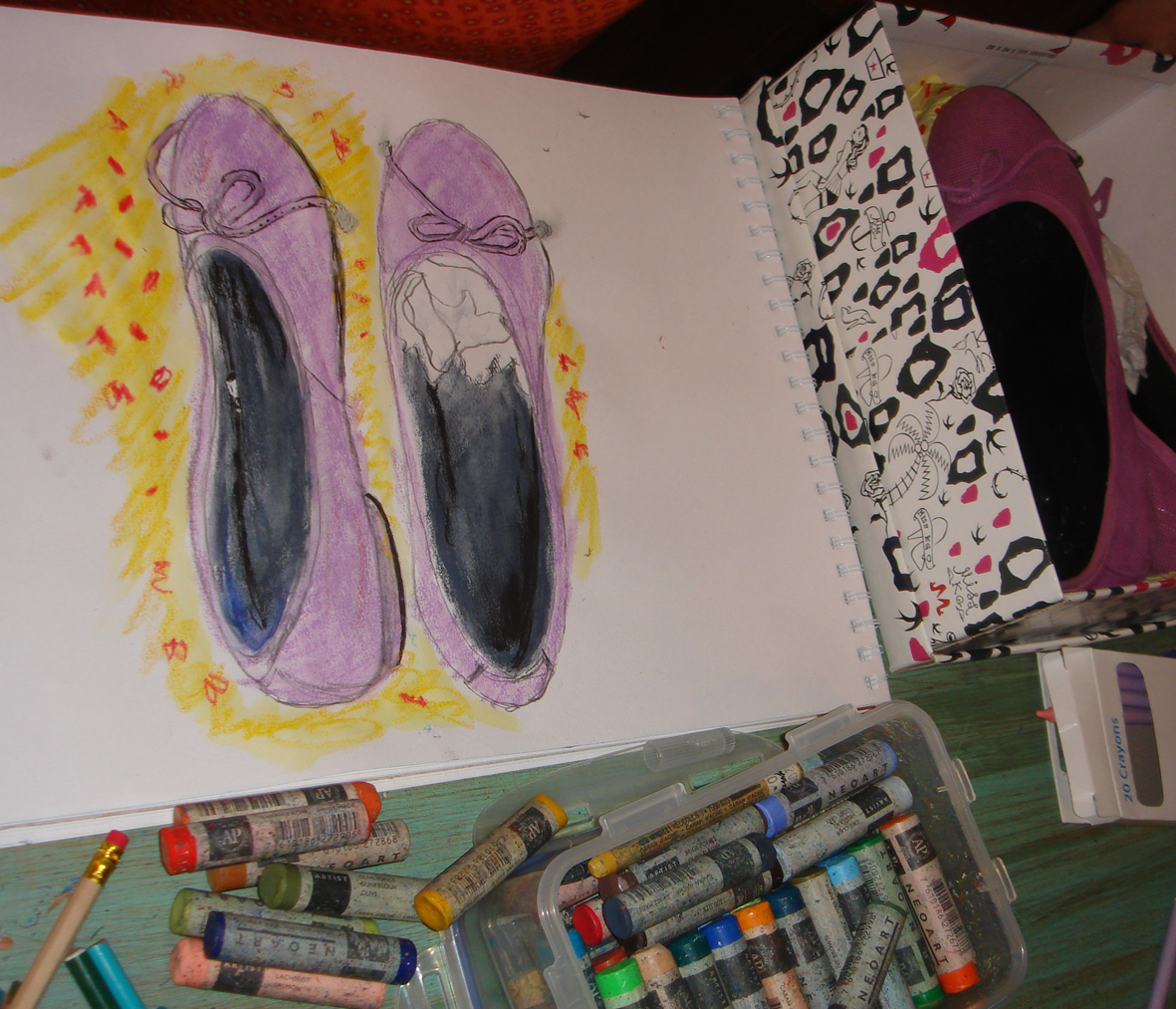
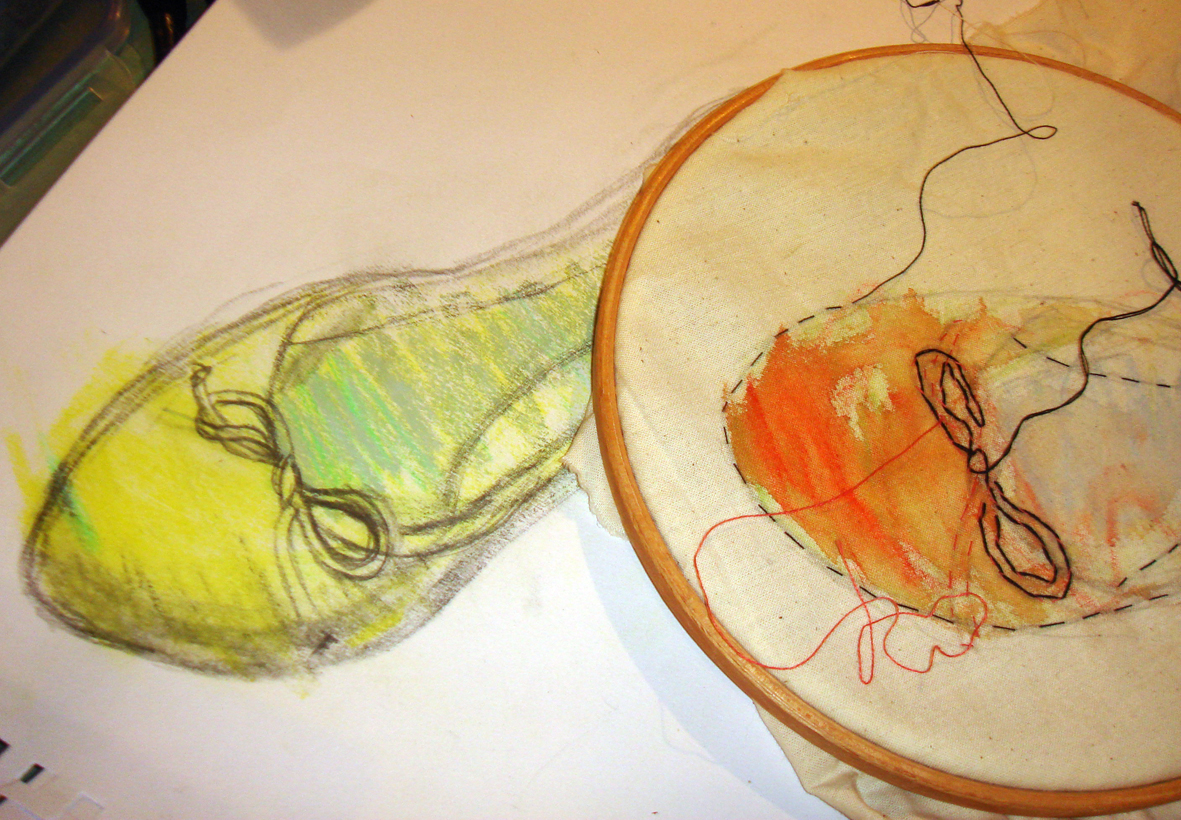
But some of the most charming drawings of all were from a simple pink ballet -flat shoe, their simplicity seemed to bring out careful and fairly accurate results which captured the spirit if never the quite the colour of the original shoes…
simple drawing of a simple shoe - Viv Young
and the header illustration by Anne Rippin is of these same shoes but she placed them perfectly in a shoe box to surround them with a pattern.
lively but simple drawing of my ballet flats - Ann Rippin
Anne has beaten me to blog this first, she sent me a link to her own post before I had even downloaded my images and she is extremely complimentary about the workshop.
The suede boots and shoes seem to bring out the most sensitive drawings from most people – maybe this is the ease with which you can apply pastels and soft crayons which suggests the texture of suede.
sensitive drawing and stitched painting of suede boot- Debby Bird
even my own difficult to draw, black suede shoes have been transposed into luscious deeply textural studies by Sharne Lott – a knitter.
transitions from drawing to stitched images of a suede shoe - Sharne Lott
Even people who absolutely dreaded the day – like Liz Hewitt who organised the students for me, realised that if she didn’t worry so much about how the drawing looked but just concentrated on quickly recording just what she saw, not what she thought she saw (now I wonder why that helped?) her drawings were more accurate and looked convincing – but like many textile practitioners, she stitches a lot better than she draws.
sensitive stitching - Liz Hewitt.
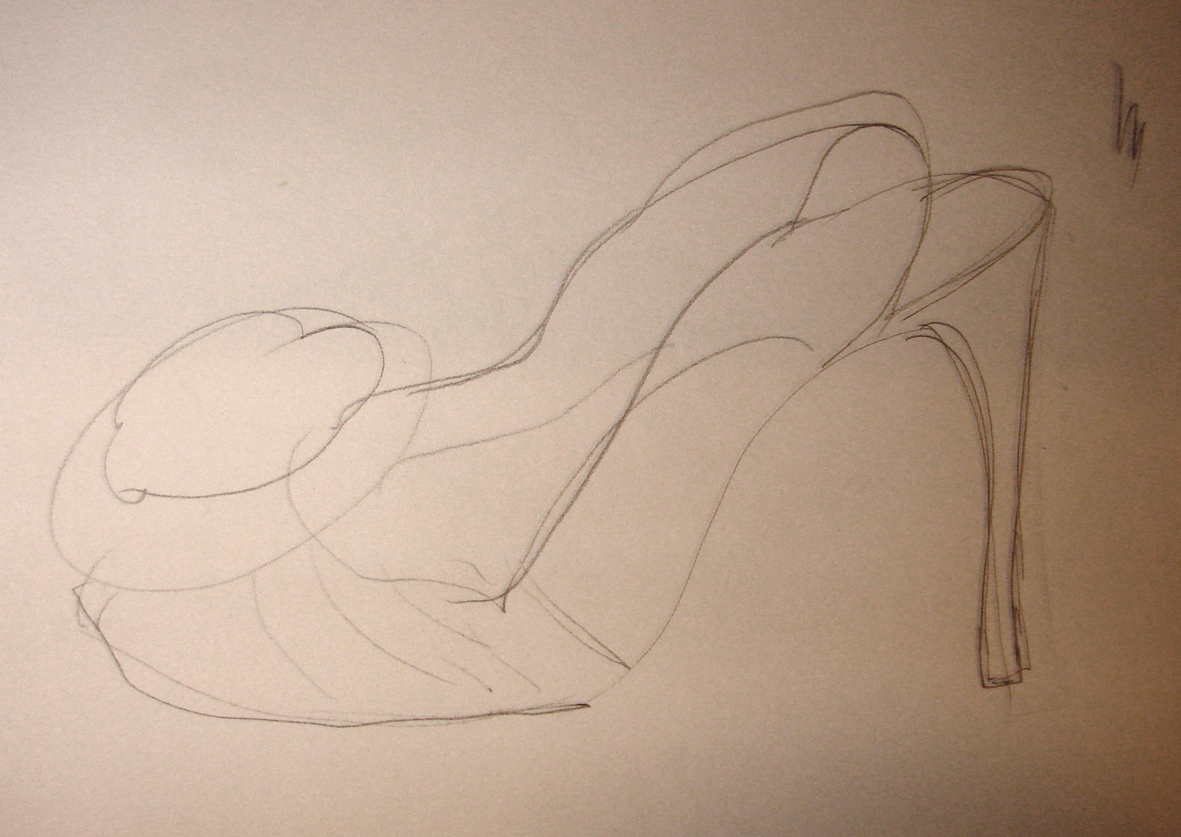
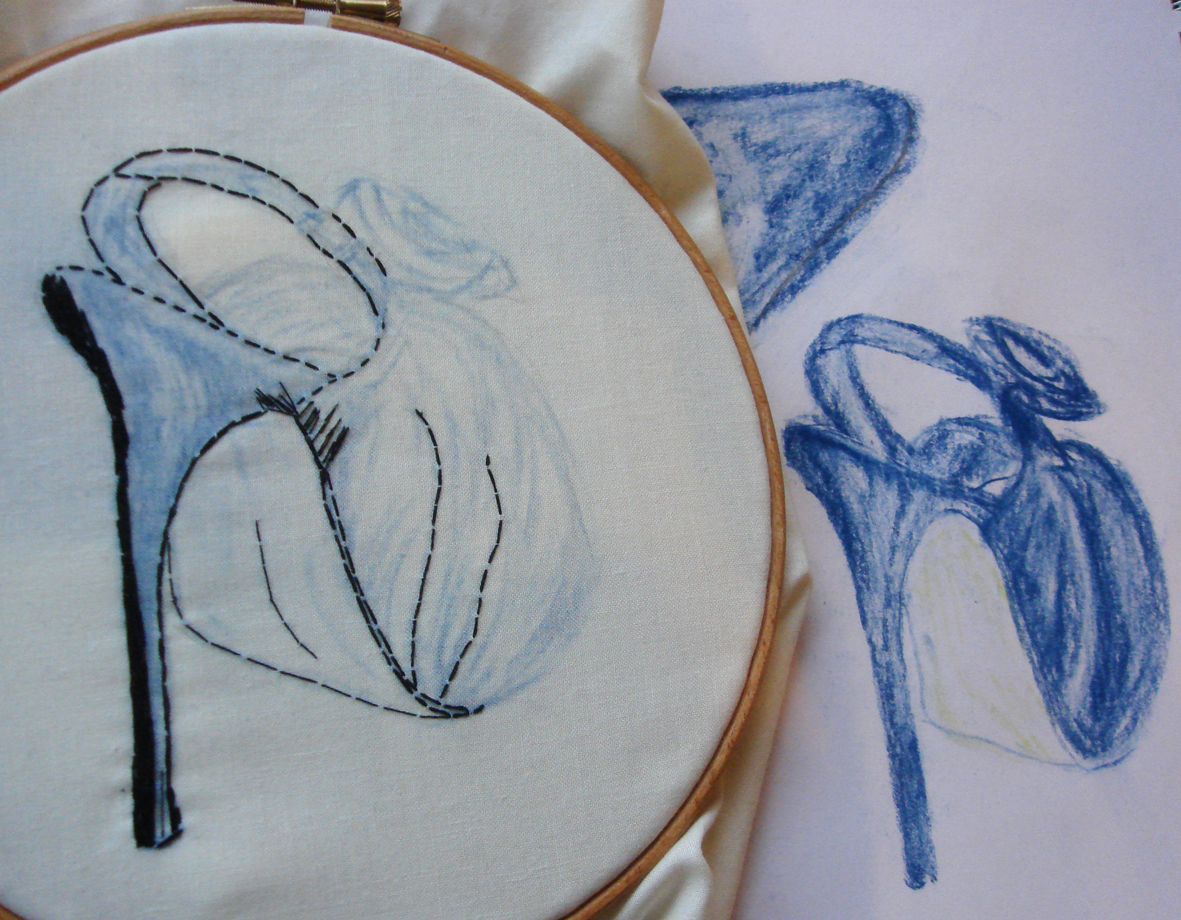
killer heels quick drawing and transition stitching- Sally Sparks.
Being forced to draw quickly often brings about great changes in people’s work, when you are made to hurry up and just told to concentrate on the essentials, which are assessed before-hand, the drawings are usually stronger by being more focused. On the right can be seen 2 really strong drawings of killer heels by a dedicated machine – stitcher who was struggling to get any proper proportion in her slower and more considered drawings. I often find that people who have taken a long time over a drawing and then realise it is out of proportion are loathe to change it – thinking that they will adjust it later ….better to erase the problem when you first recognise it .
Another thing that happens when you draw quickly is that it helps stop what I call feathery or dithery drawing, where people make about 6 attempts at the line so it appears to be ghosted – one of these lines must be right but which one? That is when I suggest drawing with an eraser…..choose the correct line and get rid of the rest – this advice worked wonders on one person at the class, who eventually made a sensitive if alternative coloured drawing and embroidery of the ballet- flats. – just look at that drawing of the bow!
fluid drawing after the de- feathering exercises-~Patricia Brownen