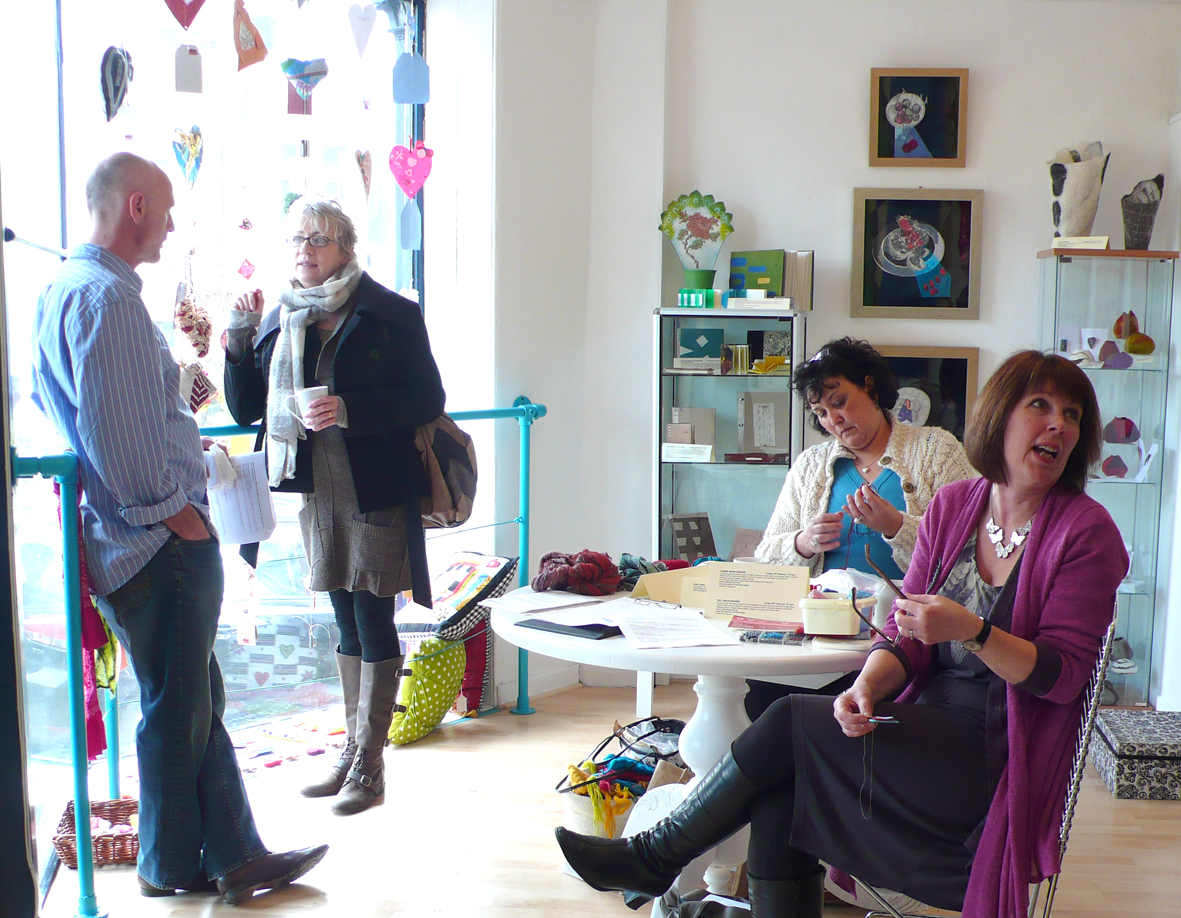
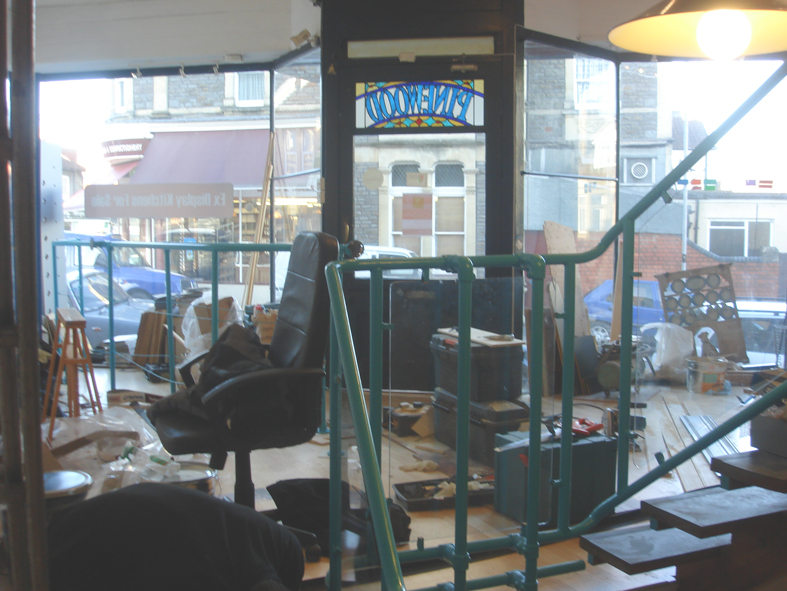
Above is my latest “work in progress” – Heart Space Studios – where all things textile will be taught, designed, drawn, made, displayed and sold. It is in the Redland district of Bristol and last week it looked like this.
the week before the opening, new floor being laid
I decided to open this studio after I was asked several times by several people for drawing and stitching classes. So late last year I took the plunge and just 3 months later here we are at the opening day of our new venture – in what was a kitchen showroom and obviously, given the name, as close to Valentine’s day as possible. Last Saturday, 12th February, saw us with the first studio space up and running. Most of the last few months have been stripping out and selling kitchens and bathrooms ripping up floors and wallpaper and applying for planning permission and then putting down floors, repainting and decorating and making timetables and buying signs and chairs and tables and tea urns and cups and having websites built and changing telephones and email addresses and NOT STITCHING.
One of the several fellow tutors in this venture decided to have a Tea and Textiles opening, which is a regular meeting event for Textile Forum South West. The teas were served with an array of the most lovely cakes and biscuits, either bought locally or brought by friends, who all rallied round to help on the day.
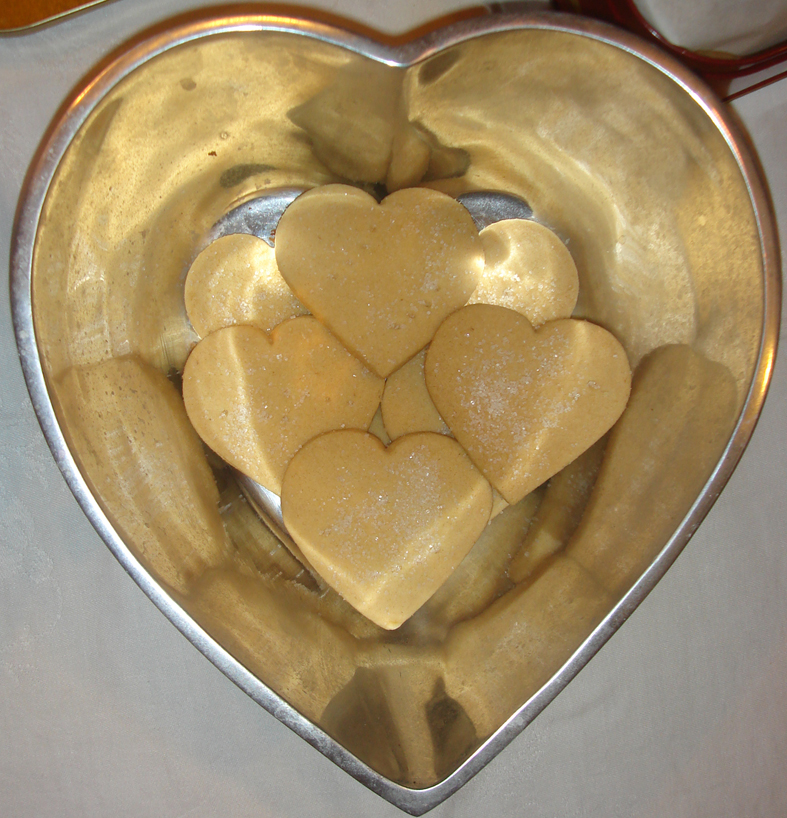
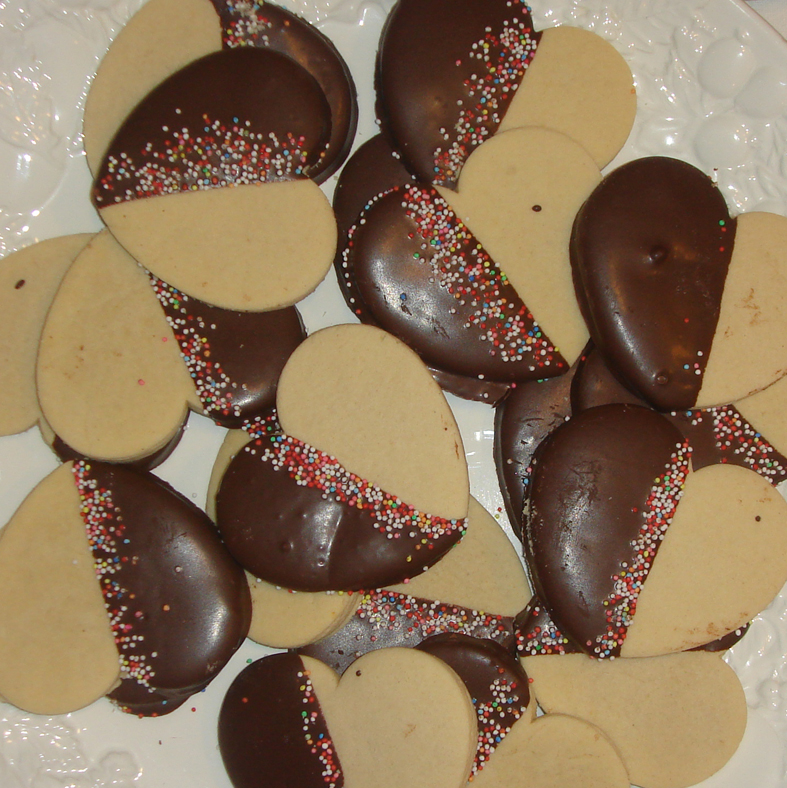
Rosemary's tiny heart cakesRebecca's delicious shortbreadbought from the Split Tin bakery opposite the studios
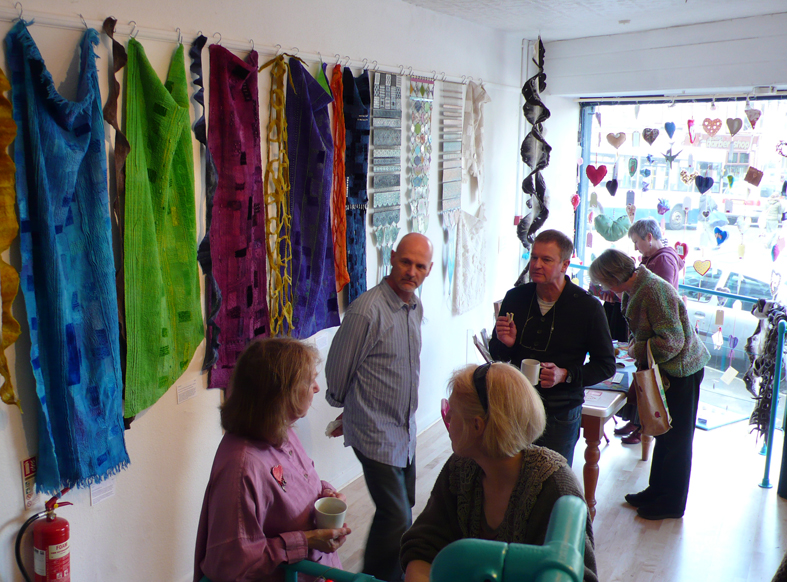
We put up an exhibition of the work by some of the tutors who will be teaching the classes, a mixed bag of stuff so I just went for colour.
wall of hangings, Liz Hewitt's dyed and embroidered cottons, Janet Clarke's felts
as did many other people in one form or another..
Liz Hewitt and Teresa Searle with patchwork quilt by Jan Hassard between
There were lots of samples of other workshops displayed so that people could see what they were signing up for..
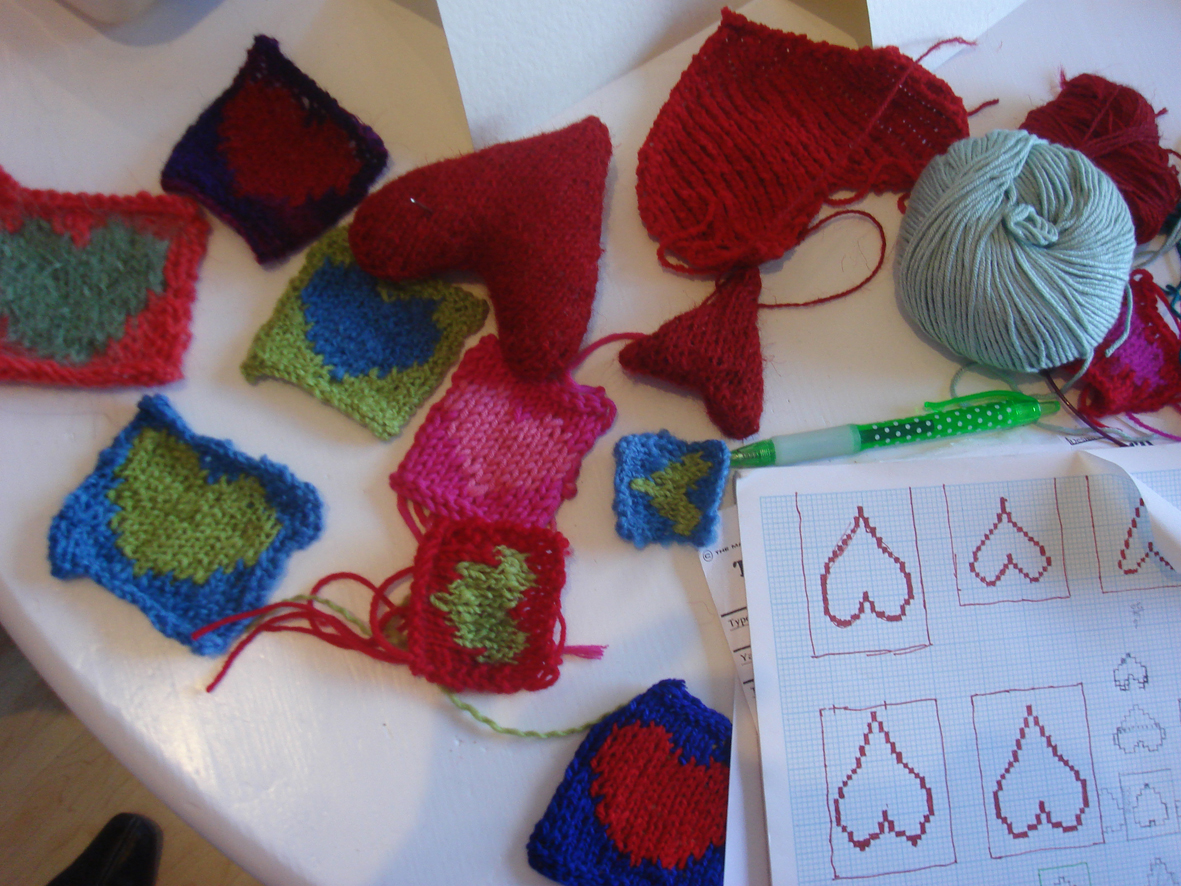
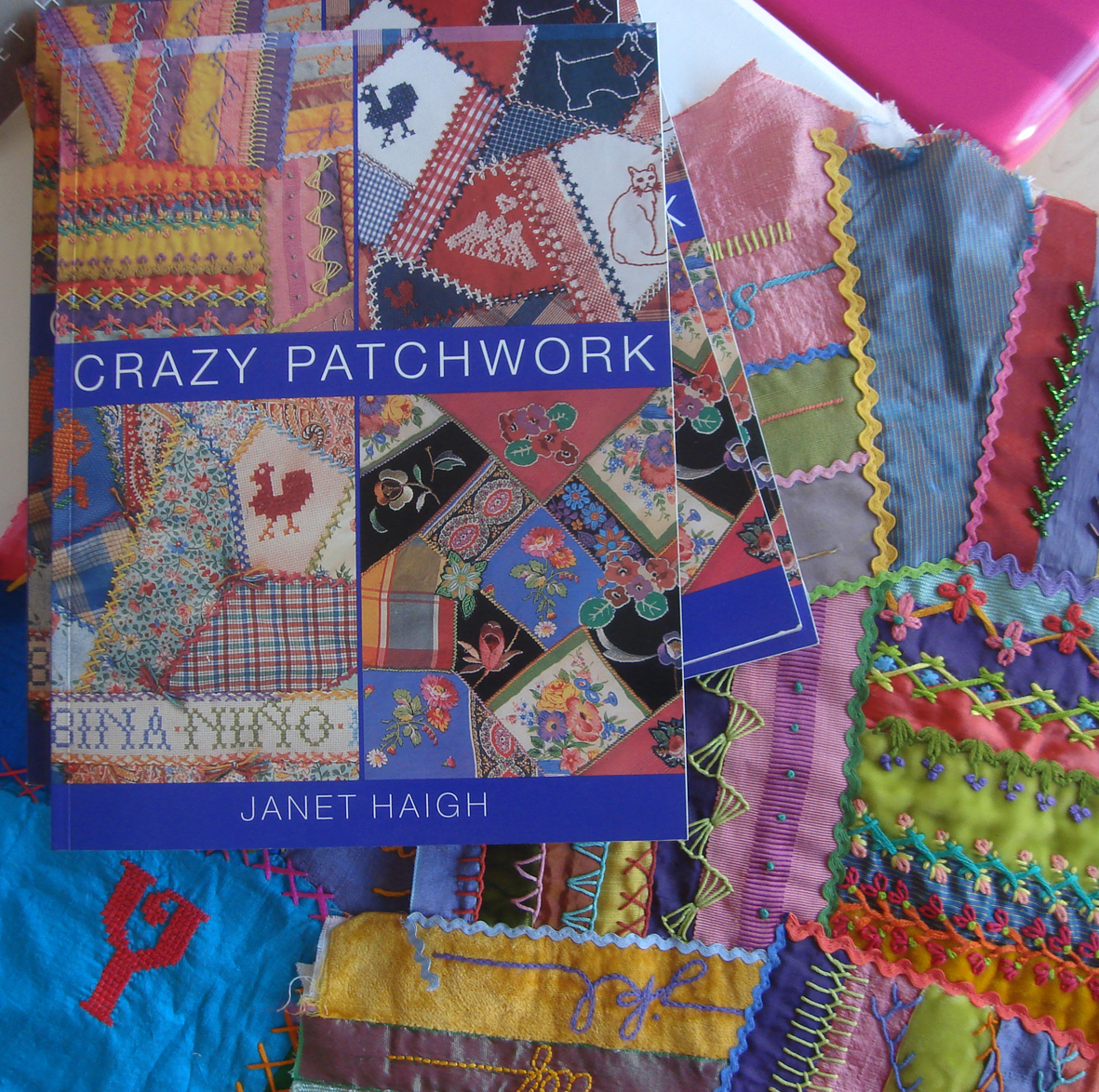
knitted heart patches by Sharne Lottmy crazy patchwork samplers and book
Sharne Lott, knitter turned jeweller and Debbie Bird, applied artist, made things…..
Sharne knitting and Debbie talking
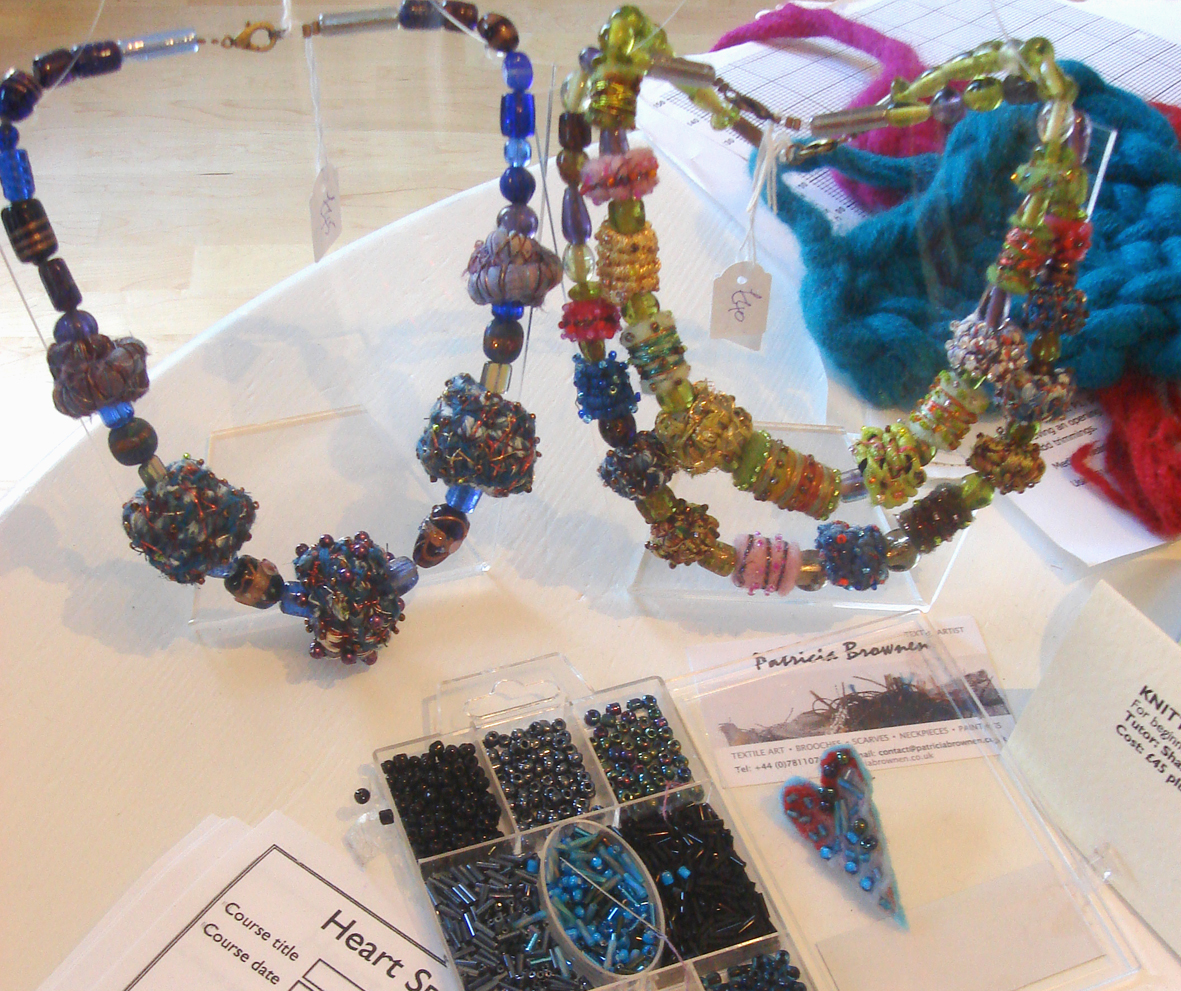
Later some hand-made beads arrived from Patricia Brownen who had come to my first drawing class wearing one of her necklaces – I signed her up on the spot for our first workshop on Friday 18th February…we have already got several people signed up for this – me included!
hand embroidered beads by Patricia Brownen.
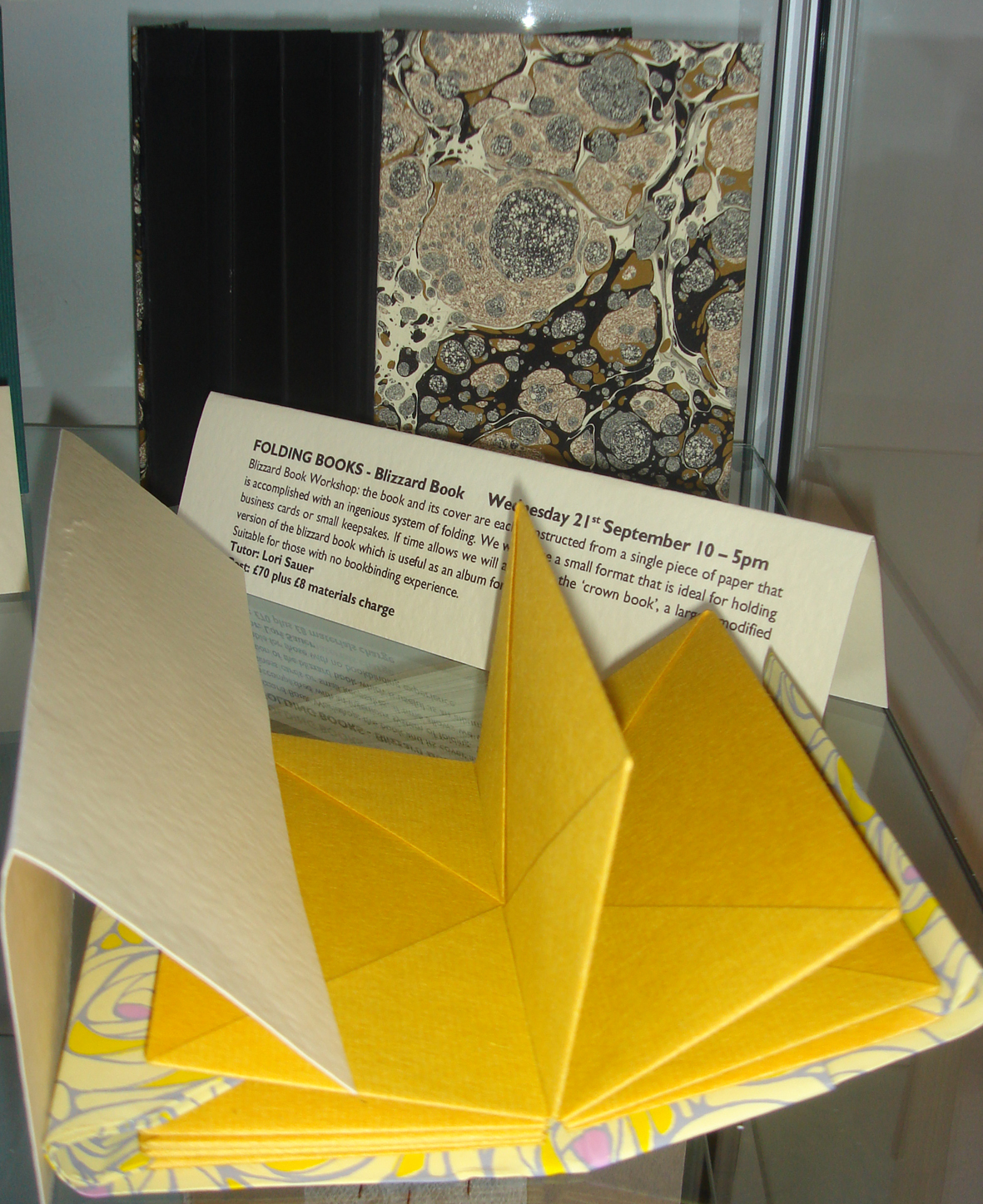
Textile is such a wide discipline to me that absolutely anything involving stitching will be taught, so I was extremely pleased when bookbinder Lori Sauer expressed an interest in conducting classes at Heart Space later in the year.
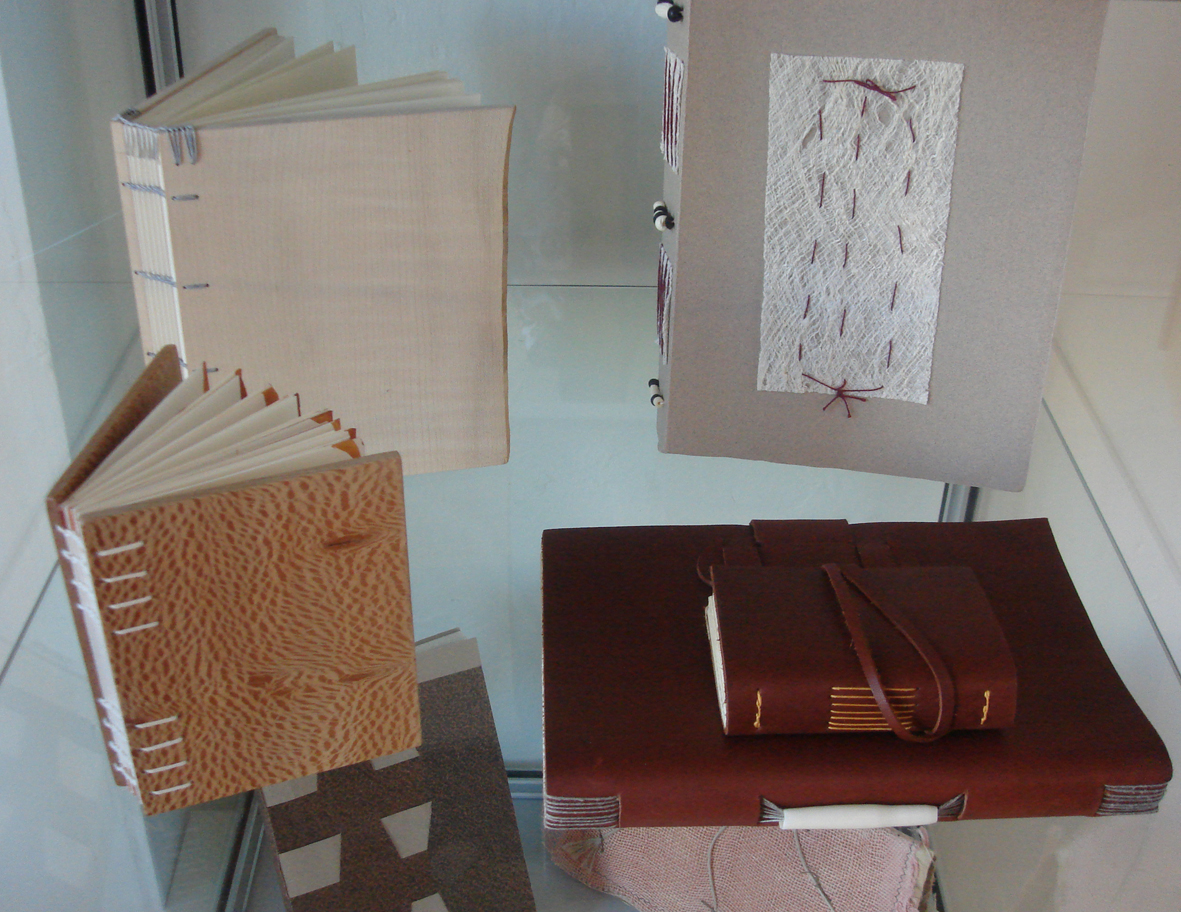
samples of books made by Lori Sauer stitched leather and wood book bindings by Lori Sauer
Felt making is very popular and many people are wanting to sign up to these classes, we are making them a regular weekly class along with stitching, drawing and patch-working. Janet Clarke, who I first met last year at an Xmas party, is taking the major wet – felting workshops; but she also turned out to help get the studio together, putting up the Heart Felt exhibition in the windows with jeweller Hazel Sutton.
felt hanging and vessels by Janet Clarke.
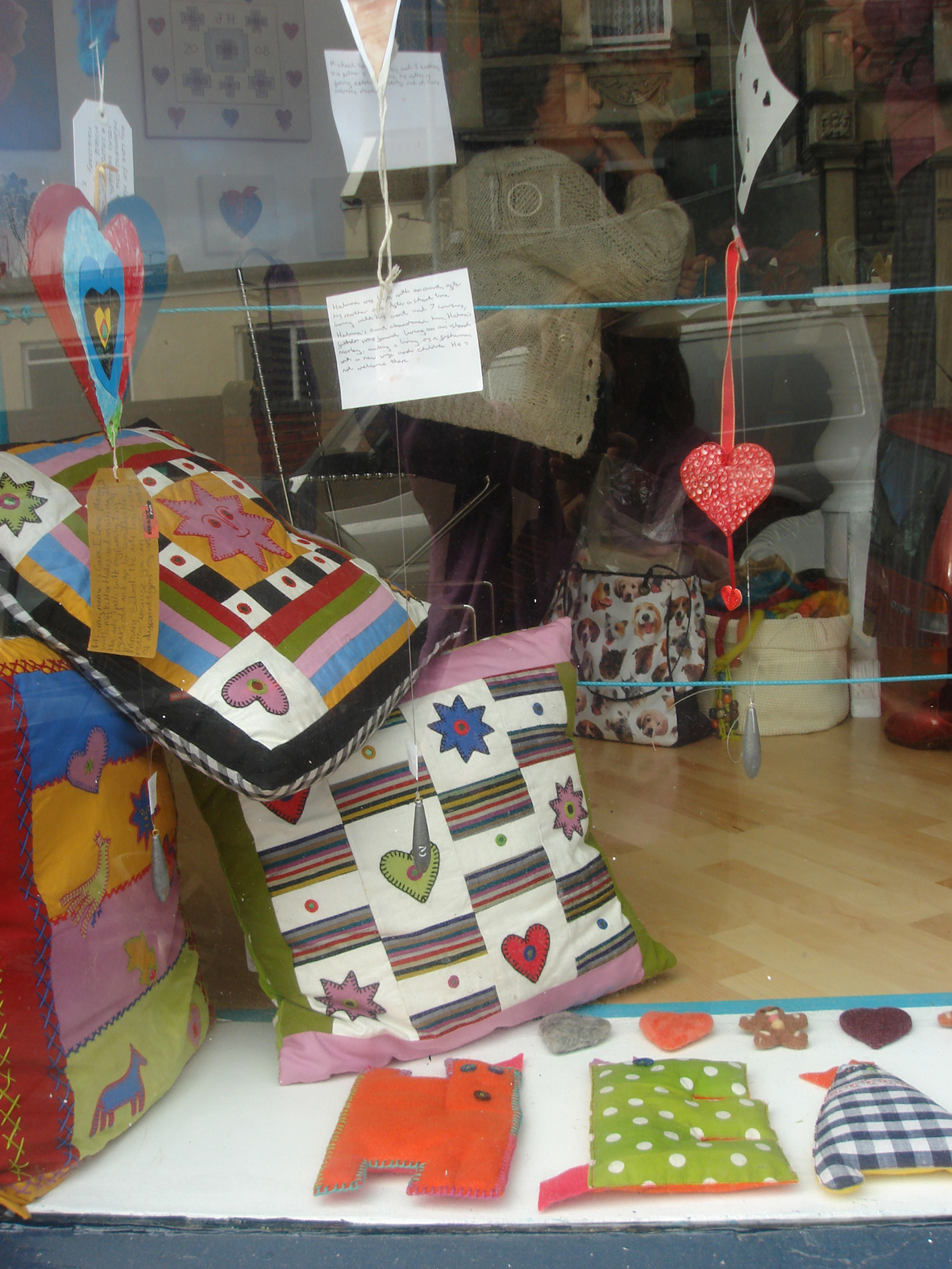
One of the main things I want to achieve with Heart Space workshops is to introduce people to the basics of designing textiles, not just making for making’s sake – nothing wrong with this – but I feel that designing for a purpose is a surer way to focus and develop ideas and skills, so one of the simplest of our one day taster workshops will be to design and make cushion covers – and here are some of mine in the window, plus the alphabet animals I designed for the parent and child’s Saturday classes.
cushions and alphabet animals in window
I have to show this rare photograph of me laughing with Martin Remmers, an old friend and book seller, who has offered to help set up a reference library of all things stitch-based for the students to use.
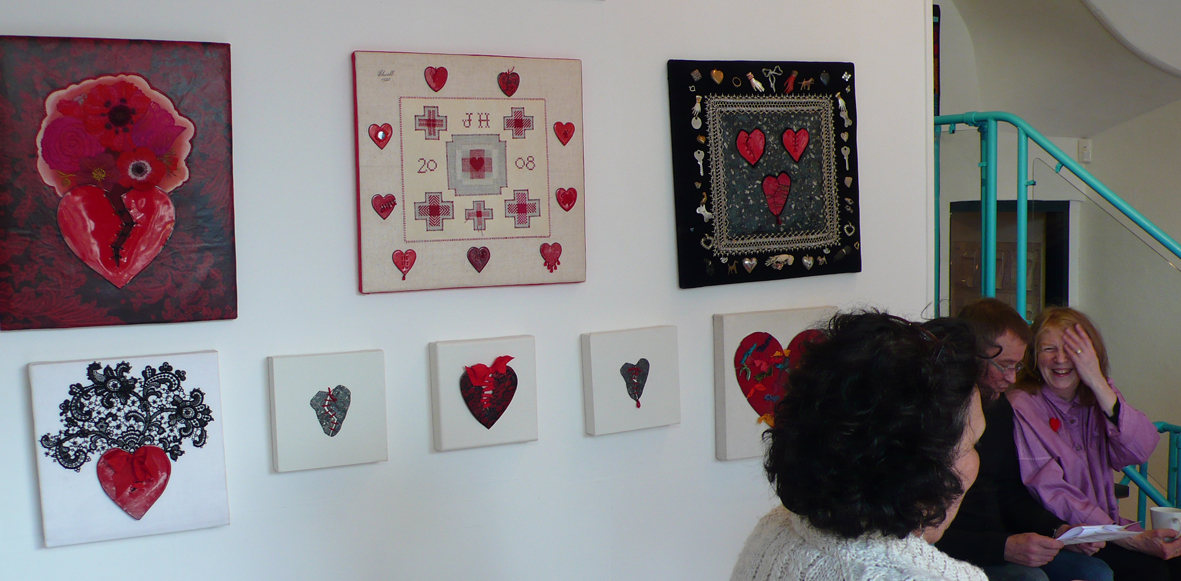
my hearts exhibition and me laughing with Martin Remmers
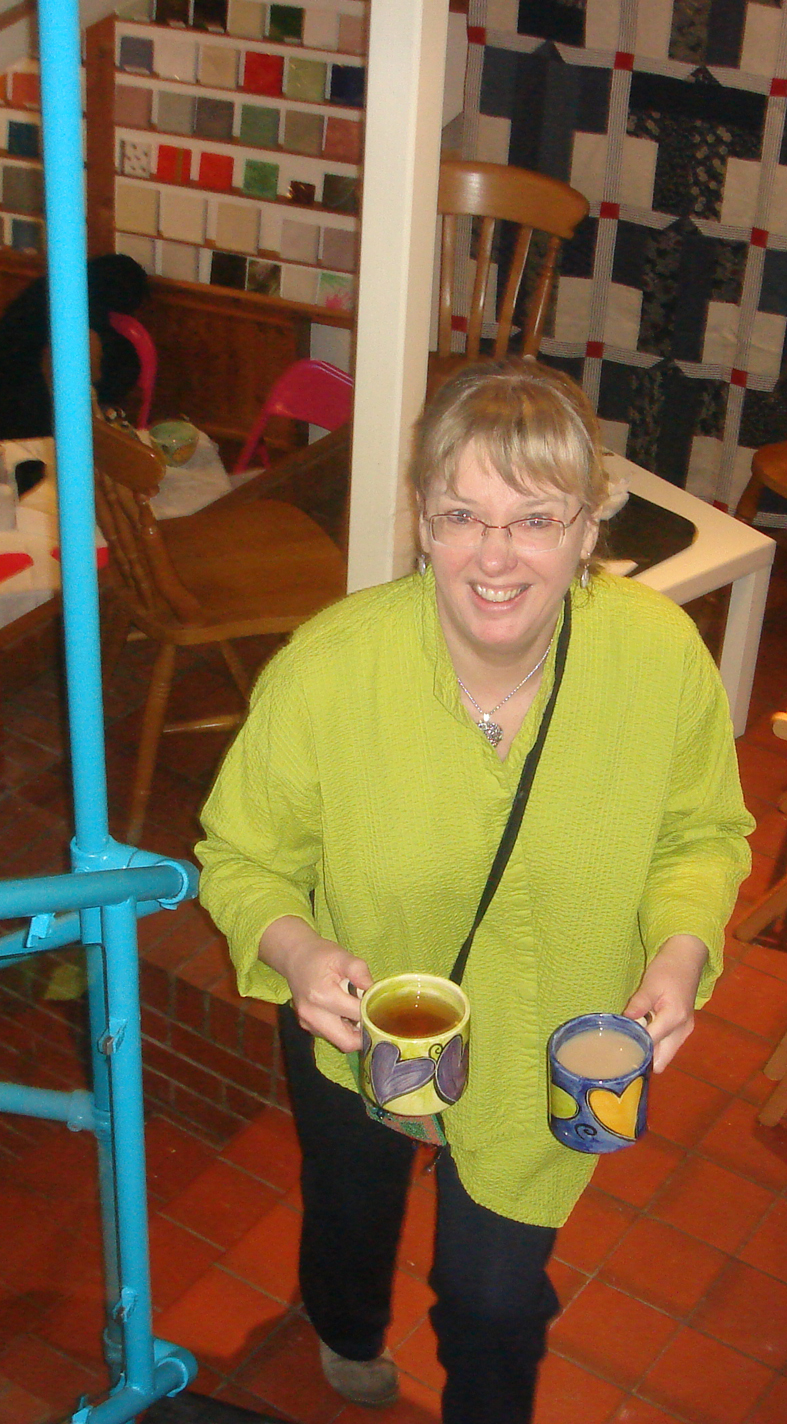
Also a typical picture of partner Liz Hewitt, who organises everything and who goaded me into taking all this on in the first place.
Liz with heart mugs of tea.
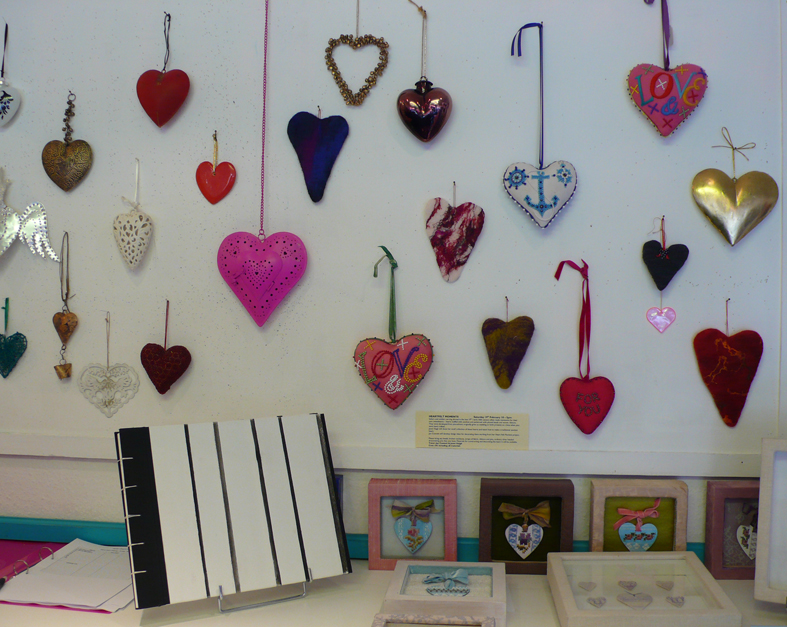
And last but not least, my temporary display of hearts from different people – this is being taken down today Valentine’s day, and shelving for the fabrics, yarns and ribbons will be put up – as inspiration and use for all the students of Heart Space Studios
heart wall with examples of stuffed and beaded hearts our first Saturday workshop
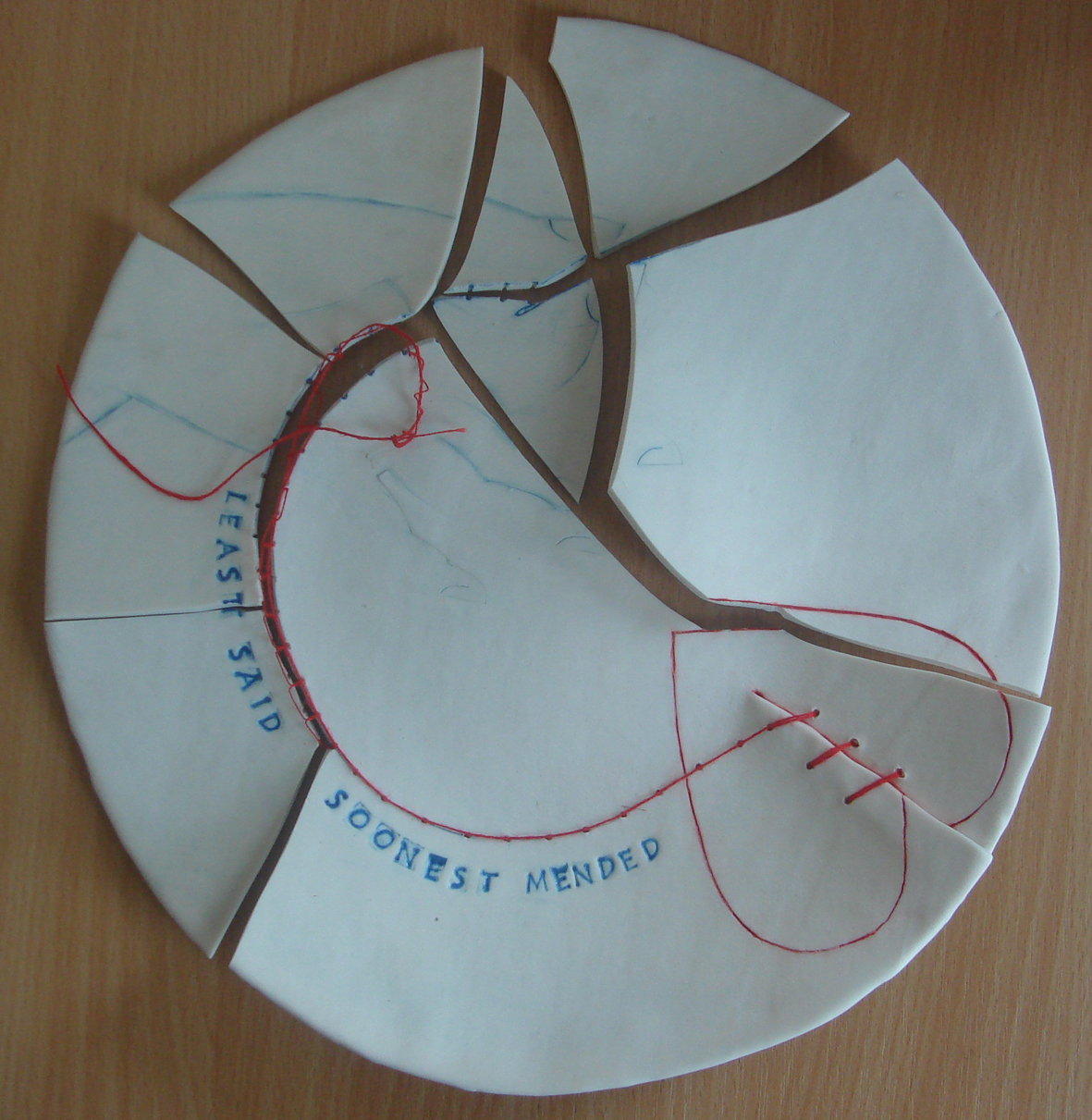
I had called a meeting of the Stitch and Think group who are working towards an exhibition around the idea of mending – a reminder that they had all promised to have working samples ready for early March – I was ahead of the game I had made several pieces of porcelain with mending mottoes on and was feeling pretty confident that I had done enough….then getting out of my car to go into the meeting I dropped the carrier bag containing all 4 porcelain plates. KERACK! My passenger Basil Kardasis said “Thank f… it wasn’t me who did that —– this has happened for a reason Janet”. quick thinking on his behalf but I felt strangely elated.
the inspirational break
When I unpacked the bag of broken bits, only one plate had survived – my W H Auden poem plate – more of which later. But on seeing my pile of broken crocks the group became animated, they fell on the pieces re-arranging back into plates and all said they preferred them broken, because now I have proper mending to consider not just simulated, contrived and controlled versions. For myself I felt sick – I was so proud of those plates; then, OK – move on; then, suddenly – FREE ! I no longer felt I had to remake them in a way that would not compromise Hanne Rysgaard’s standards, Hanne had helped me make the plates and she is a stickler for skilled work. So now just my handkerchiefs with the embroidered mending mottoes will be developed for the exhibition, as the group thought they were a better idea – leaving the plates as research development. Meanwhile, jeweller Syann van Niftrik, had started to look at the way the stitching had been exposed by the break…
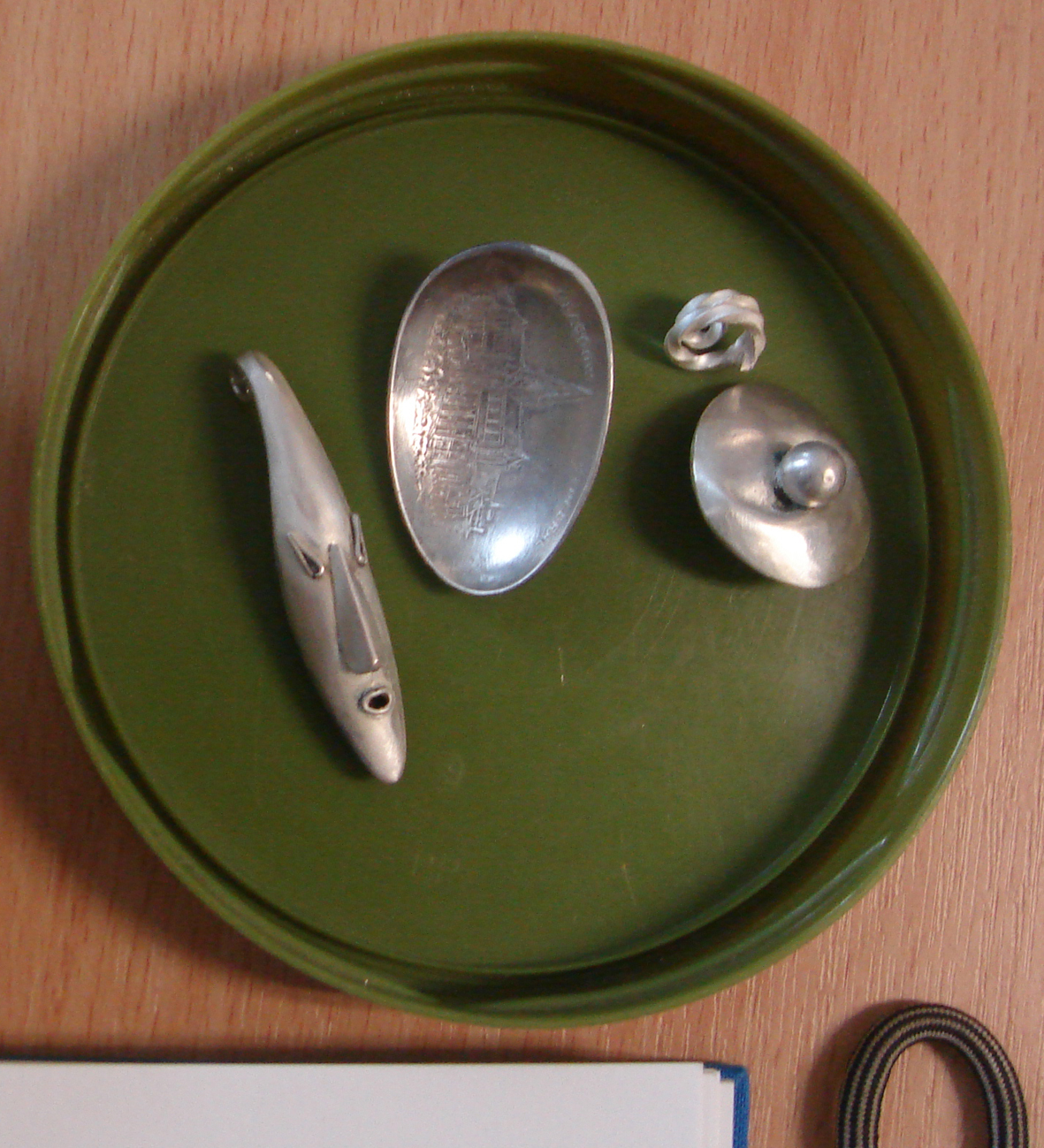
Syann van Niftrik’s mended silver objects.
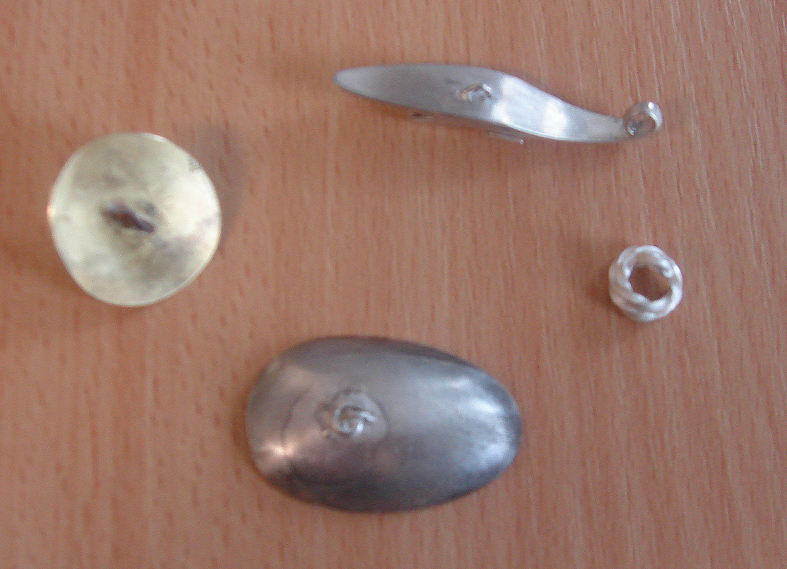
she photographed it saying I had given her a great idea – well it’s an ill wind. The work Syann had brought with her in response to the museum visit was a set of buttons, made in one afternoon, from various cast off metal objects from her studio. She had soldered loops onto their backs to make them useful.
soldered backs of the buttons
Syann van Niftrik watches as Basil Kardasis holds forth
But when she saw my broken plate it reminded her of the carapace of Chinese Cracker fireworks for the Chinese New Year celebrations, so she now is planning to make cages of wire in the form of the exposed linen stitches – to put together as necklaces.
The button idea has developed through a collaboration with Syann, Basil Kardasis and Dail Behennah – they have been not exactly working together on an idea for making buttons to fasten a collection of significant fabrics to fashion into a garment. Basil talked about a maxim of his father’s, who was a tailor – a decently made buttonhole was truly important – you could die if it is poorly made. Think about this.
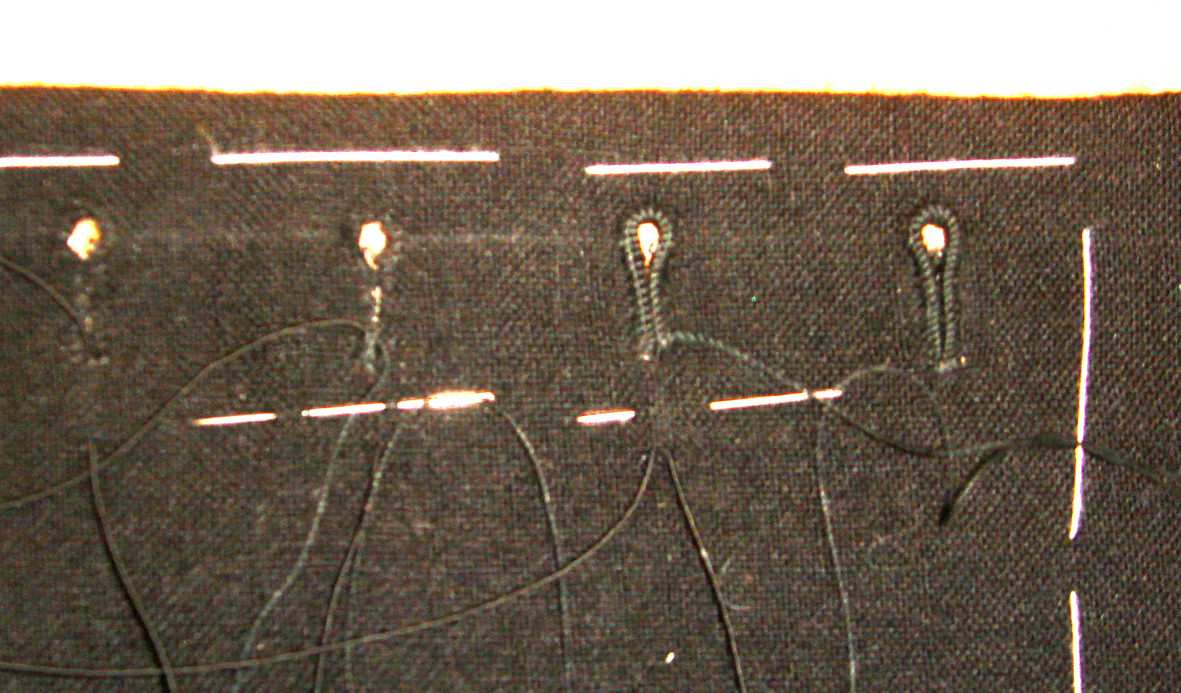
buttonhole sampler (detail)
So he has found an old sampler of how to make tailored buttonholes and and has requested us all to bring him pieces of fabric which we feel are personally significant and he will buttonhole them all together to make a sort of group portrait – I think!
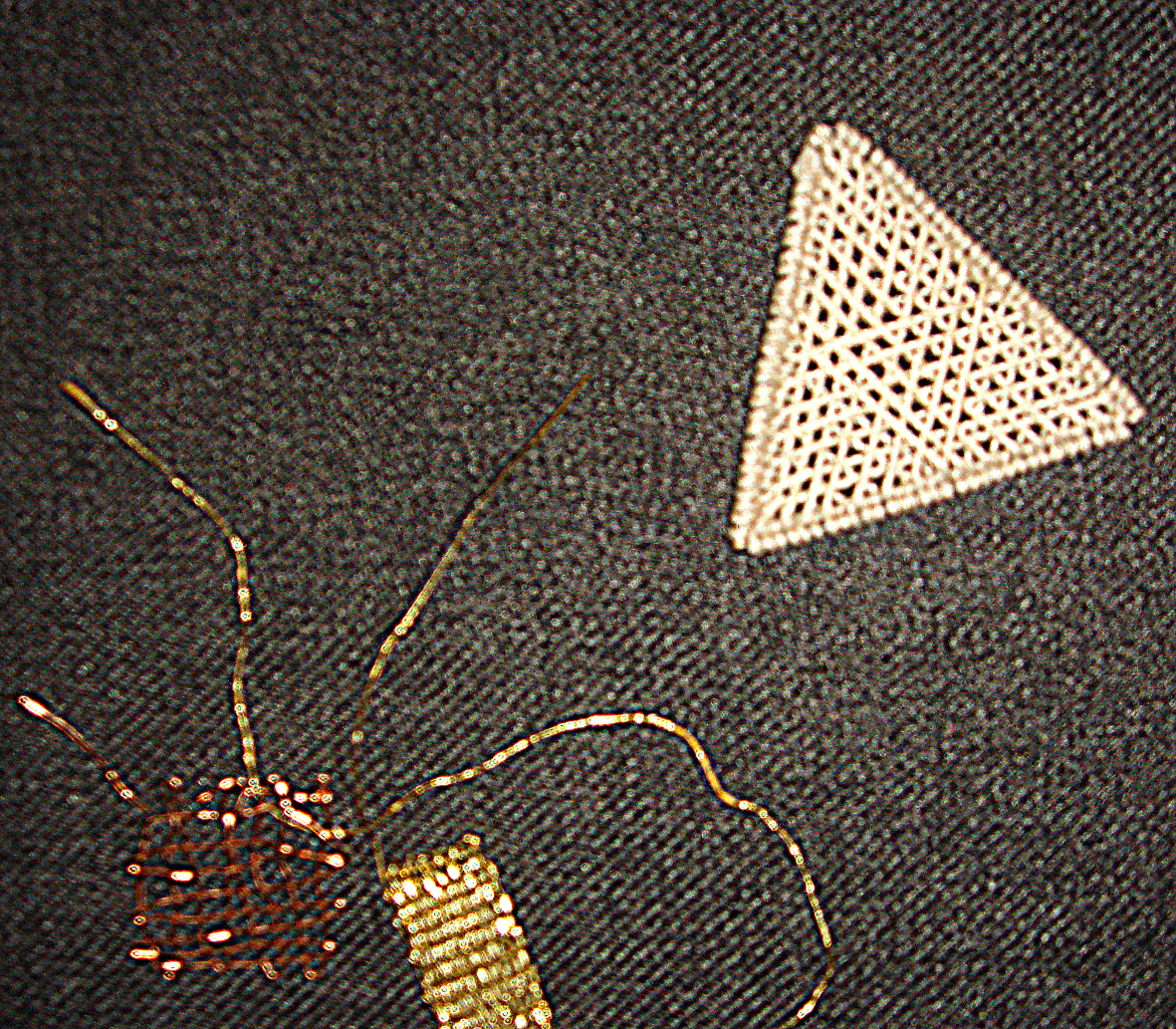
Meanwhile Dail Behennah had been looking at developing her mending jewellry or rather jewellry to hide moth holes, she has been using sewing dictionaries to develop different shapes to stitch in precious metal wires. Below are her pieces base, the lower one based on the arrow head used in tailored garments to strengthen edges of pleats and pockets. The Bristol Mending Samplers have been a real source of inspiration.
Dail Behennah – gold and copper wire mends to hide moth holes and stains
new shape for repairs jewellry Dail Behennah
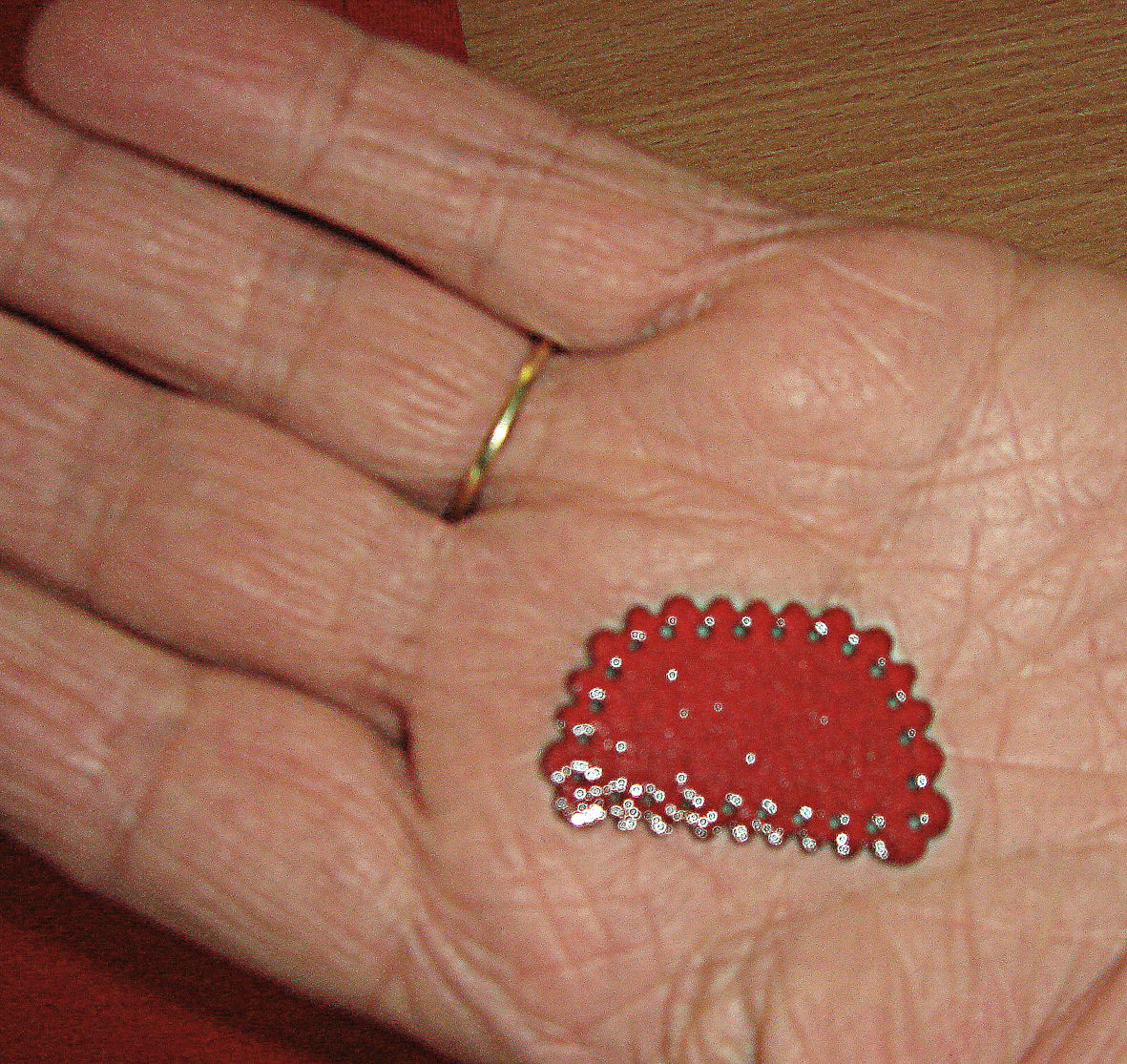
Another decorative and functional mending system has been devised by Matt Benton, Matt works in several media but uses vitreous enamel for much of his work. He has made mend shaped small enamel plates with drilled holes all ready to be stitched onto a worn area of a garment.
enamel shape tailor made to stitch into position Matt Benton
drilled enamel shape placed into position for stitching
While everyone seems to have been inspired by the mending idea, one maker hates the idea of mending anything to use again. Hanne Rysgaard, who I have been working and talking with throughout our collaboration, admitted that she thought that anything broken should be discarded, in fact she thought that using broken things was a sign of disrespect for the user – she put it very succinctly “I am worth the best things” and “broken things have lost their energy” these statements caused much argument between us, and although she can see the worth of mending for sentimental reasons (in fact I recently spent some time darning her damaged but favourite red winter scarf ) she still feels that to surround yourself with broken things is disrespectful.
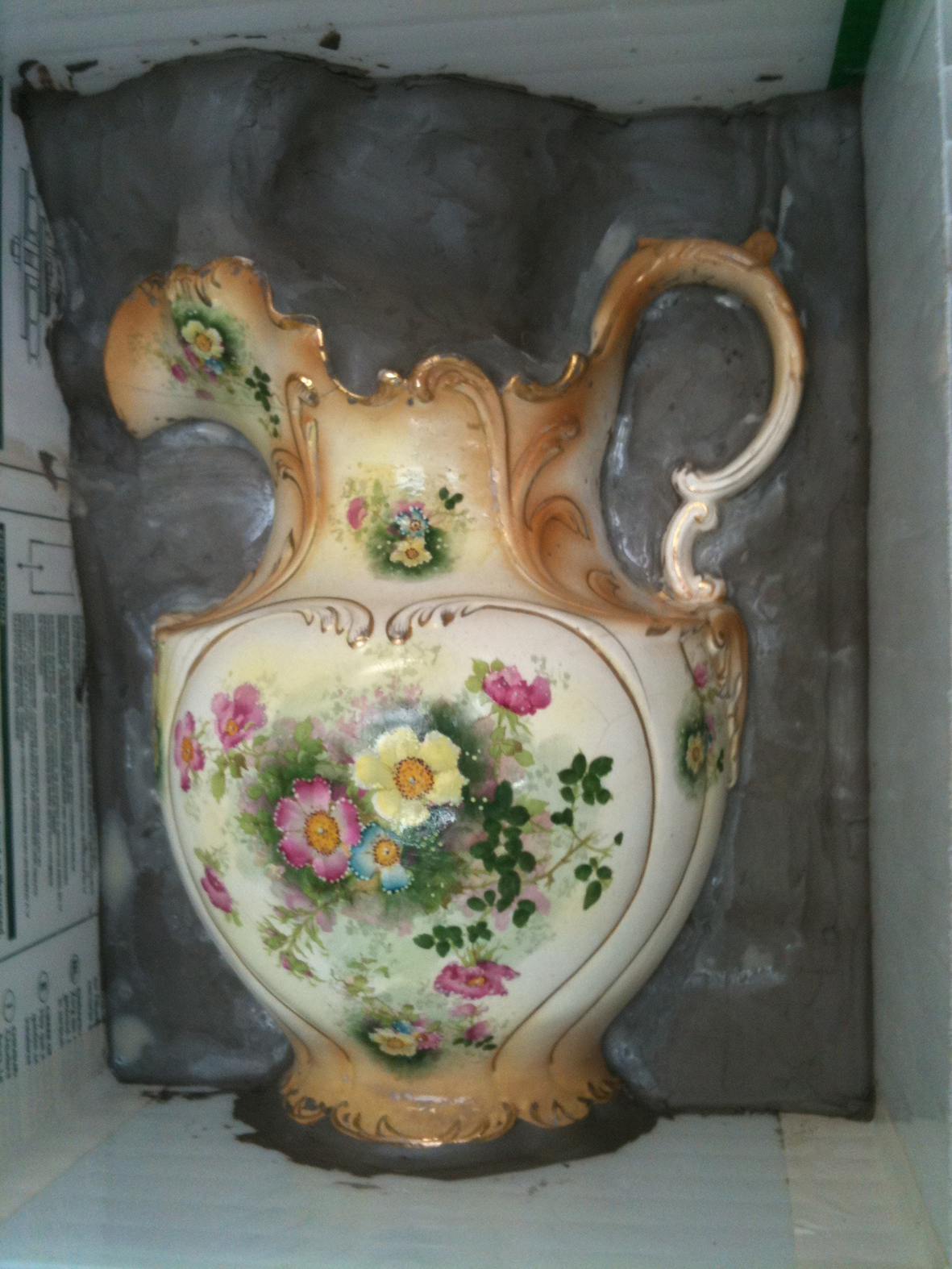
recasting the beautiful cracked jug – Hanne Rysgaard
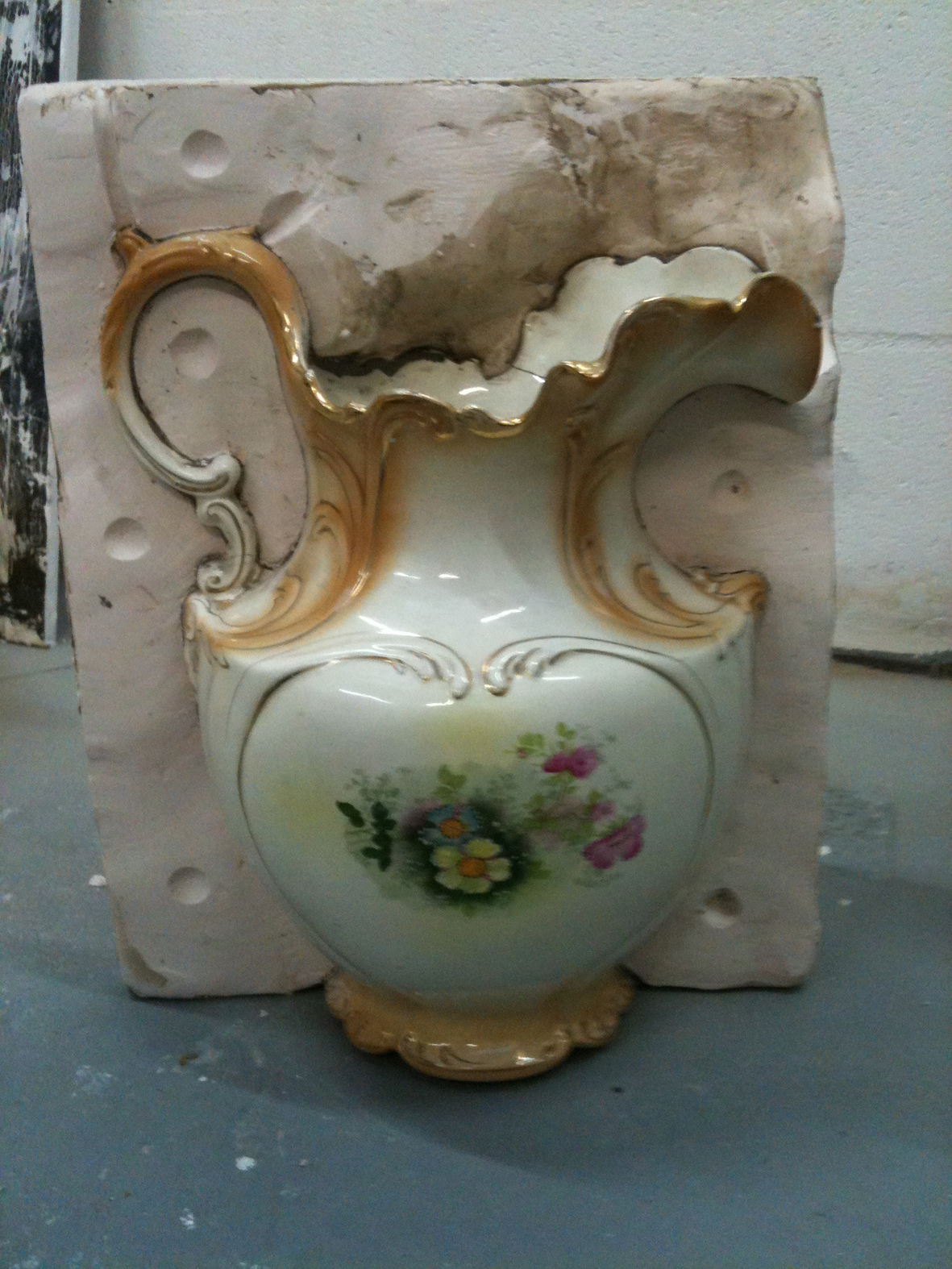
So what will she make for the exhibition then? She has bought a large and beautiful wash jug and bowl which is only slightly cracked – and as I pointed out to her she would not have wanted to buy it if it at the unbroken price – but she wants to remake this, so is in the middle of casting a mold to give rebirth to a damaged but lovely object – but will she leave evidence of this break?
back of jug with the break clearly seen inside neck
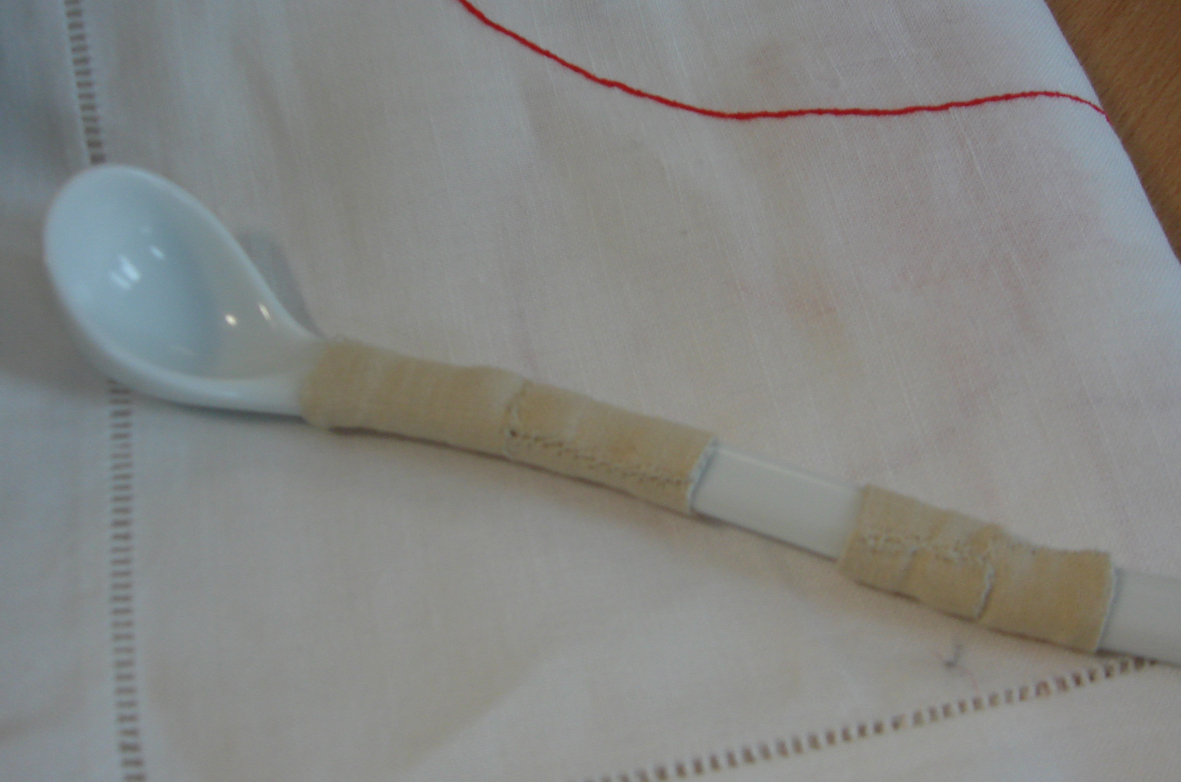
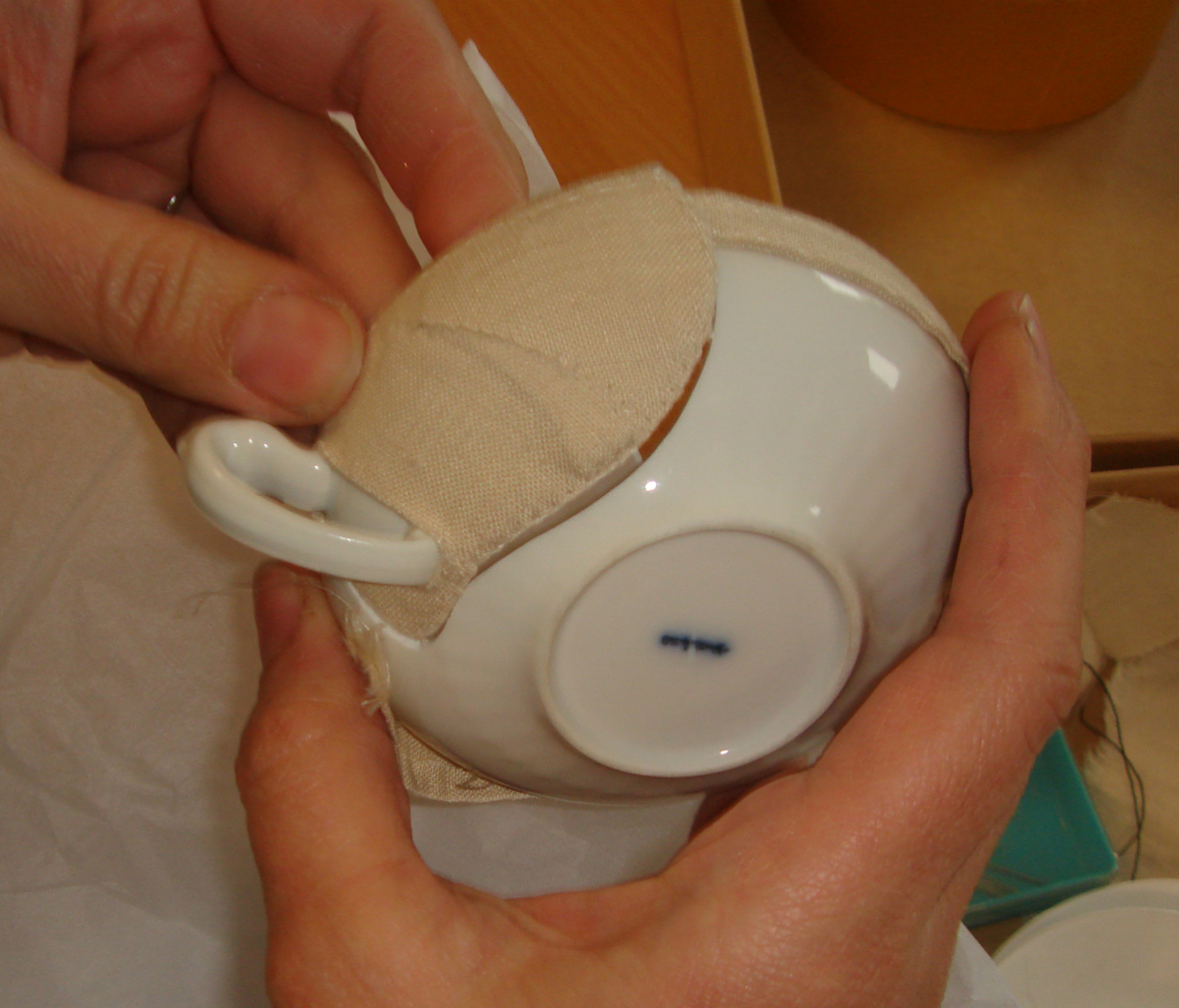
Other makers are embracing the idea of sewn mending wholeheartedly, Jess Turrell,a jeweller and enameller has mended broken crockery by stitching linen covers and it looks like she may cover a whole tea set! This spoon is useless now and she calls it “inappropriate mending”
inappropriate mending – Jess Turrell.
stitched patch for broken cup Jess Turrell
the cups and saucers have become un-useable but several of the group thought they had attained another aesthetic value…oops the slippery slope of the values of art v craft emerge…….moving swiftly on, all the stitchers were impressed by her precise work in fabric, she has an instinctive feel for elegant making with disparate materials.
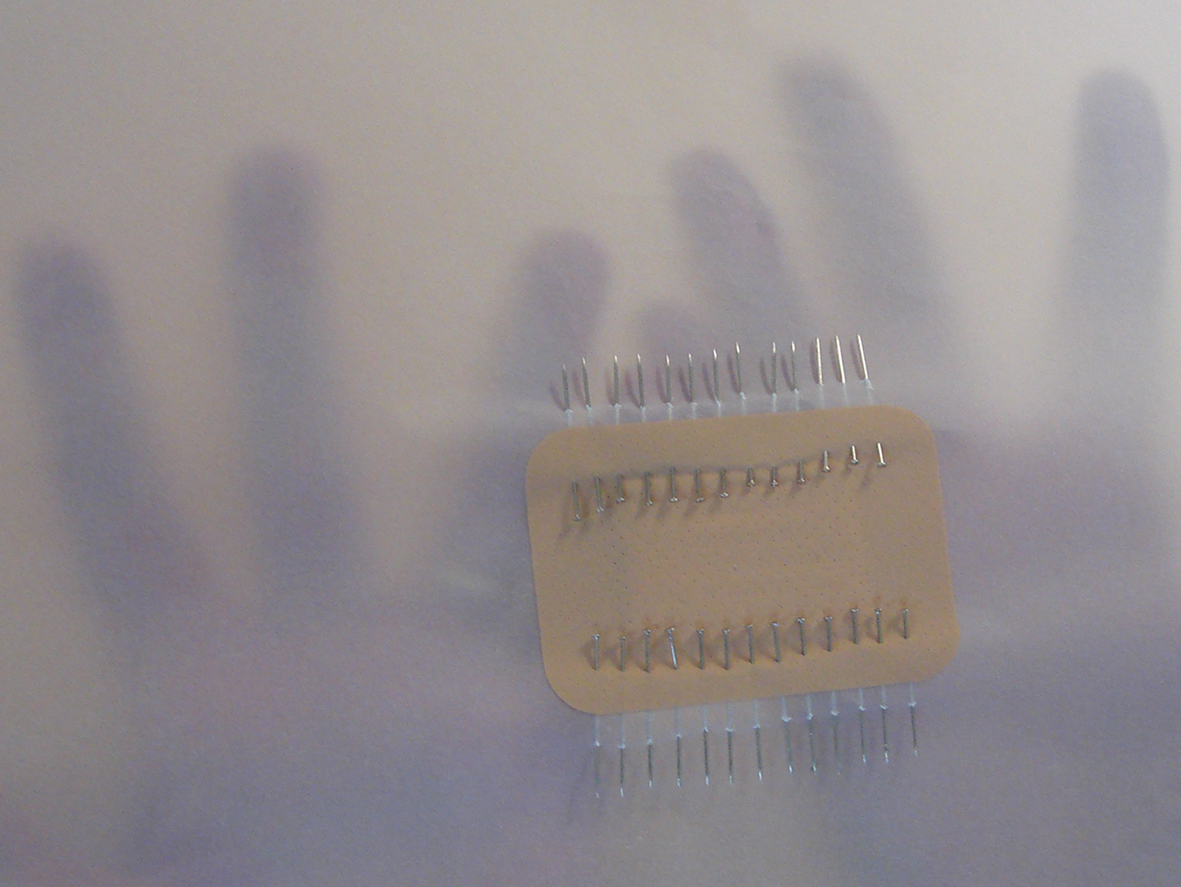
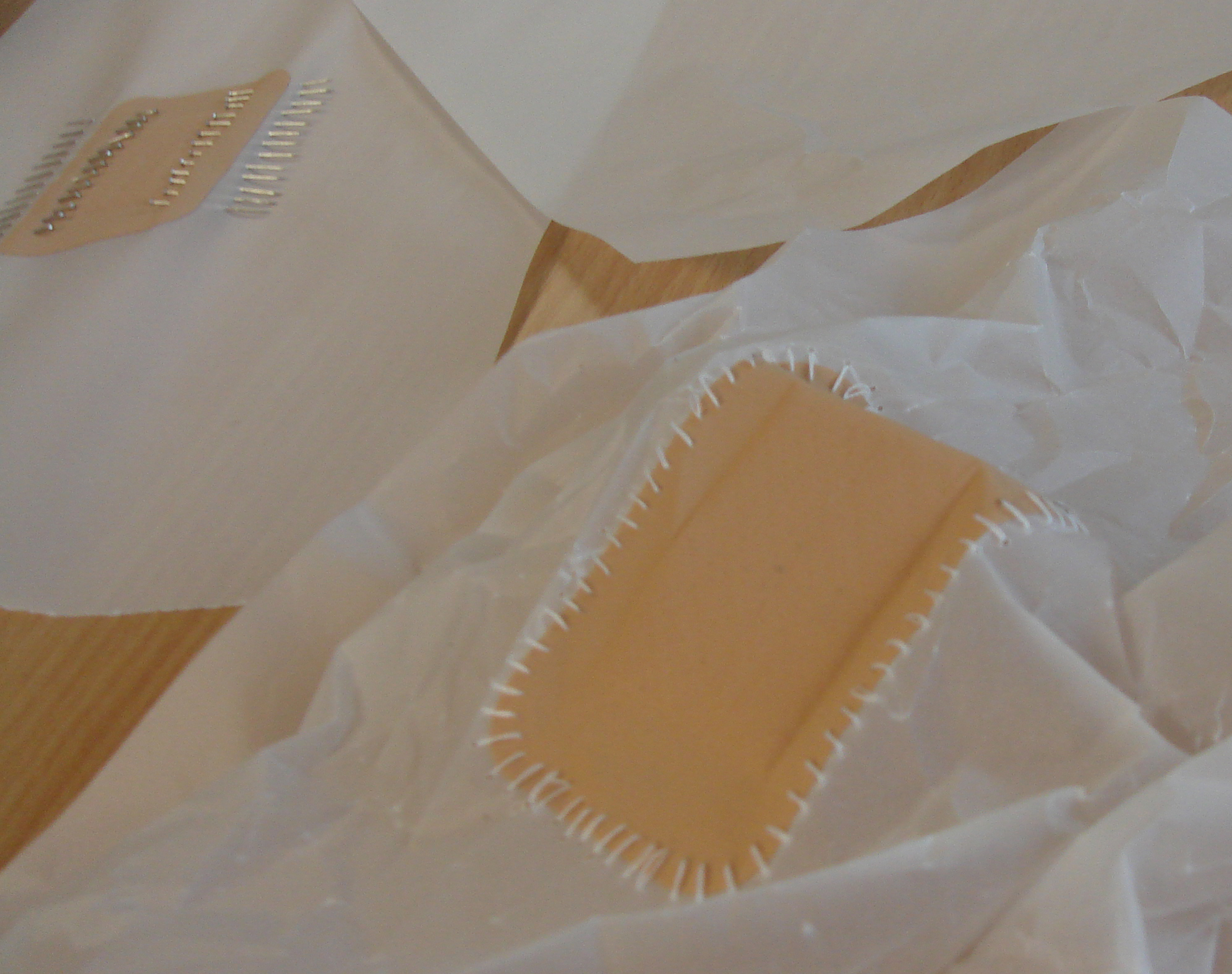
As does Jilly Morris who is an applied artist working across a variety of materials, but here is researching the idea of skin which, for humans, is the area most often in need of mending. She also looked at sticking plasters – below she has pinned them into position onto a sheet of tracing paper liking the translucency akin to areas of our skin.
pinned plasters – Jilly morris
stitched plasters – Jilly Morris
Playing with the idea of the transparent papers she is was advised by most of the textile makers to move towards making her mending ideas in fine animal skins, parchments, seudes and kid leathers which we have given her to play with.
Two makers are using this project to develop areas for their advanced degree studies and both have stayed close to their own materials. Steph Wooster is a knitter and designer, undergoing an MA by Research at UWE Bristol, she showed us some large pieces of patchworks that have been based on the use of straight- jackets
Steph Wooster hugging her straight-jacket inspired samples while Hanne Rysgaard looks on
hand stitched sampling for patchworks Steph Wooster
I won’t go into the details but she has developed the fabrics while researching at a local hospital’s archives; she found the jackets were copiously mended through constant use. Controversially for the group, she thinks that one overlooked benefit in the use of the straight jackets is that the patient has to hug him/herself…………..and that before the use of these garments the patients were chained in cellars. However this has lead to the sampling of some sumptuous fabrics
darned and patched mending diagrams – Dawn Mason
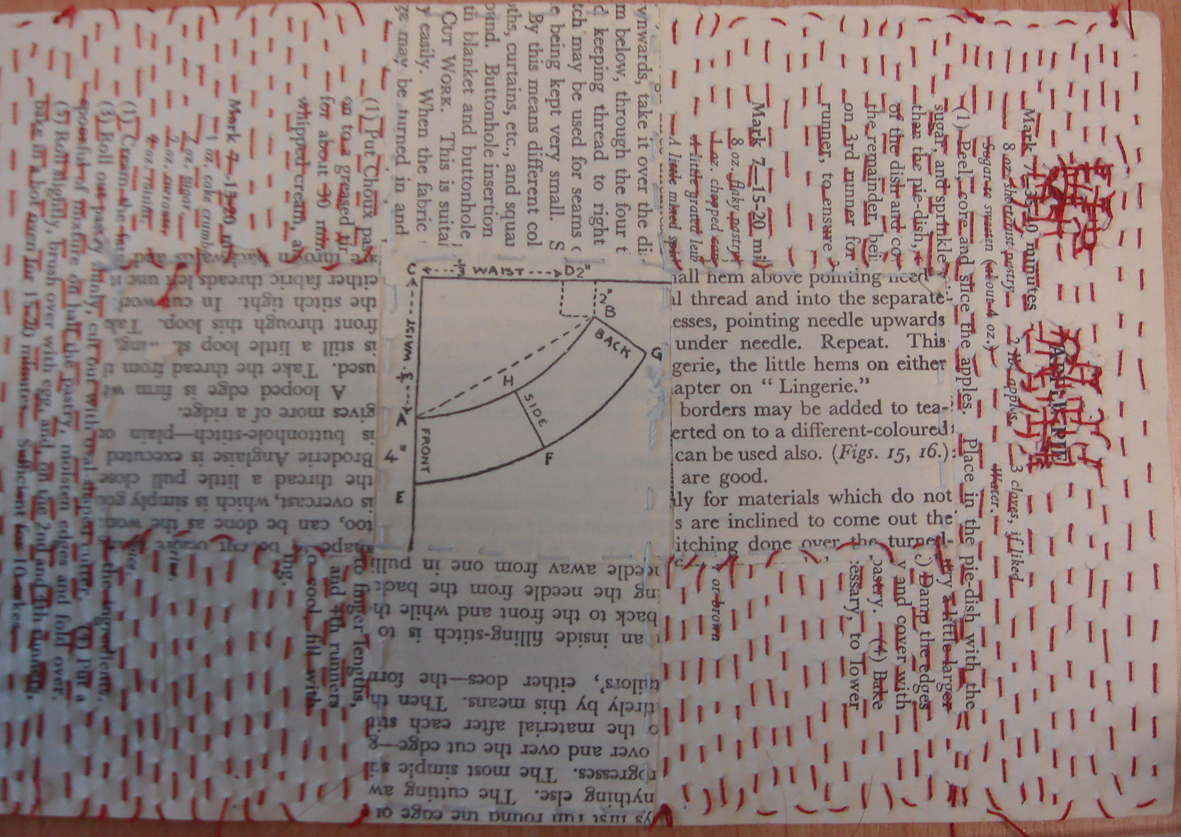
Dawn Mason is studying part time for her Ph.D by Practice, she is course leadr in Drawing and Applied Ats at UWE. and she has used the old making manuals to develop pieced papers which are darned, patched and stitched together. She talked of feeling a sense of loss for the present society’s skill base when looking at the original mending samplers. she is currently researching gauntlet making out of the papers she is stitching together, so maybe a move into 3 dimensions is developing.
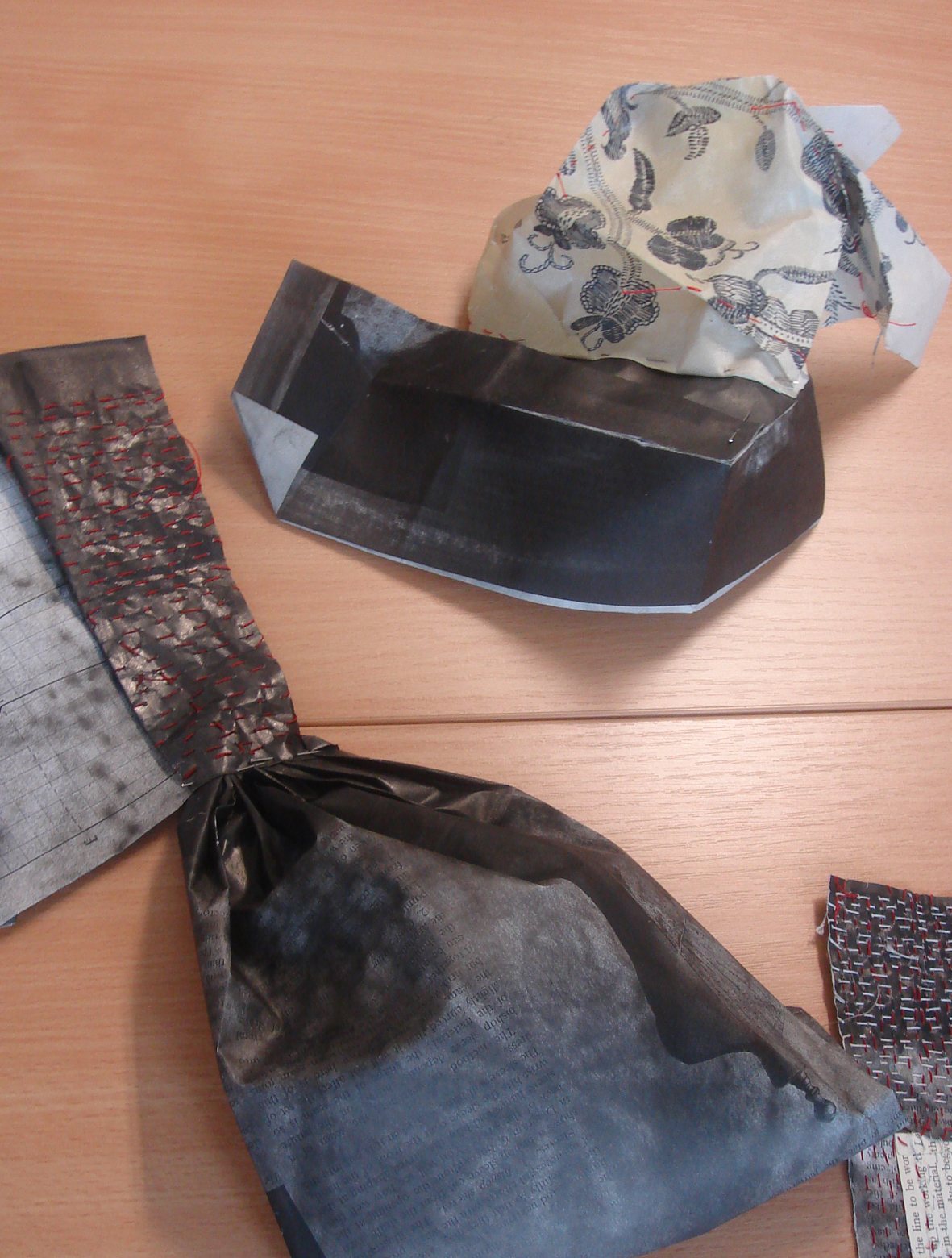
hand sized mending papers – work in progress Dawn Mason
Whatever else is thought of in the old practices of mending it certainly is proving a rich research area for all these different makers, The group has truly become more than the sum of its parts, we were all fascinated by the different aspects each maker had discovered for them selves and the truths we had to uncover to start to explain our thinking behind the making.
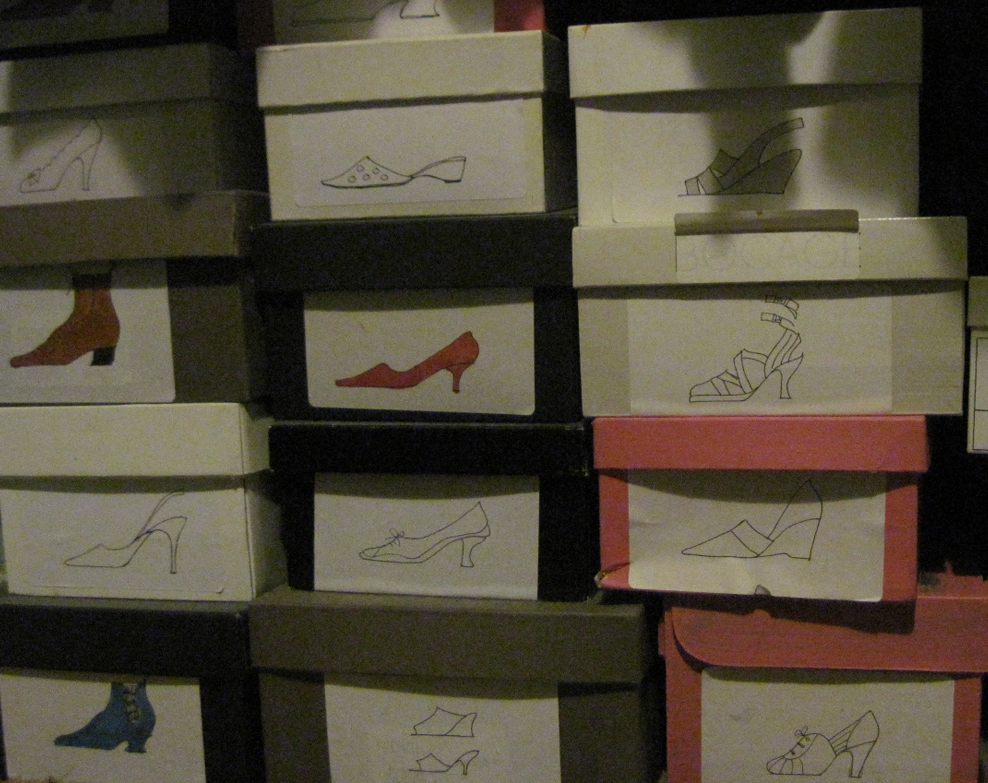
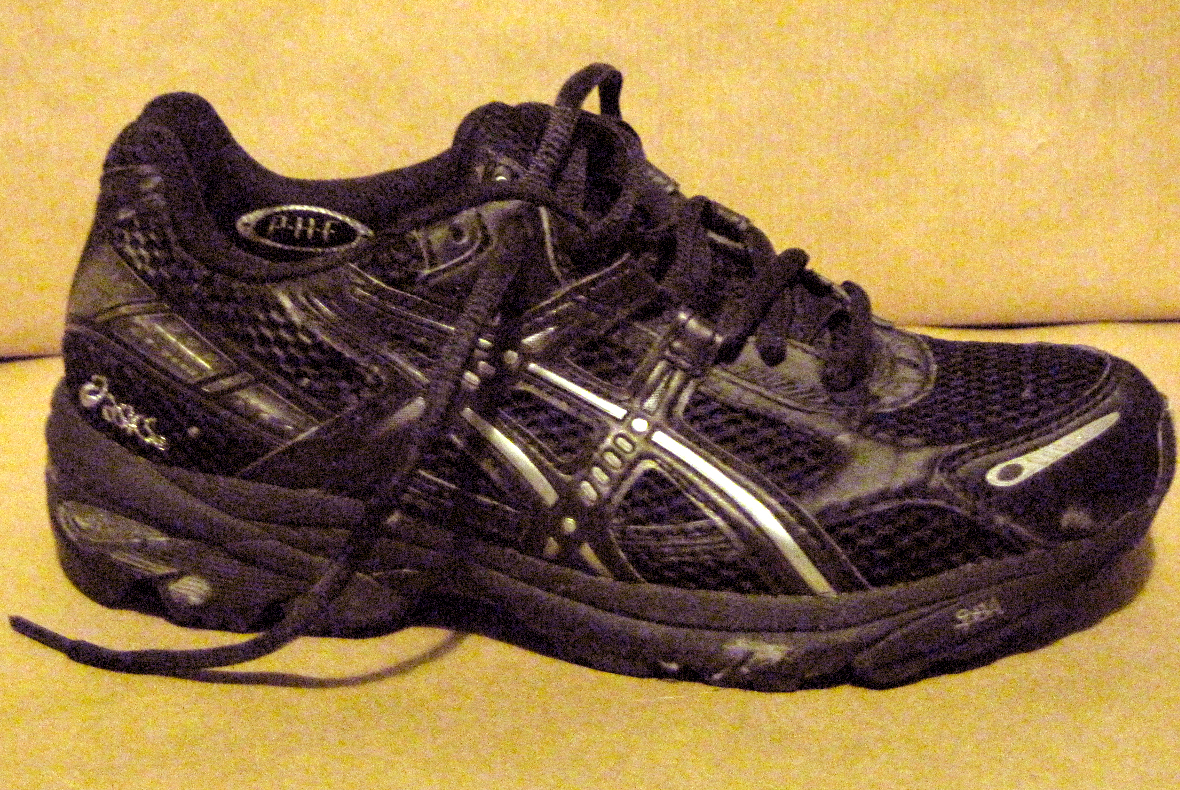
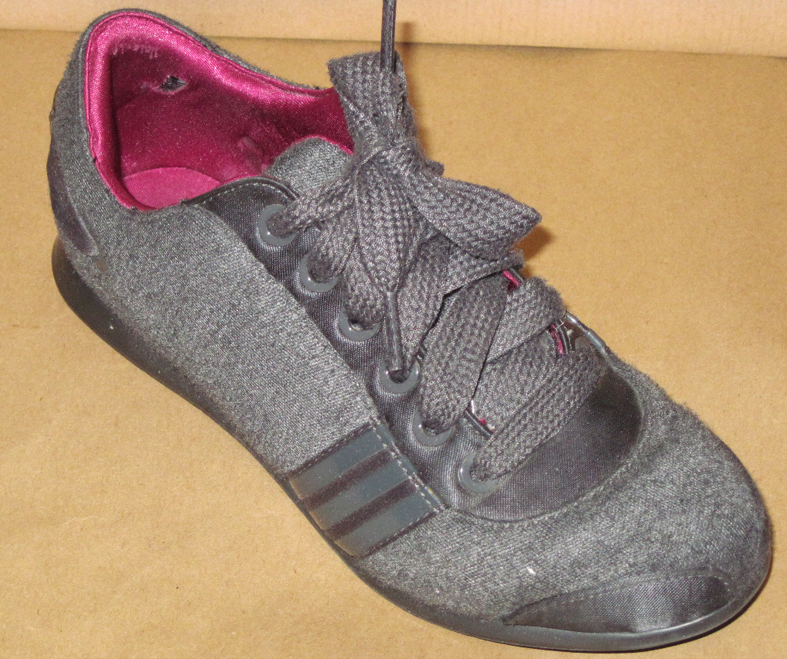
This is the story of my friend Irene Bohan, she of the teeny tiny feet, and a shoe lover of the highest order – I mentioned her in my shoes dream on the Ongoing Work pages ( scroll down through to the 5th post) here is her own sad story – but with a hopeful ending! So we know we are dealing with a serious collector when we look at her shoe cupboard below – she actually draws each shoe and pastes this onto the boxes – which I must admit is a better system than mine – I use the boxes for storage in my studio and the shoes get chucked into the bottom of the wardrobe.
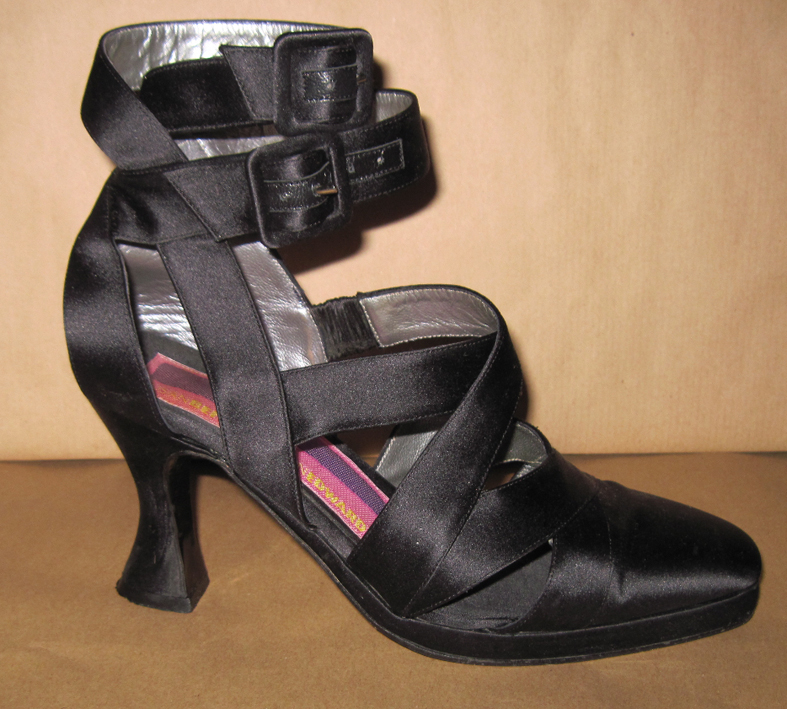
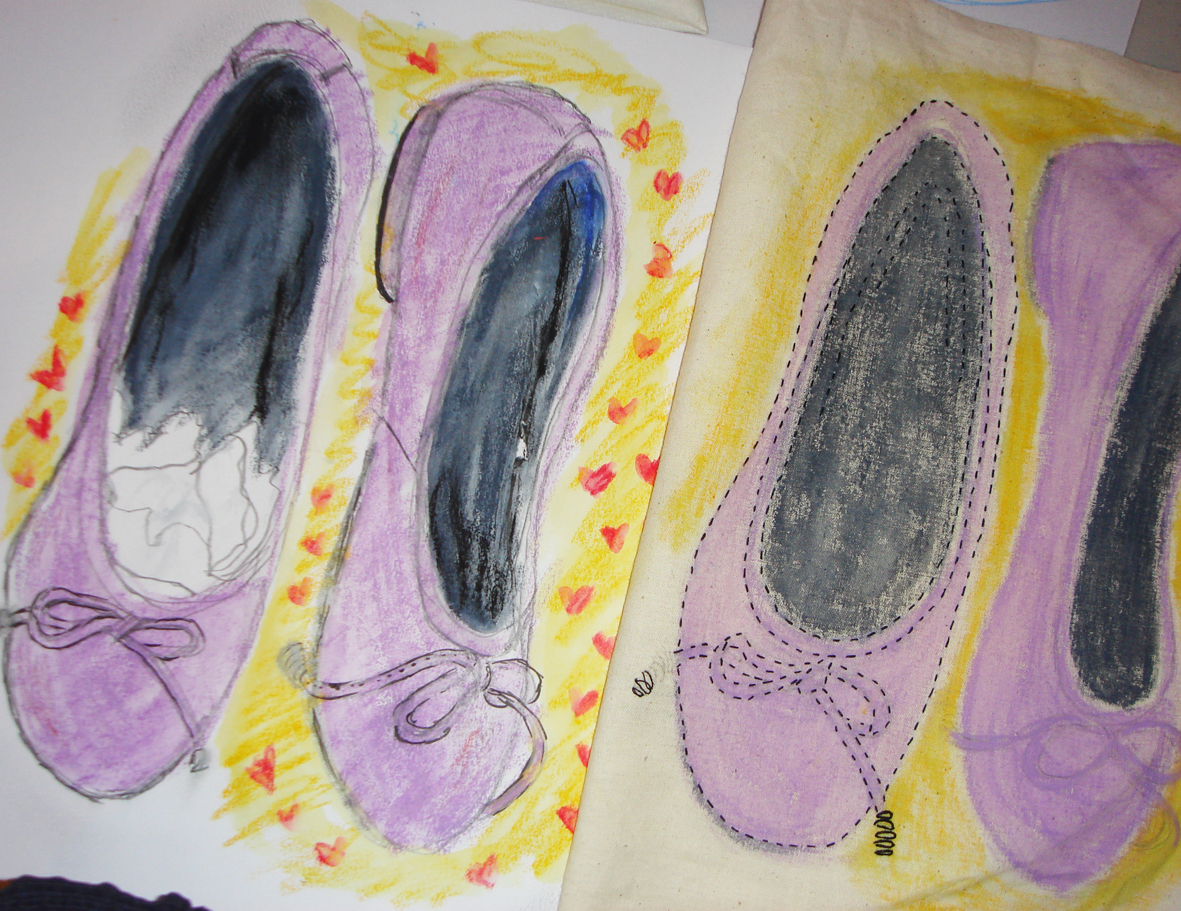
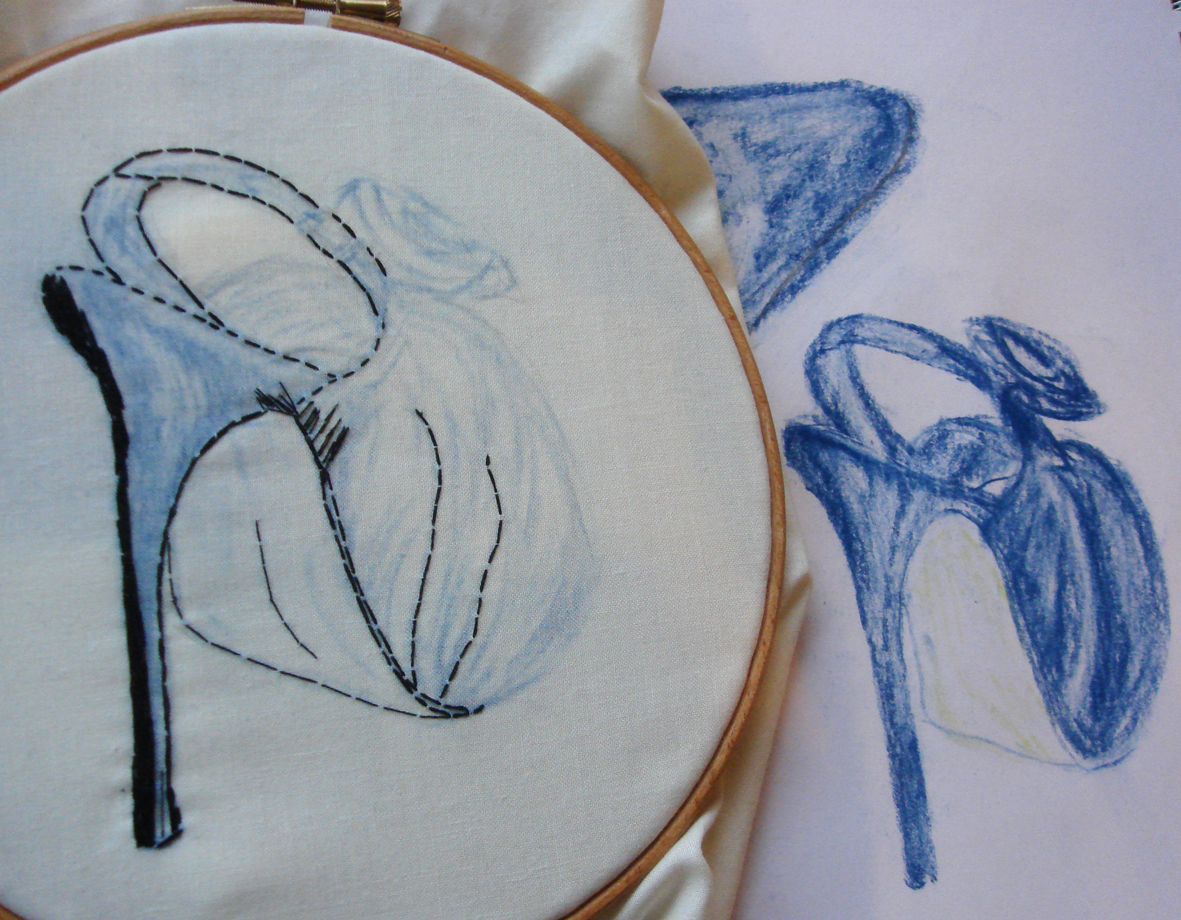
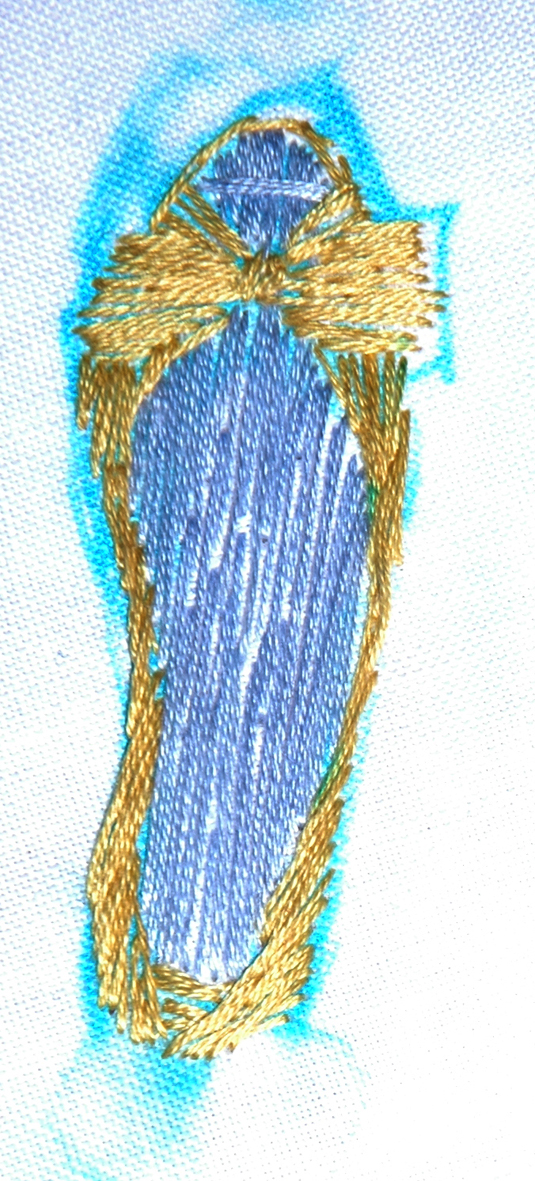
Her comment on this practice of labeling is “yes I am that sad that I draw pictures of the shoes and stick them on the boxes, but each shoe has its own story” . So the beautiful shoes at the head of the page were “bought for the opening night of the first show I ever did on Broadway – I was meant to buy a present for the set designer but bought these instead and he was more thrilled by these than a gift – I arrived at the after show party and said ‘your first night gift is on my feet’ “.
Oh yes did I mention that she works in the theatre – we are talking the type of work where you are expected to wear shoes like this!
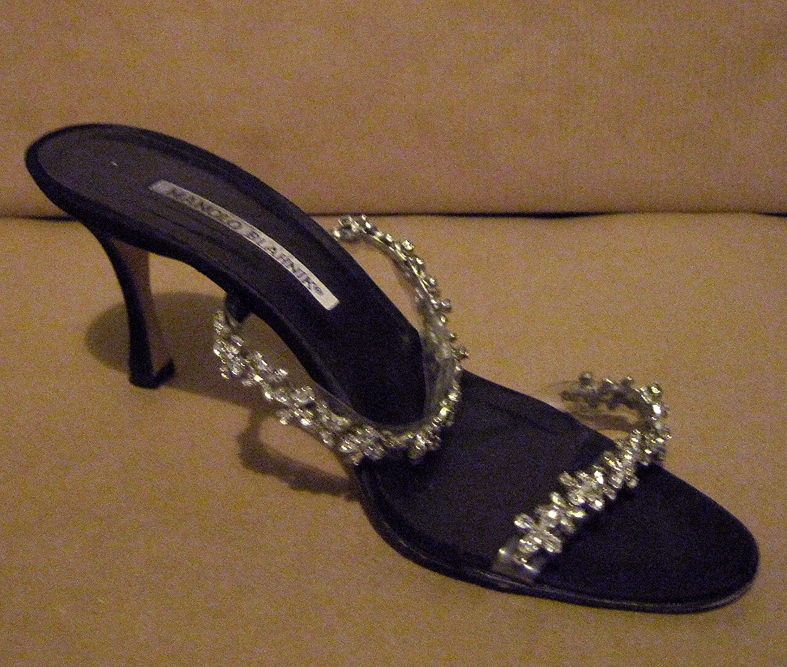
Now it is a terrible truth but I have what a good friend used to call “Grunewald feet” do you know the artist? – think of the ripped, torn and nailed feet in 16th century German paintings of crucifixions – I wear shoes as camouflage. So these beautiful Manolo’s above are my idea of shoe heaven – not only could I never have afforded them I never ever could have worn them…….however Irene didn’t buy them ” These were a first night present from the same designer – several years later – also in new York – I didn’t take them off my feet for 36 hours ! Yes I did sleep in them”
So now IMAGINE how she feels when she is diagnosed with Morton’s Neuroma, which is basically a damaged nerve and probably caused by constant high heel wearing – it is flats from now on
the full horror revealed – the shoes that made her cry.
” Can you imagine – when the podiatrist said – well you have to wear trainers – I cried – but I did what I was told went and got measured for proper trainers came home – cried again – threw them in the bin and went and spent a fortune on Stella McCartney trainer-ish shoes – so there are ways round it but I do miss my heels !
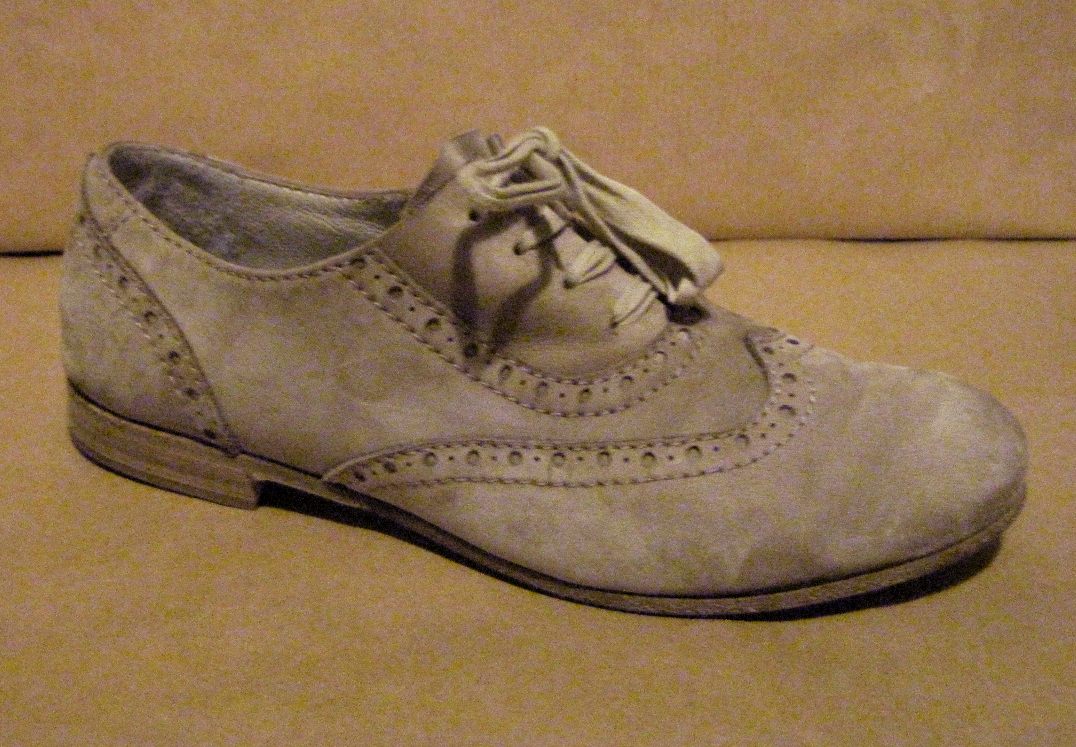
So – she is now developing a rather good selection of gorgeous brogues and riding boots but sometimes just takes a pain-killer and puts on the Manolos !!! These brogues are lovely but I can’t imagine her dollying down Broadway to a premier in them……
P.S. when we were emailing one another to put this post together Irene sent me this heart- felt message “I’m sure people think I’m shallow being so upset by it – but my shoes are so much part of what I am – and now I’m a suede brogue, albeit a stylish one, not a killer Manolo ! my answer to her is this quote from the Rev. Sydney Smith
“Do not assume that because I am frivolous I am shallow: I won’t assume that because you are grave that you are profound” – Thanks Irene I have been waiting years to use this quotation – which I think just about sums me (and you) up………….
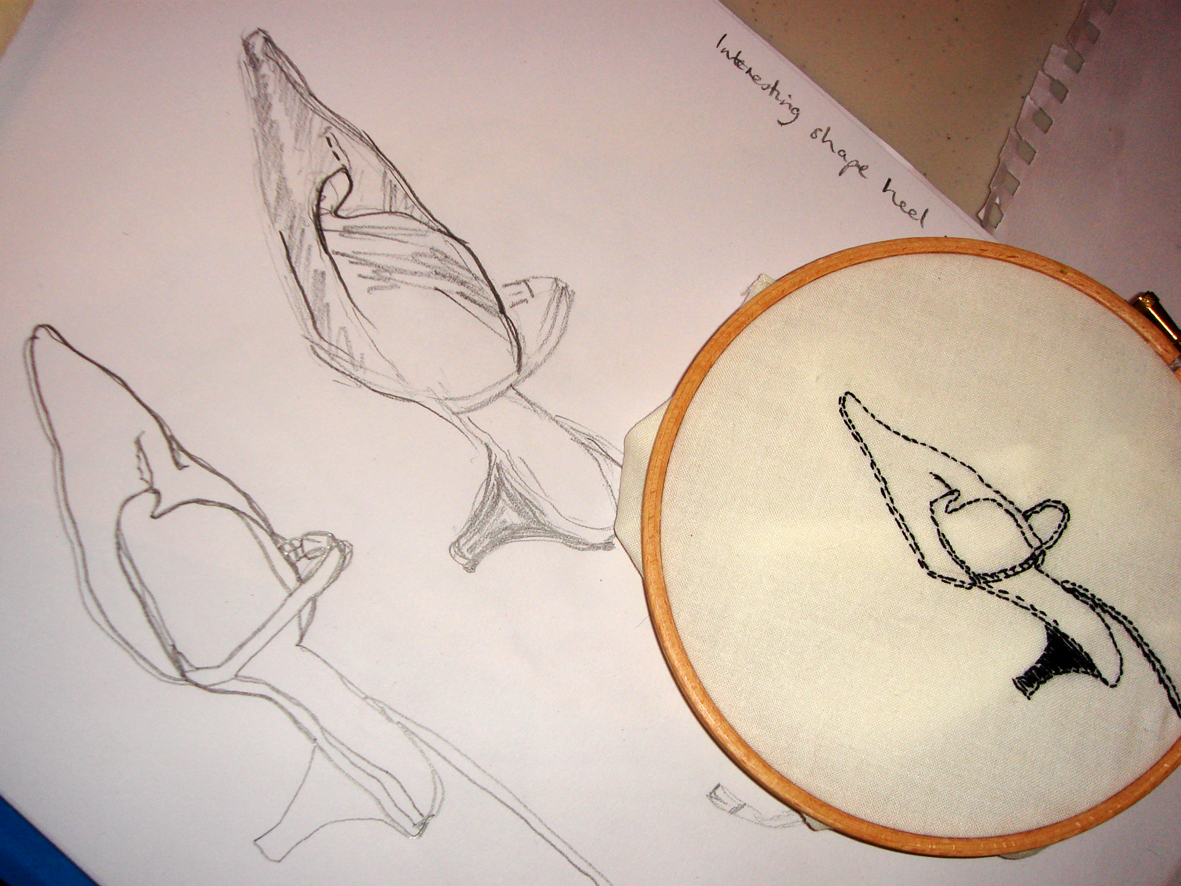
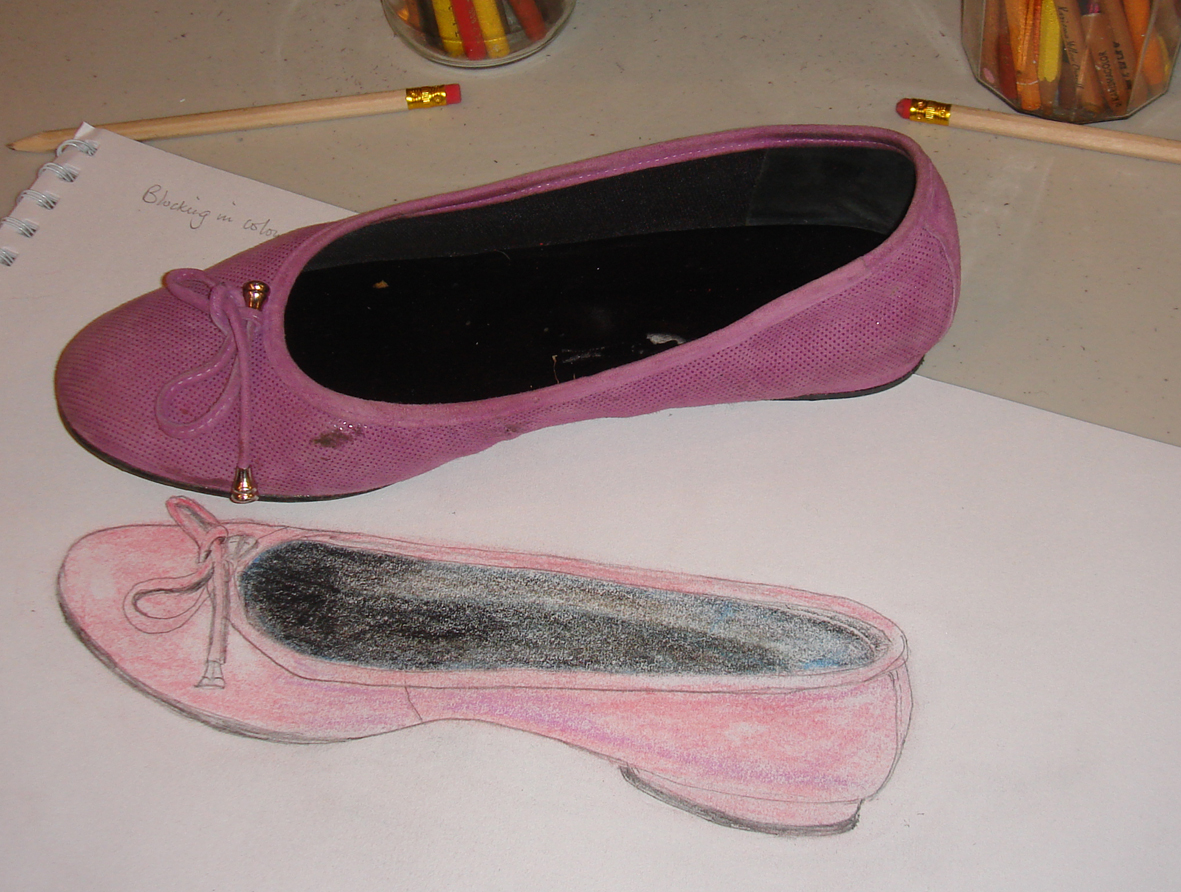
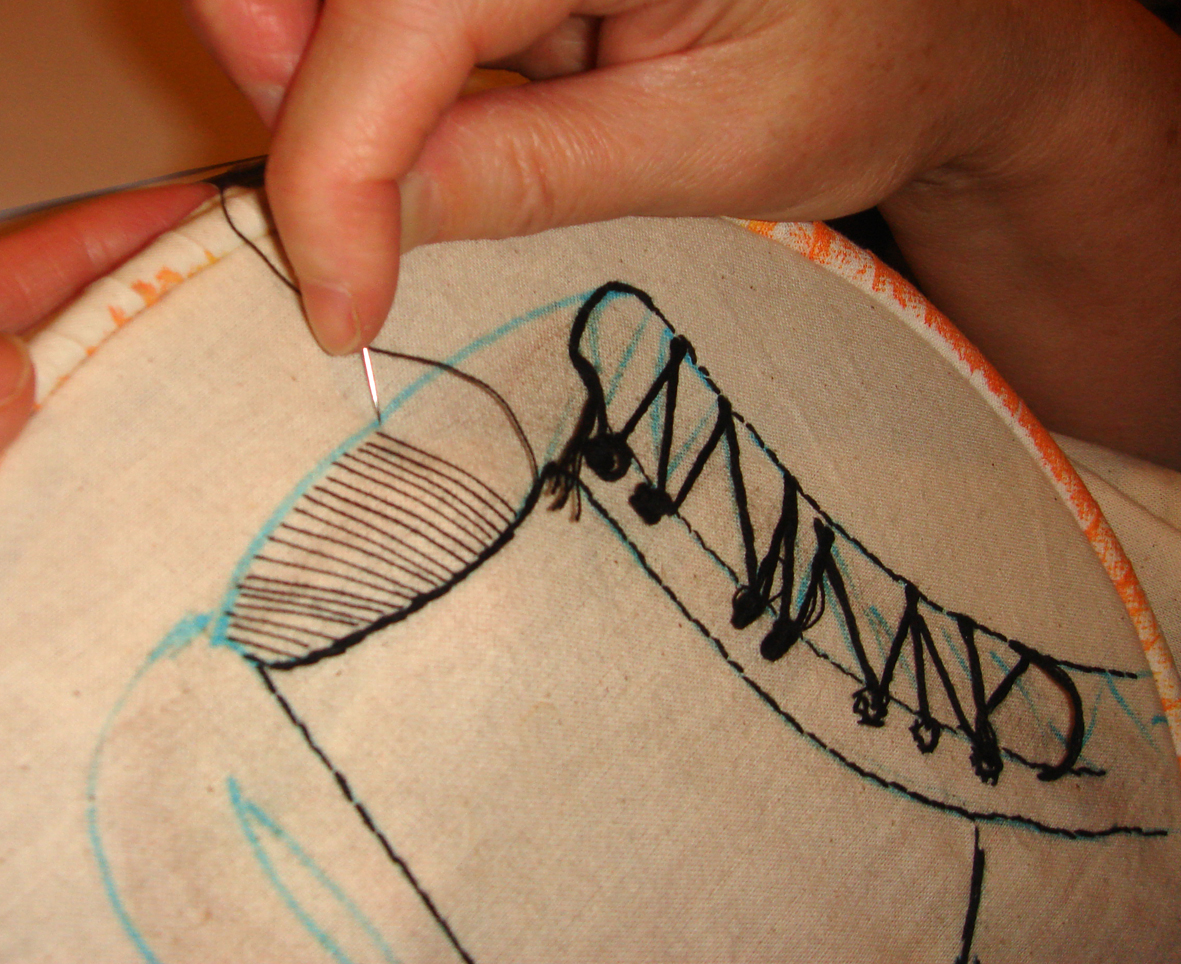
drawing and embroidery for my pink shoes- Ann Rippin
Welcome to my new world – I am starting something completely different this year – opening a space in Bristol for textile based workshops called – not surprisingly – Heart Space Studios. I have been asked so many times to conduct drawing and/or stitching workshops that I decided to take the plunge and with 2 other stitchers, Liz Hewitt and Jan Connett have committed to developing series of workshops and courses from complete beginners to master classes for all things textile.
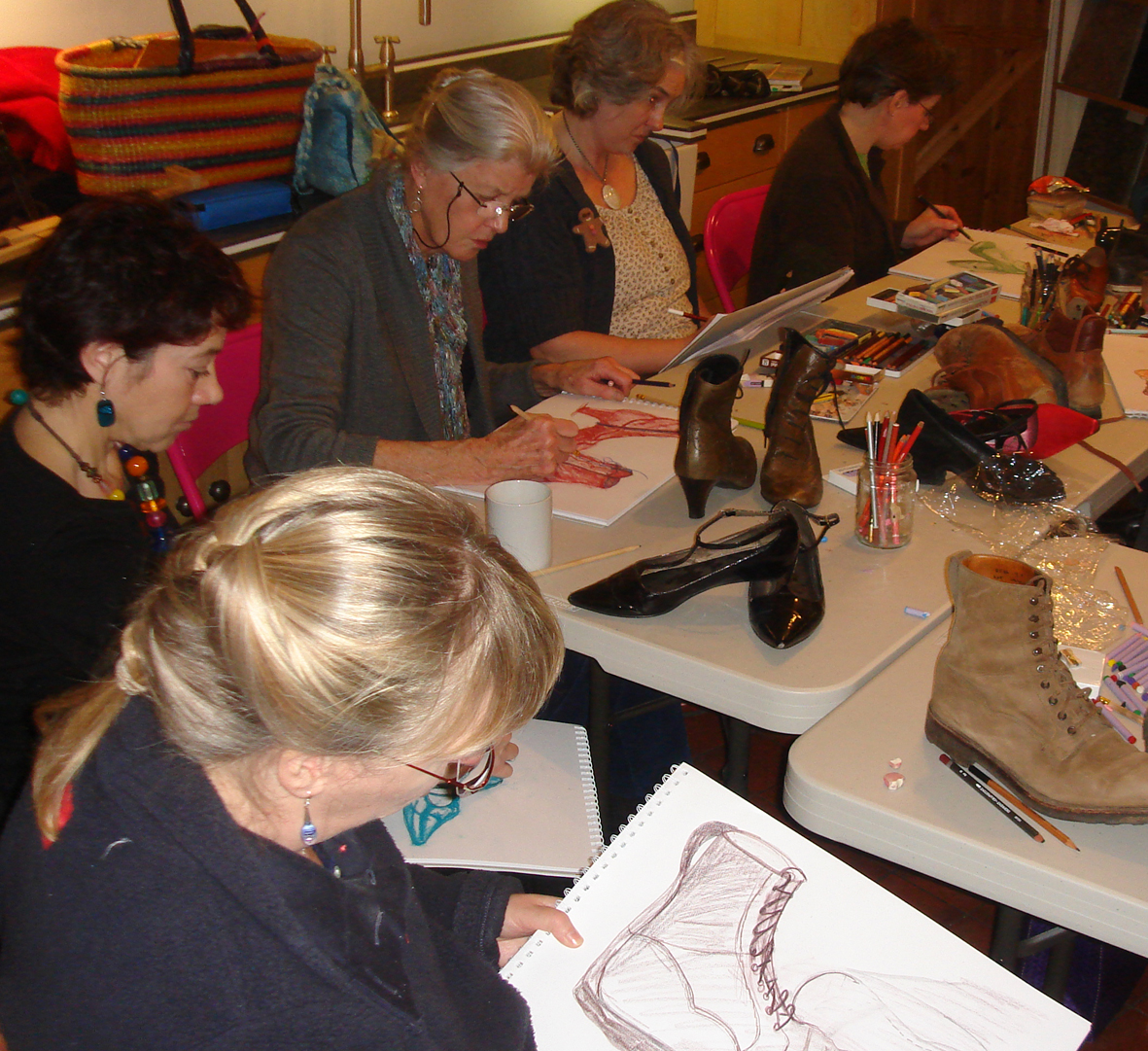
complete concentration at the first workshop - drawing shoes. Jan and Liz are seen here at the bottom left hand side of the table
I conducted this first drawing class for a disparate group, most are established textile makers, some teach classes them selves, some had never been to a drawing class before and Liz Bishop, informed me that she was unteachable, she had tried and failed to draw at countless classes…I had a plan for her – but as you can see below it was totally un-necessary. I meet with this “I can’t draw” problem all the time by people who are perfectly capable of drawing but who have at some time in their lives been told they can’t – by what standards they have been judged is hard to fathom – my response to them all is – if you can write your name the same way twice – you can be taught to draw. But this is such a sensitive drawing that I really was perplexed when I saw it.
first drawing by the woman who "couldn't draw"
I have taught design and drawing, usually observational drawing, for many years as a senior lecturer in textile design at UWE Bristol – from life drawing through fashion illustration to drawing for design outcomes. I have worked with private clients, costume students at the Bristol Old Vic Theatre School as well as drawing practically every day in one form or another. I feel that drawing is my first language, English my second and stitching my third.
And what was my first drawing class about – shoes – well why not? Practically everyone I know has an attitude to shoes either their own or other peoples’ – I have been drawing and stitching them for the past few months and I had a lot of ideas about them to relay to anyone who would listen
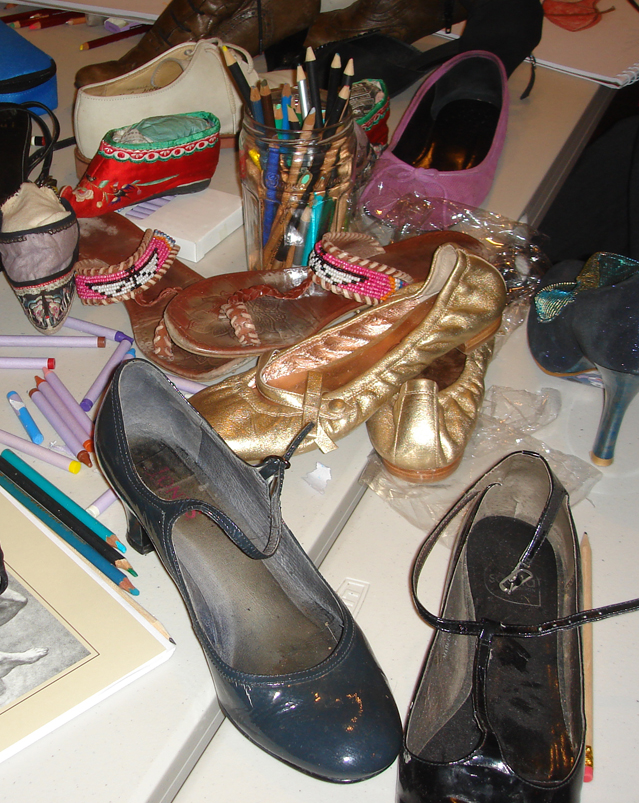
shoe selection, from Chinese bound feet covers to Jan Connet's "staggers"
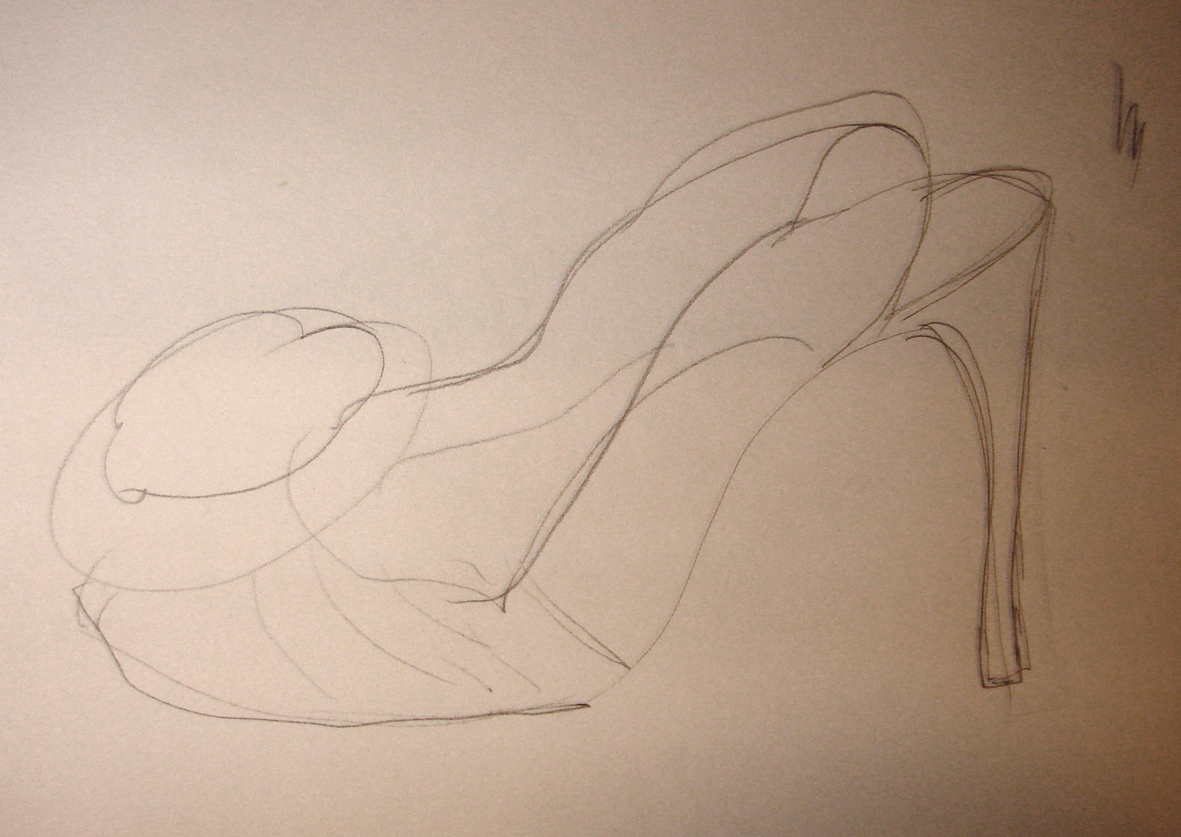
I called the first class How to Look, and I set about it in the usual way of quickly getting everyone relaxed for working by doing 2 minute studies of various shoes and being extremely strict about how they drew them – like not taking the pencil off the page for a continuous line drawing, how to use various angles of the pencils and crayons to create textured lines, pushing not pulling the pencils, drawing with an eraser….most people were amazed that I was teaching drawing skills, not just setting up poses – I was amazed they were amazed.
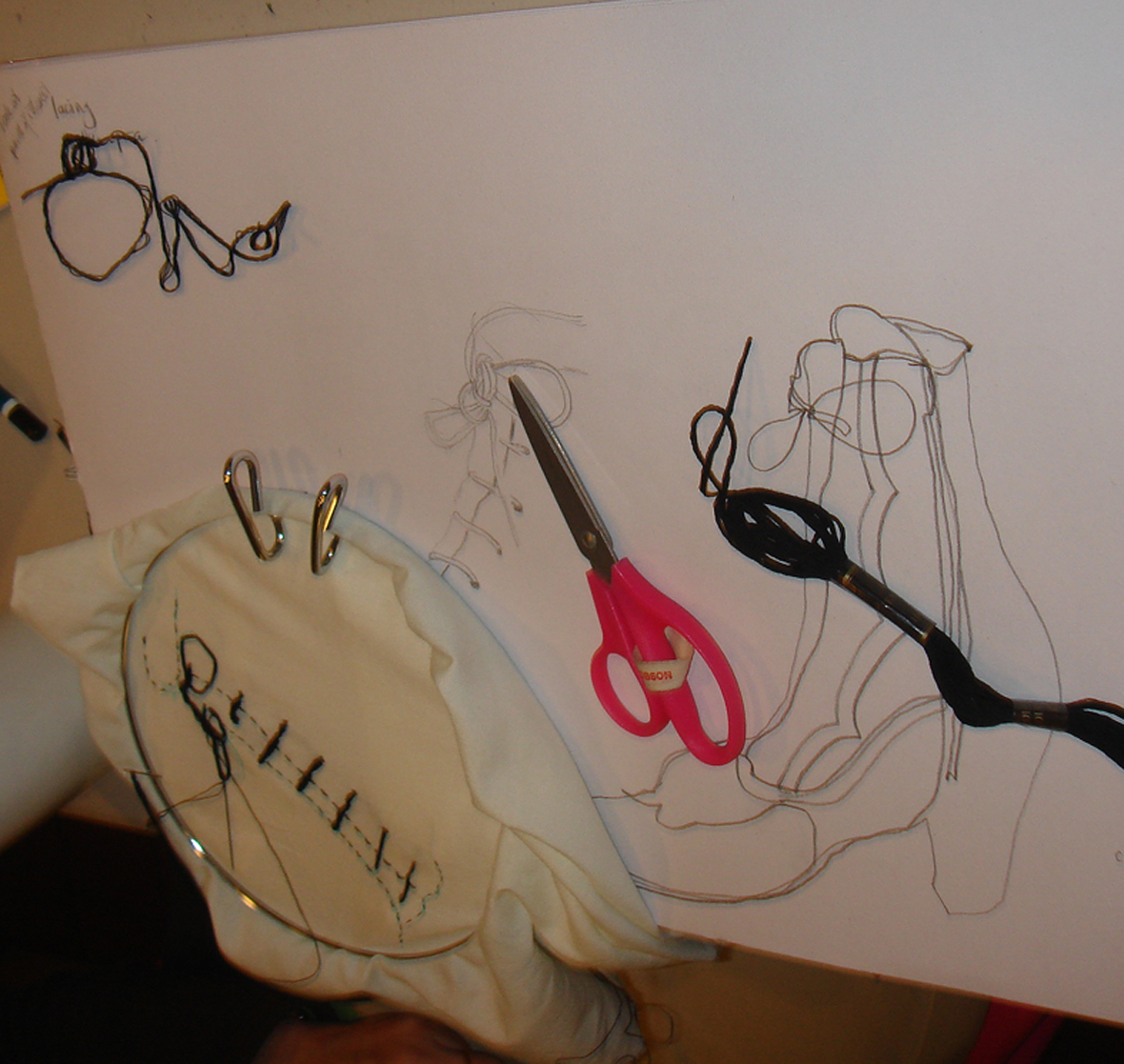
first simple drawings being used for stitched shoes - Janet Clarke
I have very few images of these early drawings – I was far too busy watching and teaching to remember to take photos…but happily several people returned to their simple line drawings for the stitched drawing later in the day. One of the most elegant drawing and embroidery transitions, below, was done by Sally Payne who “doesn’t stitch at all” and is a musician, she just came along with a friend.
an early drawing with transition into stitch - Sally Payne
Several people brought shoes, Jan Connett brought the most fascinating pair of all – a fabric and glitzy suede confection which almost everyone wanted to draw, but they would have taken the whole day to have done justice to them – the person who captured their spirit if not their fabrication was our only male student, Mike -who is just re-learning to draw after a very early retirement,
everyone's favourite fabric and leather shoes
coloured character drawing of the glitzy shoes, Mike Kersopp
But Jan’s own simple line drawing and embroidery caught something more refined which she could see in them – but then she has worn them and is very alive to their curious allure.
drawing and stitched transition drawing or her own shoe Jan Connett
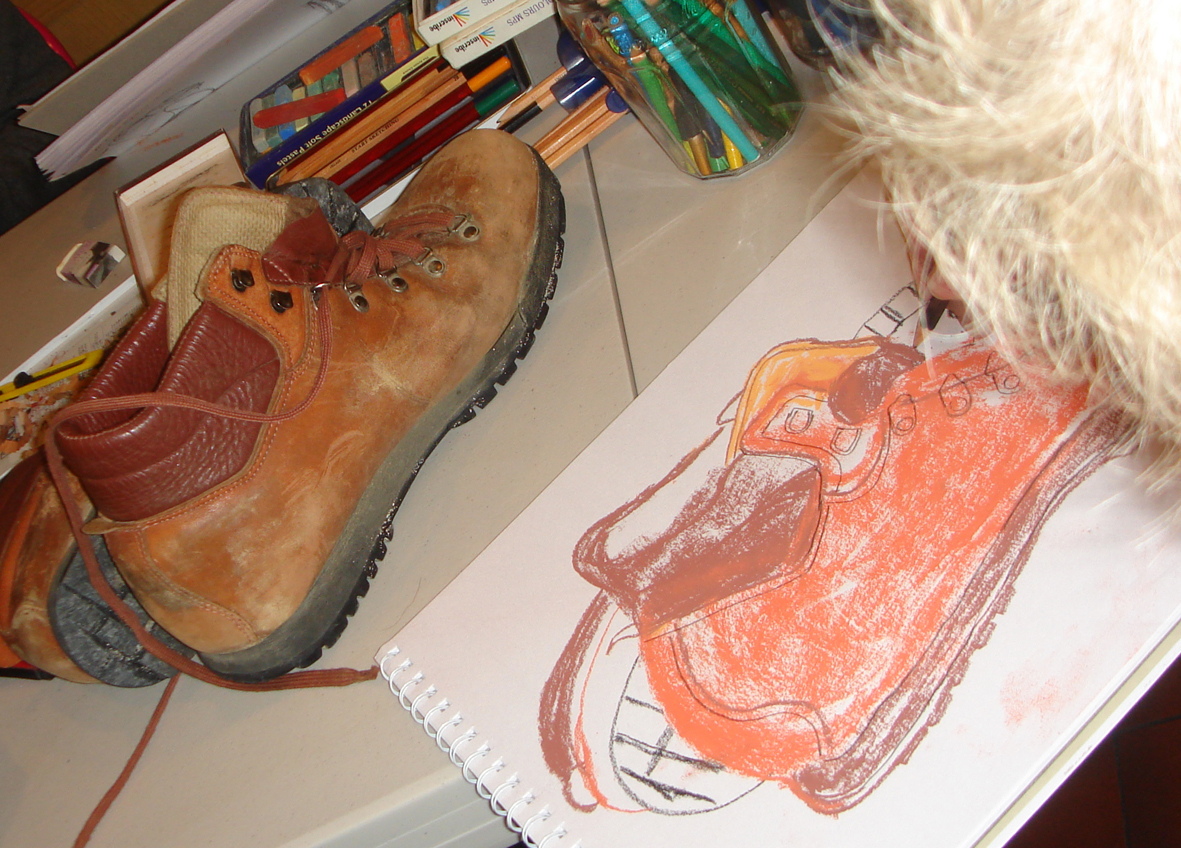
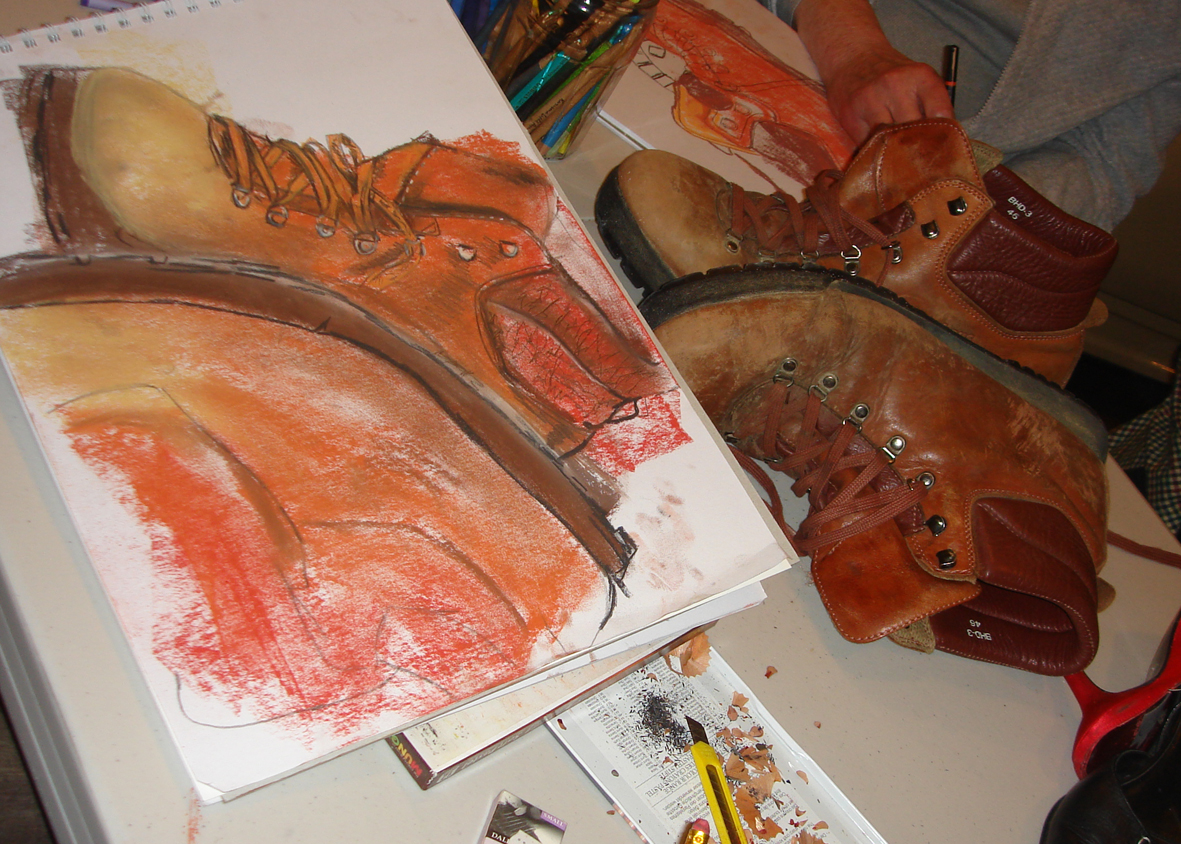
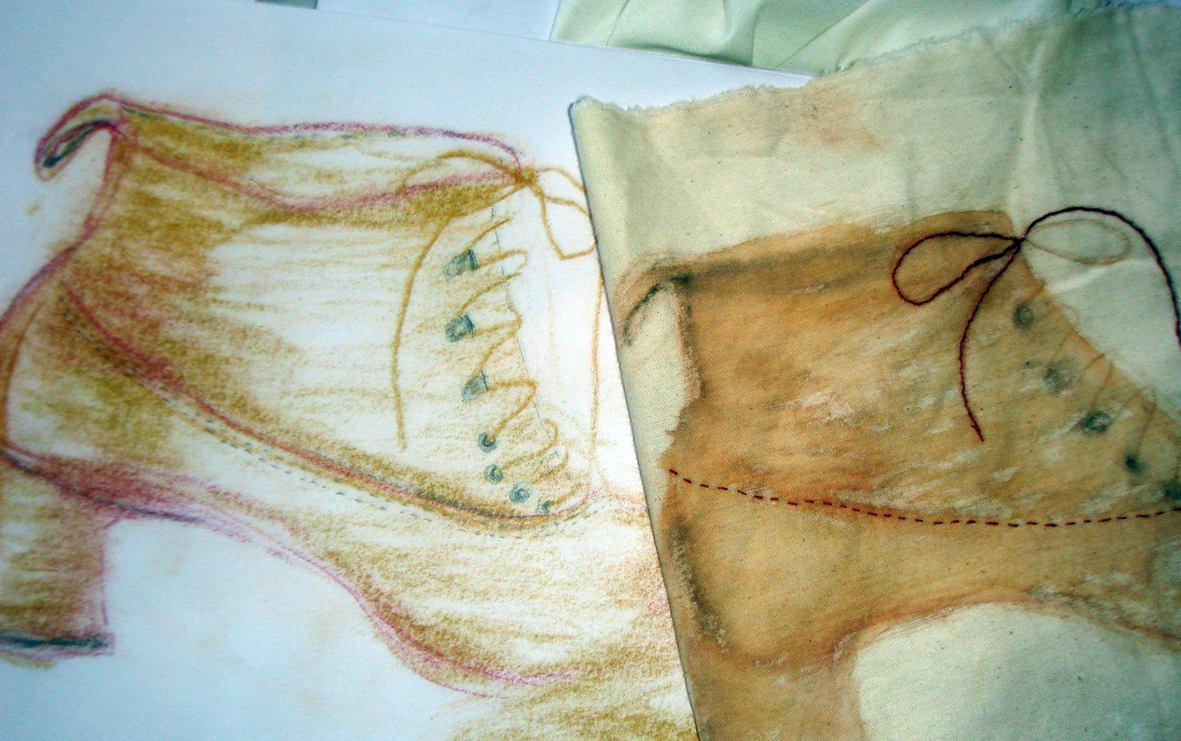
Another shoe or rather boot, that proved to be the inspiration for several wonderful drawings, were Mike’s suede boots – their rugged rough exterior made everyone who saw them reach for oil pastels to draw really big – they turned quite a few people into confidant illustrators and their subsequent embroidered versions carried through the initial conviction.
work boot drawing, Ira Wood
work boots, Kirsten Hill-Nixon
However Mike really won the “bravery in face of the experts” award for his first attempt at stitching from his study of his own boot, I had to explain the rudiments of running, back and split stitches. It is not surprising that such a rugged boot should elicit good drawings, there is a lot to record in them and the shape isn’t too refined!
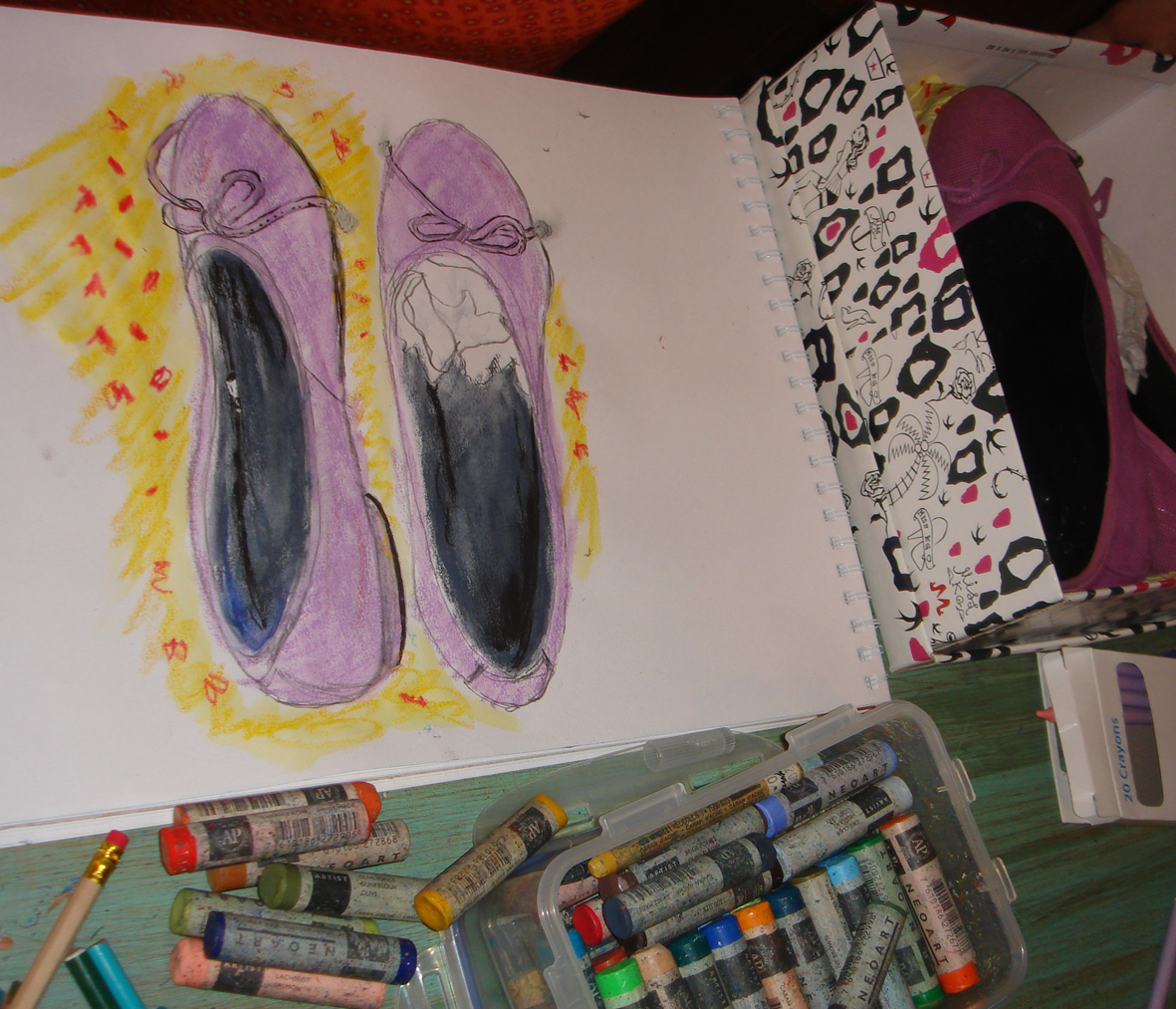
But some of the most charming drawings of all were from a simple pink ballet -flat shoe, their simplicity seemed to bring out careful and fairly accurate results which captured the spirit if never the quite the colour of the original shoes…
simple drawing of a simple shoe - Viv Young
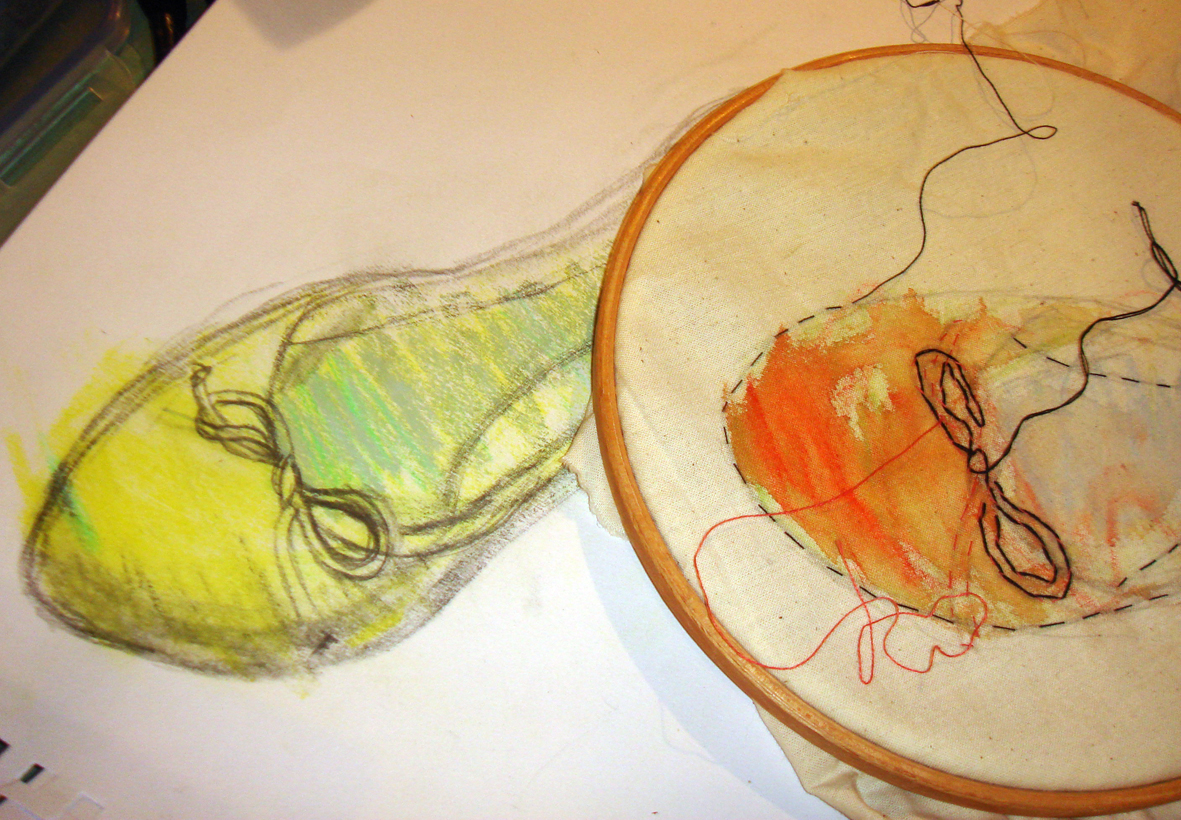
and the header illustration by Anne Rippin is of these same shoes but she placed them perfectly in a shoe box to surround them with a pattern.
lively but simple drawing of my ballet flats - Ann Rippin
Anne has beaten me to blog this first, she sent me a link to her own post before I had even downloaded my images and she is extremely complimentary about the workshop.
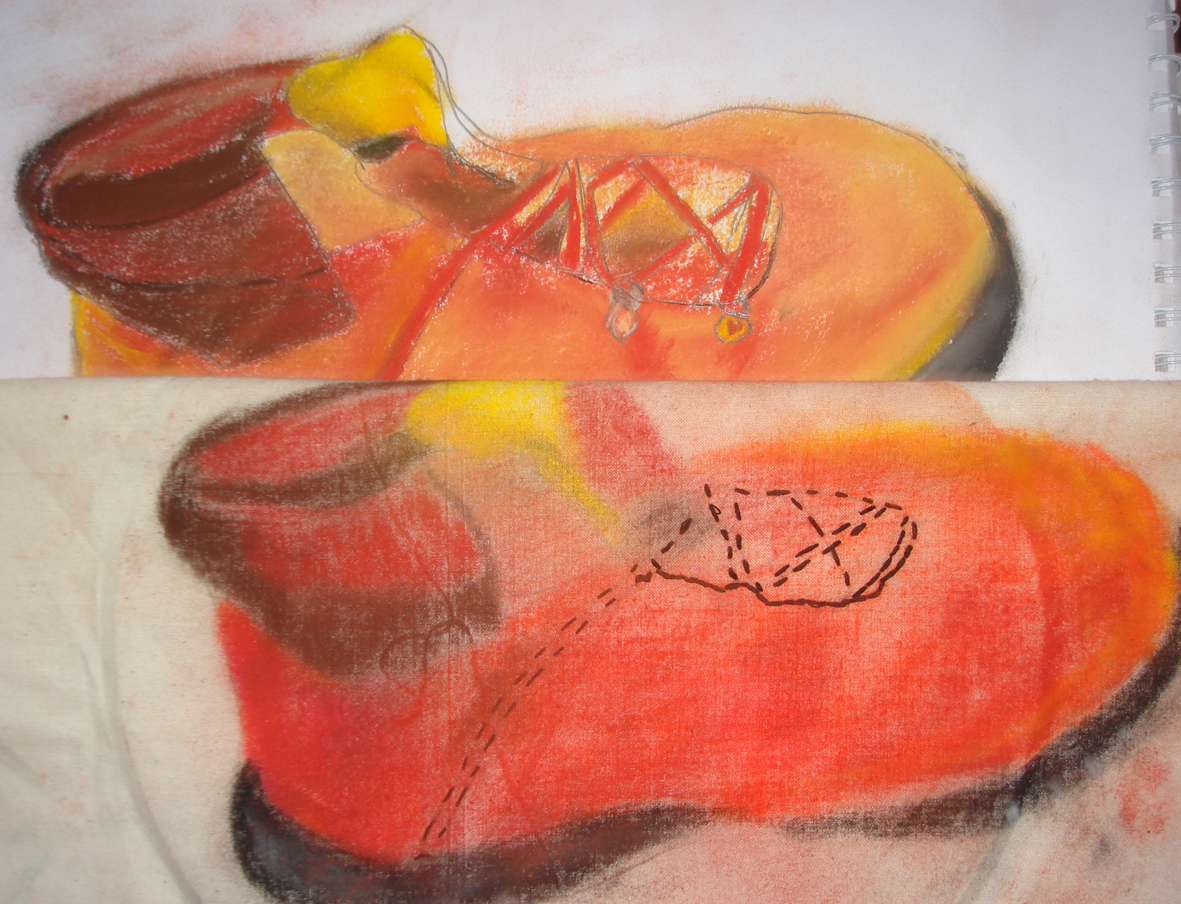
The suede boots and shoes seem to bring out the most sensitive drawings from most people – maybe this is the ease with which you can apply pastels and soft crayons which suggests the texture of suede.
sensitive drawing and stitched painting of suede boot- Debby Bird
even my own difficult to draw, black suede shoes have been transposed into luscious deeply textural studies by Sharne Lott – a knitter.
transitions from drawing to stitched images of a suede shoe - Sharne Lott
Even people who absolutely dreaded the day – like Liz Hewitt who organised the students for me, realised that if she didn’t worry so much about how the drawing looked but just concentrated on quickly recording just what she saw, not what she thought she saw (now I wonder why that helped?) her drawings were more accurate and looked convincing – but like many textile practitioners, she stitches a lot better than she draws.
sensitive stitching - Liz Hewitt.
killer heels quick drawing and transition stitching- Sally Sparks.
Being forced to draw quickly often brings about great changes in people’s work, when you are made to hurry up and just told to concentrate on the essentials, which are assessed before-hand, the drawings are usually stronger by being more focused. On the right can be seen 2 really strong drawings of killer heels by a dedicated machine – stitcher who was struggling to get any proper proportion in her slower and more considered drawings. I often find that people who have taken a long time over a drawing and then realise it is out of proportion are loathe to change it – thinking that they will adjust it later ….better to erase the problem when you first recognise it .
Another thing that happens when you draw quickly is that it helps stop what I call feathery or dithery drawing, where people make about 6 attempts at the line so it appears to be ghosted – one of these lines must be right but which one? That is when I suggest drawing with an eraser…..choose the correct line and get rid of the rest – this advice worked wonders on one person at the class, who eventually made a sensitive if alternative coloured drawing and embroidery of the ballet- flats. – just look at that drawing of the bow!
fluid drawing after the de- feathering exercises-~Patricia Brownen
Just a very short post to say Da! Da! I have eventually finished my second pillow of dreams, the Shoes dream….and I have written another piece to accompany the recent post Slow Progress where I discussed the doubts and frustrations of making slow hand crafted work. At last it can be now be viewed in my pages for ‘Make It Through the Night’ as a the last section of Ongoing Work which is found directly underneath the header image – which is an embroidered dream flower detail of another pillow from the same series
If you have not viewed this section it is set out in reverse order so that you read/view my ideas as they unfold; this way you can follow the development of a personal set of work – with all its trials and frustrations over the months, and from this month the past year (I started this work in December 2009) so this section appears at the very end of the whole page and you will have to scroll down to it …. but anyone interested in the way someone’s mind works while working slowly through a whole series of interconnected and complex ideas which somehow are supposed to form a cohesive narrative or in this instance make for a comprehensive gallery exhibition, should find it of interest.
As you may have guessed by my absence of festival news – I don’t do much in the way of celebrating at Christmas although I do enjoy decorating the house; I decorate on xmas eve and then on 12th night, tonight, it all comes down. I do, however, like to bring in the new year properly and so this year we had a large party on New Year’s day. Lots of people around for lunch, mostly old friends but several new as well and one of the guests who had never been to the house before commented to Rosemary Murphy (her blog has pictures of the actual party ) how he thought that all the decorations were lovely and it must have taken me ages to put it all together. “What decorations- it always looks like this” she replied.
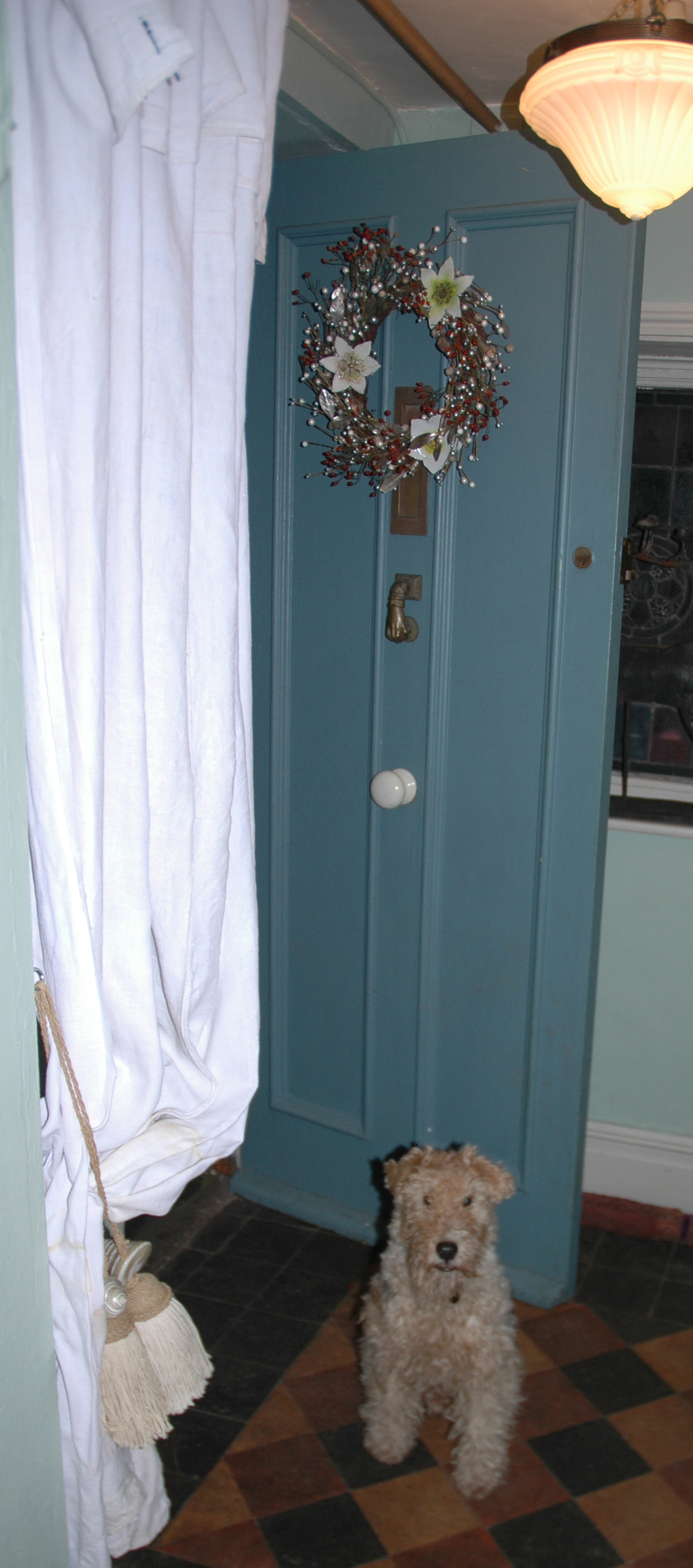
Well, actually there was a front door wreath, I know this usually lives on the landing outside my studio but I added the red berries from the garden and put it on the front door.
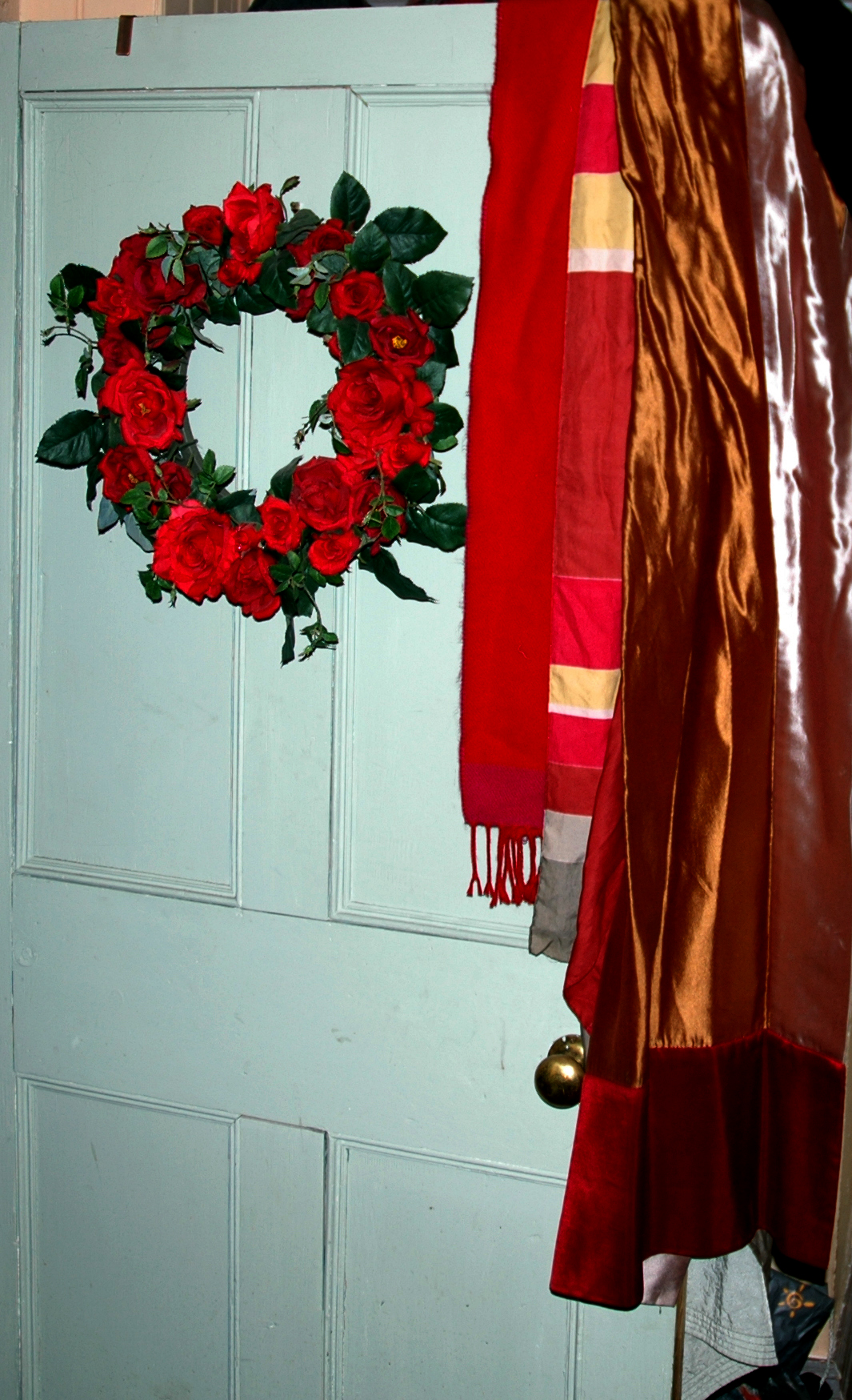
And yes I must confess that the red roses wreath has lived permanently on the kitchen door ever since it was brought in from the front door on 12th night 2007 – but it looks so lovely against the Blue Green painted (Farrow and Ball) door and I did select the scarves especially to colour co-ordinate with it. In fact this kitchen door always has a selection of scarves draped over it depending on the season and my agenda so I am thinking that it may provide a fabric series of posts in the future…..and the future is soon going to get very busy – but not just yet!
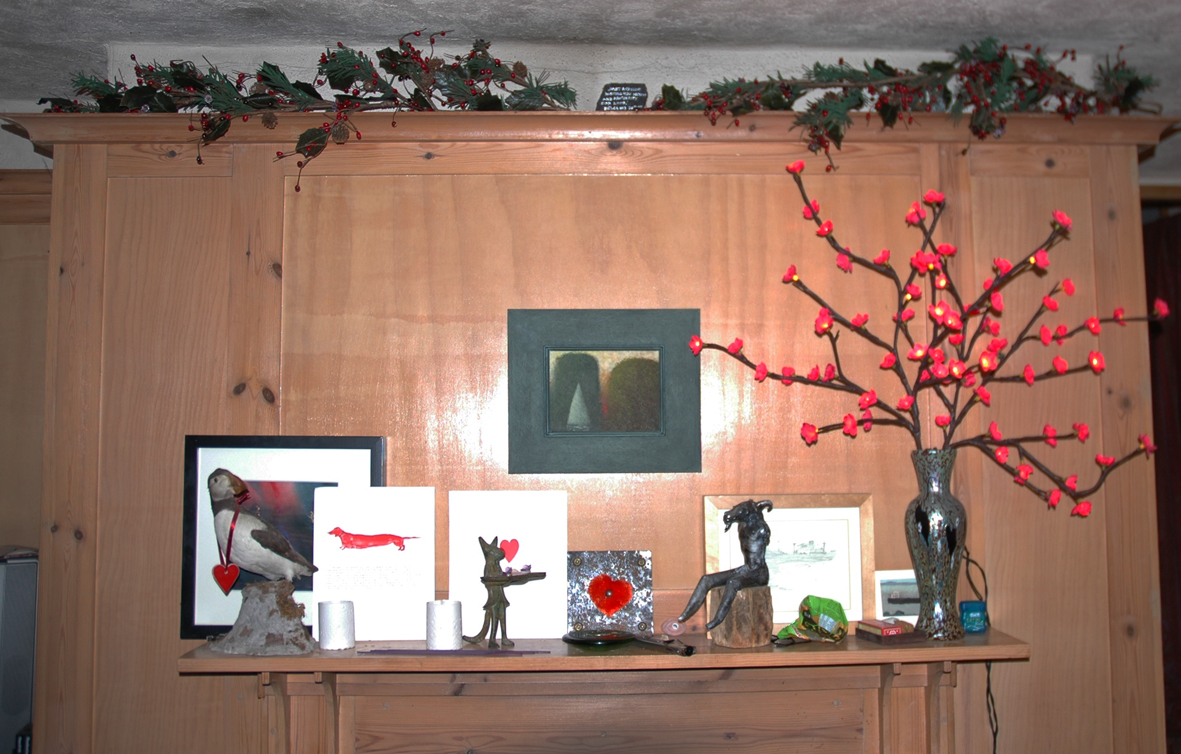
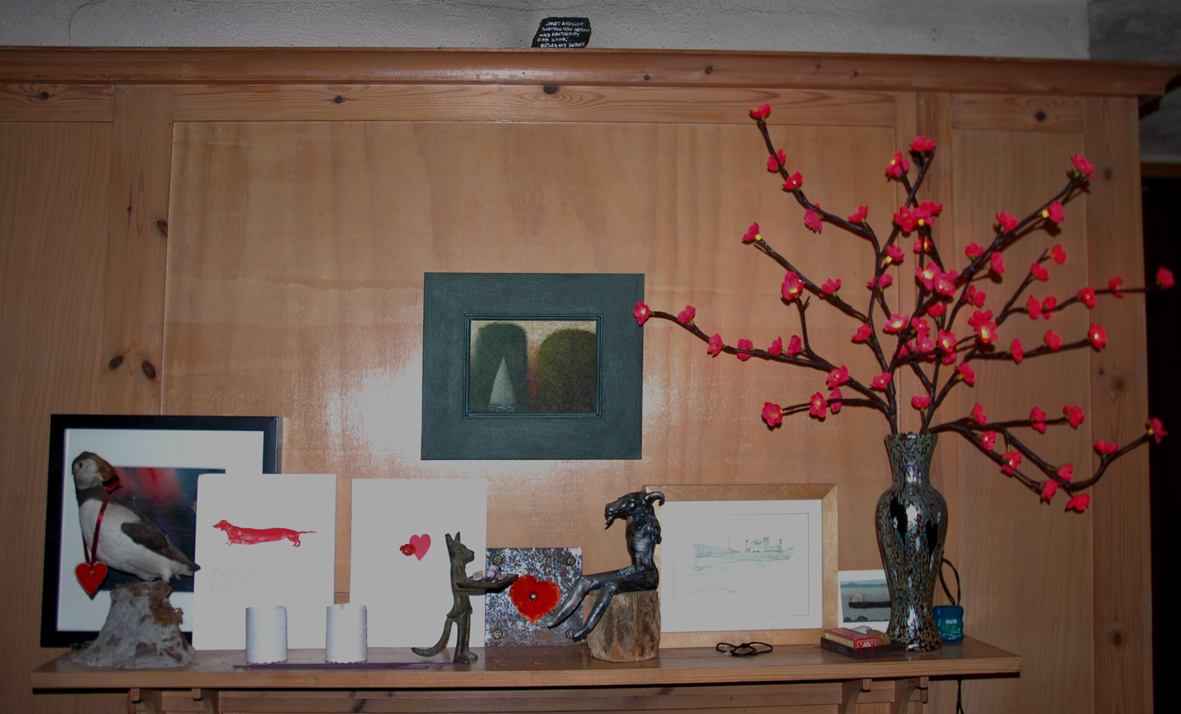
Moving into the small panneled room where I have shown my seasonal pelmet decoration as the header of this post – you can see how it usually looks above, in fact I quite miss that extra xmas swag right now, but no doubt will get used to the minimal look again.
The fireplace also gets swagged for the 12 days,
This mantle-piece holds several art works by friends and colleagues, and by chance there is a red theme to them, so they lend themselves easily to the xmas look – the painting above is by Alfred Stockham, an old friend whose birthday falls on New Year’s day and he was the guest of honour at our party.
meanwhile this little silver heart wreath always lives on the shell wall lights.
And lights are the main area where, I grant you, that the extra xmas decorations are especially hard to spot, but those amongst you who are sharp eyed should enjoy the search.
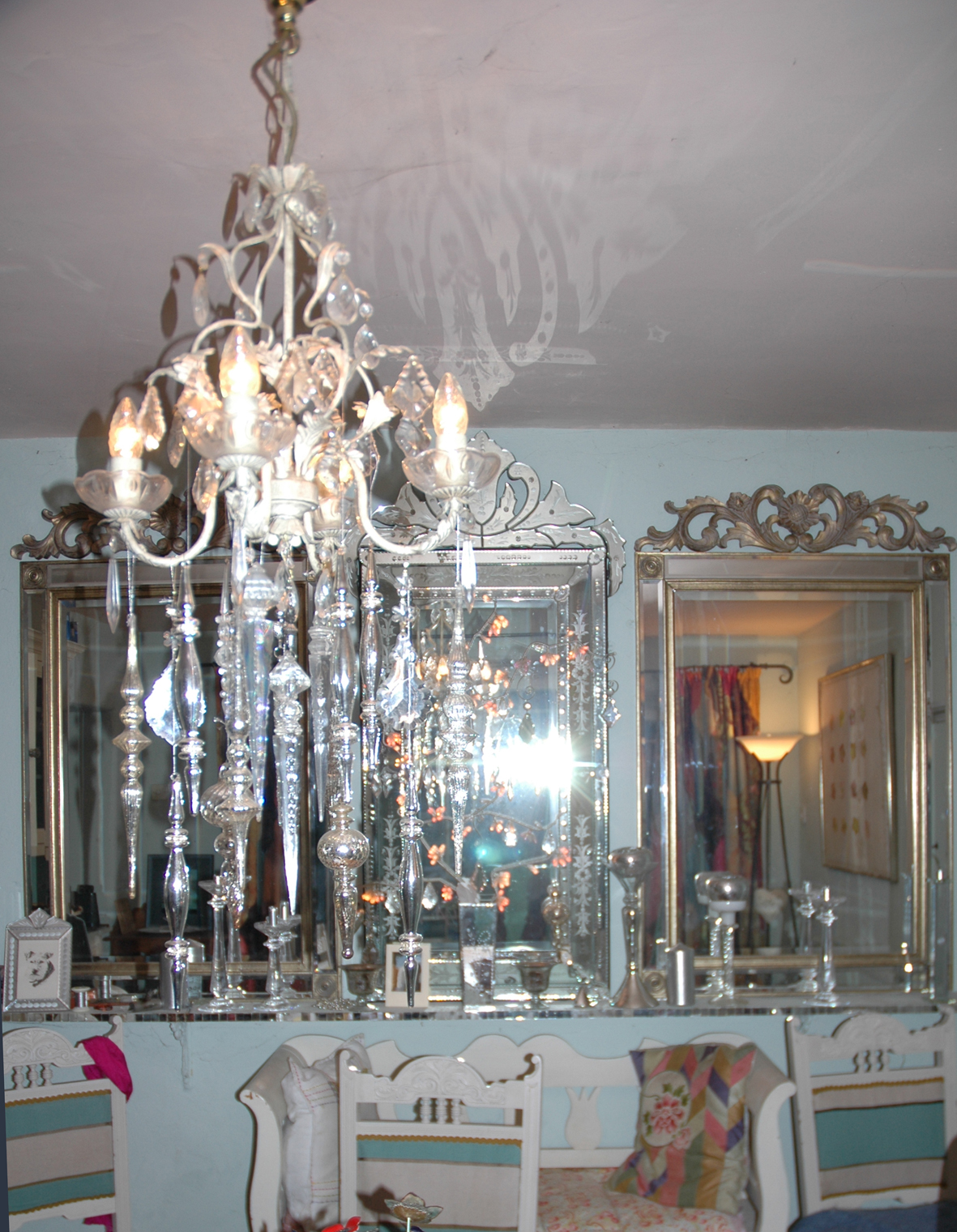
I just had to include the photograph below because of the wonderful reflection cast onto the ceiling from the finial of the venetian style mirror – it isn’t at all apparent in the room itself…and I have just realised it is because of the flash on the camera!
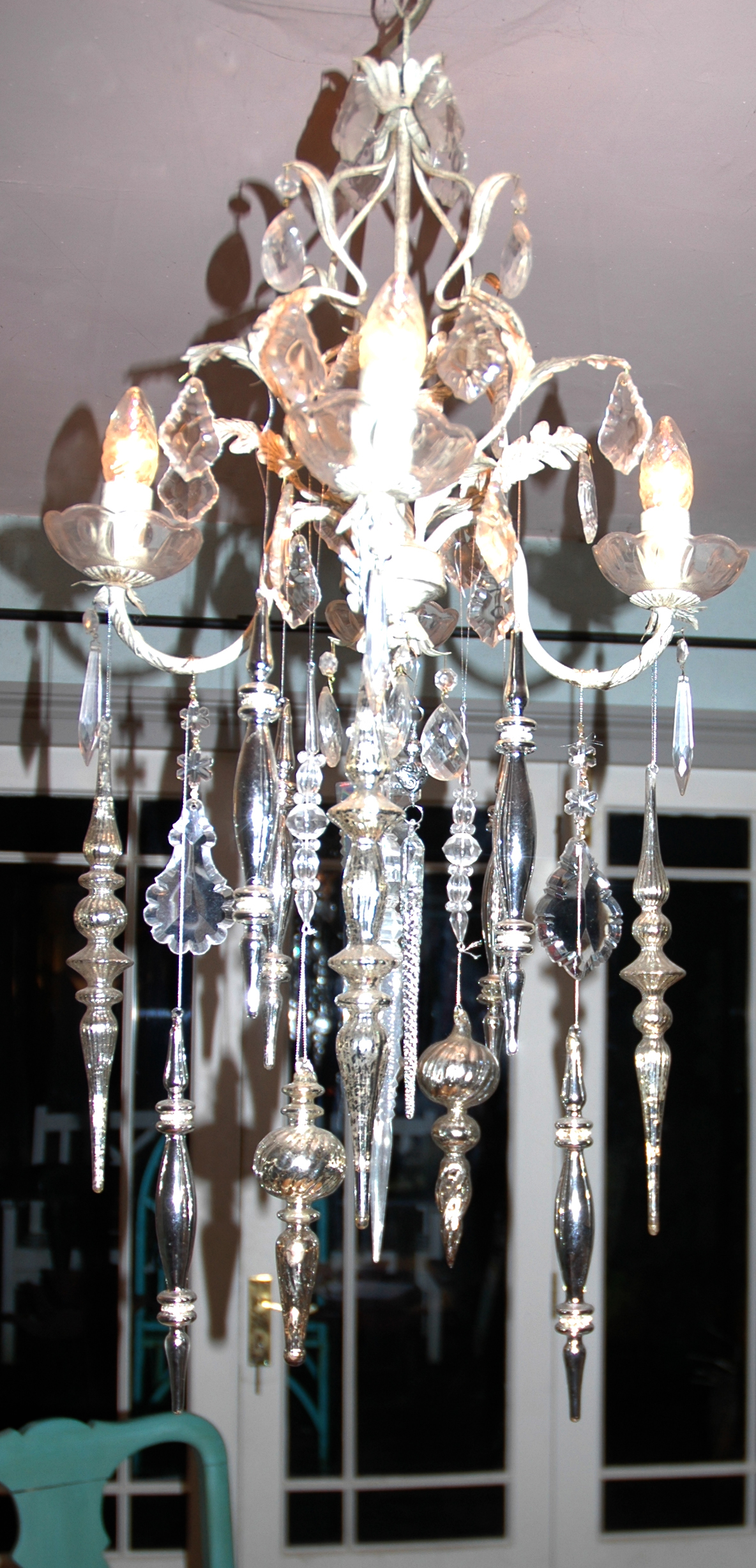
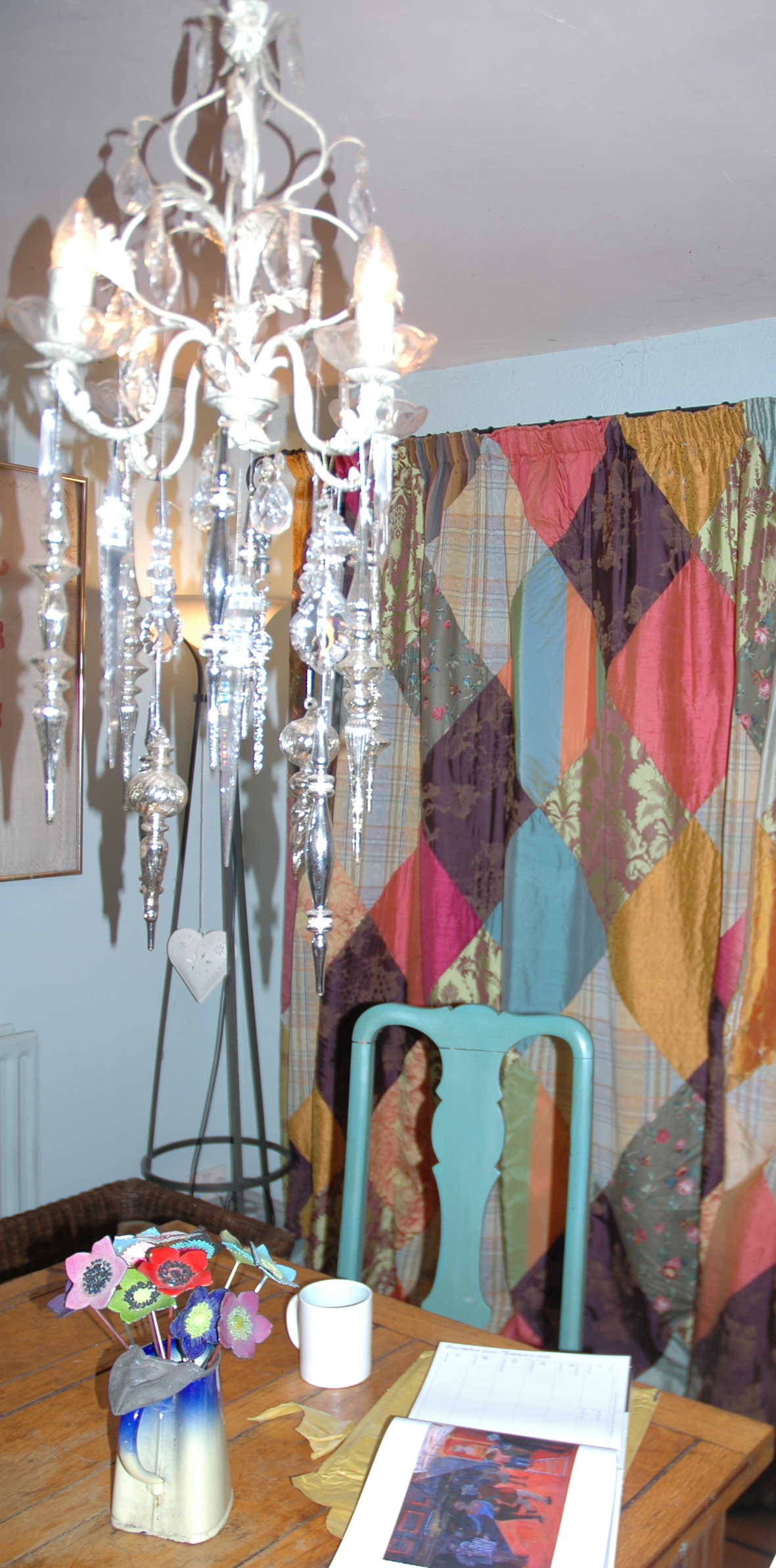
Now I have to own up that this chandelier is festooned with all the past 8 years xmas decorations in the form of plastic, glass or crystal drops which I first started to add to it the year I bought it…and then couldn’t bring myself to remove them they looked so pretty – so this now is a cascade of pure glitz.
And last but not least in the return to textiles and my own work – I must show off my old and getting better by the year patchwork curtains made specially for this room
Although the whole of the British Isles is suffering from snow this winter, here in Portishead on the Bristol Channel, it is a rare and entirely delightful presence. I have lived here for over 20 years and this is only the 3rd fall of snow which has stayed for more than 1 day. When I looked out of the bedroom window this morning this is the view I saw.
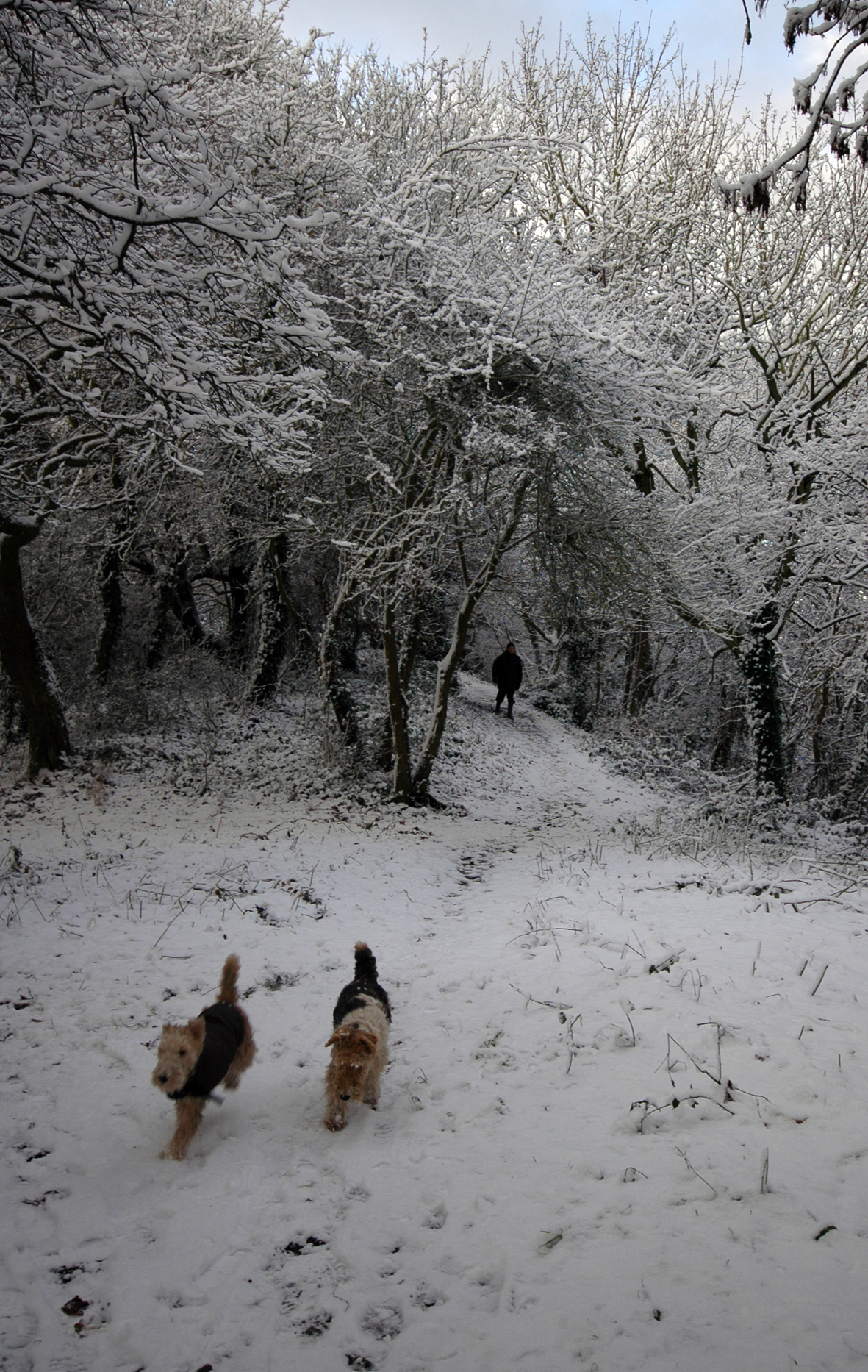
So at just past 8 o’clock we went out to see the woods – I walk in the ancient local East Wood almost every day, this time Steve came with me – no hope of getting the car up the hill and off to work in Bristol just yet. The dogs behaved like mad things, running, eating, dancing around in the snow.
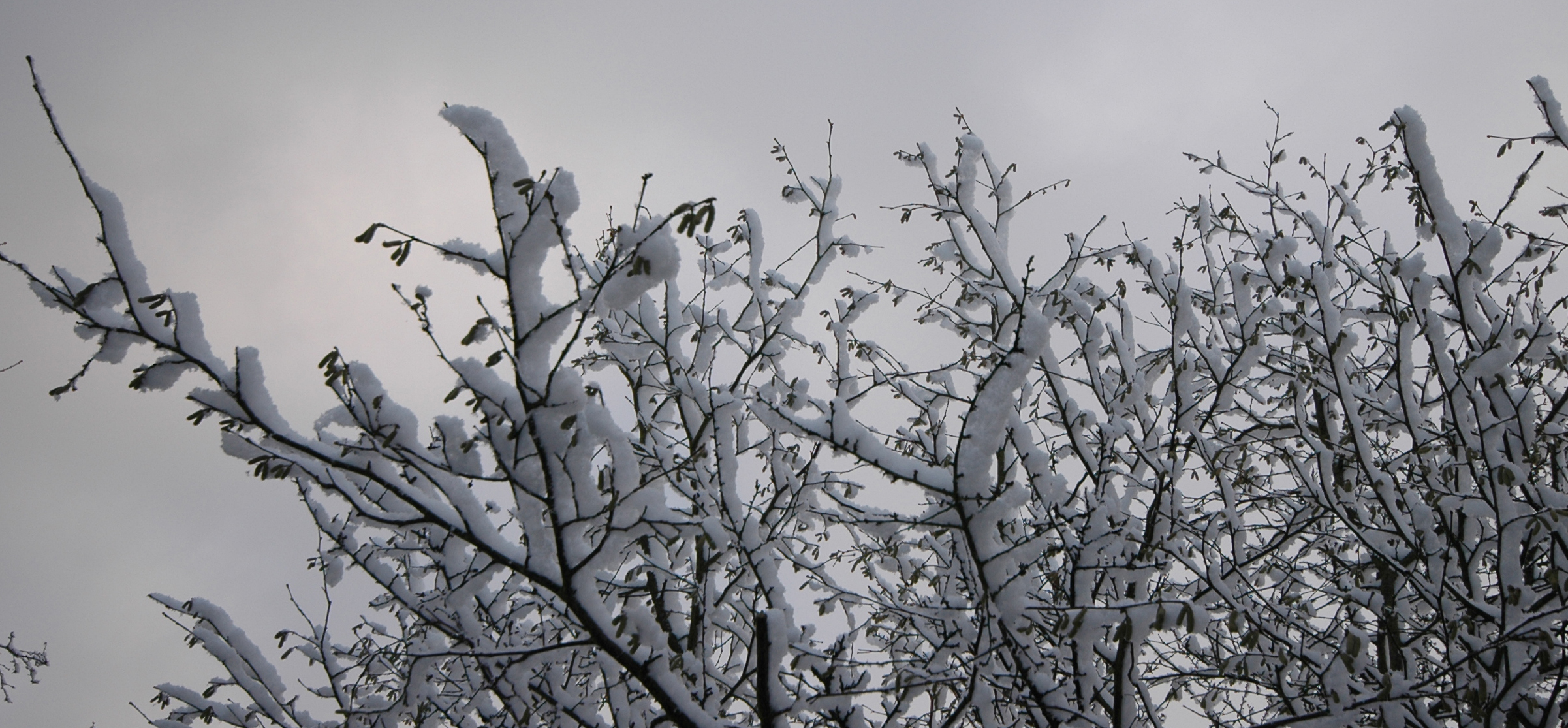
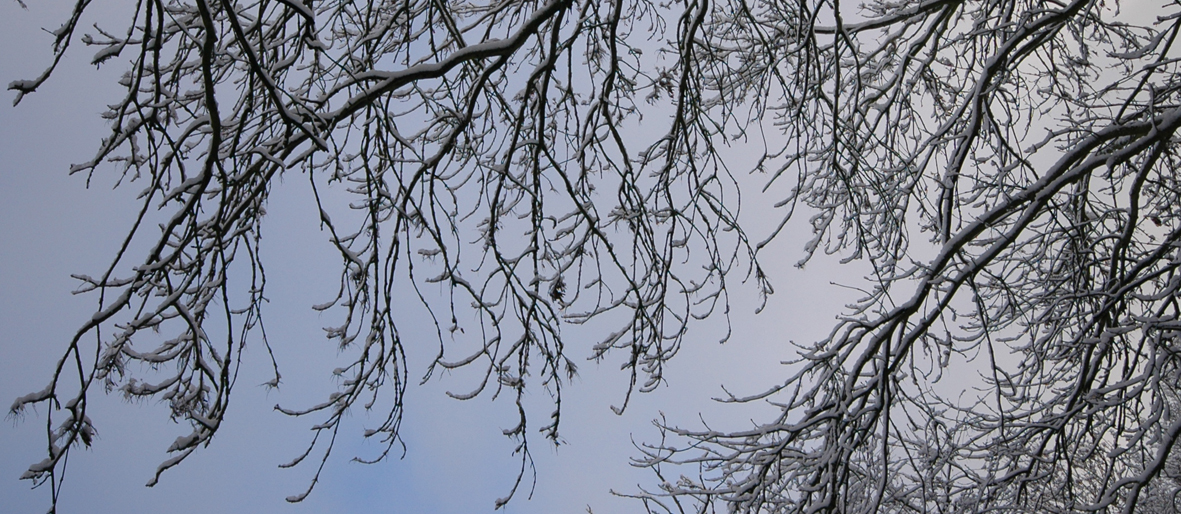
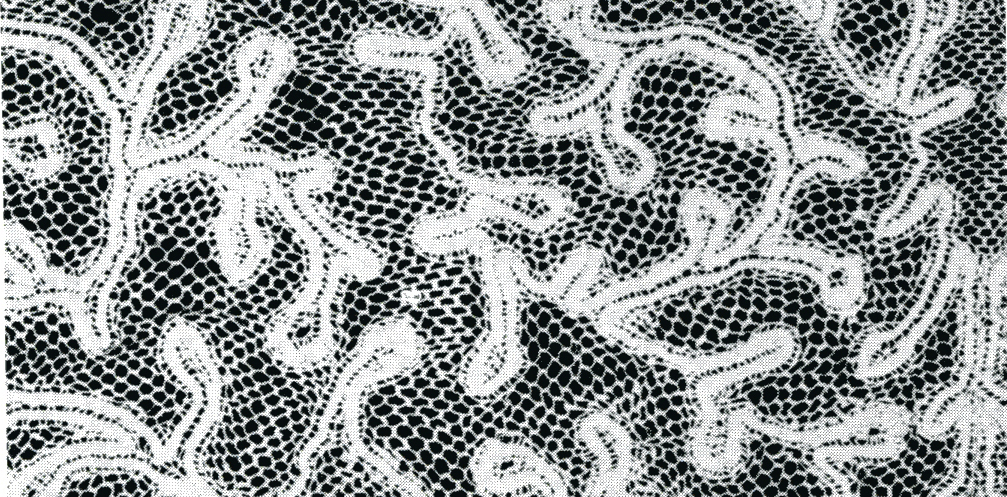
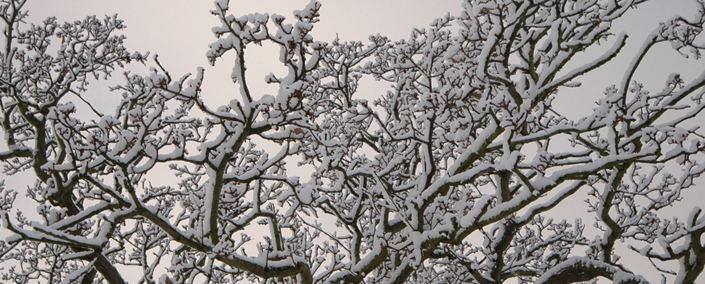
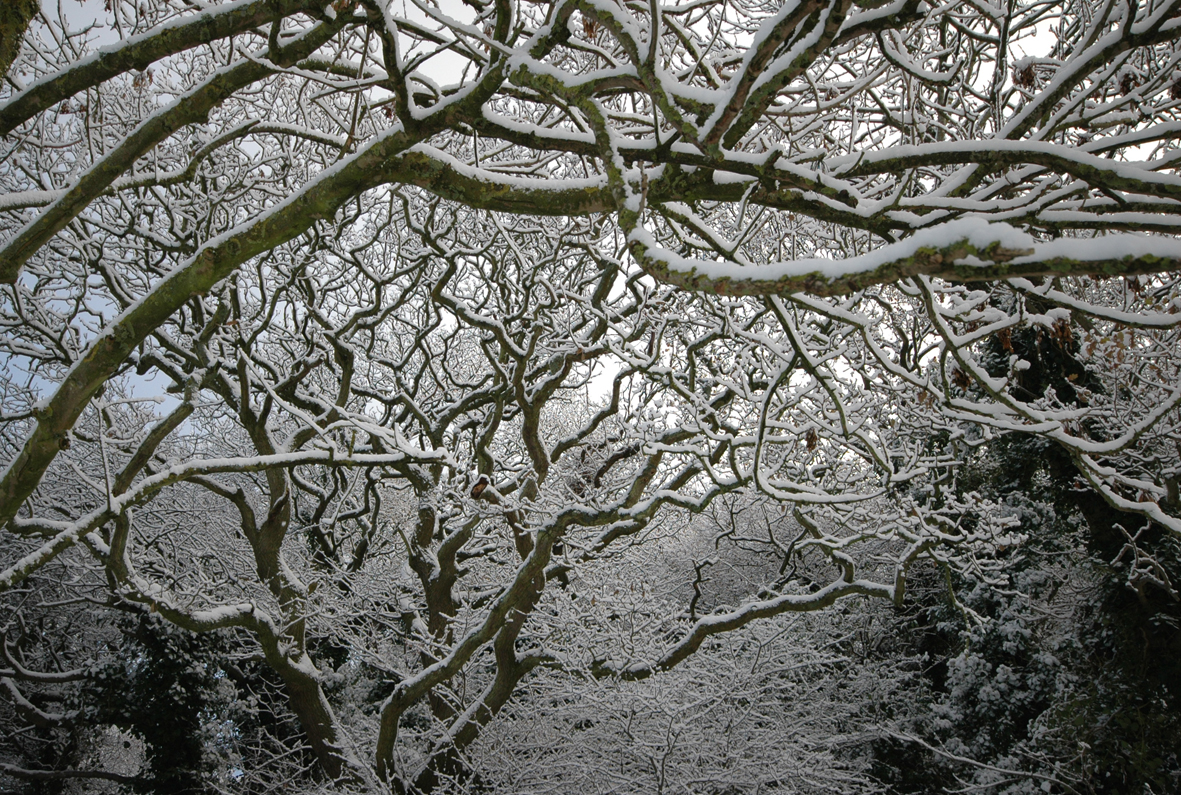
Looking above me I could see the different patterns that branches made against the sky, laden with snow they look like lace – heavy crude needle made lace (my favourite lace). I had noticed this last winter, on the second time it had snowed here. Walking in these woods the rhythm of the branches are starkly shown; swooping ash trees against nubbly oaks, spiky thorns and elegant maples with still some leaves left on the branches. I couldn’t help thinking of the different qualities of lace patterns, the flowing loopy patterns of Ash trees remind me of early Brussels lace
whilst the stubby oak trees with their short branches
remind me of 17th century needle lace with picots and wonky patterns – maybe I will find an animal shape in the trees if I look hard enough.
the snow laden trees overlapping as we looked down on them are rich and varied in their patterns
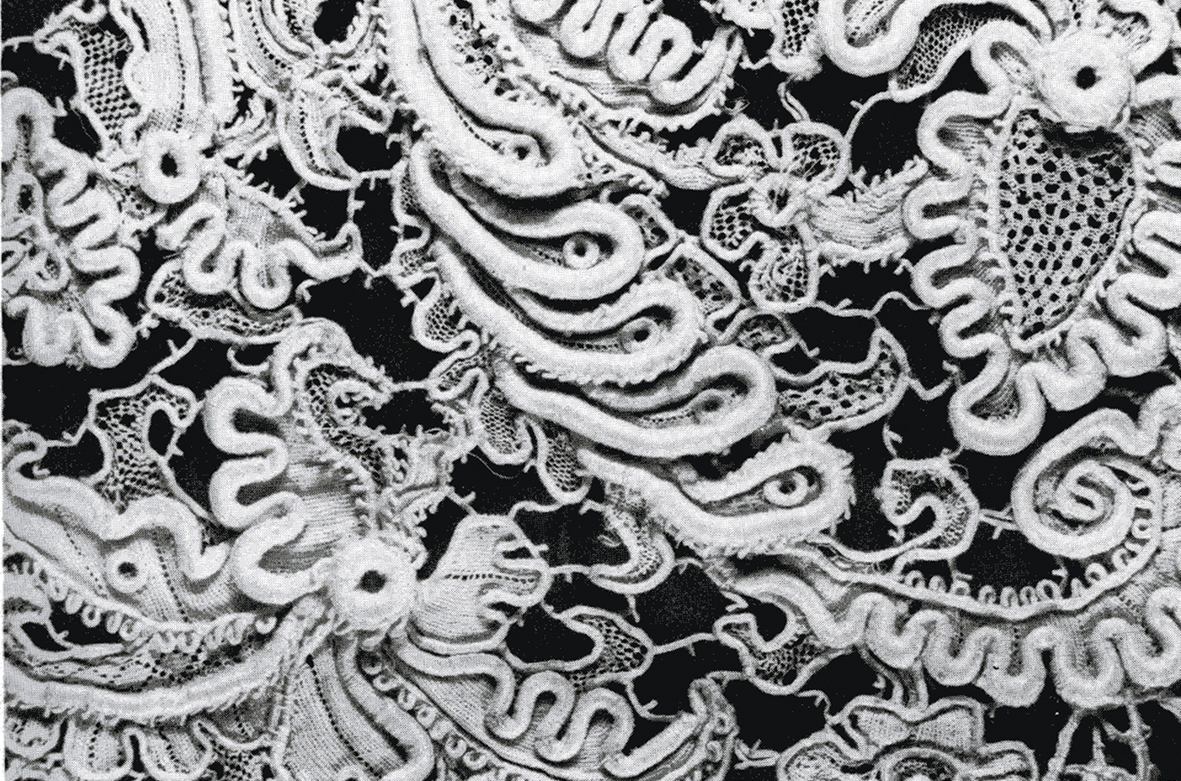
I am being very fanciful but I did think of the wonderful old Venetian needle-lace with their heavily encrusted stitched worms and wiggles.
Turning the corner of the woods we headed back home, down hill all the way and getting slippy underfoot – by now the sun was out and the sky bright blue, the snow was thawing. One last look across the Severn estuary to Denny Island, a tiny outcrop in the middle of the channel, home for a big boys’ breakfast.
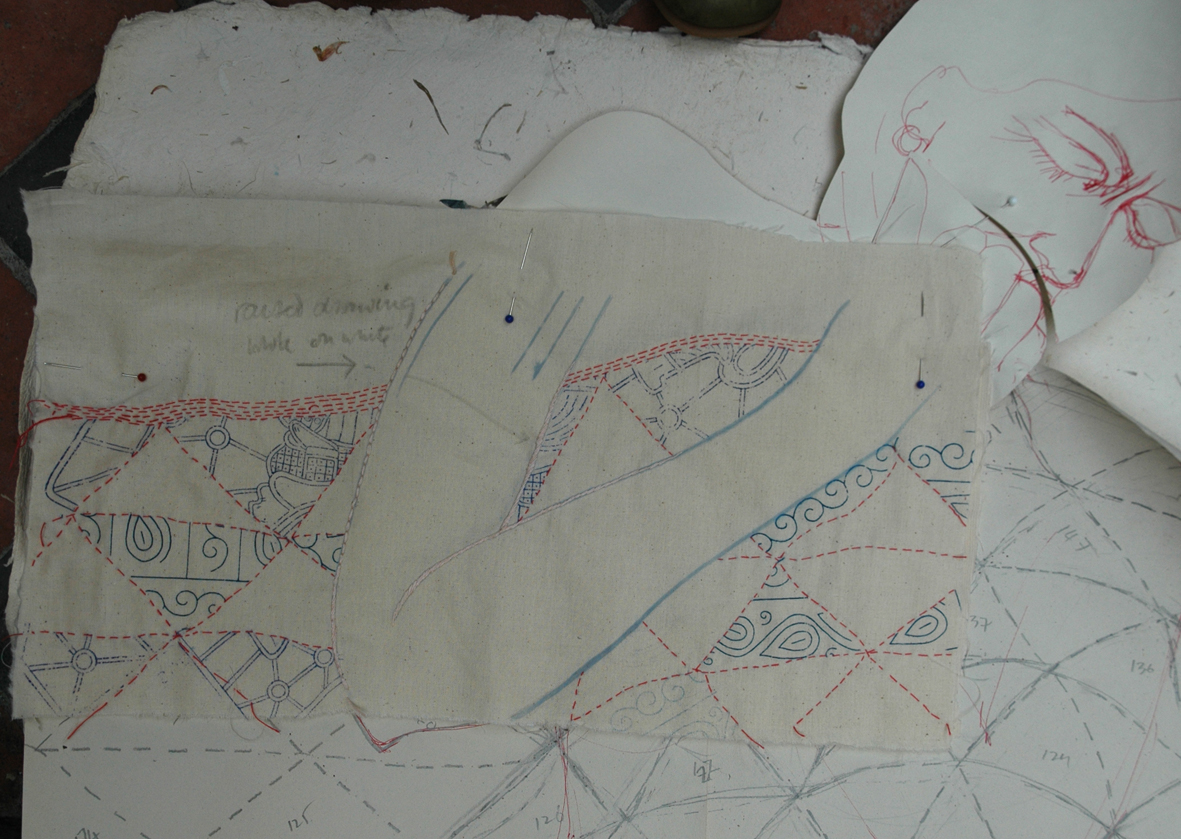
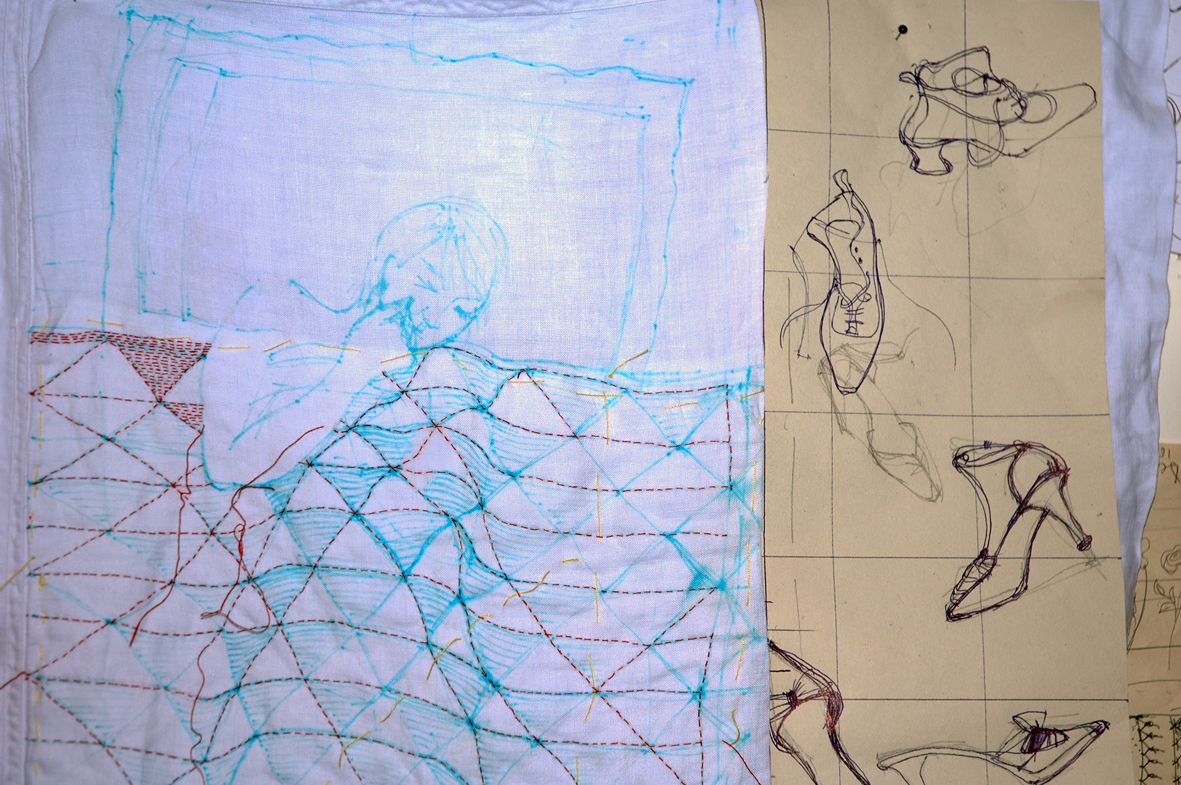
I wrote in the About page that I would show work in various stages of progress, successful or not; and as I have almost finished the second dream embroidery for my “Make it Through the Night” project, I thought I would show this at the “will it never ……. end”? stage. This embroidery has been a real struggle to make, which is so strange as I have had the drawing of my dream for over 10 years, have often looked at it and thought “one day”.
shoe dream drawing 1998
For several well considered reasons I decided to embroider it onto a bed sheet, therefor everything was life size – “a sheet of dreams” I started it in August and mention it in the blog “Samplers” and It took about one month of drawing, making patterns and sampling various techniques before I could start to make the work; then another month’s actual making before I gave it up – I thought that if I shelved it I may eventually get the courage to continue the mammoth task of stitching it. I had made many samples and even got as far a printing an entire quilt onto the bed sheet, this took weeks so I was loathe to abandon it. But basically the sheer scale was just too daunting – I knew I had to hand stitch each shoe and there were about 10 0f them, and they were shoe sized and in a single thread, and I was losing the will to live at the thought of it. I didn’t blog about it at the time as I was unsure of why I was experiencing such difficulties and I certainly didn’t have the heart to write about it.
life size sample for sheet of dreams.
Meanwhile I made other works – some commissioned pieces which can’t be blogged until they are published….and so generally let the problem lie at a low level, to be absorbed knowing that eventually it would re-emerge…this is how work often resolves itself; you just have to be patient and let it suggest its own way forward…..then I made somehandkerchieves for the same project, and realising how good it was to work small and quickly again – I thought I could maybe make the work smaller and embroider a” pillow of dreams” – after all, I reasoned, this is where you lay your head and where all the action stems from.
original drawings from August with revelation about how to progress in October
So I set to work again restitching the whole image onto a vintage linen Oxford pillowcase. The drawings remained exactly the same but now I used running stitches to make the quilt then padded it like a trapunto technique to emphasises the body shape that emerges from the distorted “patchwork”. This was all so really interesting to work, I was now on the right track and gone were the misgivings of “copping out” for a smaller scale.
I really wanted to get on with the shoes though, the drawings were taken from many old sketches and my own collection –
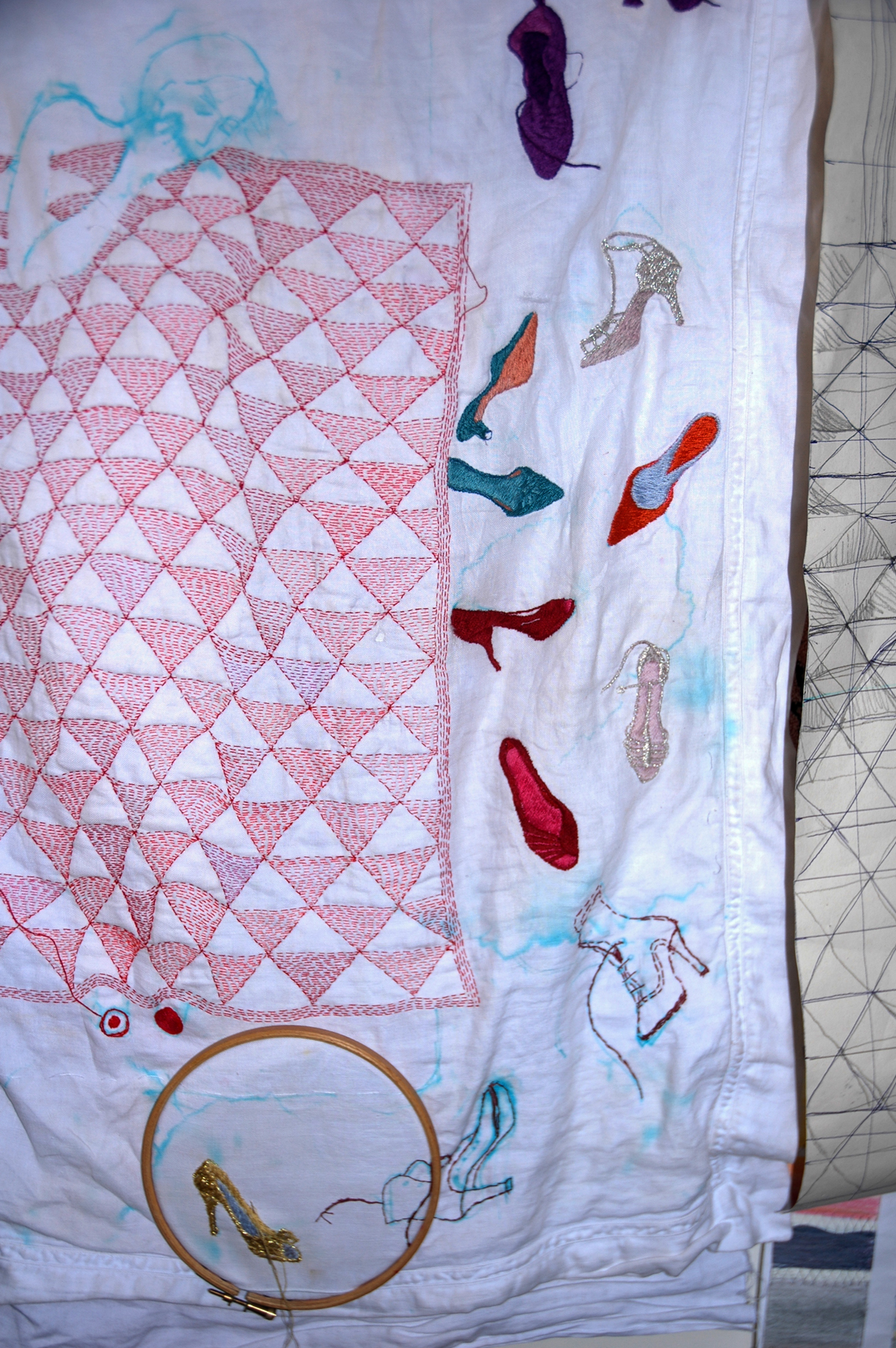
drawing of the my own shoes and embroidered pillow in progress.
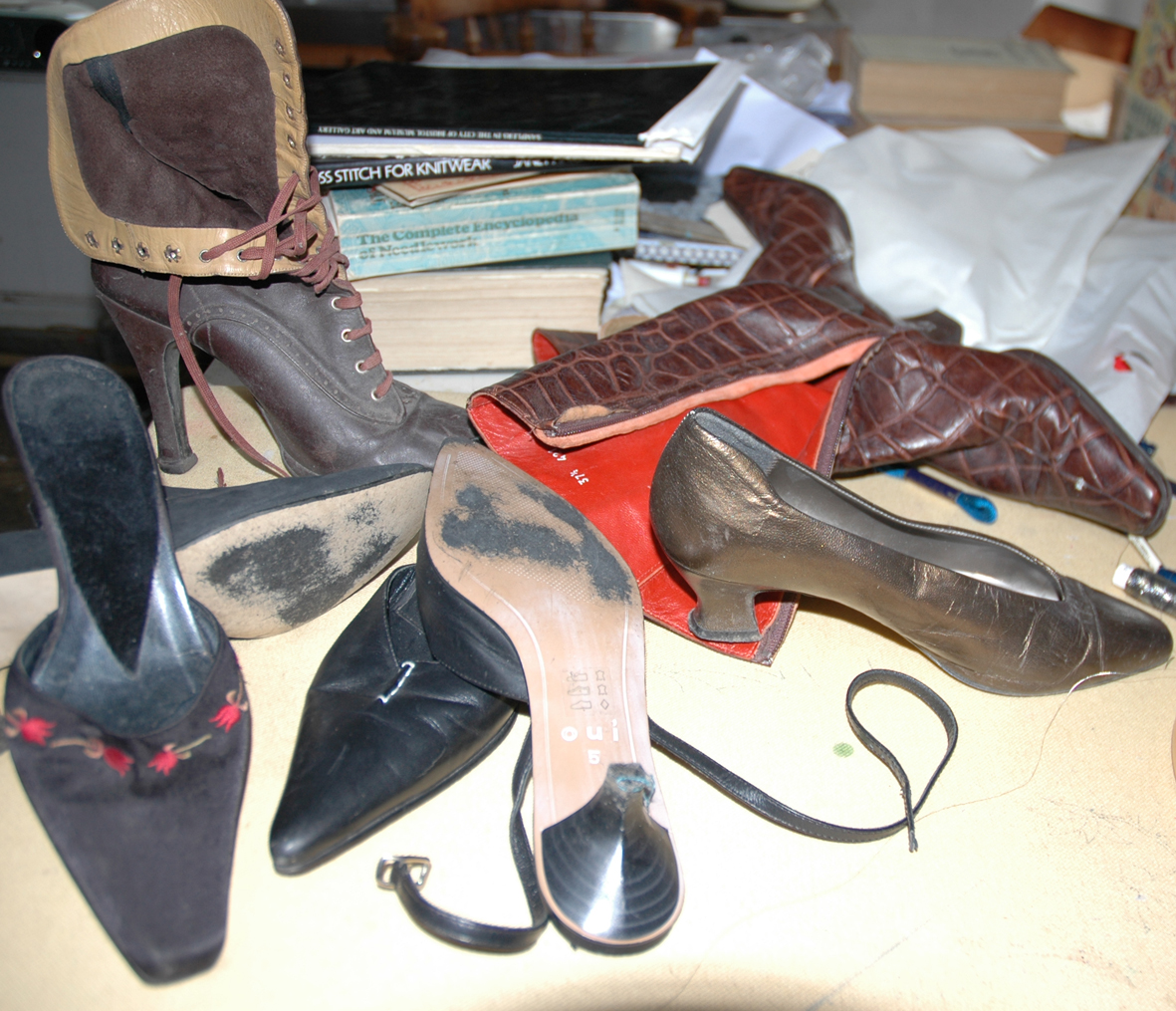
Some shoes I cannot bear to throw away and have used them for years for drawing classes – if you can draw shoes you can draw most things put in front of you.
a collection of my own shoes, the high laced brown boots were bought in 1973 - a great expense but we enjoyed some very lively times together
shoes stitching still in progress last week
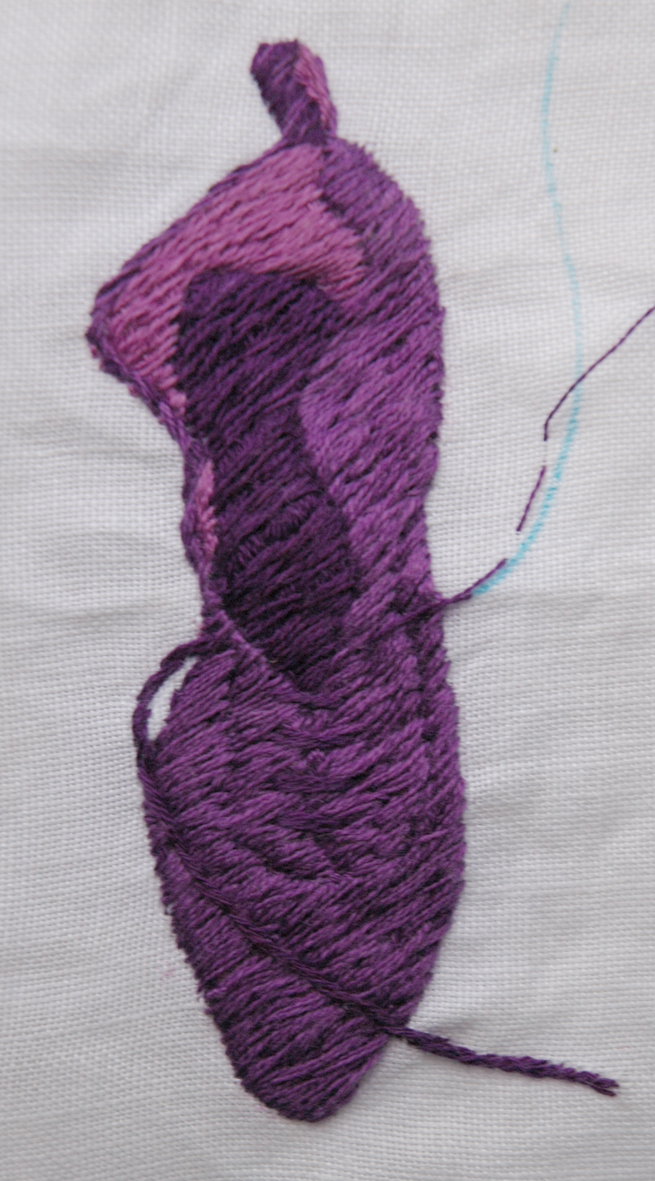
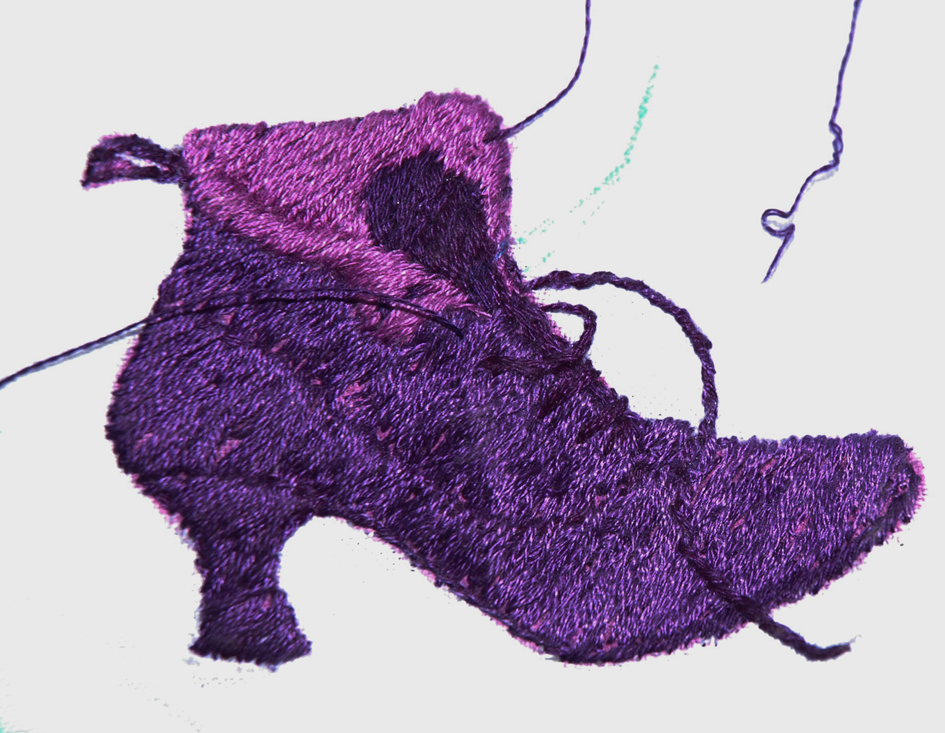
Eventually I got to embroidering the shoes, they are quite small about 10cms / 2 inches long and are stitched in one strand of silk, cotton or metal threads, I love glitzy shoes.
gold shoe tramme
other gold shoe stitched
Of course the whole point of the dream was that I couldn’t wear the shoes any more, look closely at the lack of feet….yet to be embroidered – I will address this issue later when I publish the finished work in the Ongoing Work pages. But meanwhile I set to to do the rest of the shoes – they take between 3 and 8 hours to work each one, but it is now driving me to distraction, I really dislike the days spent stitching these shoes……
Ironically I constantly bang on about how stitching is like meditation and I am presently running a project called “Stitching and Thinking” with a group of makers where we are considering the state of mind reached when the world goes away and its just you and your thoughts and the work; sometimes called a state of Flow, or old hippies used to say ” In the Zone” – wherever it is it is wonderful.
I loved the paler inside lining
embroidery of my old suede boots
I haven’t been there for a few weeks while battling with these embroidered shoes…and I blame an “acquaintance” of mine, Nigel Hurlstone, who is a tutor on a course where they still embroider – Manchester Met (MMU). He gave me a much needed and requested mentoring session on the whole ‘Make it Through the Night’ set of work whose progress he has been following – we have a reciprical arrangement where he crits my stitched work and I crit his new written story – telling work.
But he inadvertently said something that absolutely made me loose faith in how I have made this piece of work – “what is really fascinating and worth you considering is that these shoes LOOK as if they have been stitched on the multi – head machine – but they haven’t ” – and he was right! The long and short stitches are so neat and precise they look machine made – I have been overtaken by technology. So I now have to rethink for what and how I stitch by hand….. how will this machine – made perception affect the way people appreciate my work?
One of the ideas underpinning my current practice is the notion of time taken: to hand stitch something which is very slow and therefor valued means that the subject or concept is worth consideration……but meanwhile I have to finish this piece of work – but am I wasting precious time when I could just give it to some one to machine it for me – I am not about to learn how to use a multi -head. But it does make me wonder how I can change my whole way of working in cloth when anyone can “draw” with stitch.
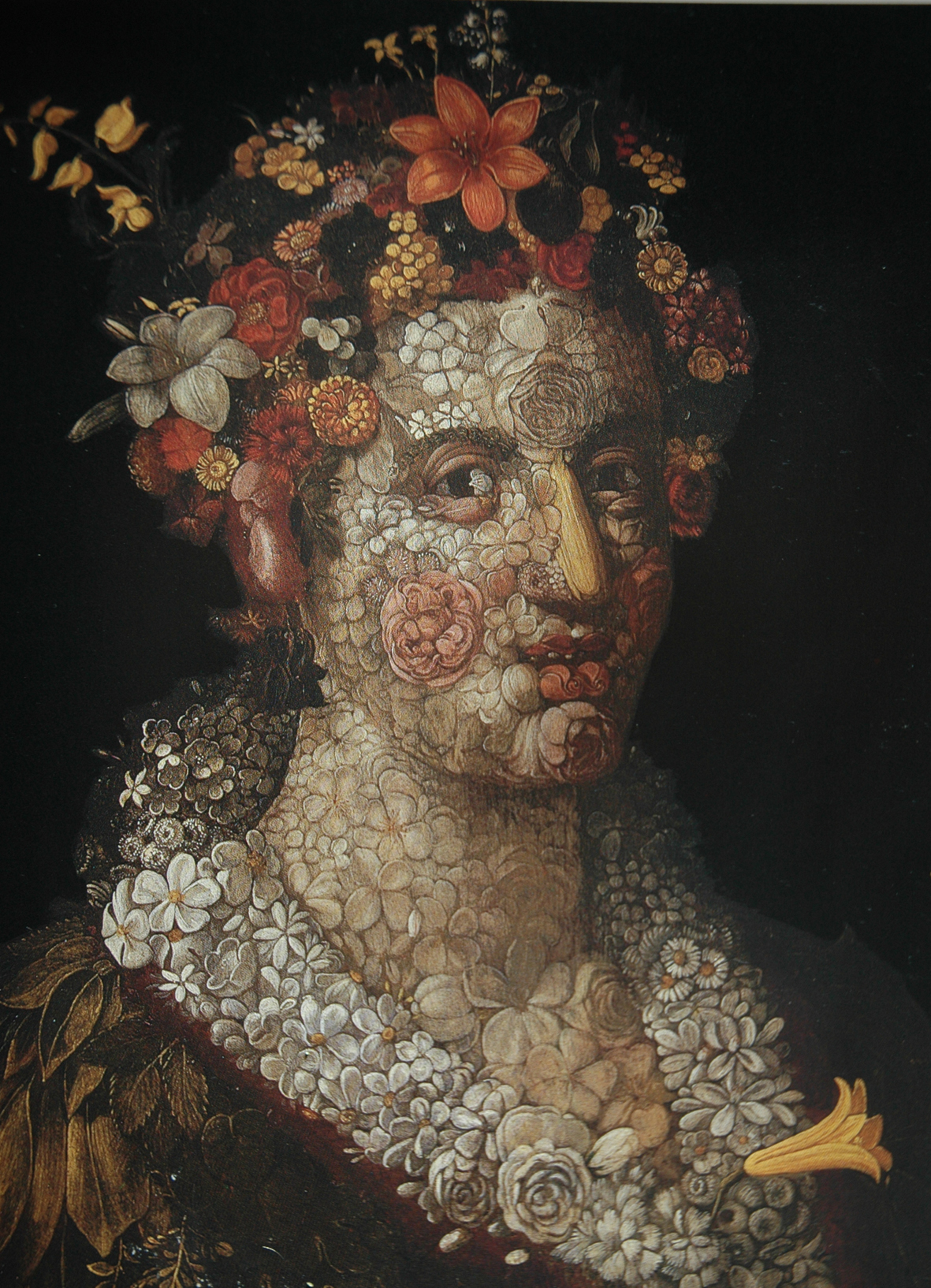
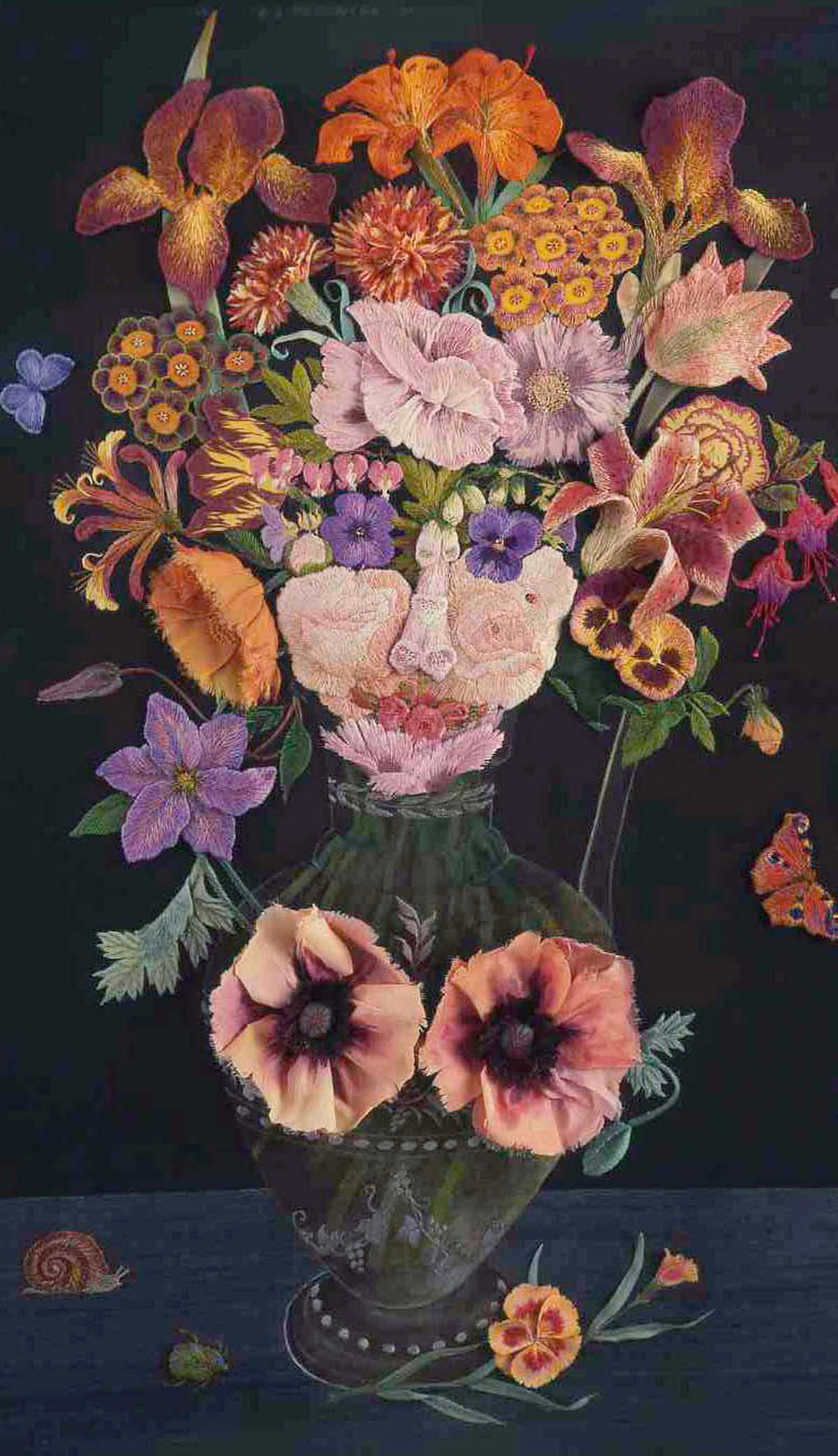
This face of flowers has haunted me for years, I am fascinated by the loveliness which is coupled with the unease I feel every time I see it – delighting in the delicious idea of a face made of flowers but this looks more like a tattoo, it’s scary. Arcimboldo, court painter in 16th century Vienna, is widely acknowledged to be the father of surrealism; he made ‘likenesses’ of people from all manner of objects, a librarian’s face made of his books, a cook’s portrait in a dish of food, today modern advertising still use the same clever devices to spectacular visual effects.
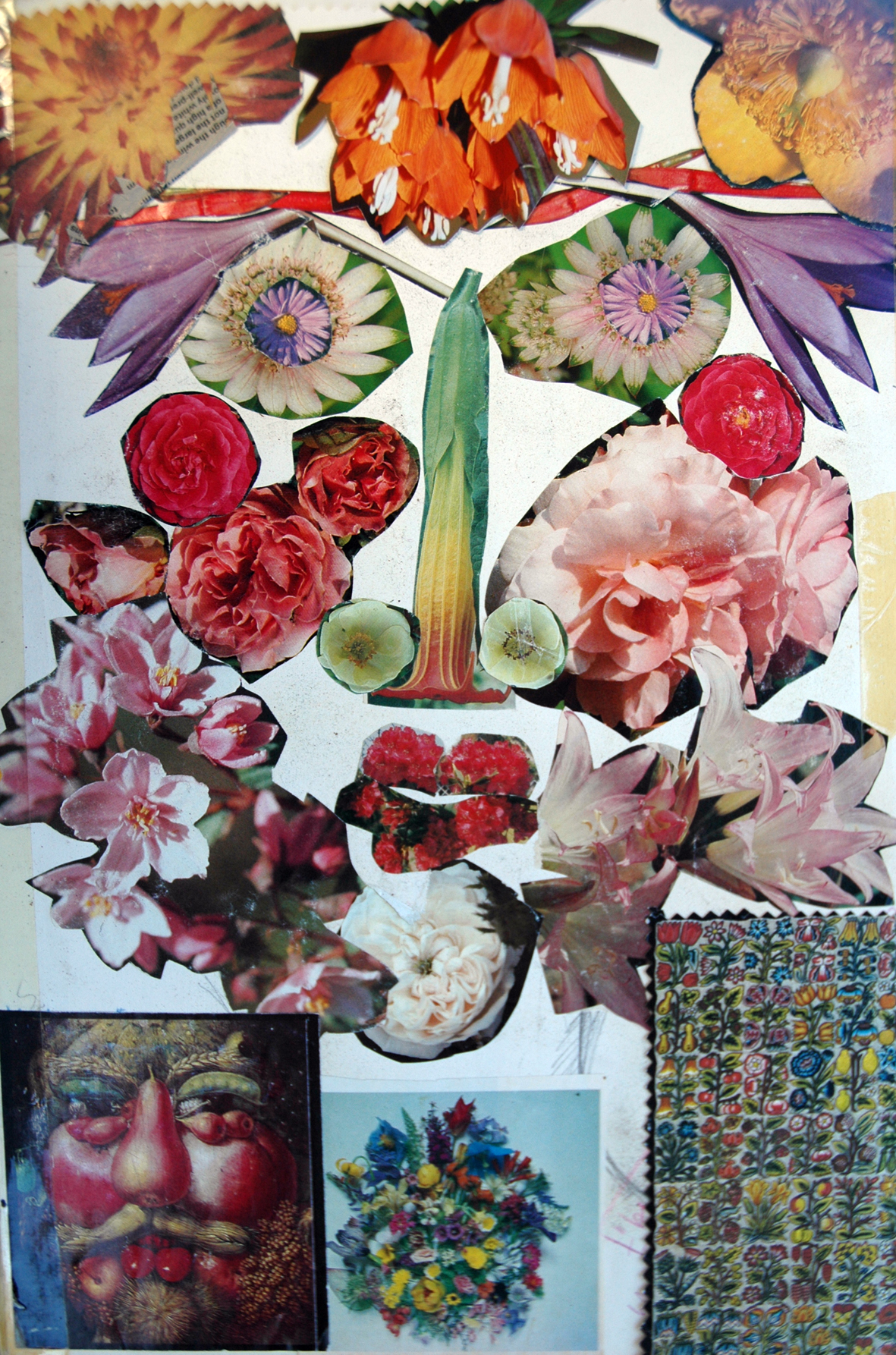
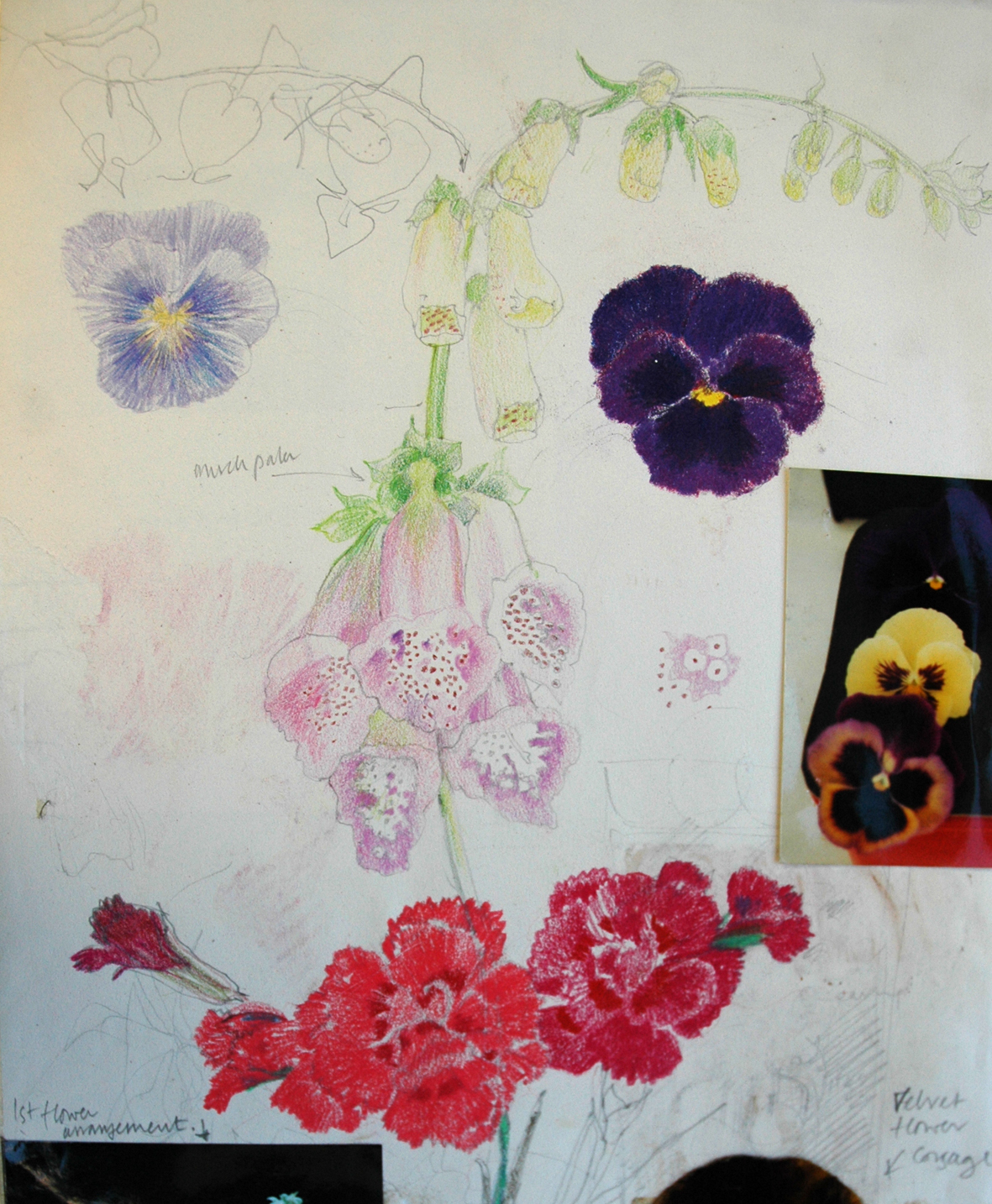
So I decided to make a face of embroidered flowers picked from my own garden ( as you do). I started with a collage to see what I would need to find to make it convincing, the man’s face in the bottom left corner is also by Arcimboldo, a portrait of his patron Rudolph ll as Vertumnus,the god of the harvest 1590.(You can also see my version of a Vegetable Man). I had to resort to all sorts of flowers to make the face – but the expression of vague alarm on this first face of flowers should have warned me what was coming……….I started to draw the flowers from my garden, searching out roses for cheeks, pansy eyes, rosebud mouth…how innocent it all was; by the end of this embroidery I had more many ideas due to my research both visiting flower shows and studying the history of Florists – the growers, showers and developers of our modern day flowers. Slowly the work became a whole series of embroideries about man’s manipulation of nature with beautiful and terrible results……….however to start at the very beginning.
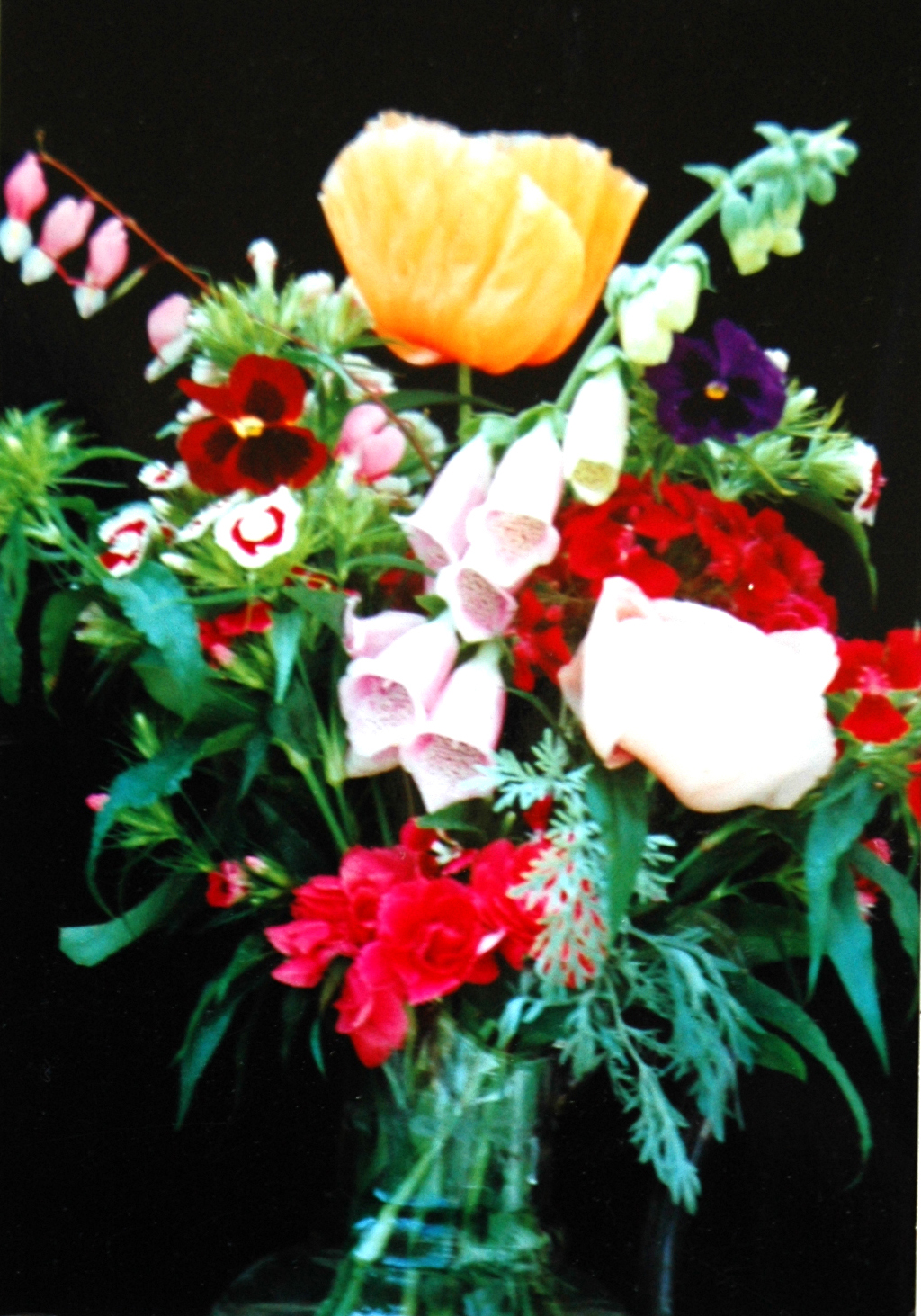
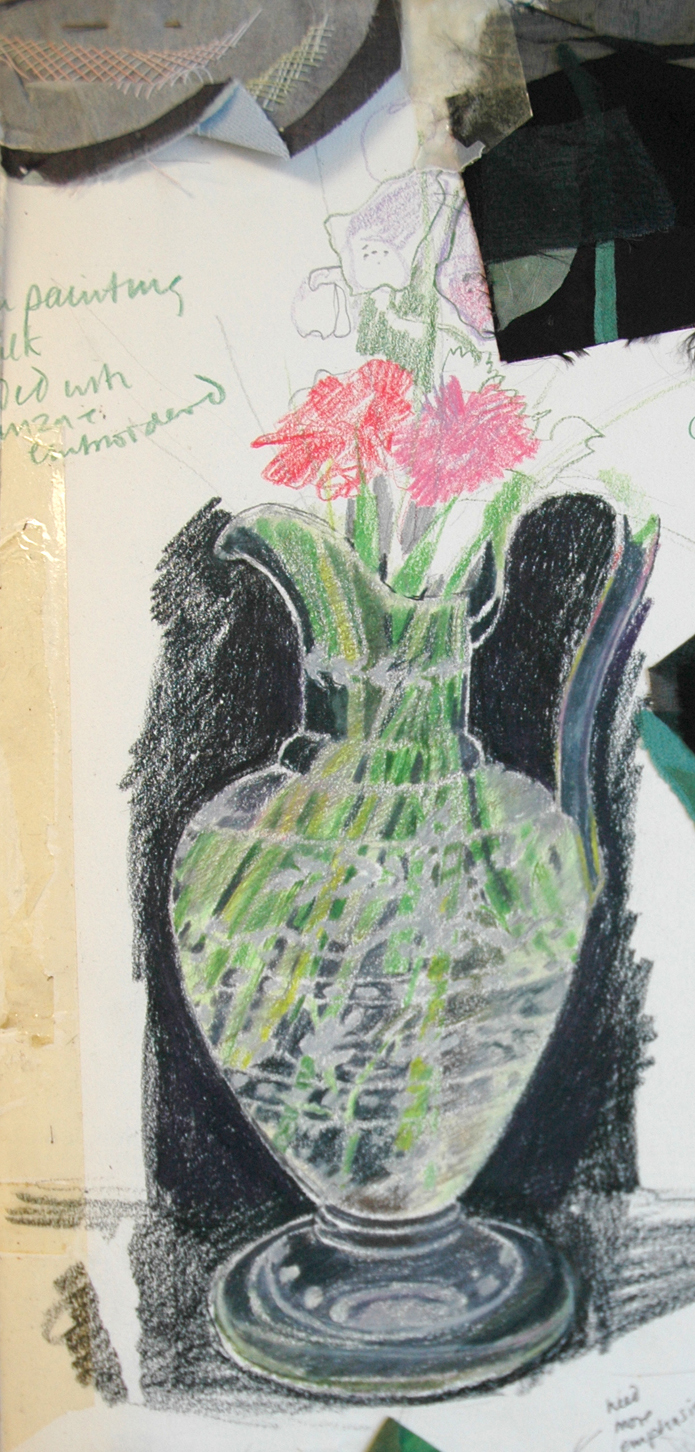
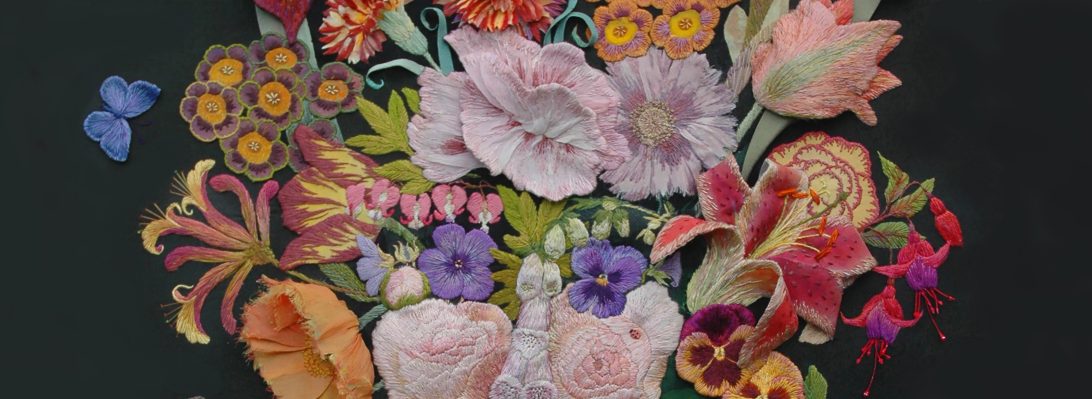
This is the vase of flowers that I used for the drawing above, the pansy eyes, the foxglove nose and eyebrow, the carnation mouth are faithfully recorded, not exactly in the same spaces – but if you squint the face can just be seen in the bunch below left. But I had a problem – I didn’t have the right flowers to use in my garden to develop this further so some more would have to be bought.
I had put them in a lovely old (and mended) hand blown glass decanter and this made me think of the beautiful Dutch paintings of vases of flowers – it was studying these closely that made me realise that none of these actual painted bouquets ever existed, they were portraits of individual flowers painted when they were in season and assembled by the artists – how else do you get tulips with fully blown roses with ears of corn with anemones all in one vase – in the 17th century.
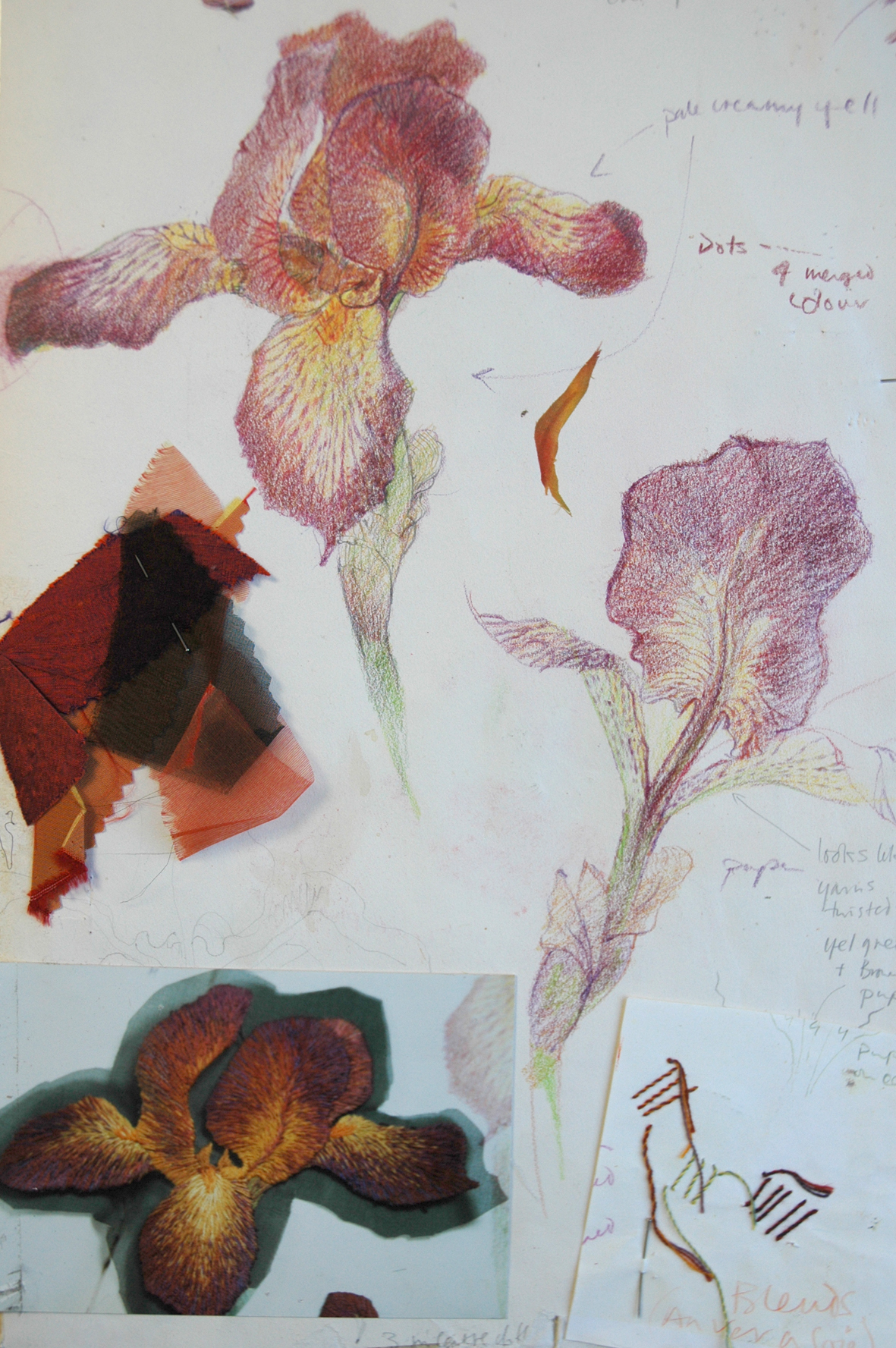
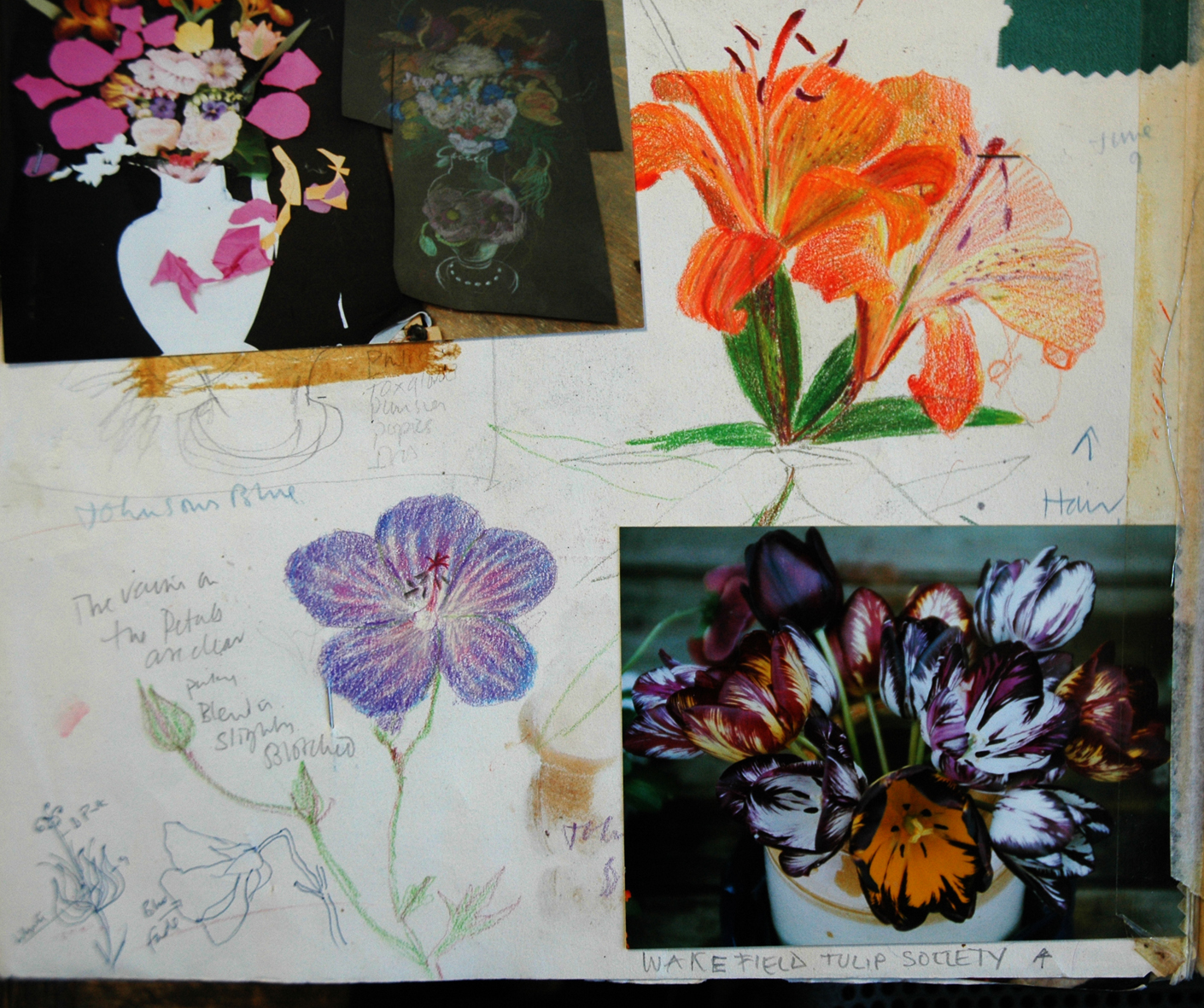
Now I knew how to get what I needed, I designed the face and searched for flowers to fill in the features. I drew each flower as I found it, embroidered it on dark silk organza ready to be cut out and assembled when I had enough – this took several months. I started with a drawing of Iris from my garden – I knew she (by now she had become Flora, the Roman goddess of spring) had to have my colour hair, this iris was perfect a sort of reddish blonde. In the drawing I have recorded the striations of colour so that I can develop my stitches in the same directions.
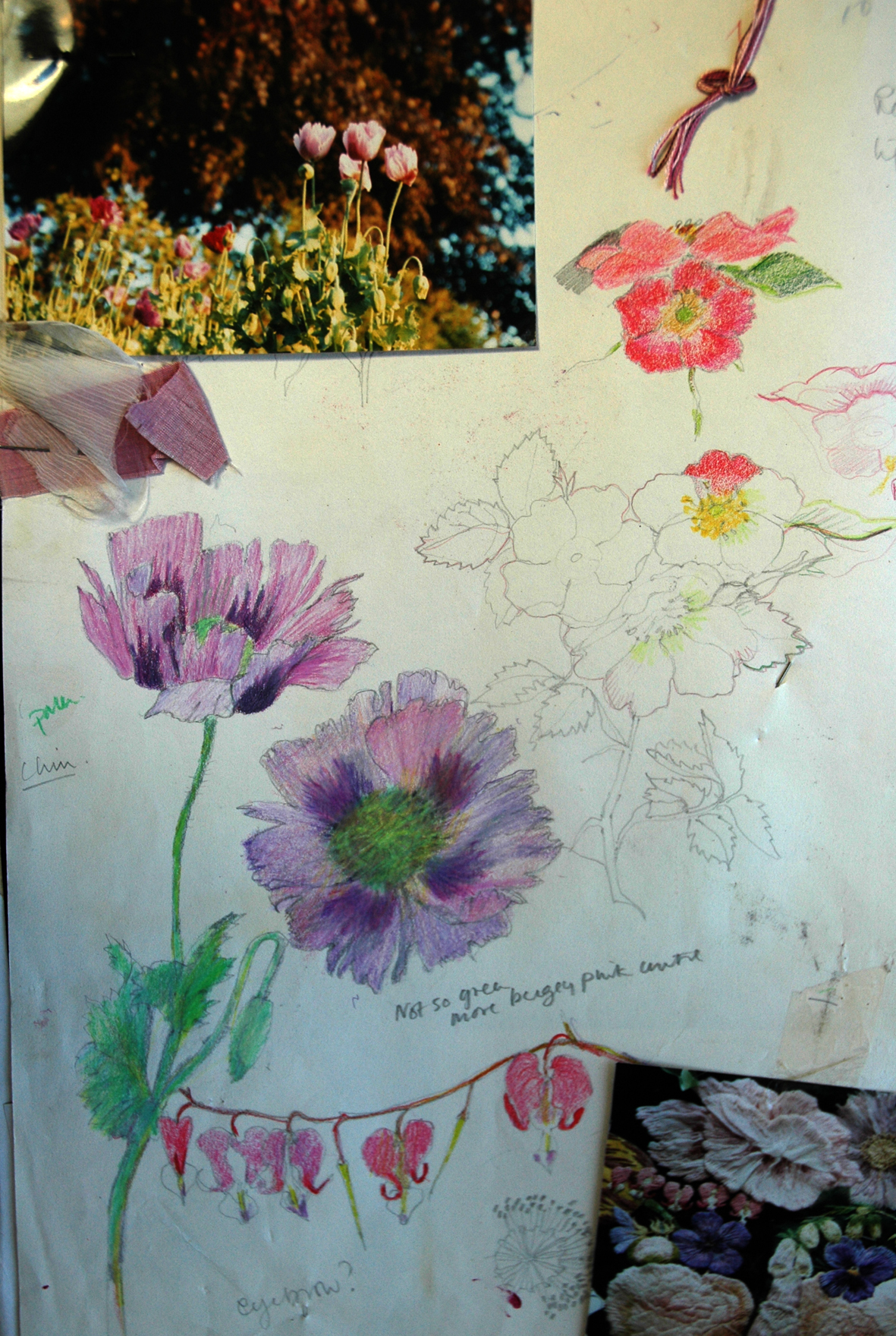
I picked, drew and sampled all the flowers I could find, it was a lovely summer of work. Friends and neighbours started to bring me flowers they thought I would like to include, the search was on for all sorts of auburn and orange flowers for the hair,
flesh coloured roses and poppies for the skin, rosebuds for the mouth.
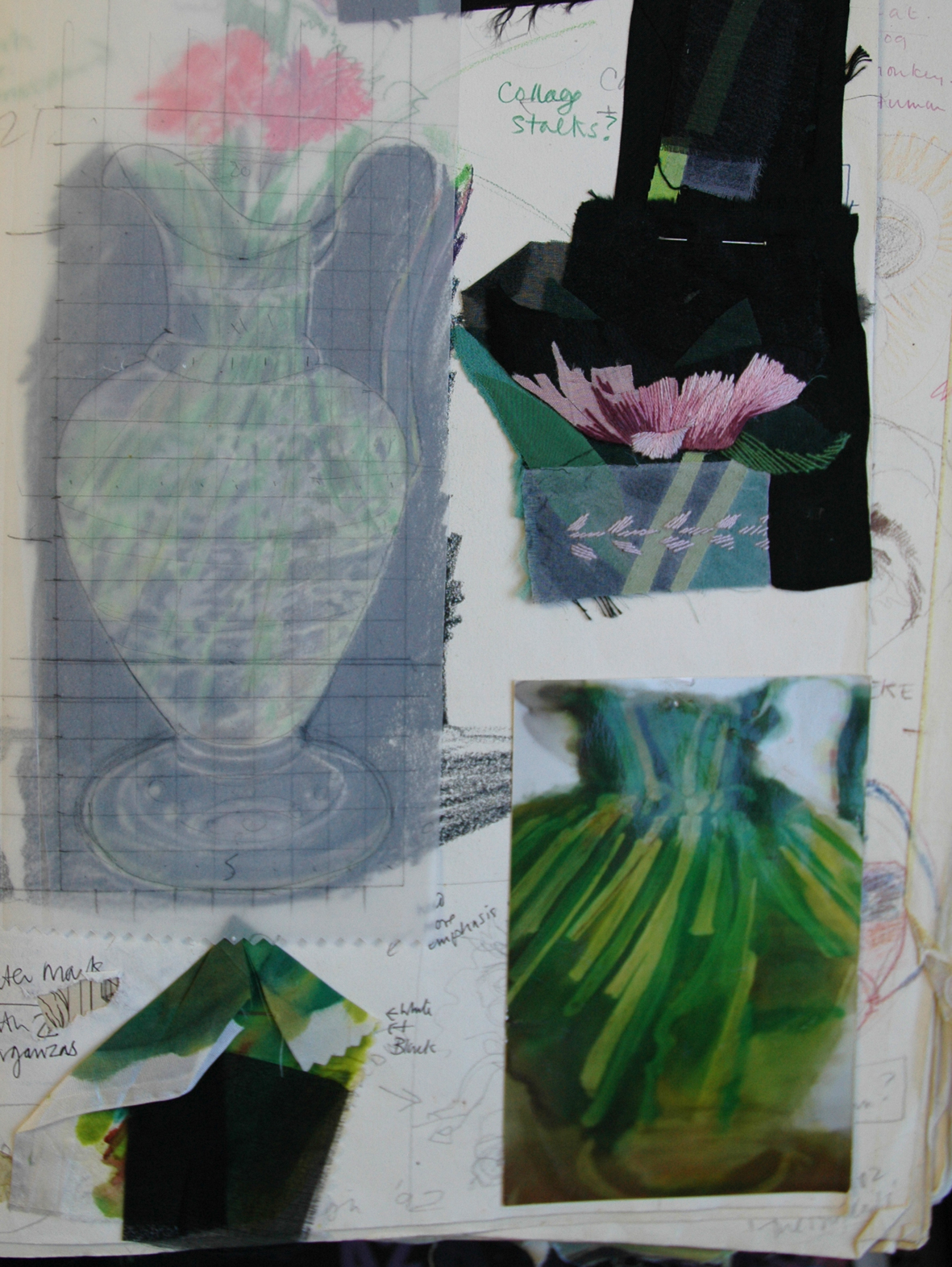
Slowly, by travelling around to see specialist flower shows and drawing from all kinds of resources I pieced together the face; the pastel drawing I worked from and the ongoing recorded collage can also be seen below.
So now this face had to have a body, the old glass decanter was perfect, with a swelling rounded shape and elegant proportions, easy enough to draw, but how do I embroider it?
Placing tracing paper over the drawing to get a pattern for the vase I suddenly realised this was how to achieve the effect of seeing stalks though water and glass, I painted the stalks on silk with dye then bonded embroidered silk organza onto the surface –
I lost most of the painting in the process but the effect is both subtle and sinks into the black ground and so does not distract from Flora’s stupendous poppy breasts.
So here she is in all her splendour. But she is short lived; surrounded by things that will harm and ultimately destroy her, the rose-cutter bee will eat her cheeks, the butterfly will lay eggs and the larvae will feed from her, the beautiful beetle feeds off rose leaves and the snail will first slime then devour her. Only her beauty spot, the lady bird, will protect her – from greenfly.

 One of the several fellow tutors in this venture decided to have a Tea and Textiles opening, which is a regular meeting event for Textile Forum South West. The teas were served with an array of the most lovely cakes and biscuits, either bought locally or brought by friends, who all rallied round to help on the day.