Dog quilt continued: the Portraits

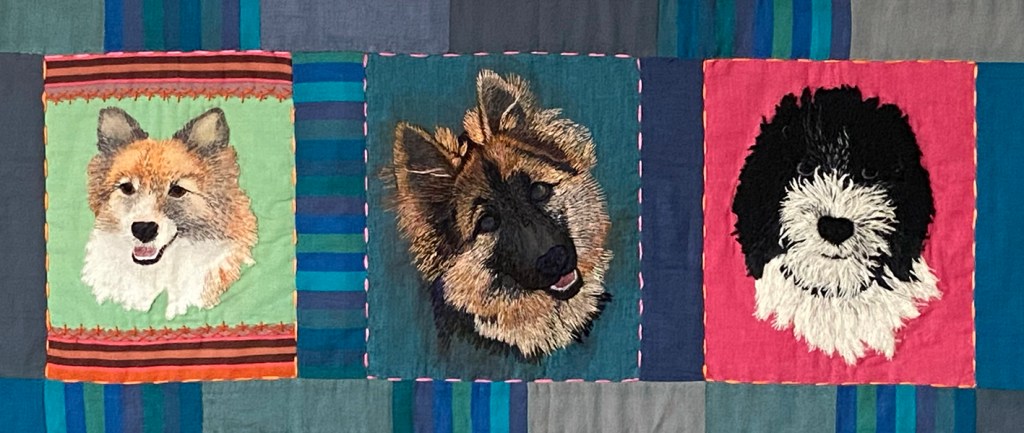
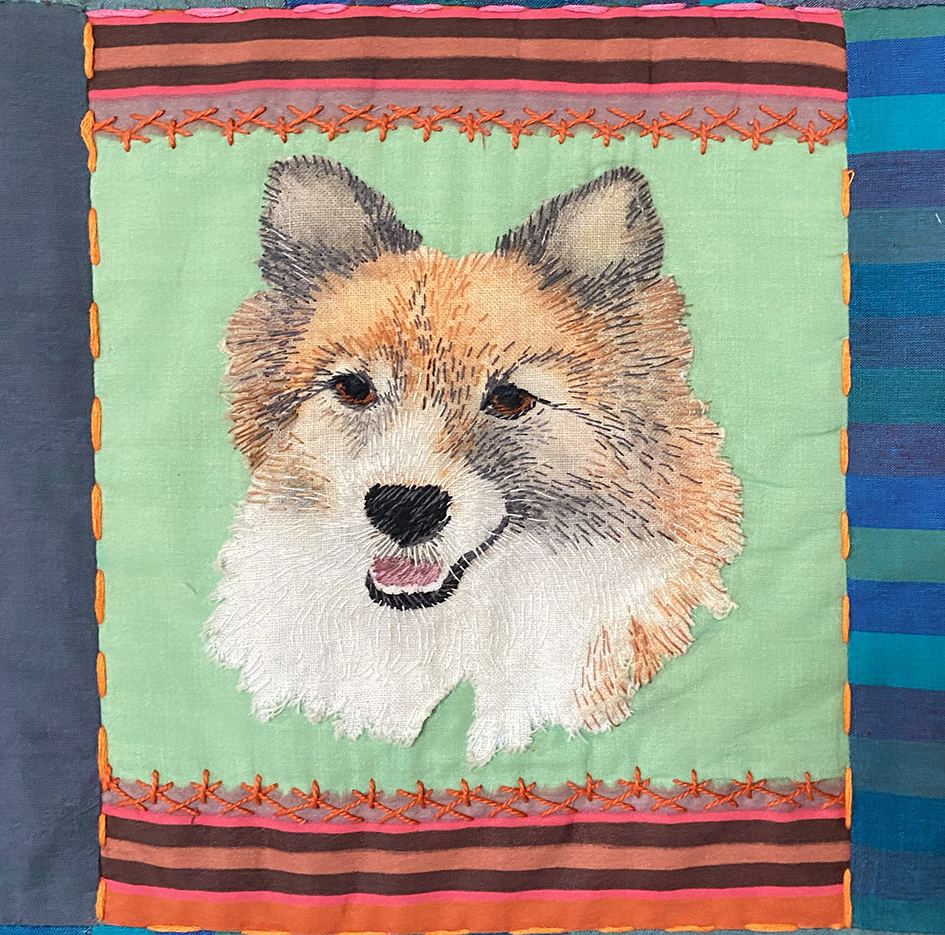
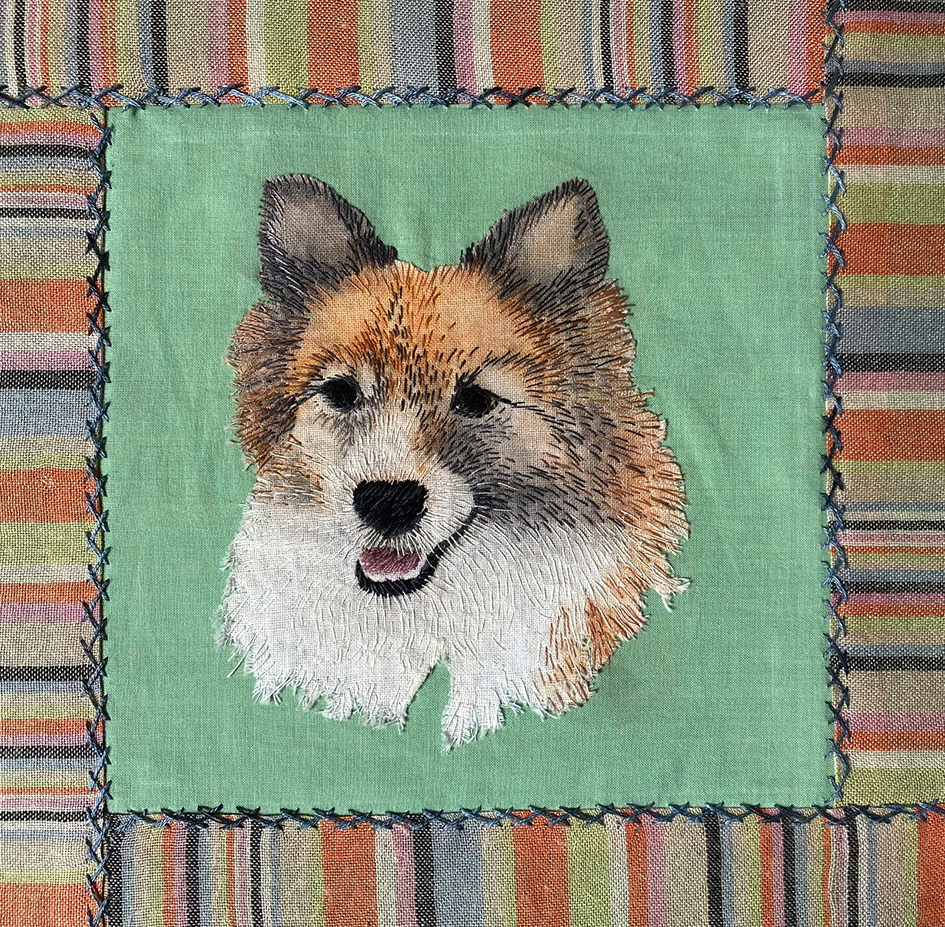
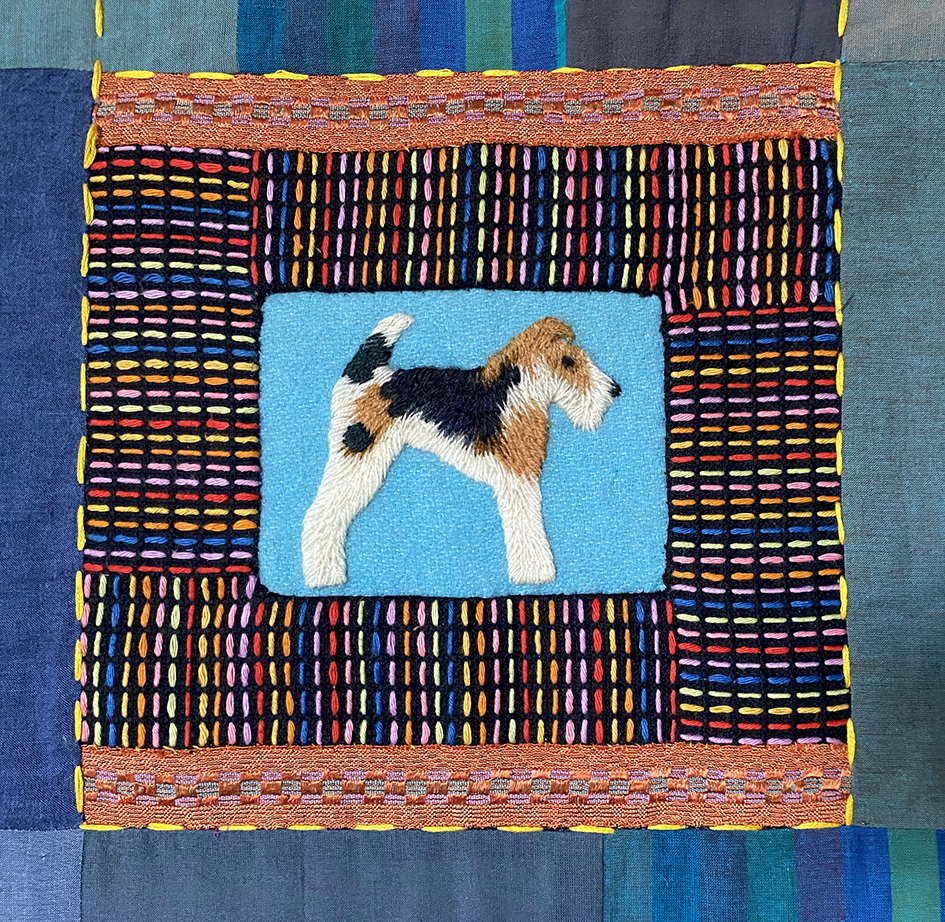
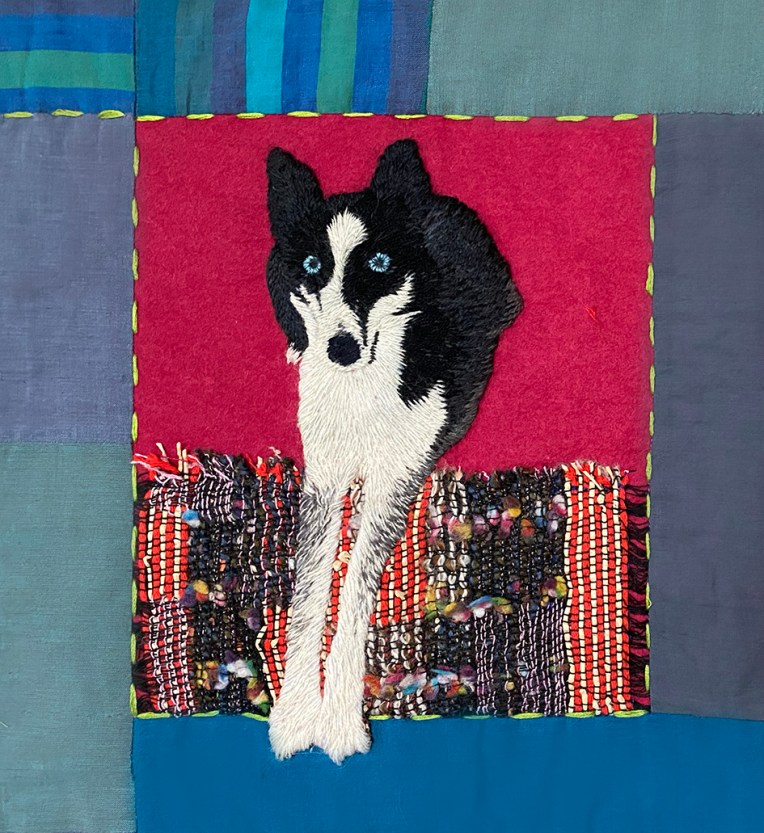
This is the next instalment of the dog quilt. I decided to stitch proper portraits, close up and personal of 3 dogs belonging to the designer who had originally commissioned the quilt. These dog embroideries were obviously really important to the success of the whole project, so I gave them the centre stage in the compositition. Luckily I was provided with several images of each chosen dog.

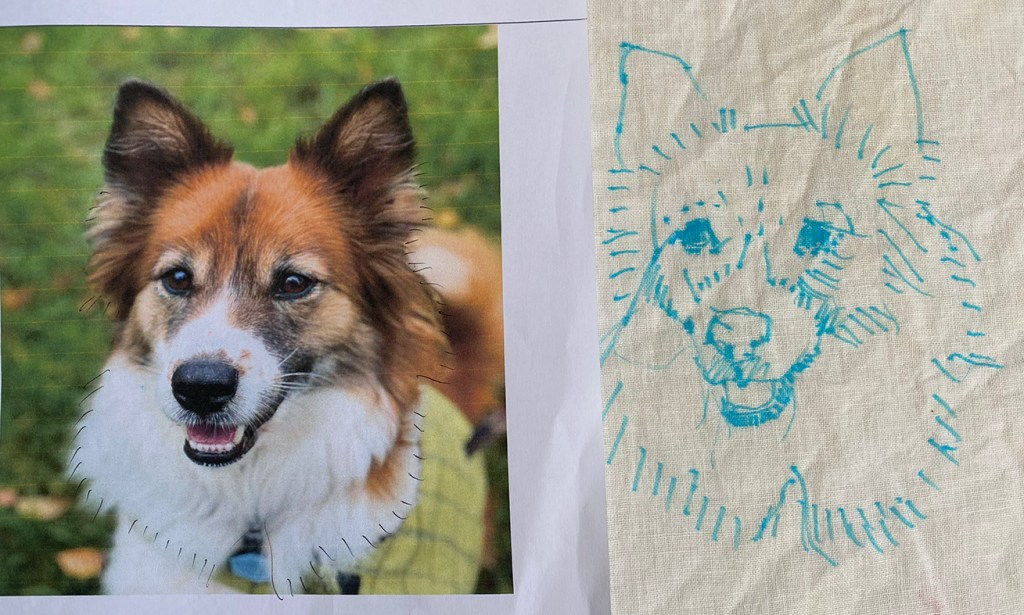
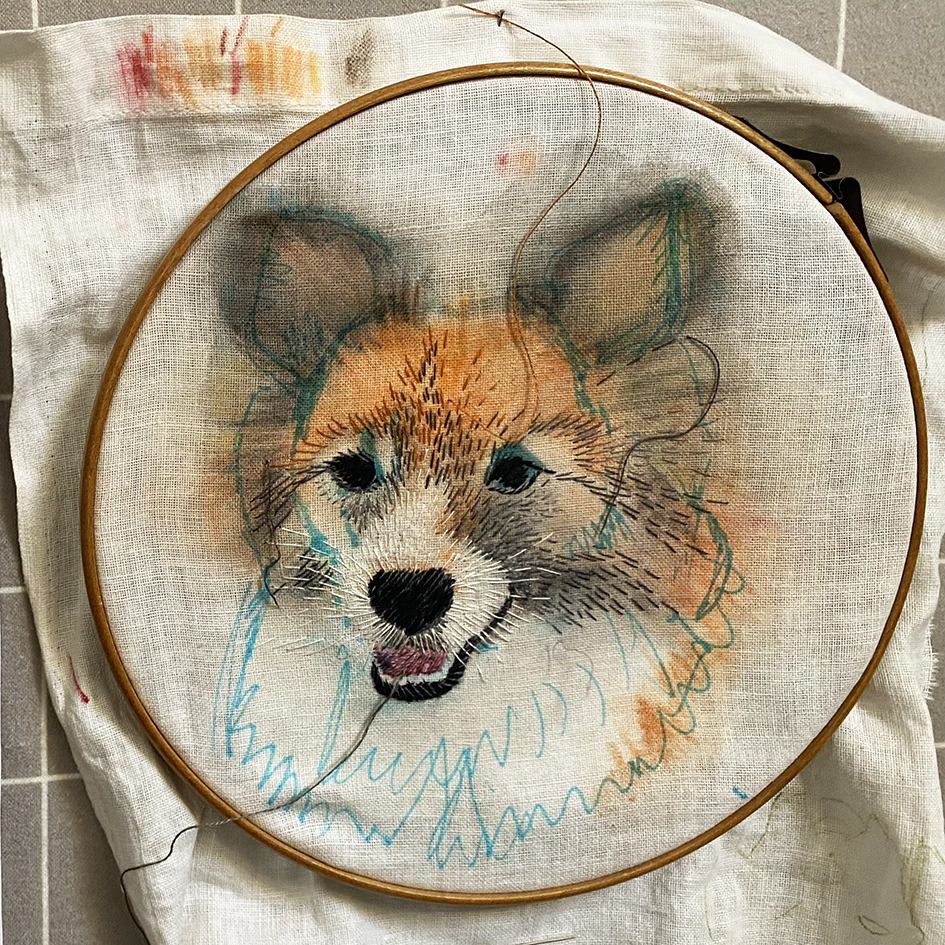
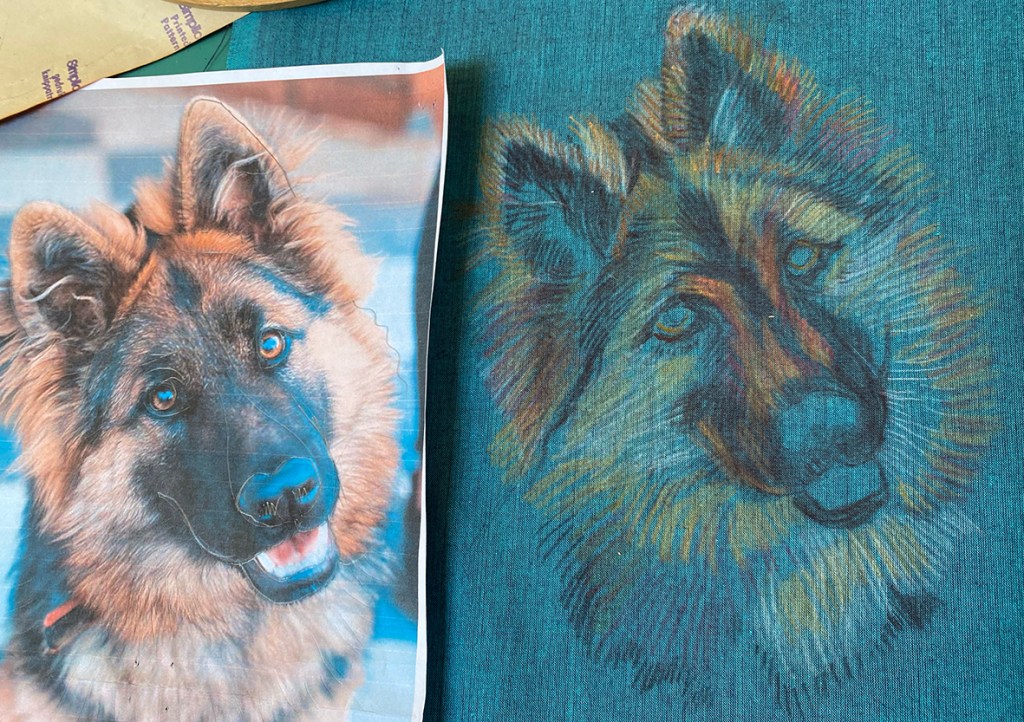
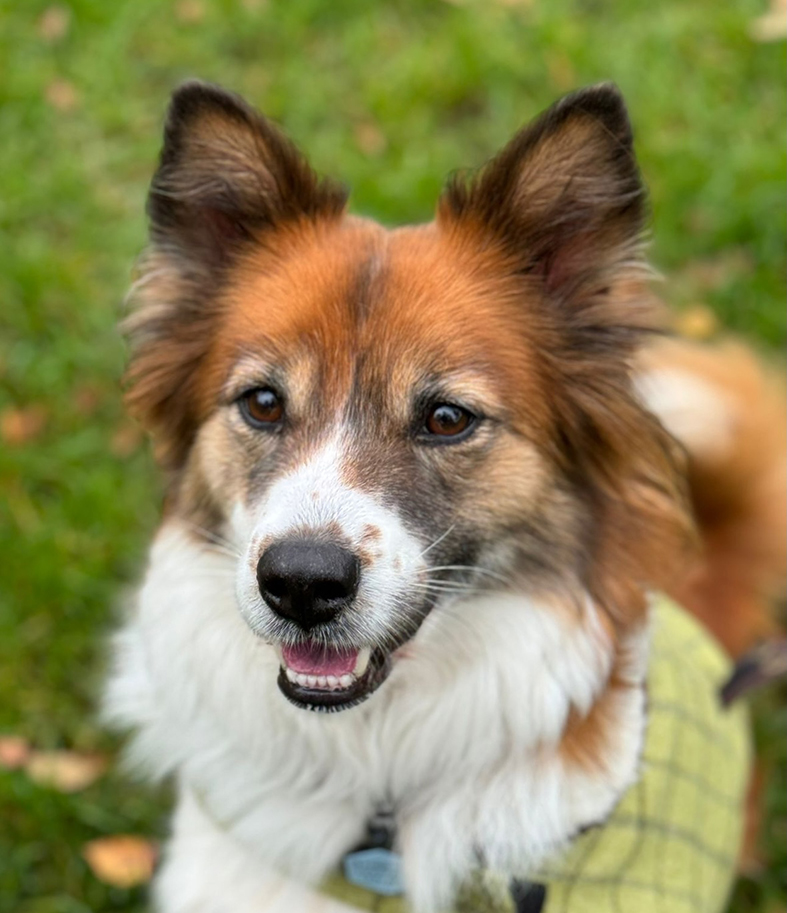
For the first one that I stitched (as the trial sample), the photograph was so clear that I could start to draw directly onto the linen fabric using water soluble pen (one that does not disappear after a few hours – these small fine embroideries can take days, even weeks to complete).

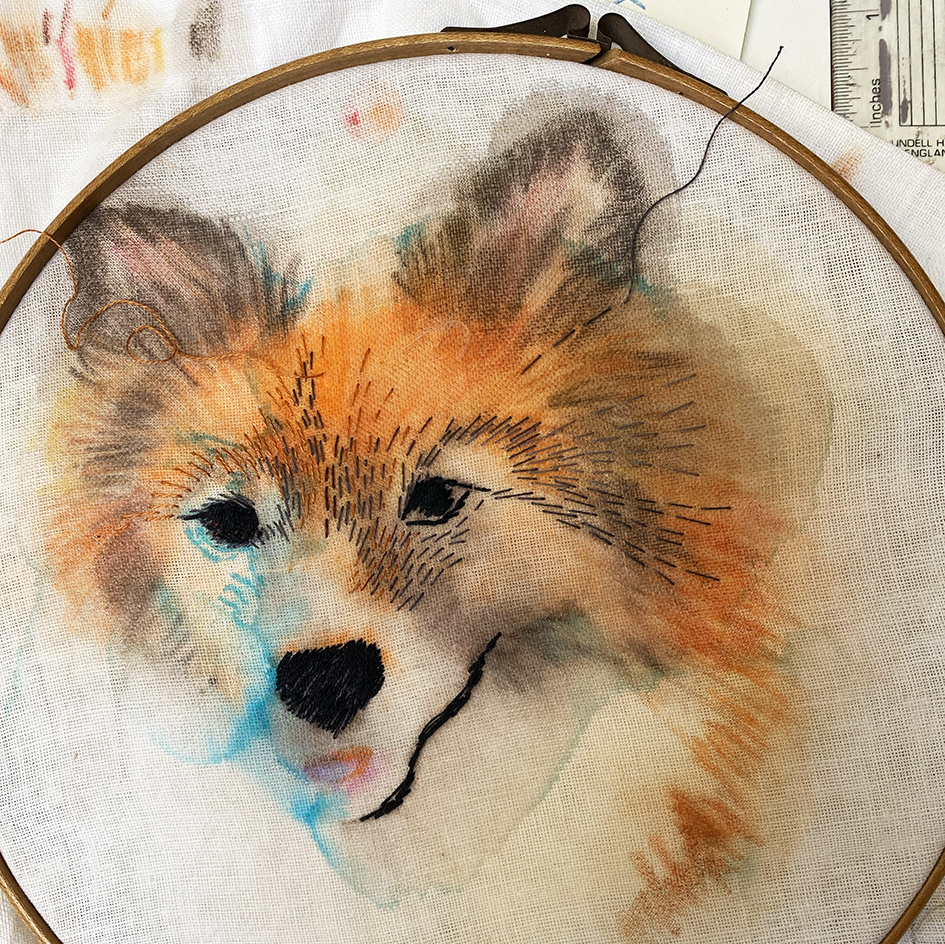
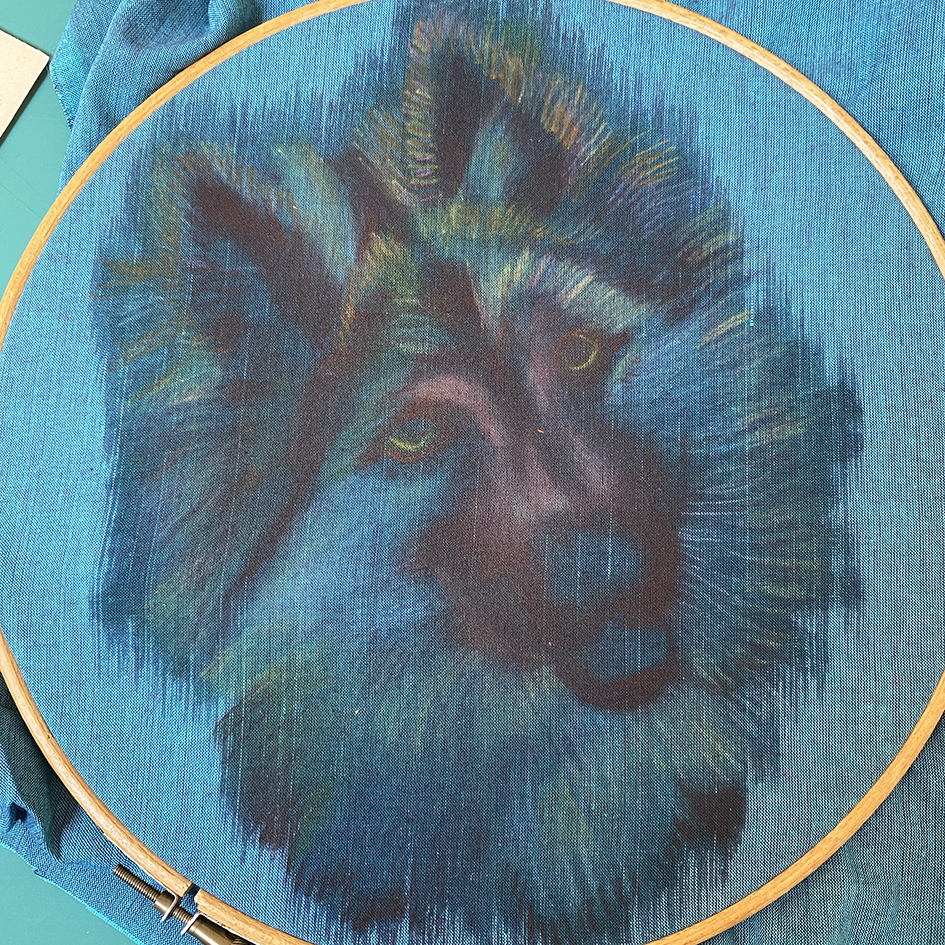
Using Derwent Inktense pencils I applied the basic colours of the coat, wet it to blend and intensify the colours then pressed it to fix the dyes. I continued to draw with the water soluble pen to give me the stitch directions for the coat.

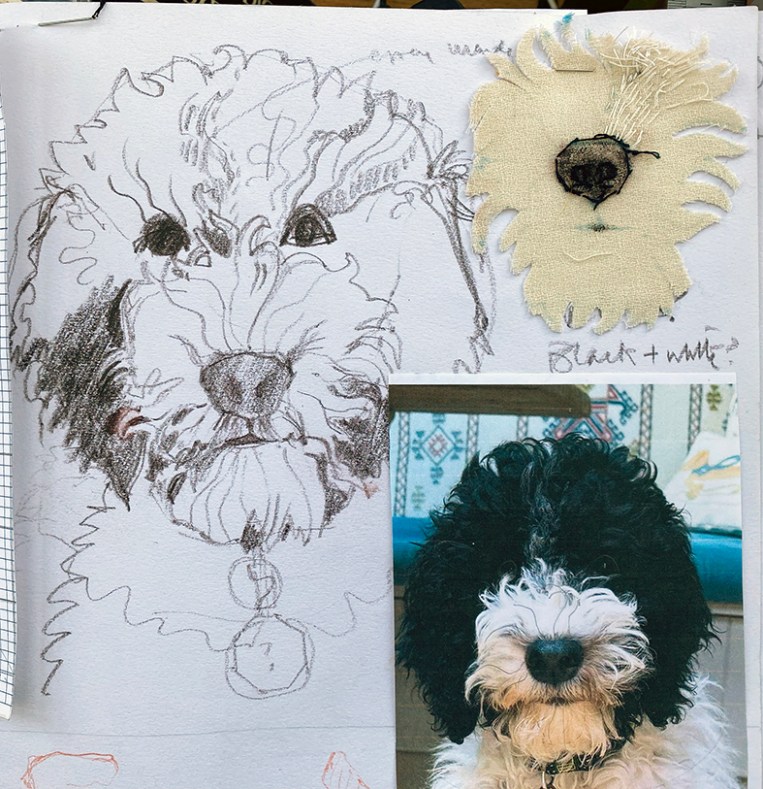
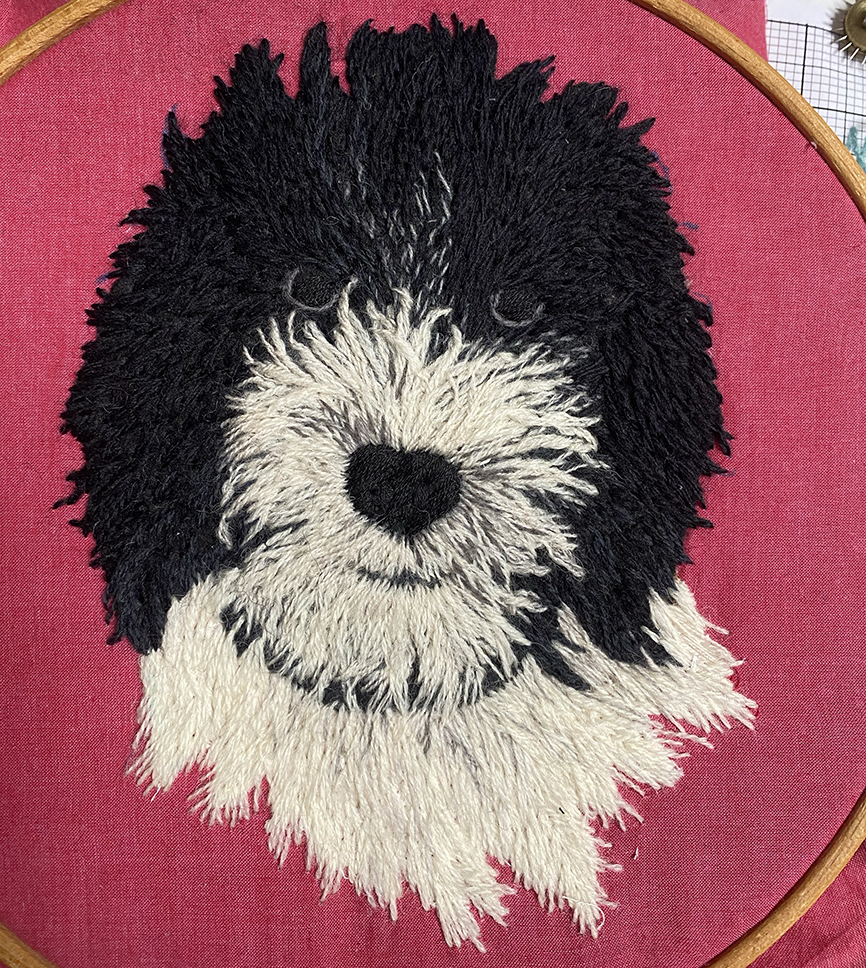
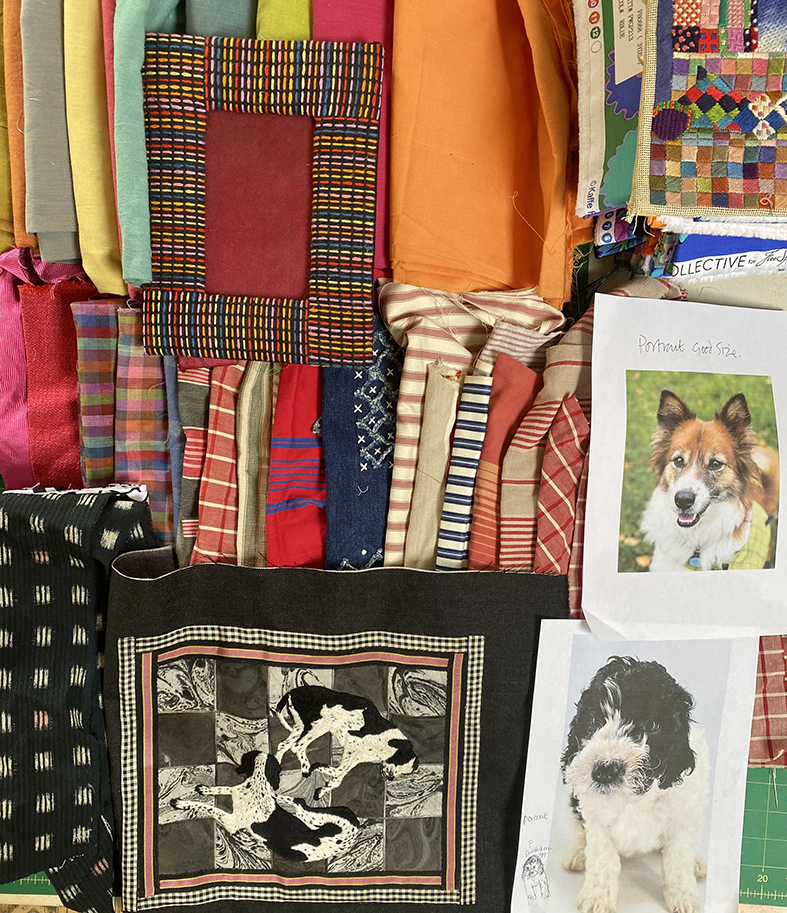
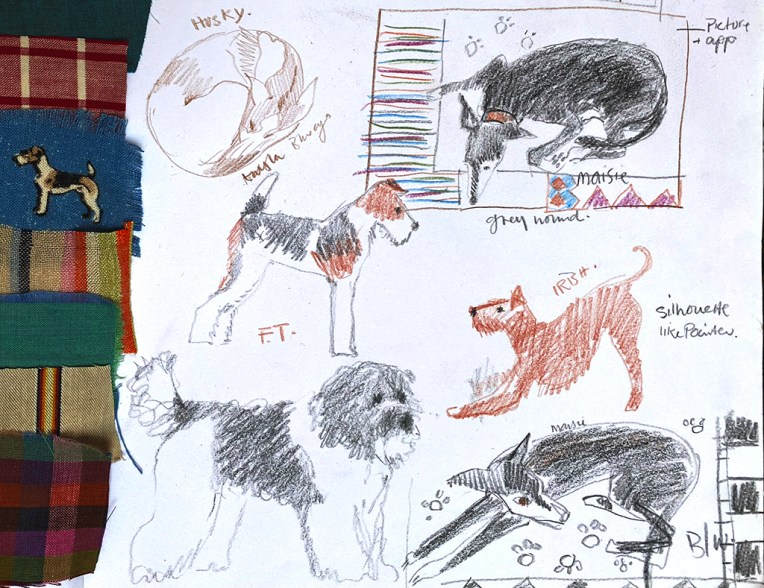
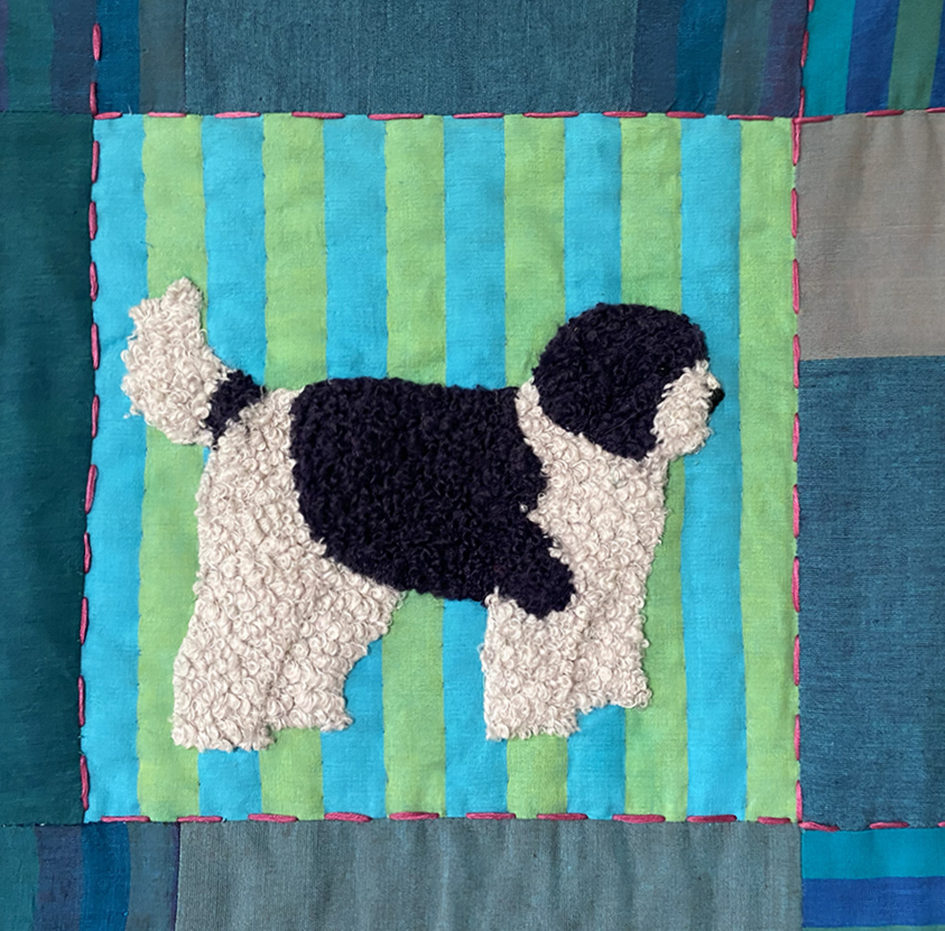
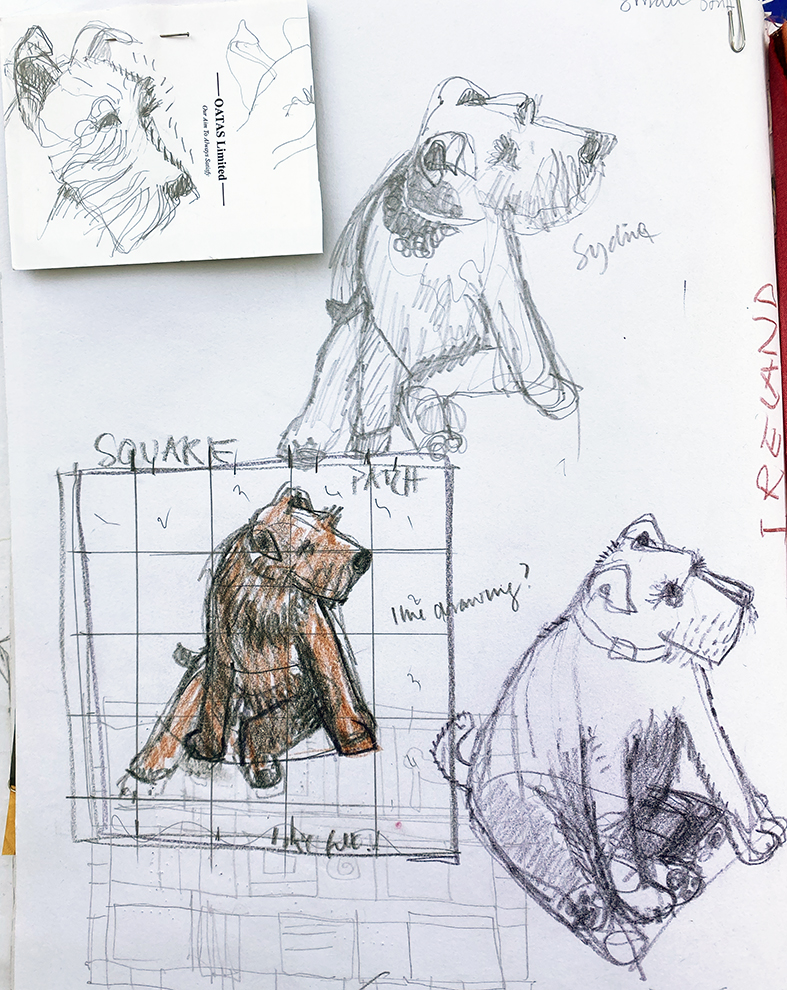
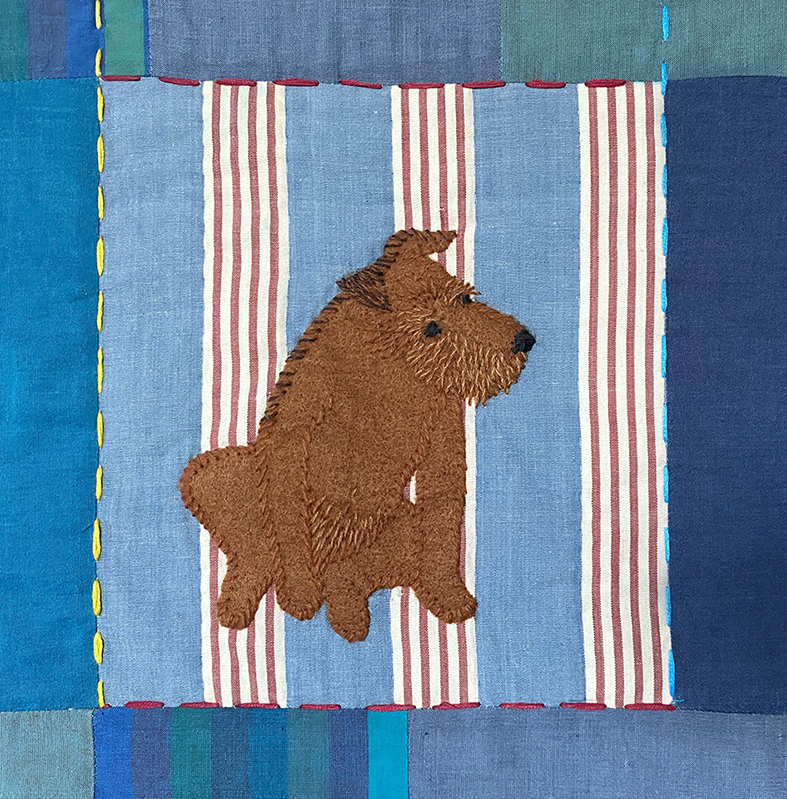
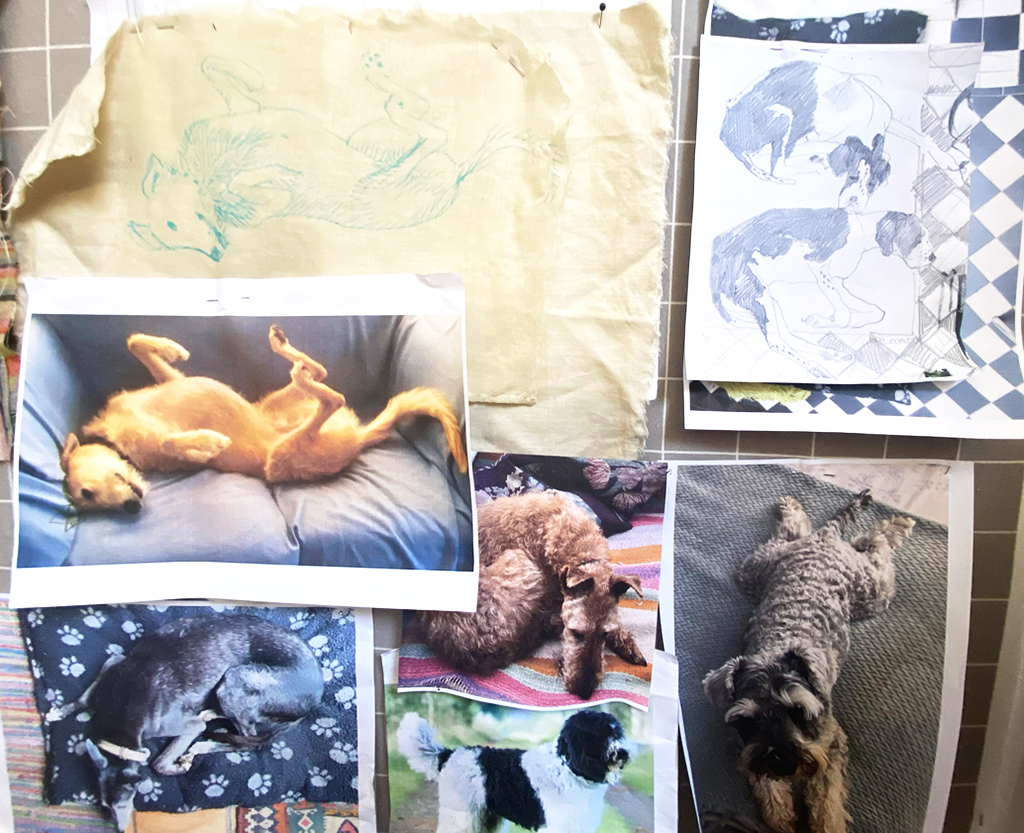
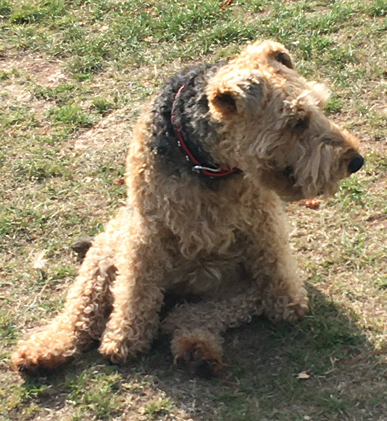
When I started the quilt I was sent images of a very young and nervous looking puppy, so decided to wait a while to see how it looked when it had gained its character. Above is my sketch book page with several drawings based on a number of images of a wiser but amusing dog…I used woollen felt and threads to stitch the rich curly coat.

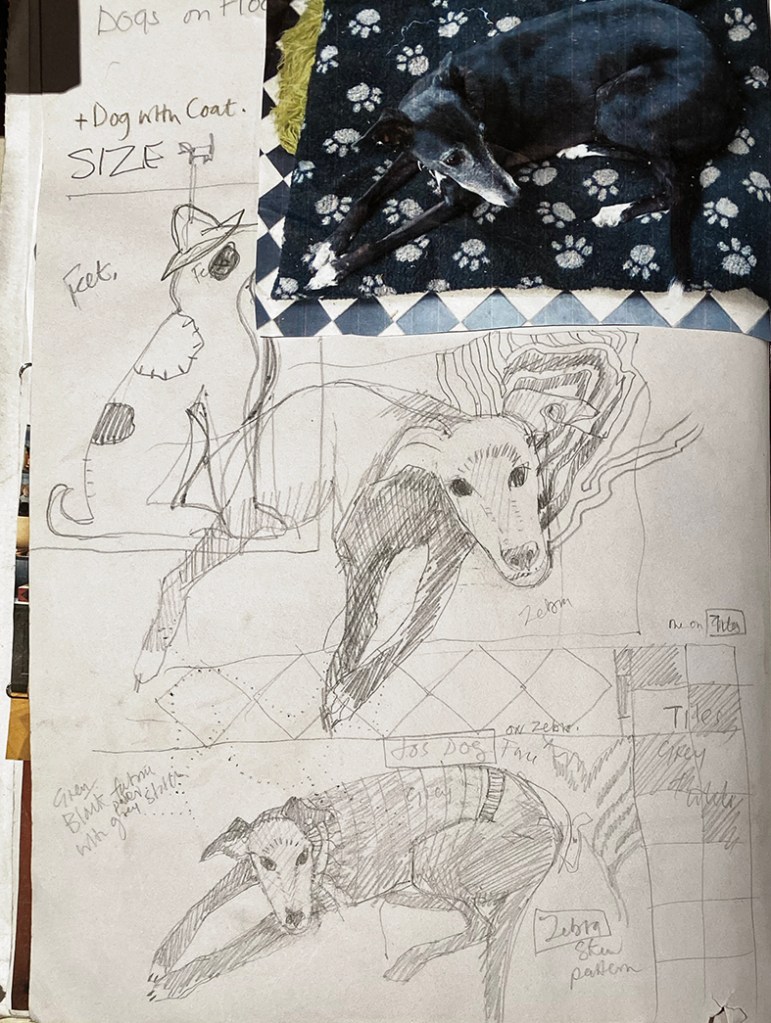
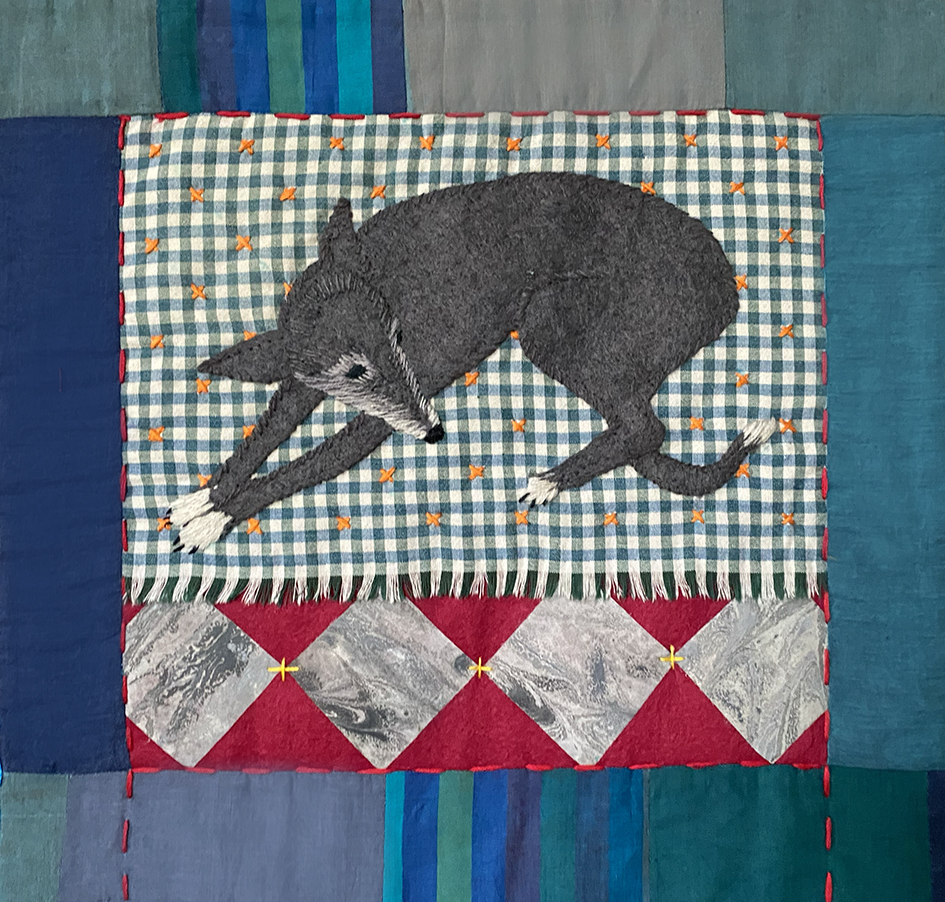
Meanwhile I was working on the remaining dogs that now had to fit into the whole quilt design. One of the first dogs I had chosen to use was Maisie, I had taken many pictures of her over several years as she was one of the elegant greyhounds/lurchers that are regularly rescued by my family. These long legged hounds are the most wonderful dogs to draw, it was hard to choose which position to use.

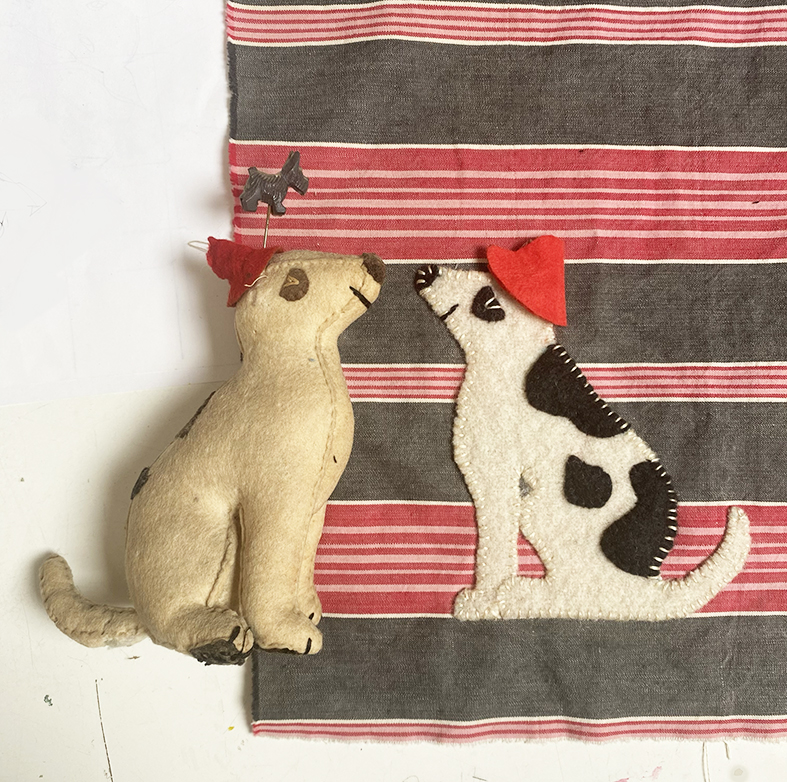
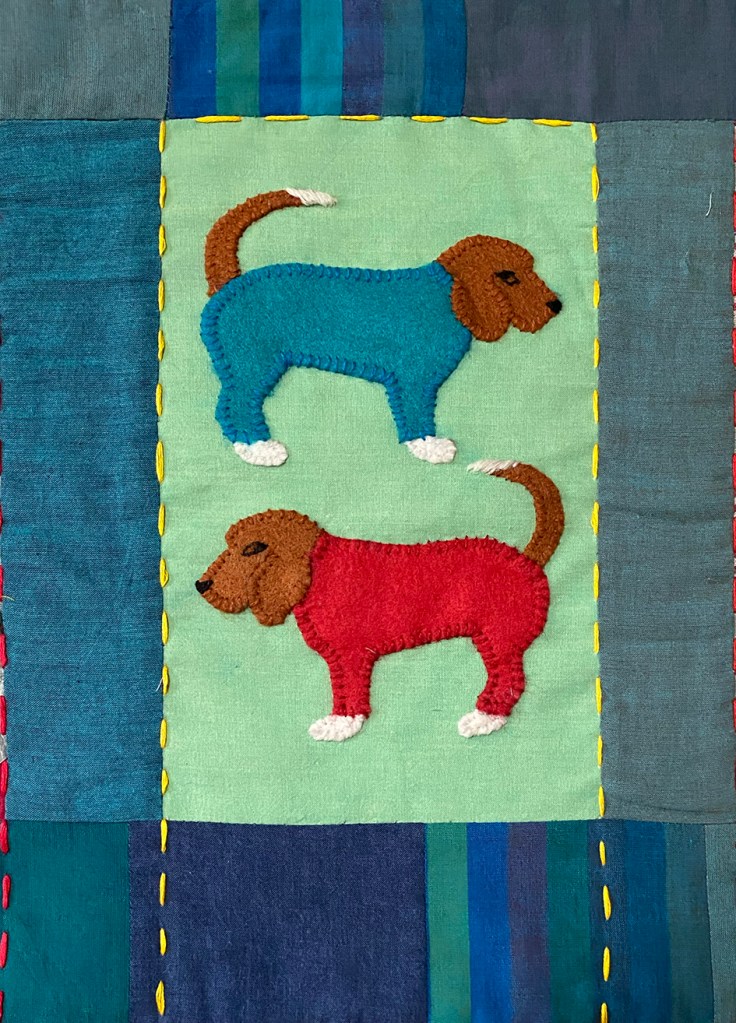
And there were a few others to make a late appearance; deciding I wanted some extra humour I chose to embroider my toy felt dog that had its back leg chewed off by my first dog, the Fox Terrier Archie. I also included one of my pet hates for dogs, those all-in-one coats with 4 leggings…..so shaming. I chose Kevin, a friends’ Beagle – sorry Kevin but you do have a good range of expressions.
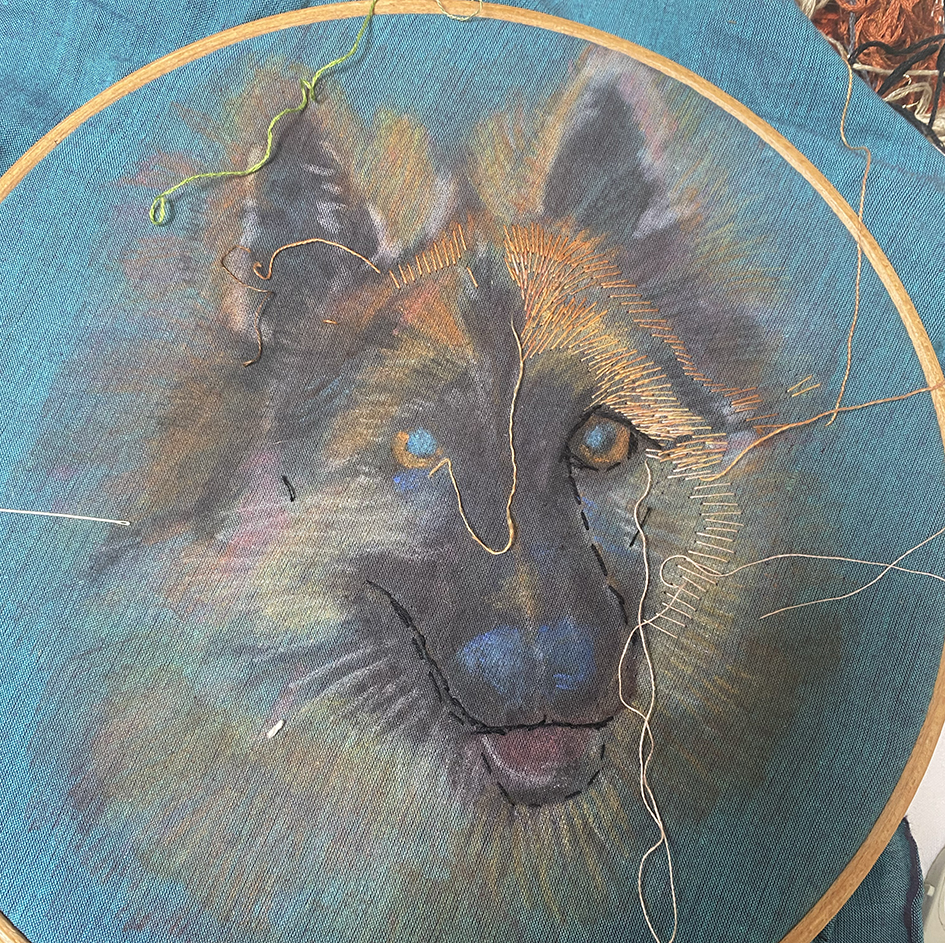
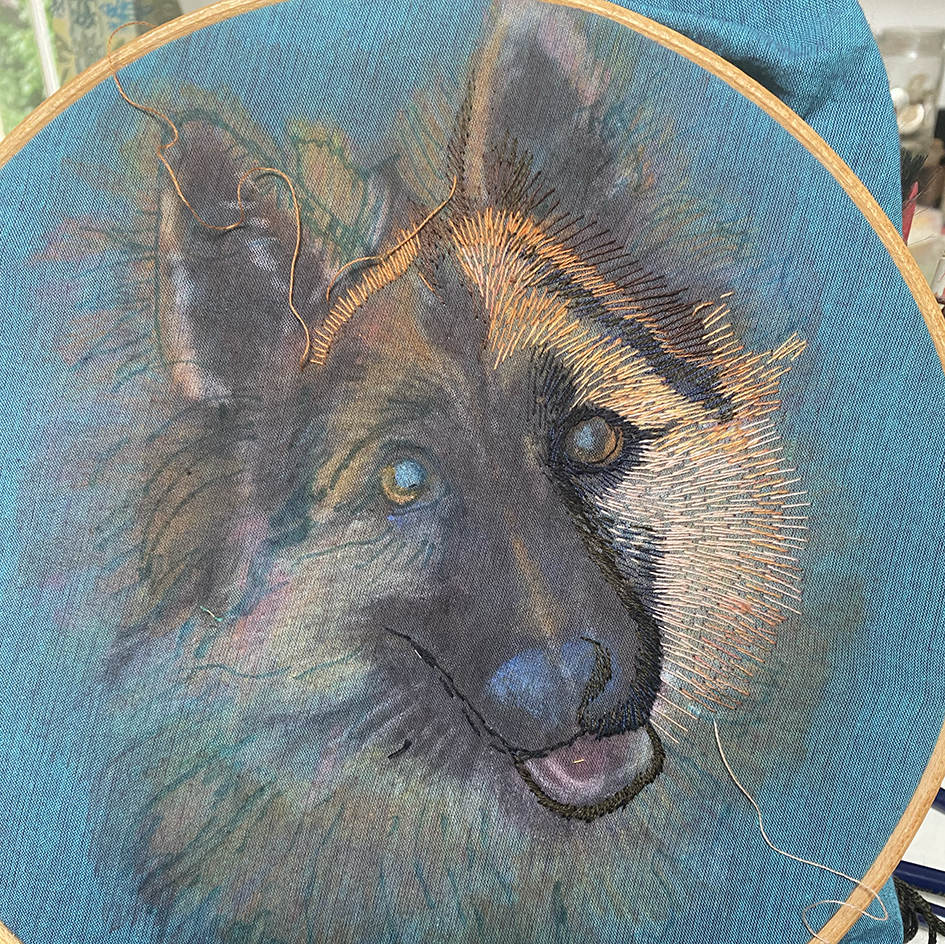
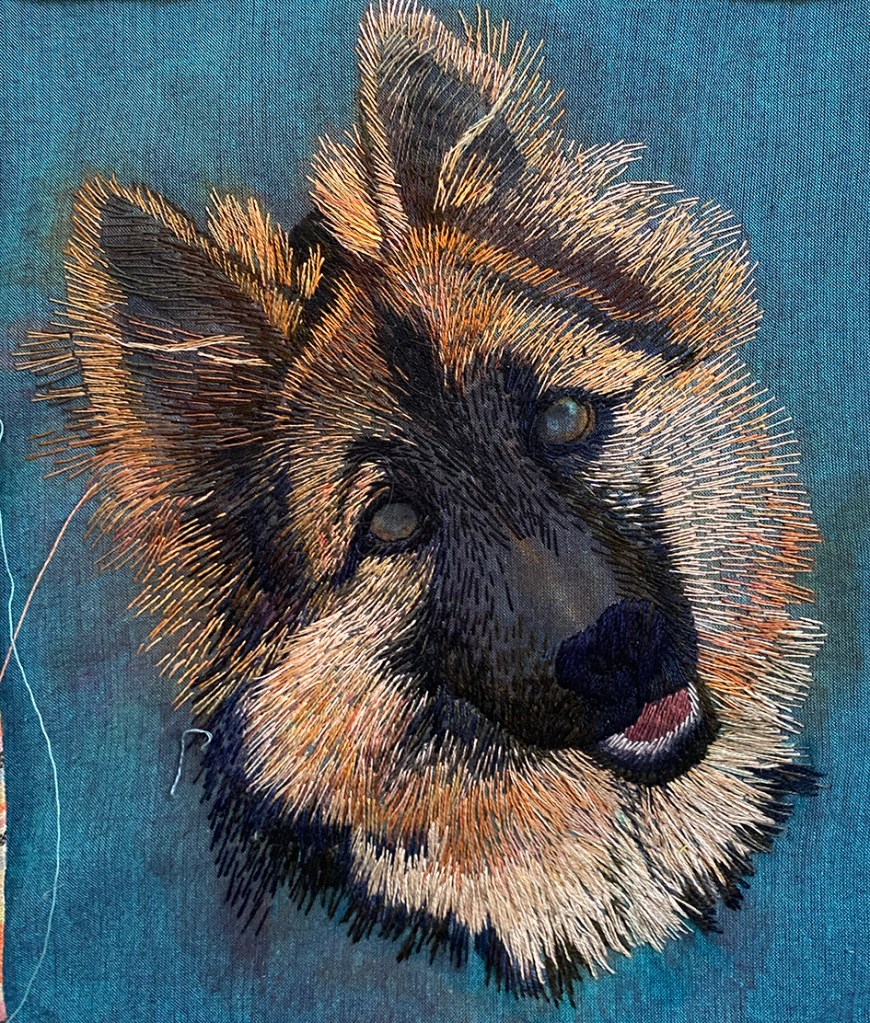
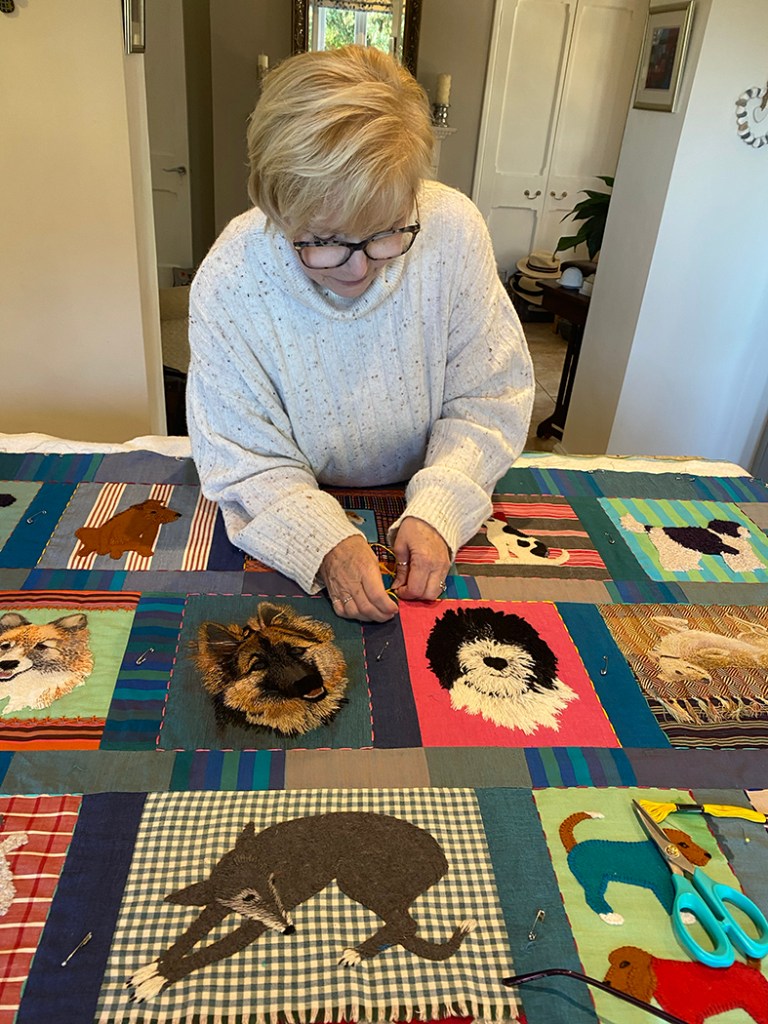
And the last portrait is the German Shepard – I was sent an image of an utterly beautiful dog with a yearning expression – probably wanting a biscuit! I decided to make this the centre piece as it was such a dramatic full-on face. I again worked directly from the photograph( which is rare for me) onto a very rich blue shot-cotton, using my favourite Inktense pigment crayons to draw and dye the cloth prior to stitching.
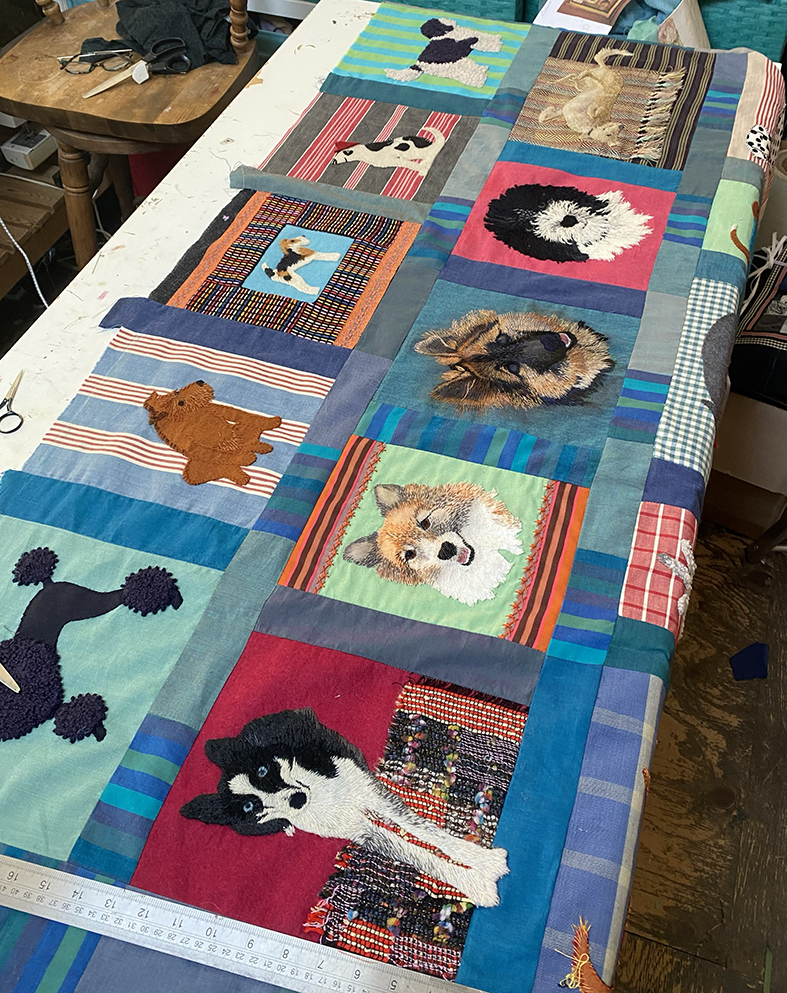
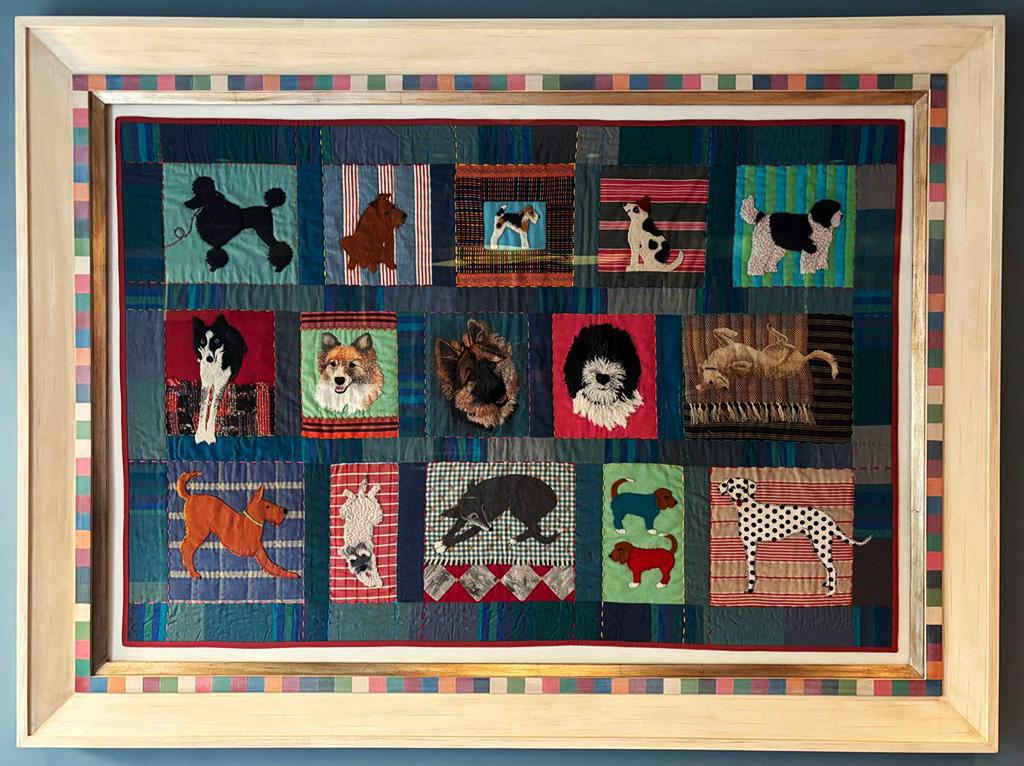
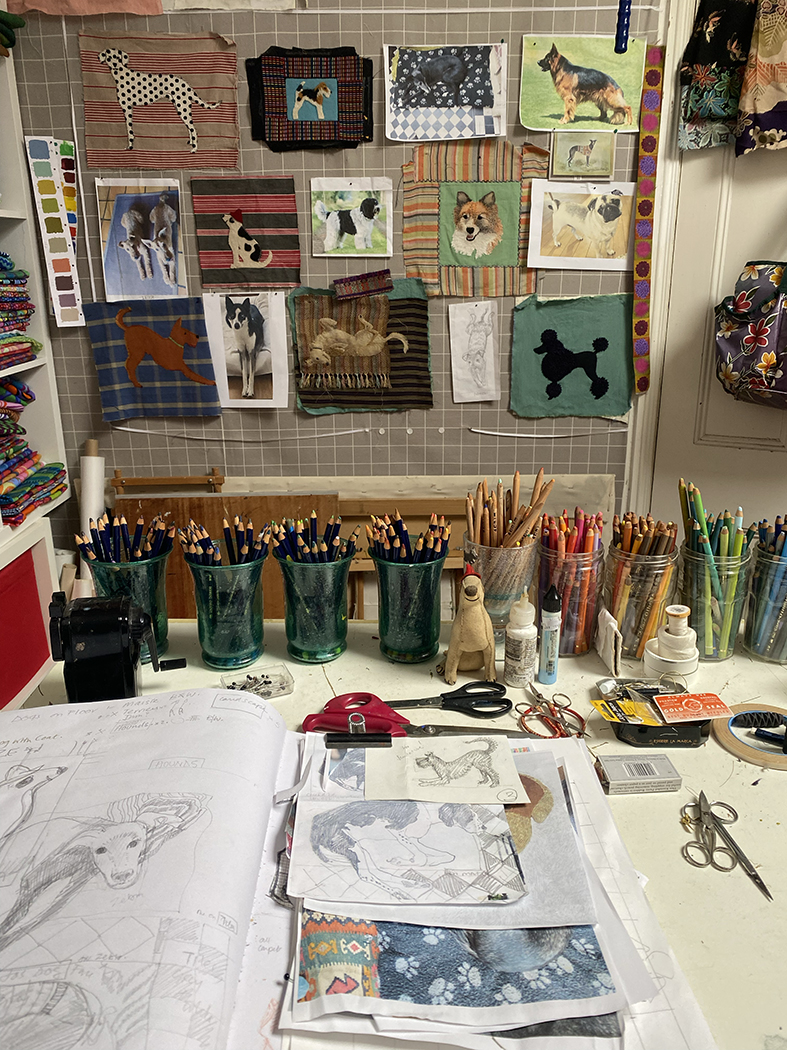
So slowly, and then very quickly with a deadline looming, the quilt finally started to come together and shown below on my studio table is the final arrangement complete with machine stitched sashing. Eventually I took it to expert quilter, Julie Harvey, who measured, layered and trimmed it, and together we both hand quilted it.

Eventually I posted it to be framed, in some style, by Marcus Wells who had commissioned me to make the work: and here is the finished piece.

And the best outcome of all – I have received commissions for 3 more single dog portraits; what a joyful set of work to start the new year.

dog quilt: SERENDIPITY

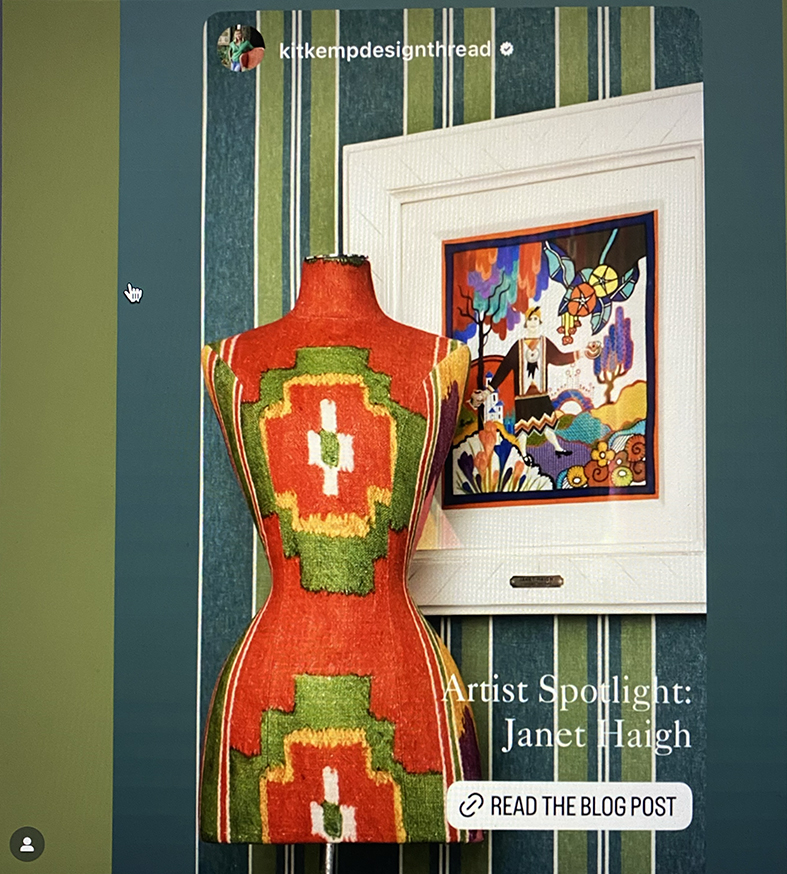
Strange how sometimes things come together: I was contacted, out of the blue, by Marcus Wells at Havilland Designs to see if I undertook commissions? He had framed some of my earlier work (embroidered portraits of women designers) for one of his clients, the interior designer Kit Kemp, who, to my amazement, had spotlighted my work on her blog, showing the perfectly placed Clarice Cliff portrait and lots more. Now read on……

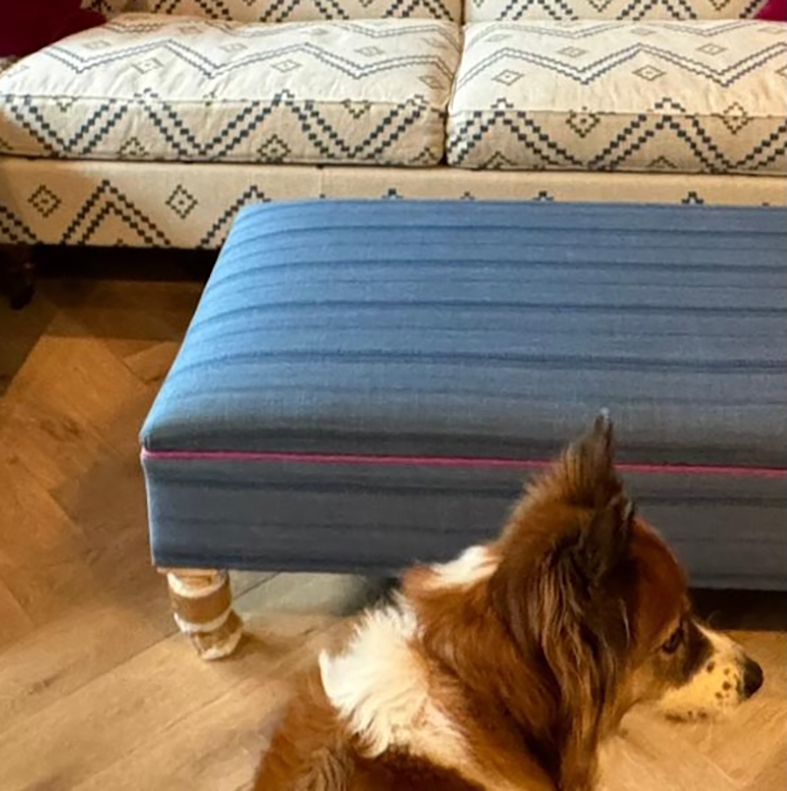
Marcus had a client who wanted a quilt depicting dogs. I am not a quilt maker but I was intrigued and asked him to send me details, sizes, preferred imagery etc. and an overview of the space where the quilt would hang. It was to be framed by Marcus and – no pressure – his client was another interior designer….He sent several images of the room that the quilt was to be hung in and I noticed a small dog’s head on one of them, I asked for pictures of any other dogs belonging to the client.

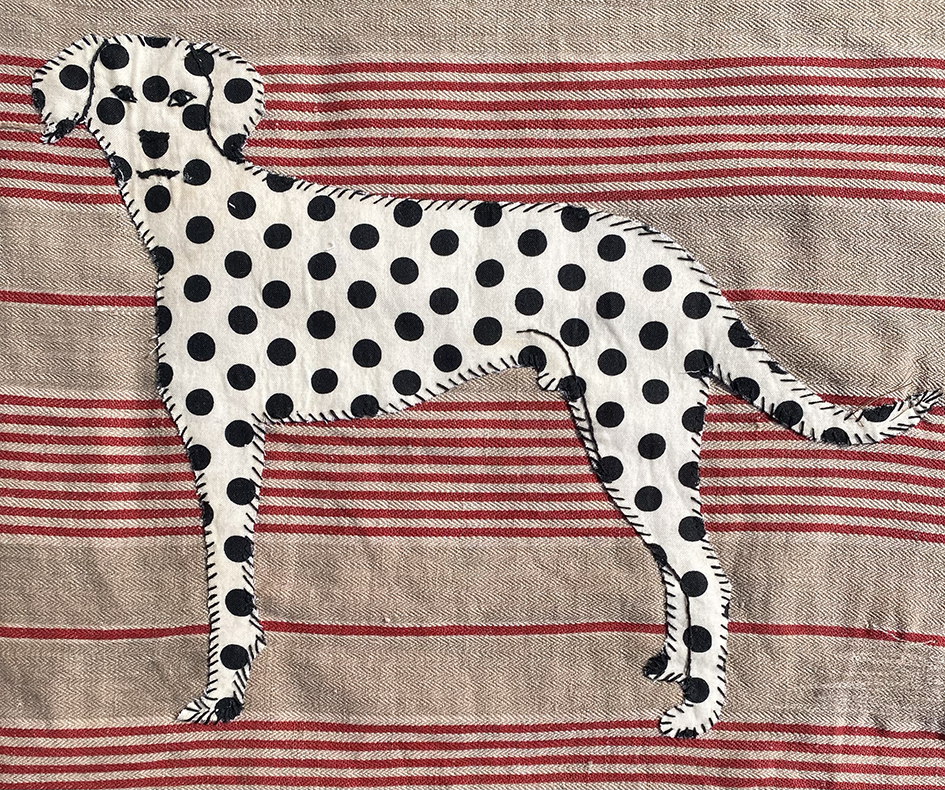
I then made several design sheets for a colour scheme and fabrication, with drawings and 2 embroidered samples using of a range of techniques that I could offer: from the simplest applique design for a spotty Dalmation to a hand-stitched portrait of the small dog in the original photograph. I was given the commission:- a quilted hanging with patchwork blocks of stitched dogs using the different techniques.

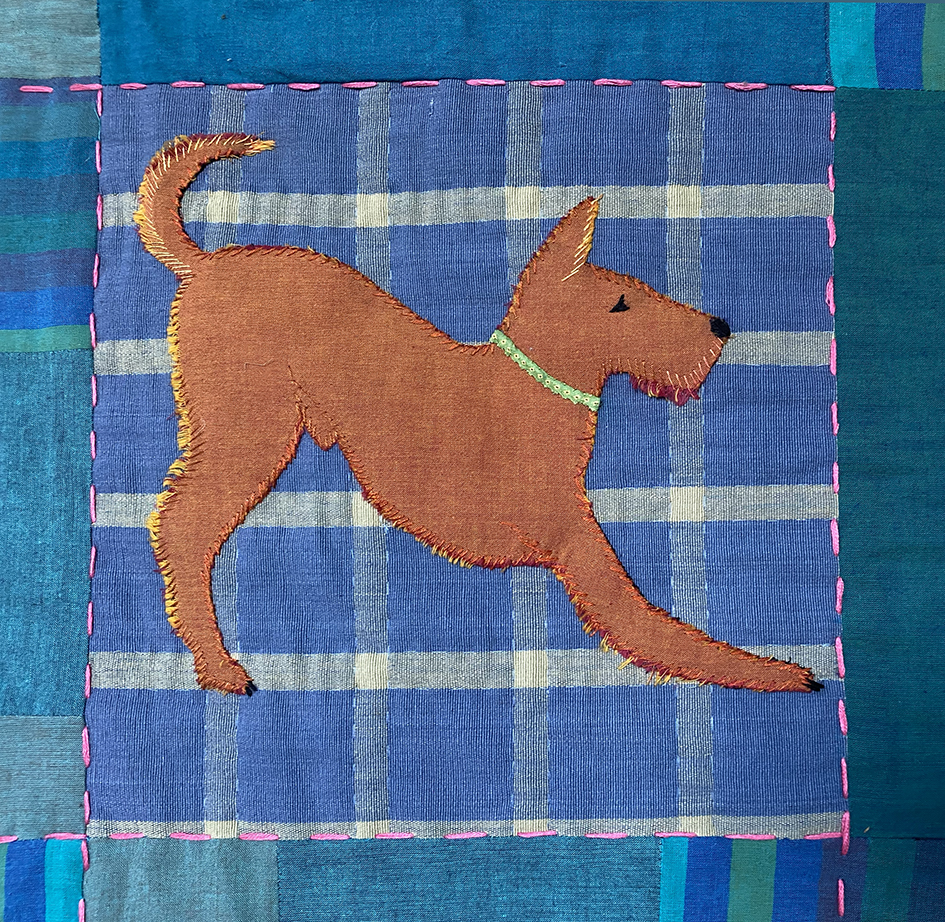
So now to find the extra dogs; my first set of drawings showed typical positions taken by each breed above. I do love dogs and am fascinated by their shapes, specially when totally relaxed. I had started with basic stance like the Dalmation, and just had to include a French poodle and terriers, so an Irish terrier, a Fox terrier and a Border terrier. And hounds, a Schnauzer Leo and even a Siberian husky Twyla, all in easy reach as they belong to friends, family and the local dog-walkers.

For most of the embroideries I drew the dogs to scale from photographs sent to me by the various owners, to decide which technique used for each dog but sometimes I just copied the photograph! Below are working drawings for the relaxed hound Rodney, and the oh-so-tired Sydney.

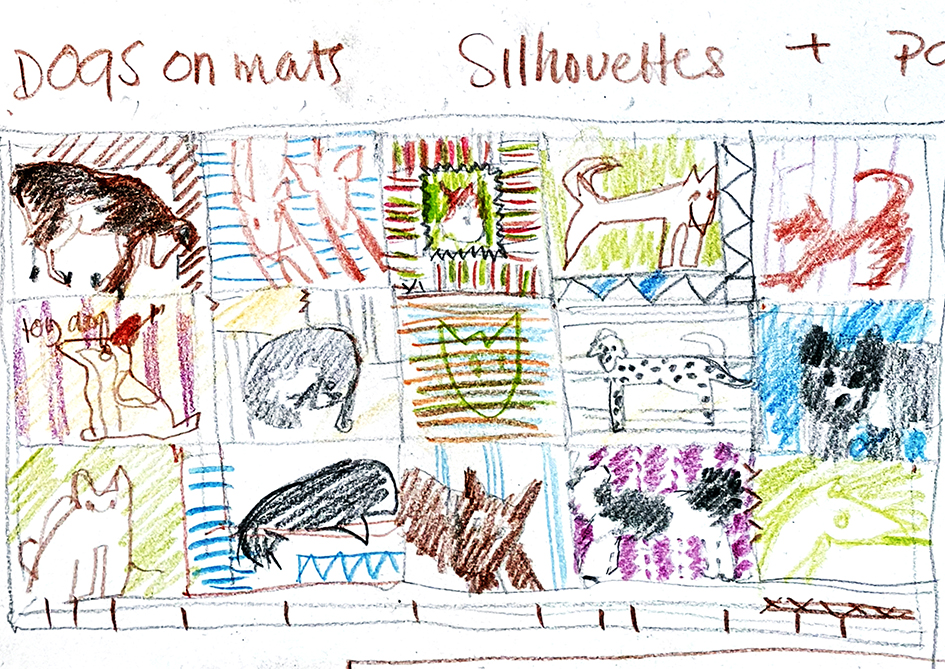
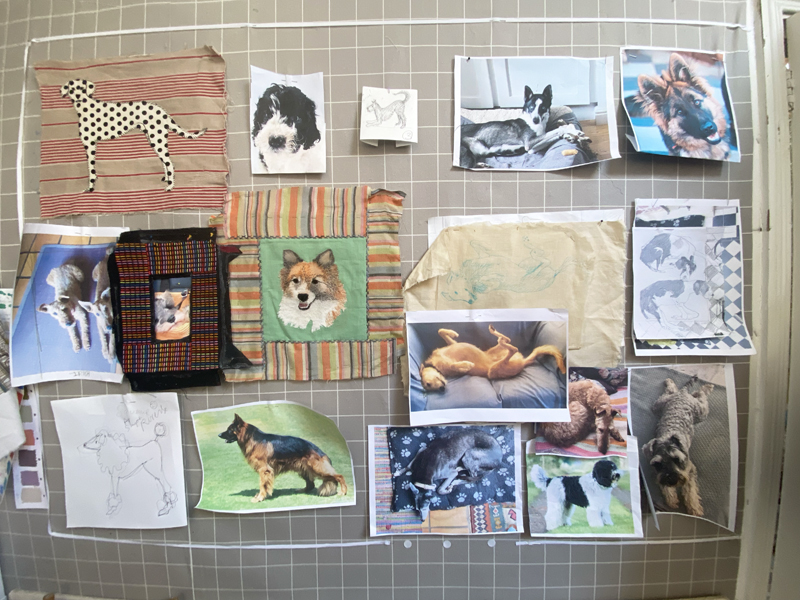
But how to assemble them into a quilt? I had been putting everything onto the quilt wall in my studio as I made it – constantly adjusting the arrangement to fit within the required measurement. Not how quilts are usually made I know, but this was created by the love of dogs, not the discipline of the patchwork quilt. The first scribbled design for the quilt shown below and the reality that surrounds it….

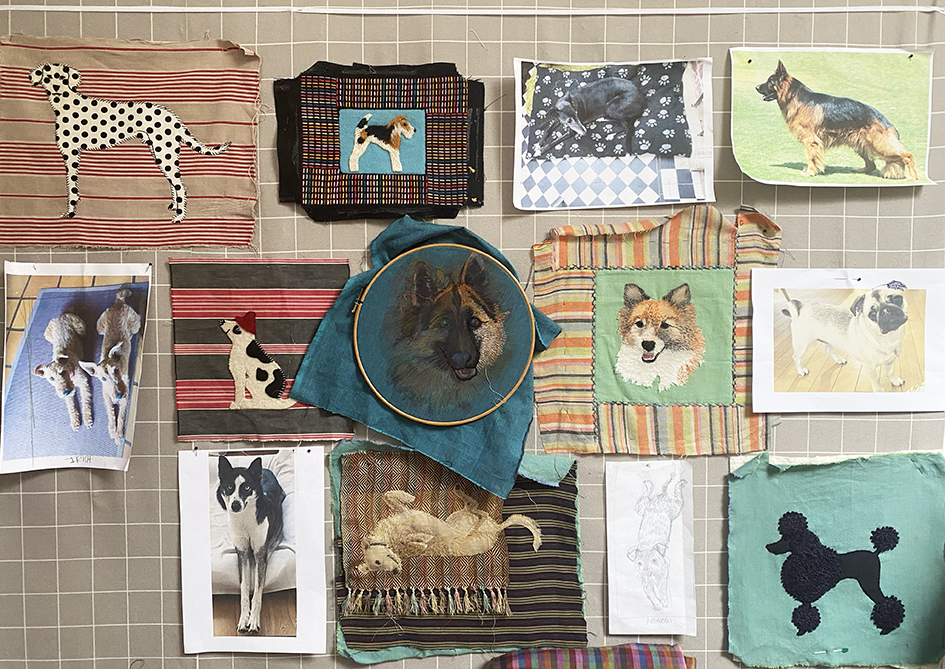
The design chops and changes as each new embroidery is completed and not every dog makes the final cut, but a design finally emerges. There were a few more dogs needed to complete the design, but how to highlight the family dogs (which are actual portraits) and stitch it together as a proper quilt…is the next instalment.

birds in skirts

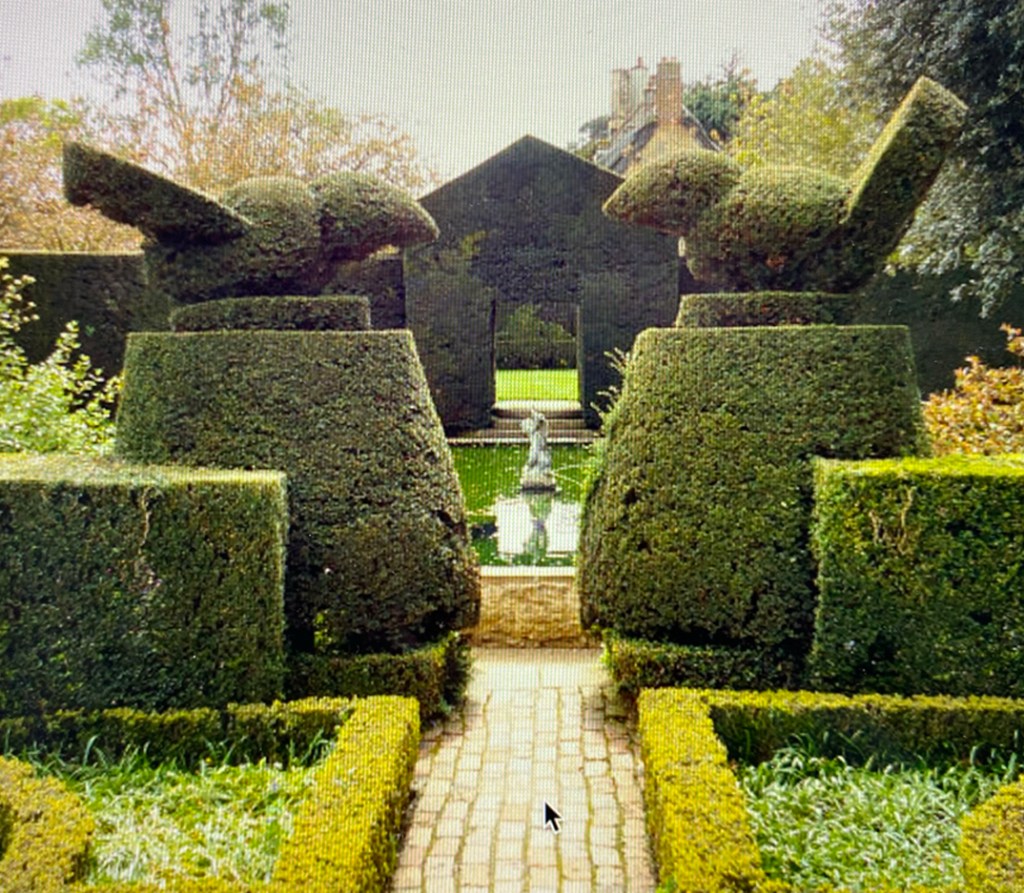
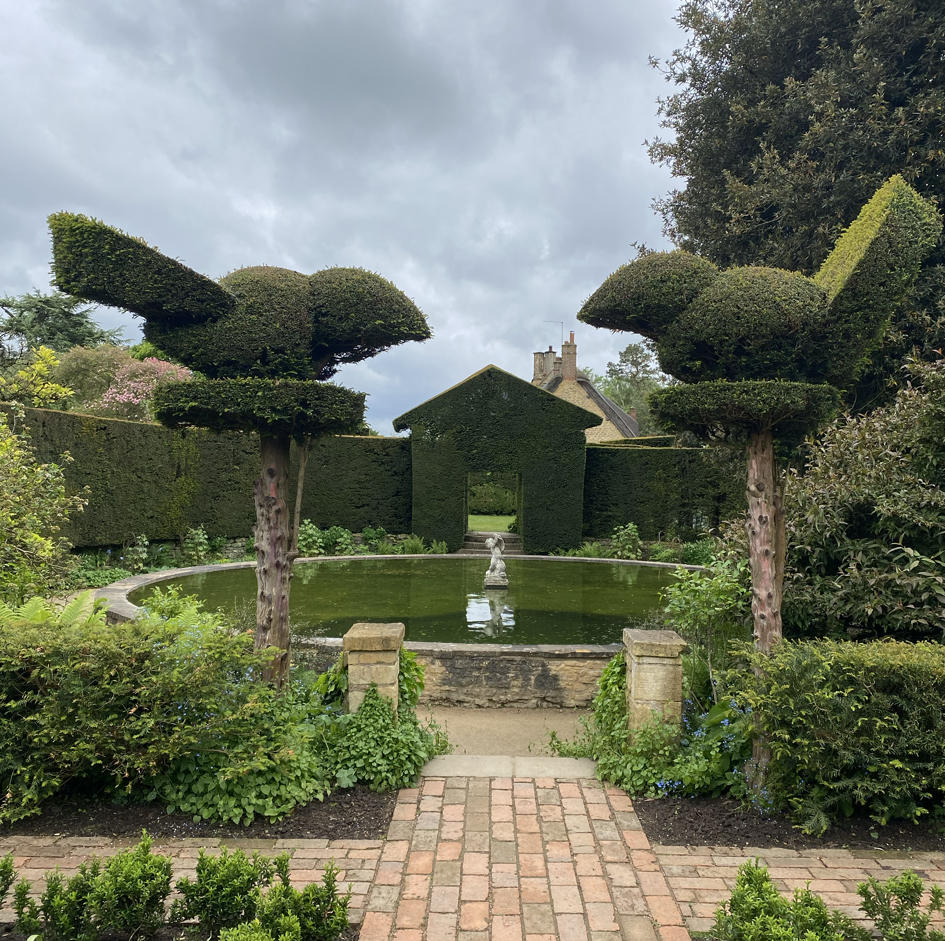
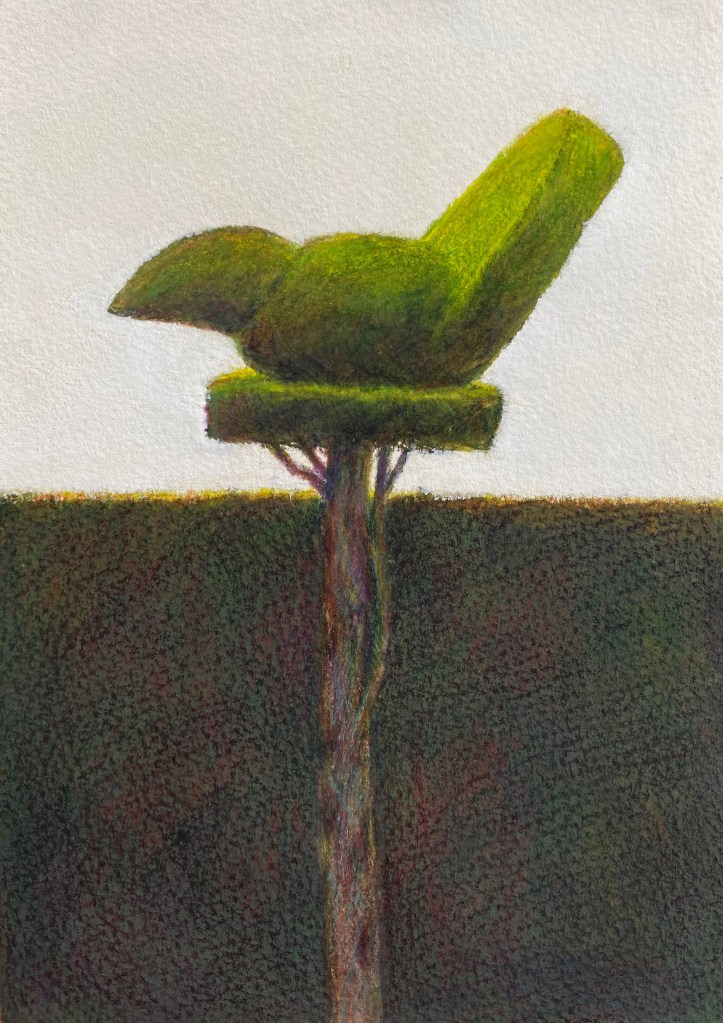
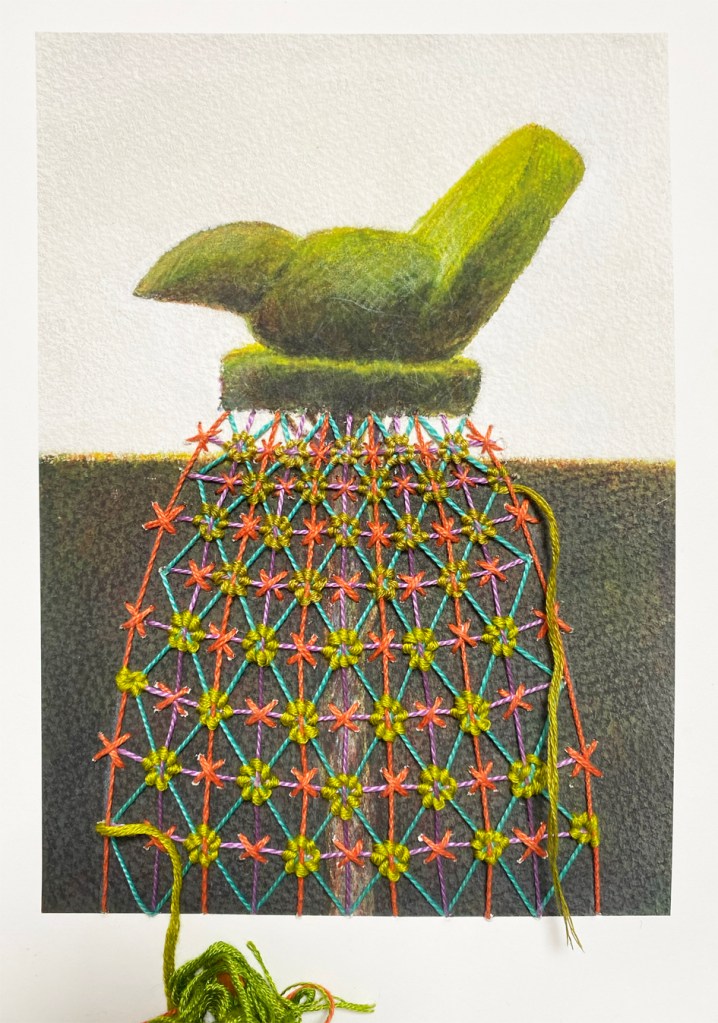
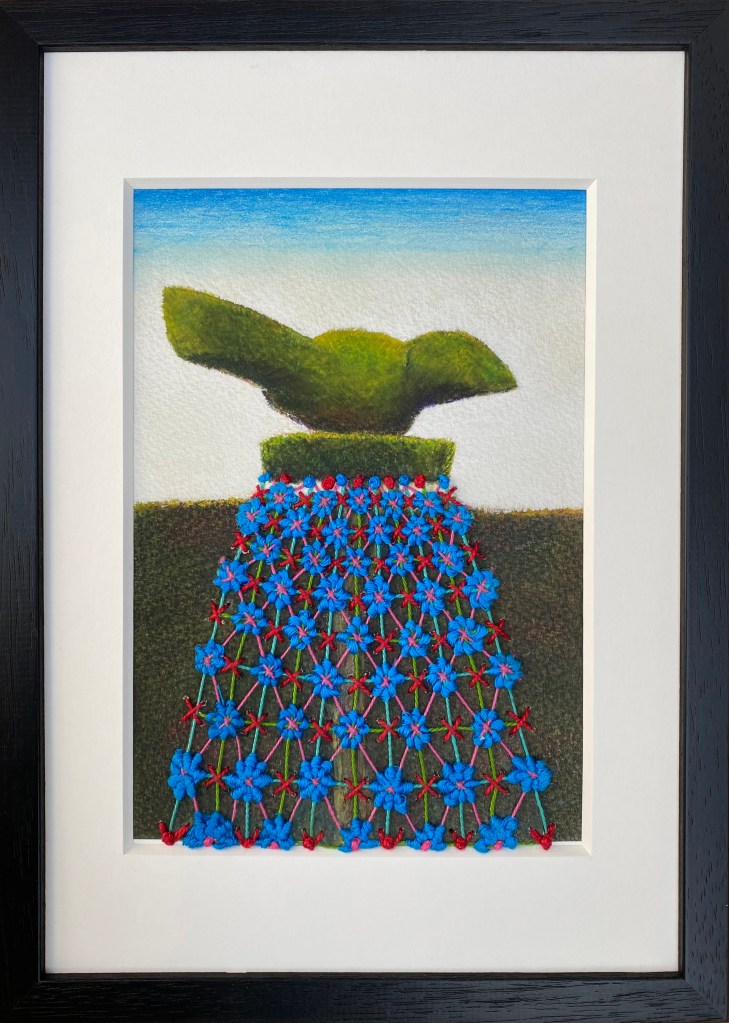
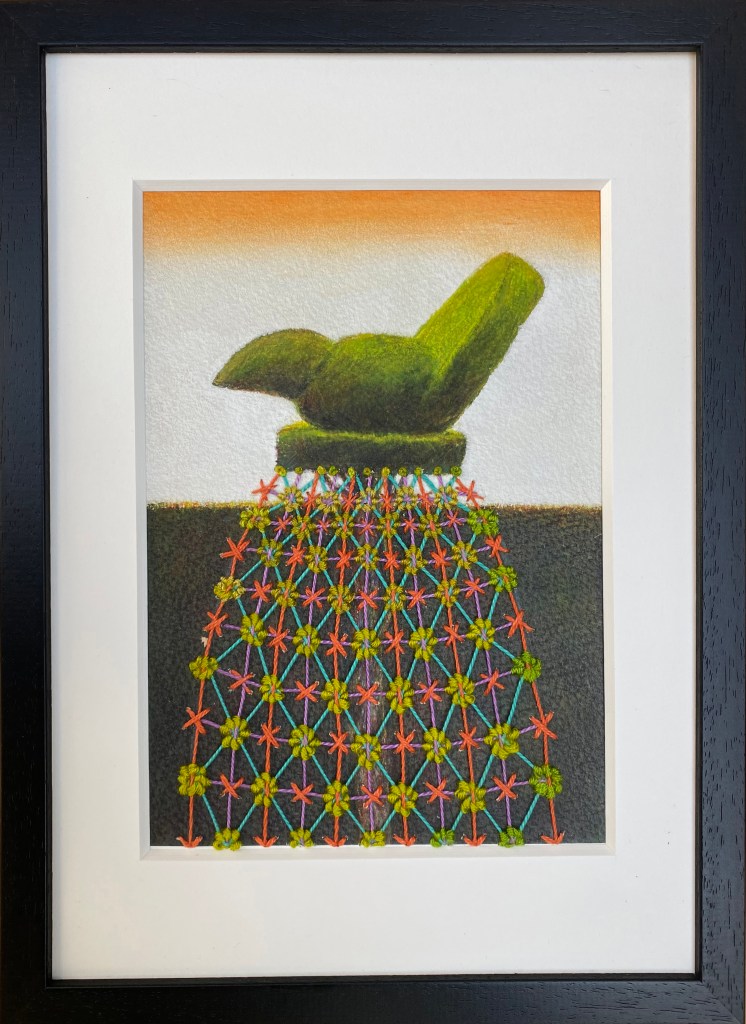
I gasped when I first saw these 2 topiary birds when visiting Hidcote to discuss my exhibition “Inspired to Stitch” for the Manor House gallery in 2025, where were the large bases of yew that they had perched upon for over 100 years?

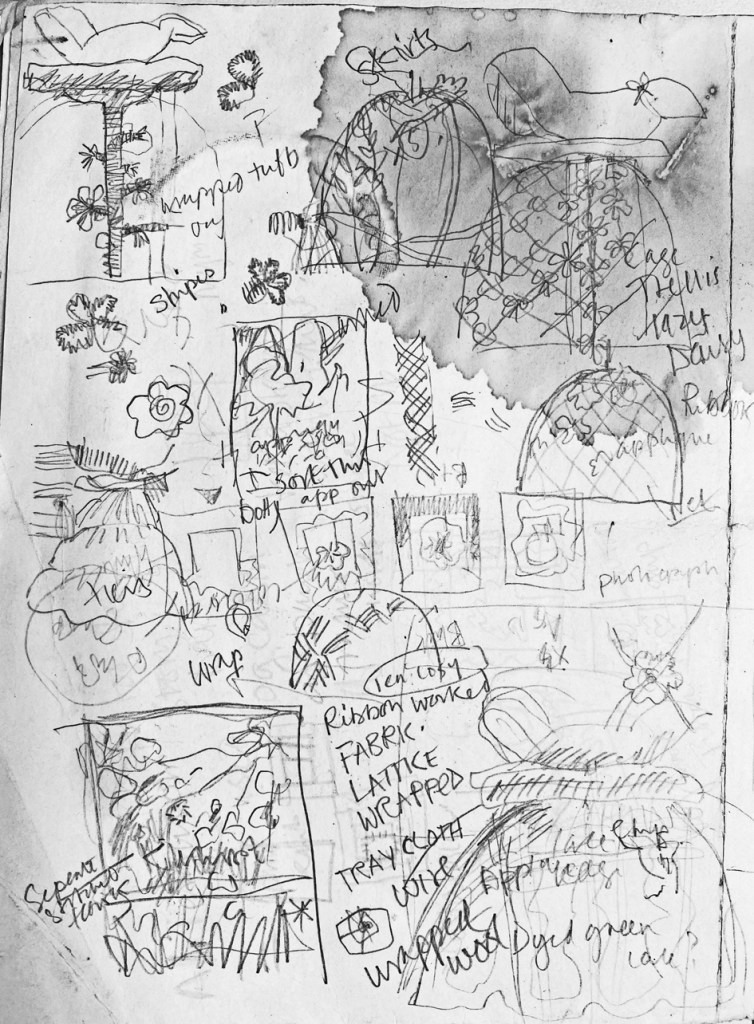
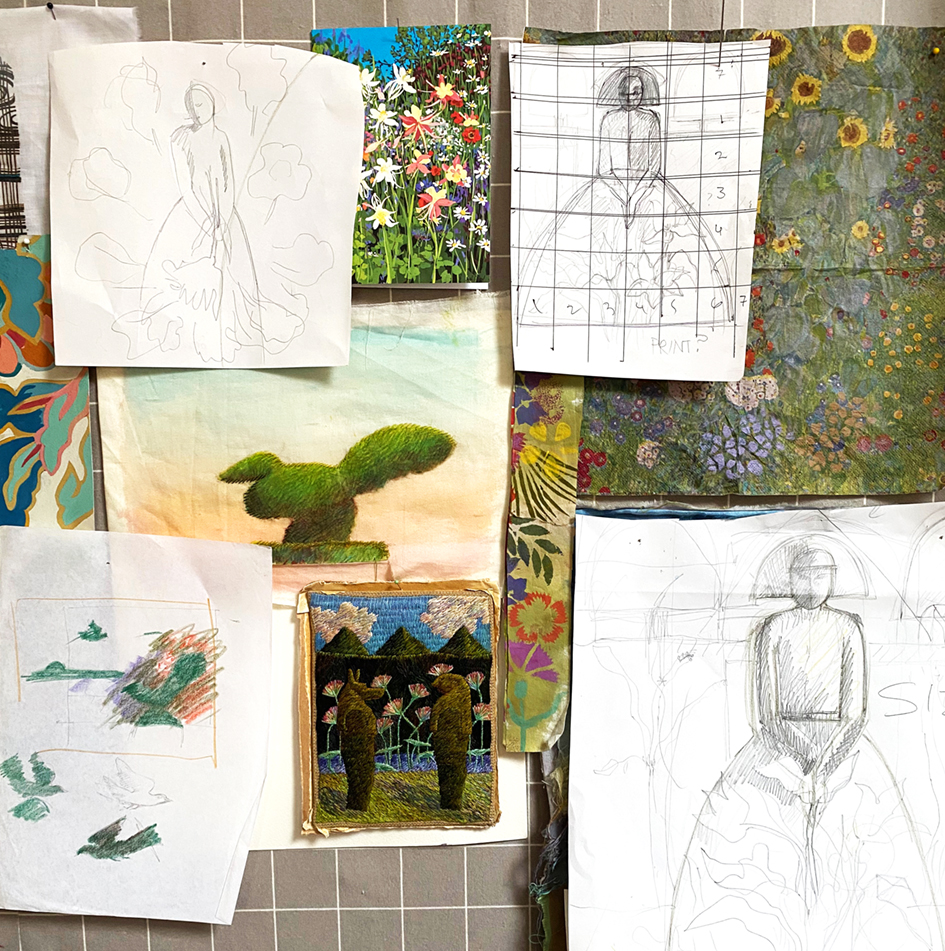
It was explained that the loss is in part due to necessary pruning( after the covid closures) needed to maintain access to the steps to the pool. Now they sit on top of bare but beautifully dappled trunks. I immediately thought “I can mend them”, visually of course! My idea was to create 2 wide ‘skirts’ of different fabrics – but when I started to think about making skirts my mind started to race with ideas. I quickly scribbled some down onto the only scrap of paper I had to hand…..

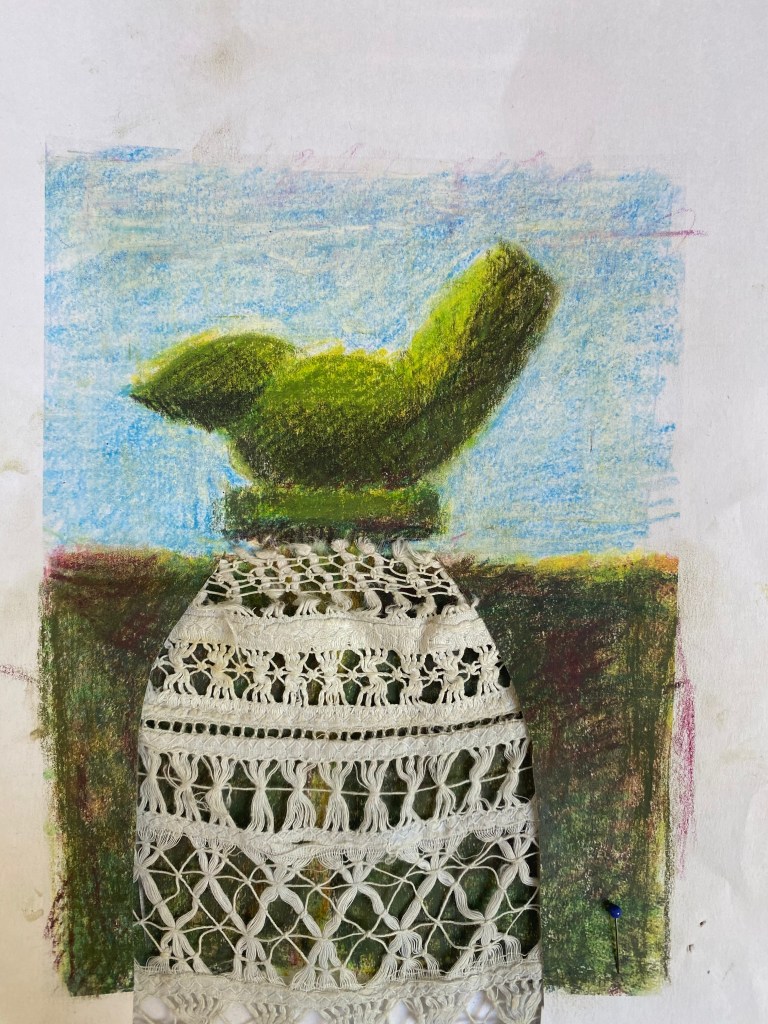
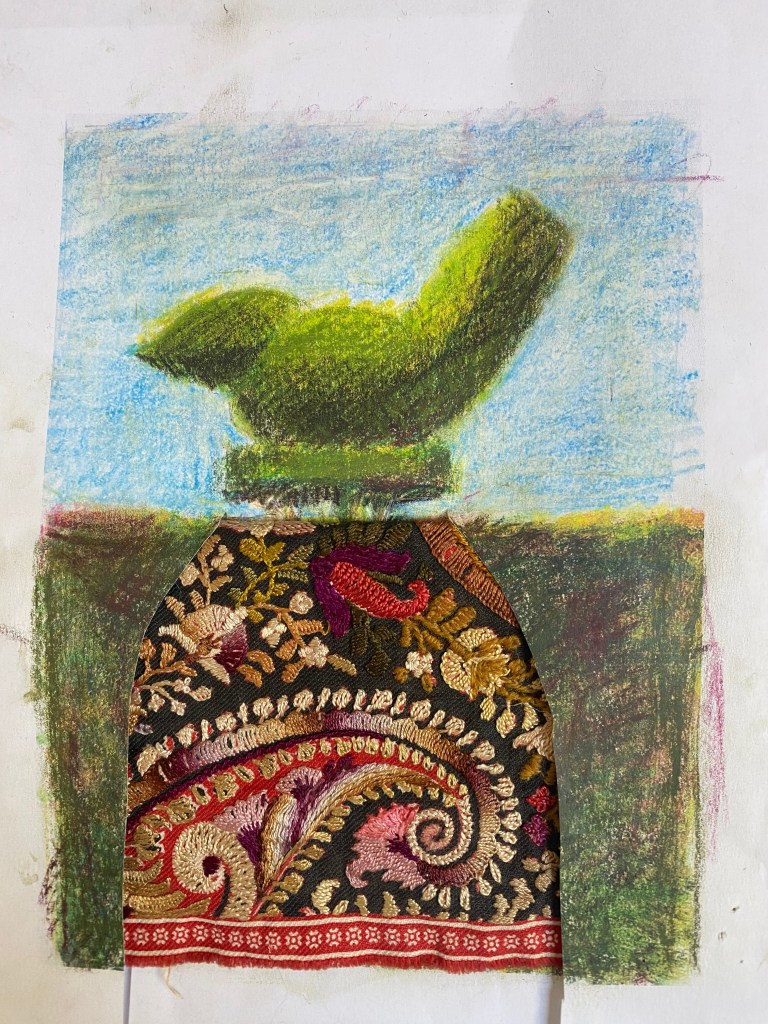
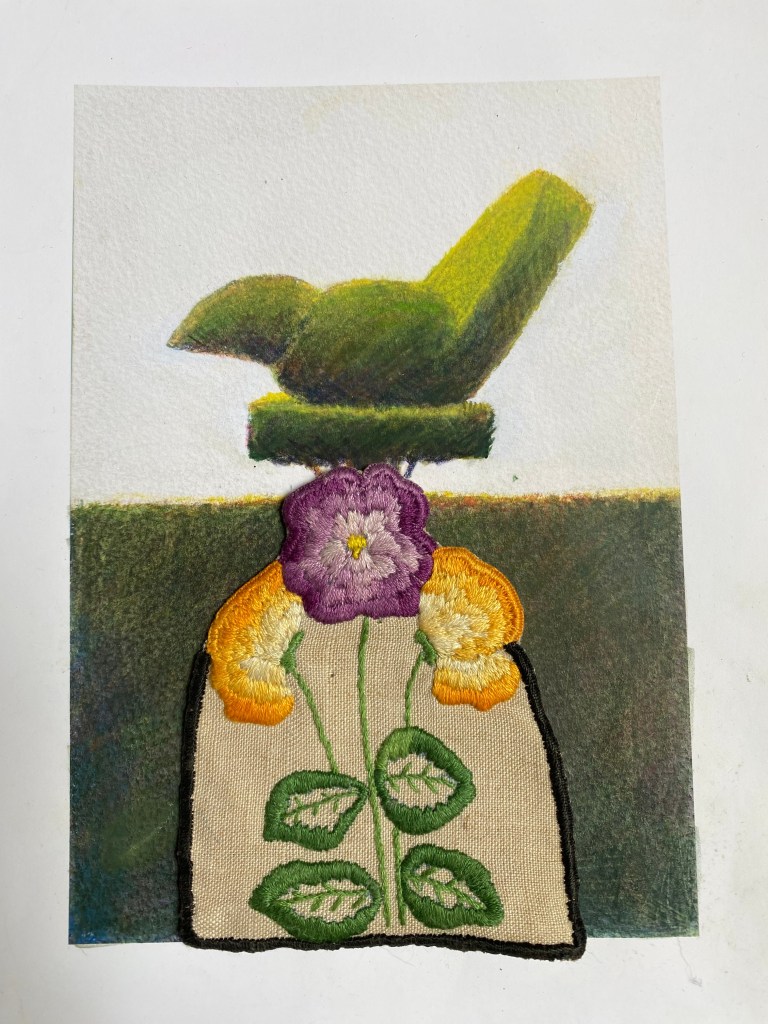
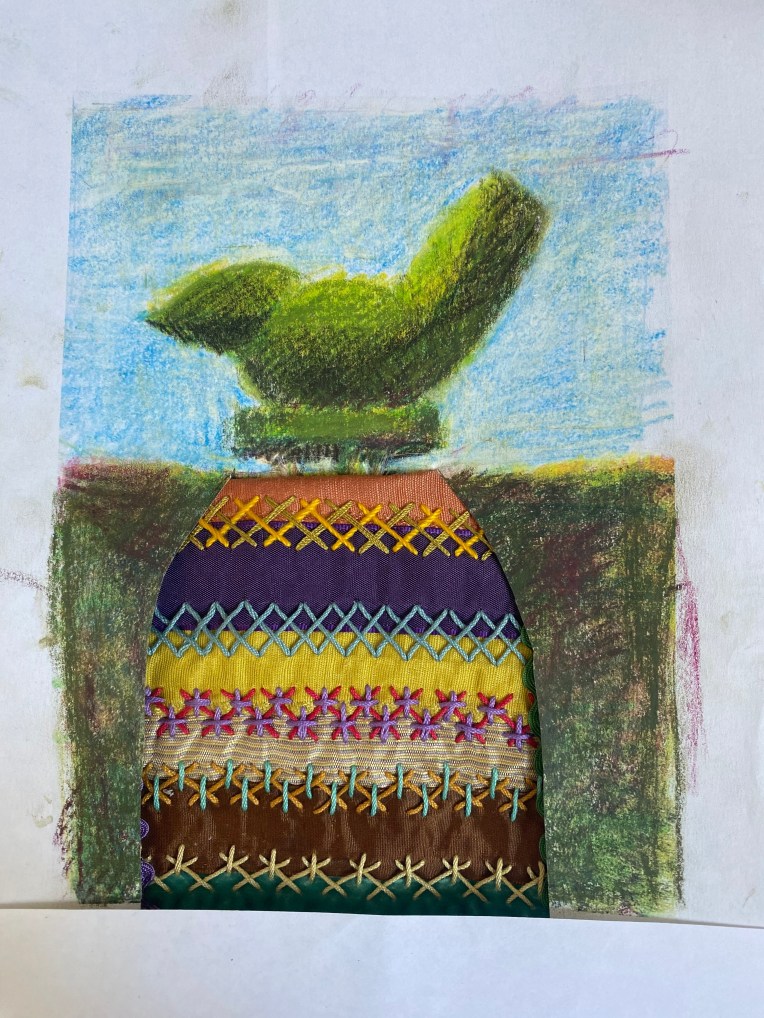
I decided to make small drawings of the 2 birds and then I could dress them both in a fabric skirt. Now how make this look feasible in reality. Using Inktense pigment crayons A4 sketchbook paper I roughed out the basic hedge shapes, but I had so many different ideas when I looked at my vintage fabrics scraps, that I decided to make a 2 sets of giclee prints, in order to illustrate all my ideas.

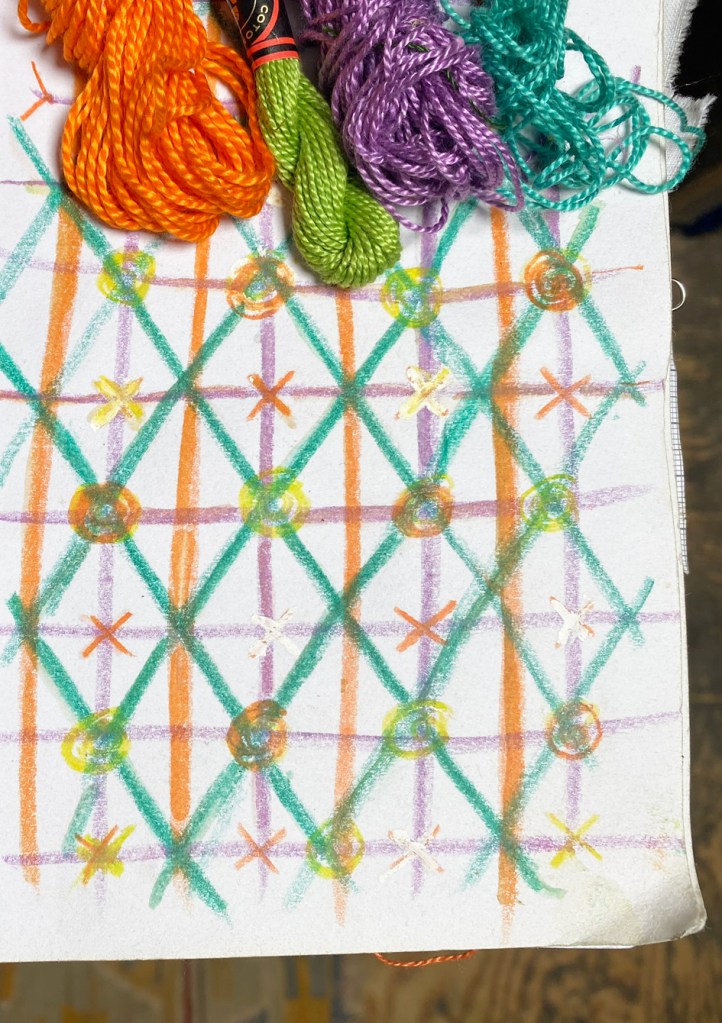
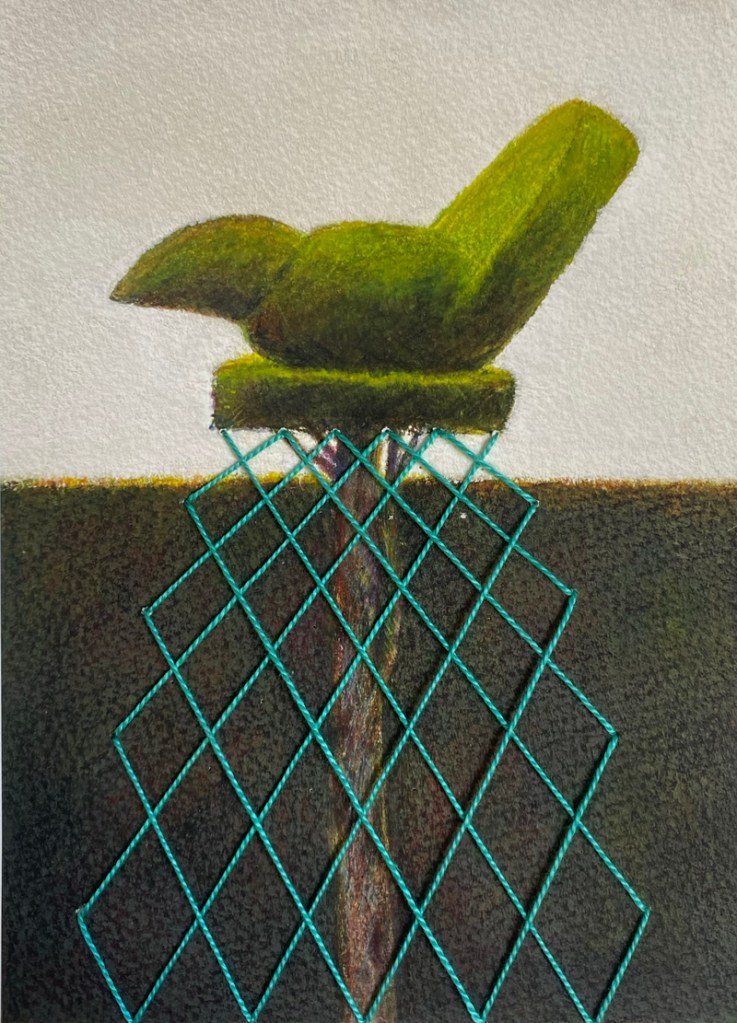
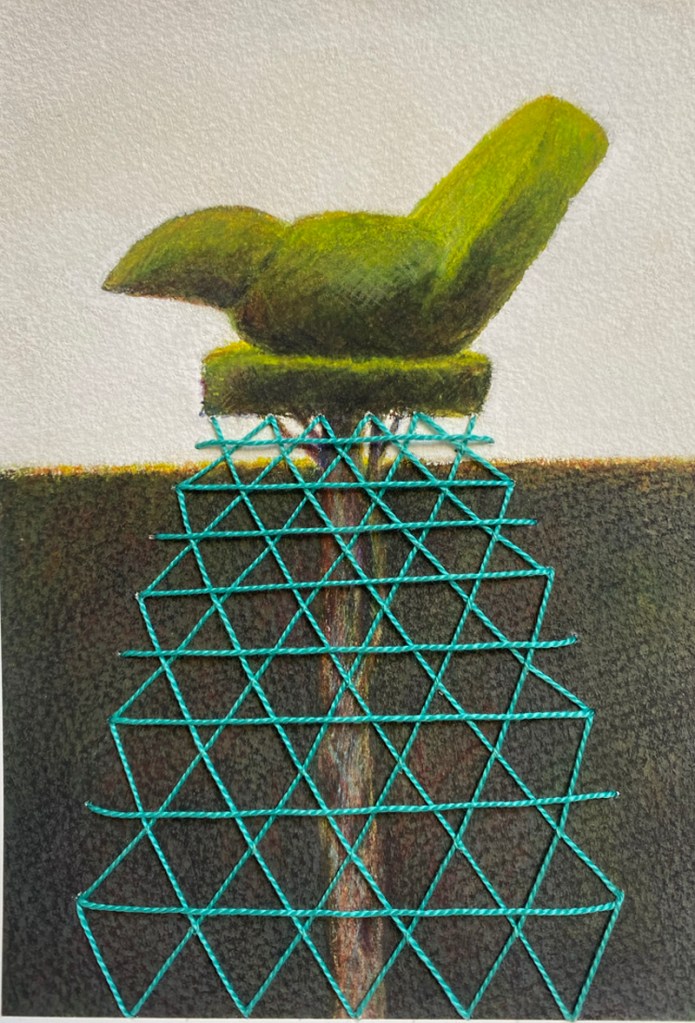
Above, the 2 giclee prints developed from the original drawings from my photographs, the first design was for a lattice or Jacobean Laid Work (see below the samples on the rough drawings).

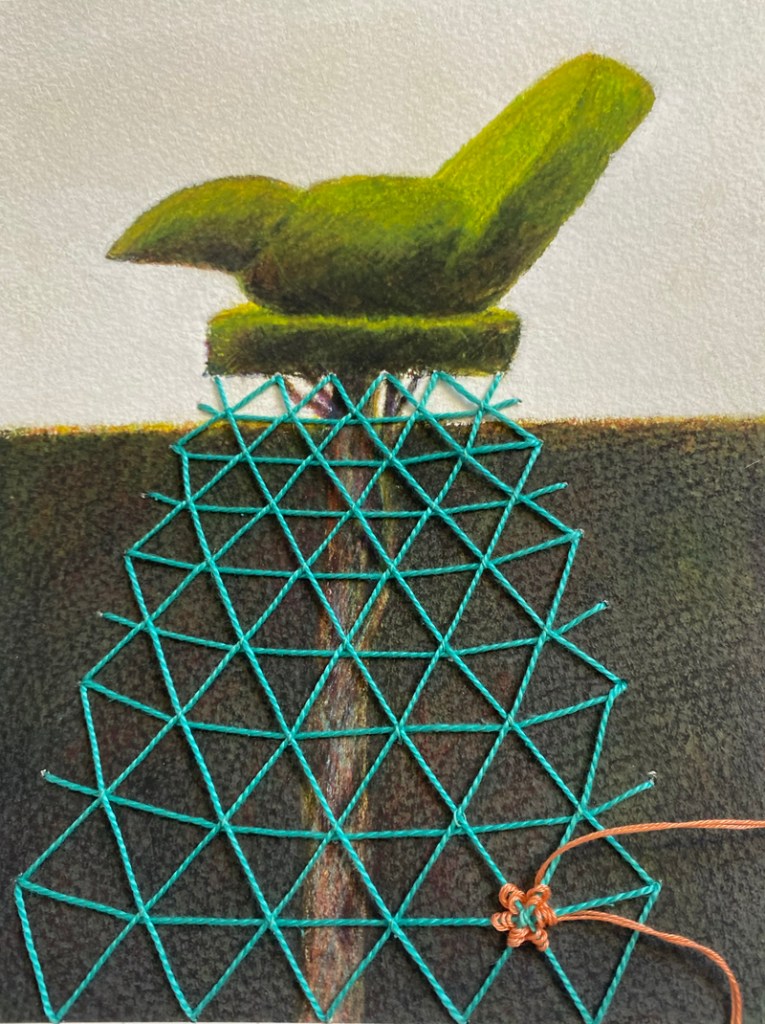
The first skirt sample was stitched straight into a bird print, using a fine twisted cotton thread. When beginning any new project, I always attempt a challenging piece of ‘inspirational’ work, by which I mean it will make me want to carry on with all my new ideas.

Above is the first design I completed for a whole set of 22 ‘Birds in Skirts” and I made them especially to sell at my ‘Inspired to Stitch’ exhibition This is an unusual step for me as I very seldom sell my stitched works. So now they have all been mounted, framed and glazed ready to be delivered to the buyers after the Exhibition closes.

There will be more posts about these stitched prints, as this is a new and exciting way for me to work. It combines my love of drawing and stitching and opportunities to develop many variations using my collection of vintage fabrics. I am now conducting new classes to cover some of the ideas and new-to-me techniques that I developed for creating the Birds in Skirts edition

DRAWN to stitch: gardens & flowers

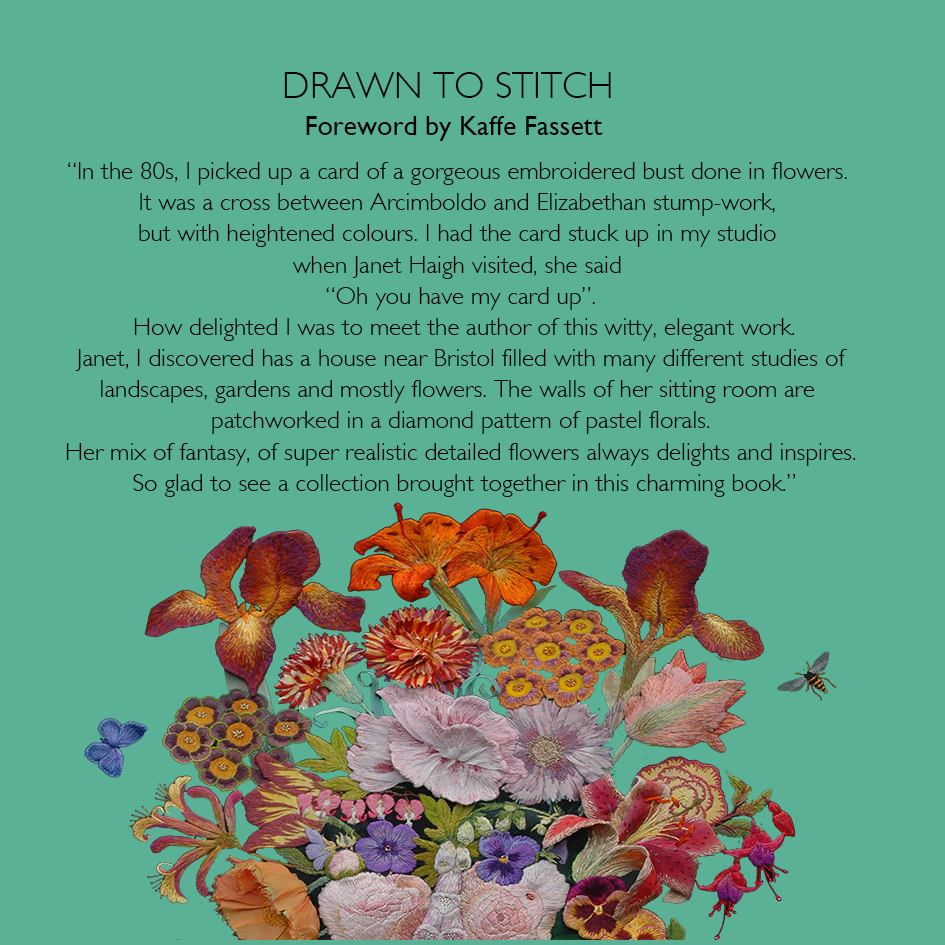
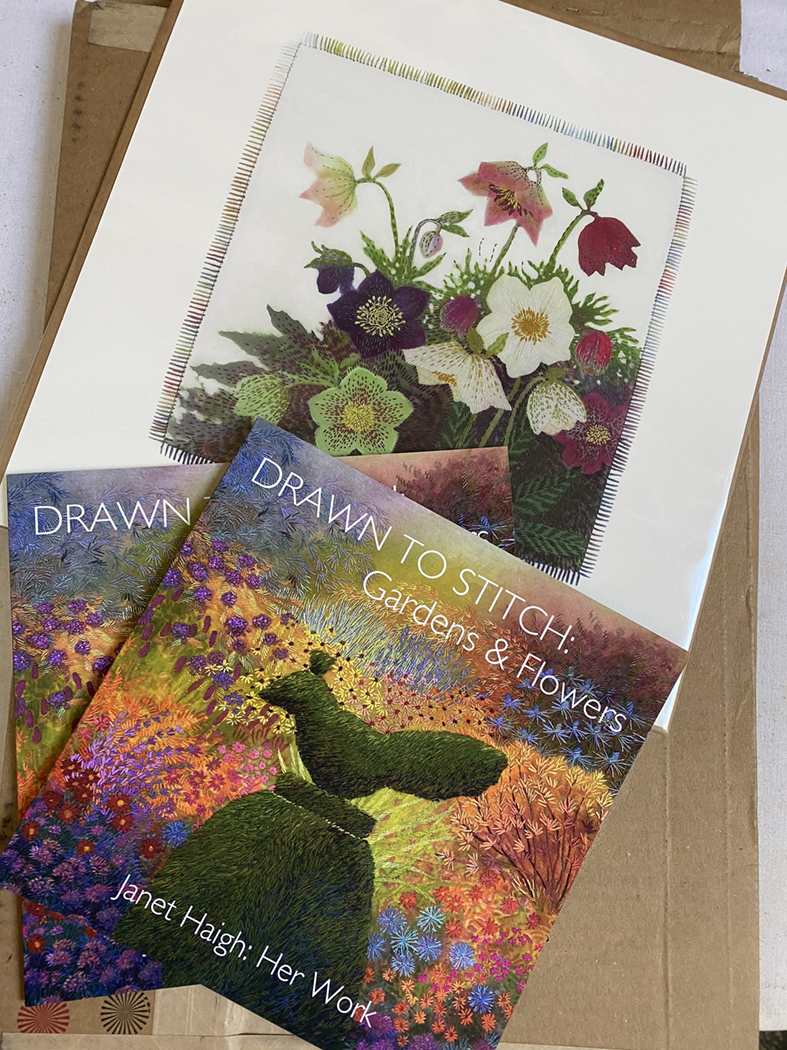
This is the foreword, kindly composed by Kaffe Fassett, for the first page of my latest book I made as a catalogue/ picturebook to accompany my latest exhibition Inspired to Stitch: Hidcote Revisited. at Hidcote gardens in Gloucestershire.

It illustrates part of the story of my career in stitched textiles, from my first ever embroidered picture above, made out of the sheer frustration of working in the fast-track commercial fashion industry in London, after I left Liverpool Art College in 1970. And it is an imagined garden.

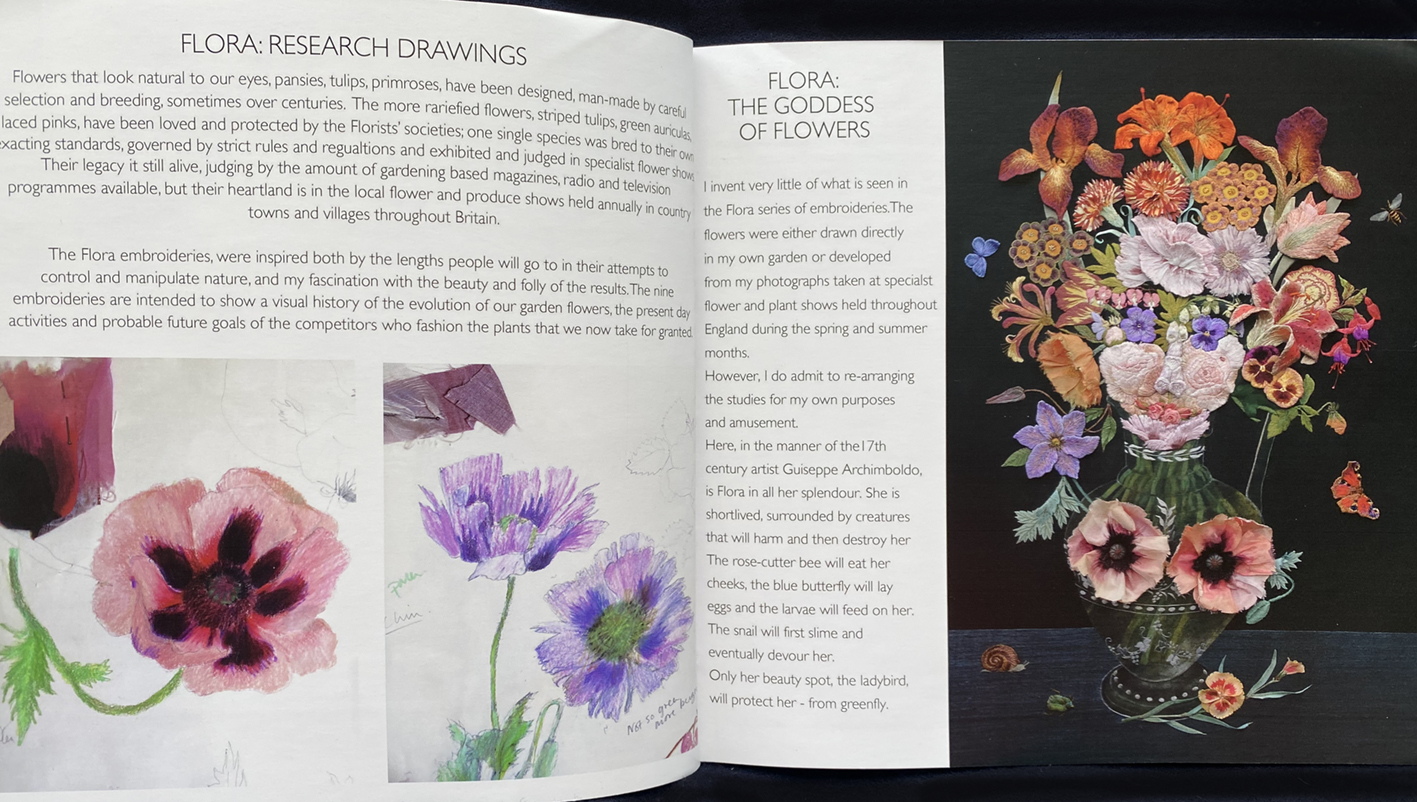
Fast forward several years to 1992 (you will have to buy the book for more information)and I am totally committed to all things flowers, gardens and topiary! Here are several pages from the book to whet your appetite and first here is Flora, the Roman goddess of Flowers.

Flora is the central image of 9 embroideries called ‘The Flora’ that tells a visual history of the development of, what I now think of as, “designer flowers”.

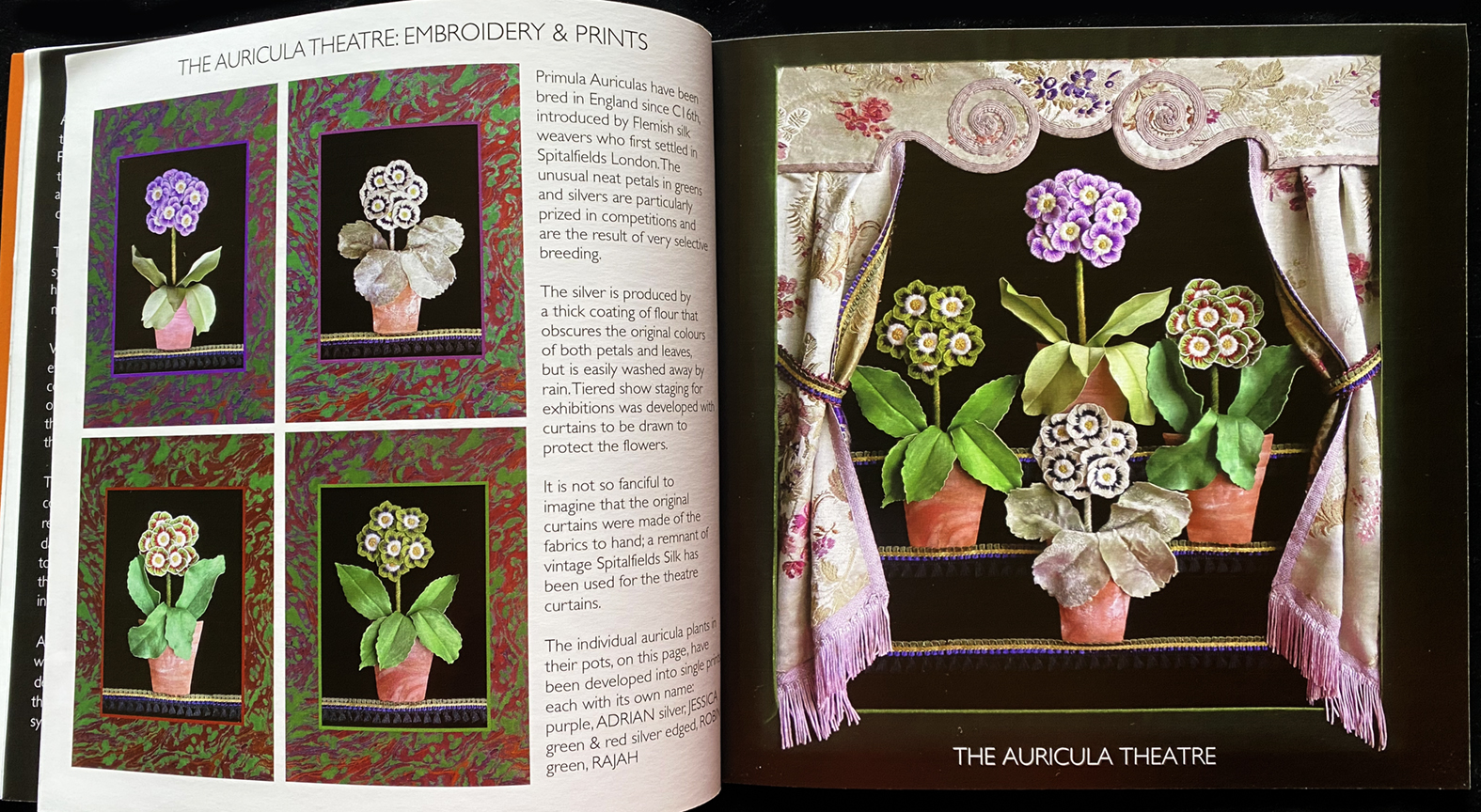
The Auricula Theatre above, with a series of small giclee prints I developed from the original silk embroidery. The protective curtains are made from a piece of vintage Spitalfields silk.

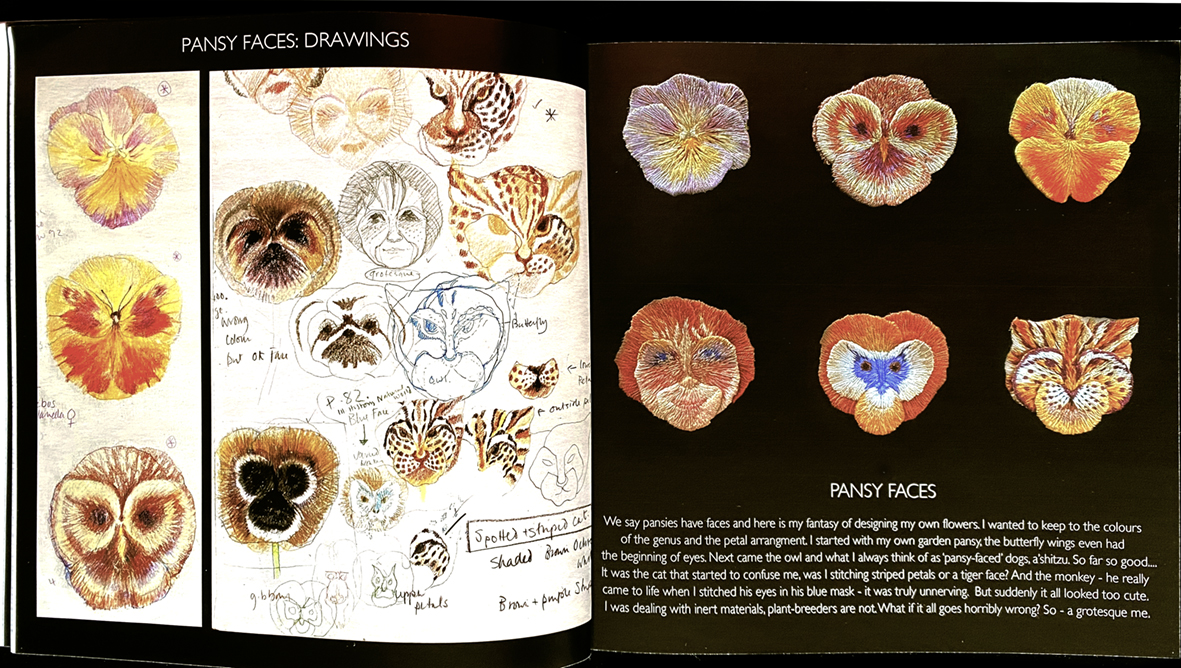
Pansy Faces and my drawings for the inventions I imagined as my exhibit in our town’s annual flower show.

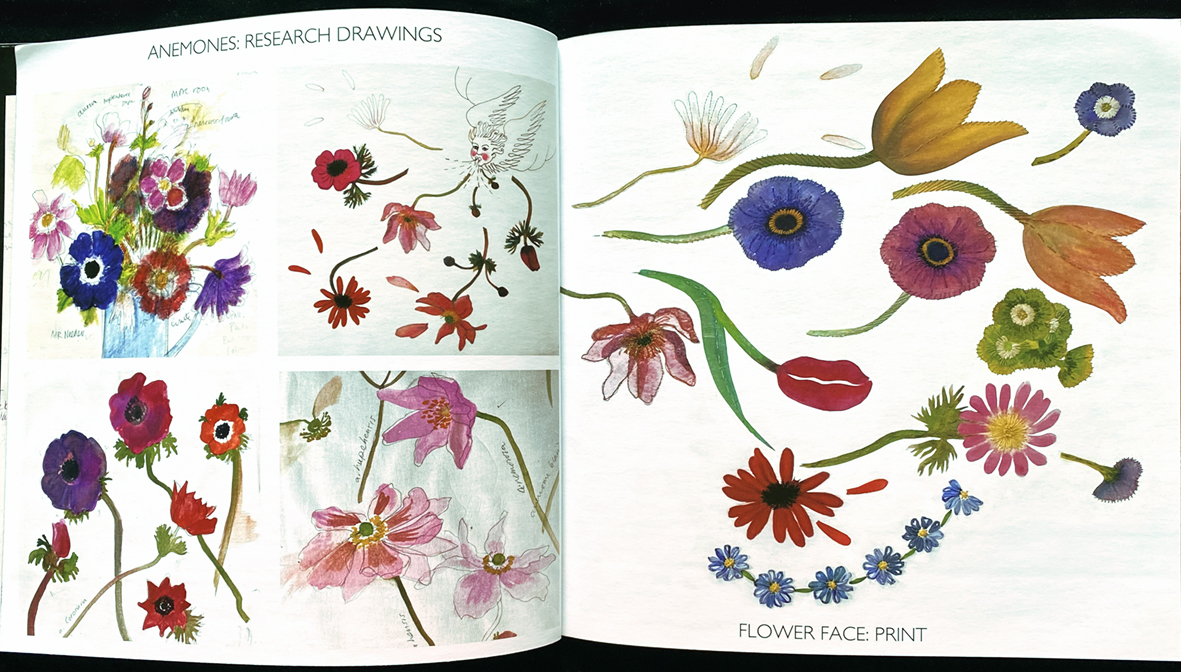
A personification of Blodeuwedd, or “Flower Face” from Welsh folk lore; this is a giclee print of the original stitched silk collage on paper, that I developed from my old drawings made for ‘The Flora’ .

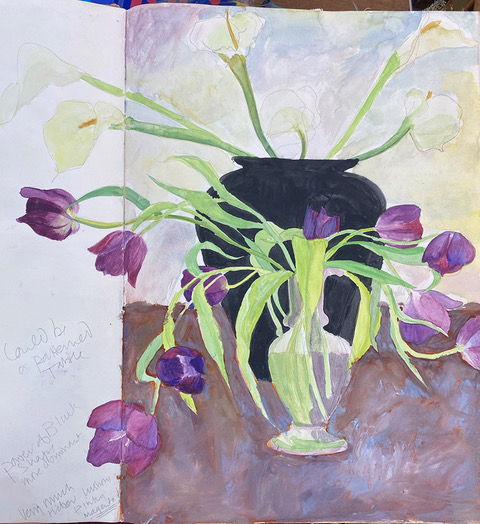
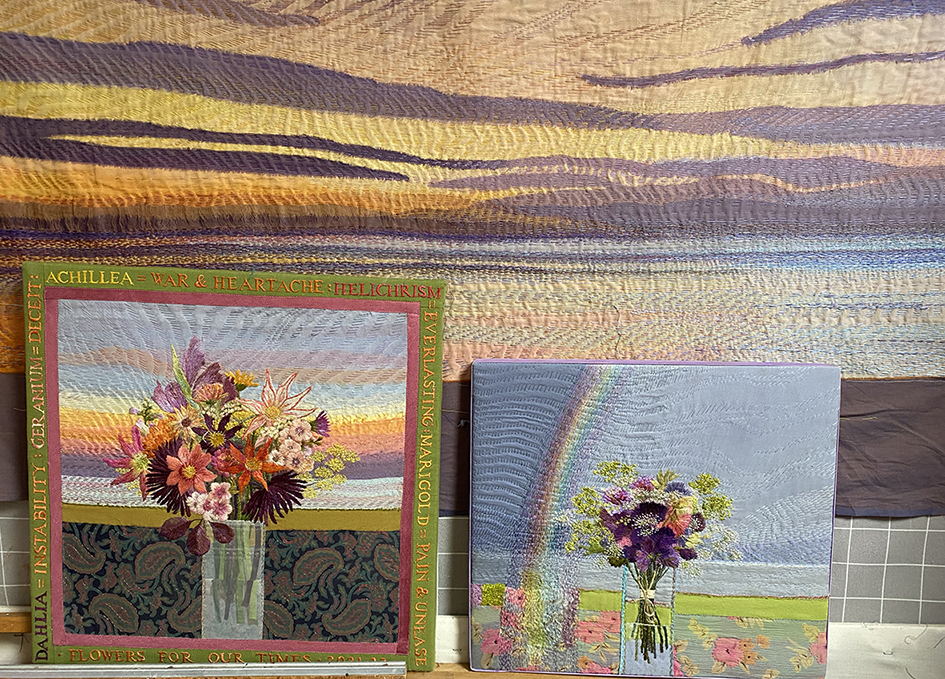
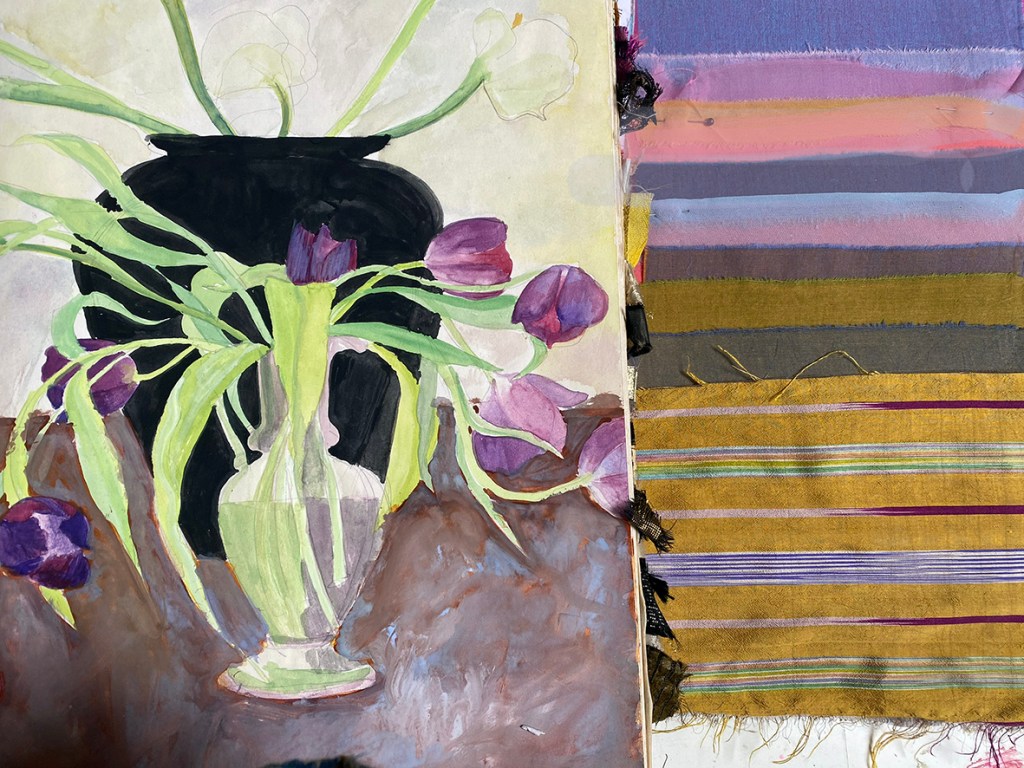
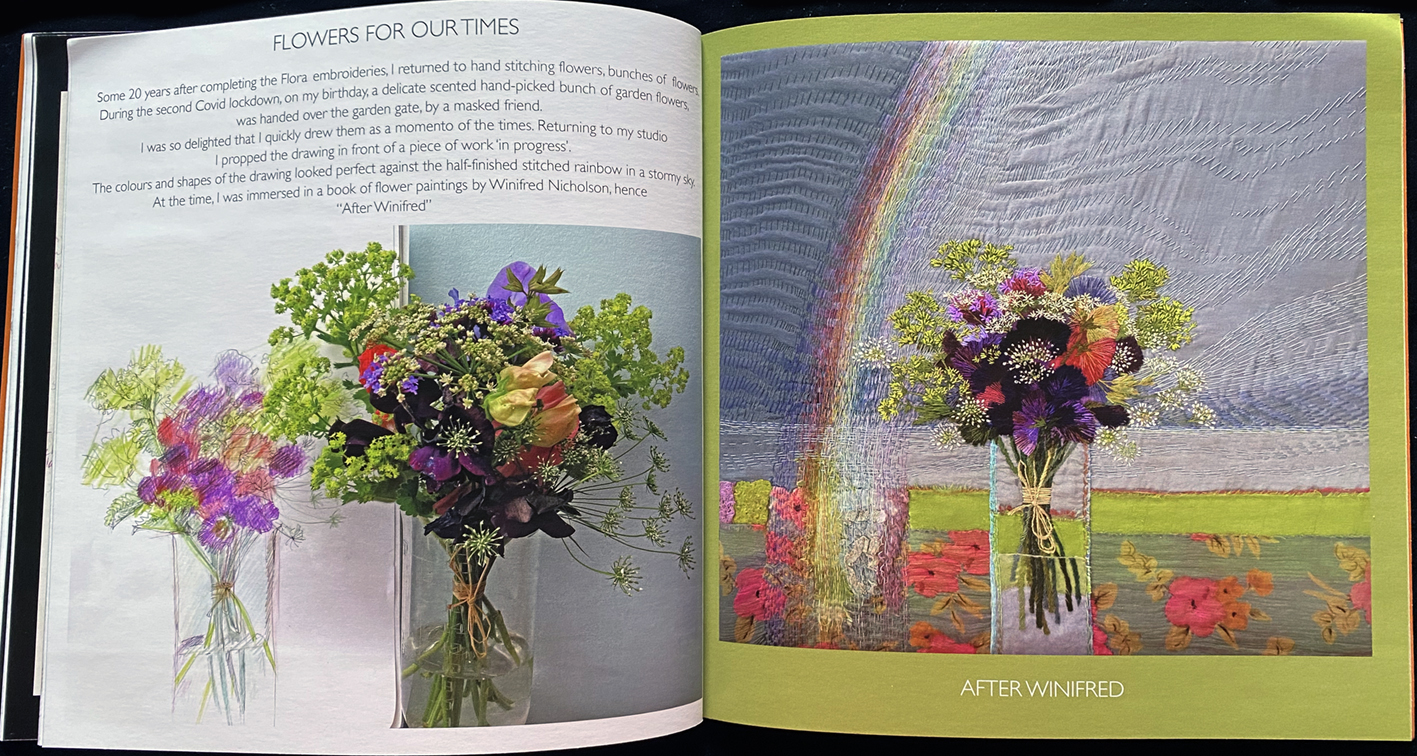
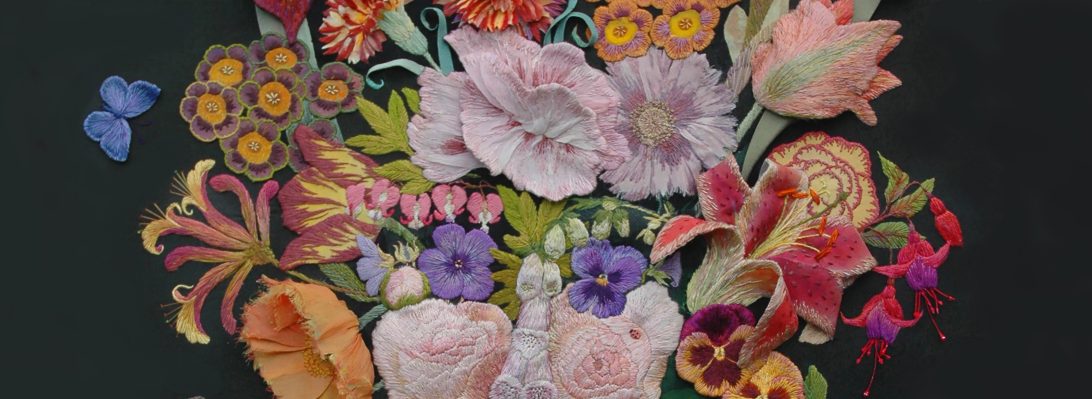
Here is a bouquet of hand embroidered flowers in After Winifred’. I was given this bouquet during Covid, by a masked friend, in my garden, on my birthday. I was looking back though my Flora drawings to make some joyful embroideries and had bought a book of flower paintings by Winifred Nicholson……

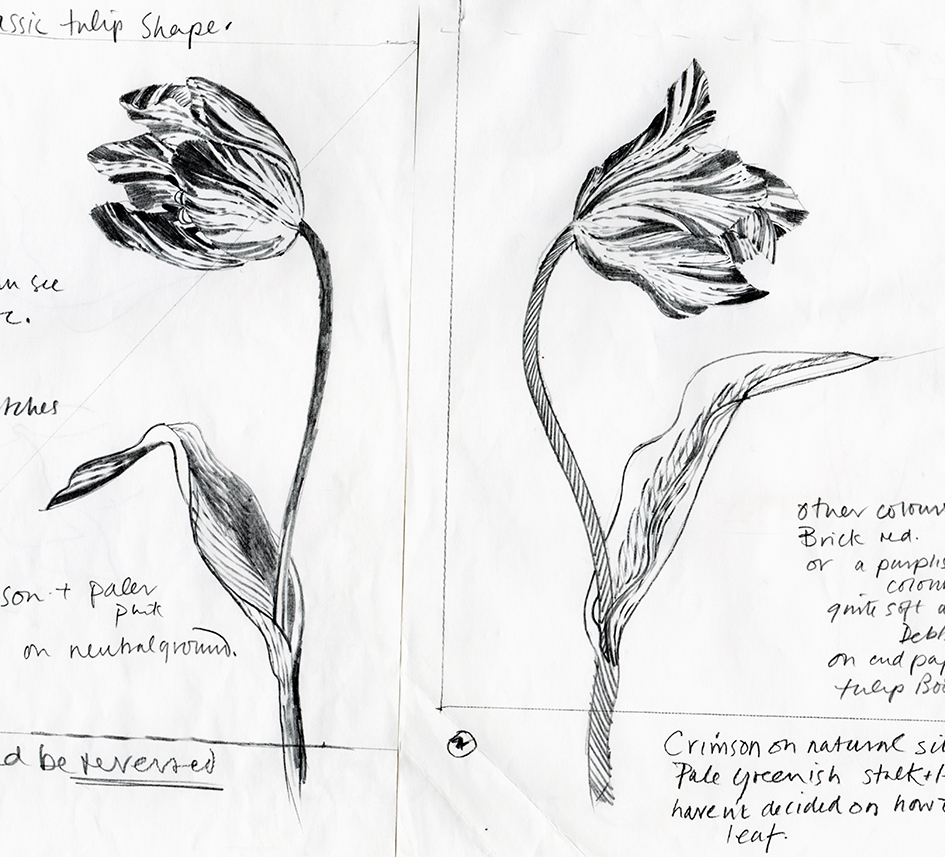
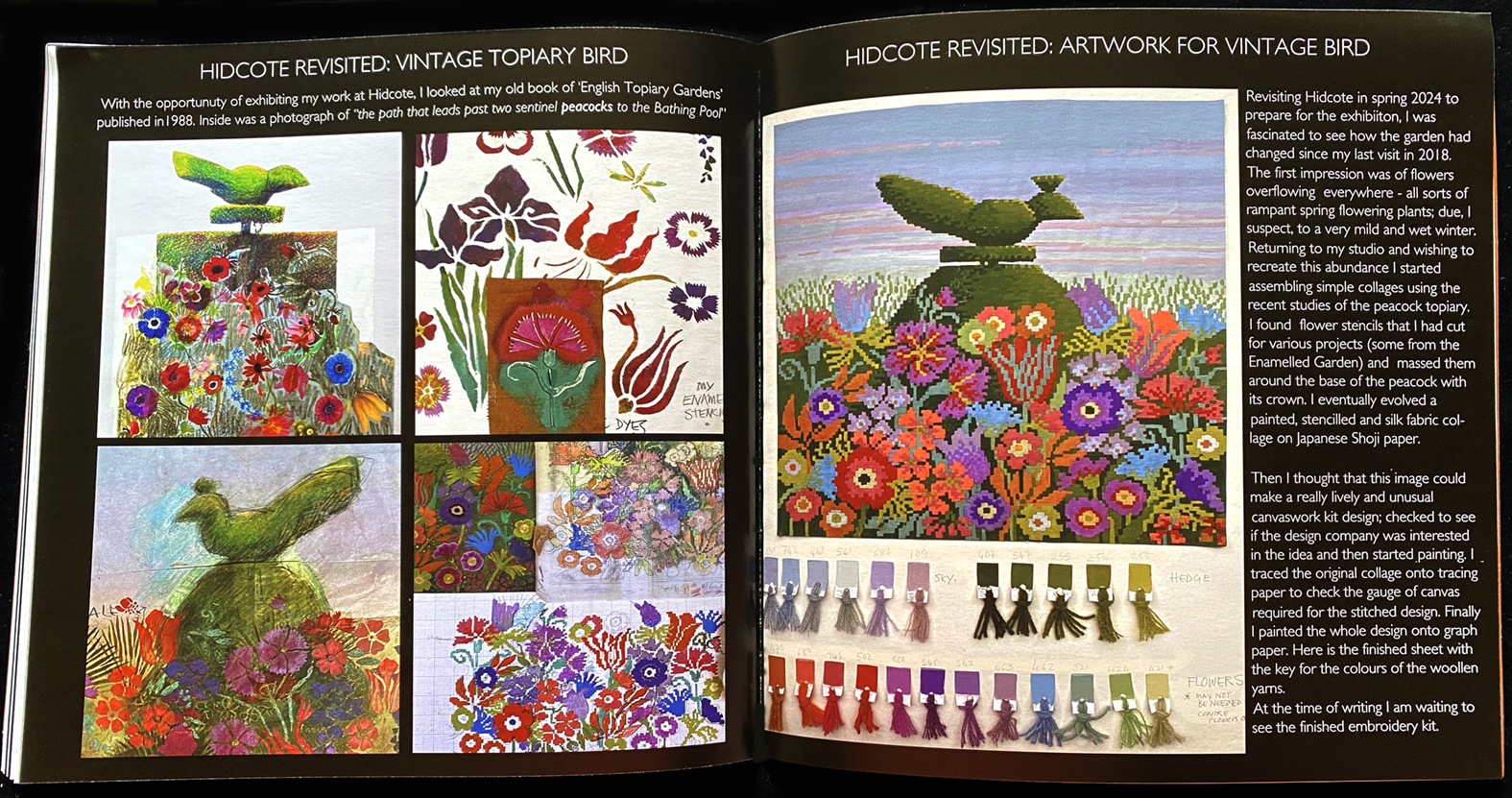
I keep a careful record of all my research drawings, this results in a whole range of different drawings, samples, notes and photographs being kept for further inspiration. Here are typical ways that I use these ideas and studies for new works. Above are some pieces of ‘The Enamel Garden‘ a major academic research project into using textile techniques for other materials, here vitreous enamel on hand cut sheet copper. It is possible to trace how I used my research drawings to create these flowers and hedges.

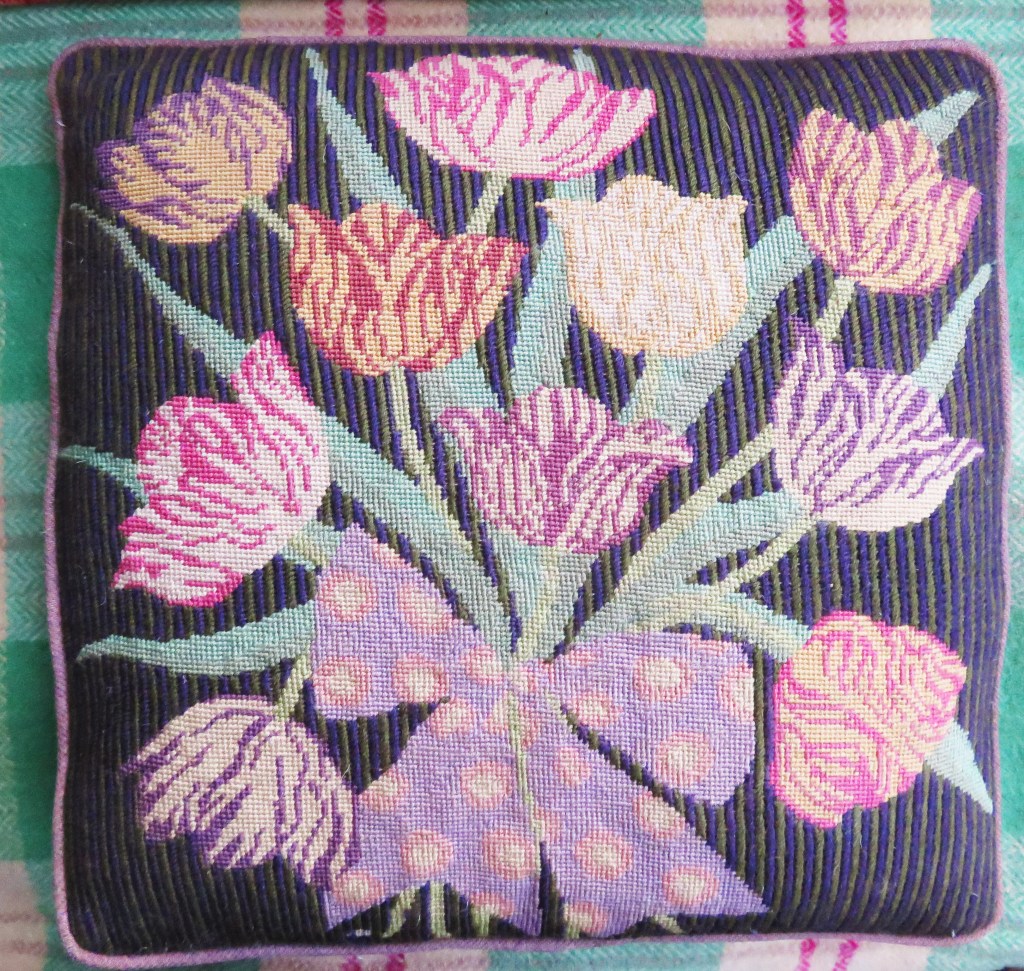
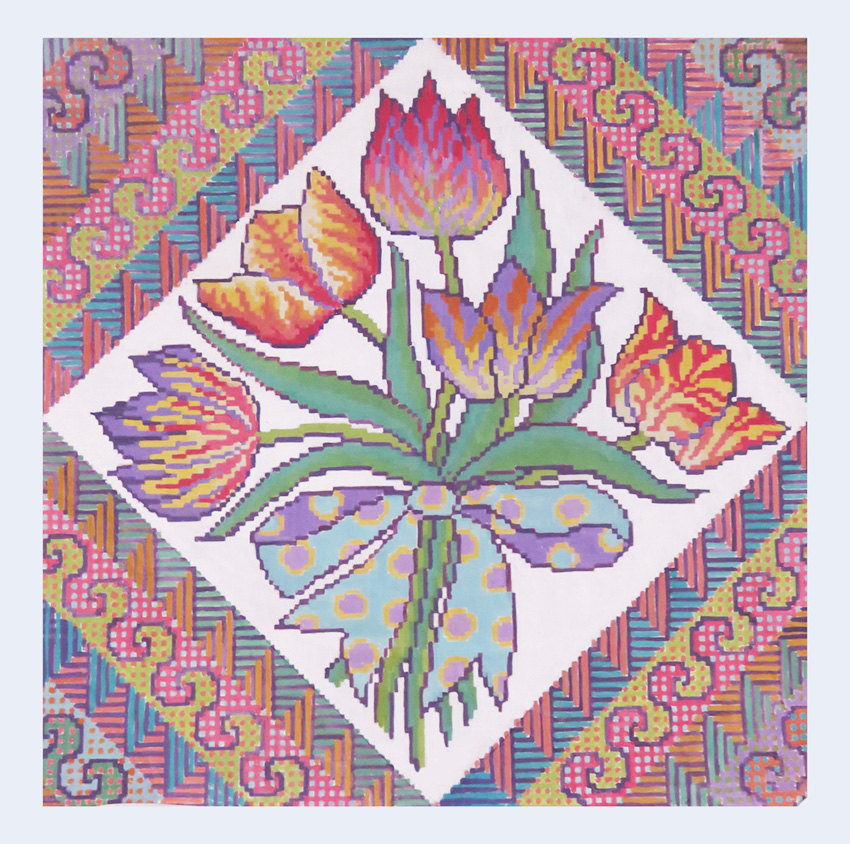
And my latest canvas work design for Ehrman Tapestry, a version of the Vintage Topiary Bird used for the front cover of the book. I designed this especially for the company to make a kit of this design to celebrate the exhibition…. I will keep the post about making it until later.

And at last I am selling the book from my Shopify site ( QR code below). Above is the flyer for the Hidcote exhibition that gives access to more information into to all the works contained in the book. But best of all in the first week of the show, my first package of books and a giclee print ready to be posted.

HIDCOTE REVISITED: NEW EXHIBITION

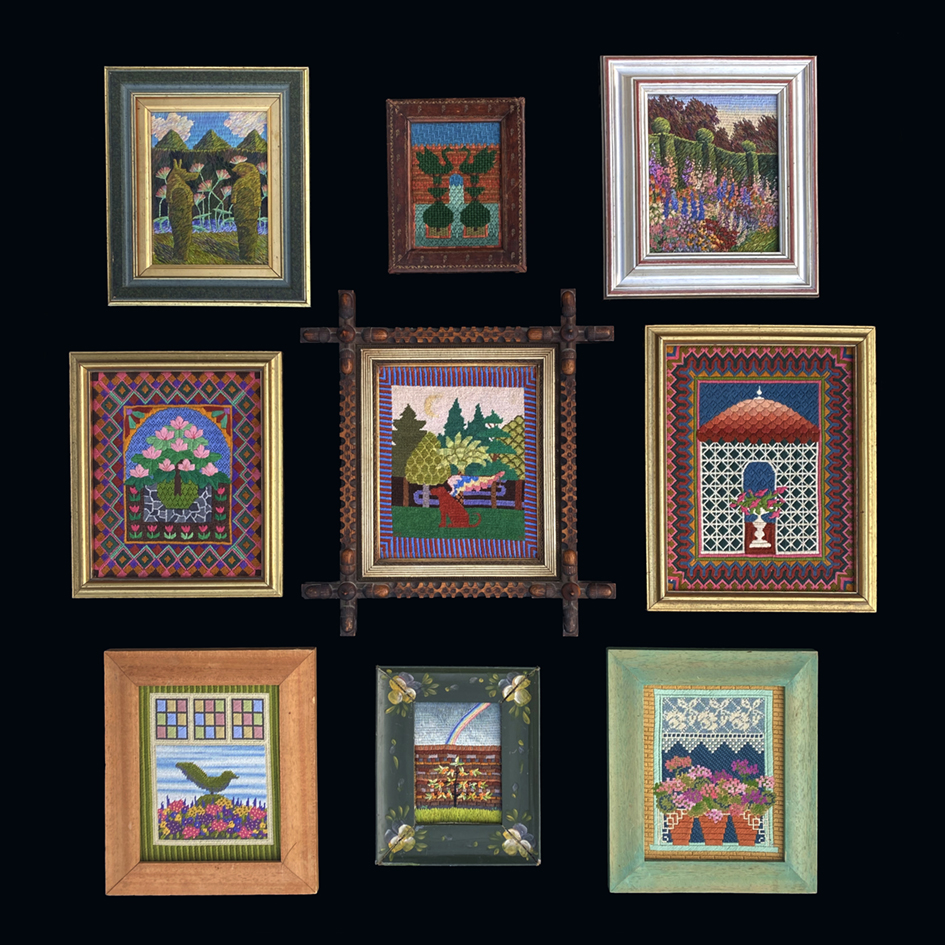
Invited to exhibit my embroideries at Hidcote Manor, a National Trust Garden, in April 2025, I immediately thought of my first visit in the 1970’s; I had just started to embroider, and the effect that it has had on my stitched work ever since. Above is a small selection of my first-ever embroideries that were inspired by my delight and fascination with gardens and flowers.

I stared with basic canvas work and enjoyed the restrictions imposed by the strict stitching and its filling-in-until-you-finish discipline. I was designing pictures in order to learn to embroider my ideas.

It was after visiting Hidcote that I started to draw gardens, mostly details of planting and of course, topiary. I took photographs and scribbled down notes to remember colour planting and topiary shapes to develop into embroideries. Now I realise that this was the time when I found my own way of stitching by using blended colours and really just stitching my drawings. I always scribbled drawings, took too many photographs and made notes ready to be tranformed into working drawings, and this is how start my work now, almost 50 years later.

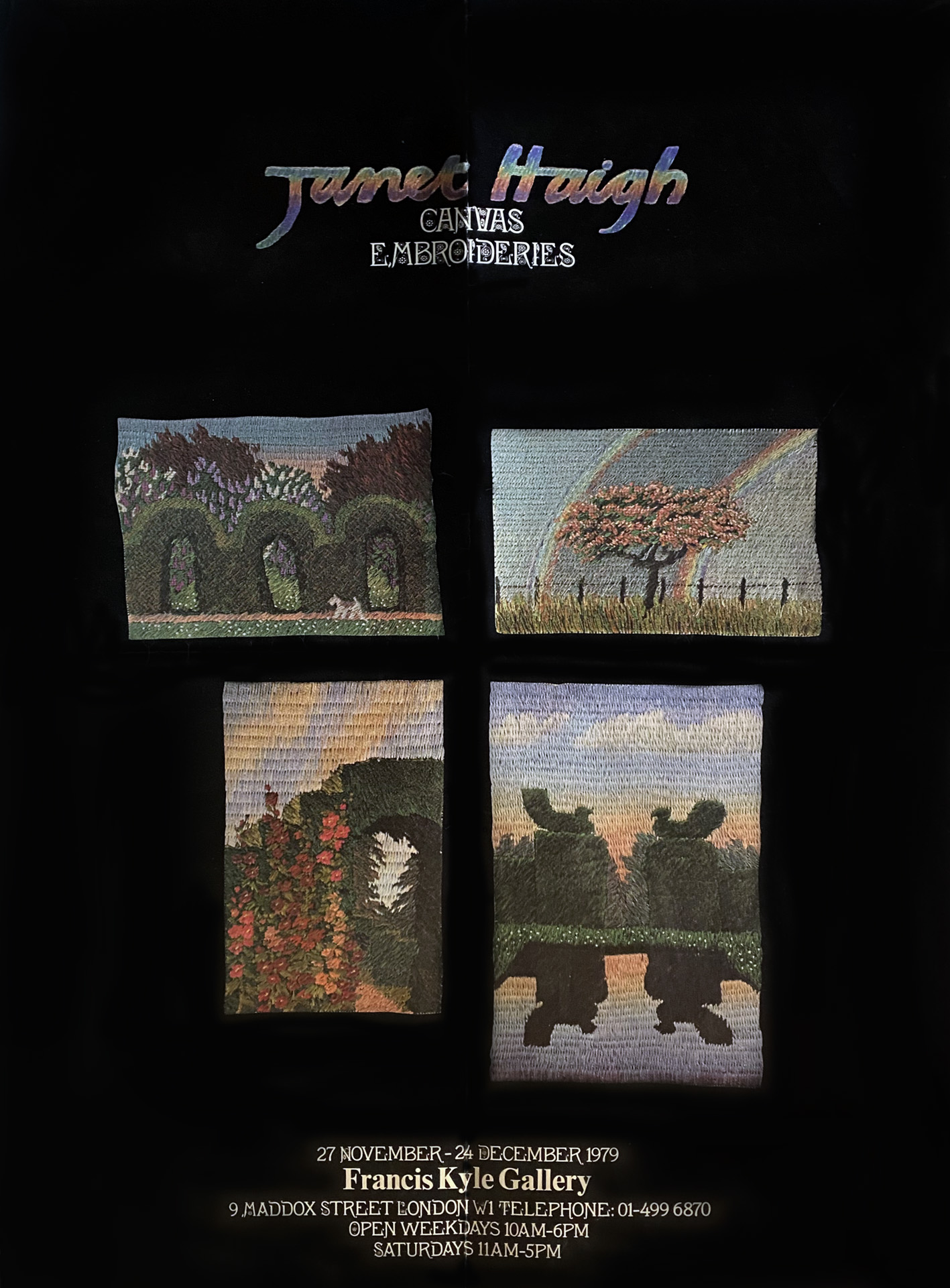
Above a rather creased poster from my first one person show at Francis Kyle Gallery in 1979, showing my small scale canvas embroideries. My early fascination with topiary is evident.

Oddly I do not actually like the idea of strictly clipped hedges, specially when trimmed into animal and bird shapes, but this feeling completely disappears when I actually see it for real. I find this ambivalence really useful and for me it provokes new ideas; why bother to make anything that holds no meaning, mystery or is simply a puzzle for you to try to solve? But mostly I am delighted by the sheer absurdity of it. Why do we tether bird-shaped hedges to heavy domes of yew – to stop them flying off?

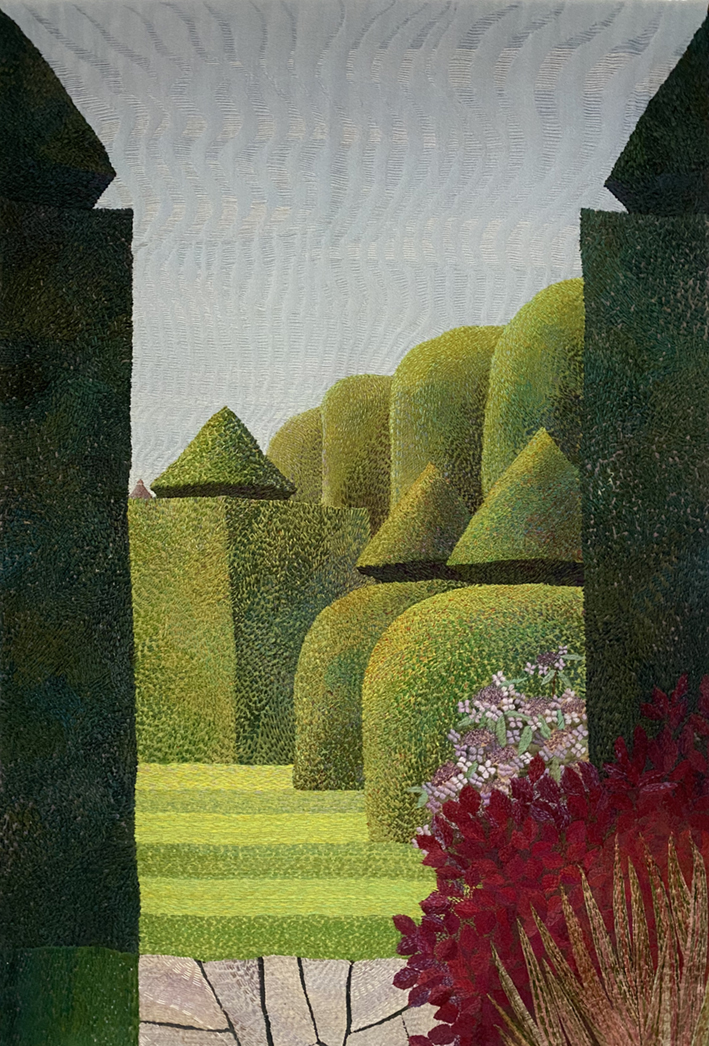
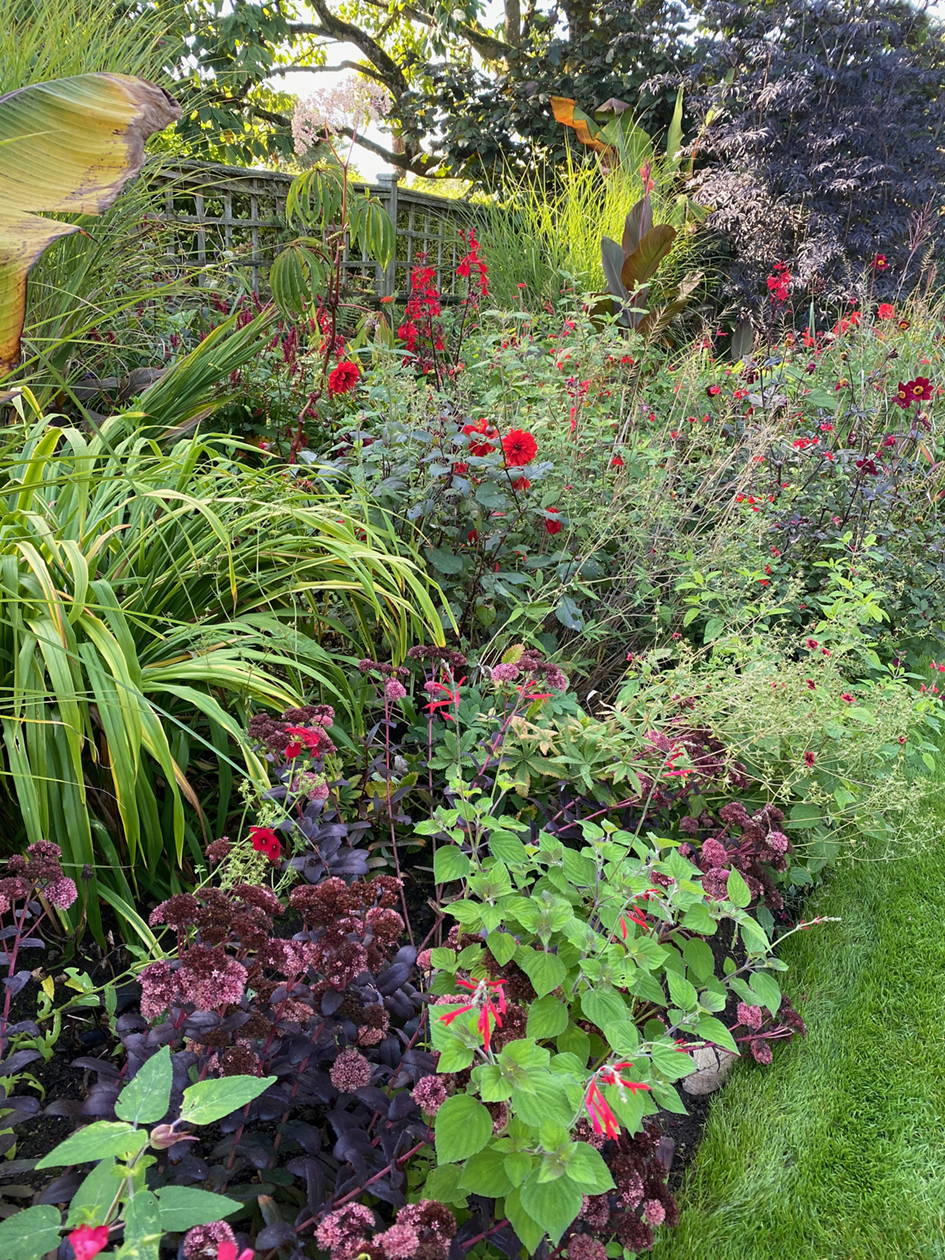
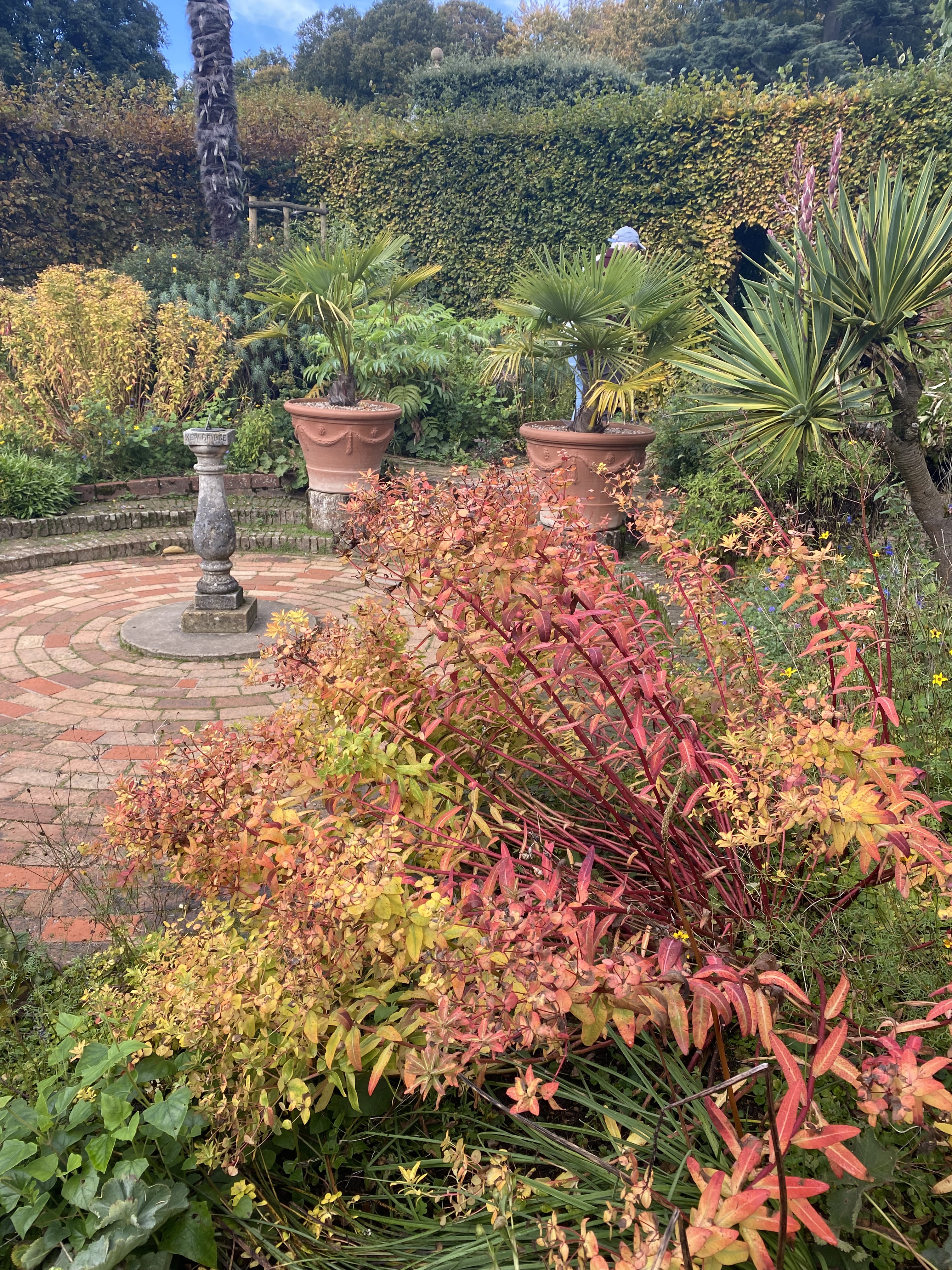
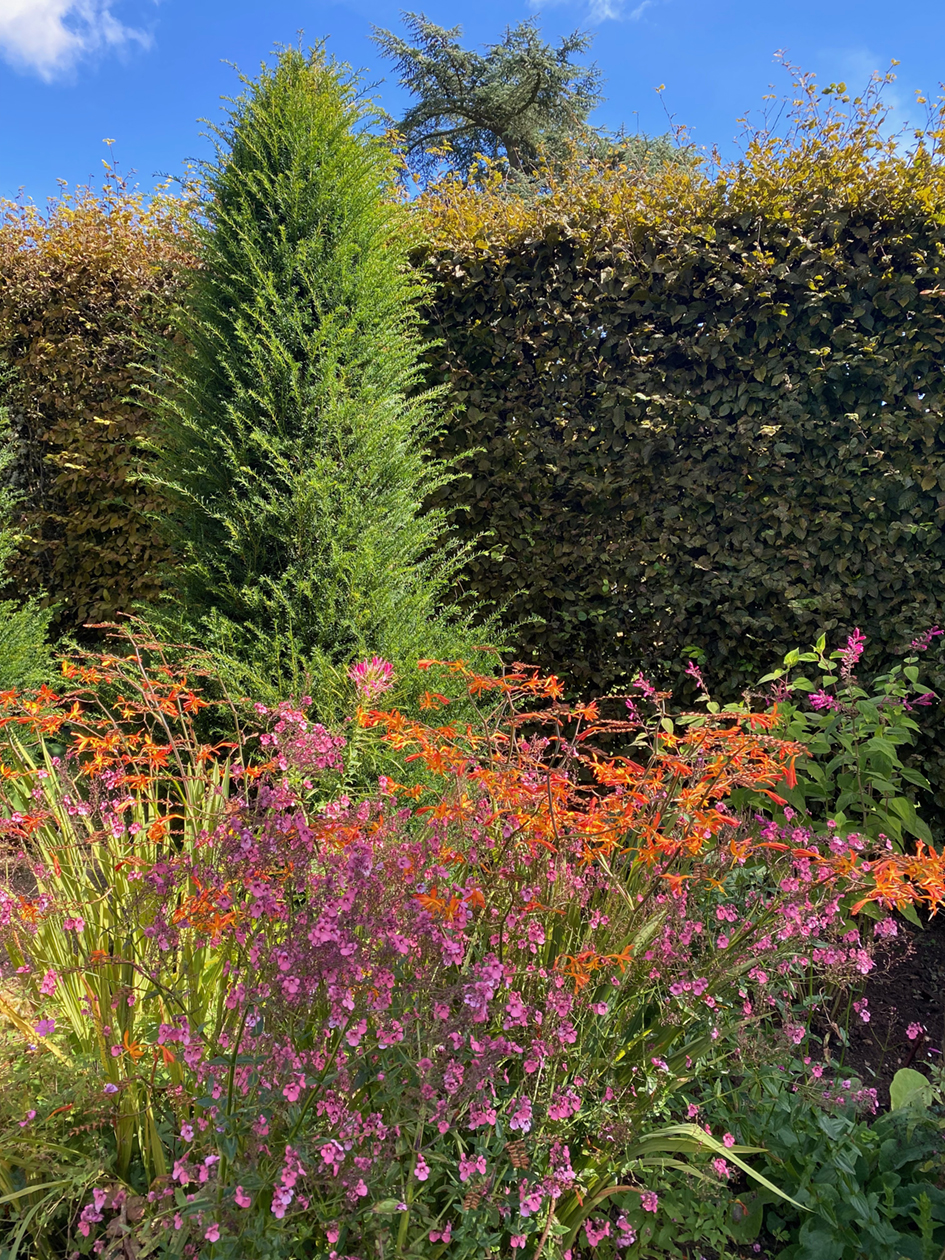
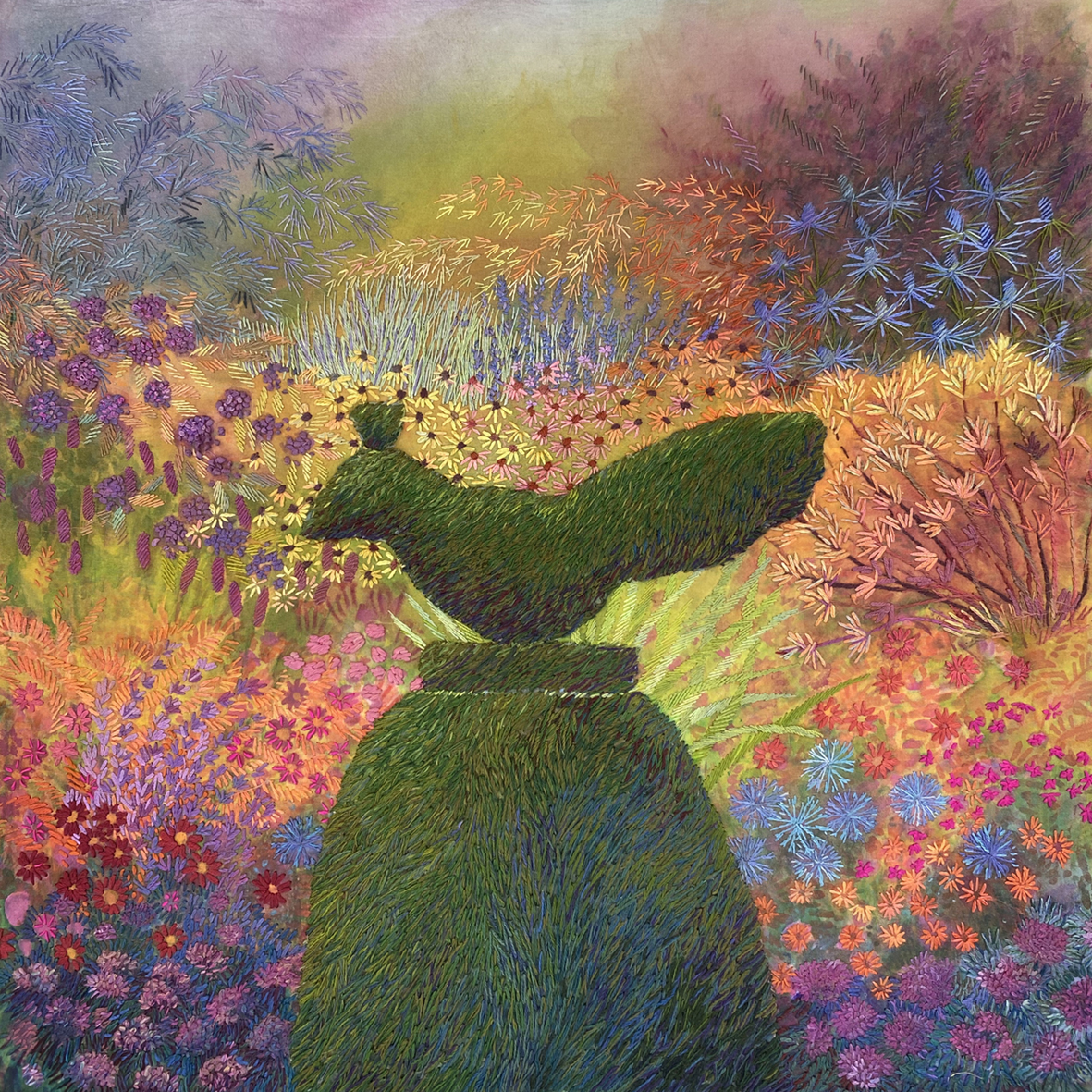
And I have continued to embroider the topiary figures that are often seen in grand gardens. Above is ‘Great Dixter’ a small silk embroidery circa 1980, that was very inspirational in making new pieces for this exhibition. Right is ‘Lytes Carey’, another National Trust garden, this is made mainly with simple large running stitches in woollen yarns onto a wool ground for a big woollen panel, in 2001. I always enjoy seeing the dense green walls of hedges surrounding an abundance of flowers, as seen below on my several visits to Hidcote in 2024.


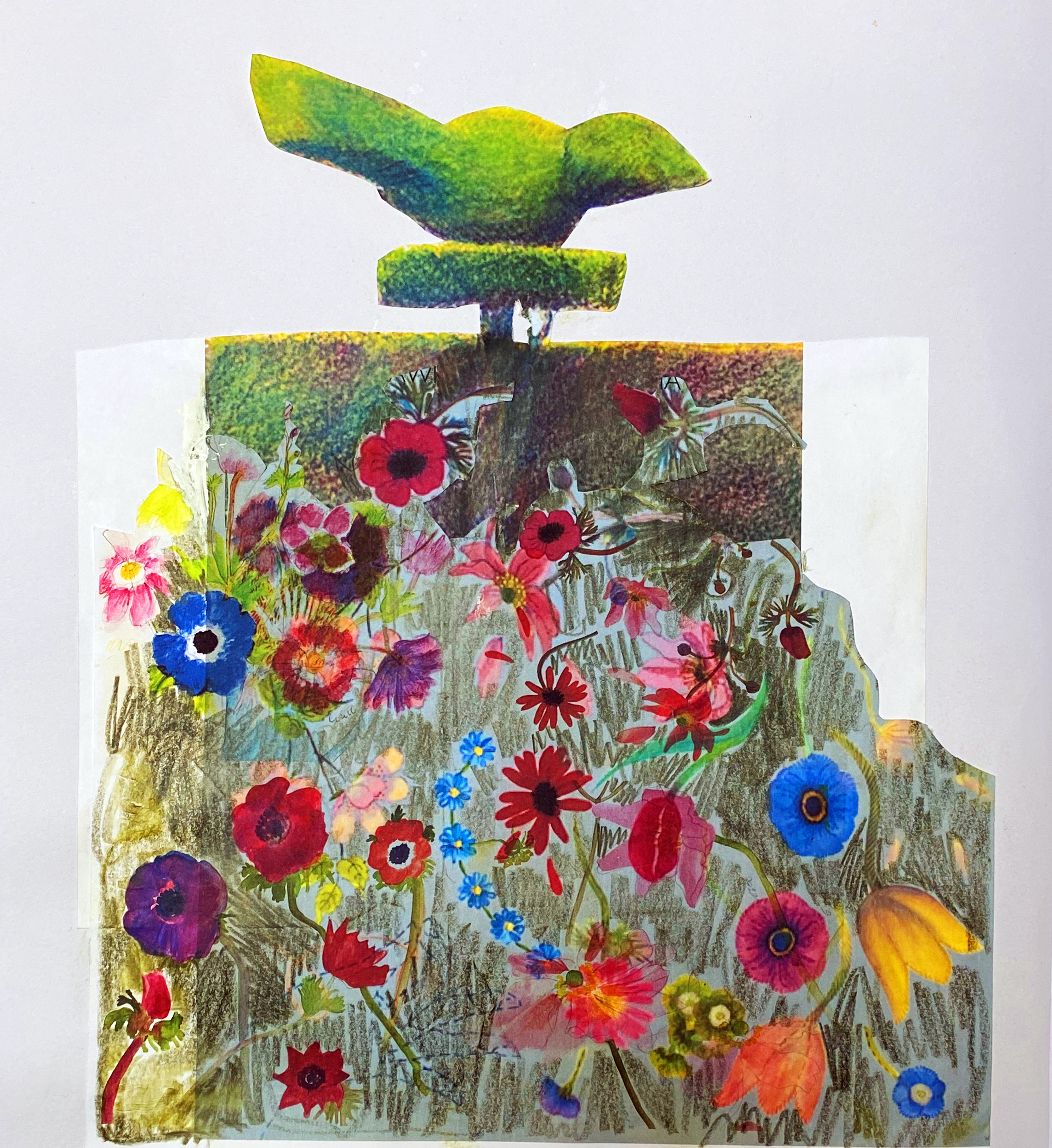
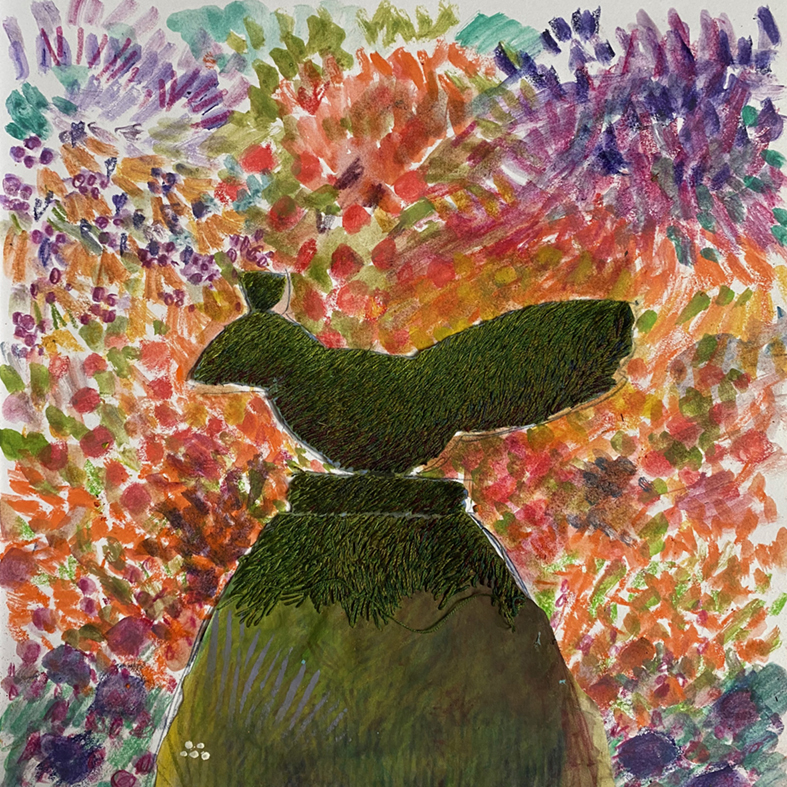
Insired to make new works for the exhibition, back in the studio I combined different drawings, prints and photograps of several aspects of the garden’s abundance and used some old stencils and wonky photocopies that had been over-printed with my embroidered flower images. From this I developed a collage from shoji paper and stitched silk. Then found an old photograph of the birds as I can remember them with their crowns as peacocks.

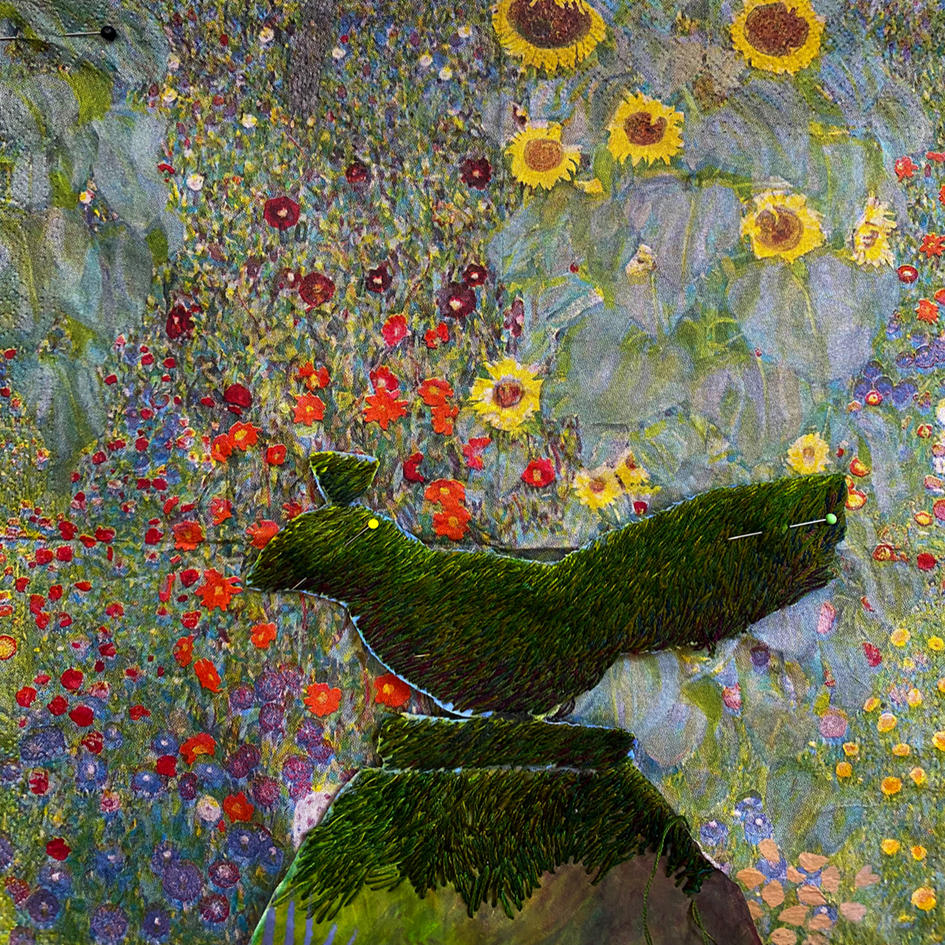
The abundance of planting in the garden beds reminded me of Gustav Klimt’s flowery lanscapes, I began to imagine the plants at Hidcote developed into a wall of flowers. I had bought a packet of paper napkins patterned with a Klimt garden for presents to friends, from a museum in Vienna, but had kept them myself. I took one and pinned it to my studio wall, with the other half formed ideas.

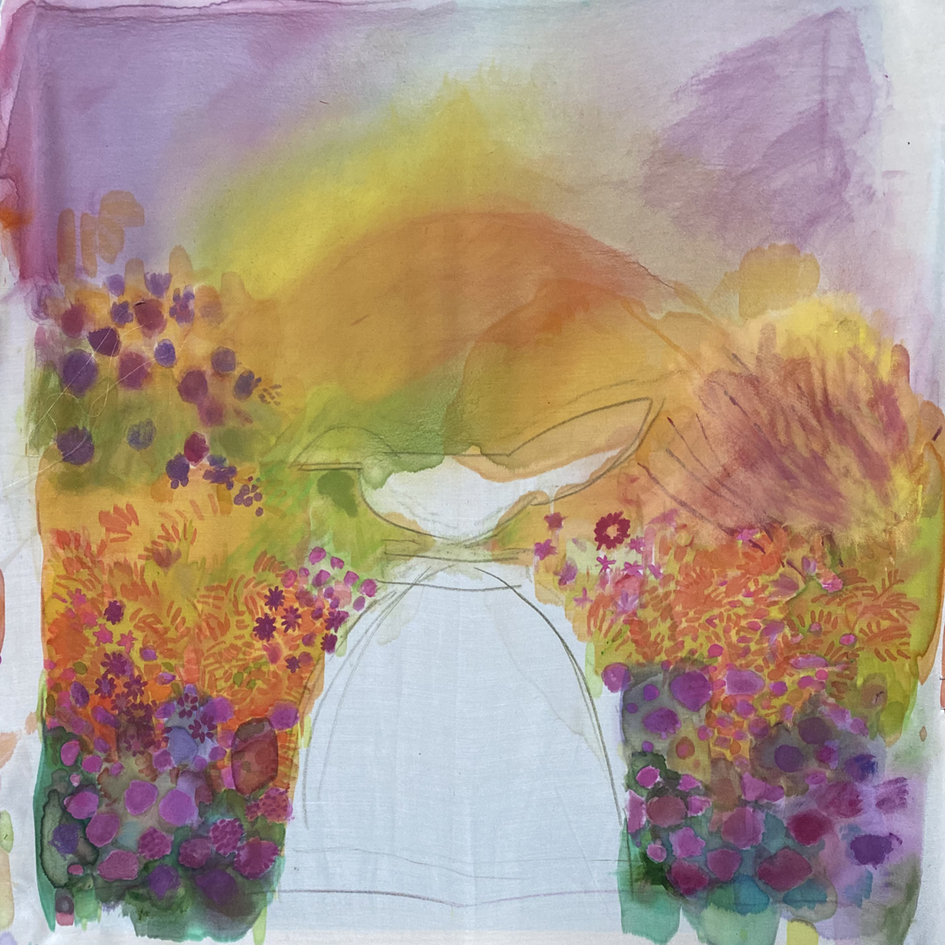
Stages in the inspiration: designing, drawing, dyeing and stitching my homage to Gustav Klimt. I stitched a bird in twisted silk thread on a fine silk ground, then painted dye onto another silk ground adding many of the flowers and leaves, found in my photographs, to make the flower wall. Eventually I stitched the finished bird into postion.

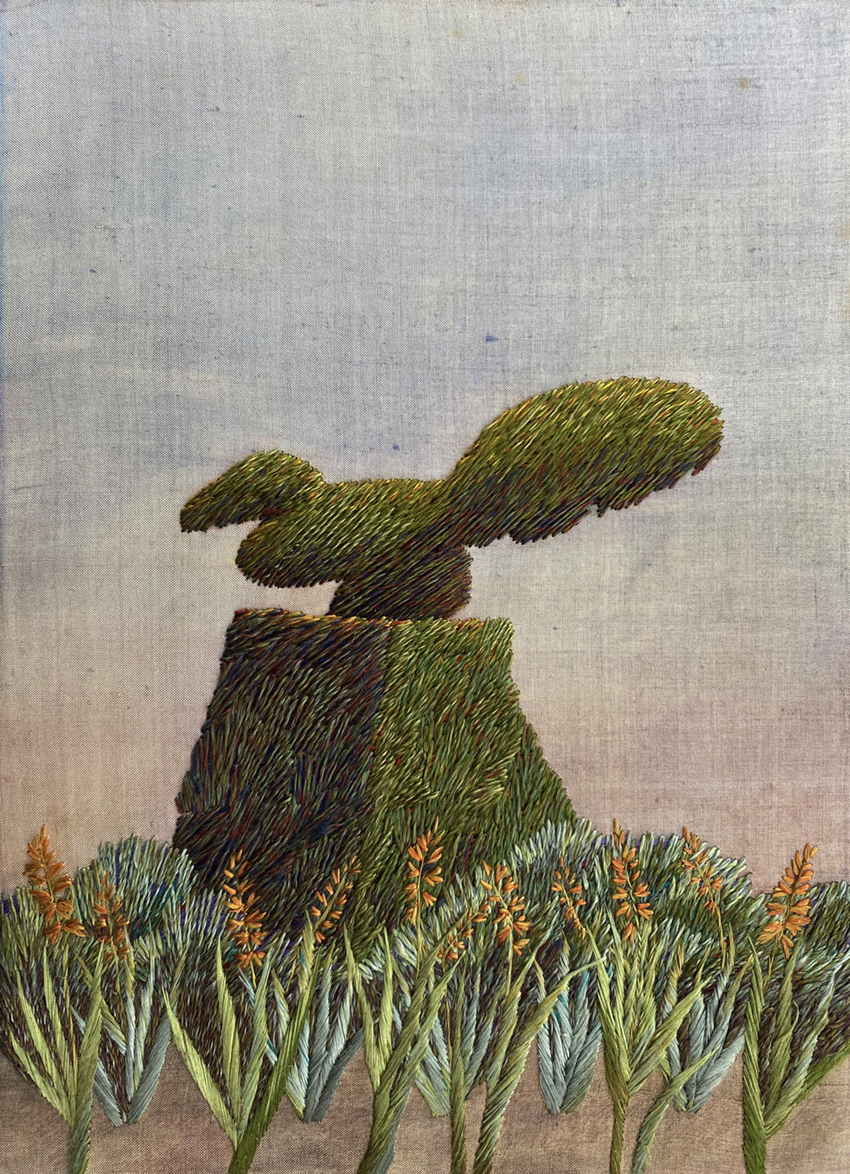
The finished ‘Vintage Topiary Bird’ has become the front cover of the picture book/catalogue that I have produced specially for this exhibition. It has just been delivered to the publishers in time to be printed and for sale at the start of the exhibition Inspired to Stitch: Hidcote Revisited.

my 1960’s fashion sketch book

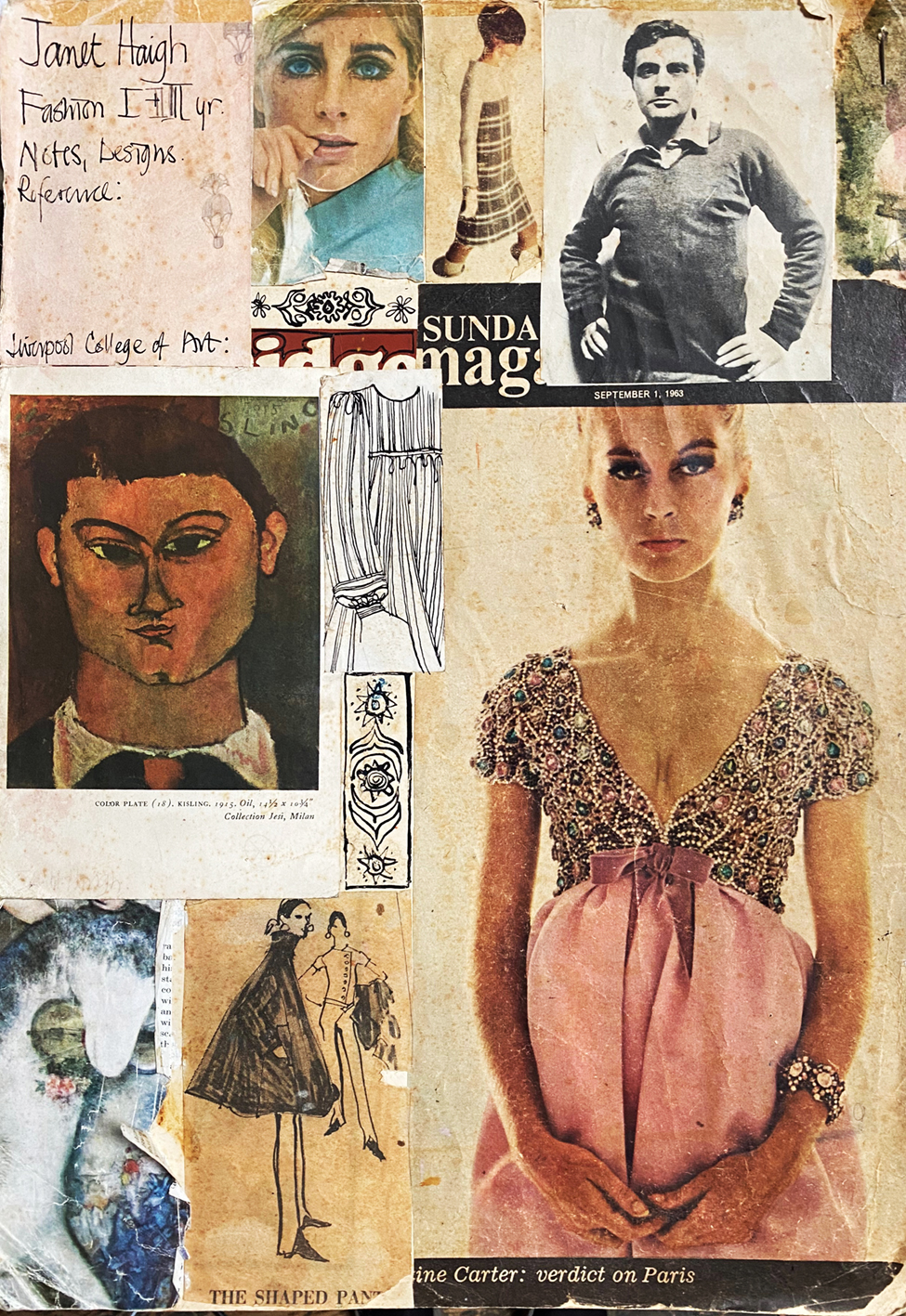
The cover of my late 1960’s sketch book – says it all!

Invited to conduct a week long course of drawing flowers and then to develop the drawings into a small sketch book at Court House Farm in early June, when the cutting garden flowers are blooming. I checked out my collection of sketch books/ visual research journals (whatever they are currently called) I have kept all my research books throughout my working life.

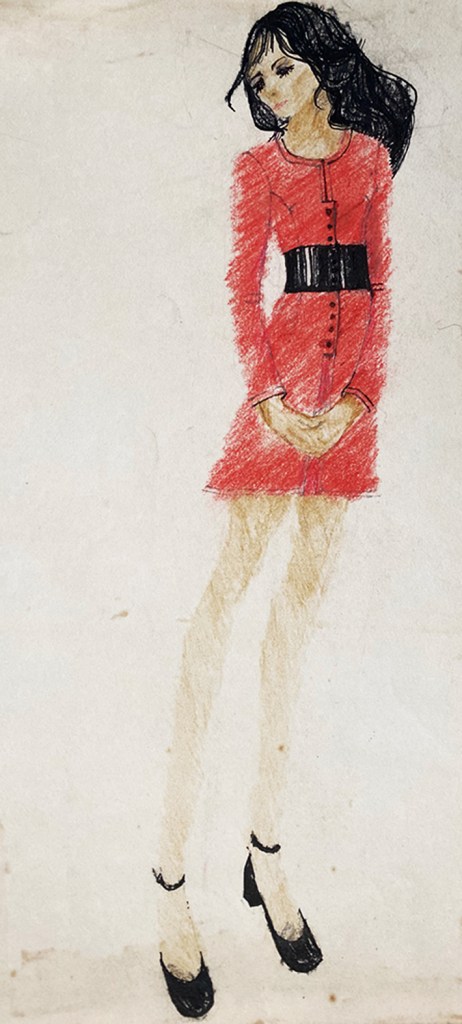
then I unearthed my first Liverpool College of Art sketch book circa 1968 – and this cover still looks like a protrait of my early loves and fashion influences …Modigliani, man and work, Chagall, dresses as worn a la Dusty Springfield; with the faces and poses of models that influenced my design illustrations. And inside???

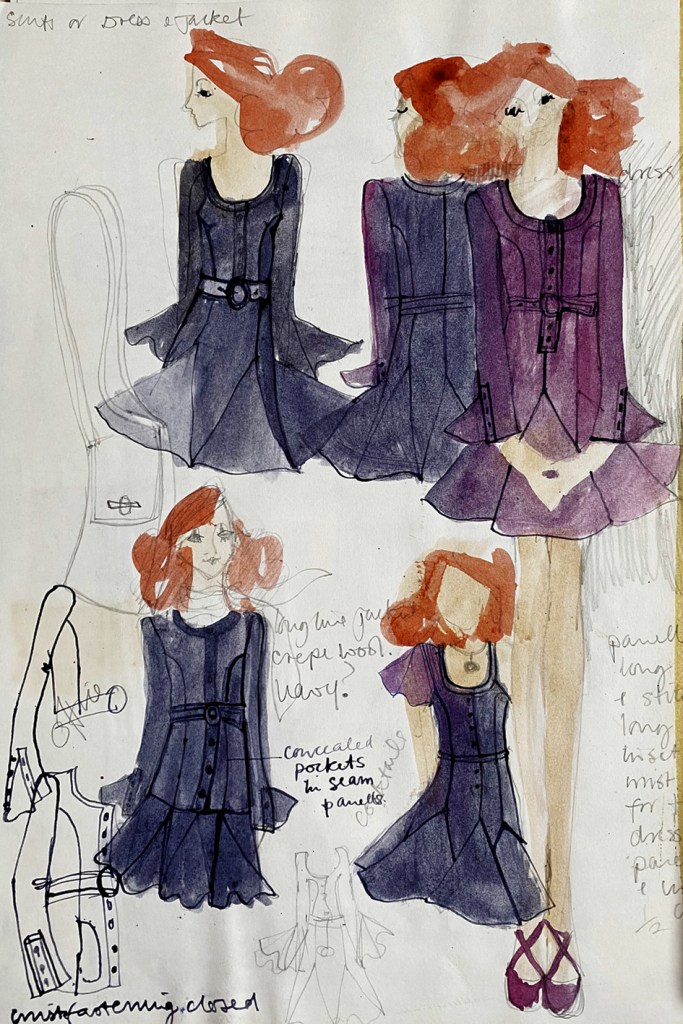
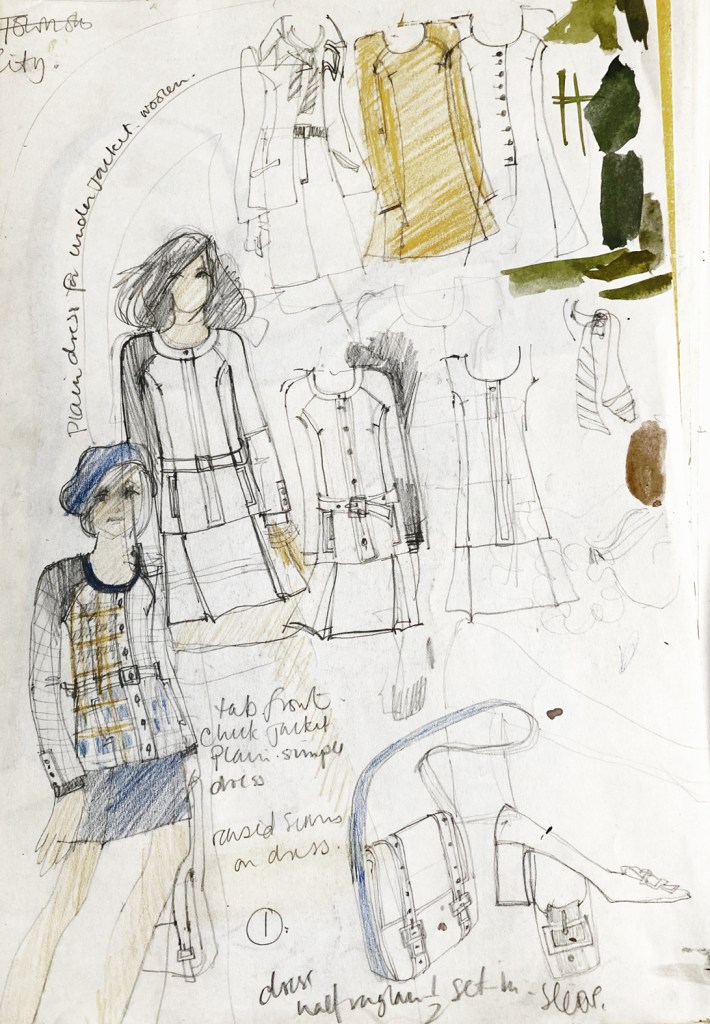
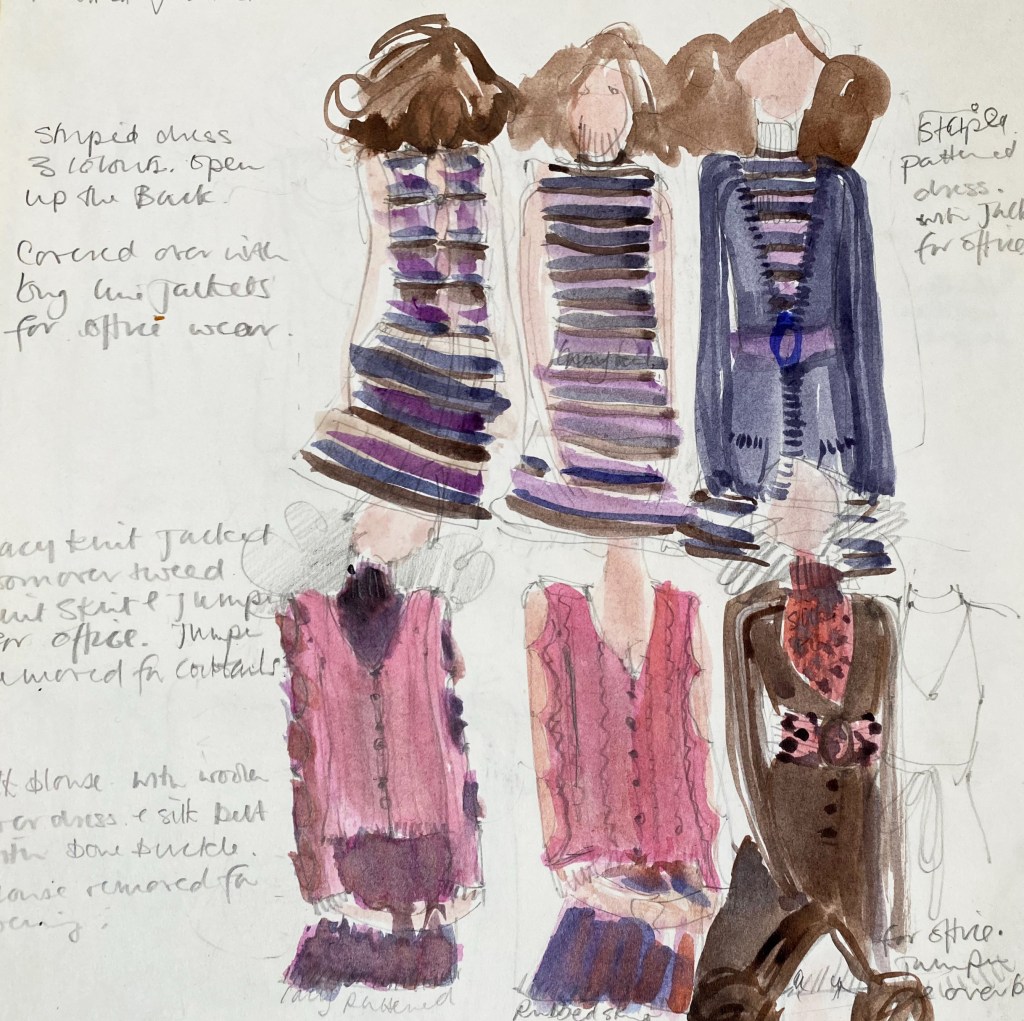
Above are a range of design drawings in pencil and coloured inks that were used to tint black and white photographs. I found that the colours were very subtle, I wonder what happened to them? These are layouts of my designs ready to be illustrated, I think for a competition for RSA (a brilliant organisation that enabled students to develop their practice with scholarships and grants). Everything looks in proportion until you see the legs, they go on forever. We were taught to make drawings that someone else could work the pattern cutting and making, a very good practice as I found out when I did become a fashion designer and illustrator in London in the 70’s. But what is really fascinating, the pages do not look so different to my own recent research books – just a change of subject matter- oh and embroidery!

These pages of flower are from my current research book started in 2023; I am still having a written conversation with myself. Back to the 60’s…….

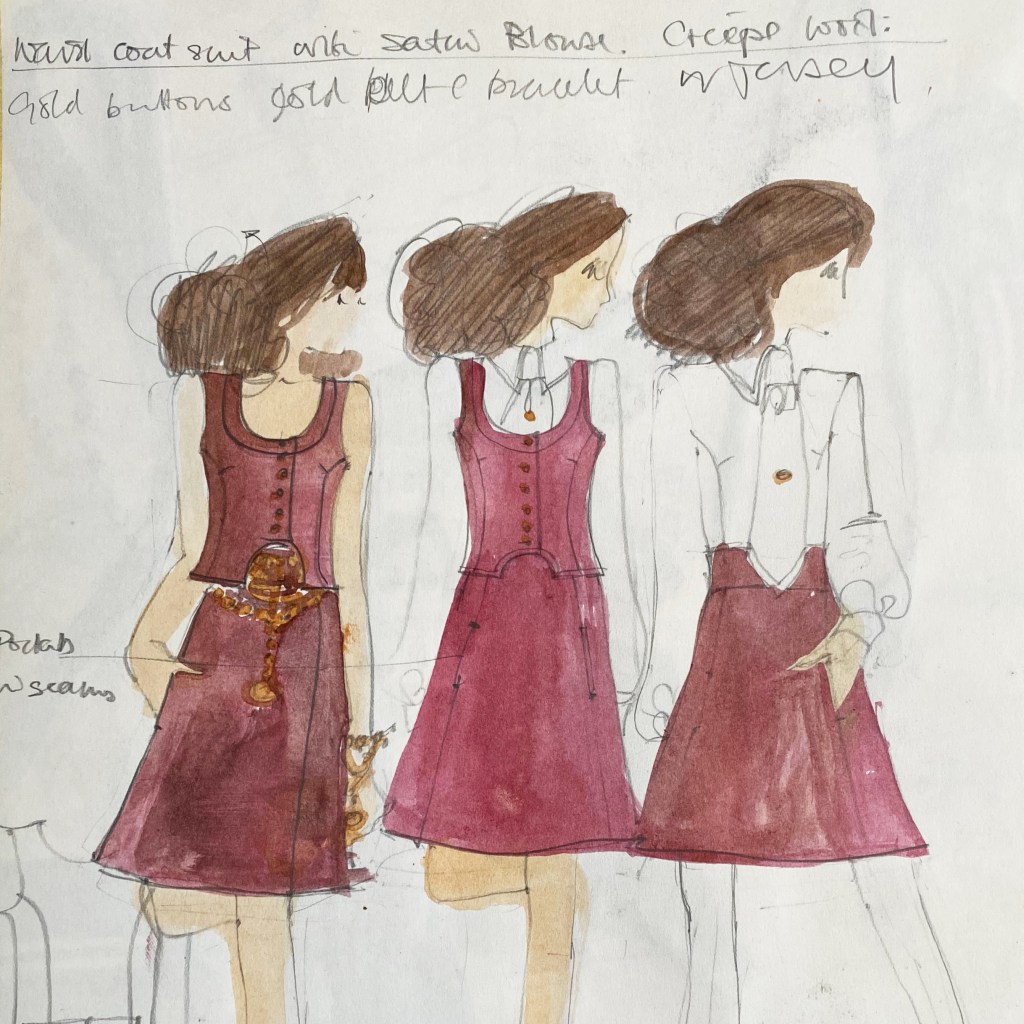
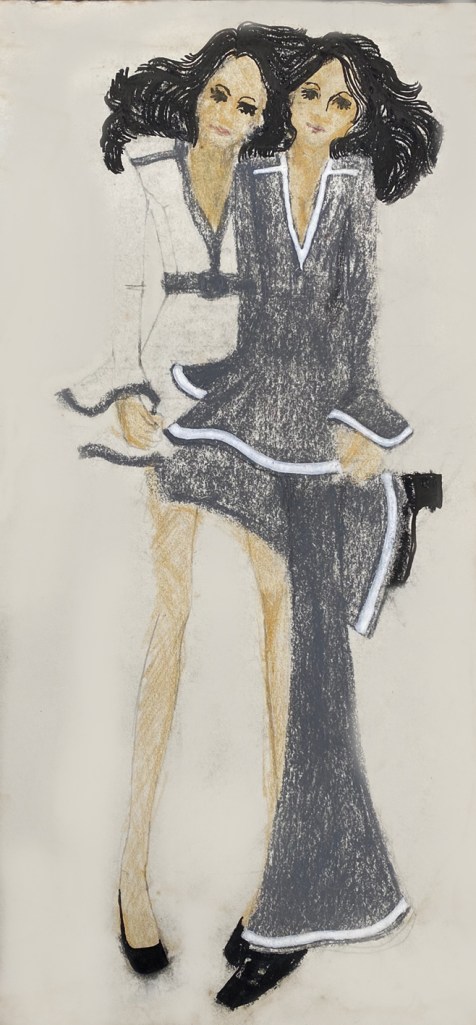
These very neat dresses were designed to be made in Double Jersey, a new innovation that made for easier pattern cutting (but little else as far as I was concernd). I always preffered my designs to be made in fine wool crepe. In the sketches below it appears I was also designing lots of accessories as well! the drawings above use my favourite media of the time – pastel with mapping pen and ink details.

Below are designs that use applique and embroidery – I remember embroidering woollen flowers onto a knitted dress for my final collection and I think this is where I really got the passion for embellishment and embroidery. My first freelance job was making and designing appliqued T shirts for the Mr Freedom in Kensington – the height of London boutique street fashion at the time.

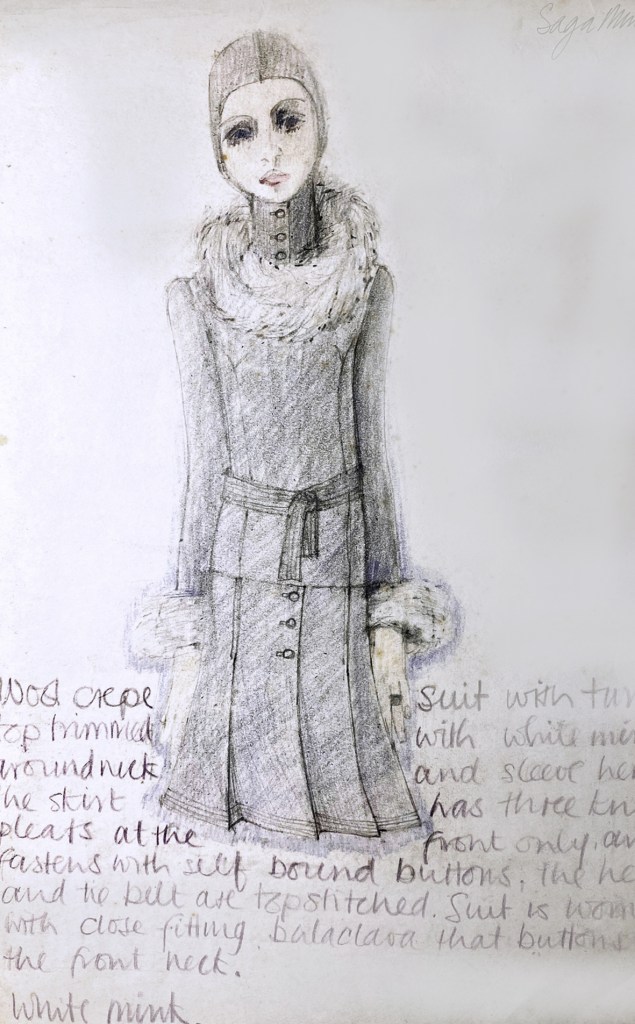
Another sign of the times the Saga Mink competition, ( I did not win – well just how much fur would these designs sell)? The anti fur lobbly was just starting up, but that’s another story. The drawings are in crayon and pencil.

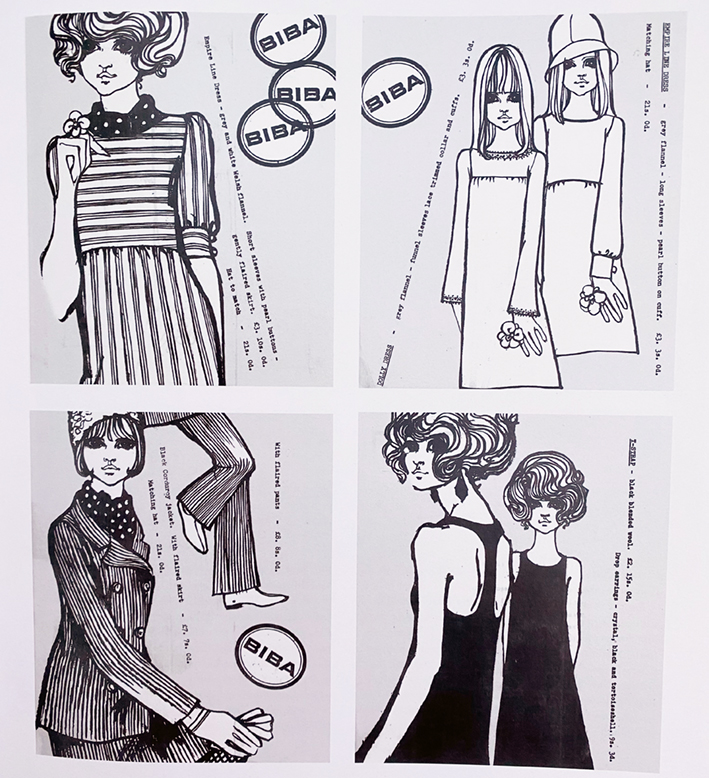
However here you can see the direct connection to the cover of my sketch book and the influence of my favourite fashion designer and illustrator – Barbara Hulanicki the design genius behind the most fashionable shop of the times – Biba .

my badly stitched blanket

I have been invited to exhibit my work at The Welsh Quilt Centre, when they re- open for next year. So I have been carefully choosing pieces to make a cohesive exhibition of the recent Flowers For Our Time, the related Flora embroideries with the collection of bedding, Make it Through the Night.

I realised that the work chosen fell into 2 distinct groups – there are always cross currents and references in any body of work sustained over long periods of time and some of these embroideries are 20 years old! I wanted to make links between them, and decided on a new piece that encompassed the mending broken hearts themes of the bedding with the perennial flower themes.

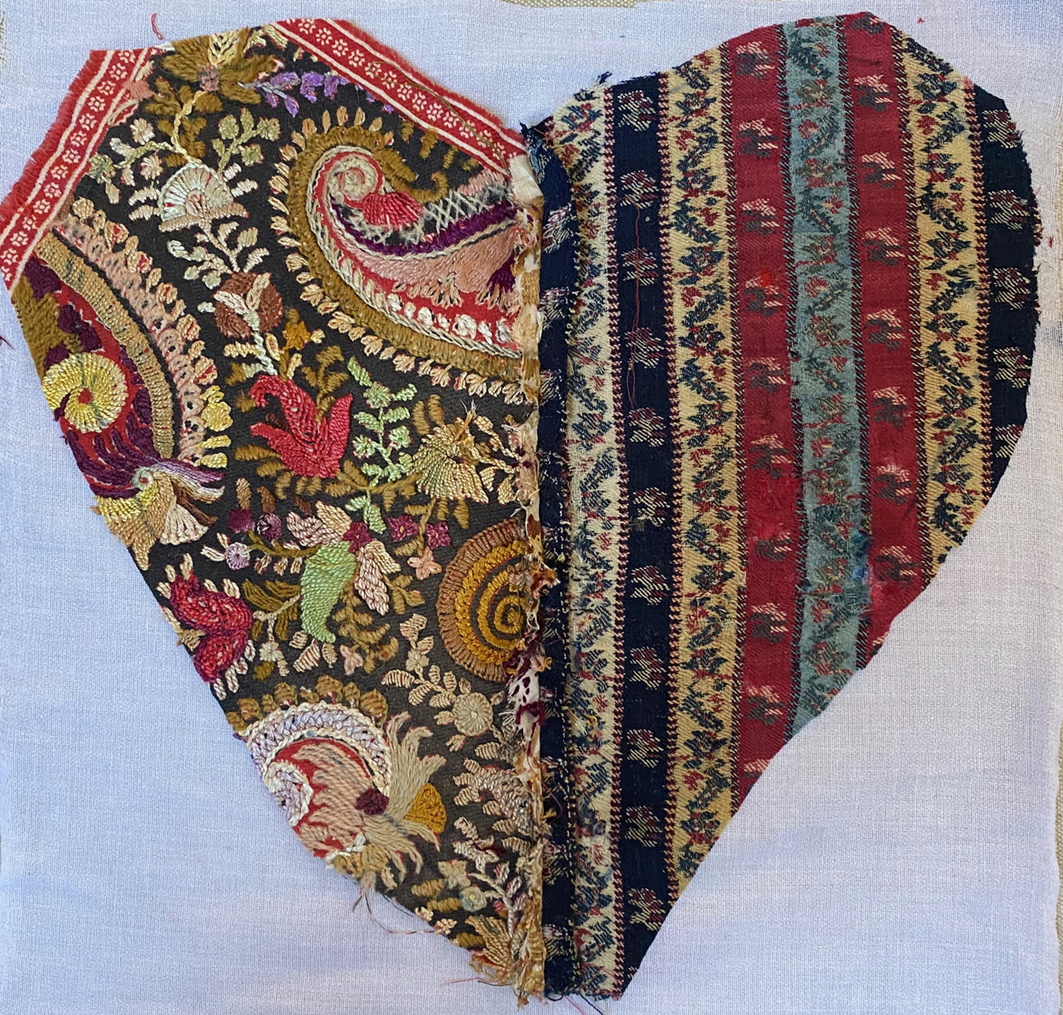
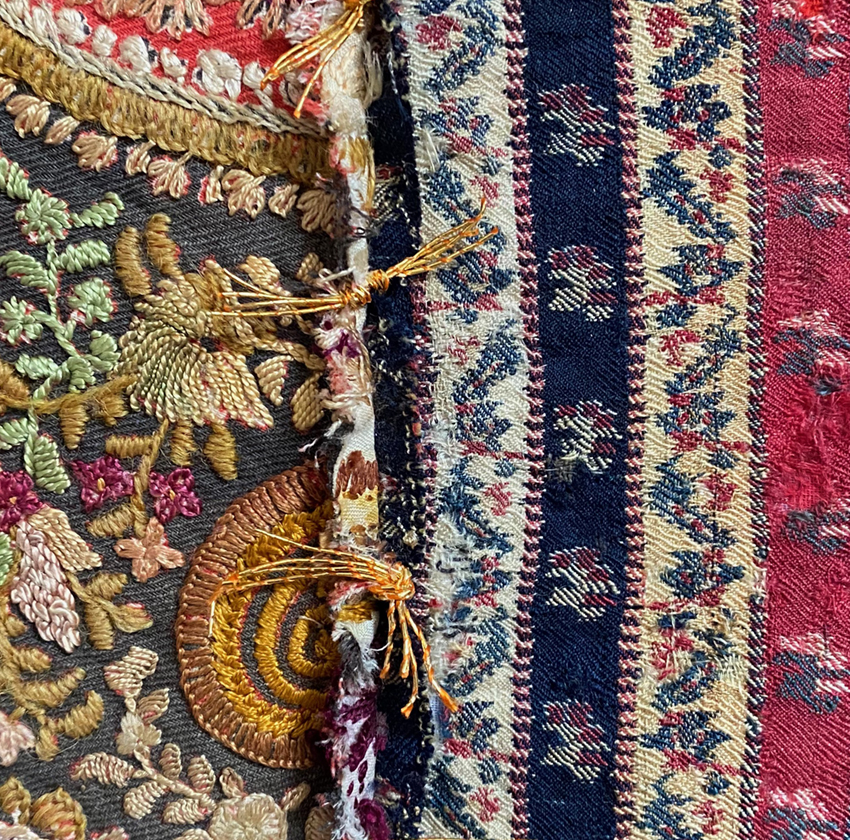
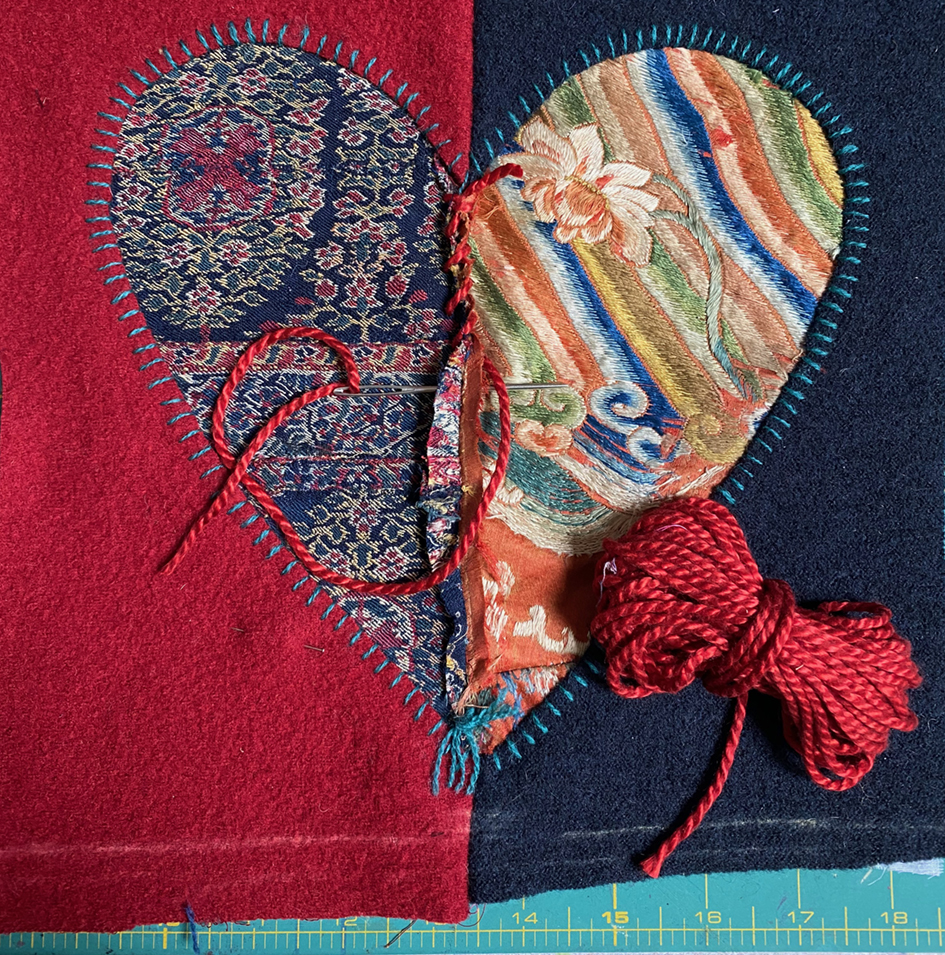
My sacrificed jacket fabrics reconstructed as a heart – the opening page in my sample/sketch book for
“My Badly Stitched Blanket”.

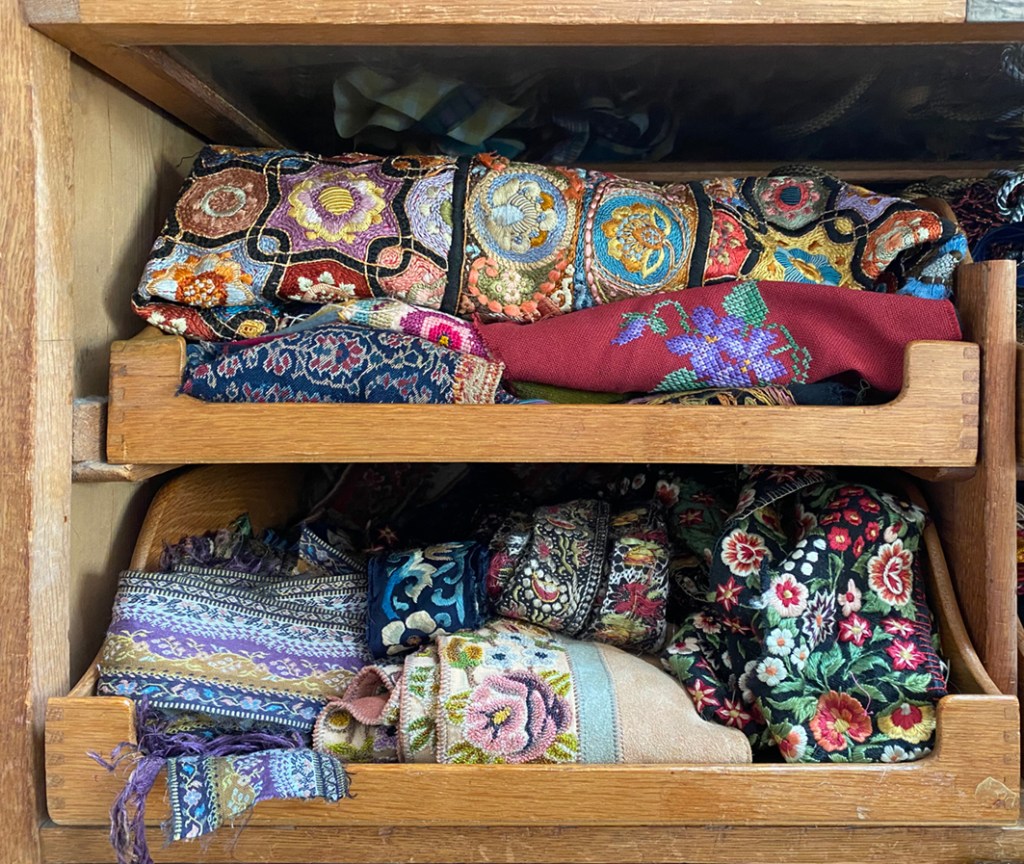
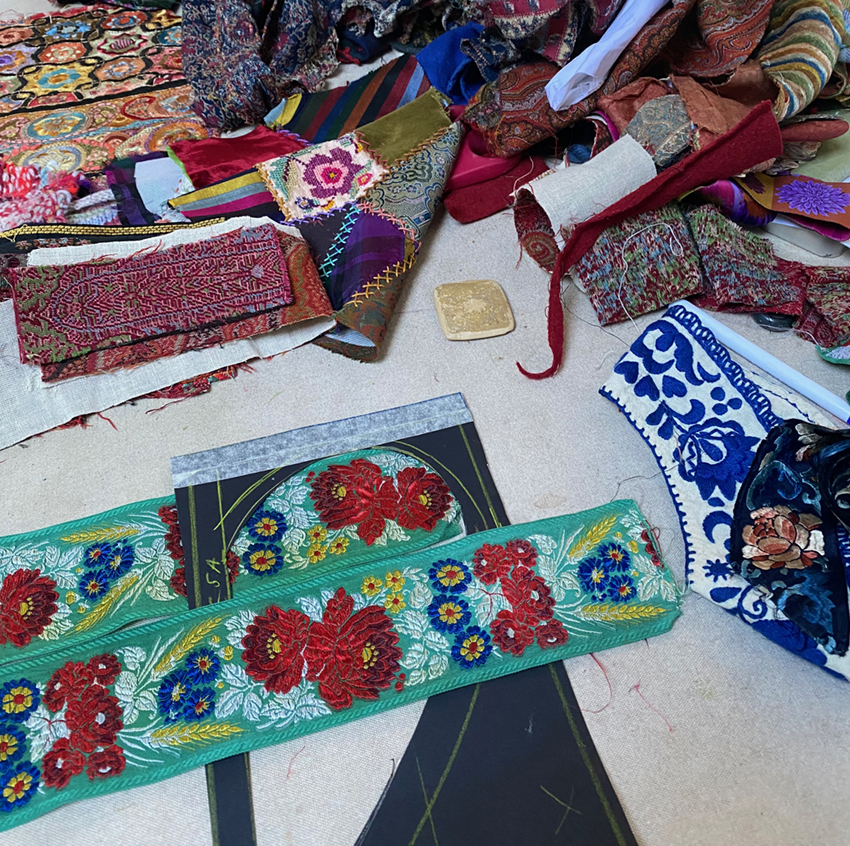
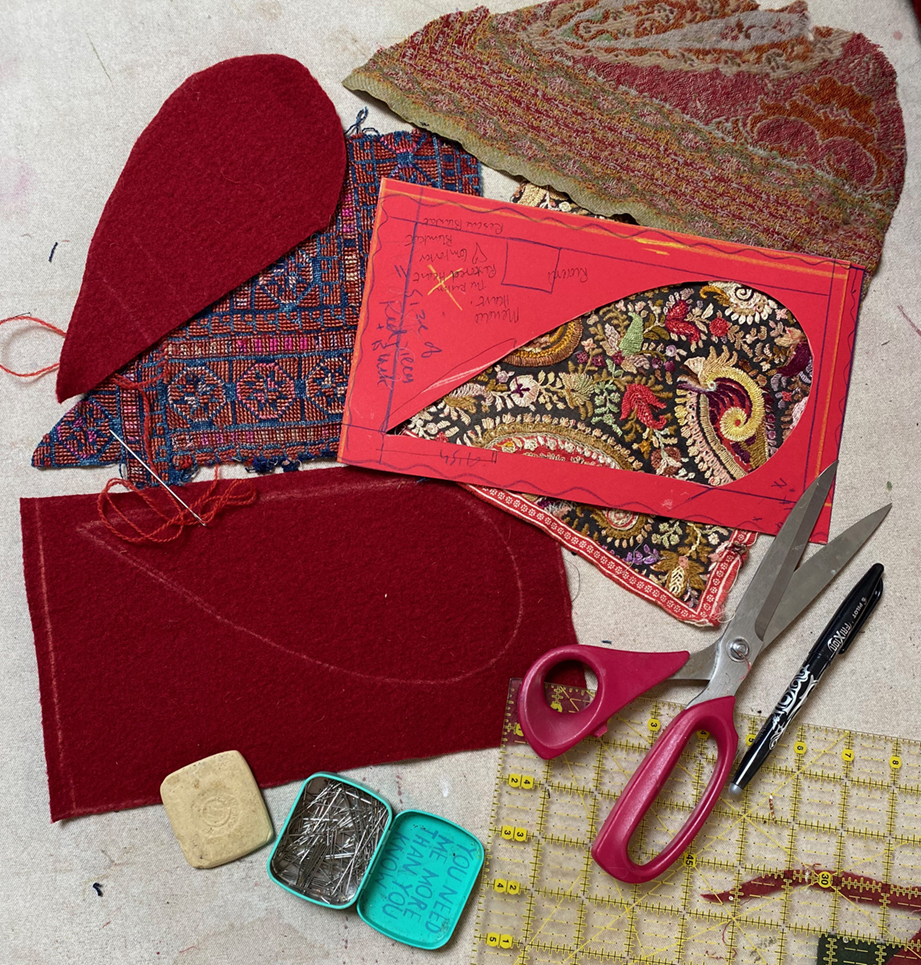
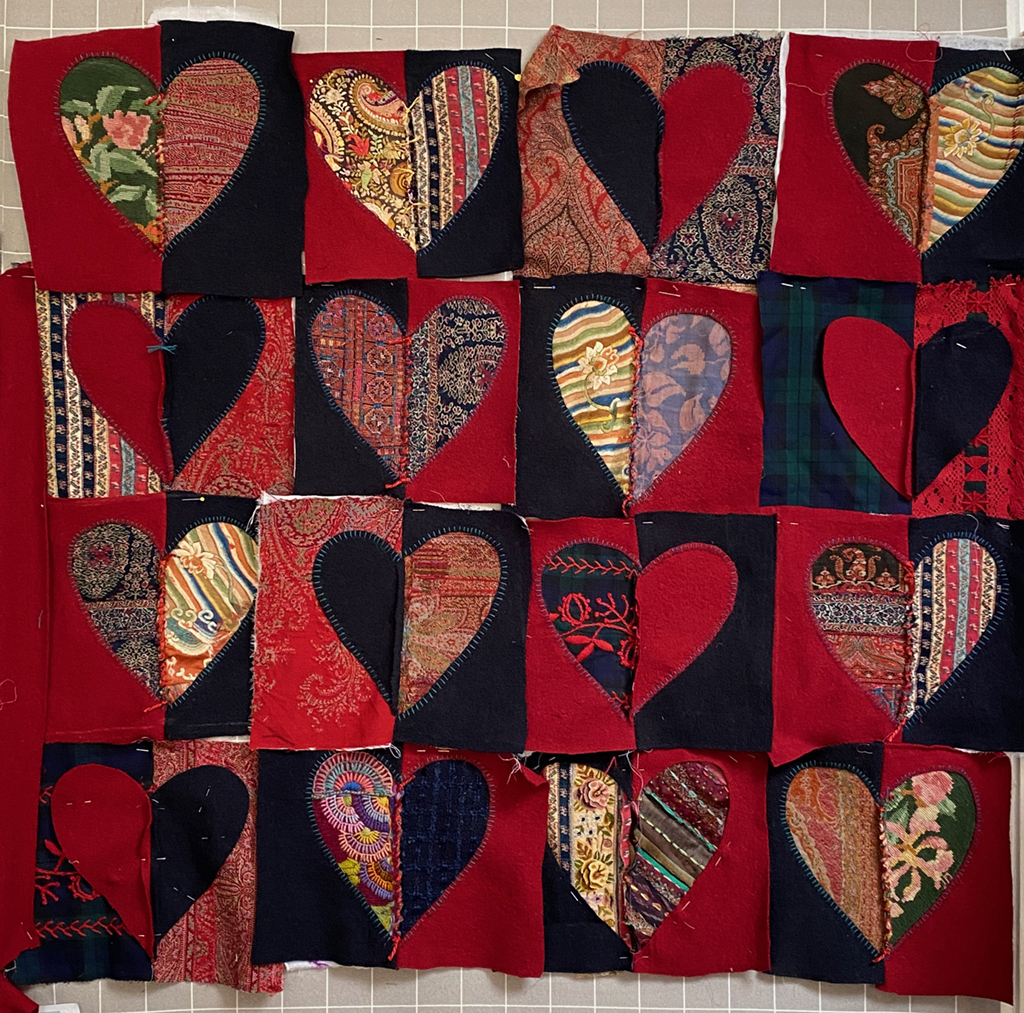
I looked at my studio wall and saw a small group of pinned samples for designs for Ehrman Tapestry company – the rows of split hearts and some fabric scraps that I had wanted to work into new designs. I also thought that it was time to use some of my most beautiful vintage embroidery scraps that I had hoarded for years… I had an idea to make a blanket – a comfort blanket.

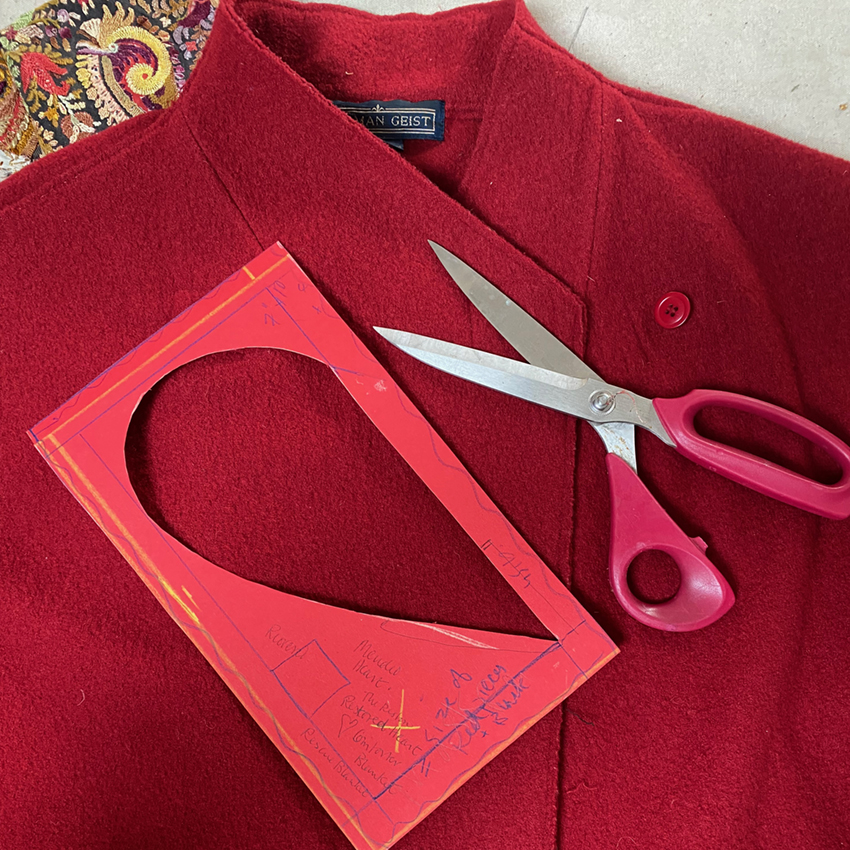
I cut a card template and started to place it over the treasured collected fragments of fine hand woven woollen shawls, silk Chinese robes and European woven ribbons and embroideries. I found my own old un-sold fabric design samples (from when I was a free-lance designer for an international fashion fabrics company). I thought I could use all of them all together – more is more!

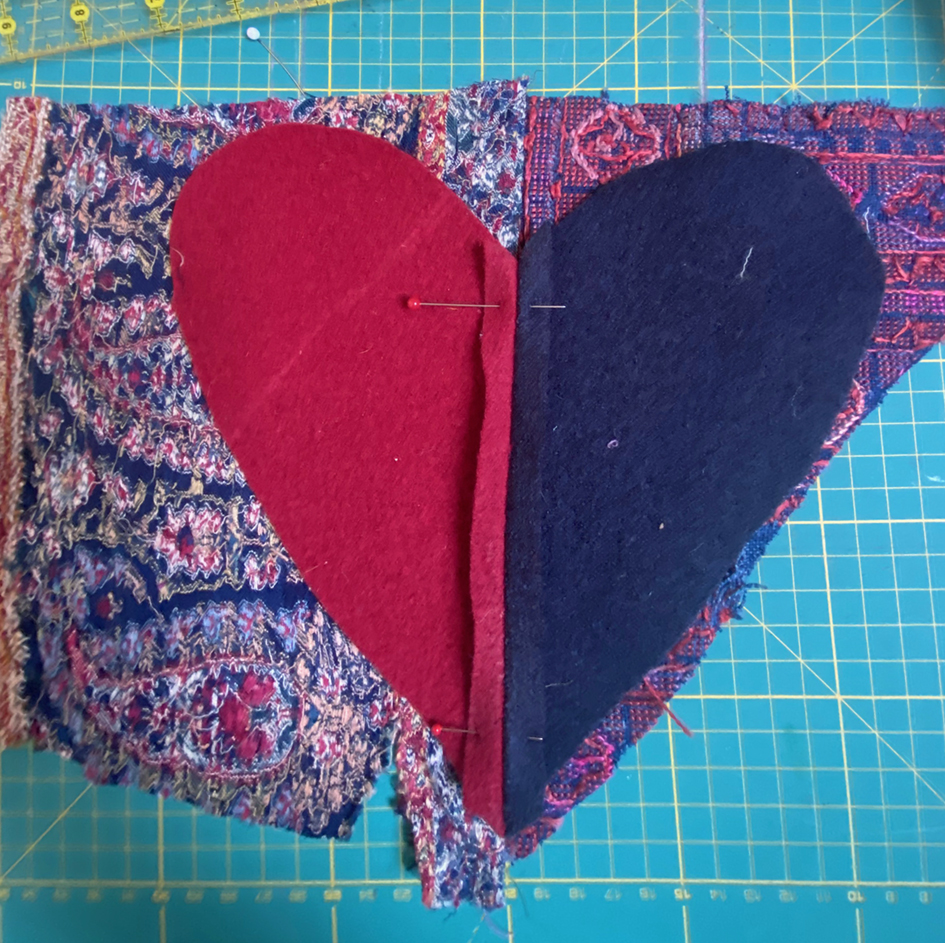
Choosing from my truly delicious and damaged fabrics, I cut out an oversized heart shape, and quickly realised that my original idea would look like patterned porridge. I needed to add some strong plain contrasts. And this is where the difficult part of this design process really started. I had very 3 old and well loved boiled wool jackets that I didn’t wear anymore I have to admit that I am very attached to my clothes and keep them for years. But the colours were perfect…….

Cutting up the red one was not so bad, it only got used lately for occasional dog walks, and it had suffered from moth. Somehow the idea of setting my treasured vintage and antique fabrics, in new cloth just didn’t seem right. With a heavy heart, and after a few days consideration, I reluctantly unpicked it and started to cut it up for the blocks. This was to be a hand-made quilt and this decision made me consider the work beyond its original purpose by provoking me to consider what it meant for me. It became deep down and personal.

I now wanted to show that this work was a part of my broken and mended hearts theme, which is predominantly red and black embroidery on white bedding, but this was supposed to be a celebration of colour and pattern. Now I was mending, recovering, recycling and rescuing my treasured fabrics and clothes as I had admitted to myself that I was never going to wear or find a better use for them. I couldn’t bring myself to photograph the cutting up of the navy blue Oscar jacket (I have kept half for a pattern – someday).

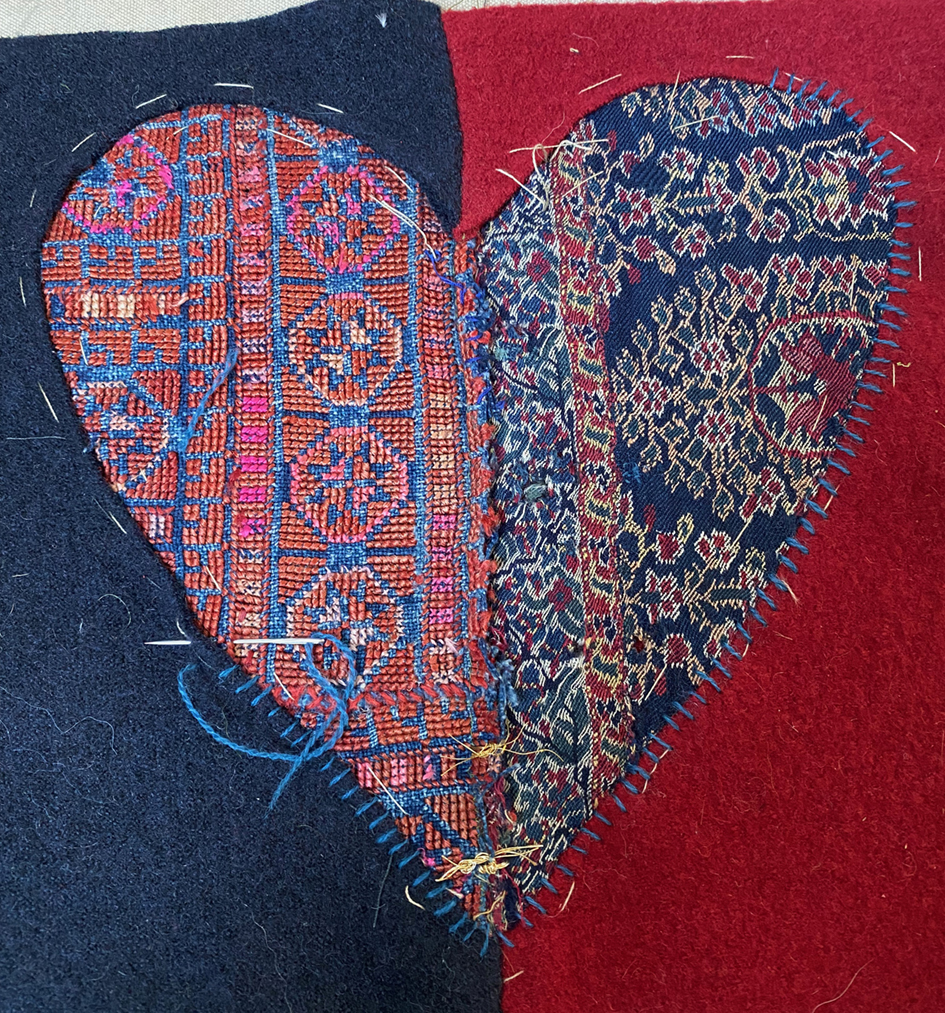
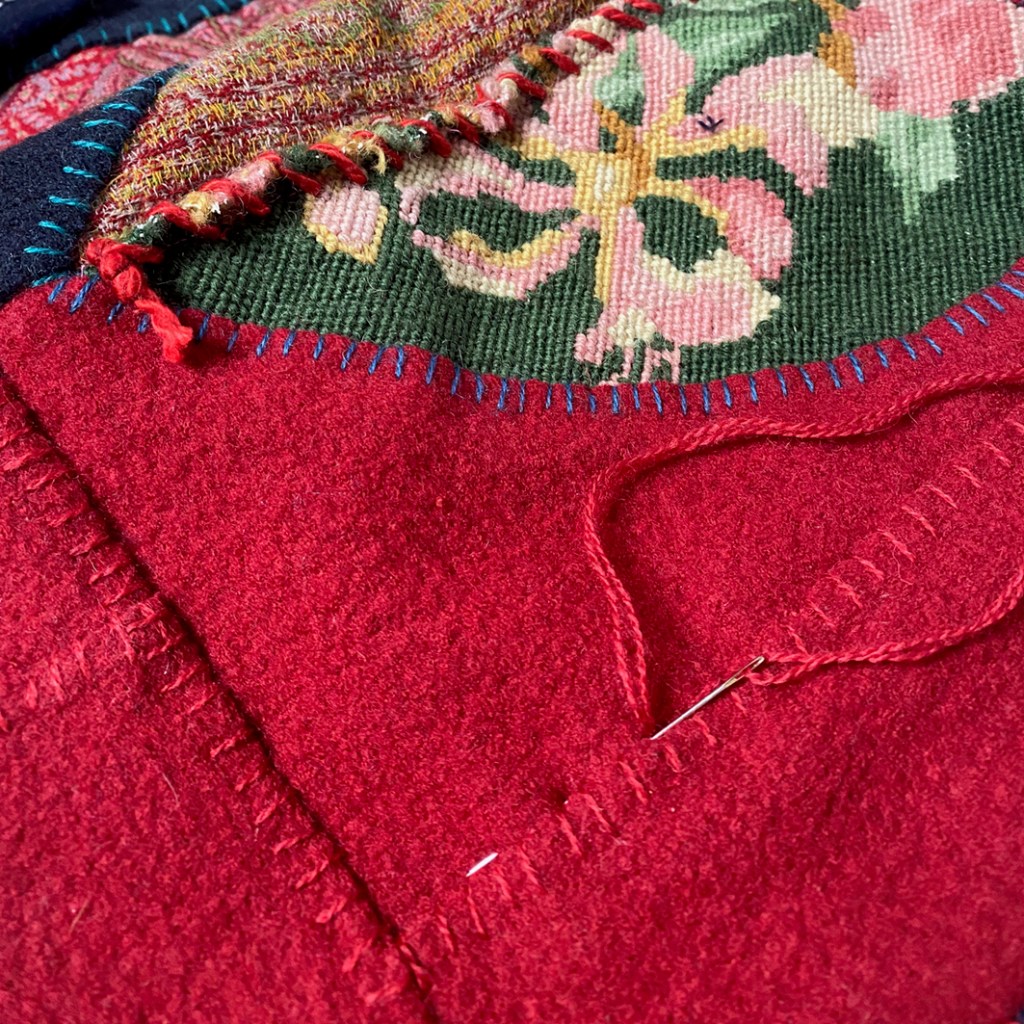
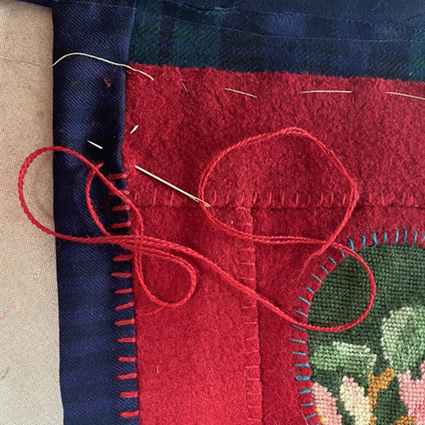
now the central join of the split heart was to be fully in evidence and the more jagged the join the better…completely at odds with my normal practice of (over) controlled stitching. I decided to use the Surgeons’ Knots on the outer seam and leave it un-neatened, like a scar. I tried various threads; above left an oversewn waxed thread and I thought about gold as still I have real gold threads bought in Japan years ago – totally perfect until I saw a hair conditioner advert featuring gold filling on a dreary vase – suddenly all forms of value has been taken away from this ancient mending symbol for me for now. Then I found the too-heavy-to-sew red silk.

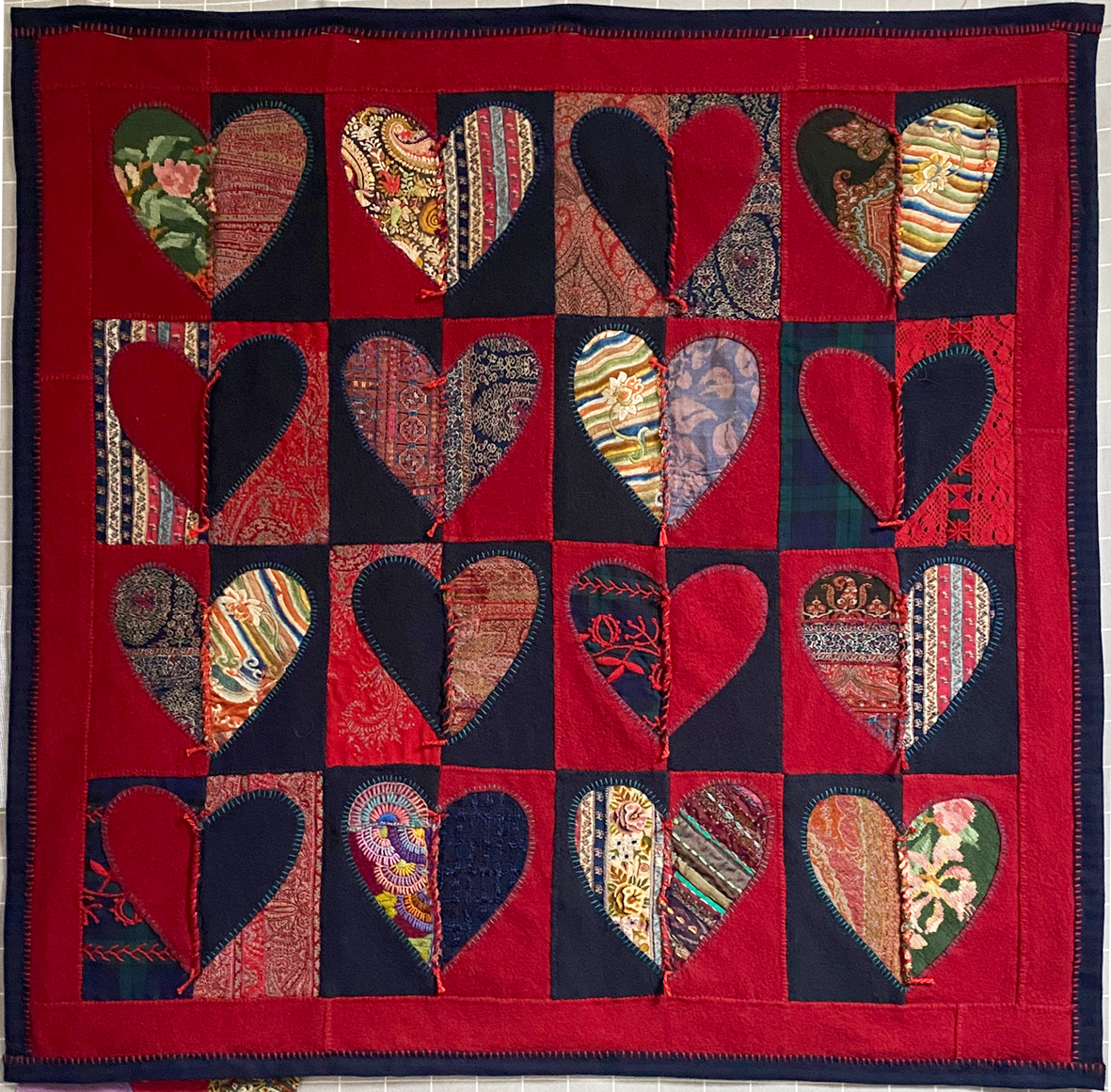
And this is where the title of the quilt arose – there is no way that I could control stitching this yarn and coupled with the slightly wonky sewing in the hearts I think it is a perfect title. Eventually I rescued enough fabrics to make 16 blocks to arrange on the quilt wall ready for sewing together by hand onto a large sample of tartan wool as a backing!

This was plain sailing after all the the decision making – but as I had oversewn the hearts into the blocks in fine wool yarn, I now felt I had to continue with the borders in the same way but the lack of having to rule a stitching line and unpick when necessary made this 2 weeks of work rather than 2days!

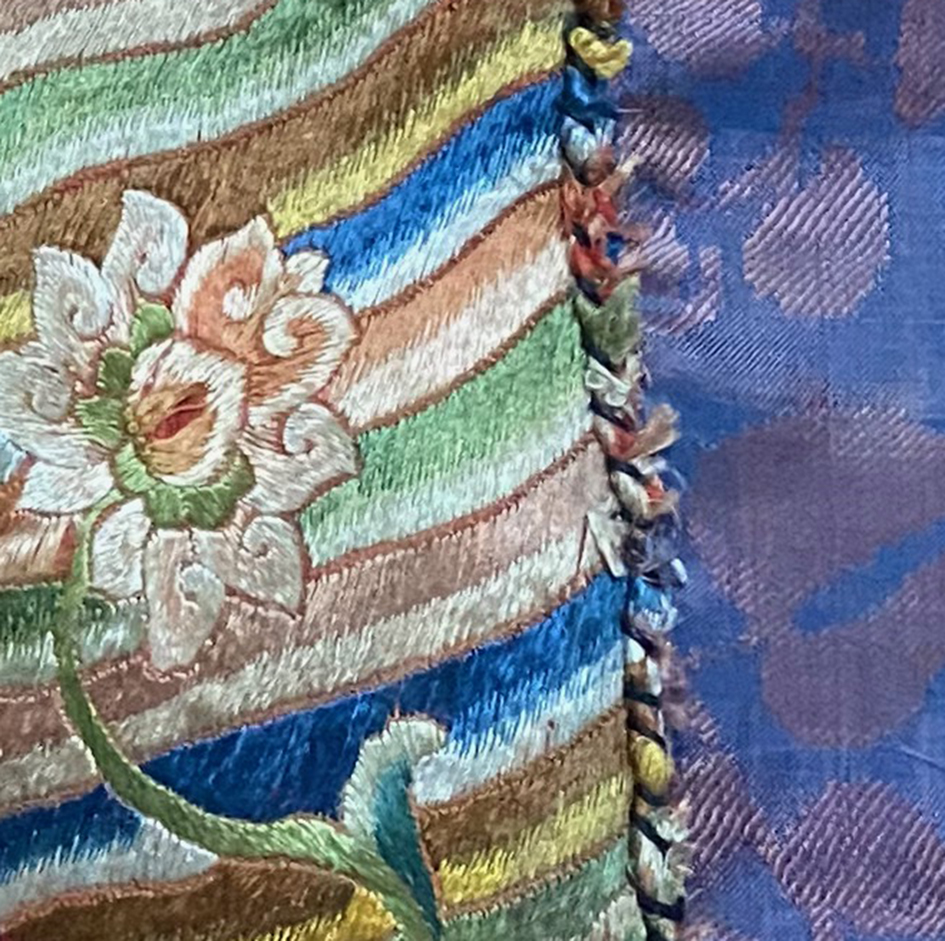
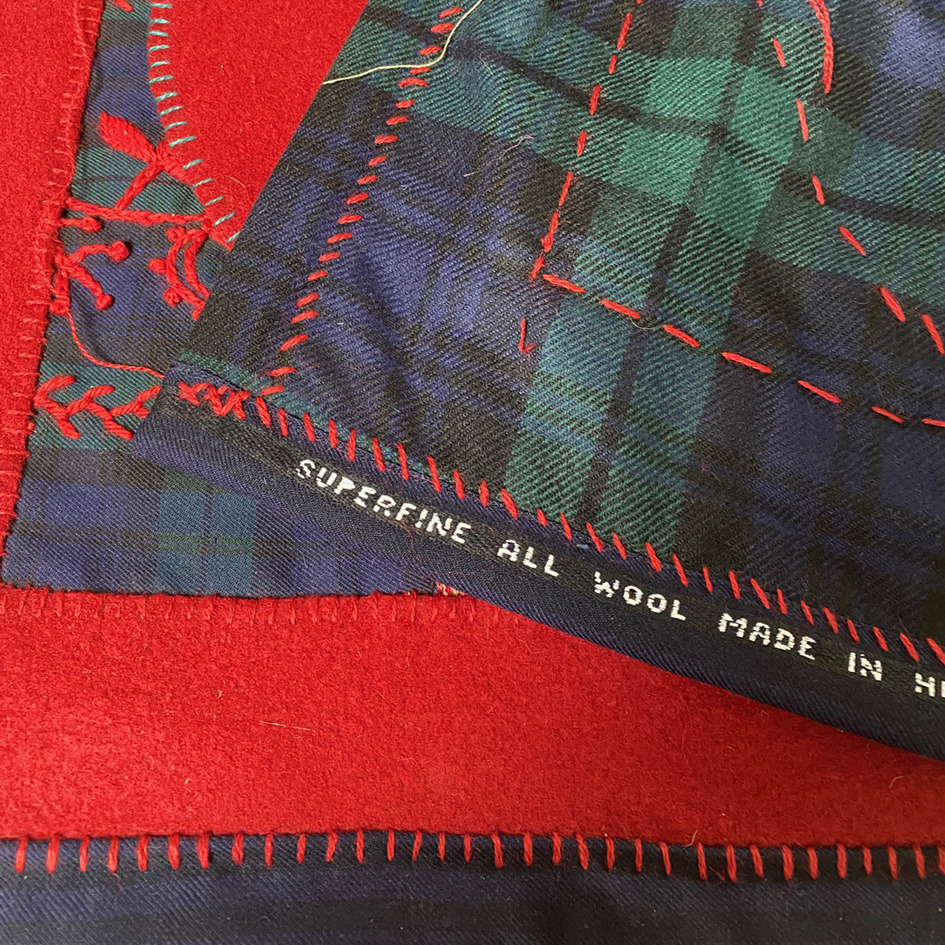
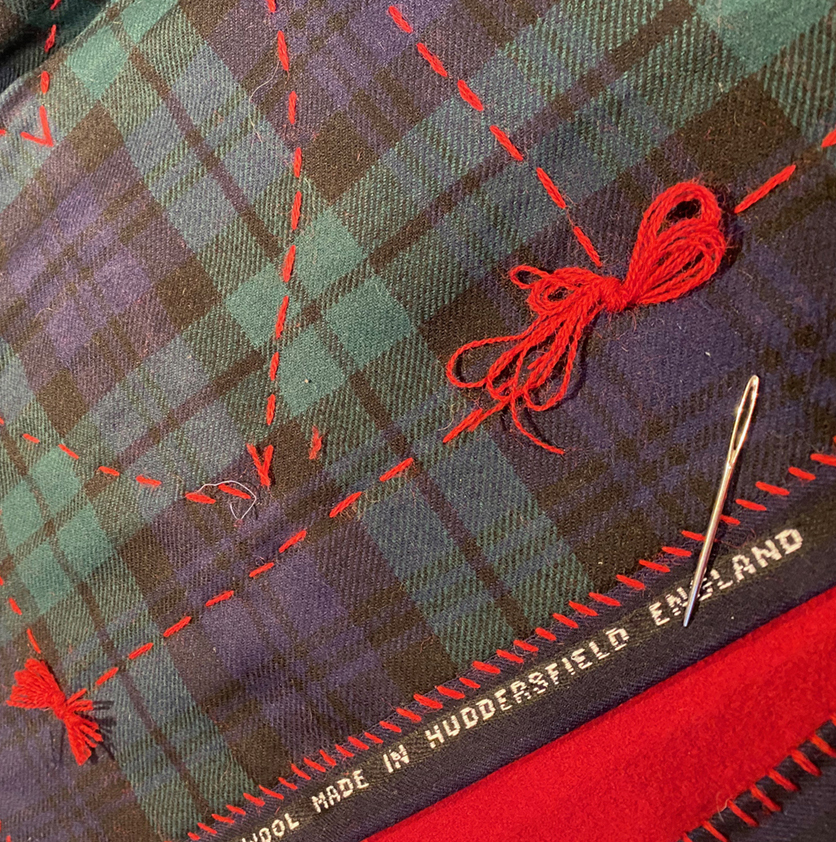
I kept the beautifully woven selvedge of the last border fabric as a testament to the quality of “Superfine” British wool and weaving traditions. And here it all is pinned to the wall this morning.

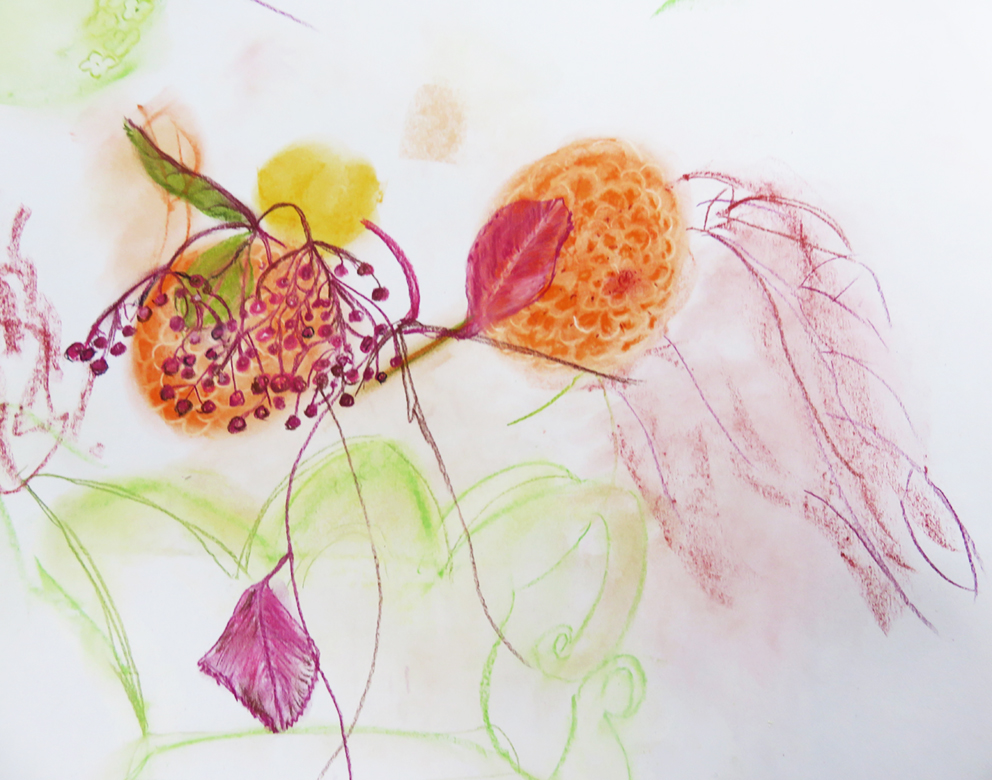
Autumn Flower drawing Class

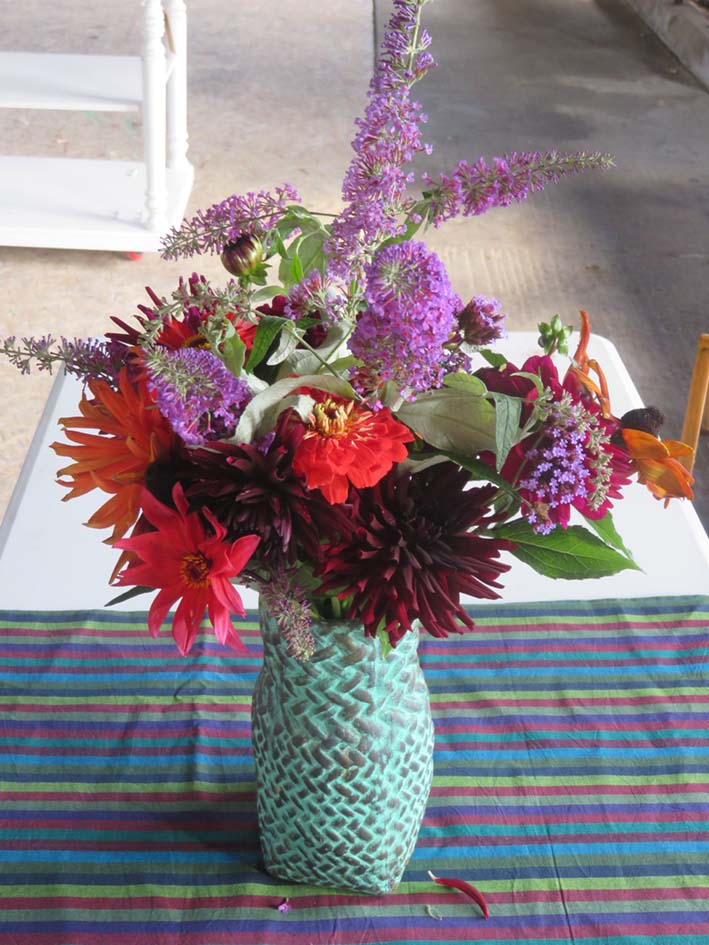
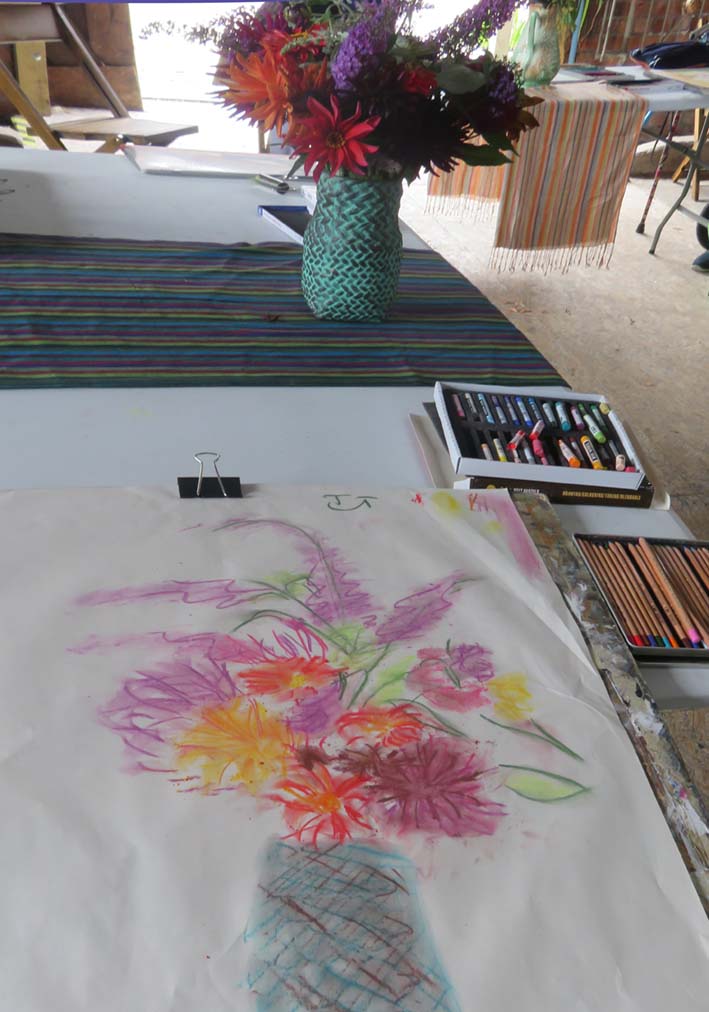
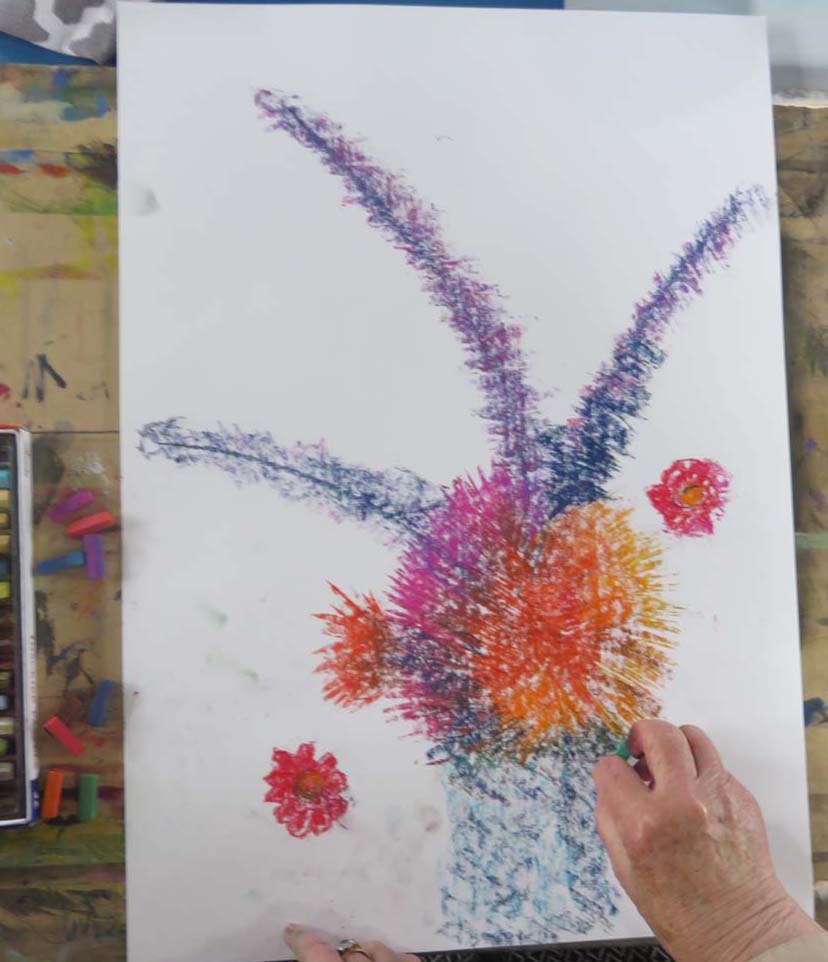
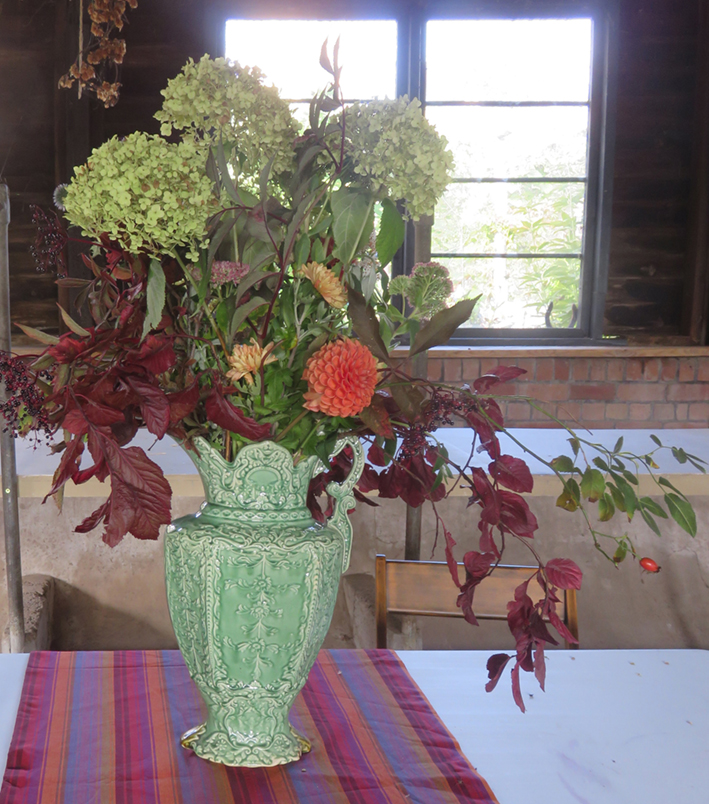
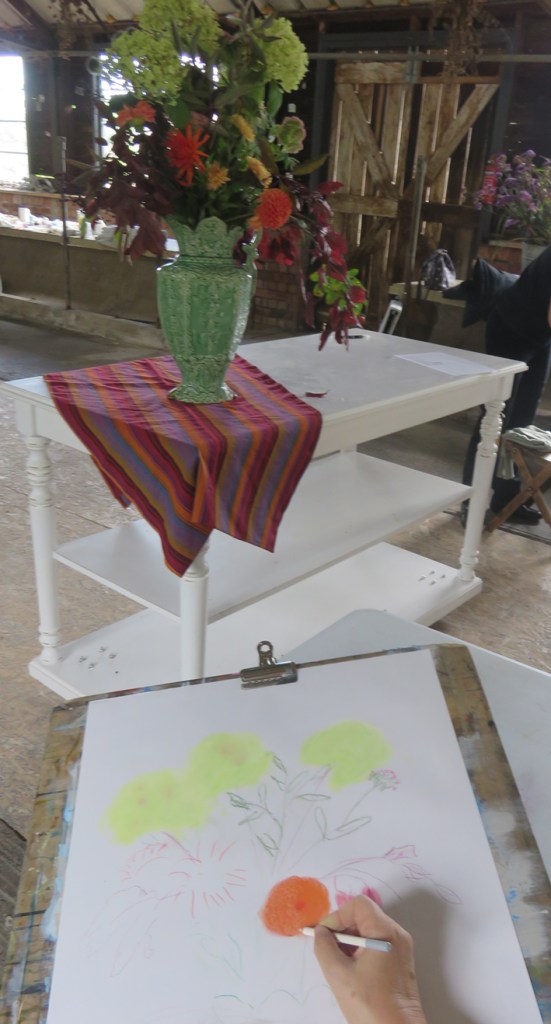
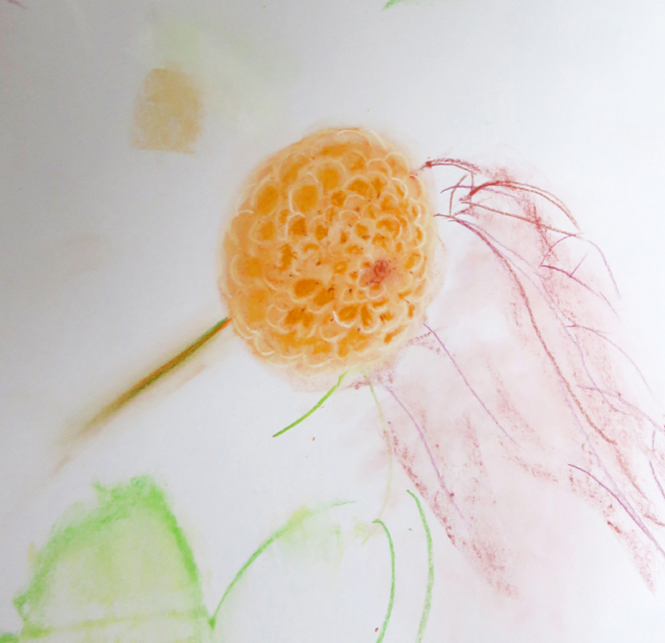
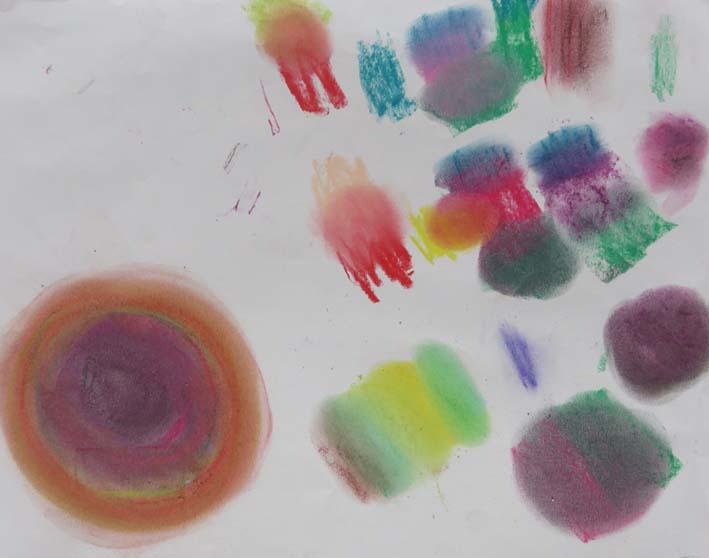
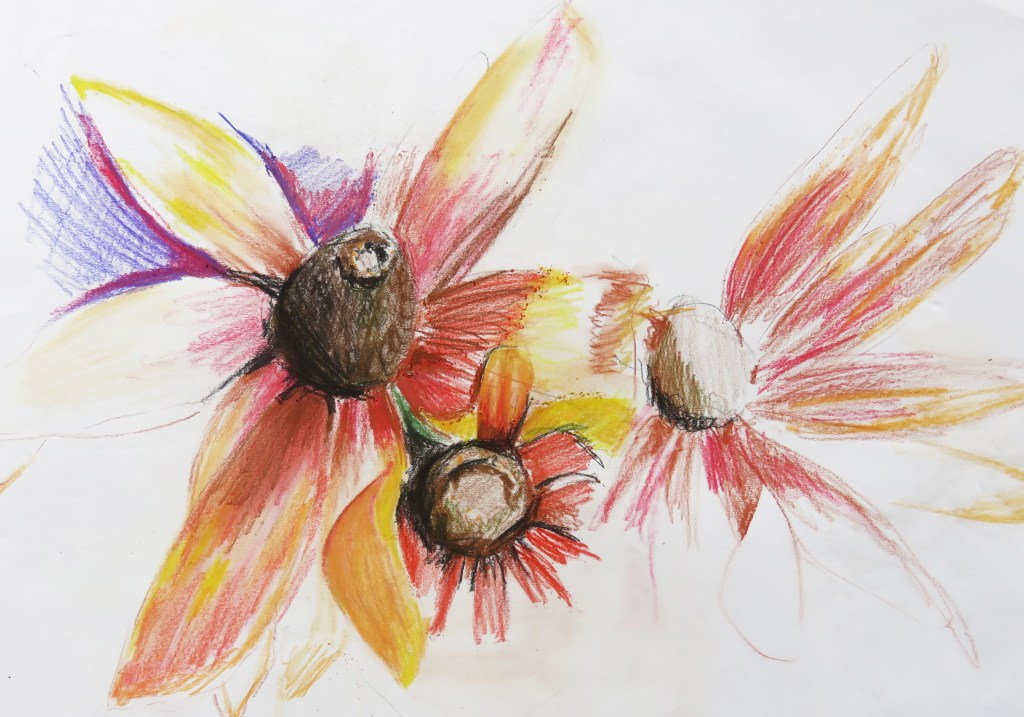
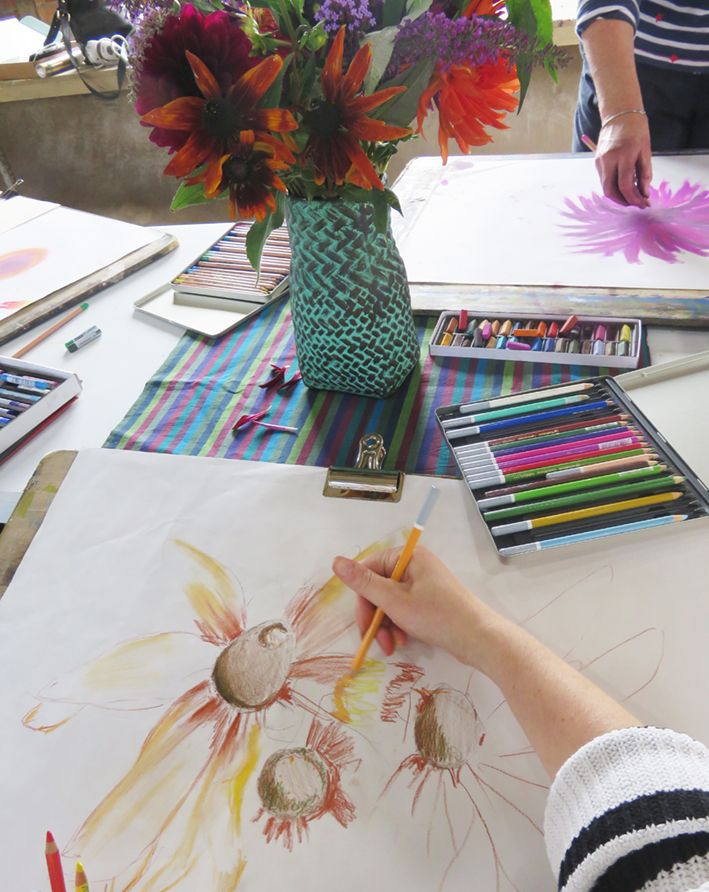
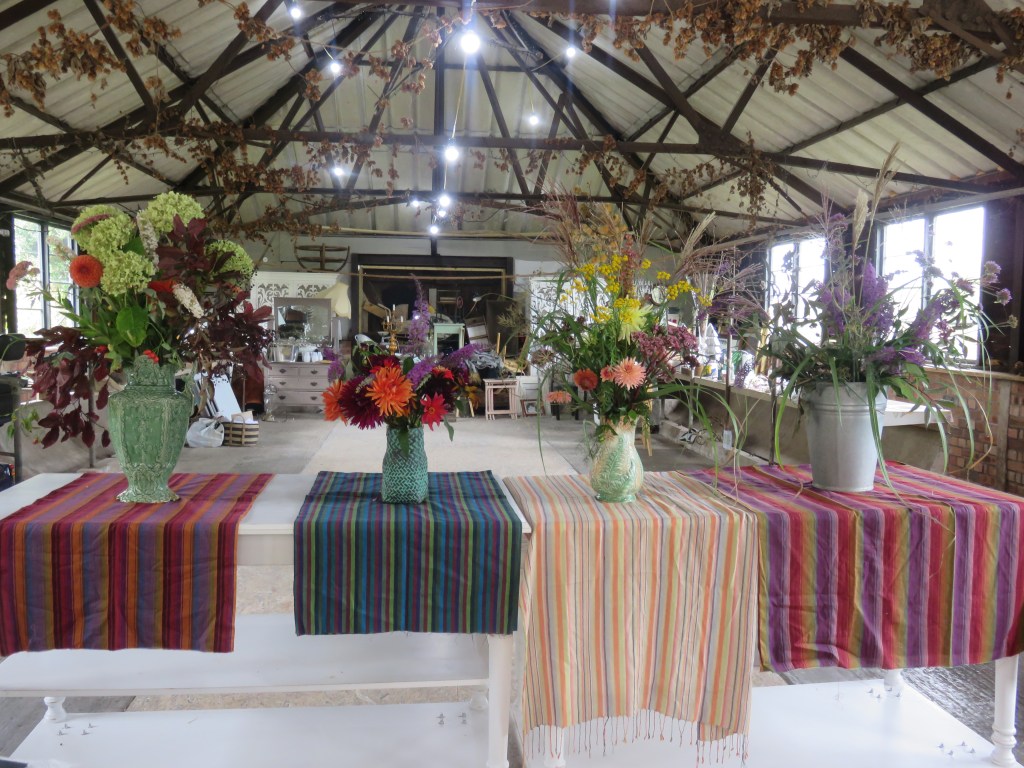
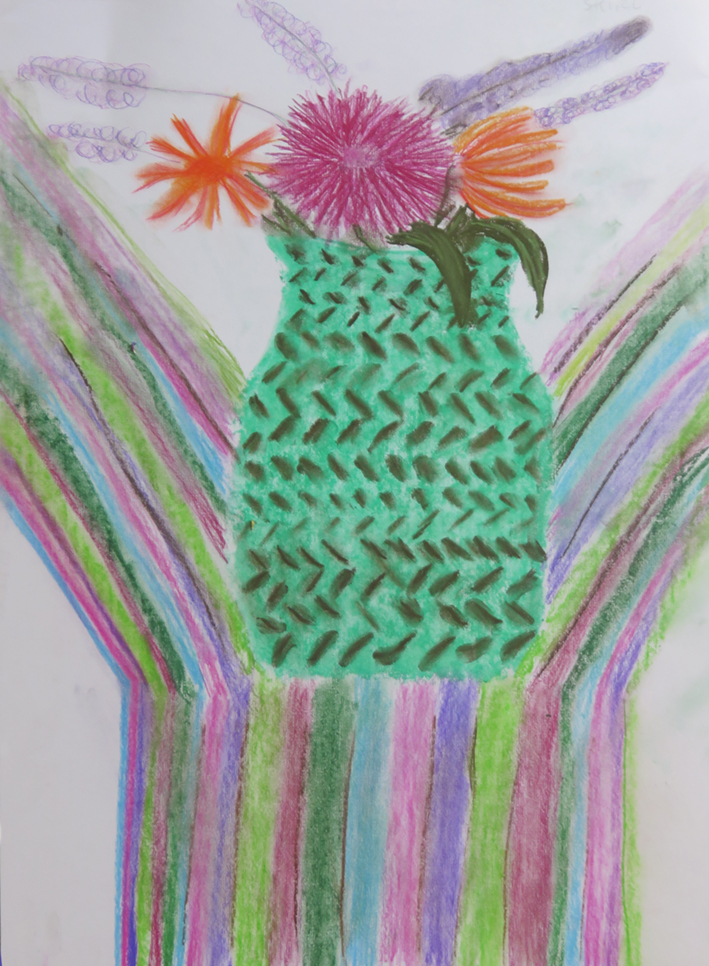
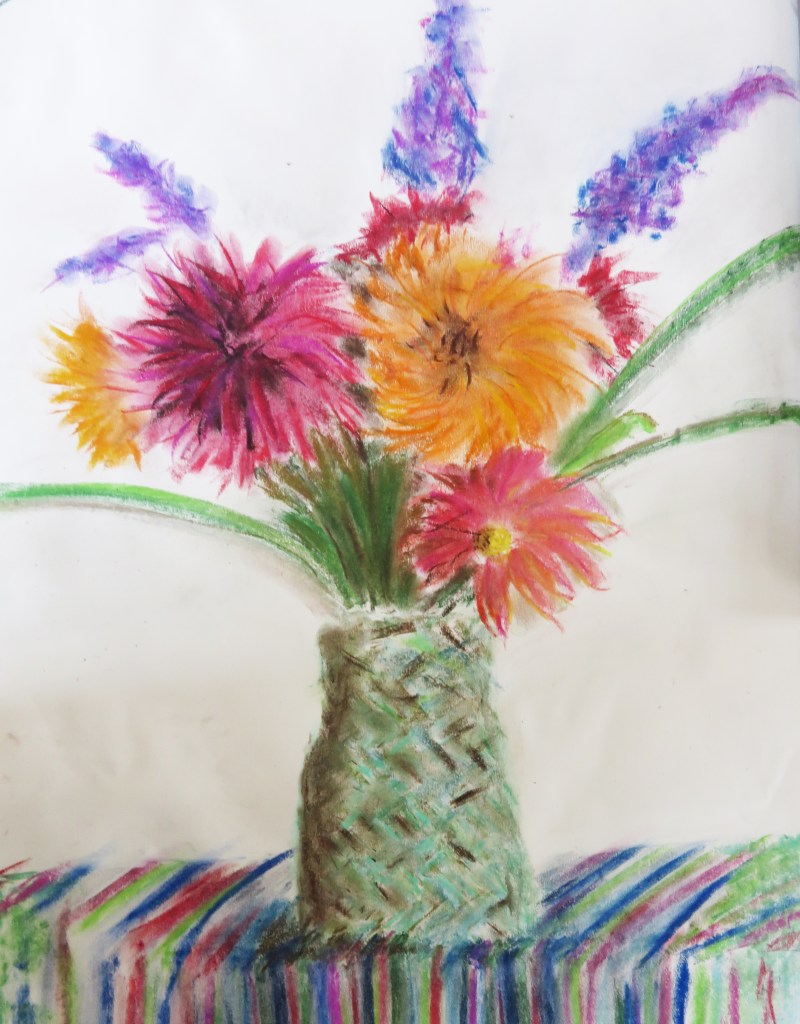
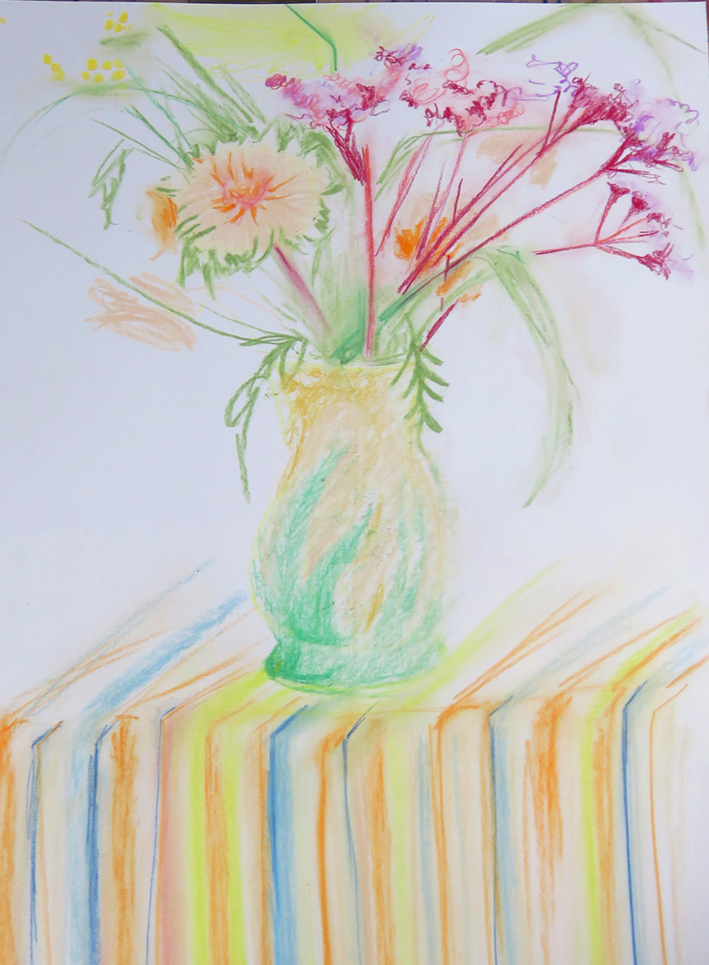
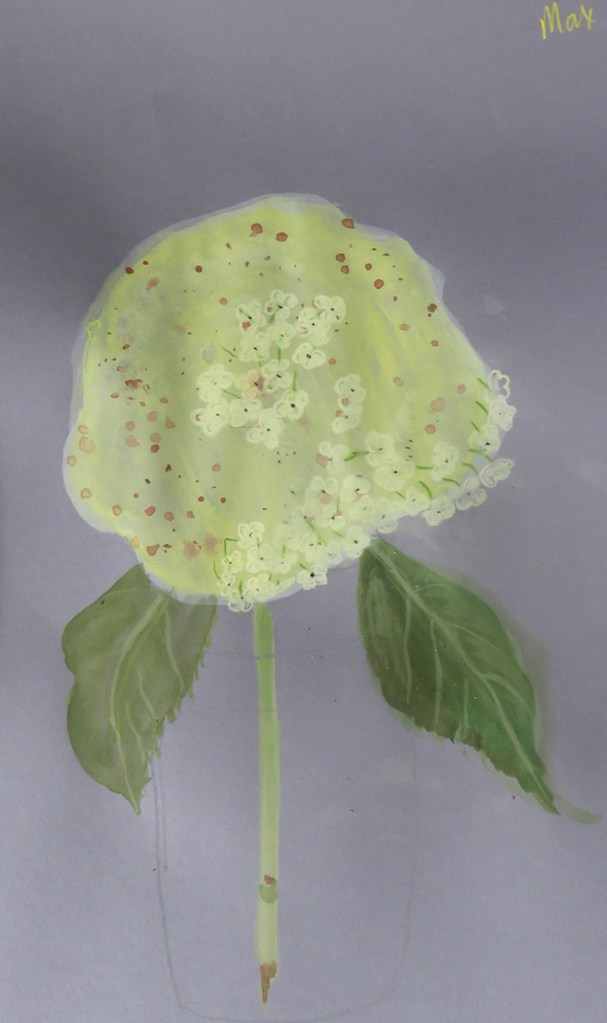
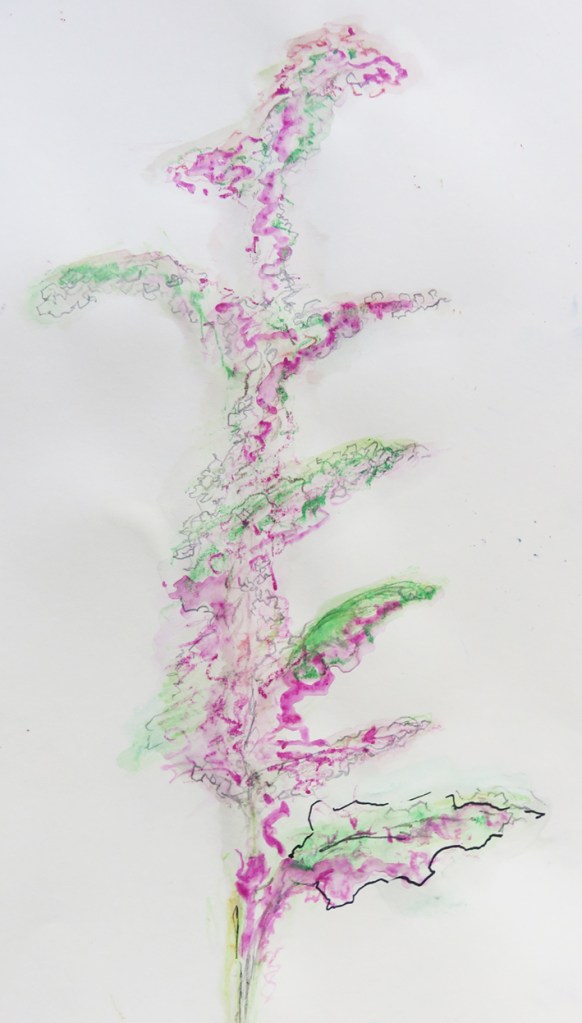
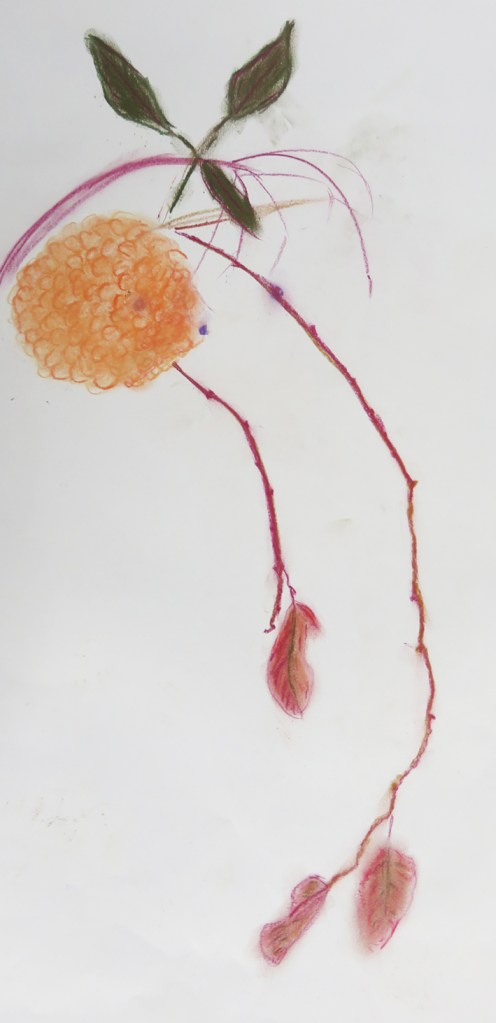
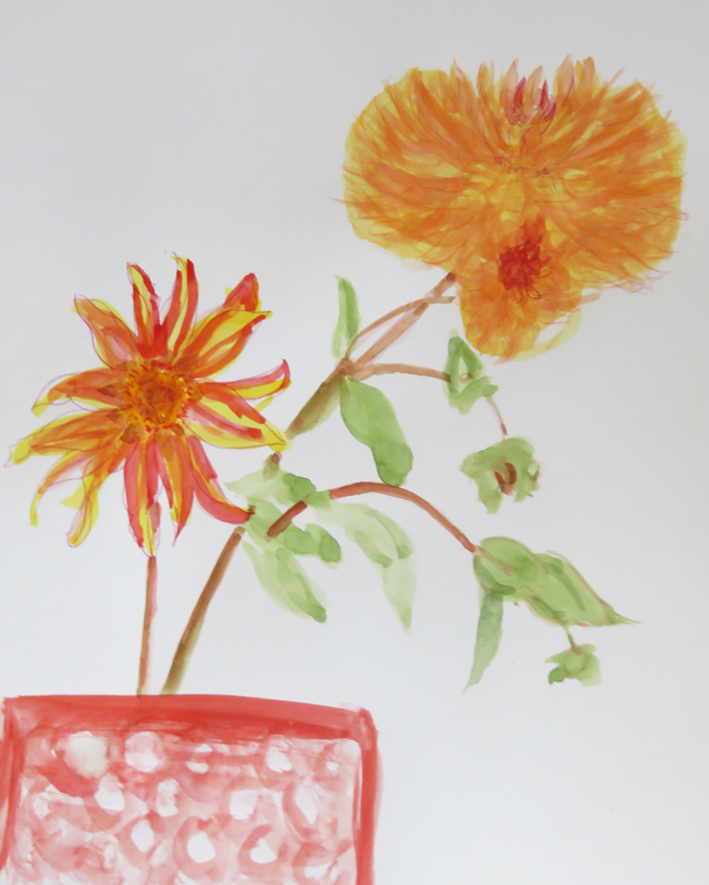
Following on from the successful Drawing Day in June at Court House Farm The RWA ( Royal West of England Academy) Drawing School organised another Autumn Flowers day. But due to the ultra dry summer the flowers were not so abundant as the spring crop…my solution: select just 3 big bunches of different flowers in vintage vases with a toning striped runner and everyone would be able to draw all 3 during the day

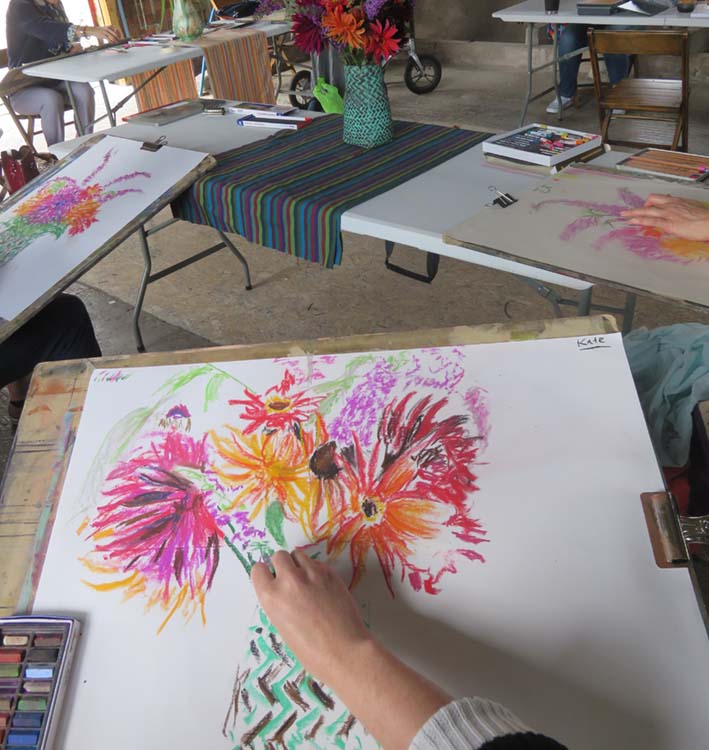
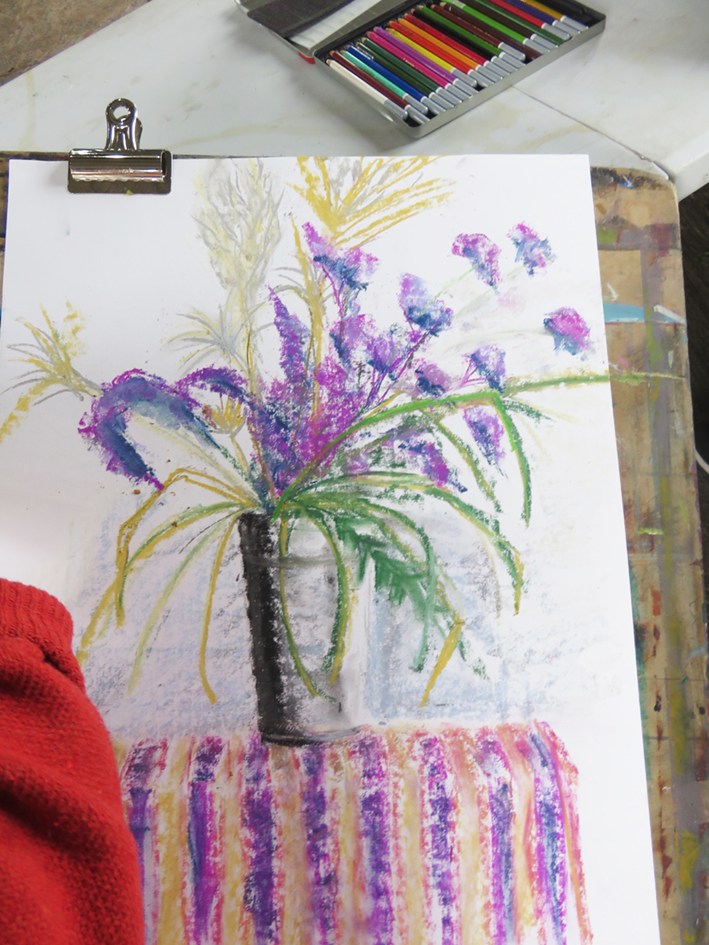
In at the deep end. I asked the class to choose a table to sit at and draw the whole display in front of them…in 20 minutes!

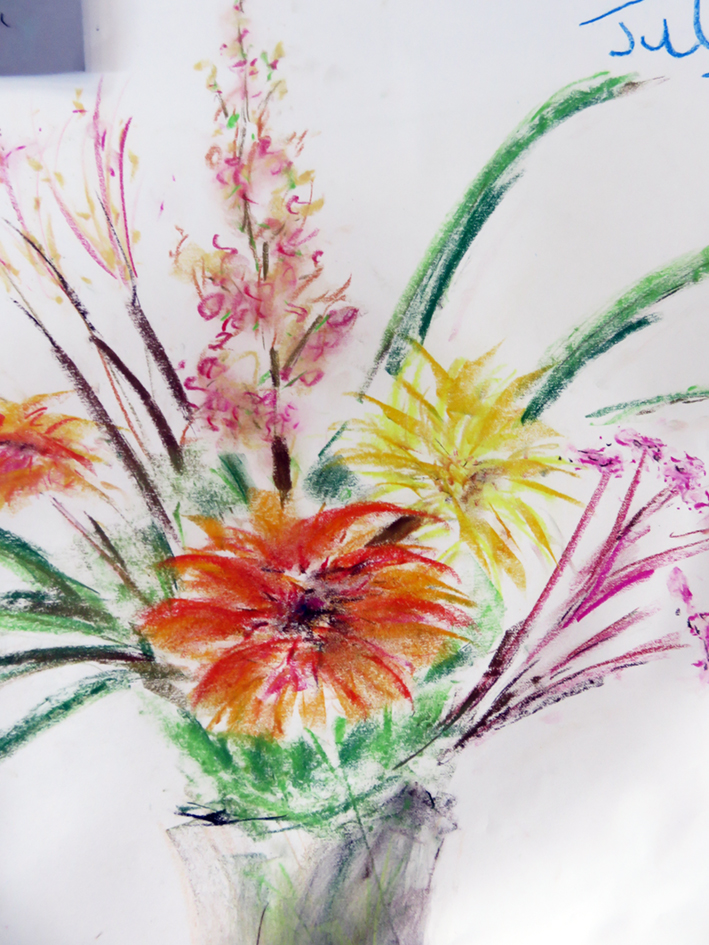
Tall and elegant autumnal shades…and in contrast below – hot clashing colours!

and then massive and majestic….

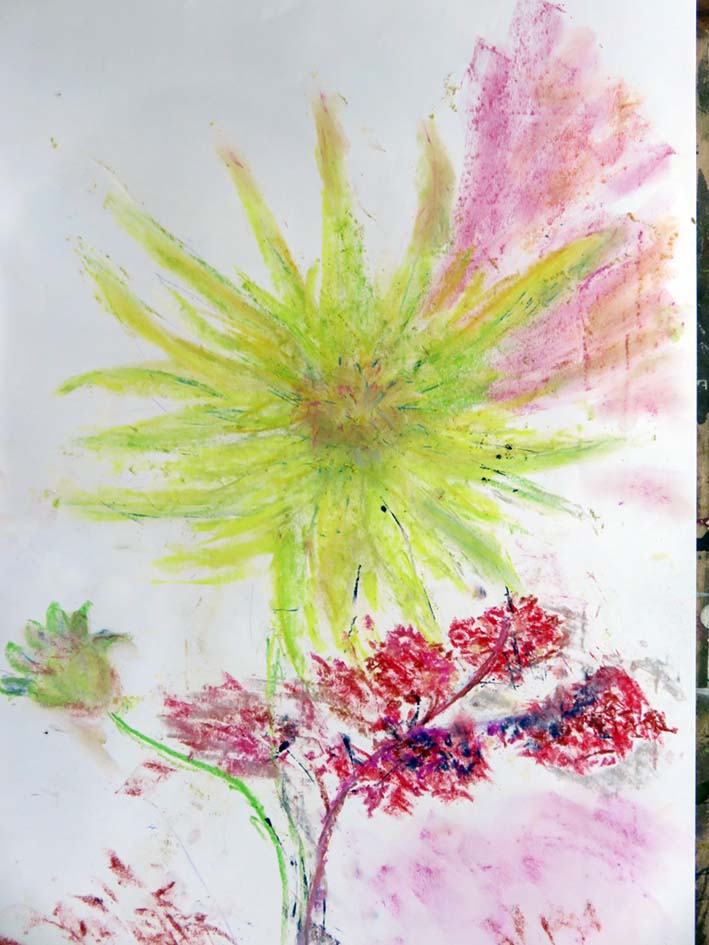
only 2 people attempted this vase and were somewhat overwhelmed by the abundance! So we started again by choosing another section of the bouquets and making some rather more detailed drawings – now things were starting to develop.

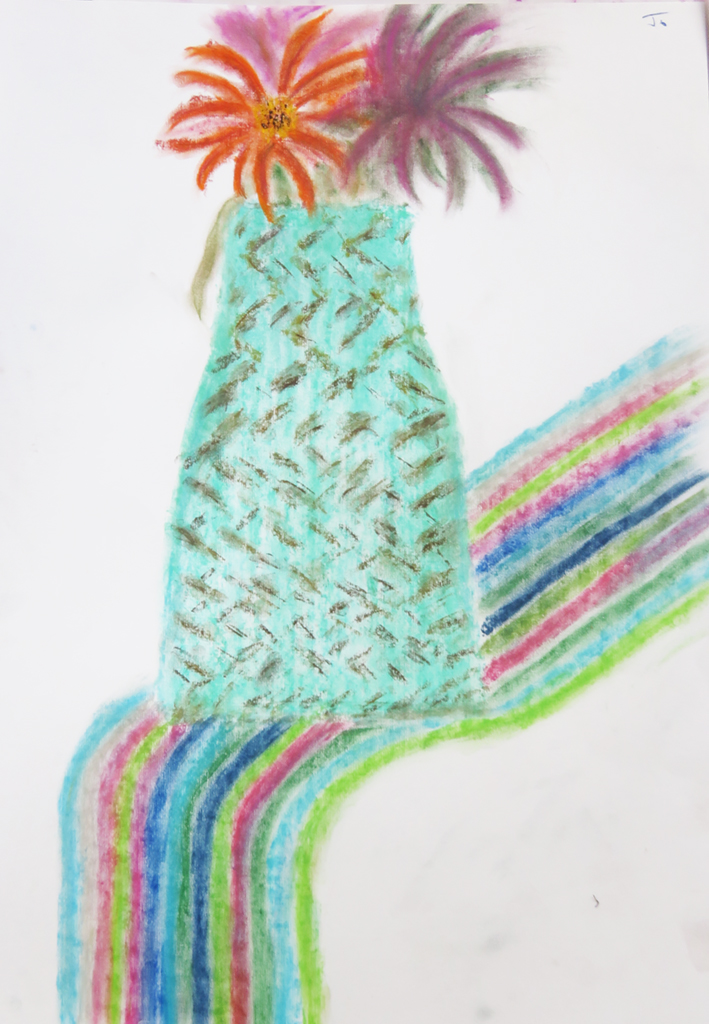
BUT so far no-one had even attempted the fabric specially chosen to be drawn with the colours already used in the flowers……so after lunch I changed things over and added another arrangement – now we start drawing with the fabric!!!!

And in the process we even got vases.

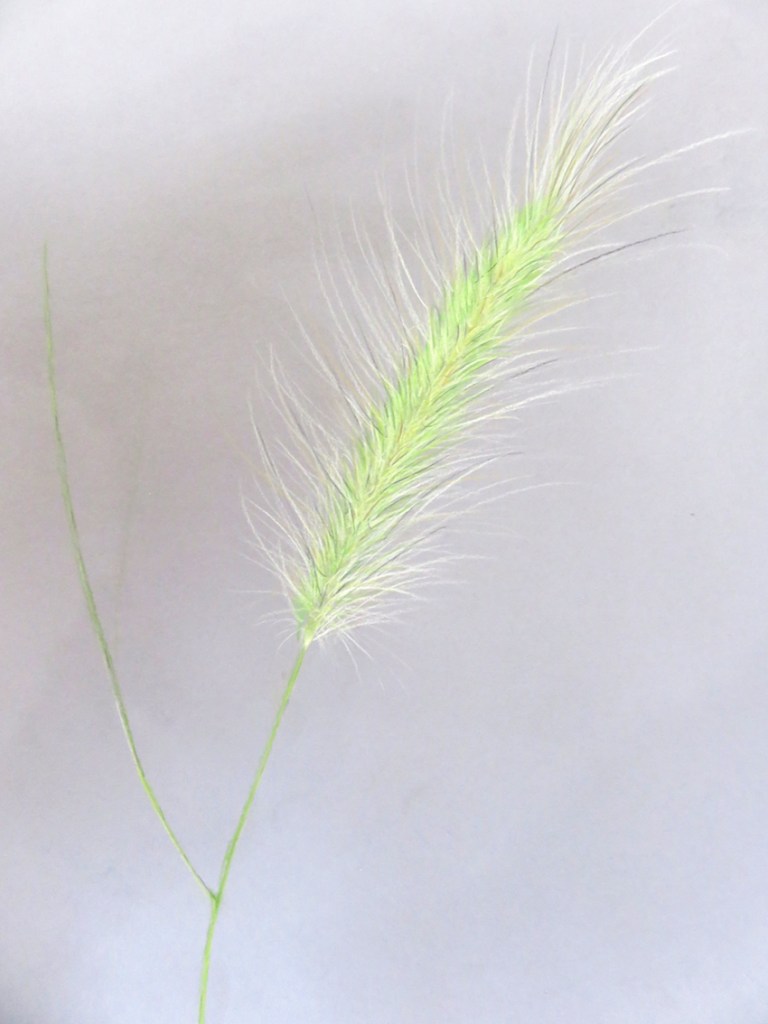
For the last session I relented and asked them to choose just 1 flower/branch/leaf from all the masses of materials and to place it next to their drawing boards and make a study – I usually start my drawing sessions like this – and I may return to this method for my next drawing flowers session in November….

returning to my sketchbooks

first page of my reborn Flora research/sketchbook – Flowers Again!

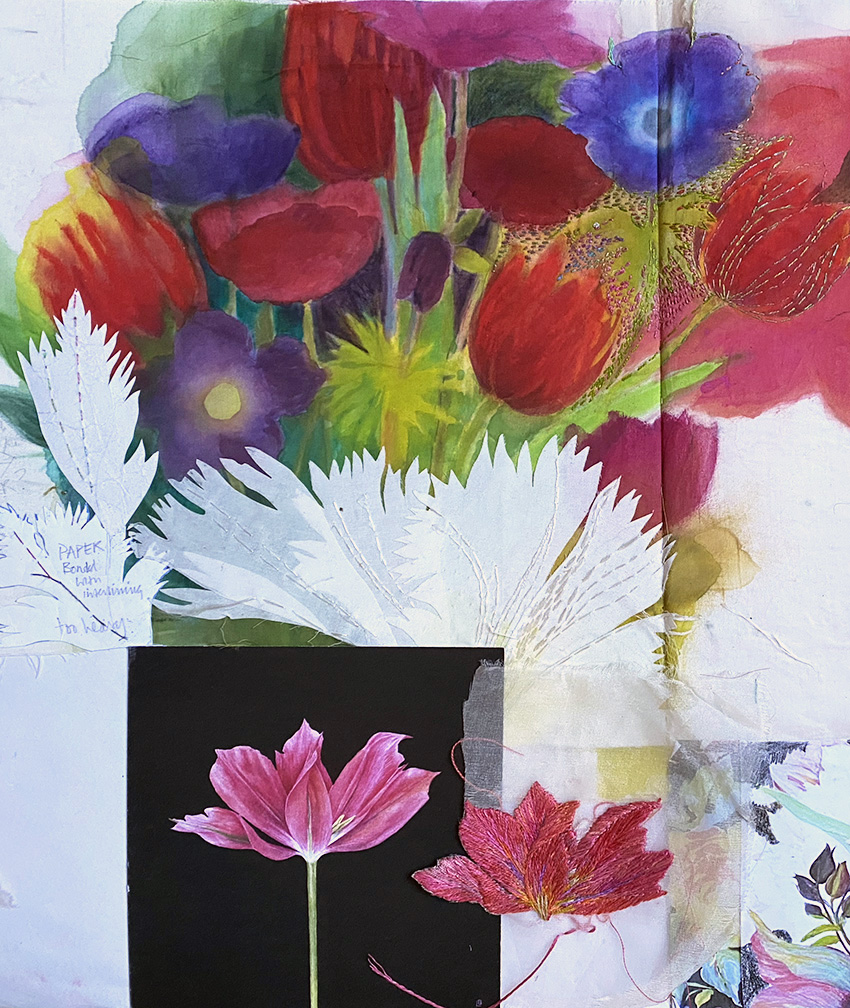
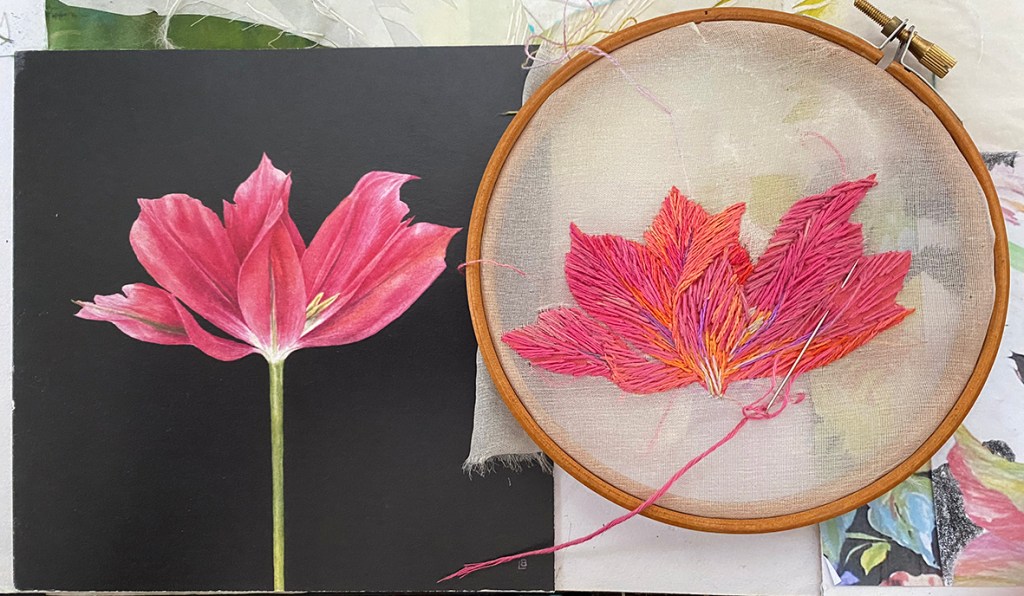
Recently, the “After Winifred” embroidery has inspired me to develop work to use as Giclee prints in order to add a fresh way of getting my work ‘out there’. I turned to my old Flora workbook, some 20+years old – but still alive for me as a source of inspiration.

I found some empty pages at the end of the old book and started to collate recent samples and drawings of bunches of flowers grown and made up at Court House Farm, where I conduct drawing workshops, using the cutting garden as inspiration.

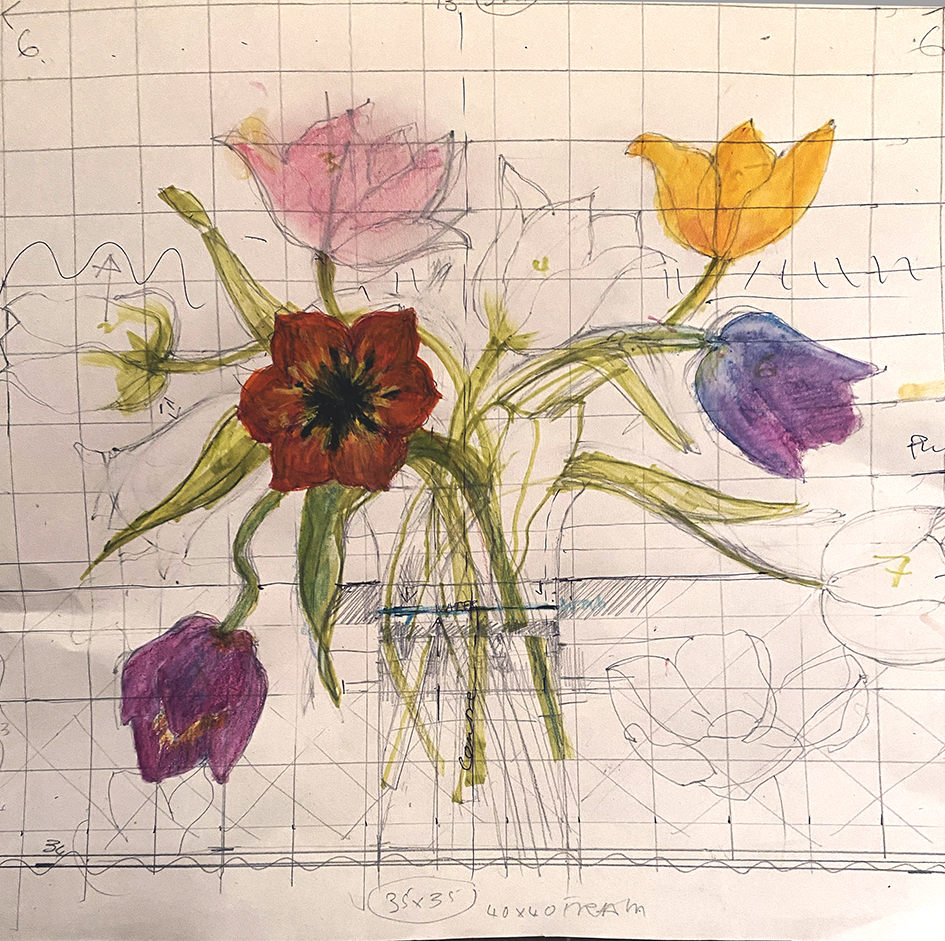
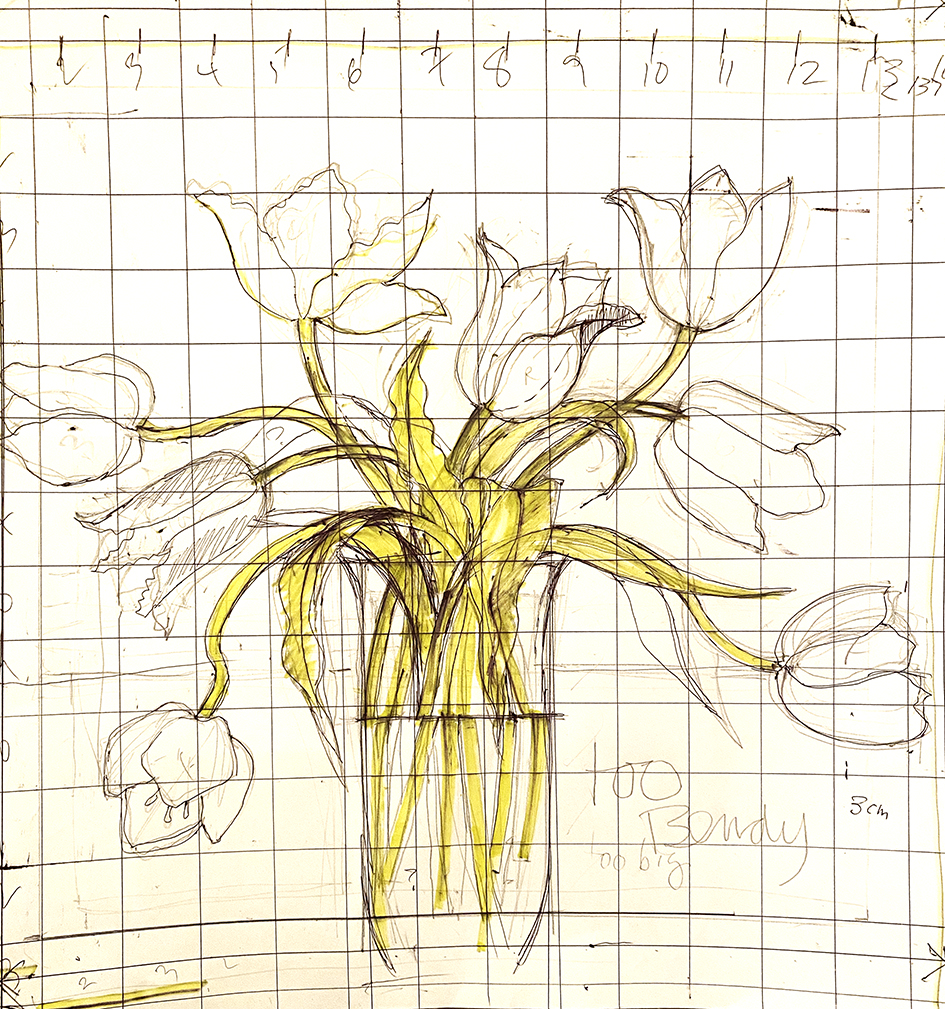
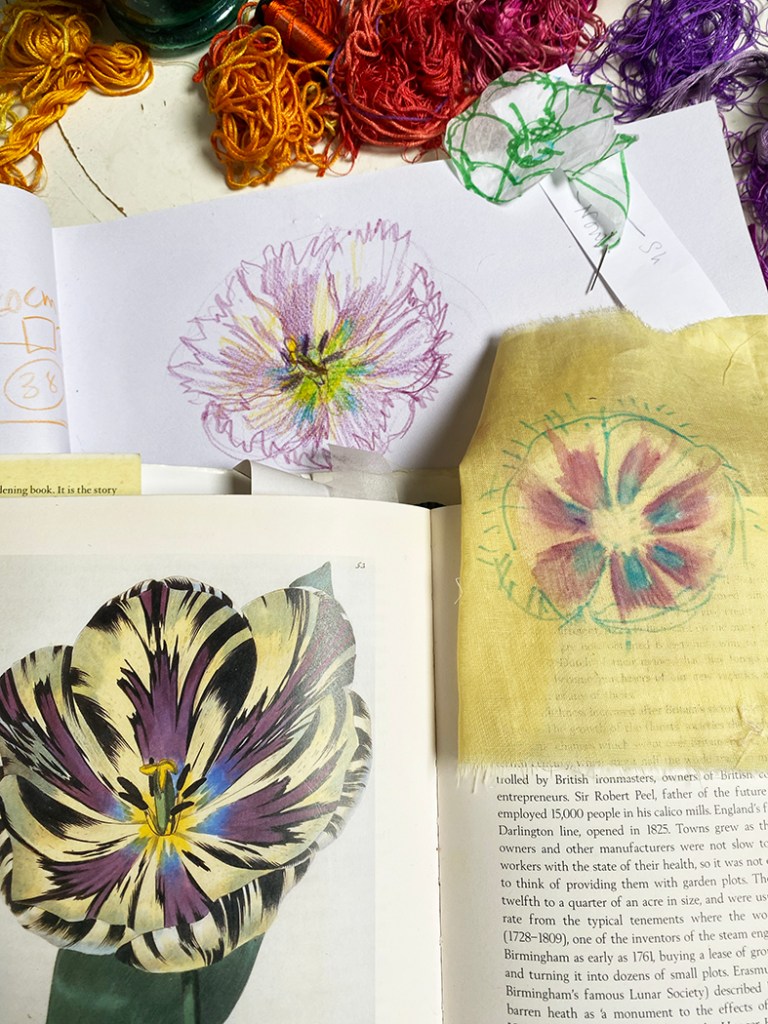
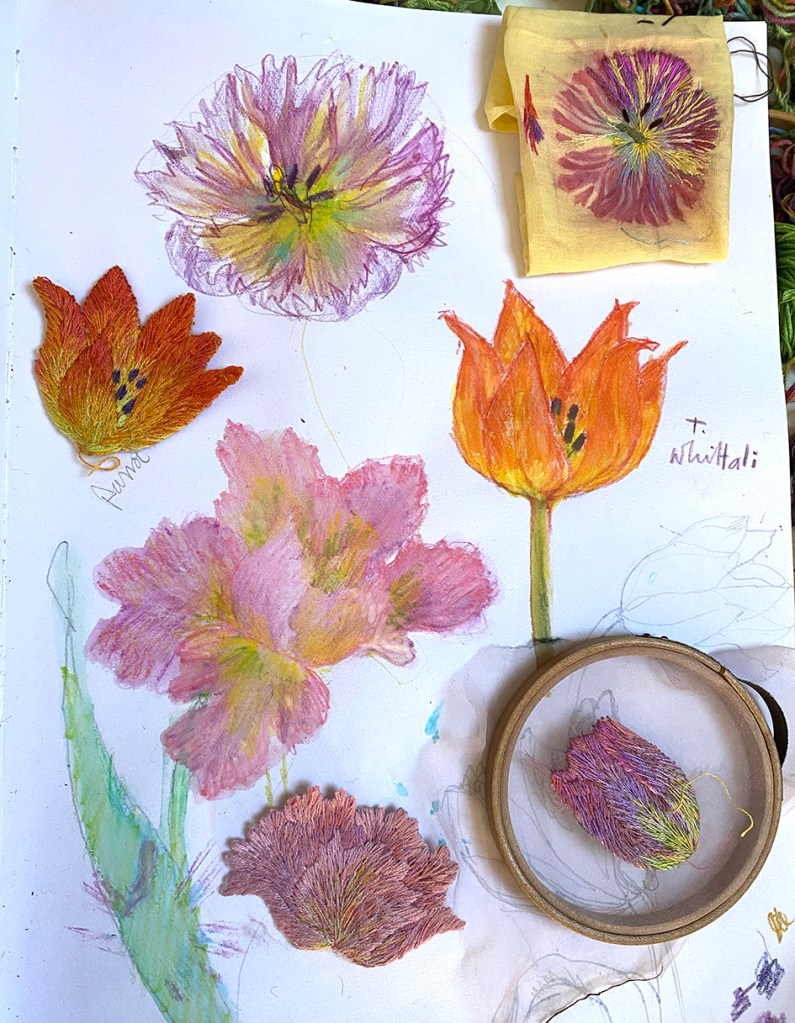
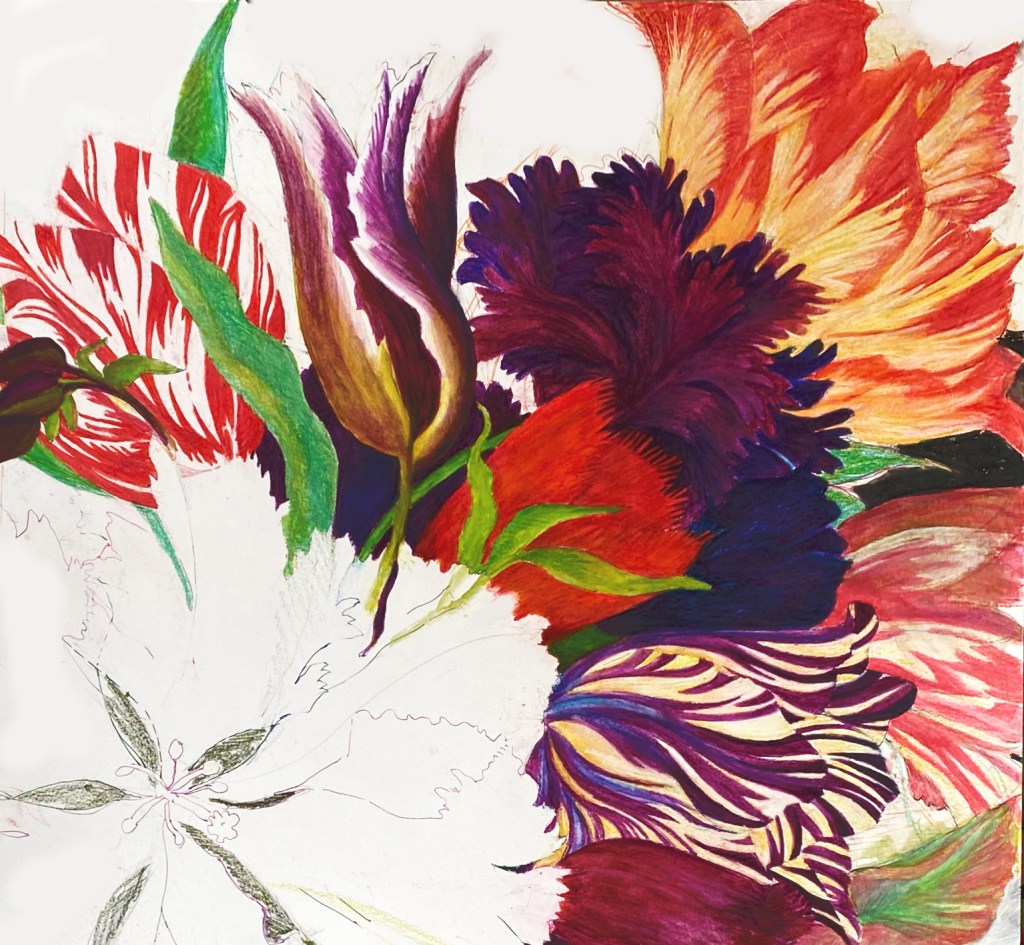
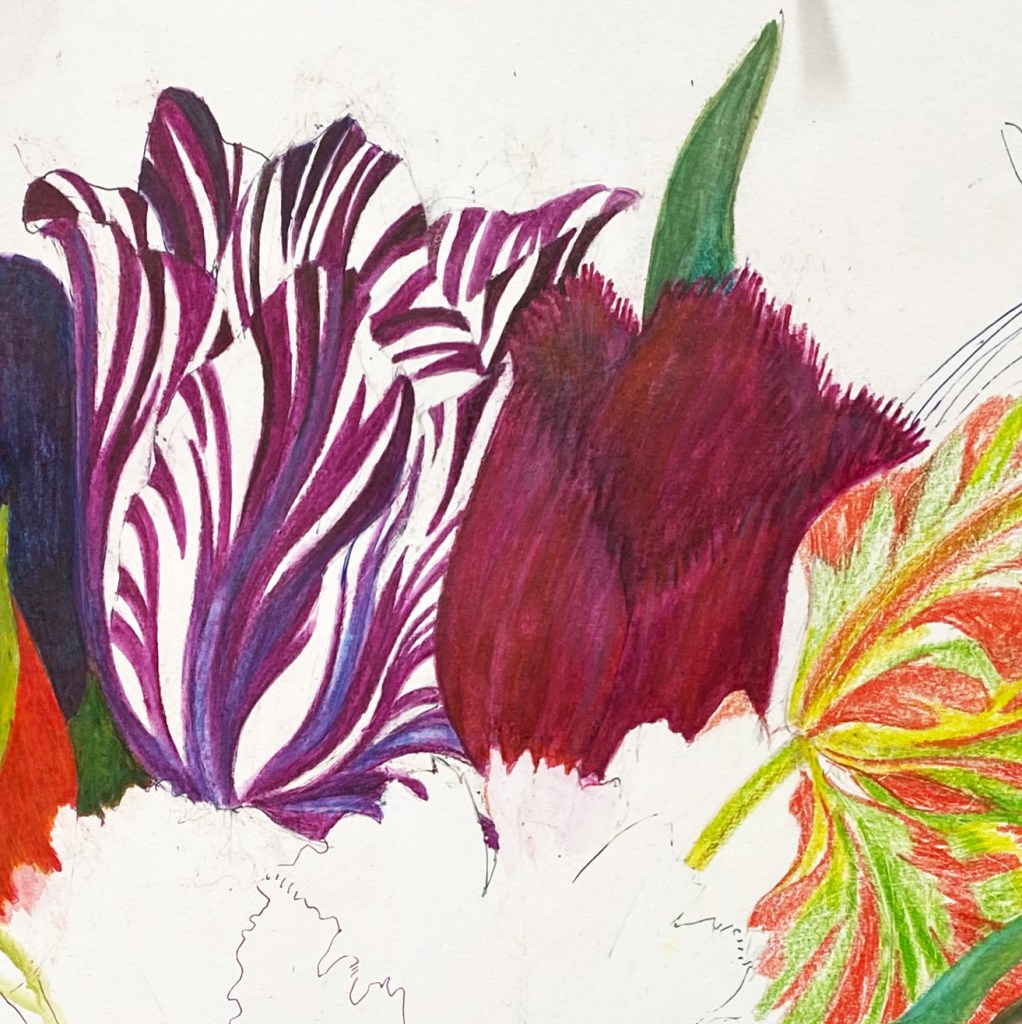
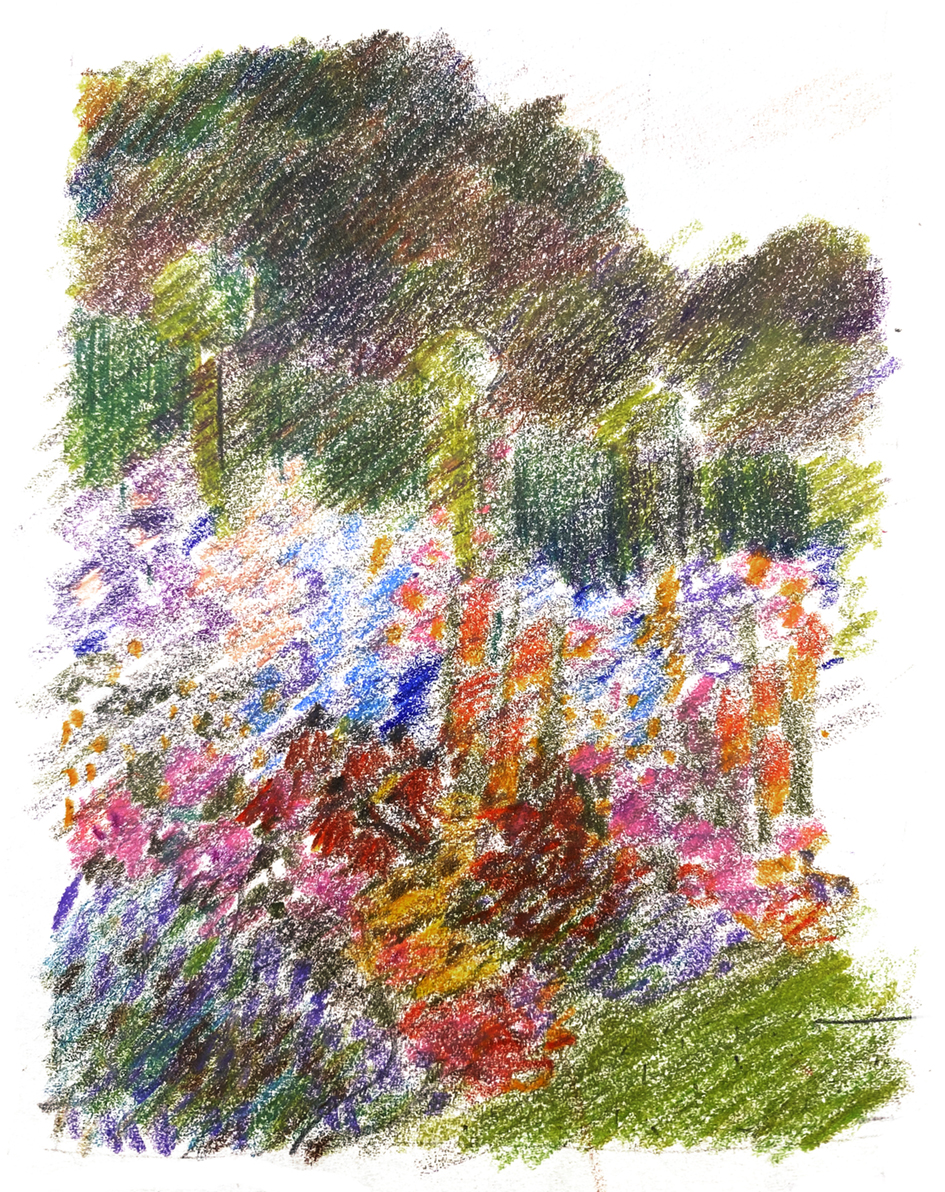
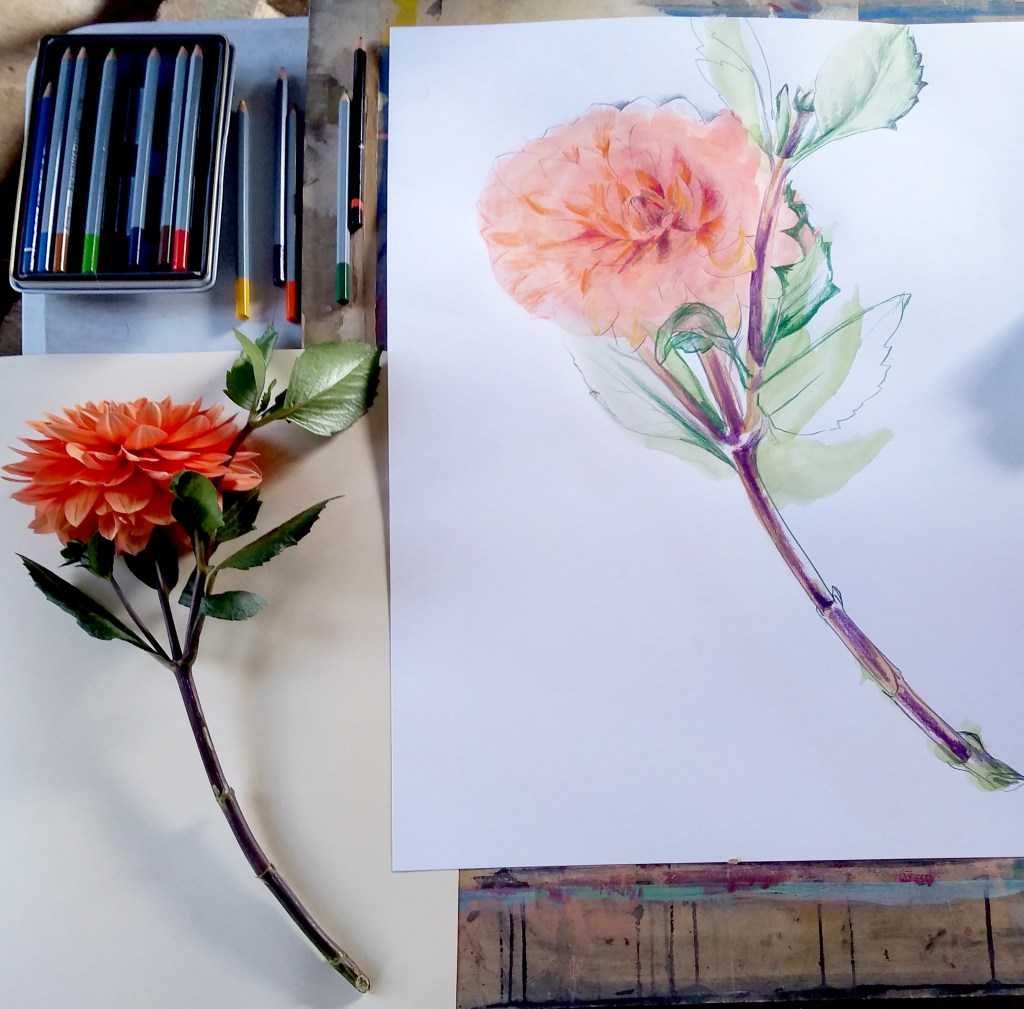
looking back at my Flora work, which is 3 dimensional and very heavily embroidery, I now want a freer drawn imagery to stitch into. So I bought some Derwent Inktense pencils that basically act as dyes when wetted and left to dry – I did many samples but found my drawings had too much information in them – I needed to loosen up further. Ha ha – the story of my working life!

To enable me to play easily with the new ink crayons I chose an old set of drawing research and photographs to work with. The colours of the crayons are very brilliant and I needed to find ways of making more subtle colours, so stippling, cross hatching and dotting colours one over another made for rich but softer ground colours – these techniques are still a work in progress. Below are 2 studies of the under drawings using pencil dyes ready to be stitched

Meanwhile I have been looking at all my old flowery finished works and their drawings to use as reference and then reframing/remounting stitched pieces ready for the printers.

the little Hellebore image above is my first Giclee print and the smallest at 30cms/12inches square.