dog quilt: SERENDIPITY

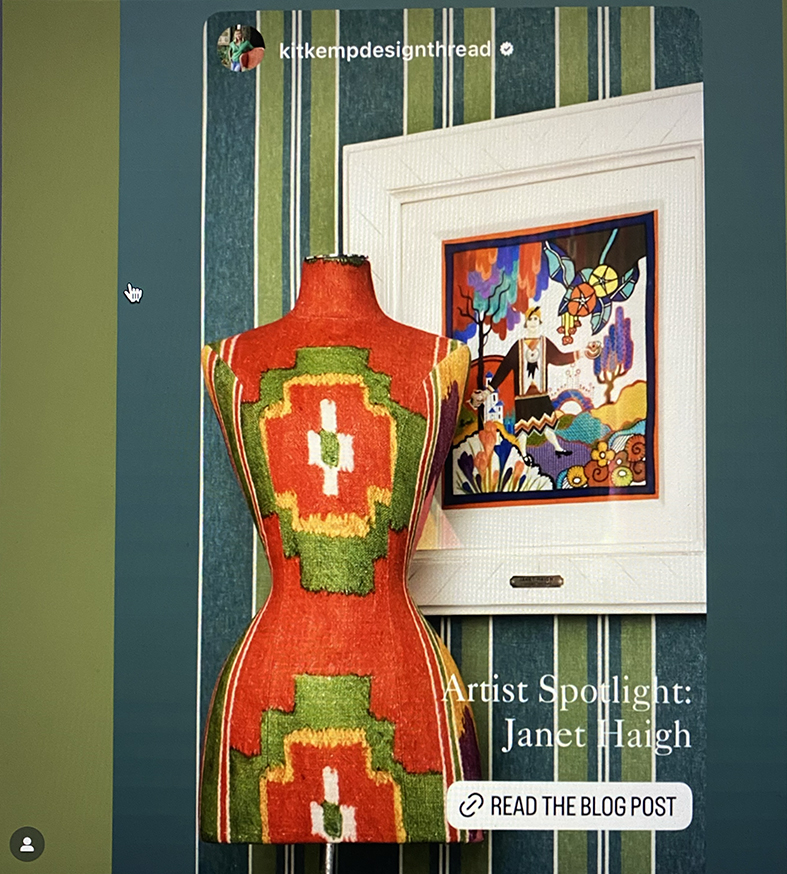
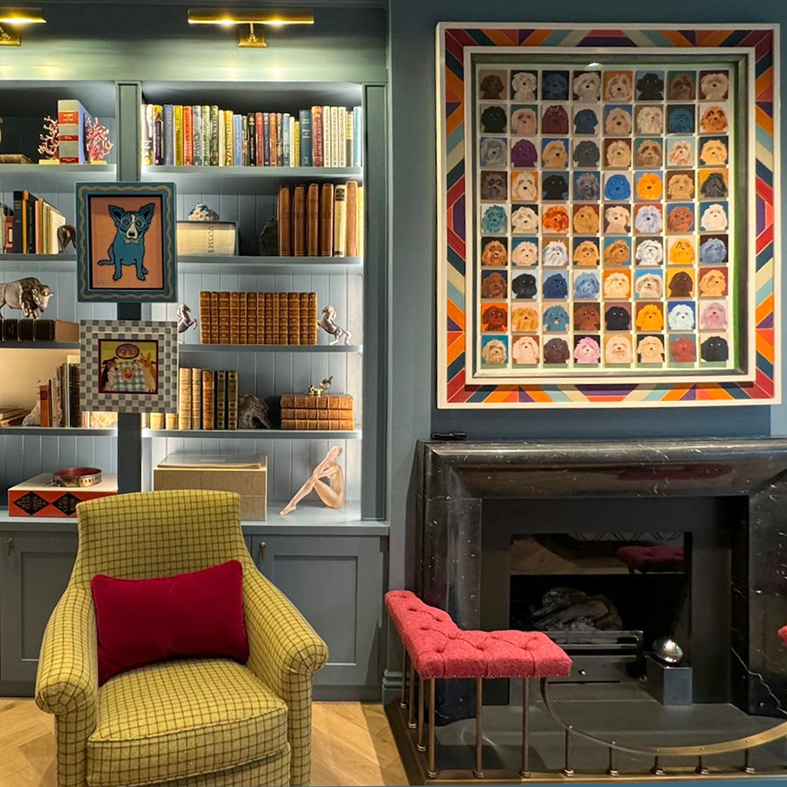
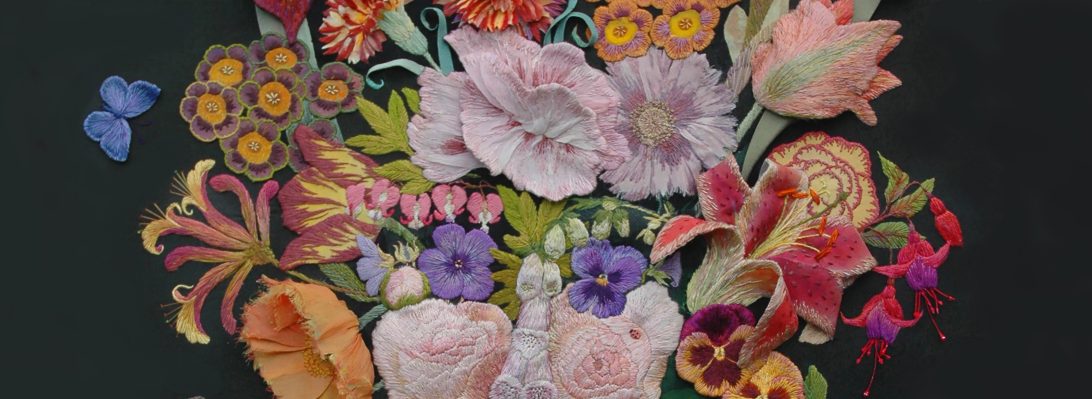
Strange how sometimes things come together: I was contacted, out of the blue, by Marcus Wells at Havilland Designs to see if I undertook commissions? He had framed some of my earlier work (embroidered portraits of women designers) for one of his clients, the interior designer Kit Kemp, who, to my amazement, had spotlighted my work on her blog, showing the perfectly placed Clarice Cliff portrait and lots more. Now read on……

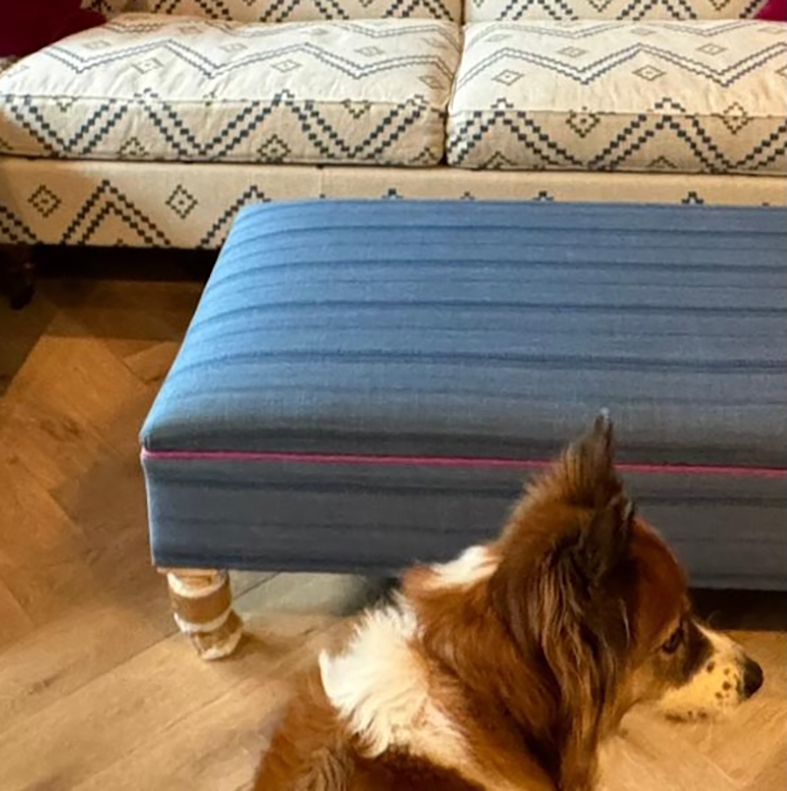
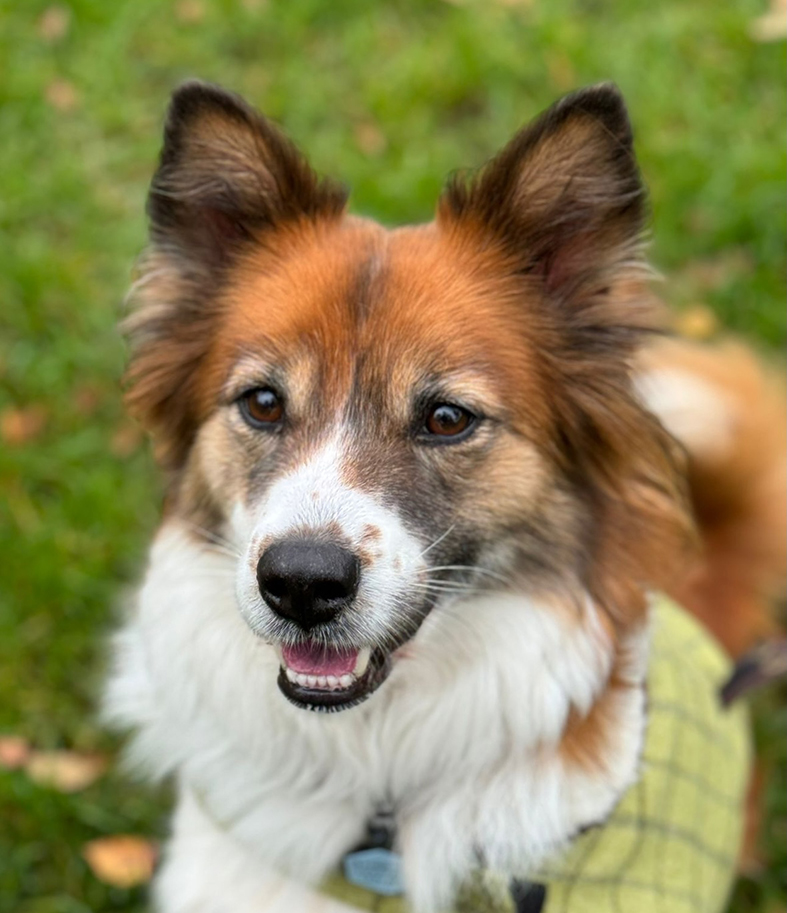
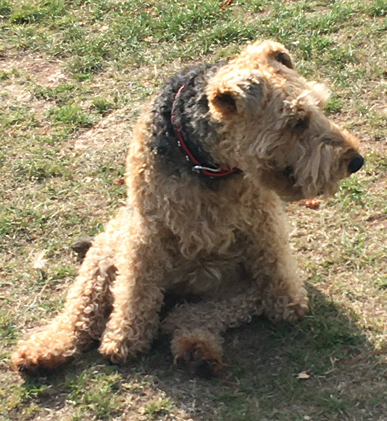
Marcus had a client who wanted a quilt depicting dogs. I am not a quilt maker but I was intrigued and asked him to send me details, sizes, preferred imagery etc. and an overview of the space where the quilt would hang. It was to be framed by Marcus and – no pressure – his client was another interior designer….He sent several images of the room that the quilt was to be hung in and I noticed a small dog’s head on one of them, I asked for pictures of any other dogs belonging to the client.

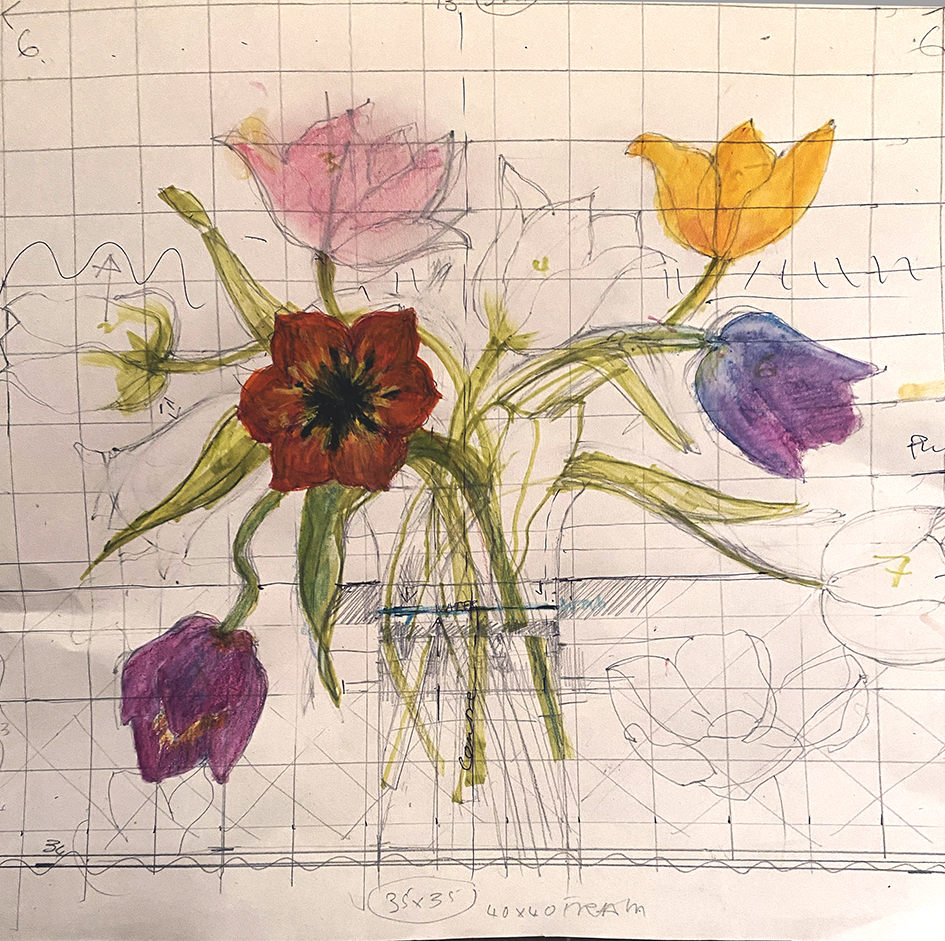
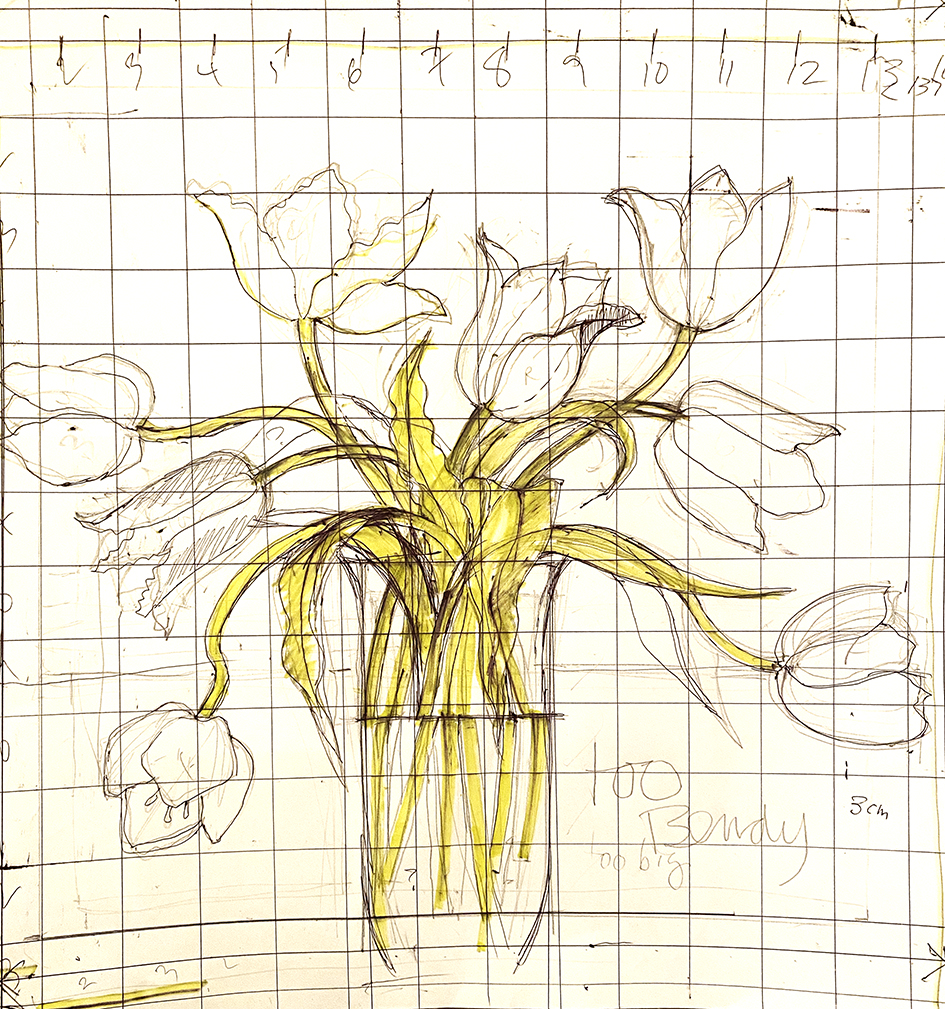
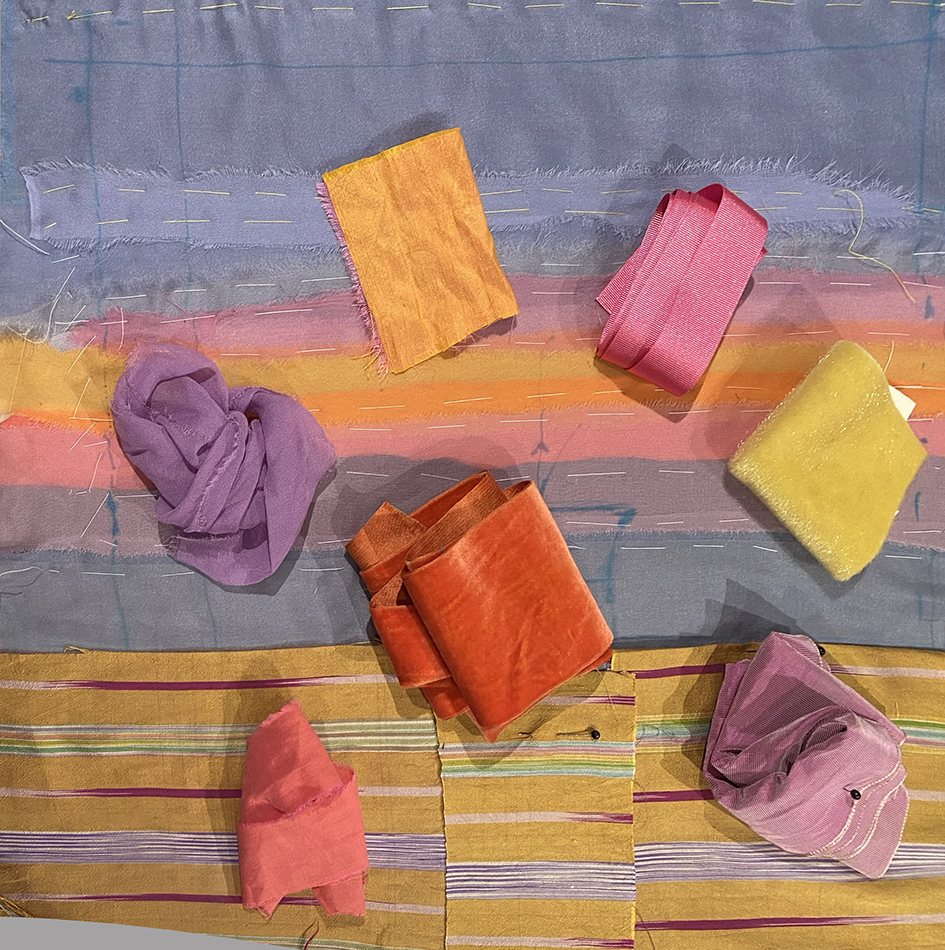
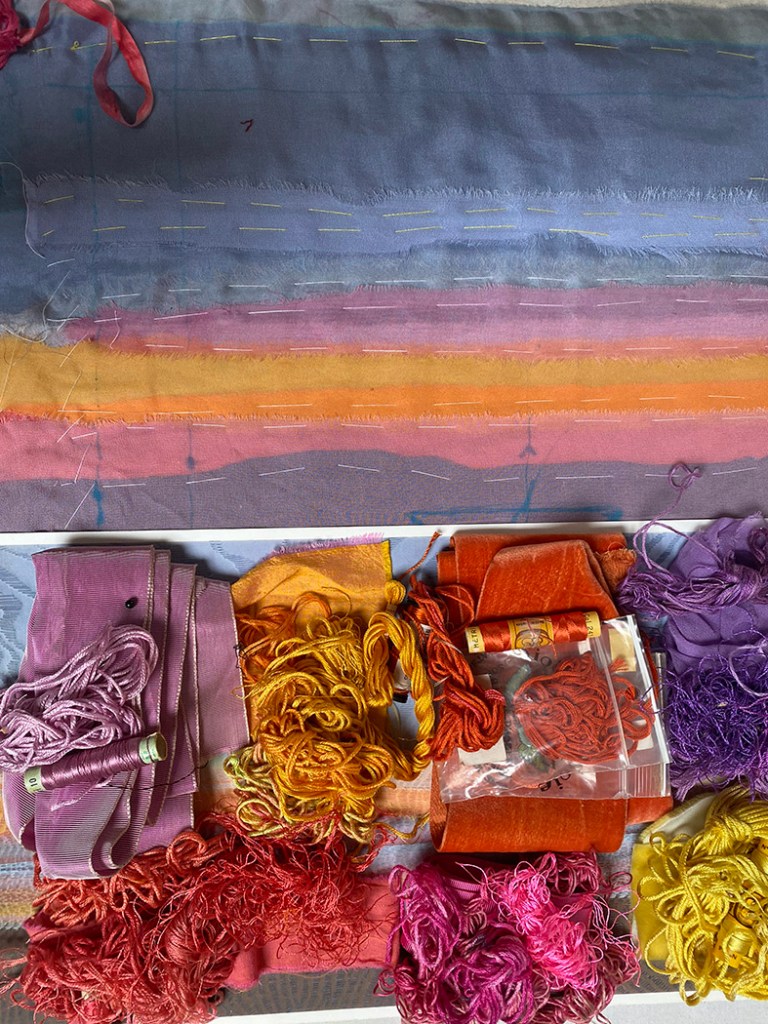
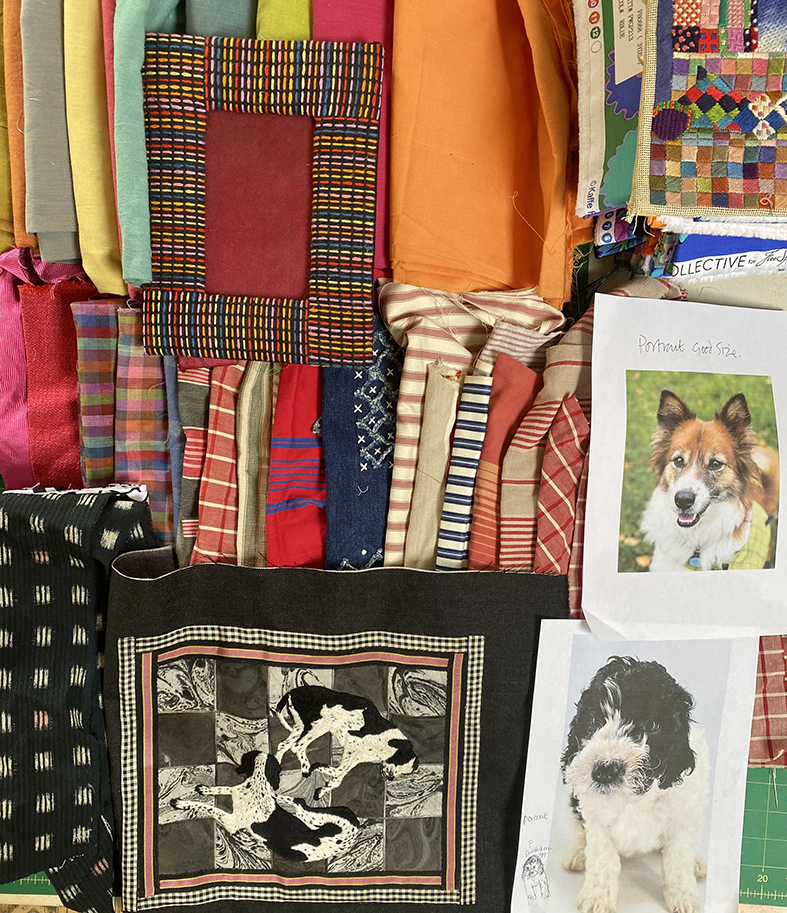
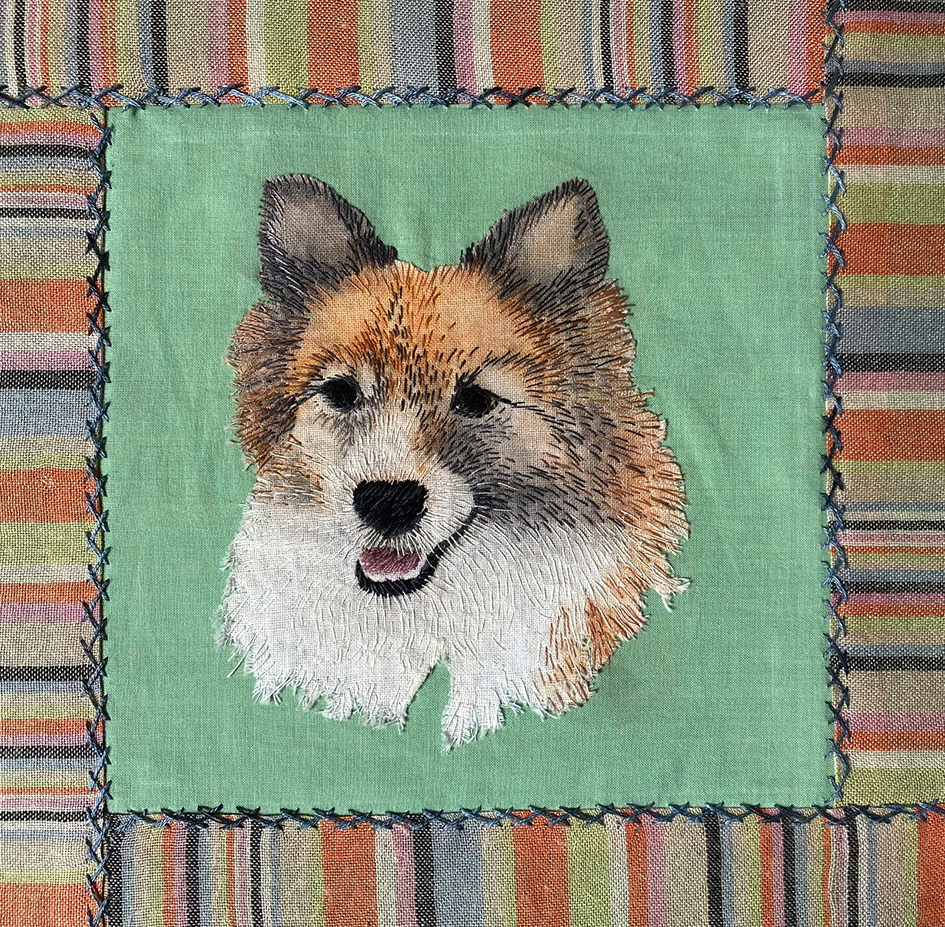
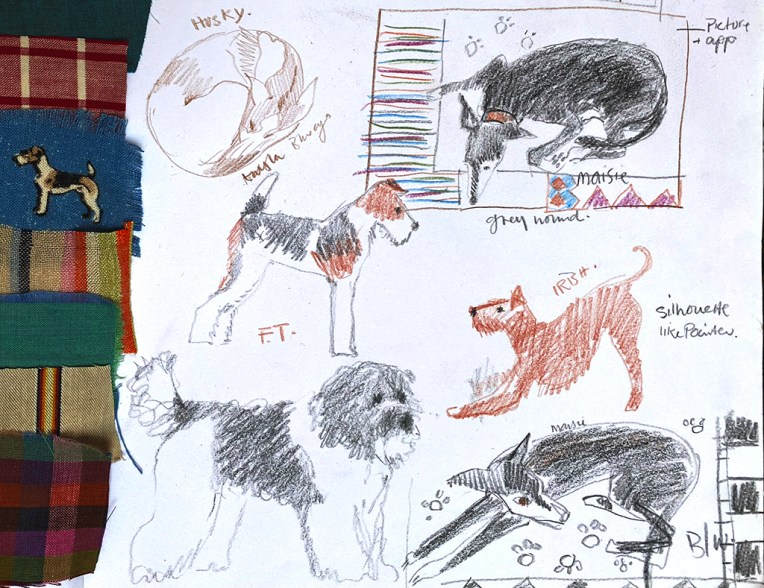
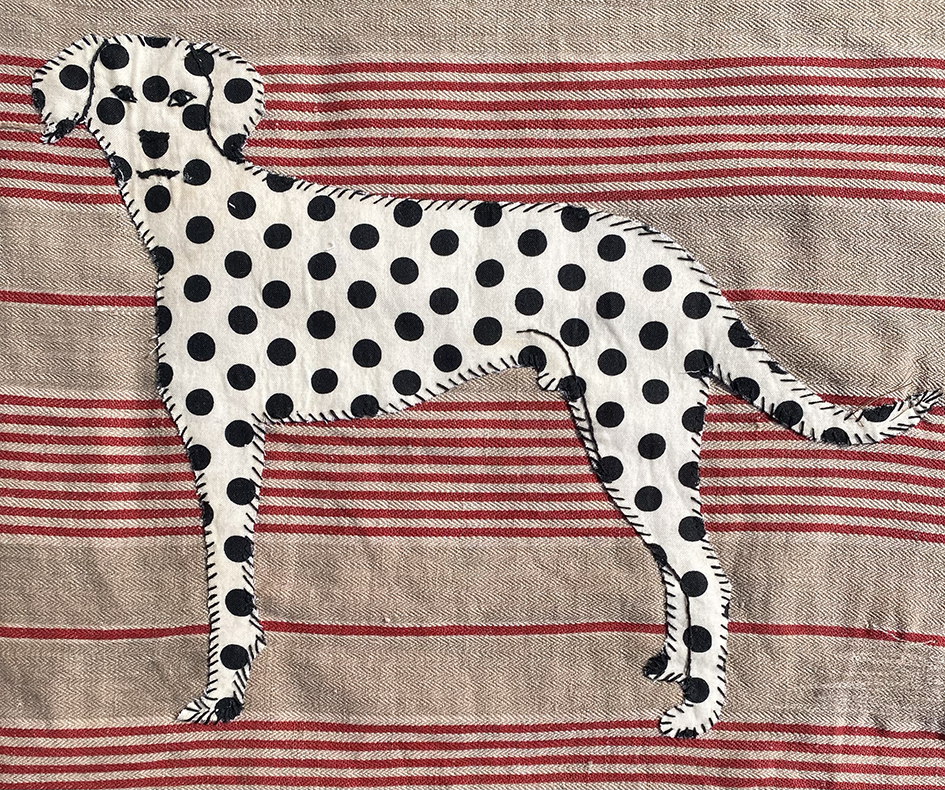
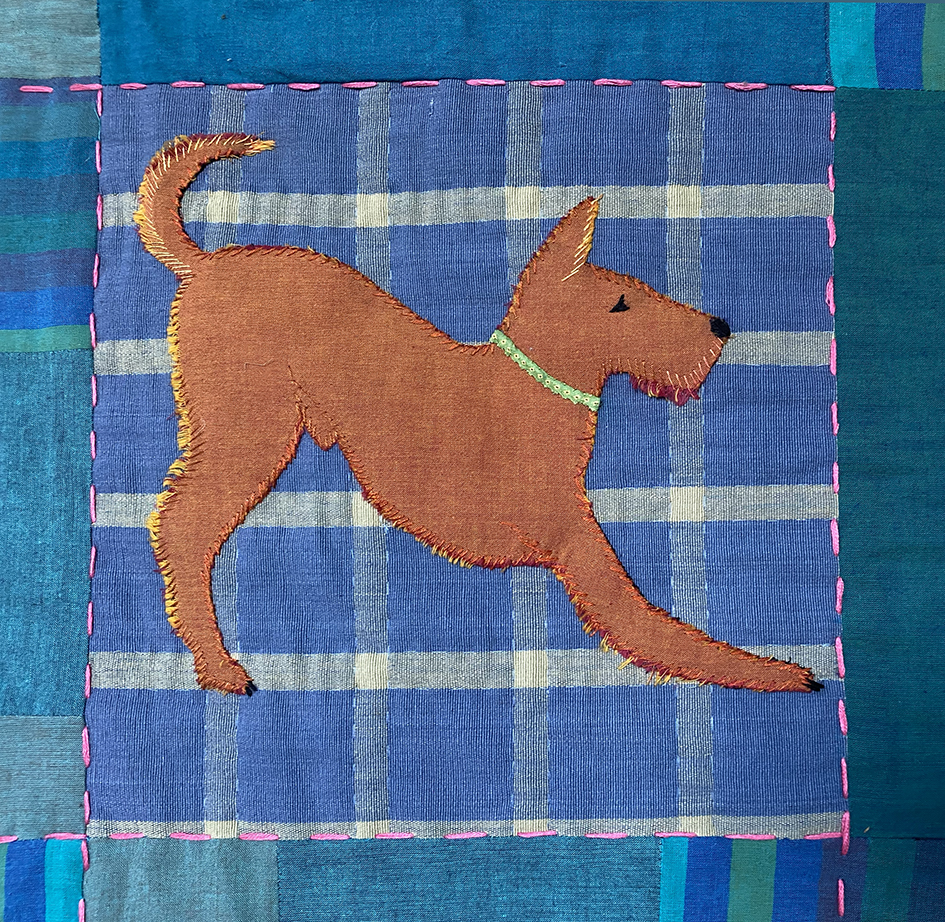
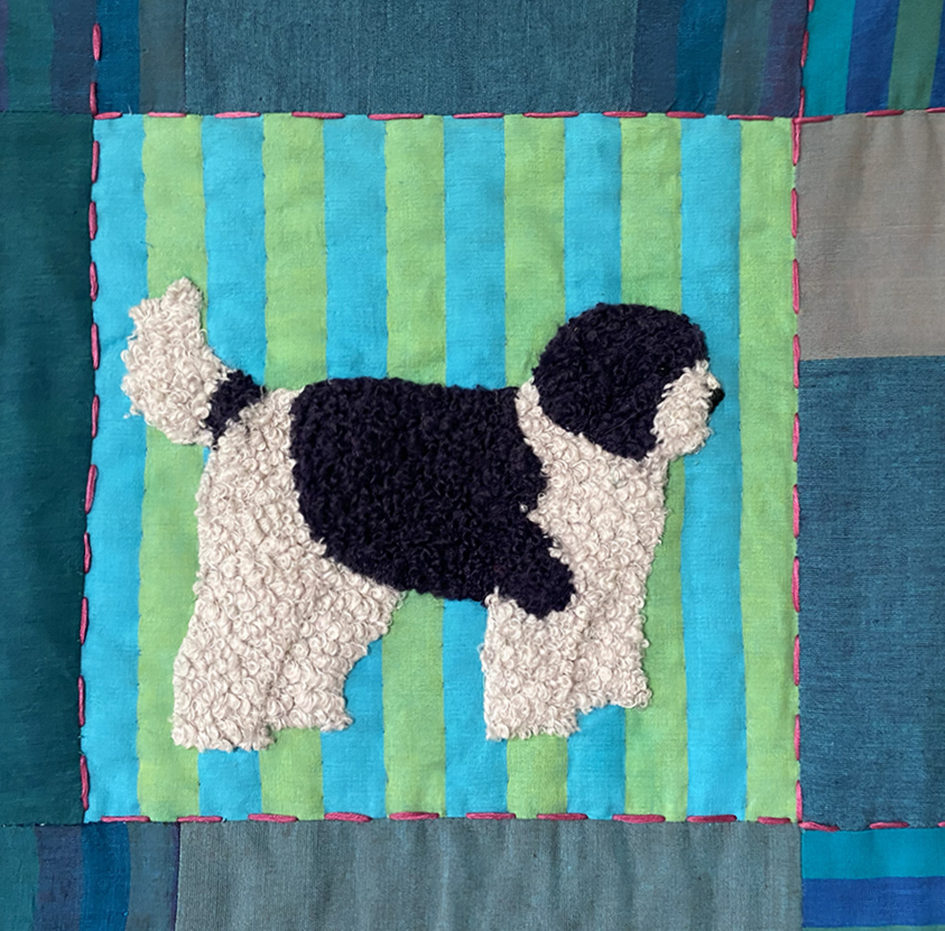
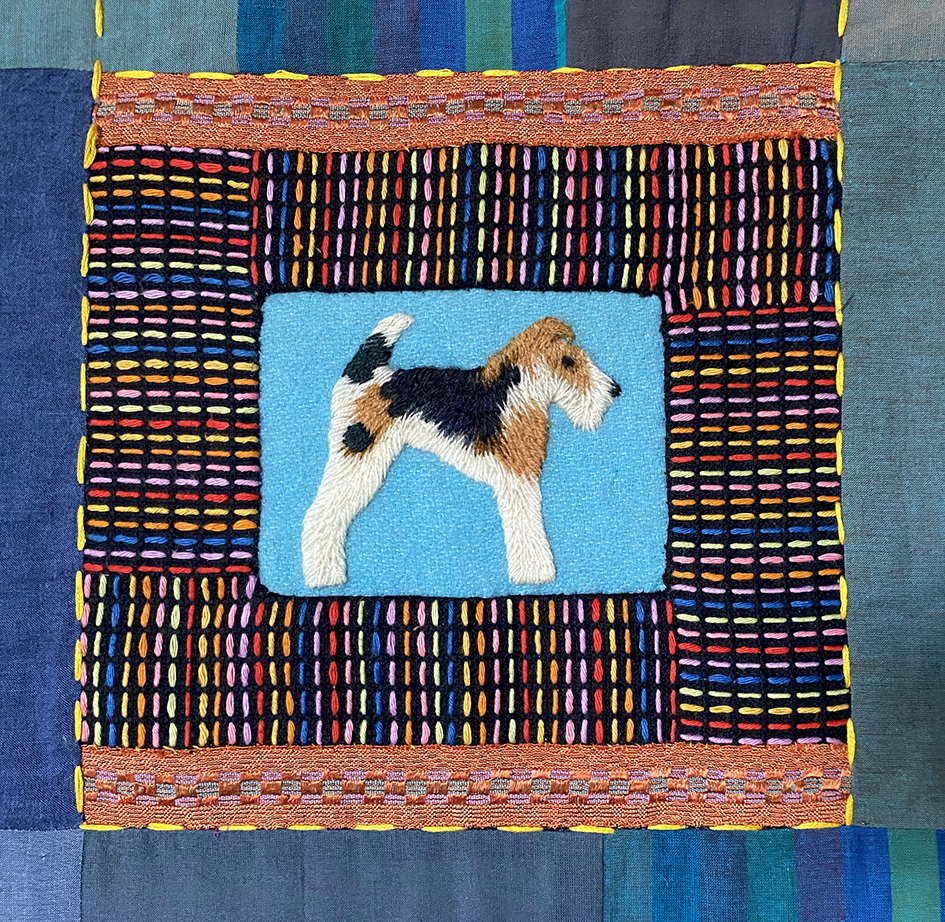
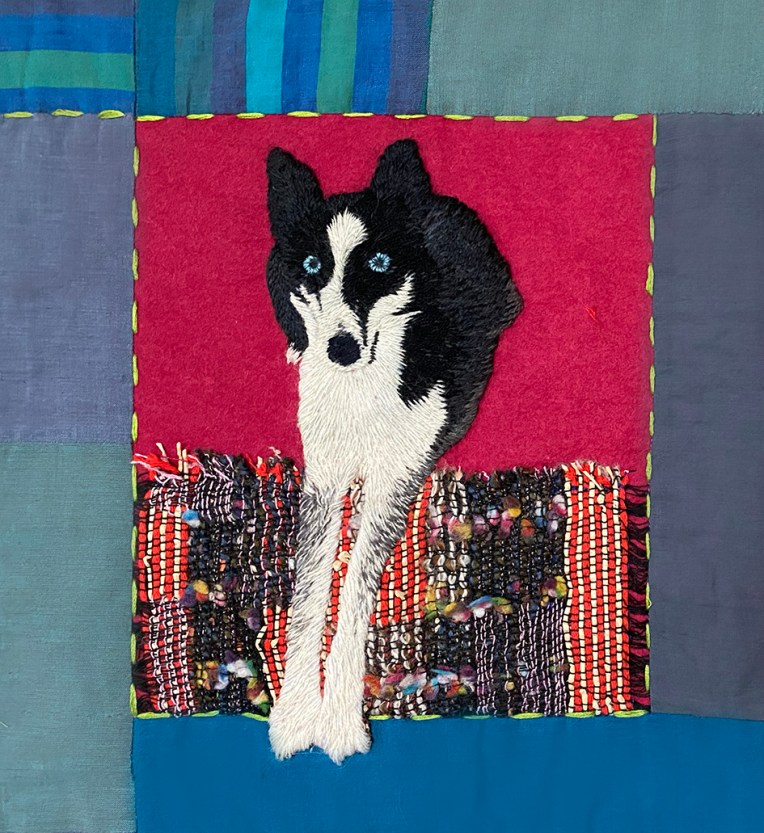
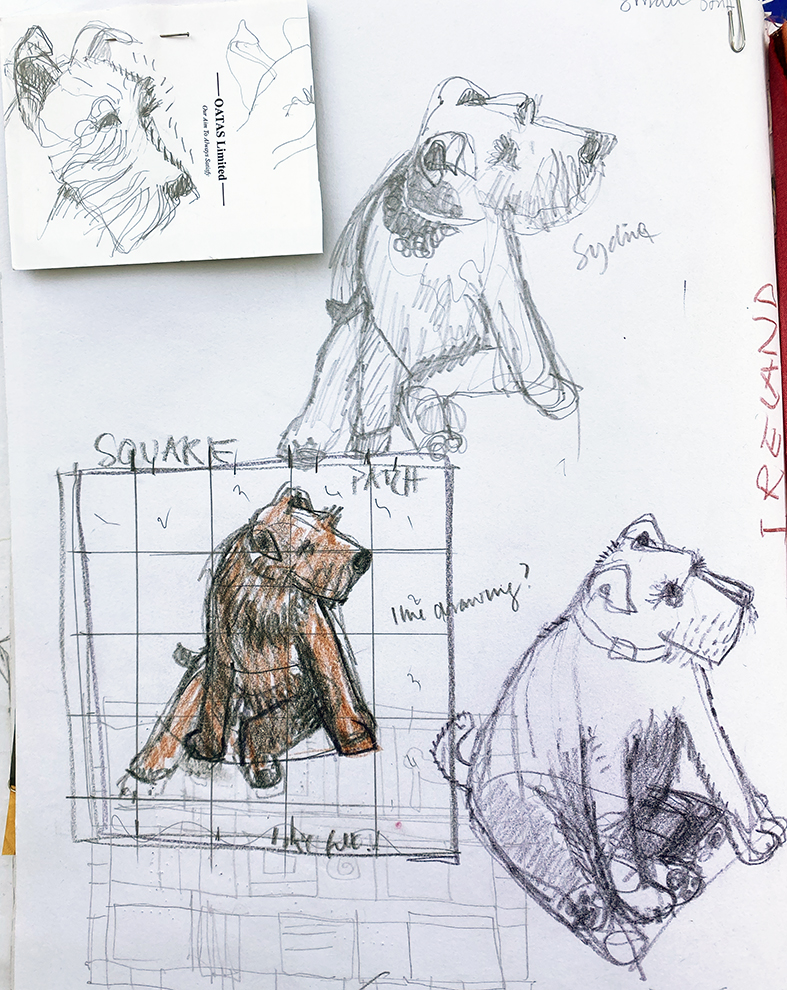
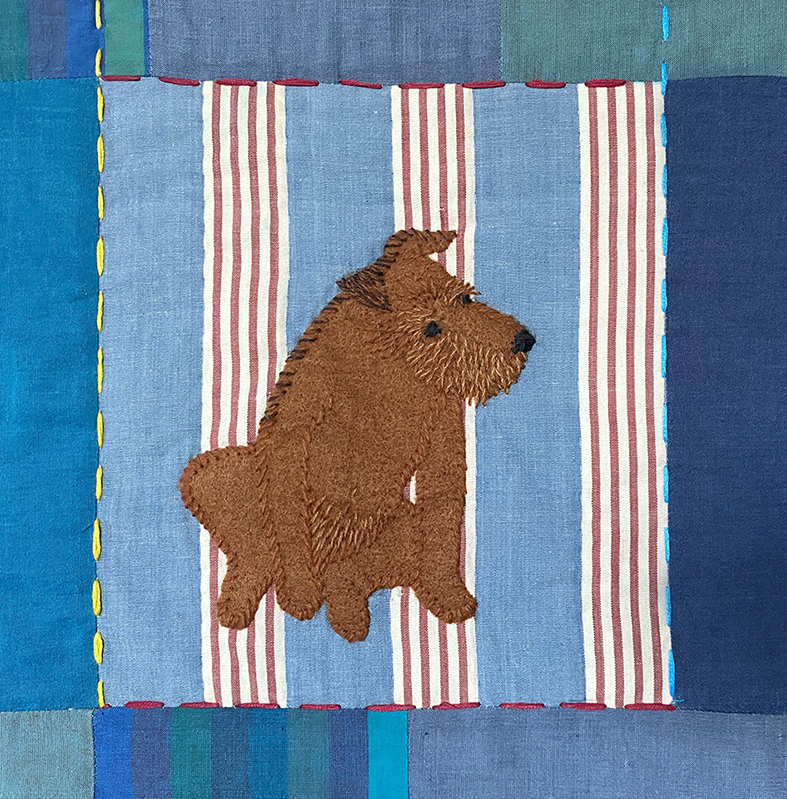
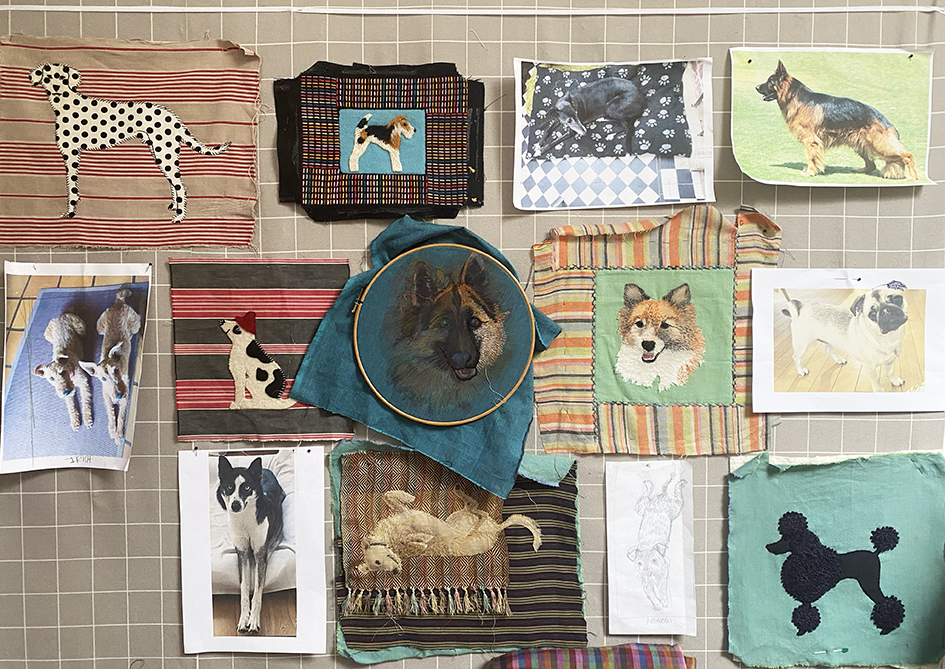
I then made several design sheets for a colour scheme and fabrication, with drawings and 2 embroidered samples using of a range of techniques that I could offer: from the simplest applique design for a spotty Dalmation to a hand-stitched portrait of the small dog in the original photograph. I was given the commission:- a quilted hanging with patchwork blocks of stitched dogs using the different techniques.

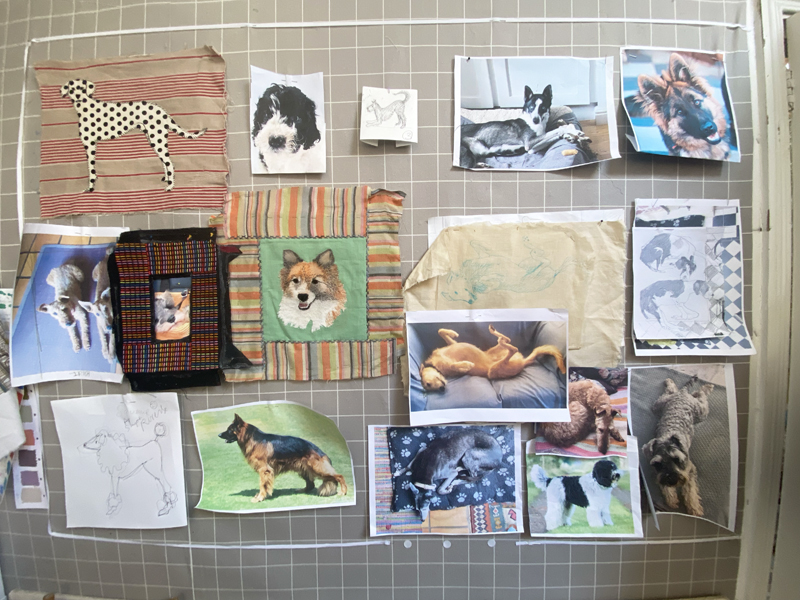
So now to find the extra dogs; my first set of drawings showed typical positions taken by each breed above. I do love dogs and am fascinated by their shapes, specially when totally relaxed. I had started with basic stance like the Dalmation, and just had to include a French poodle and terriers, so an Irish terrier, a Fox terrier and a Border terrier. And hounds, a Schnauzer Leo and even a Siberian husky Twyla, all in easy reach as they belong to friends, family and the local dog-walkers.

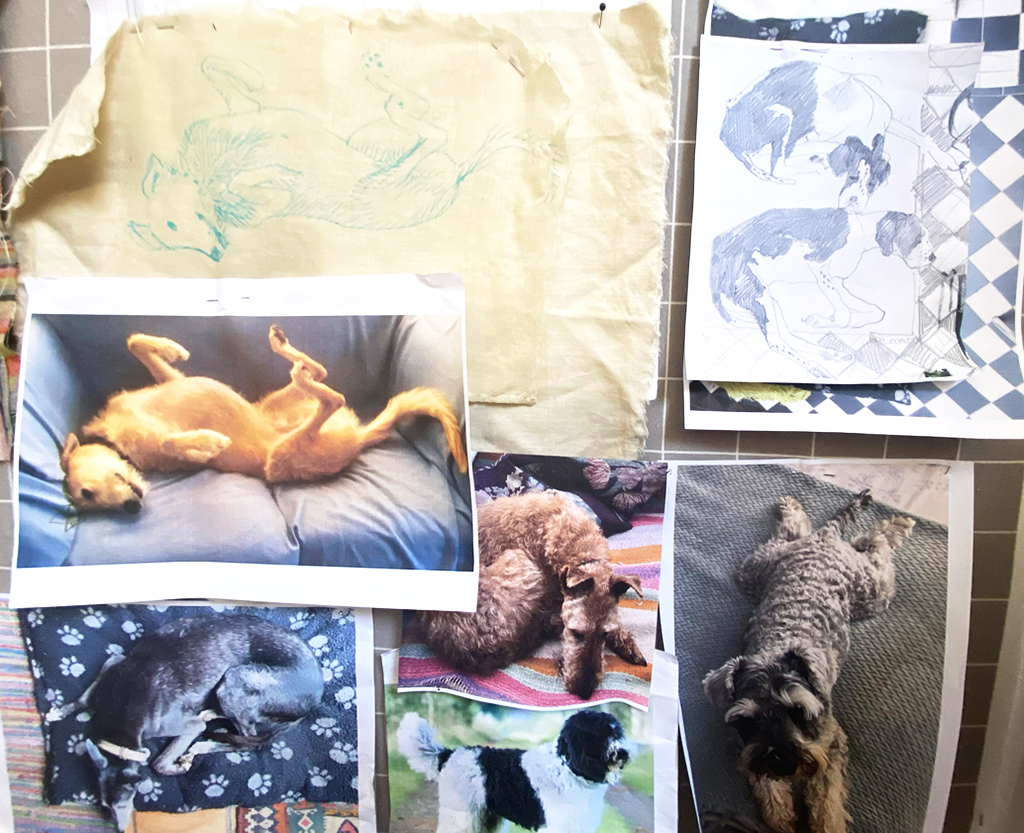
For most of the embroideries I drew the dogs to scale from photographs sent to me by the various owners, to decide which technique used for each dog but sometimes I just copied the photograph! Below are working drawings for the relaxed hound Rodney, and the oh-so-tired Sydney.

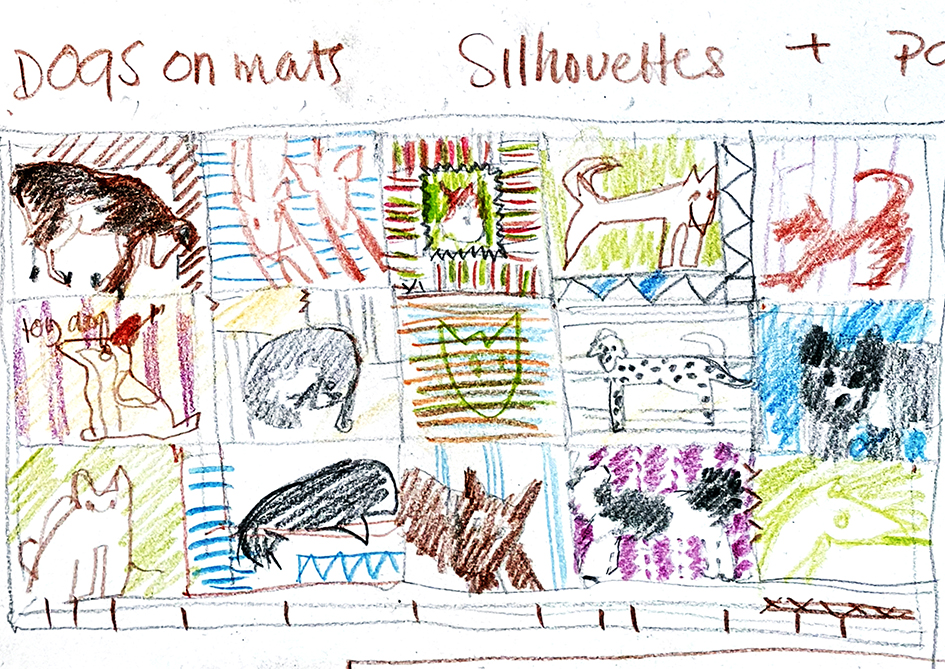
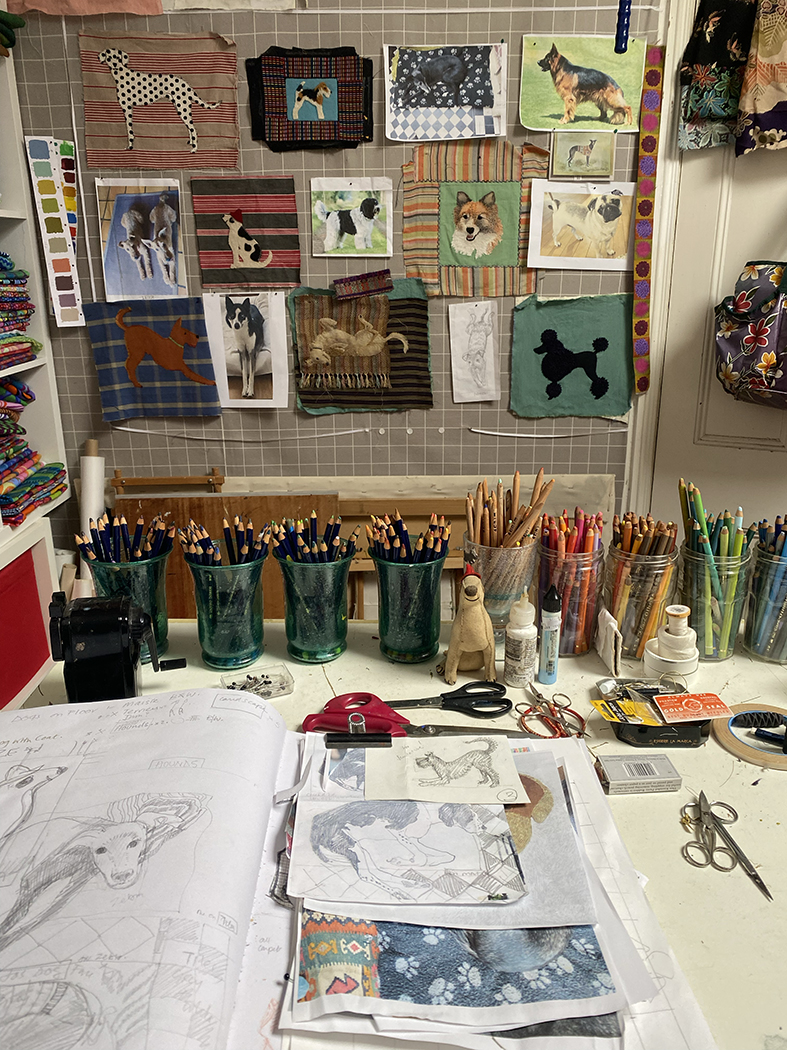
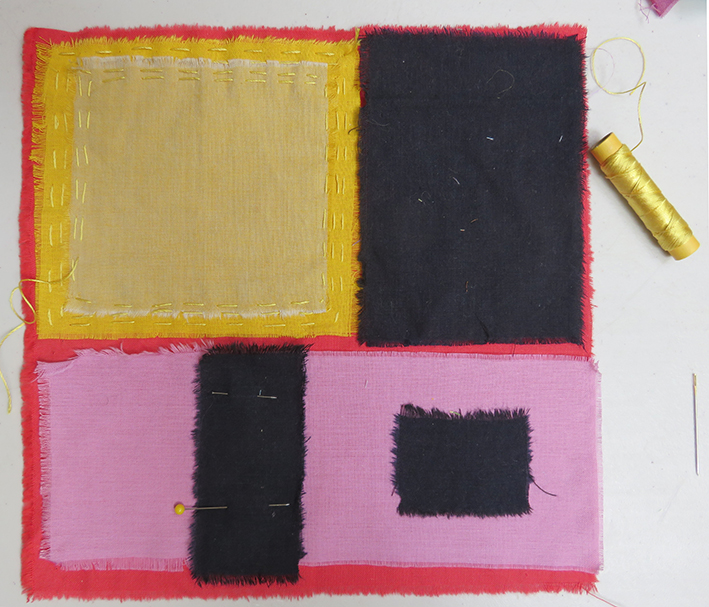
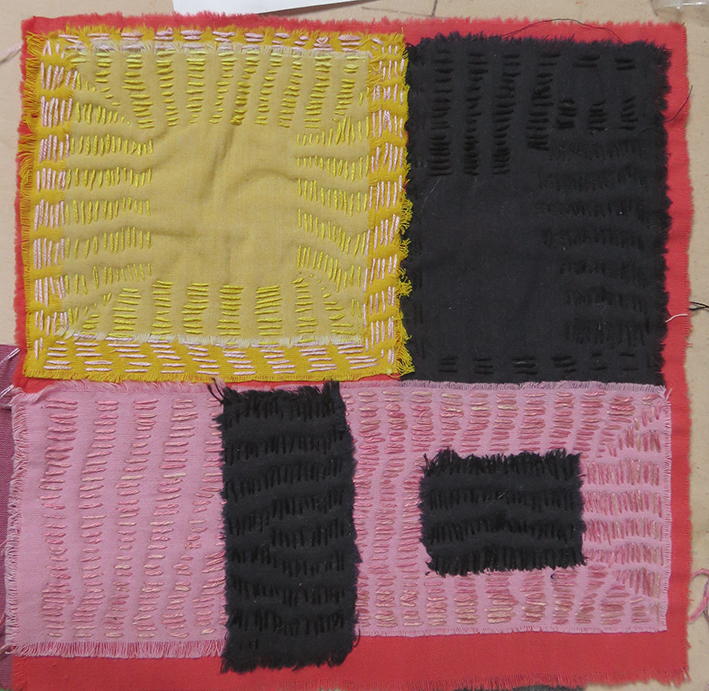
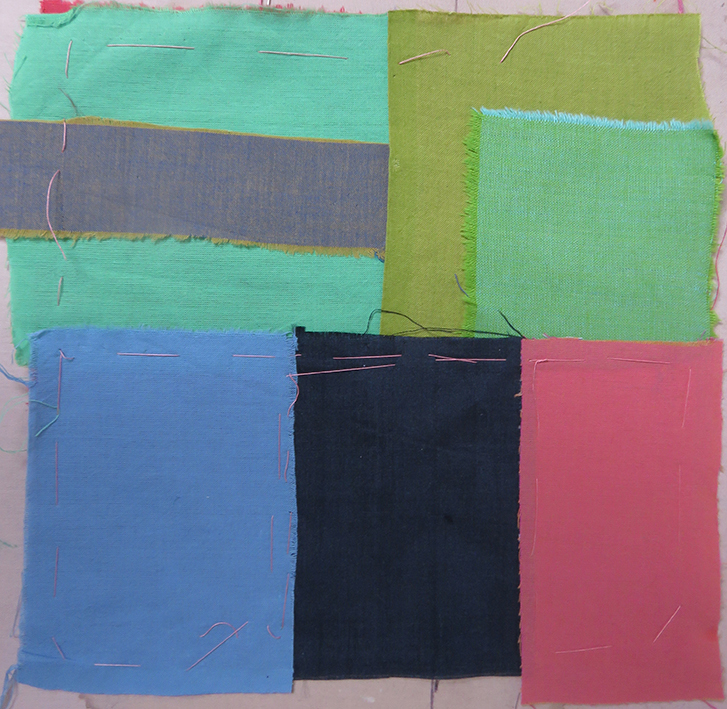
But how to assemble them into a quilt? I had been putting everything onto the quilt wall in my studio as I made it – constantly adjusting the arrangement to fit within the required measurement. Not how quilts are usually made I know, but this was created by the love of dogs, not the discipline of the patchwork quilt. The first scribbled design for the quilt shown below and the reality that surrounds it….

The design chops and changes as each new embroidery is completed and not every dog makes the final cut, but a design finally emerges. There were a few more dogs needed to complete the design, but how to highlight the family dogs (which are actual portraits) and stitch it together as a proper quilt…is the next instalment.

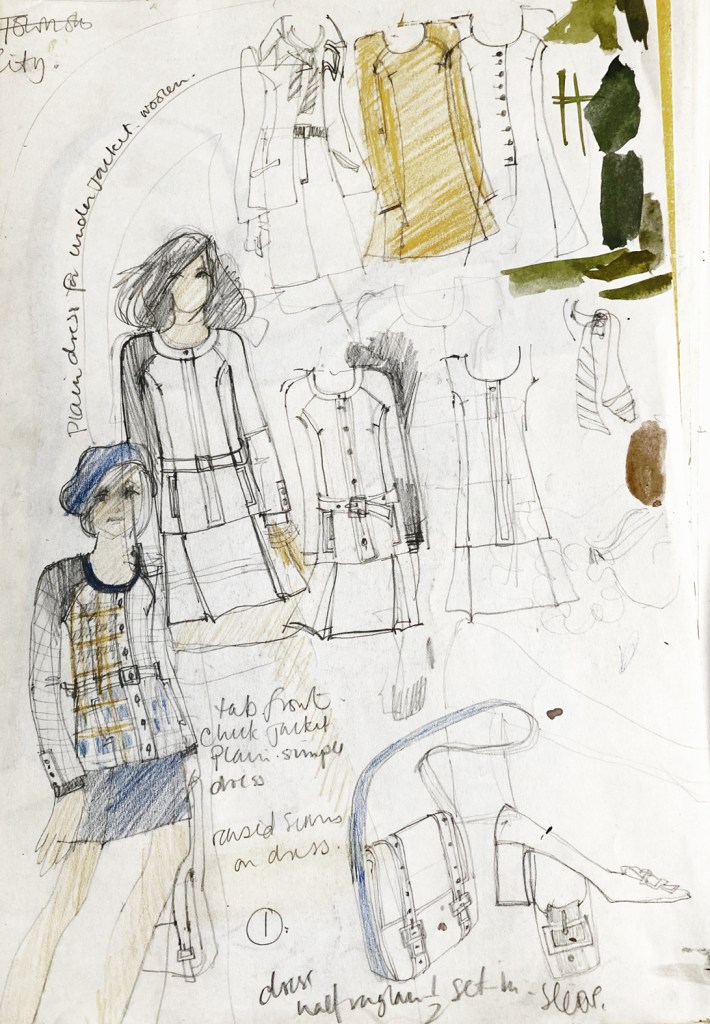
my 1960’s fashion sketch book

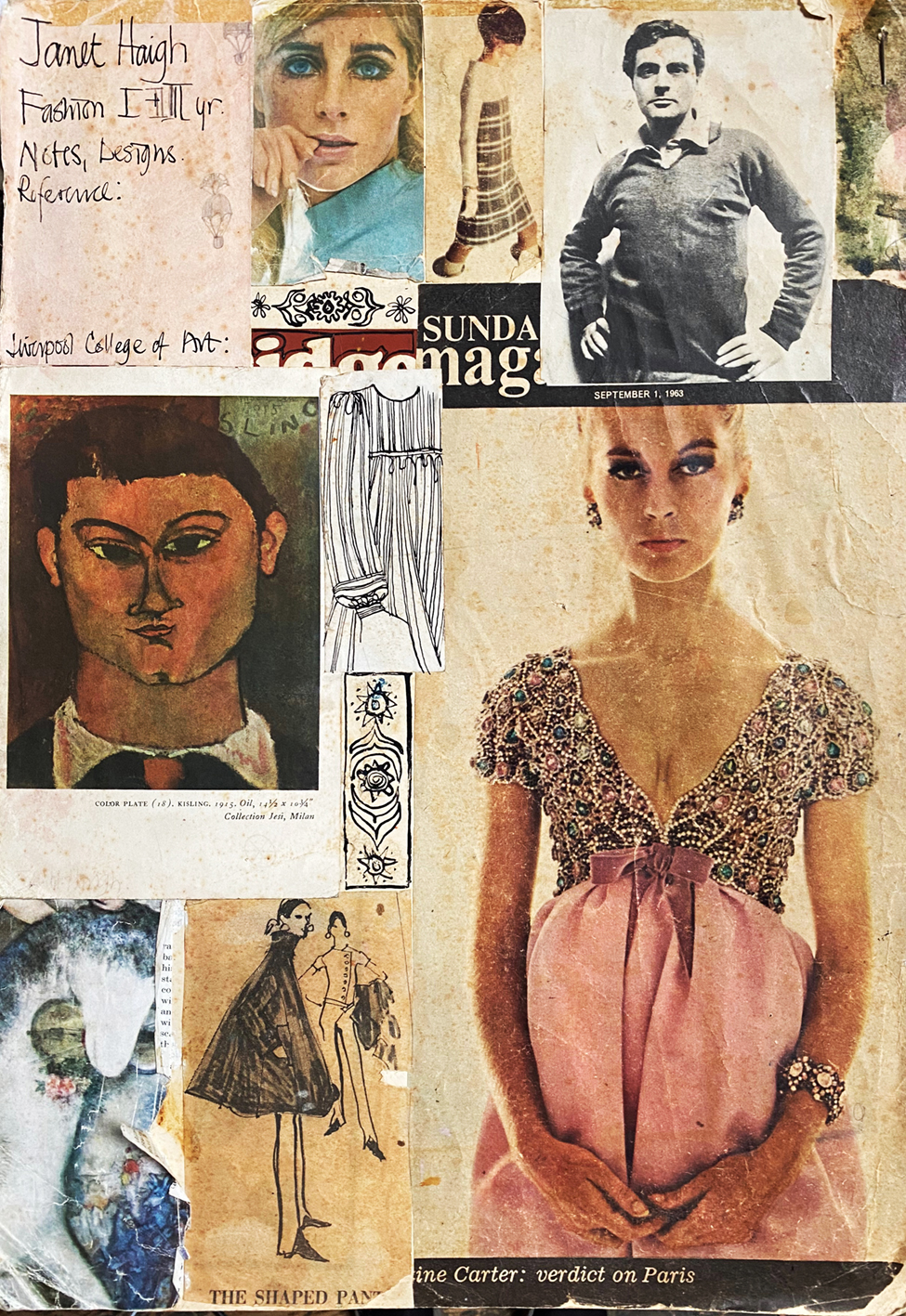
The cover of my late 1960’s sketch book – says it all!

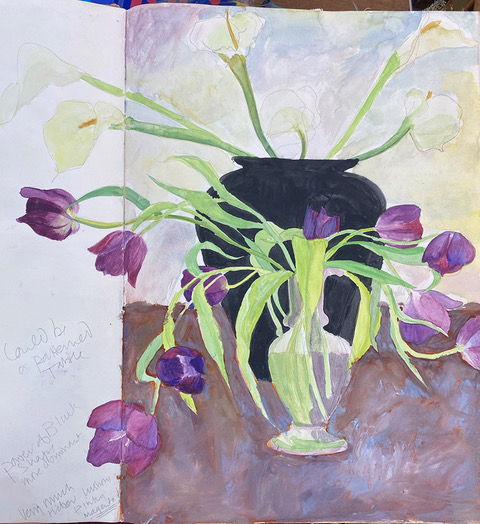
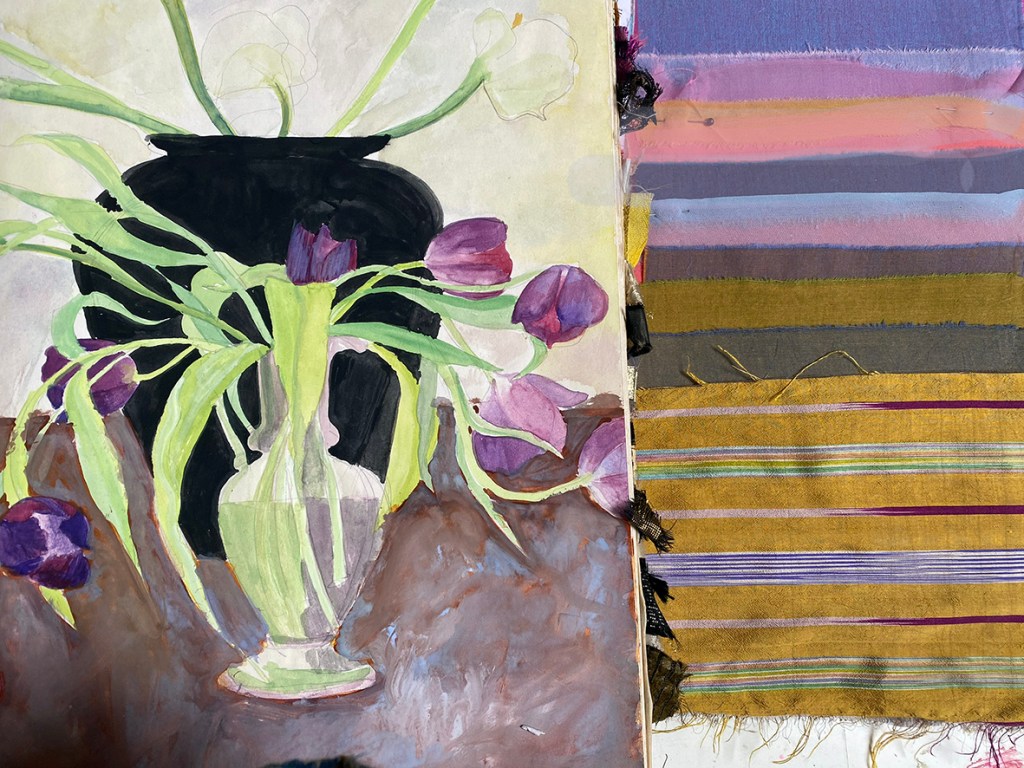
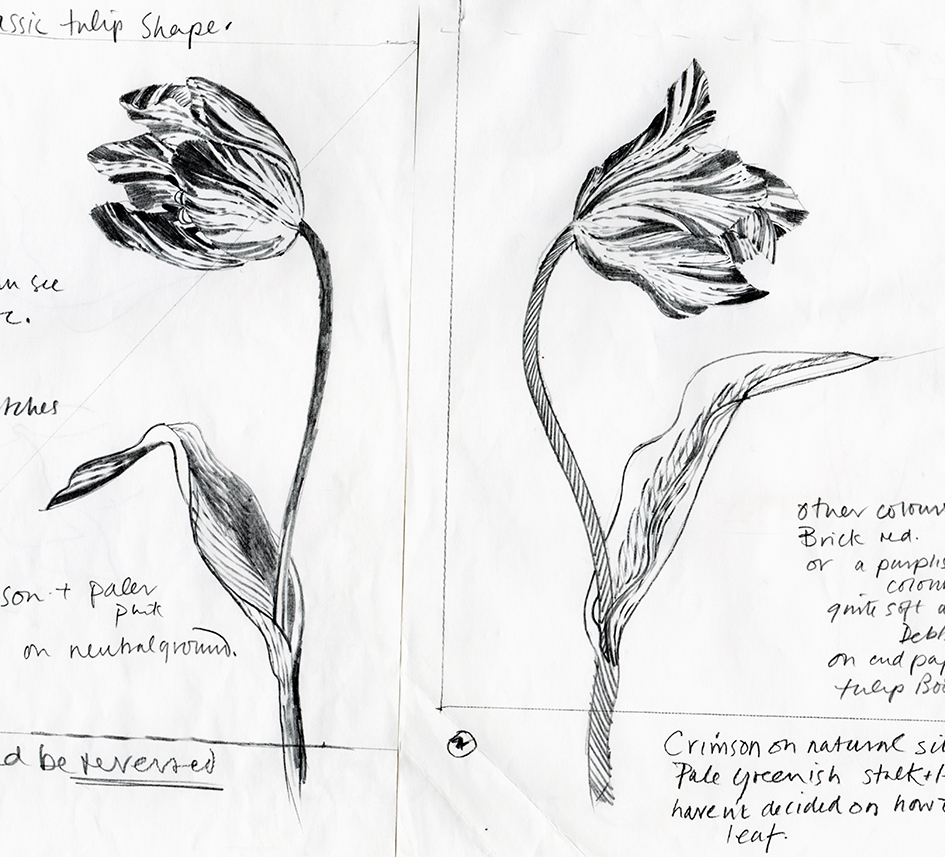
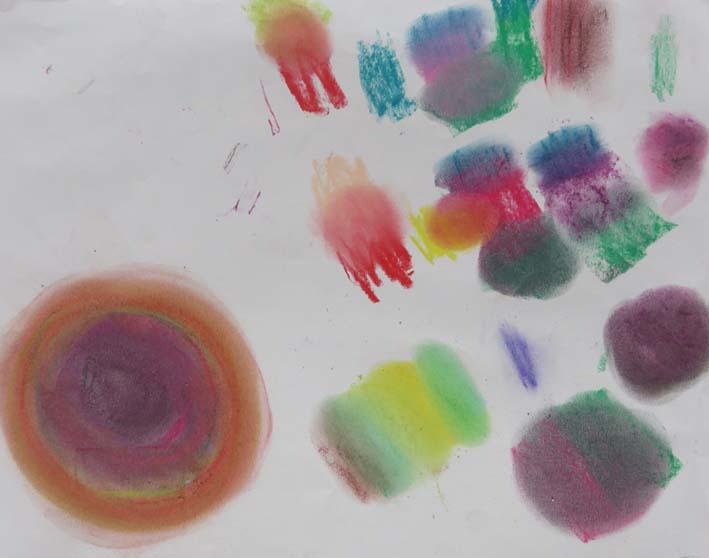
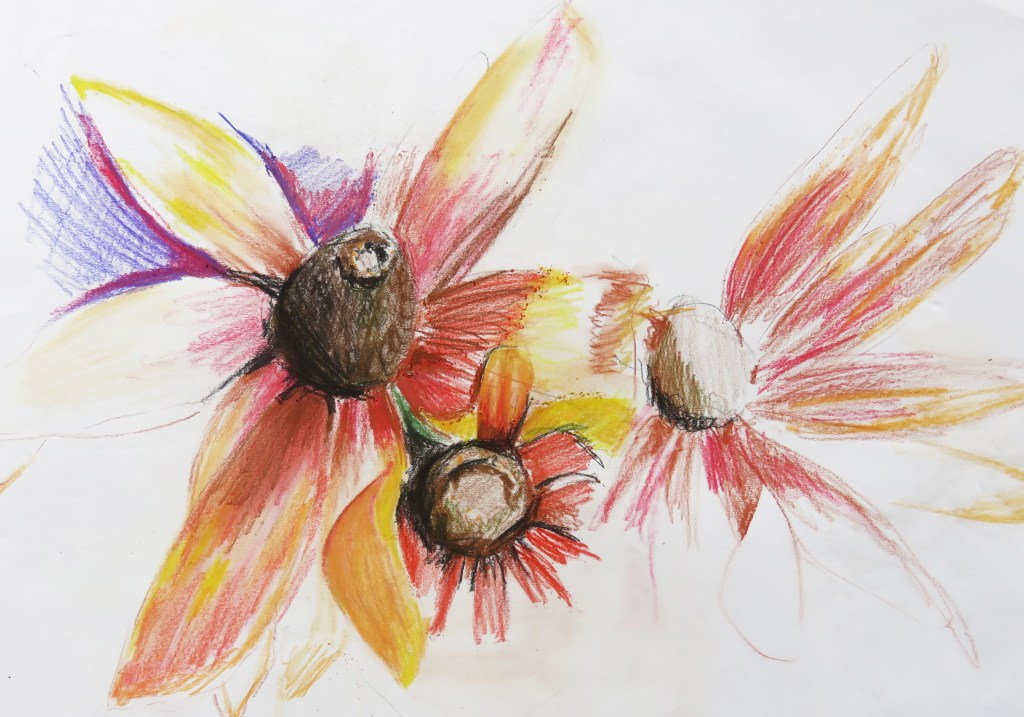
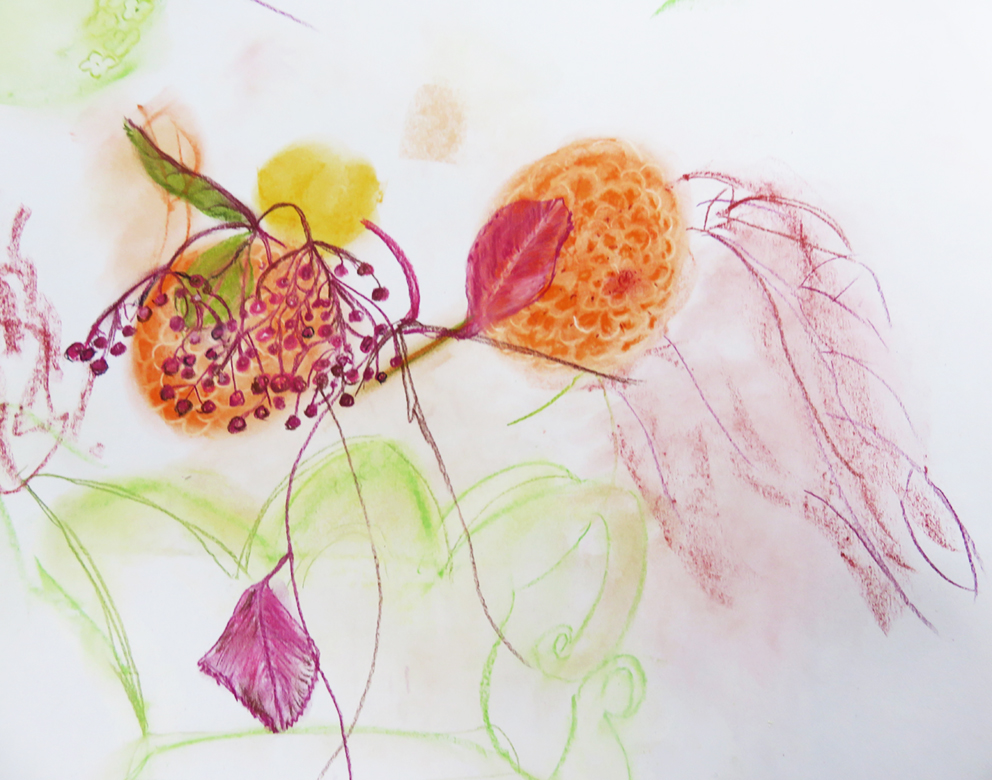
Invited to conduct a week long course of drawing flowers and then to develop the drawings into a small sketch book at Court House Farm in early June, when the cutting garden flowers are blooming. I checked out my collection of sketch books/ visual research journals (whatever they are currently called) I have kept all my research books throughout my working life.

then I unearthed my first Liverpool College of Art sketch book circa 1968 – and this cover still looks like a protrait of my early loves and fashion influences …Modigliani, man and work, Chagall, dresses as worn a la Dusty Springfield; with the faces and poses of models that influenced my design illustrations. And inside???

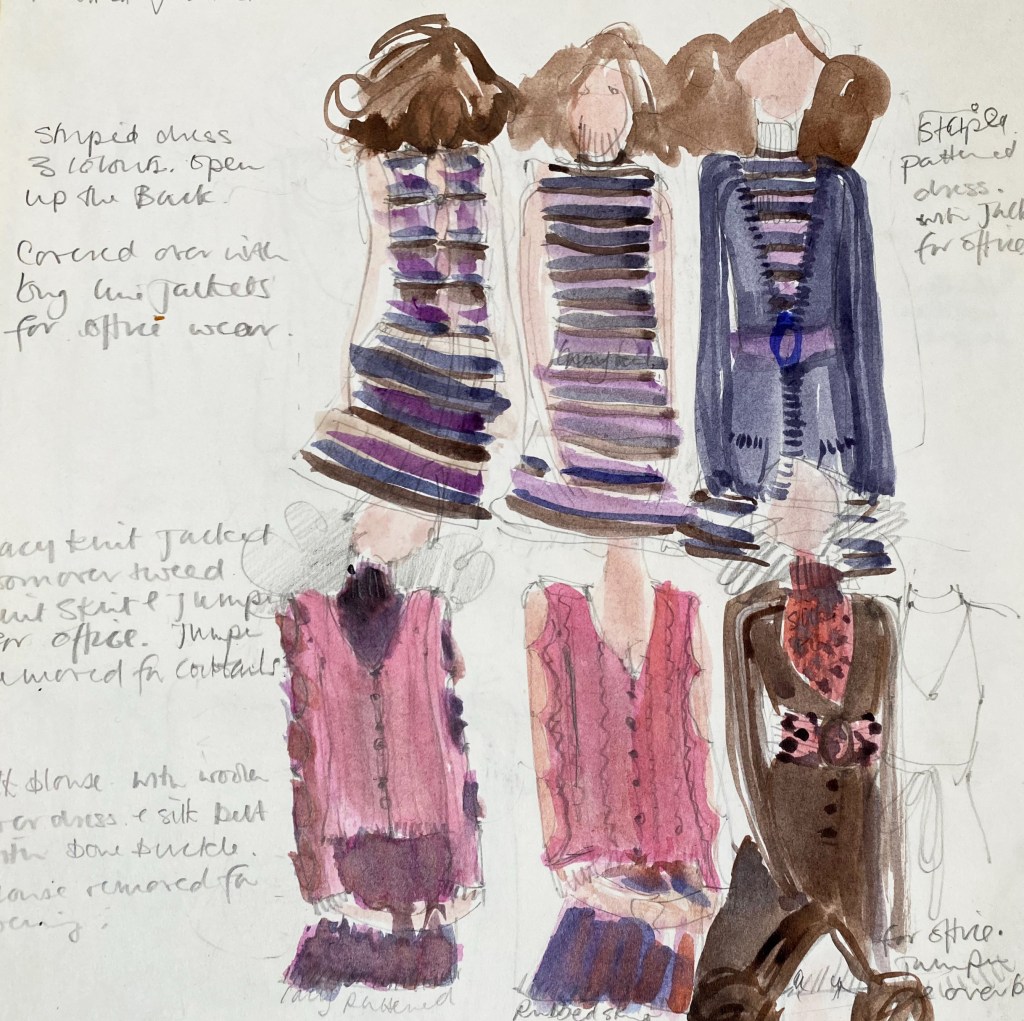
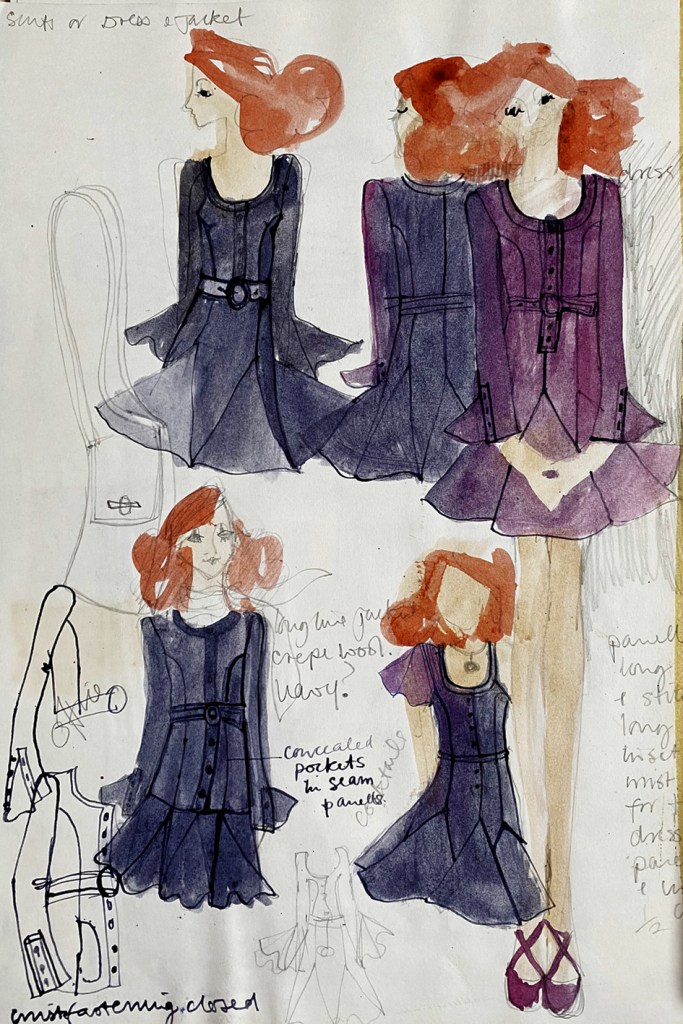
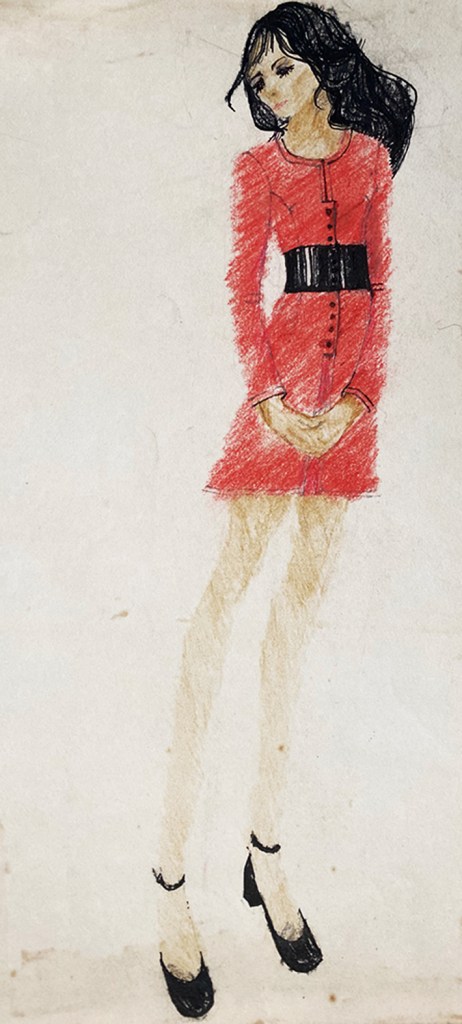
Above are a range of design drawings in pencil and coloured inks that were used to tint black and white photographs. I found that the colours were very subtle, I wonder what happened to them? These are layouts of my designs ready to be illustrated, I think for a competition for RSA (a brilliant organisation that enabled students to develop their practice with scholarships and grants). Everything looks in proportion until you see the legs, they go on forever. We were taught to make drawings that someone else could work the pattern cutting and making, a very good practice as I found out when I did become a fashion designer and illustrator in London in the 70’s. But what is really fascinating, the pages do not look so different to my own recent research books – just a change of subject matter- oh and embroidery!

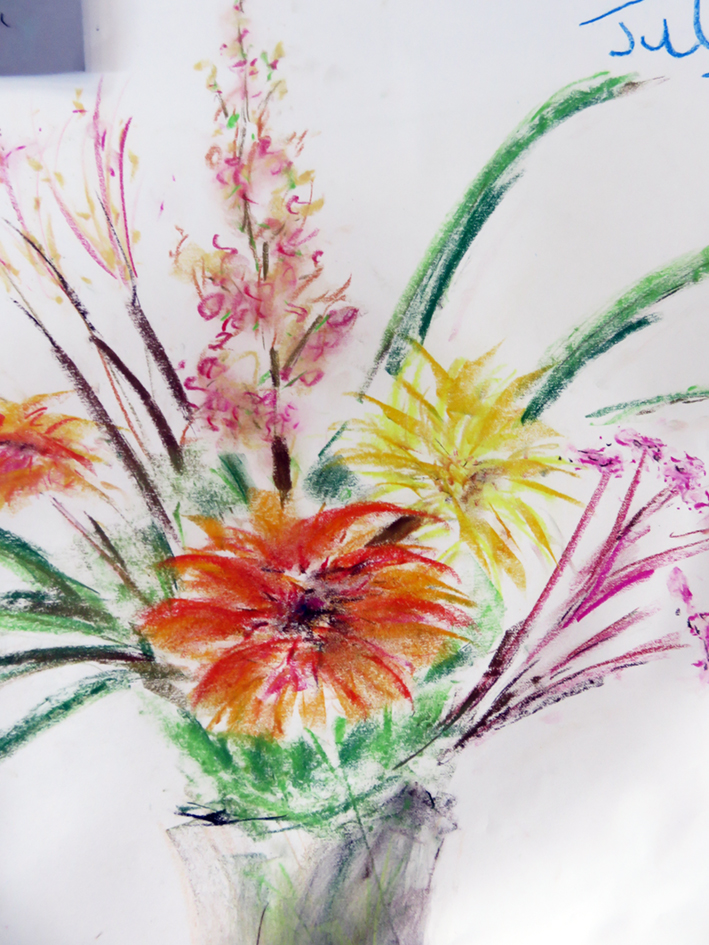
These pages of flower are from my current research book started in 2023; I am still having a written conversation with myself. Back to the 60’s…….

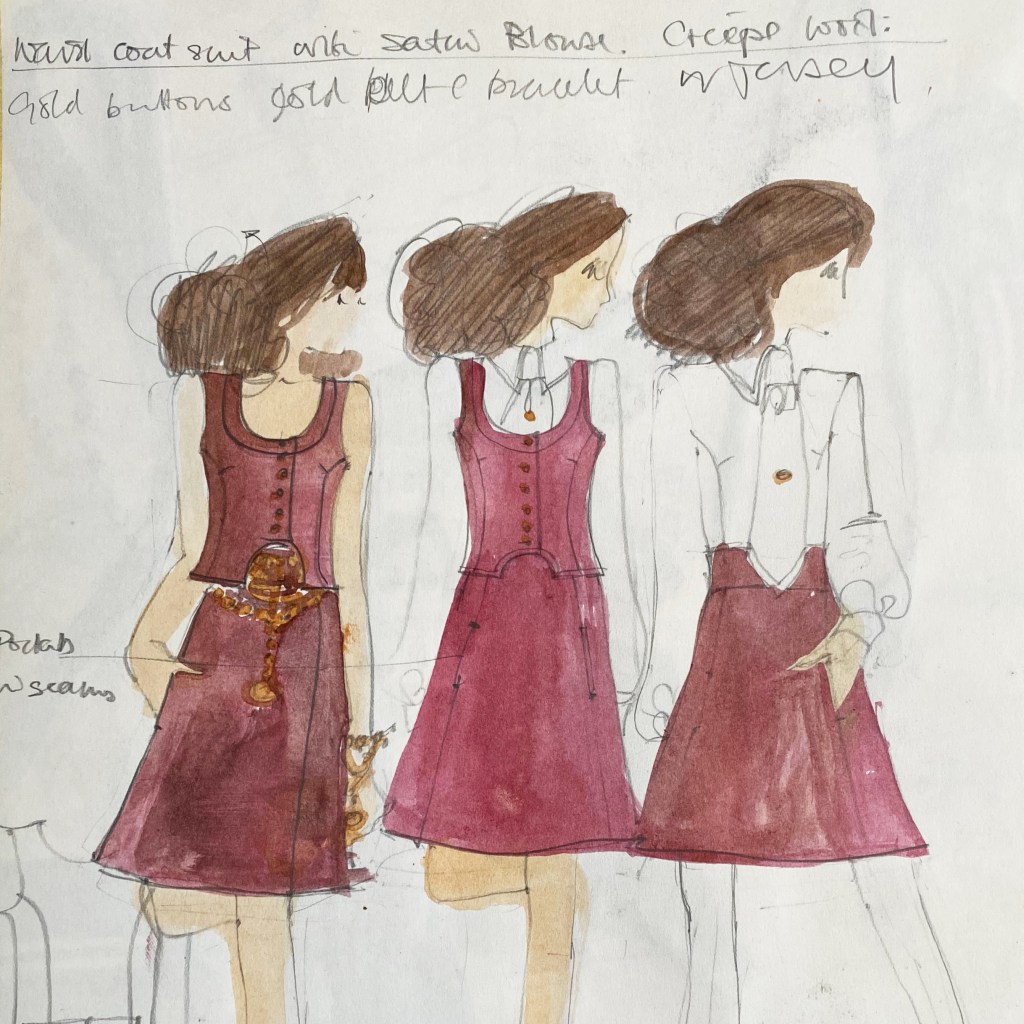
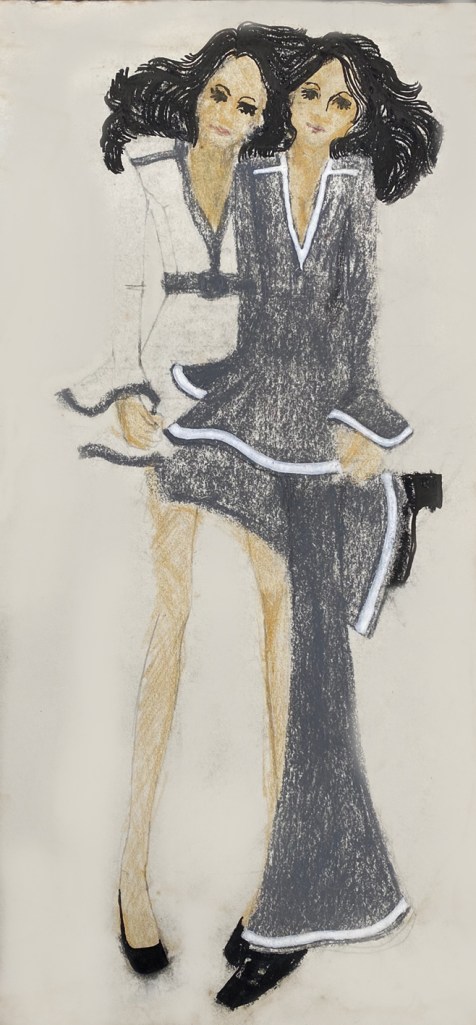
These very neat dresses were designed to be made in Double Jersey, a new innovation that made for easier pattern cutting (but little else as far as I was concernd). I always preffered my designs to be made in fine wool crepe. In the sketches below it appears I was also designing lots of accessories as well! the drawings above use my favourite media of the time – pastel with mapping pen and ink details.

Below are designs that use applique and embroidery – I remember embroidering woollen flowers onto a knitted dress for my final collection and I think this is where I really got the passion for embellishment and embroidery. My first freelance job was making and designing appliqued T shirts for the Mr Freedom in Kensington – the height of London boutique street fashion at the time.

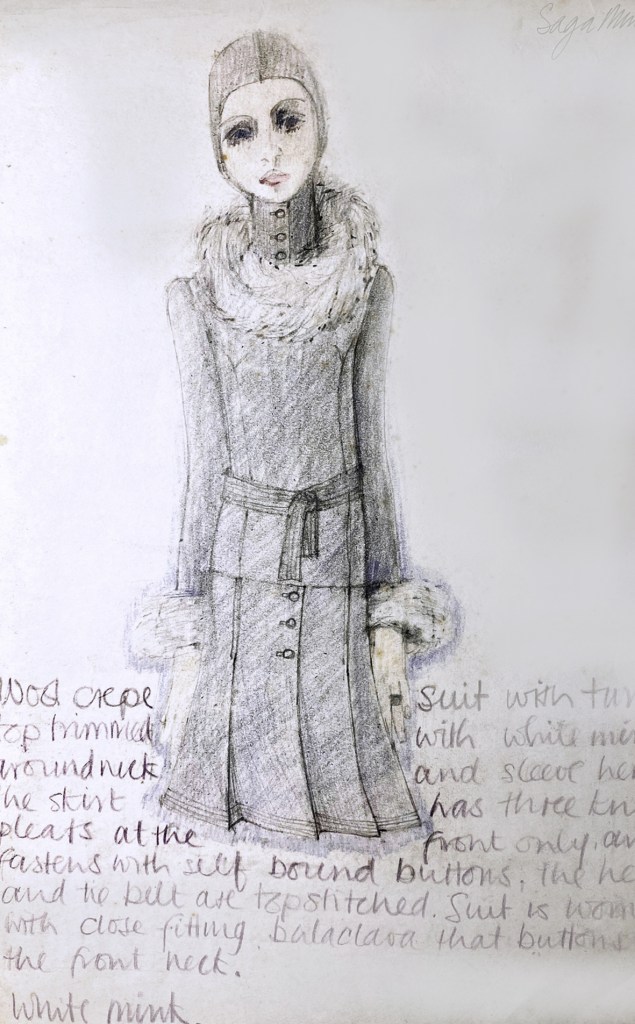
Another sign of the times the Saga Mink competition, ( I did not win – well just how much fur would these designs sell)? The anti fur lobbly was just starting up, but that’s another story. The drawings are in crayon and pencil.

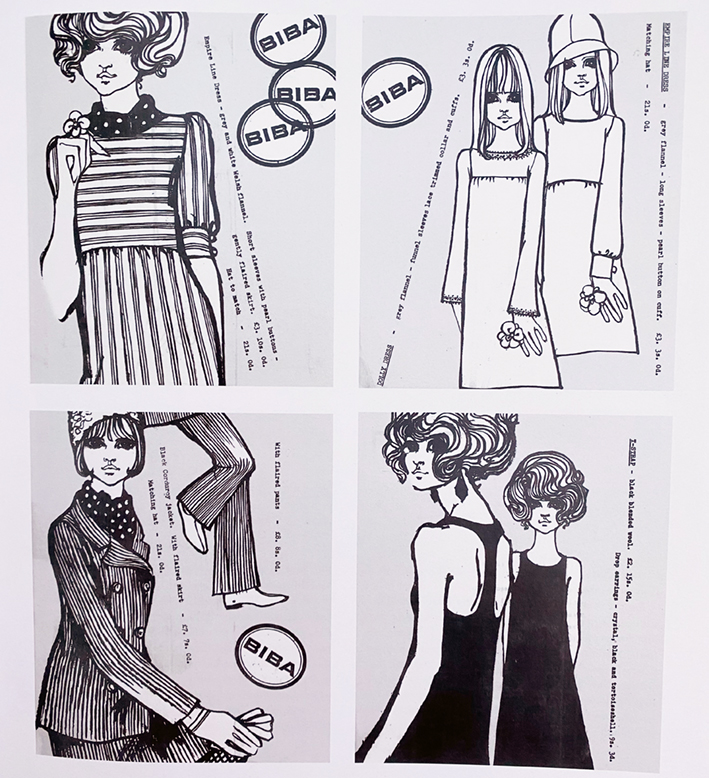
However here you can see the direct connection to the cover of my sketch book and the influence of my favourite fashion designer and illustrator – Barbara Hulanicki the design genius behind the most fashionable shop of the times – Biba .

Autumn Flower drawing Class

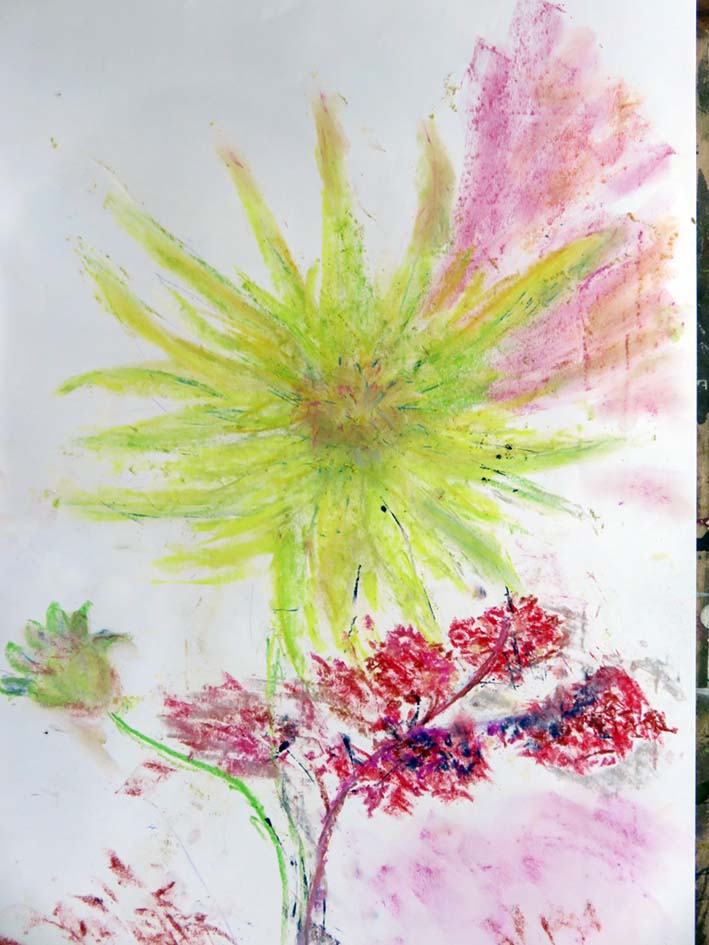
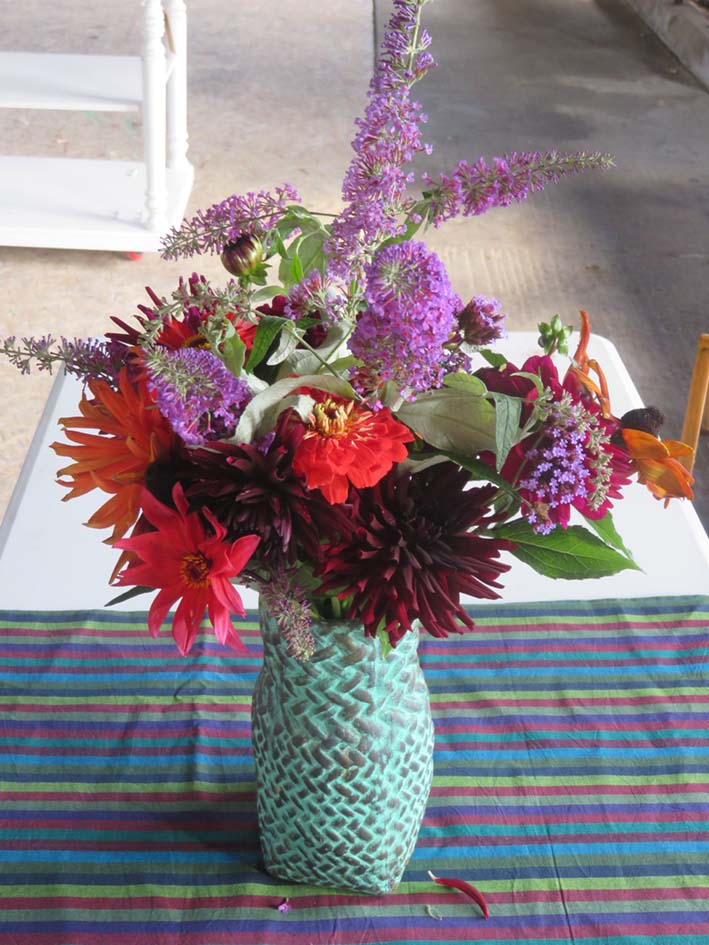
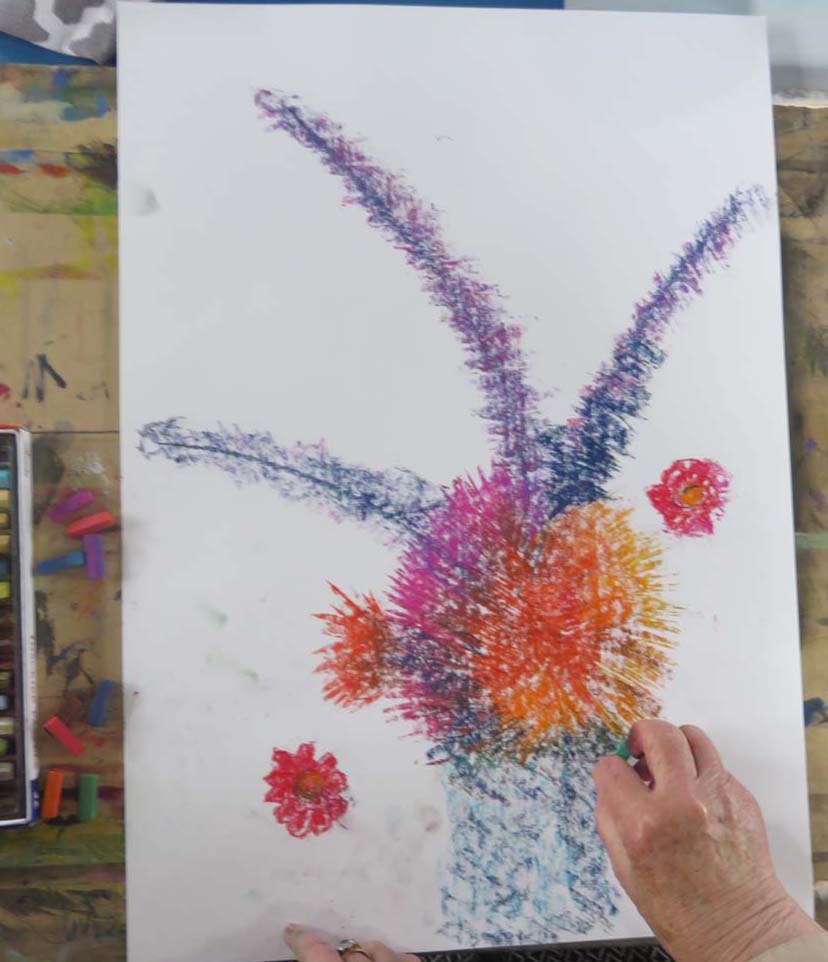
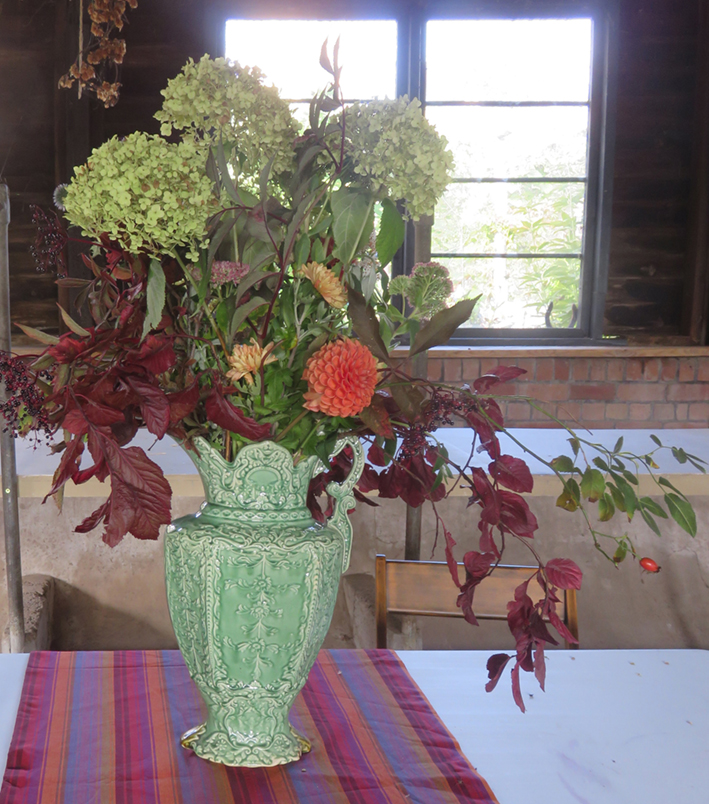
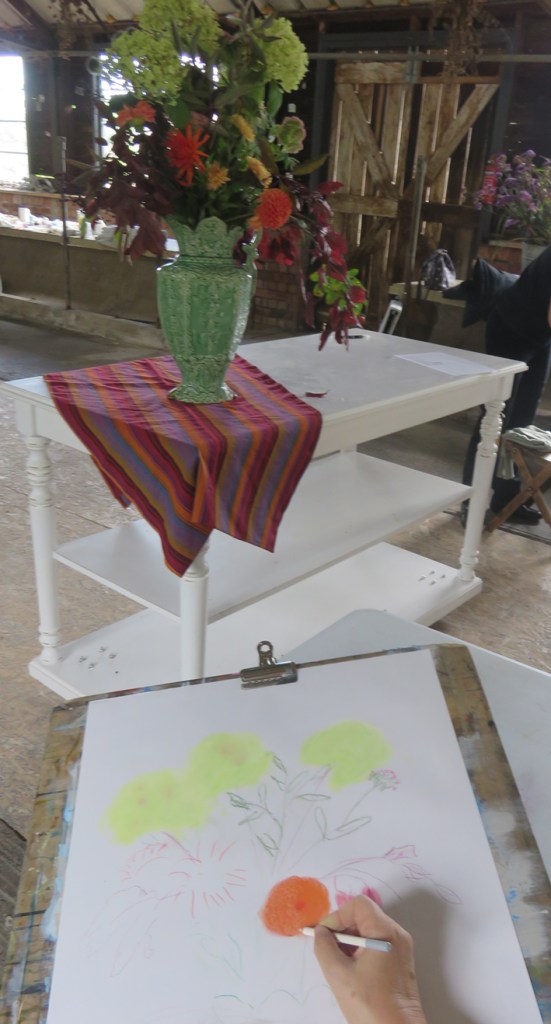
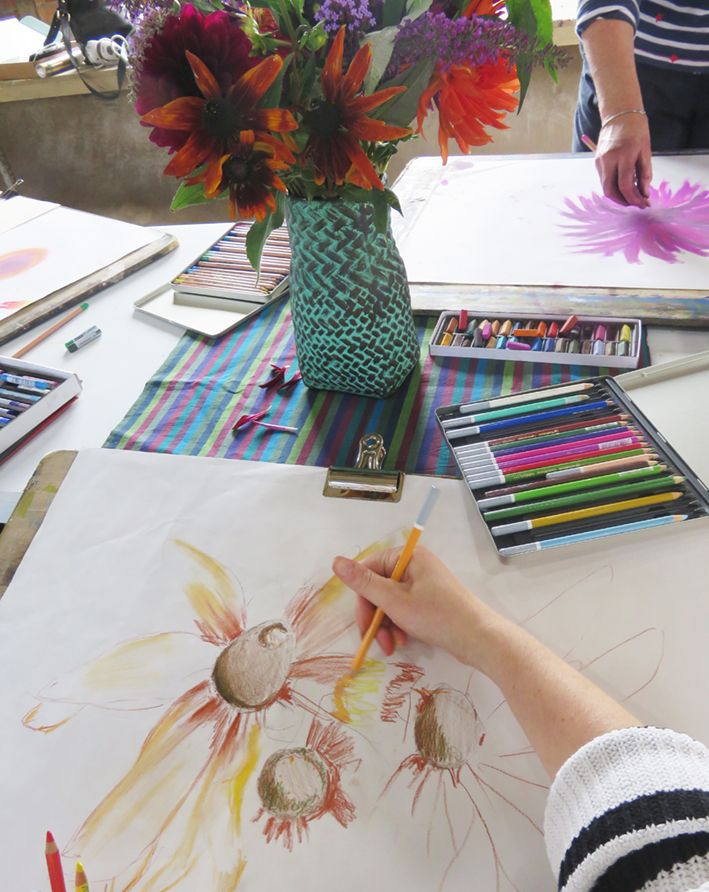
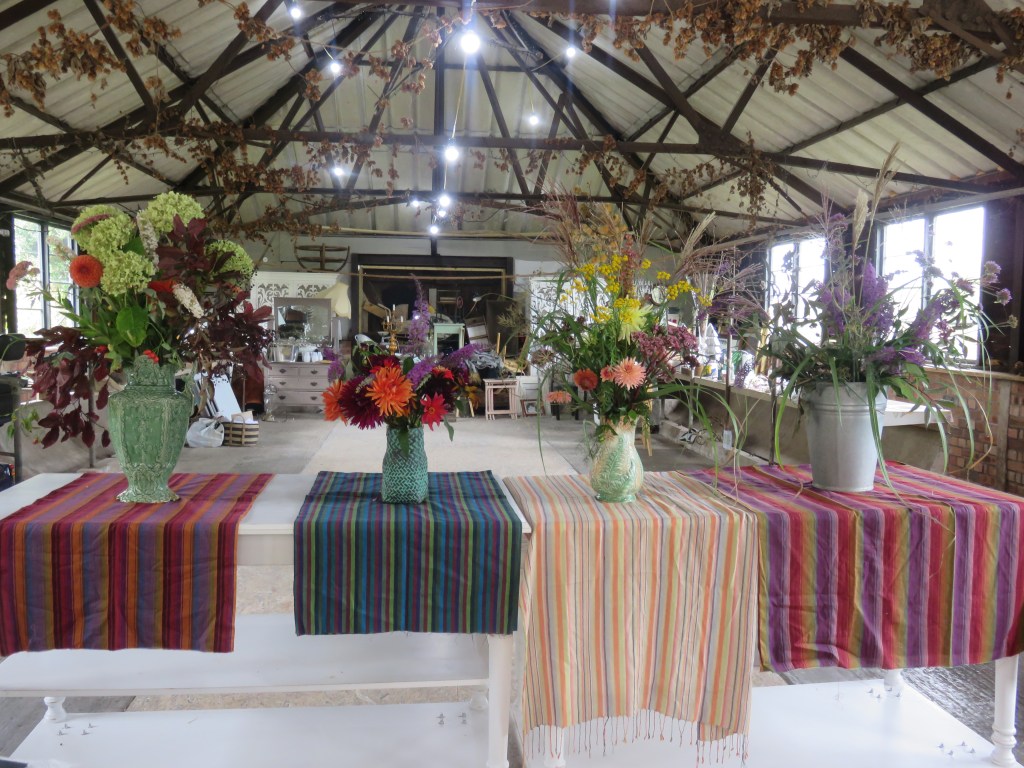
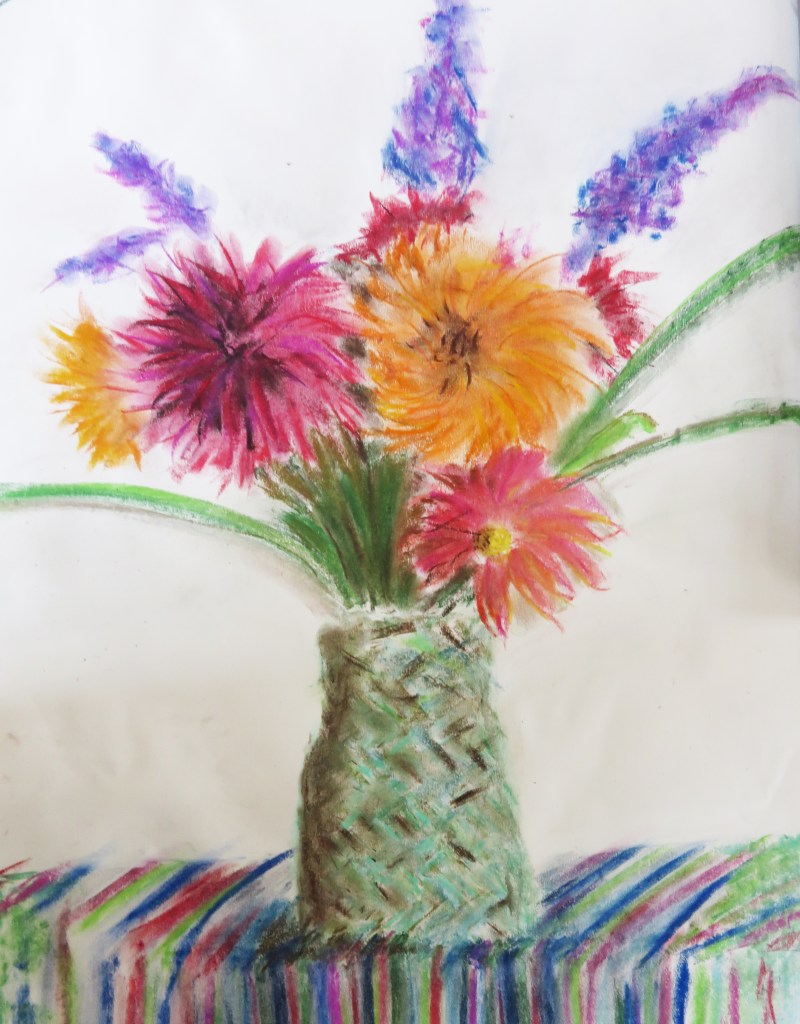
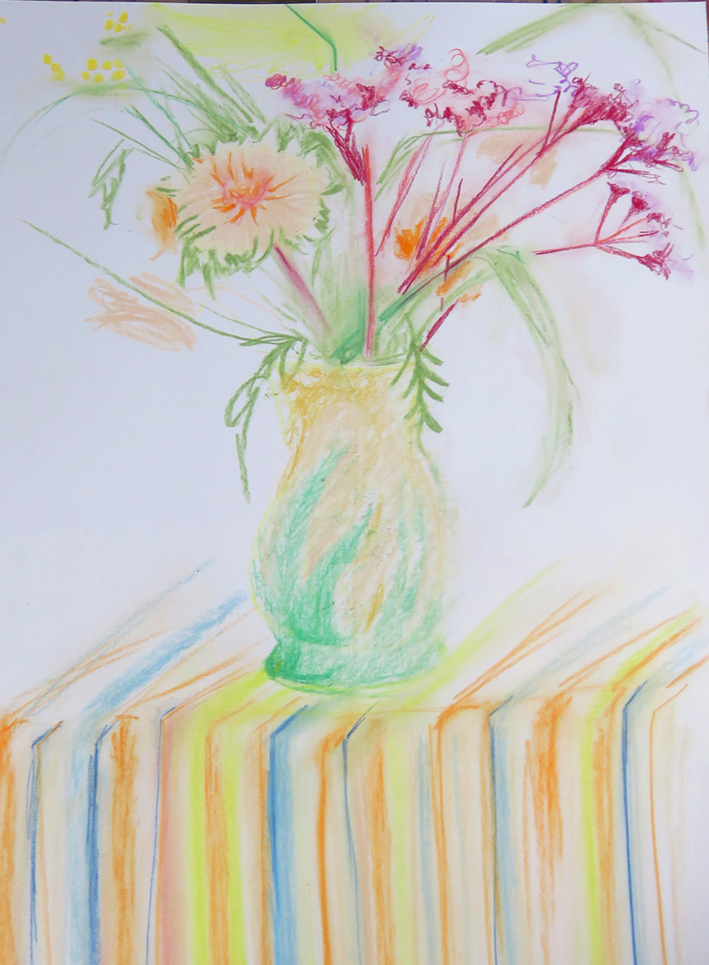
Following on from the successful Drawing Day in June at Court House Farm The RWA ( Royal West of England Academy) Drawing School organised another Autumn Flowers day. But due to the ultra dry summer the flowers were not so abundant as the spring crop…my solution: select just 3 big bunches of different flowers in vintage vases with a toning striped runner and everyone would be able to draw all 3 during the day

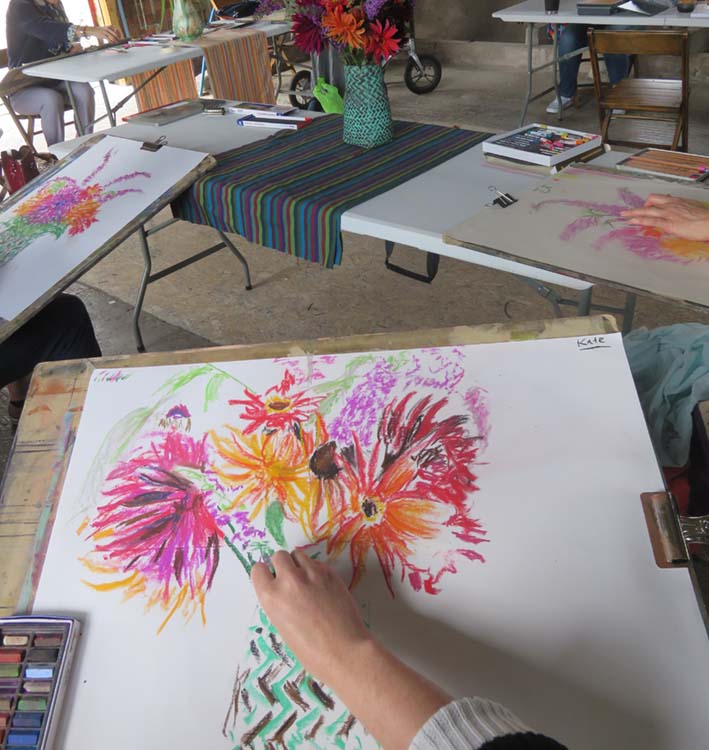
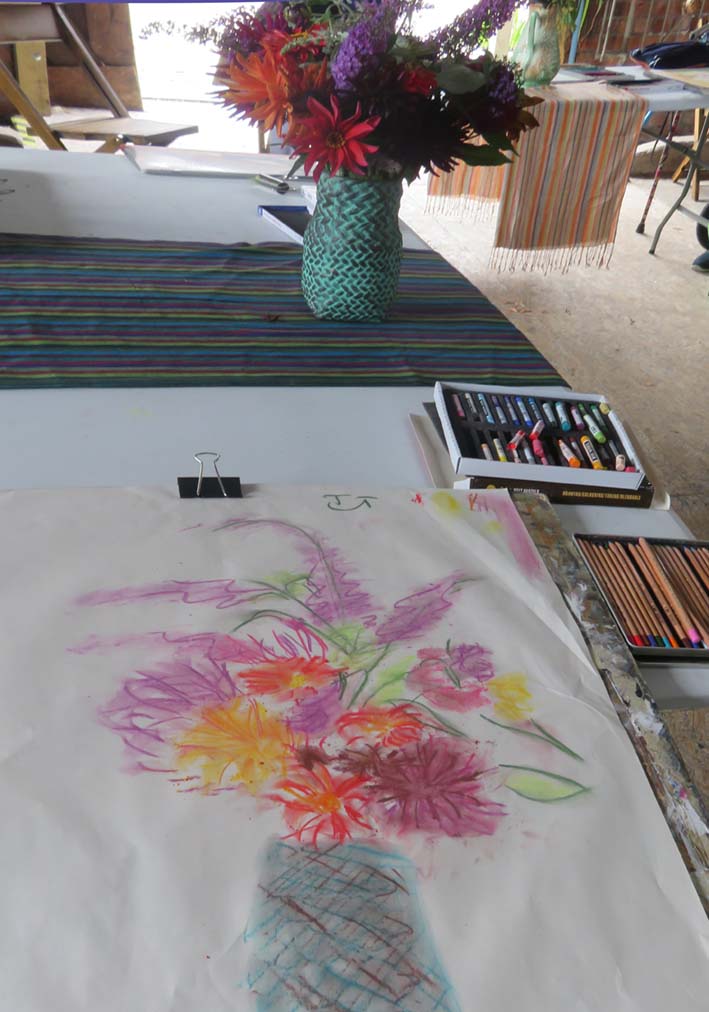
In at the deep end. I asked the class to choose a table to sit at and draw the whole display in front of them…in 20 minutes!

Tall and elegant autumnal shades…and in contrast below – hot clashing colours!

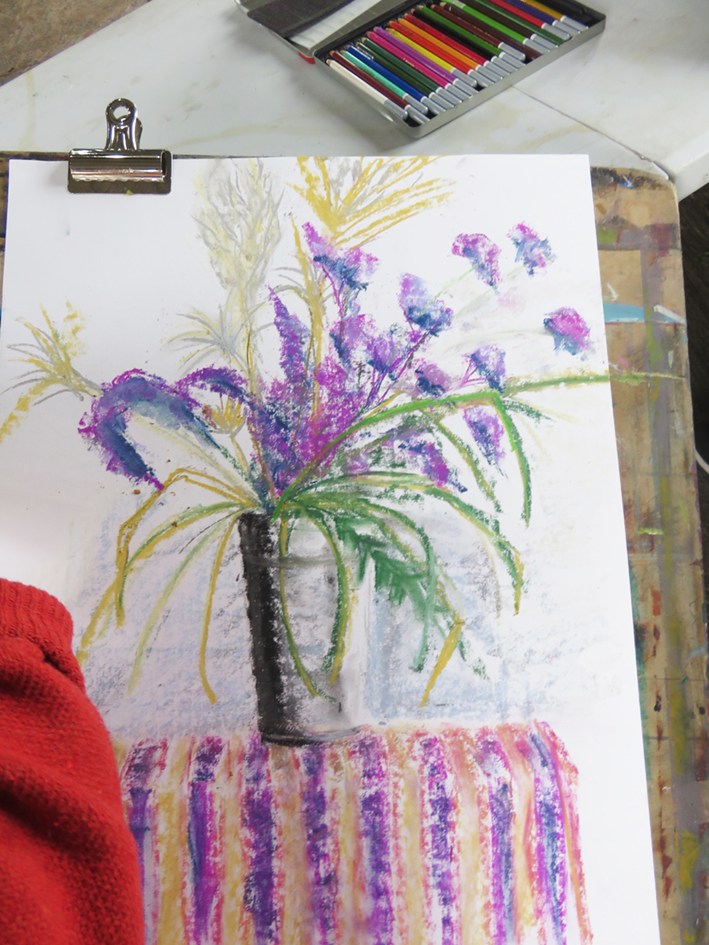
and then massive and majestic….

only 2 people attempted this vase and were somewhat overwhelmed by the abundance! So we started again by choosing another section of the bouquets and making some rather more detailed drawings – now things were starting to develop.

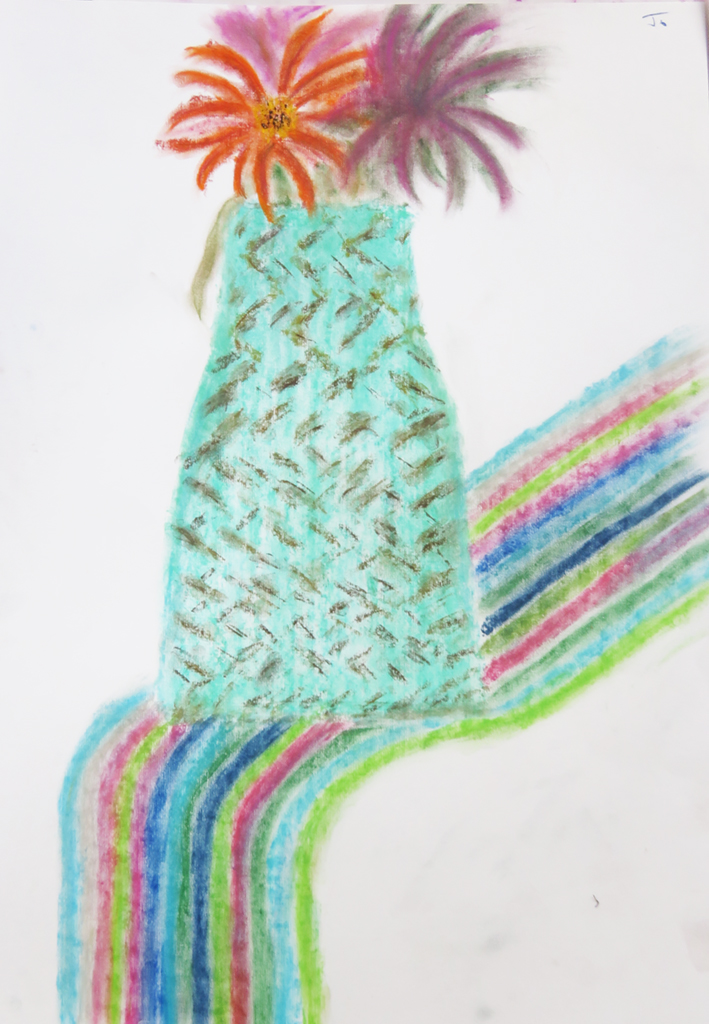
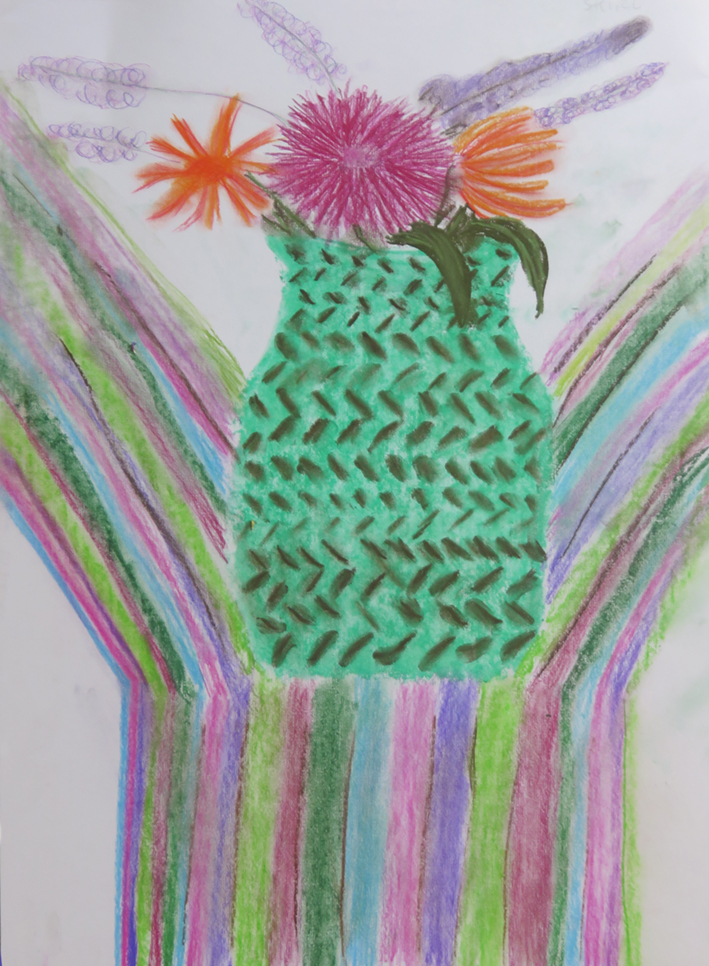
BUT so far no-one had even attempted the fabric specially chosen to be drawn with the colours already used in the flowers……so after lunch I changed things over and added another arrangement – now we start drawing with the fabric!!!!

And in the process we even got vases.

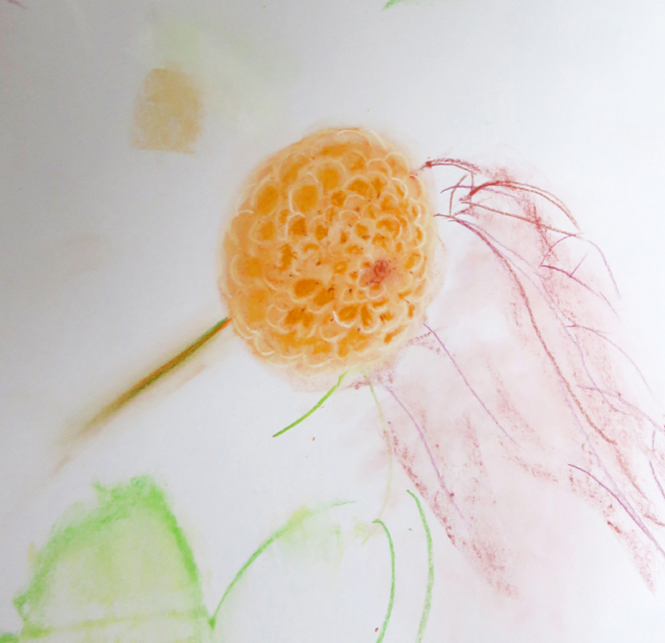
For the last session I relented and asked them to choose just 1 flower/branch/leaf from all the masses of materials and to place it next to their drawing boards and make a study – I usually start my drawing sessions like this – and I may return to this method for my next drawing flowers session in November….

My Patchwork Quilted Room – Da Da.

Here is the open door into my completed ( well just a few more pictures to put up) patch-work room, using fabrics from the Kaffe Fassett Collective. It has taken 6 months to achieve. I started 2020 during the last Covid 19 lockdown in England and we are still not entirely unlocked mid way through 2021.

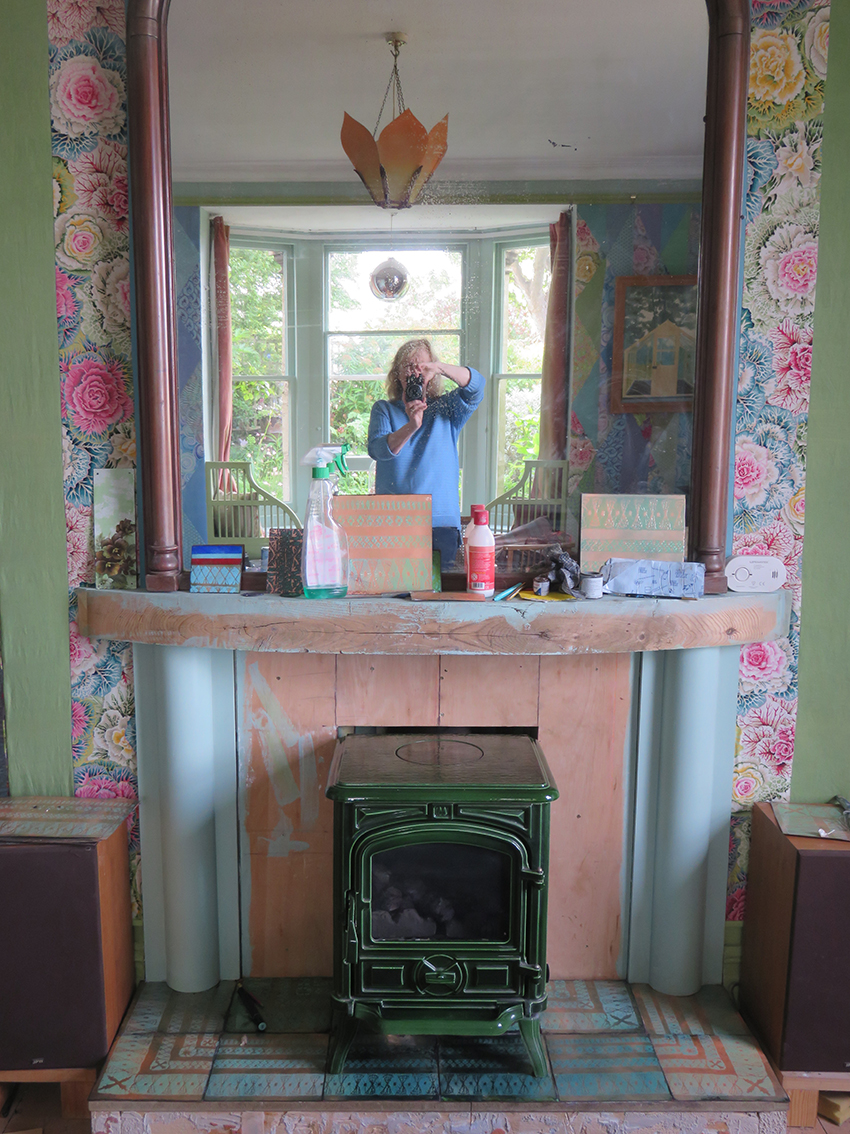
I aim to take you around the room to see how it all has come together, here the door from the porch has a vitreous enamelled finger plate – now I want to make more of these for inside the room…the enamelled fireplace can be seen with our old furniture and carpets safely back into place.

turning left is the view into the small panelled room, our 2 Irish Terriers and the enamelled fire surround – see previous post for making this….luckily my much loved vintage Deco glass shade tones perfectly…now how did that happen?

Above are 3 views of the chimney corner with 2 different totally different Flag representations. the row of flags at the sea side is an old painting by Stephen Jacobson next to a ghostly silk organza flag by Nigel Hurlstone. this piece of work proved pivotal for me to see how the room could hang together using cooler colours

Once we had started to put the room back together our 2 Irish terriers, Maeve and Murphy took a particular if very relaxed interest in it.

I found on Ebay a beautiful discounted Zoffany silk striped fabric and bought enough to make 4 very large padded curtains for the big Victorian windows in the room. The fabric cost me about 4 times the amount I had spent on the rest of the room…but they work well once I had trimmed them with some vintage woven ribbon that I over – dyed to suit the colour of the paintwork – as you do! And then I found these mazing brass tie backs on-line at my favourite store for just about everything decorative, Anthropology.

Continuing around the room…

In the the corner between the windows hangs an old (and much loved by me) painting by my husband, Stephen Jacobson, of my father’s greenhouse that he built in my family’s garden on the Wirral in north west of England.

From the photographs I have posted so far it is hard to see that the patchworks are all padded and quilted, but it is evident that my ‘in the ditch’ sewing notbetter placed than my hammering in the copper tacks that fasten the fabric to the battens. On the tiled table is a flowery flower vase by Tean Kirby.

the opposite end of the room to the fireplace with the bay window looking out on the overgrown garden

one of a pair of window seats with an old canvas work cushion sample and the luxurious silk curtains and brass tie backs. Then to the other new thing I bought for the room – the glamorous mauve velvet mini chaise – from a TK Maxx sale!!!!!! Well I had to balance the spend on the curtains.

Coming Into Port – Stephen Jacobson

Above is ‘ Coming Into Port’ – I leapt on this for the room when it came back early from a “closed for Covid” exhibition and it fitted perfectly. Basically our house serves as a venue for our joint work. I made the large cushion especially – it uses all the major colours of the room, and in fact the whole house, in my wonky version of Flame Stitch; and I have been commissioned to make a design from this by Ehrman Tapestry so look out for it next year if you stitch canvas cushions.

So here we are at the porch door again – and the gingers are waiting for us – well actually for Stephen with the biscuits to get them to pose….

and that is it – at last after so long – finished enough for people to see it – with the doors and windows open and only 4 visitors at a time!

My Covid Project: Patchwork Enamel Fireplace

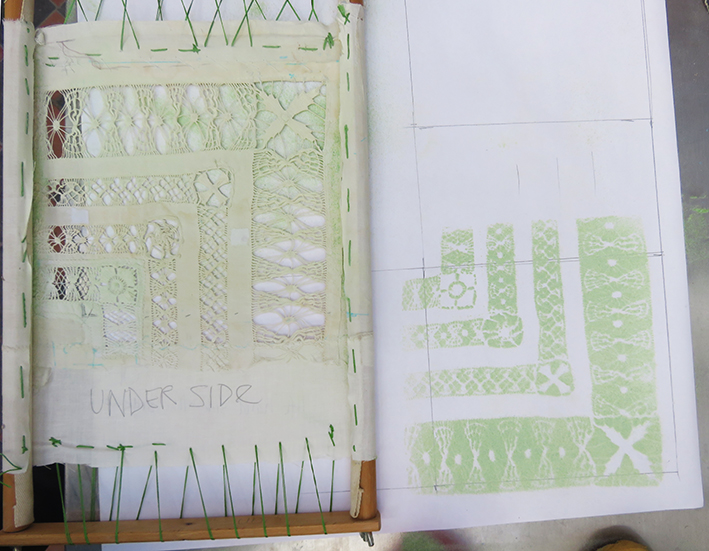
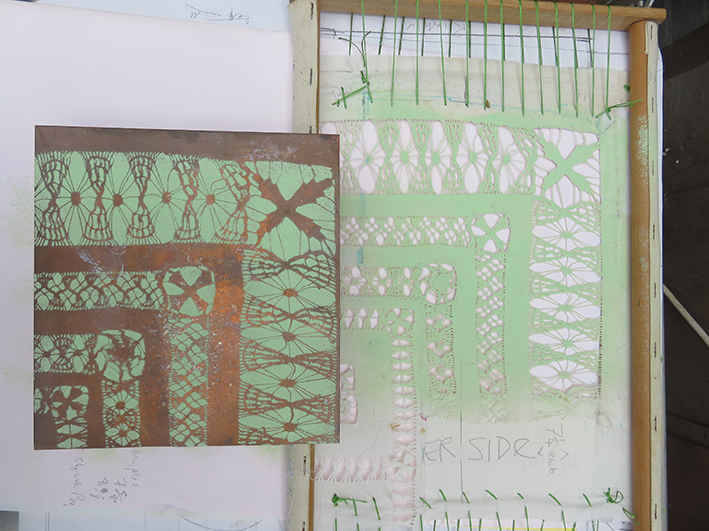
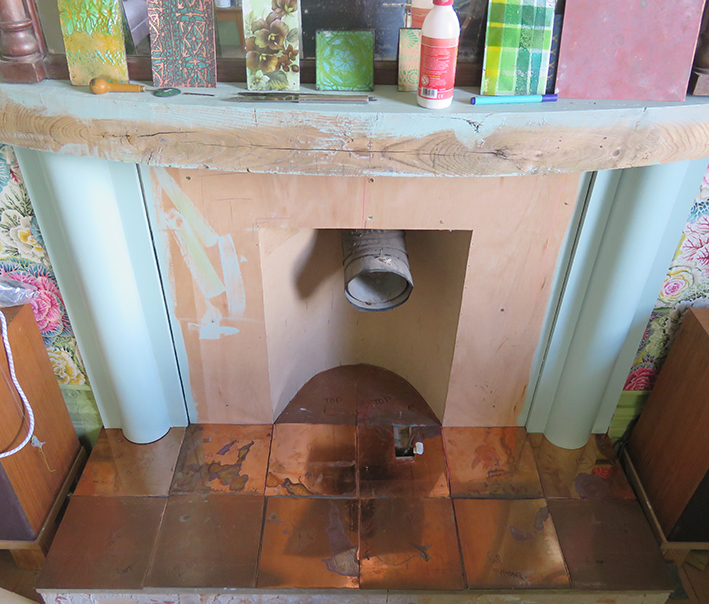
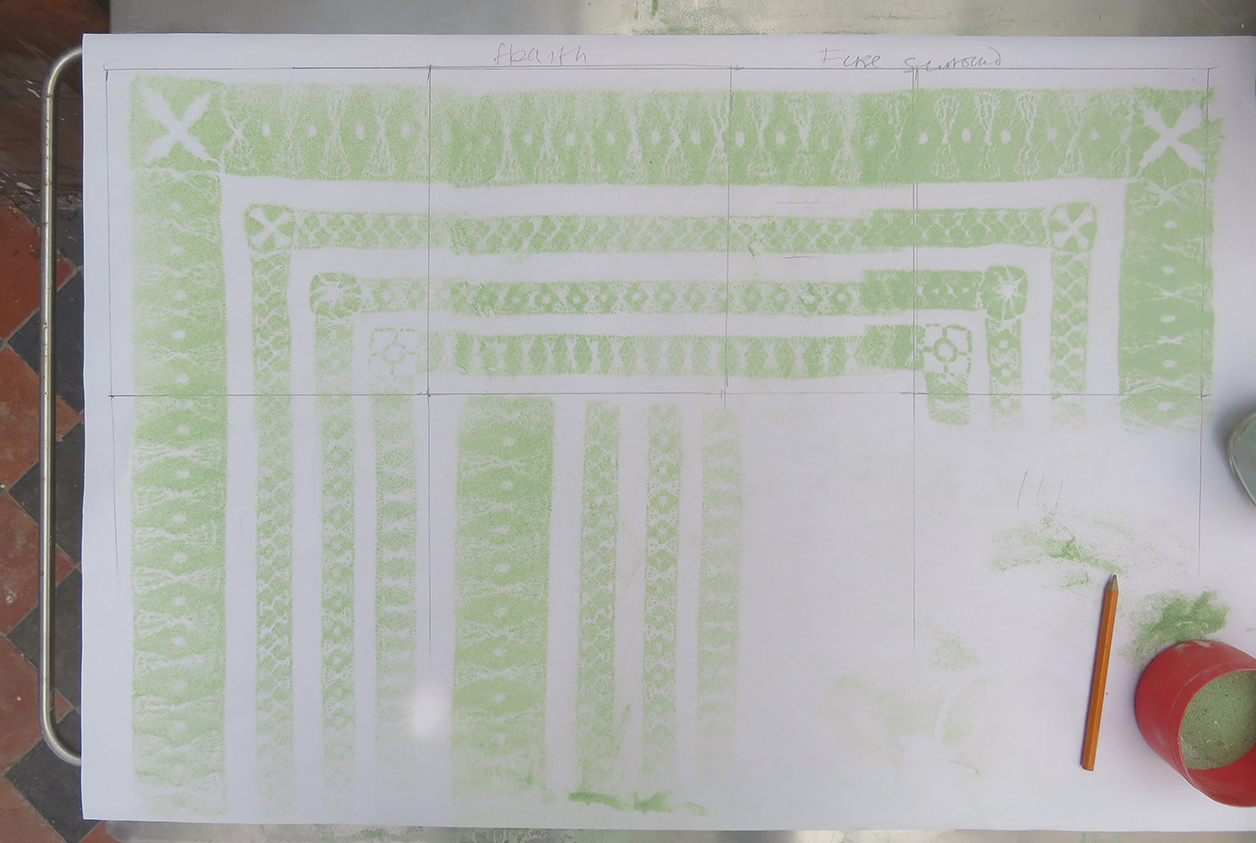
The patchwork walls are almost completed, just some finessing needed so time to think of the fire grate. We measure carefully and then cut 20 copper tiles ready to be decorated – using my favourite Drawn Threadwork stencils. I started to scribble lots of ‘back of the envelope’ ideas as to design layouts – but decided to just make the stencils and then see how they best worked together.

An assortment of design, scribbled ideas for the enamelled copper tiles ideas

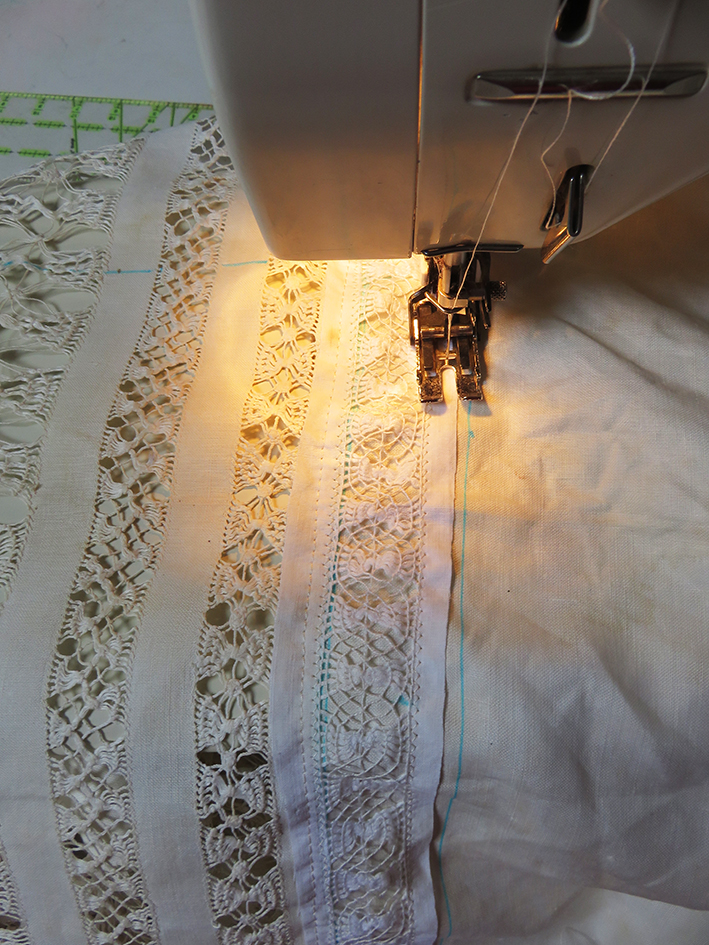
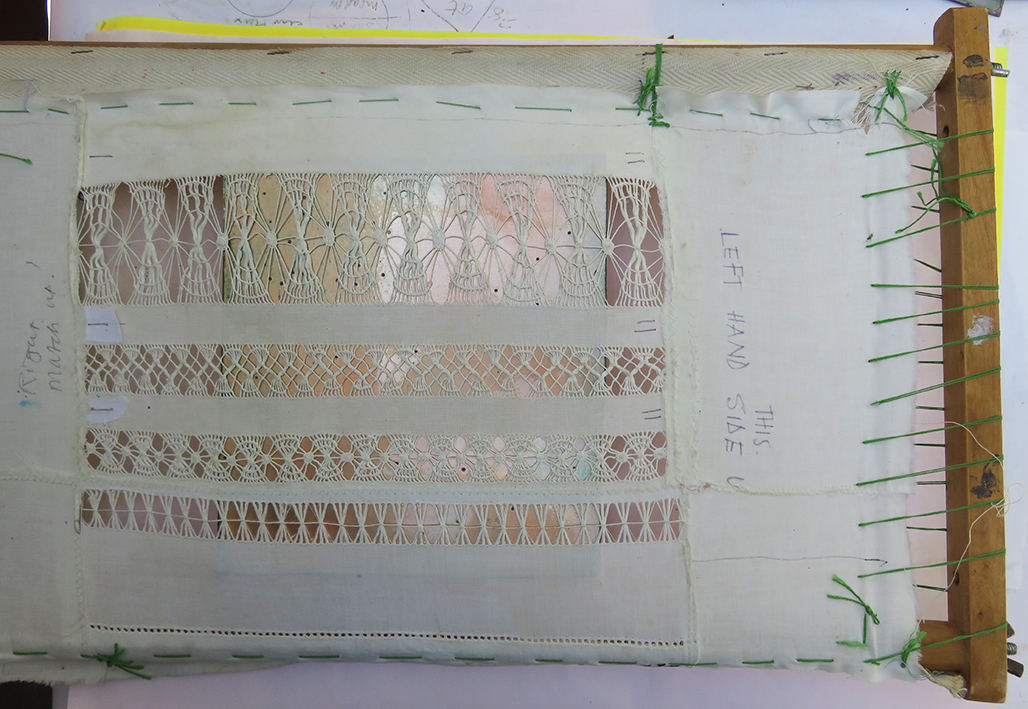
I found a small table cloth ( in my stash) with very large scaled drawn thread-work embroidery that would be suitable for this making many variations from just 2 basic designs. I needed 2 stencils one square for the corners of the grate and a striped version for the longer lengths. Initially I thought it needed to be made larger to fit the cut copper tiles so I had to extend the stencil. I appliqued extra pieces of embroidery, using a machine for strength (for when it is stretched on a frame) then cut away the linen beneath it.

meanwhile the rest of the copper tiles have been cut and checked for how they fit together – like everything else in this very old house nothing it straight or even.

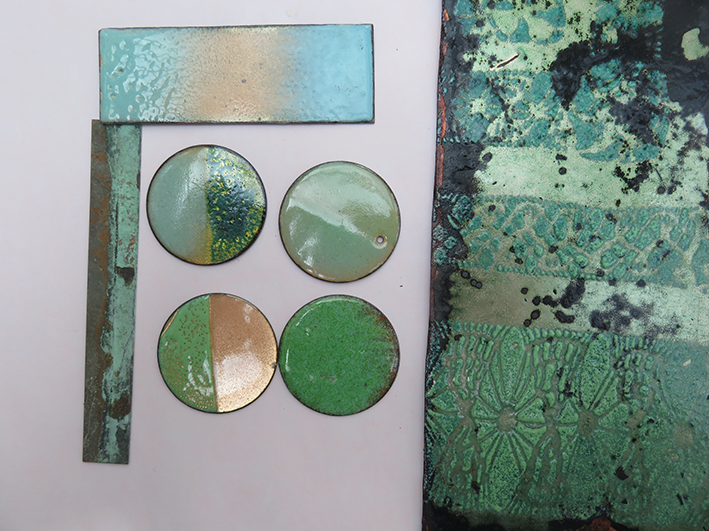
i had wanted to verdigris the tiles but decided to stick with what I knew, so I started sampling the enamelling colours. It is a few years sinceI have enamelled anything but remember the colours that will best look like verdigris – I match the pale greens and blues to a naturally verdigris copper strip I found in the studio

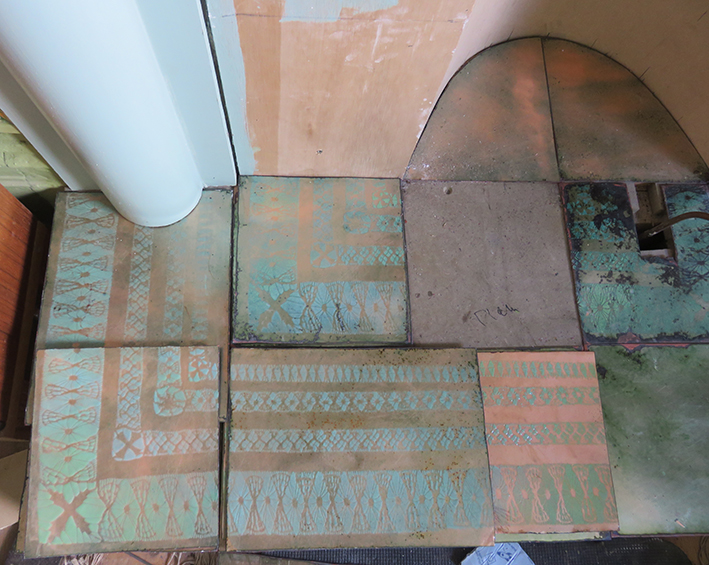
samples of copper enamel colours to make a similar effect to the real verdigris copper strip, the first set of hearth tiles placed in position for deciding the final design

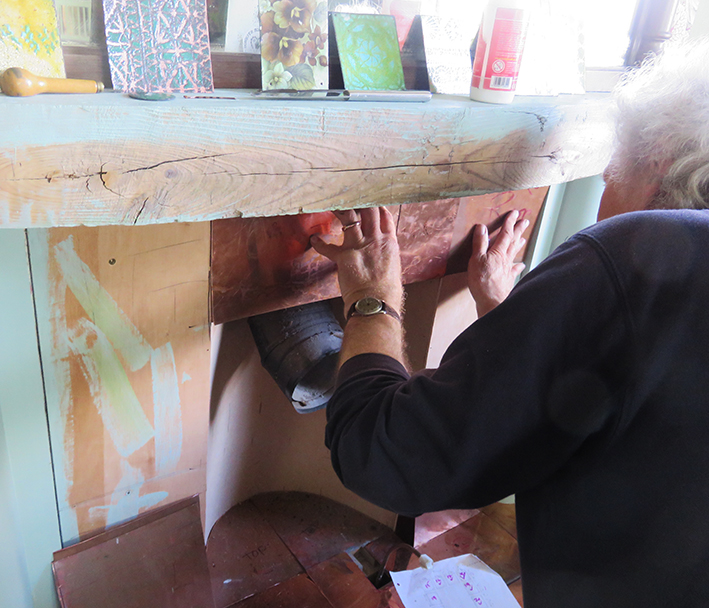
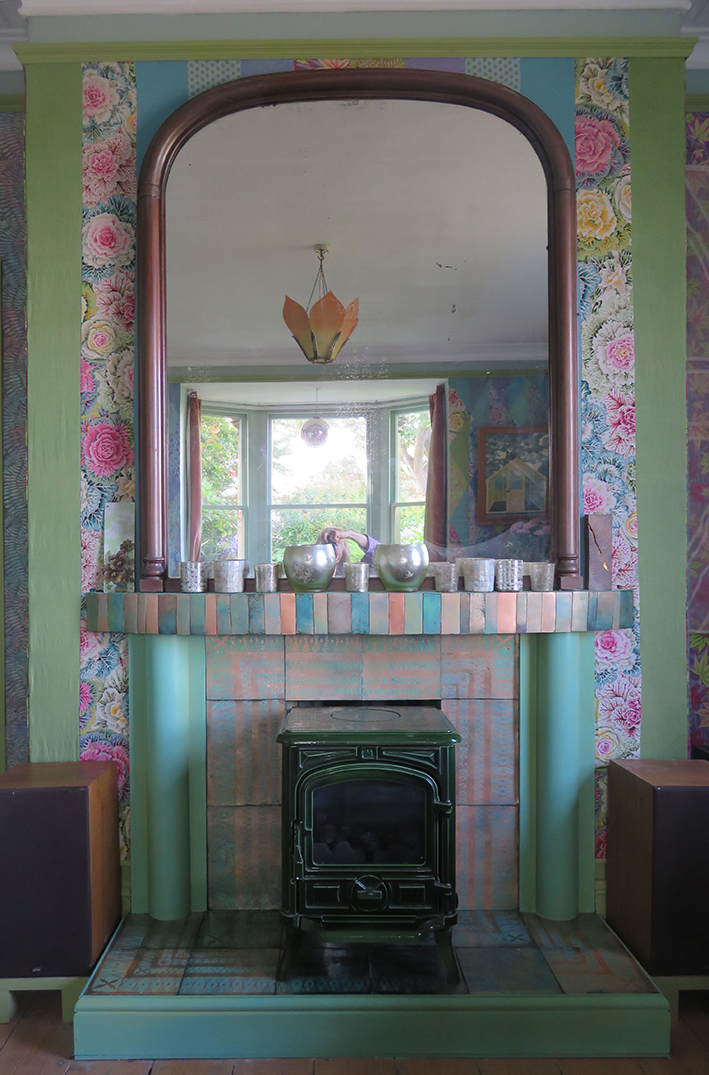
after the gas stove had been replaced in its original position, I continued to adhere the top set of tiles in their allotted places. They make a very uneven but harmonic set of colours…so then I needed to re-paint the surrounding columns and wooden skirting to blend in with the rest of the room.

finally I ran around the house searching for the pieces I could put on the new mantlepiece – my old mirrored glass candle holders fit in very well. The small separate enamelled strips of copper are leftovers from cutting the tiles, plus anything else I could find in the studio that could be fired with the remains of the vitreous enamel colours – real make do and mend patch-working.

My next post will show the whole room complete with art works, cushions and flowers!

Kantha Club

although I was not aware of it at the time I wrote this blog this is the very last post for Heart Space Studios…we conducted many more parties, clubs and classes , we have now ceased trading as a class based studio – however I continue to make my work and explain many different ways of constructing and thinking about the making of ‘Her Work‘ in my ongoing blog http://www.janethaighherwork.com.

IMG_2366
Susi Bancroft stitching her suspended large Kantha piece in Heart Space Studios

Autumn is here and the new term started for Kantha Club – run by Susi Bancroft for Heart Space Studios. We all wanted to swap summer experiences and stories and show what we had been up to – or not!

IMG_2343
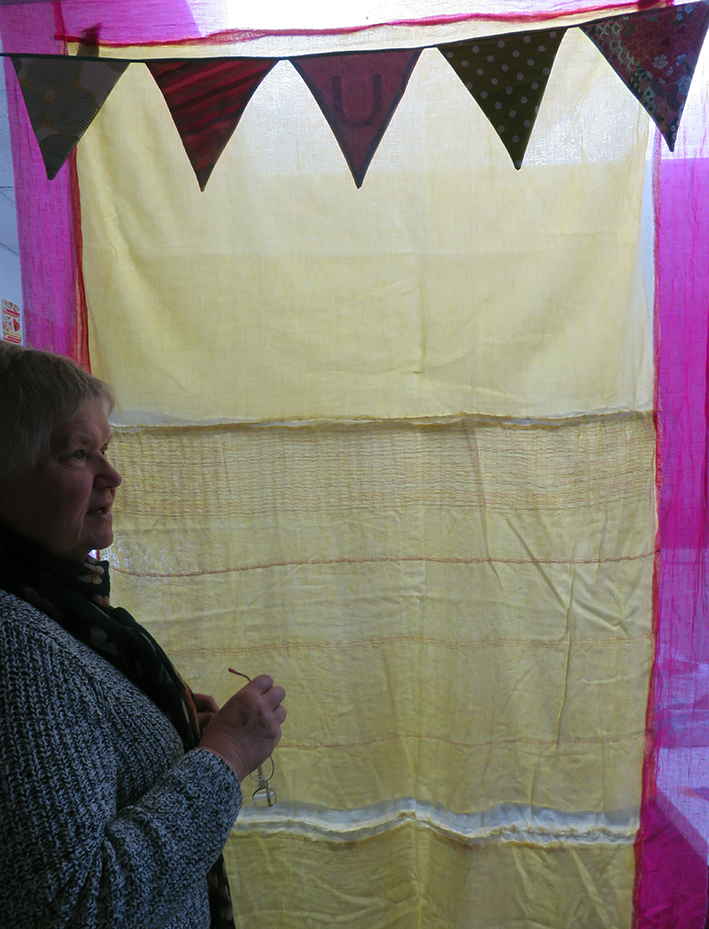
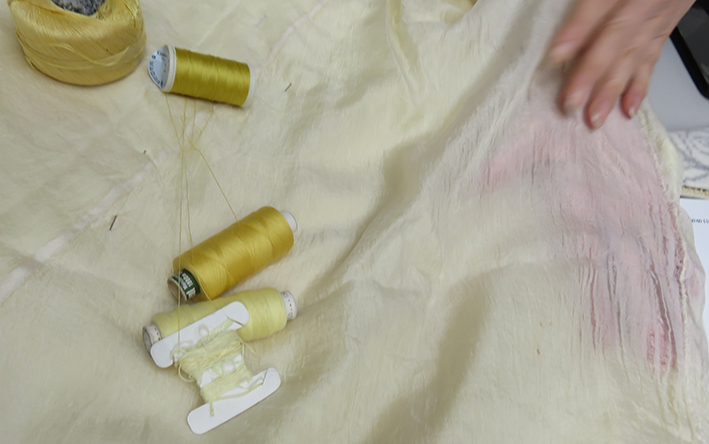
Kay at the back of the Kantha sheet – the light shining though the colour was lovely, showing up the rows of stitches.

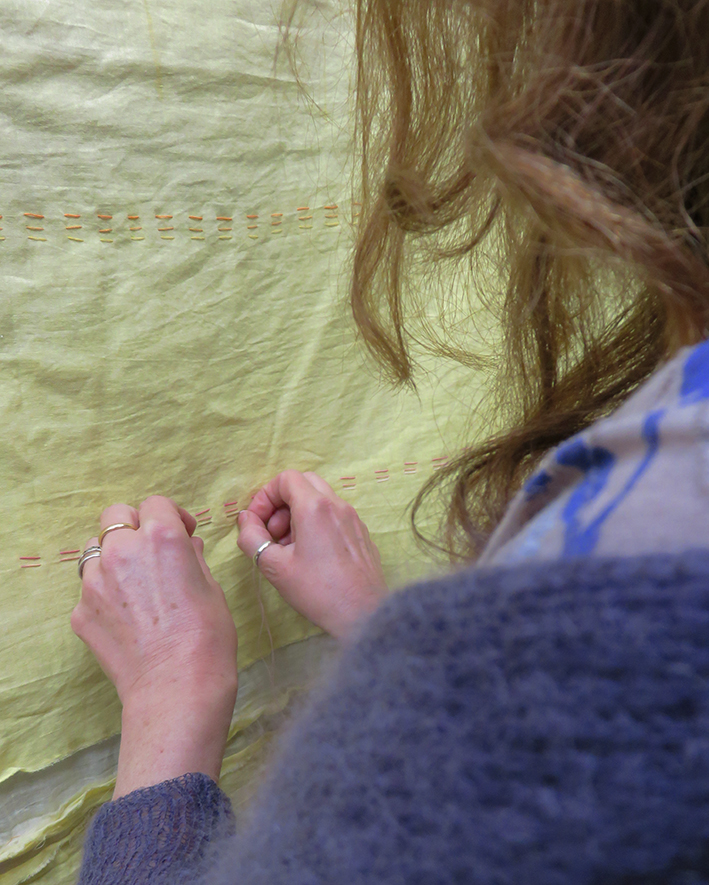
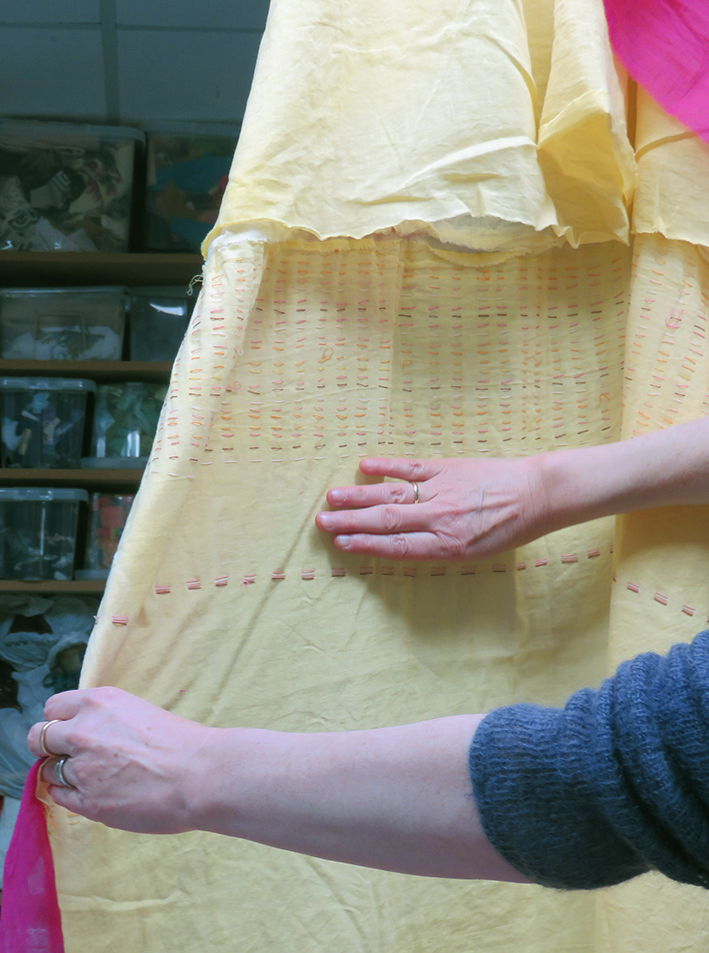
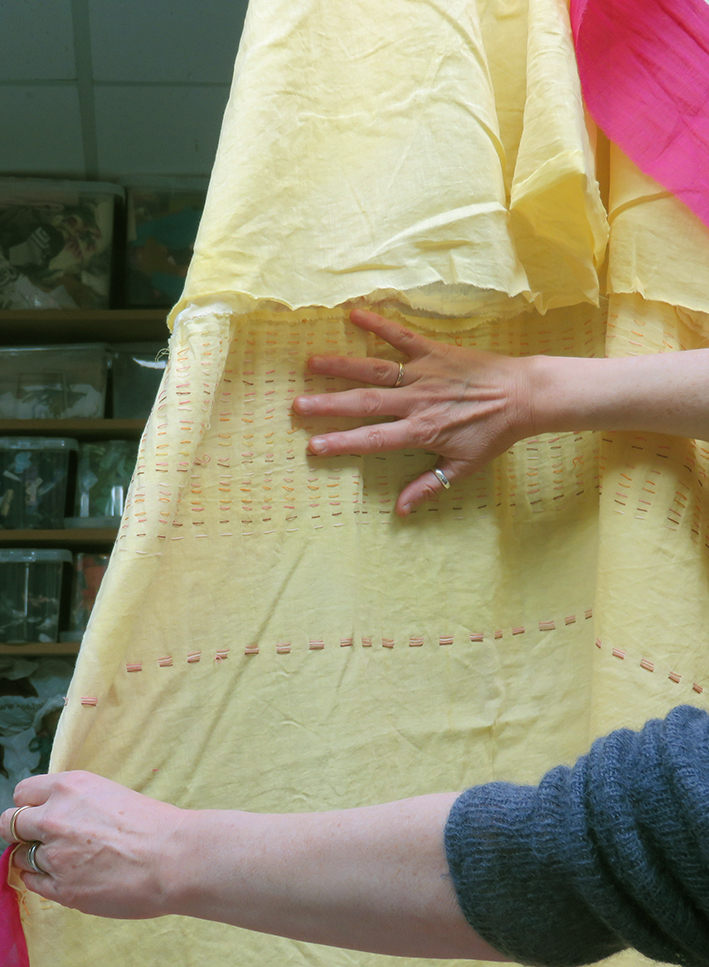
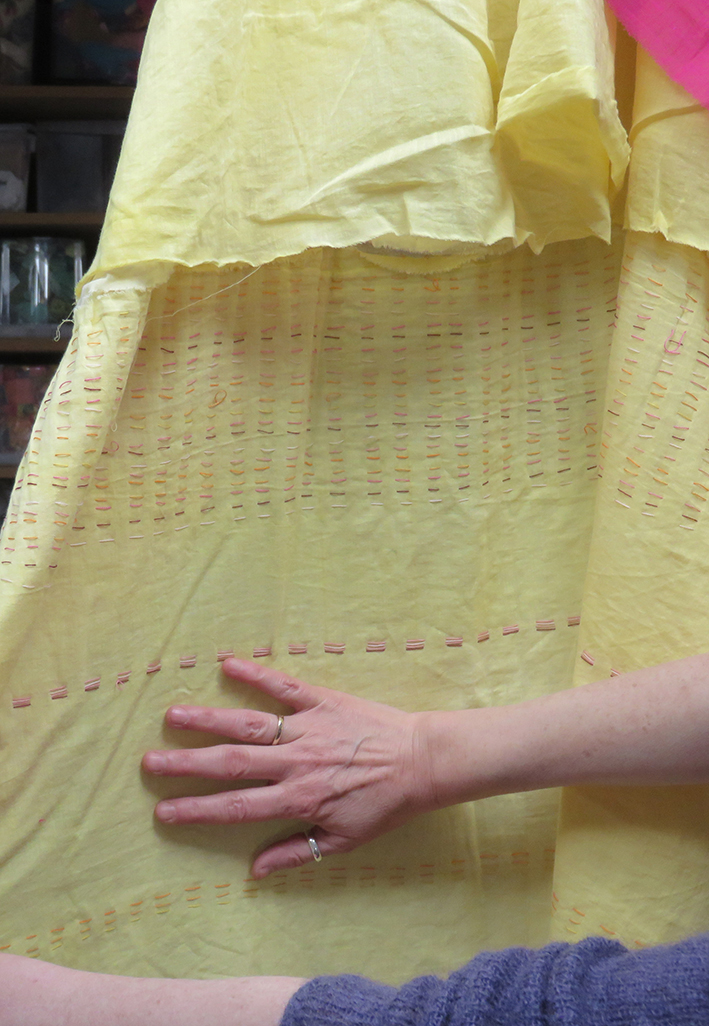
Susi had embarked on a very large piece ( I meanwhile had put my first attempt at a large piece aside). She had dyed the fabric in Turmeric and Tea to get this very subtle yellow. She finds it easier to hold the needle at the eye end to keep the cloth steady – so each stitch requires 2 hands on the needle, standing to work on such a large-scale fabric she says ” I am surrounded by beautiful colour with the light behind you, like being cocooned in colour “

hand3
closed hand with thumb kept into palm = the narrow band
IMG_2350
wide open hand = the wide band of stitches

Explaining how she made decisions for spacing the stitching bands by using simple hand measurements she said “I used the fact that I couldn’t see the whole cloth working so close up so the hand spans were the measurement I adopted”

hand2
hand spans for the gaps between stitching lines

to enable her to keep stitching rhythmically while standing up, she threaded several needles at a time in different colours, using each as she felt that she wanted them – relying on her instinct for the colour striations, she enjoyed  the feeling of  the fabric being “just being out of my reach’ whilst she worked.

Kay Swancutt showed us some dying samples that she had stitched , she had exhibited these recently at Nature in Art and used many natural materials to make the different patterns and colours

kay1b
samples of natural dyed fabrics by Kay Swancutt
kay2b
more of Kay’s experimental samples

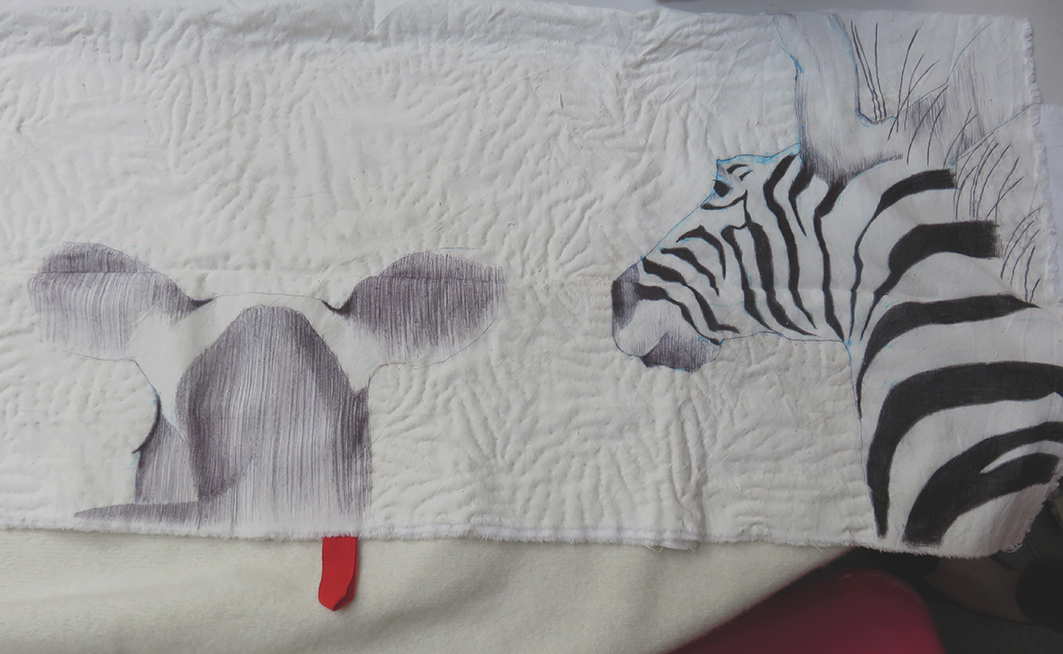
Steph Wooster brought several examples of her earlier drawn textile work that she has now worked with a kantha stitched ground…these were  also exhibited at Nature in Art and I feel that they could lead to even more intricate background stitched patterns – I am thinking animal skin patterns, leaves, grass..

stephb
Steph Wooster’s Biro drawing of animals from the Bristol Museum, augmented with ripples of stitching

I particularly like the combination of the stark elegant drawings and the tone on tone rippled grounds.

steph1b
Biro drawing of animals and kantha stitched ground – Steph Wooster

she also brought a new piece fabric that she wanted some feedback from us – it was a parachute silk sheet, very old and damaged,

steph4b
choosing coloured threads to mend the fragile silk sheet

she wanted to mend it – we suggested she start with the weakest area.

steph2b
carefully searching for the weakest points ot start to mend using Kantha as a technique

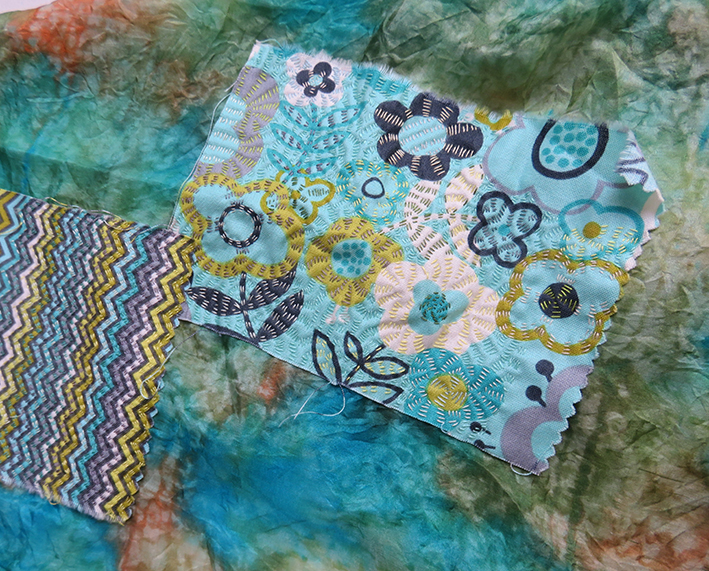
Meanwhile Naomi Clarke has been having fun just using Kantha technique to stitch the patterned cloth and also appliqueing it to the tie- dyed ground – as a technique this could really be developed to make lively fabrics

naomi
Naomi Clarke’s Kantha applique

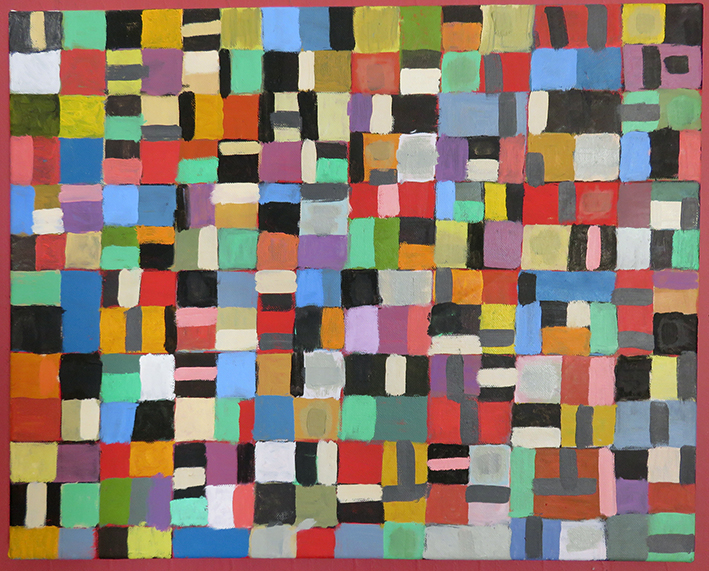
I had started another project in the break – a quilt based on a painting by Alfred Stockham, an old friend and ex colleague, it is a small painting that had always called to me to be made as a patchwork…

alf quilt
oil painting by Alfred Stockham

starting in the top right hand corner I ripped some pieces of shot cottons into squares and strips and stitched them down onto a red cotton ground…the coours of the threads made for the nuance of his dragged brush marks

jh1b
starting the squares of painting patchwork
JH3b
completed square of kantha stitched patchwork

during the last few hectic weeks of launching my book it has been a relief to get back to simply stitching these square transitions from paint to cloth

I am interested to see how each square is in itself a small complete composition

JH5b
JH6b

I am fascinated by this work but it may take some time to get finished

jh2b
the start of the first row of patches for the painting quilt.

Crazy Fan Class

fan cover  American Musuem
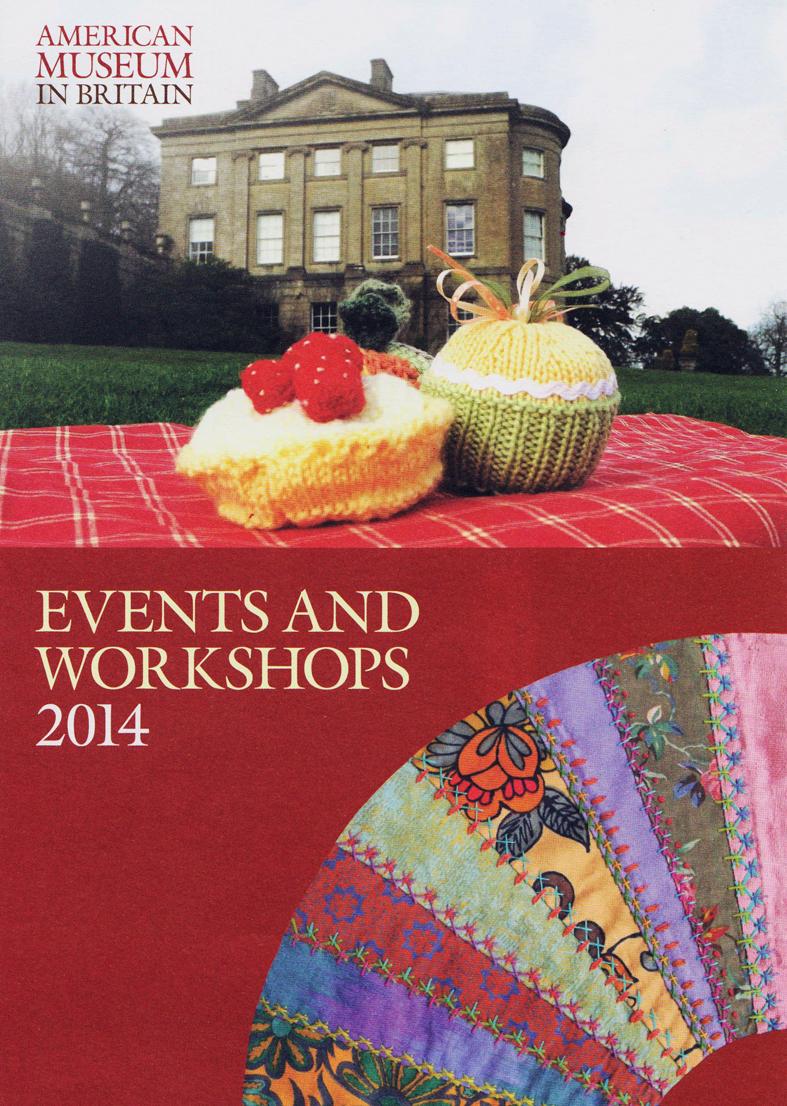
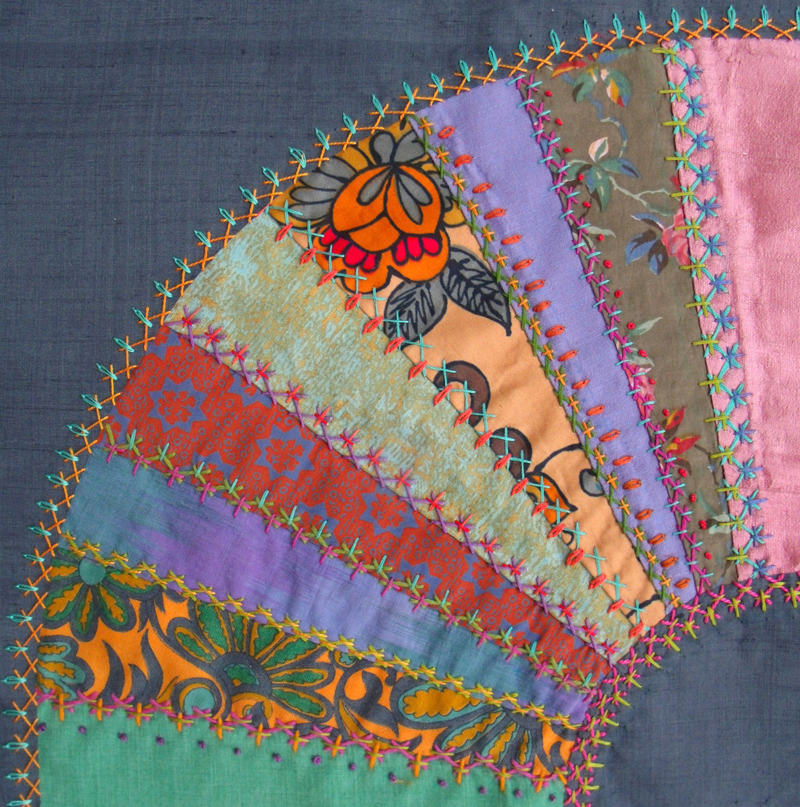
My Crazy Patchwork fan design on the cover of this season’s events catalogue at the American Museum.

I have been getting out and about recently and have been taking a workshop at the American Museum in Britain, which is situated just outside Bath. I have been asked to deliver 2 day long workshops by their education officer, Zoe Dennington (who found me via this blog). Zoe asked me to use Crazy Patchwork techniques for classes to run at the same time as the current vibrant Kaffe Fassett exhibition being held at the museum for several months.The second class is in October to make a crazy patched and beaded heart.

patchwork fabrics stash
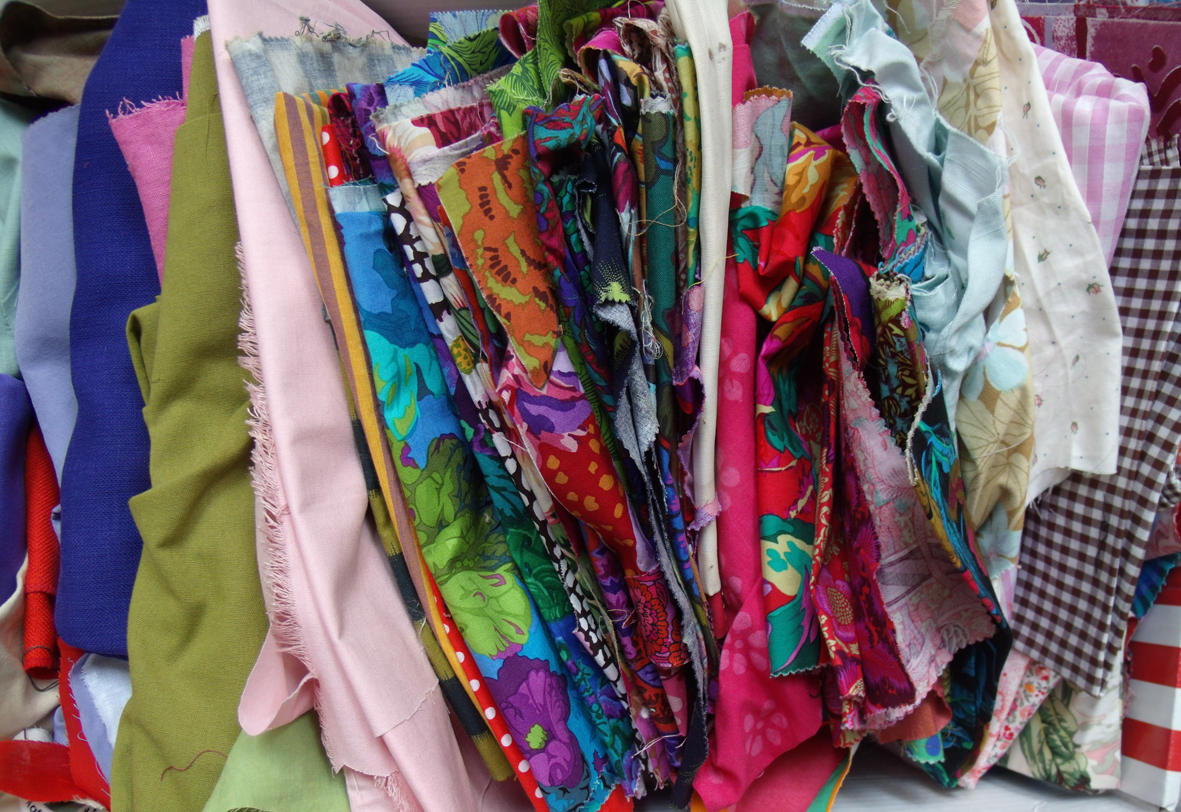
the range of fabrics that I took for use in the workshop

Luckily I was given a batch of cotton samples of fabrics  designed by Kaffe Fassett to use in my workshop by a friend, Susan Berry ( who produces his very popular patchwork and knitting books) and they certainly livened up my Heart Space Studios fabric stash….I had designed a special project for this session, a simple design of a fan and one of the most popular motifs used in traditional of Crazy Patchworks.

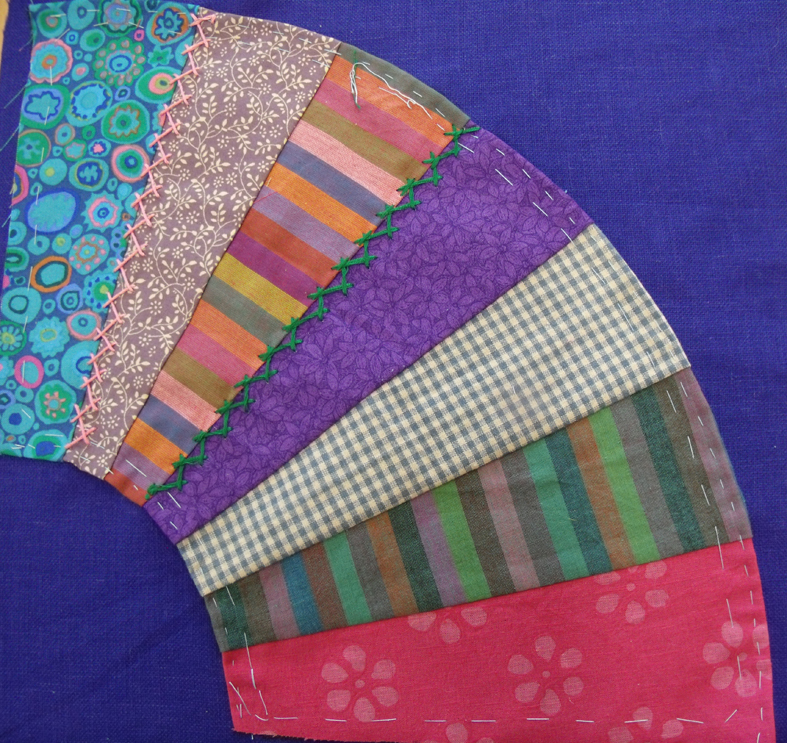
My Crazy Fan design
the original crazy fan design used for the programme cover

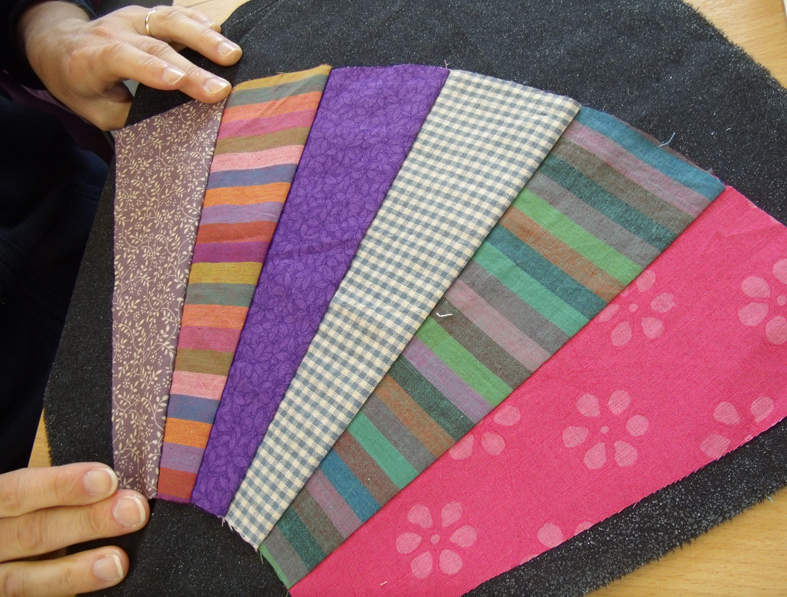
I reasoned that if I provided patterns for the patches then things might go quickly and everyone would finish – well that was the idea! We started off by choosing the fabrics for each fan – there are 7 sections in the design that I had created for the class, which means less embroidery than my sample.

range of Fan fabrics
this range was chosen from the fabrics brought by me to the workshop
fan fabrics
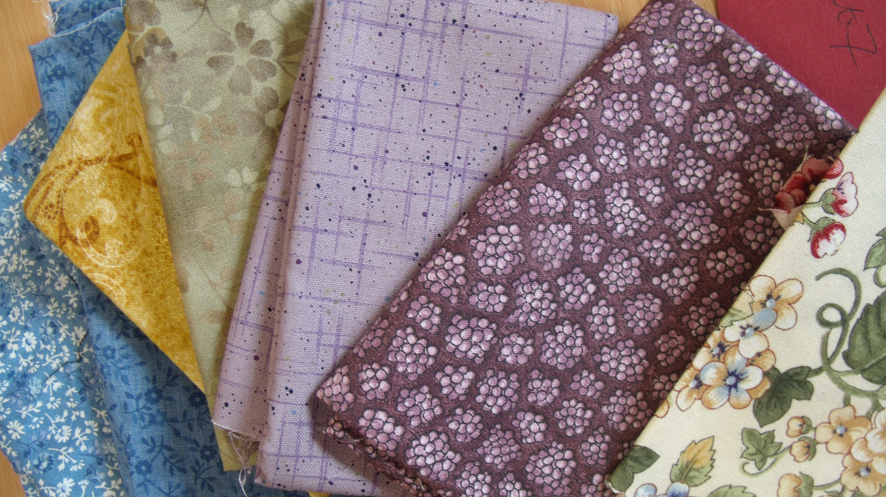
subtle and softly coloured fabrics brought by a student to the class

I had also asked people to bring whatever they liked of their own materials as well. The fabrics chosen were quickly organised into many different striped bands – I explained about balance of pattern to plain fabrics and crucially for a small colour scheme, to separate a few colours from the patterned fabrics and use them as plains or solids to show up the patterns. And not to worry too much about getting the colours perfect at this point as later the coloured stitching over the seams would help with the colour co-ordination of the whole piece.

fan fabrics
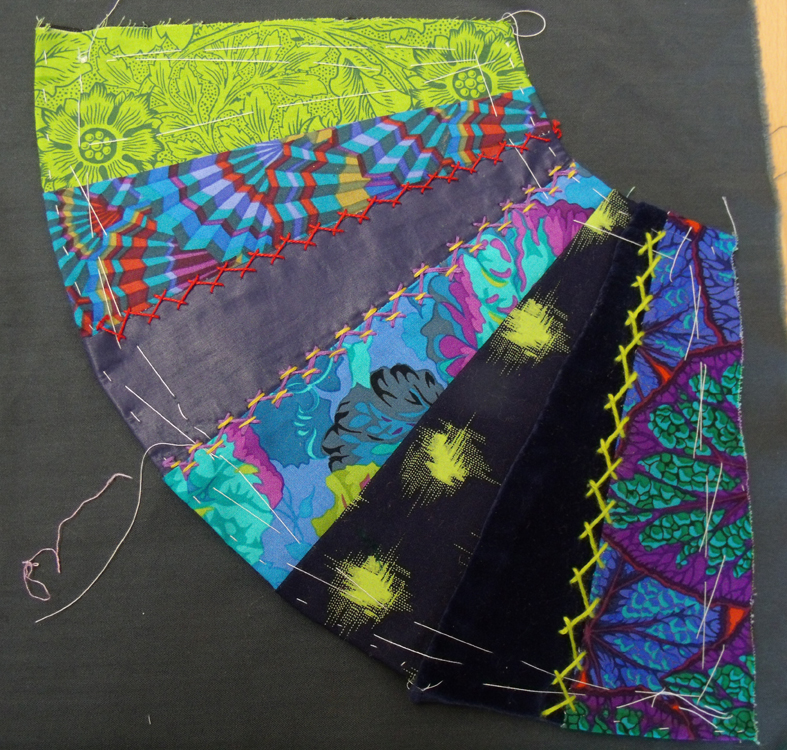
vibrant fabrics for chosen for the fan design
GEDSC DIGITAL CAMERA
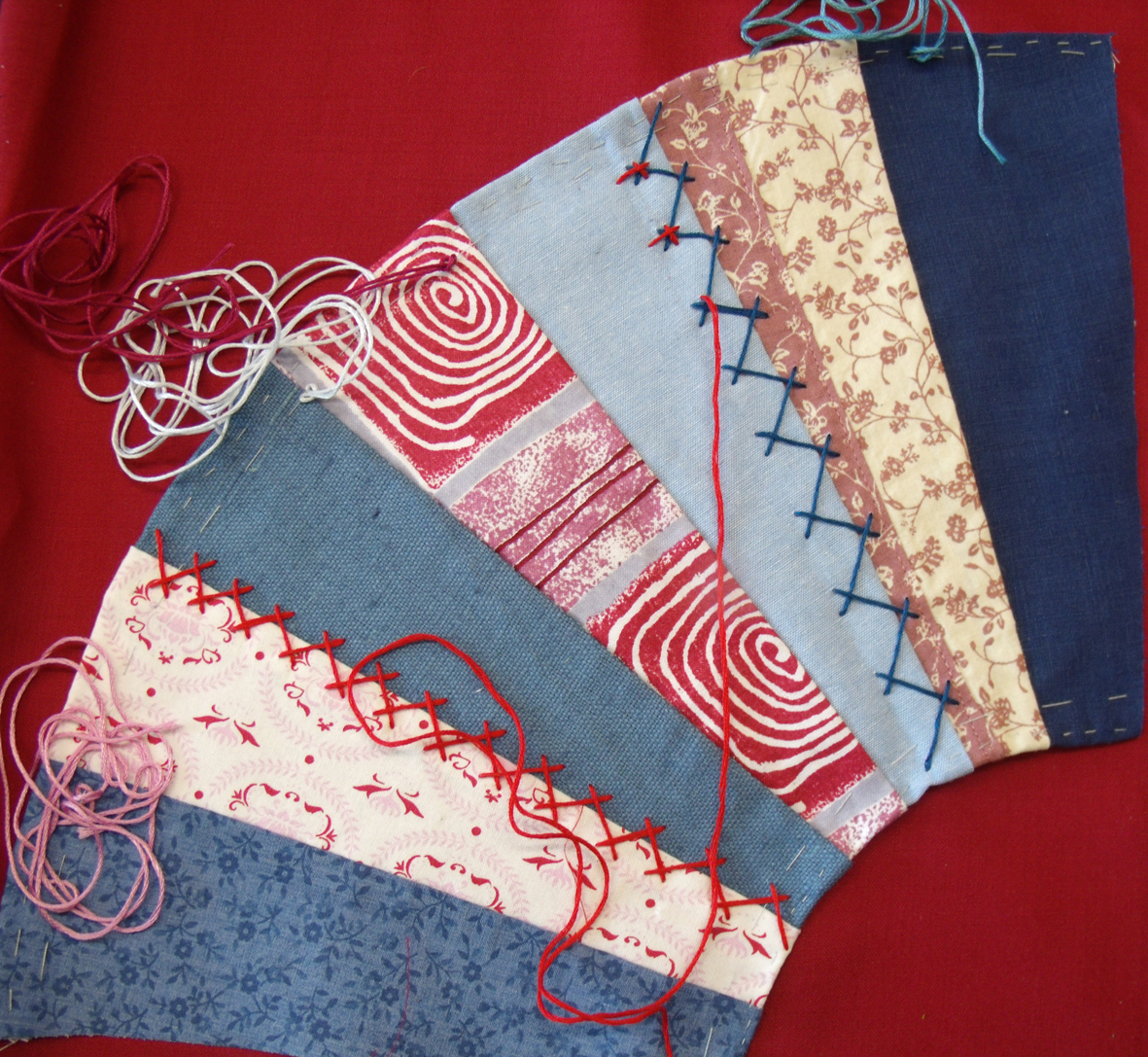
Red white and blue – always a good clean colour combination

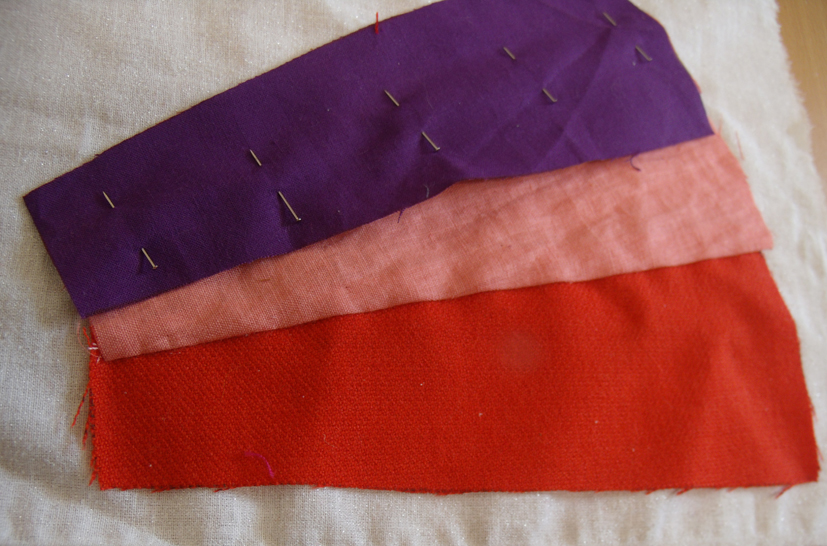
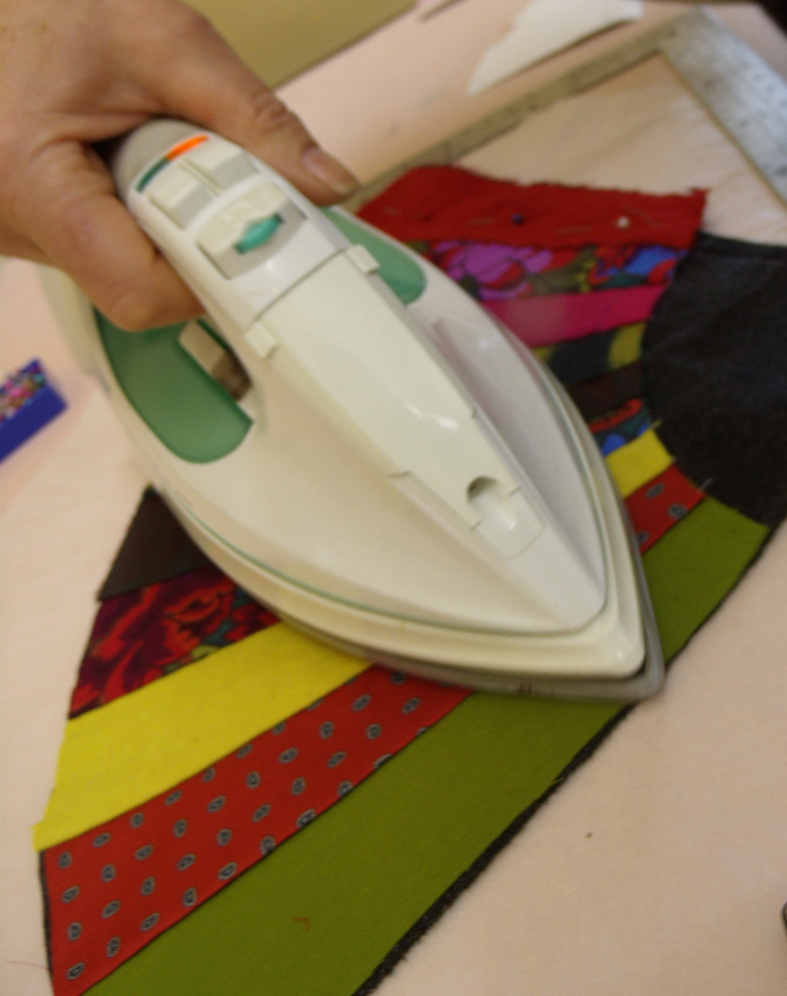
organising the fan sections is much easier and quicker than for usual odd shapes of crazy patches. The sections were laid over one another and then pinned and using running stitches held section by section till the fan was complete. The complete arrangement was then pressed onto the special heat activated fabric backing

started the fan
Brilliant colour for the start of stitching the fan into its finished position
GEDSC DIGITAL CAMERA

.                 Once the fan had been pressed and trimmed the next task was to  find the coloured ground to applique it onto…I find that this is quite a good way to get people to appreciate the difference that different coloured grounds can make to the overall piece.

me teaching
a rare shot of me teaching – explaining how to deal with coloured ground fabrics using a soft and subtle piece of patchwork.

Sometimes soft colours can be made bolder if placed on very dark grounds and brilliant colours more muted if placed on a toning ground. It is also a chance to reassess the colours prior to embroidering the seams which also fix the fan to the background

fan shape pressed to glue backing
the fan shape against a black ground
GEDSC DIGITAL CAMERA
same fan against a brilliant blue ground – note a new patch on the left hand side to make a more balanced fan

Now to start embroidering – I had chosen to demonstrate 1 basic row of herringbone stitch and then show how to add extra stitches or I should say decorations…it is my favourite decorative embroidery stitch as it can be developed  so that it looks almost like a braid. But to begin just a couple of well spaced rows…and then the extra colours can be added.

red whit blue fan
this vibrant fan design is made even more brilliant by contrasting colours

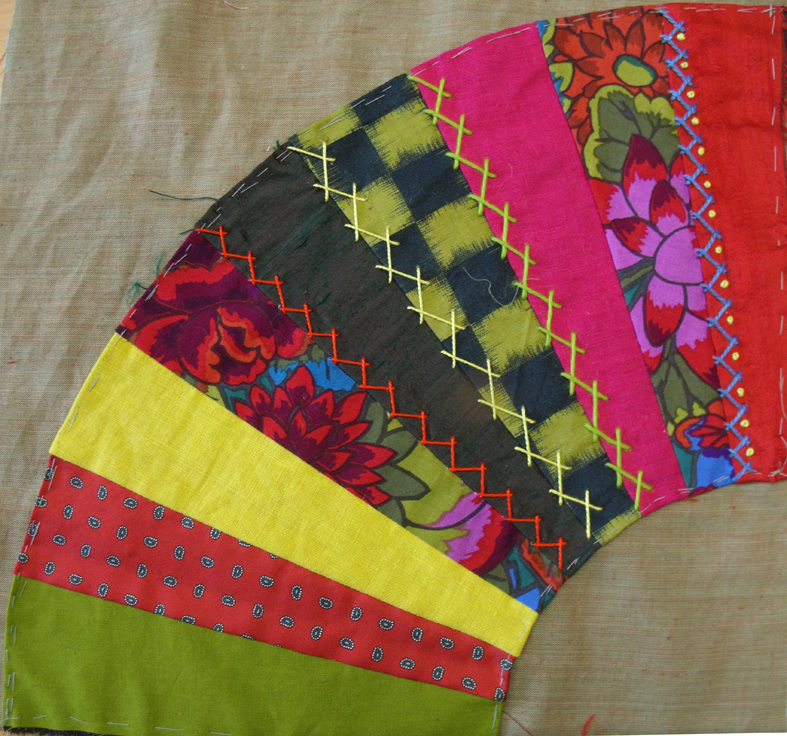
I like to use contrasting coloured stitches on the seams – they are very obvious but then I do not think it worth doing any decorative hand embroidery if it isn’t to be noticed!

contrasting fabric fan
the brighter the contrasts the richer the decoration here the colours sing out

although up close and personal the colours are very vibrant the more colours added to each row of stitching the softer the colours will appear more subtle

Cleos fan
the addition of yellow running stitch to the bright pink herringbone stitch makes it less vibrant

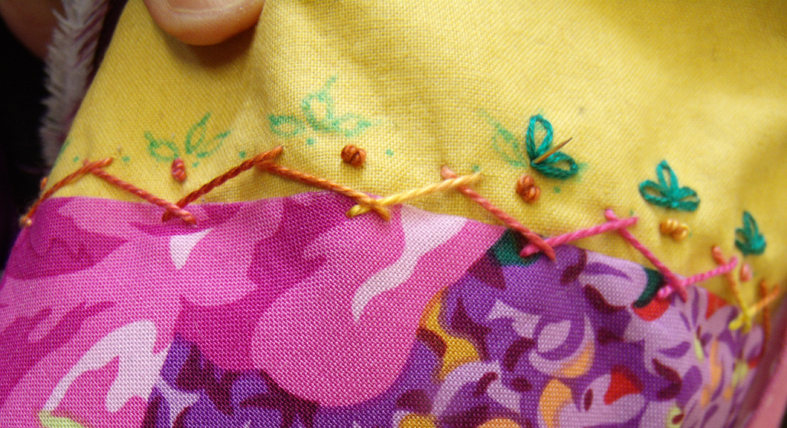
when soft colours are used to not much affect then the herringbone variations allow for extra emphasis – this is why I really like this particular stitch – it gives a lot of opportunity for invention

herirngbone and added stitches
the addition of French knots and detached chain stitches enliven this row of muted herringbone

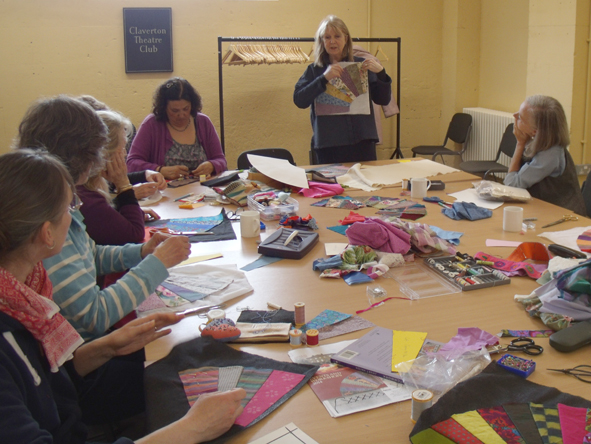
At the end of the session we put all the unfinished patchworks together on a table to assess them for further additions…. you can now see the affect that the Kaffe Fassett fabrics had on the works – but you would not think by looking at this picture of some of the group around the table that they actually liked what they are looking at !

Crazy critical assessment
Crazy critical assessment!

. Everyone faithfully promised me that they would finish the fans and send me photographed results – watch this space…….

Crazy Barcelona

cb5
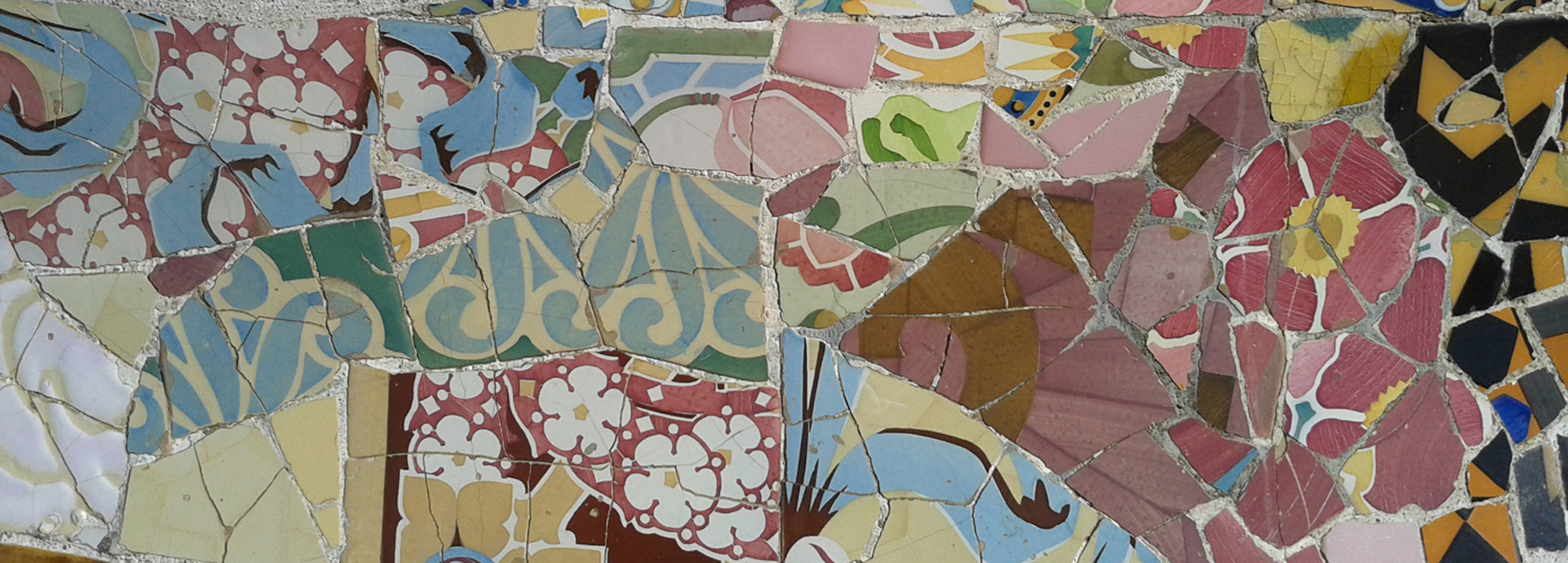
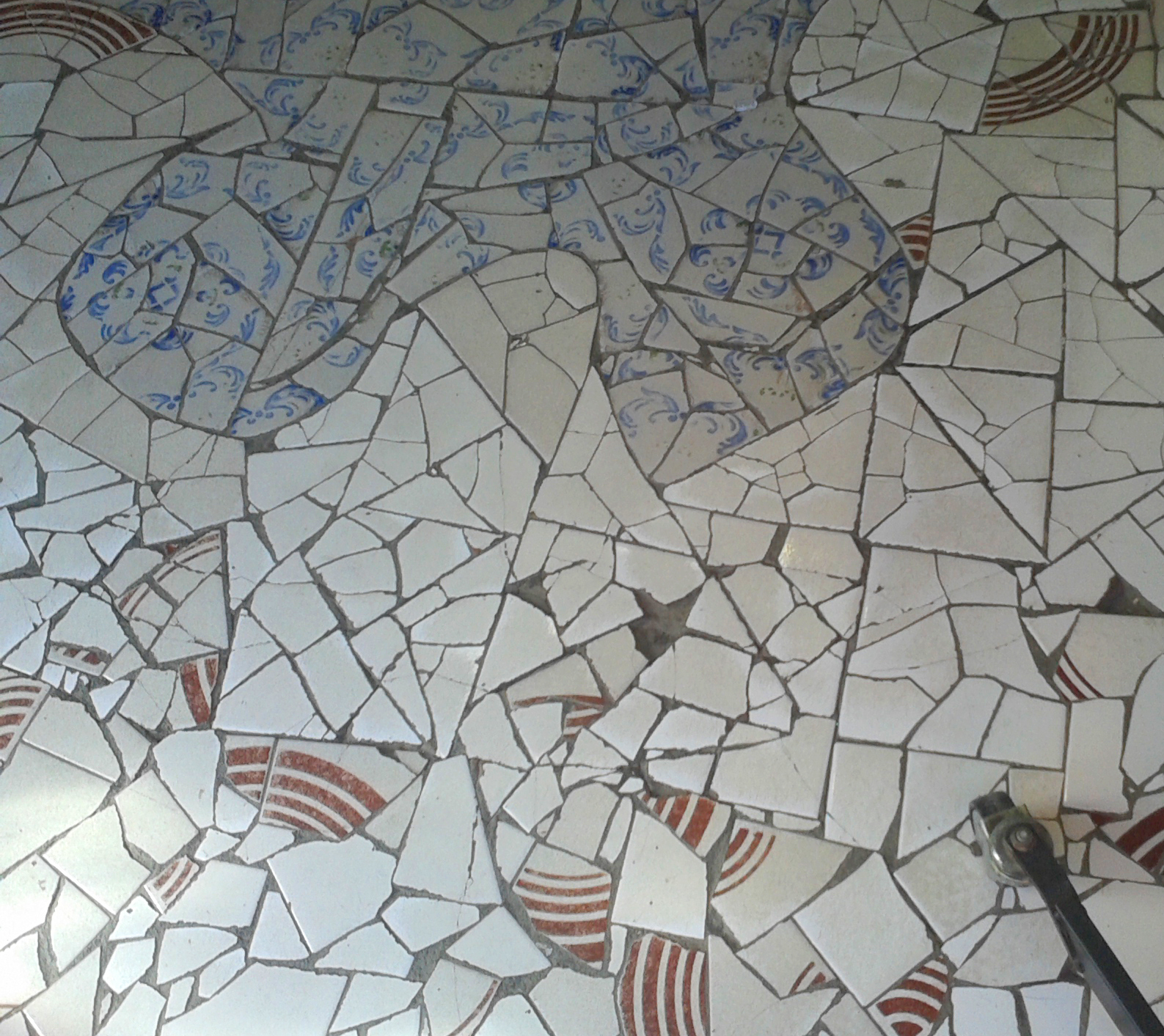
crazy mosaic by Antoni Gaudi at Parc Guell, Barcelona

Crazy Barcelona – crazy patchworks everywhere, but not in fabric – in ceramic, stone and marble. OK then, crazy mosaics, but whatever you call them there is no better place to appreciate them than at Parc Geull, designed and built by Antoni Gaudi in the first 14 years of the 19th century. I have seen images of these mosaics before but never appreciated the size and the sheer exuberance of the patterns.

cb15
undulating crazy seating on the terrace
039
view of the entrance to Parc Geull from the crazy mosaic seating

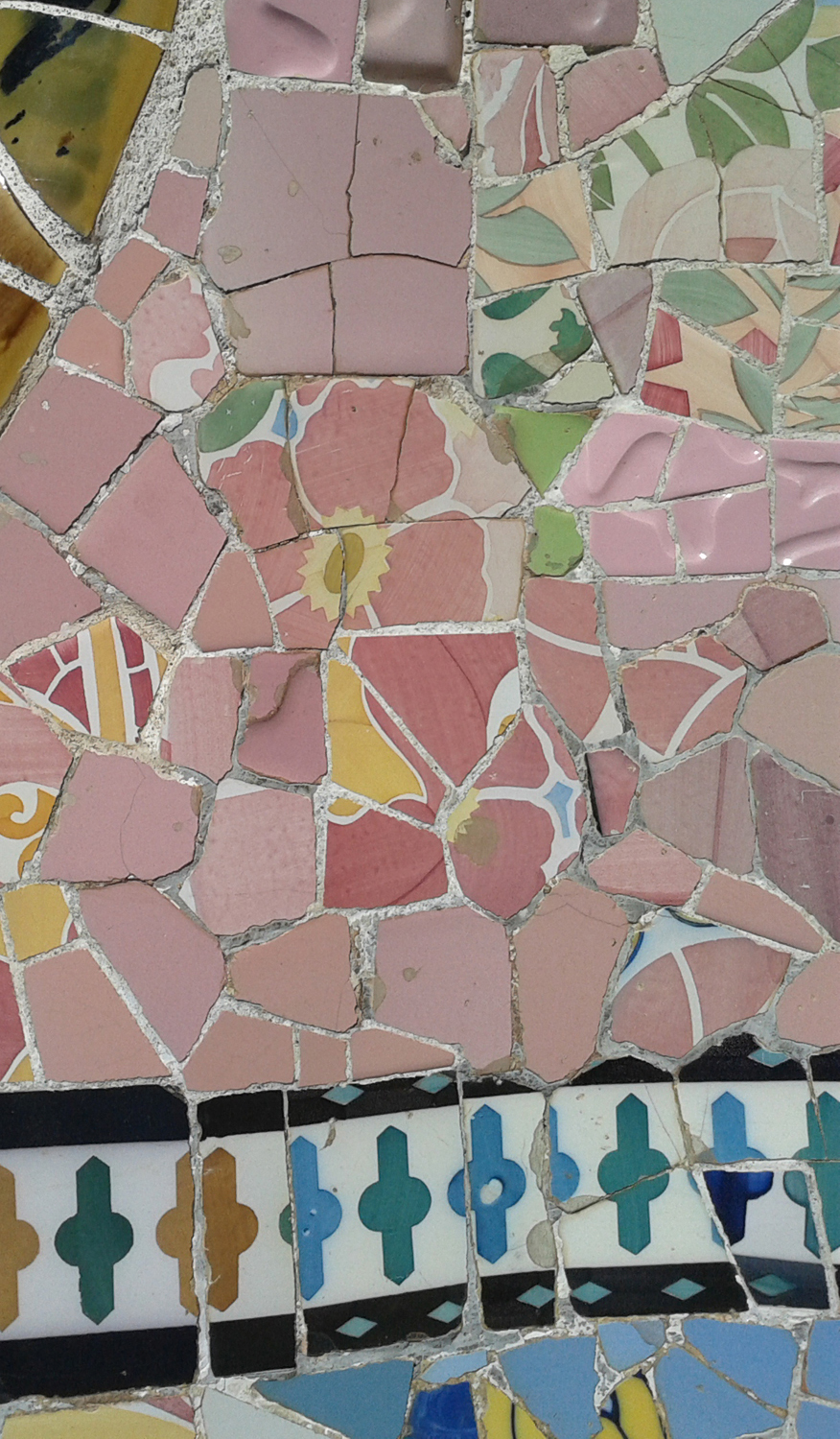
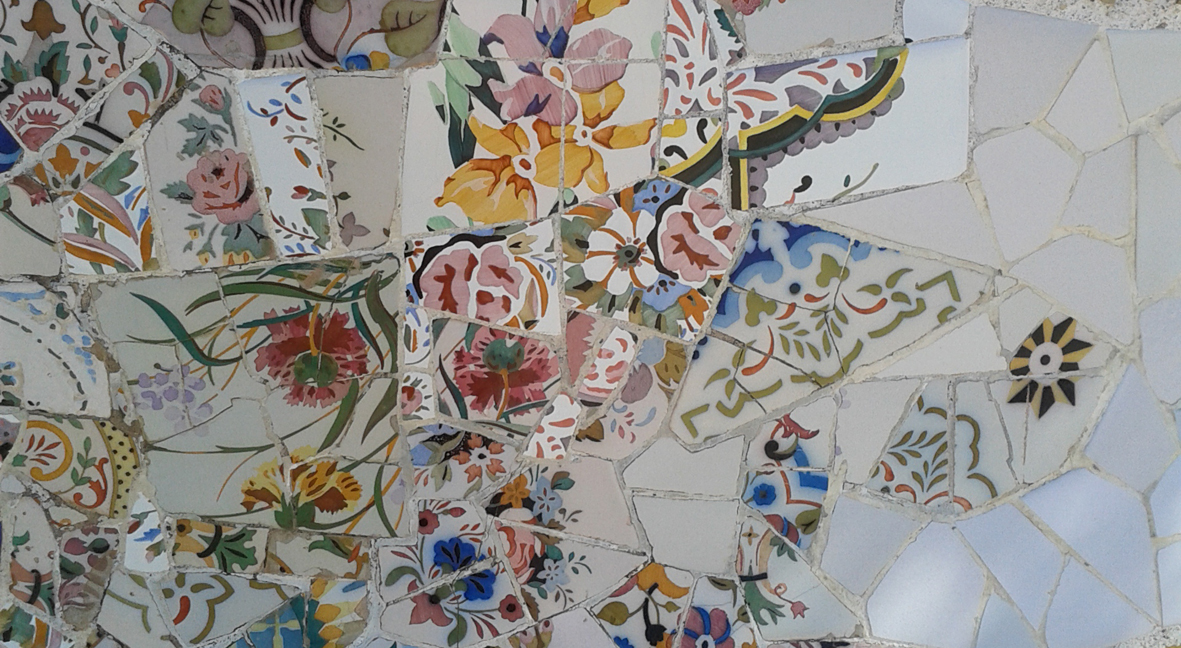
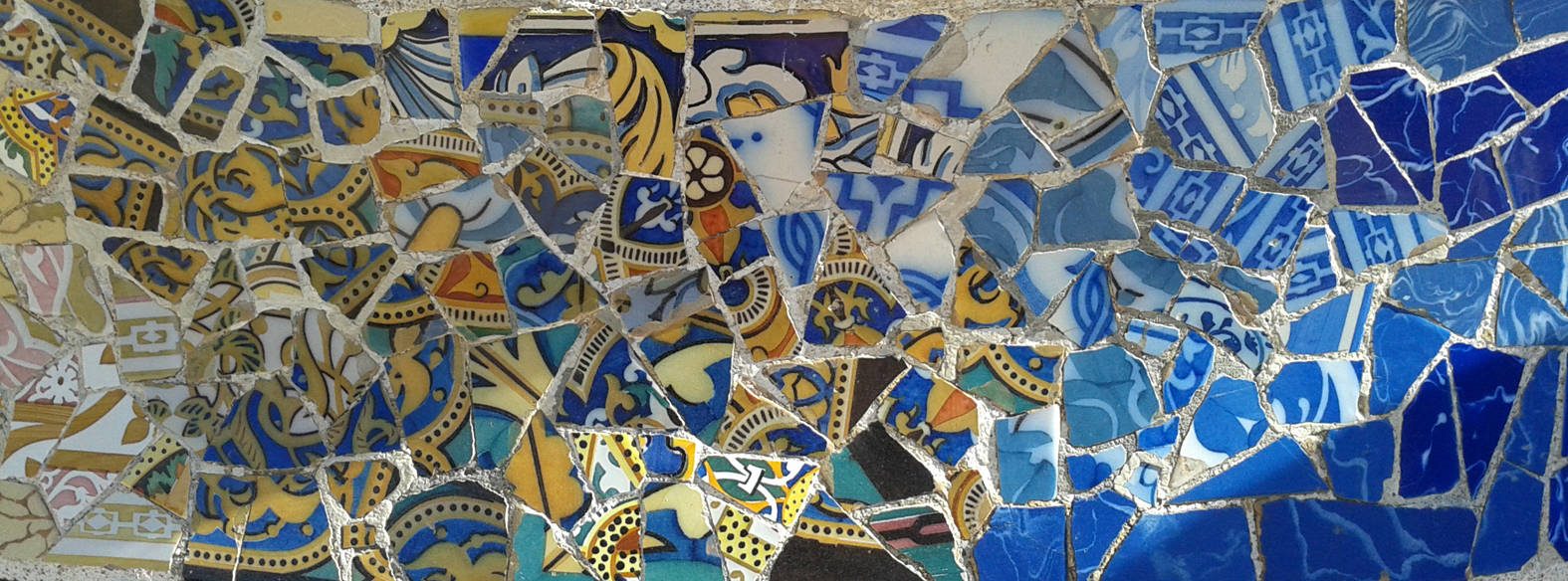
I was delighted to see broken plates, tiles, and rounded roof ridge tiles put together in a myriad of ways, some where just pretty with sections with large flowers that had been broken but kept intact when cemented together and then surrounded by all shades of one background colour. Here is inspiration indeed, but immediately I thought of the Crazy Embroidery classes that I teach at Heart Space Studios, lots of new ideas to create crazy samplers.

031
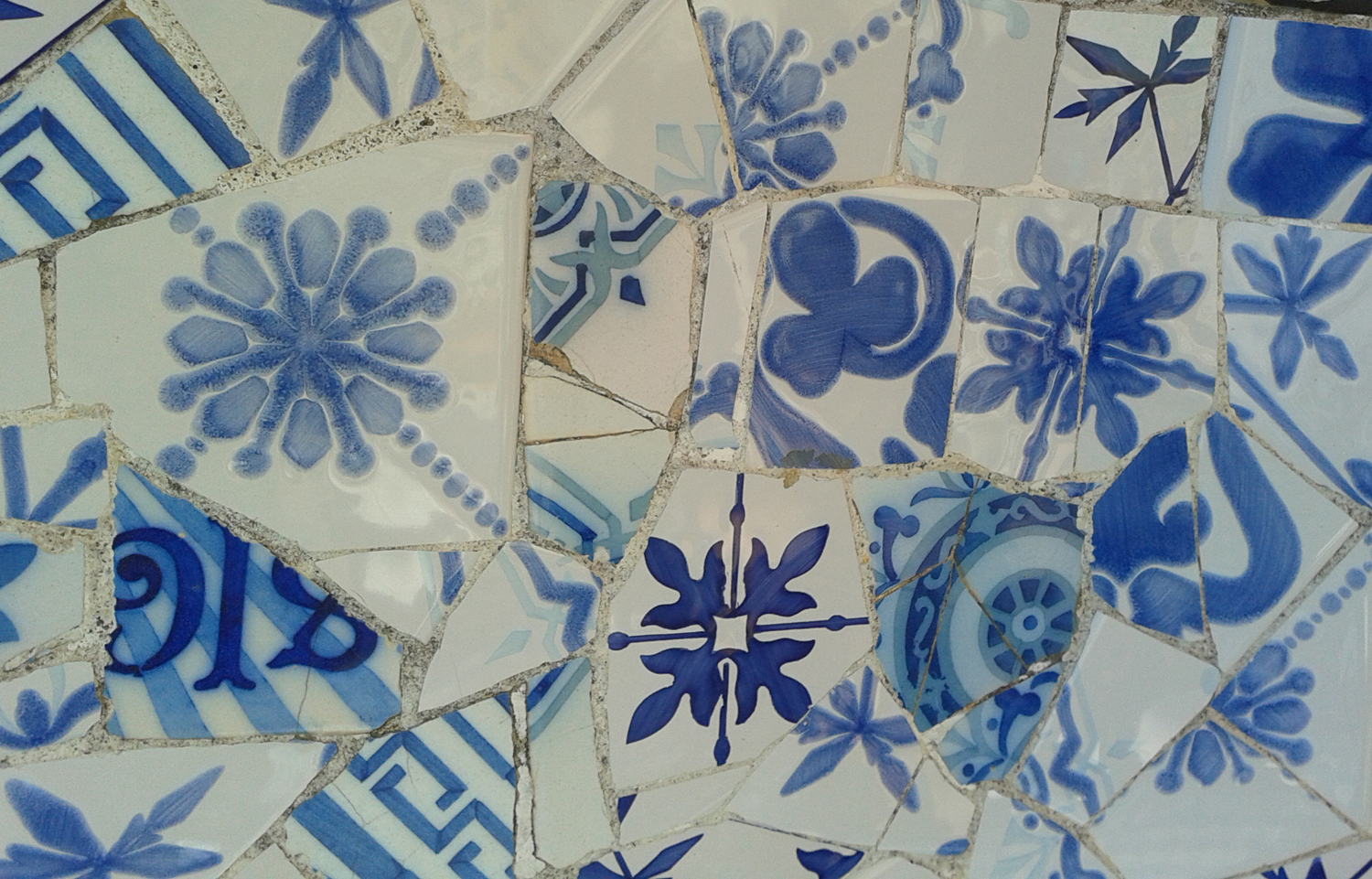
broken flowered ceramic tiles  and plates with narrow borders

I started to see how the sustained patterning of the whole site didn’t just merge into one long visual porridge; there were sections of patterns with plain areas between them and the way that the patterns started to drift into plain areas was really brilliantly handled…

cb1
chintz patterns give way to a plain white area.

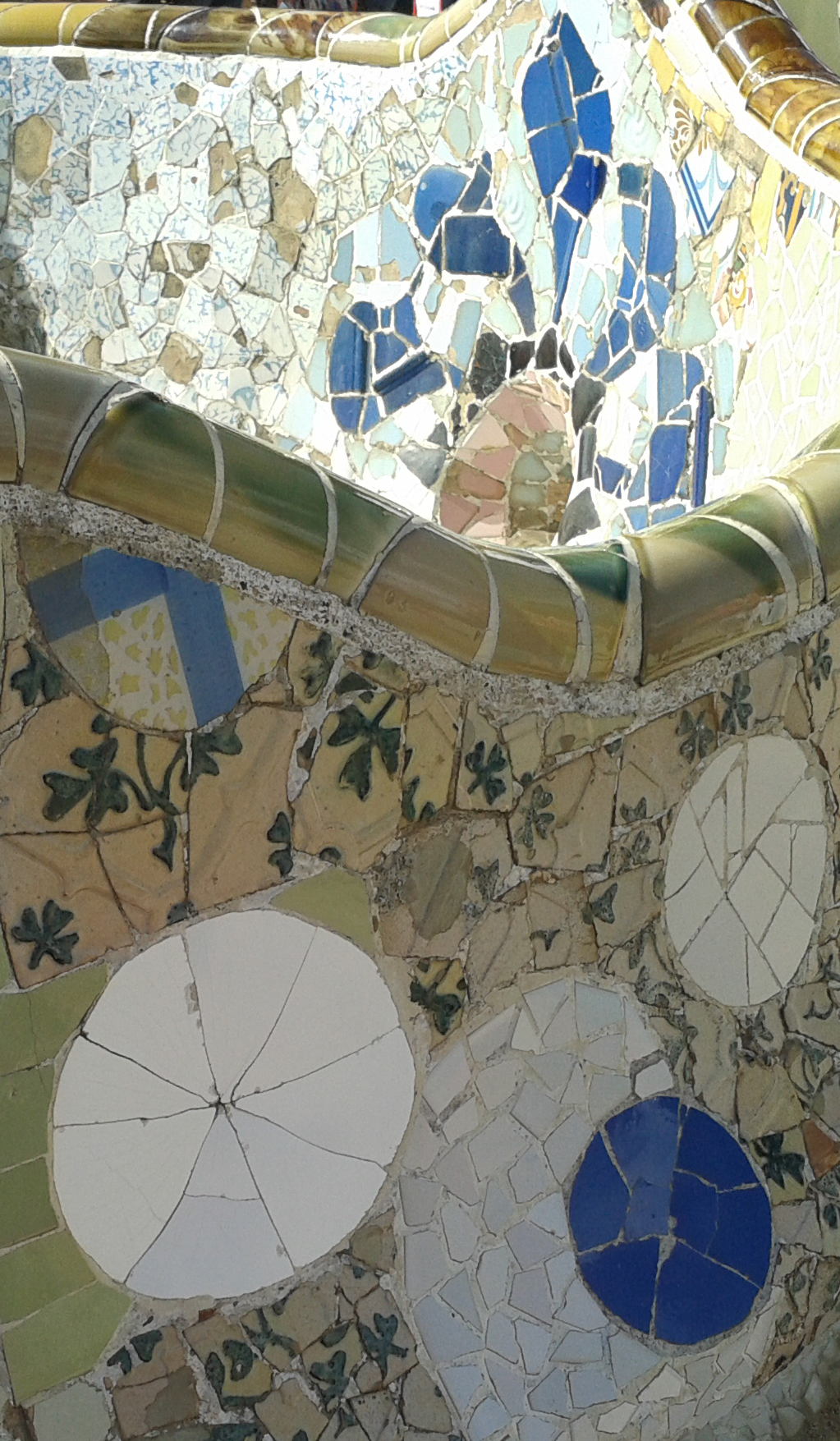
Sometimes the crazy patches were confined to simple shapes and surrounded by a sea of broken ceramics in a wide range of whites, the use of white ceramics when fired and glazed to produce many different variations is a major feature in this garden.

cb2
circle of crazy within white surround
cb4
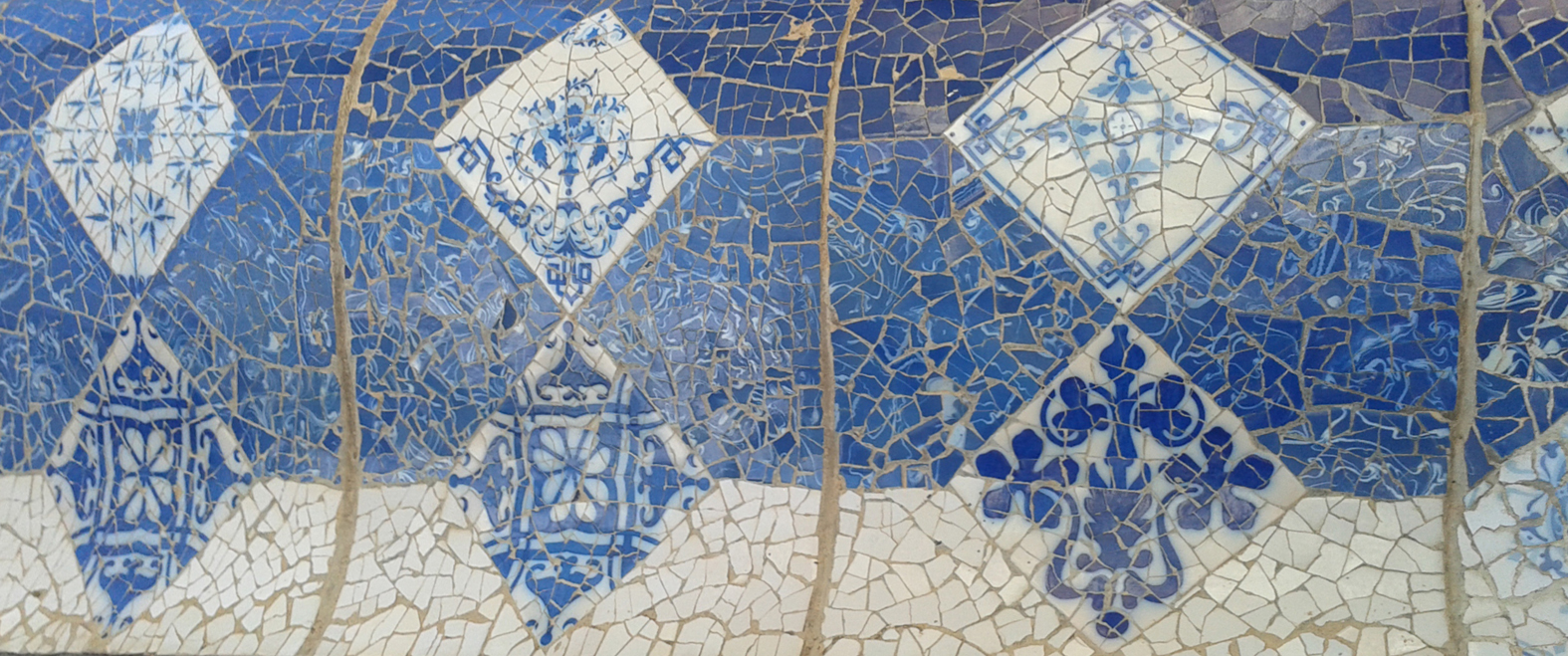
diamond of crazy with mixed white surround
cb14
many different crazy whites shapes make for gentle and cool seating surfaces

there were other more fluid shapes contained by the white ground….

cb8
amorphous paisley shapes
cb12
commas placed in a line around the base of a column

I also really enjoyed seeing patterns within patterns,

cb11
patterns within patterns

I really like these wonky squares set in a sea of crazy patterns; the makers must have had such a good time doing this work. Transitions from patterns to solid colours was just masterful in places

cb3
this transition from rich colour to single coloured patterns is masterful

in fact the single coloured sections were simply beautiful – here is a range of crazy blue patterns

cb6
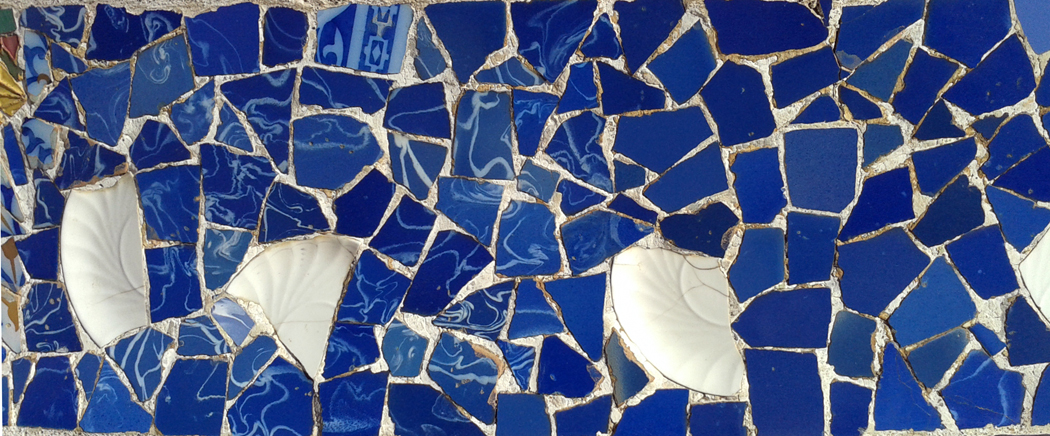
broken plates in a sea of blue
034
typical Spanish hand painted blue tiles
052
refined diamond designs on blue and white striped ground

while most of the ceramic patterns are traditional in flavour there were also some more abstract patterning to be found,

041
abstract patterns must have looked strange in the early 1900’s

but this whole set of designs is made from re-cycled materials, apart from the abundance of beautiful old and broken patterned tiles from the Spanish ceramic factories, I was happy to see this poorly fired plate used to good effect.

cb10
poorly fired glazed plate has been put to good use.
After an hour of my visit I started to see evidence of Crazy everywhere..

cbground2
the sandy ground in the park is impressed with crazy patterns

looking down at the sandy pathways I saw crazy patterns impressed by the soles of many different shoes, and once out of the park, everywhere I looked was Crazy Heaven.

056
the Crazy cafe floor
057
and the Crazy marbled walls

So now I have decided to try to develop some of these ideas into new Crazy Patchwork designs for cushion cover designs to show Hugh Ehrman at Ehrman Tapestry company for their future collections.

Ribbon Felted Flowers

OLYMPUS DIGITAL CAMERA
my totally moth eaten cashmere cardigan – but with darning still intact!

This is a sad story with a happy ending. My favourite cardigan that was included in my first ever post, Make Do and Mend, where I proudly showed the careful darning that I wore with pride, sadly,  got lost. When I eventually found it pushed to the bottom of my laundry basket (don’t ask) it was totally ruined even beyond my restorative darning powers.
I decided to felt it by boiling it twice. The colours are so vibrant that I just had to try to find a use for it and I found the perfect solution when designing with some lovely felted woolen blanket flowers that Kirsten Hill-Nixon had brought along as a new idea for a class at Heart Space Studios.

GEDSC DIGITAL CAMERA
the reds and pink  selection- I really like the tartan rose.
GEDSC DIGITAL CAMERA
the neutral colour selection

 Kirsten will make the flowers in the morning class and I will develop the design and make session with them in the afternoon…but first I had to design something with what she had brought me, and she had brought me a whole selection of disparate flower heads – just as I has asked her to.

I made 2 colour sets of flowers. the neutrals were really soft and wooly, very tactile and I thought first to just make a heart out of them – well I would wouldn’t I? and in fact this is a really nice idea I may go back to…..

GEDSC DIGITAL CAMERA
sewing on some beaded and buttoned centres

But then I imagined them as adorning a woolly winter jumper or cardigan, they aren’t heavy but they are bulky and a brooch seemed better than stitching them to a piece of clothing. But I had been given so many flowers that I soon decided on a necklace….

GEDSC DIGITAL CAMERA
Kirsten’s red flowers arranged as necklace

I set to work but when stitching them together without a backing fabric, soon realized that I needed just a few more roses….then I remembered my old ruined cardigan. I cut the sleeves into ribbons of different coloured stripes and stared to stitch the rose buds by simply rolling and folding the strips to suggest overlapping rose petals.

OLYMPUS DIGITAL CAMERA
cut strips of sleeve being curled to start roses
OLYMPUS DIGITAL CAMERA
stitching the rolled rose securely with matching fine wool thread

I had used this system many times as it is so easy – you just need to stitch as you go and control the folded edge,  I found the way to do it in a vintage dressmaking manual from the 1930’s; the natural affinity to roll for cut knitting really helps the rose petal effect. I was starting to see a new life for all my old felted woolens.

GEDSC DIGITAL CAMERA
the finished necklace –

I inserted my knitted roses between Kirsten’s more substantial felt blanket ones, ( I really like her use of the blanket stitched edge for a fat rolled rose). She had provided leaves as well so they helped make the reds even stronger. Then I simply stitched 2 suede strips for ties onto the last roses and there it is – now for the neutral necklace.

GEDSC DIGITAL CAMERA
the neutral necklace made of different blankets and added wooden beads.

this time I added wooden beads by threading them onto the leather strips to make a more decorative finish. Kirsten had filled some of the centres of the flowers with soft glowing beads so I added some wooden ones as well, the soft tones and texture of the wood feels just right for this sort of fabric.
GEDSC DIGITAL CAMERA
finished felted blanket necklace

I was really getting into my stride, and now I just want to make more of these simple flowers pieces and I didn’t use the lively red tartan rose – so now I need to pluck up courage to felt my  tartans and paisley scraps to use with my old washed out jumpers……