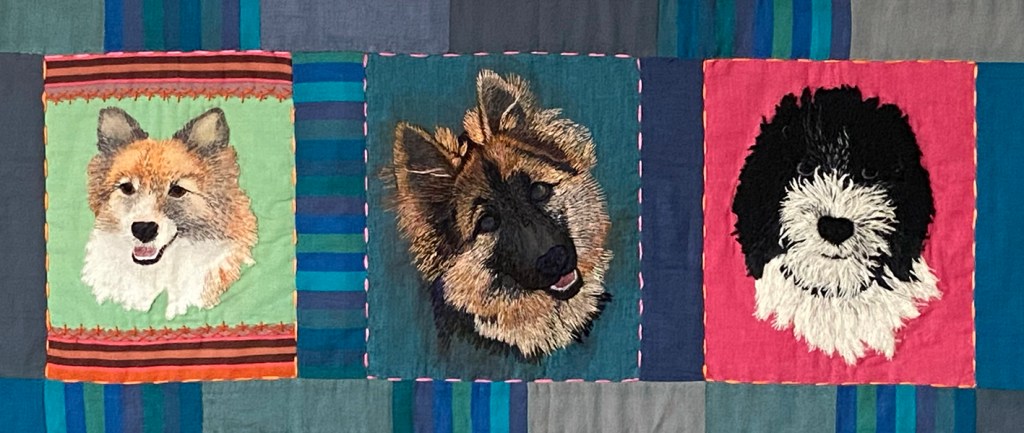
dog quilt: SERENDIPITY

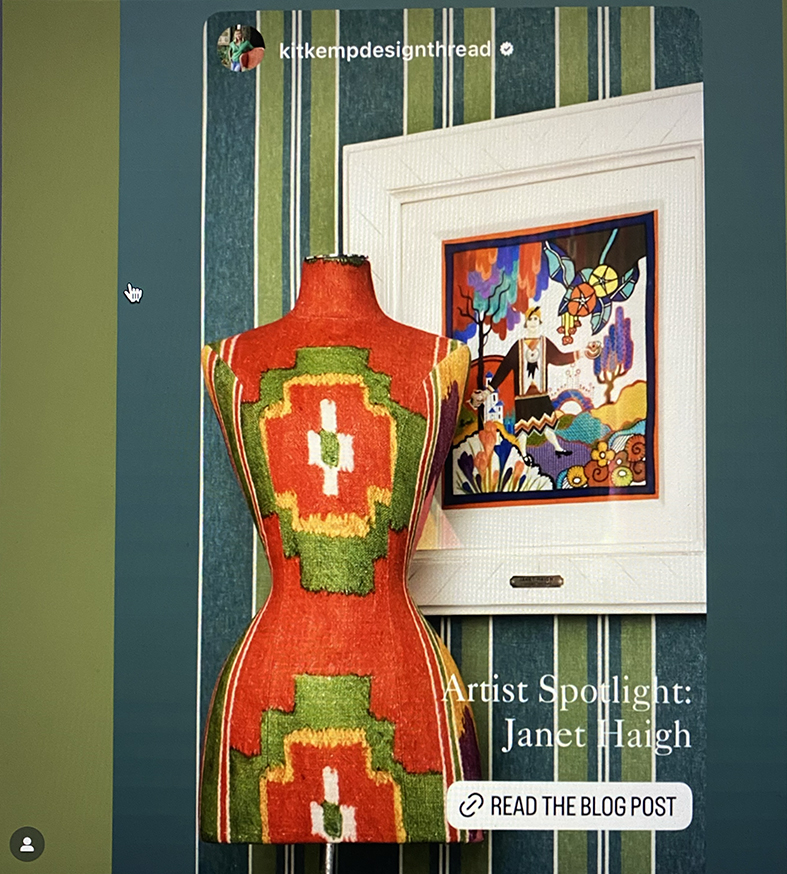
Strange how sometimes things come together: I was contacted, out of the blue, by Marcus Wells at Havilland Designs to see if I undertook commissions? He had framed some of my earlier work (embroidered portraits of women designers) for one of his clients, the interior designer Kit Kemp, who, to my amazement, had spotlighted my work on her blog, showing the perfectly placed Clarice Cliff portrait and lots more. Now read on……

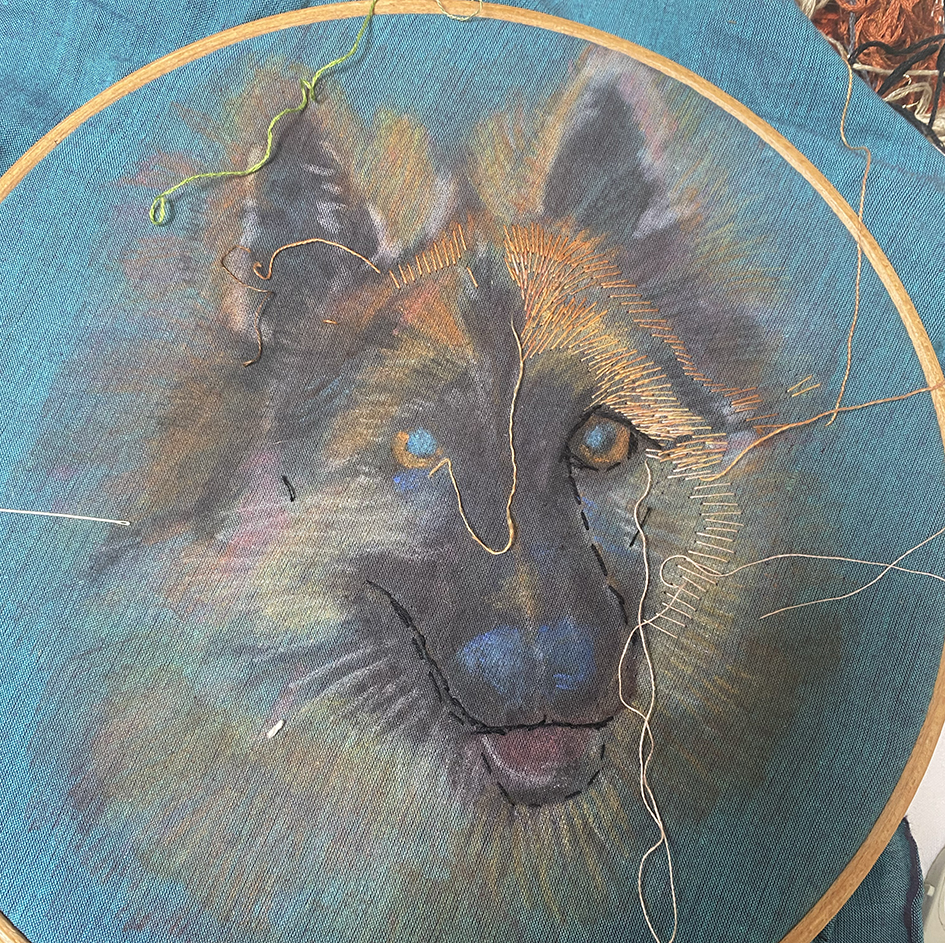
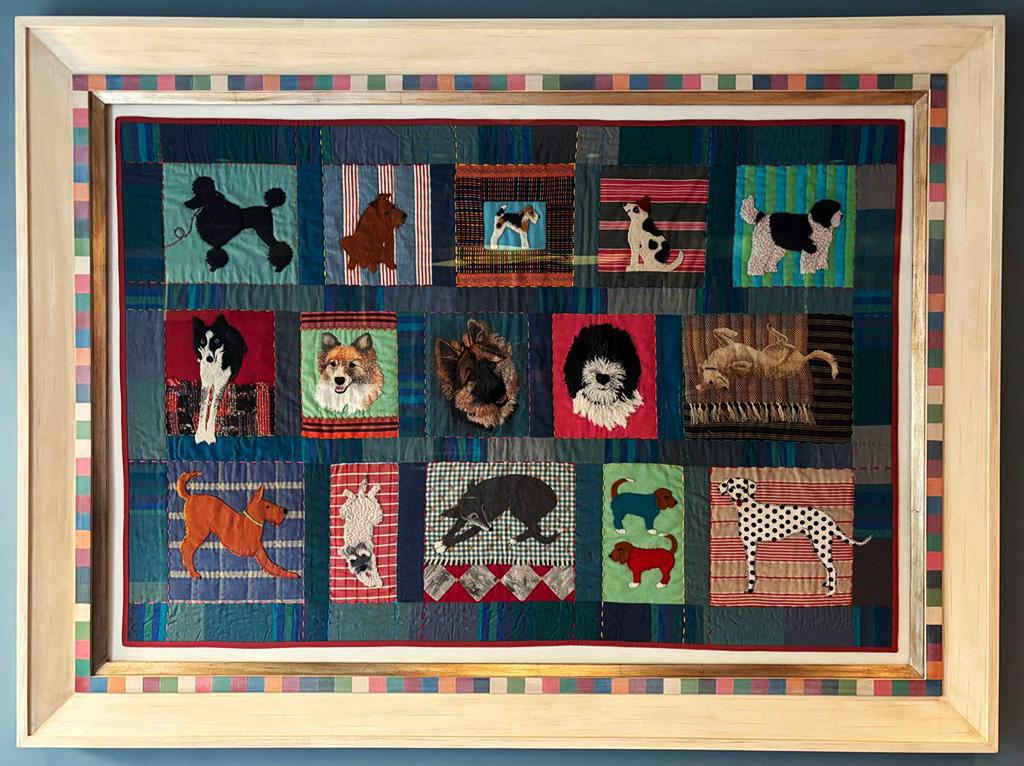
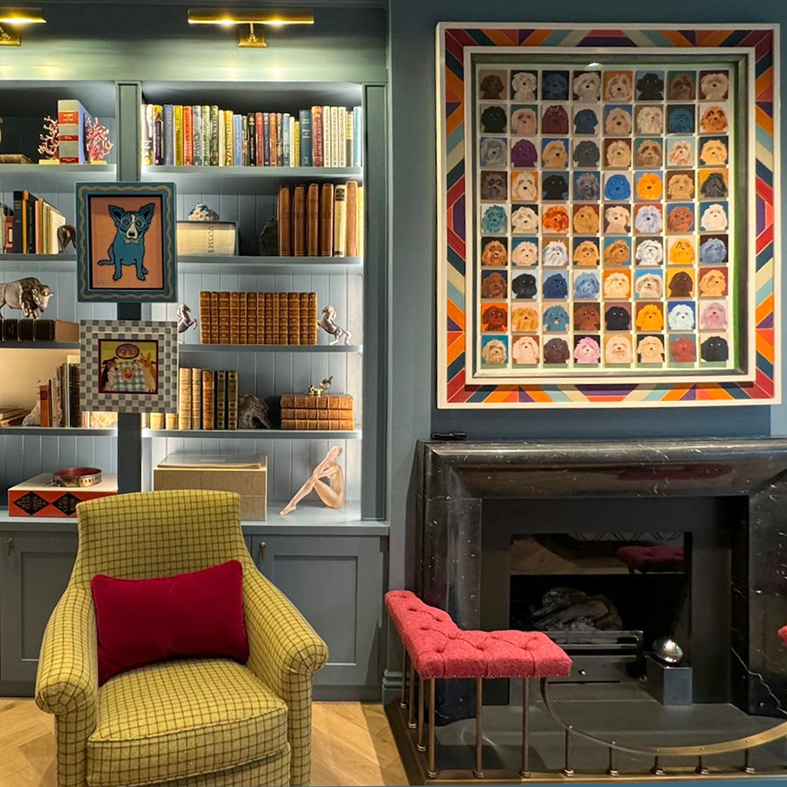
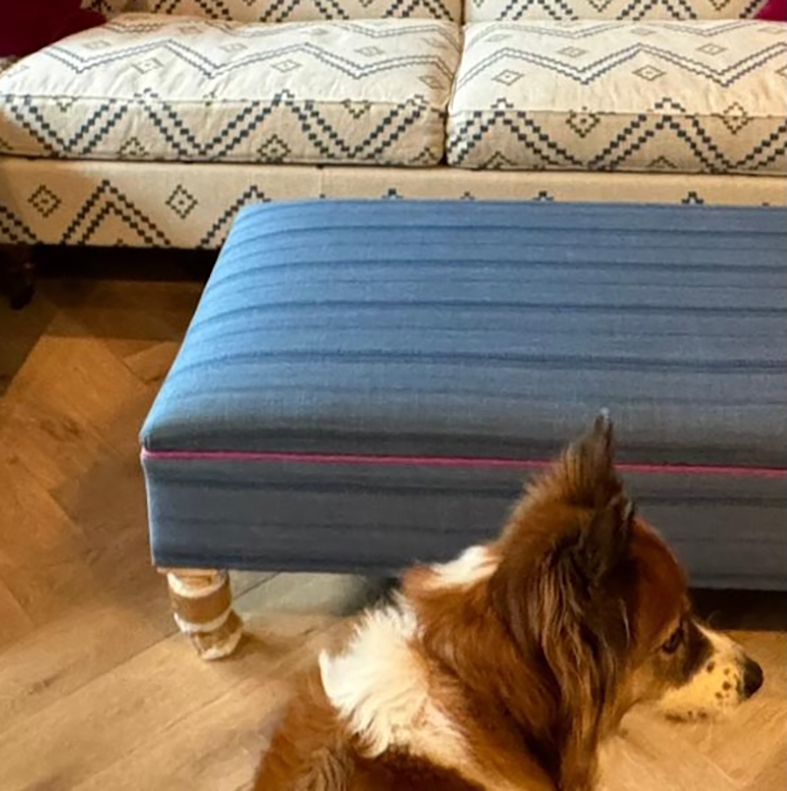
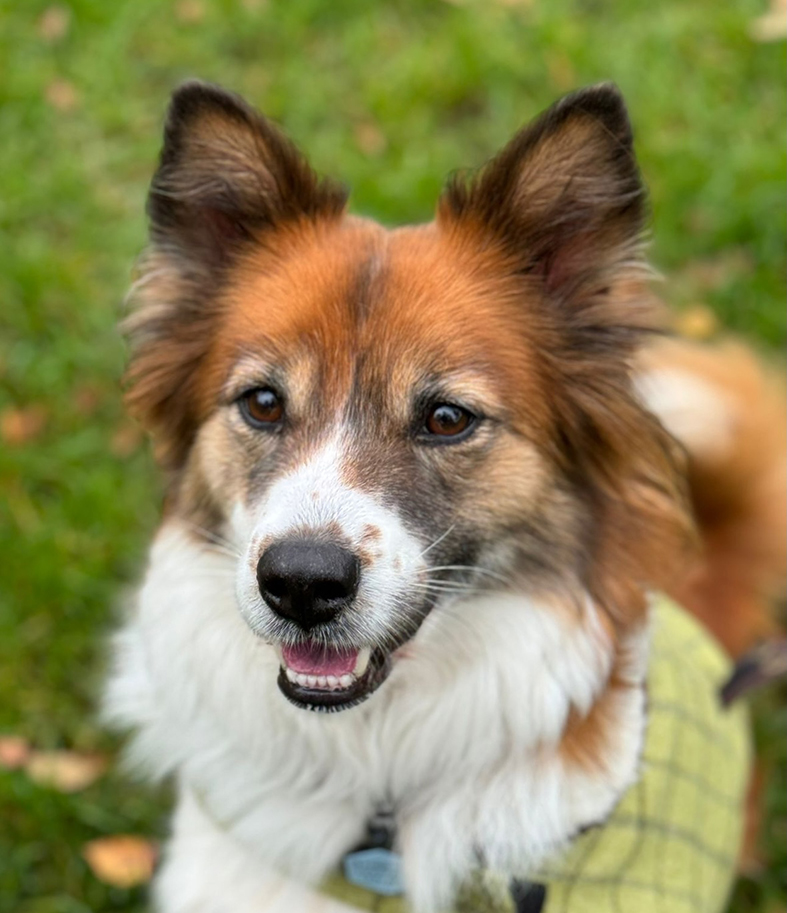
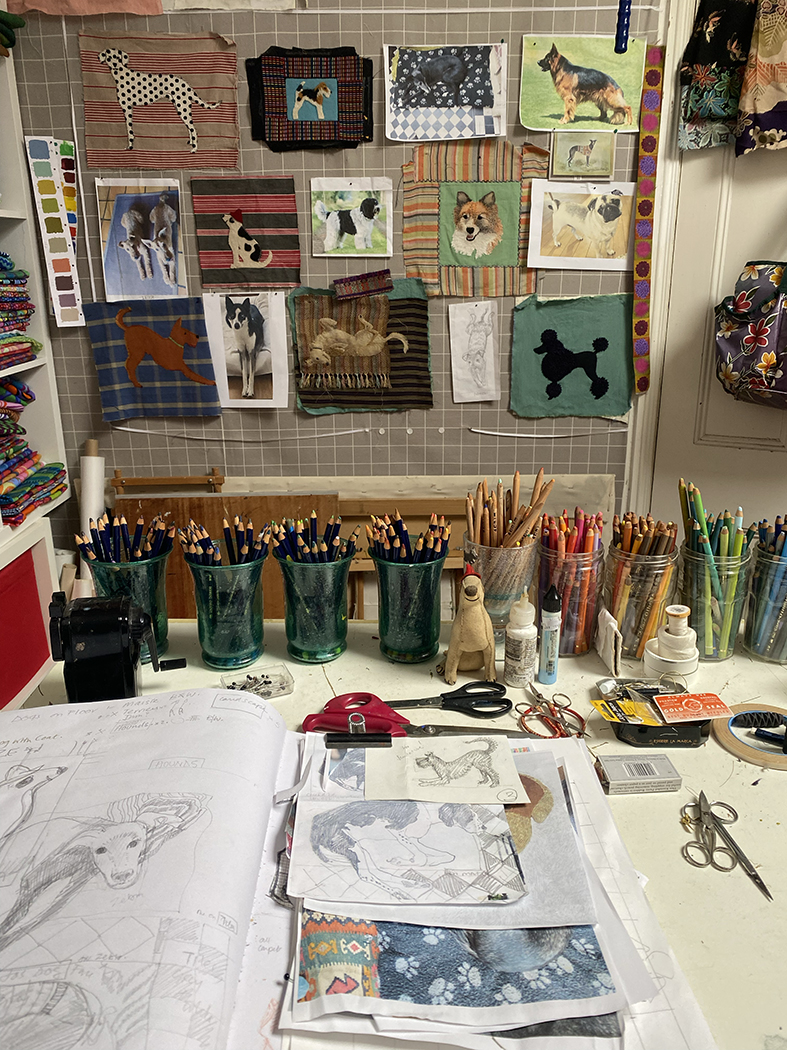
Marcus had a client who wanted a quilt depicting dogs. I am not a quilt maker but I was intrigued and asked him to send me details, sizes, preferred imagery etc. and an overview of the space where the quilt would hang. It was to be framed by Marcus and – no pressure – his client was another interior designer….He sent several images of the room that the quilt was to be hung in and I noticed a small dog’s head on one of them, I asked for pictures of any other dogs belonging to the client.

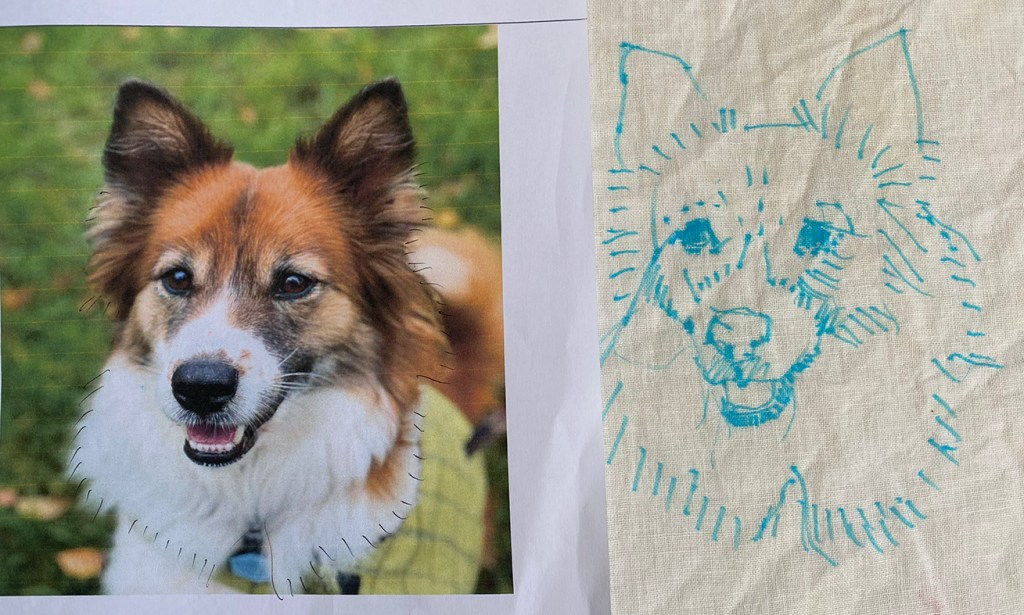
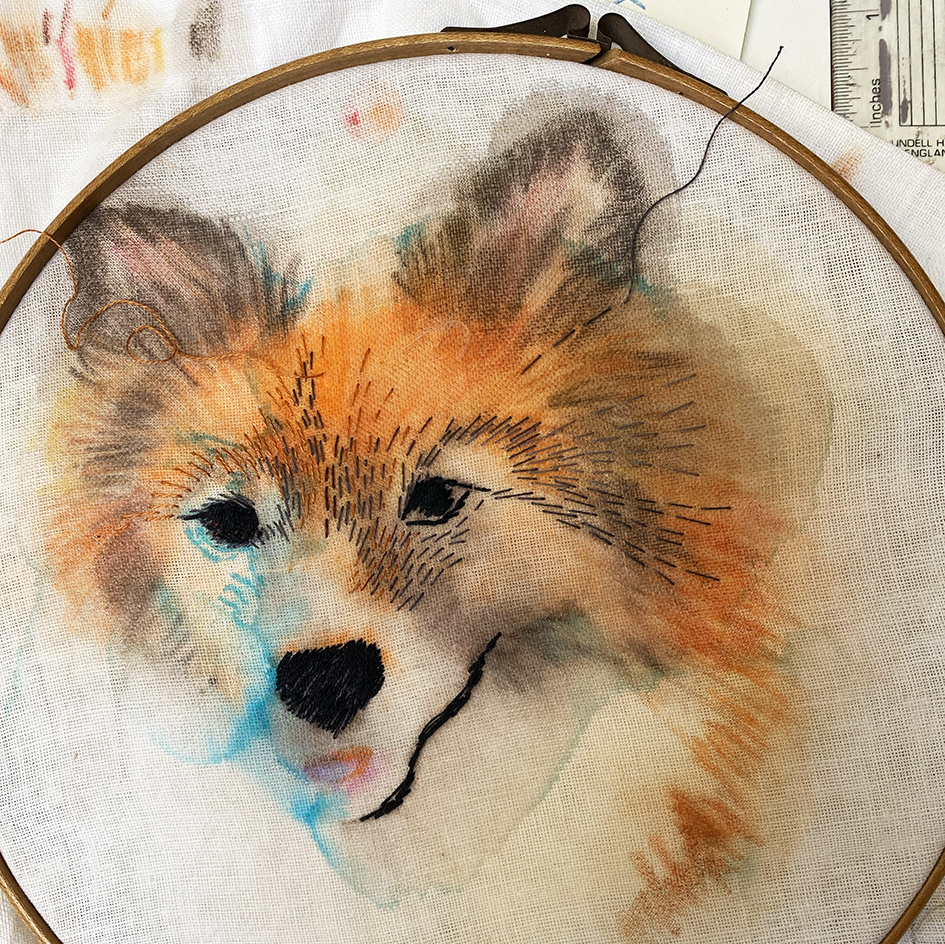
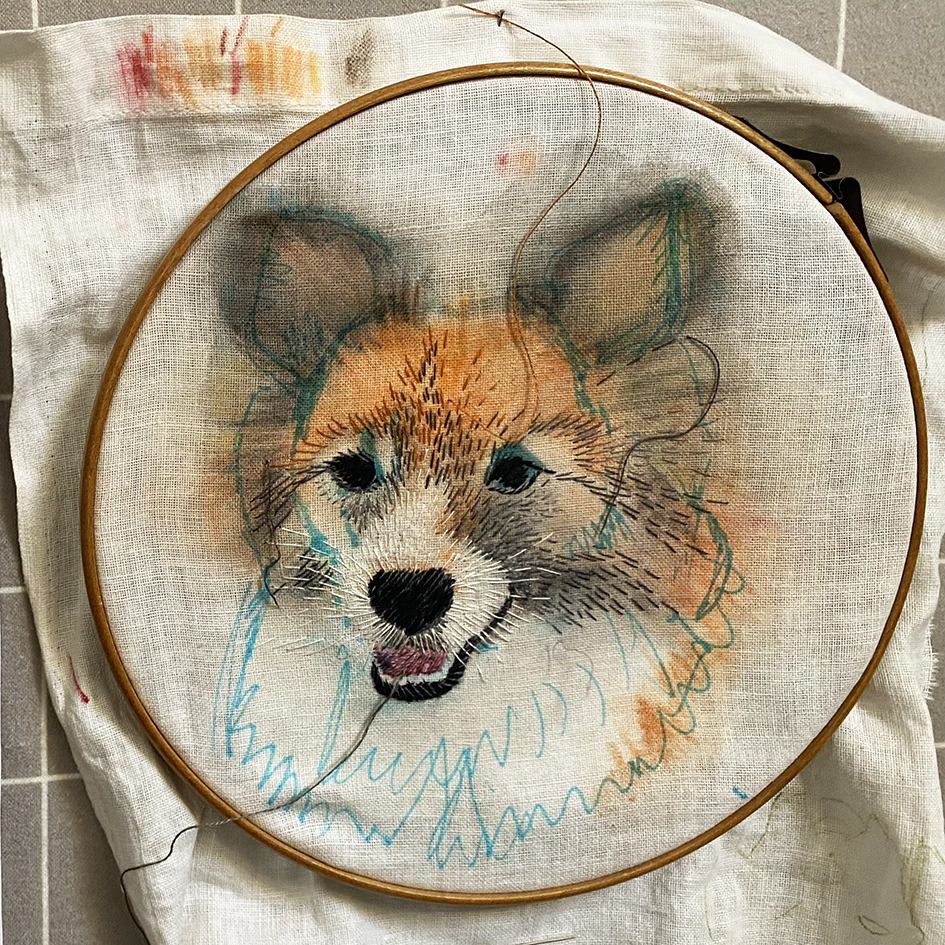
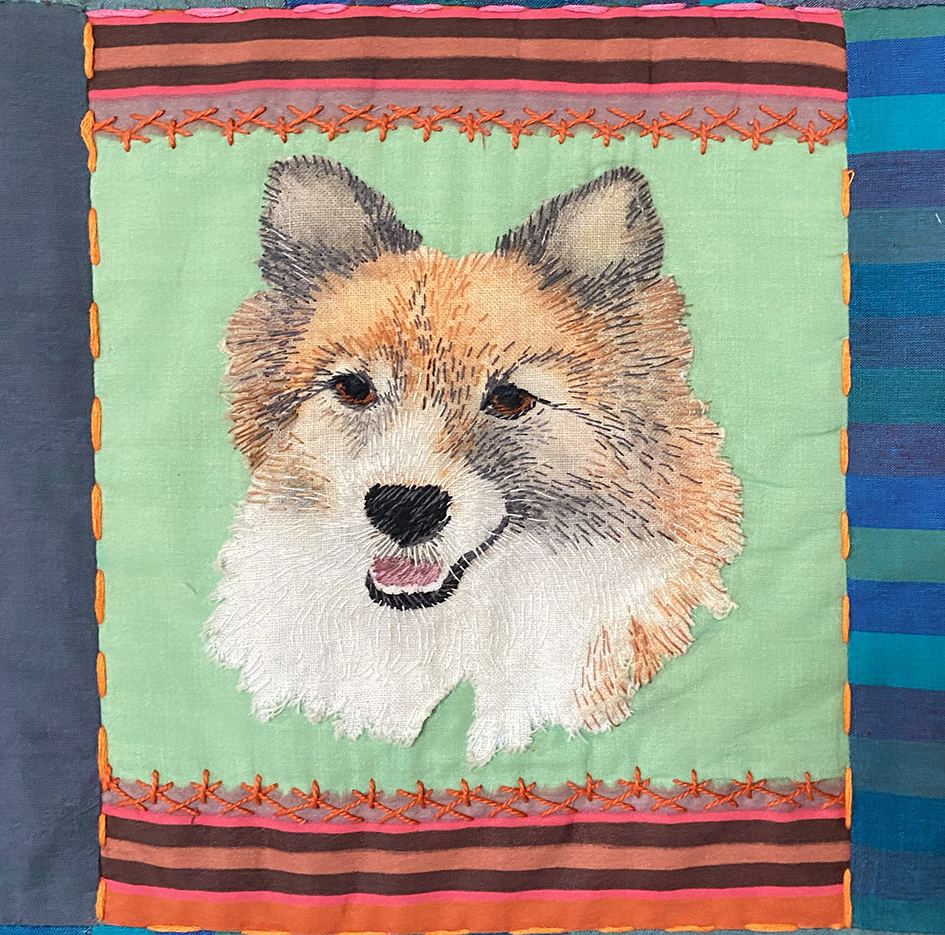
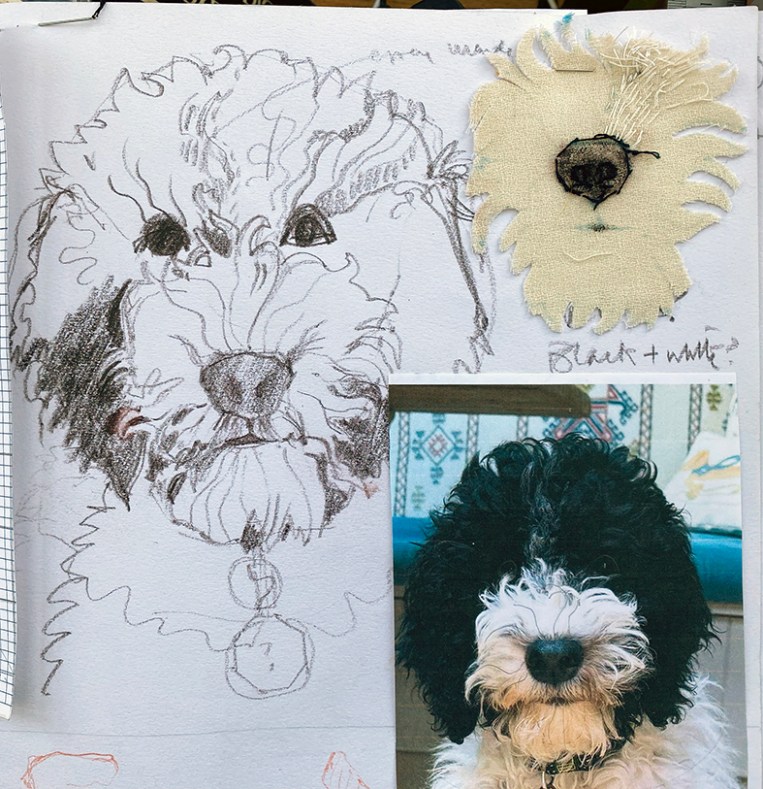
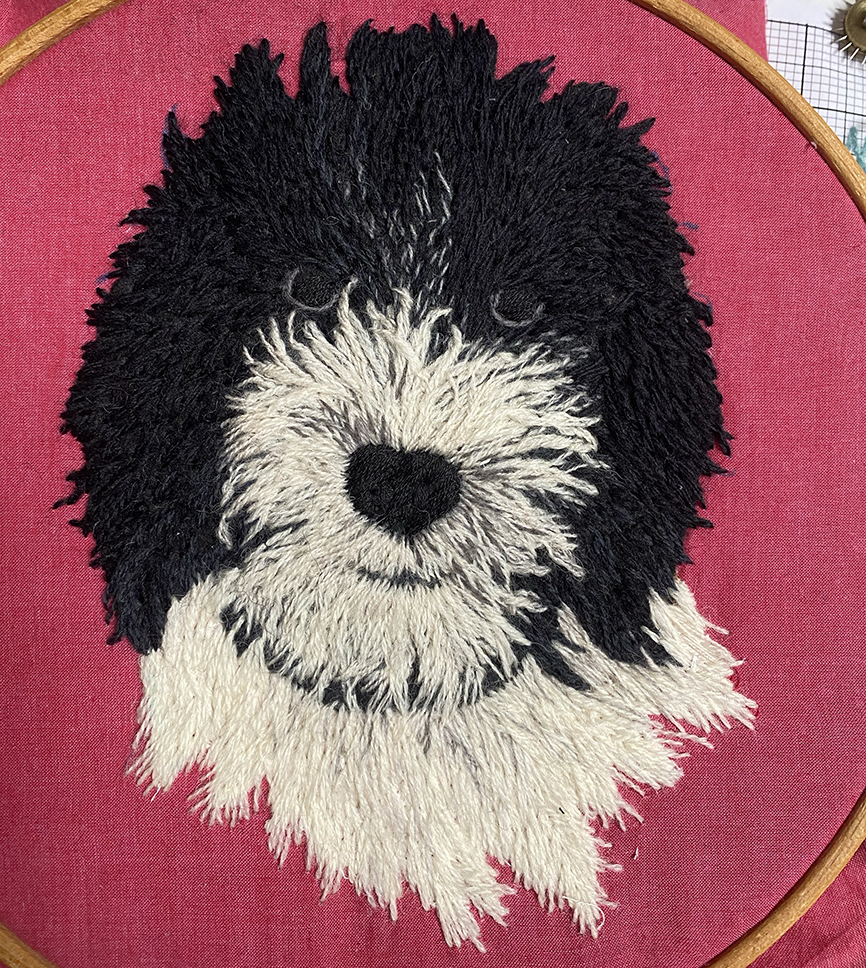
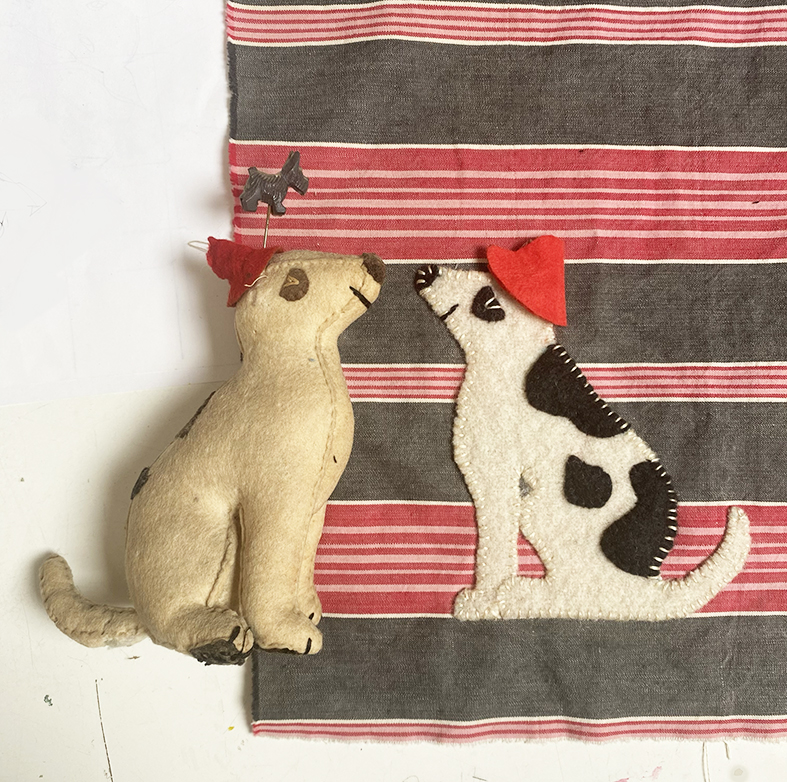
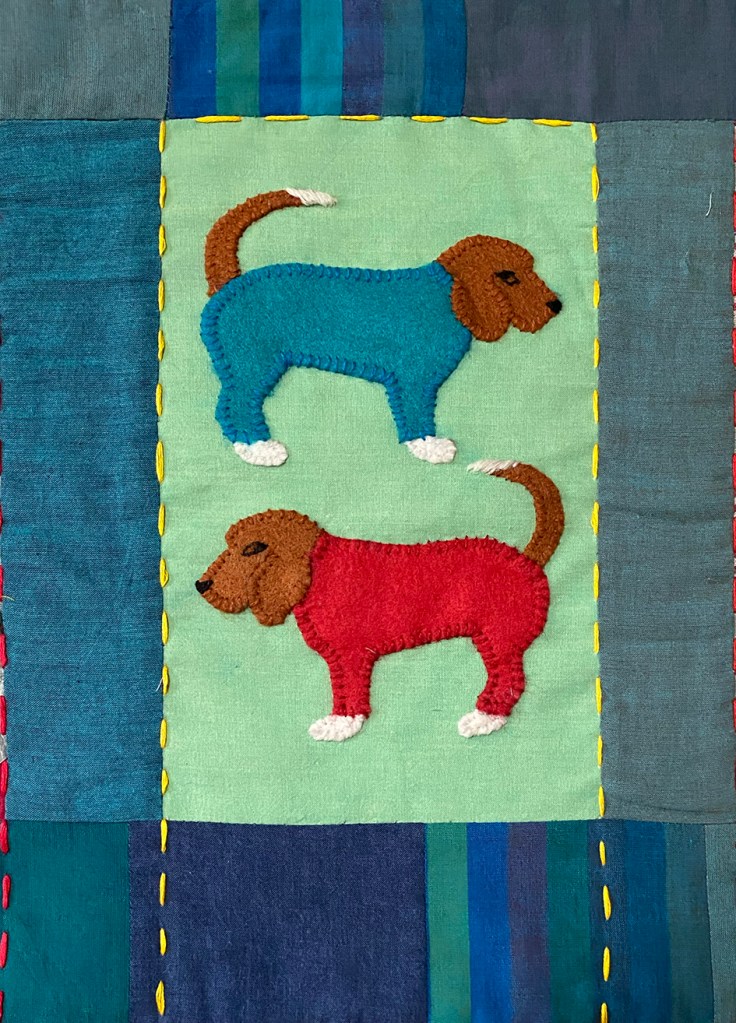
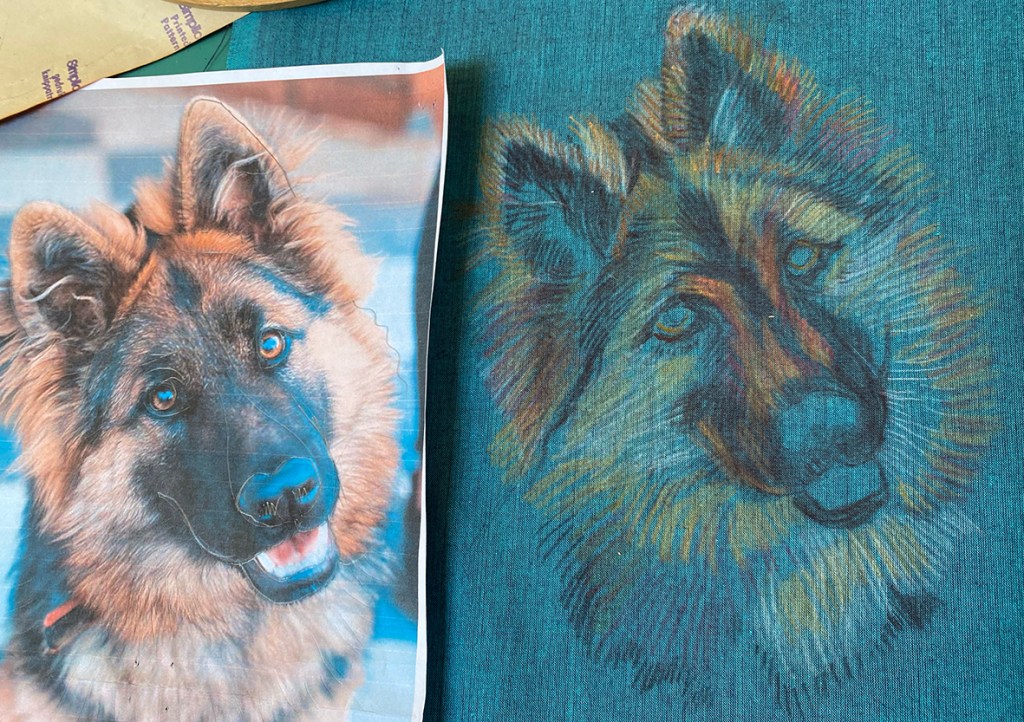
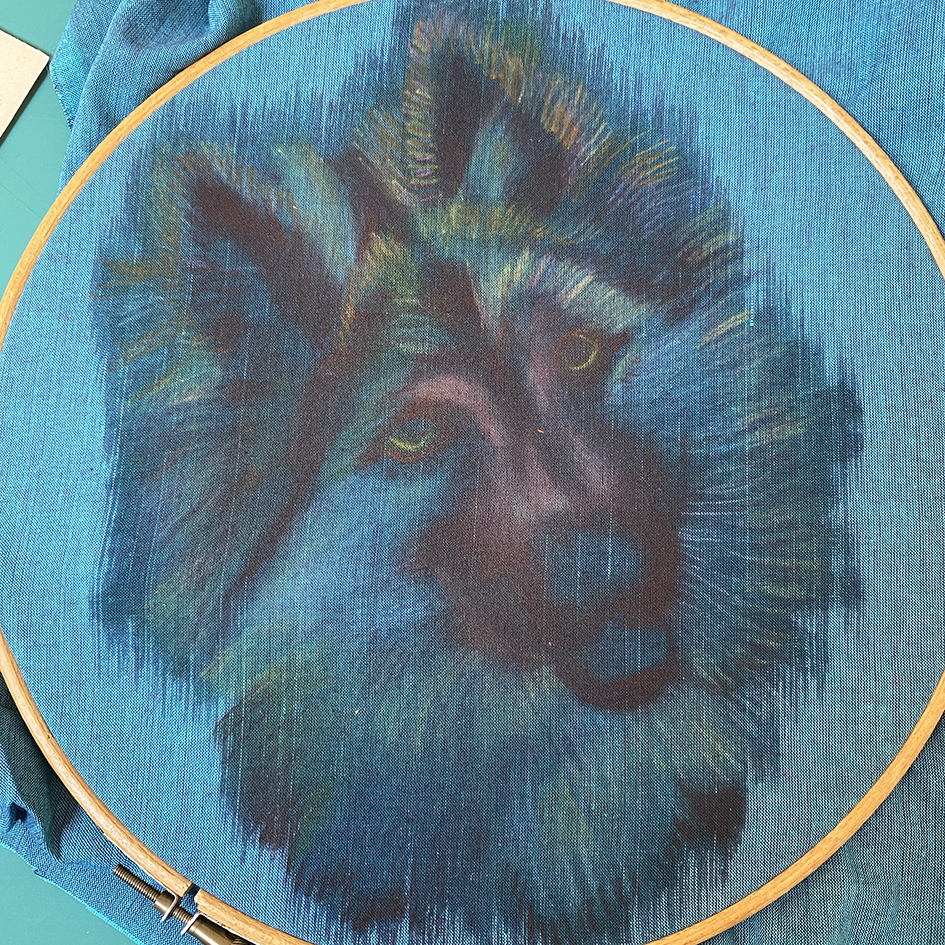
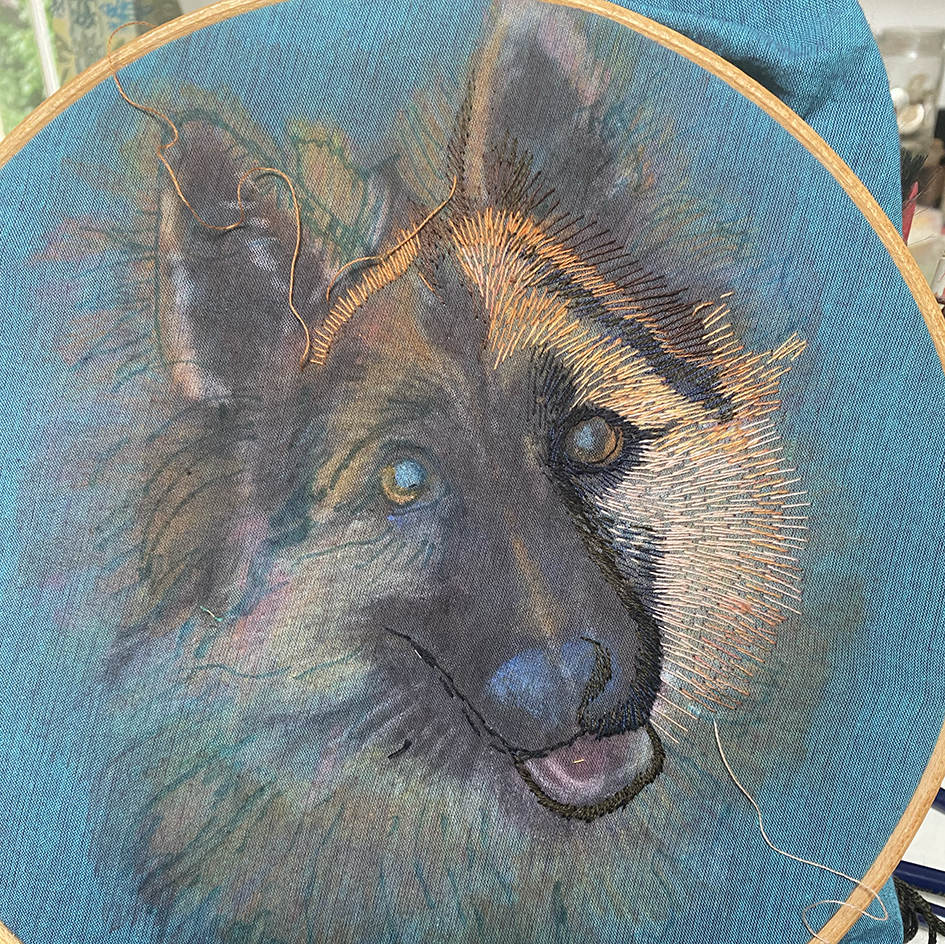
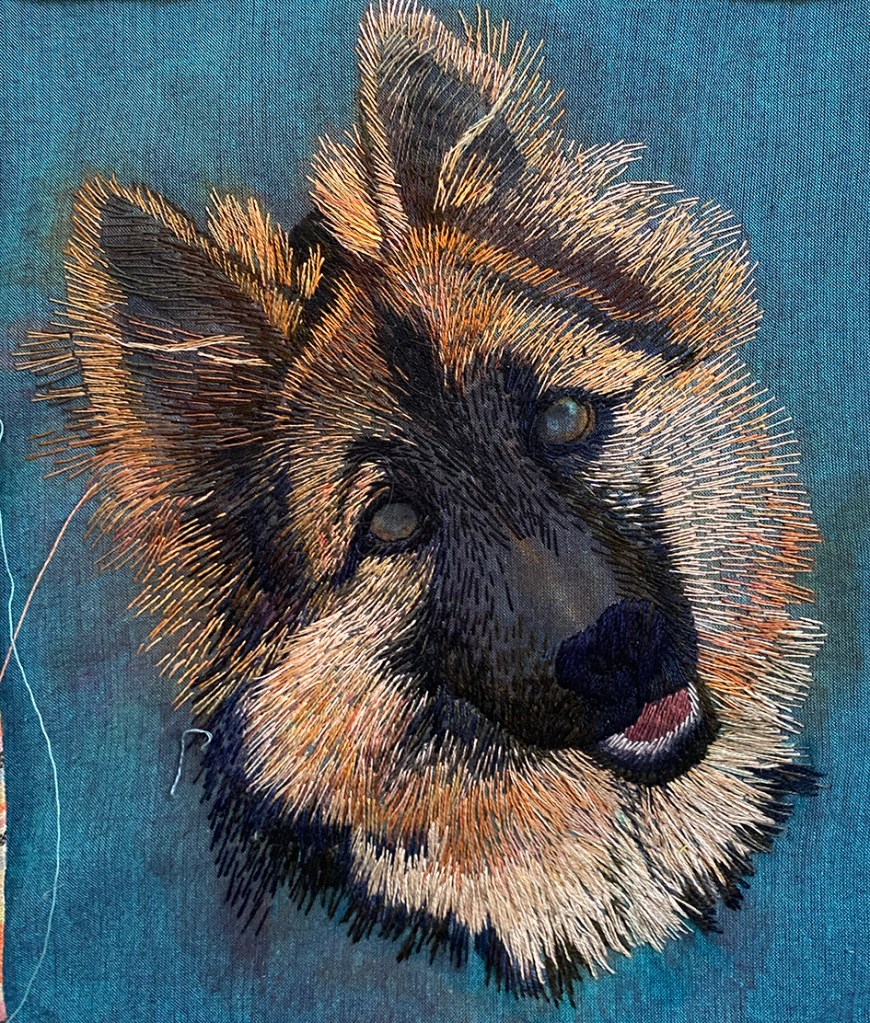
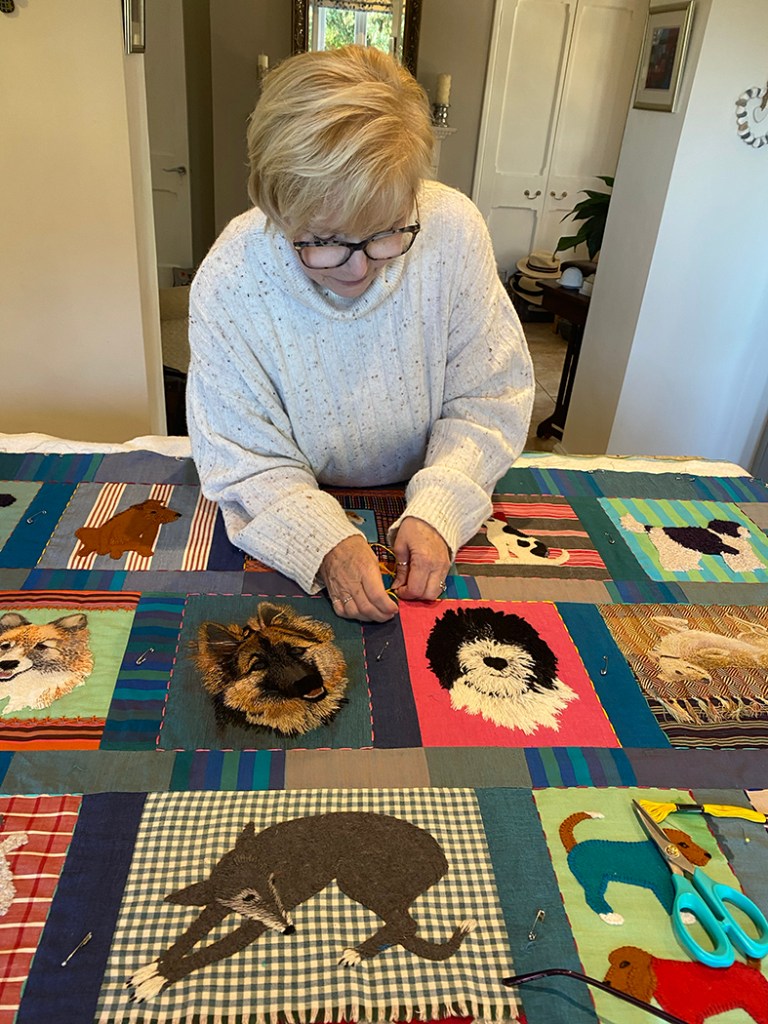
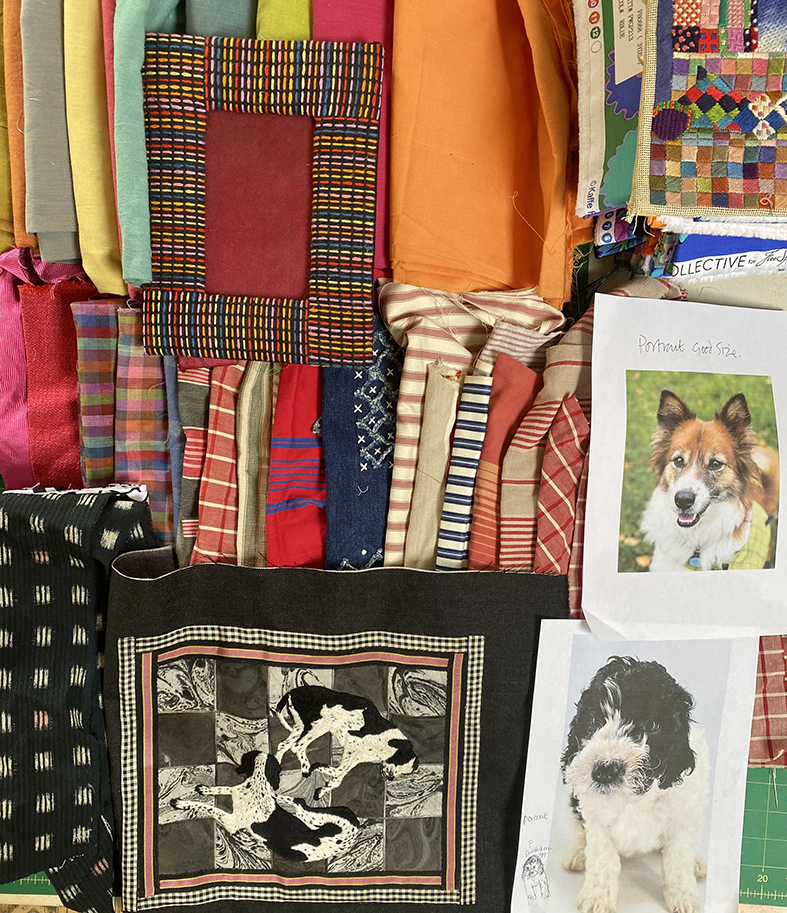
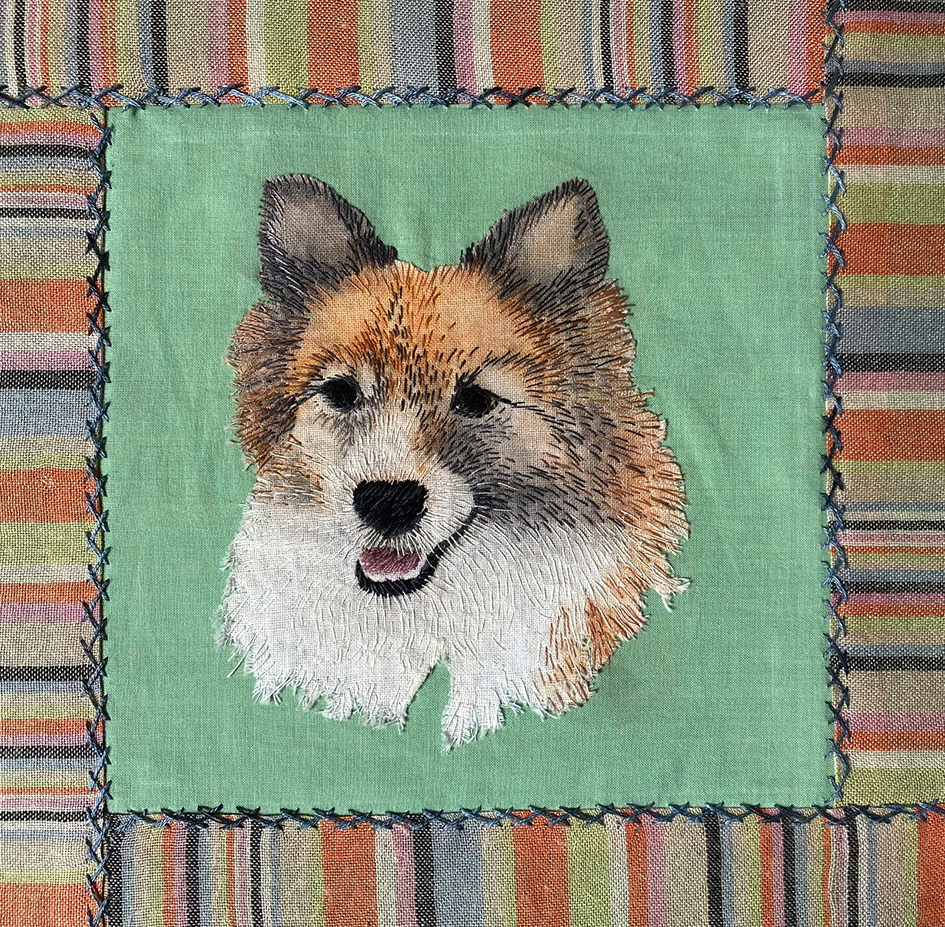
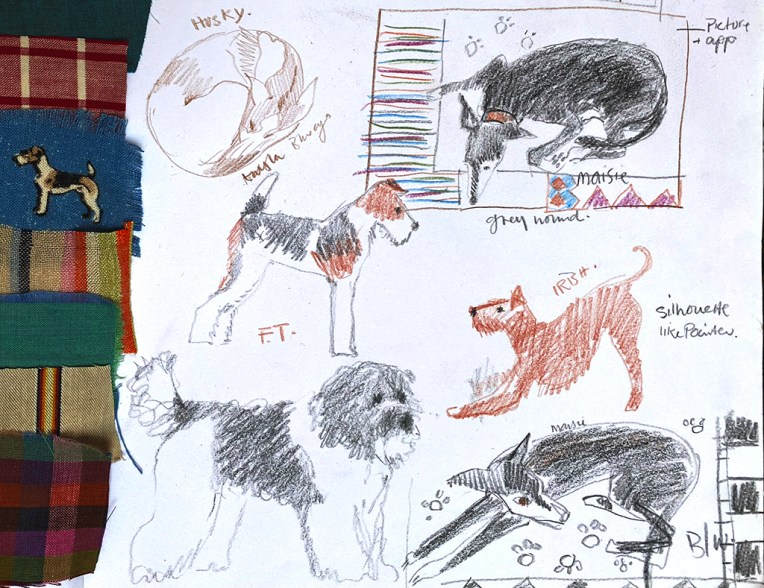
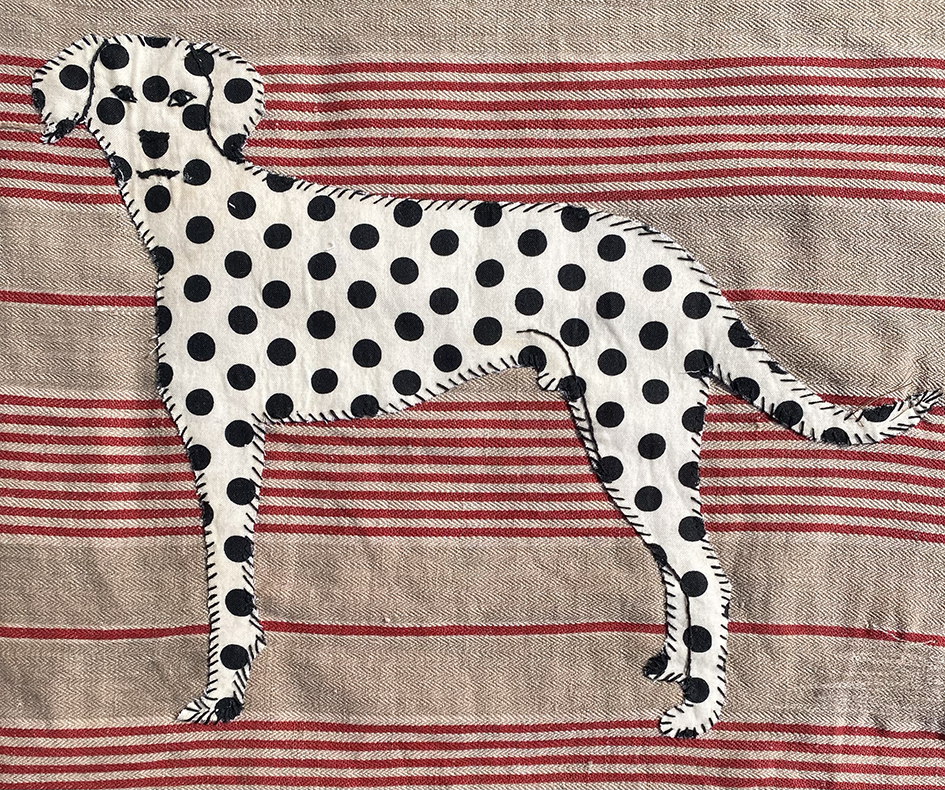
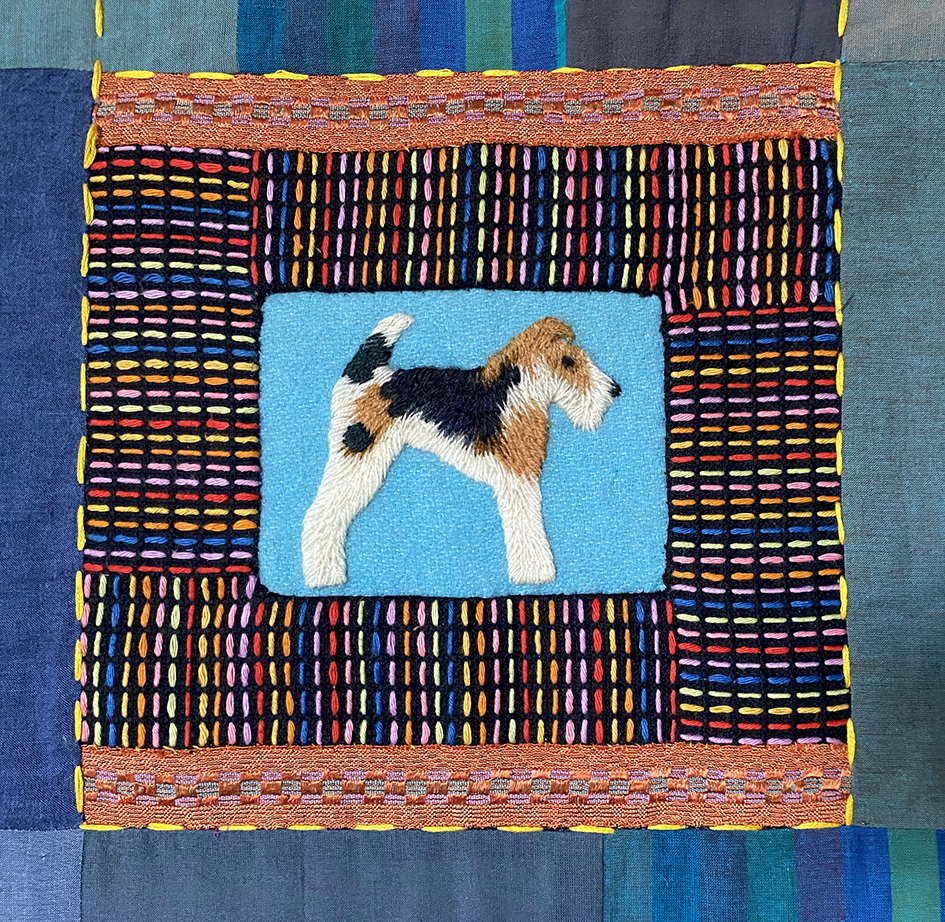
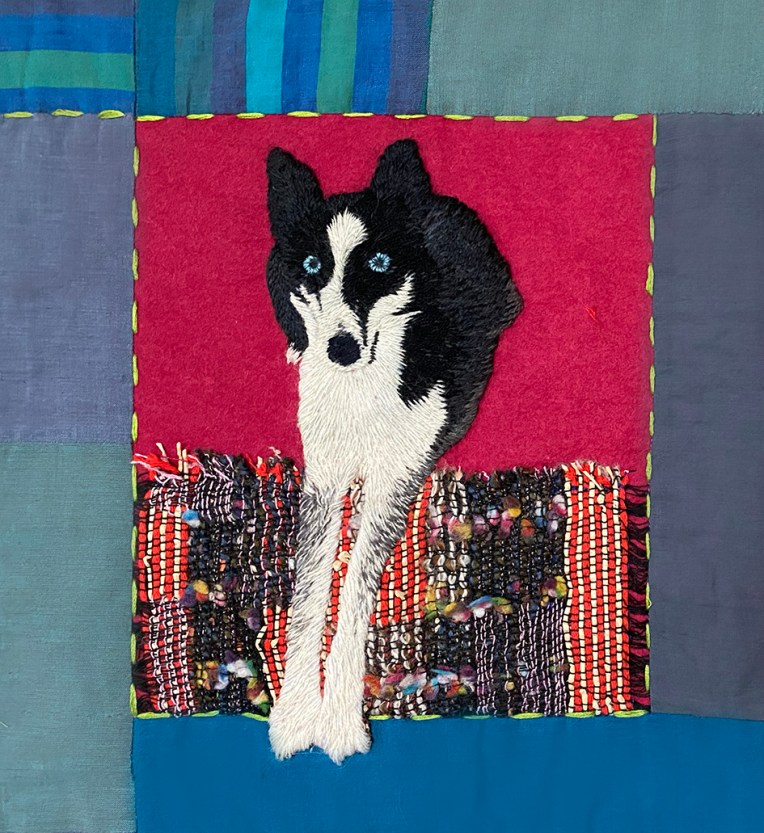
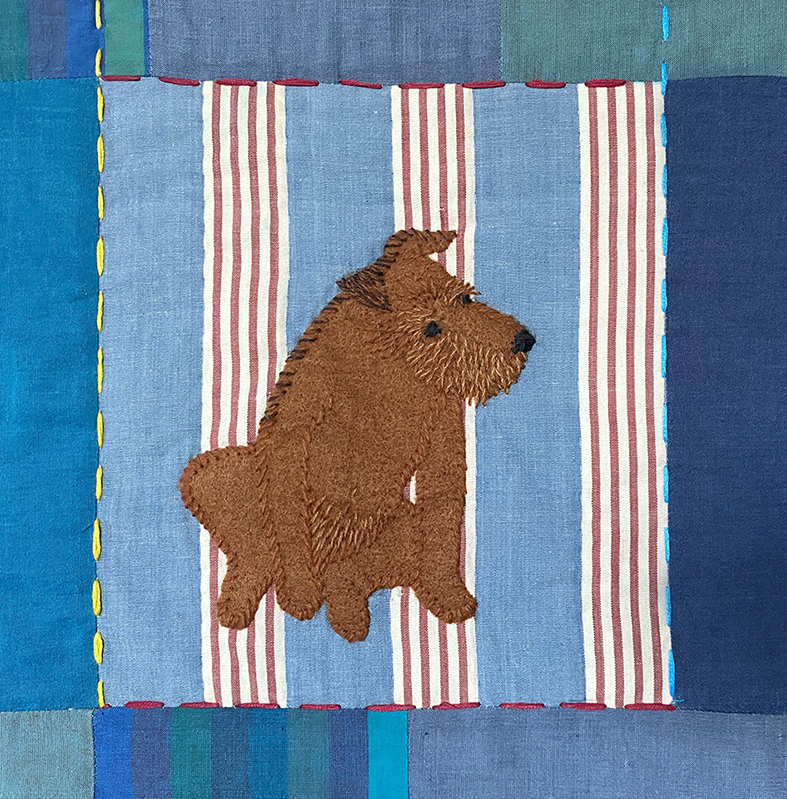
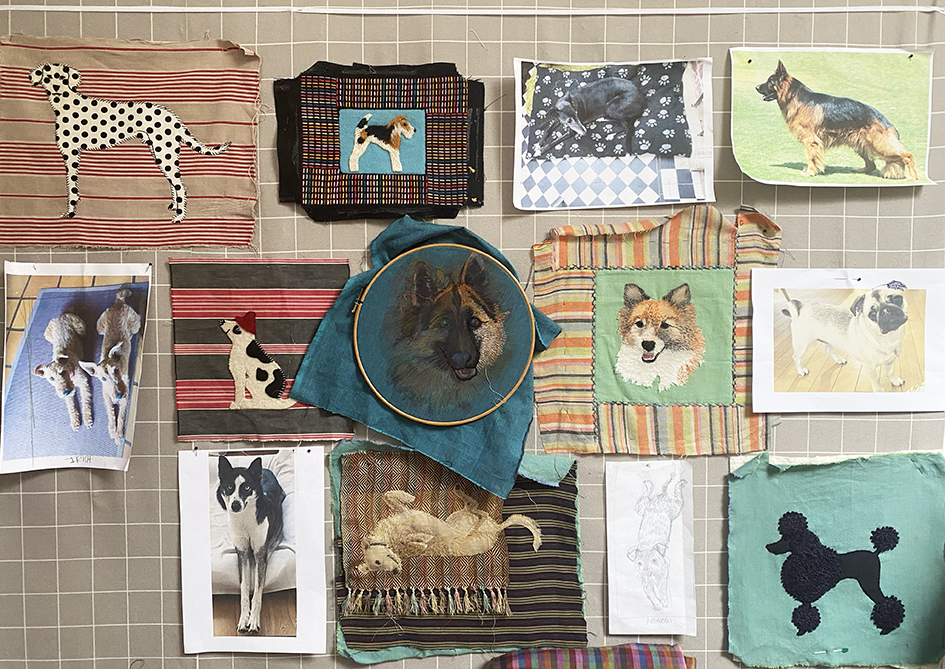
I then made several design sheets for a colour scheme and fabrication, with drawings and 2 embroidered samples using of a range of techniques that I could offer: from the simplest applique design for a spotty Dalmation to a hand-stitched portrait of the small dog in the original photograph. I was given the commission:- a quilted hanging with patchwork blocks of stitched dogs using the different techniques.

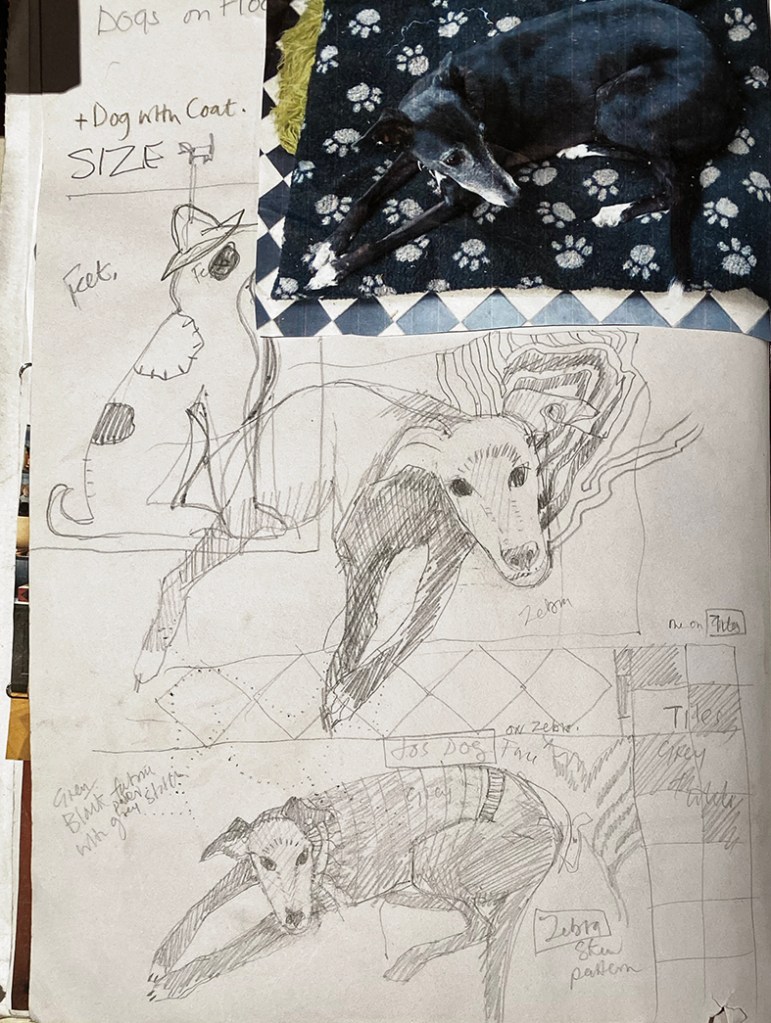
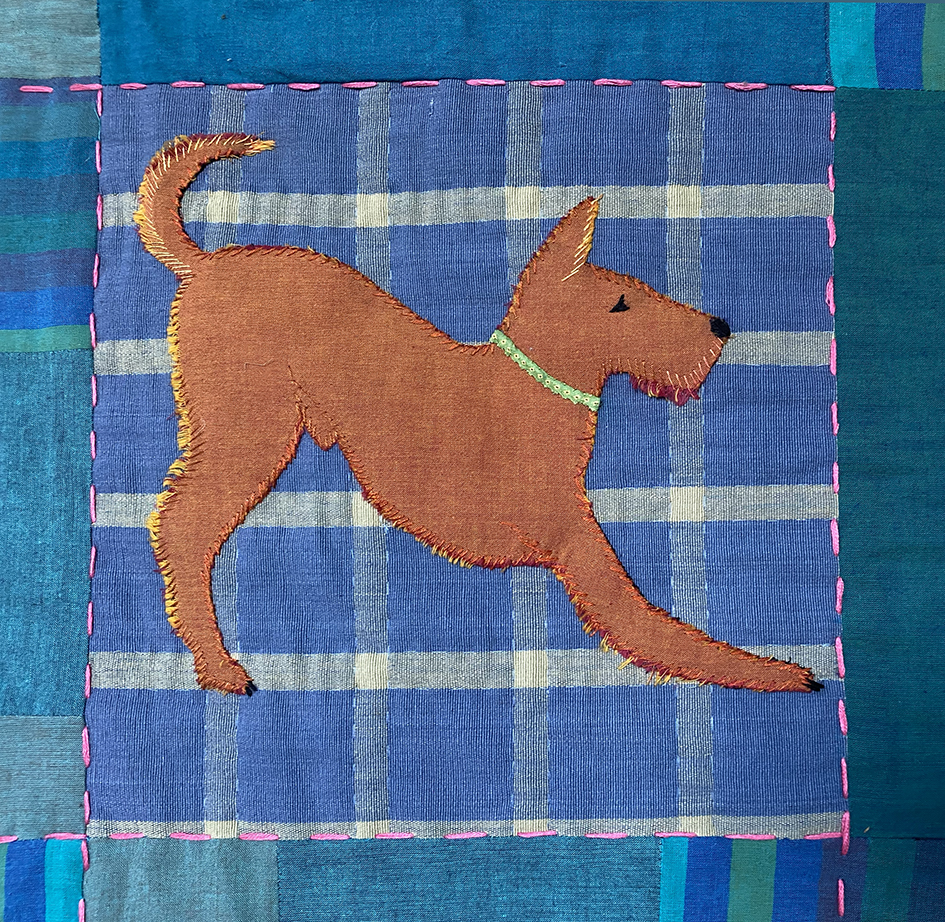
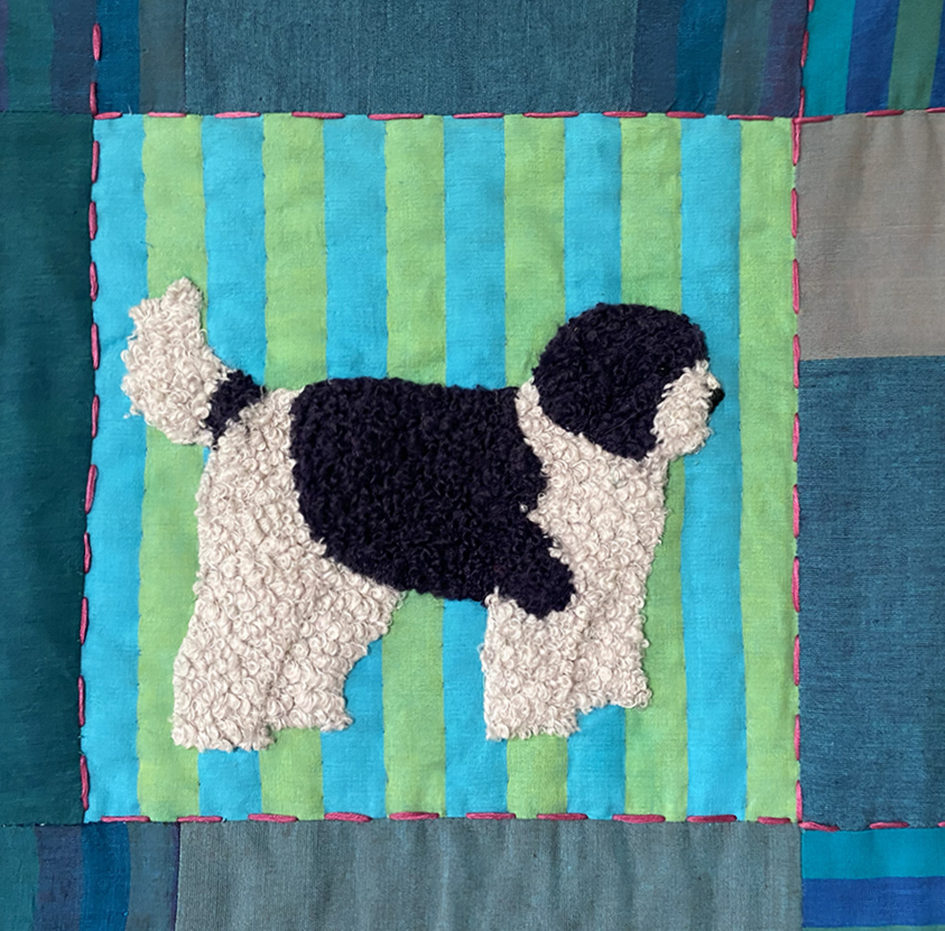
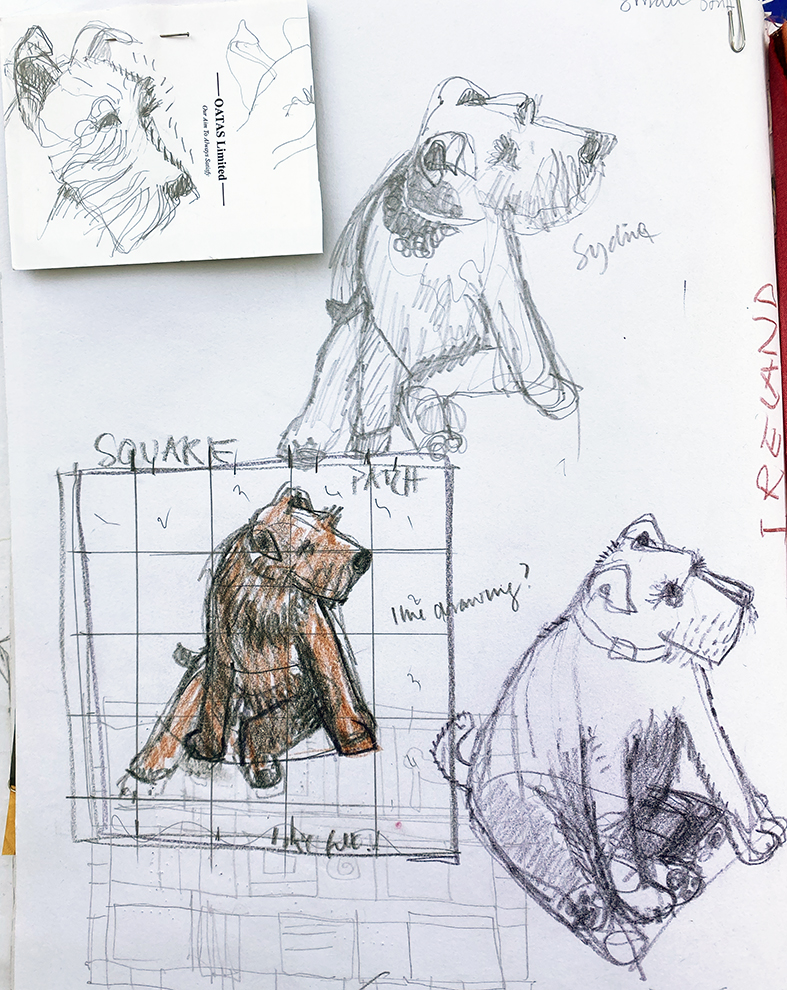
So now to find the extra dogs; my first set of drawings showed typical positions taken by each breed above. I do love dogs and am fascinated by their shapes, specially when totally relaxed. I had started with basic stance like the Dalmation, and just had to include a French poodle and terriers, so an Irish terrier, a Fox terrier and a Border terrier. And hounds, a Schnauzer Leo and even a Siberian husky Twyla, all in easy reach as they belong to friends, family and the local dog-walkers.

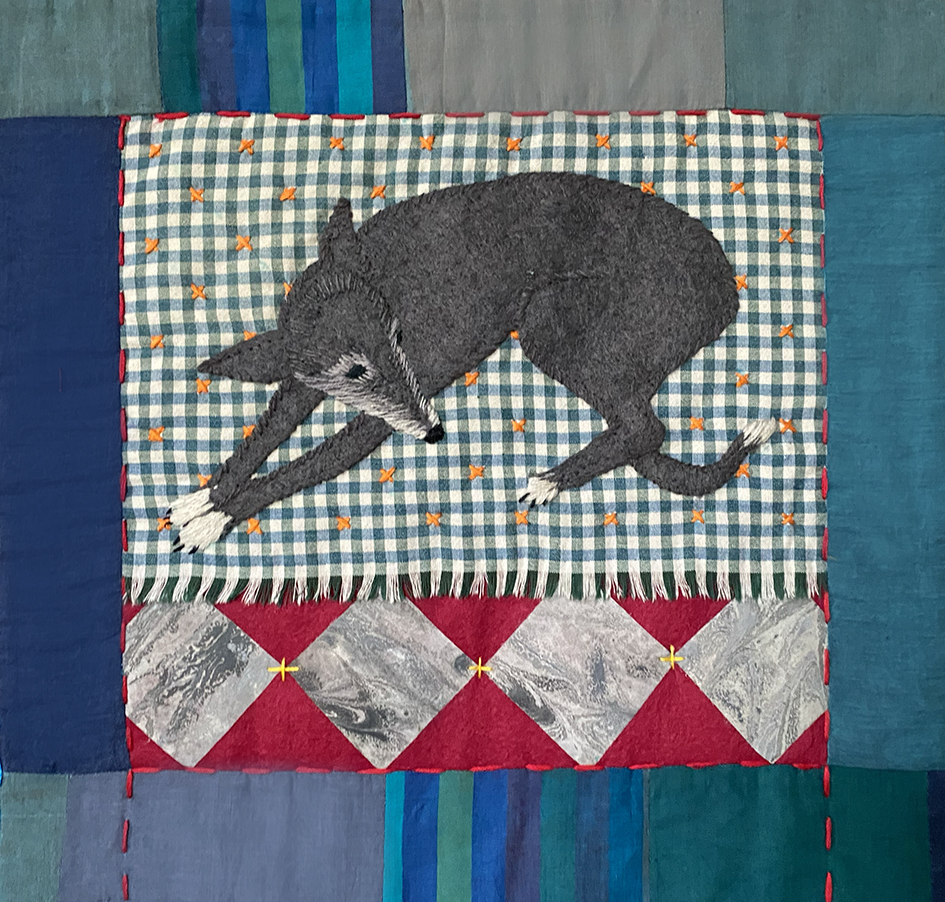
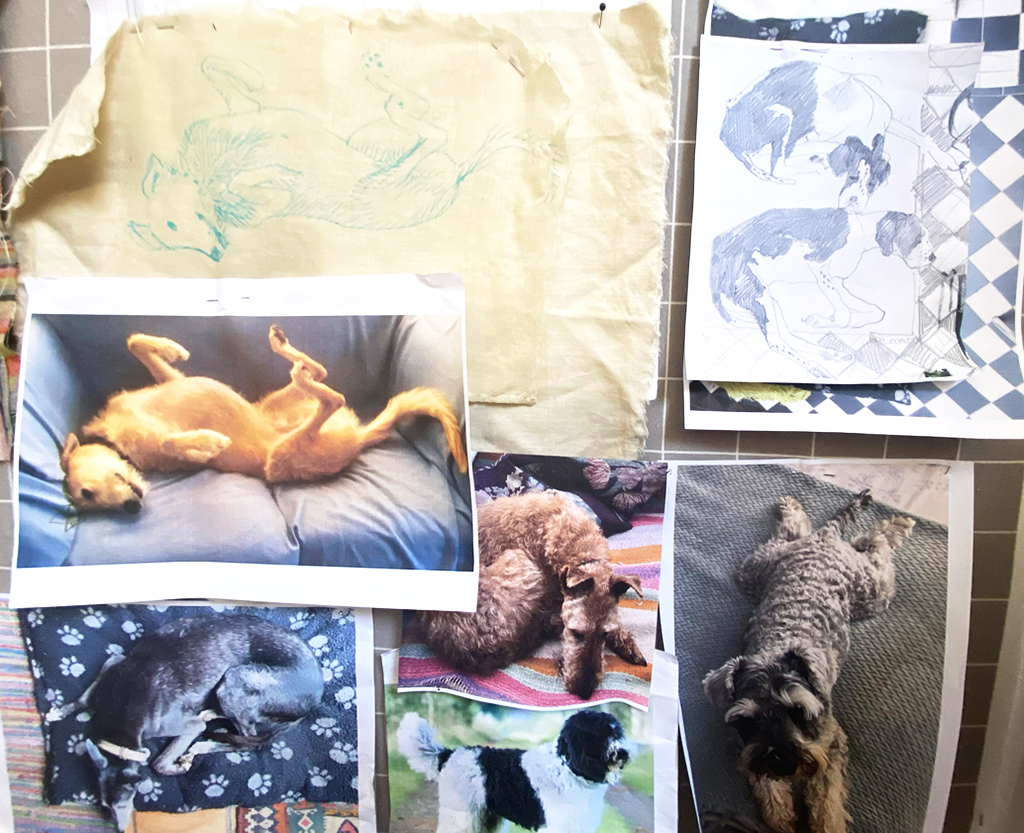
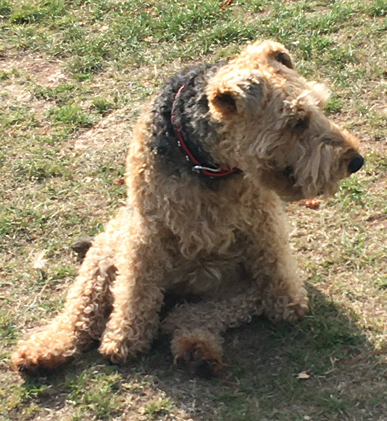
For most of the embroideries I drew the dogs to scale from photographs sent to me by the various owners, to decide which technique used for each dog but sometimes I just copied the photograph! Below are working drawings for the relaxed hound Rodney, and the oh-so-tired Sydney.

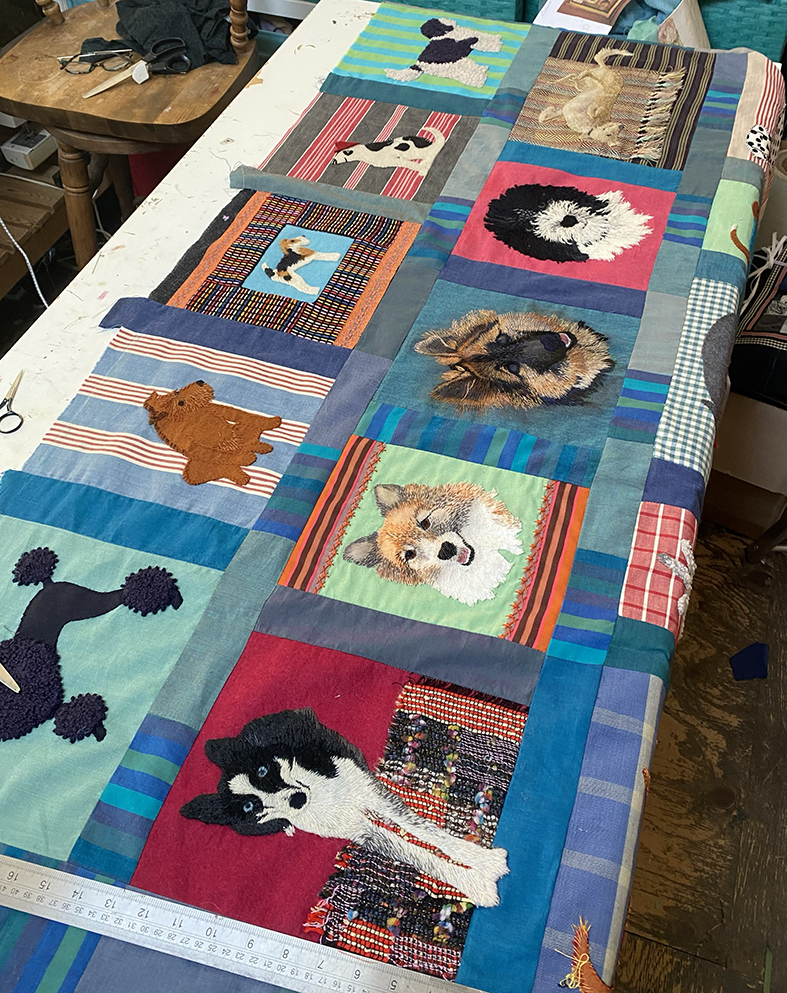
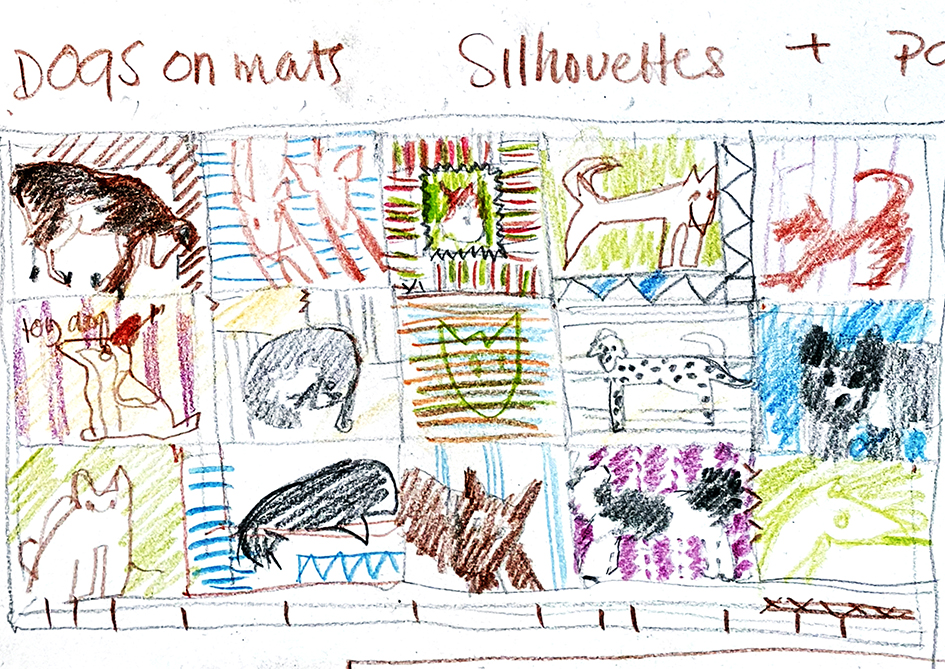
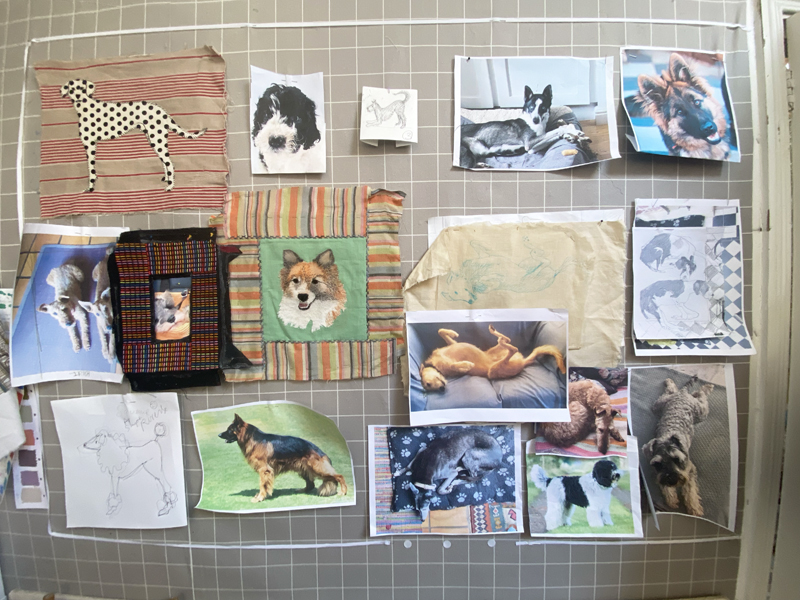
But how to assemble them into a quilt? I had been putting everything onto the quilt wall in my studio as I made it – constantly adjusting the arrangement to fit within the required measurement. Not how quilts are usually made I know, but this was created by the love of dogs, not the discipline of the patchwork quilt. The first scribbled design for the quilt shown below and the reality that surrounds it….

The design chops and changes as each new embroidery is completed and not every dog makes the final cut, but a design finally emerges. There were a few more dogs needed to complete the design, but how to highlight the family dogs (which are actual portraits) and stitch it together as a proper quilt…is the next instalment.

mending the mending….

It is not without irony that I am posting the mending my old ‘mended hearts’ metal embroideries.

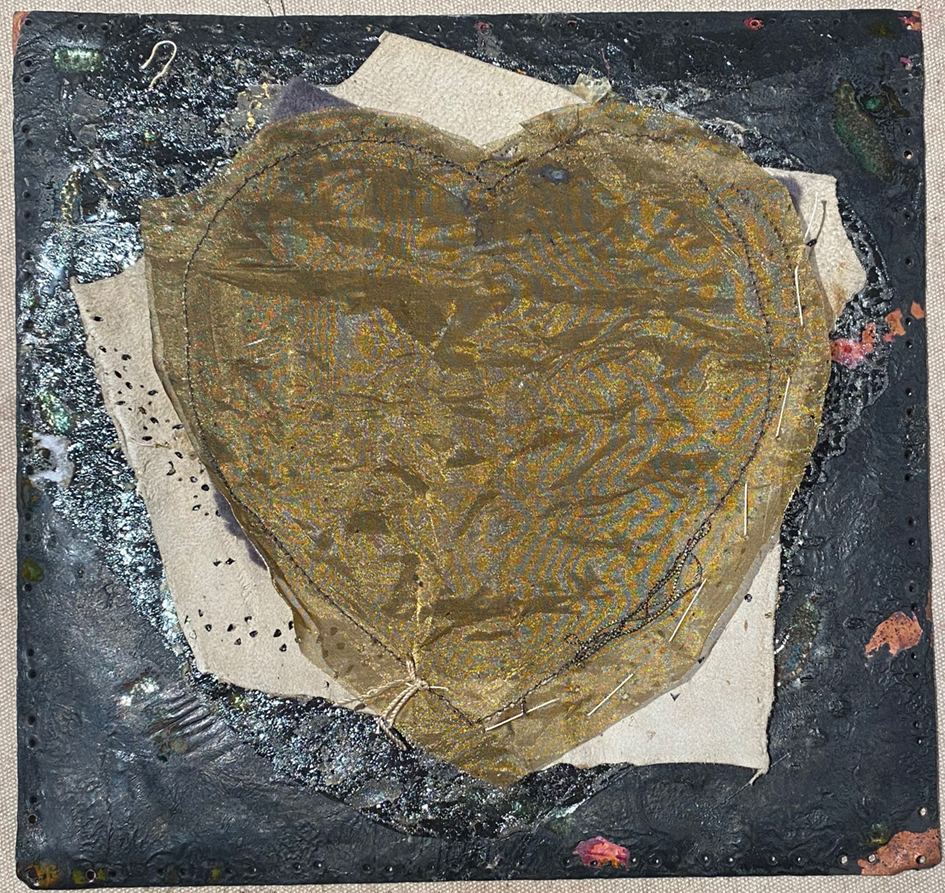
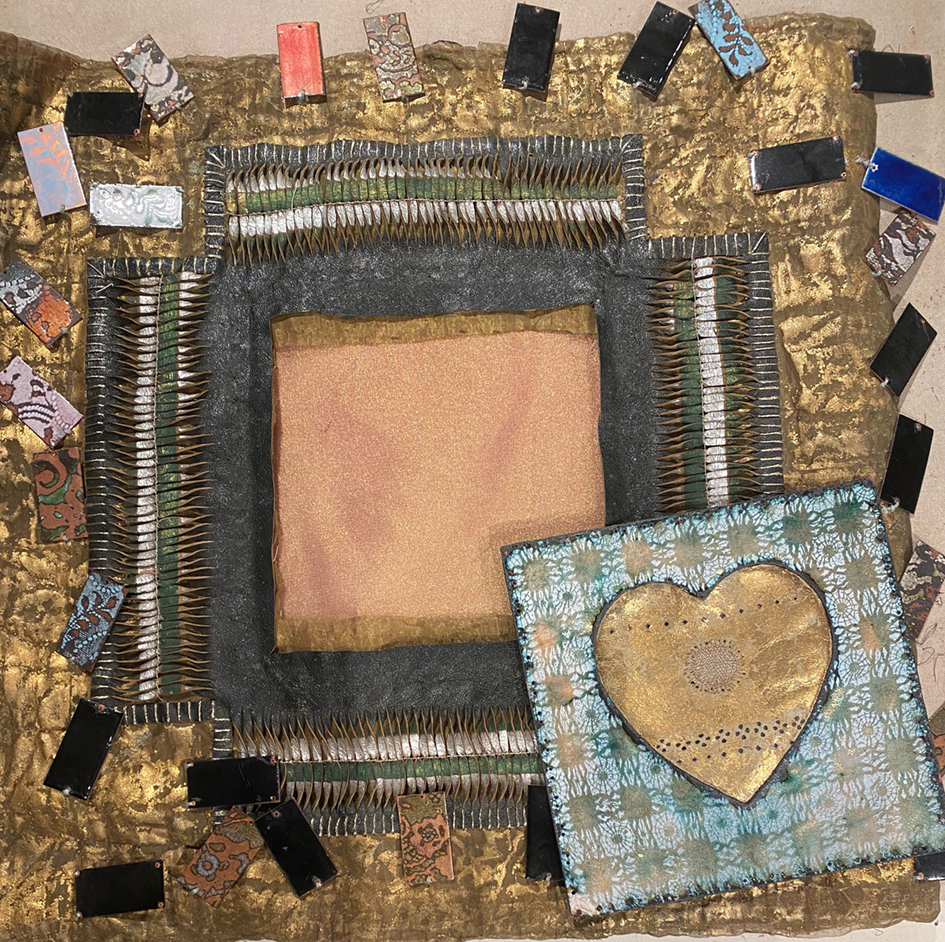
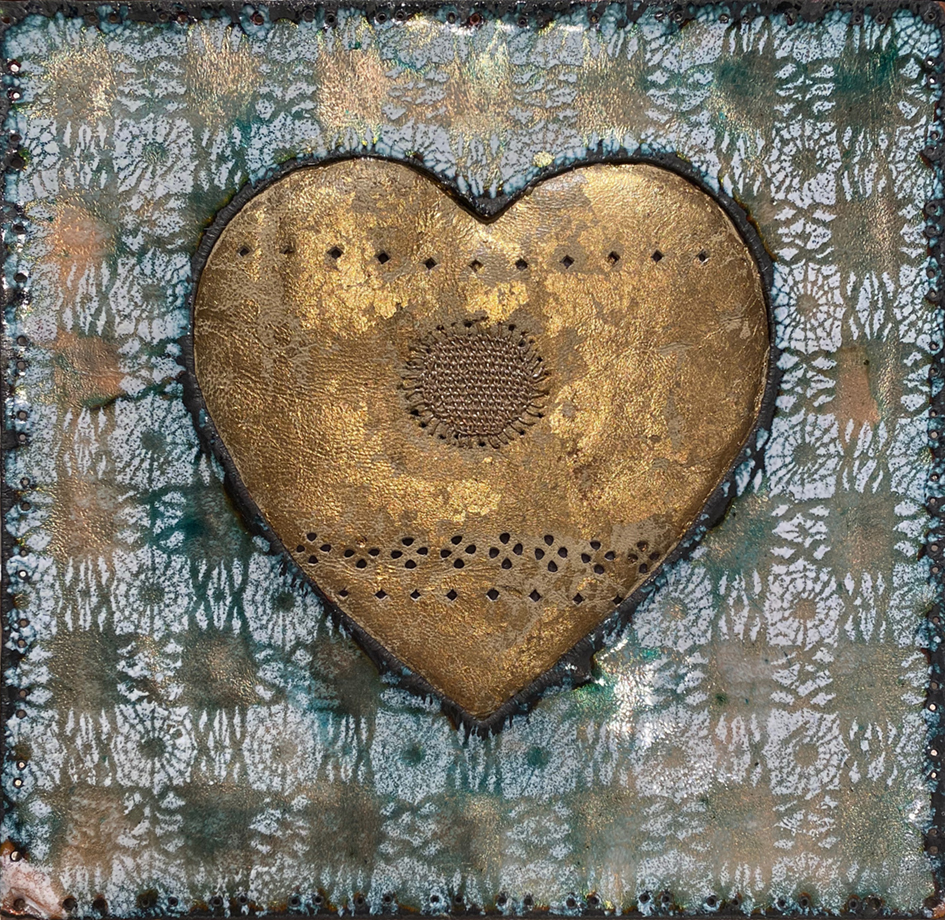
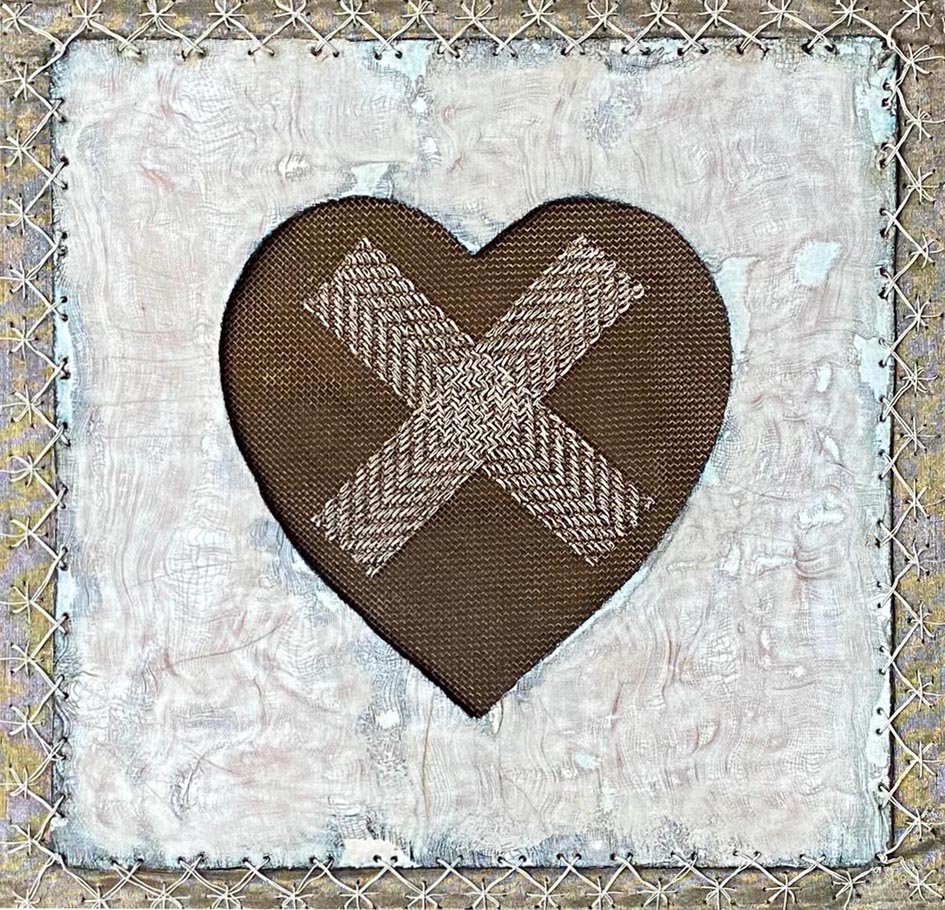
Above are the original images of 2 pieces of old work (circa 2010), left is Discarded Heart, and right Crossed Heart. They are just 2 of the outcomes of much experiment with some challenging materials – I was interested that these metal fabrics would last for a long time – far longer than the natural fabrics that I usually use…..how wrong I was!

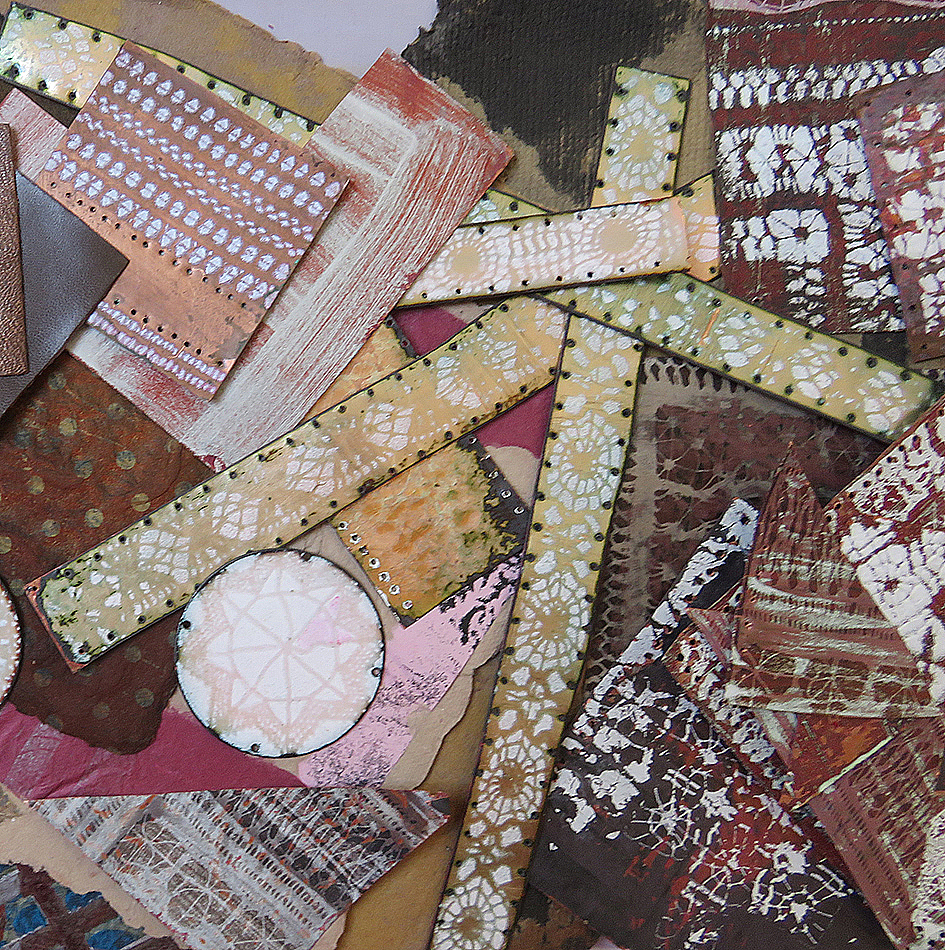
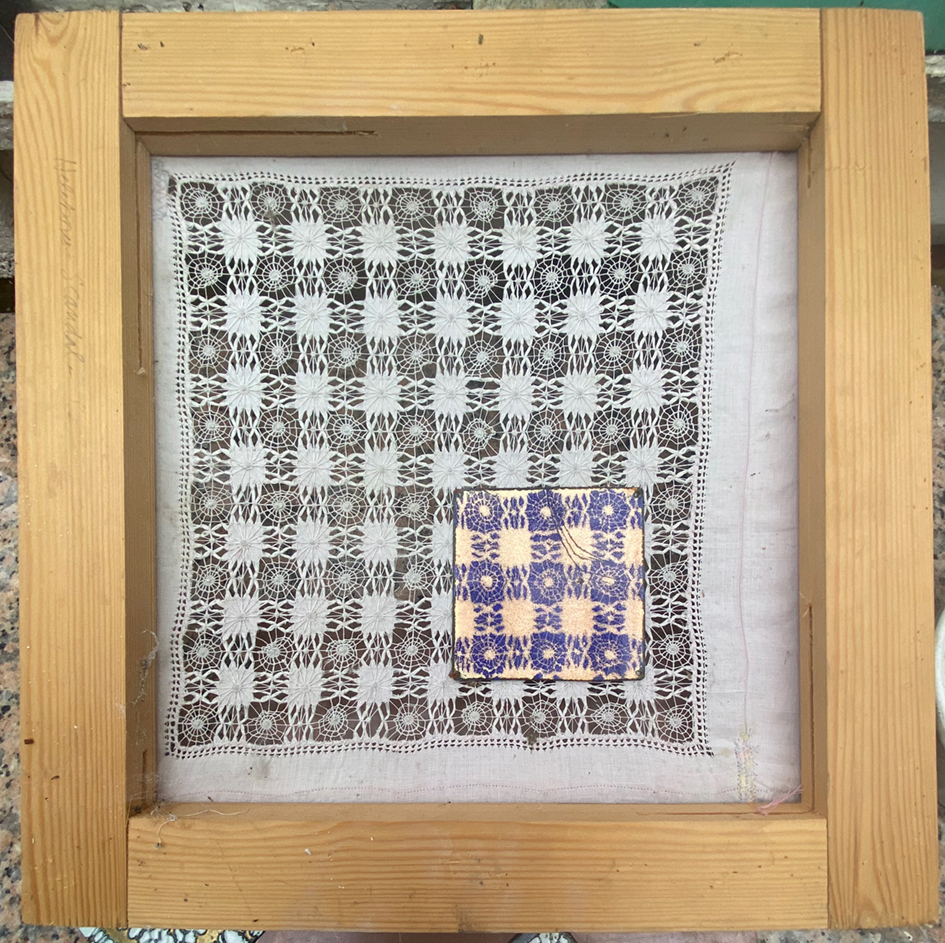
Searching in my studio I found a drawer full of old ‘fabric enamelsamples, that I had made use of for Discarded Heart. I had often used drawn thread-work as stencils and amazingly found the original stencil fabric , stretched and ready for use.

The most difficult thing I had to do was to repair the cracked enamel square. I wasn’t sure I could do this as it needed to be re-enamelled in exactly the same place as the original – fat chance! I carefully removed the gilded and stitched leather heart and re-gilded it. SO taking courage in both hands I re-stencilled it using a strong white enamel, then fired it at a very high heat and this made both the pattern very feint, and the cracks filled up – result!

Back of centre panel with leather and bronze fabric cut to free heart for repairs
Front of re-placed re-enammelled heart

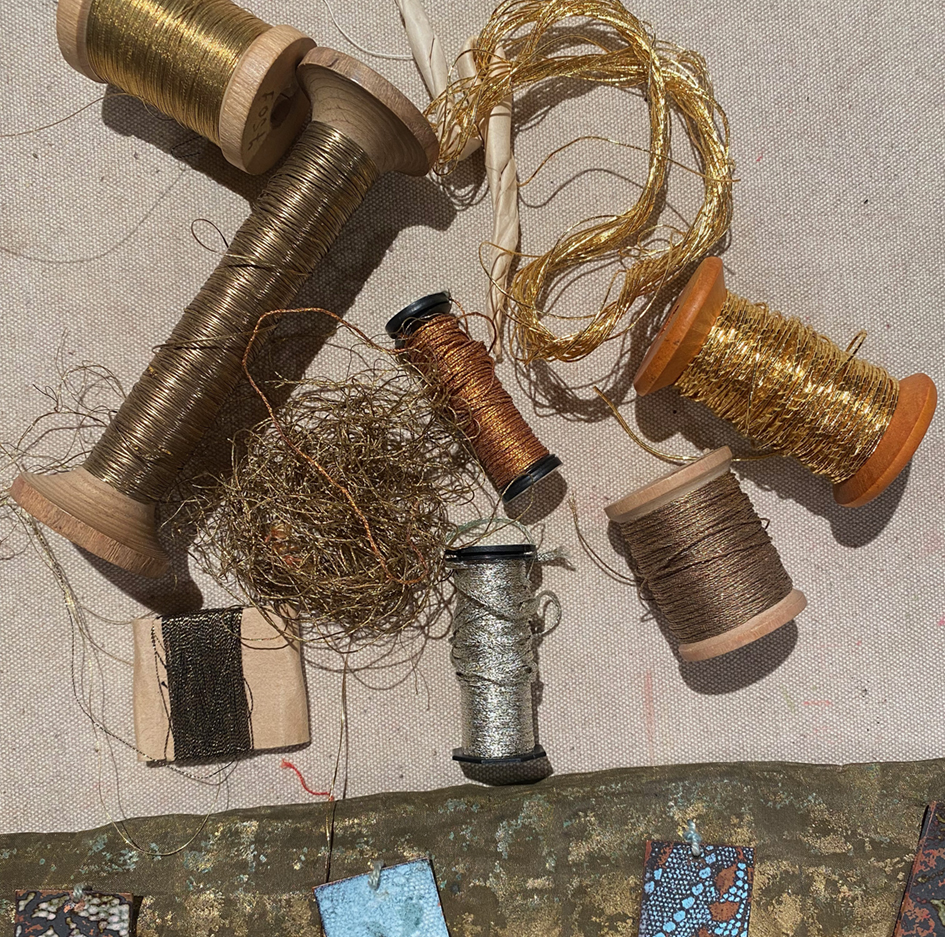
To get it back into postition I had to re-excavate and re-drill the stitching holes, so that I could painstakingly stitch the whole square by hand using real metal threads, ( trying hard to stick to my intention of NOT buying new materials but recycle anything I already own). I had several real Japanese gold and some copper wrapped threads to choose from, but this thread had to be strong and resilient for stitching through metal and leather.

After several half days of really awkward stitching, I managed to herringbone a wrapped copper thread all around the square.

Relief, as I had already offered the Discarded Heart (as it was it was originally made from lots of my. unsuccessful samples ) to the Welsh Quilt Centre as part of my 6 months exhibition called Hearts and Flowers in 2024.

So far so good, but the next piece, “Crossed Heart” was really badly damaged – mostly by fading but seemingly anything it had been in contact with over the last 10 years….including my hands while working it! Everything seems to mark these refined woven metal fabrics (and I suspect Boysie, an ex fox terrier stud dog). And I thought that these fabrics would be as hard wearing as they are tough to stitch! I didn’t offer this piece for exhibition as I was not at all sure if I could make it look worthy of being exhibited again.

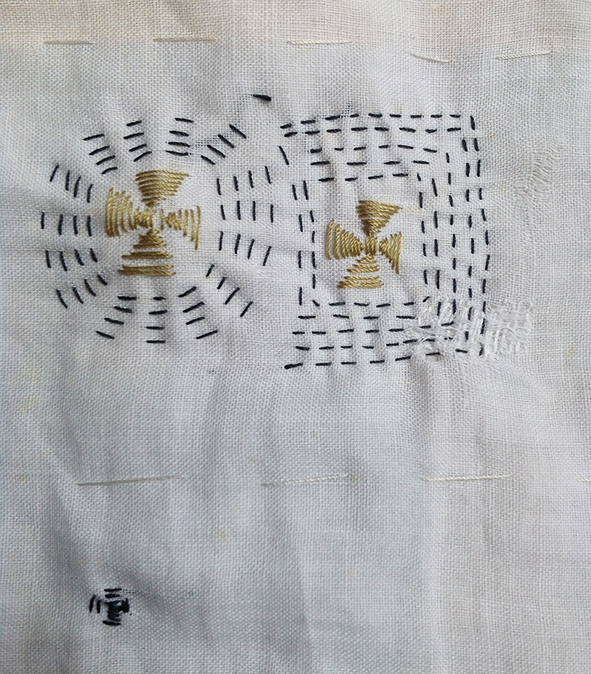
The only area not stained, faded or split was the centre panel of a decorative cross darn in white wire into a heavy copper mesh I had copied from a Darning Sampler in the Bristol City Museum and Art Gallery which has one of the most famous Sampler collections in the world. I kept this, but now had decide just what to keep as signs of legitimate wear and what I just couldn’t aesthetically live with!

The whole sorry embroidery put onto my worktable and pinned into place – the metal fabrics have a tendency to roll up on themselves when left alone; a metal memory even after 10+ years of being stretched on a fame. The staining is plain to see with the general fading and tarnishing, but what you can’t see are the splits on the background fabrics underneath the rows of herringbone stitches.

The first area I felt confident to work was a rip and I cut away the fraying fabric – a mistake – but hey ho, nothing ventured…and started to darn the gap in the metal and nylon woven fabric with 1 thread from a stranded silver hank of 6 strand….very tricky – I may yet go back and rework this!

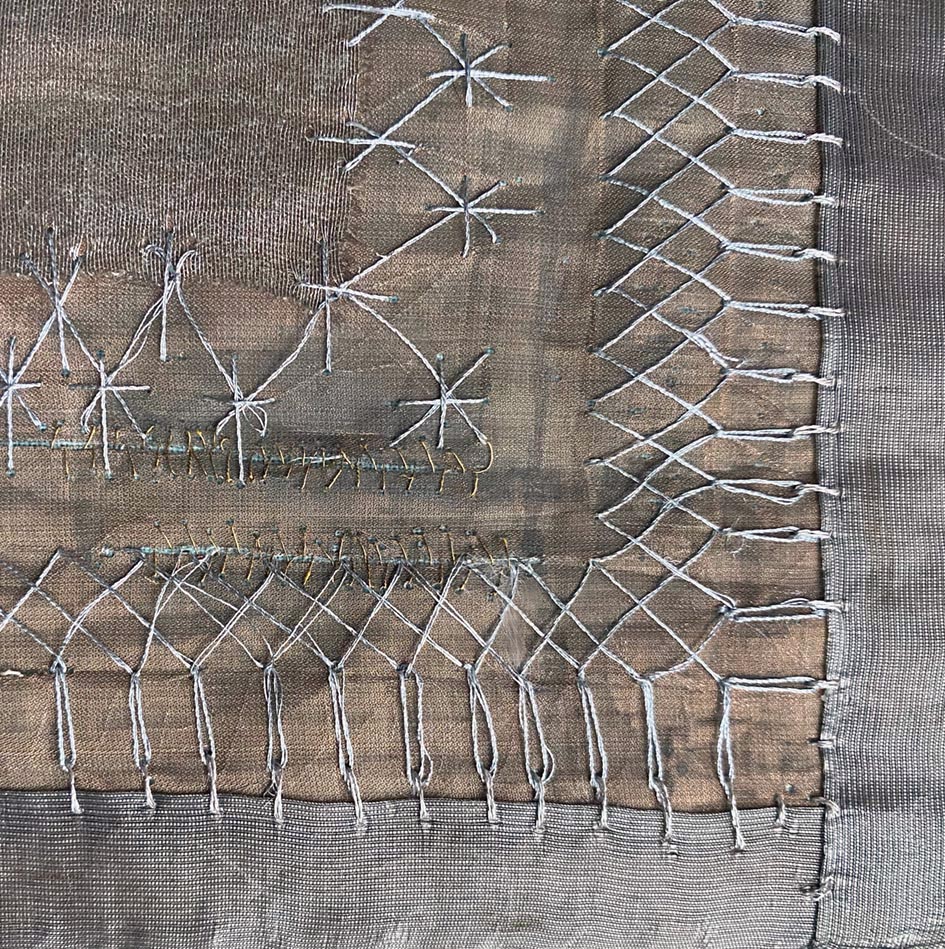
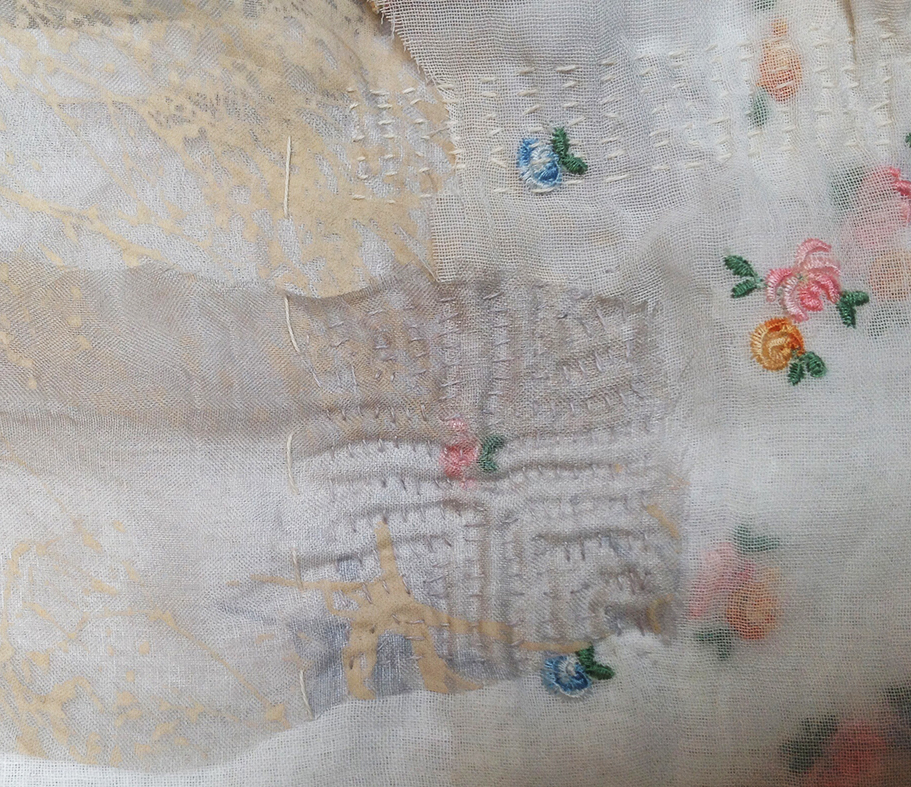
I was not very confident to continue, but I had started and I am of the sign of the crab…..very tenacious. Here are various ruined areas of the work, with different mends : a proper running stitch strengthener over a pulled thread area, sewing an extra border in a nylon and probably lurex woven fabric (once a very glamorous skirt worn to a 1 very glamorous occasion)to hide the worst of the staining on the outermost edge of the piece ( Boysie?) and then surrepticious stitches to draw the edges of the split fabric together. The herringbone stitches had started to unravel – and by this time so had I.

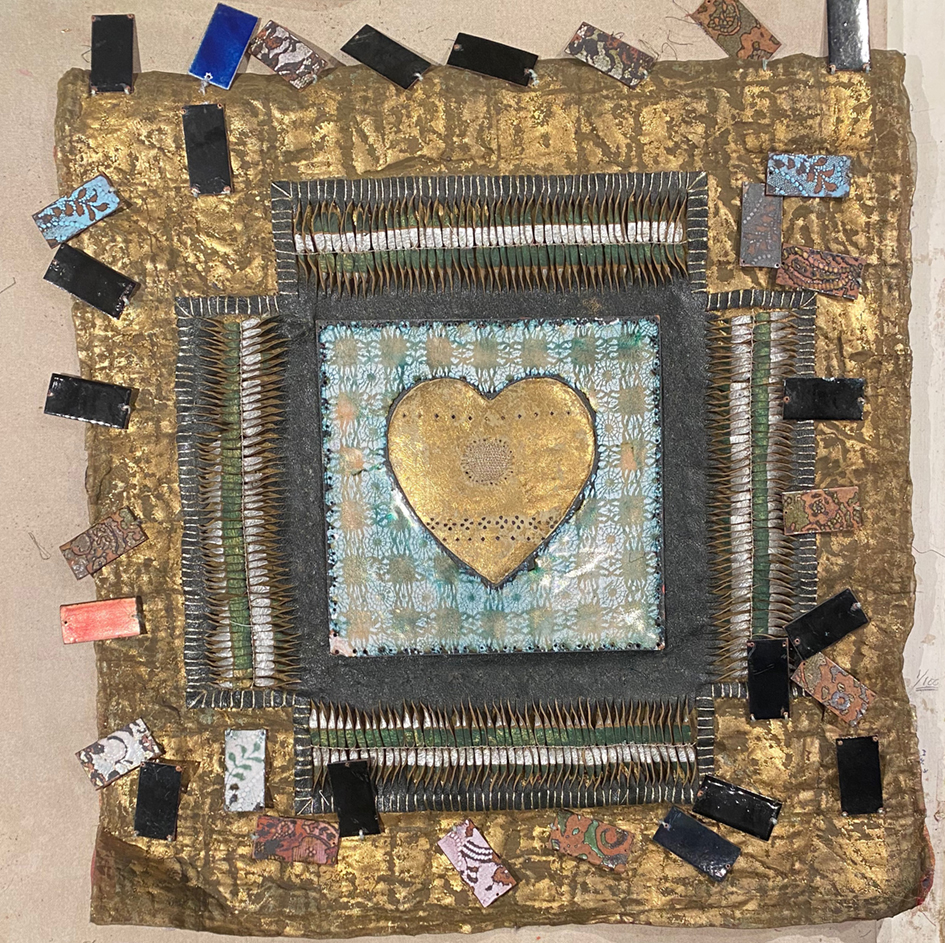
but eventually they are finished enough for safely re-stretching and possibly have their place in the lay-out for the gallery as part of a group of stitched metal mended hearts…

The mended Crossed and Discarded Hearts

Kantha Club

kantha 2
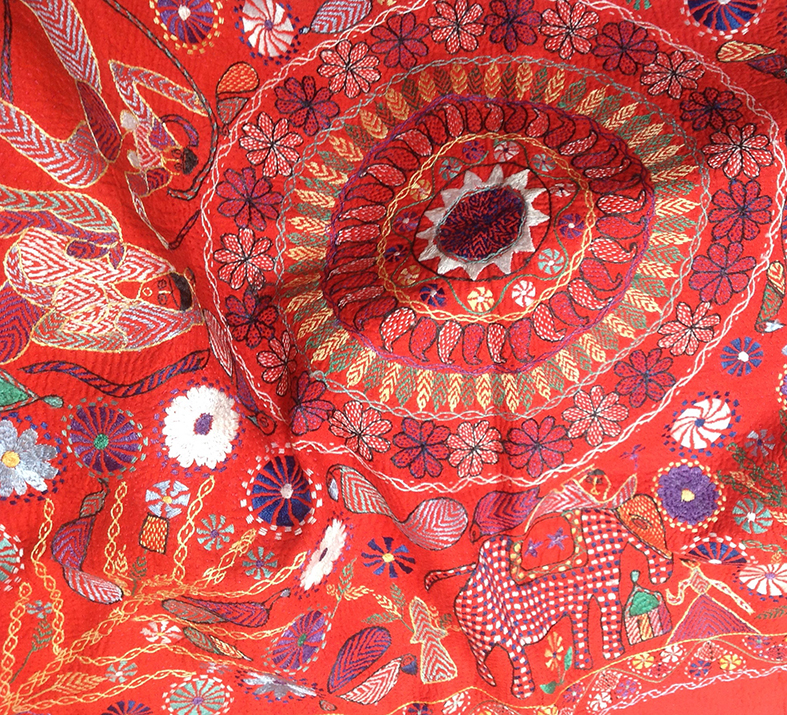
Indian modern Kantha fabric – from Liz Hewitt’s collection – wonderful patterns to start us all stitching

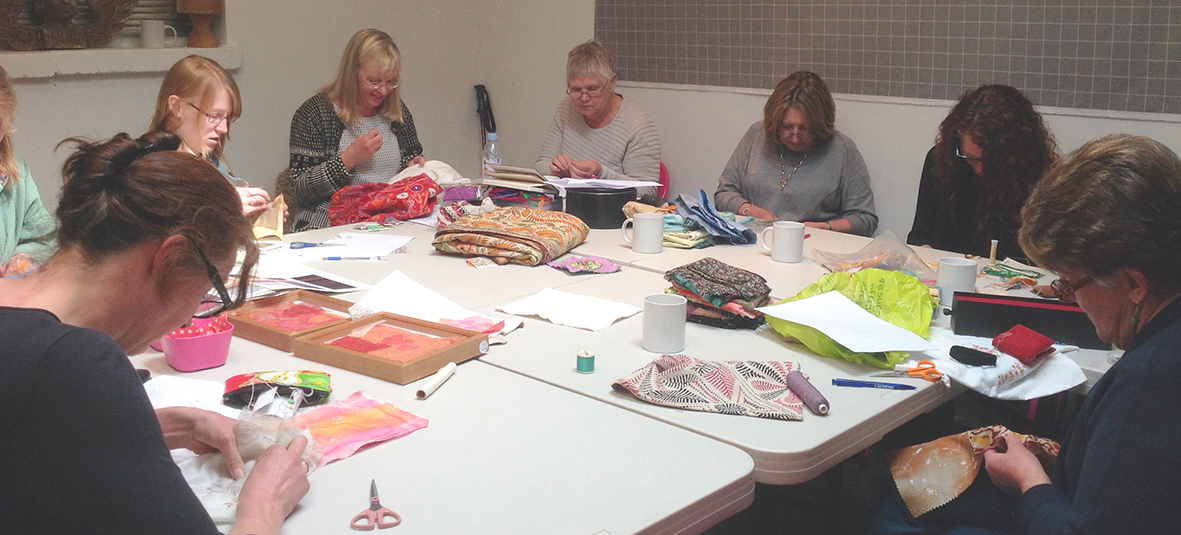
New to Heart Space Studios – Kantha Club; started as so many people who have been to our day classes, tutored by  Susi Bancroft,  have become fascinated by this simple method of hand quilting. We have 3 trial sessions being held once a month – each meeting is 3 hours long – enough to get re-acquainted with the technique and start something to take home to develop further.

susi kantha samples
3 different Kantha pieces from  Susi s collection demonstrating the different types of fabrics, colours and patterns afforded by this  technique
susi kantha intro

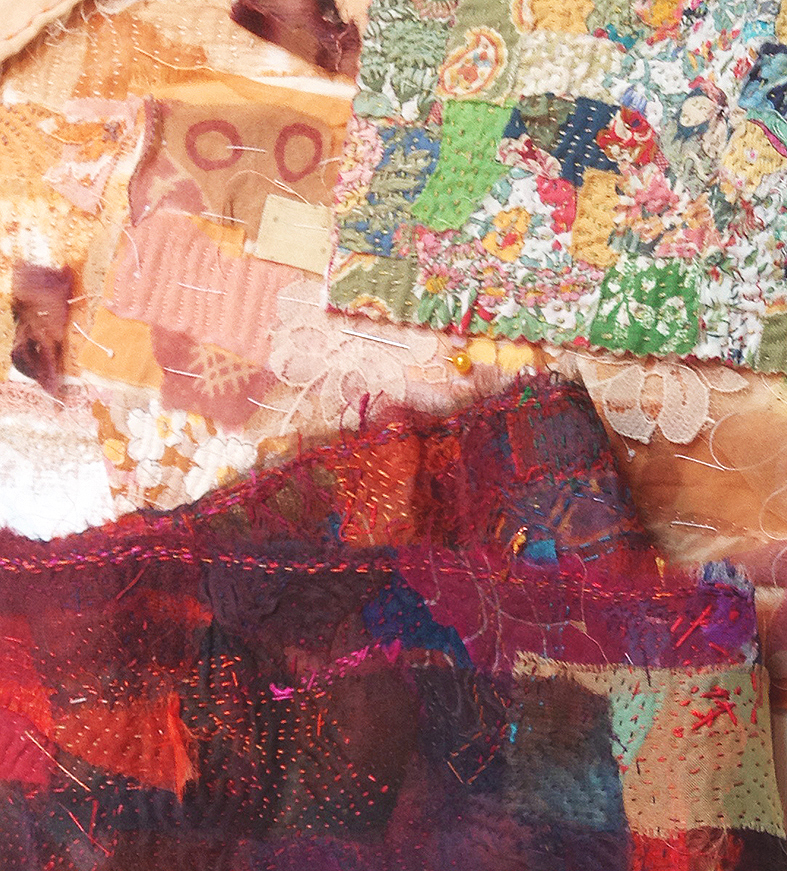
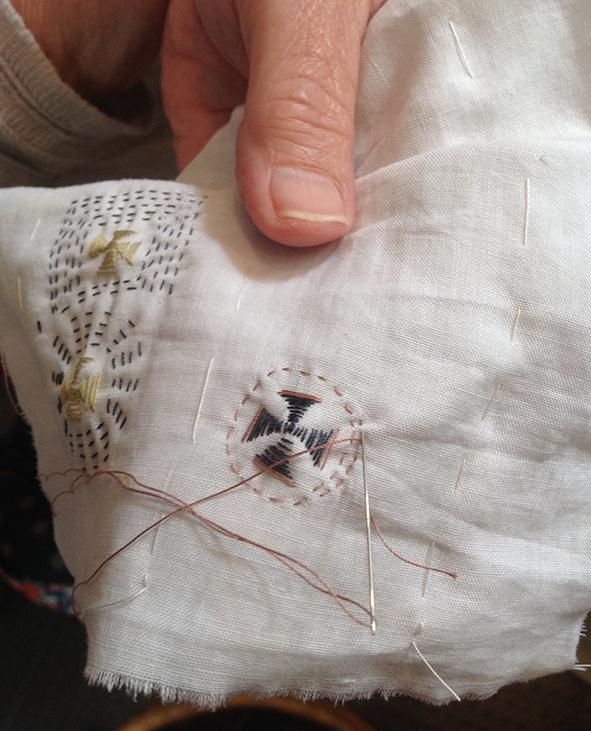
Susi, had brought lots of different pieces from her own work, the most interesting for me are the tiny patches of patterned fabrics all held together with simple rows of running stitches  and by allowing frayed and ripped fabrics to be caught in place, dense and rich cloths have been developed.

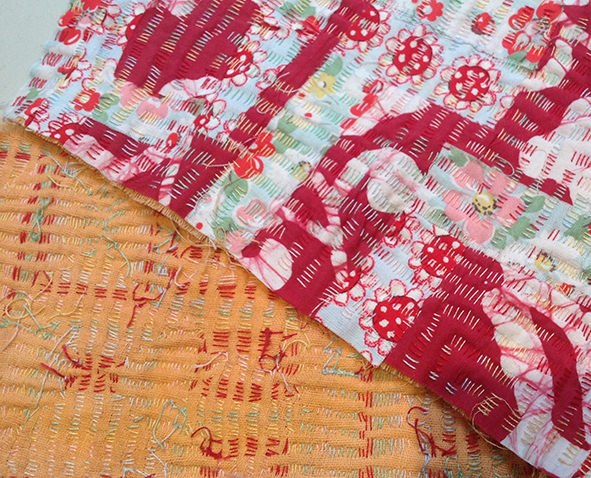
One of the things that I find interesting in Kantha is that each side of the cloth looks different depending on the choice of fabrics – so a simple ground will show up the stitches but a patterned ground is given another layer of pattern – the fabric below shows this very clearly.

back and front
Kantha strip showing back and front of the stitching – intriguing

Several people had brought in their own samples, some from earlier classes that they now wanted to develop….others already used the technique for their own practice and just wanted to meet up and develop and discuss the work with other people – we are hoping that the new textile clubs we are planning at Heart Space, will enable like-minded people to develop new work together….the 2 pieces below are by makers who has studied Kantha previously,  Kay Swancutt, and Liz Hewitt , 

samples 1
beautifully simple stitching by Kay Swancutt
liz 2
detail of Liz Hewitt’s densely stitched Kantha hanging

but some people although used to stitching, came along for a new experience – they brought other types of things – the different types of work were really interesting, I am looking forward to seeing how everyone develops in the coming months.

stitch run
small perfectly stitched quilted heart – but enough to get a maker to the next stage of developing new ideas and techniques
working 4
beautiful etheral embroidered and lacy fabrics combined with Kantha stitches by Nicky

After the introductions we all started to work on our own projects

kantha class1
the club gets down to real stitching, and Nicky is stitching the piece  above right

I have joined the club as well as I want to develop new work using this technique – I have played with this way of setting up rhythms across fine fabrics  and I brought in several pieces of old work to demonstrate how I wanted the work to develop – I want to make a stitched sea/sky/land scape – very large using images from my  photographs of the views of sunrise and sunsets from my windows at home.

jh research
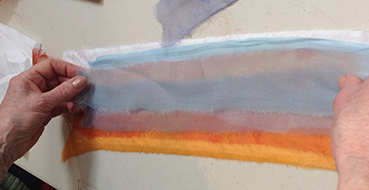
series of my sky photographs from over the Bristol Channel
working jh1
my first attempt at putting the sky fabrics together

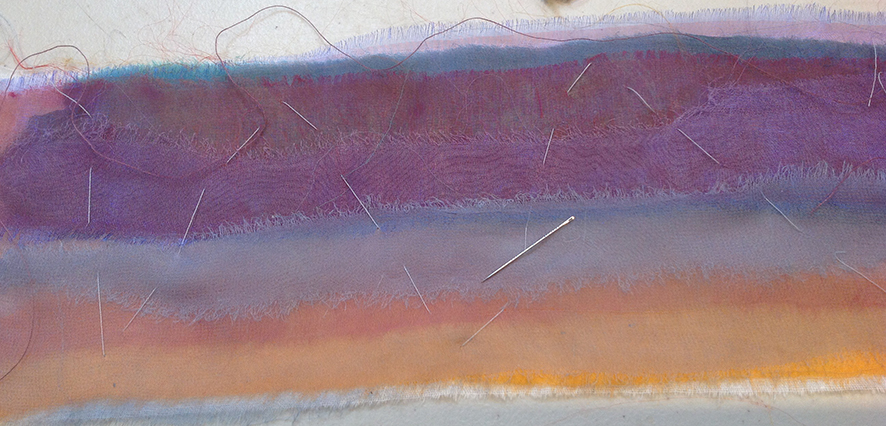
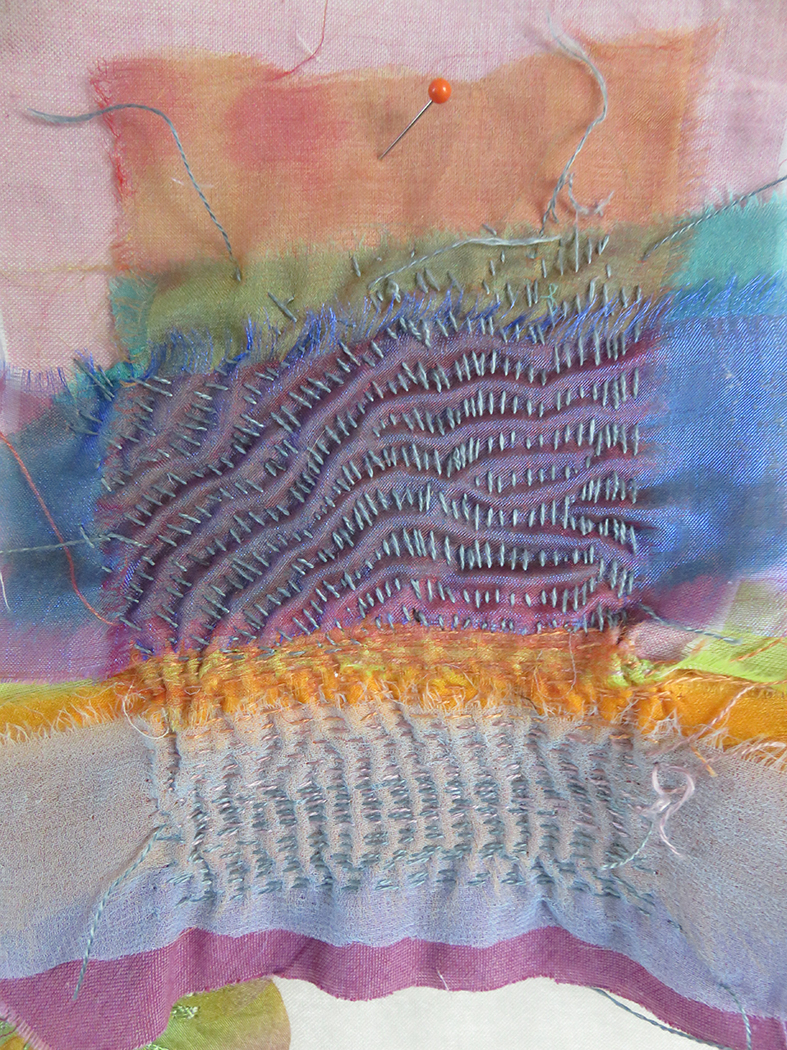
I am layering transparent fabrics so that many subtle colours are made to represent the sky, then held held in place by rows of running stitches. As my home view includes a stretch of the Severn Estuary and the Welsh hills, the textures and rhythms of the water, mud flats and tidal salt marsh in front of the house, could successfully be rendered using this technique, we will see…

working jh2
the layers of transparent fabrics are eventually held in place by massive tacking stitches

when everyone got to working Susi provided us with background fabrics and a wonderful array of her own threads, as well as books and a variety of other materials to help us help ourselves.

susi stash
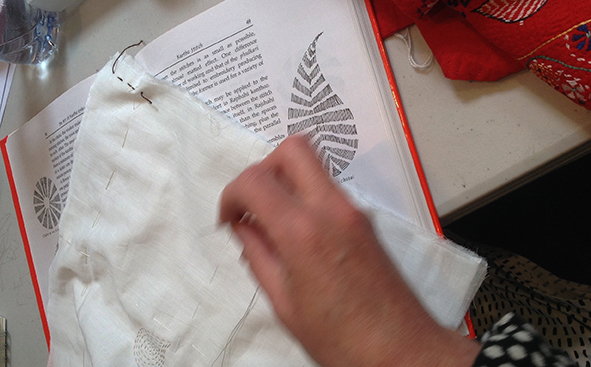
Susi’s own stash of threads; and just visible my “kantha bible” The Techniques of Indian Embroidery by Anne Morrell

Several people started developing different motifs as samplers, using the books that Susi provided..

kay working
continuing older work using new inspiration
working 5
 working a sampler directly from the books provided

So we ended the first week with everyone having a piece of work to develop (or not!) for the next meeting…there were a few surprises in store.Some people had started new pieces and developed different techniques….

working 2
embellishing a ready printed fabric is a really good way to get started…

some really adventurous samplers have been started..

naomi wk2
Vibrant Kantha motif sampler on hand dyed base – Naomi Clarke

then there was this perfectly ordered piece of quilting on top of a traditional Indian fabric heart

2nd w 03
Heart Kantha by Jo Hurst

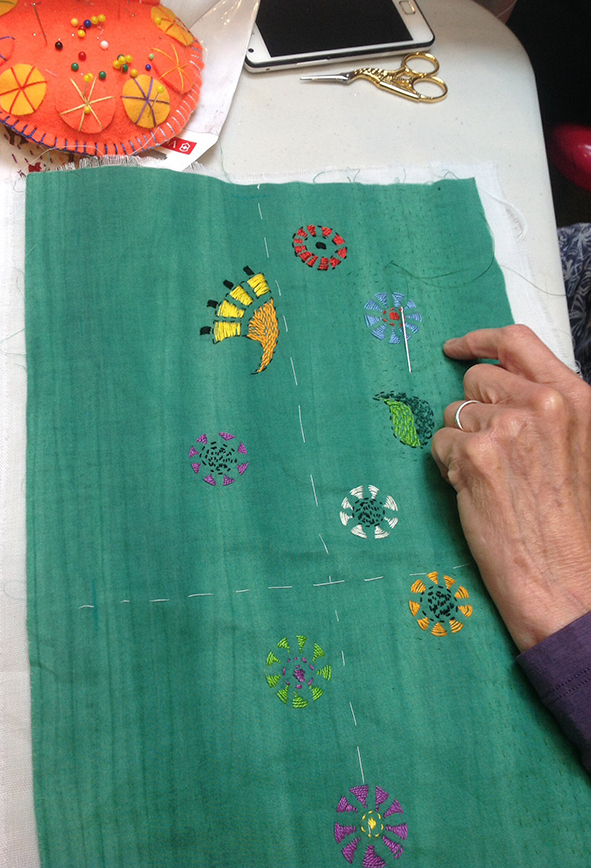
Others continued to develop their own work – I do like the ancient next to the modern in the image below – traditional stork embroidery scissors, hand made pin cushion and mobile phone!

2nd wk 06
continuing to develop the first colourful sampler – Jo Hurst

The motifs seem to be very popular but, like me Anne is trying some new colour background fabrics strips – really looking forward to seeing this develop

week 2 anne
strong coloured ground strips for experimental work by Anne Harrington

I hope she has more luck than I did! Eventually I want to make a large piece of work – at least 1 metre wide – so I had started off using wide strips – but found that the rhythms of the stitches started to develop a mind of their own, which I couldn’t get to grips with – so I chopped my original work into smaller segments and really let the running stitches go where they would – it is very exciting to work with…..but where do I go from here?

jh wk2
my tiny but wayward stitched sampler of sky and sea kantha

Well  – where else but back to the third Kantha club meeting to see how everyone else has developed and if they all feel that they want to carry this experimental approach forward into a functioning club, with membership, regular meetings, guest speakers, exhibitions and all the other benefits joining a club entails….watch this space.

,