my 1960’s fashion sketch book

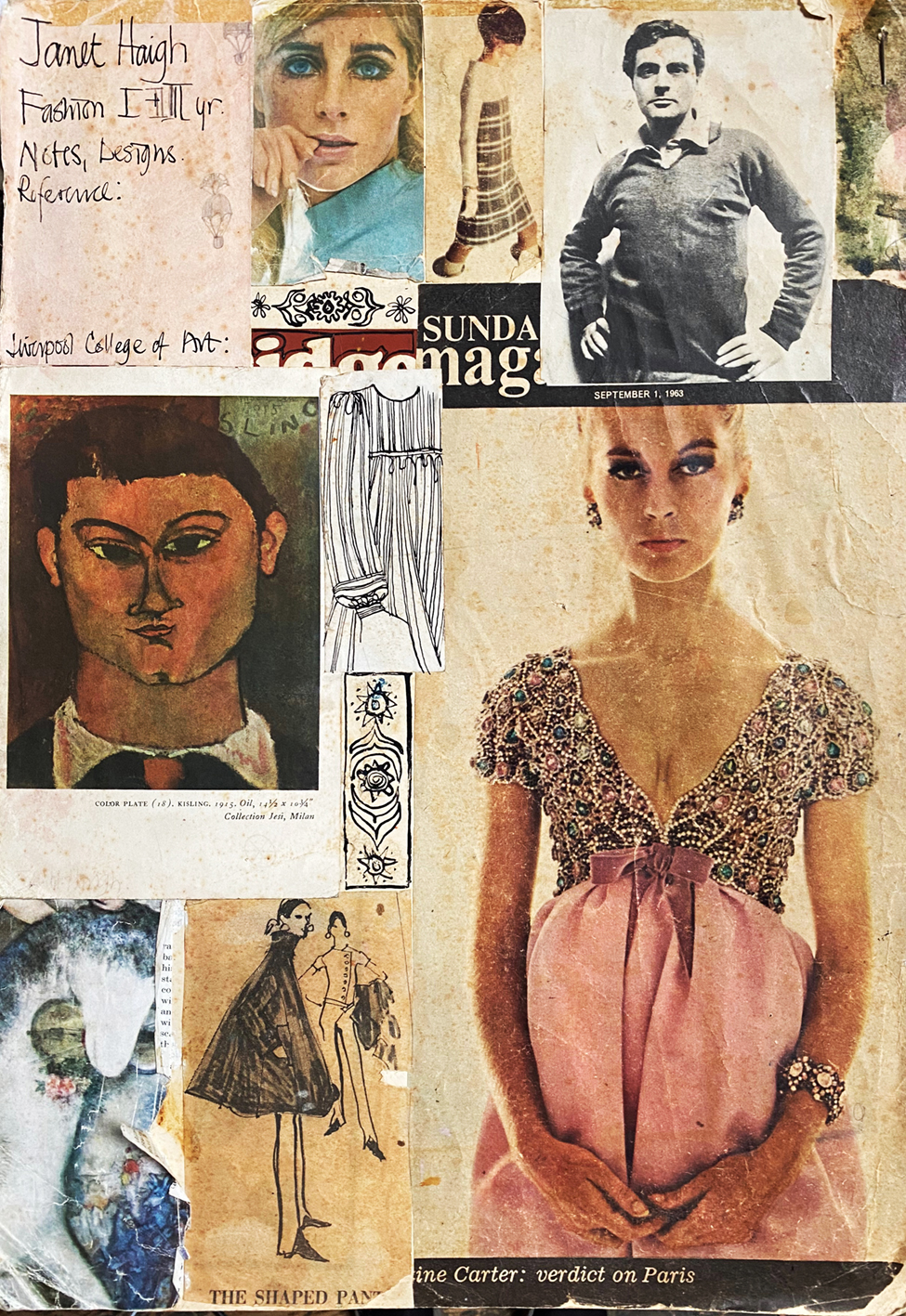
The cover of my late 1960’s sketch book – says it all!

Invited to conduct a week long course of drawing flowers and then to develop the drawings into a small sketch book at Court House Farm in early June, when the cutting garden flowers are blooming. I checked out my collection of sketch books/ visual research journals (whatever they are currently called) I have kept all my research books throughout my working life.

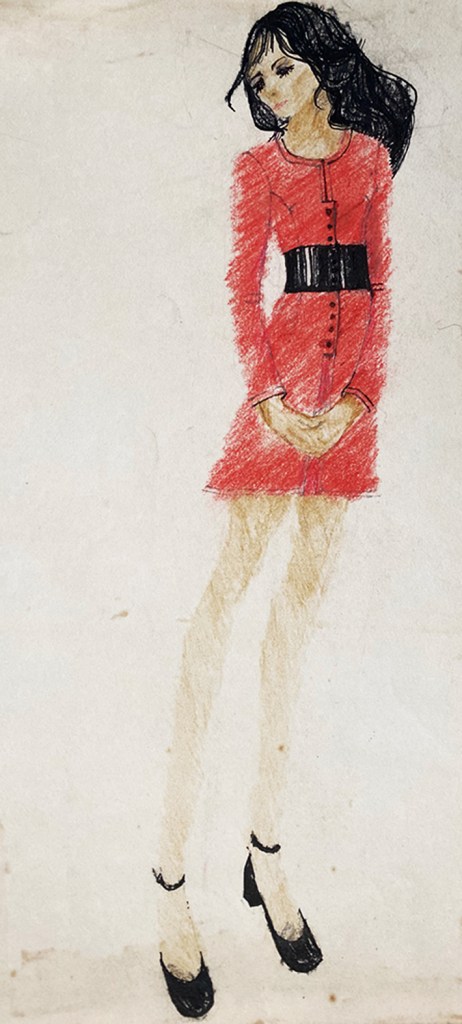
then I unearthed my first Liverpool College of Art sketch book circa 1968 – and this cover still looks like a protrait of my early loves and fashion influences …Modigliani, man and work, Chagall, dresses as worn a la Dusty Springfield; with the faces and poses of models that influenced my design illustrations. And inside???
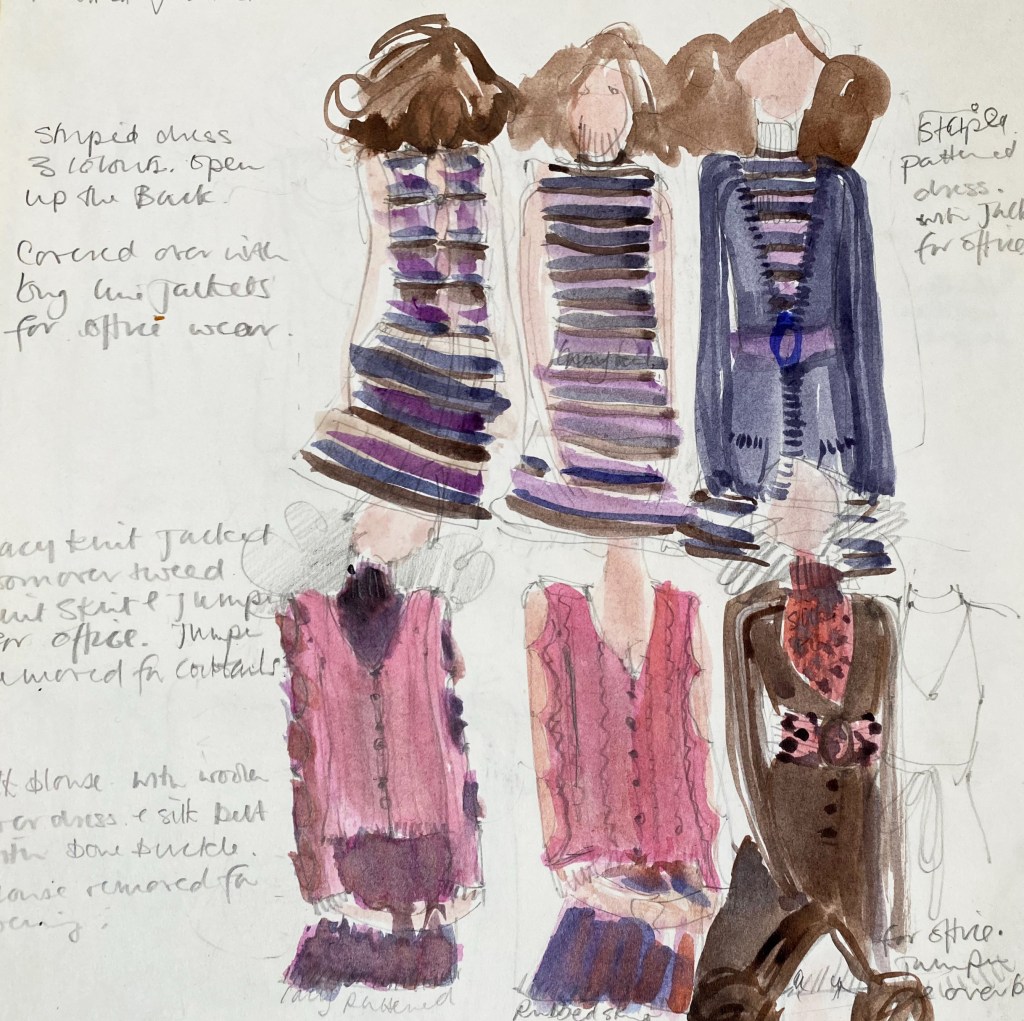
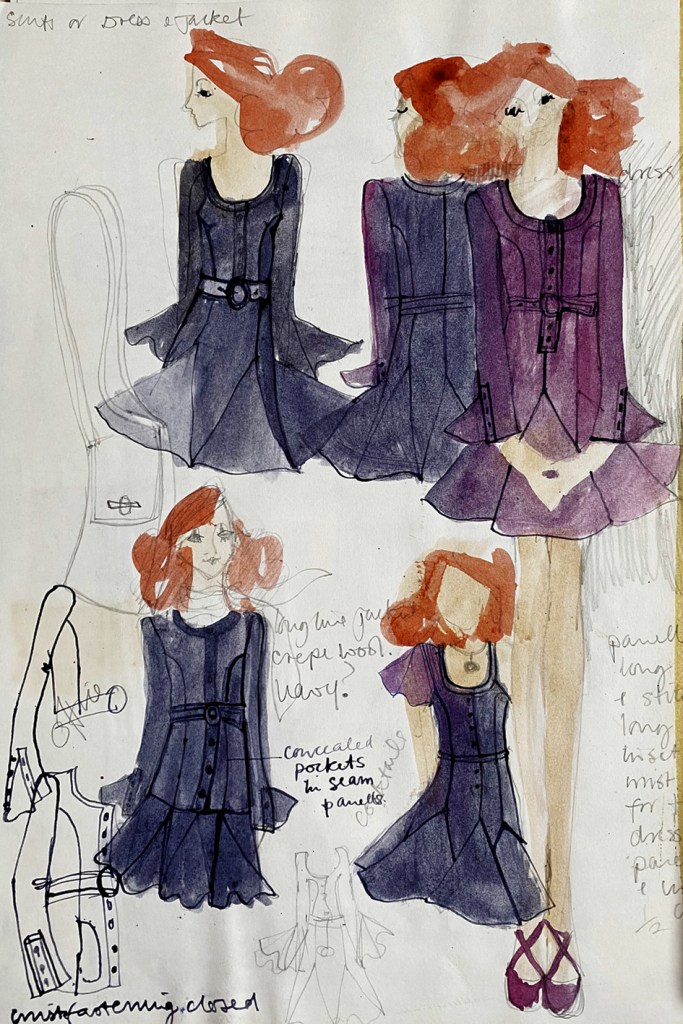
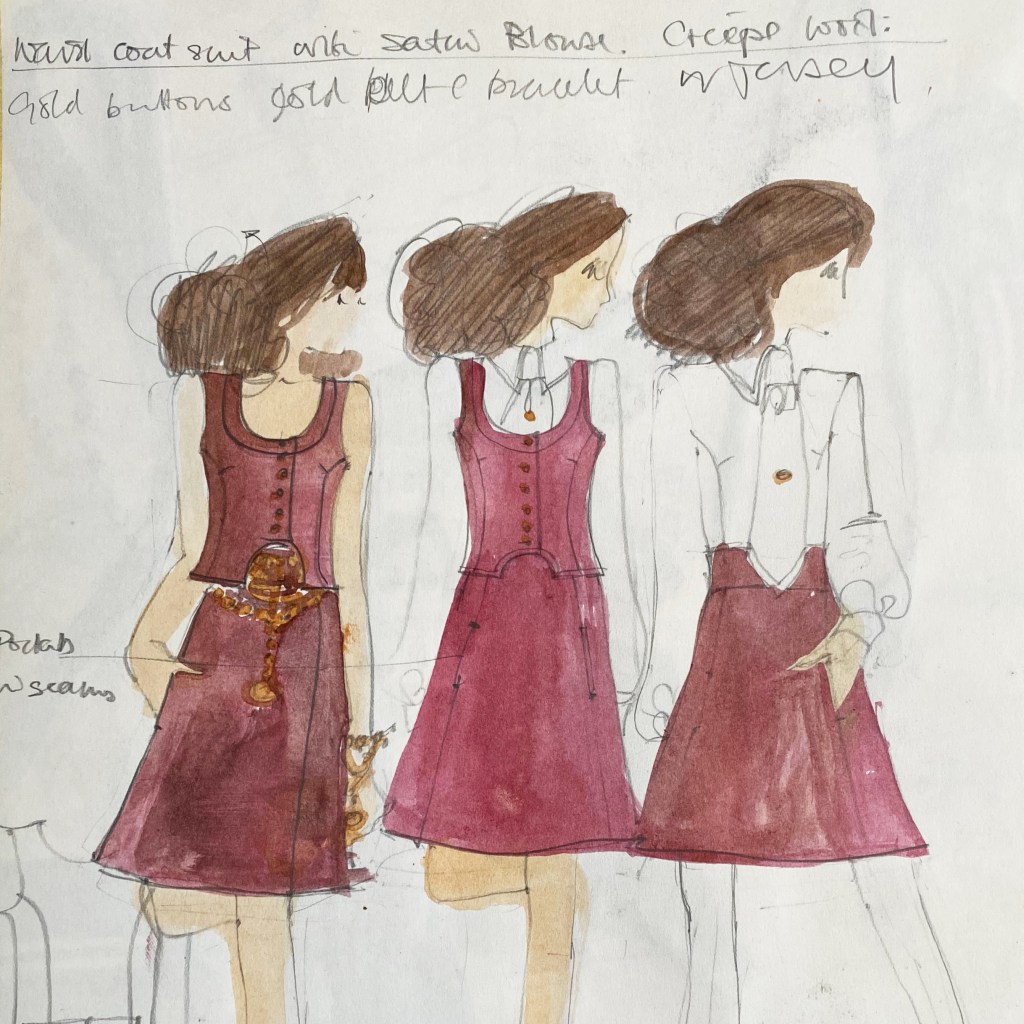
Above are a range of design drawings in pencil and coloured inks that were used to tint black and white photographs. I found that the colours were very subtle, I wonder what happened to them? These are layouts of my designs ready to be illustrated, I think for a competition for RSA (a brilliant organisation that enabled students to develop their practice with scholarships and grants). Everything looks in proportion until you see the legs, they go on forever. We were taught to make drawings that someone else could work the pattern cutting and making, a very good practice as I found out when I did become a fashion designer and illustrator in London in the 70’s. But what is really fascinating, the pages do not look so different to my own recent research books – just a change of subject matter- oh and embroidery!

These pages of flower are from my current research book started in 2023; I am still having a written conversation with myself. Back to the 60’s…….

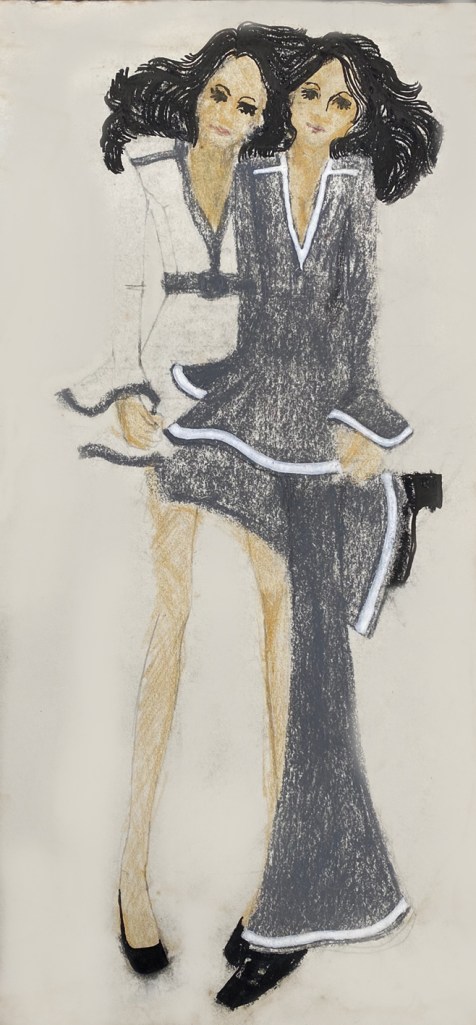
These very neat dresses were designed to be made in Double Jersey, a new innovation that made for easier pattern cutting (but little else as far as I was concernd). I always preffered my designs to be made in fine wool crepe. In the sketches below it appears I was also designing lots of accessories as well! the drawings above use my favourite media of the time – pastel with mapping pen and ink details.

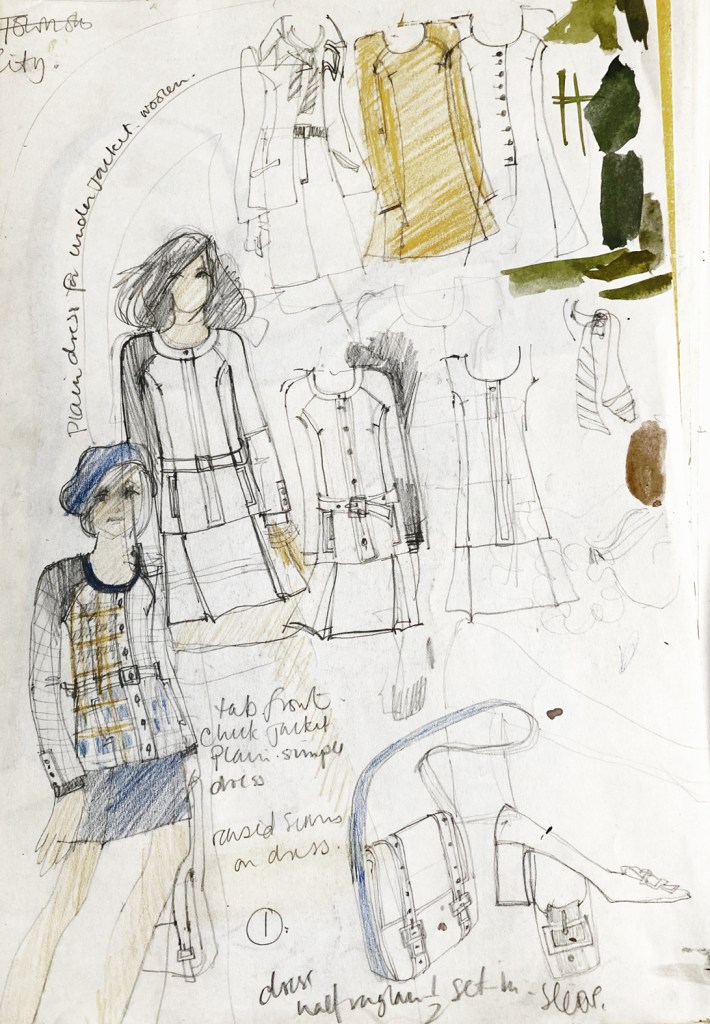
Below are designs that use applique and embroidery – I remember embroidering woollen flowers onto a knitted dress for my final collection and I think this is where I really got the passion for embellishment and embroidery. My first freelance job was making and designing appliqued T shirts for the Mr Freedom in Kensington – the height of London boutique street fashion at the time.

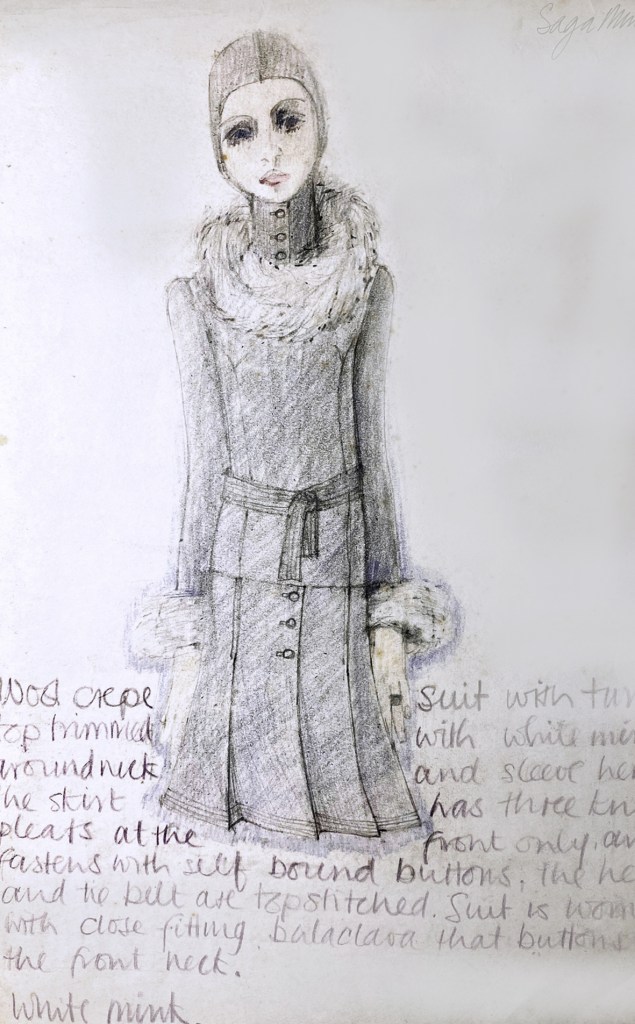
Another sign of the times the Saga Mink competition, ( I did not win – well just how much fur would these designs sell)? The anti fur lobbly was just starting up, but that’s another story. The drawings are in crayon and pencil.

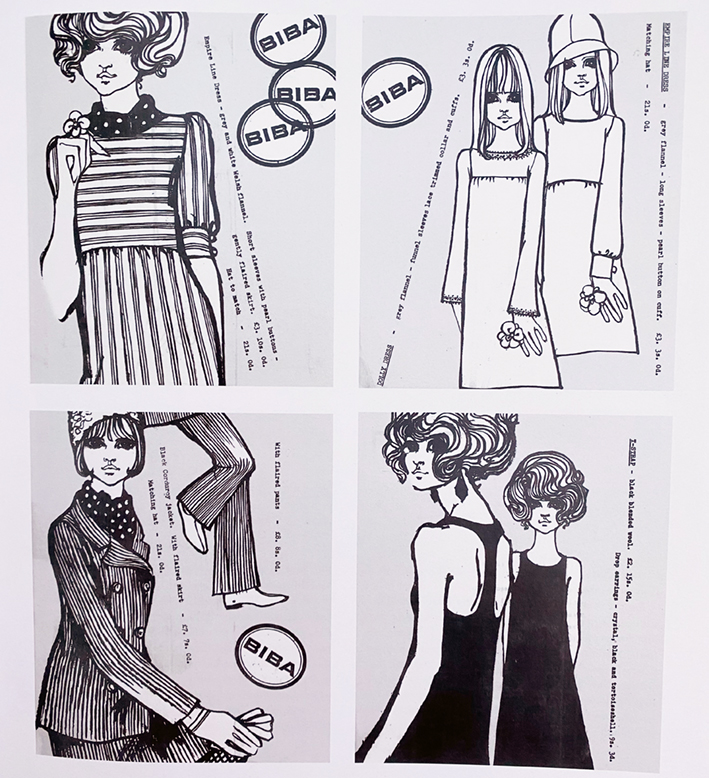
However here you can see the direct connection to the cover of my sketch book and the influence of my favourite fashion designer and illustrator – Barbara Hulanicki the design genius behind the most fashionable shop of the times – Biba .

Panic Early – Design and Sample

“Panic Early ” has been my making motto for many years and the advice I always handed to students at the beginning of any project with a set deadline….now it is my turn to heed my own advice. As a hand embroiderer the idea of stitching in a hurry is a total nightmare.  So I tend to give myself a few days ‘wriggle room’ on any given deadline, I hate last minute making. So as my partner Rachel Kelly and I have about 3 more weeks to the deadline for a piece of work, I have decided to step up my input and get to grips with the rest of the tree design and sampling (with a plan B as well – watch this space) so that as soon as the Easter vacation is over we can just roll into the manufacture of the fabrics. The actual piece of work has been in the making for about 2 months now (see the last 2 posts) and the idea to make the Daphne Tree is at least 15 years old and I am about to see it come to fruition in the next 2 weeks, when it is due to be exhibited at a group exhibition called ‘Pairings’ the Museum in the Park in Sroud

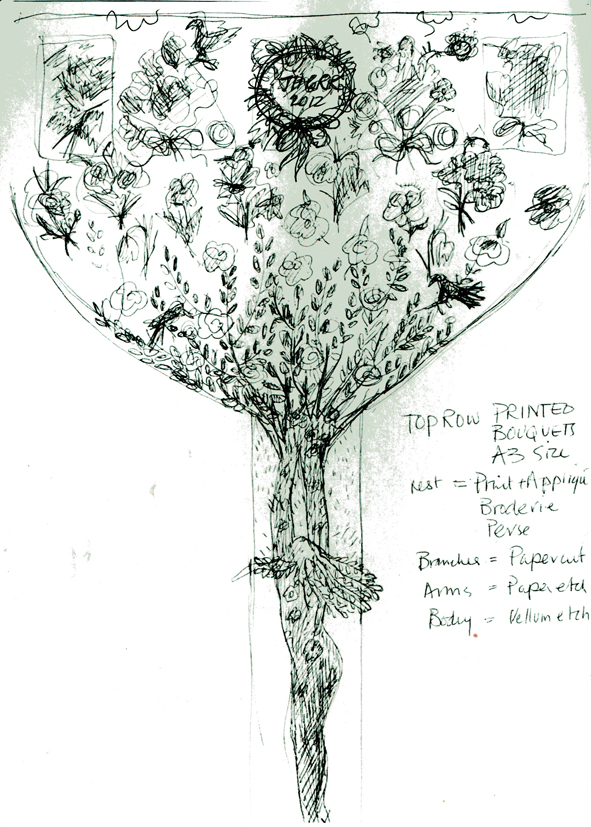
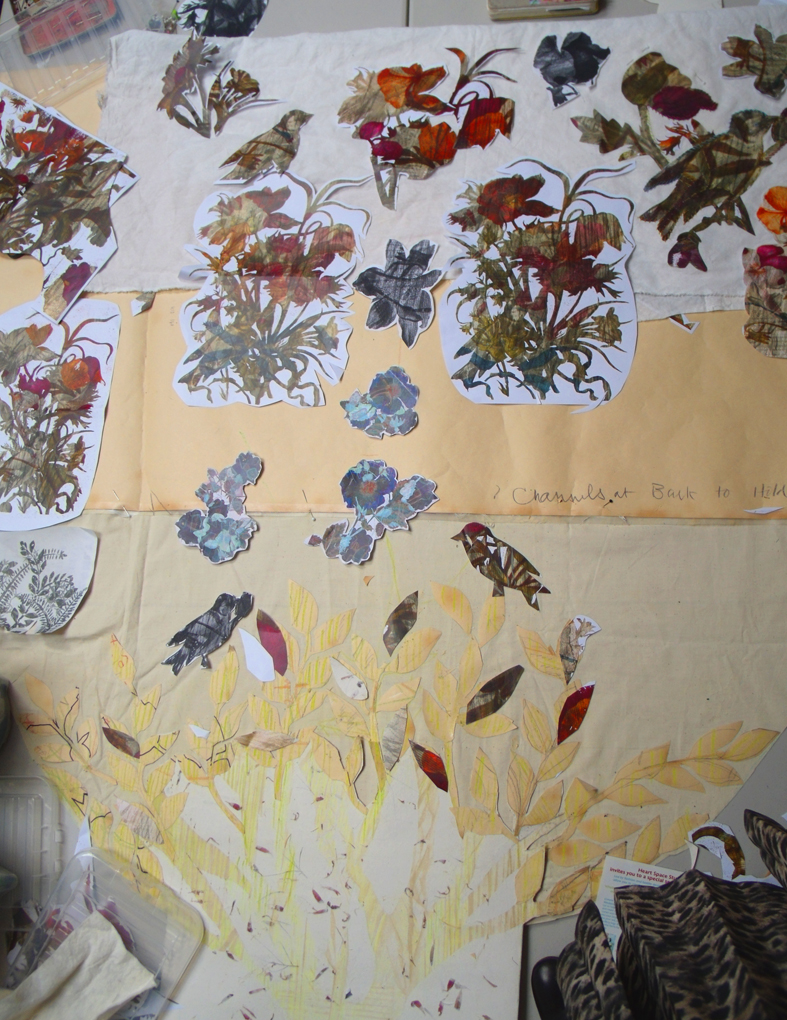
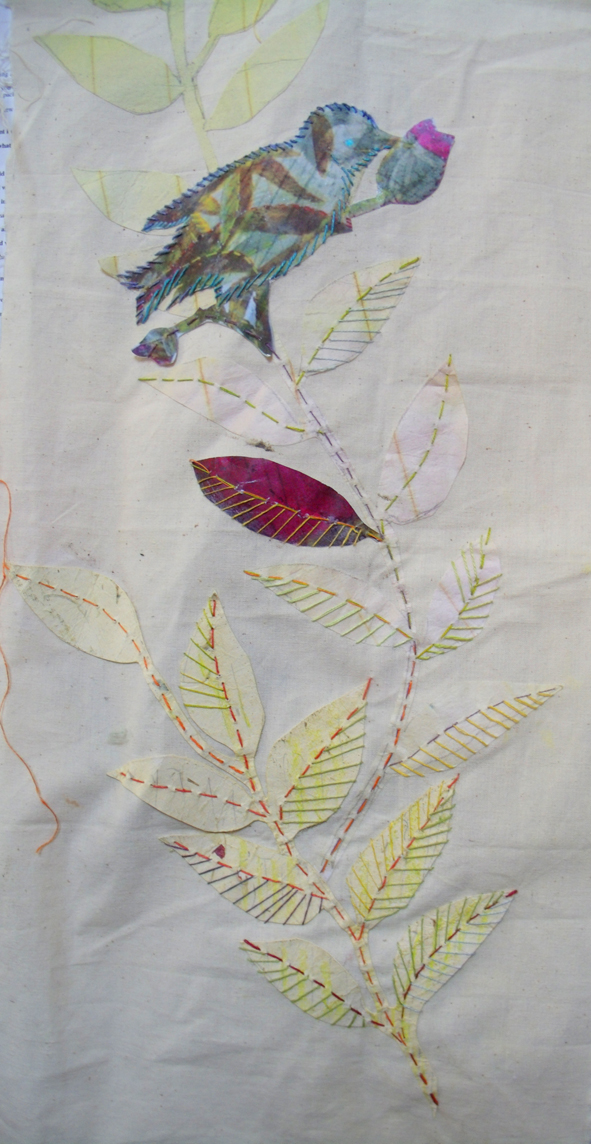
The design drawing above, although sketchy, is looking fairly comprehensive, although to anyone who hasn’t seen the full scale pattern on the tables at Heart Space Studios will have their doubts about my progress.

As a hand embroiderer I am used to developing my original design ideas as I make them. Working from a fairly comprehensive design drawing with stitched/dyed/fabricated samples, hand stitching then affords time to contemplate the work in progress, so subtle shifts of colour or even whole areas can be re-assessed –  sometimes a piece of work can take several months of steady work to complete. The initial research is a  fairly rapid process compared to the execution of the finished piece. Now I have to plot the whole piece in advance of starting the work so that I can calculate just how much stitching time will allow…we have hit on the idea of working with paper computer print-outs that Rachel send to me as she designs them -so that I can develop the design and get the scale sorted out, while we wait for the fabric to arrive to be printed and the departments to open up after Easter

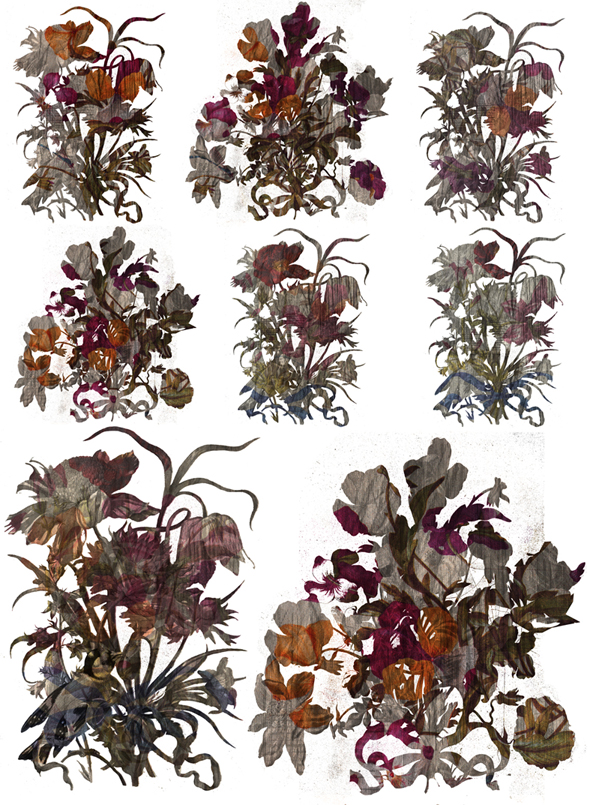
 My pairing partner, Rachel, works in a completely different  way – she is a digital printer, so everything she makes has to be mapped out first on a computer and programmed so that she can manipulate everything she needs at the final printing stage. She gives herself a range of options to choose from – making her work spontaneous in a totally different way than mine…..in fact my way of working isn’t spontaneous at all, it could be said to be organic or even vegetative in its development. She takes a long time to prepare; I take a long time to make; she can print metres of  piece of cloth in a day; I can take months to cover half a metre.

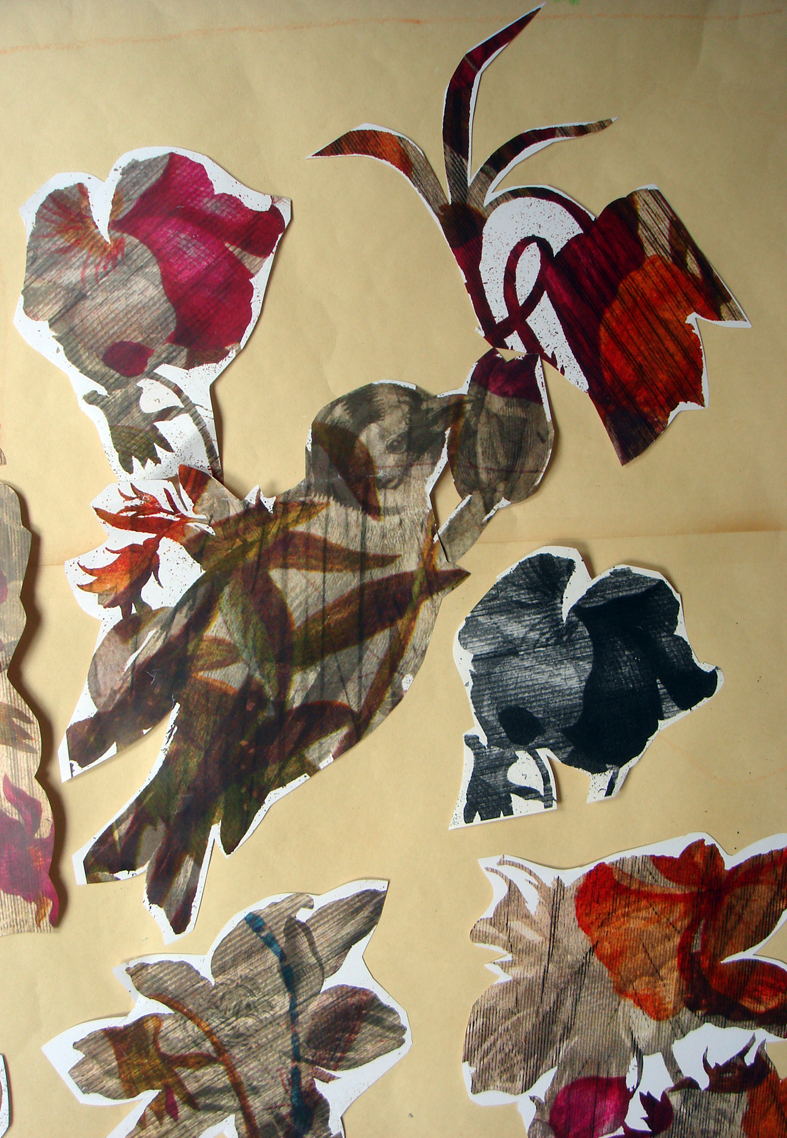
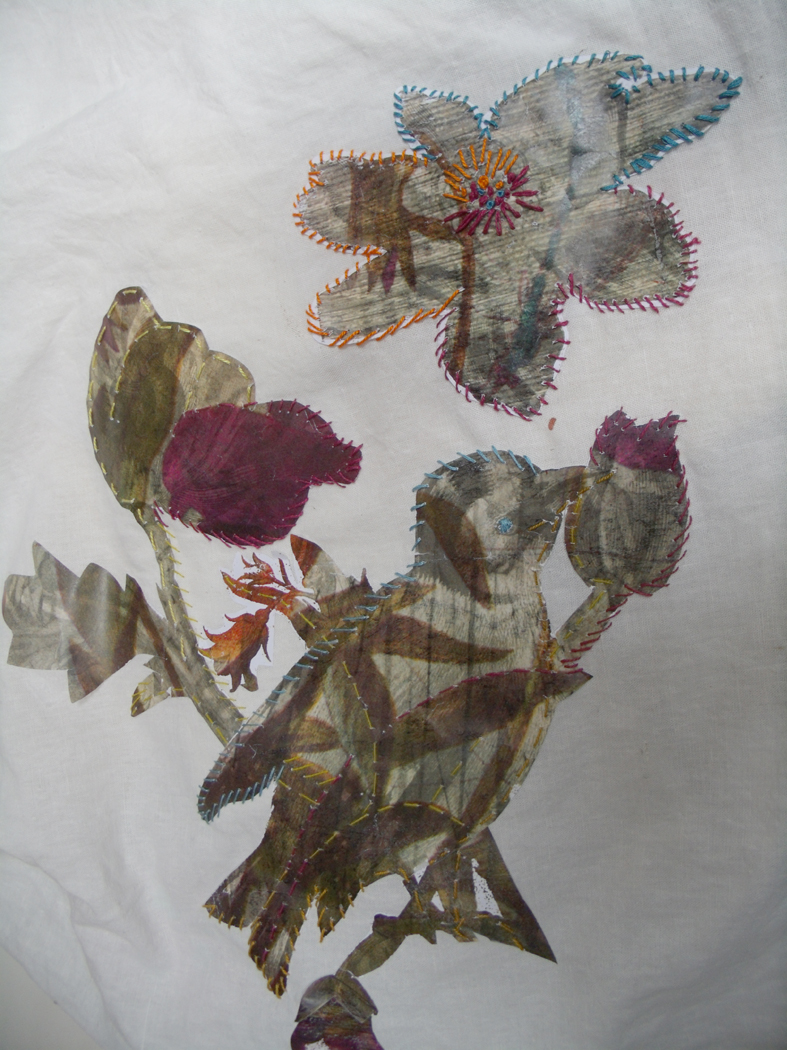
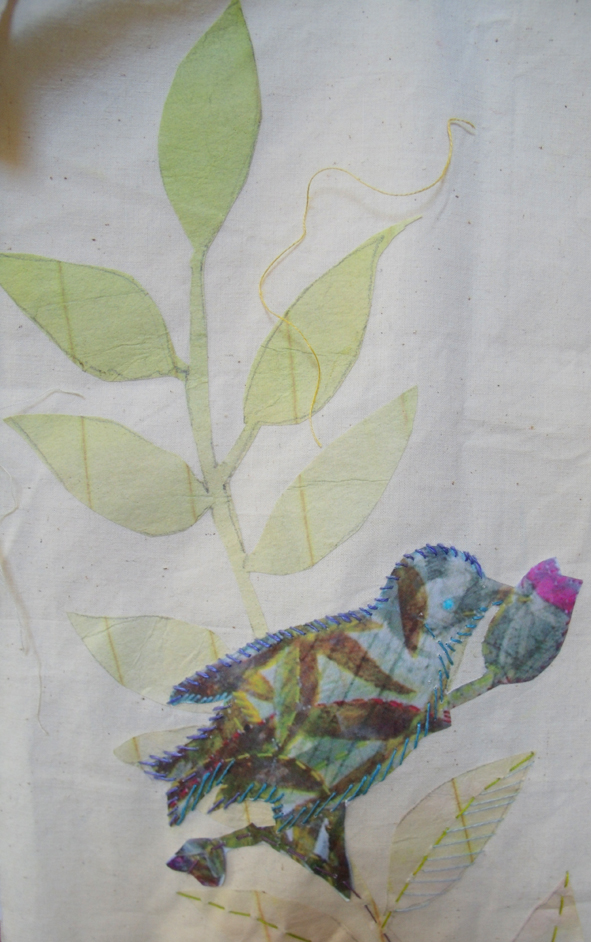
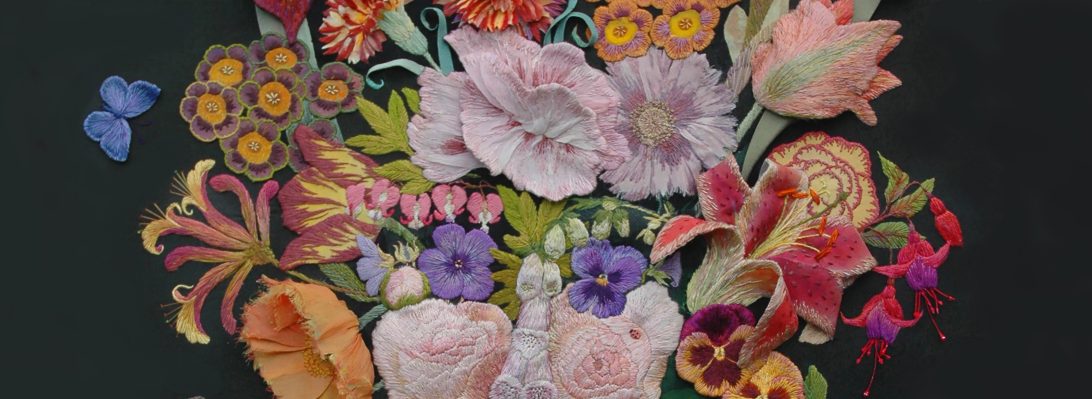
And as we are playing a game of consequences to make this work, in that we each react to the others new idea or  image, I have to play by the rules and just make  new ways to to do my stitched work within the time span. But what wonderful choices I am given, beautiful bouquets of exquisite flowers, some with hidden birds that I can cut out and embellish, but at the moment just working with paper makes the stitched results rather crude, but gives me ample opportunity to play with the colour and composition.

Eventually we will have the cloth to print on and cut out and sew beautifully – and the vellum will be laser etched hopefully later this week ready for me to start sewing it all together. Meanwhile I have to carry on sampling all the ways I can make a piece of vellum transform into a sheet of paper which then becomes a printed chintz design on cotton. I have started to sample dyeing the shoji paper leaves to applique onto the cotton fabric – hand stitching is the answer   as all of this is too big to go under a sewing machine – did I mention that this work is 3 metres from the toes to the top?