HIDCOTE REVISITED: NEW EXHIBITION

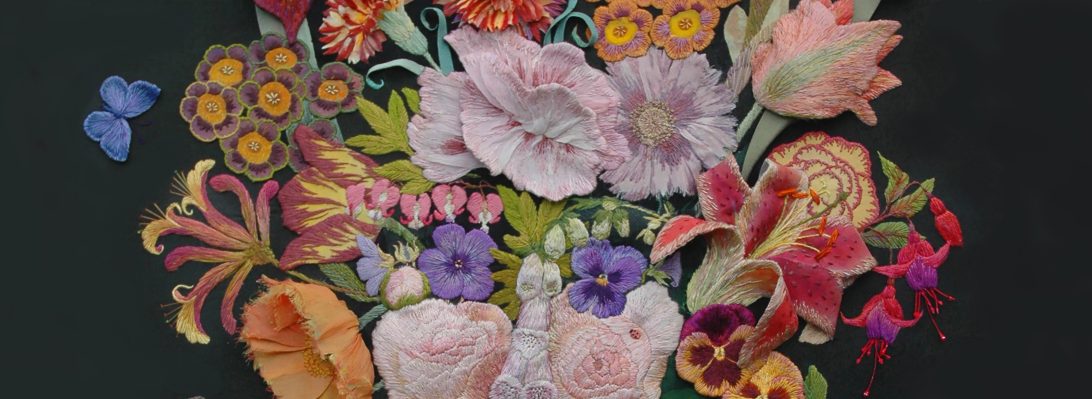
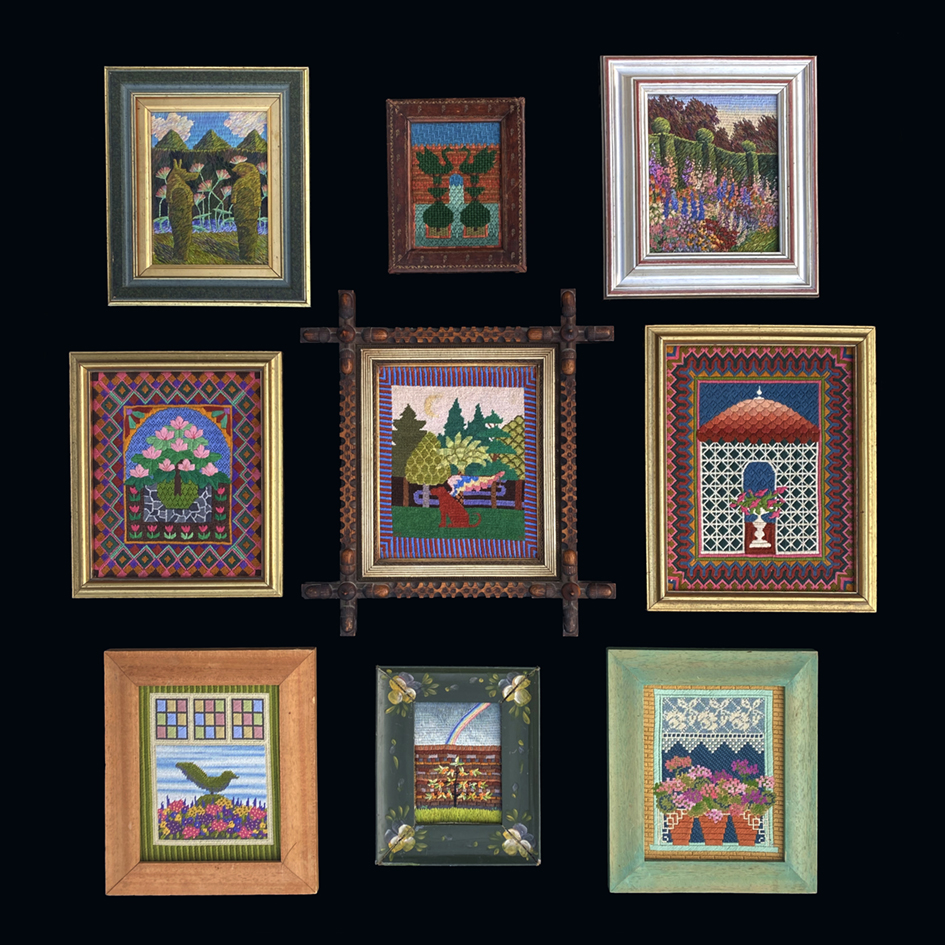
Invited to exhibit my embroideries at Hidcote Manor, a National Trust Garden, in April 2025, I immediately thought of my first visit in the 1970’s; I had just started to embroider, and the effect that it has had on my stitched work ever since. Above is a small selection of my first-ever embroideries that were inspired by my delight and fascination with gardens and flowers.

I stared with basic canvas work and enjoyed the restrictions imposed by the strict stitching and its filling-in-until-you-finish discipline. I was designing pictures in order to learn to embroider my ideas.
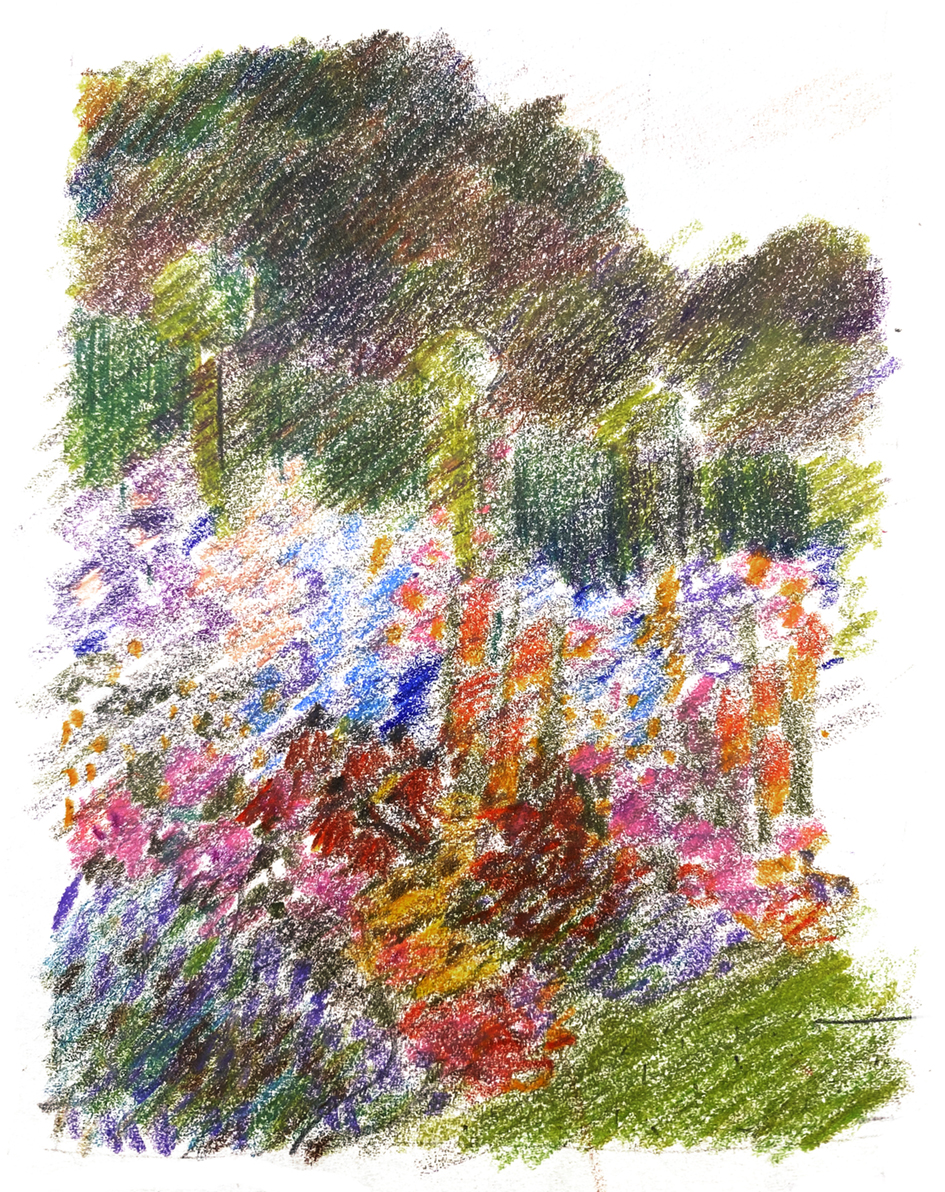
It was after visiting Hidcote that I started to draw gardens, mostly details of planting and of course, topiary. I took photographs and scribbled down notes to remember colour planting and topiary shapes to develop into embroideries. Now I realise that this was the time when I found my own way of stitching by using blended colours and really just stitching my drawings. I always scribbled drawings, took too many photographs and made notes ready to be tranformed into working drawings, and this is how start my work now, almost 50 years later.
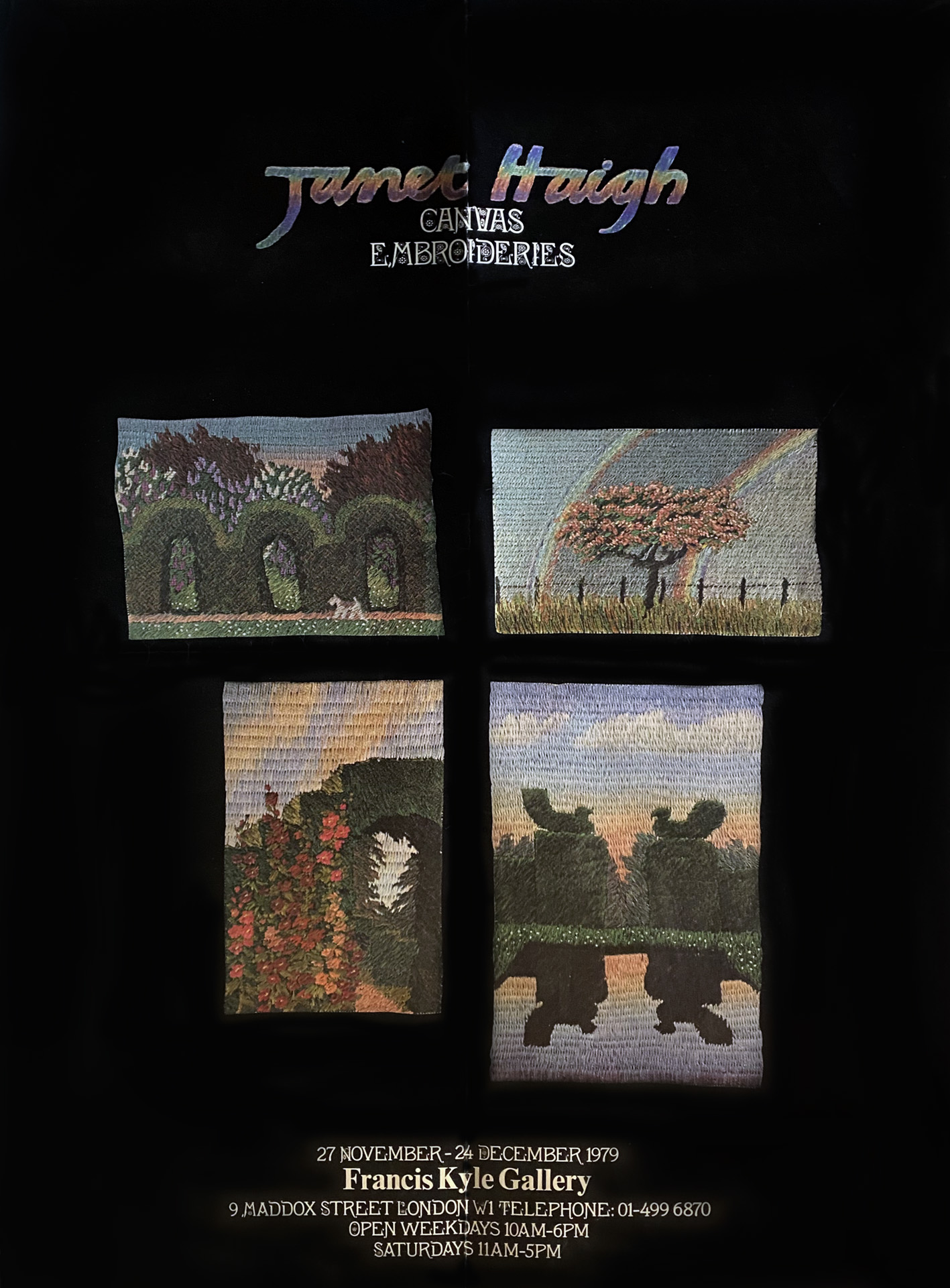
Above a rather creased poster from my first one person show at Francis Kyle Gallery in 1979, showing my small scale canvas embroideries. My early fascination with topiary is evident.

Oddly I do not actually like the idea of strictly clipped hedges, specially when trimmed into animal and bird shapes, but this feeling completely disappears when I actually see it for real. I find this ambivalence really useful and for me it provokes new ideas; why bother to make anything that holds no meaning, mystery or is simply a puzzle for you to try to solve? But mostly I am delighted by the sheer absurdity of it. Why do we tether bird-shaped hedges to heavy domes of yew – to stop them flying off?
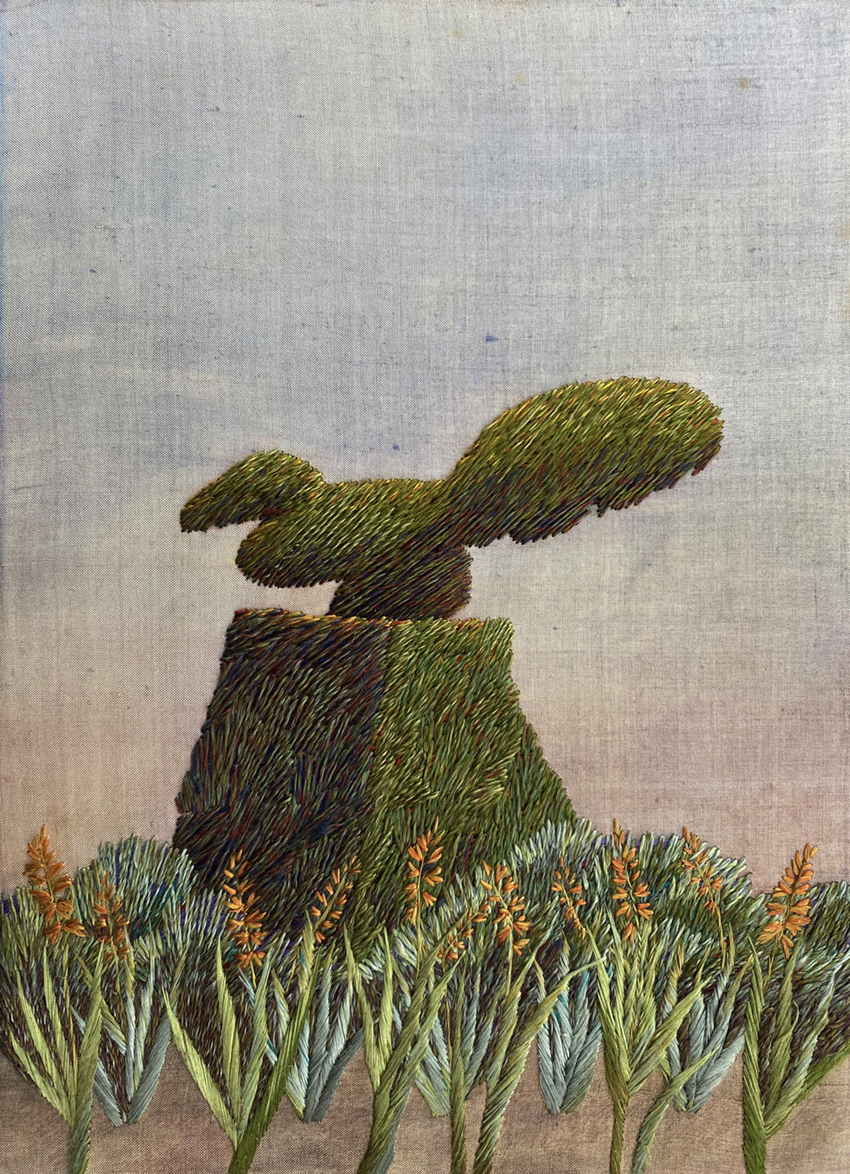
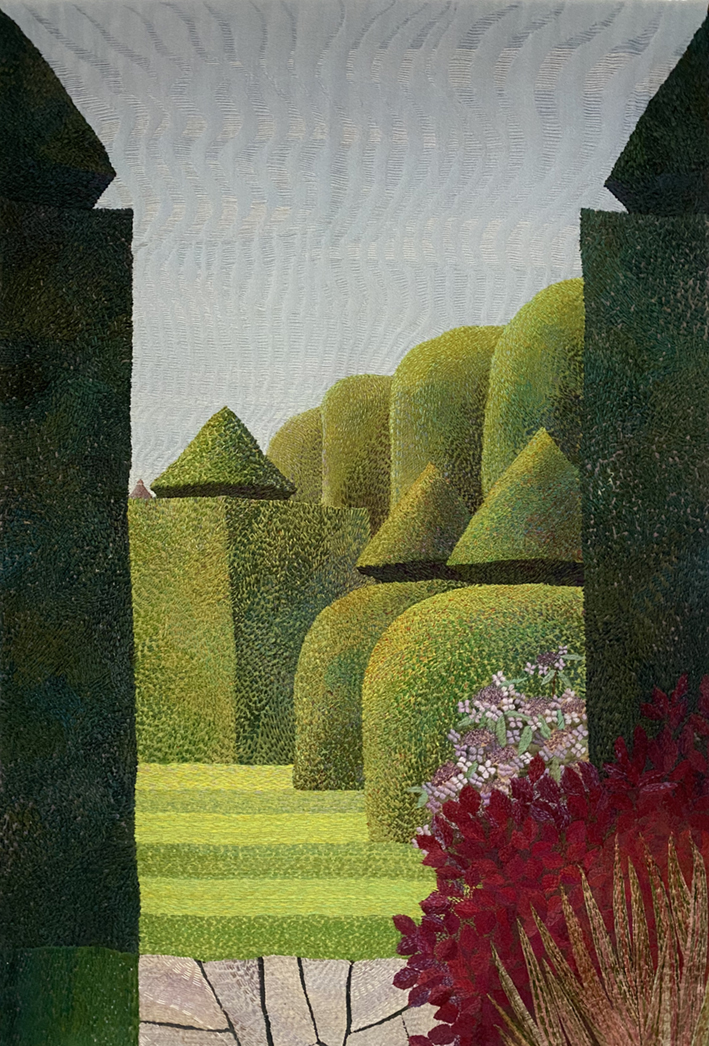
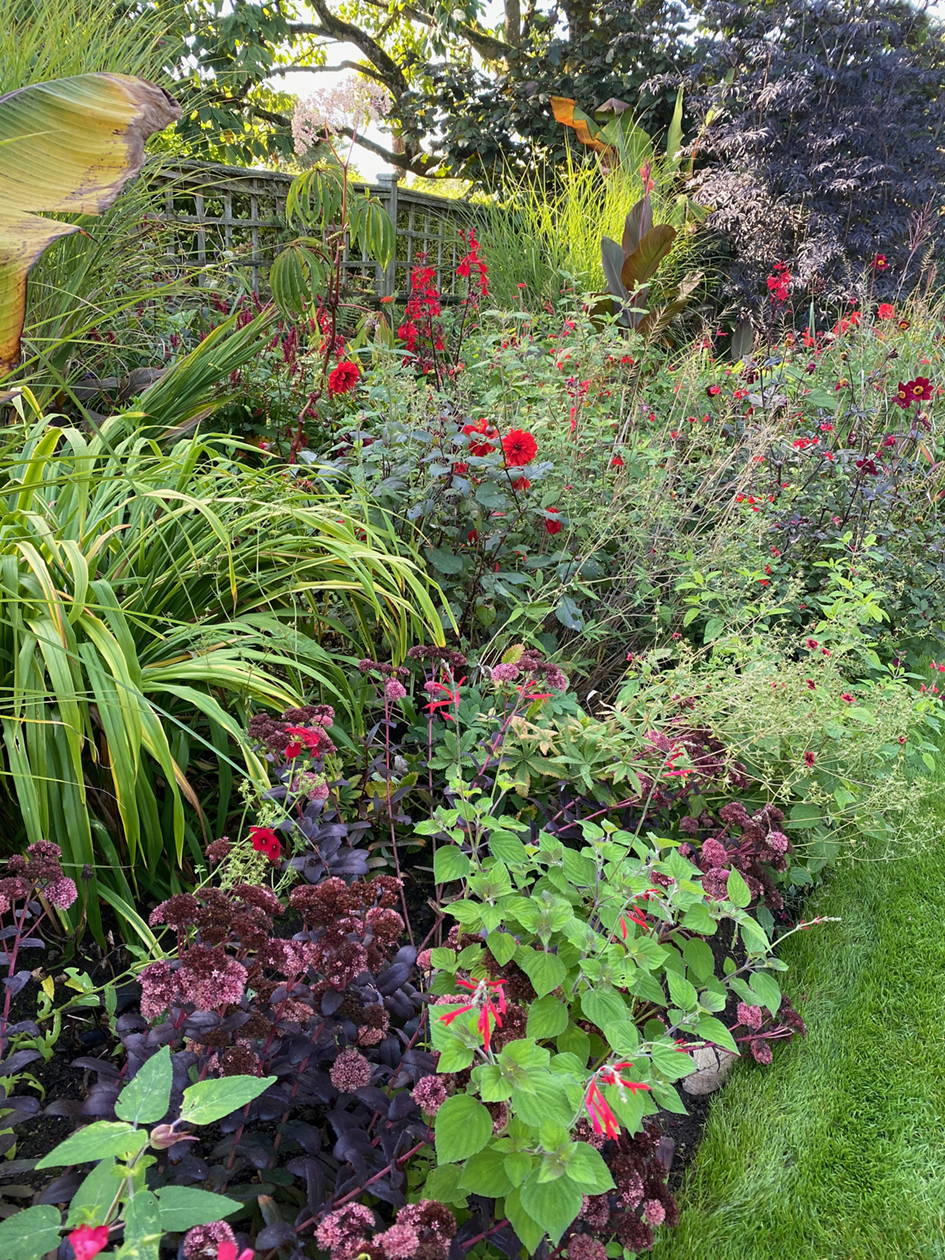
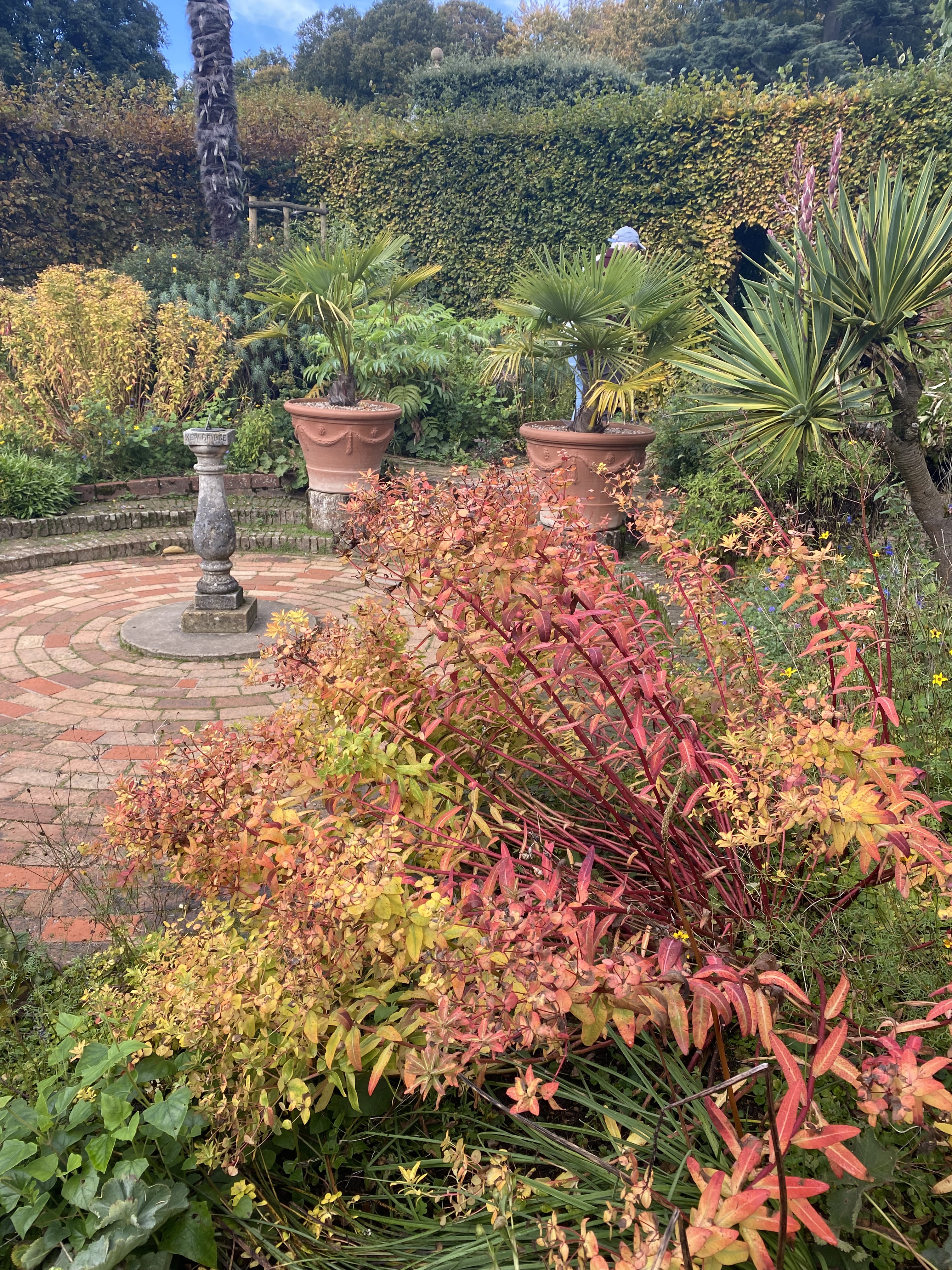
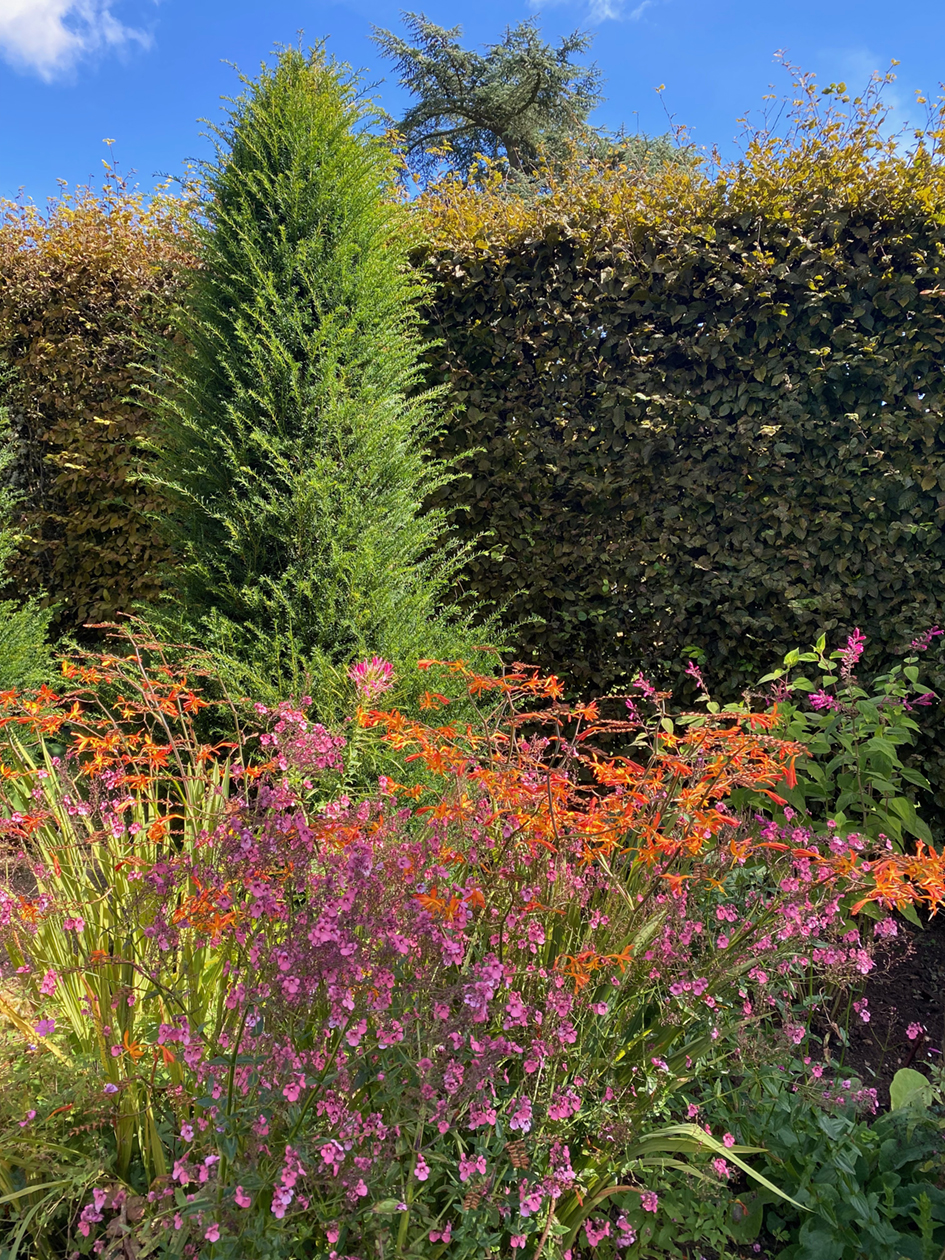
And I have continued to embroider the topiary figures that are often seen in grand gardens. Above is ‘Great Dixter’ a small silk embroidery circa 1980, that was very inspirational in making new pieces for this exhibition. Right is ‘Lytes Carey’, another National Trust garden, this is made mainly with simple large running stitches in woollen yarns onto a wool ground for a big woollen panel, in 2001. I always enjoy seeing the dense green walls of hedges surrounding an abundance of flowers, as seen below on my several visits to Hidcote in 2024.
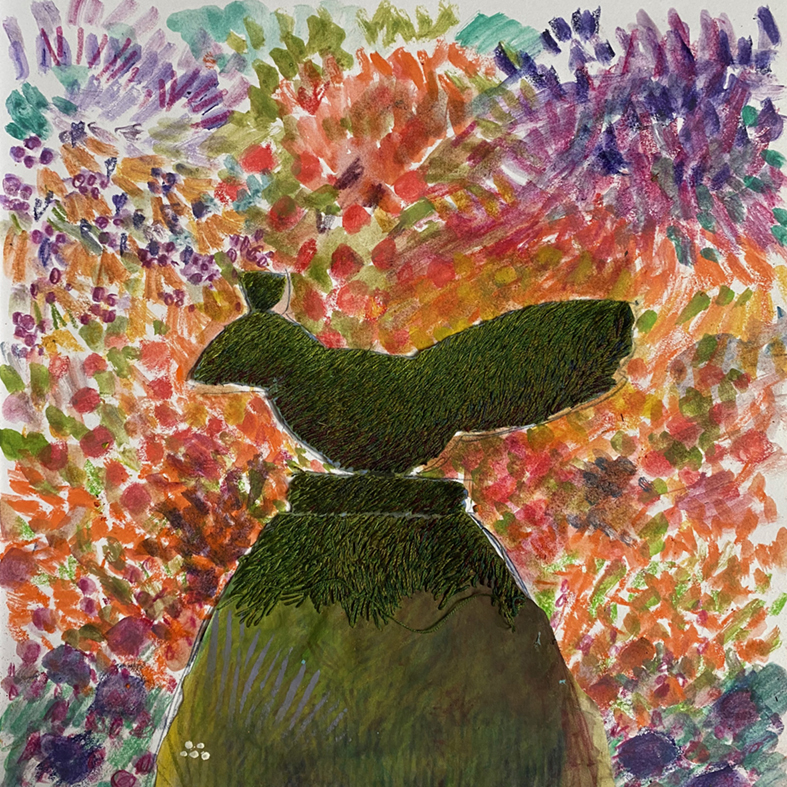
Insired to make new works for the exhibition, back in the studio I combined different drawings, prints and photograps of several aspects of the garden’s abundance and used some old stencils and wonky photocopies that had been over-printed with my embroidered flower images. From this I developed a collage from shoji paper and stitched silk. Then found an old photograph of the birds as I can remember them with their crowns as peacocks.
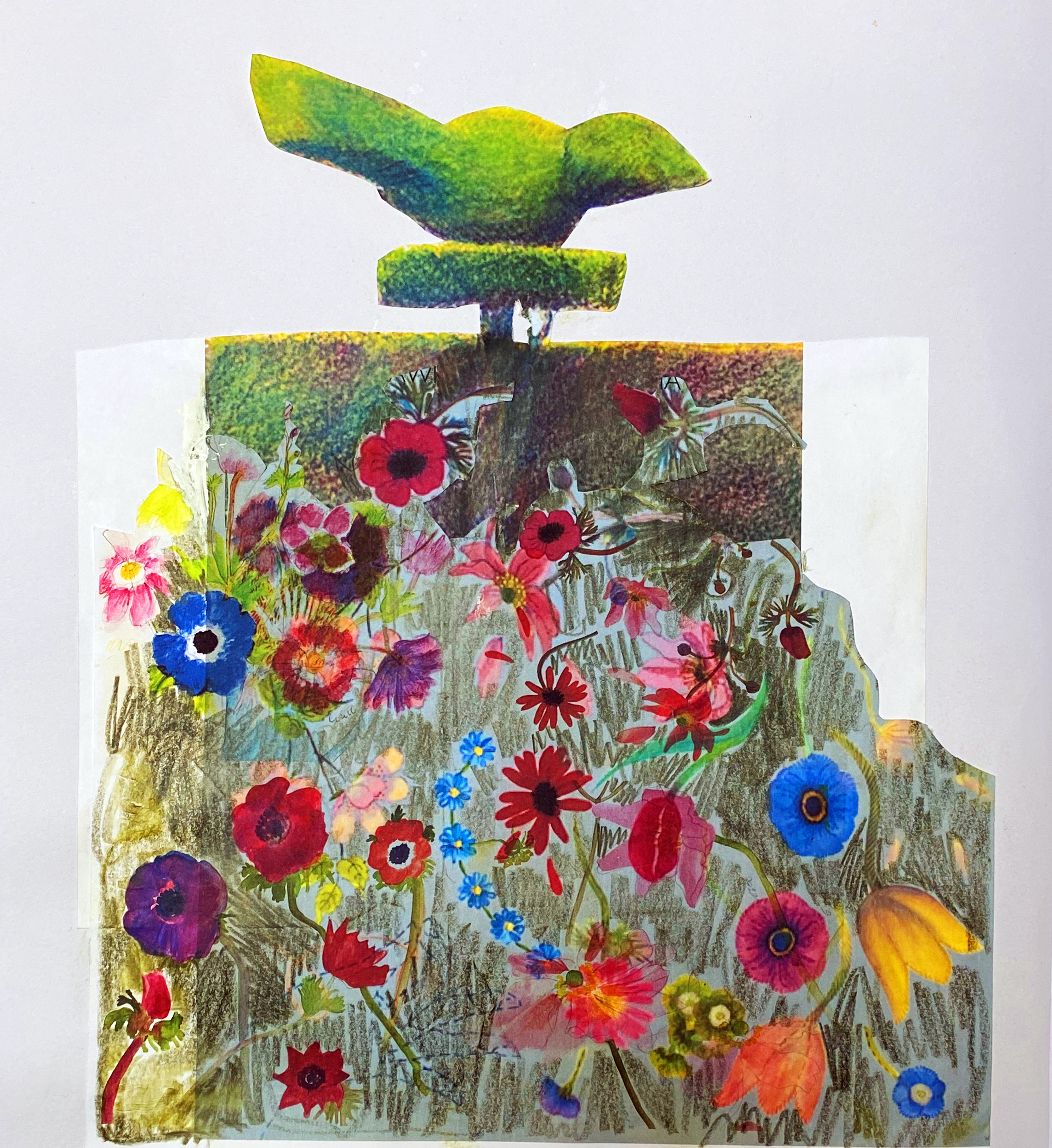
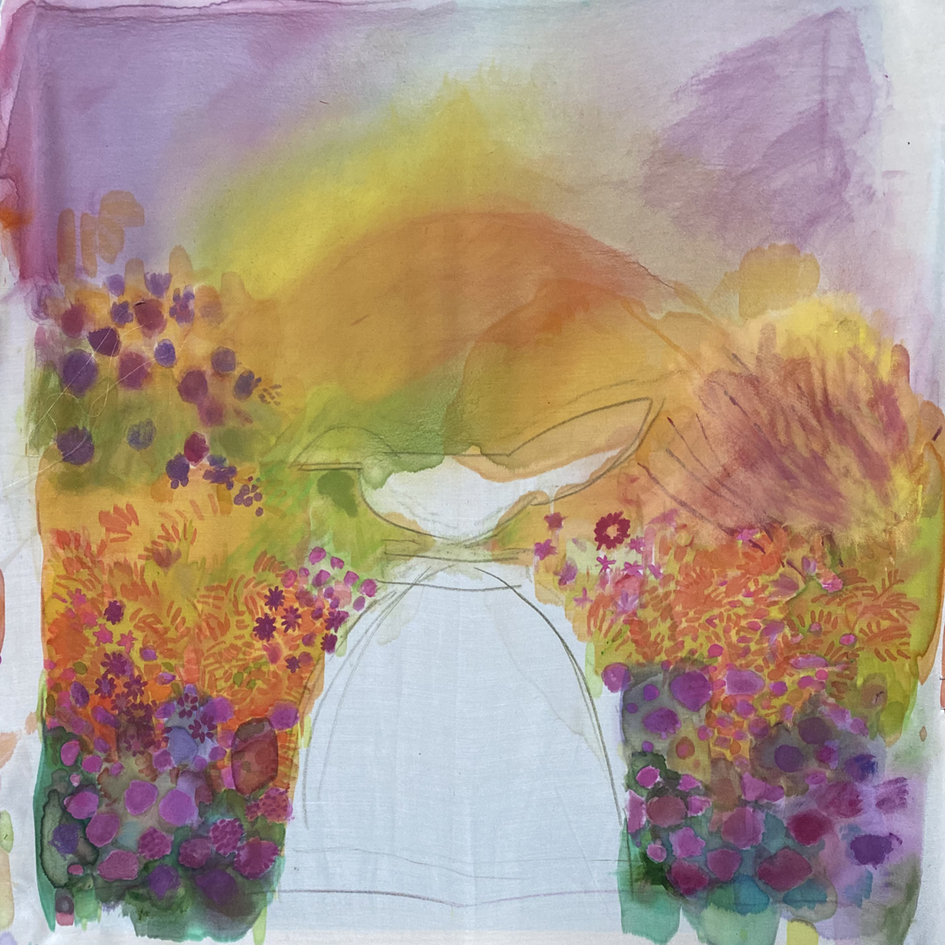
The abundance of planting in the garden beds reminded me of Gustav Klimt’s flowery lanscapes, I began to imagine the plants at Hidcote developed into a wall of flowers. I had bought a packet of paper napkins patterned with a Klimt garden for presents to friends, from a museum in Vienna, but had kept them myself. I took one and pinned it to my studio wall, with the other half formed ideas.
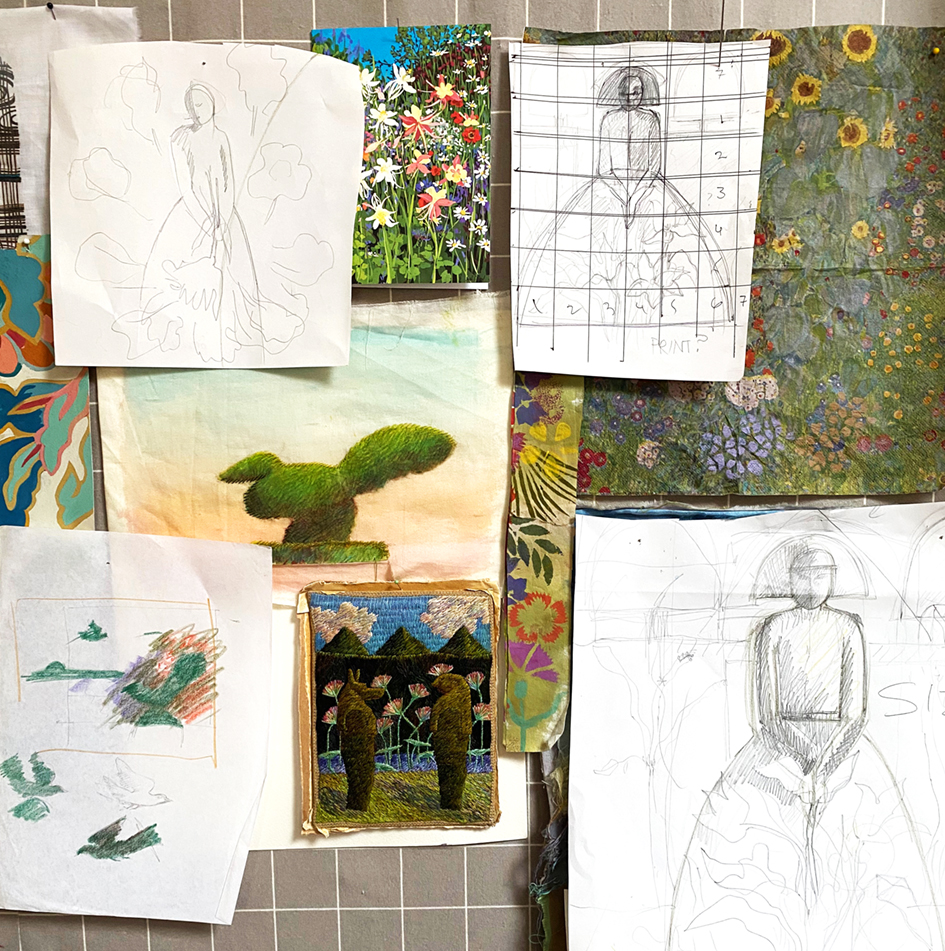
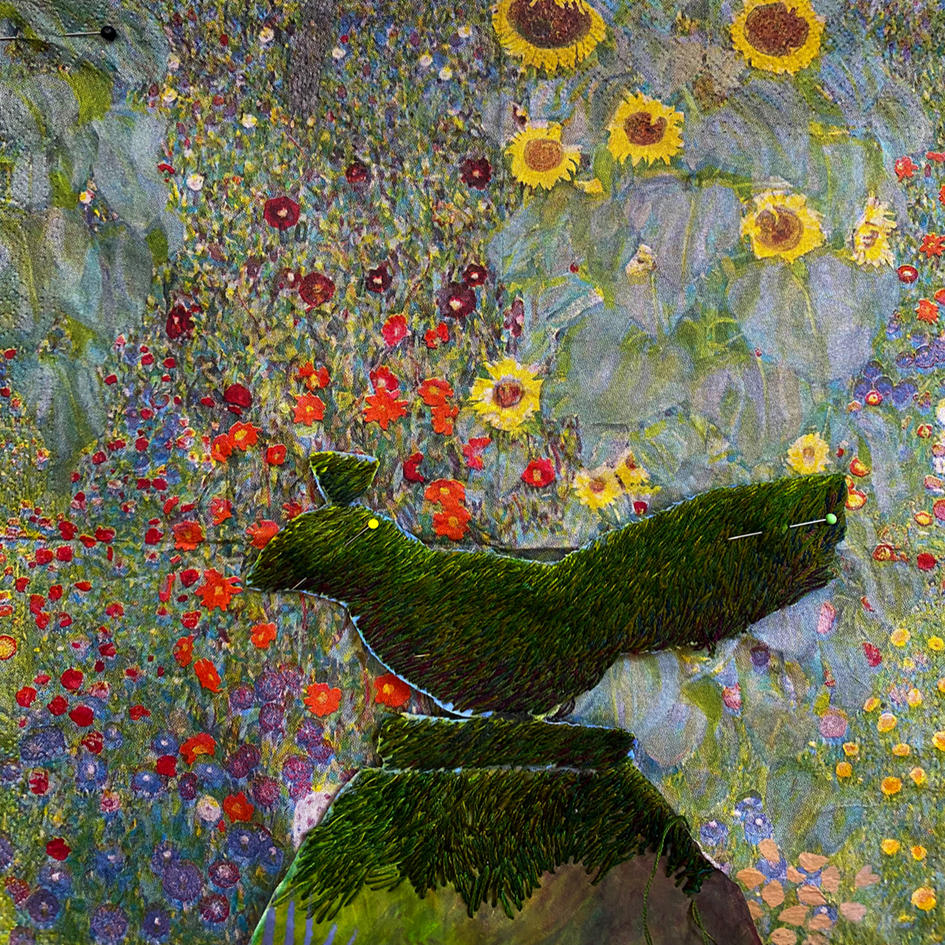
Stages in the inspiration: designing, drawing, dyeing and stitching my homage to Gustav Klimt. I stitched a bird in twisted silk thread on a fine silk ground, then painted dye onto another silk ground adding many of the flowers and leaves, found in my photographs, to make the flower wall. Eventually I stitched the finished bird into postion.
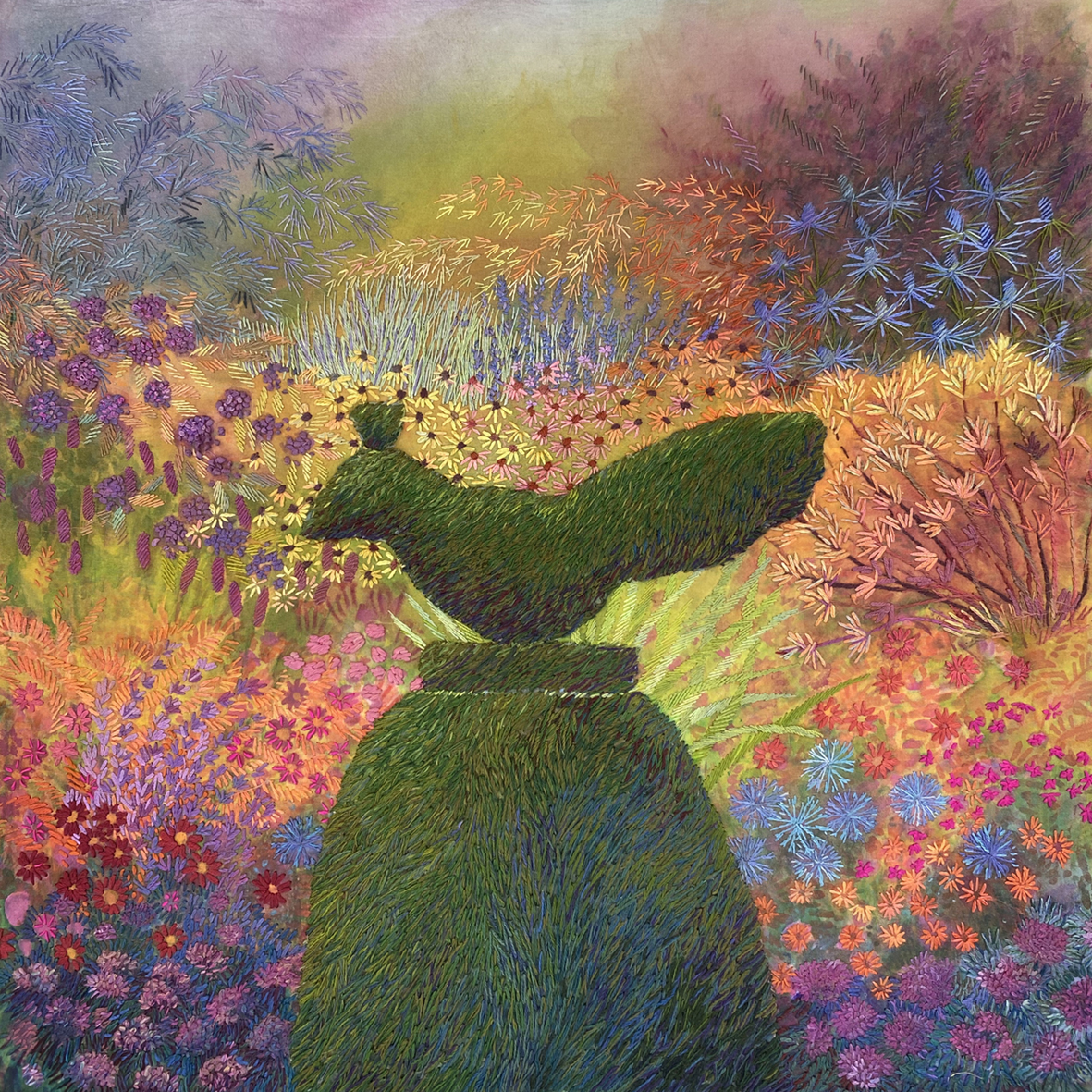
The finished ‘Vintage Topiary Bird’ has become the front cover of the picture book/catalogue that I have produced specially for this exhibition. It has just been delivered to the publishers in time to be printed and for sale at the start of the exhibition Inspired to Stitch: Hidcote Revisited.

Autumn Flower drawing Class

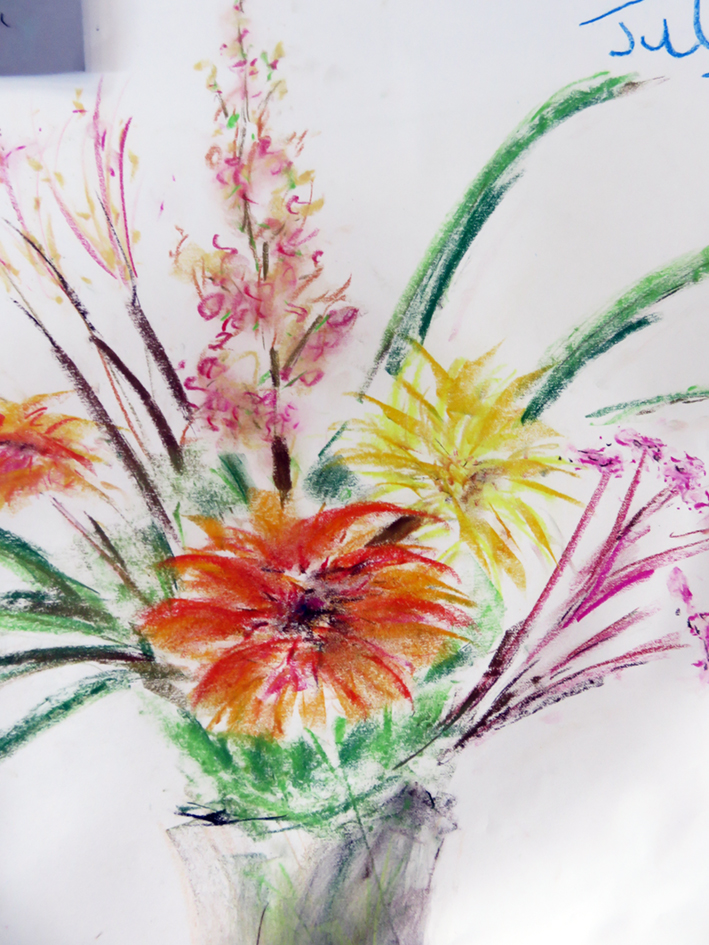
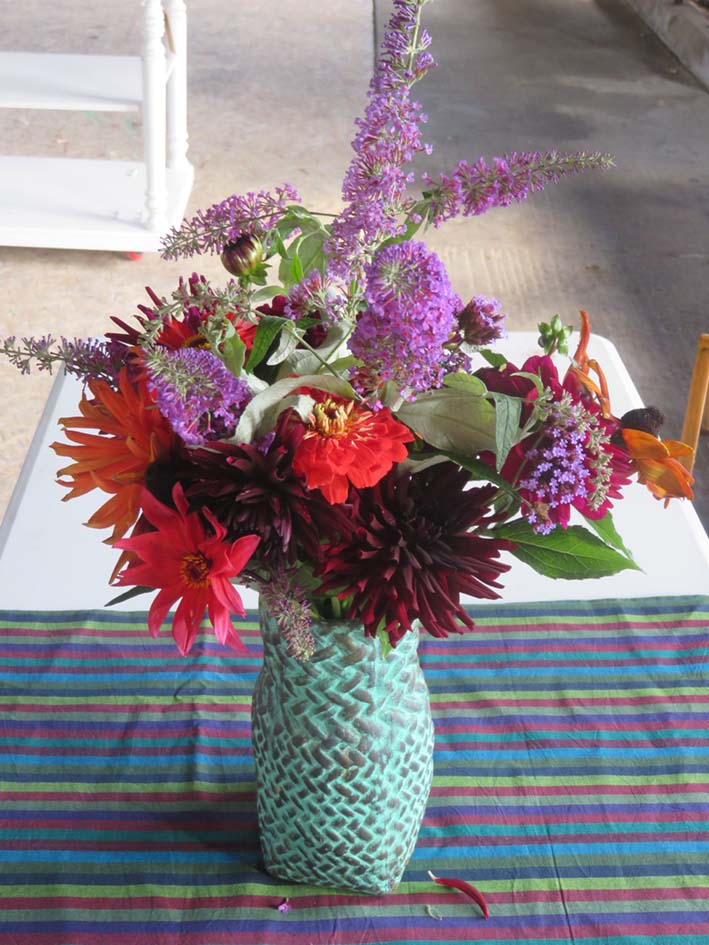
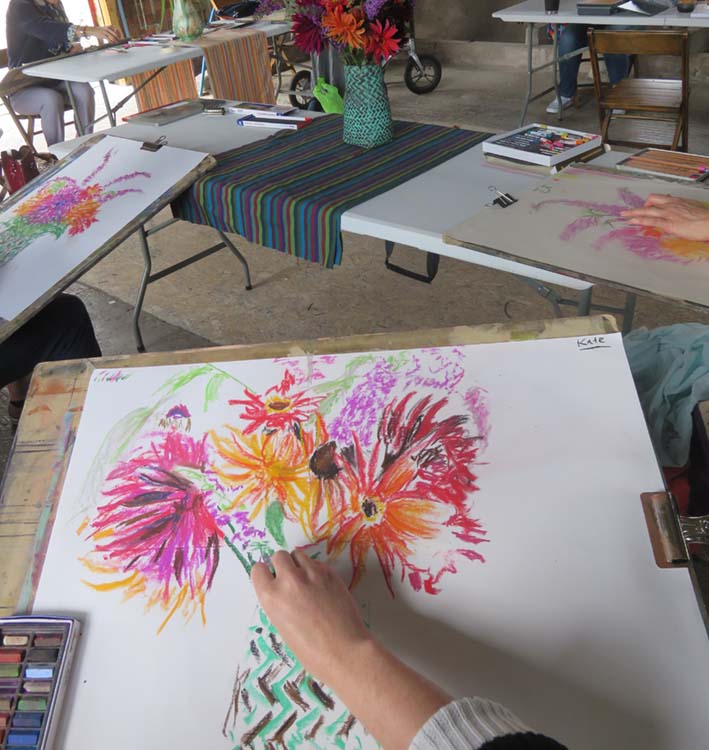
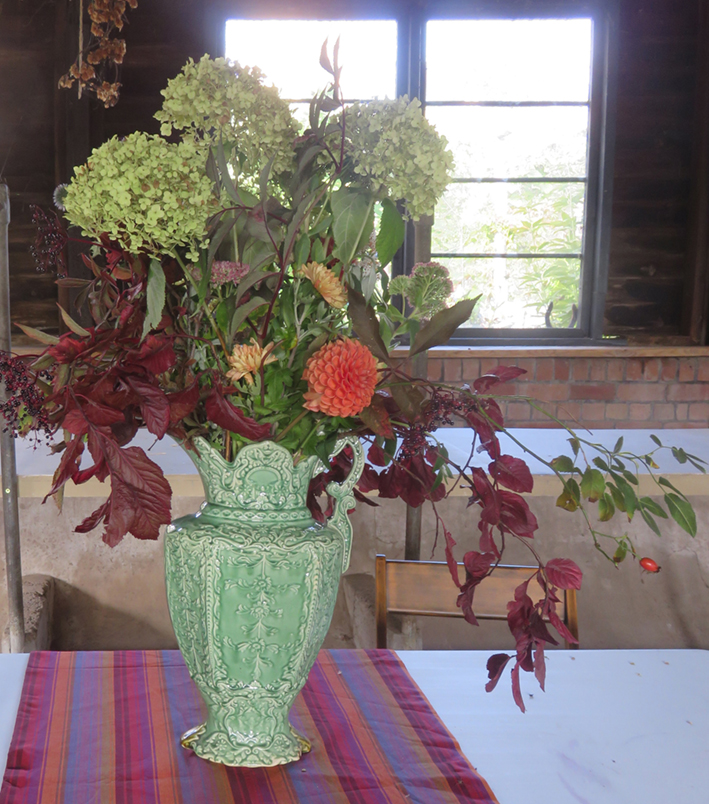
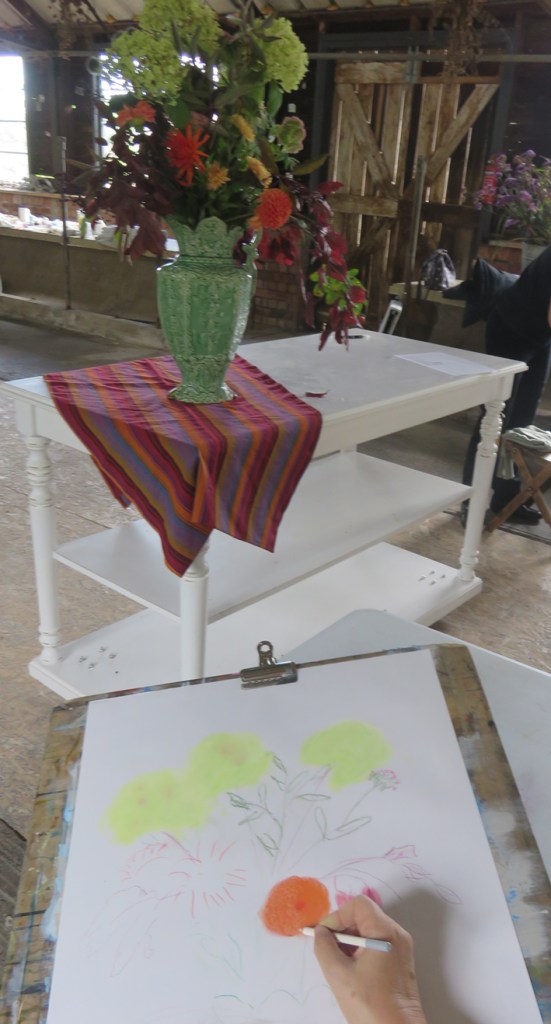
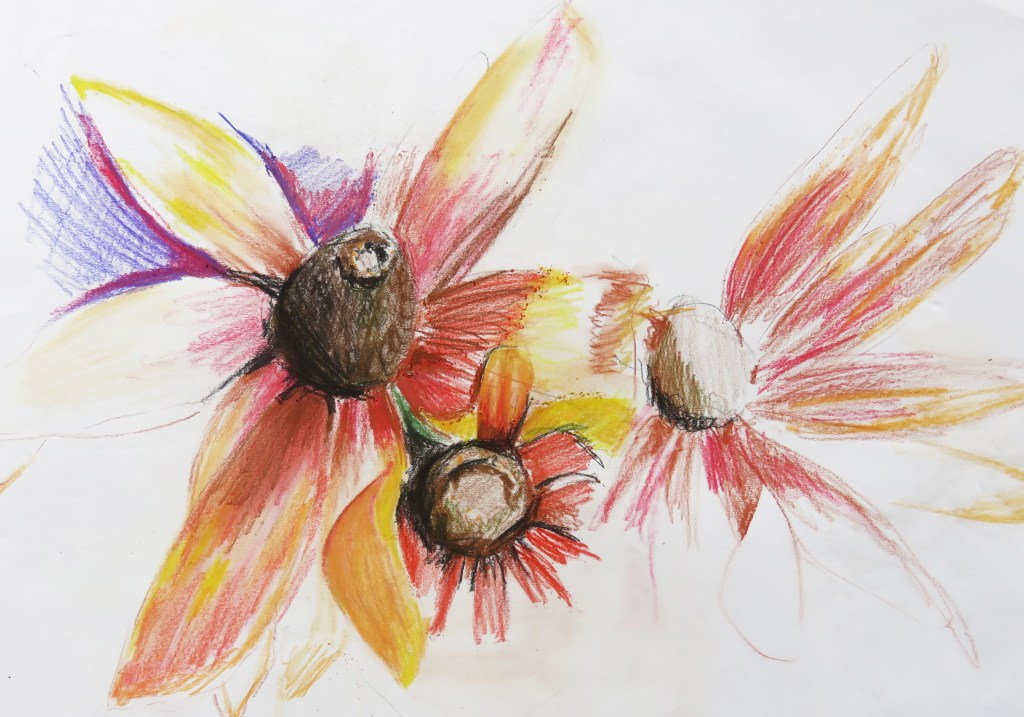
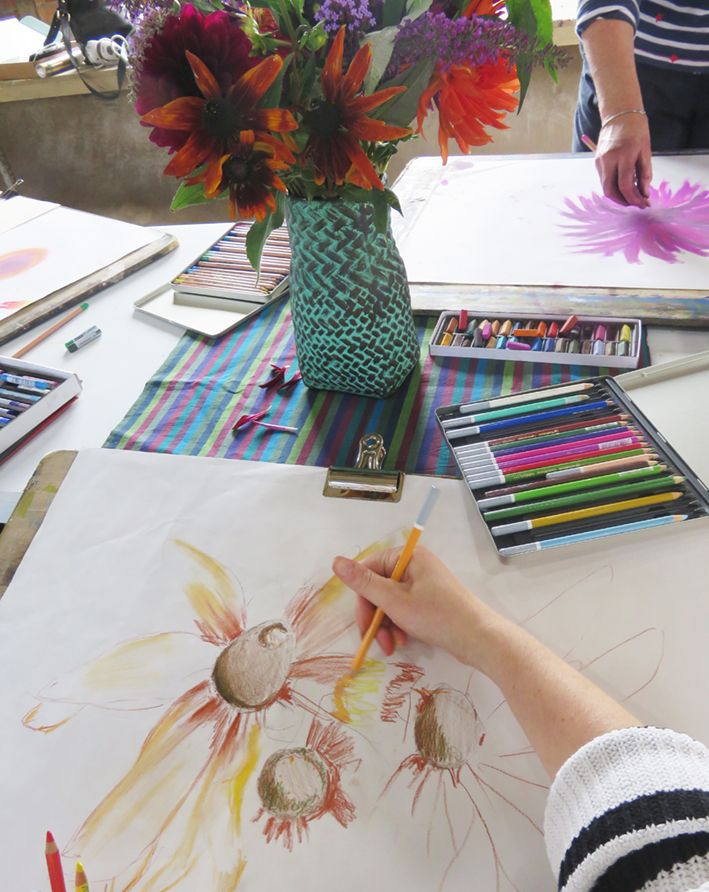
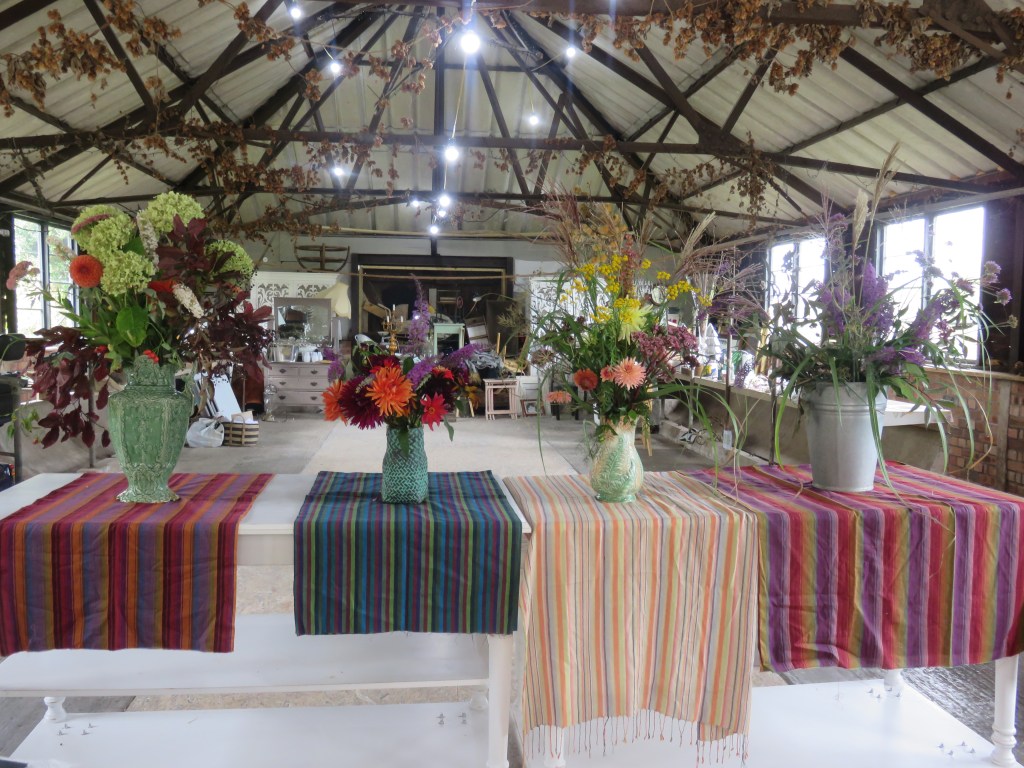
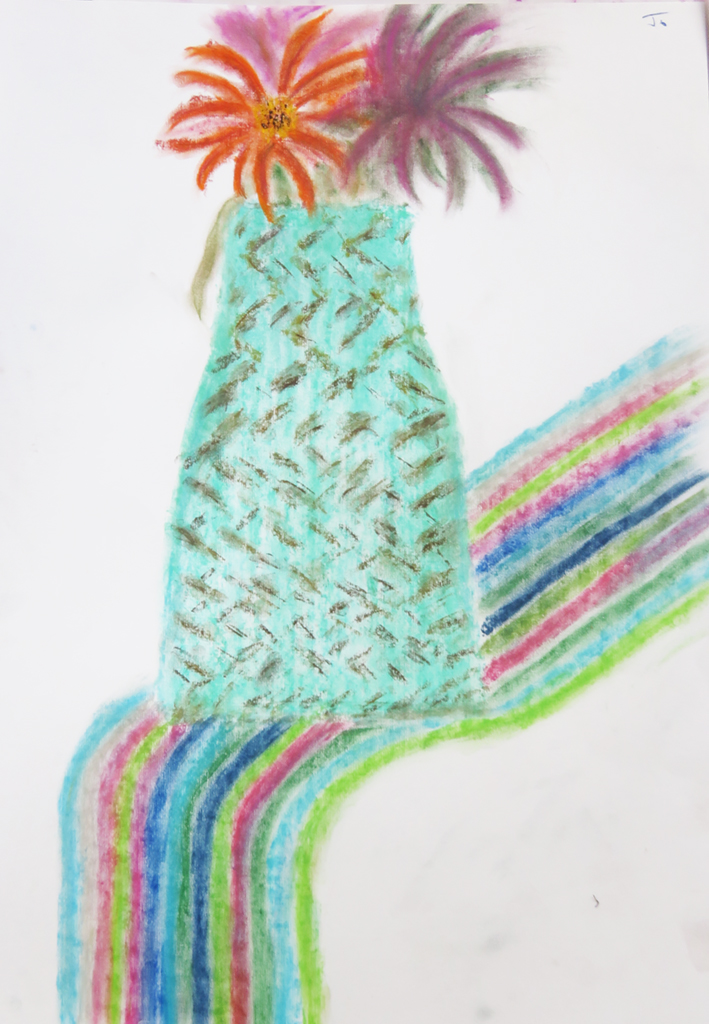
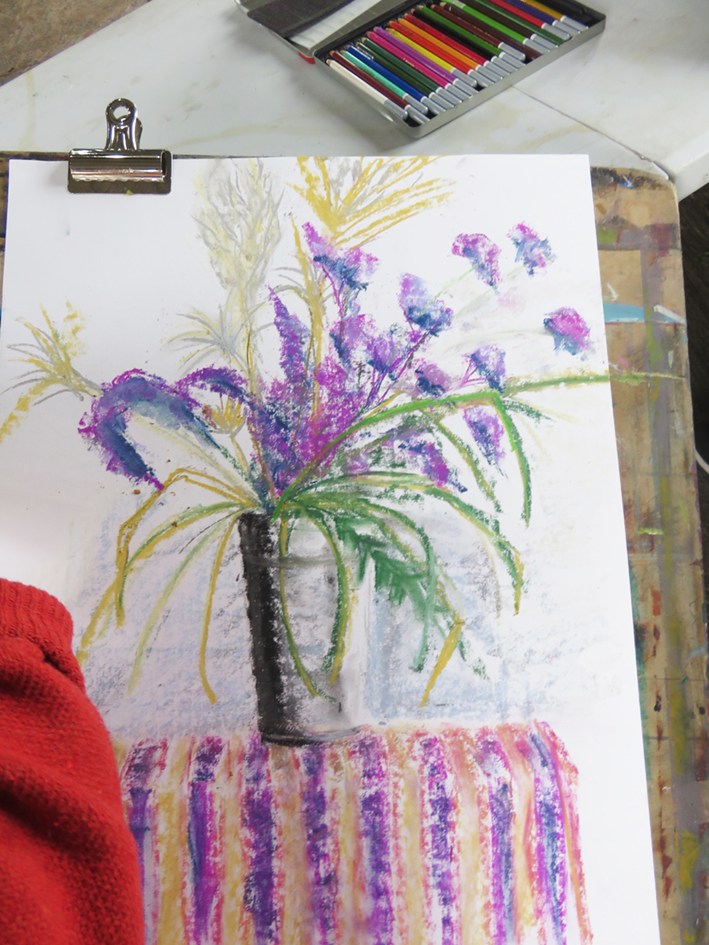
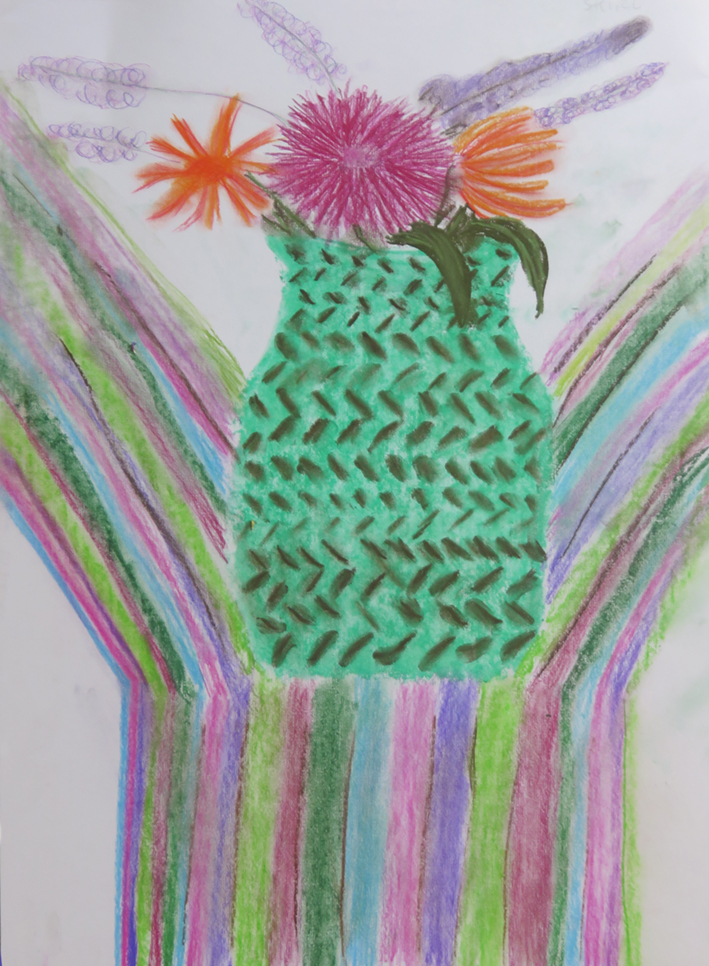
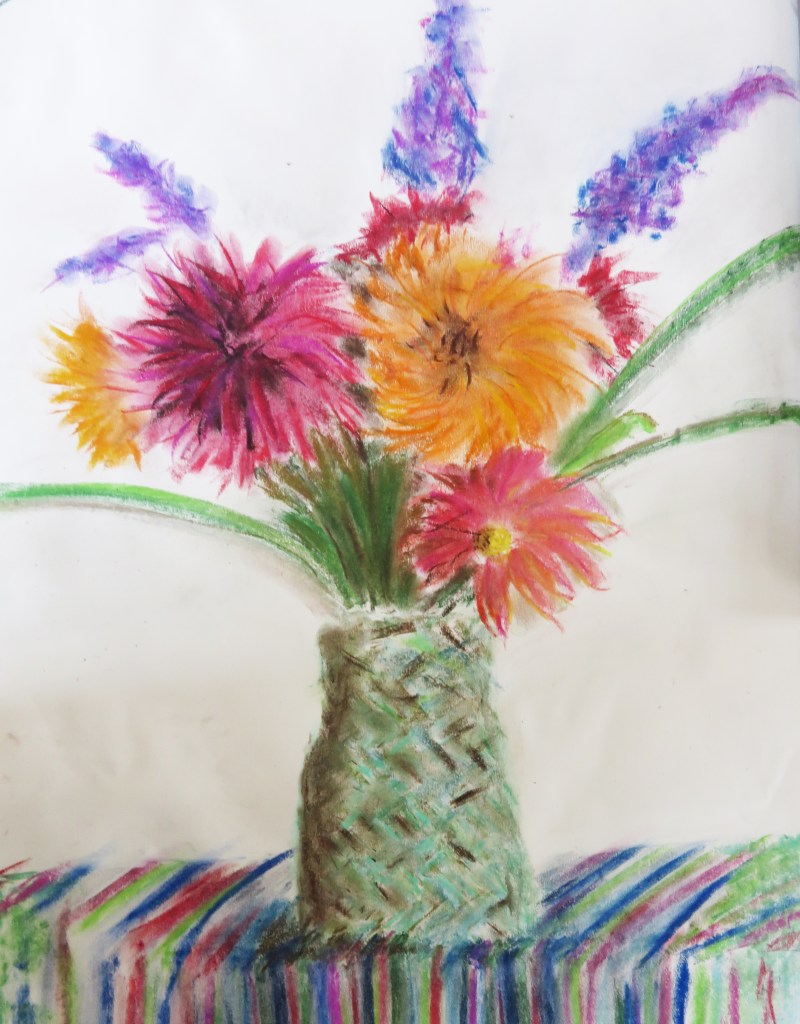
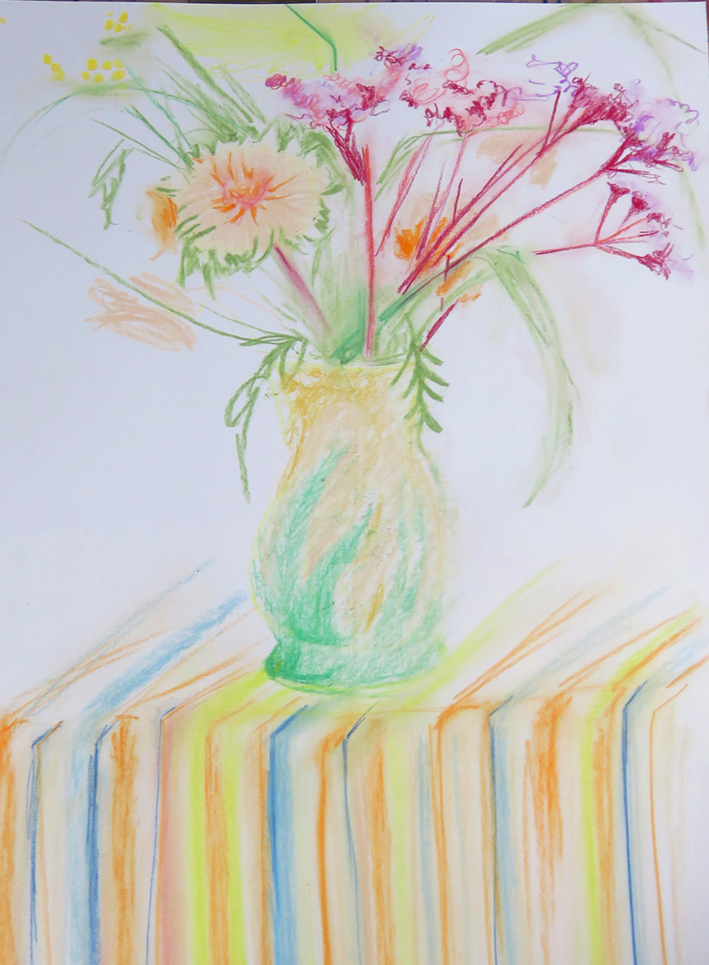
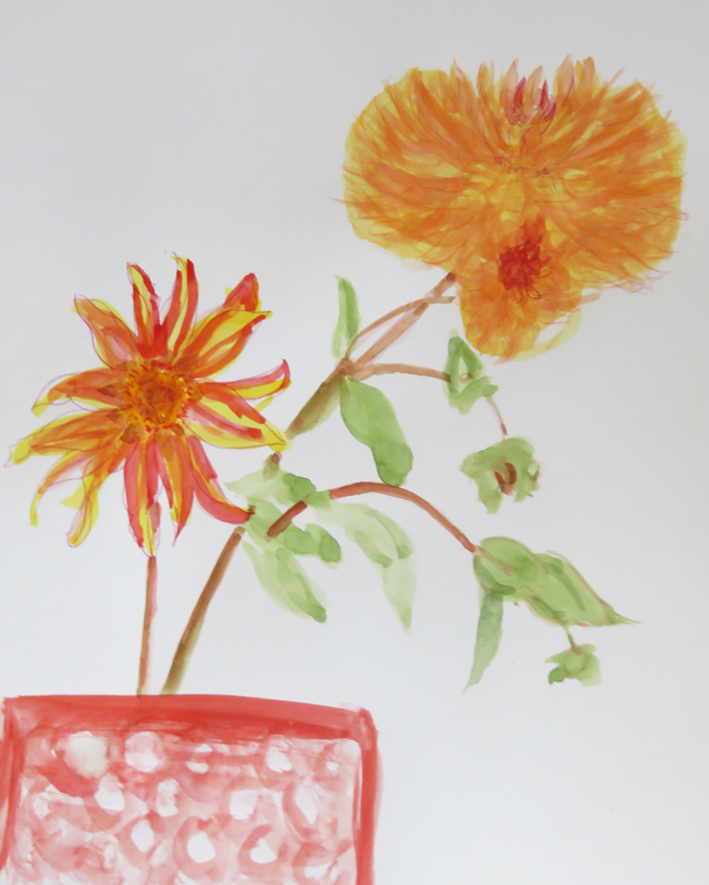
Following on from the successful Drawing Day in June at Court House Farm The RWA ( Royal West of England Academy) Drawing School organised another Autumn Flowers day. But due to the ultra dry summer the flowers were not so abundant as the spring crop…my solution: select just 3 big bunches of different flowers in vintage vases with a toning striped runner and everyone would be able to draw all 3 during the day

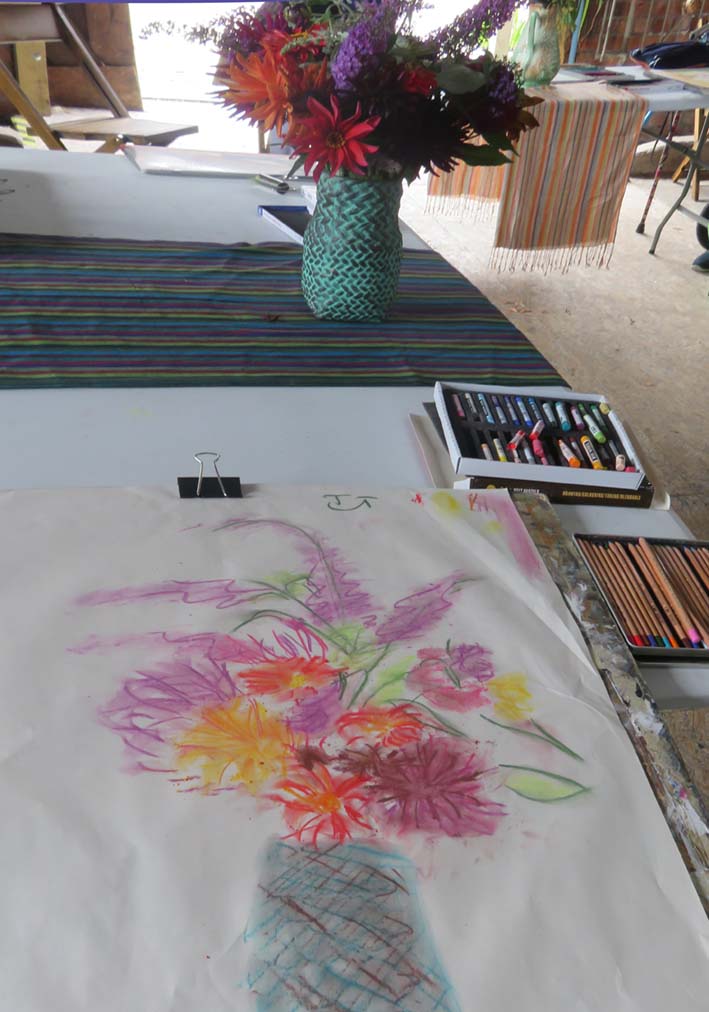
In at the deep end. I asked the class to choose a table to sit at and draw the whole display in front of them…in 20 minutes!

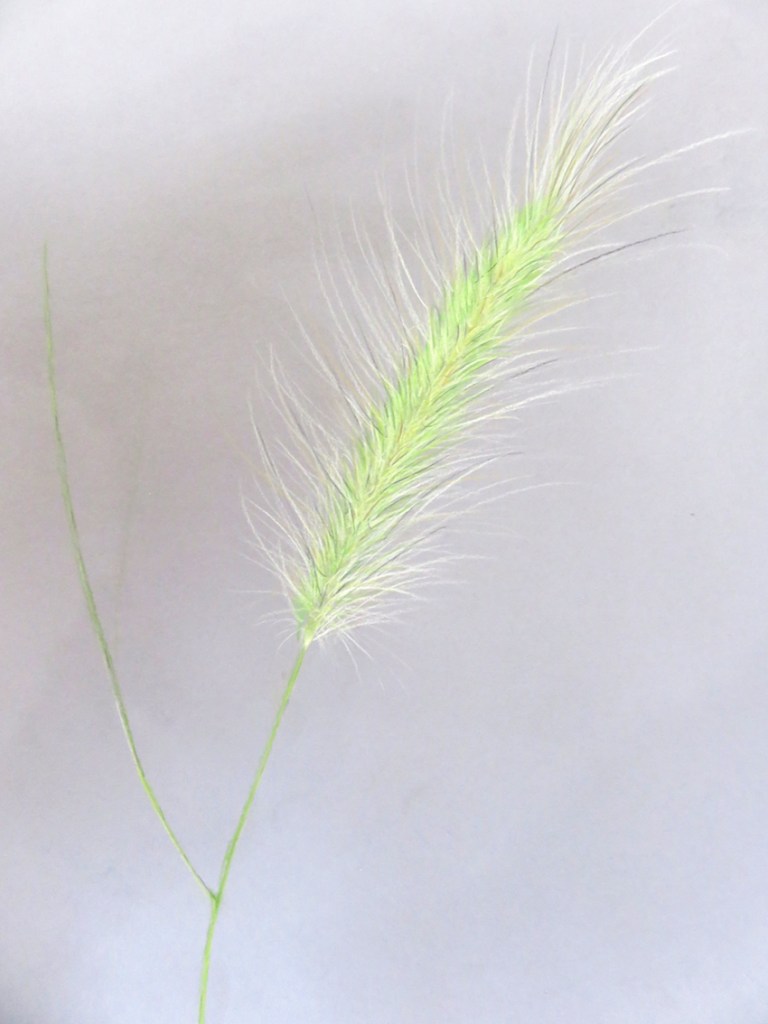
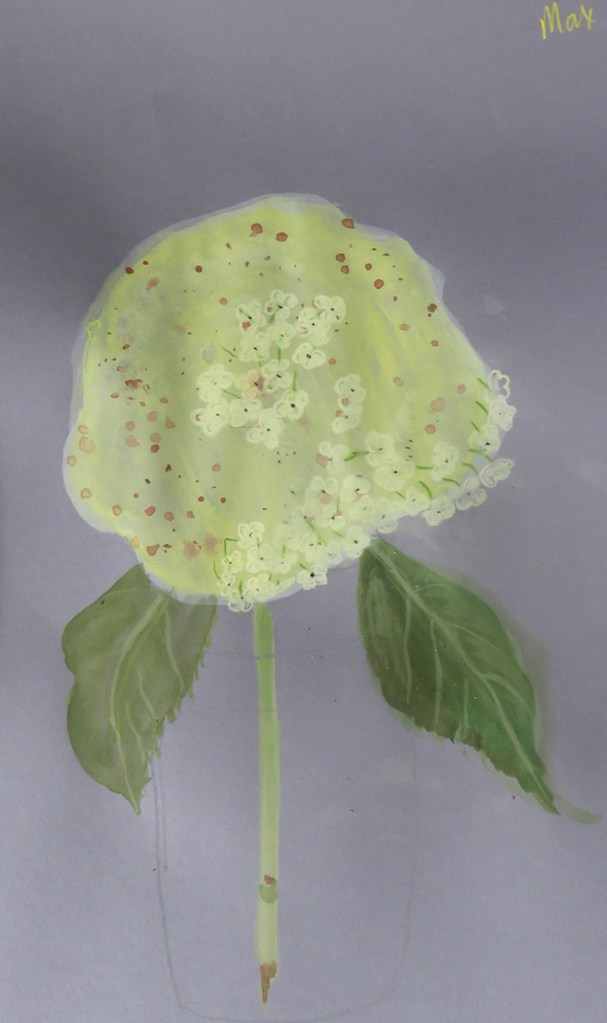
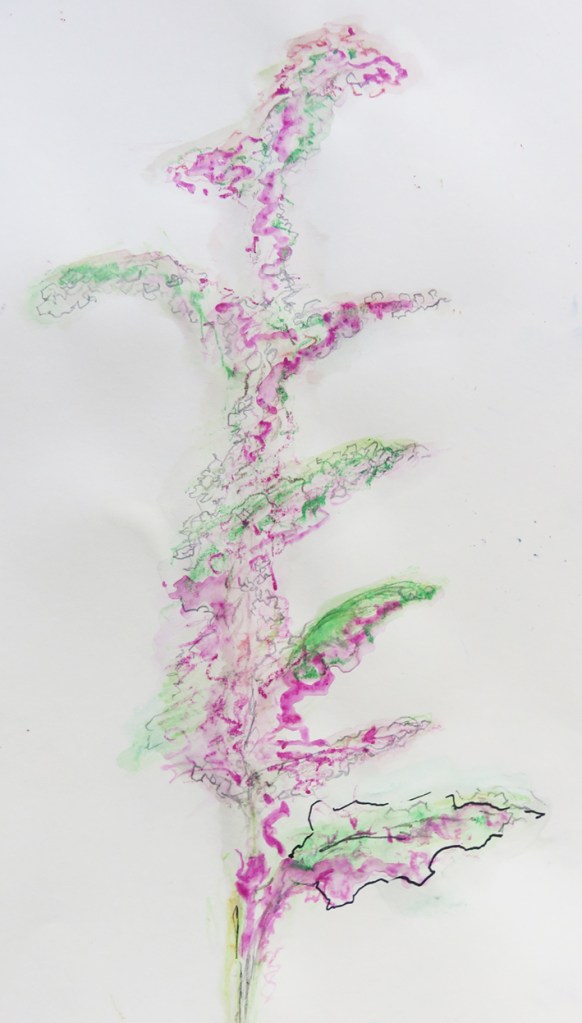
Tall and elegant autumnal shades…and in contrast below – hot clashing colours!

and then massive and majestic….

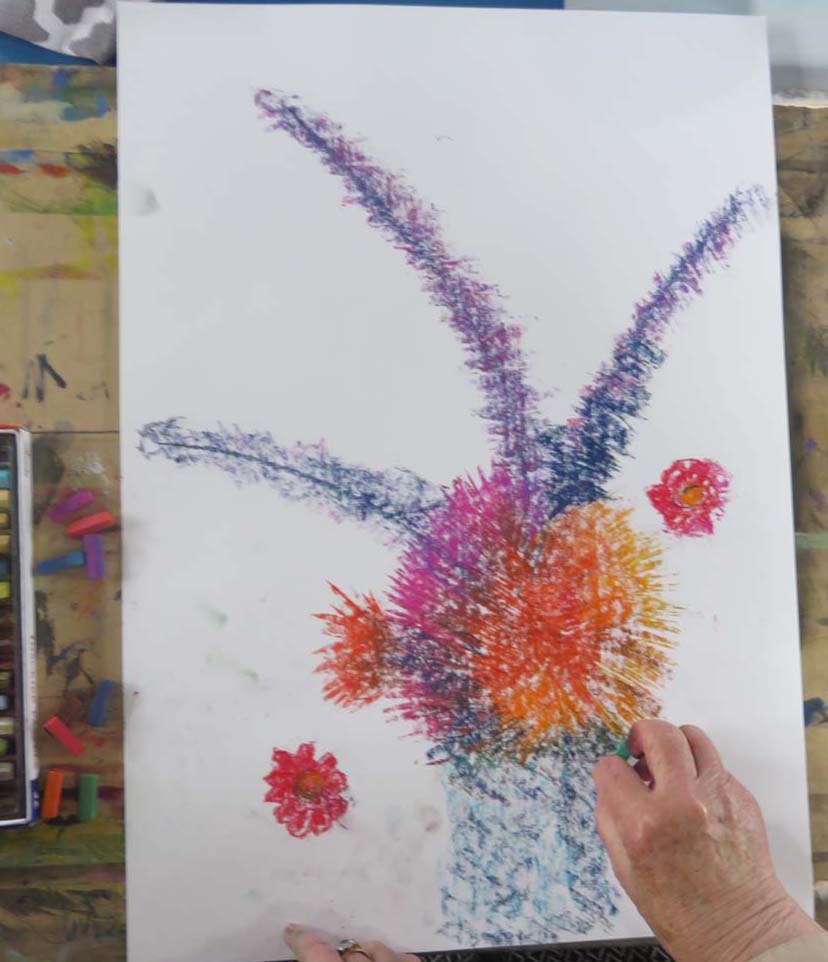
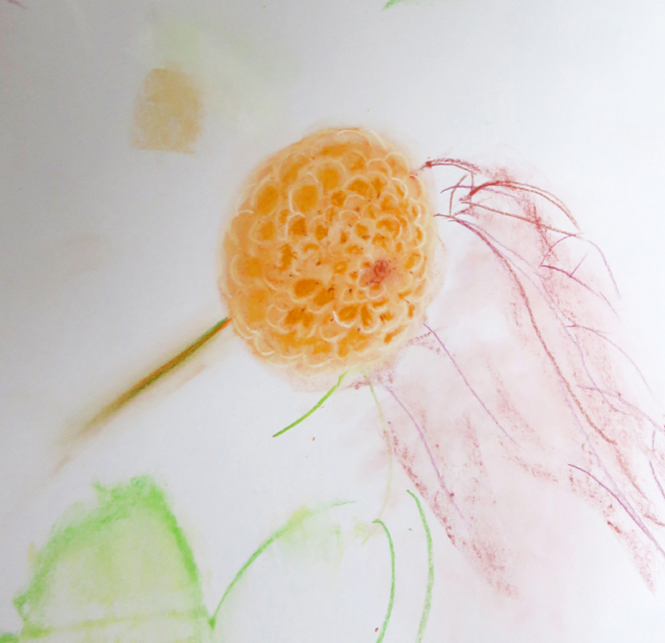
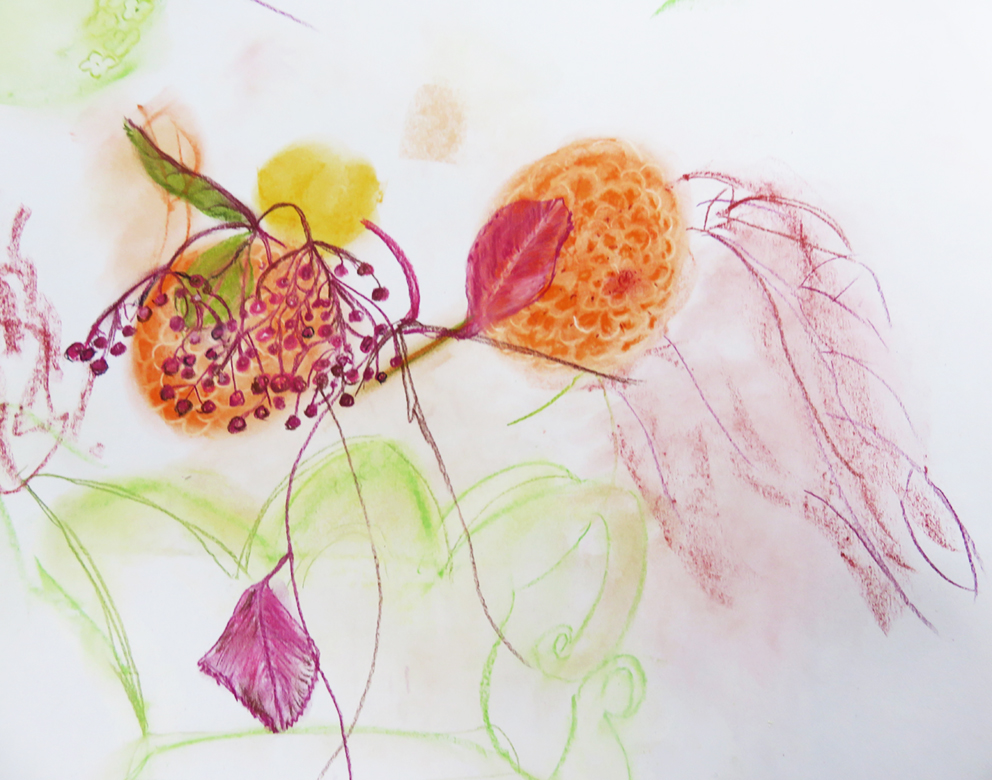
only 2 people attempted this vase and were somewhat overwhelmed by the abundance! So we started again by choosing another section of the bouquets and making some rather more detailed drawings – now things were starting to develop.

BUT so far no-one had even attempted the fabric specially chosen to be drawn with the colours already used in the flowers……so after lunch I changed things over and added another arrangement – now we start drawing with the fabric!!!!

And in the process we even got vases.

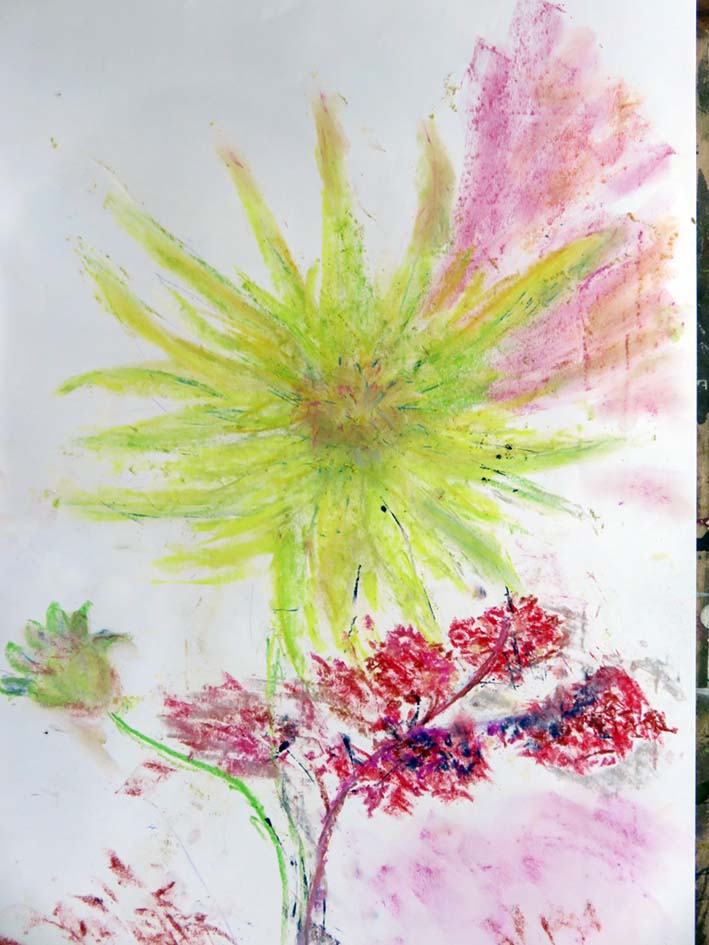
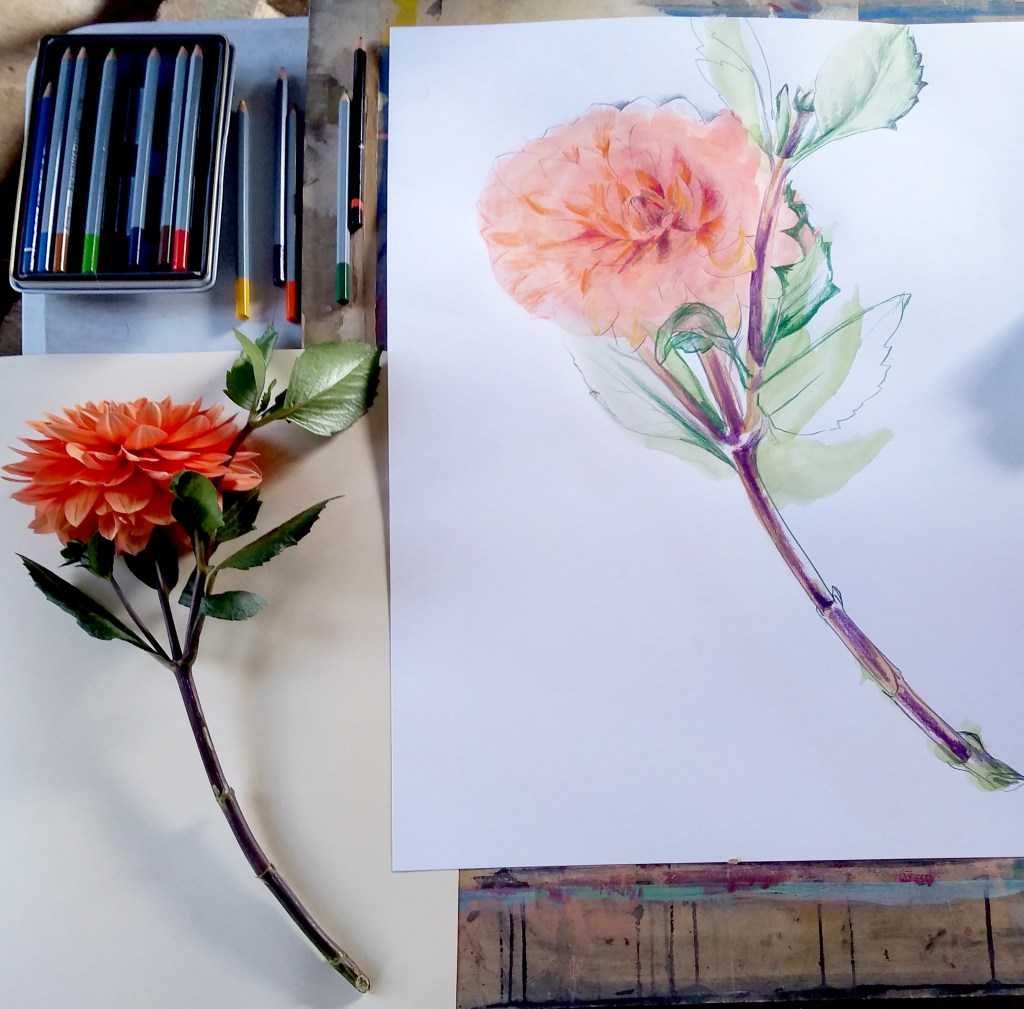
For the last session I relented and asked them to choose just 1 flower/branch/leaf from all the masses of materials and to place it next to their drawing boards and make a study – I usually start my drawing sessions like this – and I may return to this method for my next drawing flowers session in November….

Rainbow Flowers – after winifred?

Here I am on my birthday in July with the posy that would change my work

For several months, since March, I have been working on a new stitched sky – an image combining 2 photographs, the first of a wonderful brooding grey sky with different shades either side of the bow, and another of Denney Island in leaf in the middle of the Severn Estuary, they were made during different spring-times and are rare sights so I wanted to capture them.

As usual I got going quickly and decided to work by drawing onto photographs of the emerging work using photoshop…well it partly worked – but really it is always better for me to work directly from my drawn ideas. Nevertheless I quickly layered fine silk chiffons onto the sky and sea areas adding several layers of shot cottons and a brilliant green silk georgette for the salt marsh – to enhance the curious green foliage on Denney Island

I worked on the piece for several weeks, well 2 months an and off, putting in and pulling out the rainbow – it proved hard to get it to glow but not become a garish boring band of colours: I wanted this rainbow to be part of the sky, not sit on top of it.

I was working at the same time on my patchwork room so needed some distraction from the finishing -off chores. BUT I was getting no-where with this rainbow , so put it away and started reading instead.

my favourite read was “My Name is Red” by Orhan Pamuk, as it is at heart a treatise on how “Persian” book illustrations where developed by different studios of specialised artists, and how trade with the West, notably Venice, brought in the whole notion of realistic images using perspective and observation of the real people and landscapes. I found several books in my shelves and spent hours just enjoying the exuberance of the work: I was definitely on the side of the symbolic flat pattern making of the illustrators – I realised that I was too hung up showing what I saw in the natural world not what I see in my head. I decided to add some decorative fabrics to my work and searched for some symbolic

I stated to realise that I could rekindle the rainbow embroidery with extra patterned fabrics – my old silk fabrics were dragged out and I found my drawings of Iris for the Flora Embroideries, she was the messenger of the Greek gods and of course the rainbow……things started to feel interesting again.

THEN I received this lovely posy on my birthday from my friend and colleague Jane-Marie Mahy she had bought it at Court House Farm and I drew it.

During my break from the stitched sky, I also bought a book about the wonderful paintings by Winifred Nicholson, “Liberation of Colour” – initially because of her interest in painting colour prisms, but it was the flowers and the looseness fo the paint that I admired most

and then it was so obvious what I had to do with the rainbow sky – embroider the posy and applique it onto the Kantha stitched sky….easy peasy – not!

above the initial embroidery coloured ground is painted onto a fine cotton fabric, checked for size before continuing to be stitched into position onto the stitched sky.

And here it is – the finished work ” After Winifred” stretched and about to be bound with velvet ribbon and off to the printers to make an edition of giclee prints for sale in time for Court House Farm’s open garden event, Art in the Garden where I am exhibiting and talking about the making of the Kantha Stitched Skies for The Portishead Art Festival. www.portisheadartsfestival.co.uk.

Drawing Drawing Drawing

I use drawing to express myself to myself. I feel that Drawing is the language closest to my heart; my second and most used language after English, followed by the most difficult to have mastered, Stitching. It is the foundation of my chosen discipline of hand-made stitched textiles and almost all my work starts with a drawing, sometimes just a scribble or as a written note, but it will be expressed as a drawing with enough information for me to proceed.

Scribbled thoughts are put down as lists for skies I see when waking up, and on whatever is to hand. The imagery is enough to lead me to another drawing…..

Very occasionally when I work from photographs, I will start an embroidery without a drawing – and it always leads to difficulties as I am torn between the ‘real’ thing as recorded by the camera and my initial vision of it. Basically the drawing is the first edit of the image, it concentrates me on what was important when I first took the photograph, but the camera sees everything and I get seduced too easily by captured colour, and sometimes the colour isn’t the same as my memory.

Below are various single pages from individual sketchbooks – the top 2 are observational drawings taken directly from life, the red in pen and ink is a detail from of my garden, the iris was from a friends garden. The the others are all working /design/ research drawings, (with added photographs of finished brooches)

I keep all my working drawings in a series of books that go back some 40 years! The types of drawings collected in them range from a scribble on the nearest available paper, as above, through to straightforward observational drawings that then get re-arranged or even collaged together

then eventually the detailed working drawings are assembled and kept together, and accompanied by any other research materials.

The images above are open pages of my own research books from different long term projects, they really show the way my mind works, both visually and mechanically.

The 2 pages below are anemone flower drawings made from photographs in a garden magazine many years ago for my Flora embroideries, they have inspired many many different pieces of work in a variety of materials; good drawings have their own energy and life.

a few of the many different works that have been generated directly by the drawings above.

The images above are of vitreous enamel dishes and a silk applique with a machine stitched drawing that plays with the idea of anemones, another name is windflower.

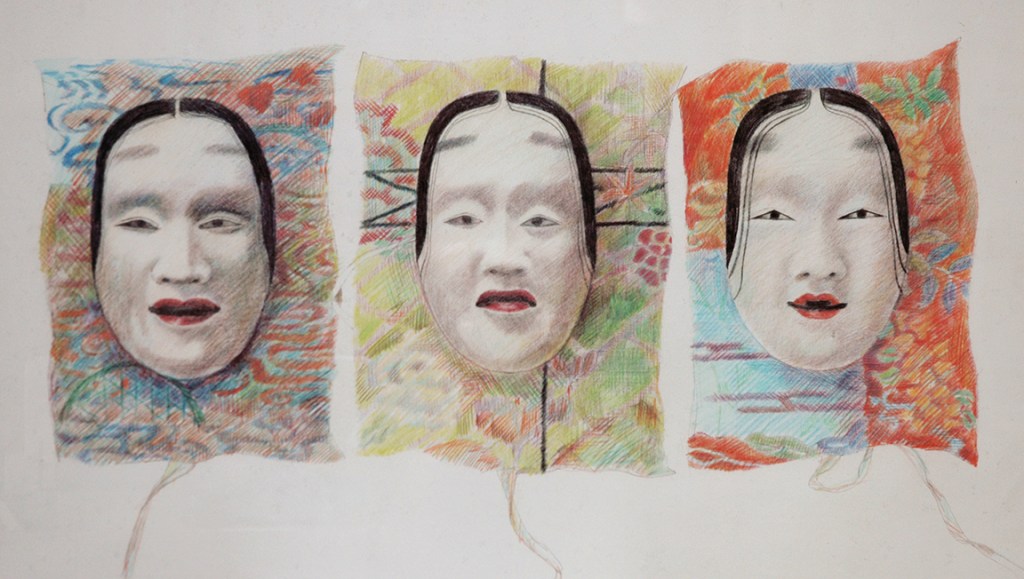
Occasionally I do make finished drawings ready for exhibition.

Three Noh Masks: crayon drawing on paper.

but somehow the stitching seems always to get in on the act.

Sanderlings flight postcard: paper, crayon, silk.

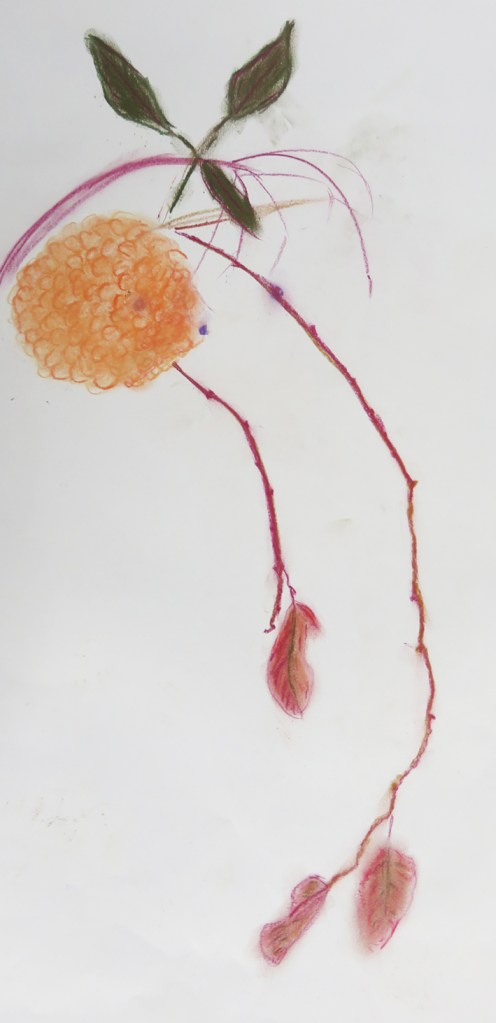
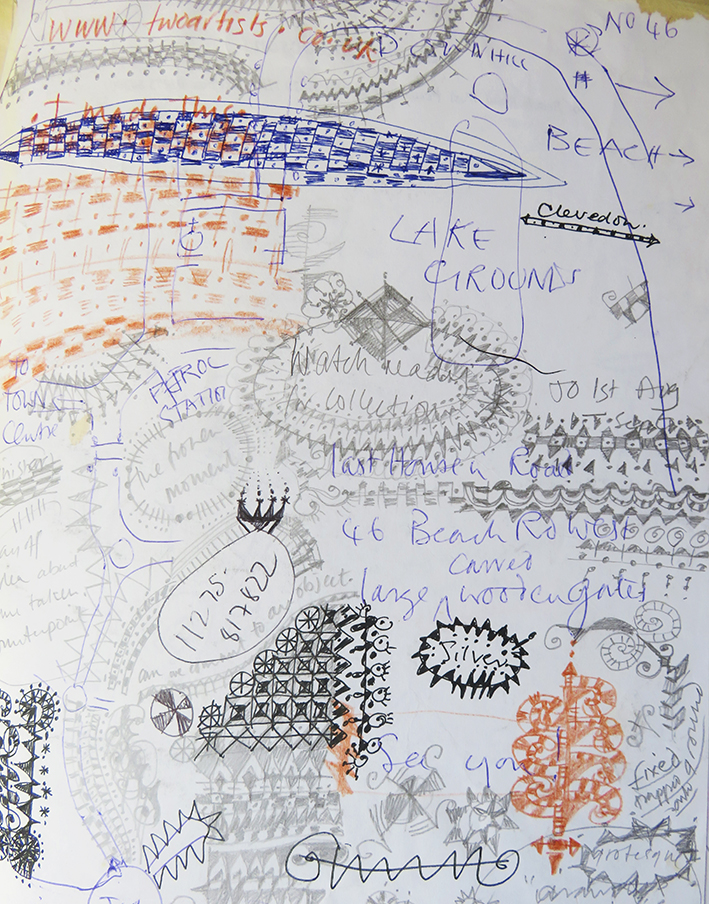
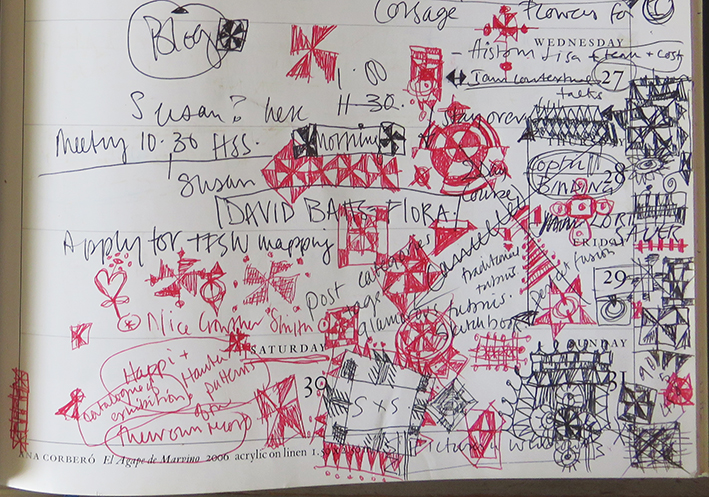
and here are I suppose my most personal drawings ( sad isn’t it) that just arrive onto any page near me, usually when I am talking on the phone to friends and colleagues, and sometimes prospective clients but always when i am fully engaged, they do not arise out of boredom. What is very strange is they have never changed over all the years I have been making them…

jngnhfv