dog quilt: SERENDIPITY

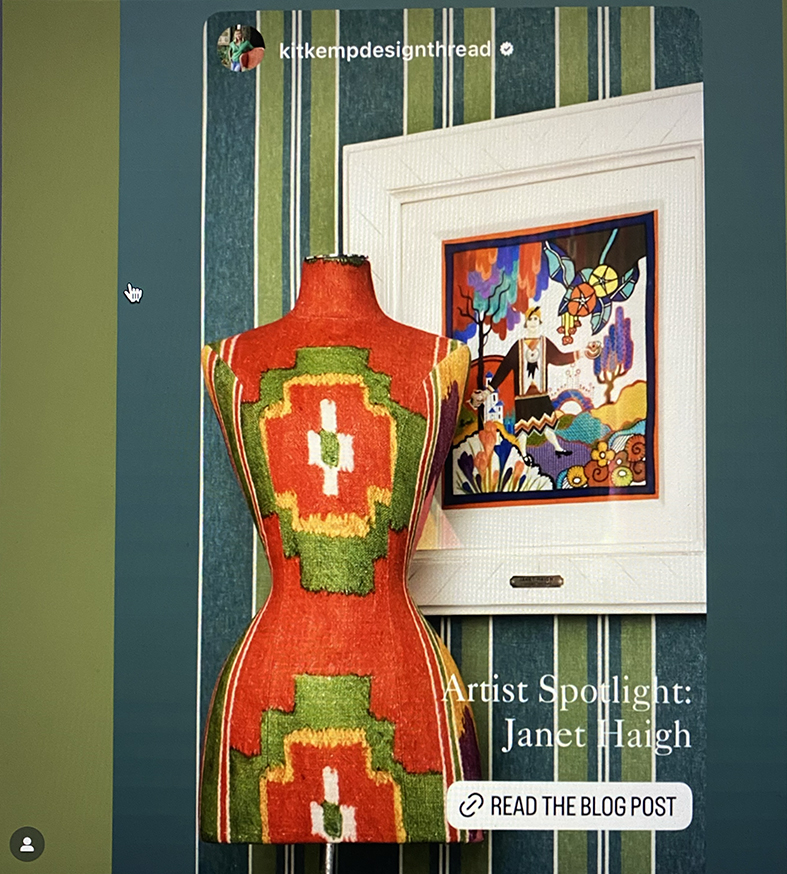
Strange how sometimes things come together: I was contacted, out of the blue, by Marcus Wells at Havilland Designs to see if I undertook commissions? He had framed some of my earlier work (embroidered portraits of women designers) for one of his clients, the interior designer Kit Kemp, who, to my amazement, had spotlighted my work on her blog, showing the perfectly placed Clarice Cliff portrait and lots more. Now read on……

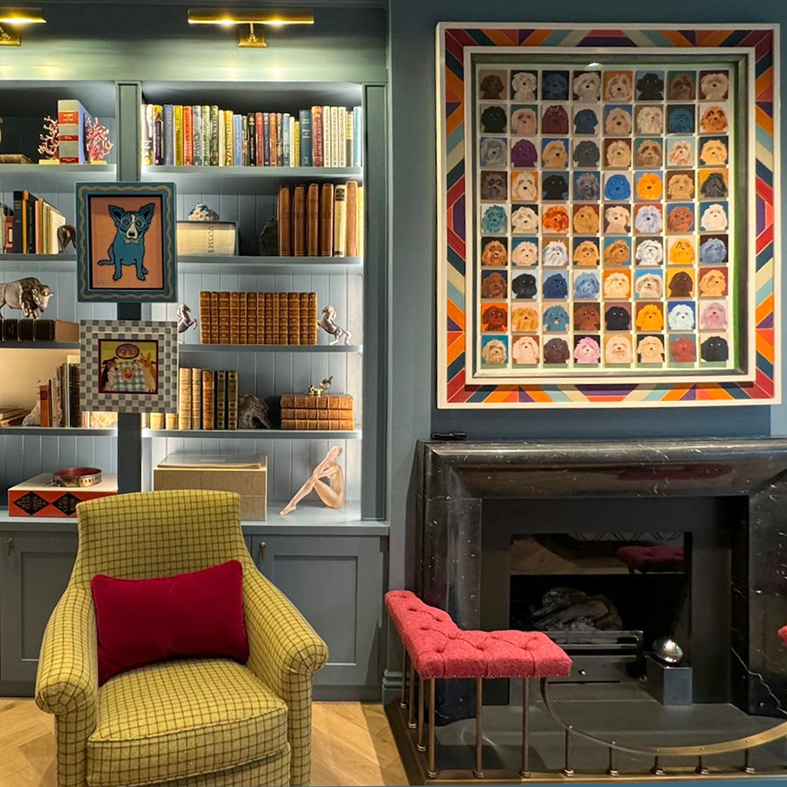
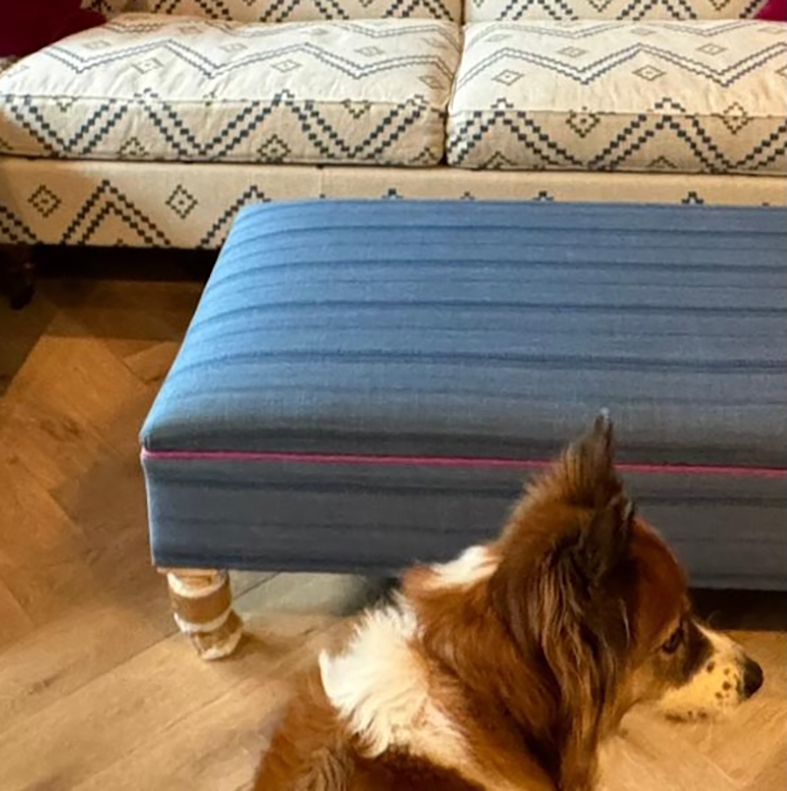
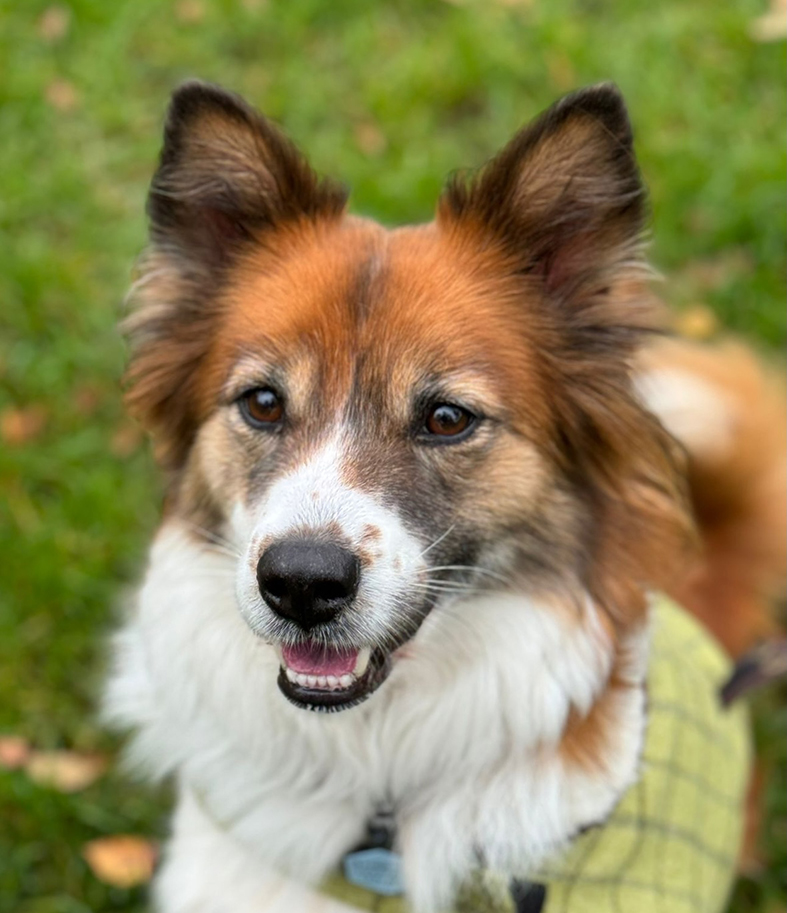
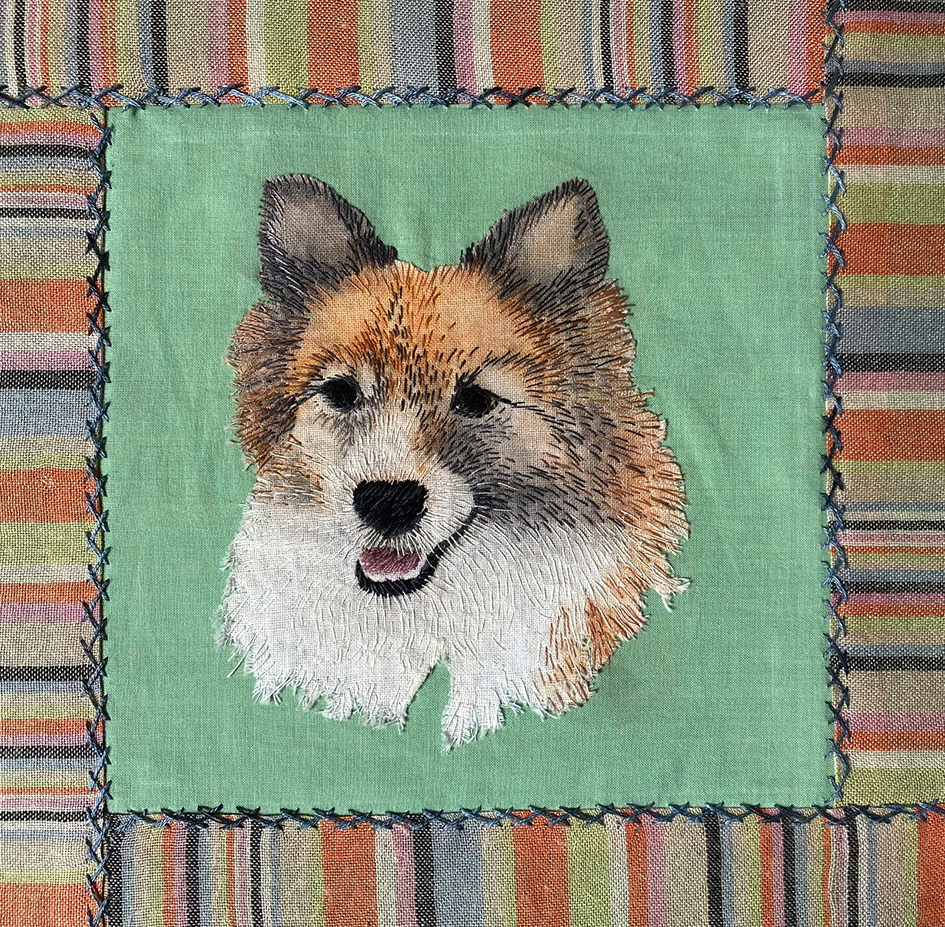
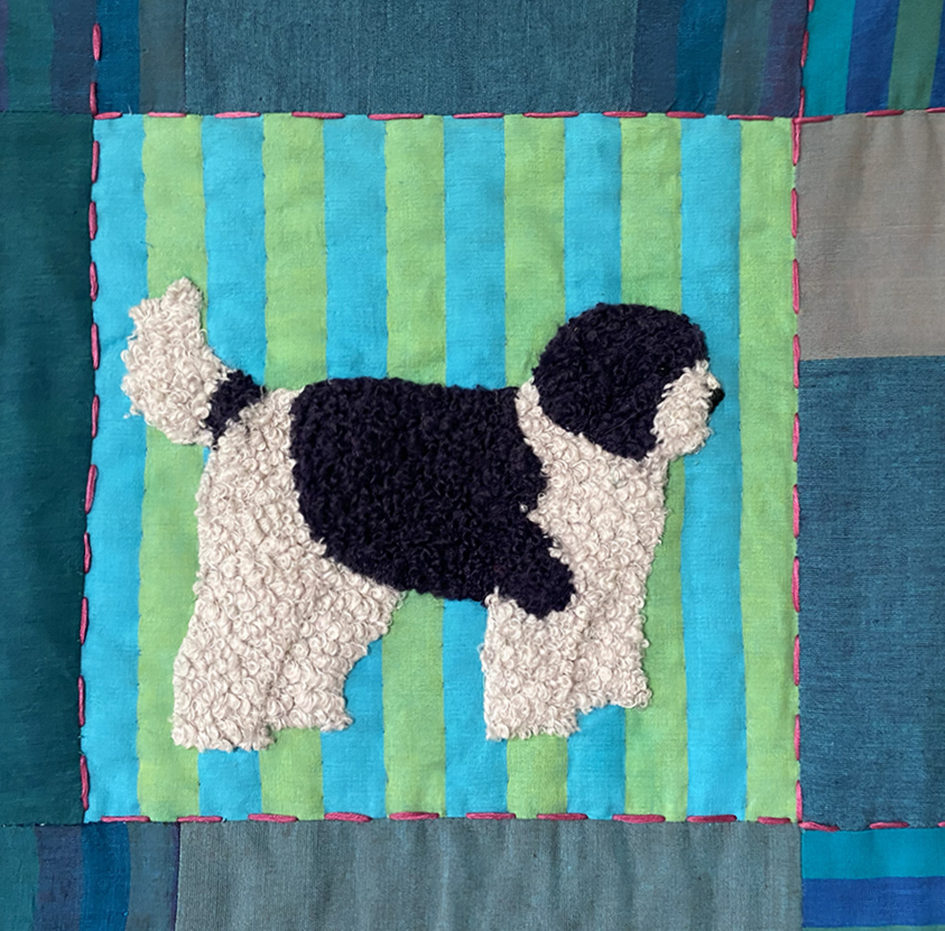
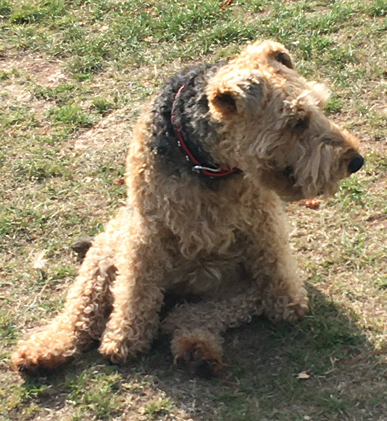
Marcus had a client who wanted a quilt depicting dogs. I am not a quilt maker but I was intrigued and asked him to send me details, sizes, preferred imagery etc. and an overview of the space where the quilt would hang. It was to be framed by Marcus and – no pressure – his client was another interior designer….He sent several images of the room that the quilt was to be hung in and I noticed a small dog’s head on one of them, I asked for pictures of any other dogs belonging to the client.

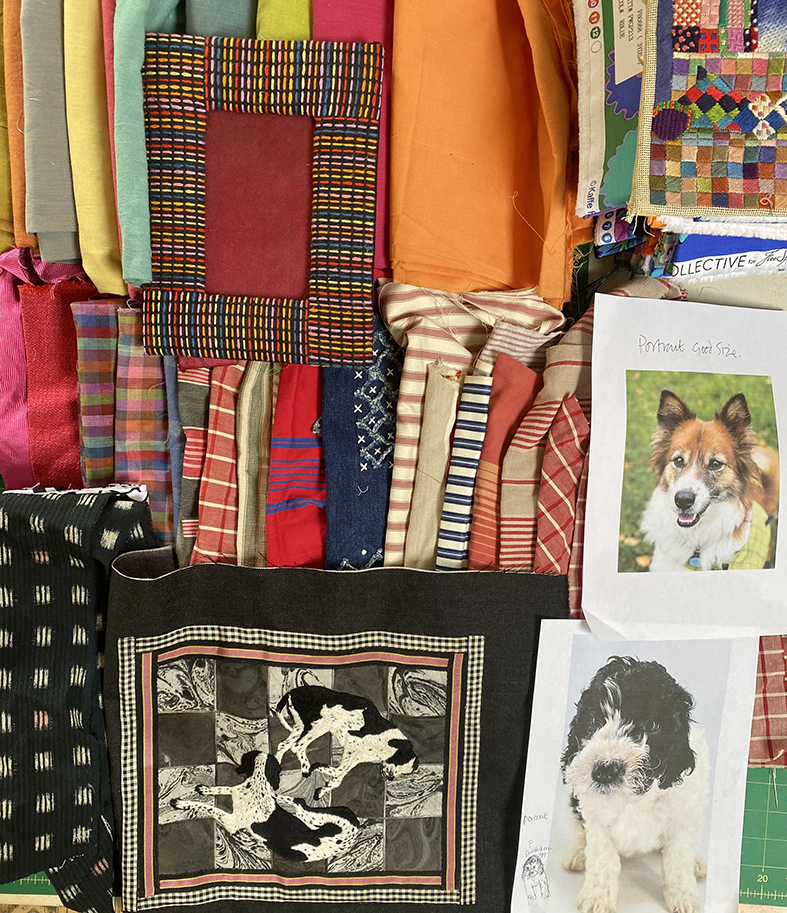
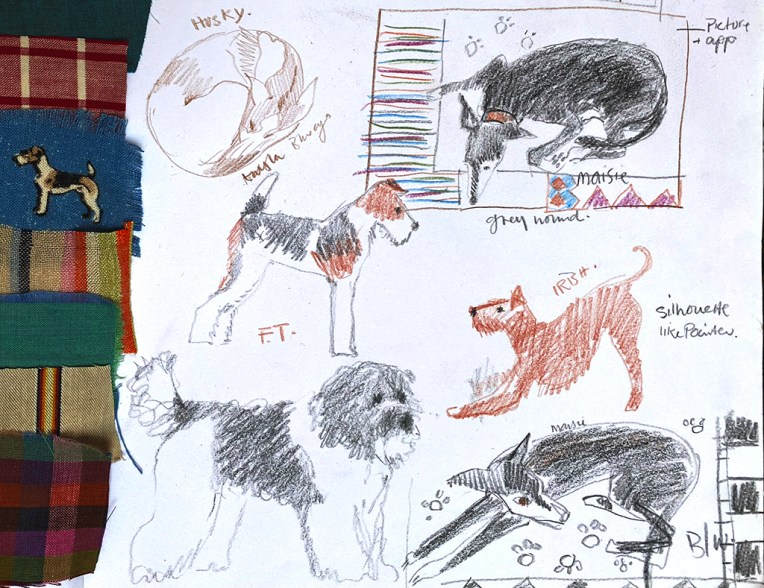
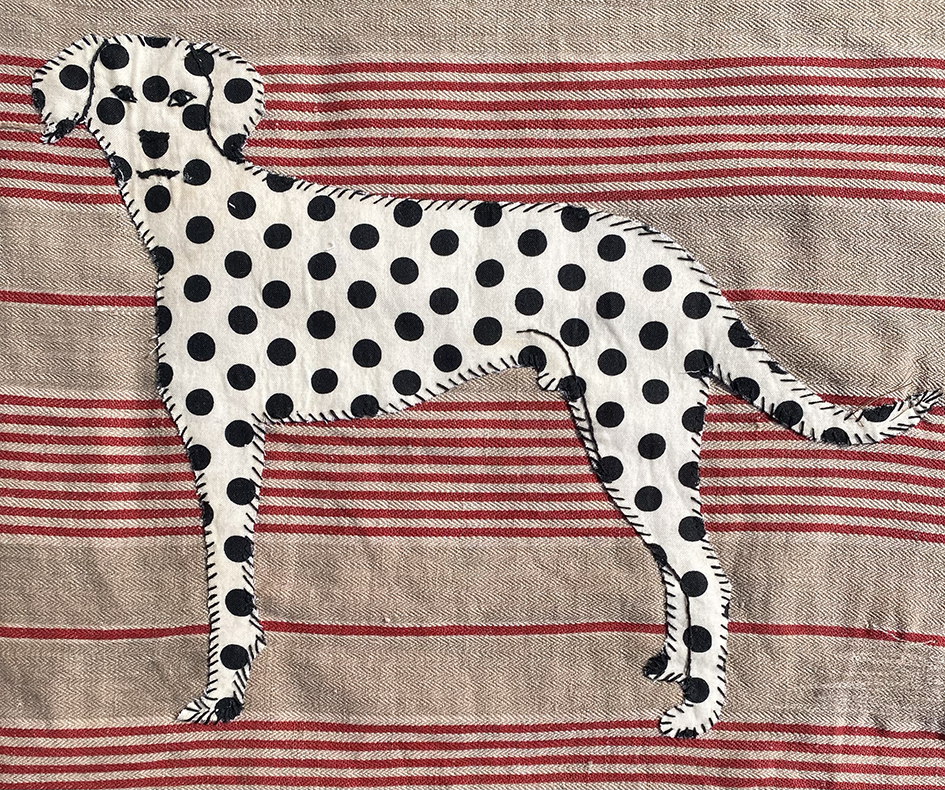
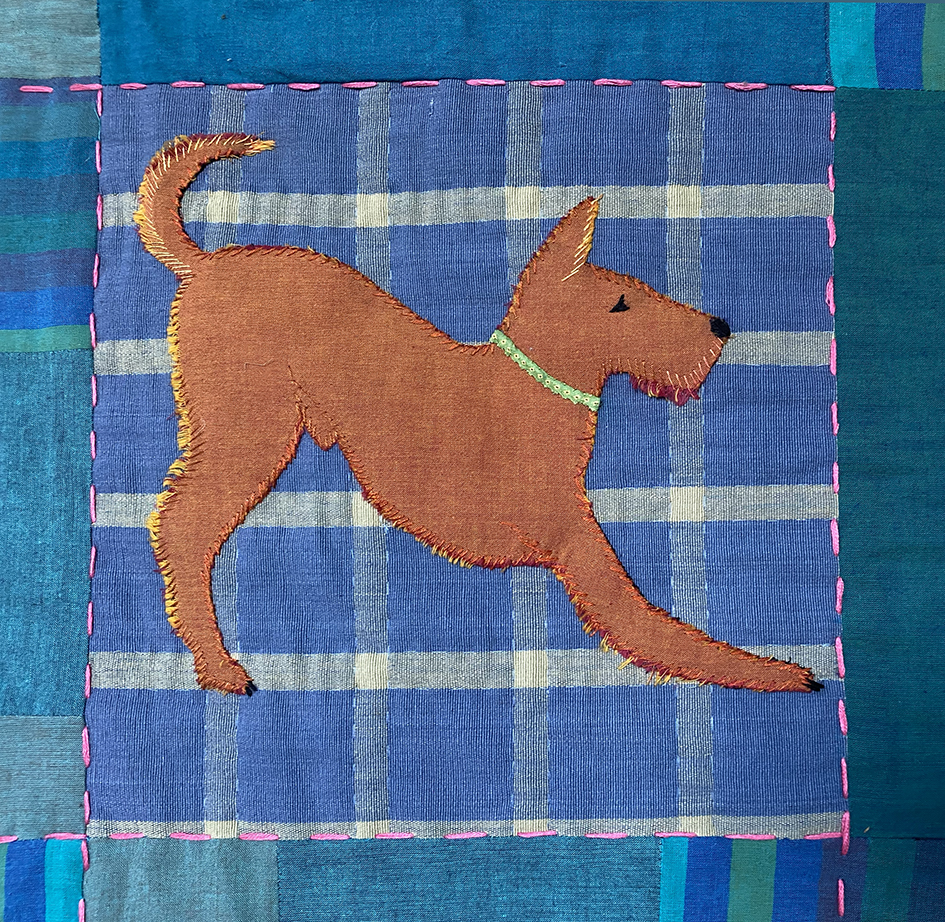
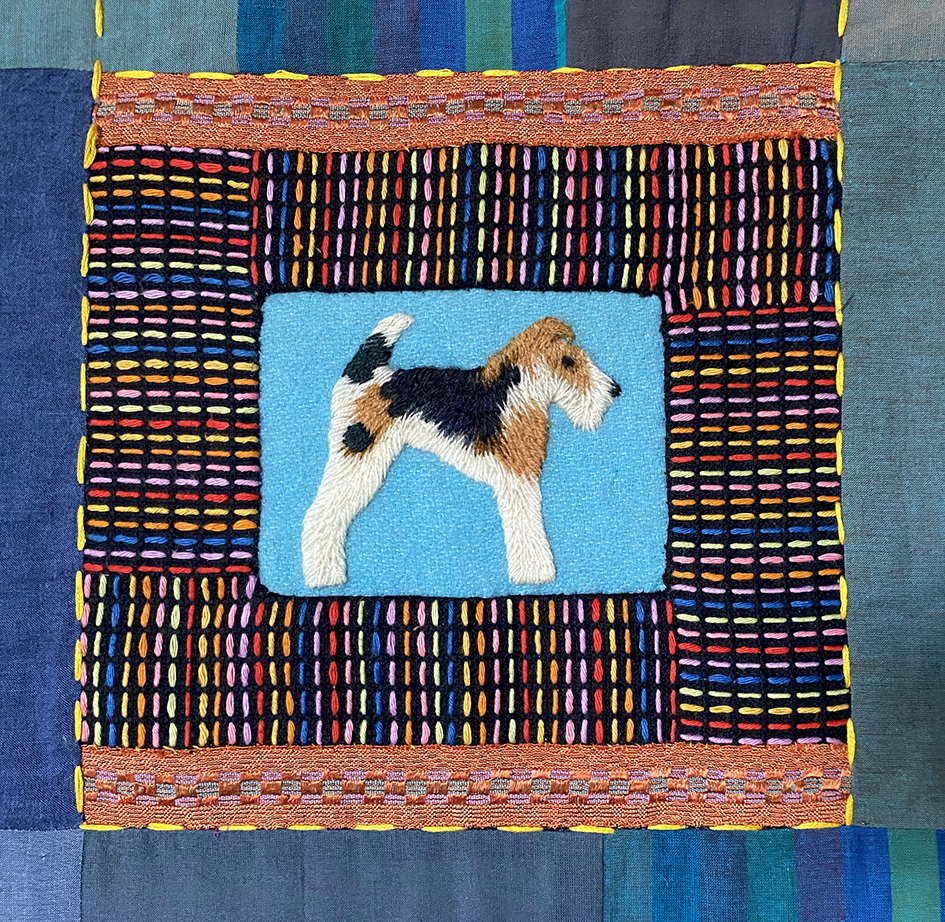
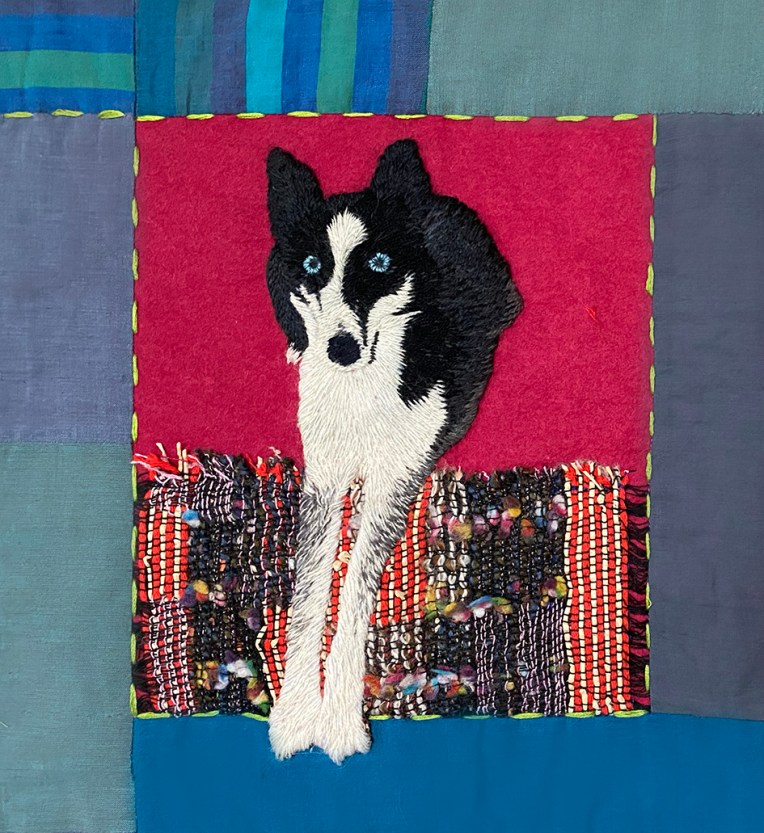
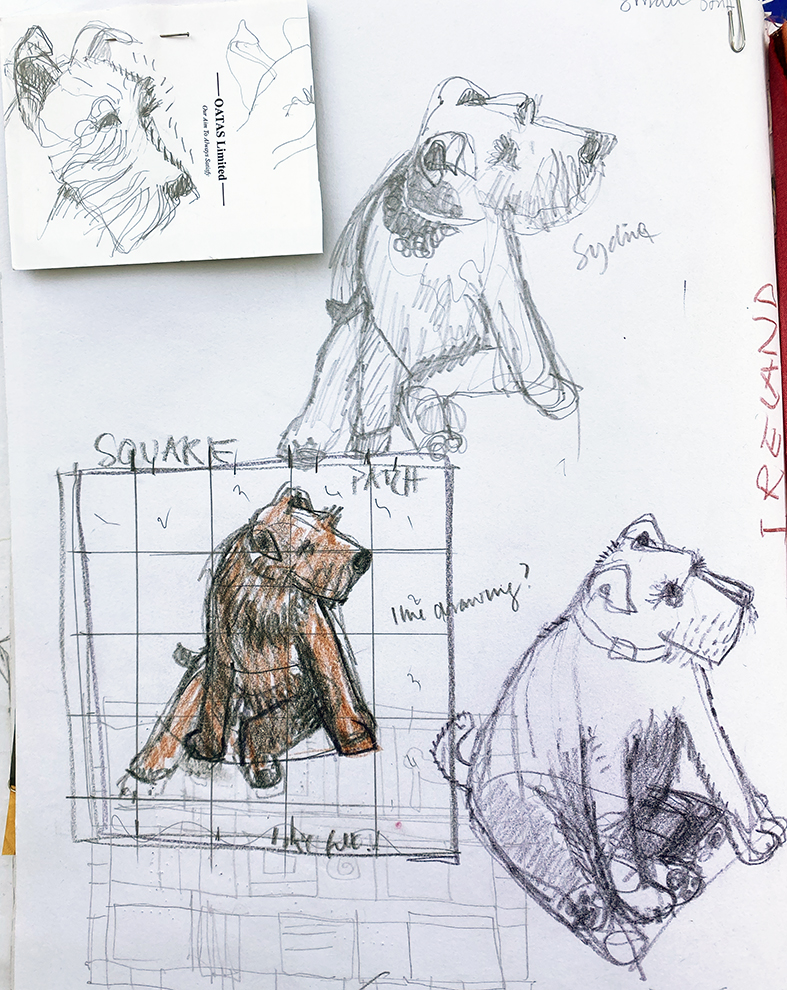
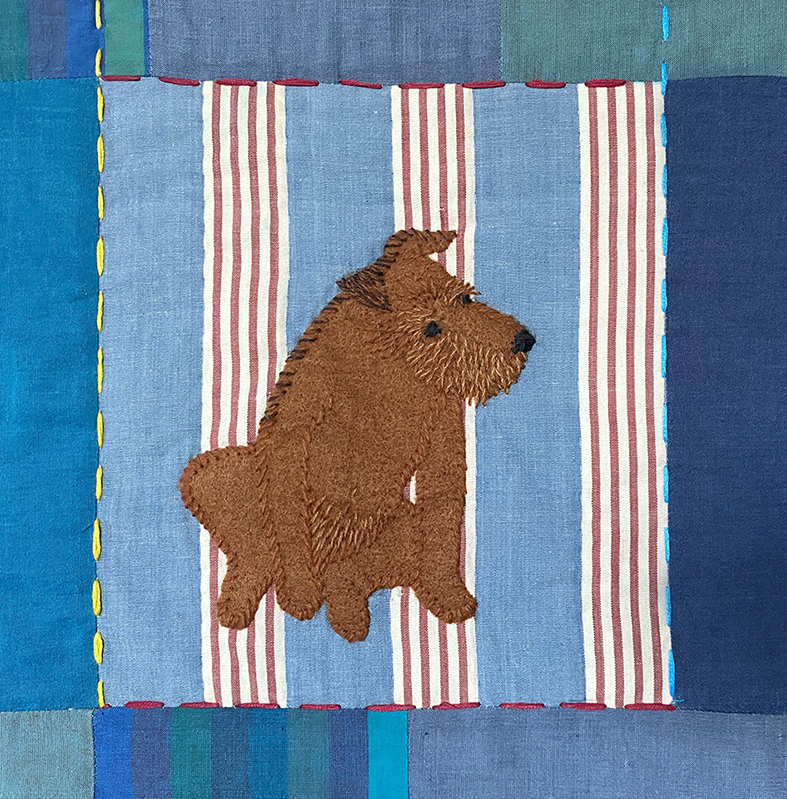
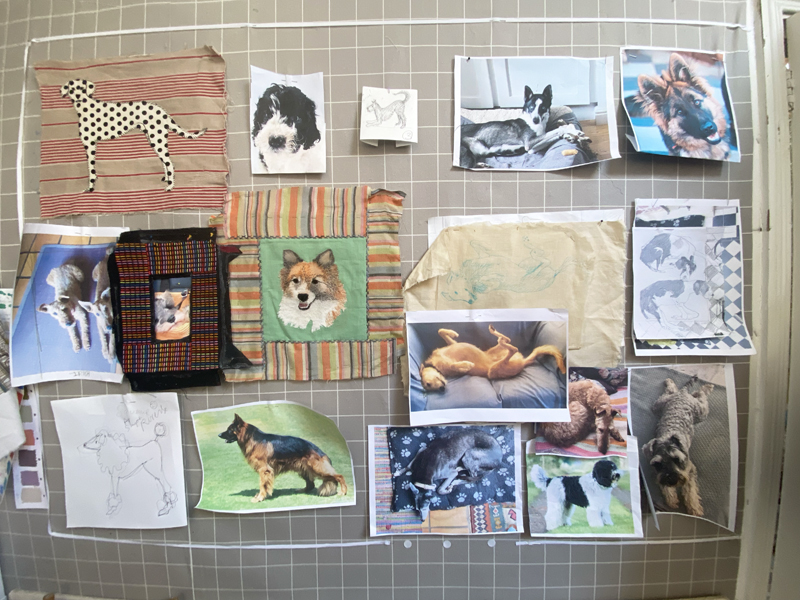
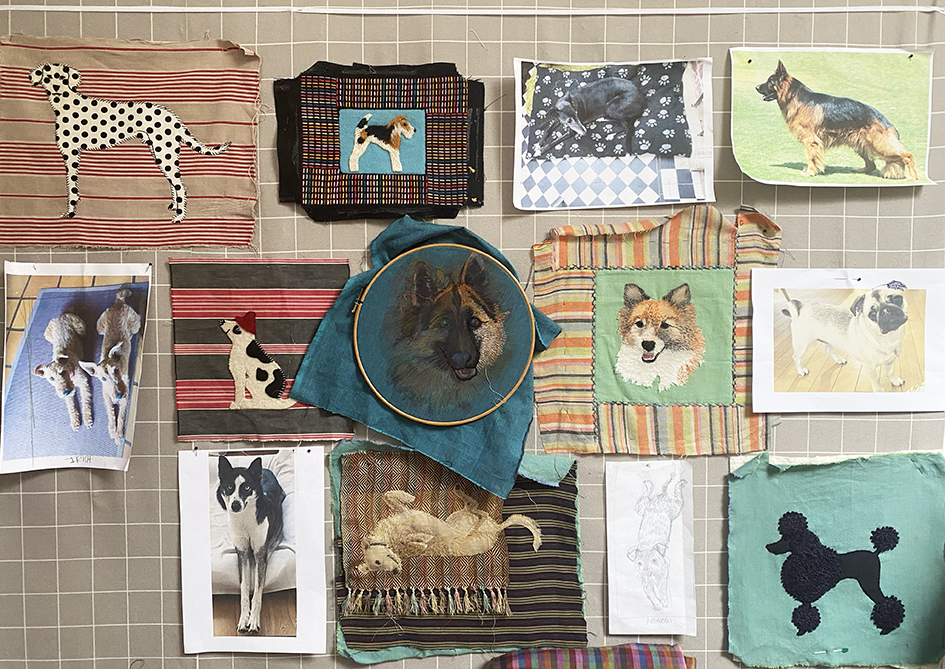
I then made several design sheets for a colour scheme and fabrication, with drawings and 2 embroidered samples using of a range of techniques that I could offer: from the simplest applique design for a spotty Dalmation to a hand-stitched portrait of the small dog in the original photograph. I was given the commission:- a quilted hanging with patchwork blocks of stitched dogs using the different techniques.

So now to find the extra dogs; my first set of drawings showed typical positions taken by each breed above. I do love dogs and am fascinated by their shapes, specially when totally relaxed. I had started with basic stance like the Dalmation, and just had to include a French poodle and terriers, so an Irish terrier, a Fox terrier and a Border terrier. And hounds, a Schnauzer Leo and even a Siberian husky Twyla, all in easy reach as they belong to friends, family and the local dog-walkers.

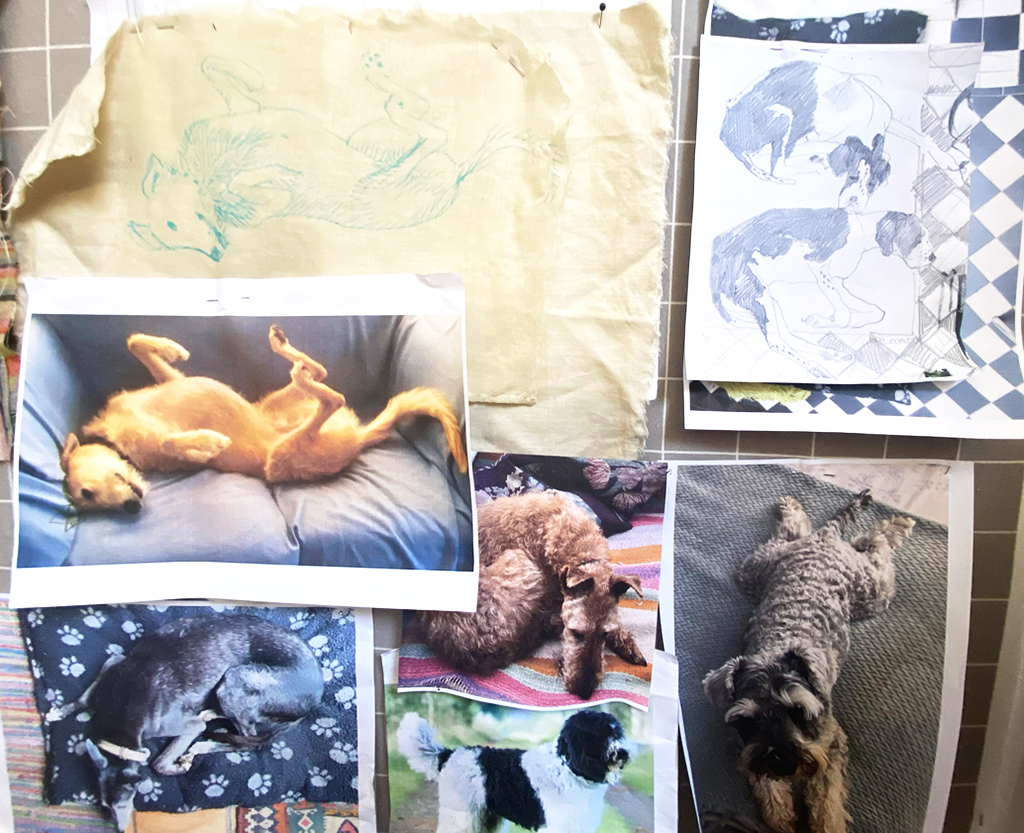
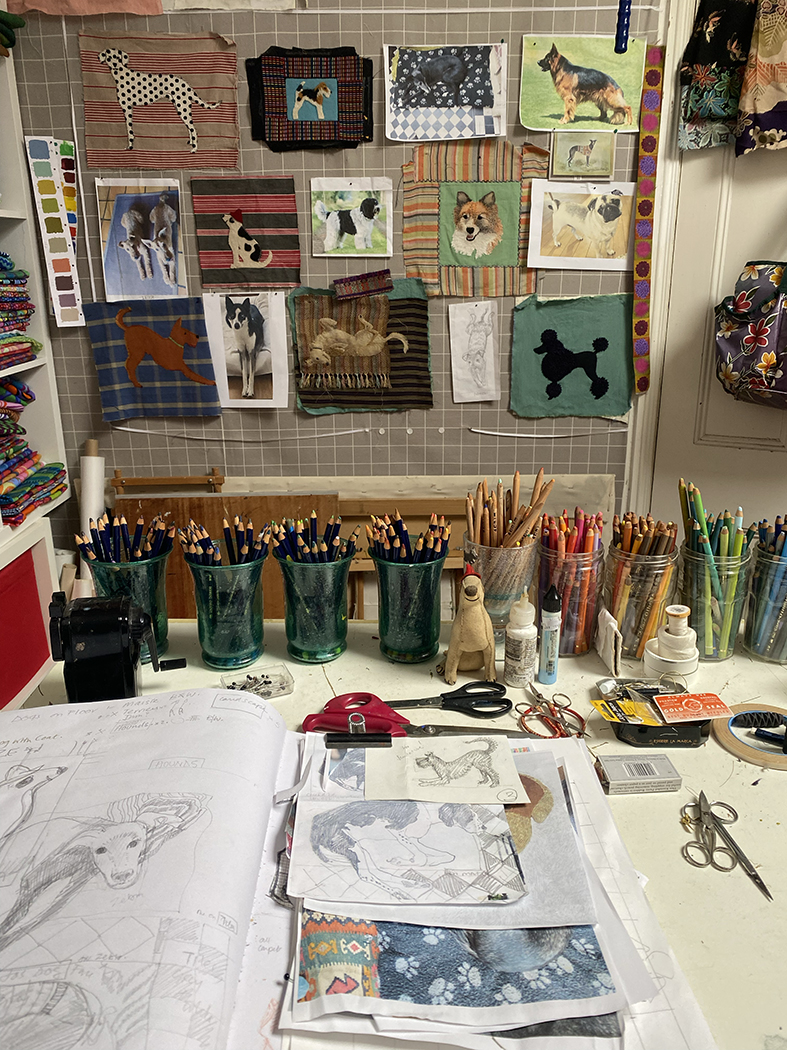
For most of the embroideries I drew the dogs to scale from photographs sent to me by the various owners, to decide which technique used for each dog but sometimes I just copied the photograph! Below are working drawings for the relaxed hound Rodney, and the oh-so-tired Sydney.

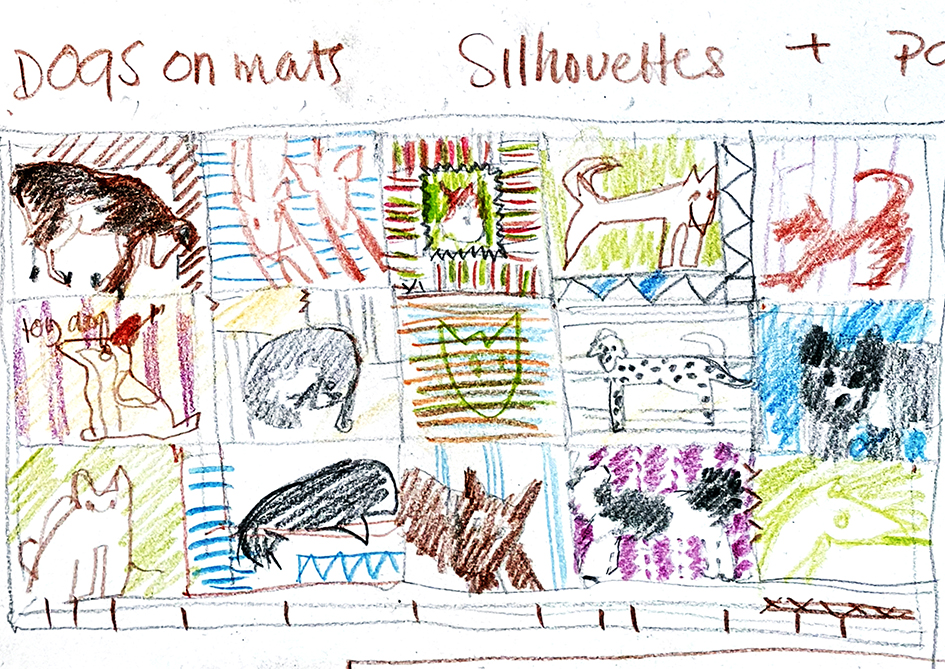
But how to assemble them into a quilt? I had been putting everything onto the quilt wall in my studio as I made it – constantly adjusting the arrangement to fit within the required measurement. Not how quilts are usually made I know, but this was created by the love of dogs, not the discipline of the patchwork quilt. The first scribbled design for the quilt shown below and the reality that surrounds it….

The design chops and changes as each new embroidery is completed and not every dog makes the final cut, but a design finally emerges. There were a few more dogs needed to complete the design, but how to highlight the family dogs (which are actual portraits) and stitch it together as a proper quilt…is the next instalment.

DRAWN to stitch: gardens & flowers

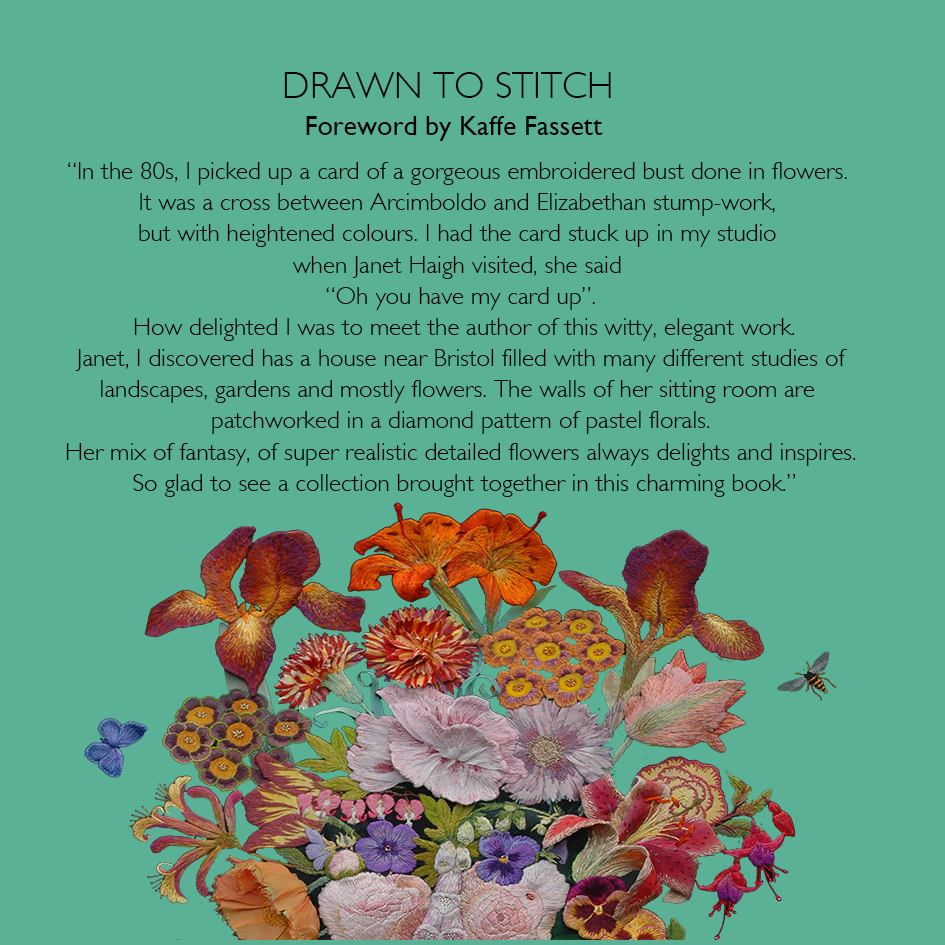
This is the foreword, kindly composed by Kaffe Fassett, for the first page of my latest book I made as a catalogue/ picturebook to accompany my latest exhibition Inspired to Stitch: Hidcote Revisited. at Hidcote gardens in Gloucestershire.

It illustrates part of the story of my career in stitched textiles, from my first ever embroidered picture above, made out of the sheer frustration of working in the fast-track commercial fashion industry in London, after I left Liverpool Art College in 1970. And it is an imagined garden.

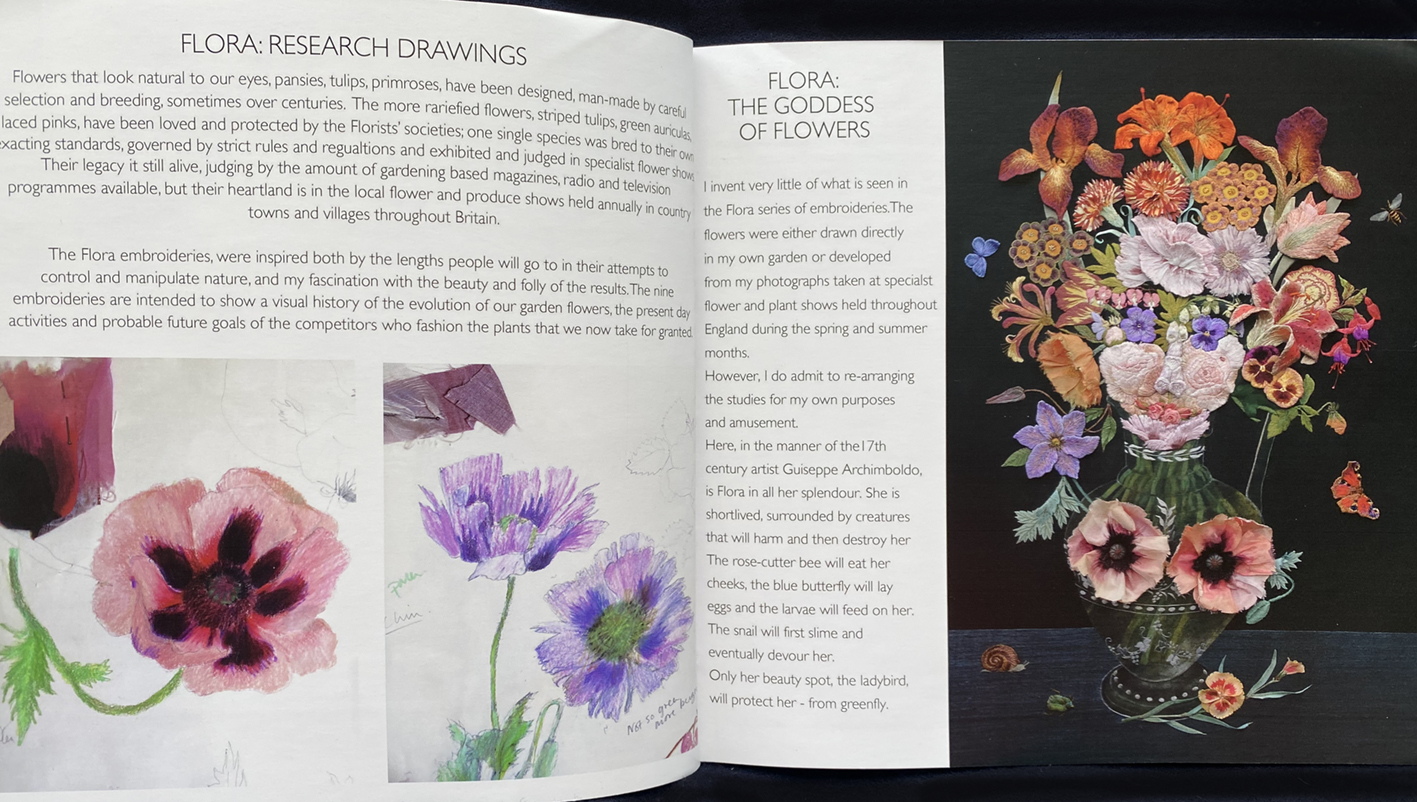
Fast forward several years to 1992 (you will have to buy the book for more information)and I am totally committed to all things flowers, gardens and topiary! Here are several pages from the book to whet your appetite and first here is Flora, the Roman goddess of Flowers.

Flora is the central image of 9 embroideries called ‘The Flora’ that tells a visual history of the development of, what I now think of as, “designer flowers”.

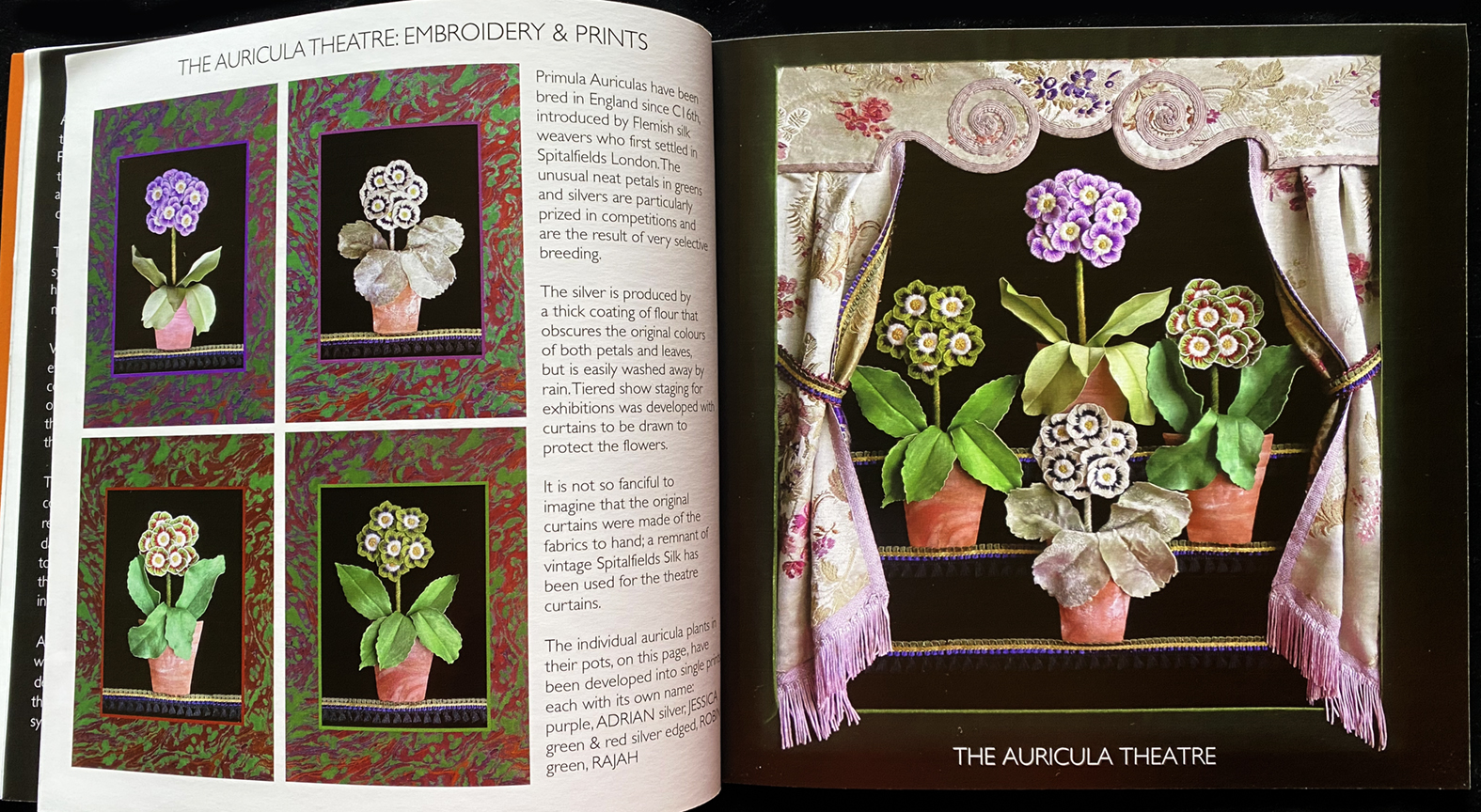
The Auricula Theatre above, with a series of small giclee prints I developed from the original silk embroidery. The protective curtains are made from a piece of vintage Spitalfields silk.

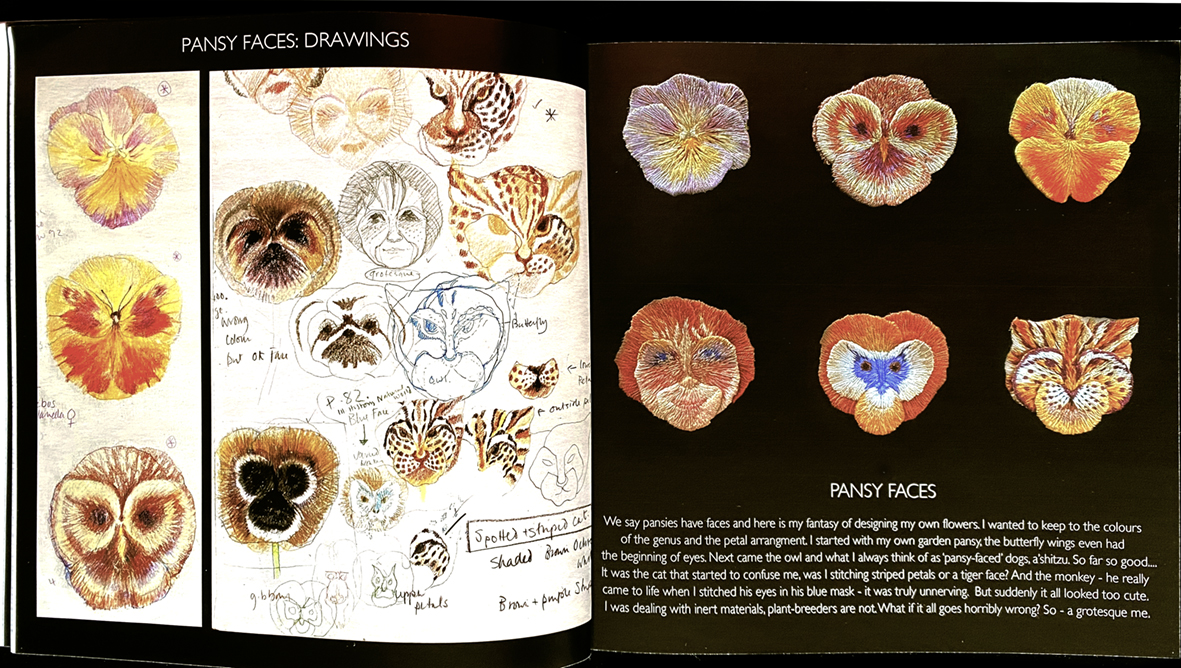
Pansy Faces and my drawings for the inventions I imagined as my exhibit in our town’s annual flower show.

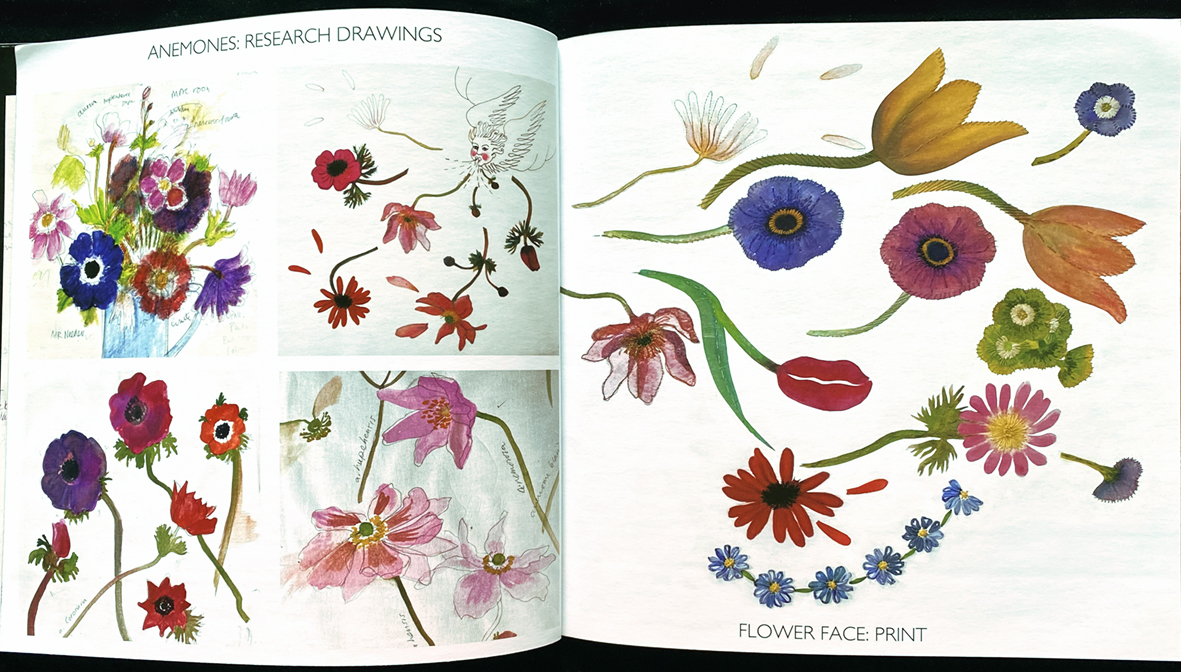
A personification of Blodeuwedd, or “Flower Face” from Welsh folk lore; this is a giclee print of the original stitched silk collage on paper, that I developed from my old drawings made for ‘The Flora’ .

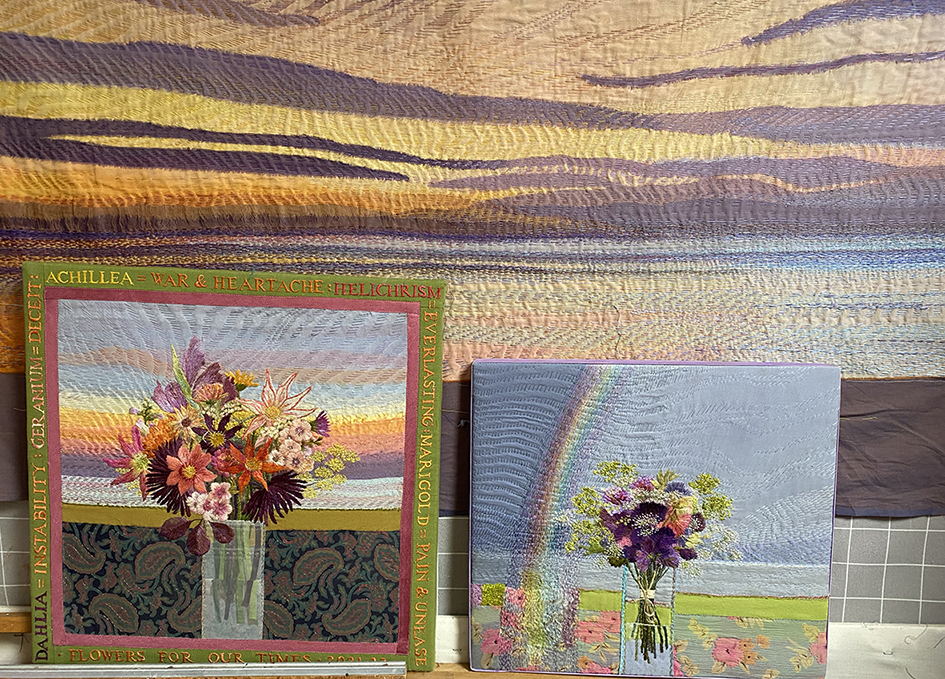
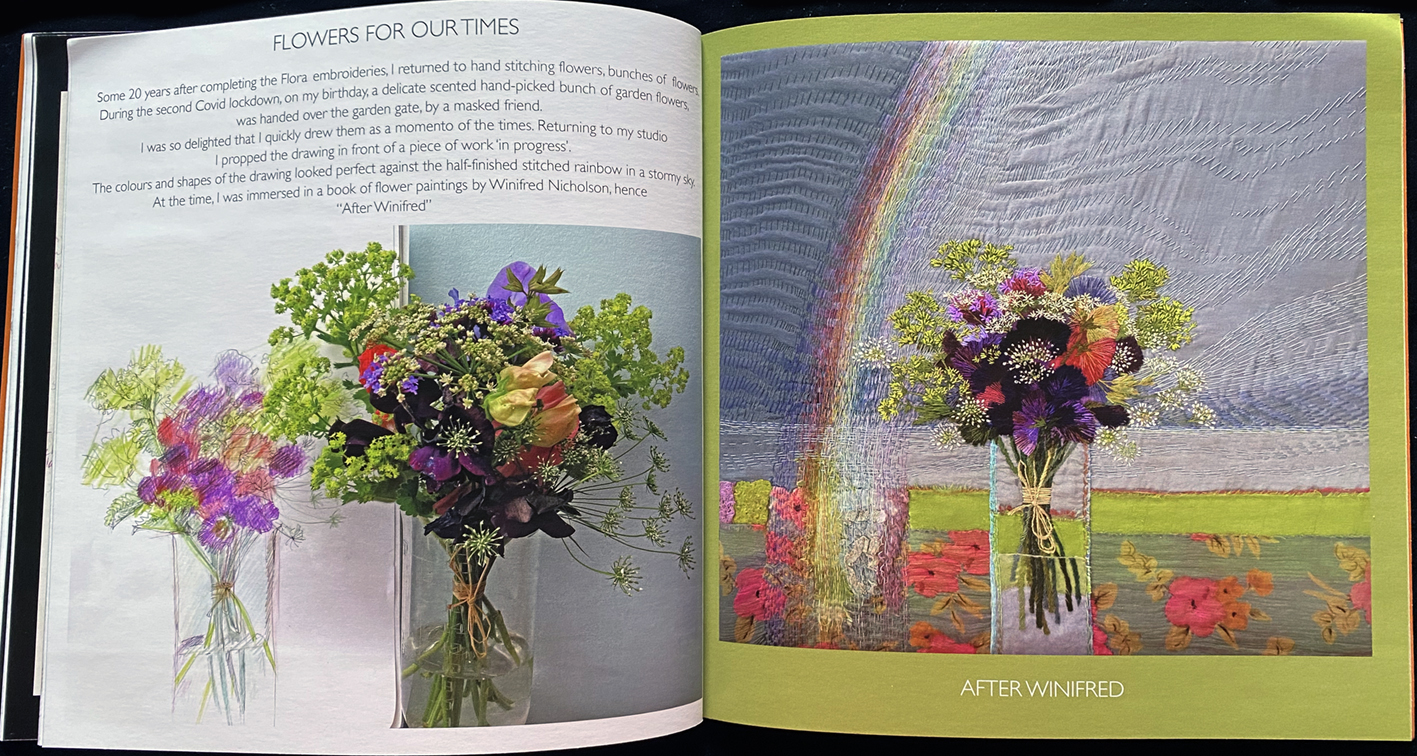
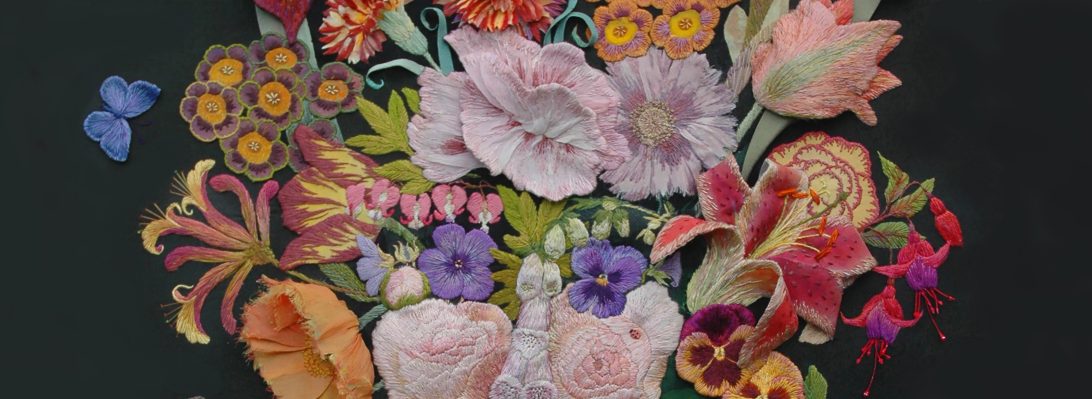
Here is a bouquet of hand embroidered flowers in After Winifred’. I was given this bouquet during Covid, by a masked friend, in my garden, on my birthday. I was looking back though my Flora drawings to make some joyful embroideries and had bought a book of flower paintings by Winifred Nicholson……

I keep a careful record of all my research drawings, this results in a whole range of different drawings, samples, notes and photographs being kept for further inspiration. Here are typical ways that I use these ideas and studies for new works. Above are some pieces of ‘The Enamel Garden‘ a major academic research project into using textile techniques for other materials, here vitreous enamel on hand cut sheet copper. It is possible to trace how I used my research drawings to create these flowers and hedges.

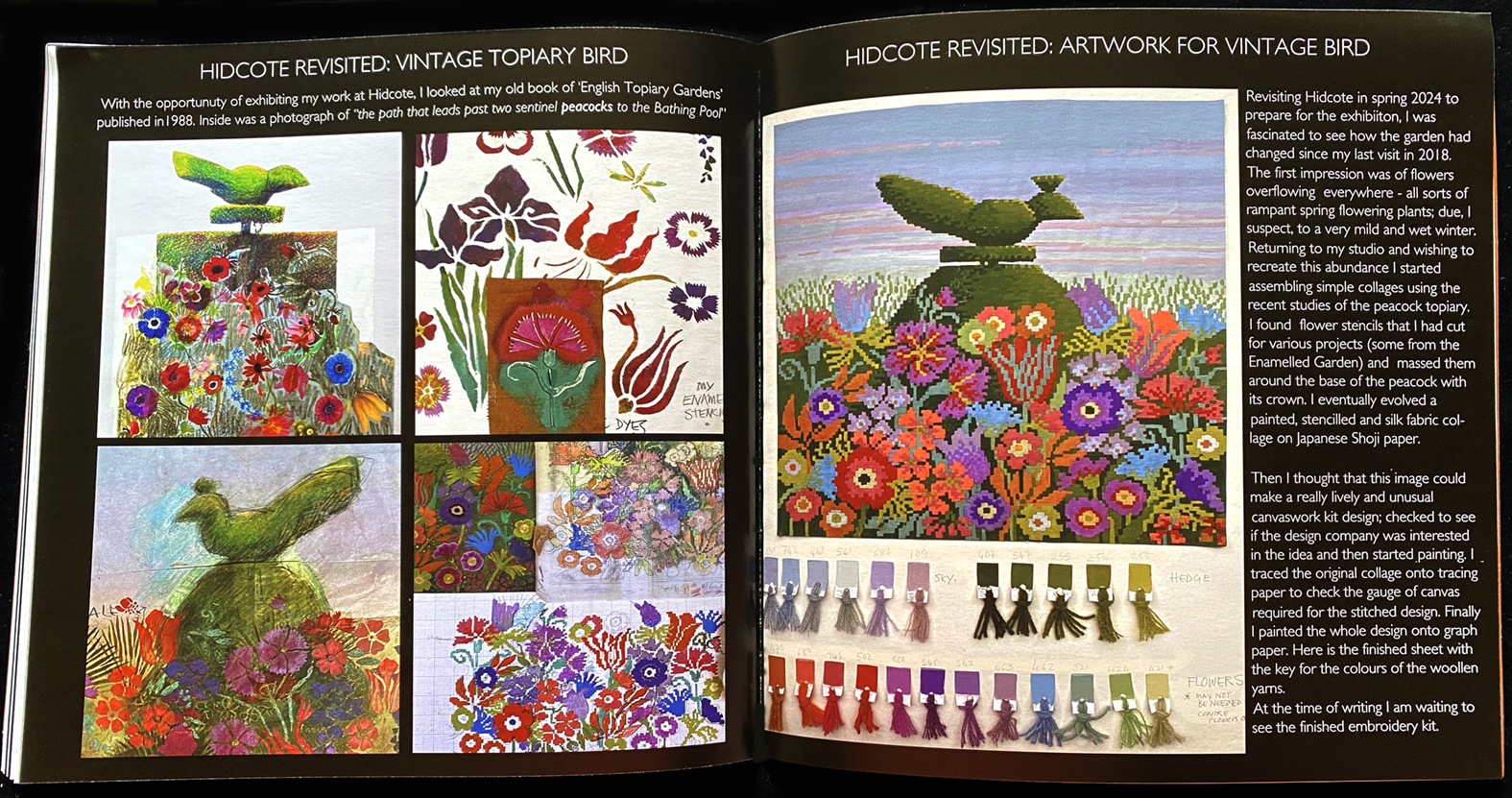
And my latest canvas work design for Ehrman Tapestry, a version of the Vintage Topiary Bird used for the front cover of the book. I designed this especially for the company to make a kit of this design to celebrate the exhibition…. I will keep the post about making it until later.

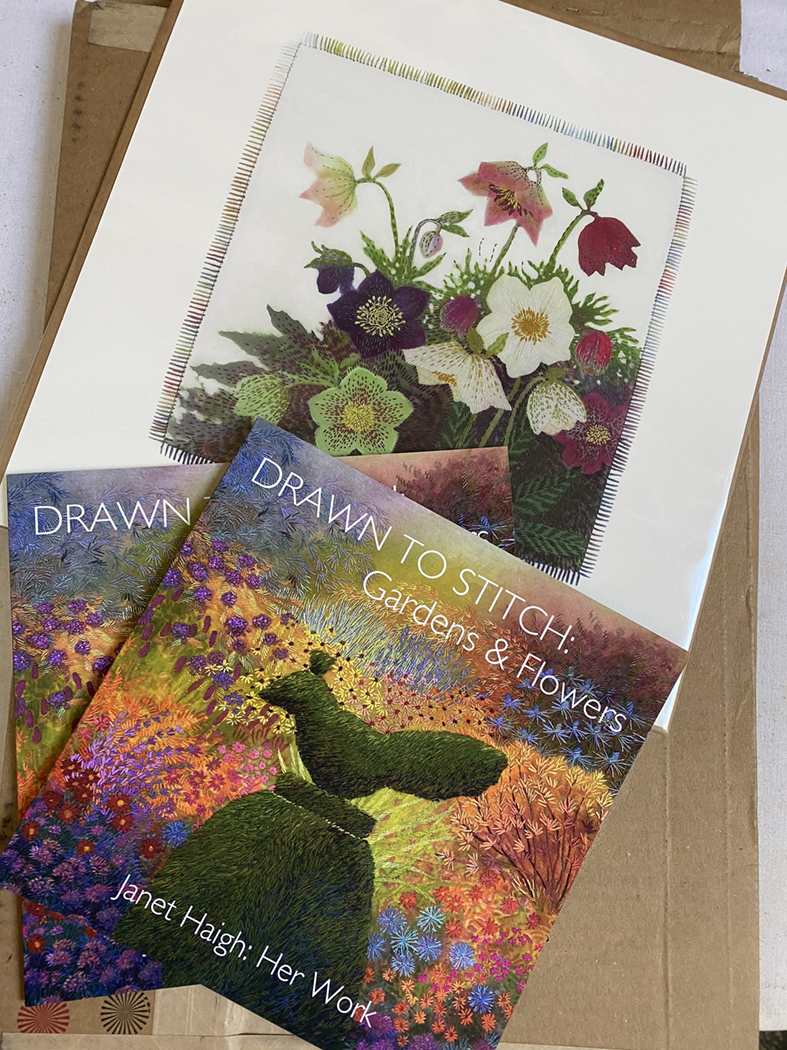
And at last I am selling the book from my Shopify site ( QR code below). Above is the flyer for the Hidcote exhibition that gives access to more information into to all the works contained in the book. But best of all in the first week of the show, my first package of books and a giclee print ready to be posted.

HIDCOTE REVISITED: NEW EXHIBITION

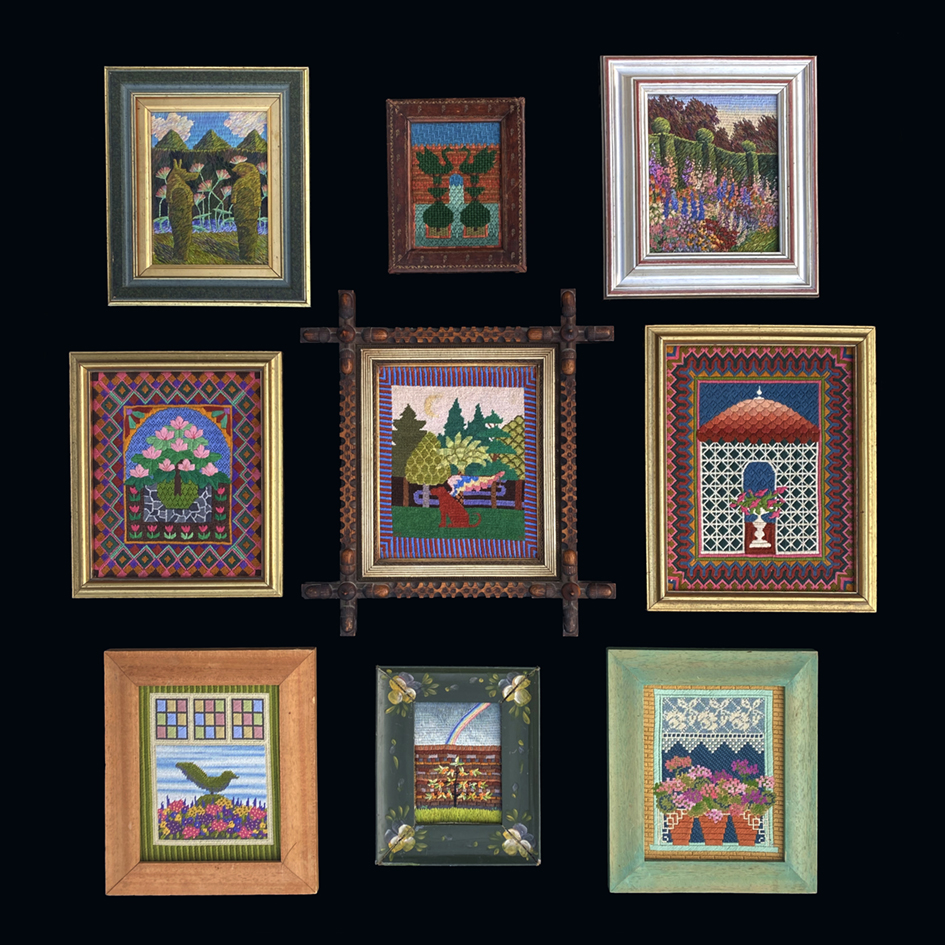
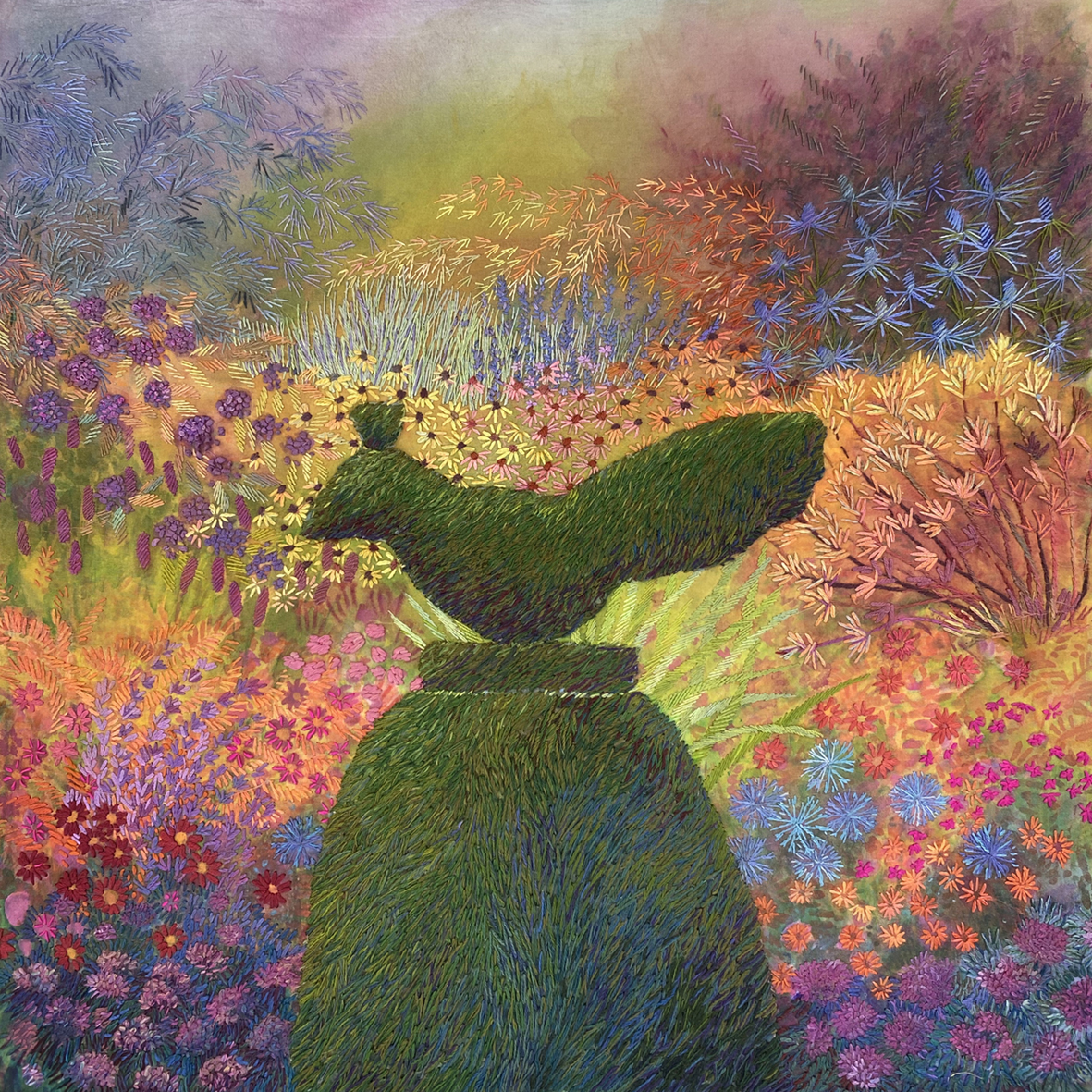
Invited to exhibit my embroideries at Hidcote Manor, a National Trust Garden, in April 2025, I immediately thought of my first visit in the 1970’s; I had just started to embroider, and the effect that it has had on my stitched work ever since. Above is a small selection of my first-ever embroideries that were inspired by my delight and fascination with gardens and flowers.

I stared with basic canvas work and enjoyed the restrictions imposed by the strict stitching and its filling-in-until-you-finish discipline. I was designing pictures in order to learn to embroider my ideas.

It was after visiting Hidcote that I started to draw gardens, mostly details of planting and of course, topiary. I took photographs and scribbled down notes to remember colour planting and topiary shapes to develop into embroideries. Now I realise that this was the time when I found my own way of stitching by using blended colours and really just stitching my drawings. I always scribbled drawings, took too many photographs and made notes ready to be tranformed into working drawings, and this is how start my work now, almost 50 years later.

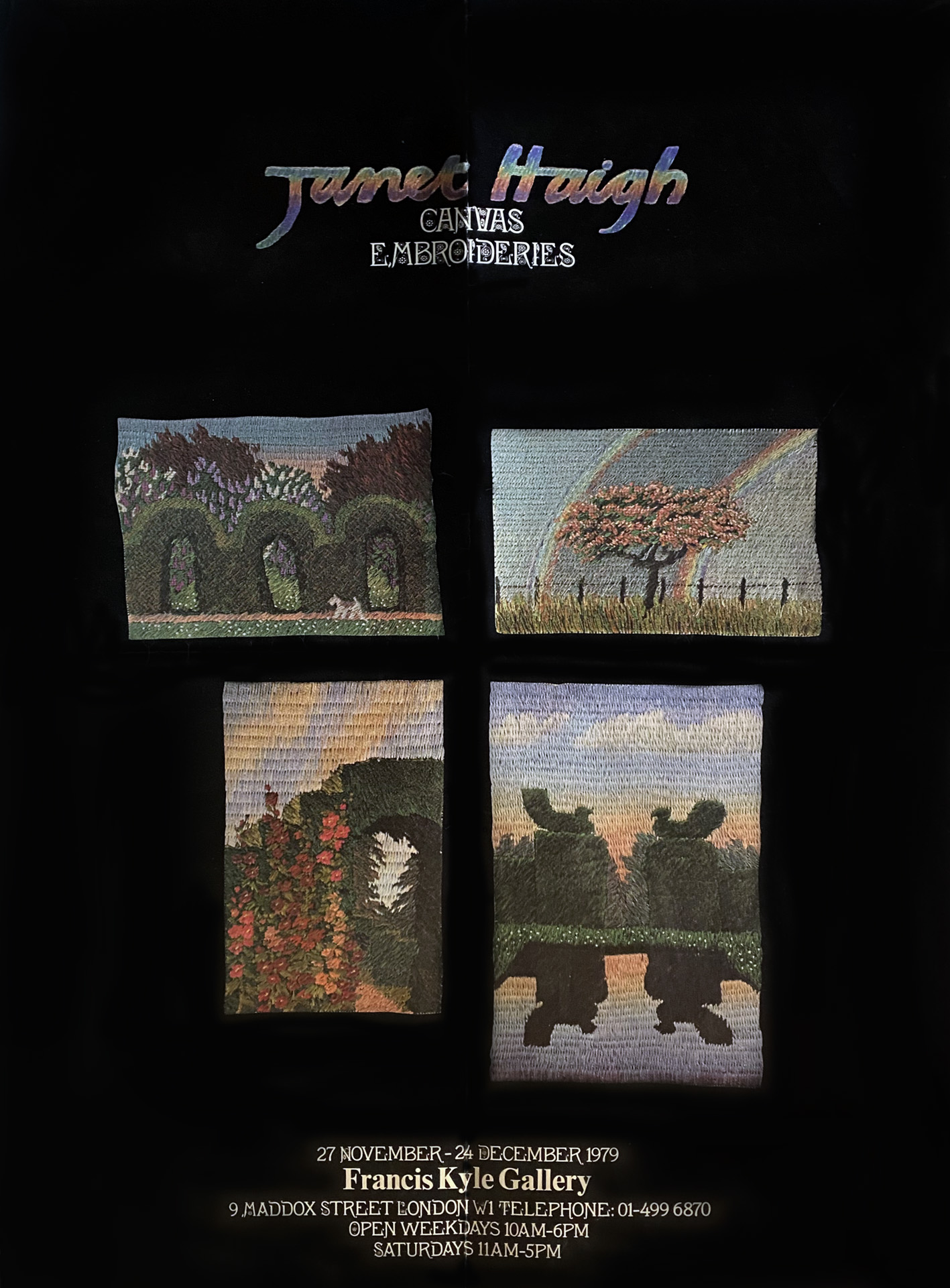
Above a rather creased poster from my first one person show at Francis Kyle Gallery in 1979, showing my small scale canvas embroideries. My early fascination with topiary is evident.

Oddly I do not actually like the idea of strictly clipped hedges, specially when trimmed into animal and bird shapes, but this feeling completely disappears when I actually see it for real. I find this ambivalence really useful and for me it provokes new ideas; why bother to make anything that holds no meaning, mystery or is simply a puzzle for you to try to solve? But mostly I am delighted by the sheer absurdity of it. Why do we tether bird-shaped hedges to heavy domes of yew – to stop them flying off?

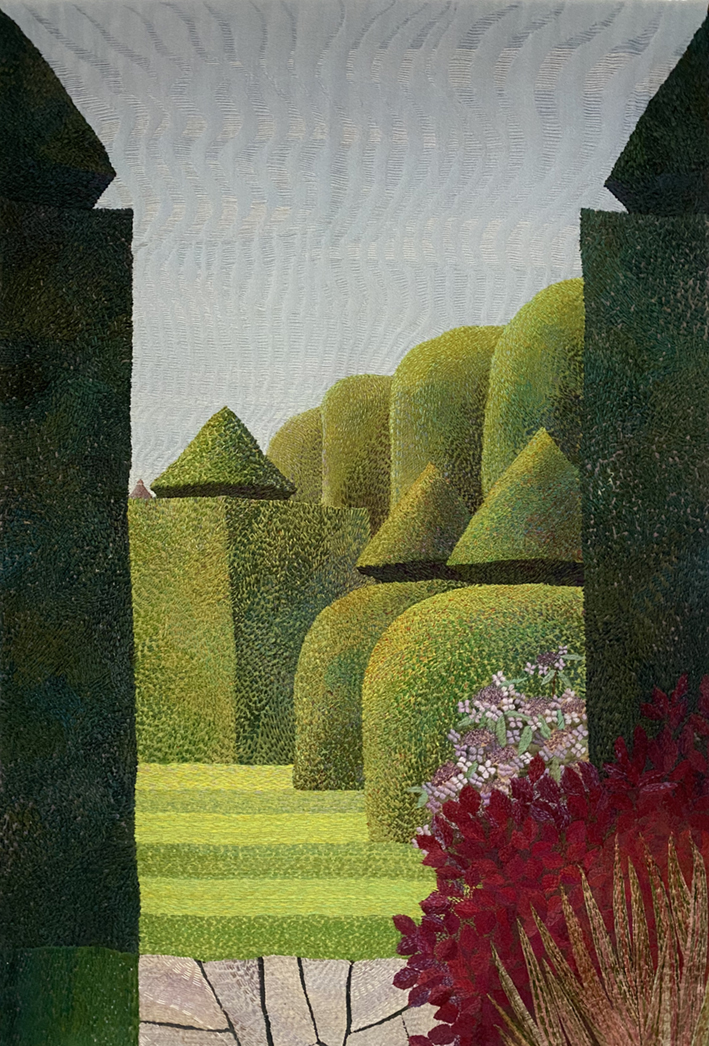
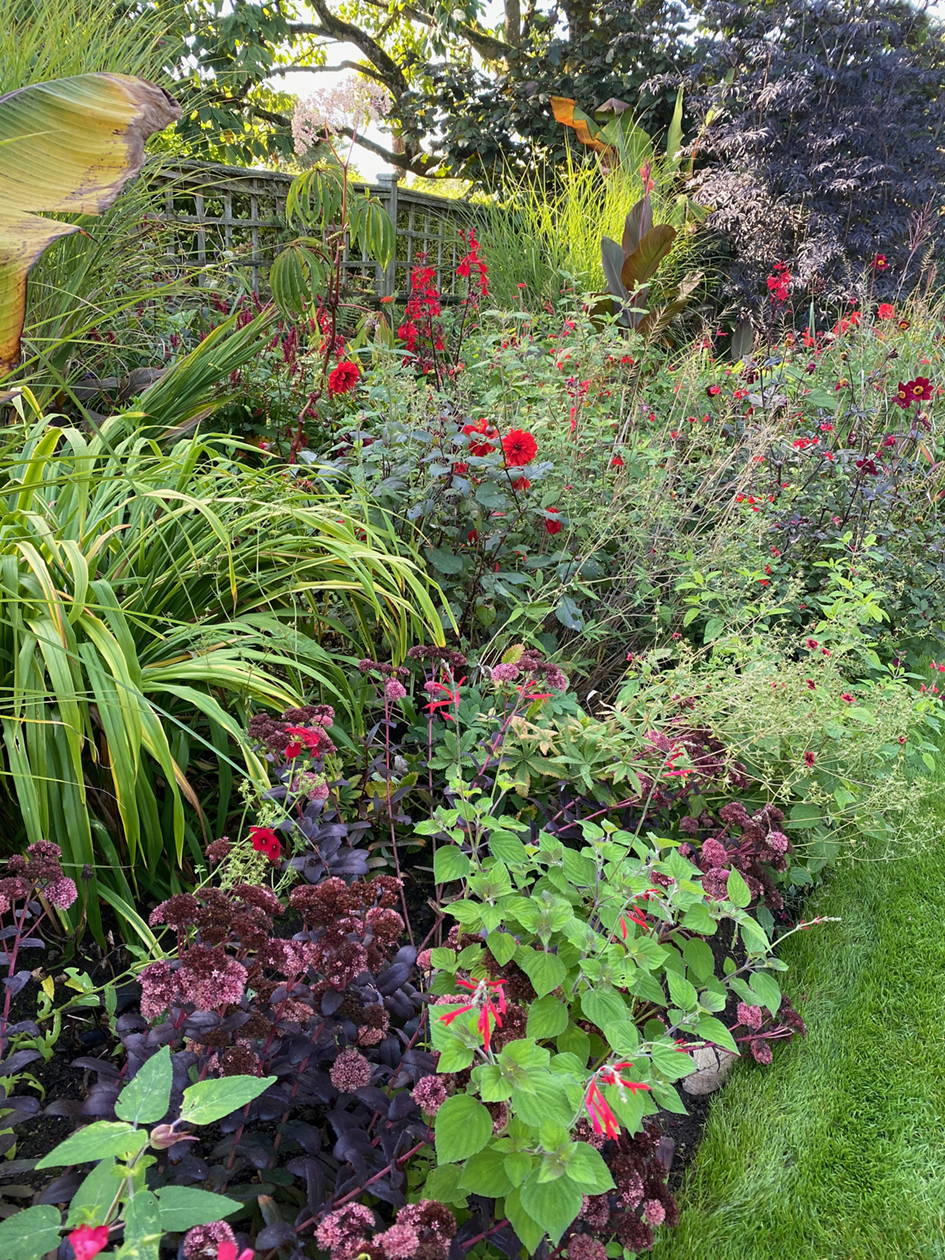
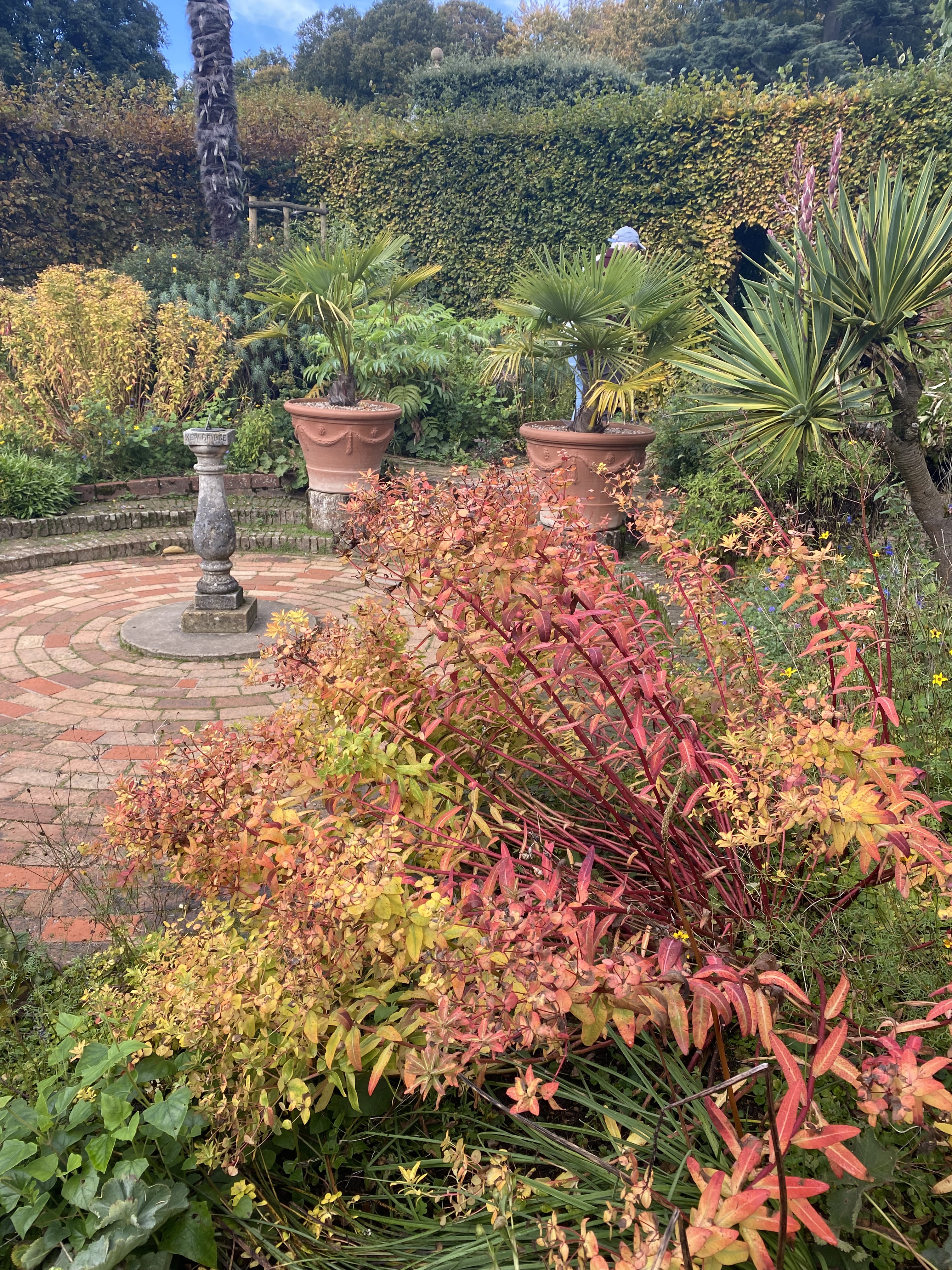
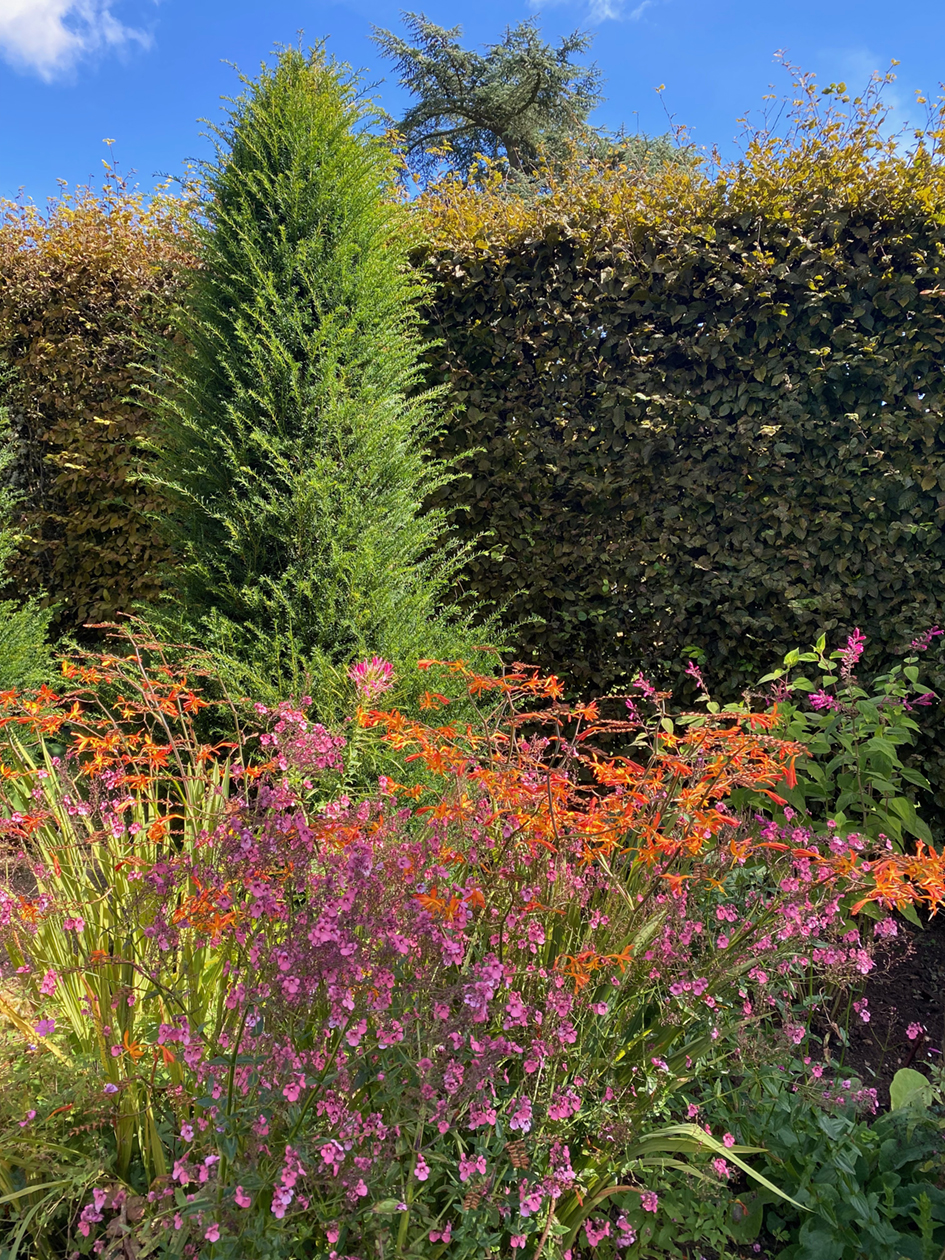
And I have continued to embroider the topiary figures that are often seen in grand gardens. Above is ‘Great Dixter’ a small silk embroidery circa 1980, that was very inspirational in making new pieces for this exhibition. Right is ‘Lytes Carey’, another National Trust garden, this is made mainly with simple large running stitches in woollen yarns onto a wool ground for a big woollen panel, in 2001. I always enjoy seeing the dense green walls of hedges surrounding an abundance of flowers, as seen below on my several visits to Hidcote in 2024.


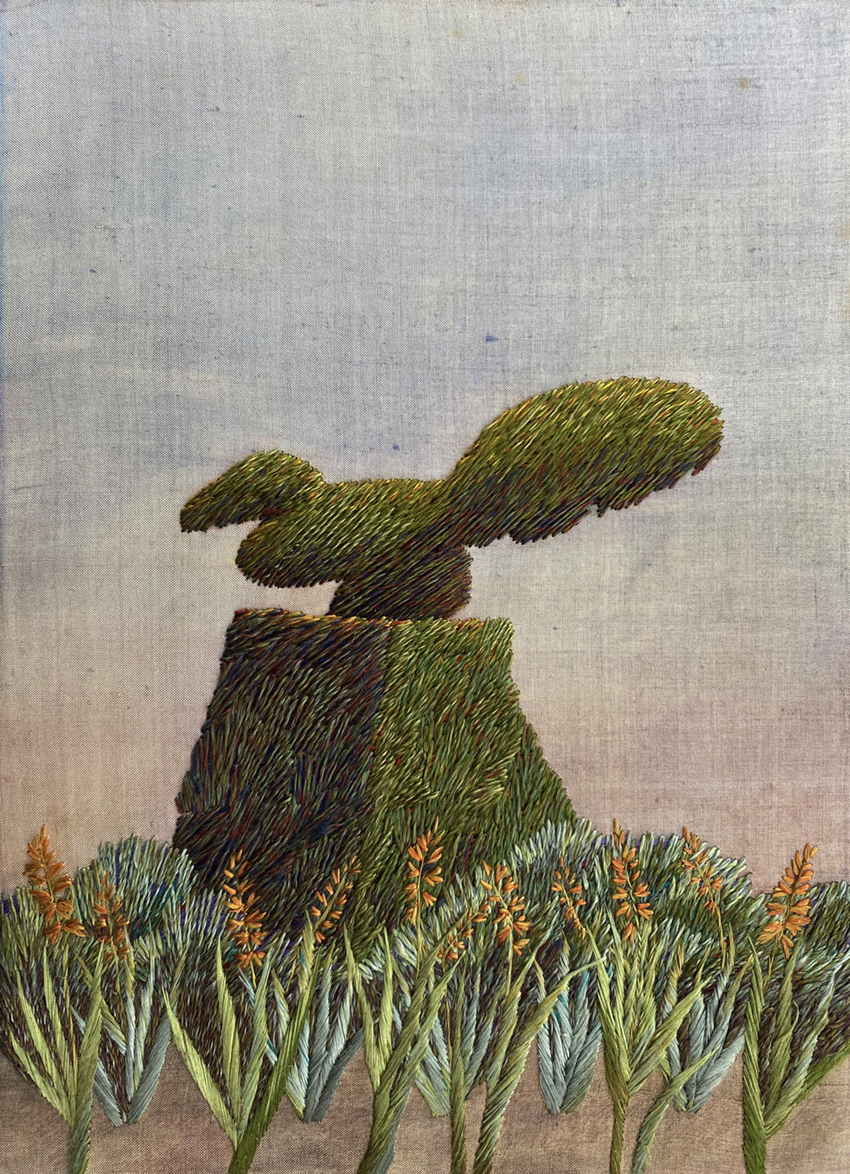
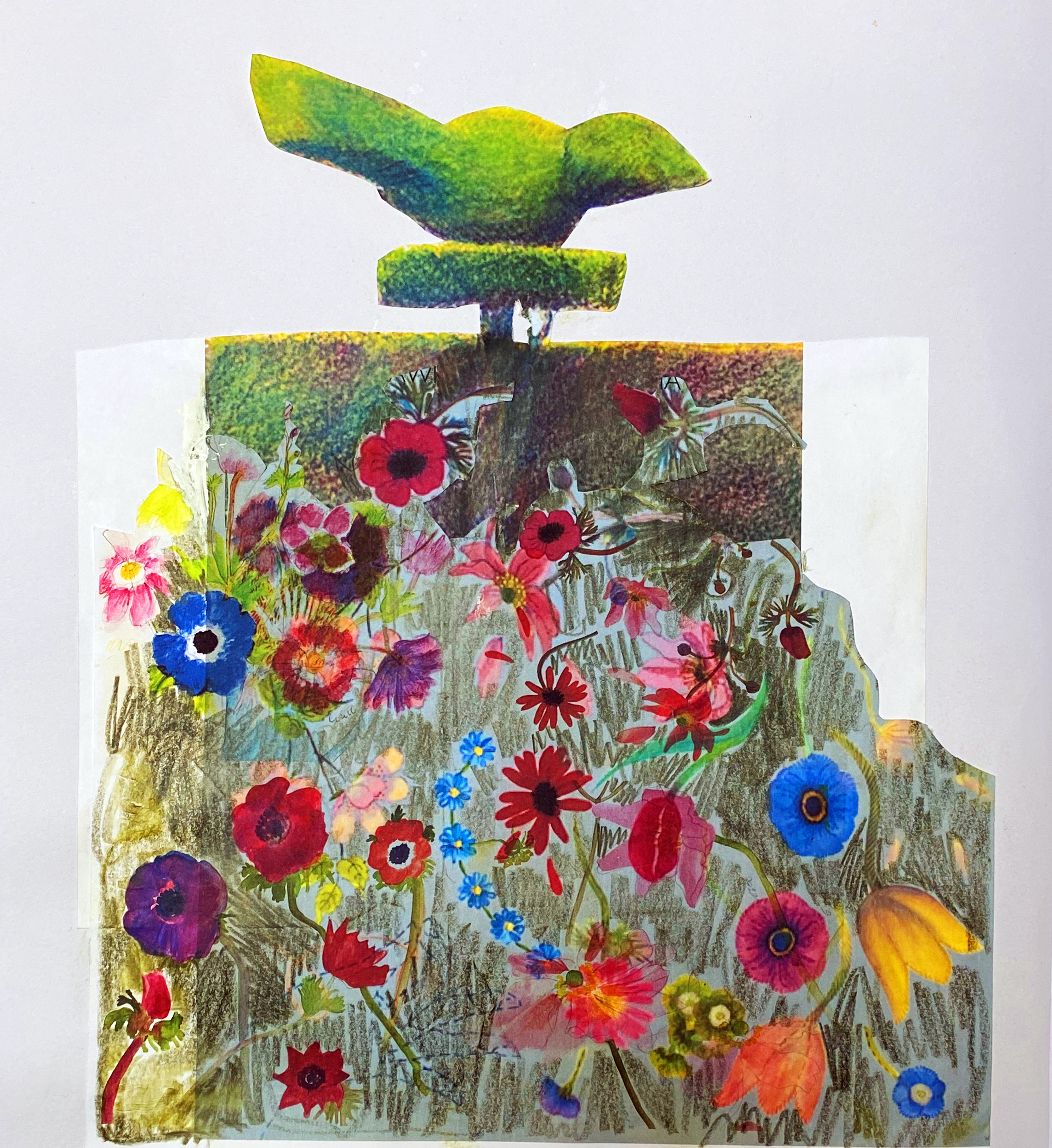
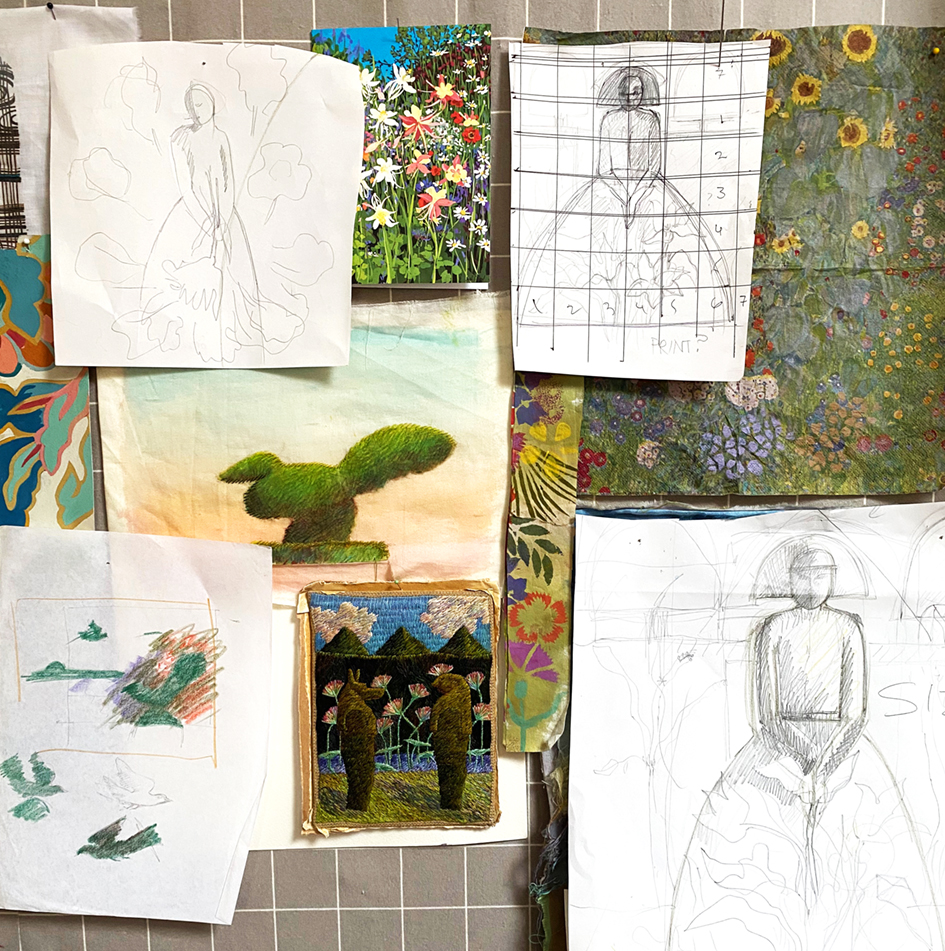
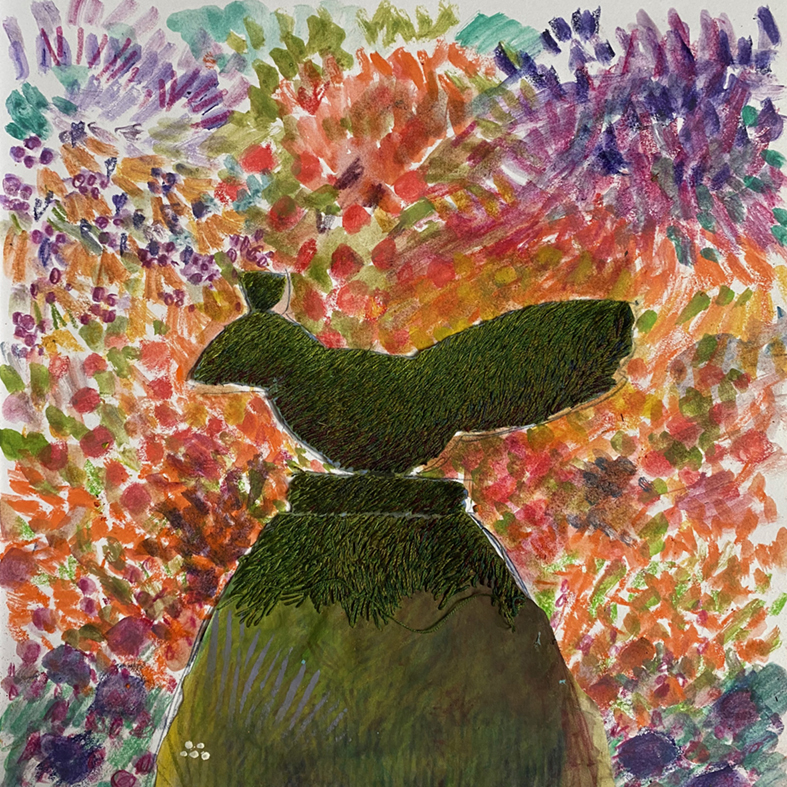
Insired to make new works for the exhibition, back in the studio I combined different drawings, prints and photograps of several aspects of the garden’s abundance and used some old stencils and wonky photocopies that had been over-printed with my embroidered flower images. From this I developed a collage from shoji paper and stitched silk. Then found an old photograph of the birds as I can remember them with their crowns as peacocks.

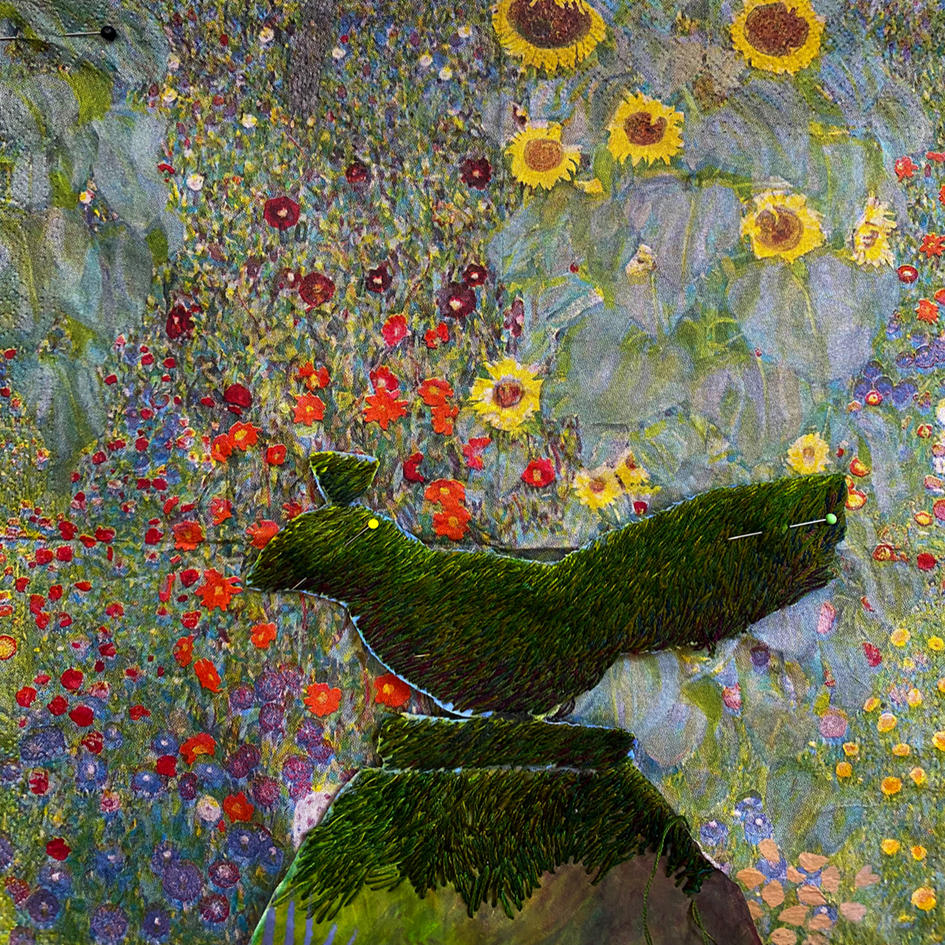
The abundance of planting in the garden beds reminded me of Gustav Klimt’s flowery lanscapes, I began to imagine the plants at Hidcote developed into a wall of flowers. I had bought a packet of paper napkins patterned with a Klimt garden for presents to friends, from a museum in Vienna, but had kept them myself. I took one and pinned it to my studio wall, with the other half formed ideas.

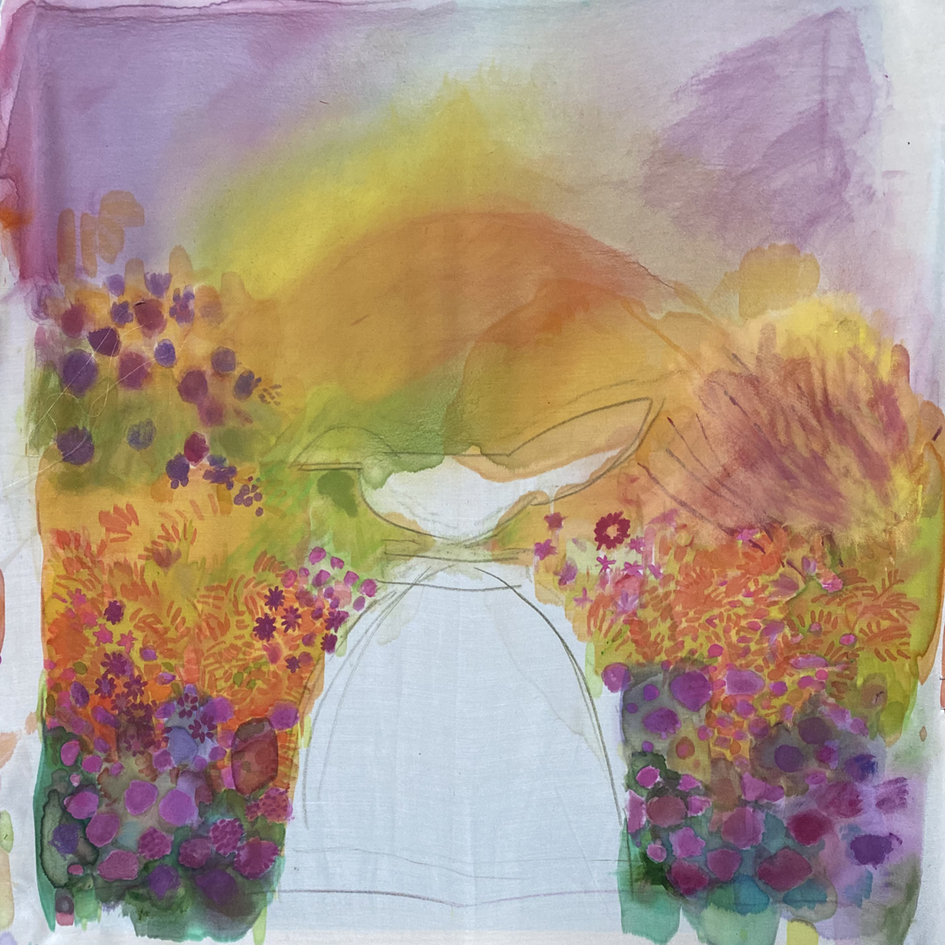
Stages in the inspiration: designing, drawing, dyeing and stitching my homage to Gustav Klimt. I stitched a bird in twisted silk thread on a fine silk ground, then painted dye onto another silk ground adding many of the flowers and leaves, found in my photographs, to make the flower wall. Eventually I stitched the finished bird into postion.

The finished ‘Vintage Topiary Bird’ has become the front cover of the picture book/catalogue that I have produced specially for this exhibition. It has just been delivered to the publishers in time to be printed and for sale at the start of the exhibition Inspired to Stitch: Hidcote Revisited.

my 1960’s fashion sketch book

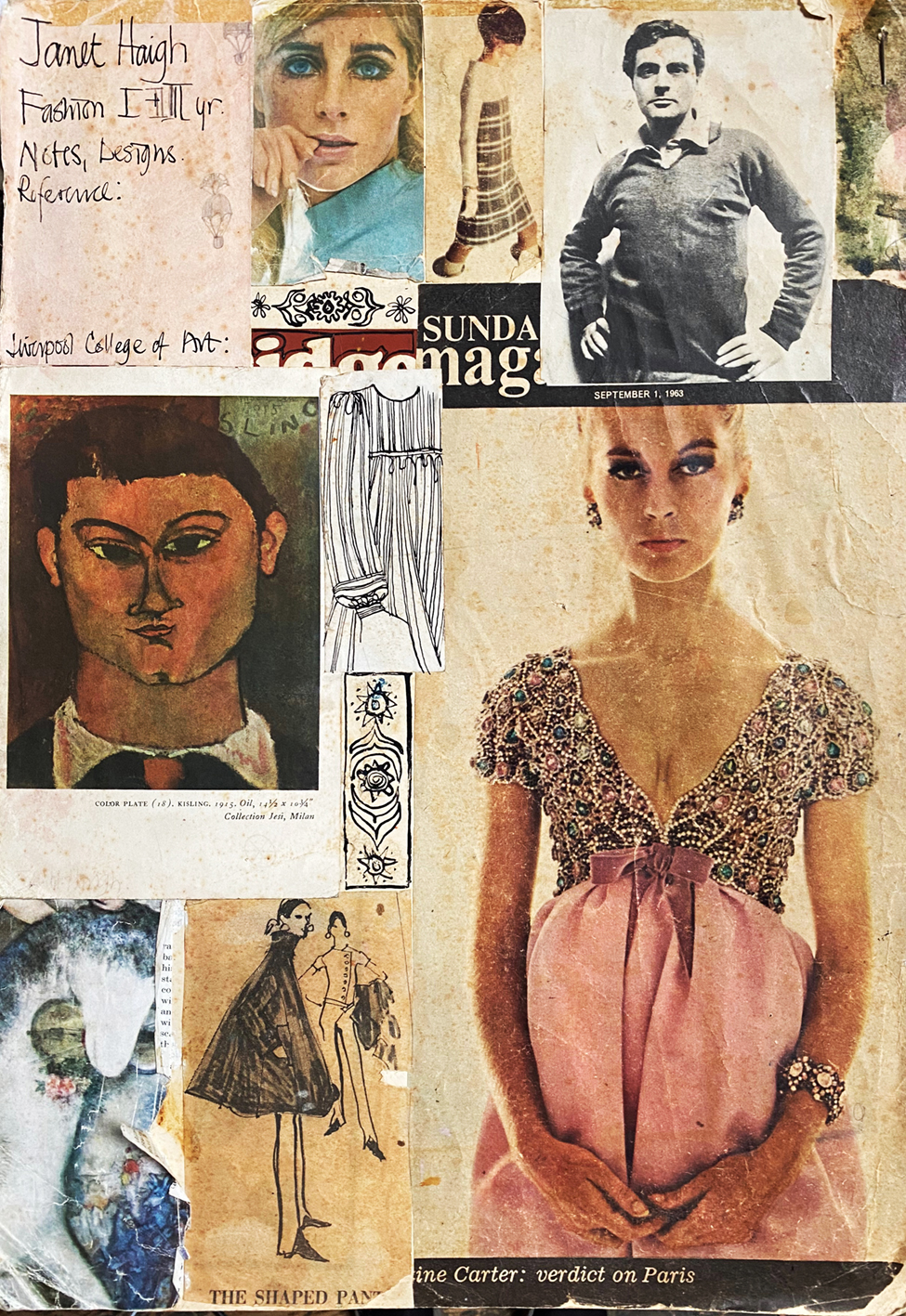
The cover of my late 1960’s sketch book – says it all!

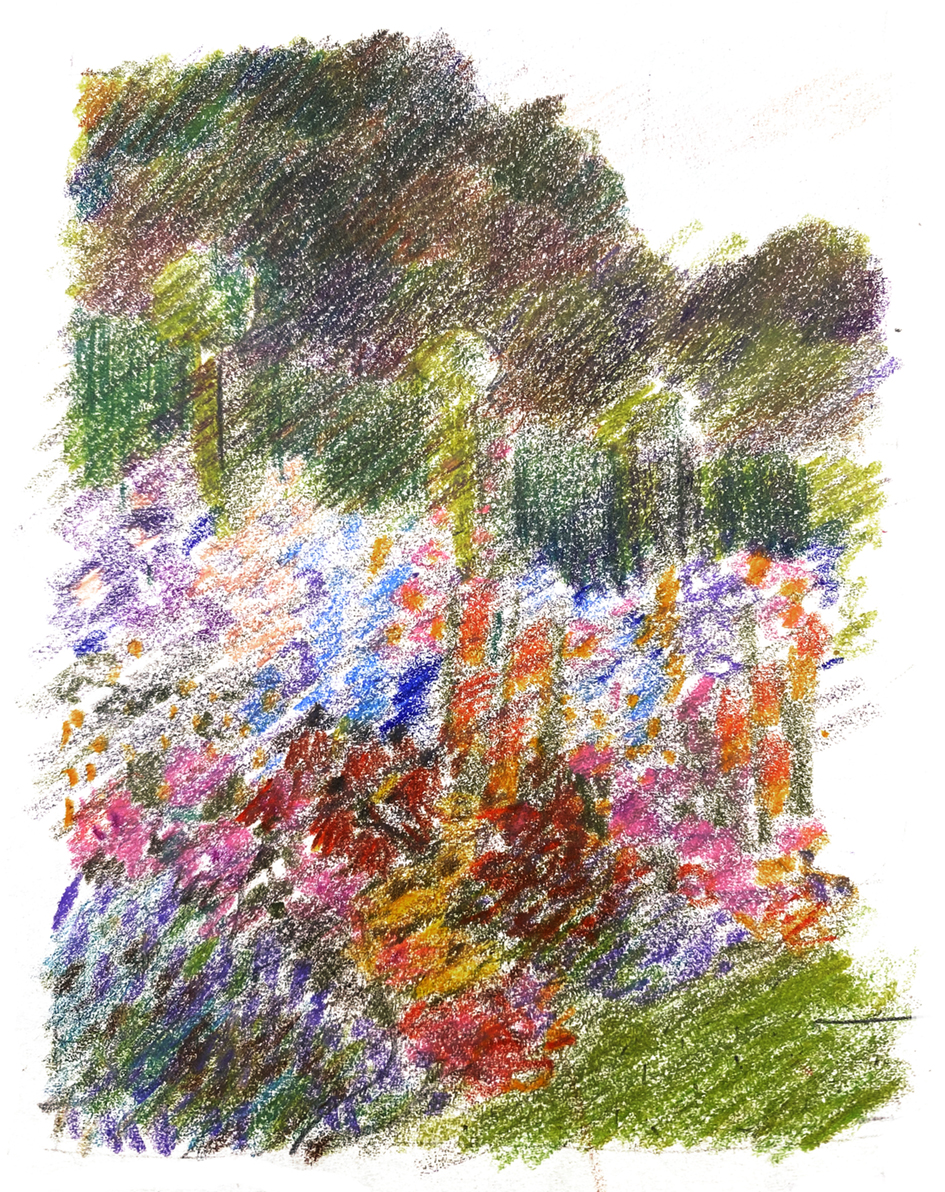
Invited to conduct a week long course of drawing flowers and then to develop the drawings into a small sketch book at Court House Farm in early June, when the cutting garden flowers are blooming. I checked out my collection of sketch books/ visual research journals (whatever they are currently called) I have kept all my research books throughout my working life.

then I unearthed my first Liverpool College of Art sketch book circa 1968 – and this cover still looks like a protrait of my early loves and fashion influences …Modigliani, man and work, Chagall, dresses as worn a la Dusty Springfield; with the faces and poses of models that influenced my design illustrations. And inside???

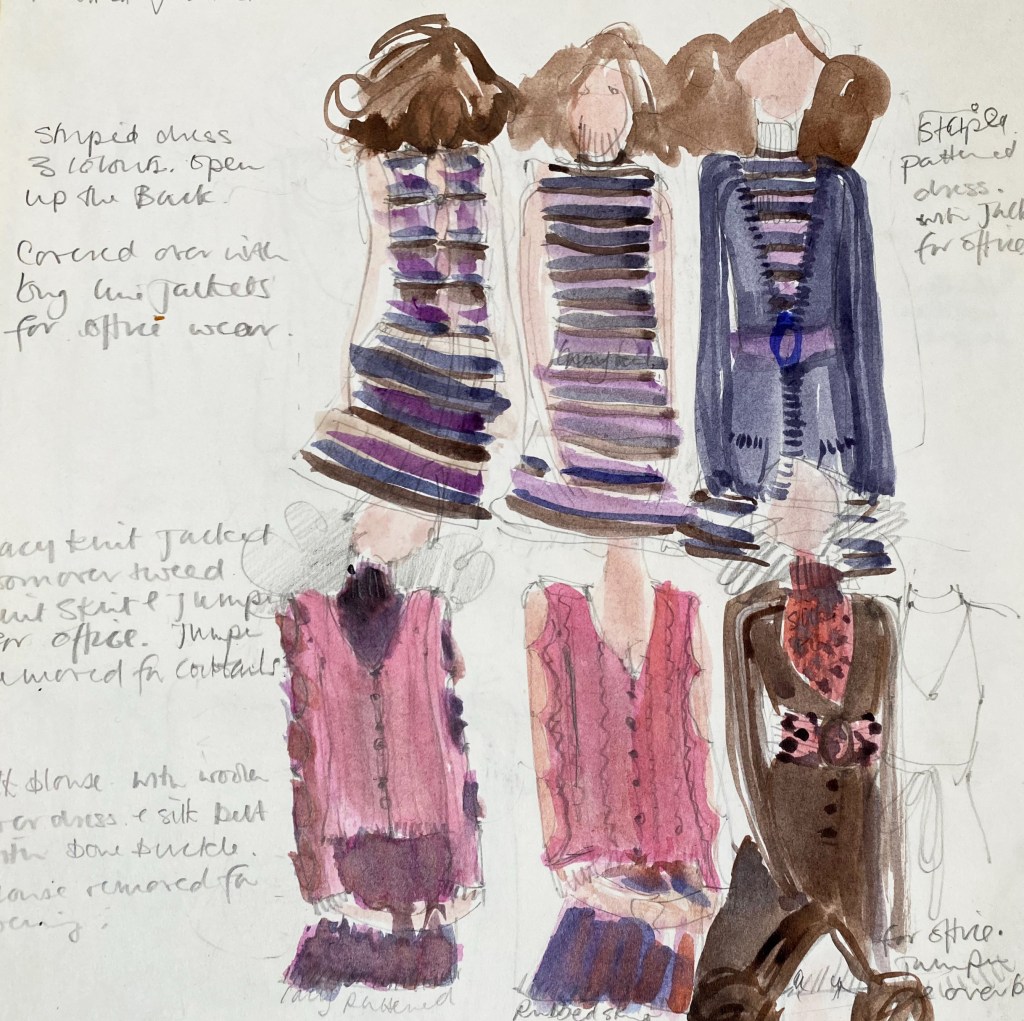
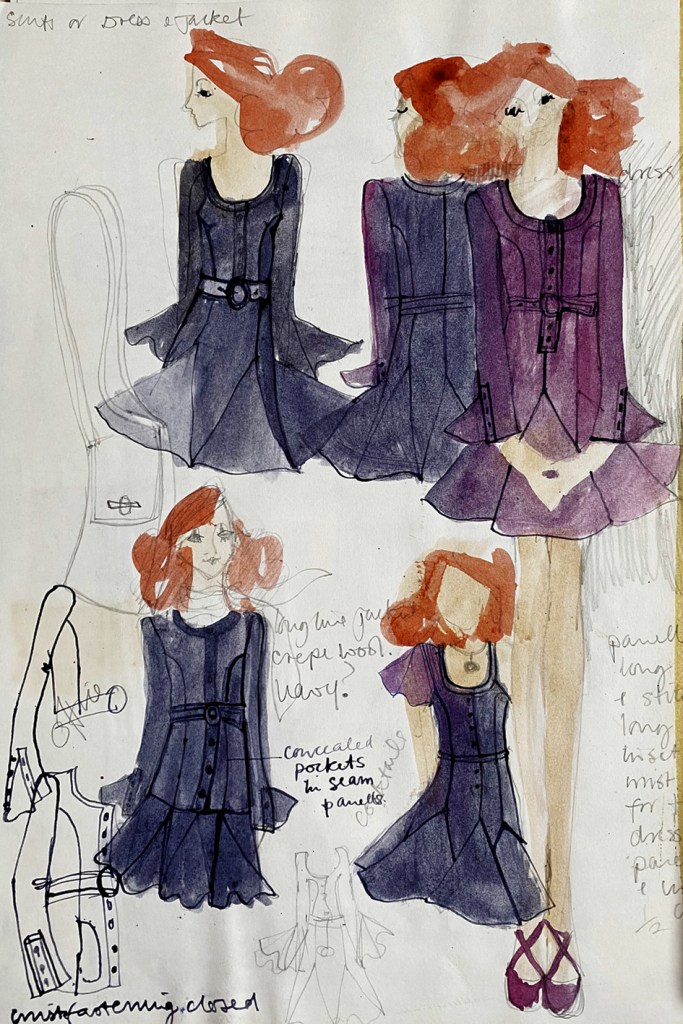
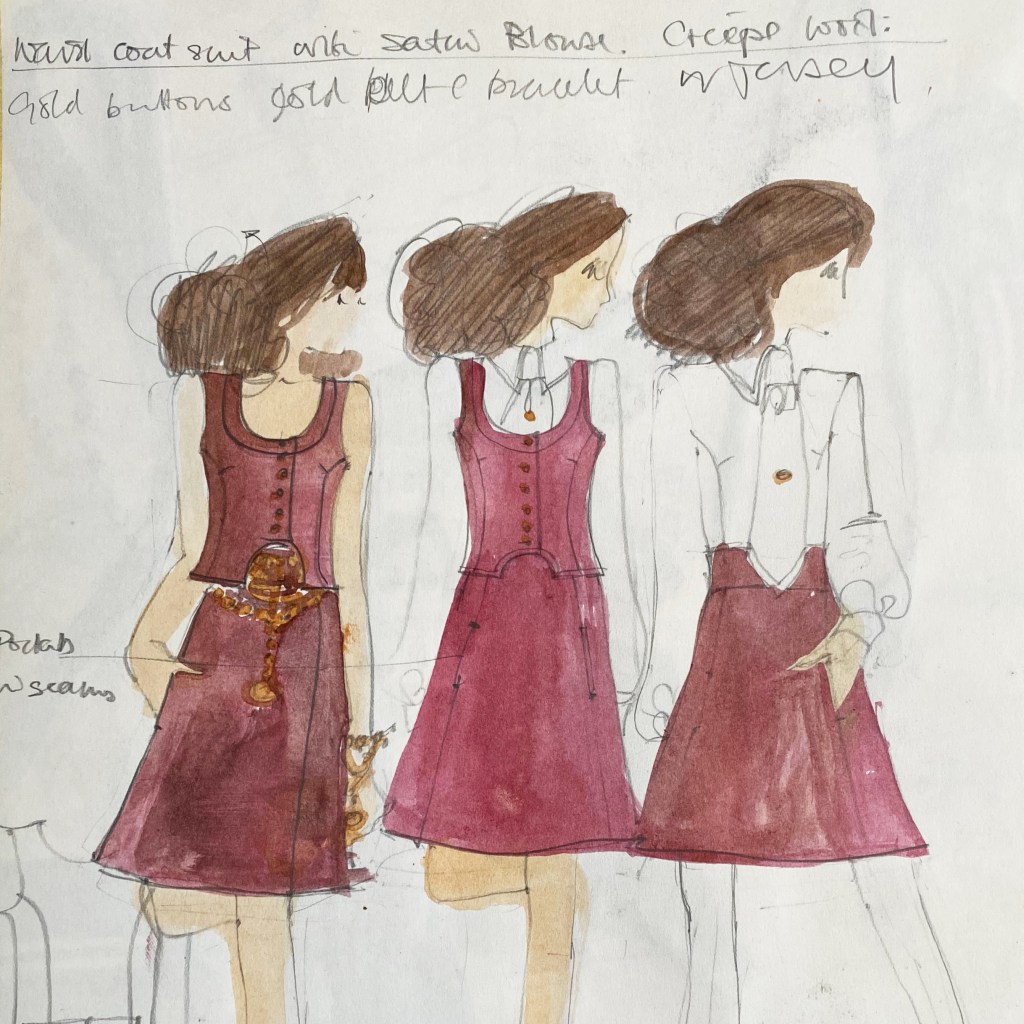
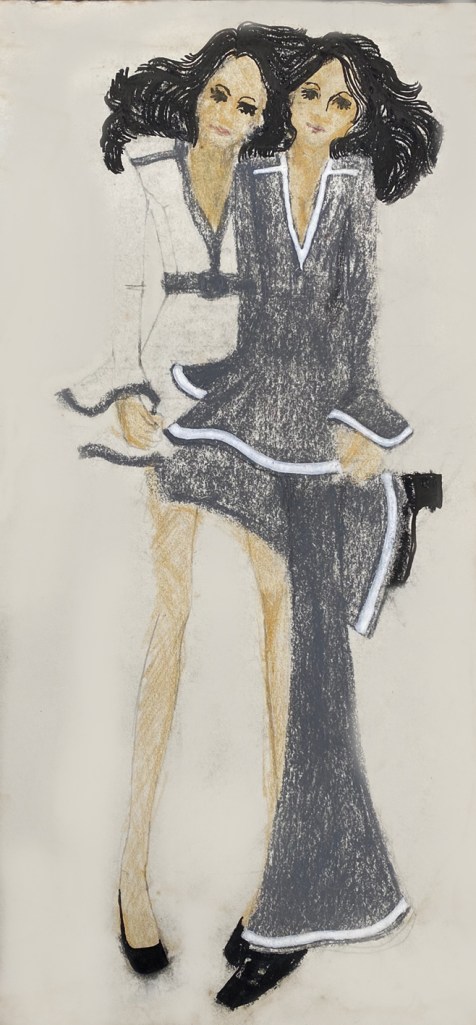
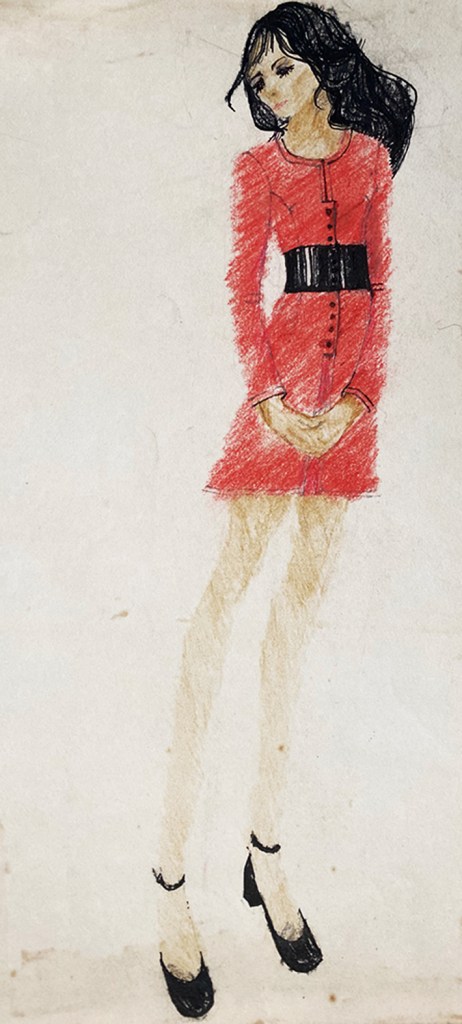
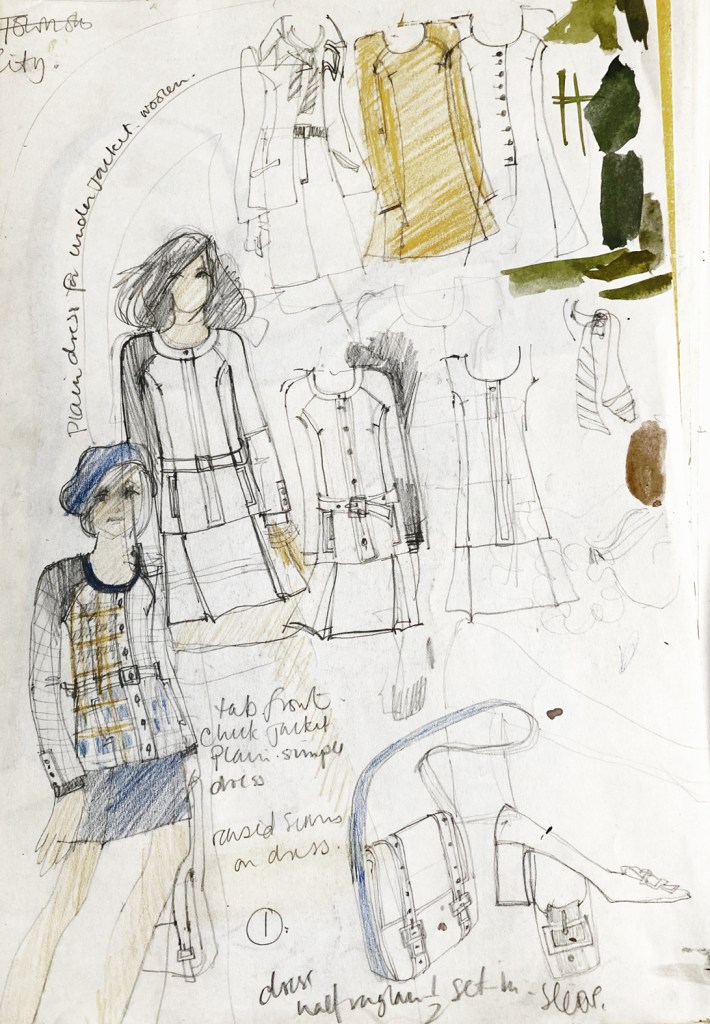
Above are a range of design drawings in pencil and coloured inks that were used to tint black and white photographs. I found that the colours were very subtle, I wonder what happened to them? These are layouts of my designs ready to be illustrated, I think for a competition for RSA (a brilliant organisation that enabled students to develop their practice with scholarships and grants). Everything looks in proportion until you see the legs, they go on forever. We were taught to make drawings that someone else could work the pattern cutting and making, a very good practice as I found out when I did become a fashion designer and illustrator in London in the 70’s. But what is really fascinating, the pages do not look so different to my own recent research books – just a change of subject matter- oh and embroidery!

These pages of flower are from my current research book started in 2023; I am still having a written conversation with myself. Back to the 60’s…….

These very neat dresses were designed to be made in Double Jersey, a new innovation that made for easier pattern cutting (but little else as far as I was concernd). I always preffered my designs to be made in fine wool crepe. In the sketches below it appears I was also designing lots of accessories as well! the drawings above use my favourite media of the time – pastel with mapping pen and ink details.

Below are designs that use applique and embroidery – I remember embroidering woollen flowers onto a knitted dress for my final collection and I think this is where I really got the passion for embellishment and embroidery. My first freelance job was making and designing appliqued T shirts for the Mr Freedom in Kensington – the height of London boutique street fashion at the time.

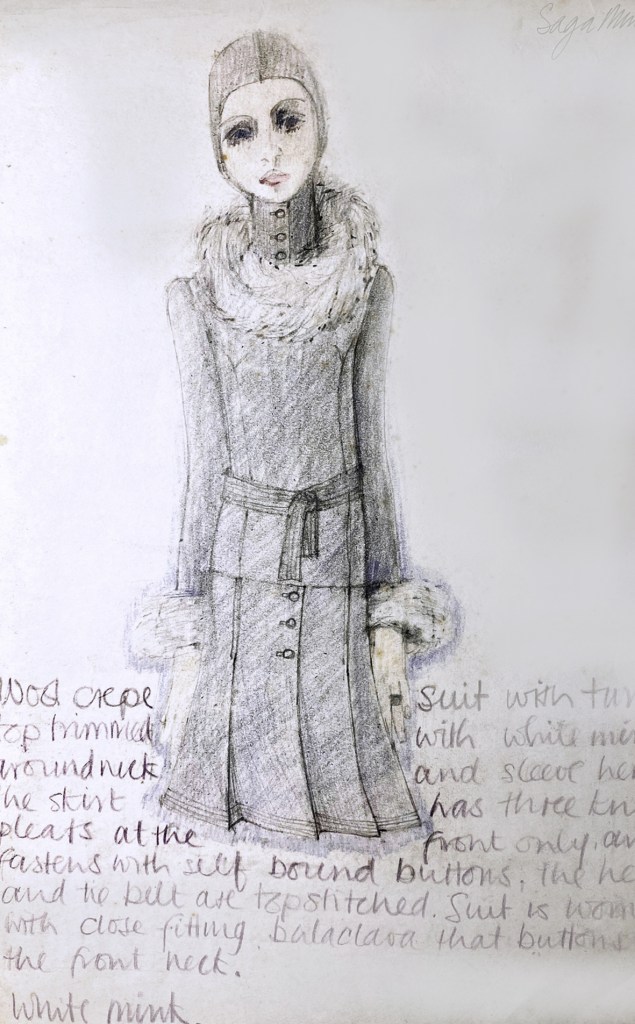
Another sign of the times the Saga Mink competition, ( I did not win – well just how much fur would these designs sell)? The anti fur lobbly was just starting up, but that’s another story. The drawings are in crayon and pencil.

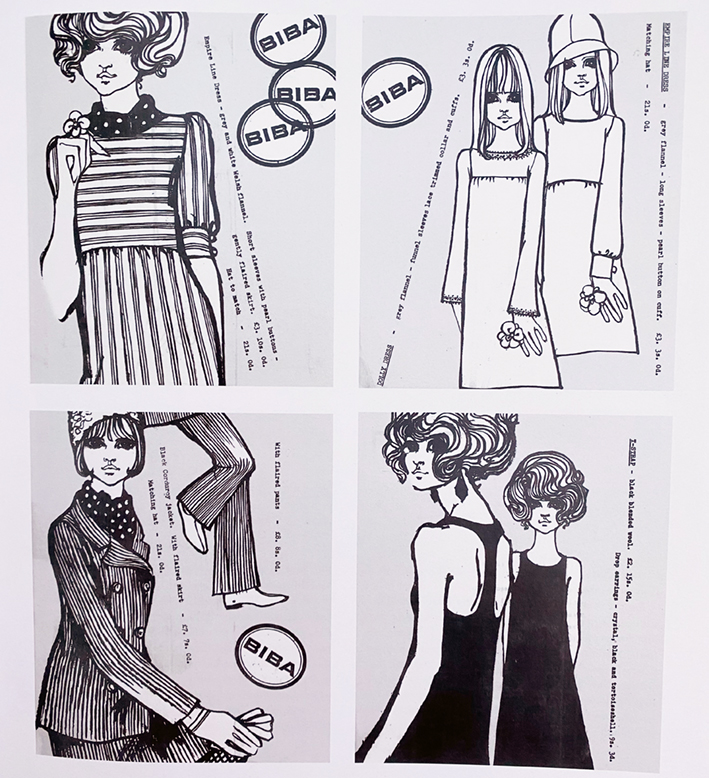
However here you can see the direct connection to the cover of my sketch book and the influence of my favourite fashion designer and illustrator – Barbara Hulanicki the design genius behind the most fashionable shop of the times – Biba .