More than Mending

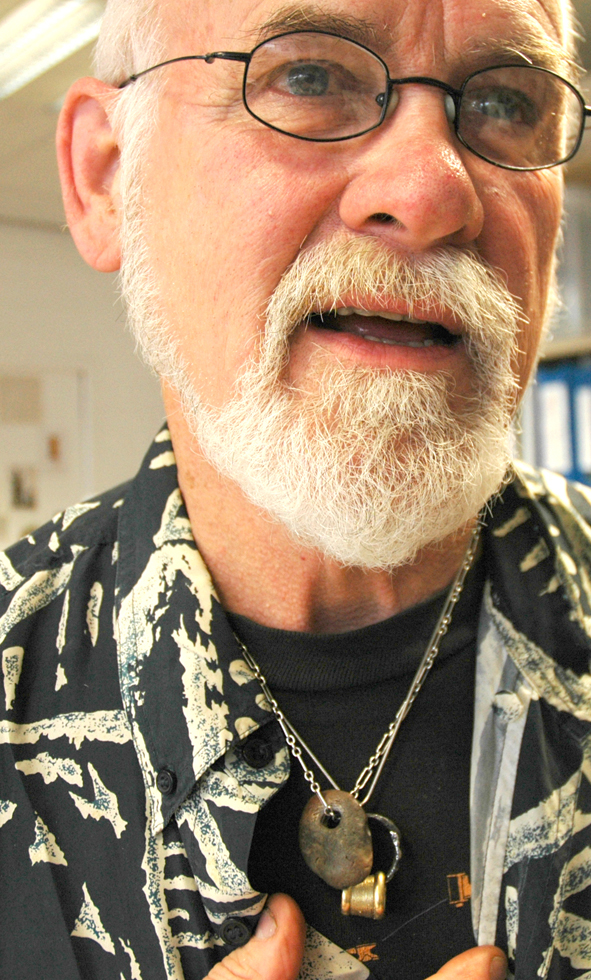
I recently attended a symposium run by Jessica Turrell a Research Fellow at UWE.Bristol, to view and discuss new research into ideas and techniques for making vitreous enamel more readily available for jewellers. At the end of the day the delegates were invited to view work by Robert Ebendorf, the Carol Grotnes Belk Distinguished Professor for the School or Art at East Carolina University, hereafter known as Bob. He had been conducting an applied arts workshop at the Enamel Research department which culminated in the symposium.
Working as a teacher, metal smith and jeweller Bob Ebendorf has been a major influence on the American craft movement since the 1960’s and is notable for his use of found objects – it was a radical departure from the traditions of jewellry making in the 1970’s when he pioneered the use of non – precious materials (think road-kill and rubbish) with conventional jewellry making techniques and materials.  His work is rich and expressive and covers jewellry, assemblages, drawings and objects.
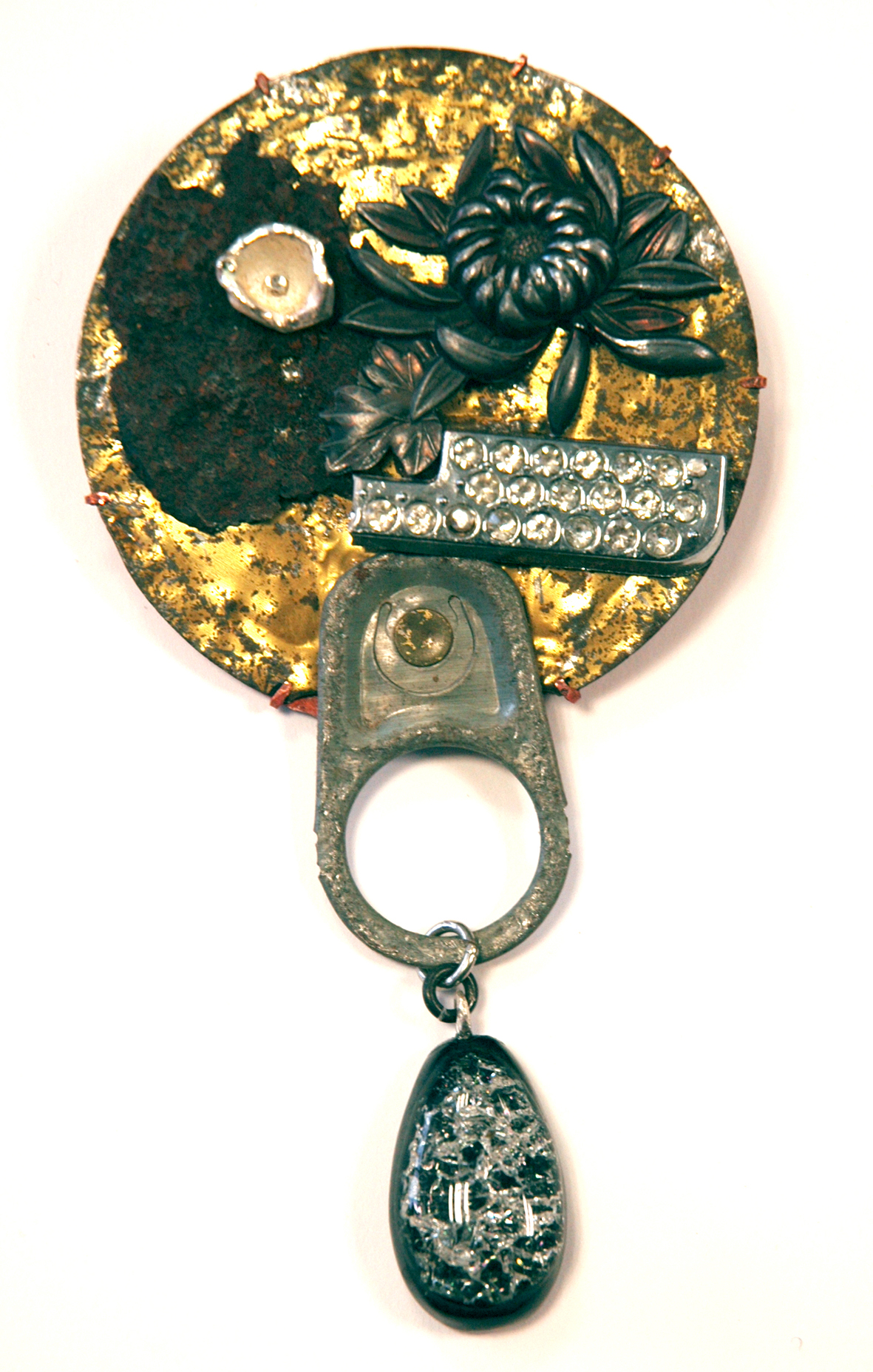
The work he displayed was as amusing and disturbing as it was desirable. Sparkling jewels adorn and glowing metals encase bones, stones, broken glass and plastics with fresh water pearls, enamel badges and bijou jewellry. When I first saw them I thought ” well these are glamorous – but what am I looking at? On close inspection the sparkling jewels are old paste brooches in leery colours and the metals are squashed and rusted tins, but all are put together with purposeful, elegant and traditional jewellers’ techniques. The effect is reminiscent of tiny collages or appliques of glistening fabrics. Rich patterns collide and overlap on charred and rusting metal, his balance is precarious but it never falters.
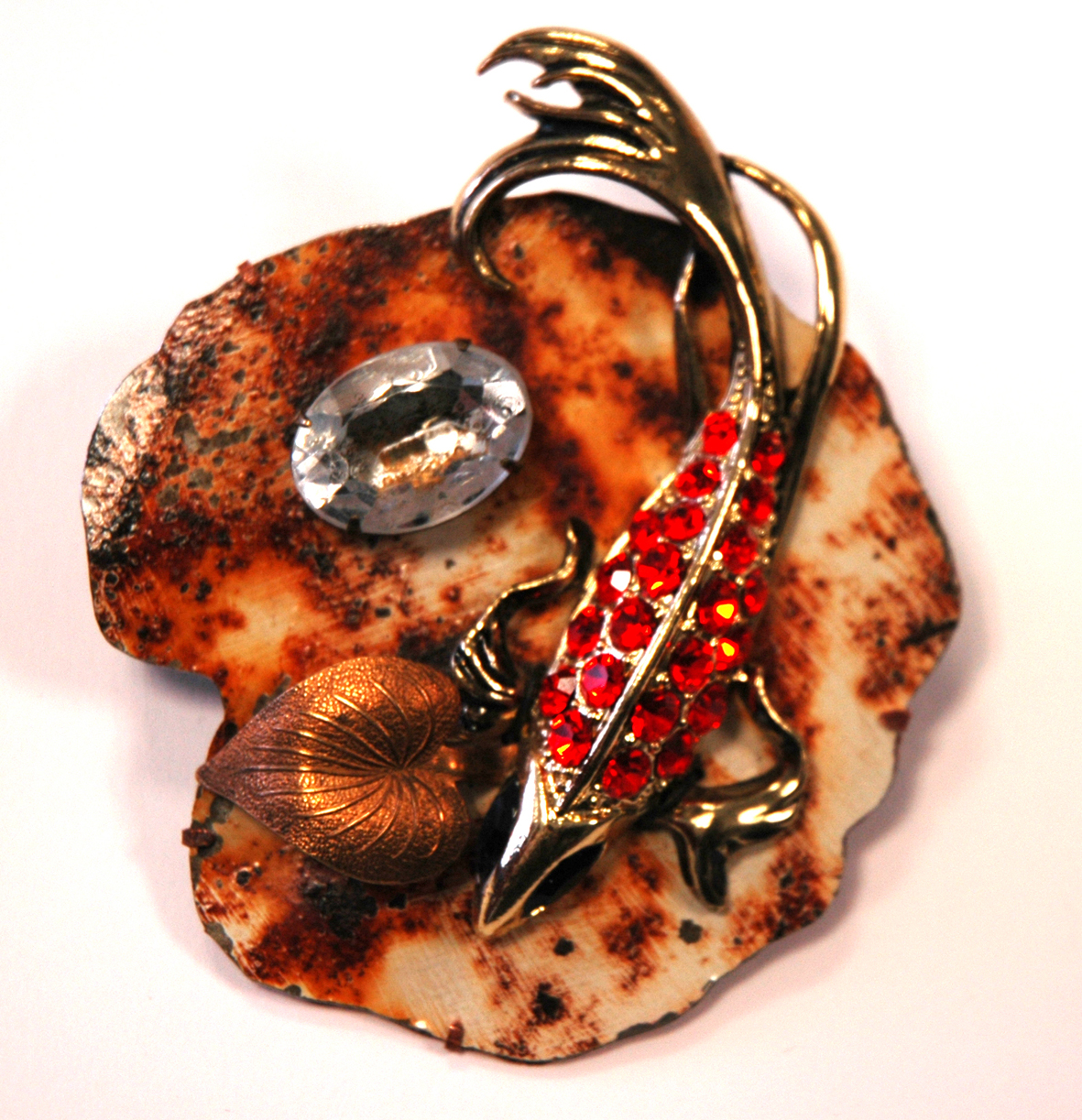
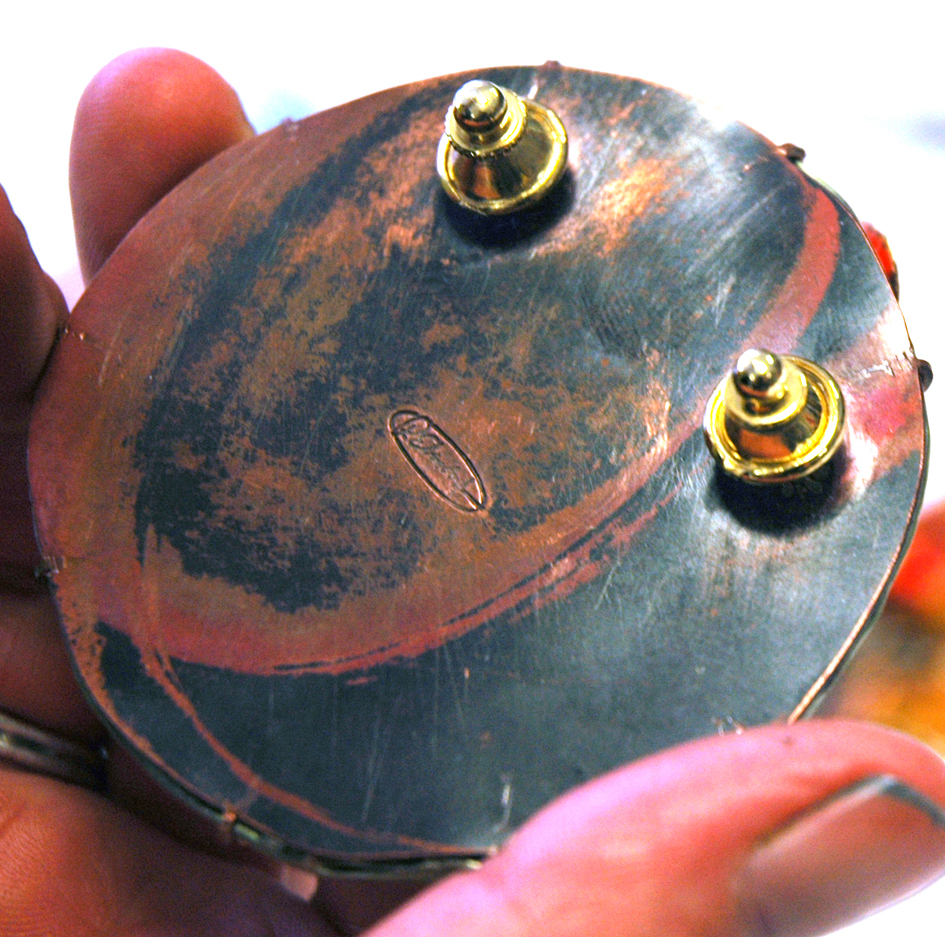
I think many textile makers have flirted with the idea of making jewellry, I certainly have, embroidery and jewellry can share the same small-scale, precious, decorative qualities – but what is always a swine to deal with and often the weakness that lets the whole effect down – is the finish.The backings in particular are so hard to organise and make stable, also the back of a brooch can be more personal than the front, only the wearer sees it, or the person who gives it. So turning these curious designs over it was reassuring and an added pleasure to see the  consideration to the finish of each piece.

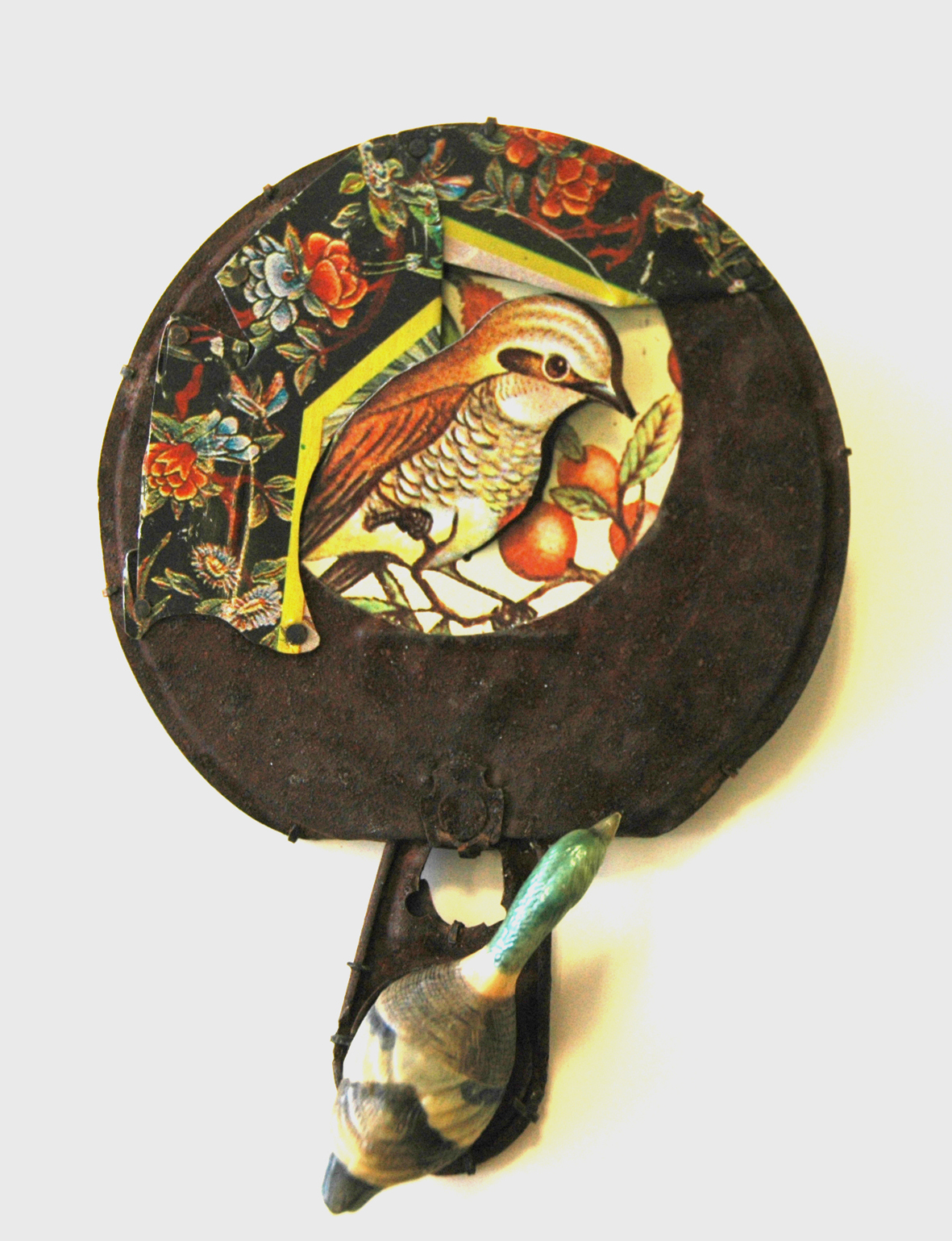
The quality of his making also alerts us to look again at his findings:- the exquisite printed tin bird, so carefully cut and released from its bower…..
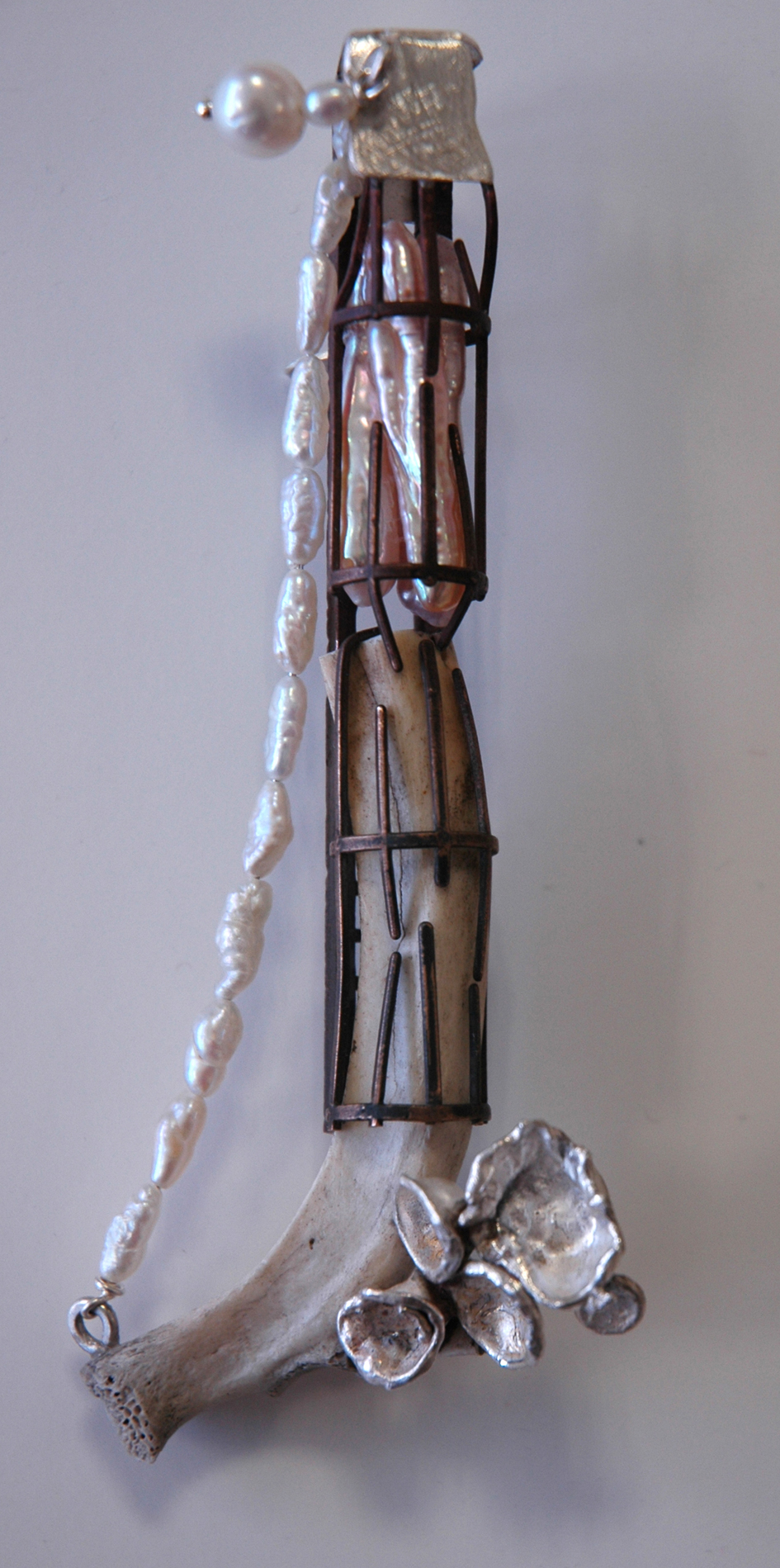
the trapped bone and pink baroque pearl encased together forever in a finely wrought metal cage……
the artless flower brooch wrapped up in sea glass, everything is transformed…
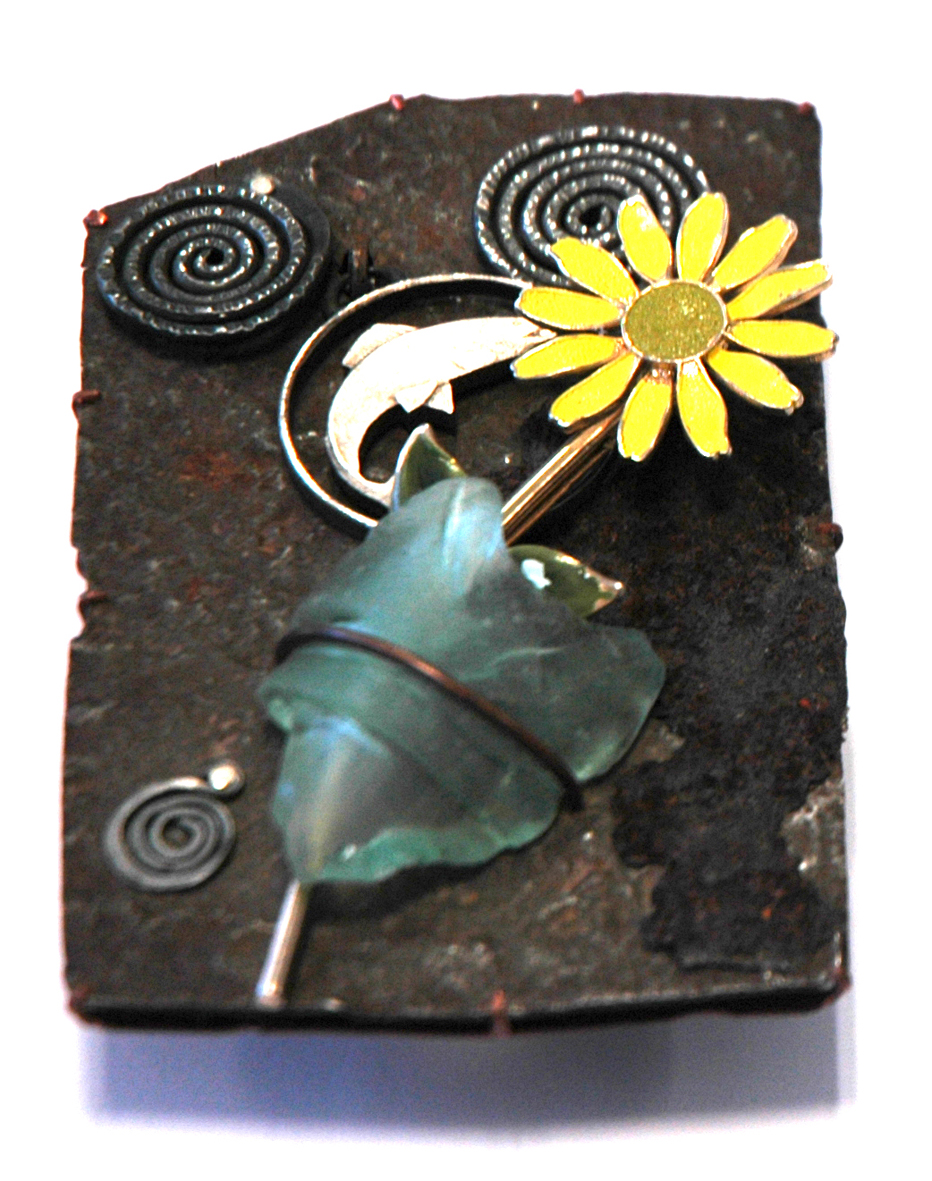
and these re-assembled objects speak to different people of different things; time is spent considering possible hidden meanings in the juxtapositions of the small objects and all the while we are delighted by the inventiveness of the maker.

Speaking to Bob about  the pieces I said that I thought in some way he had mended all these discarded, disregarded and disparate things by recycling them into other ways of being. The dictionary definitions of mending include ‘to improve’ and ‘to restore to a sound condition’ and restoration includes the idea of resurrection, replacement and rehabilitation – certainly these wonderful wonky brooches demonstrate the transforming powers of invention, playfulness and intuitive skilled making.
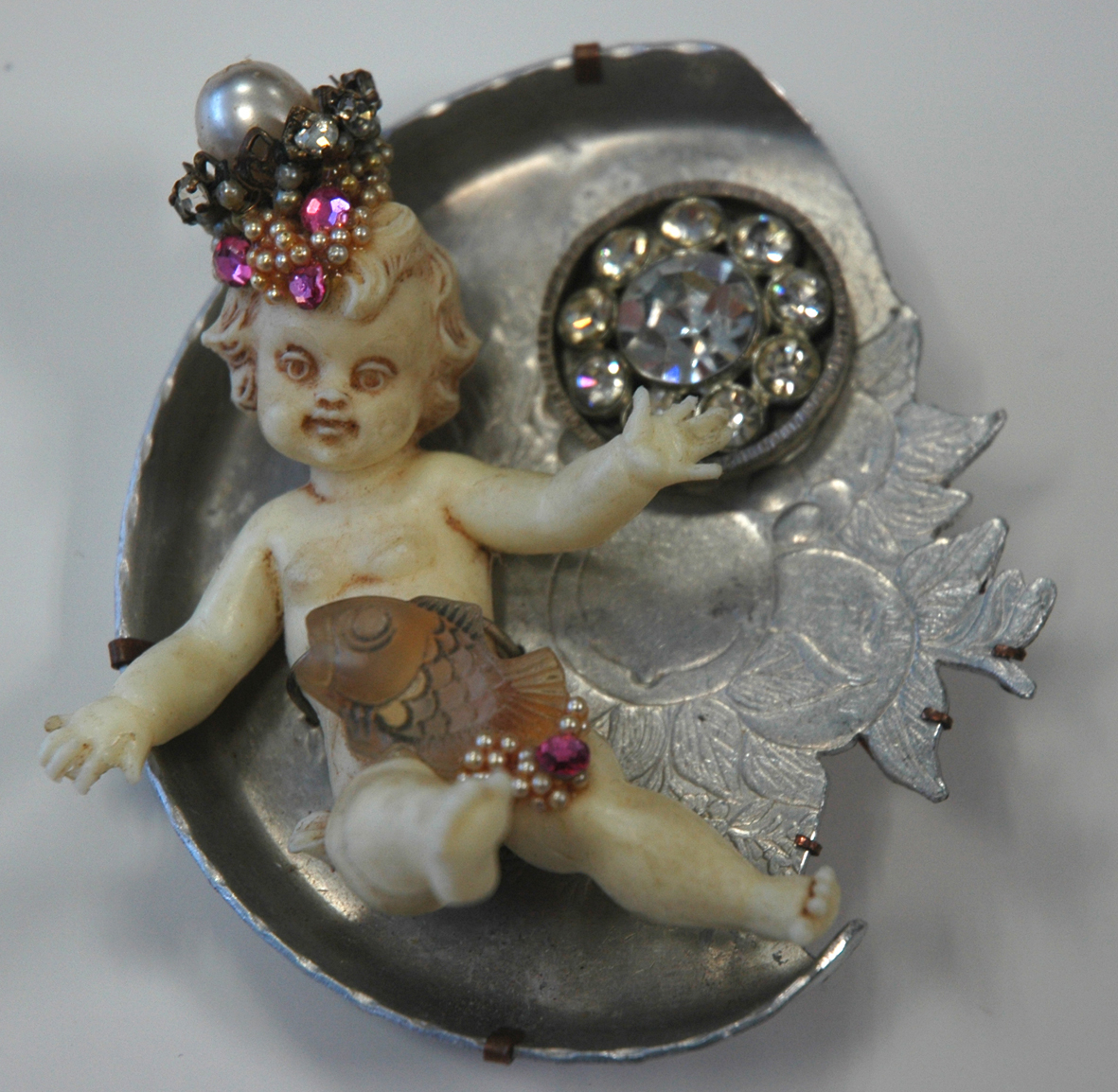
I feel that the way in which he assembles the parts has much to do with how a textile practitioner works, colour is one of the  elements that visually binds his work together; so with that thought and the mending I feel there is reason enough for including his work in a textile blog – also Bob has influenced my thinking about my own practice when I have attended his past workshops for ETC
Part of the pleasure of going to such events, even when they are not directly related your own work, is the chance to catch up with other makers and meet new people you feel might have similar interests. The audience consisted of jewelers, educationists and makers in several different disciplines and as most people wear something they have made it is usually rewarding to start a conversation……
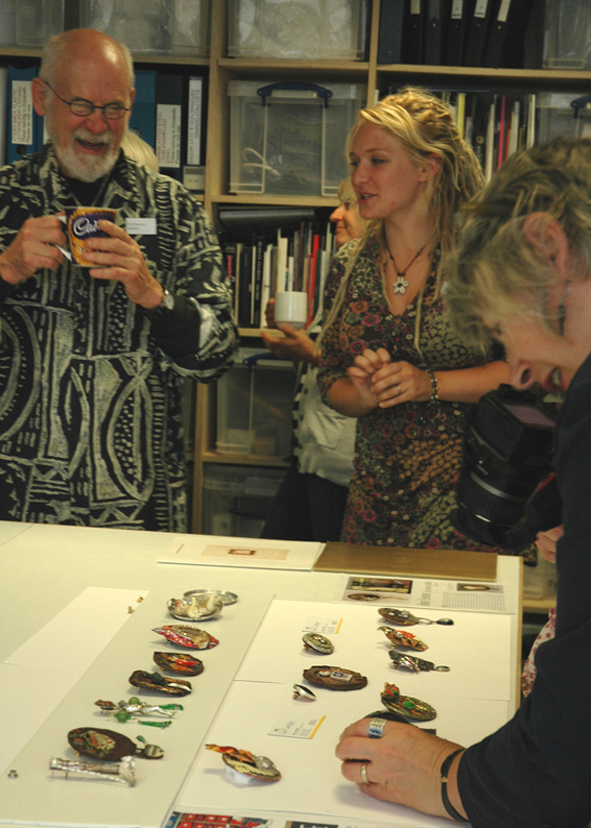
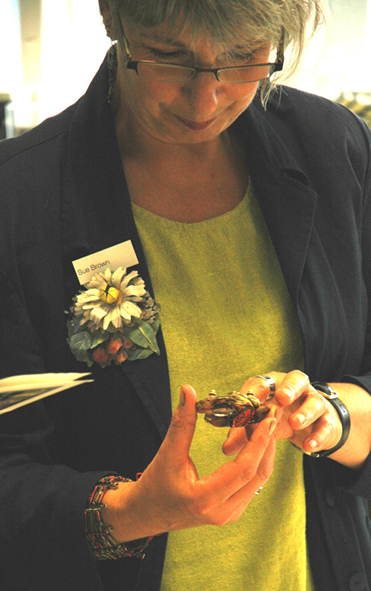
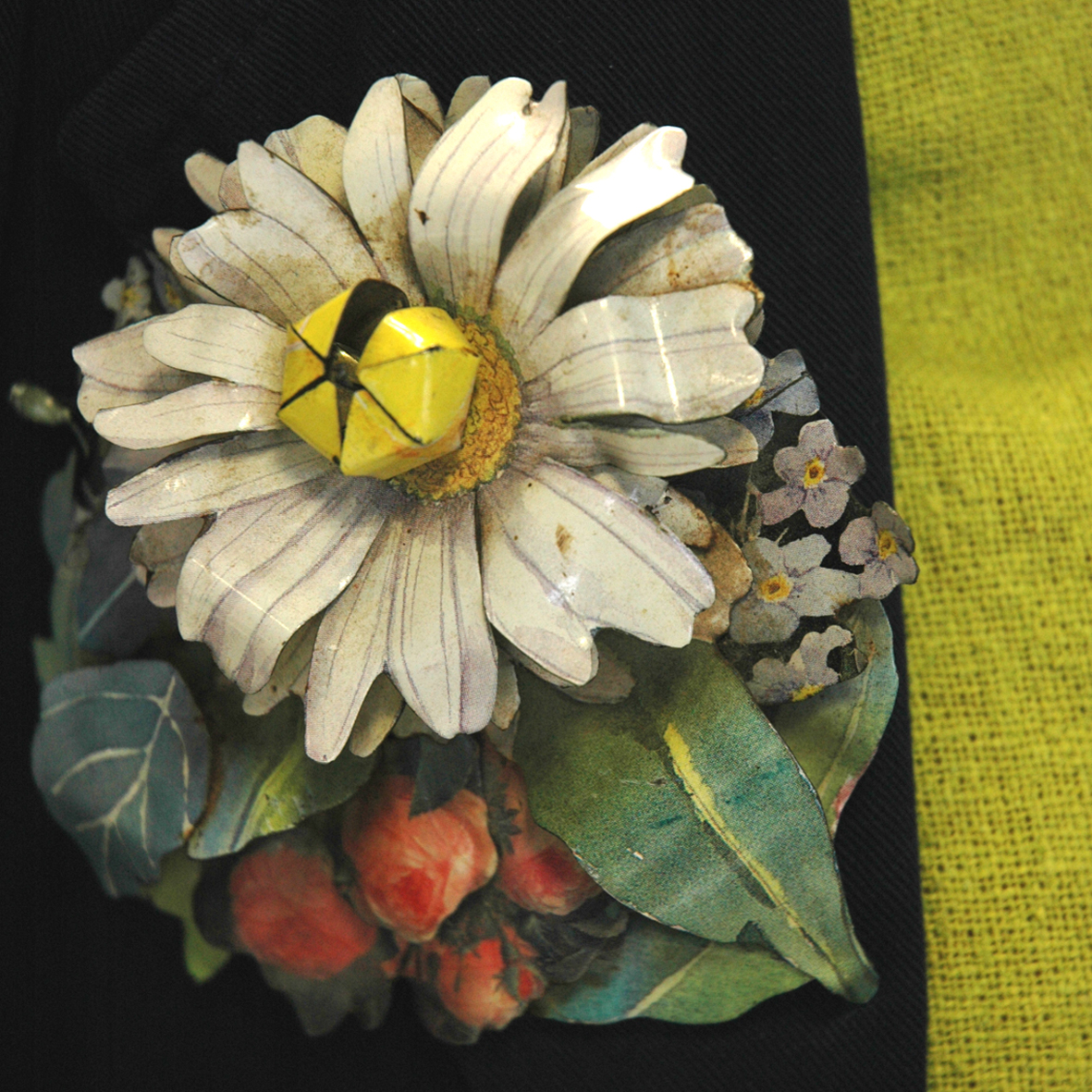
however the most stunning brooch for me was not made by the wearer but purchased some time ago, it looked as if it was a second cousin to Bob’s work and it belonged to a print-maker, Sue Brown who is currently conducting a love affair with vitreous enamel….check out the enamel butterfly collection on her blog.
QUILTS

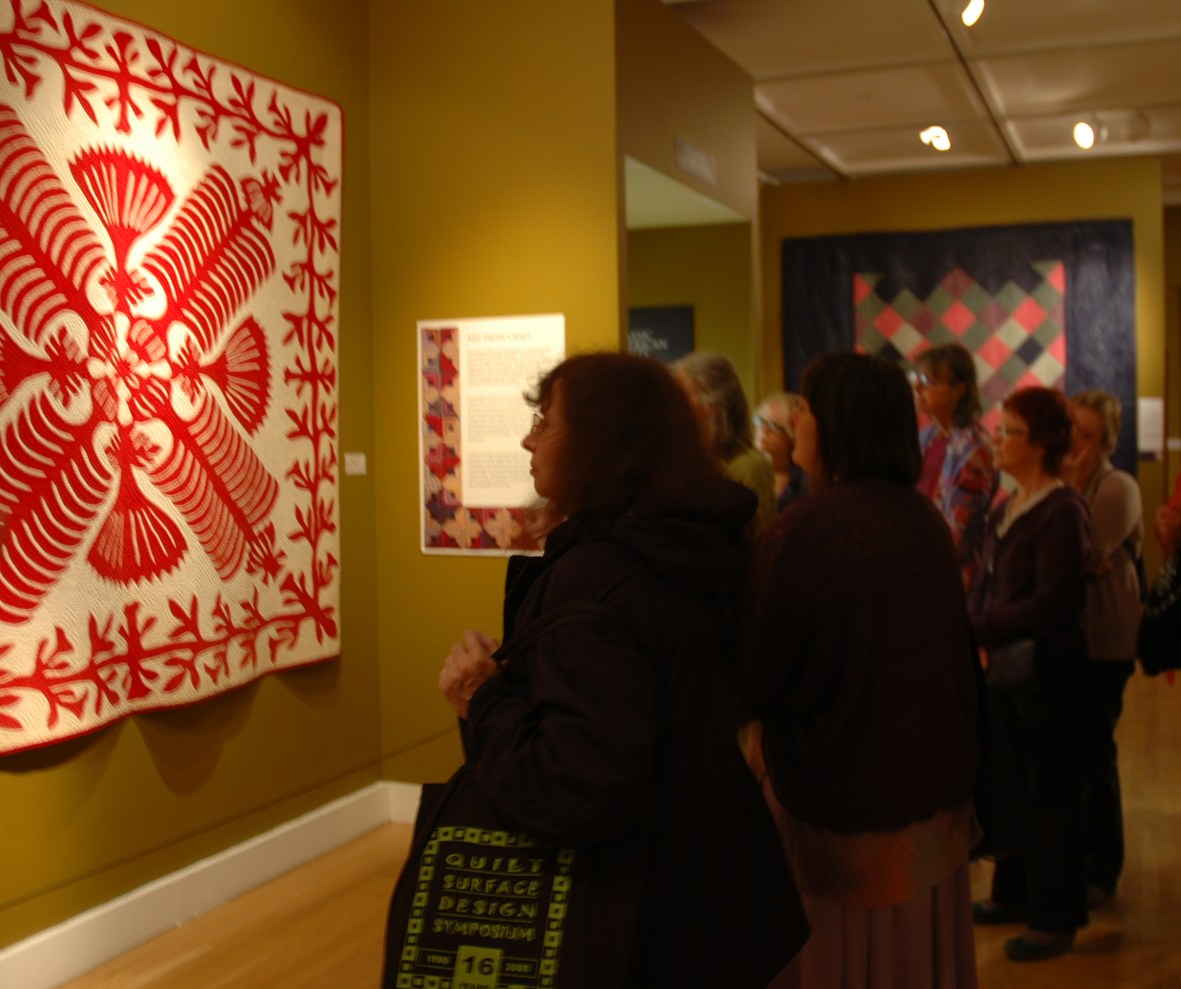
Last week I went to The American Museum in Britain, at Claverton Manor which is set on a slope overlooking a valley just outside the city of Bath. I know the museum well having visited it many times for the last 30+ years since I moved to the west of England. This occasion was organised for Textile Forum South West members specially to see the museum’s collection of Classic American Quilts as part of what seems to be the year of the quilt in Britain; the V&A museum is currently showing a large quilt and patchwork exhibition which I saw earlier in the year.

This smaller show is of traditional quilts only (held to celebrate the new book “Classic American Quilts from the American Museum” by Scala publishers and written by Kate Hebert the Collections Manager and Laura Beresford, curator) but coupled with the opportunity to see the quilt collection within the museum itself, it really is worth a visit before it closes on 31st October. The one thing about the museum which makes it stand out from others in this country is the quality of its staff, unfailingly friendly and polite even when telling you that you can’t take photographs, but knowledgeable to a remarkable degree about the entire museum.

TFSW party in front of “Queen Kapi’olani’s Fan quilt

One of the most interesting things about the quilts are the names given to them in the catalogue, which you can see on the museum’s website. Here the Hawaiian quilt in the classic exhibition has a truly remarkable title. As a visiting party we were given a very thorough guided tour from one of the quilt specialists, Judi Grant, she certainly knew the collection and its history well and even the quilt experts amongst us were impressed.

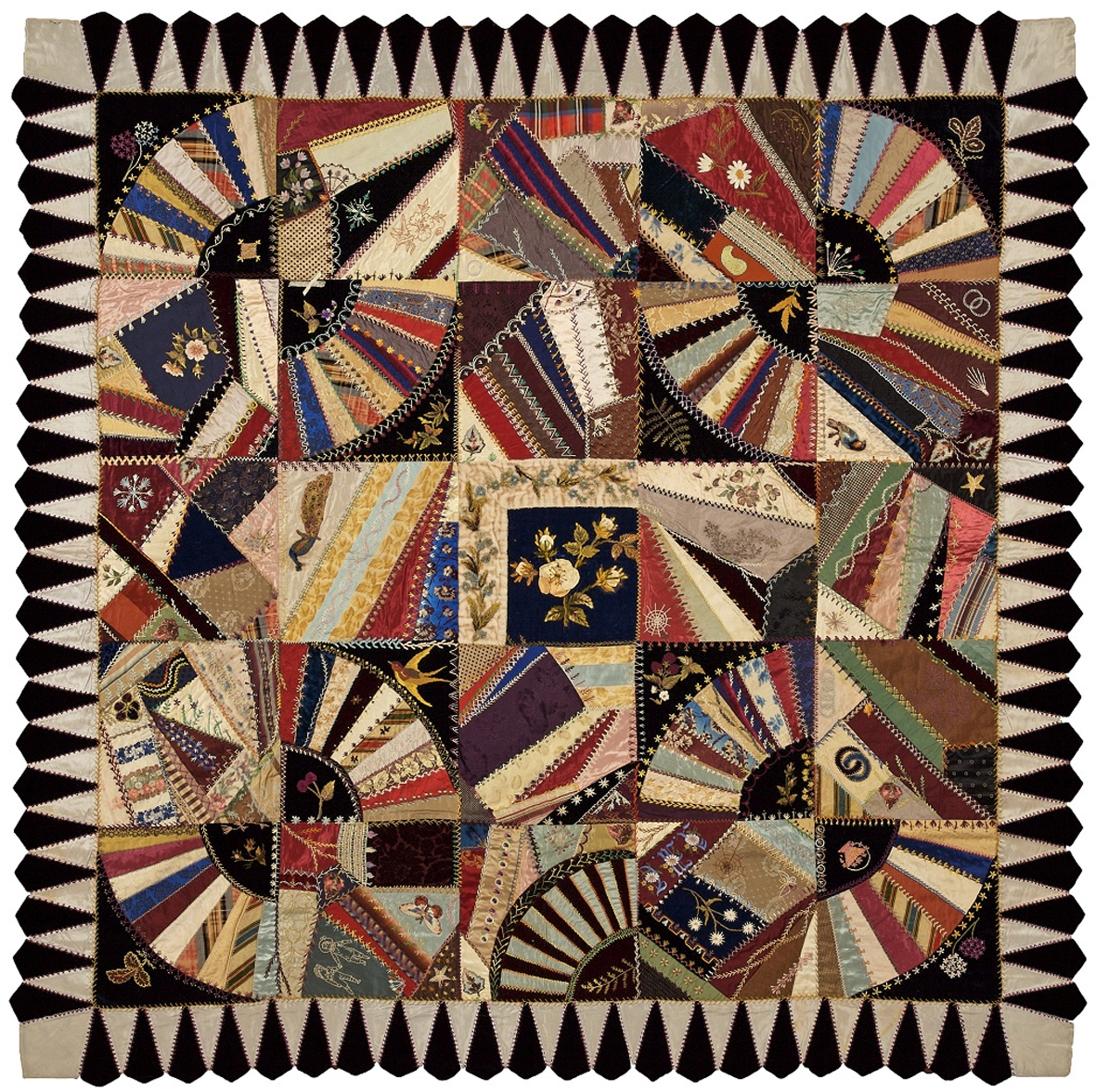
crazy patchwork with fan edge

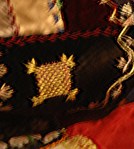
I particularly like crazy quilts as they are usually embroidered and several years ago I wrote and sampled a book called Crazy Patchwork, for the publishers Collins and Browne. To my delight I found a darning sample in one of the corners of this quilt, but because of the necessary low light levels needed to conserve the collection I have only got a very shaky picture from my hand held camera which was only permitted without the flash.

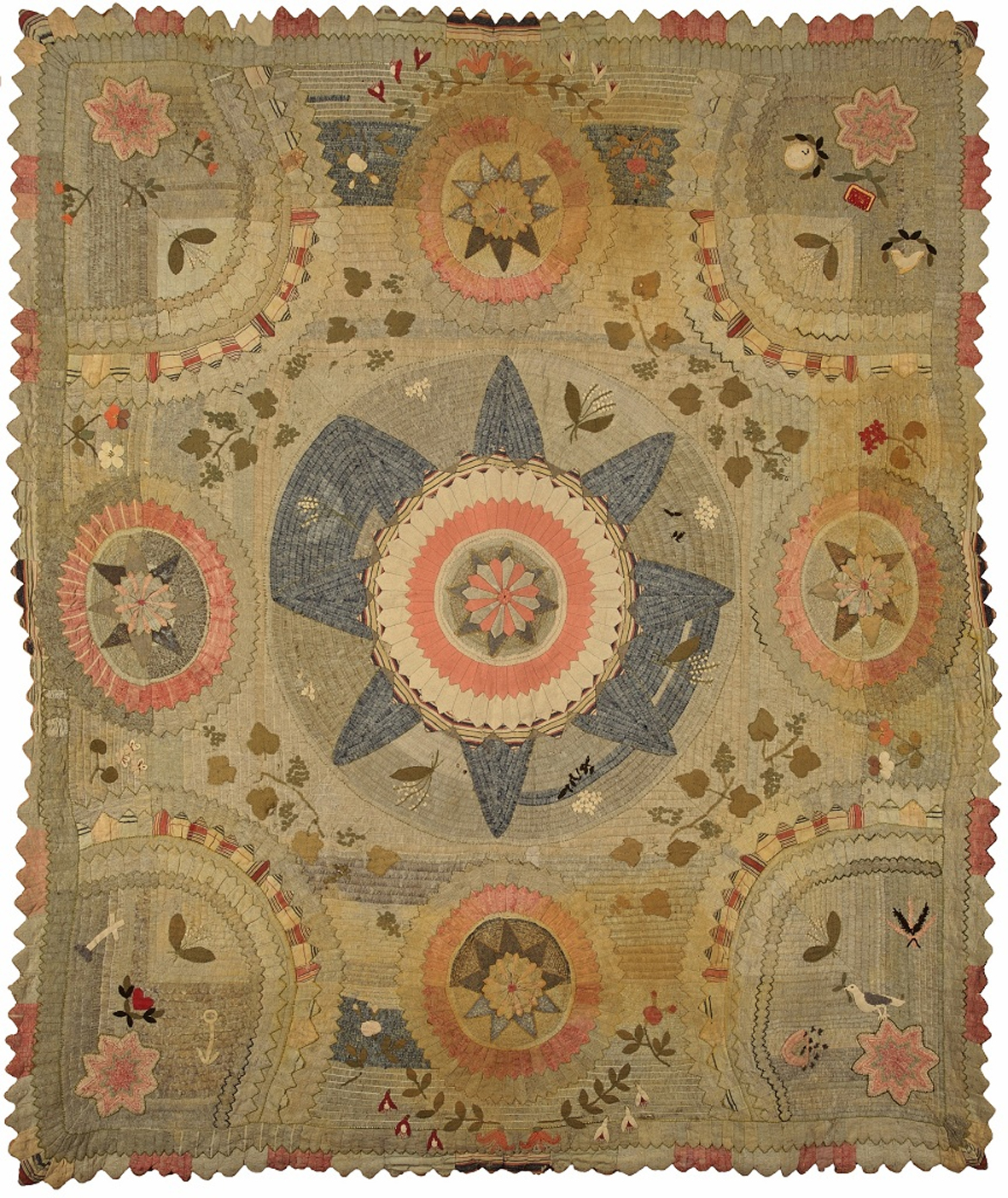
So this got me looking really carefully at everything else for signs of mending and darning. The guide had explained that the museum policy is to conserve but several of the quilts showed signs of mending, obviously made before the museum had acquired them. This 19th century wool quilt was very unusual for the amount of darned areas, it must have been highly valued by its owners to have kept repairing it and I imagine this was not just a case of  necessity for it really is a beautiful textile; the soft and faded colours  make harmonious patterns even though it is stained and worn.
wool applique quilt, the most darned and mended quilt in the entire collection

While on my hands and knees trying to photograph the darns on this woolen quilt I found this tiny red heart appliqued in the left hand corner. Now who put that there for whom? I asked myself.

Now I had a mission for the rest of the collection – looking for mending….so off we walked to the manor house to see the main quilt collection and on my way up the stairs, I noticed this perfectly crafted stone repair.

inset stone repair on the stairs of  Claverton Manor house

The collection on view is apparently only a small proportion of all the quilts that are held and I recognised most of these quilts from earlier visits;  sadly one of my  favourite pieces is not photographed, either by me or  by the museum for its own archives yet – a small patchwork that is tied together rather than quilted, it is made out of faded blue  and white working clothes fabrics, denims, tickings and shirtings. It is the first piece that you see on the racks of quilts and it brings home to you just why this type of textile was first made – out of sheer necessity.

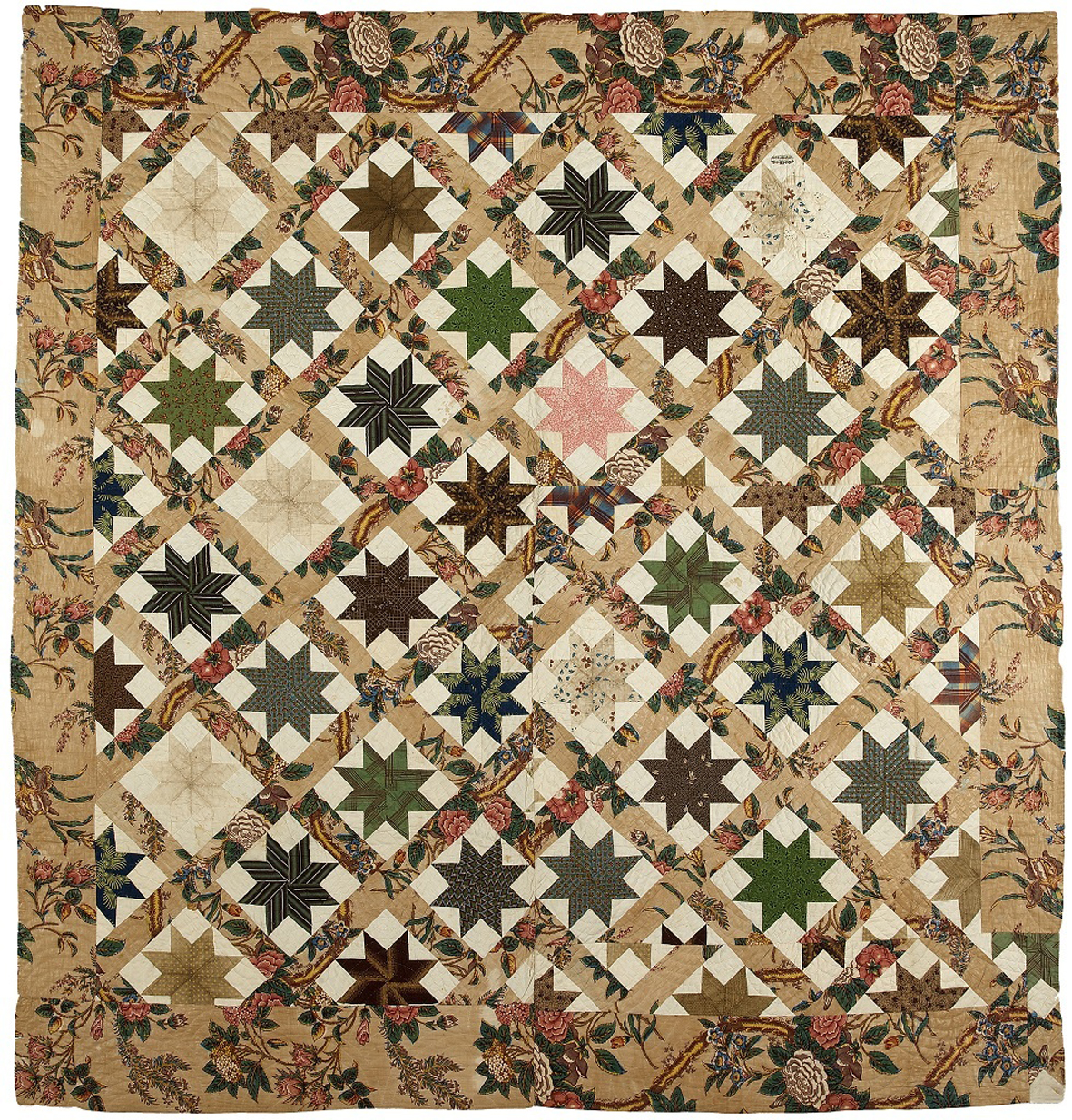
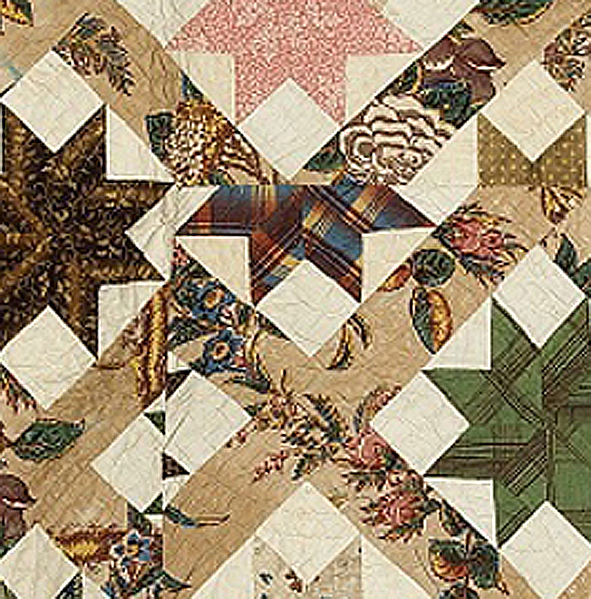
But onto a spectacular quilt with a spectacular name, the Tippecanoe and Tyler Too quilt, it is large and made of  stars set in diamonds which are sashed and bordered with chintz prints, but even better from my point of view –  a quarter of  it has been cut and re- sewn together in a very curious patchwork.

Tippecanoe and Tyler Too quilt

detail showing the join in the large patched area of the quilt

The quilts are obviously my major reason to visit the museum so often as well as the various textile exhibitions they put on in the purpose built modern gallery, but it is also full of fine furniture, ceramics, stencilled rooms and a large ornate copy of the Declaration of Independence, which I particularly like as July 4th is my birthday.

tussie – mussies in the making

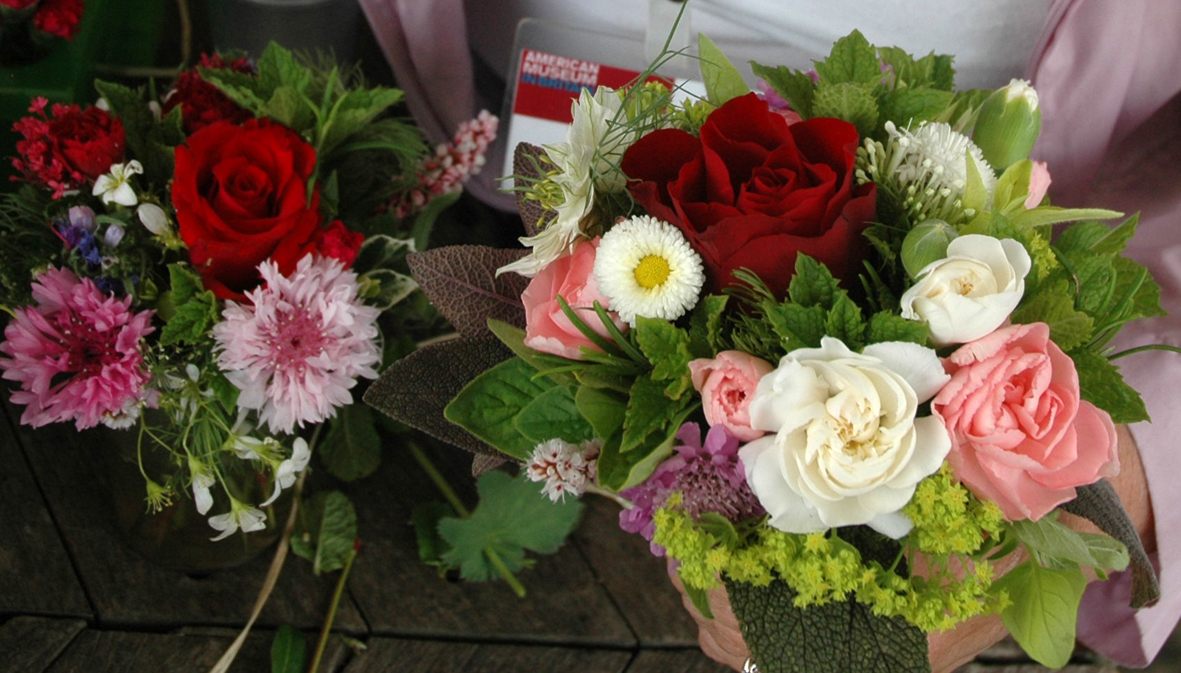
However no visit is complete without sampling the brownies and cookies for sale in the stores and the terraced restaurant/tea rooms – not exactly a diner –  but once on the terrace go to the small herb shop where tiny hand tied bunches of flowers are made and sold, called tussie-mussies they are exquisite and worth a blog all to themselves.

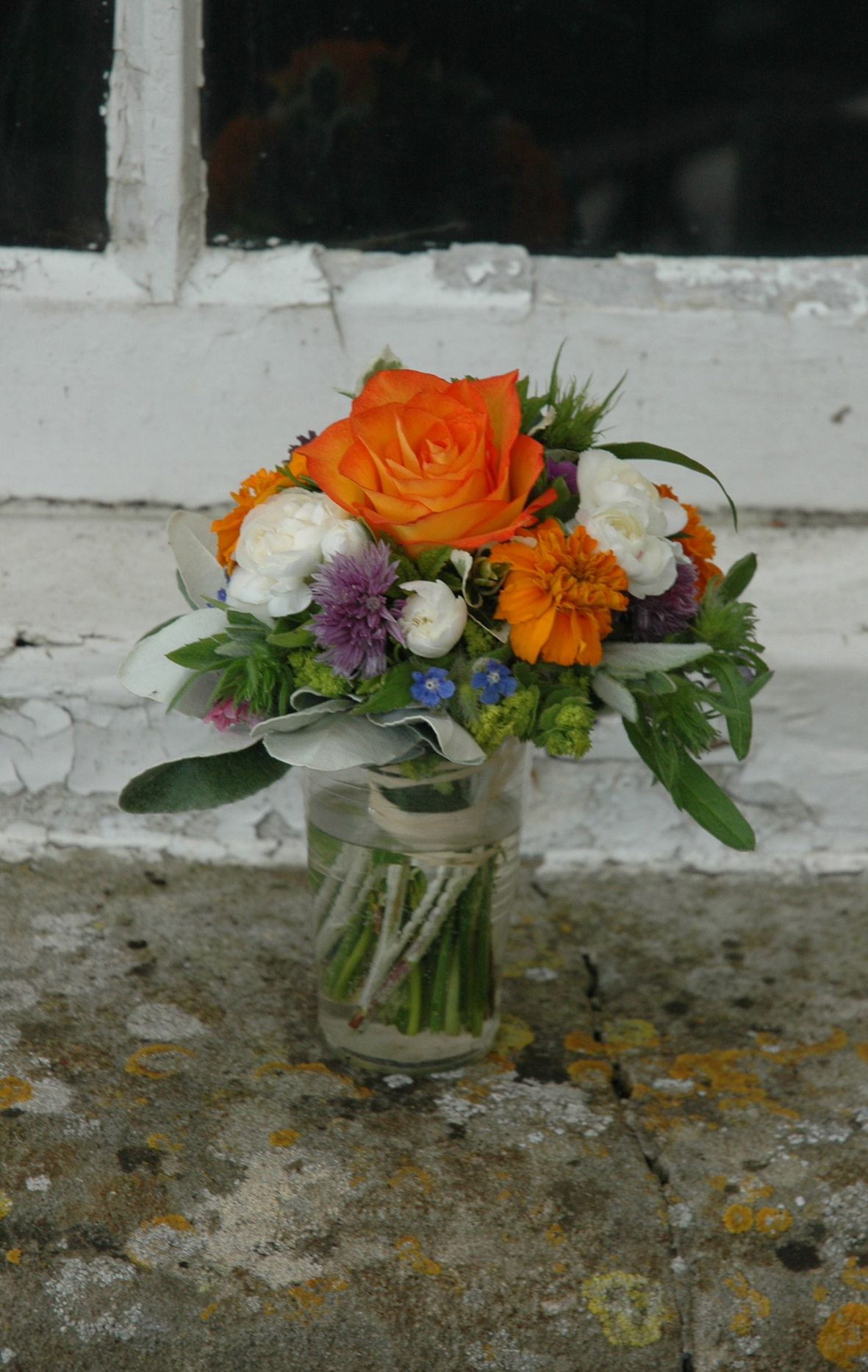
flower arrangement on window sill overlooking the terrace

More mending

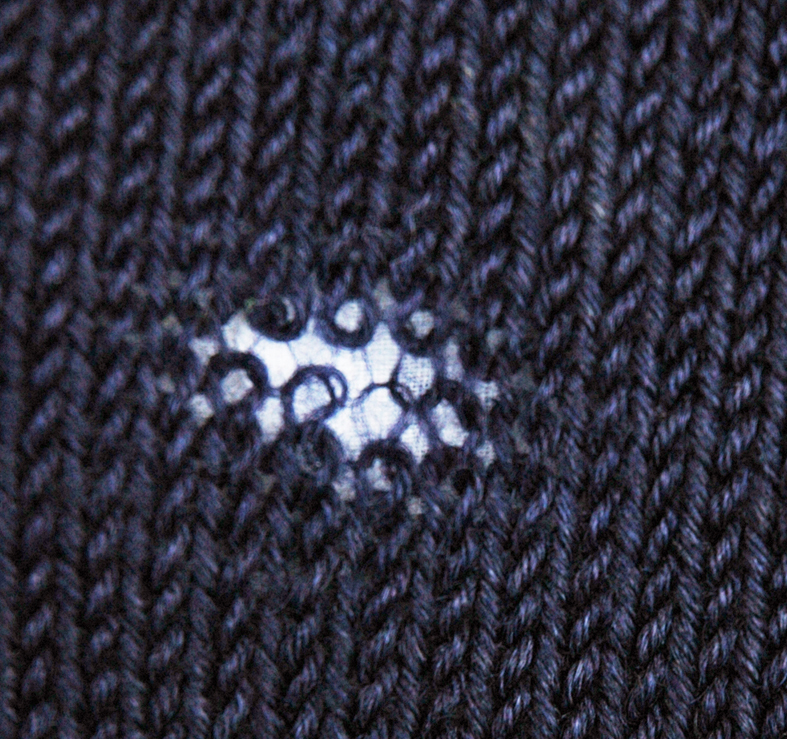
small worn area on elbow of hand knitted sweater.

Talking to friends  Rosemary and Peter Murphy about my mending theme, Peter asked if I was up to stitching an “invisible” mend on a sweater for him as he didn’t feel that he wanted the darn to seen. Immediately I informed him of my new found belief that mending is a sign of worth and he should be proud to wear a very conspicuous darn – he wasn’t convinced – but assured me that if I would mend it he would write the story for the blog, so here it is:_

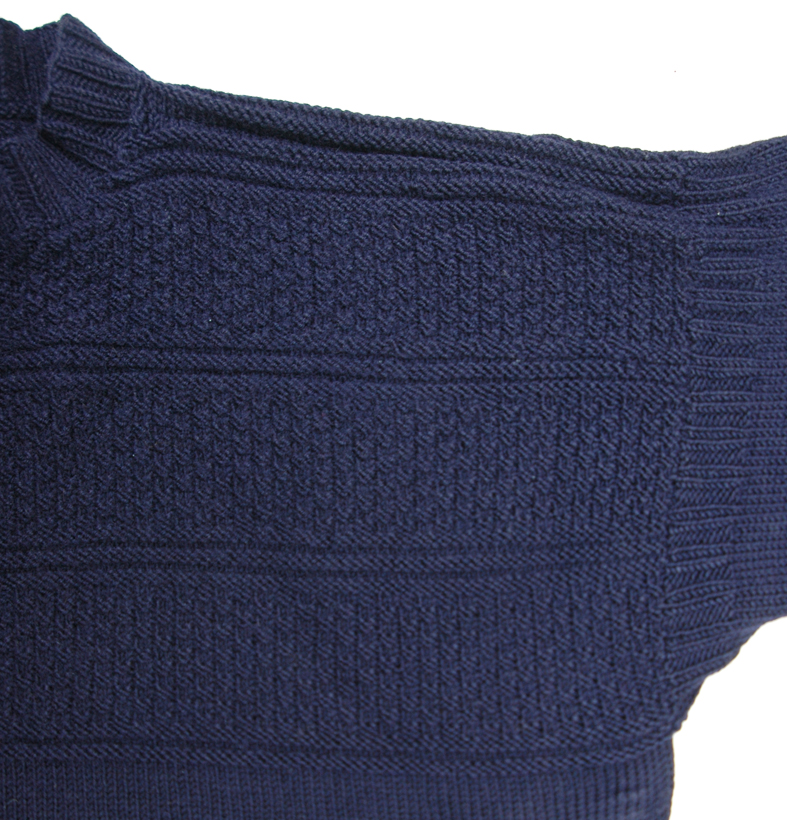
“My mum Knitted the jumper about 35+years ago and I rediscovered it during the recent cold weather. It was lurking in a wardrobe forgotten and ignored but it’s lovely and warm (a little on the heavy side perhaps) but still in good condition apart from the worn elbows. I would be delighted if you could strengthen them before it is too late!  Coming from the Welsh Valleys (born 1913) Mum was a demon hand knitter as was her mother before her. After many years she treated herself to a noisy Knitmaster machine that she was very proud of. I’m afraid she produced so many woollies for the family, close and extended, that we soon couldn’t wear them out quick enough. If they did show any signs of wear she would set about unpicking them to produce yet another garment. She couldn’t waste good wool.The jumper is, I believe, a fisherman’s style from the Yorkshire fishing village of Staithes. I’m sure you know the story about each fishing village having its own pattern so that in the event of a disaster, bodies could be more easily identified.

  1. Staithes fisherman's knitting pattern

As an art student at Leeds in the ’60’s such clothes were very trendy. Guernseys and fisherman’s’ smocks were practical as they “weathered well” with all the plaster and paint stains. They were usually worn  with a pair of tight jeans and Chelsea boots. Years ago I wore this jumper to a concert at Colston Hall in Bristol. During the interval a woman tapped me on the shoulder to say she added the jumper and where had I bought it. She was delighted to find out that my mother had made it and asked if we still had a copy of the pattern, addresses were exchanged, phone calls made and the lady received the pattern – Mum was delighted by this compliment to her knitting.

darned elbow patch, stitches follow the rows of knitting to reinforce the worn area -

Looking back, her skills were taken too much for granted but I am sure that she took pleasure in us all wearing the results of her enthusiasm, it was after all an act of love.I hope to bring the sweater to you to be restored and revived”.

Well I have tried my best but matching the wool was difficult, this is the nearest I could get using in my whole wool selection and I had to slit tapestry wool into just 2 strands  to reinforce the elbow.

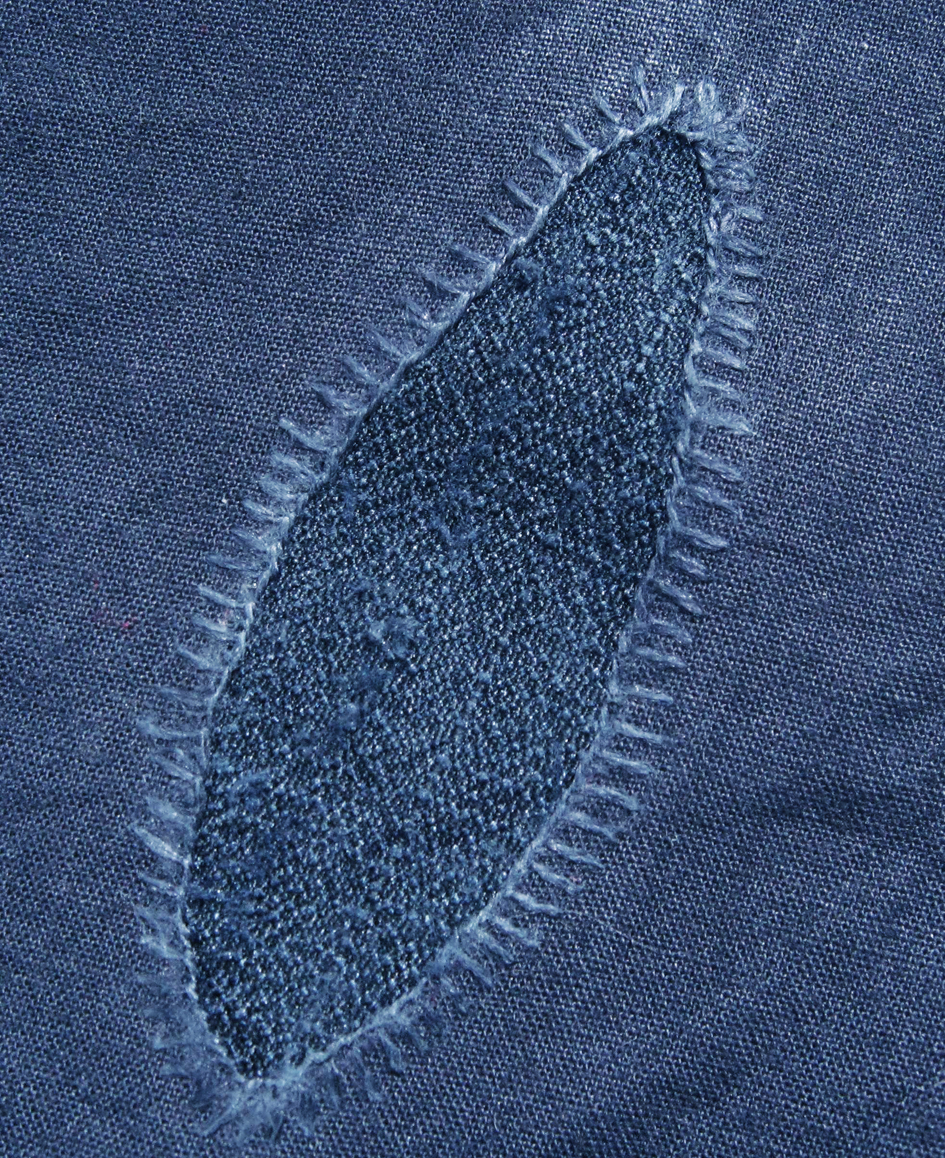
Meanwhile on a navy blue theme, I have been sent a picture of this small and beautifully stitched inserted patch by Dail Behennah.  She visited to my studio in order to find a fabric to match for her new and damaged skirt, we found the perfect colour in linen and also an exact match in linen thread to make tiny buttonhole stitched edges. It looked absolutely fine until she washed it – the skirt faded and the patch didn’t.

3cms long inserted patch with buttonhole stitch edge by Dail Behennah.

Stitching Ceramics – First Samples

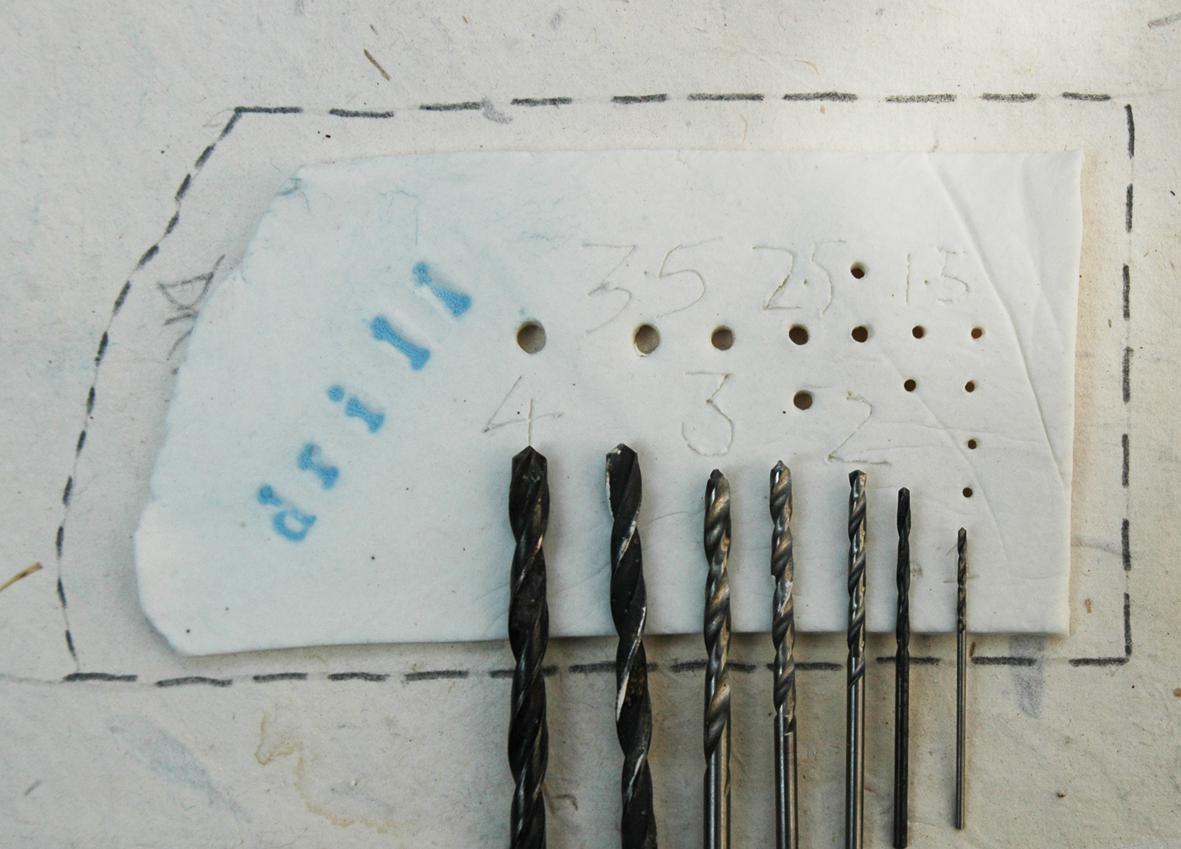
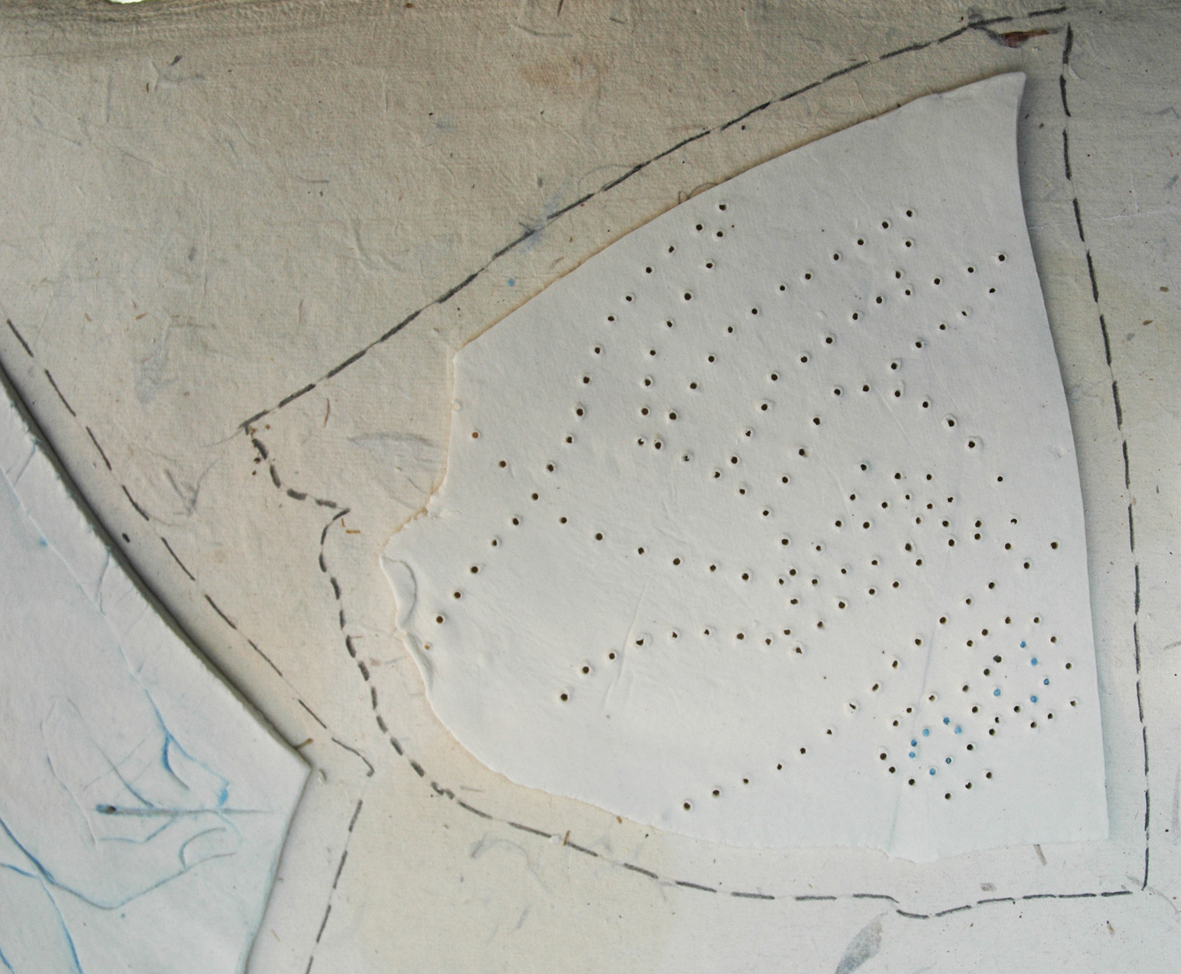
Today I went to Blaze gallery and studio to collect some of the fired paper porcelain samples from Hanne Rysgaard, (see Archive for first Stitched Ceramics post) and brought them to my studio here to colour and stitch. I am primarily testing how much the porcelain shrinks when fired; Hanne calculates at 20% shrinkage but that I need to see what that looks like.  Then I can decide how big to make the dishes for the stencils and the shapes to impress into the surface – but even more importantly calculate the size of the holes I will eventually stitch.

drill bits with sizes and resulting size changes after one high firing. The dotted outline surrounding the sample is the original unfired size of the paper porcelain

It appears that the smaller the hole the less it appears to reduce and after firing they seem to fit the next smaller size –  so a 2.5 bit will now fit -just- into a 3.sized hole and as they all need smoothing with a file that seems easy enough. I chose to make most of the holes at 1.5 size drill bit and now this easily admits a medium sized crewel needle –  a sharp pointed needle with a long eye for threading thicker yarns.

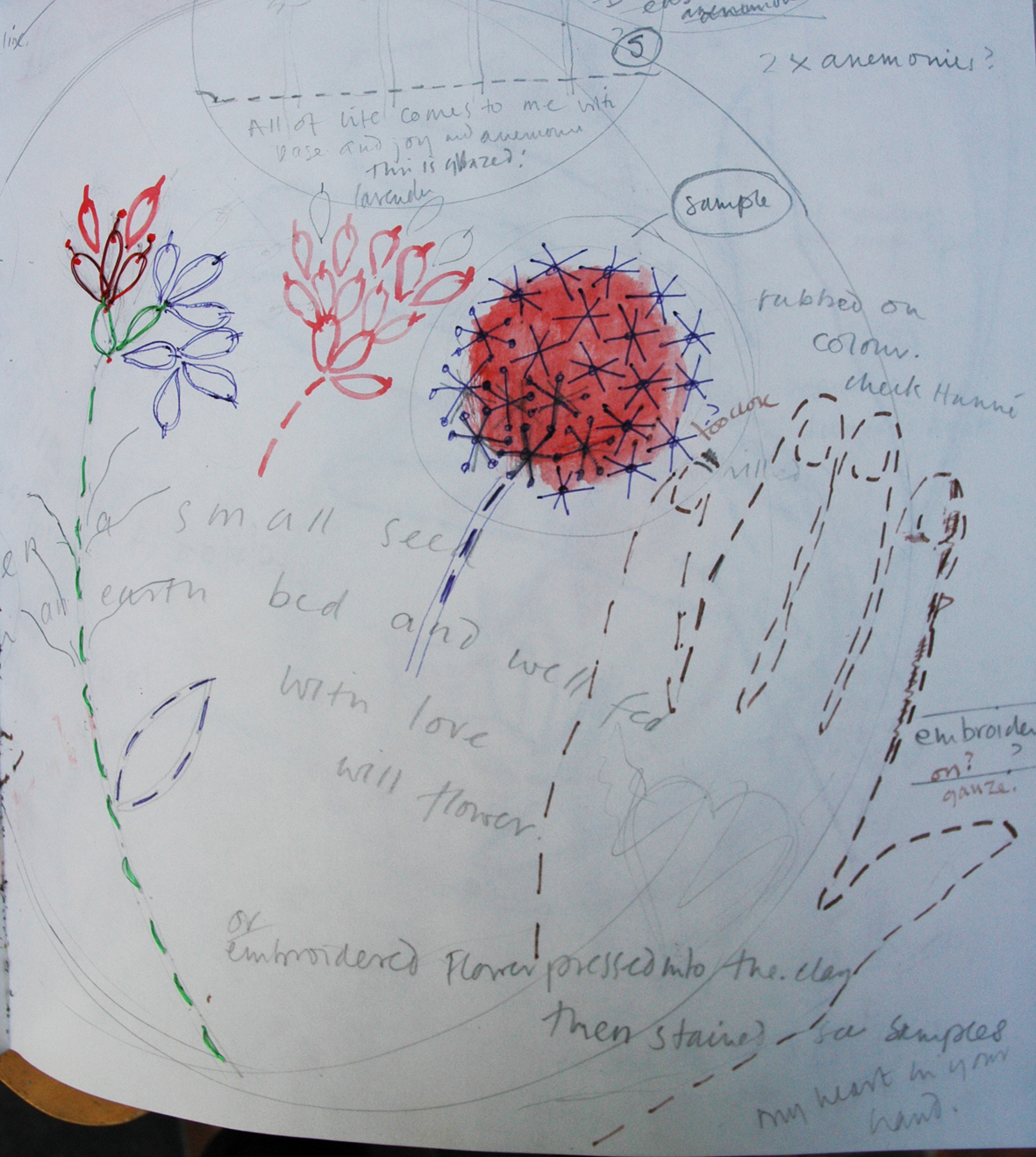
drawing for ceramic dishes, drawn around my own hand; stitched wire flowers
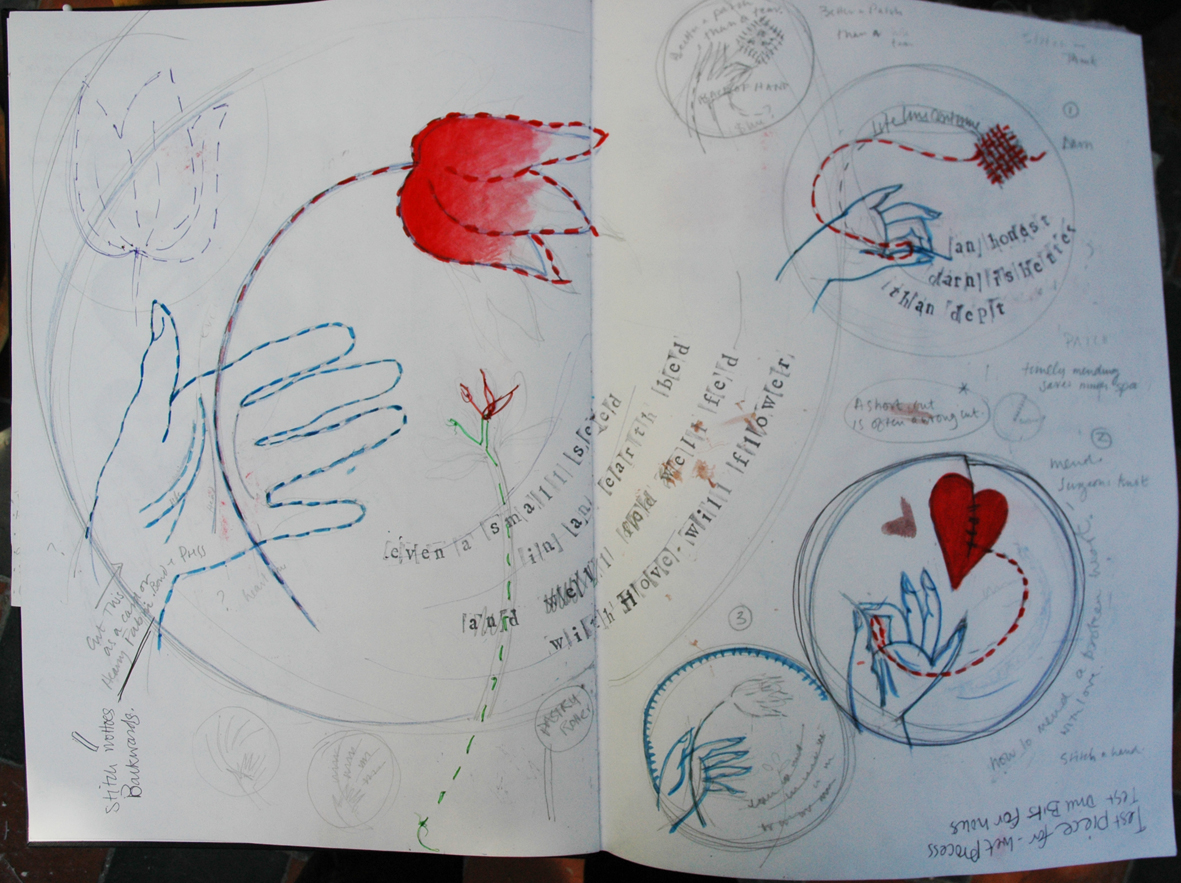
sketches for hands, flowers and mending broken hearts dishes.

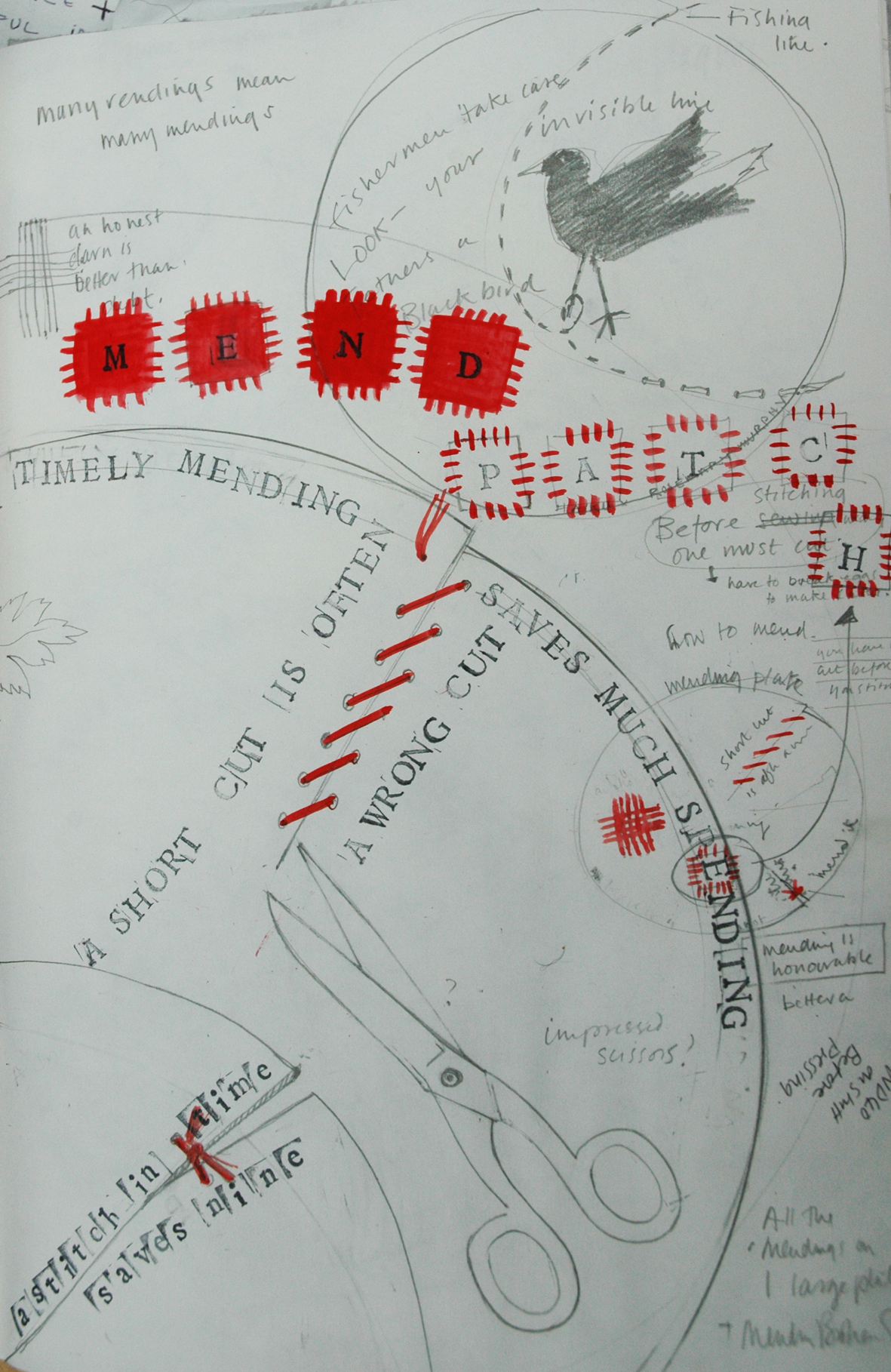
I made several pages of drawings for poems, mainly haiku on the subjects of flowers and hearts, written by a friend Rosemary Murphy, but also I liked the sayings about mending – now there’s a surprise! Anyway samples are made for the mending hands designs and the poems as this is the set of ideas that I have decided to develop into porcelain plates and dishes.

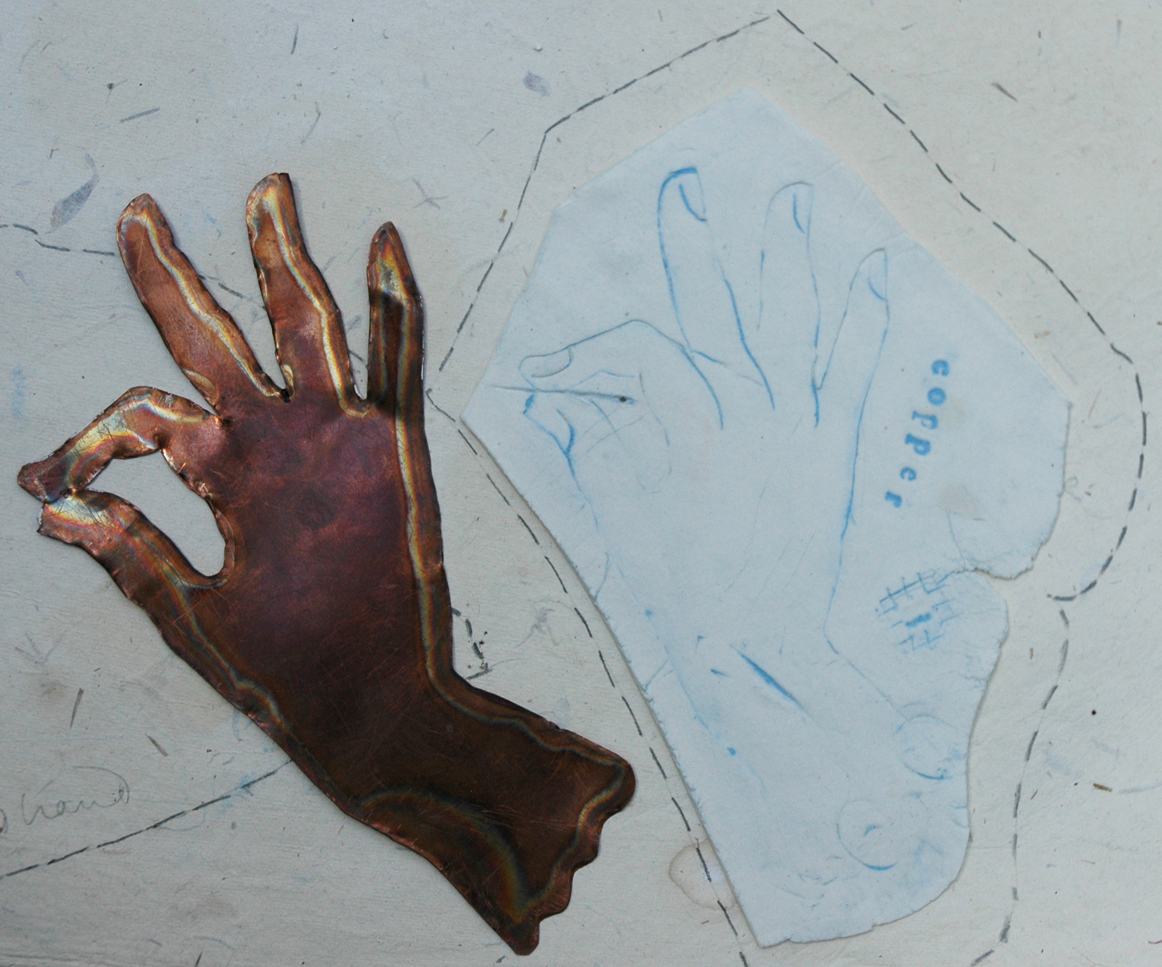
I also wanted to impress the hands as I had previously impressed the lace in the large sample plate – see first blog on Stitched Ceramics – so I used a hand that I had previouslycut out of  copper sheet using my plasma cutter, this was adapted from my letterhead which I have used for over 20 years. I also am waiting for another cardboard hand impression to be fired to make a comparison between metal and card.

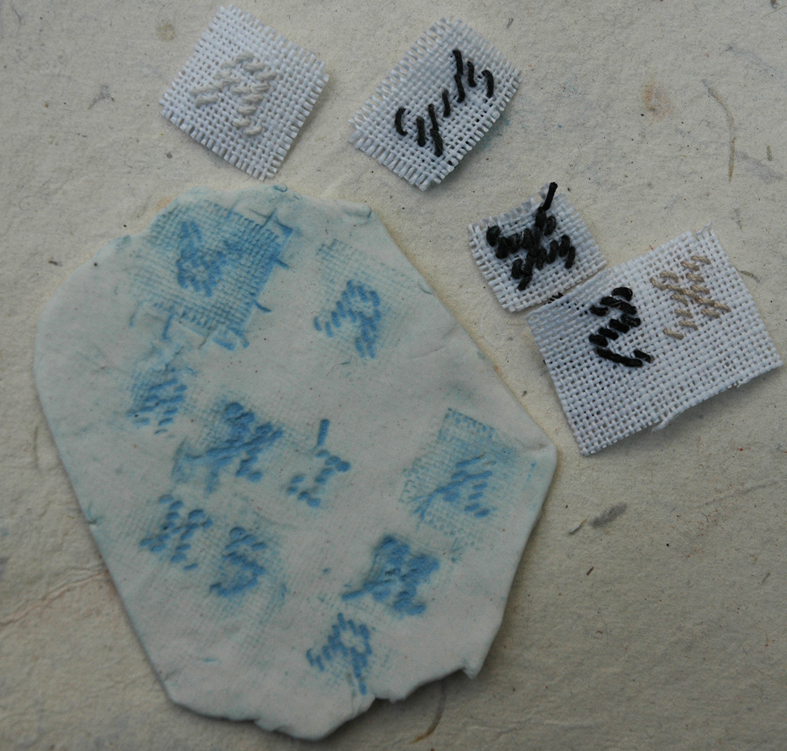
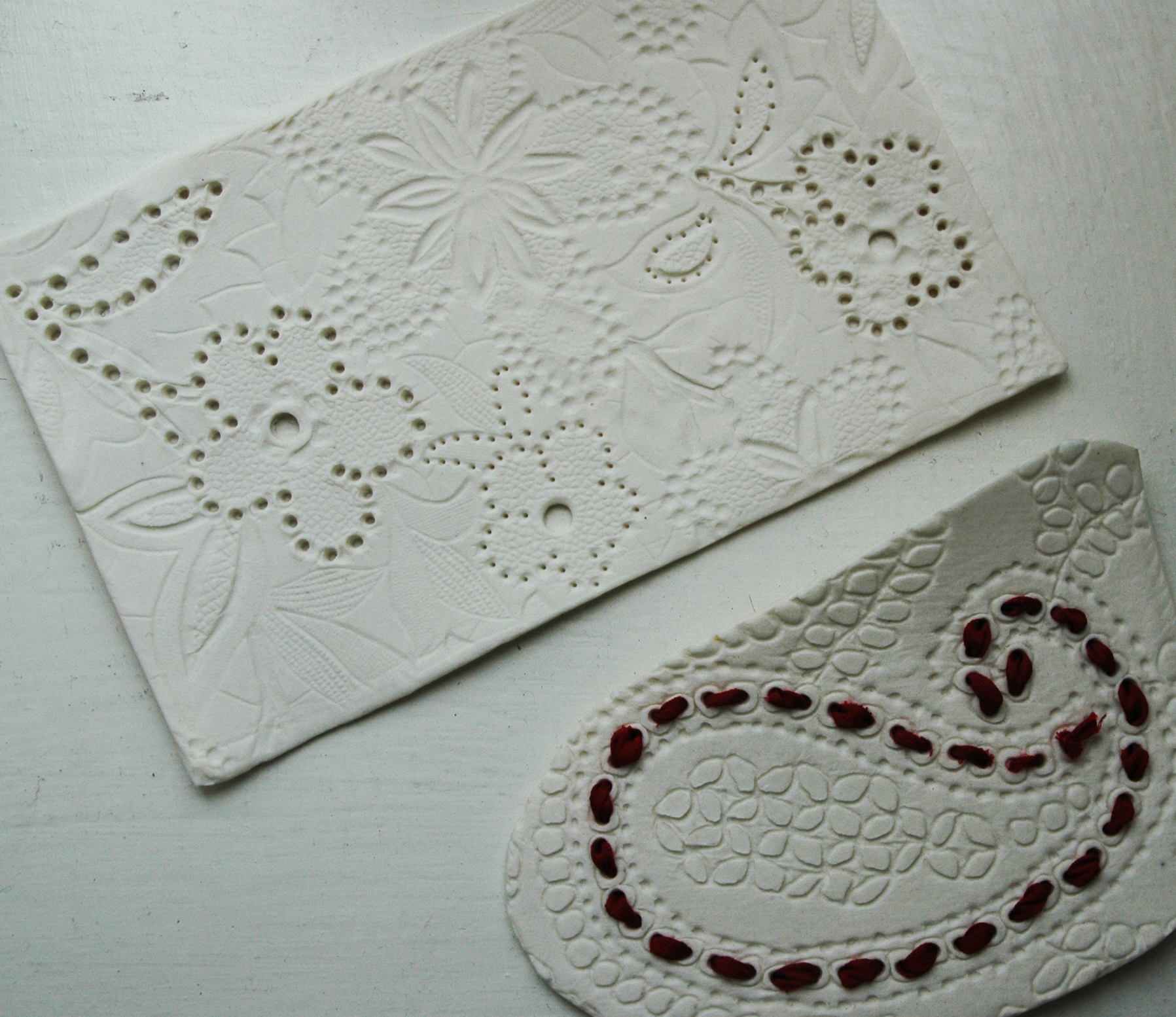
The impressed hand is coloured with pale blue powdered enamel so that the outlines are seen more clearly, I think that this colour relates to the embroidery patterns I have been using as references in some of my  other stitched work. I am also considering how I want the lettering of the mottoes and poems written and below is a sample of a some stitched letters from a whole alphabet I had considered sewing in order to make individual stitched letter impresses, but they appear too indistinct at this tiny scale – I may return to this idea though for other works in porcelain or enamel.

So I will use the commercial stamped letters for the writing in this series of work, I like the way that the rather wonky stamps counter the more fluent and elegant hand impressions and drawings

Stitching Ceramics

I am working with a ceramic designer, Hanne Rysgaard, as part of  project, called Stitch and Think  held for members of the ETC group at U.W.E. Bristol. Hanne and I have formed a making partnership to help one another develop new stitched work. We are, in effect, acting as each others’ technicians but the resulting collaboration is helping to develop some new and interesting ideas for both of us.

We are at the stage of selecting and sampling the main techniques and materials we both want to work with, she is helping me make large porcelain plates that I can cut, stitch and decorate with fabrics and words;  I am giving her fabrics from my studio stash to impress into the clay or make into decals – eventually I will stitch her work for her. This is a good division of labour, we both get to play with new materials and ideas and we don’t have to take forever to become fluent in a new technique to get anywhere.

Last week I visited her at Blaze Gallery and Studio in central Bristol; it is co-operatively run with several people working on the premises and always shows fresh and innovative work including invited local makers.

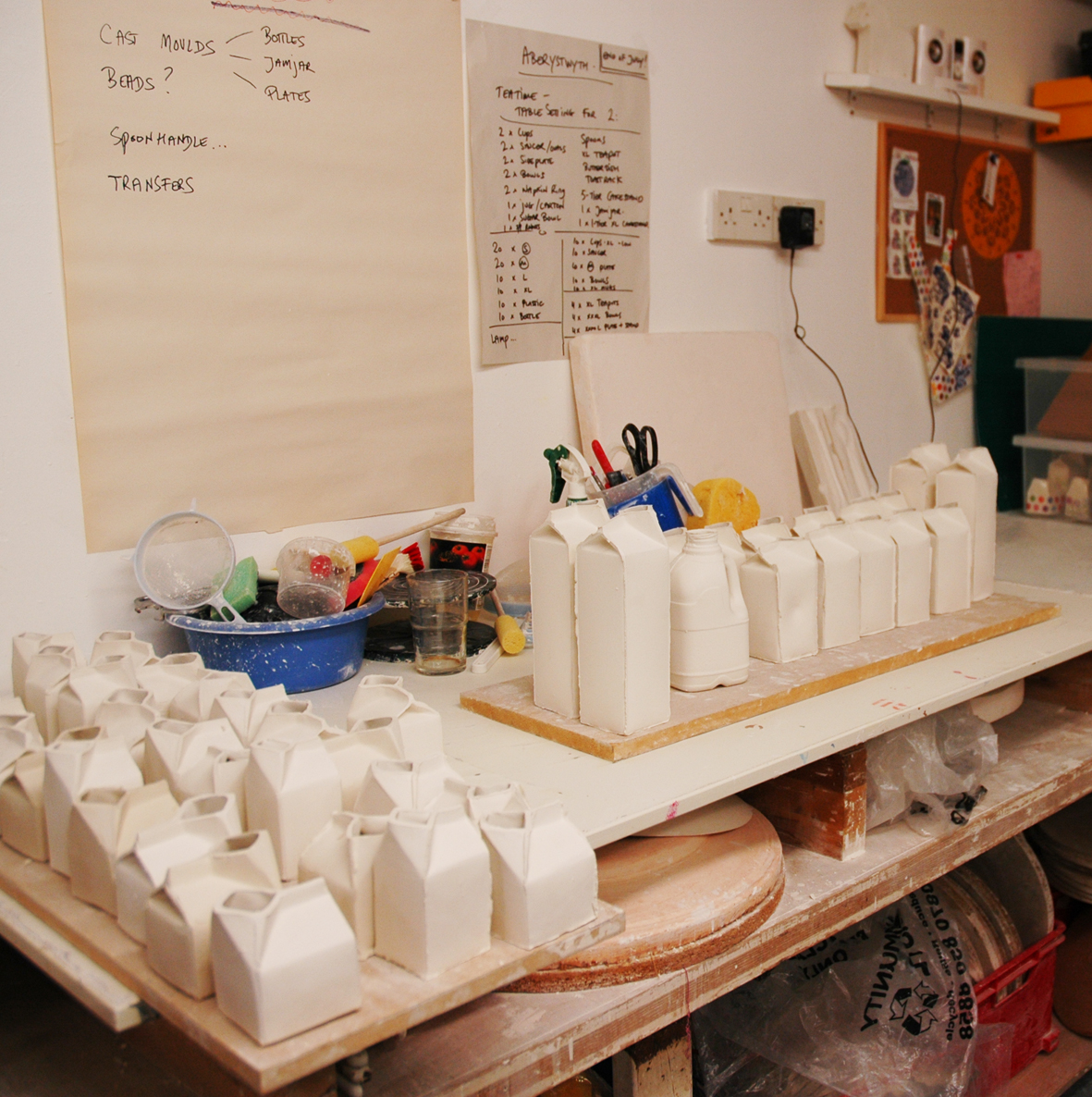
Below is Hanne’s workshop where she produces her ceramics to sell in the shop and various other outlets, at  the moment these milk jugs are hot favourites when eventually wrapped in flower power designs or spots.

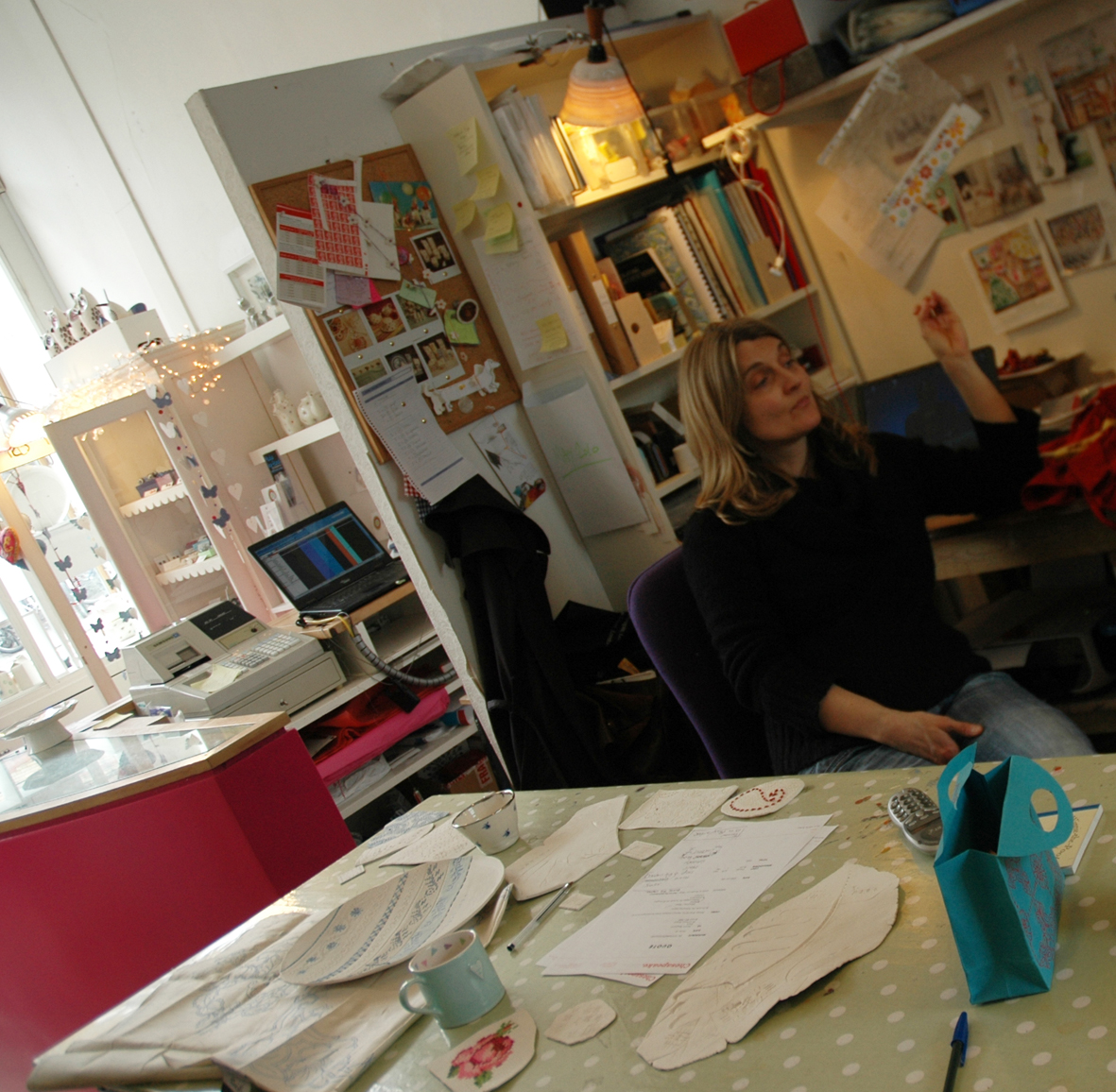
I had taken her my first completed set of samples, 2 dishes and some embroidered pieces of porcelain and paper porcelain, we had made these some time ago at a previous workshop, and they were finally fired and stitched. On the table are several other pieces we are considering.

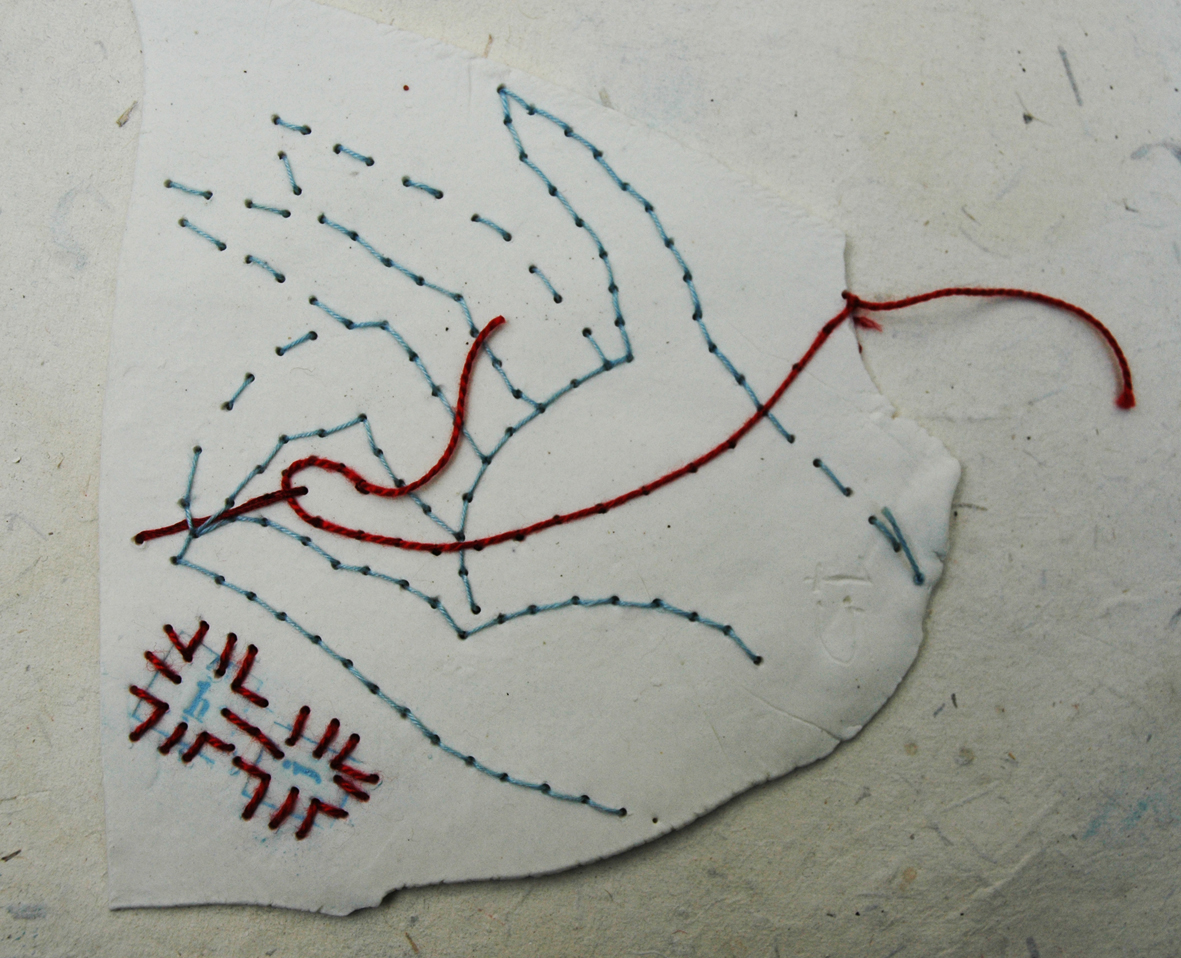
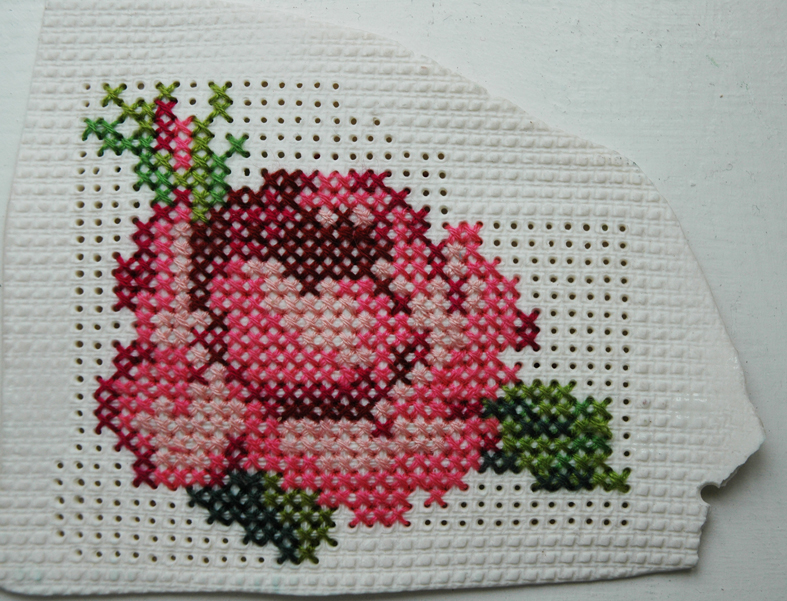
I have been working with the idea of vintage printed linen embroidery motifs which are folded under the plate, trying to recreate the light blue guide  line for embroidery – here I have embedded some colour into the pressed clay and stitched the finished sample in a matching linen thread. Below are more of our earlier samples of impressed and stitched paper porcelain.

And I have also been experimenting with more mending ideas …… see previous blogs…. I am loving how easy it is to cut and manipulate the fresh porcelain. But am having to do more sampling to assess the right size to make the holes as the clay shrinks when fired …so I  have several more samples to be fired this week

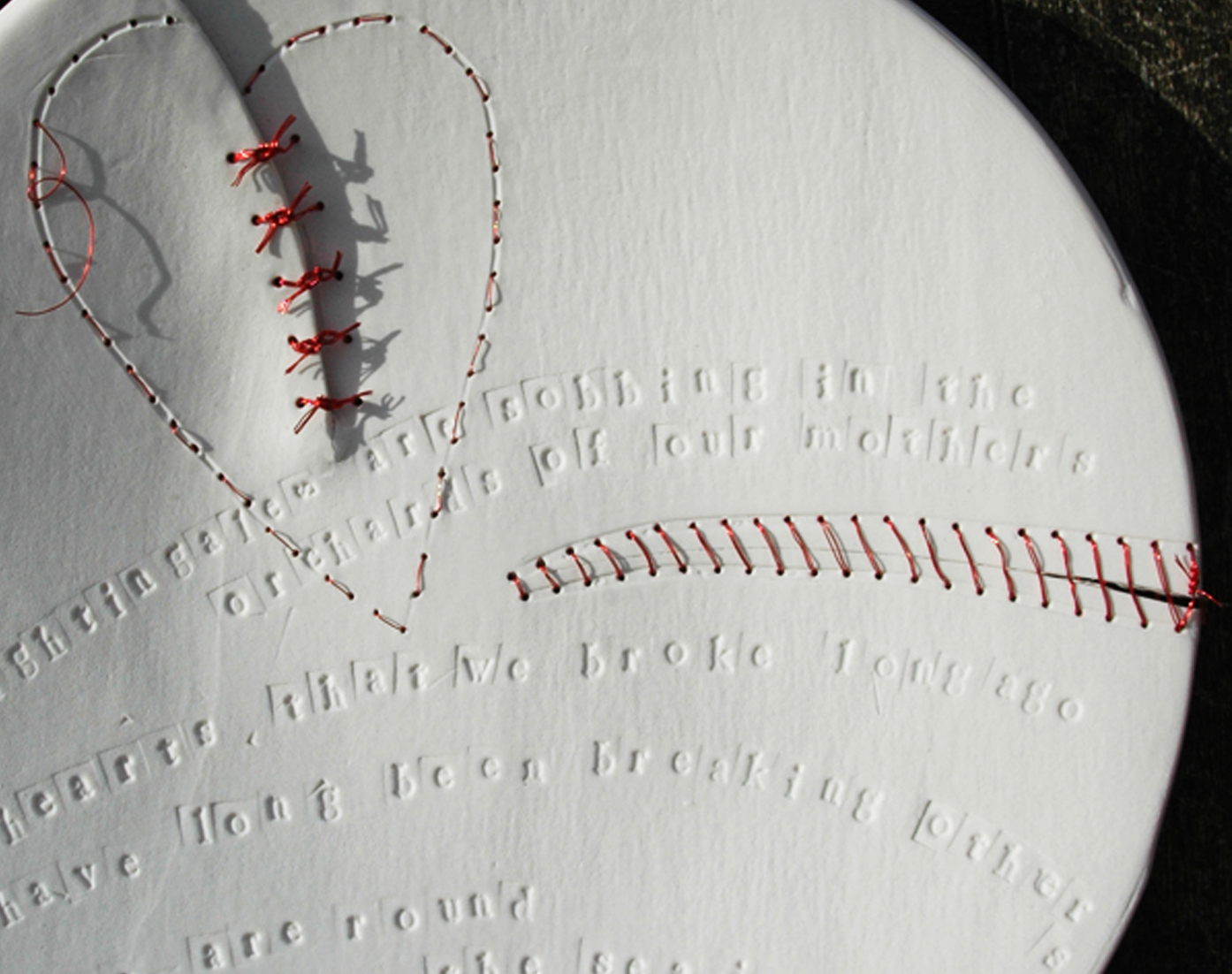
I made this plate which I cut, pierced and “mended”  with red wire – it features a broken heart and  one of my  favourite poems by W.H. Auden. This week I am working on a series of drawings to develop a set of  broken and mended plates based on this. I am also introducing images of working hands and “make do and mend” mottoes, so I will show more of this ongoing work when the new samples have come out of the kiln.

Make Do and Mend Stories.

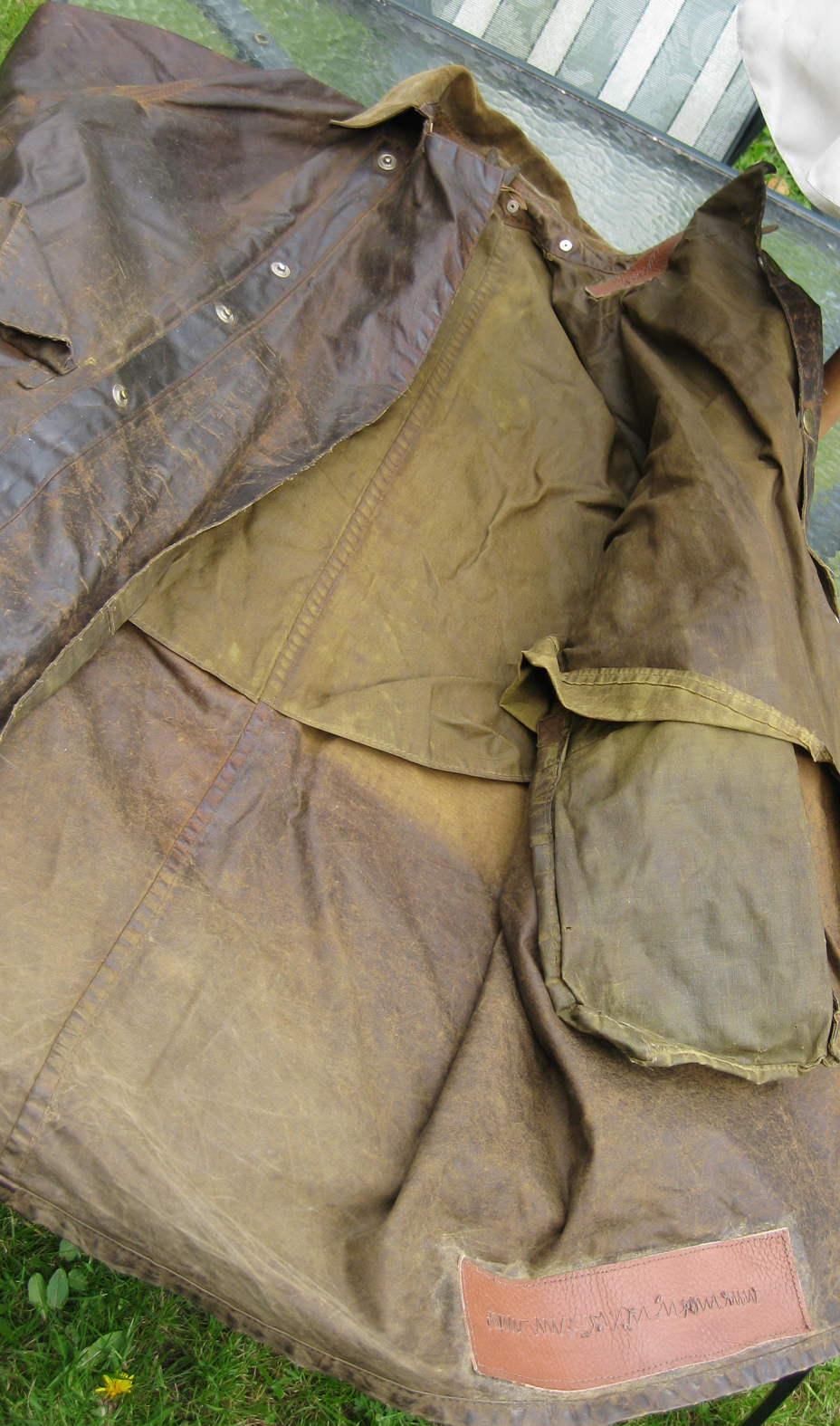
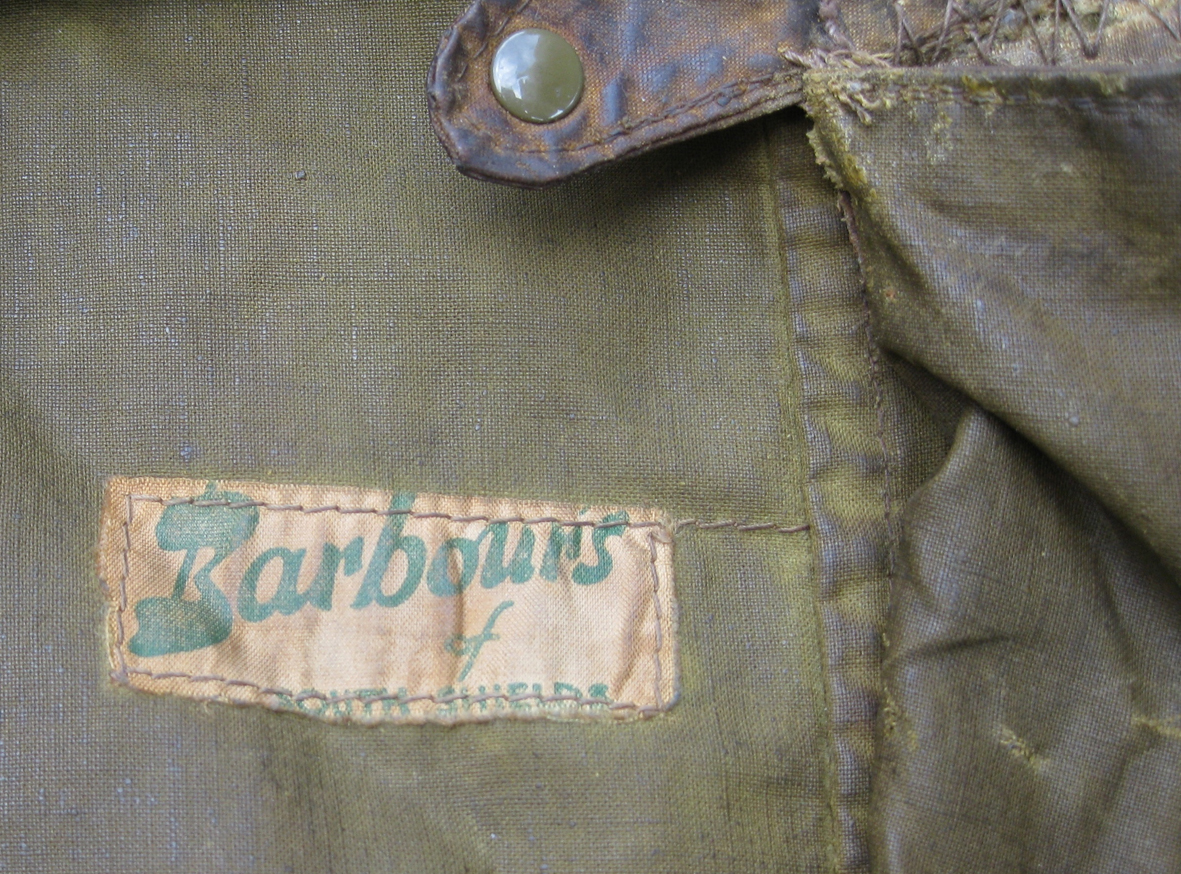
I must have inherited a mending gene, these pictures have just been mailed to me by my niece, Jo Haigh and they are of my father’s old patched and mended Barbour fishing jacket. Jo had been given it for riding in when a teenager by my brother, Alan, who had inherited on my father’s death.

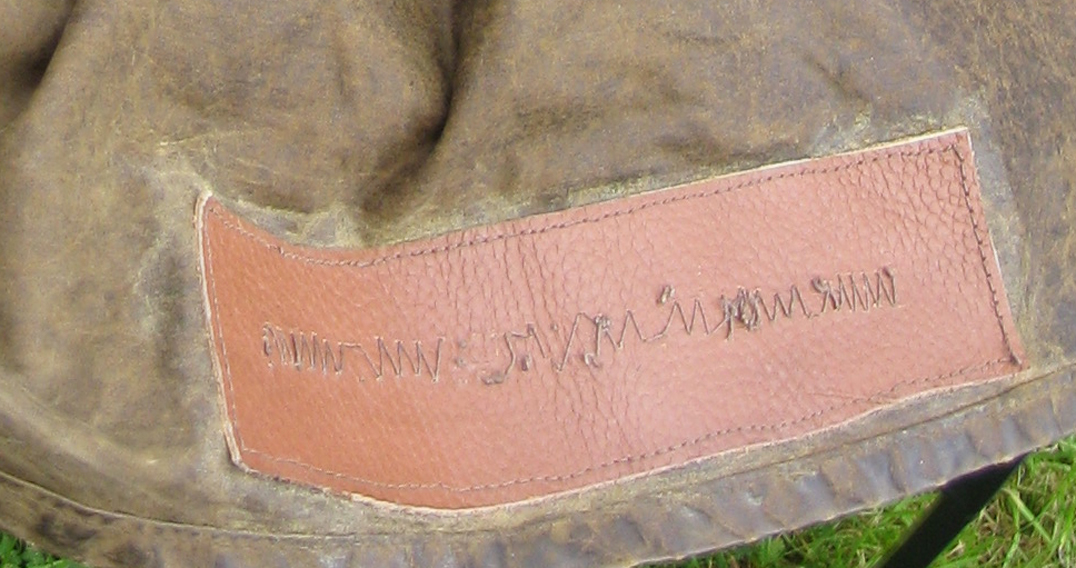
Now my brother says he can remember buying the coat with my father – they were both serious anglers – and he even helped to sew the patches on it, I  doubt this bit, but it might explain the distressing zig – zag stitched leather patch below.

I  can also clearly remember stitching this coat; under my Father’s precise instructions and measurements, I inserted large plastic poachers’ pockets to the inside – each just big enough to hold a trout.

At the time she received the coat, Jo says she just loved wearing it because it wasn’t all shiny and new like everyone elses’ riding gear and it was so patched she felt like a pirate…always a fanciful girl. Later, intrigued by the coat she looked it up on the internet and the label showed it was made and bought around 1960, which makes sense as I can remember sewing those pockets when I was a student in the late ’60’s.

The patches were definitely made to last, not only are they all machine stitched on the outside in carefully toning thread (you don’t want to draw any attention to yourself with an odd bright colour when out fishing – in fact my father’s entire wardrobe was in muted tones of what we called “lovat green” with the occasional grey or rust woven in) but inside, these are reinforced with leather patches – definitely a belt and braces job.

The last time I saw the coat must have been in the 1970’s when my father was still out and about wearing it, by which time I had left home to study and work in London.

But as soon as I saw these pictures I could smell the coat, a sort of mixture of wet grass and fresh river fish combined with that strange sinus clearing smell of waterproofed cloth. Immediately I was back at home on the Wirral, and for an instant my father was before me…how weird – but as Jo remarks “the things you hang onto always seem to have a story behind them”

This is the first story of the Darning Archive, there are more to follow – so if you have a mending tale just send me a message below.

Stroud Textiles Exhibition Visit

Last week I went with a  group of fellow members from ” Textile Forum South West”  to several of the venues in the Stroud International Textile Festival 2010, which goes on until the 23rd May. Visiting this festival is always fascinating as it brings some of the most prestigious textile artists in the world to this small Gloustershire town and there are exhibitions in shop windows, church halls and open studios. But we also wanted to see our members’ work, which was shown in various venues, so I have to say from the off, that this is quite a biased view of things. I always feel a little nervous of viewing exhibitions by people I know, especially if I don’t know their work – I obviously want to see it out of sheer curiosity but what will it be like? and say I don’t like it – well “like” isn’t exactly what I mean, but will I be able to appreciate it – will it alter my view of the person?

“CURIOUS DRAWERS” the Brunel Broderers exhibition.

So first  we visited the Brunel Broderer’s, a small eclectic group who are celebrating their 20th anniversary this year. The title CURIOUS DRAWERS made me slightly nervous as well, embroiderers love closets and chests of drawers, usually the smaller the better which can lead so easily to the twee and fanciful. Several of my fellow committee members were showing here, some I knew well and some I had just met. Would their work be a match to my opinions of them made when working together; the one thing we rarely do is talk about our own work, when we have committee meeting there is so much stuff to get organised for the future of the Forum.

But I have seen Liz Harding’s work before and this was the first exhibit I saw, a sturdy brightly painted chest of drawers opening to reveal all sorts of stuff, maps, string, leaves a “cabinet of curiosities” collected from walks with her boxer dog Tiggy. Above this, was a large scale embroidery in dyed and hand stitched organdie, referencing the contents of one of the drawers, a work in progress.

So far so good, this work reflected and strengthened my impression of her work which is developed from her own found materials and based on strong drawing and stitching skills.  I thought that the panel was  handsome and though simple in design, very subtle and rich in its construction and colour. I hope that there are more to see in this series.

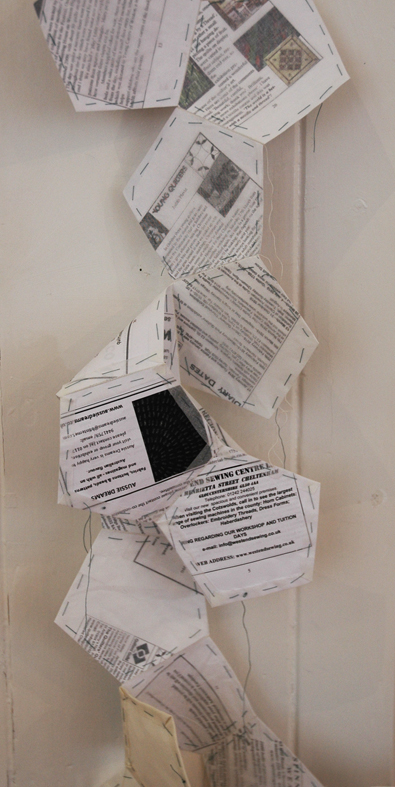
The next set of work I reacted to strongly was by Kay Swancutt, because here I recognised some of my own research into historical textiles, patchwork papers, which are used for the backings of English hand- sewn patchworks. Kay seems as intrigued as I am by these incidental documents.

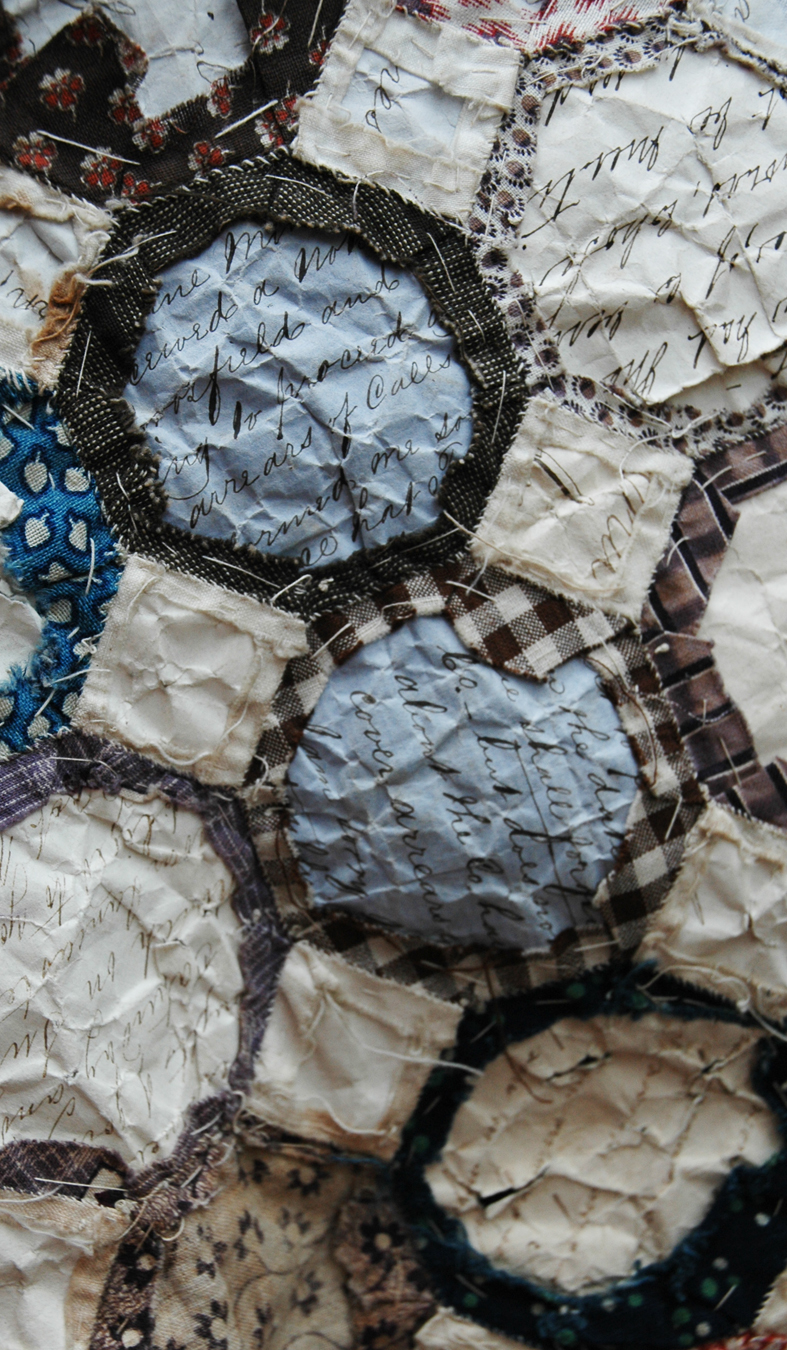
I  am never sure how I feel at first when I see work that is based in the same research as my own, it ranges from “oh Hell, that’s really great – why didn’t I see that?  to ” oh no, I am just too late to get making my piece as people will think I have copied this one” Of course neither of these reactions makes any sense at all, we all work from out of our traditions in some form of another even if it is to completely reject it – you have to know what you are reacting to. What got me about this exhibit was that her work was so elegant and I know mine is destined to become a full- on colour fest, more in keeping with an original sample –  a  traditional piece of Victorian mosaic patchwork which I am currently working from to make a “Secret Security Blanket”. I was also intrigued by Kay’s work as I hadn’t known what to expect and here was something so very connected to my own – must talk to her next time we meet.

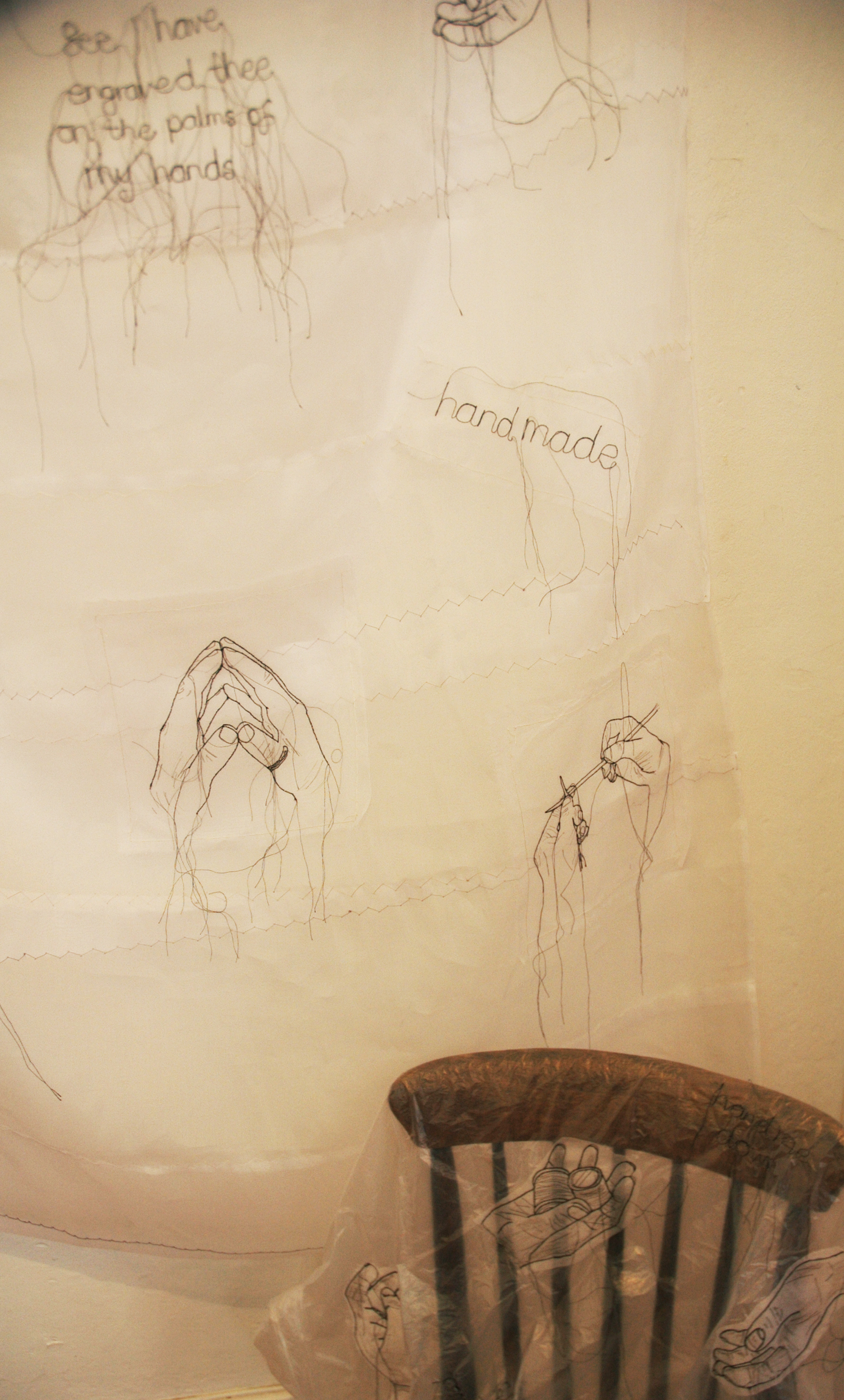
Then another real shock, Susi Bancroft’s embroidered hands complete with messages, the hands stitched by machine (phew- not quite the same as mine then) but definitely in the act of making stuff and with messages written all over the background. My last piece of work has a similar look to it although the ideas behind it are totally different, and even spookier when I looked into the drawers below it what did I see but embroidered hearts….

drawer of embroidered hearts,a stitched response of a family treasure, the tiny red heart made by a child.
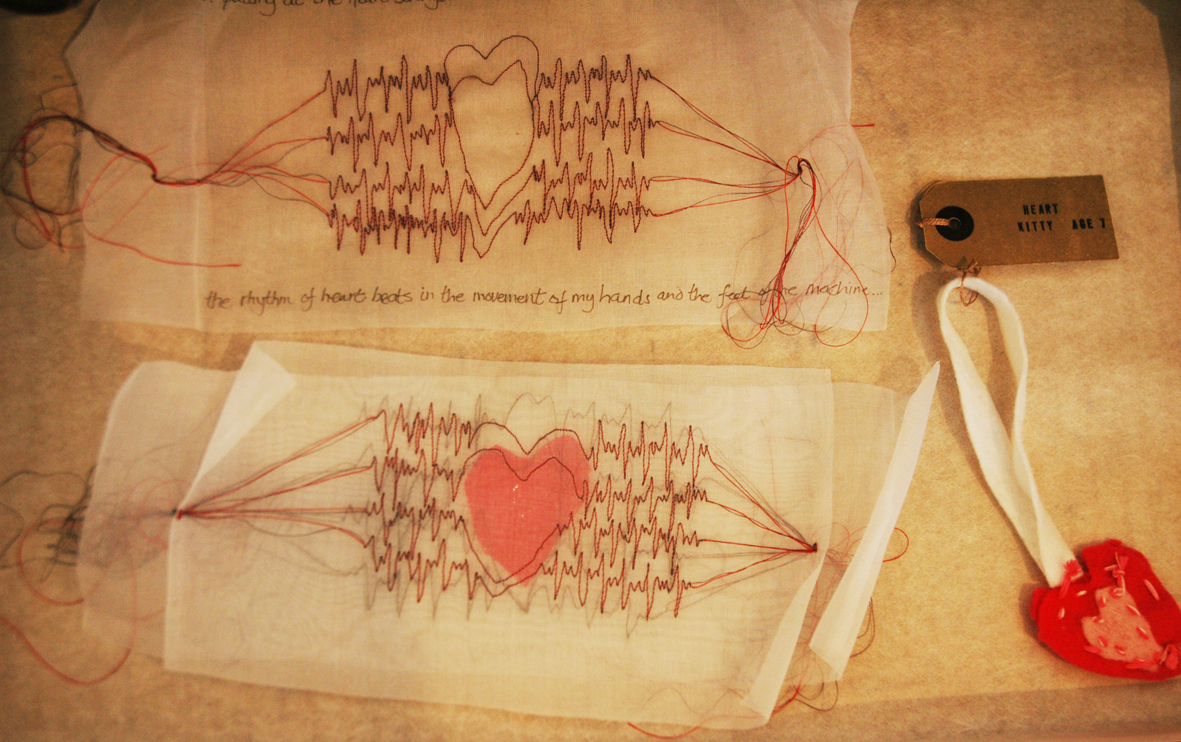
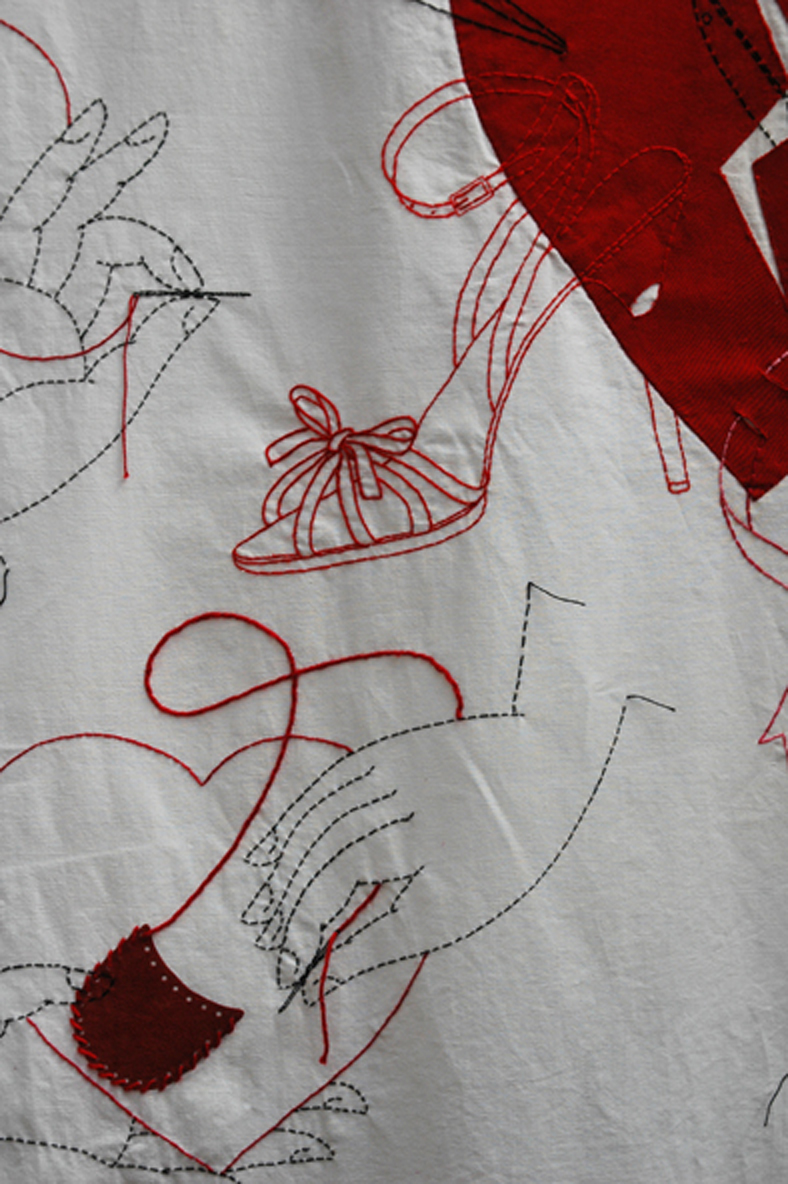
my recent embroidery, “counterpane – mending broken hearts”

Now this is weird because I had just met Susi the previous day at a meeting, so I had no idea of what to expect. But how fascinating to have found such strong connections to my own current work from both of these people, they will be aware if each others’ work but they are both new to me; but we have such connected ideas which we are using for different reasons in different contexts, maybe we should consider some sort of collaboration or a meeting  just to discuss and cross reference.

But the most surprising thing was almost the last piece of work I looked at, a large dark chest of drawers drilled and waiting to be stitched by anyone who fancied it, bold, colourful and fun to watch as people responded to it. This was by Alison Harper, a quiet and considered person who I have known for almost a year. I had expected her interactive work to be as ethereal as she seems, but then I saw another set of drawers by her….made of the thinnest tissue paper and delicately stacked  – that’s definitely more in keeping with my perception of her – must ask her about the stitched drawer piece though.

Alison Harper. interactive stitching for more curious drawers

Now we went off to see an open studio The Textile Studio,  in the middle of Stroud, part of a mixed arts studio complex called Stroud Valleys Artspace. Here I felt at home, I worked with printed textile design students on a B.A. course in Bristol for many years and I could sense that this was a busy and productive space, spruced up for the occasion but still vibrant and full of a good energy. This really made me consider why I work at home alone, but I need my own space to really be able to concentrate for hours at a time when stitching by hand and thinking about the work, here there would be too much to look at and distraction by good company.

long view down the print table at The Textile Studio at Stroud Valleys Artspace

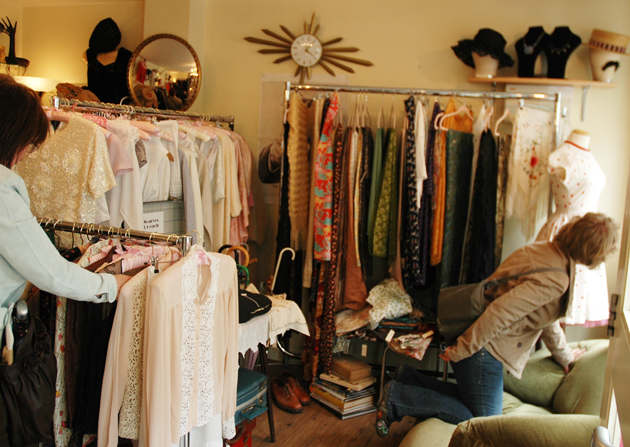
Next was the journey to the park to see the main exhibition but on the way we swerved into a delightful vintage clothes and textiles shop aptly called Strangeness and Charm. We descended on the stock like a flock of chattering birds, riffling through racks of delicious printed dresses and embroidered and beaded blouses oohing and aahing at the fake jewellry and tiny feathered hats which some of us remembered our mothers wearing at weddings

Strangeness and Charm – vintage clothing and textiles at Gloucester Road Stroud

Then off to the other side of the town and across a park to see the main event, Vision into Colour, an exhibition mainly of the work of Edinburgh tapestry weavers  – it  was really vibrant –  COLOUR   COLOUR  COLOUR  -what a change from usual. For years I have wandered around so many textile exhibitions feeling starved of colour, I usually have to go immediately and buy myself an ice cream to remedy my sensory deprivation – now how wonderful to see so much refined and unusual colour, if you can go and visit this show at Gallery 1 Museum in the Park, Stratford Park, Stroud.

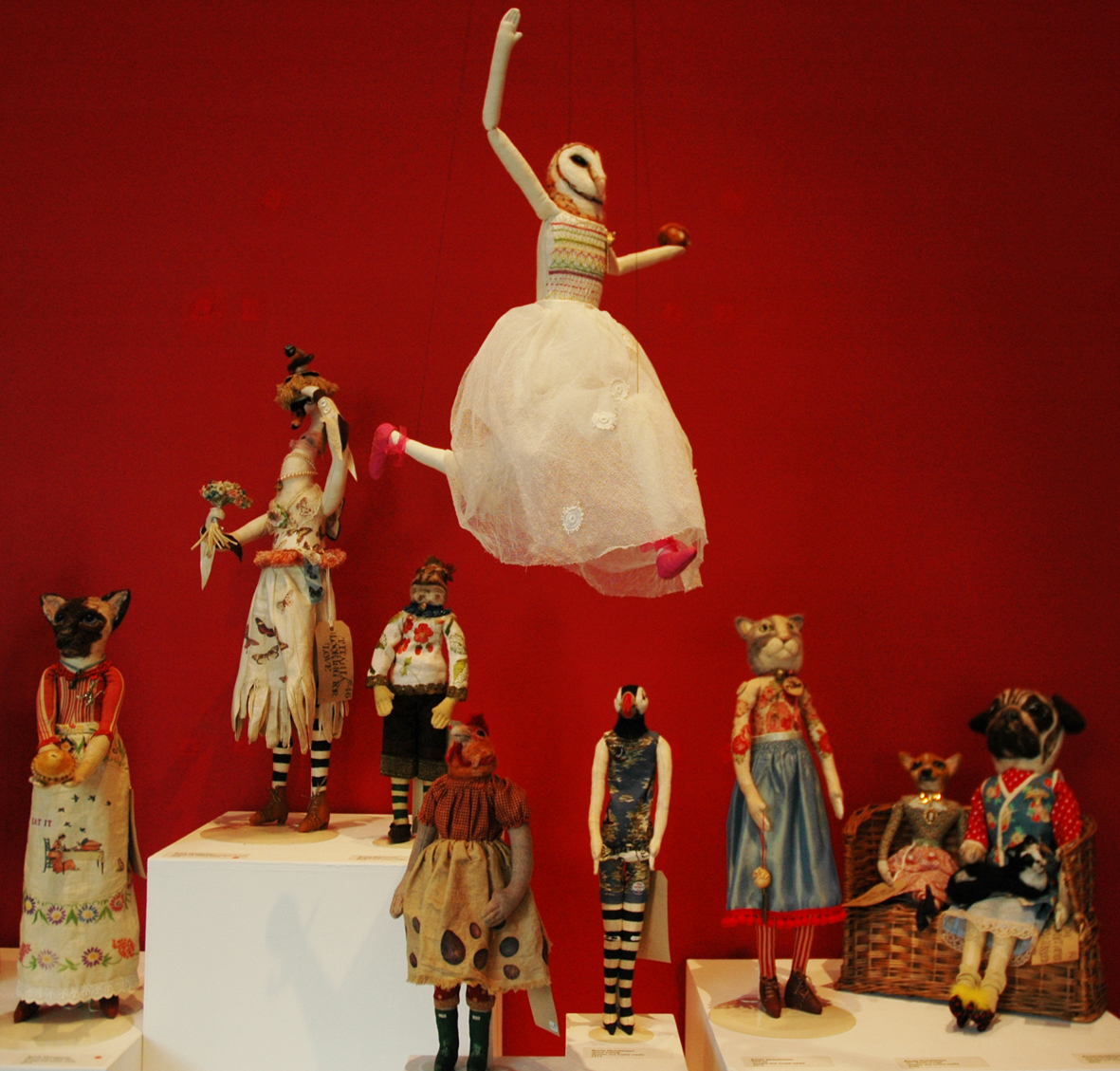
Annie Hutchinson’s collection of curiosities are beautifully made with wonderful fabrics.

But the one set of work that really spoke to me exhibited near the entrance of the gallery, a tableaux  by a local maker Annie Hutchinson.  She says she works with recycled memories stitched with mementos, signs and symbols – well that resonates with me,  but the work is really curious, sort of a cross between the stitched monkey (see Commissions) and those terrible Victorian stuffed animals, like stoats or even worse – frogs, which are fully clothed and made into tableaux,  sitting around a dinner table or something equally bizarre. However this work is as evocative and charming as it is unsettling, like all true fairy tales.

MAKE DO AND MEND

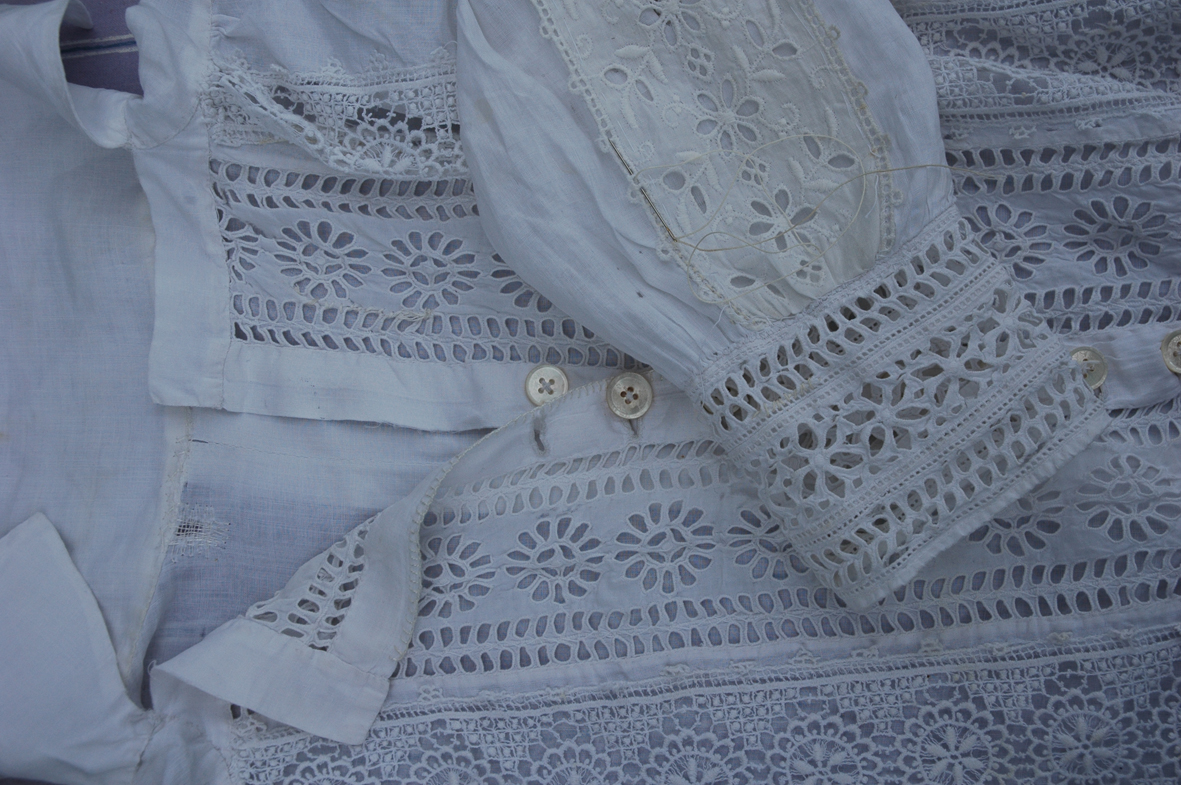
This is my favourite piece of clothing, a Victorian blouse with Broderie Anglaise insertions, all made by hand. I bought it about 15 years ago in an antique market in Bath and have worn it so much that it is slowly disintegrating. I am trying to preserve it by patching, darning and mending all the holes, tears and frayed edges. When it first started to tear I inserted extra machine – lace panels, but later I decided to make all the mends by hand. I think that this makes it appear more valued; in our throw away society I feel strongly that mending is an indication of worth.

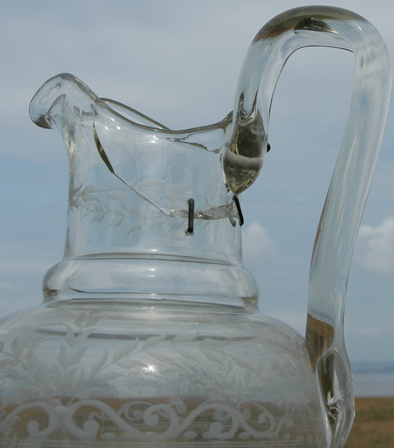
 glass water jug.

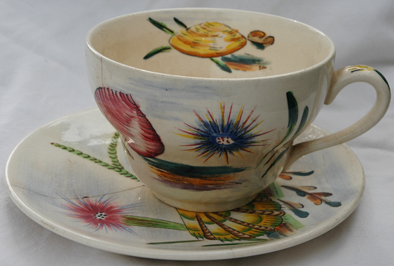
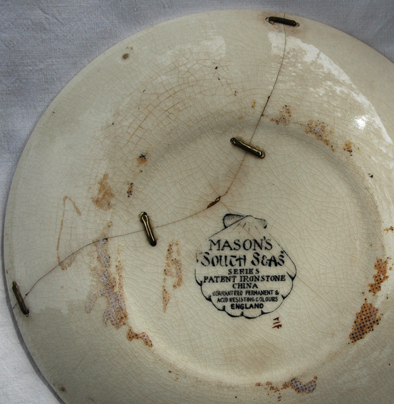
And I have always liked conspicuously mended ceramic and glass items, the metal bands that hold this hand cut and engraved water jug and the hand painted cup and saucer are testament that these pieces were valued so highly by their owners that difficult and expensive methods have been employed to extend their life. I really bought the water jug because of the rivets, initially I was reassured by this care and attention that it was worth the price I paid and also that I could still use it, which I have been doing for more than 20 years.

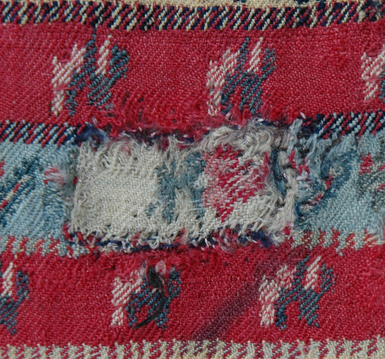
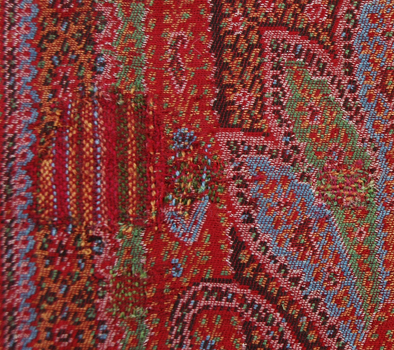
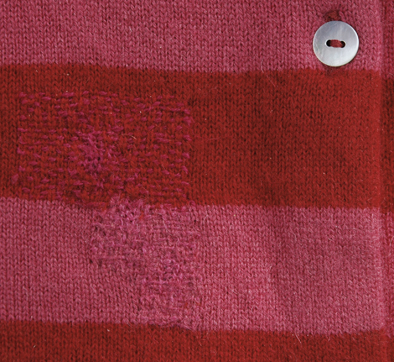
Sadly the only way I can afford some of the textiles I want is to buy them when they are practically worn out. I have rescued several Paisley shawls, some were already carefully, repaired but one beauty I am repairing myself…but instead of trying to copy the design, so that the mending is hidden I am darning the holes simply and obviously using  very carefully matching coloured woolen yarns

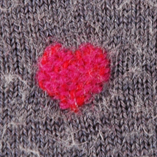
Has anyone suffered from the dreaded wool moth lately? My clothes and textile collection was under siege last year. My favourite cashmere woollies (collected at T.K.Max) seemed to be the dish of the day. So I am working my way through these and stitching some very conspicuous darns, in fact I am considering making darning designs for the plainer ones – although the tiny heart, .5 cm. wide, the result of a glue accident when I was probable mending something else.

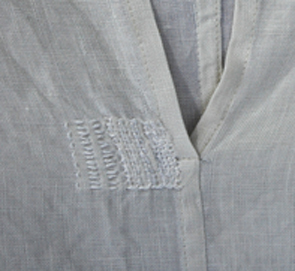
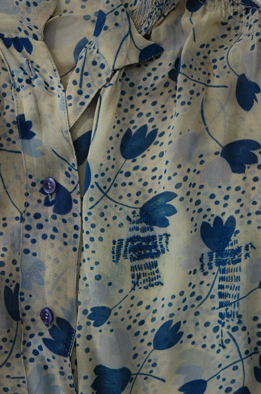
Below are some more of my rescued clothes, an old linen shirt which had pulled apart at the seam and the vintage silk blouse is badly stained, but still lovely.

But on reflection – when I was a fashion and textile student at Liverpool Art College in the 1960’s, I made a paper wedding dress, reasoning that it would only be worn once and then could be thrown away. Some 40+ years later I have changed my attitude to disposability and my current embroidery practice revolves around mending, patching, protecting, conserving. Even a casual look at old sewing manuals will show the change of attitude to mending and preserving clothes and household fabrics, in the books from the 19th and early 20th century there are many and various darning techniques for all sorts of materials. But it becomes apparent that excepting illustrations of Darning Samplers for collectors, this detailed information started to decrease during the 1960’s and by the end of the century mending of any description ceases to be shown in popular sewing manuals. I suspect that the corresponding and continuing rise in the national divorce rate is not a coincidence.