Crazy Patchwork Class

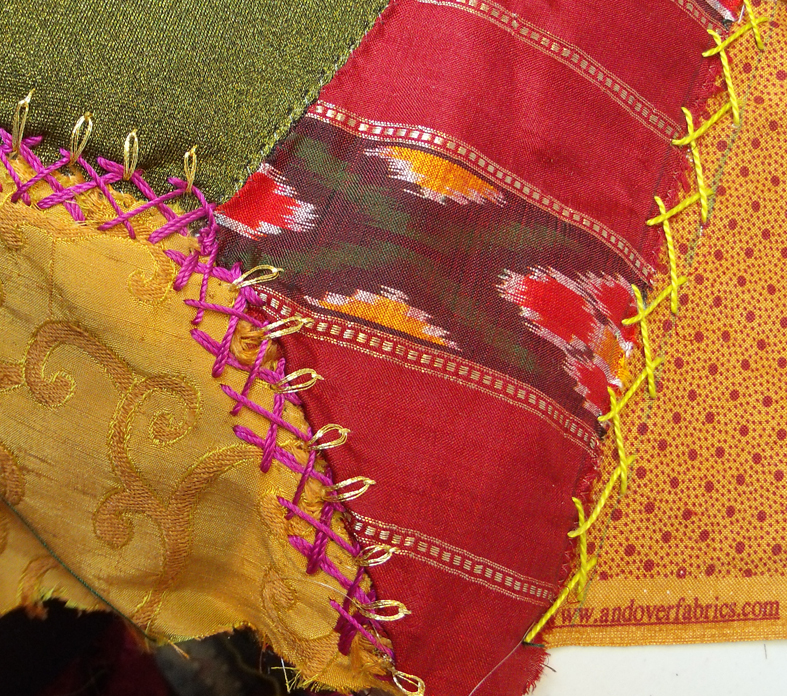
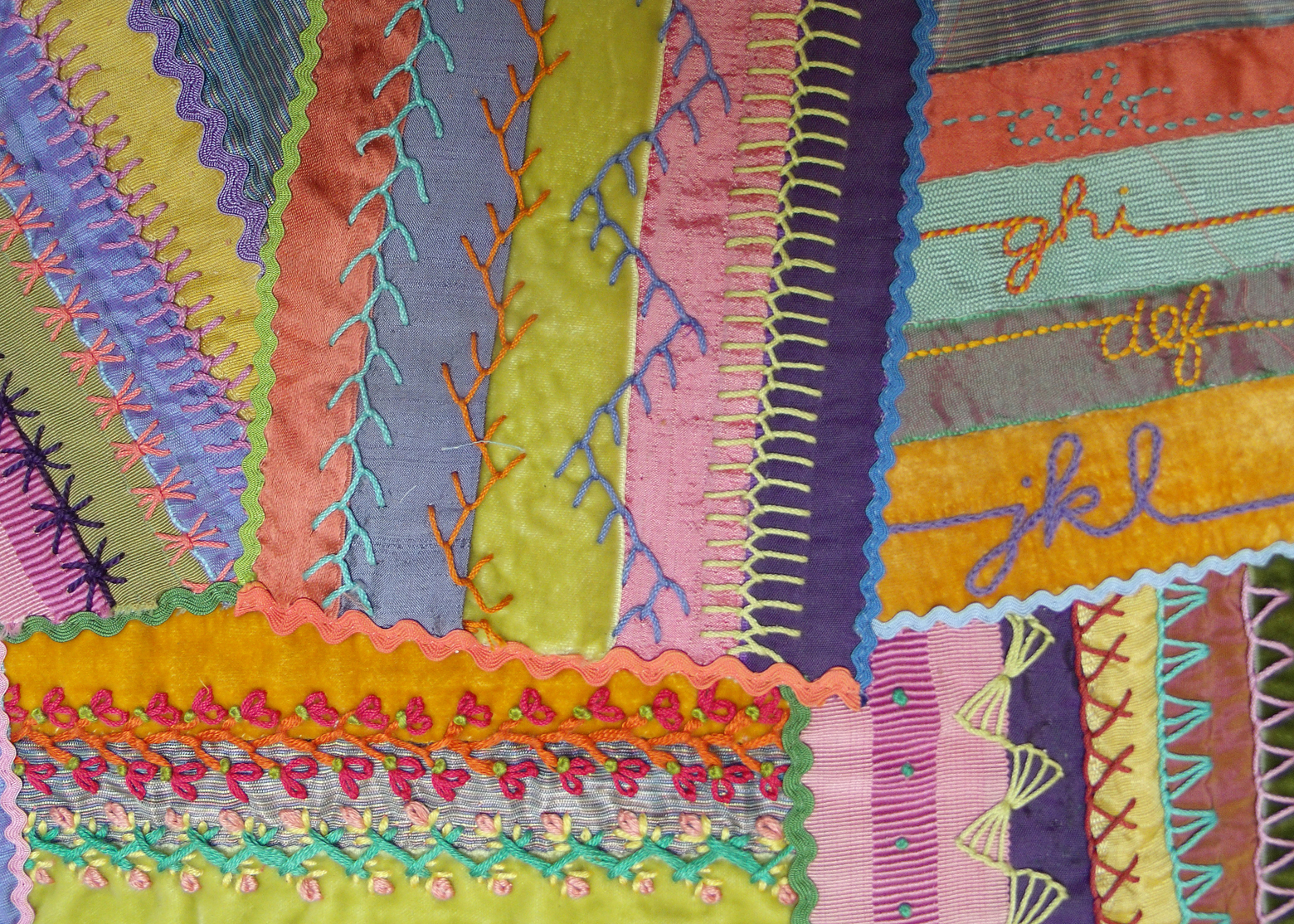
crazy stitch sampler

Yesterday I  taught a Crazy Patchwork class at Heart Space Studios. It was such an enjoyable experience I had forgotten how wonderful it is to just play with colours, textures and threads to produce a whole new seemingly haphazard fabric…and such a pleasurable way to re-cycle old fabrics.
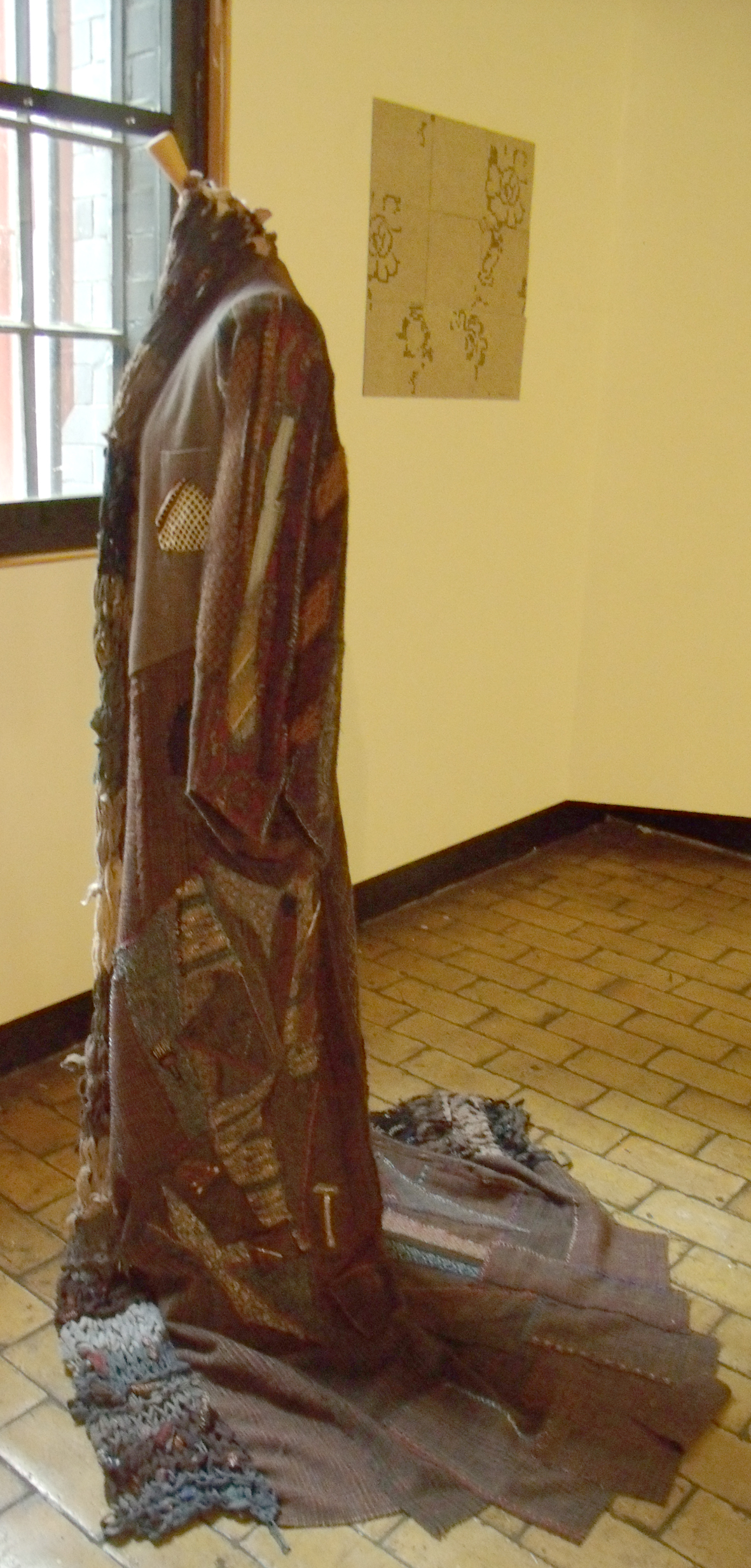
Sue Bradley’s Crazy patched coat

As it is not much made at the present time, I was really surprised and delighted when I saw Sue Bradley’s exhibit “My Father’s Coat “. At the weekend I had visited the TFSW touring exhibition, Material Actions in Bristol,   Sue’s coat had several areas of Crazy patches applied to the ground fabric but unusually she had used tweeds and  dark woolen cloths. The effect of the exhibit was very dramatic, it tells the story of her father and this is the response to her inheriting his  clothes and recently discovering them

This reworking for sentimental purposes is within the Crazy tradition of recycling precious cloths, but usually the preciousness comes from the quality of the fabrics, not the associations.
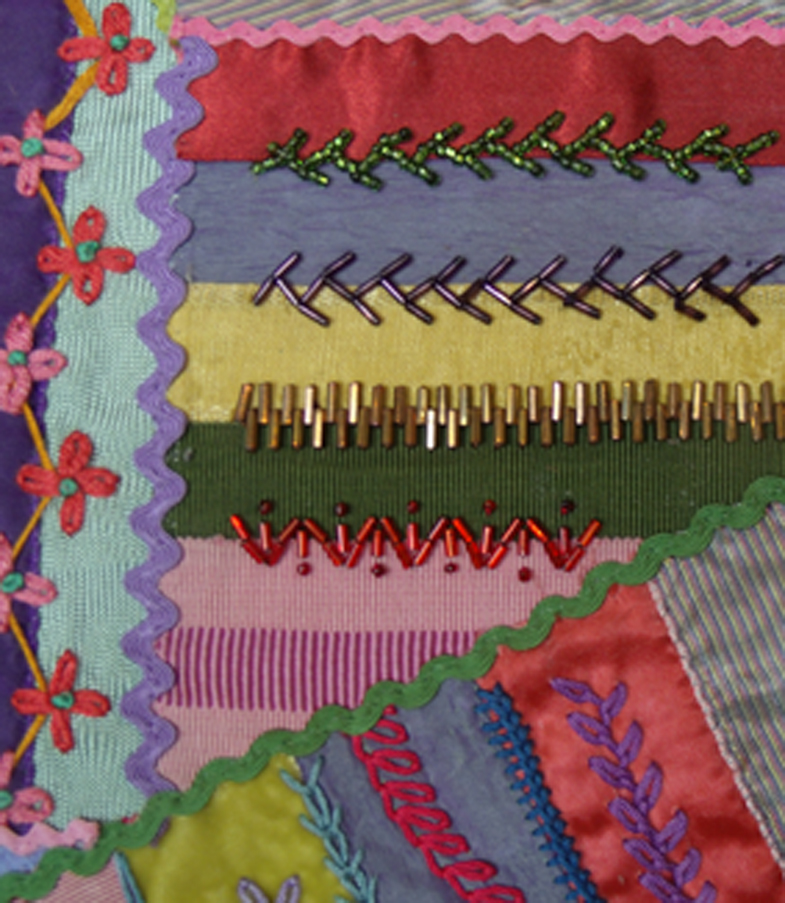
beaded and embroidered sampler

Crazy Patchwork (it is actually an applique process) was usually made from the most glamorous fabrics – ones that would not be able to withstand the wear and tear of domestic patch-worked  quilts and bed-covers. To add to it’s unsuitability for domestic use the overlapped seams are embroidered over  – which is its major attraction for me   – a case of more is more – not a popular concept for today’s makers!  However one of my first published books was about Crazy,  Collins&Brown ISBN 1 85585 641 7

Paperback book on Crazy Patchwork

 I used several of the samples from the book as illustrations for the class..
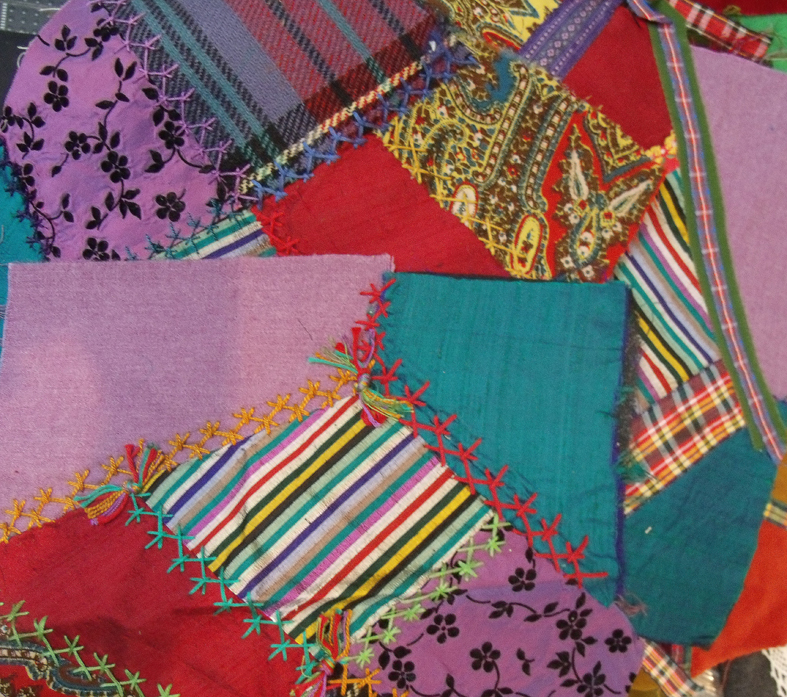
samples from  my Crazy book

Getting started is a real treat as you just have to surround yourself with as much fabric as possible to choose a colour scheme  – even if only making up a small square to learn all the steps invloved.

some of the fabrics available for use at Heart Space

Some of the students brought their own stashes of fabrics and the swapping began,
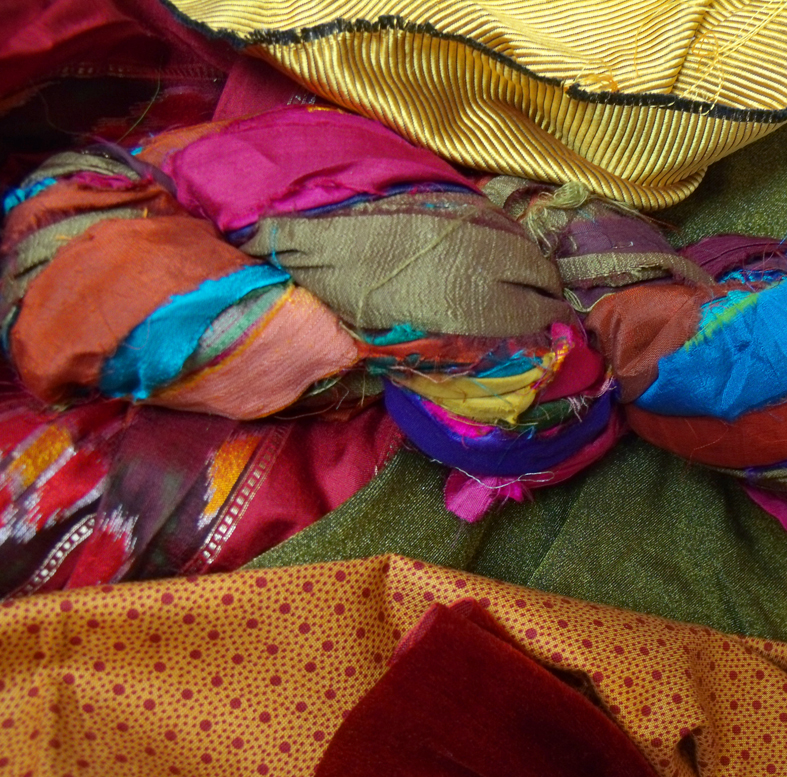
Sophie’s stash of Indian silks

One fabric was exceptionally popular, an Indian ikat dyed and woven silk – you can tell autumn is in the air.
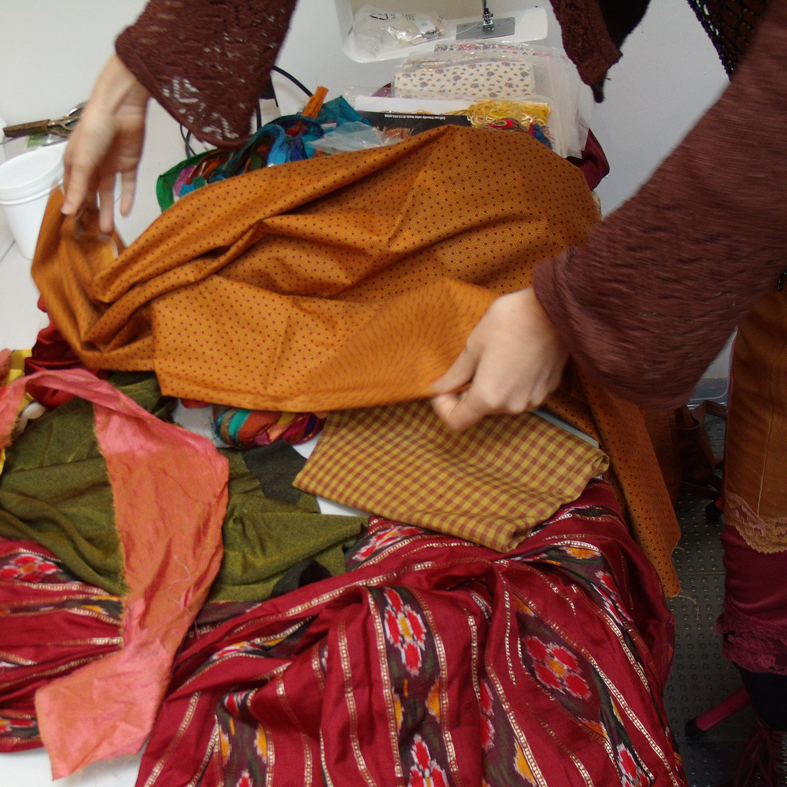
The popular Indian Ikat silk

 I used a method of choosing one patterned fabric then finding other toning or matching fabrics to complement it, this ensures that the small sample will be colour co-ordinated.
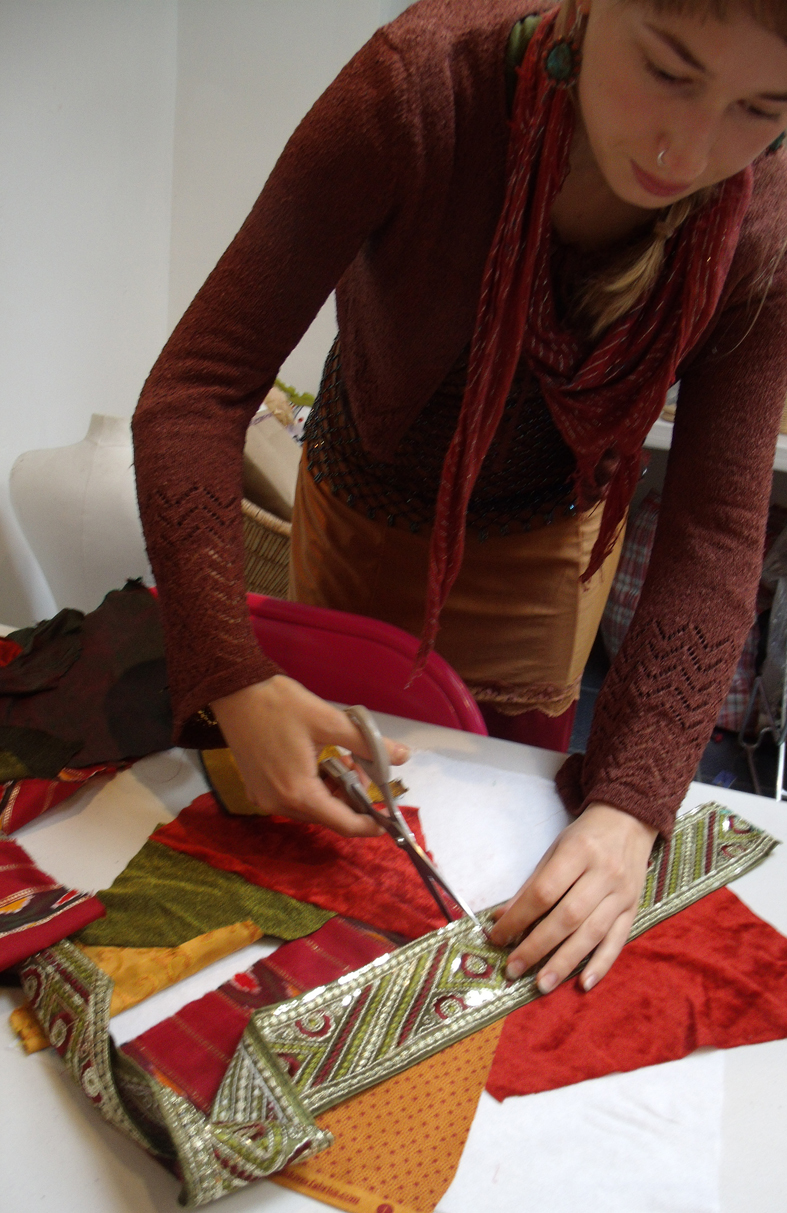
to begin with even cutting the fabrics takes a bit of nerve

Ribbons, braids  and all sorts of scraps can be used up. Some choices are made and remade several times before committing to the next stage.
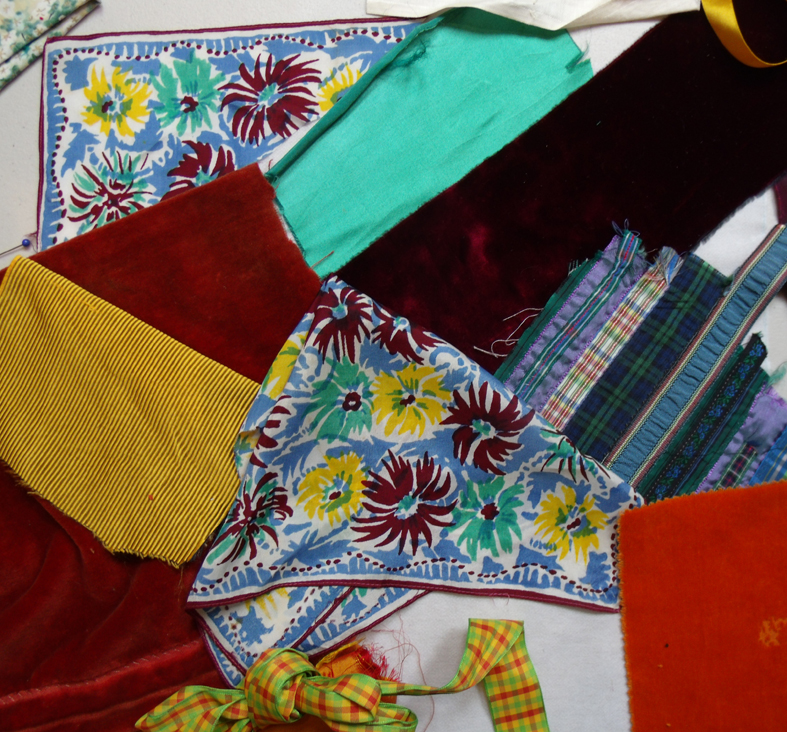
Jane’s selection based around the sprinted silk handkerchief.

There are really no seams to worry about as everything then gets bonded onto a backing fabrics using an iron.
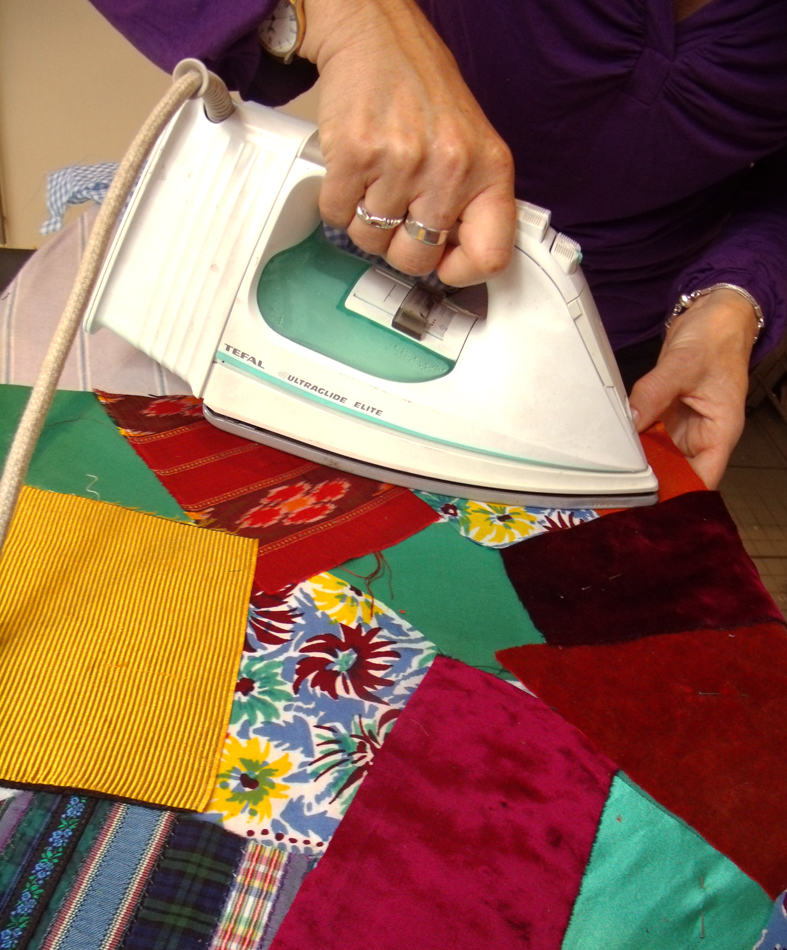
pressing the patches into position

And then the embroidery begins – but before this can happen the coloured threads are chosen. Embroidery is not just a decorative device as it can be used to balance colours within the patch-work and also decorate large areas of plain fabric.

choosing colours for embroidery

Sometimes the colours for the embroidery can come from a totally different source, here Liz decides to choose to stitch the neutral patchwork with the colour of the heads of her pins.
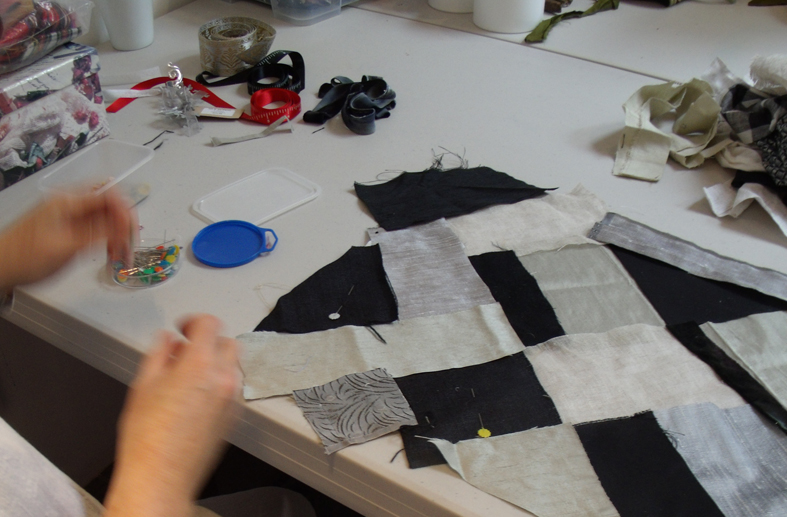
using the pin heads to decide colour scheme for embroidery

I was really interested in seeing this choice made as this maker often uses a range of brilliant pinks, turquoises and purples for her work, here she was wanting to try a new colour gamut and so used the class to this sample something different.

Now down to stitching  – a water-erasable blue pen is used to make a guide for neat but always very short rows of stitching
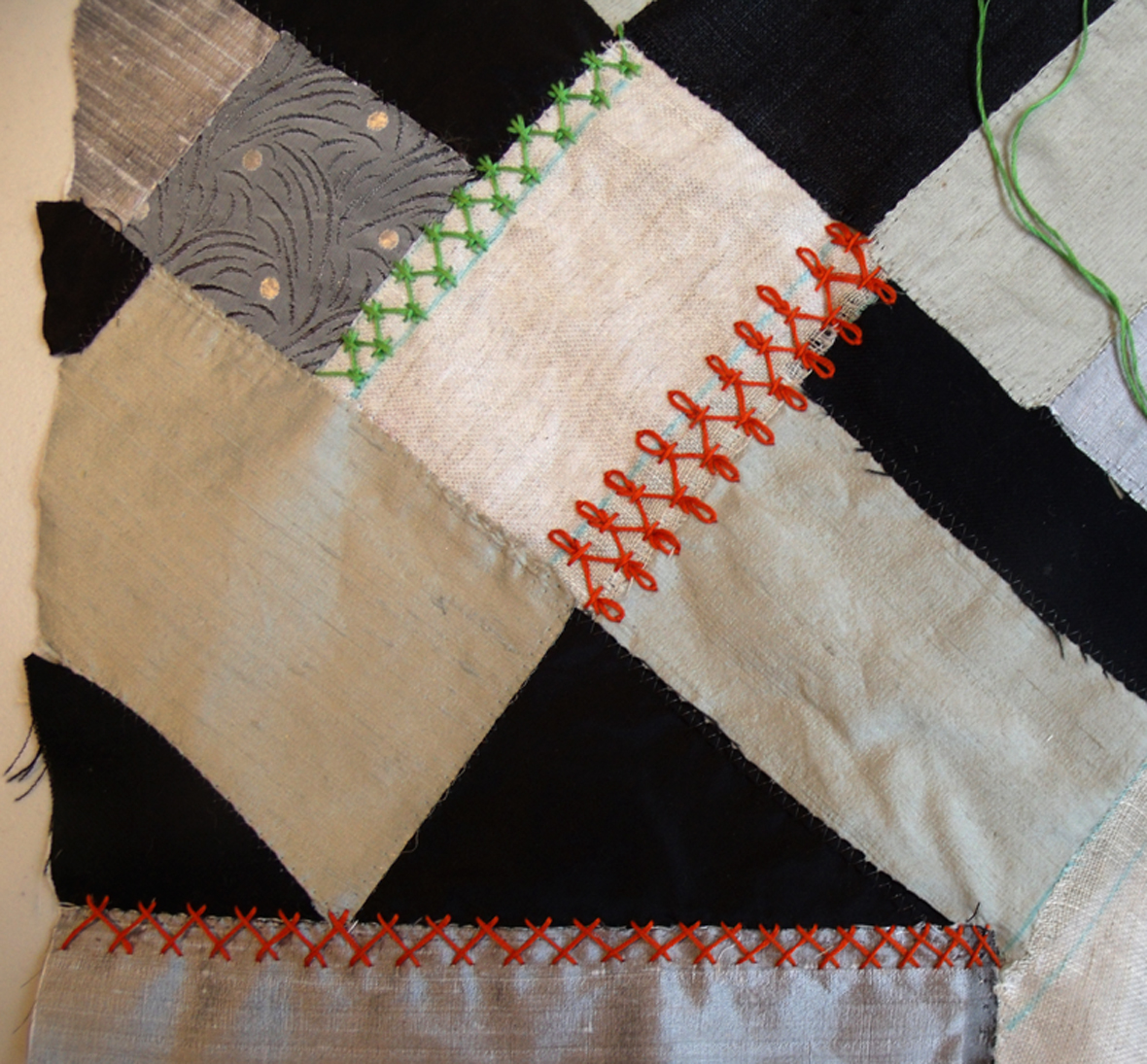
herring bone stitches to cover the seams

I had to teach some of the students the new stitches and some were having to remember them from childhood, but all were delighted to be learning something new.
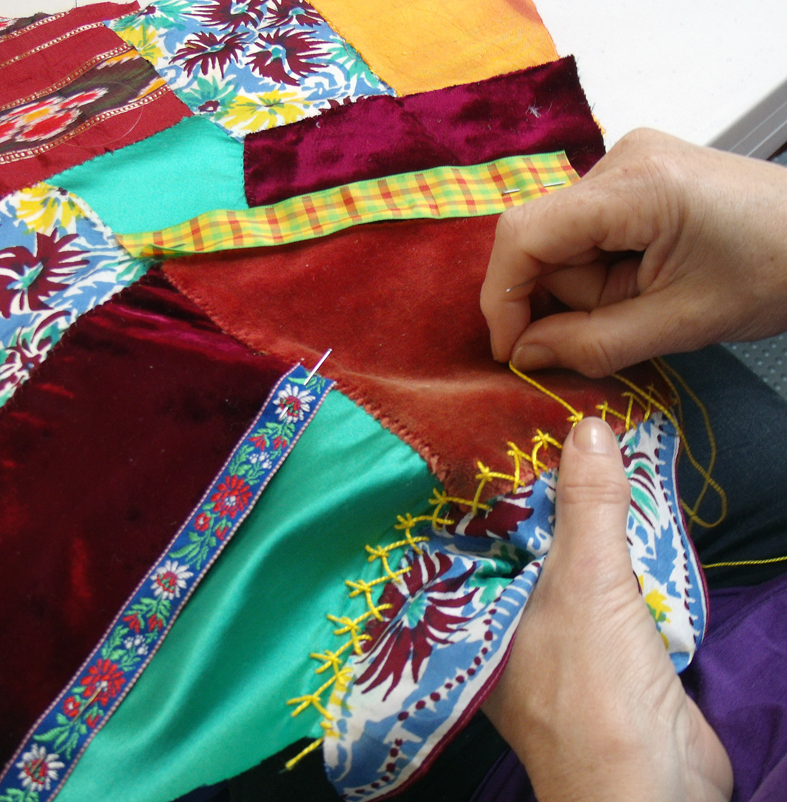
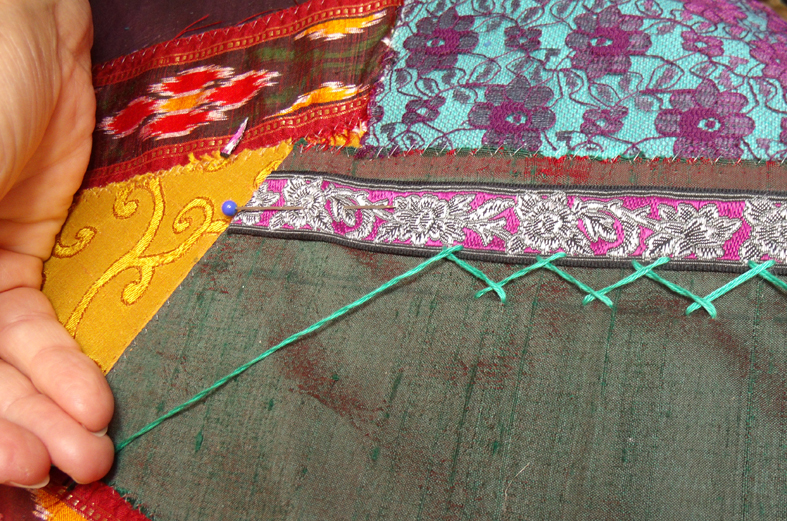
using the yellow herringbone stitch to balance the design
embroidering braids to silk and lace.
corners are always a problem – maybe a shisha mirror will cover the collision.

Eventually the students went home with enough information and threads to finish the panels for themselves  – and this morning I had this message from Jane Blair –

“Thanks so much for the crazy patchwork class, just what I wanted and lots of scrummy fabrics and threads….I will bring it in when finished and drop off any threads left.”

So hopefully I can post the finished results later………..
QUILTS

Last week I went to The American Museum in Britain, at Claverton Manor which is set on a slope overlooking a valley just outside the city of Bath. I know the museum well having visited it many times for the last 30+ years since I moved to the west of England. This occasion was organised for Textile Forum South West members specially to see the museum’s collection of Classic American Quilts as part of what seems to be the year of the quilt in Britain; the V&A museum is currently showing a large quilt and patchwork exhibition which I saw earlier in the year.

This smaller show is of traditional quilts only (held to celebrate the new book “Classic American Quilts from the American Museum” by Scala publishers and written by Kate Hebert the Collections Manager and Laura Beresford, curator) but coupled with the opportunity to see the quilt collection within the museum itself, it really is worth a visit before it closes on 31st October. The one thing about the museum which makes it stand out from others in this country is the quality of its staff, unfailingly friendly and polite even when telling you that you can’t take photographs, but knowledgeable to a remarkable degree about the entire museum.

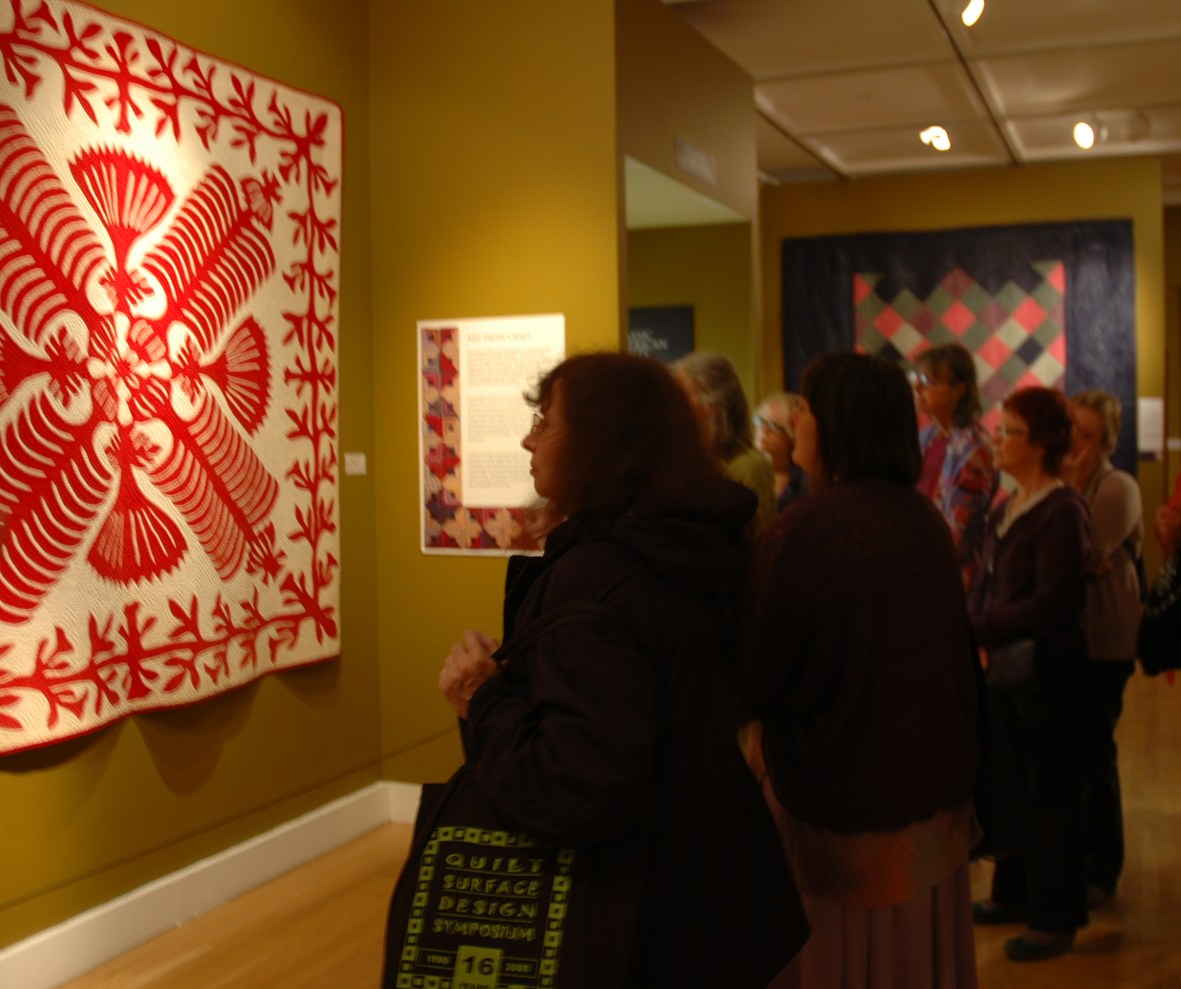
TFSW party in front of “Queen Kapi’olani’s Fan quilt

One of the most interesting things about the quilts are the names given to them in the catalogue, which you can see on the museum’s website. Here the Hawaiian quilt in the classic exhibition has a truly remarkable title. As a visiting party we were given a very thorough guided tour from one of the quilt specialists, Judi Grant, she certainly knew the collection and its history well and even the quilt experts amongst us were impressed.

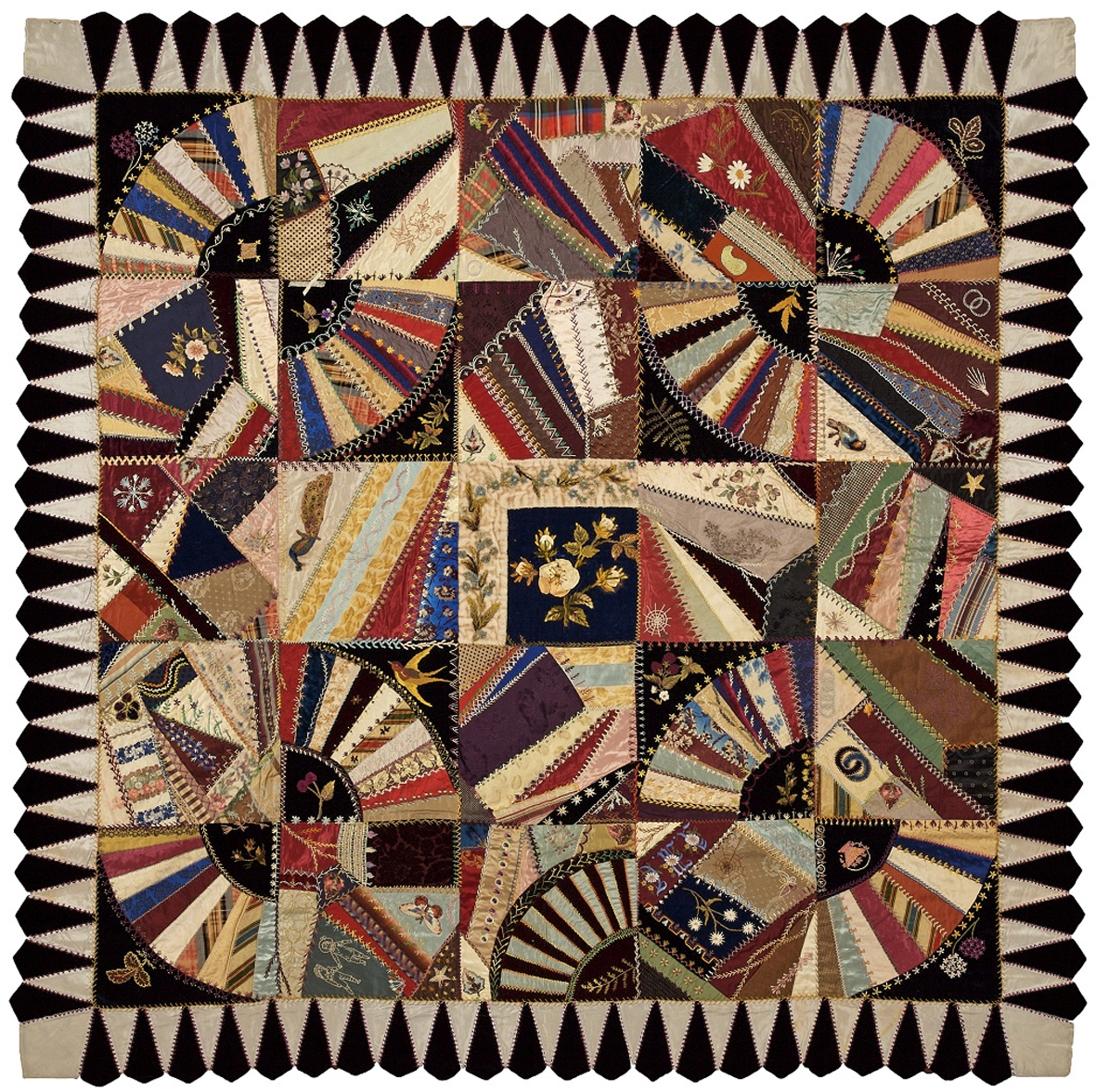
crazy patchwork with fan edge

I particularly like crazy quilts as they are usually embroidered and several years ago I wrote and sampled a book called Crazy Patchwork, for the publishers Collins and Browne. To my delight I found a darning sample in one of the corners of this quilt, but because of the necessary low light levels needed to conserve the collection I have only got a very shaky picture from my hand held camera which was only permitted without the flash.

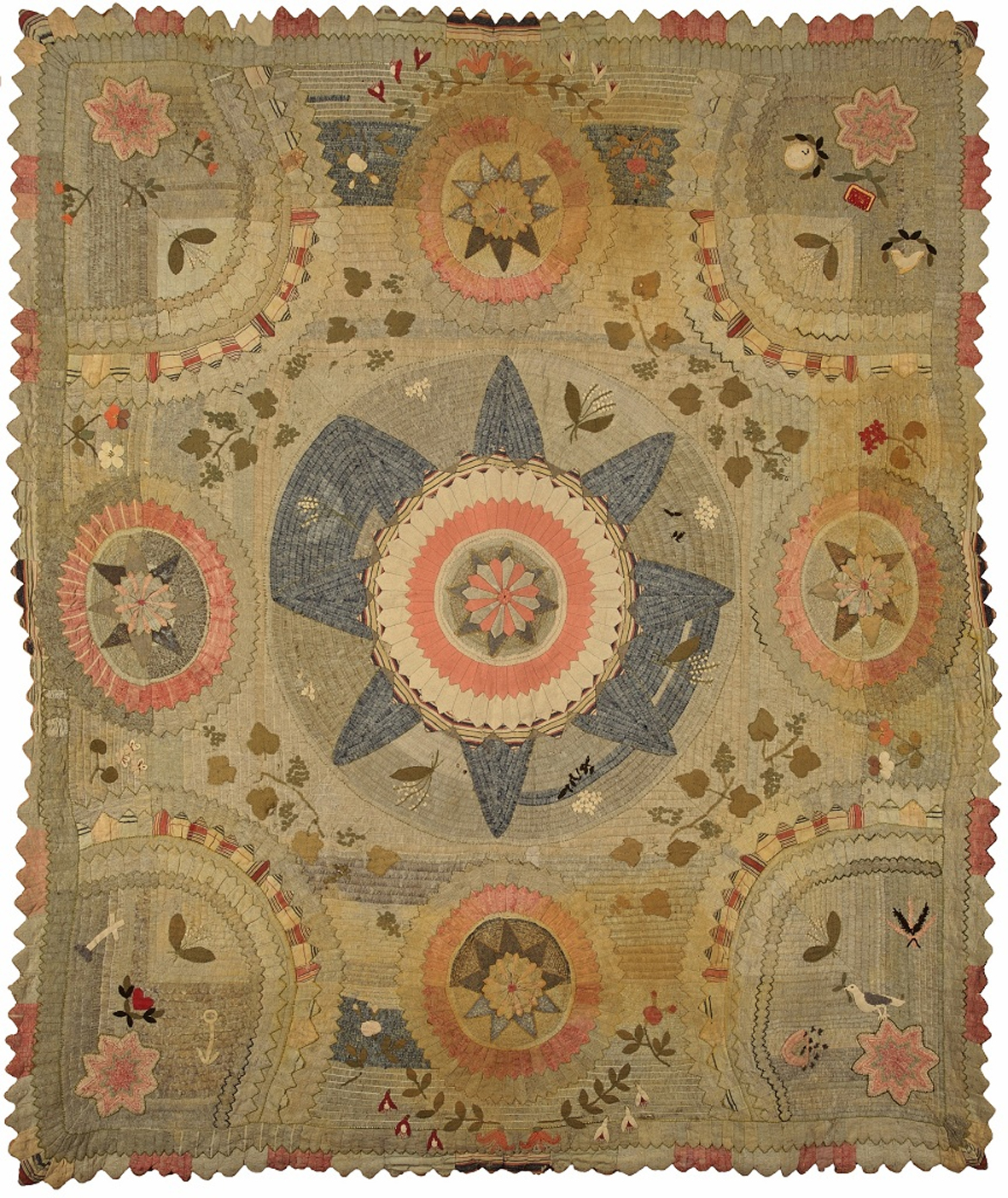
So this got me looking really carefully at everything else for signs of mending and darning. The guide had explained that the museum policy is to conserve but several of the quilts showed signs of mending, obviously made before the museum had acquired them. This 19th century wool quilt was very unusual for the amount of darned areas, it must have been highly valued by its owners to have kept repairing it and I imagine this was not just a case of  necessity for it really is a beautiful textile; the soft and faded colours  make harmonious patterns even though it is stained and worn.

wool applique quilt, the most darned and mended quilt in the entire collection

While on my hands and knees trying to photograph the darns on this woolen quilt I found this tiny red heart appliqued in the left hand corner. Now who put that there for whom? I asked myself.

Now I had a mission for the rest of the collection – looking for mending….so off we walked to the manor house to see the main quilt collection and on my way up the stairs, I noticed this perfectly crafted stone repair.

inset stone repair on the stairs of  Claverton Manor house

The collection on view is apparently only a small proportion of all the quilts that are held and I recognised most of these quilts from earlier visits;  sadly one of my  favourite pieces is not photographed, either by me or  by the museum for its own archives yet – a small patchwork that is tied together rather than quilted, it is made out of faded blue  and white working clothes fabrics, denims, tickings and shirtings. It is the first piece that you see on the racks of quilts and it brings home to you just why this type of textile was first made – out of sheer necessity.

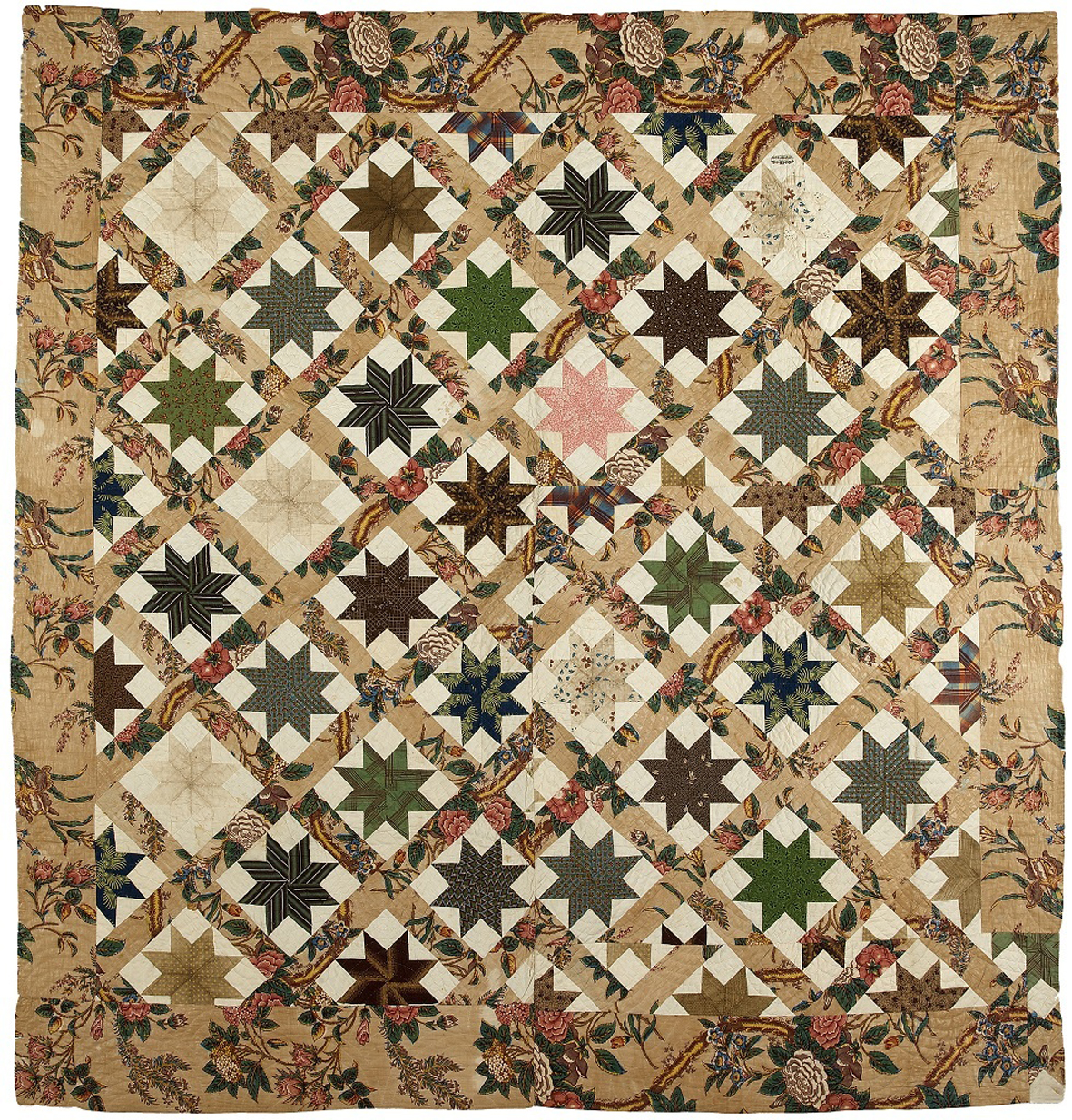
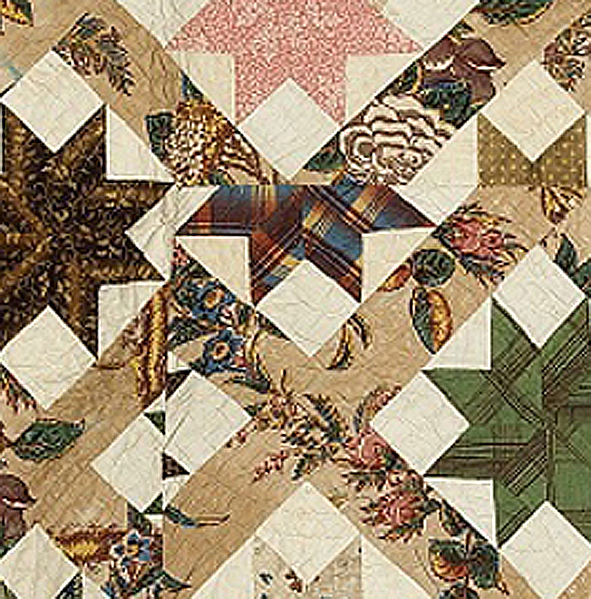
But onto a spectacular quilt with a spectacular name, the Tippecanoe and Tyler Too quilt, it is large and made of  stars set in diamonds which are sashed and bordered with chintz prints, but even better from my point of view –  a quarter of  it has been cut and re- sewn together in a very curious patchwork.

Tippecanoe and Tyler Too quilt
detail showing the join in the large patched area of the quilt

The quilts are obviously my major reason to visit the museum so often as well as the various textile exhibitions they put on in the purpose built modern gallery, but it is also full of fine furniture, ceramics, stencilled rooms and a large ornate copy of the Declaration of Independence, which I particularly like as July 4th is my birthday.

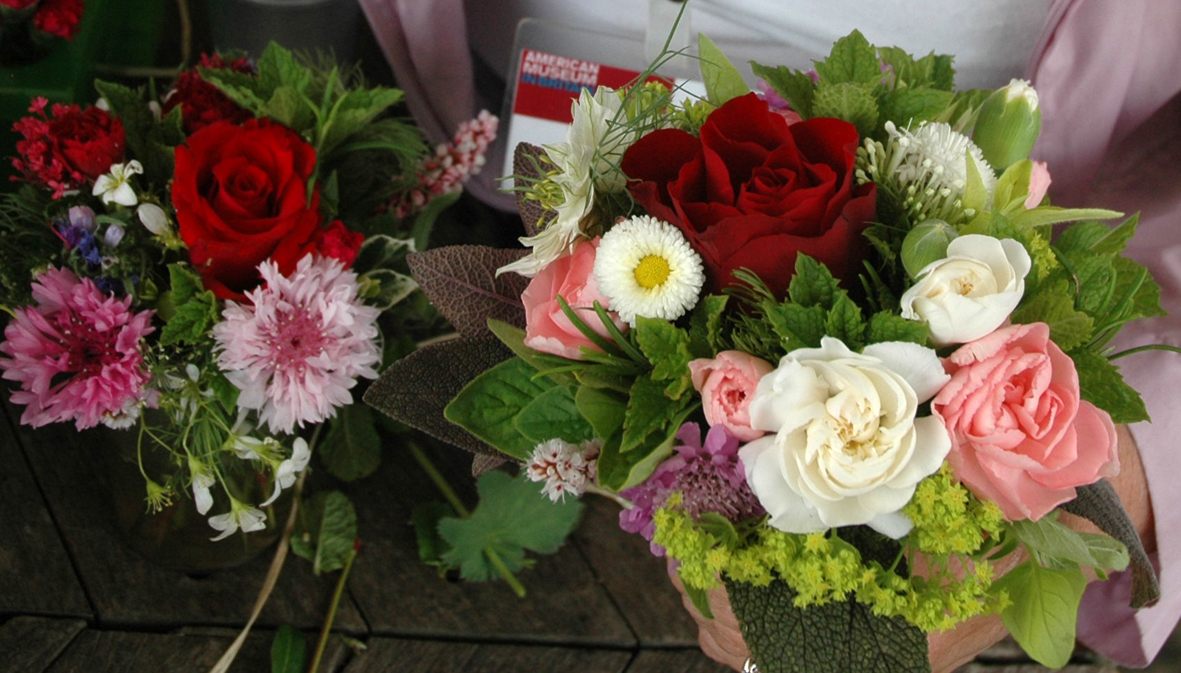
tussie – mussies in the making

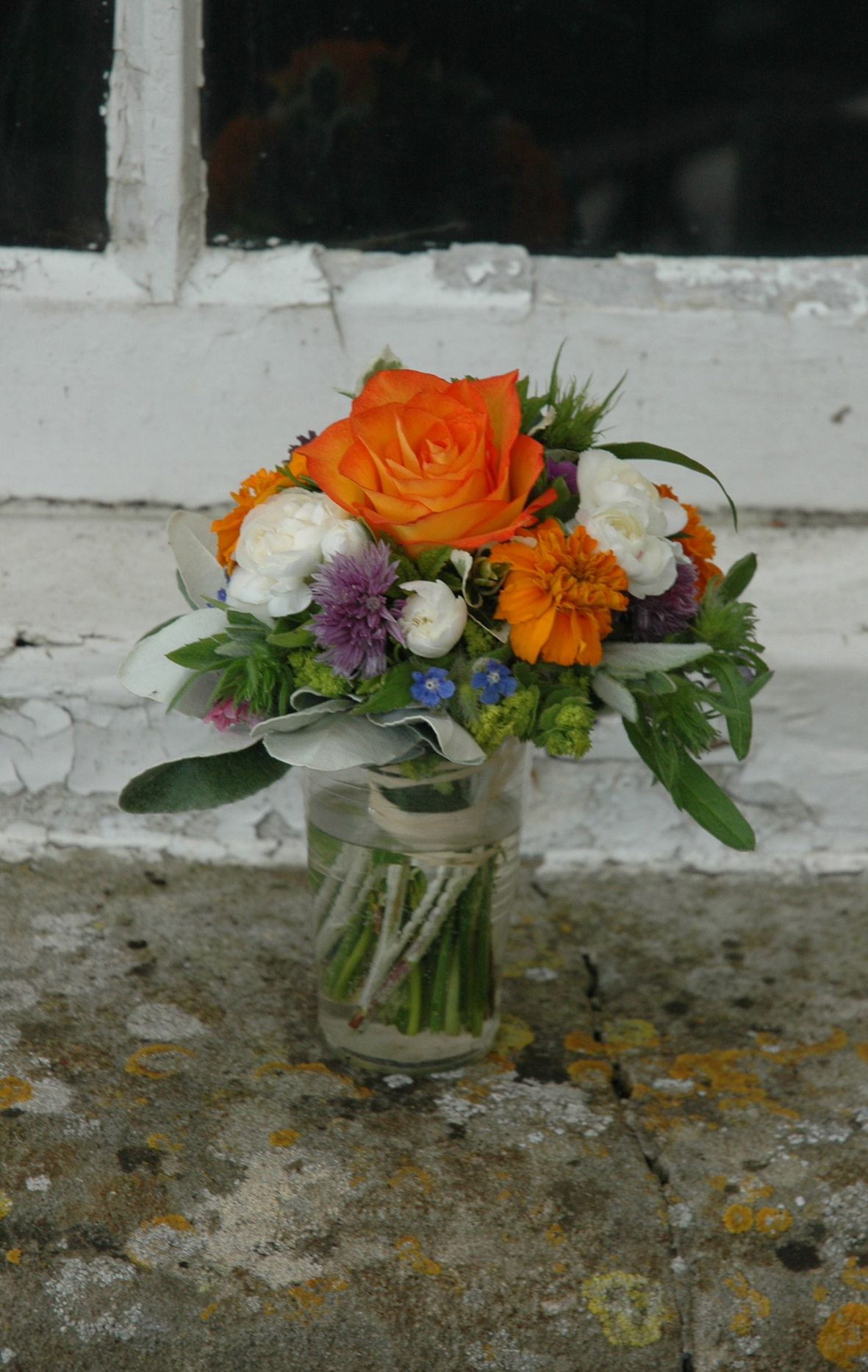
However no visit is complete without sampling the brownies and cookies for sale in the stores and the terraced restaurant/tea rooms – not exactly a diner –  but once on the terrace go to the small herb shop where tiny hand tied bunches of flowers are made and sold, called tussie-mussies they are exquisite and worth a blog all to themselves.

flower arrangement on window sill overlooking the terrace