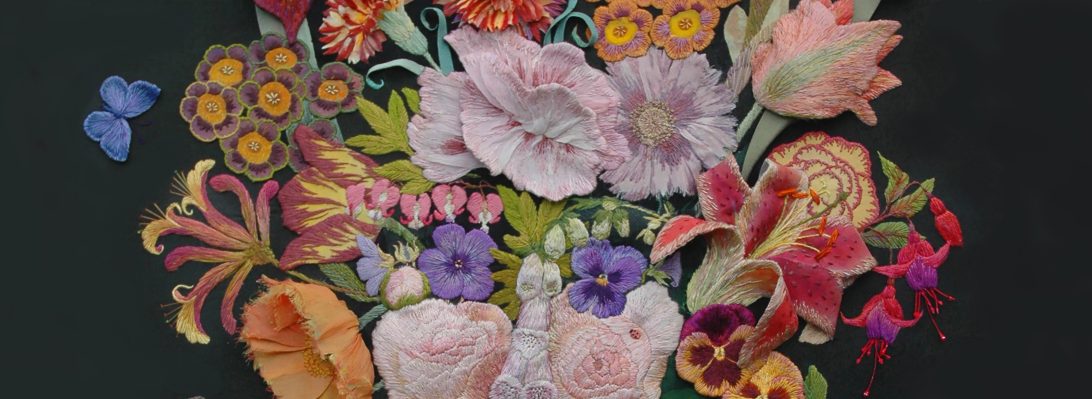
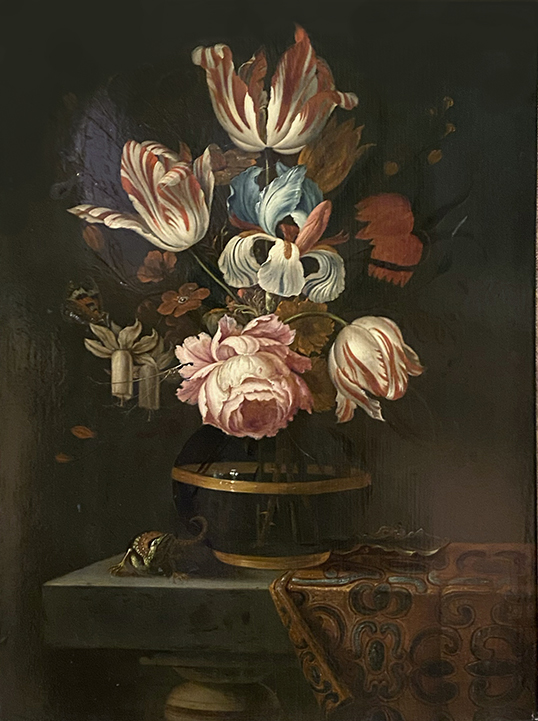
A vase of Tulips

The classic 17th century Dutch paintings of fabulous flowers, but this arrangement probably did not really exist. The modest bunch above, features early spring Daffodils, with mid to late spring Tulips and Irises, and yes they can all grow in the same season, but the give away is the fully formed damask rose seen only in mid summer. It demonstrates how the artists worked: each flower was a sample of horticultural expertise, painted when it came into season, then there was a wait for the next bloom to come to perfection.

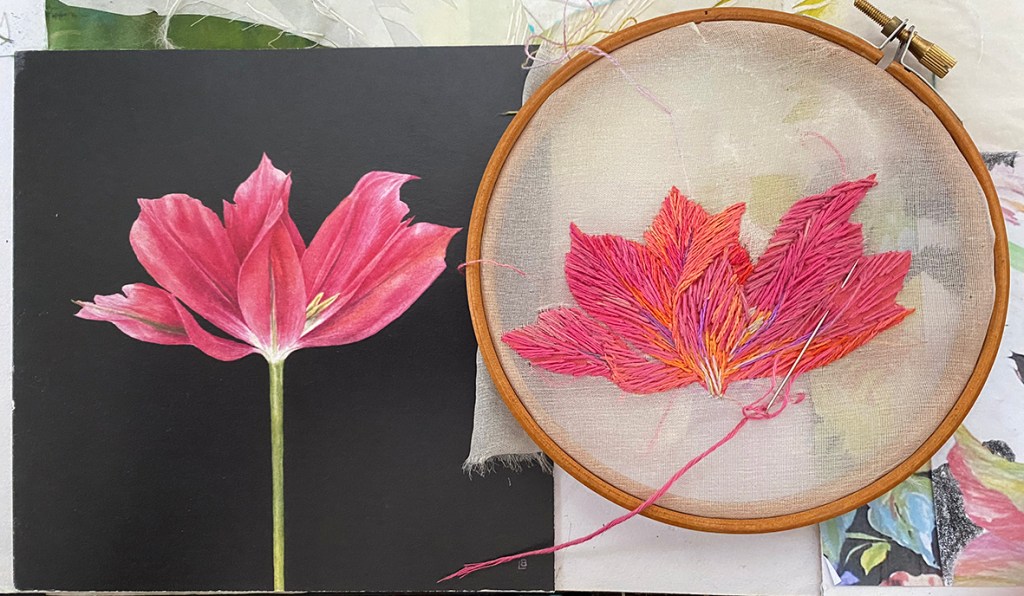
So last year when I was commissioned to embroider ” a vase of colourful tulips” during my Hidcote exhibition, and I realised that tulips would not be in season in October when I could start working on it. I decided to find tulips within my own work and remembered a very old sketch book with a vase of drooping purple tulips ( circa 1980). Always keep your sketch books!
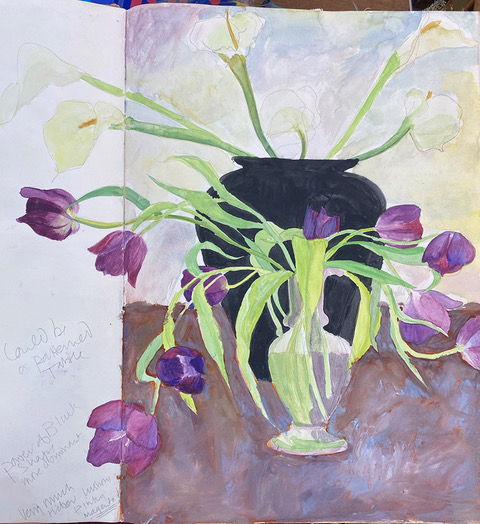
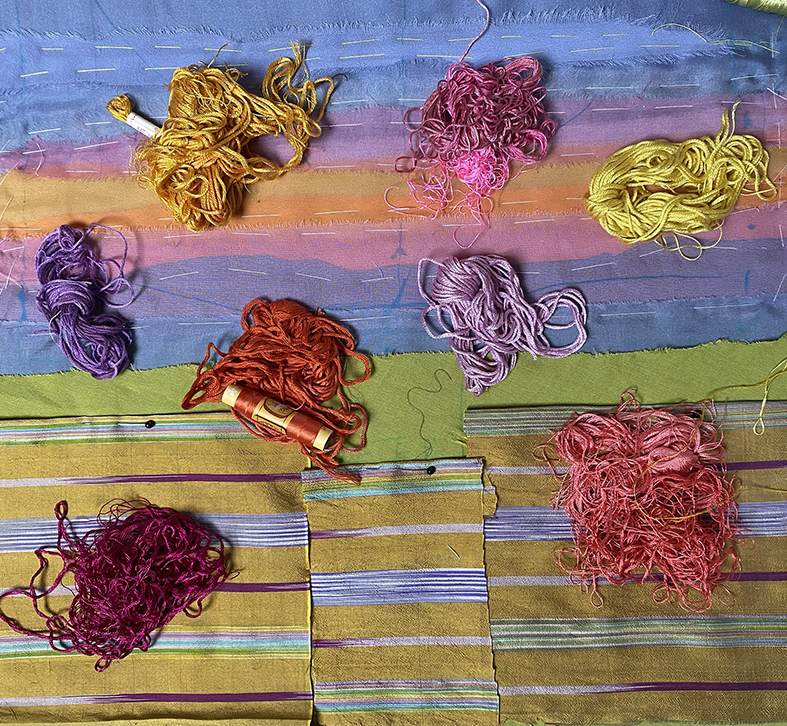
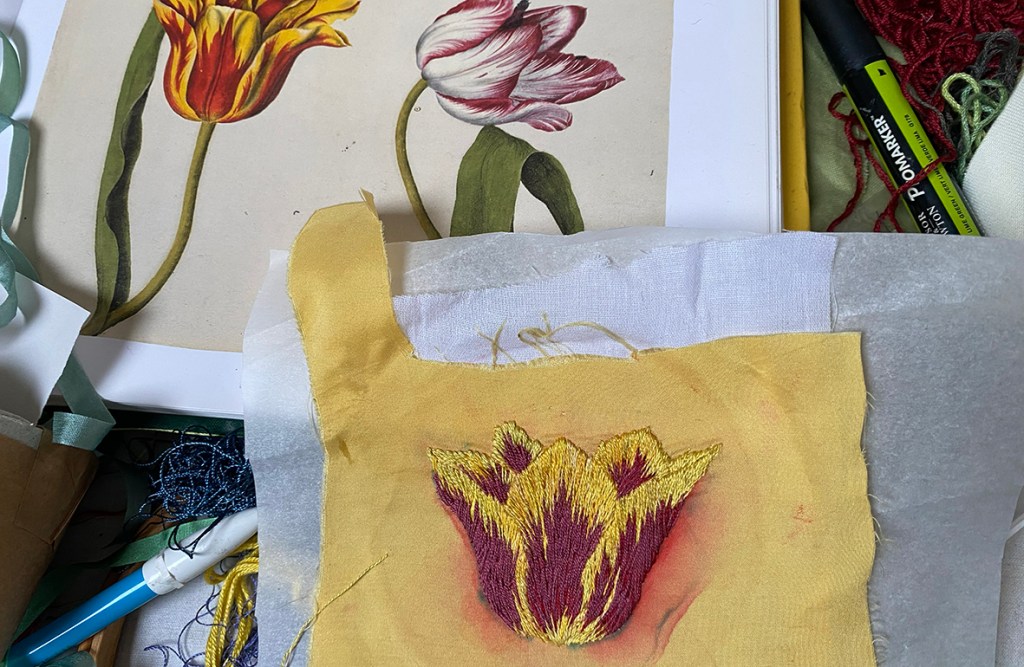
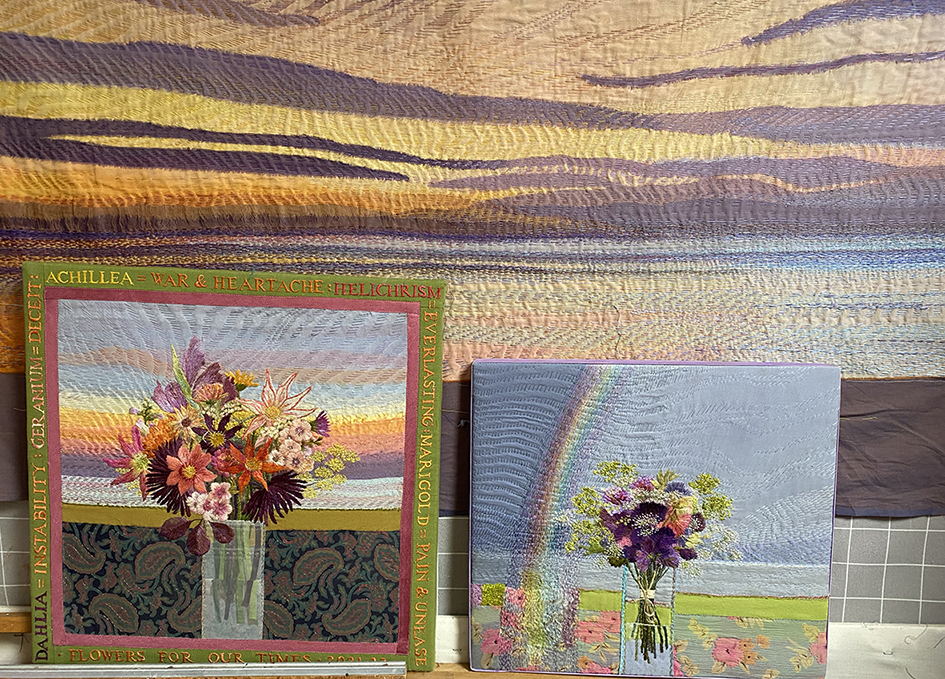
Above is the inspiration behind my latest commission. Below shows my studio wall with earlier flowers against stitched Kantha skies…with a sample of different fabrics to act as the background
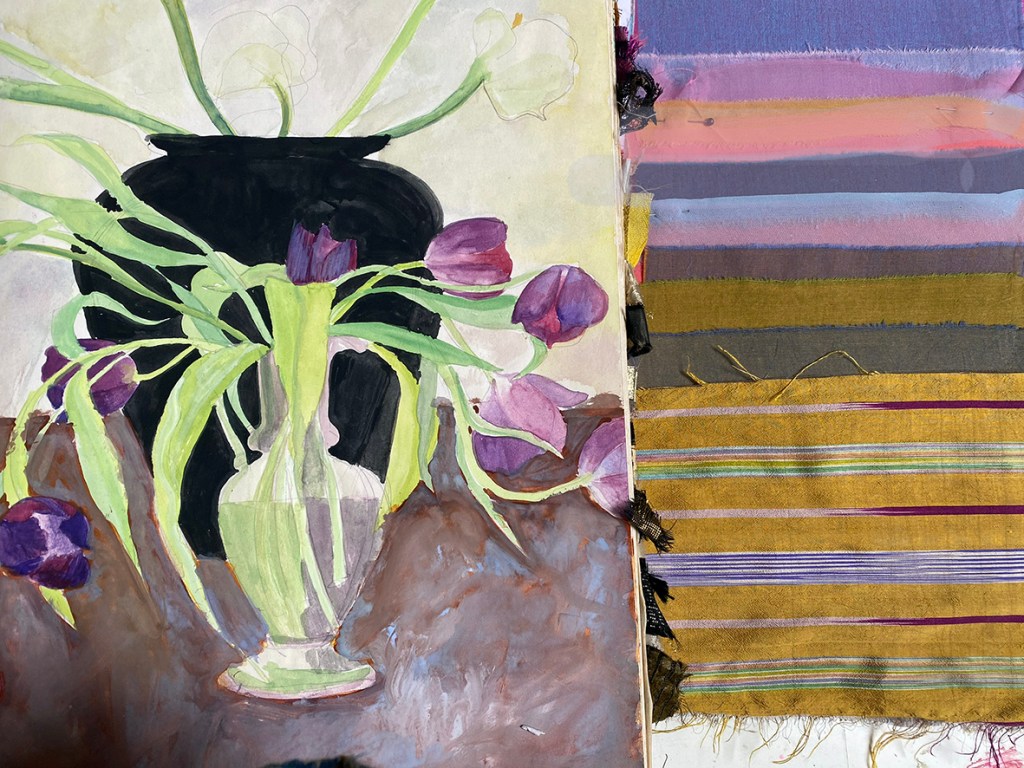
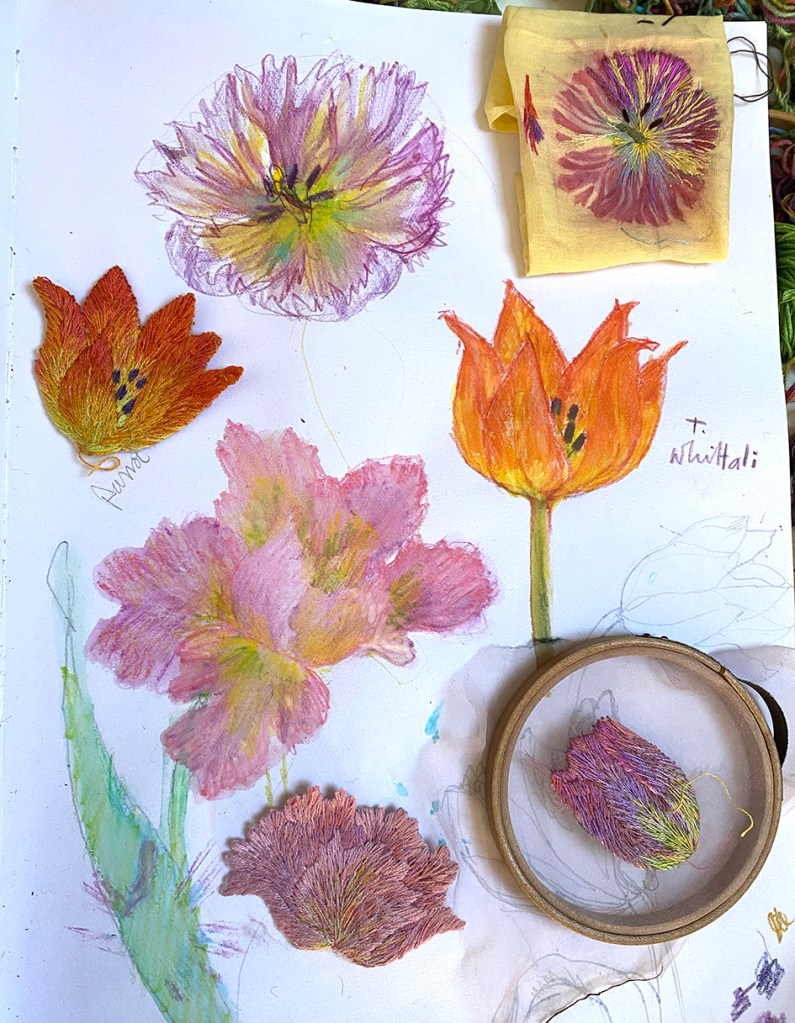
Now I needed to choose some colourful tulips to put in a vase. I started with my sketch, below, of some striped tulips that I have used many times for different projects. It was at this point that I sent images of ideas and sampled fabrics to the buyer – for any feedback then with her agreement I went ahead and started on the actual panel. But with the stipulation of no other sighting until the piece is finished !!!!!!!!
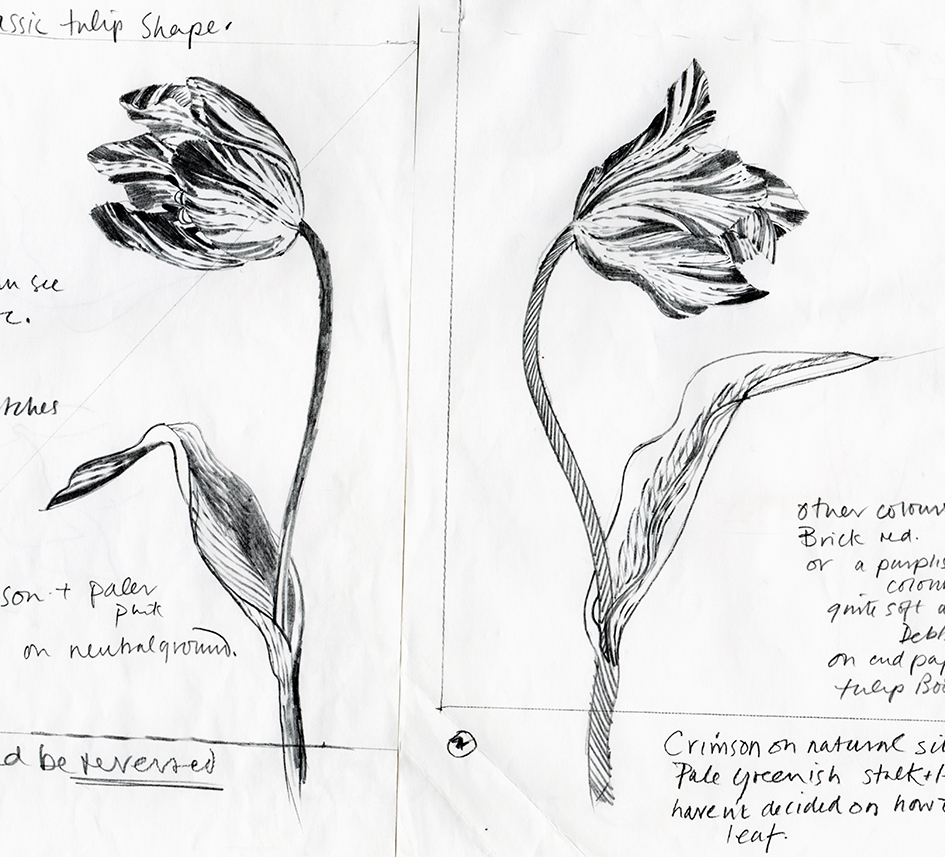
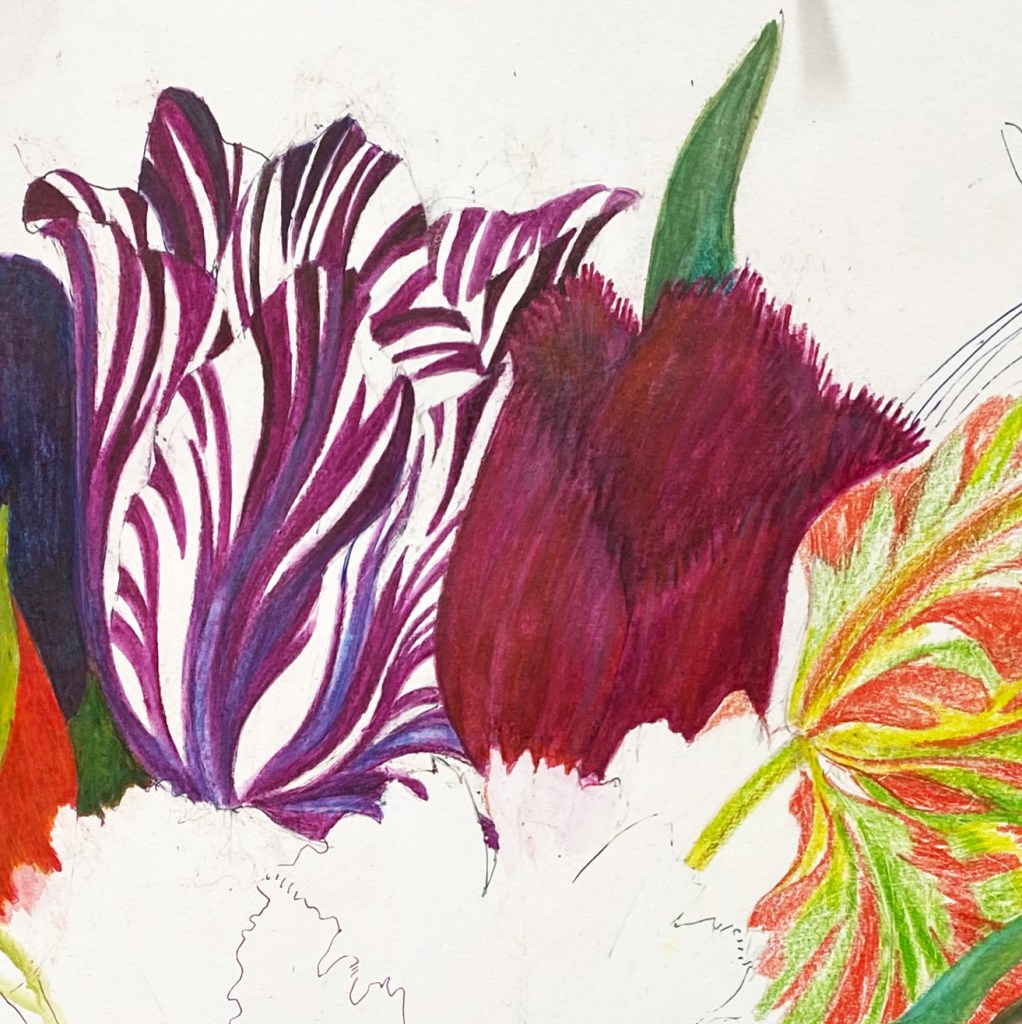
Here is the drawing used again for the front cover of one of my embroidery books, and on a detail of Tulipomania now used for a print in my shop,
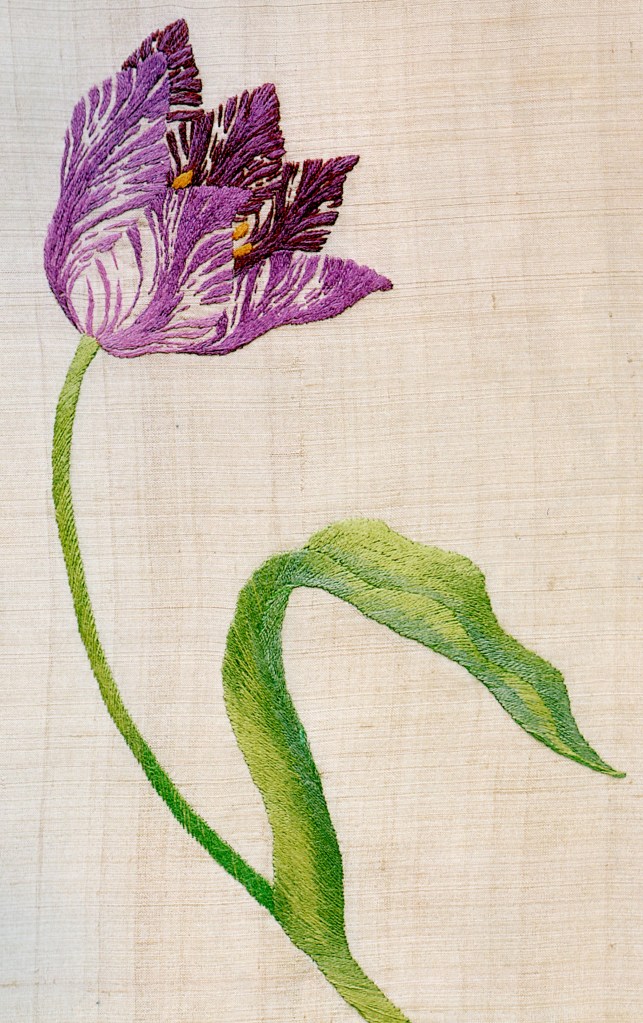
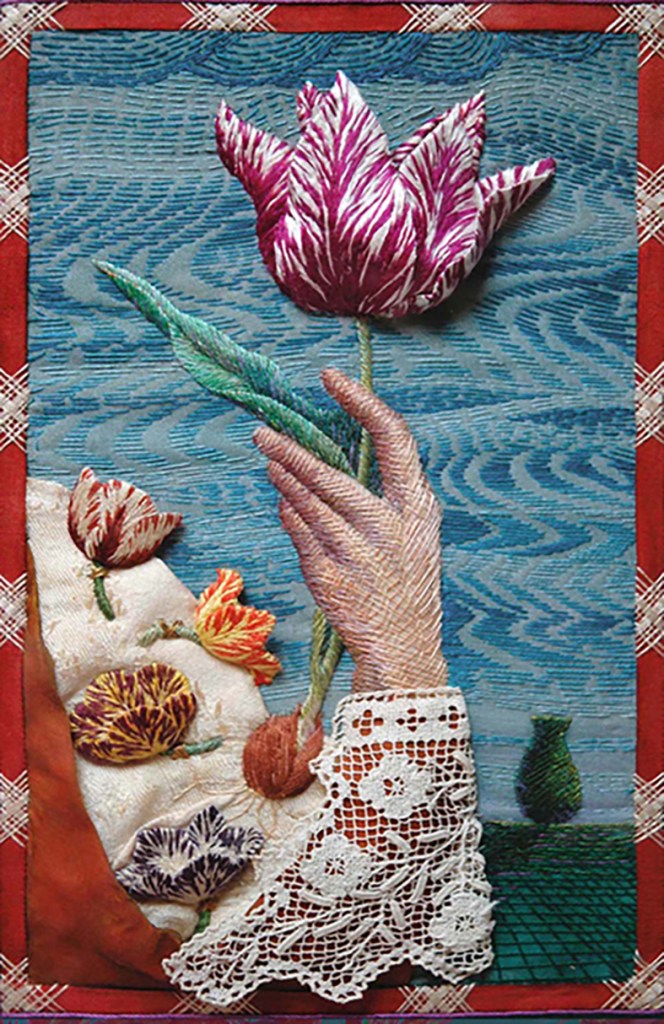
Below, designs for counted thread canvas work woollen embroideries – a good drawing goes a long way!
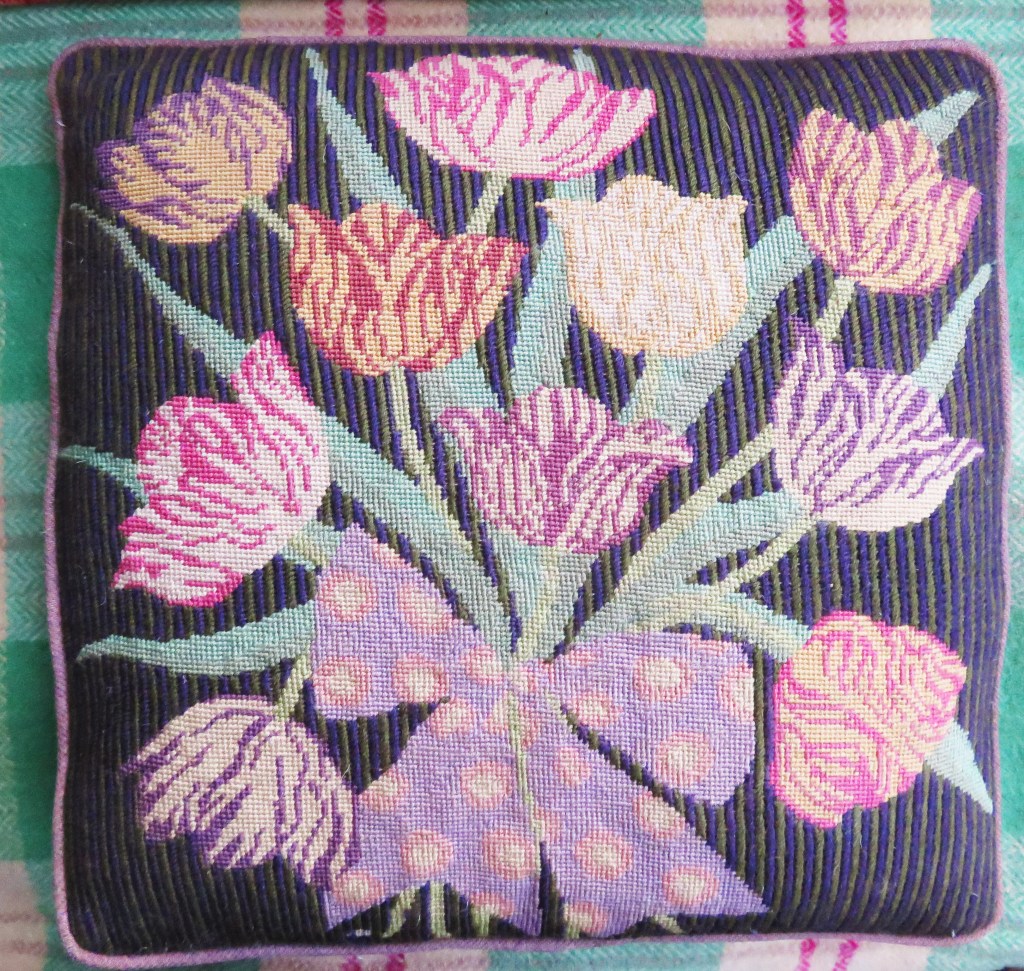
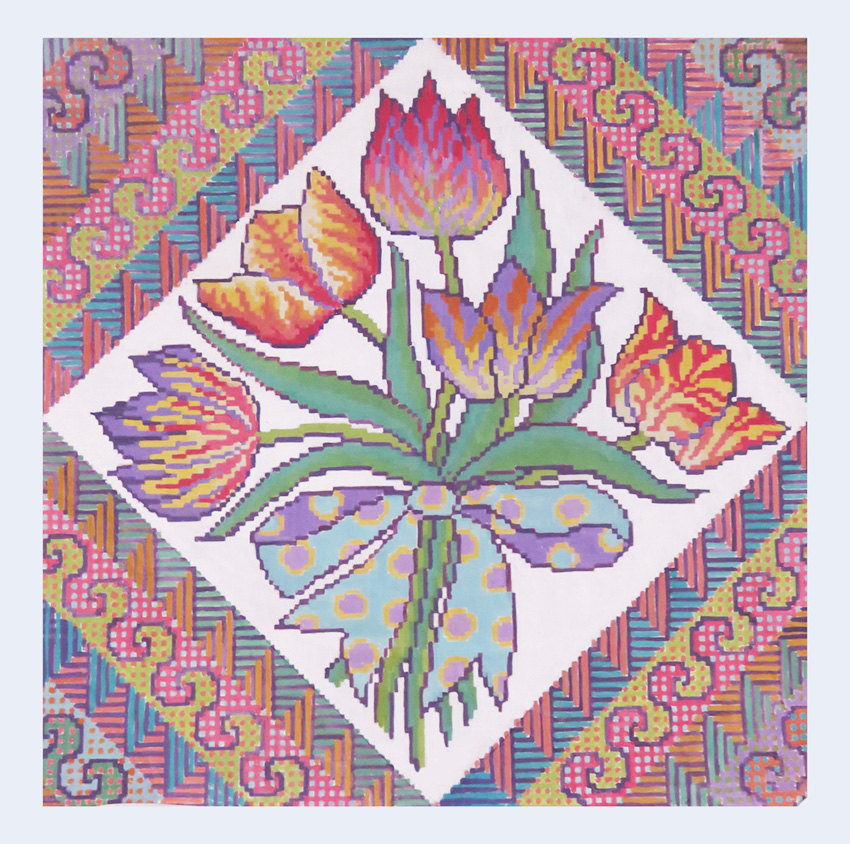
Now to flower arrangement – I am not good at arranging flowers and I really have to work hard at this aspect of my flower embroideries. I edited the tulips from the original early drawing as I did not have the time or space to stitch 10 flower heads in different colours and shapes. Below are 2 of many early drawings graphed for transference to the stitched ground.
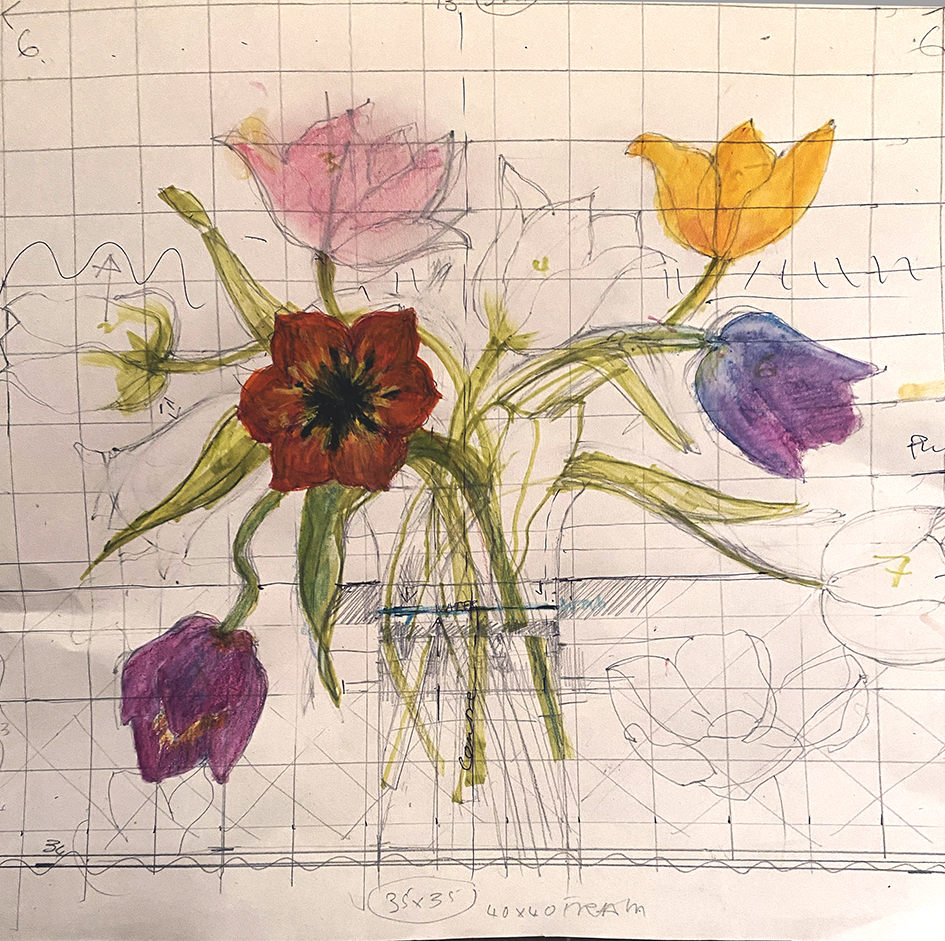
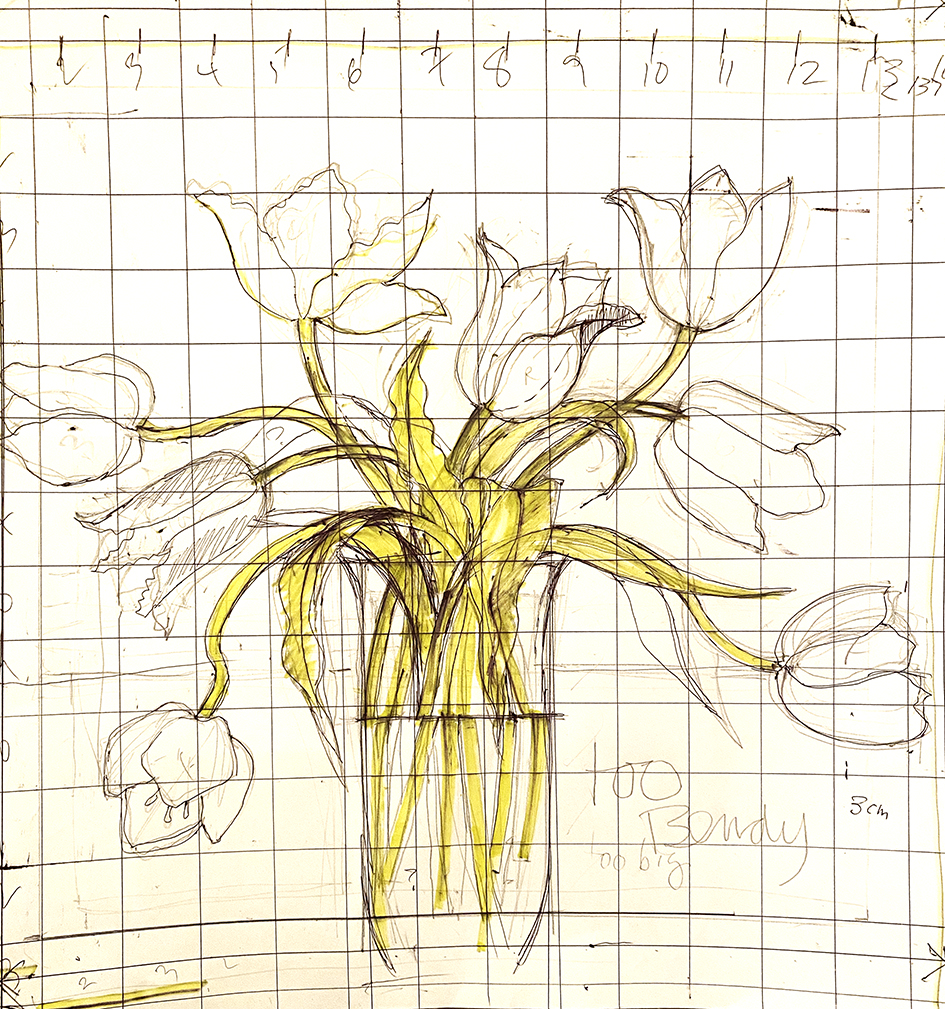
And to colour, the tulips need to work with the sky, and the sky is all organised, tacked ready for quilting between stitching the tulips.
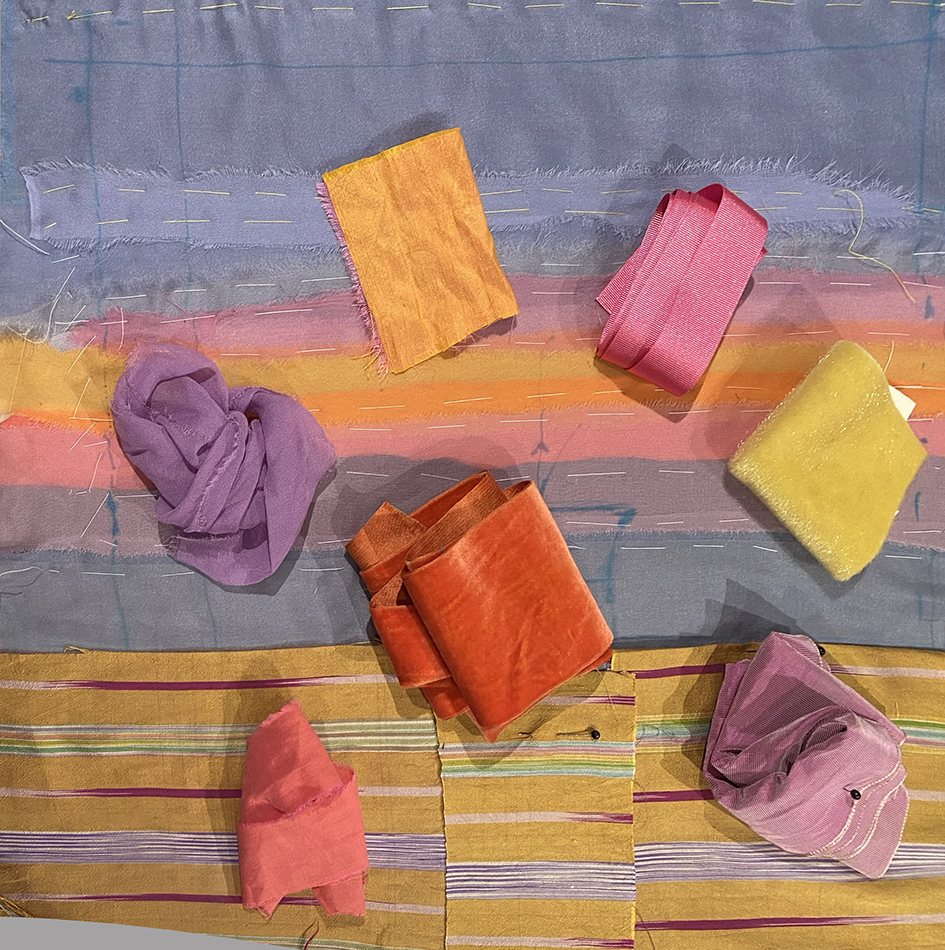
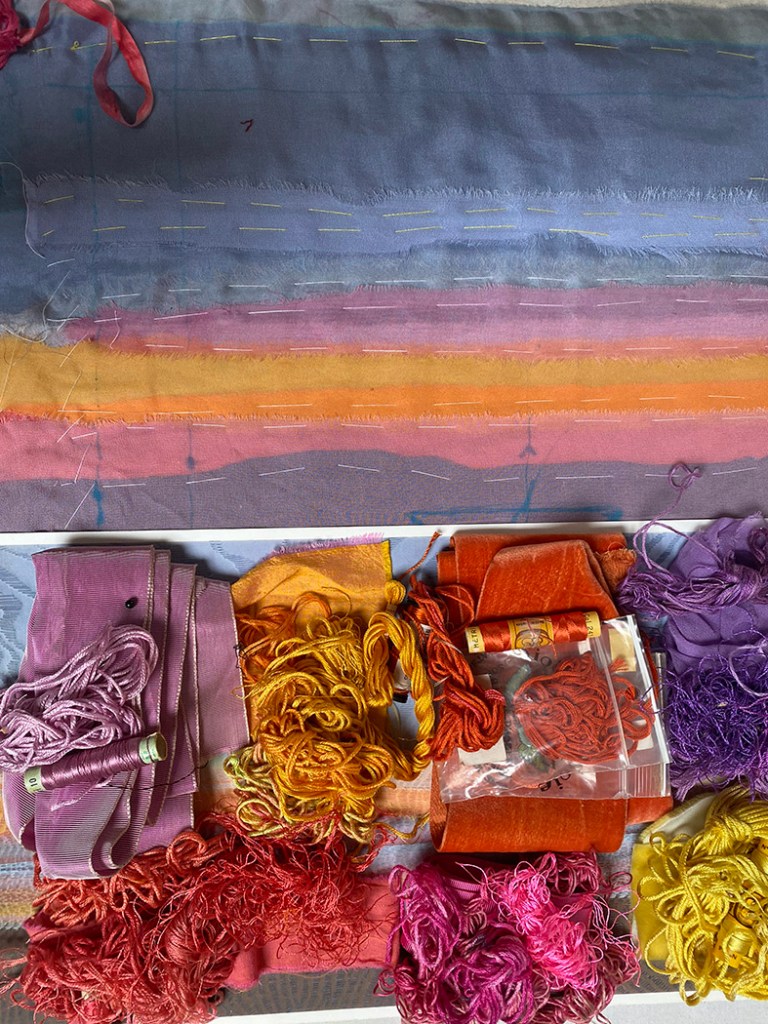
To enable me to gauge the placement of colours against the already glowing sky, I wrapped some silk ribbons to act as flower heads, found the silk threads to match them and took colour notifications – if only things work out so simply in reality – but I was starting this bouquet from scratch.

Drawing, redrawing, sampling and stitching one by one each tulip head is made,
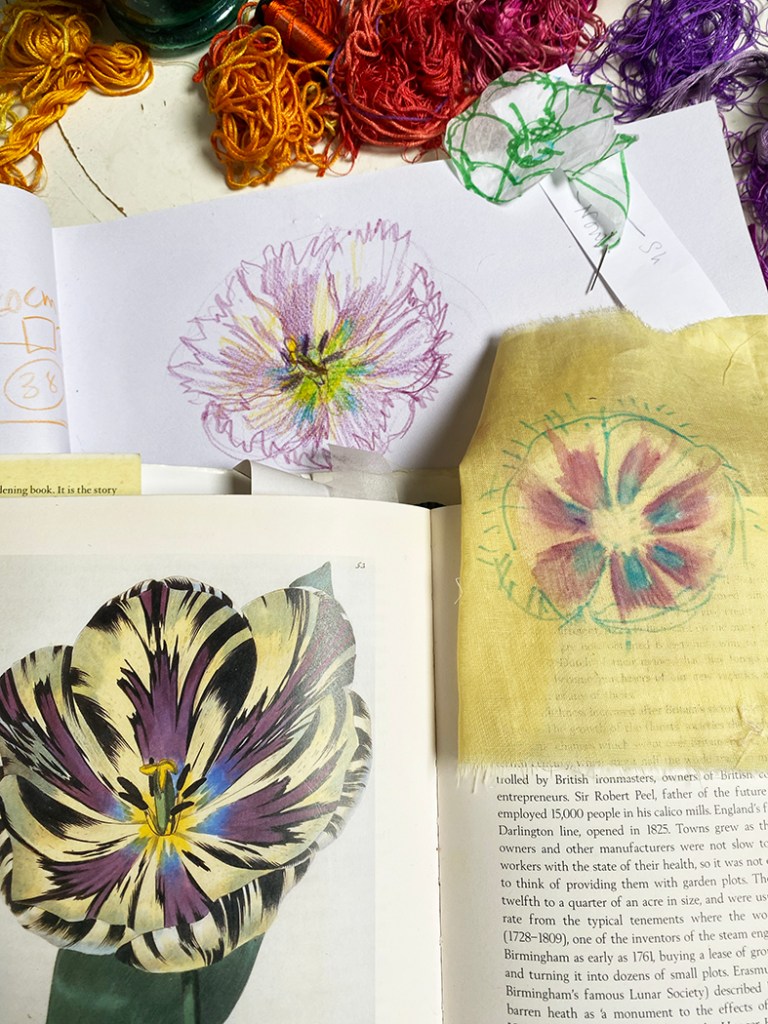
Below show older drawings in my current sketch book; plus my friend Lizzie Butler’s birthday card to me – I just copied it straight onto silk organza – with her permission of course!
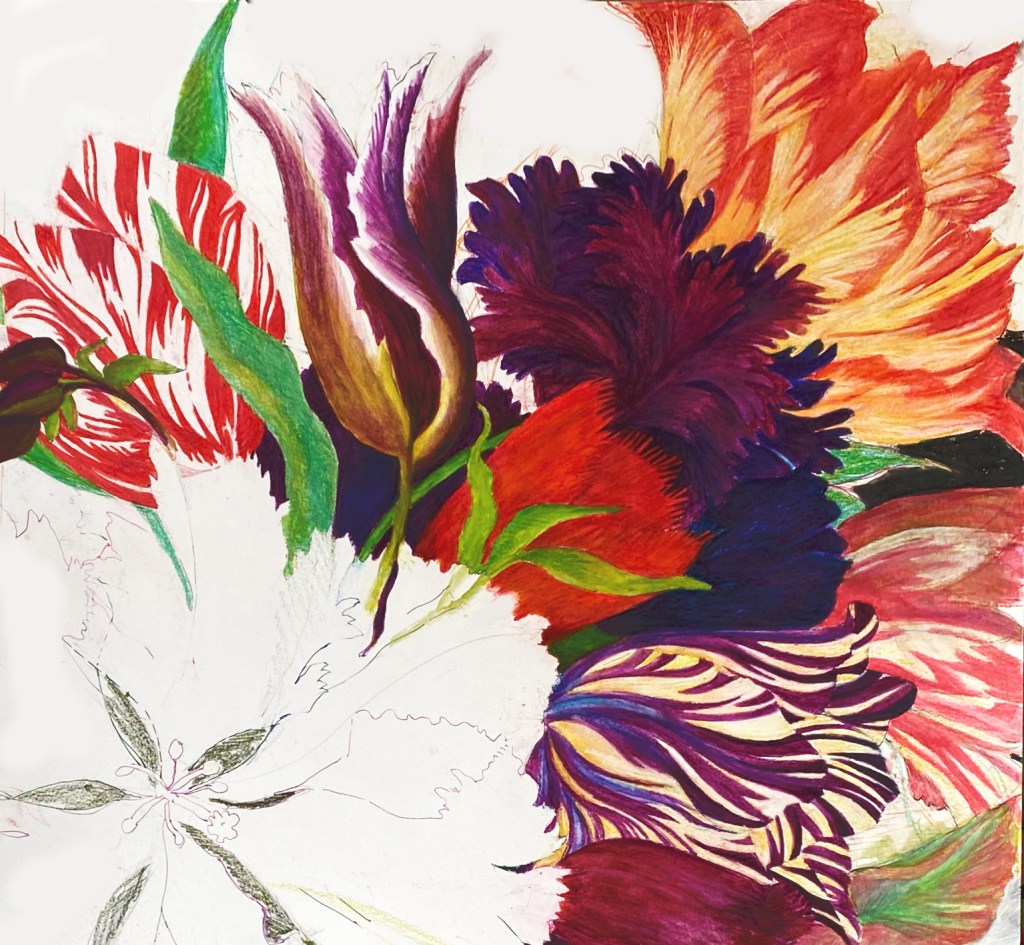
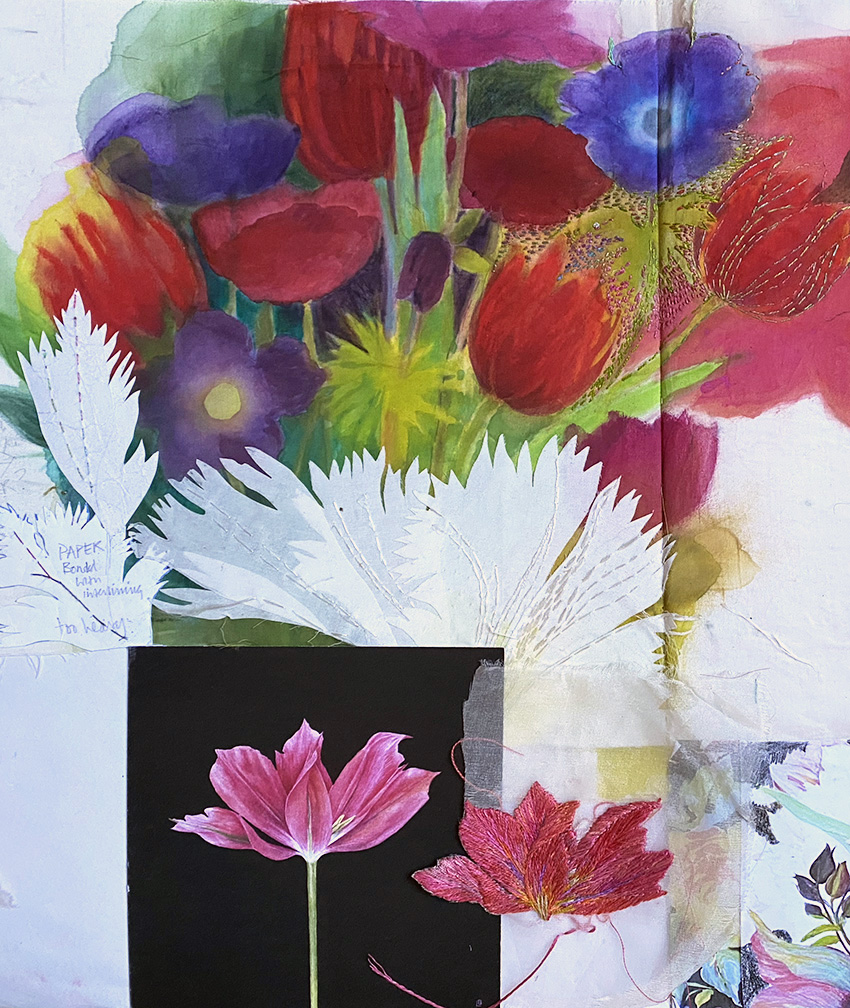
When enough heads are made I start to arrange them on the background….and then the leaves. I just love to draw tulip leaves and their colours are so soft and gentle. I start with cut linen shapes from my original drawing in order to stitch over them to give definition; getting there.
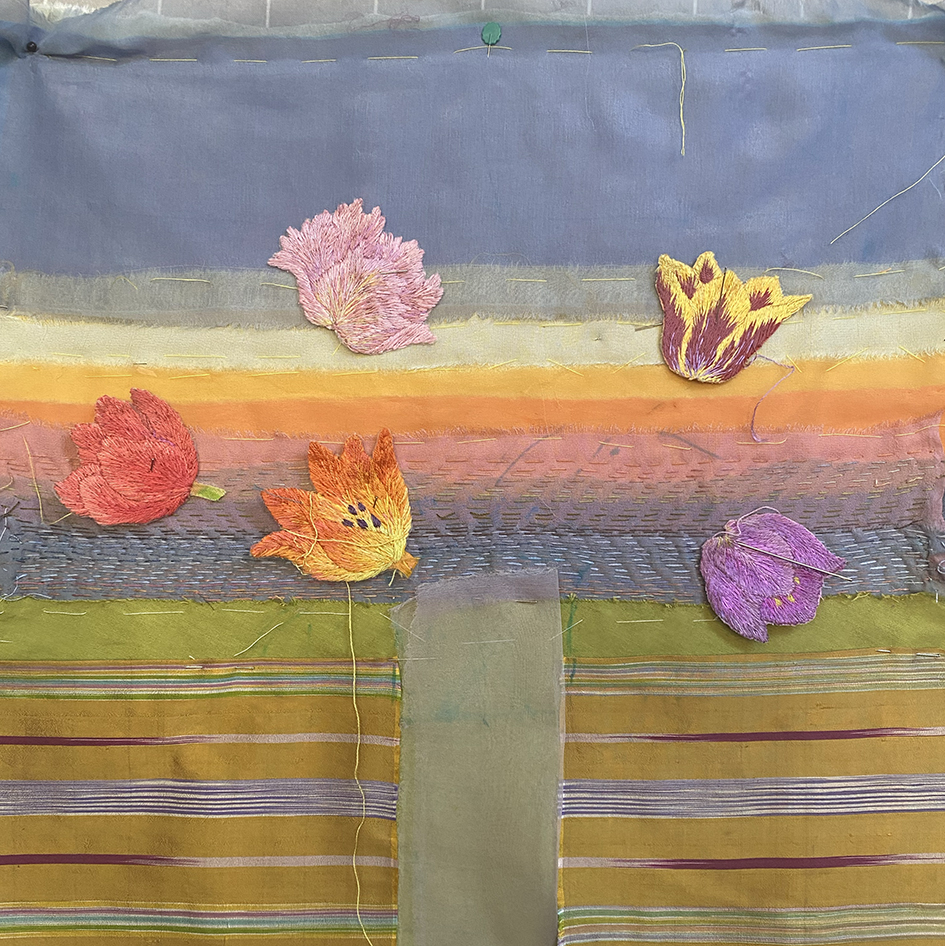
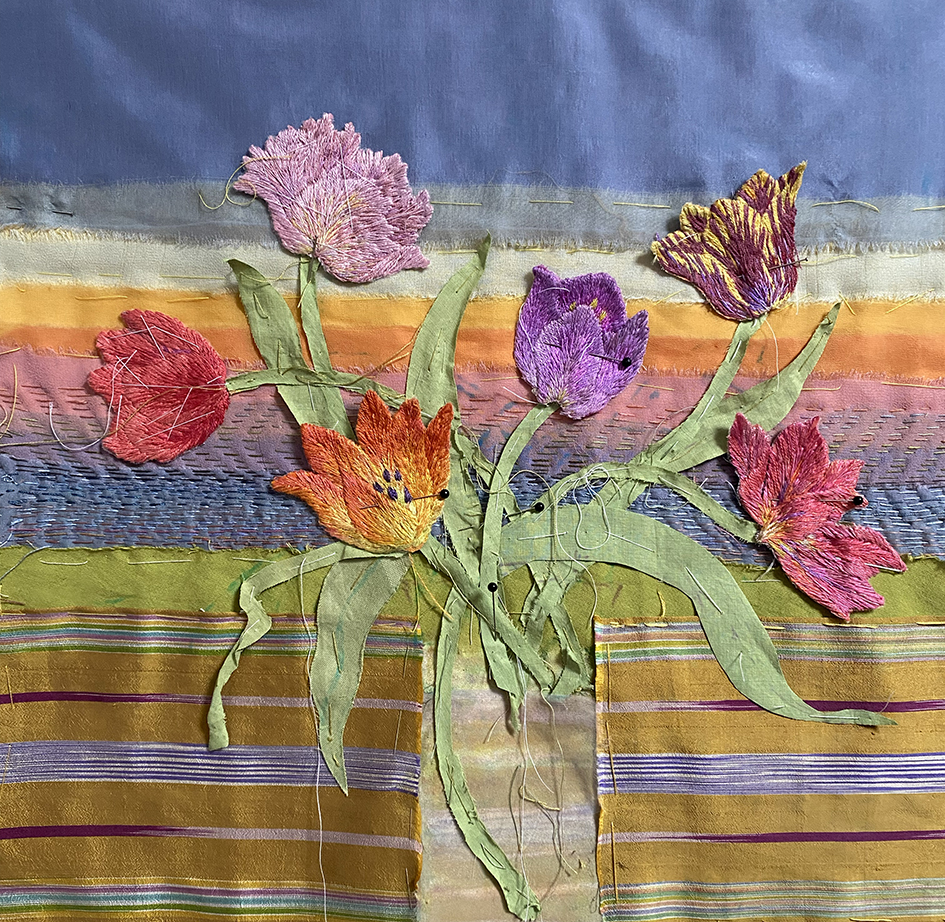
And last the vase – which is another story – believe me!
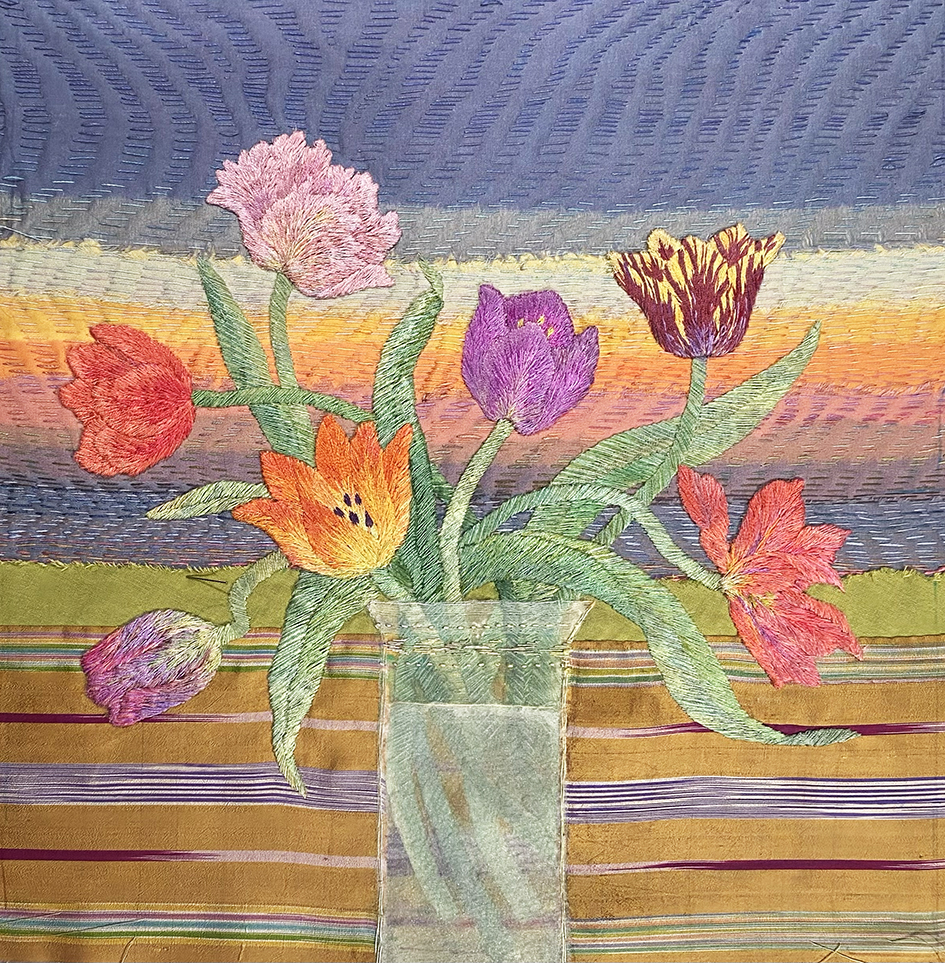
I truly enjoyed this work, creating spring flowers in the depth of winter, but it was a challenge as you can see. It is now safely framed and given straight into the hands of the son of the person who commissioned me; he had seen my work at the exhibition and talked about it…..and he has promised to send me a photo of the framed work in situ in the new house.
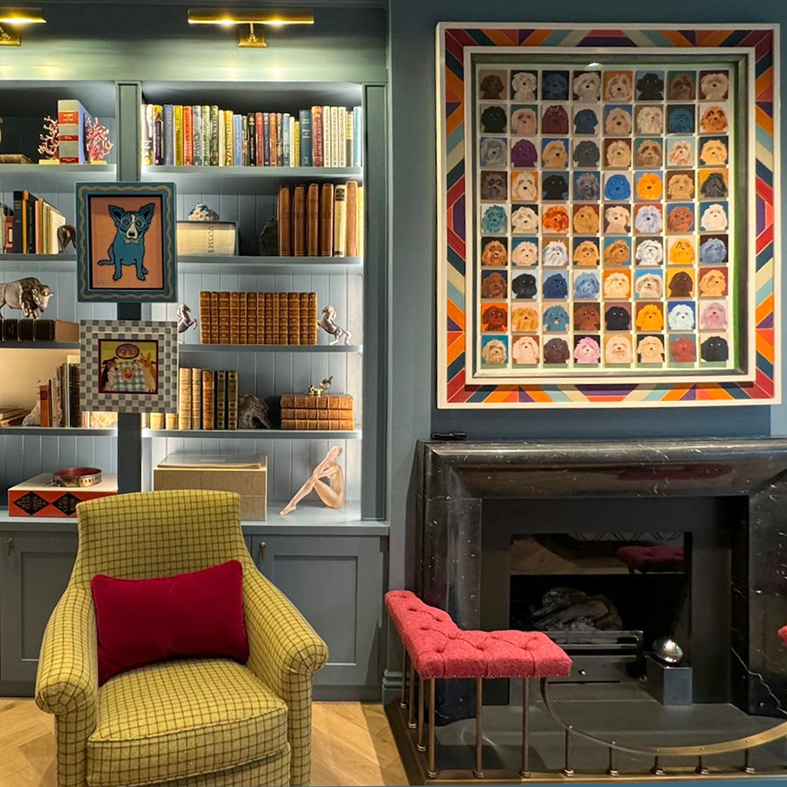
dog quilt: SERENDIPITY

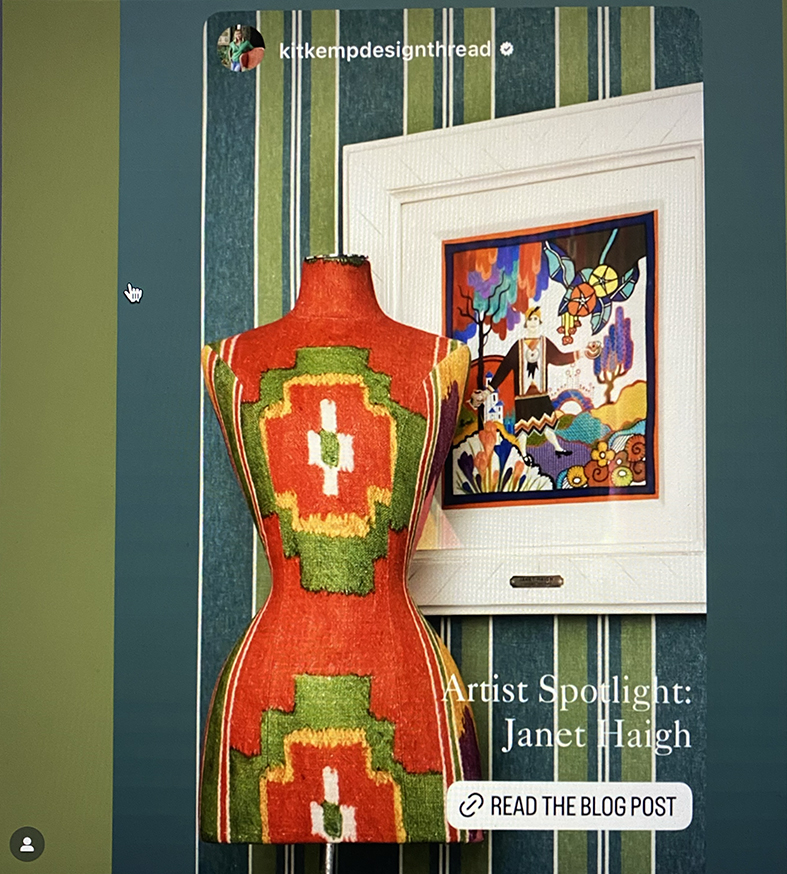
Strange how sometimes things come together: I was contacted, out of the blue, by Marcus Wells at Havilland Designs to see if I undertook commissions? He had framed some of my earlier work (embroidered portraits of women designers) for one of his clients, the interior designer Kit Kemp, who, to my amazement, had spotlighted my work on her blog, showing the perfectly placed Clarice Cliff portrait and lots more. Now read on……

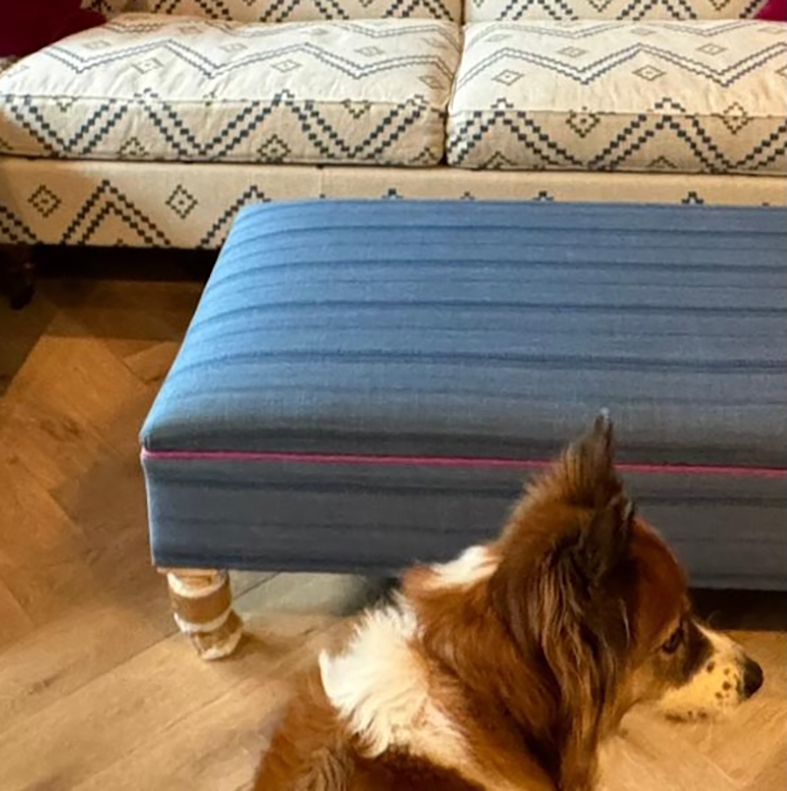
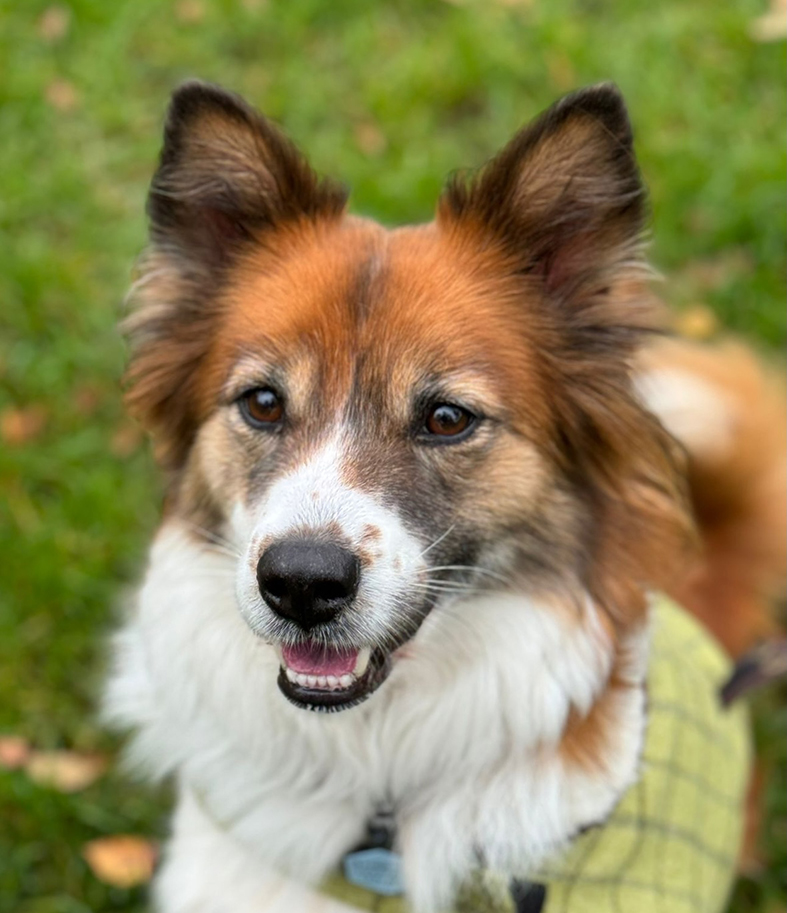
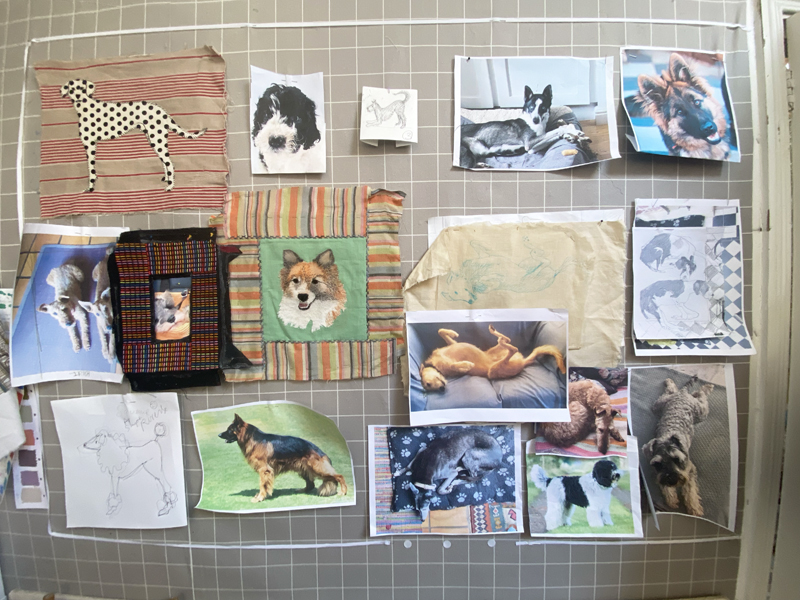
Marcus had a client who wanted a quilt depicting dogs. I am not a quilt maker but I was intrigued and asked him to send me details, sizes, preferred imagery etc. and an overview of the space where the quilt would hang. It was to be framed by Marcus and – no pressure – his client was another interior designer….He sent several images of the room that the quilt was to be hung in and I noticed a small dog’s head on one of them, I asked for pictures of any other dogs belonging to the client.

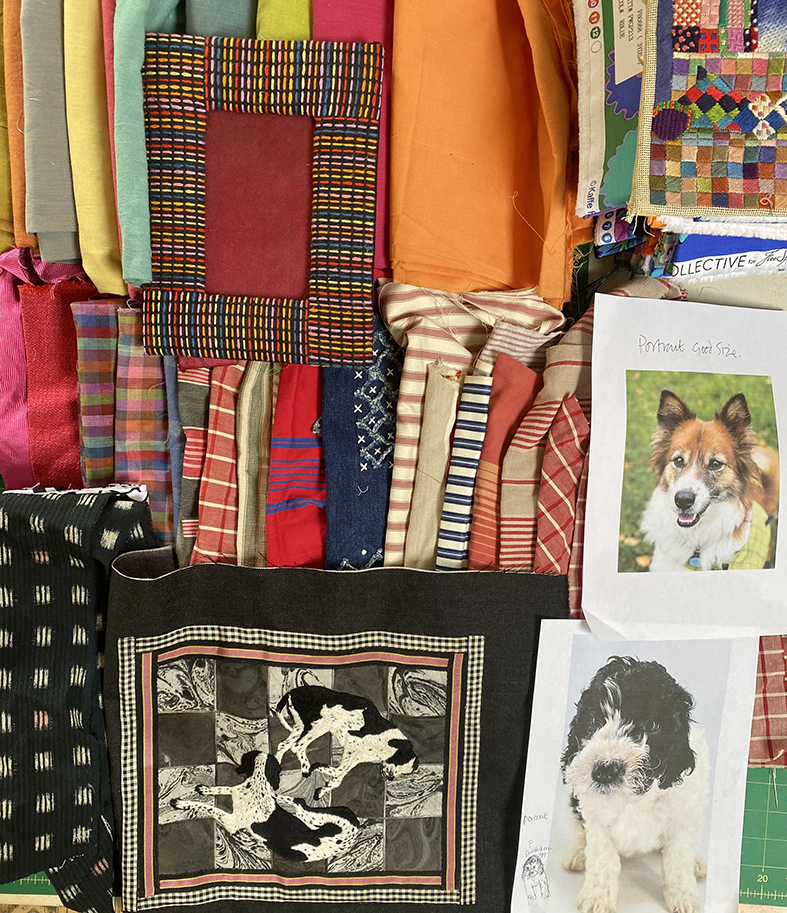
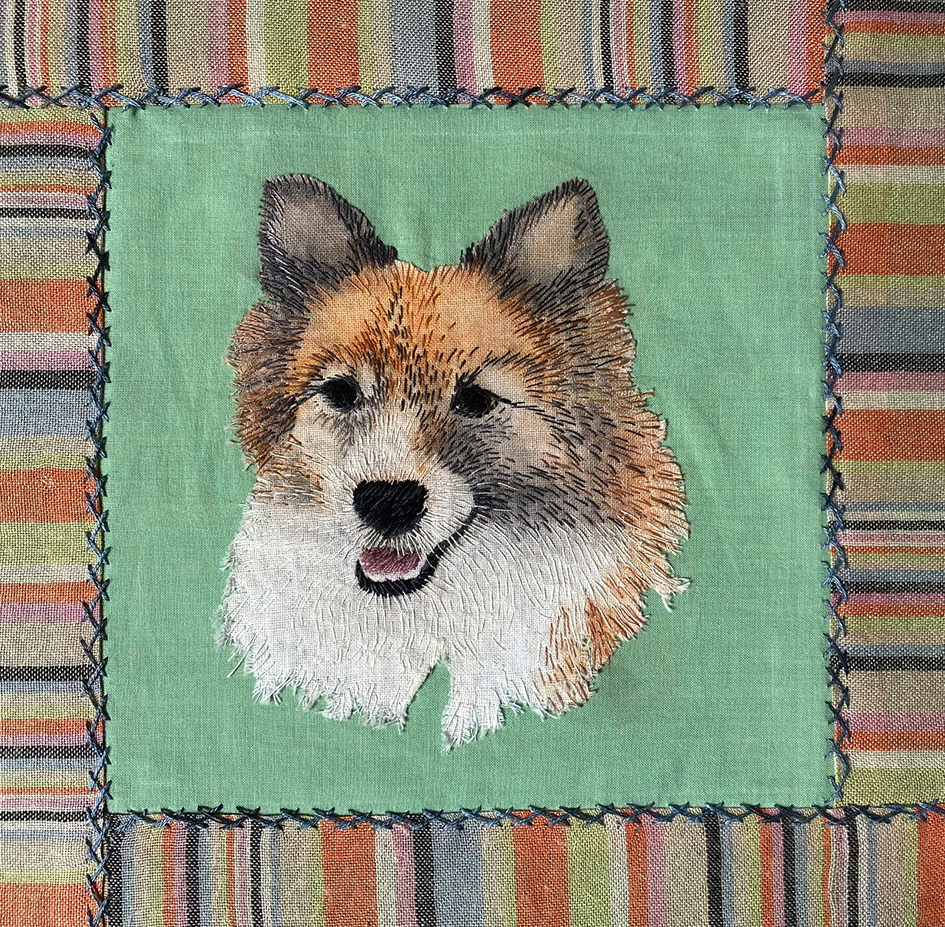
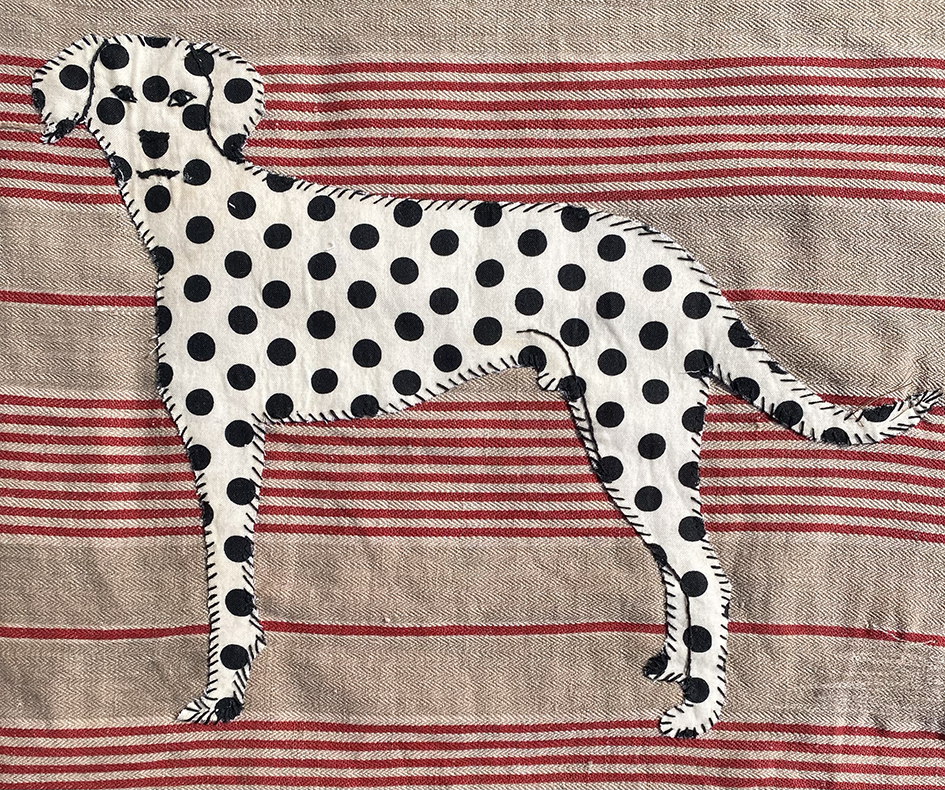
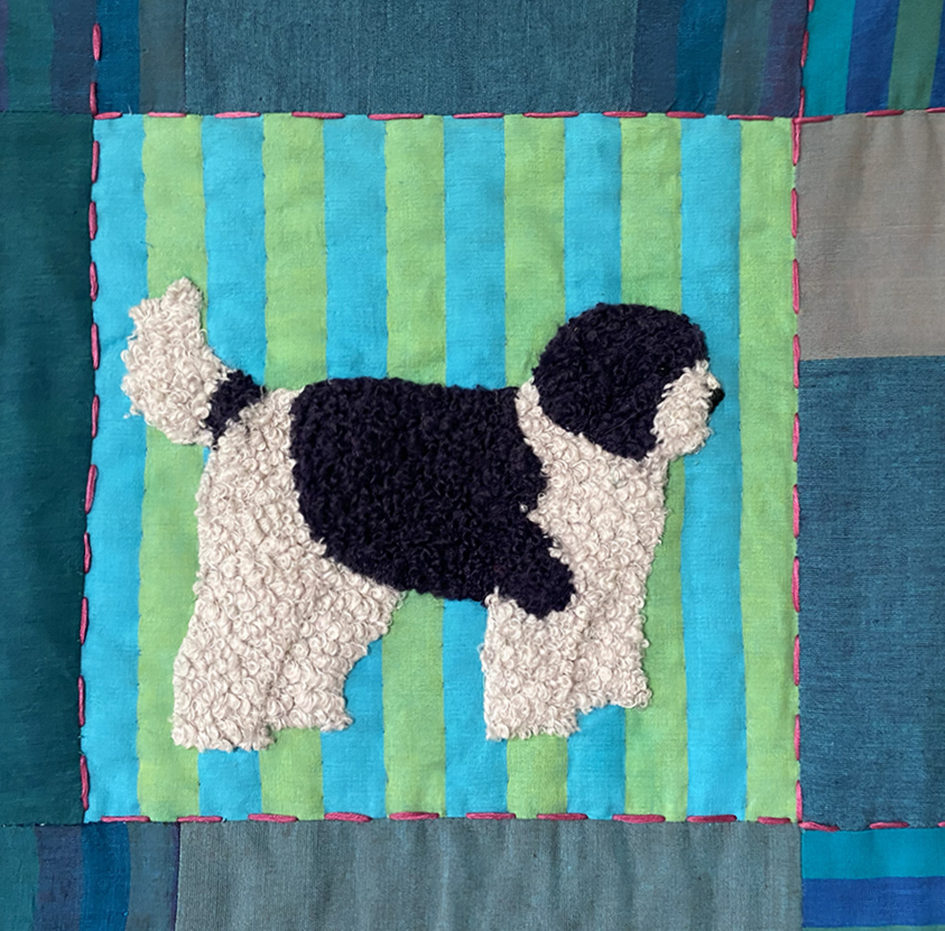
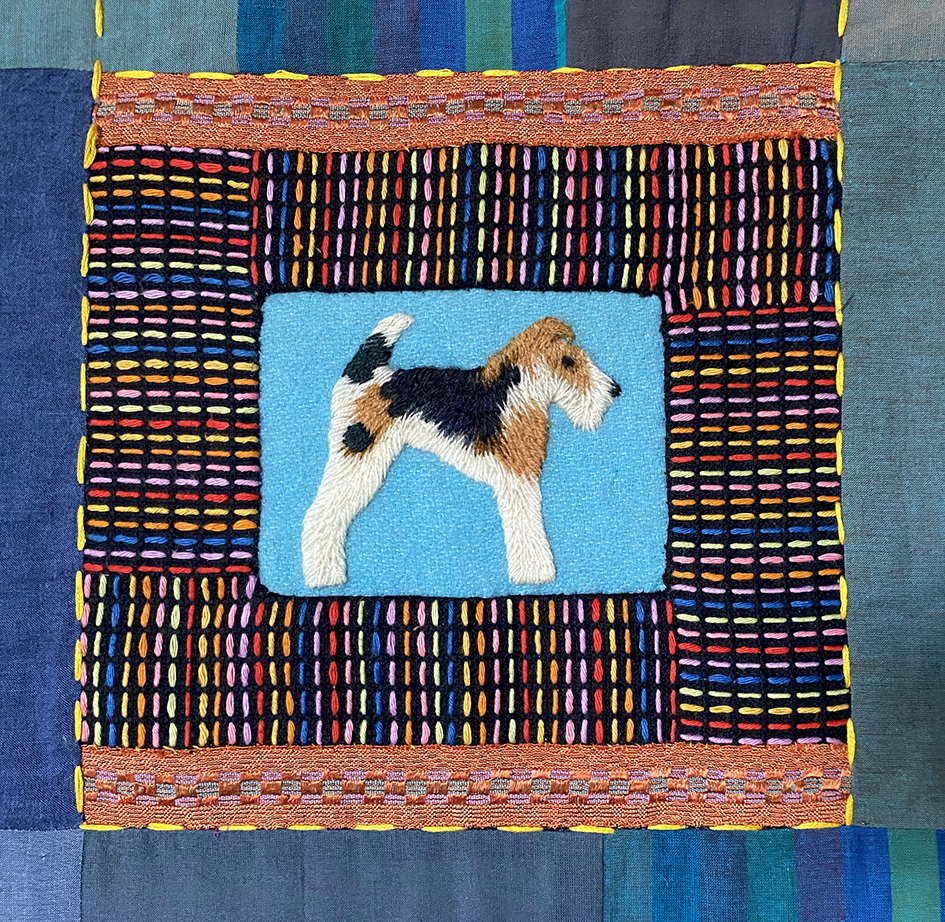
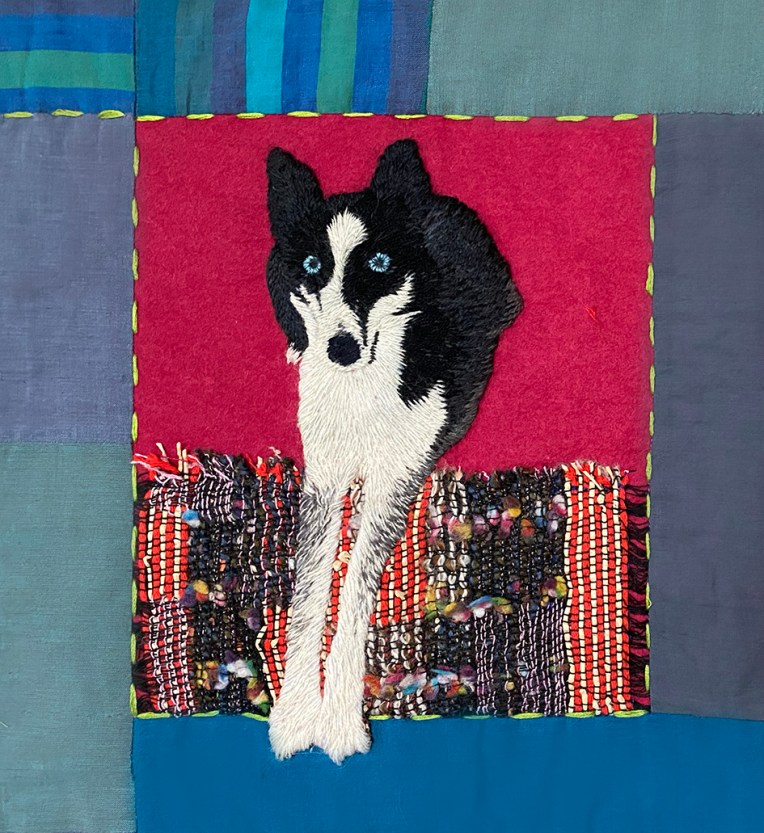
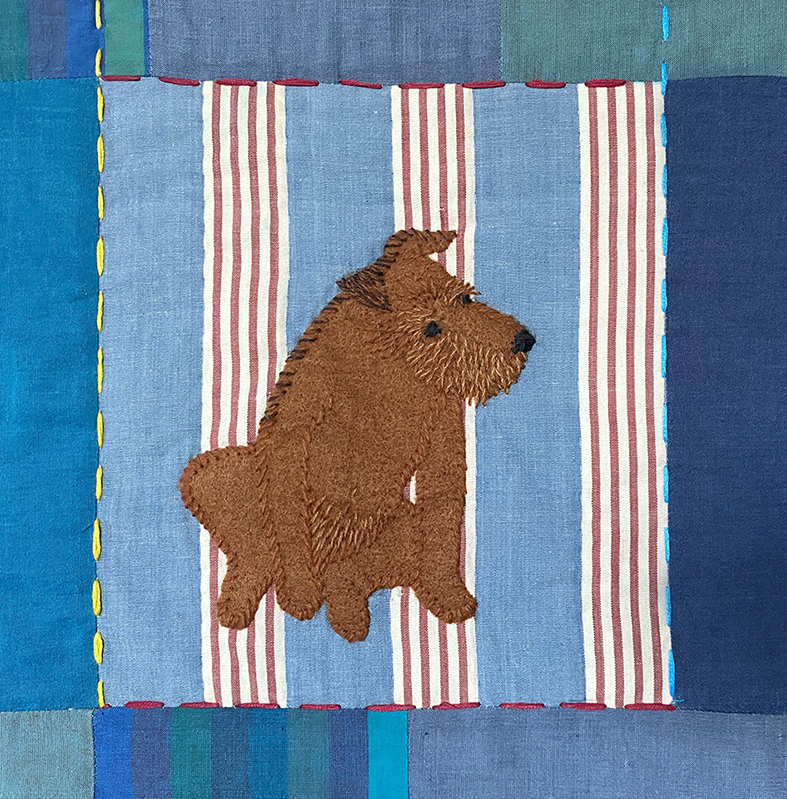
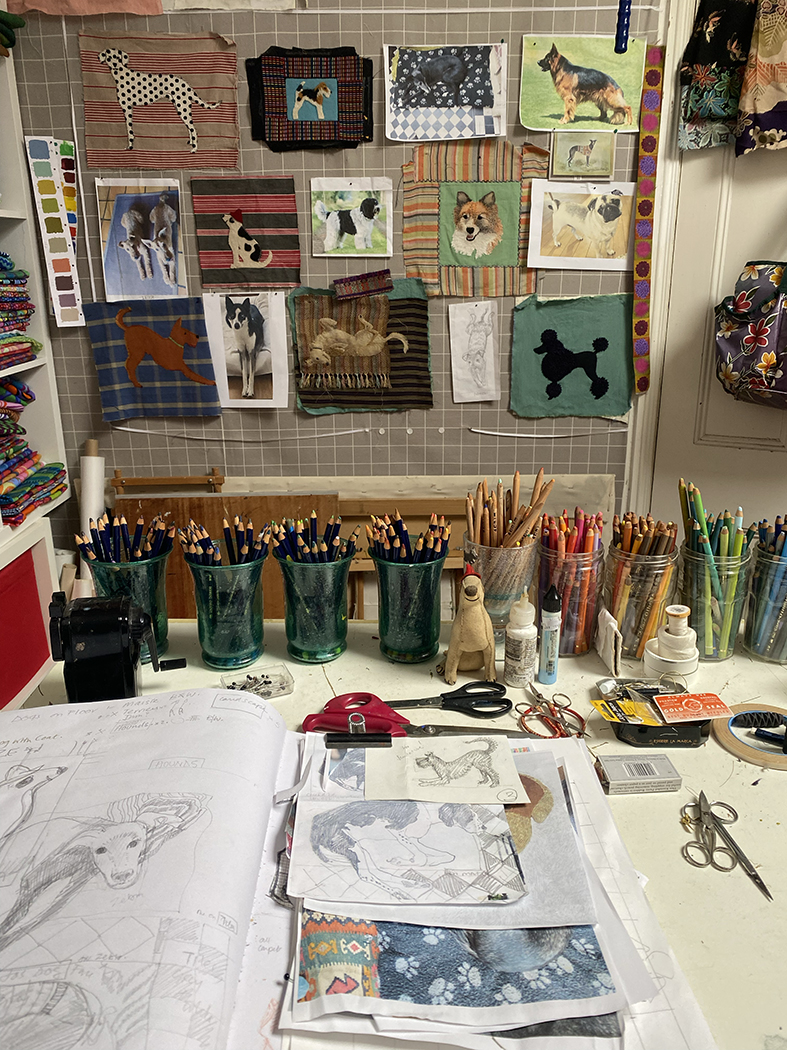
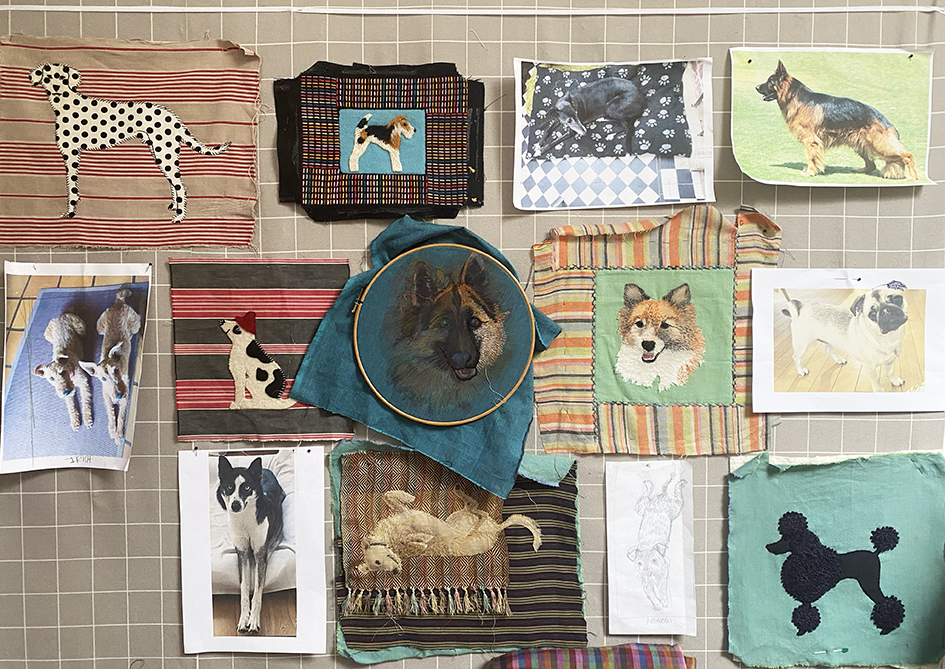
I then made several design sheets for a colour scheme and fabrication, with drawings and 2 embroidered samples using of a range of techniques that I could offer: from the simplest applique design for a spotty Dalmation to a hand-stitched portrait of the small dog in the original photograph. I was given the commission:- a quilted hanging with patchwork blocks of stitched dogs using the different techniques.

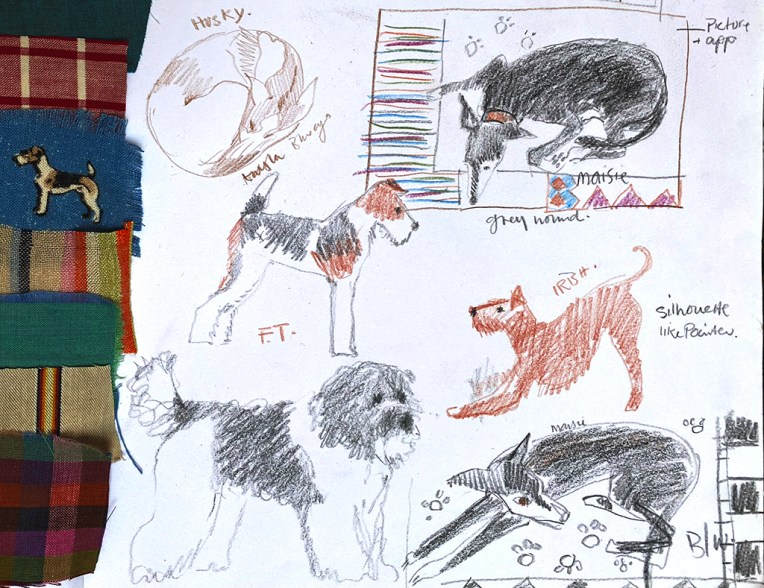
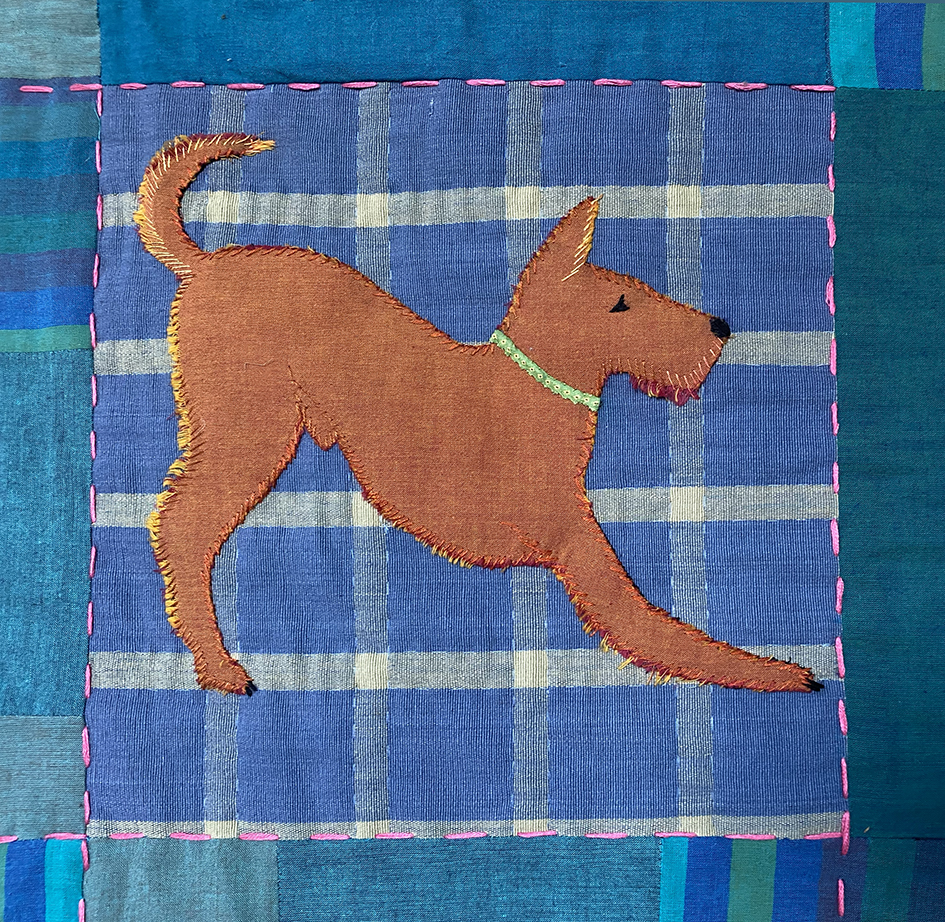
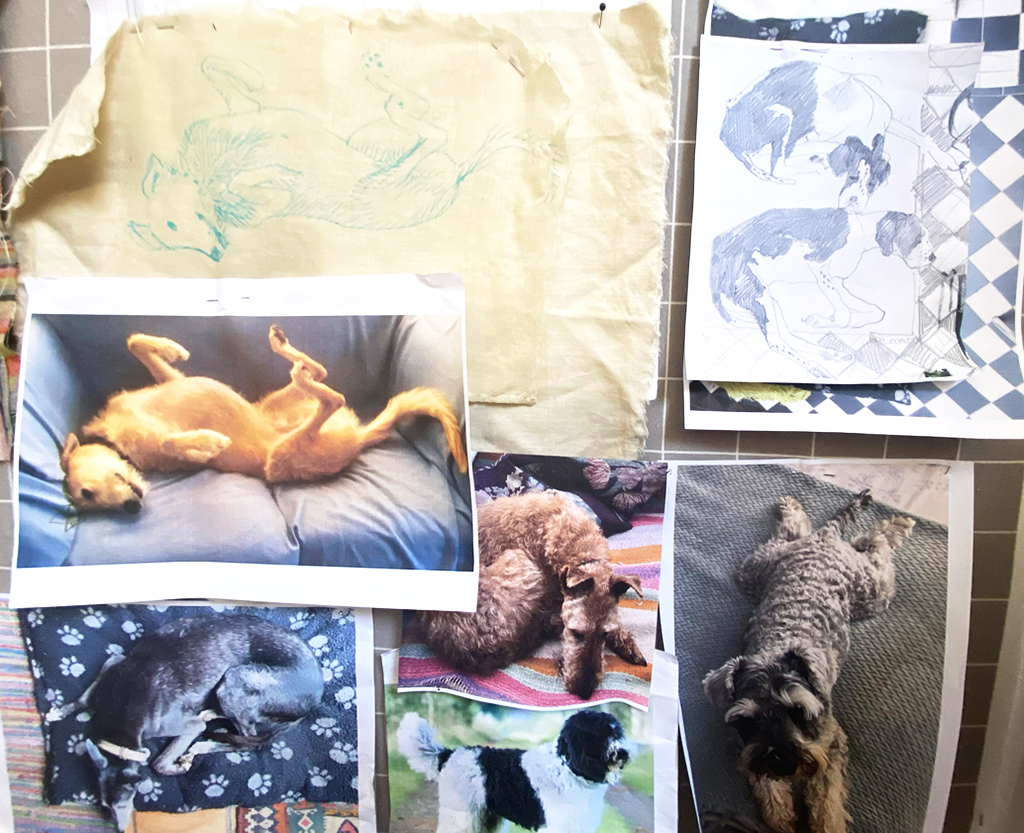
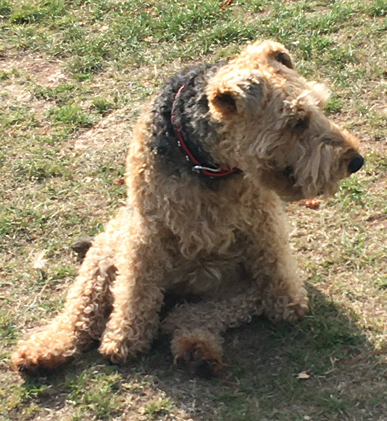
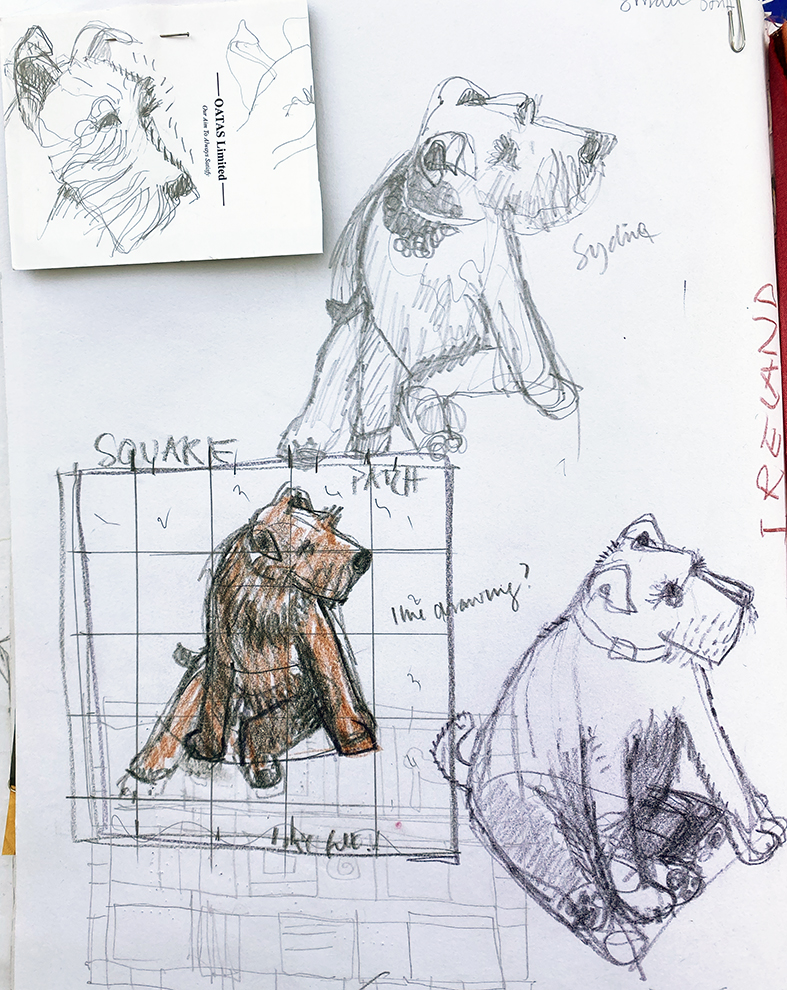
So now to find the extra dogs; my first set of drawings showed typical positions taken by each breed above. I do love dogs and am fascinated by their shapes, specially when totally relaxed. I had started with basic stance like the Dalmation, and just had to include a French poodle and terriers, so an Irish terrier, a Fox terrier and a Border terrier. And hounds, a Schnauzer Leo and even a Siberian husky Twyla, all in easy reach as they belong to friends, family and the local dog-walkers.

For most of the embroideries I drew the dogs to scale from photographs sent to me by the various owners, to decide which technique used for each dog but sometimes I just copied the photograph! Below are working drawings for the relaxed hound Rodney, and the oh-so-tired Sydney.

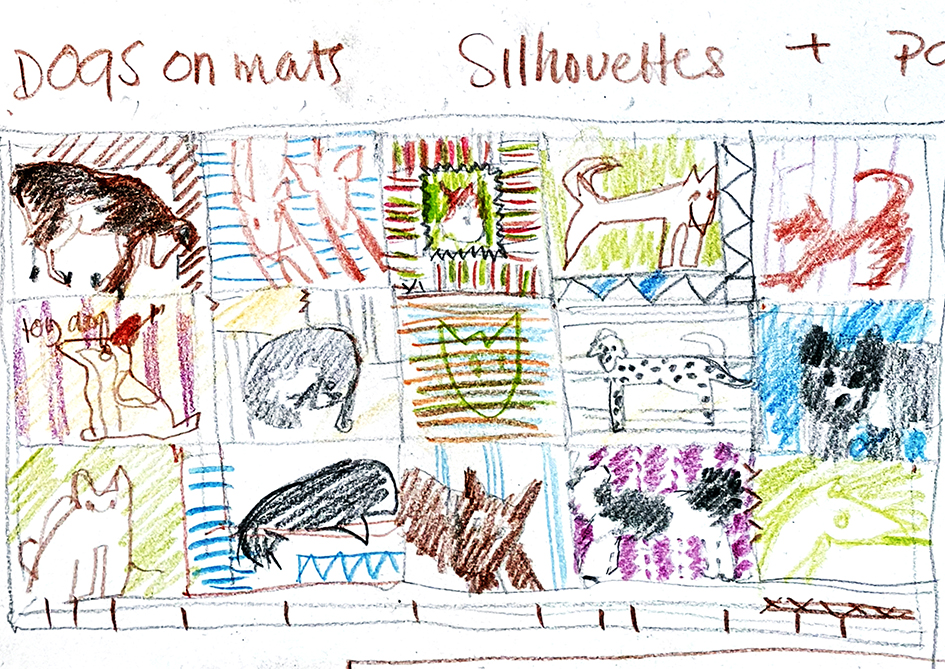
But how to assemble them into a quilt? I had been putting everything onto the quilt wall in my studio as I made it – constantly adjusting the arrangement to fit within the required measurement. Not how quilts are usually made I know, but this was created by the love of dogs, not the discipline of the patchwork quilt. The first scribbled design for the quilt shown below and the reality that surrounds it….

The design chops and changes as each new embroidery is completed and not every dog makes the final cut, but a design finally emerges. There were a few more dogs needed to complete the design, but how to highlight the family dogs (which are actual portraits) and stitch it together as a proper quilt…is the next instalment.

commission revisited

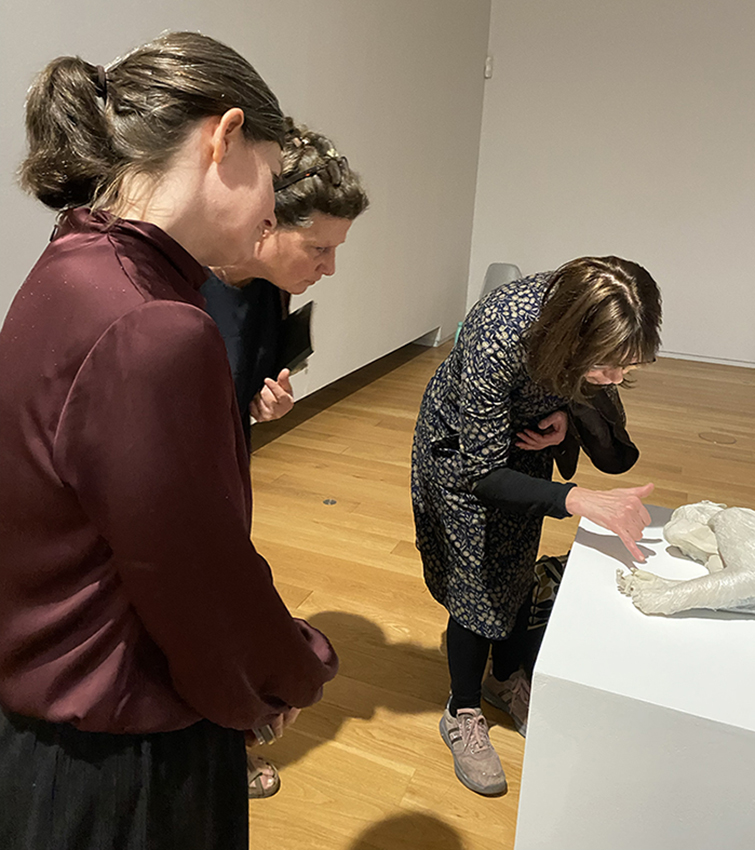
I was invited to the Hugh Lane Gallery in Dublin recently, to discuss the making of the stitched silk covering for the sculpture “Primate”( above) by Daphne Wright. The gallery had recently acquired the sculpture for its permanent collection, and Jessica O’Donnell, the head of the Education and Outreach department, had asked Daphne, who had commissioned me to make this in 2009, if I would be willing to talk to the conservation department to give them any insights into the process. I was so delighted to be asked for this because, I not only could explain the ways of making it, I had kept all the materials and stitching samples, and there is a blog that explains the whole 3 month long process.

We all first viewed Primate in the gallery where he was lying alone in the middle of a large darkened room within a spotlight. Daphne spoke about the difficulties of obtaining the cast and I later talked with her about various ideas and conversations we had about aspects of our collaboration – it had been intense. However, I have seen this work in various circumstances from busy National Trust properties, in commercial art galleries, and our own studios and now here in pure isolation…un-nerving.

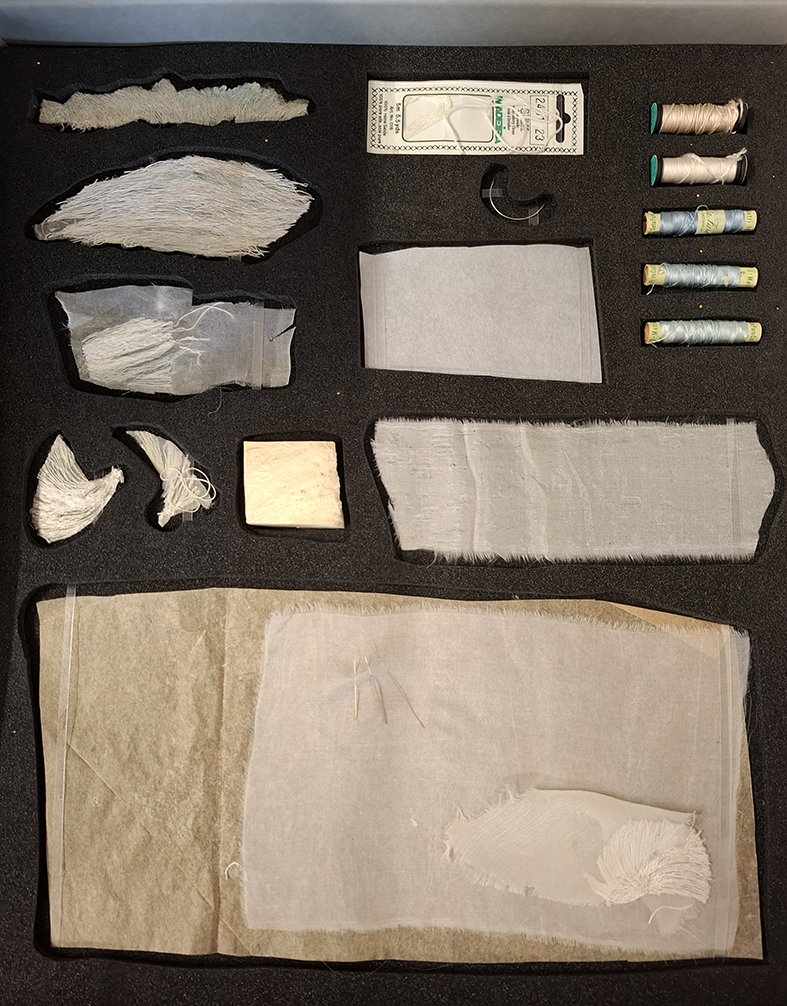
Next we went behind the scenes of the museum and I showed the small set of samples (below left) that I had kept: silk organza and different backing materials, paper backed adhesives, silk threads, needles, and the cut out and discarded stitched pieces, even a sample block of the marble resin; all kept in my research stash to explain my journey. Below right shows the way the gallery has now laid them out for viewing in the education department – so perfectly neat and simple.

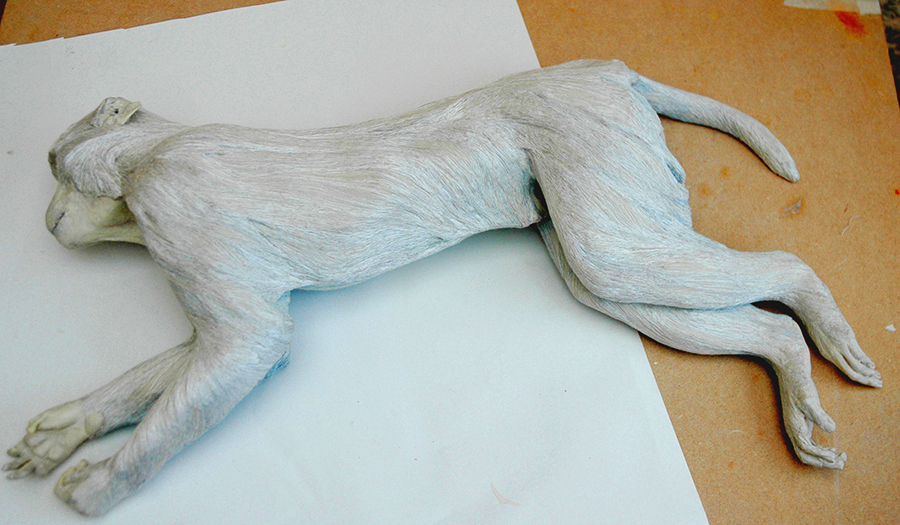
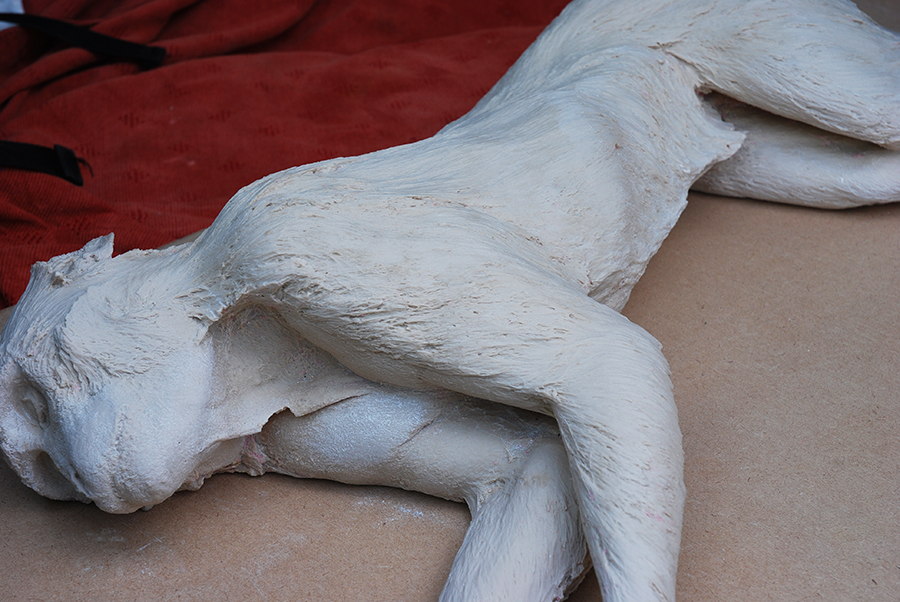
Below the basic and flawed resin and marble-dust cast of the Rhesus monkey, and the stitch development at about the 3/4 way stage, on my studio table.

And here is the gallery where the Primate was introduced to the public as a new acquisition to the Museum’s collection. When I saw this space for the first time it felt like entering a tomb, or at least a place of veneration and it still makes me feel bereft every time I look at this image.

This commission has had a considerable effect upon my stitched works, even up the present day. For further insights and my stitching this work please go to my post in COMMISSIONS: Primate.