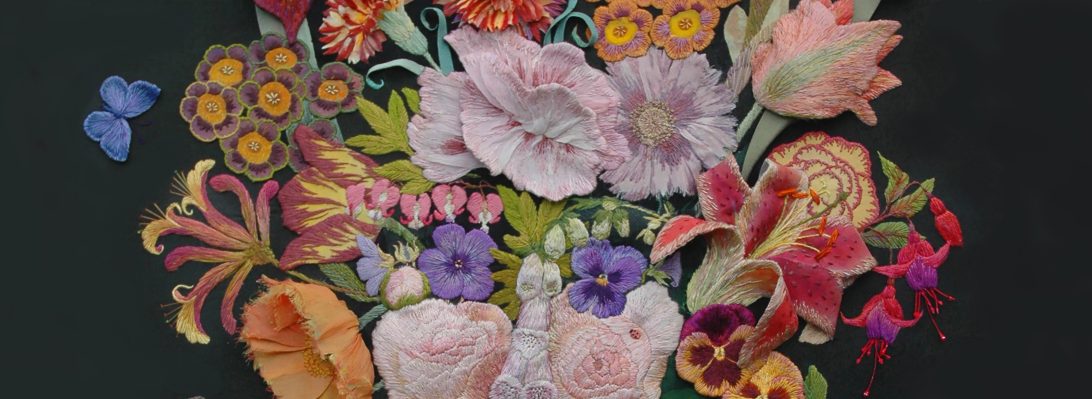
Taking a Line for a Dance

GEDSC DIGITAL CAMERA
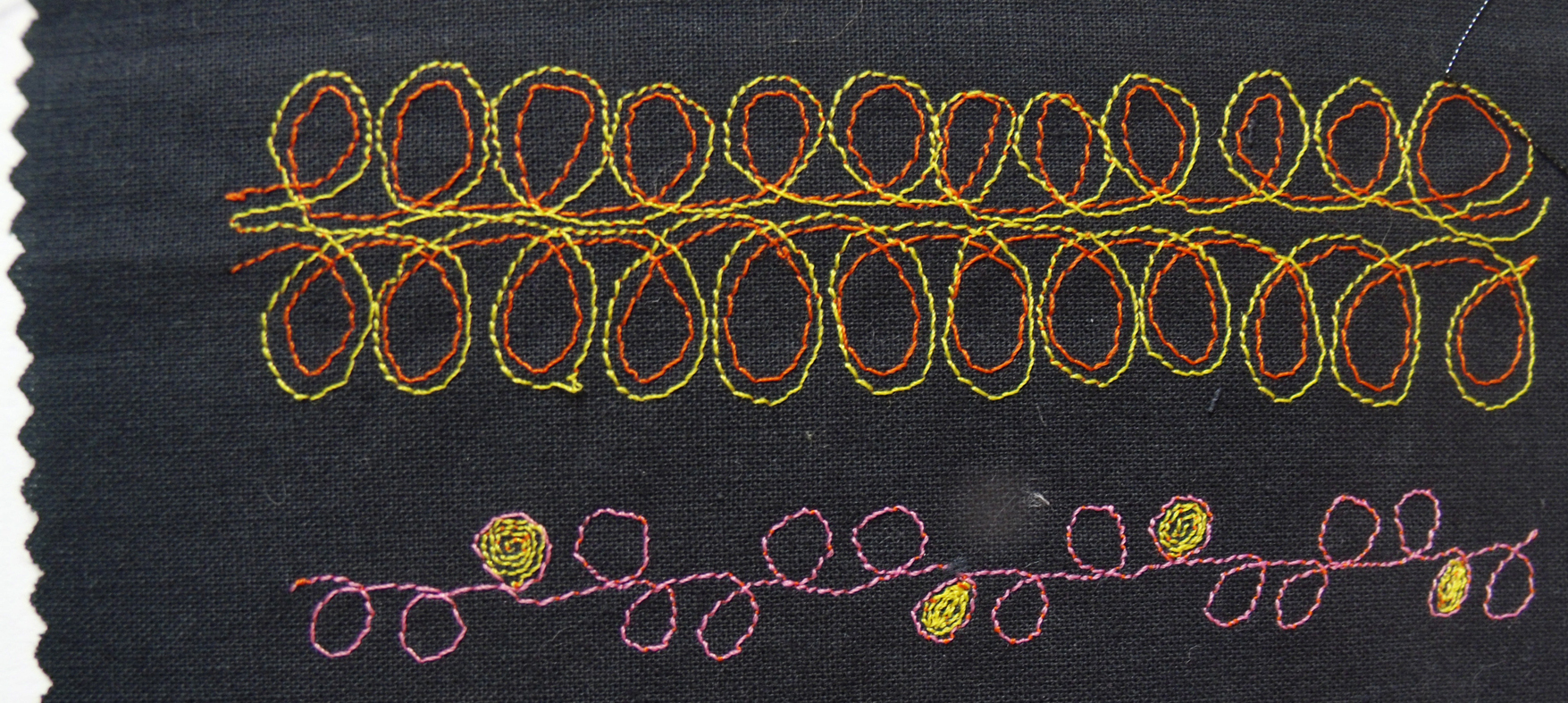
Simple sample of machine embroidery by Susi Bancroft

“Taking a line for a dance” is a good way to describe what happens with free machine embroidery…the freedom with which the needle can stitch patterns, images and even writing very fast – is really fascinating to watch. First disengage the feed dog – I just love that name for the row of teeth embedded in the metal  plate below the needle….
GEDSC DIGITAL CAMERA
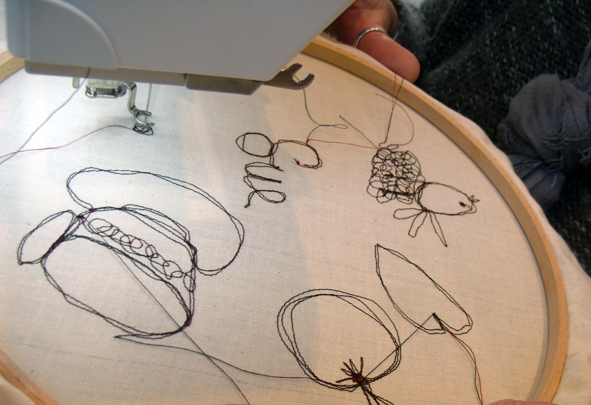
free machine embroidery using a hoop and the sprung needle

and either using a specially sprung embroidery needle, with or without the old school embroidery hoop to keep the fabric tight, it is possible to move the fabric enabling the still needle to make lines of stitches.
GEDSC DIGITAL CAMERA
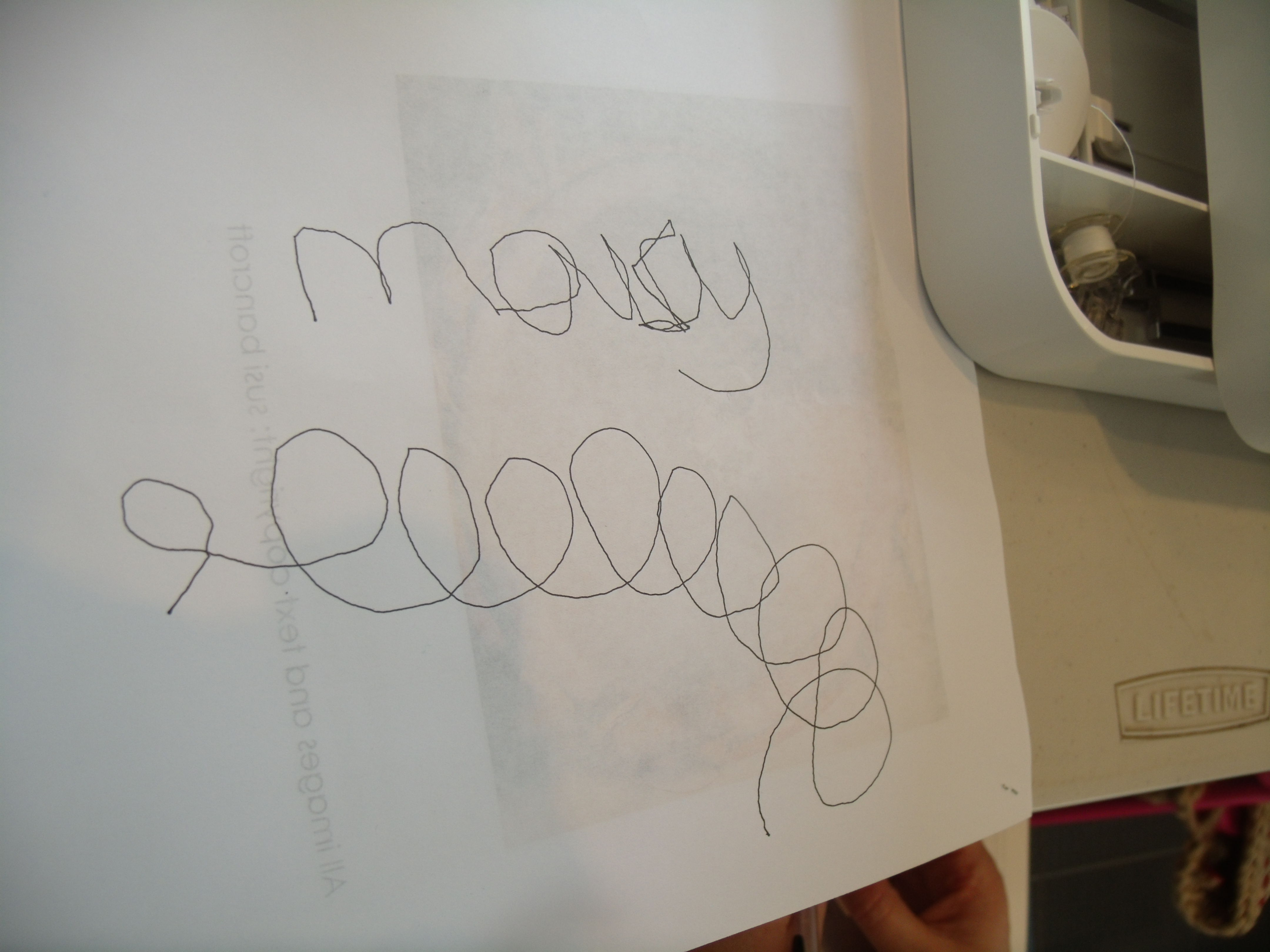
first drawing by moving the paper and not the pencil
GEDSC DIGITAL CAMERA
moving page animal drawing – dog or cat?

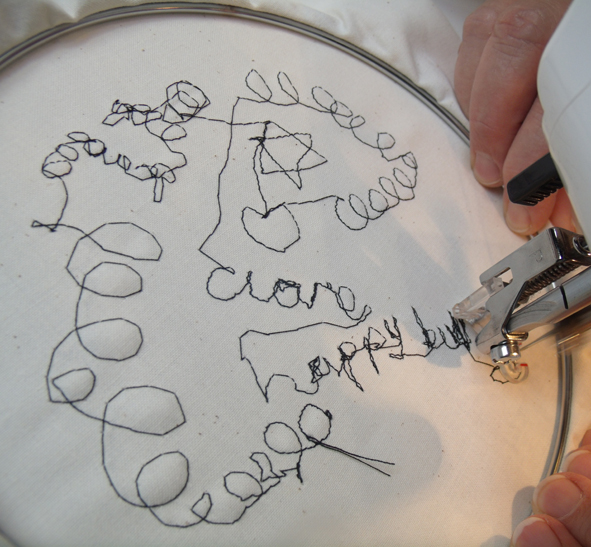
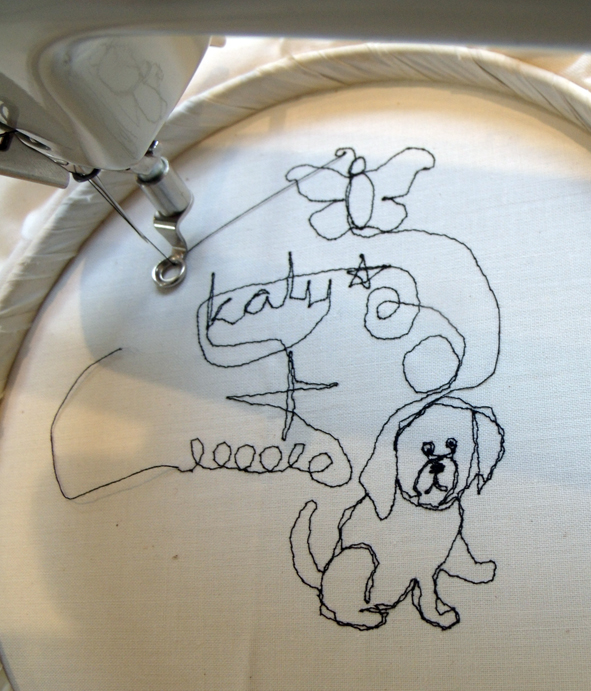
Recently at Heart Space studios, Susi Bancroft taught a group of students how to achieve this technique in just one afternoon. First she got everyone to try to write their names or draw something by moving the paper while someone else held the pencil steady…with very unsteady results…but this is how machine embroidery works. She then got everyone stitching with reference to the drawings and suddenly things started to happen – fast

The first attempts at machining were definitely stronger than the pencil drawings. Susi always gets everyone to stitch in black cotton on white calico first, to gain a strong contrasting line..
GEDSC DIGITAL CAMERA
first attempt to stitch drawing and writing
GEDSC DIGITAL CAMERA
writing and dog drawing

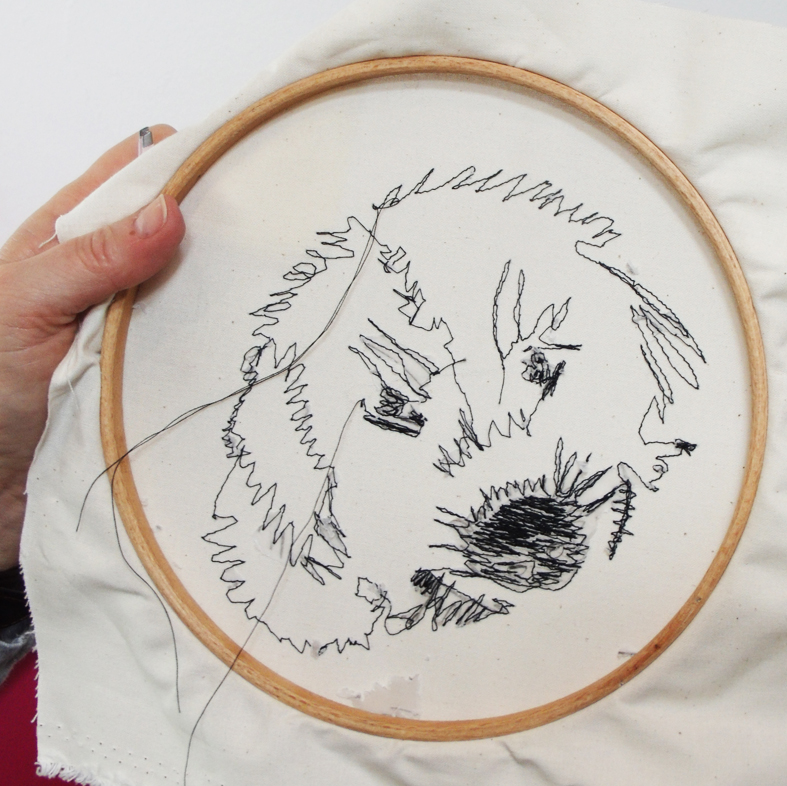
It didn’t take long before everyone was feeling a lot more confident and  really getting to grips with larger scale drawings
GEDSC DIGITAL CAMERA
freely machine stitched dog portrait

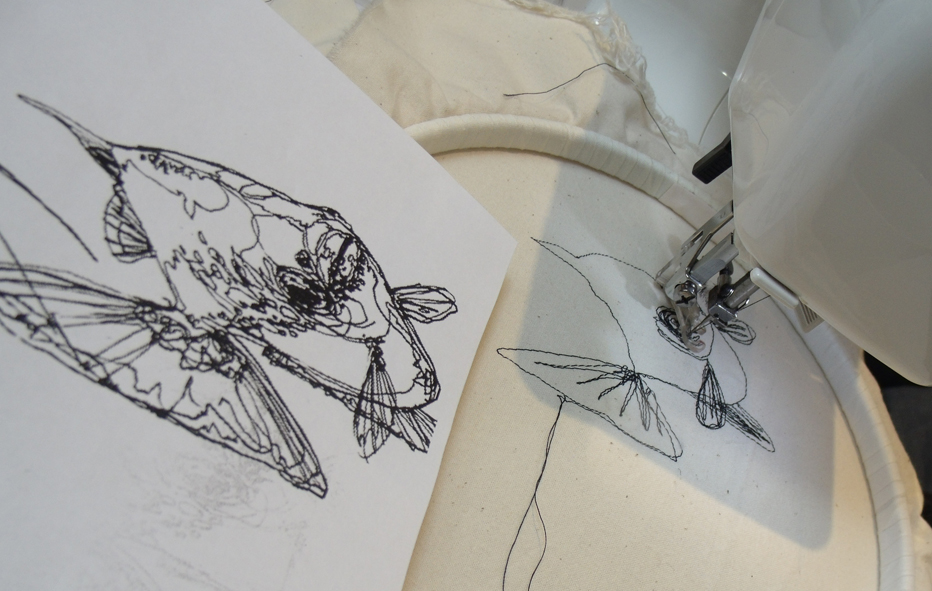
One of the exercises offered was to copy a black and white drawing a drawing – with remarkable results considering no guide lines had been drawn beforehand.
GEDSC DIGITAL CAMERA
copying a line drawing of a fish – a free embroidery challenge.

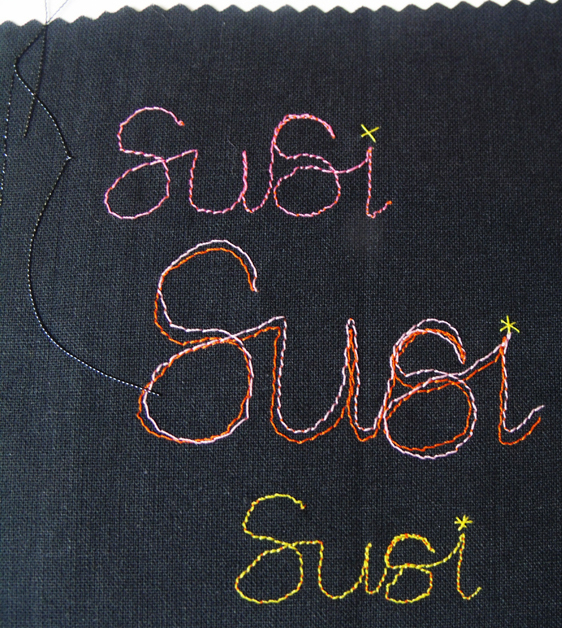
Susi had also brought in a book of samples of her own work and showed the students these to demonstrate what else could be achieved now they had the basics…
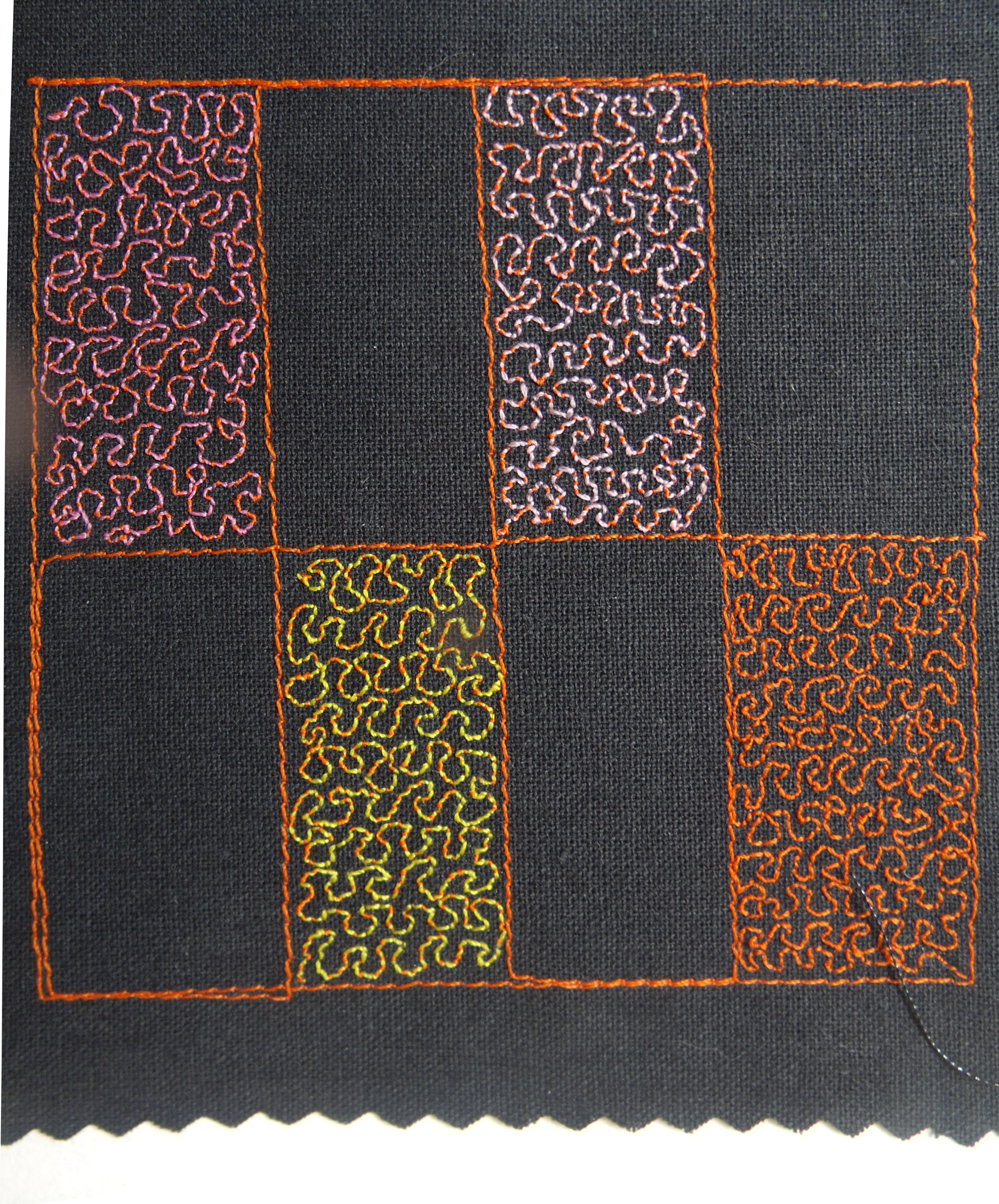
GEDSC DIGITAL CAMERA
vermicelli linear stitching sample – Susi Bancroft
GEDSC DIGITAL CAMERA
sample machined writing – Susi Bancroft

Now the colour started to be sampled, this is where all textile people get excited – endless possibilities just by changing the thread ….
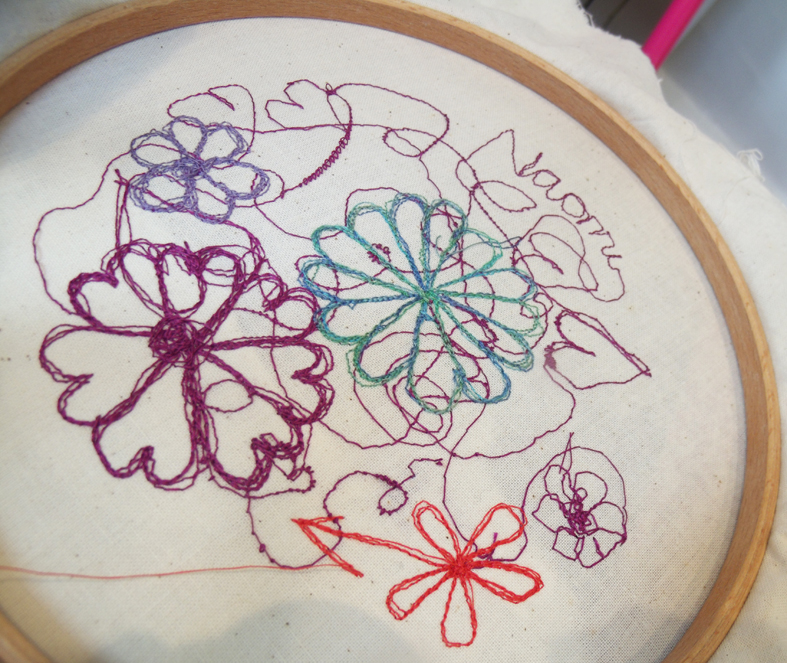
GEDSC DIGITAL CAMERA
playing with coloured free machine with extra outlines

and appliqued fabrics started to appear – each person had brought some form of inspirational work, either an illustrated card or photographs and drawings
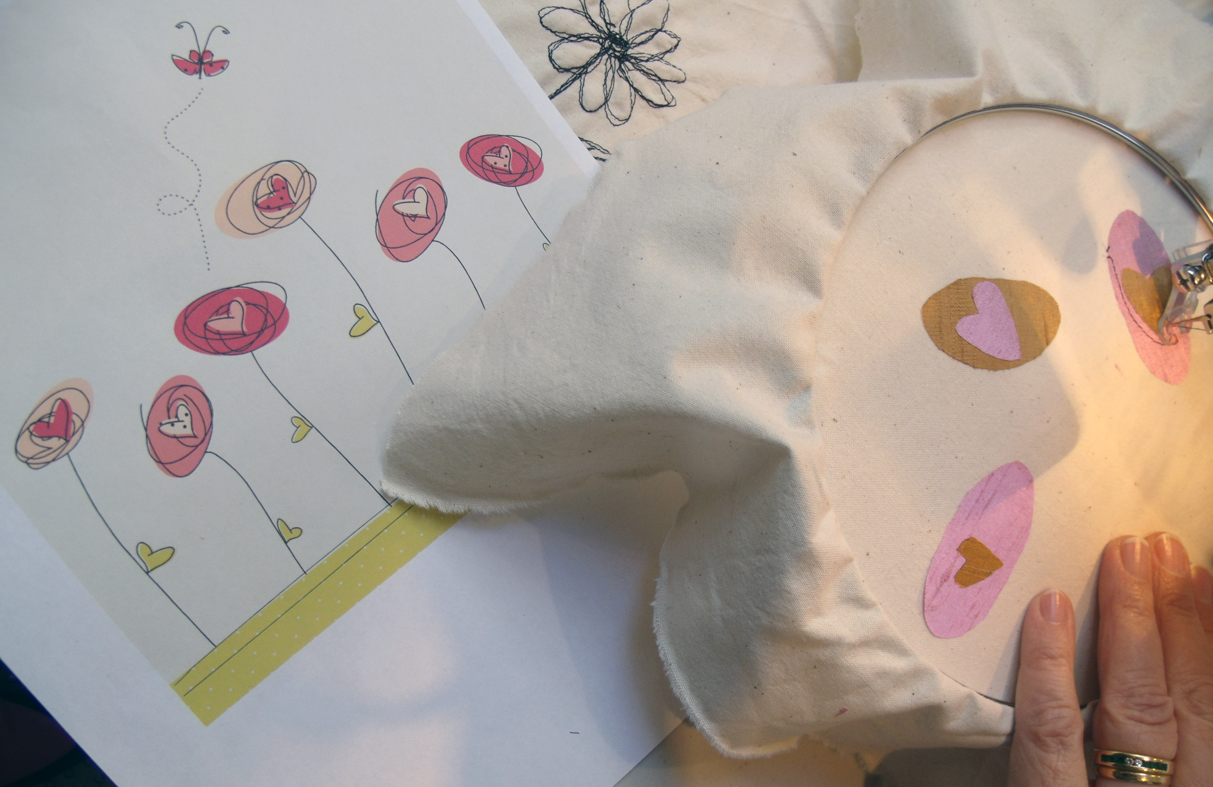
GEDSC DIGITAL CAMERA
working small appliqued motifs from a commercial card design

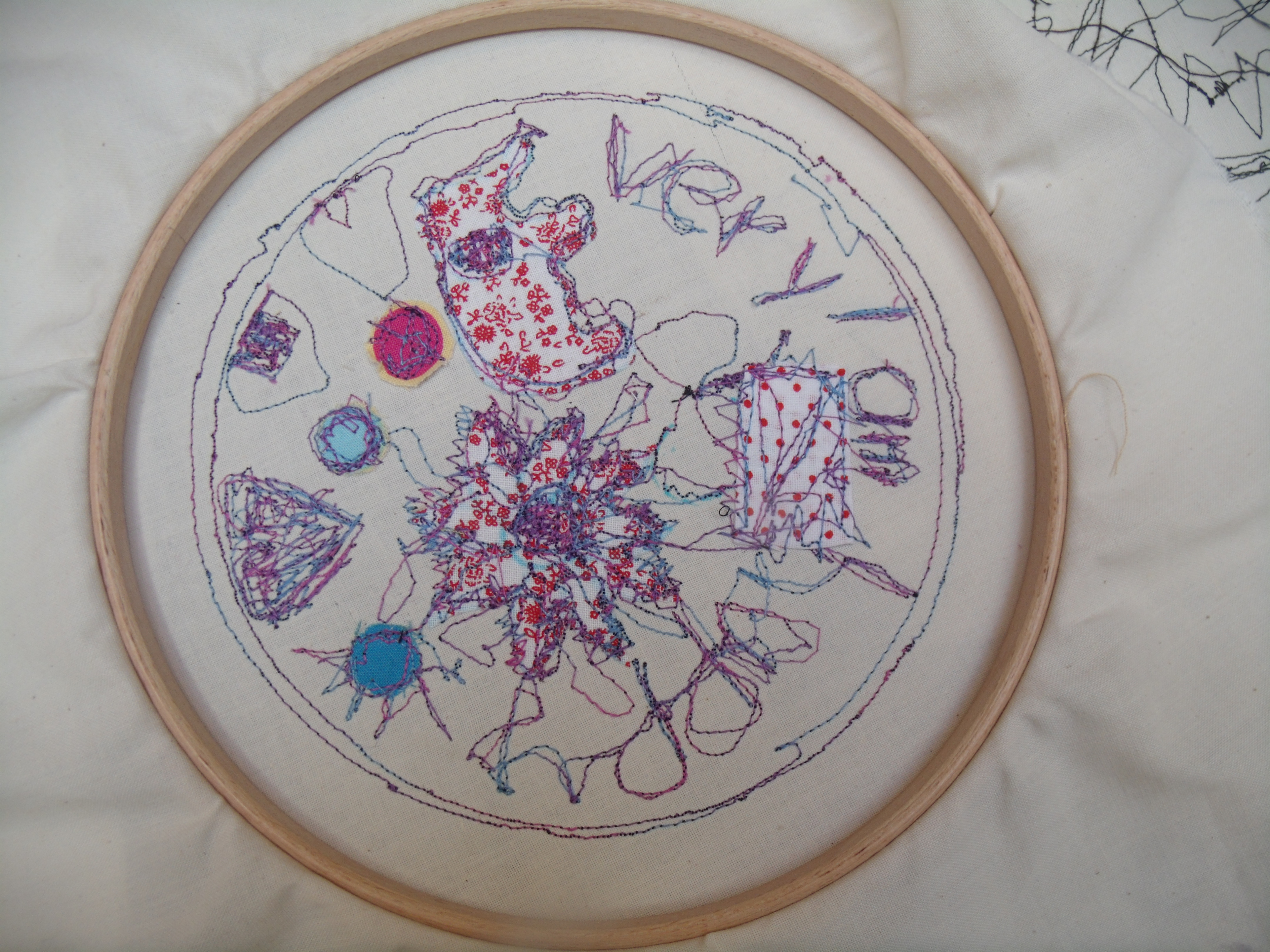
Now I know that working with the sprung embroidery or darning needle means that the hoops aren’t necessary, but Susi feels that for the first attempts everyone should adopt a belt and braces attitude, the fabric needs to be as taut at possible to get the best results. When everyone feels confident of drawing then they can remove the hoop – however most people took advantage of this restriction – this work below is already framed – it actually reads ” I am Very Happy”
GEDSC DIGITAL CAMERA
circular embroidery made by keeping to frame restrictions.

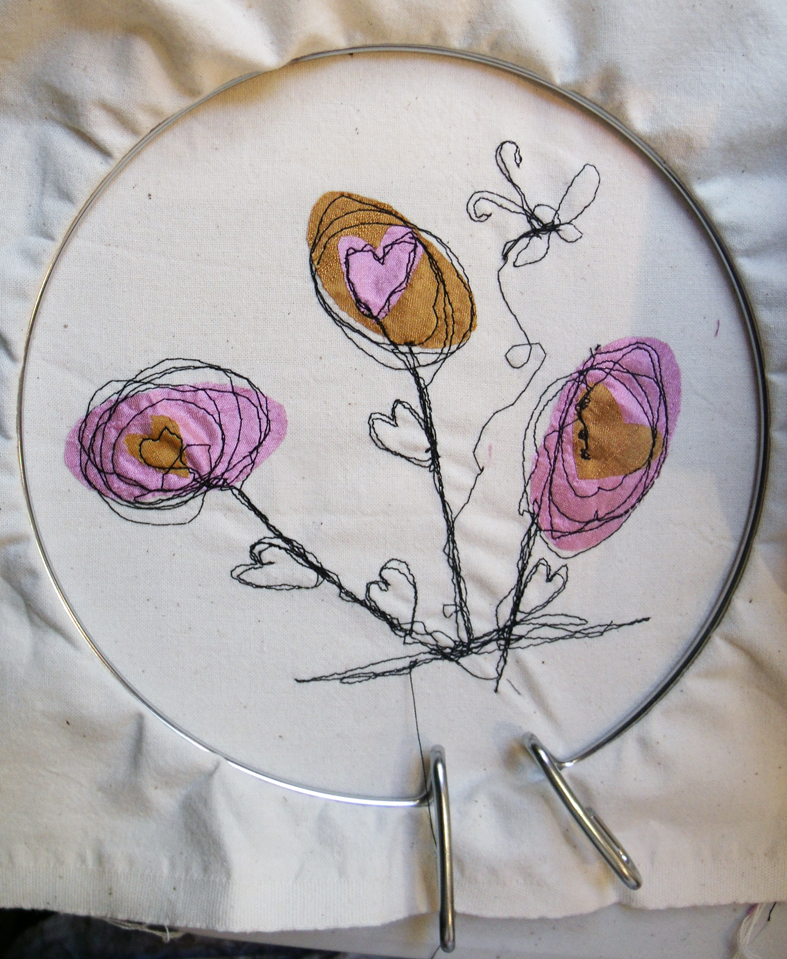
and here the nuisance of not being able to manouvre the stitching past the hoops intrusive clamps has made a new design from the original card – go with the flow…..
GEDSC DIGITAL CAMERA
design due to the constricting clamps – this is what sampling is all about – work with what you have got.

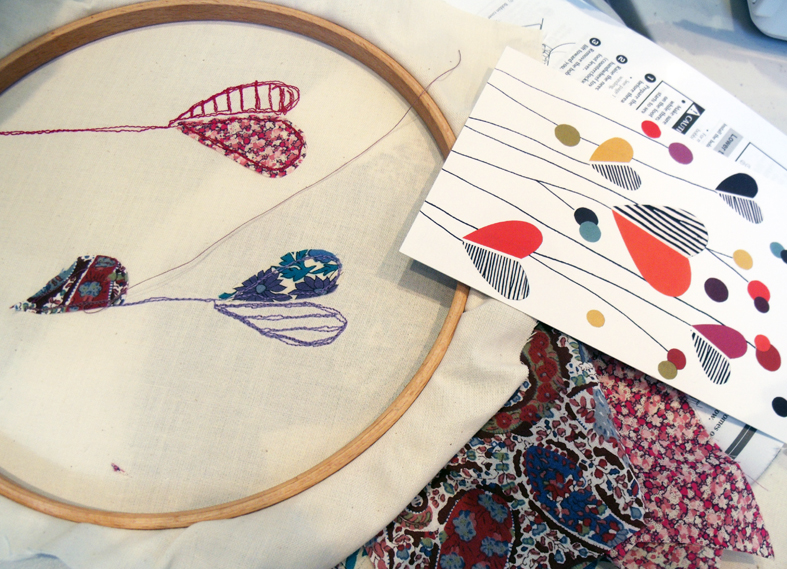
Some more renditions of photographs and cards start to take on a life of their own – this is why I think that copying something inspirational is a good way to start off any new technique, the worry of design is taken away and suddenly invention takes over..
GEDSC DIGITAL CAMERA
copying the design in fabrics brings so much more pattern and texture

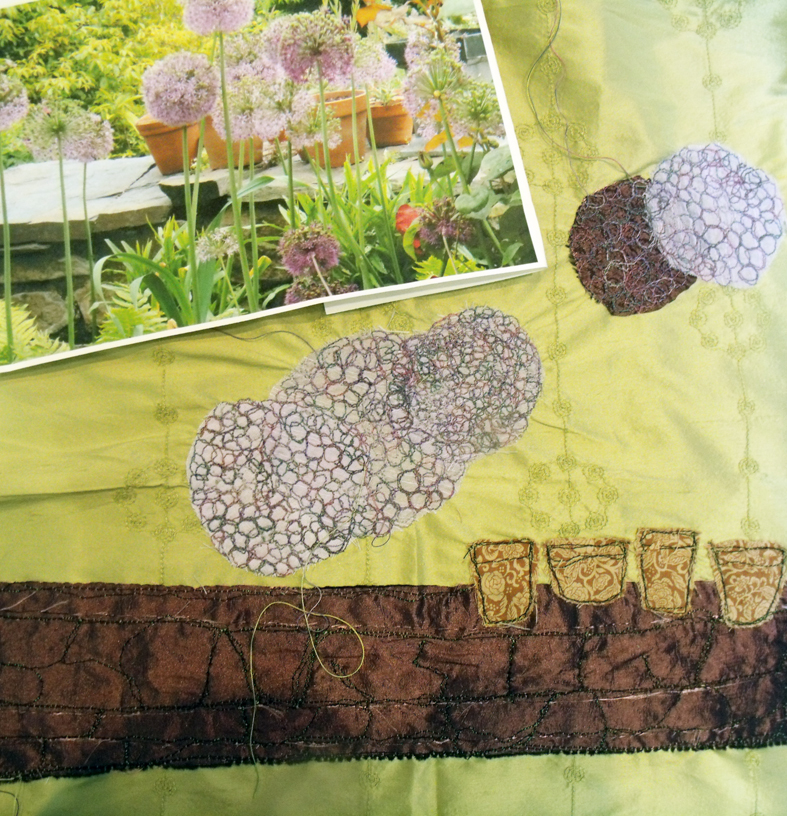
and working from lovely photographs is often a good way to get started – the fabric soon asserts itself.
GEDSC DIGITAL CAMERA
photographic inspiration works for a colour gamut to get things going.

Valentine Hearts

GEDSC DIGITAL CAMERA
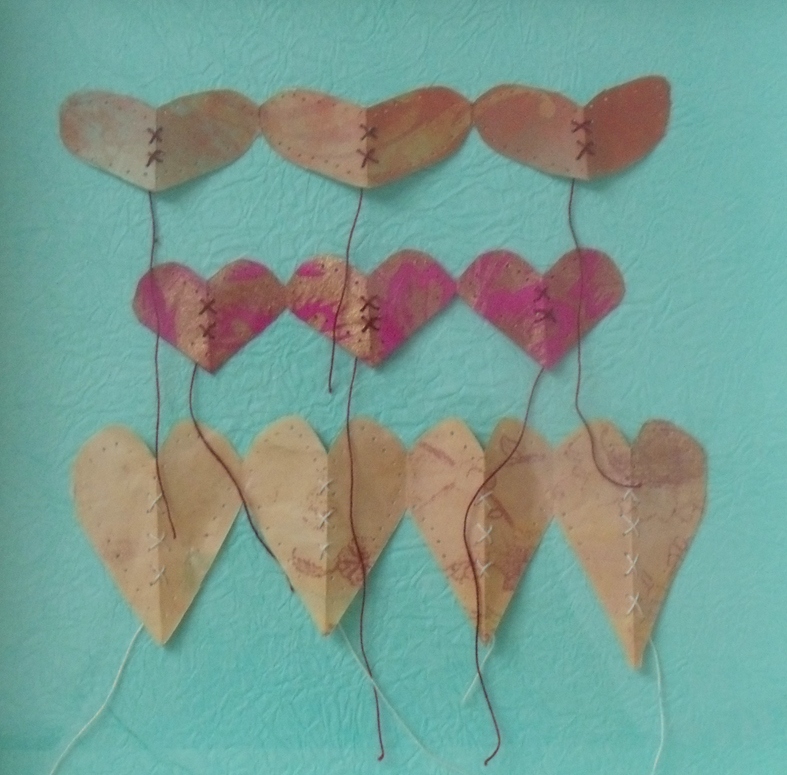
Stitched Paper Hearts by Susie Bancroft

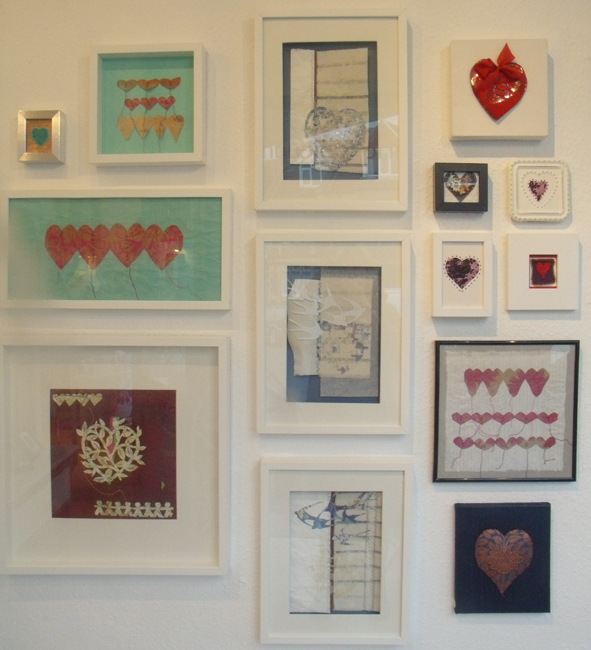
The small but delightful exhibition that the Heart Space Studios staff made in the mixed media session are all framed and ready to go on the wall ….

GEDSC DIGITAL CAMERA
more stitched paper hearts by Susie Bancroft

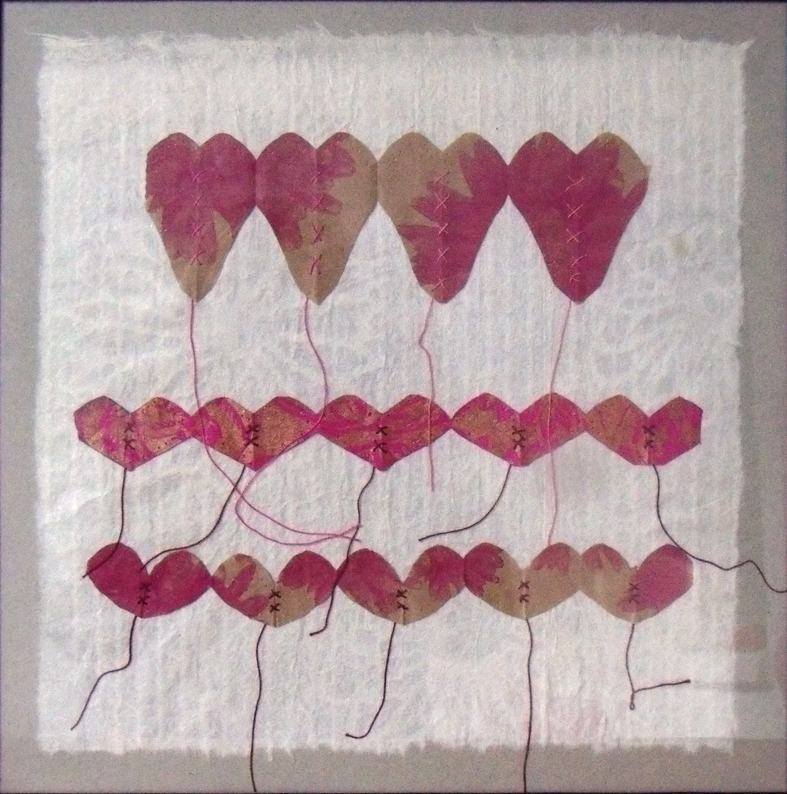
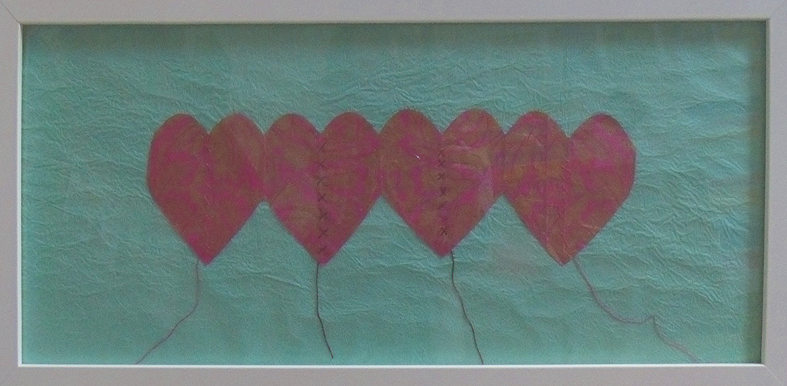
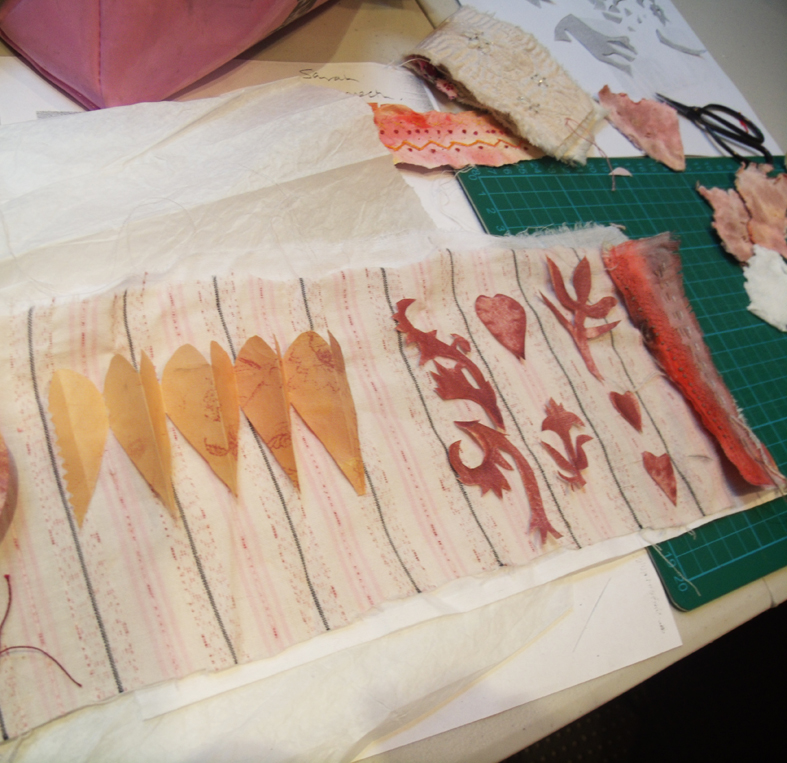
the first to arrive through the post was a box of stitched printed paper hearts from Susie Bancroft – so I set about mounting rows of  them on Japanese hand-made paper or crumpled tissue papers ready for framing

GEDSC DIGITAL CAMERA
row of large printed paper hearts – Susie Bancroft

the cotton threads just going every which way – I think they look like tiny heart shaped kites…….-

GEDSC DIGITAL CAMERA
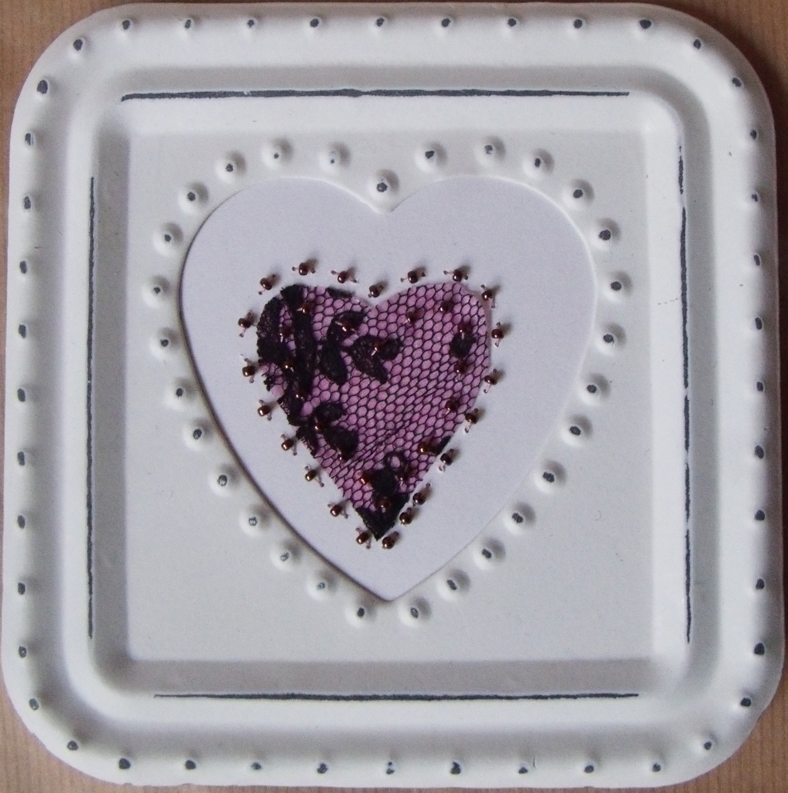
minute beaded black lace heart in tin frame- Jane-Marie Mahy

the tiny hearts are somehow the most appealing, they came in all manner of materials and techniques….

GEDSC DIGITAL CAMERA
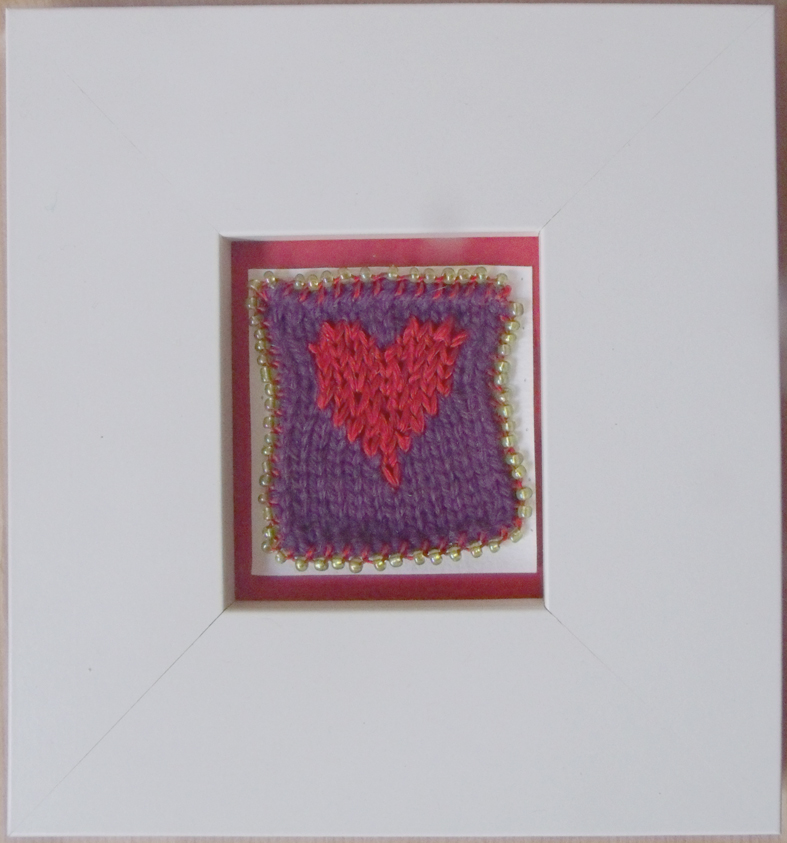
hand knitted and beaded heart by Amanda Jones

I must admit that I did take a few liberties with the mounts before framing… the more impact we can give them the better chance to sell them – and this is a selling exhibition

GEDSC DIGITAL CAMERA
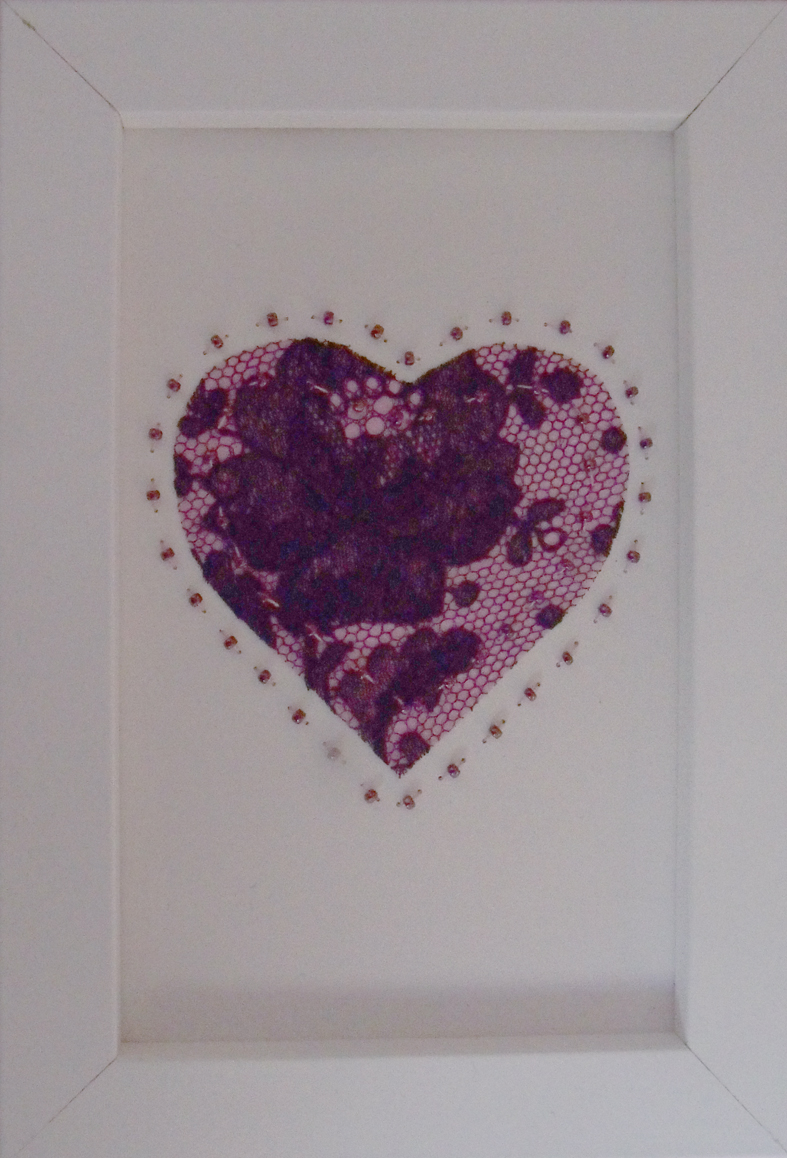
Larger black beaded lace heart by Jane-Marie Mahy

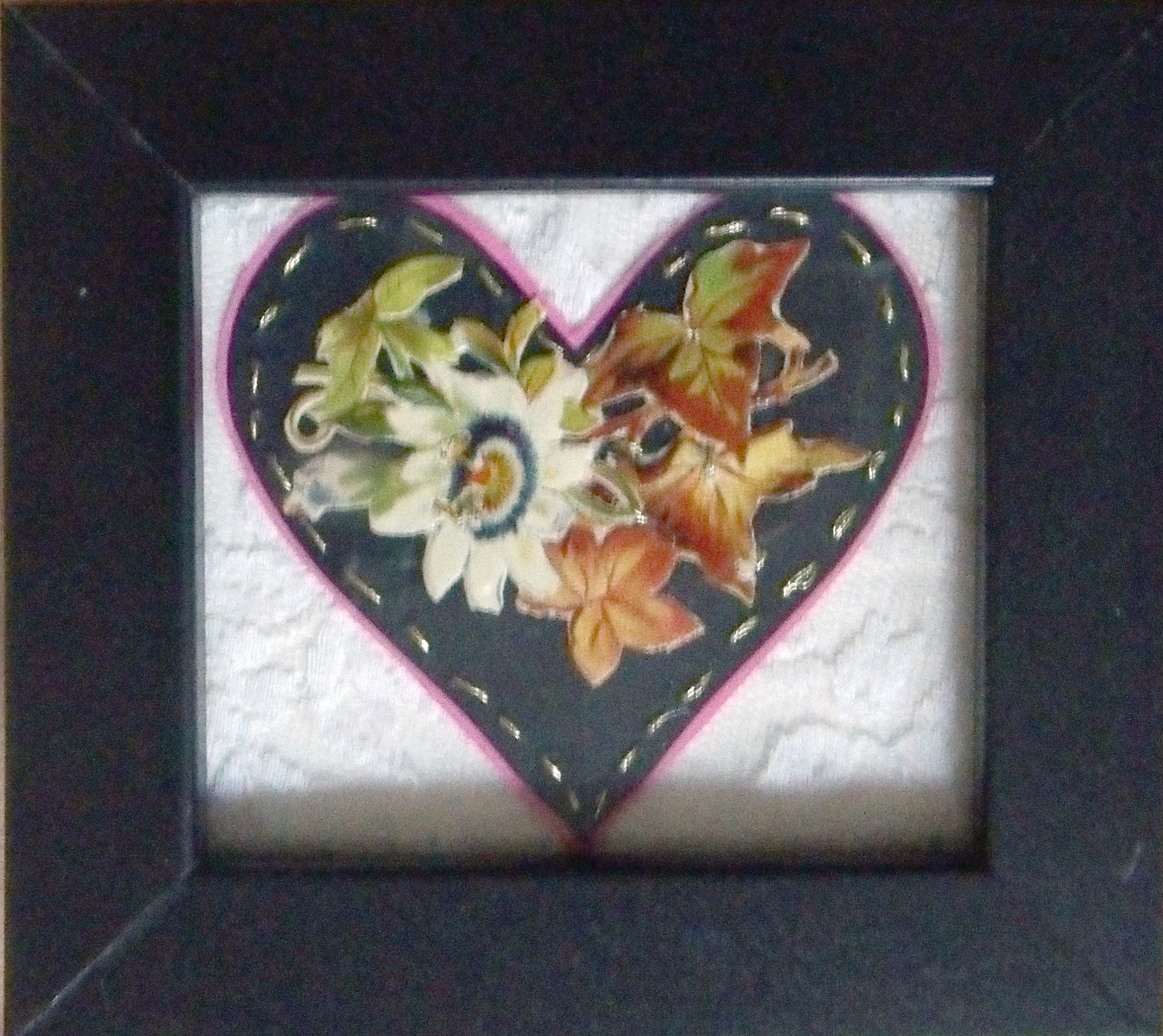
Jane- Marie Mahy Heart Space’s display guru brought hers in already perfectly framed, as did Debbie Bird – her teeny tiny paper printed scraps look very vintage when heavily framed in black

GEDSC DIGITAL CAMERA
printed scrap paper applique by Debby Bird

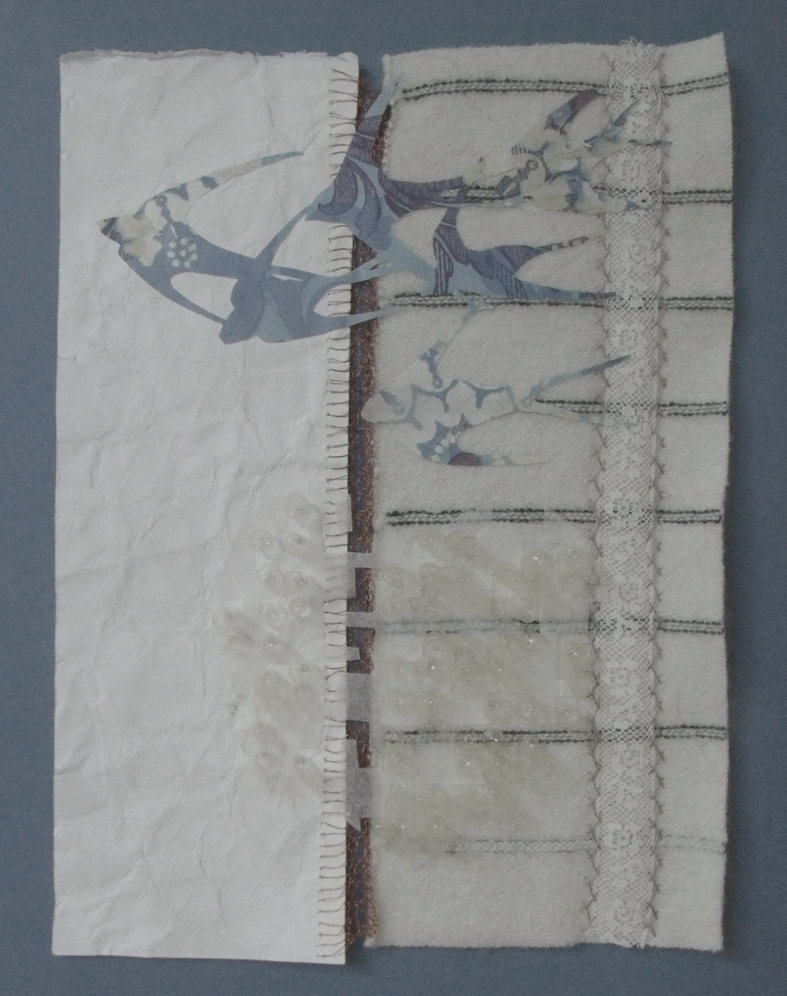
but for something completely different we have knitted copper wires to join paper and fabrics…with a flights of swallows scattered above a nebulous clear pill-case heart

GEDSC DIGITAL CAMERA
flights of swallows by Steph Wooster

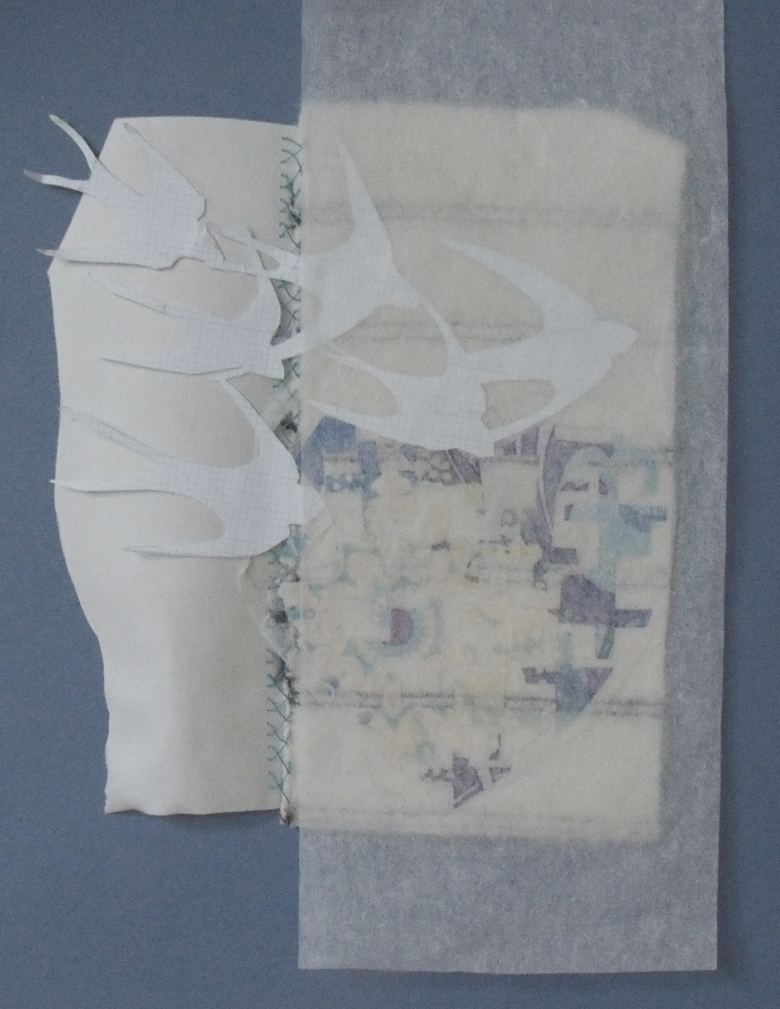
true to her discipline as a designer, Steph sent in 3 variations on her birds and hearts theme,

GEDSC DIGITAL CAMERA
Steph’s second bird and heart picture

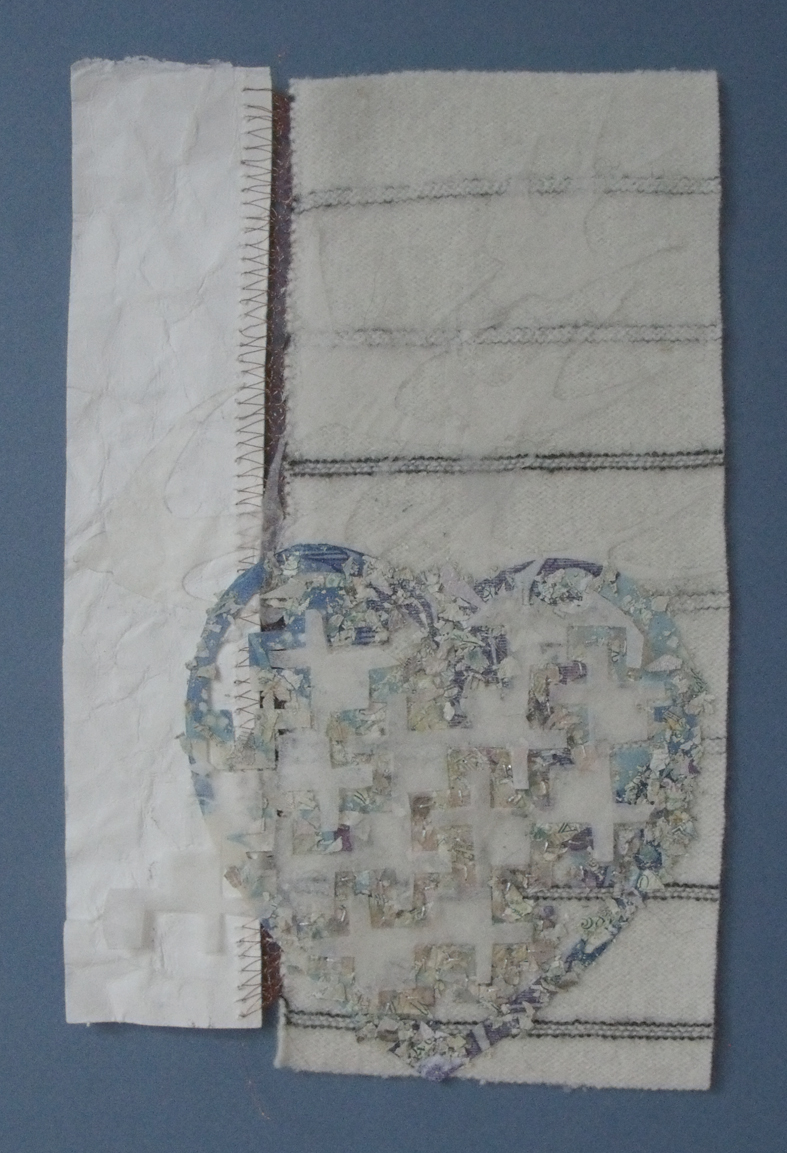
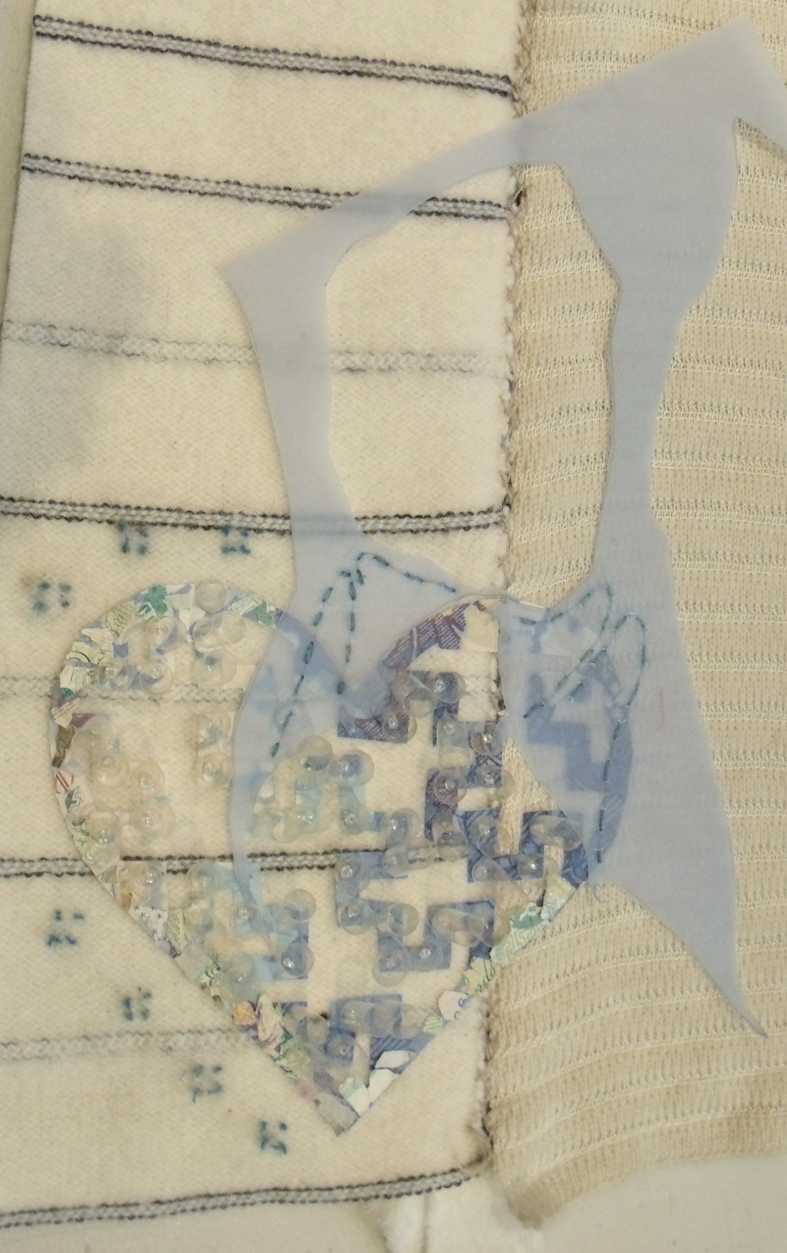
the third piece is an intricately cut applique of shredded bank notes, paper and woolen blanket stitched and knitted with copper wire…now that’s what I call mixed media.

GEDSC DIGITAL CAMERA
Steph’s totally mixed media heart

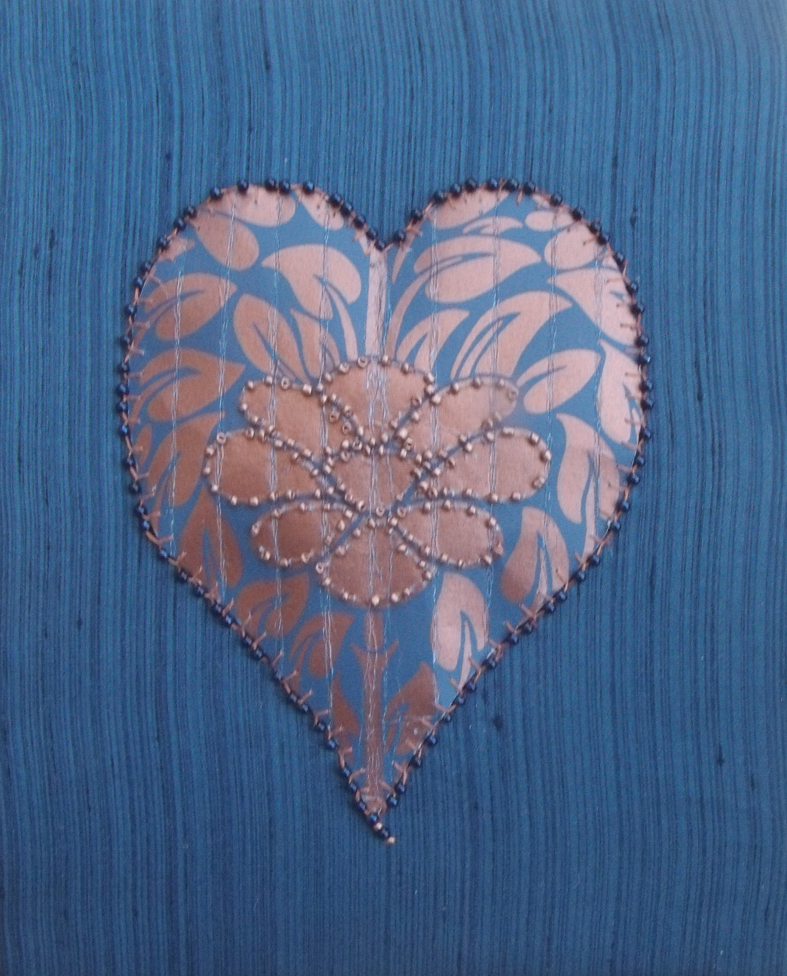
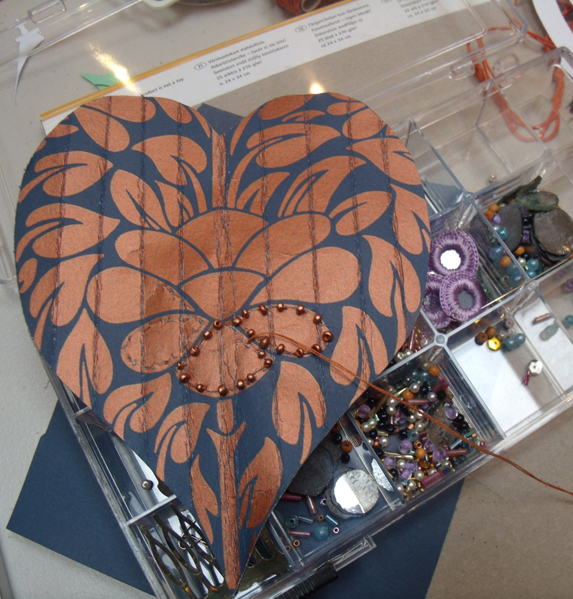
the beaded paper heart by Libby Butler is at last padded and applied to a dark blue fabric ground.

GEDSC DIGITAL CAMERA
padded beaded paper heart by Libby Butler

and right at the last minute this evening a lovely folksy map heart came form Kirsten Hill-Nixon…really worth the wait.

GEDSC DIGITAL CAMERA
crushed paper and cut maps hand stitched applique by Kirsten Hill-Nixon

and so for the 14th February 14 heart pictures.

GEDSC DIGITAL CAMERA

Paper Cut Hearts

GEDSC DIGITAL CAMERA
stitched paper chain of hearts by Susi Bancroft

In celebration of Valentin’s day the staff and tutors at Heart Space Studios got together to develop mixed media work based upon Paper Cutting. Debby Bird led the session – a chance for everyone to get to know one another better and swap information, materials and ideas. The project was to make selling exhibition of heart pictures or cards for our gift shop.

GEDSC DIGITAL CAMERA
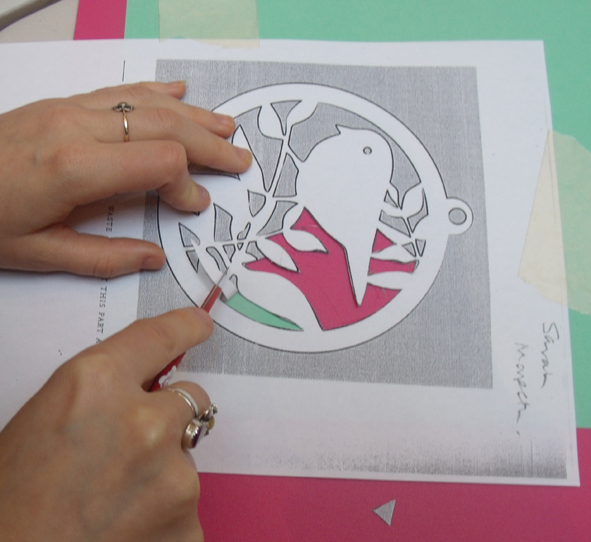
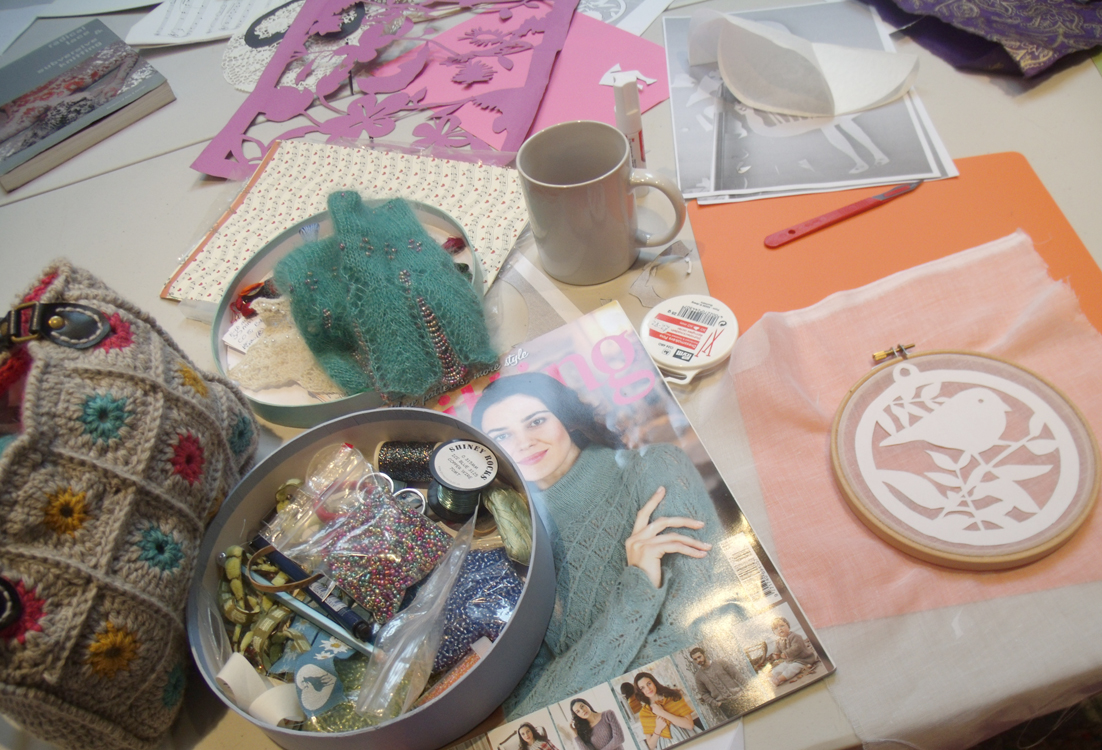
bird motif for practicing on
GEDSC DIGITAL CAMERA
lace bonded onto papers

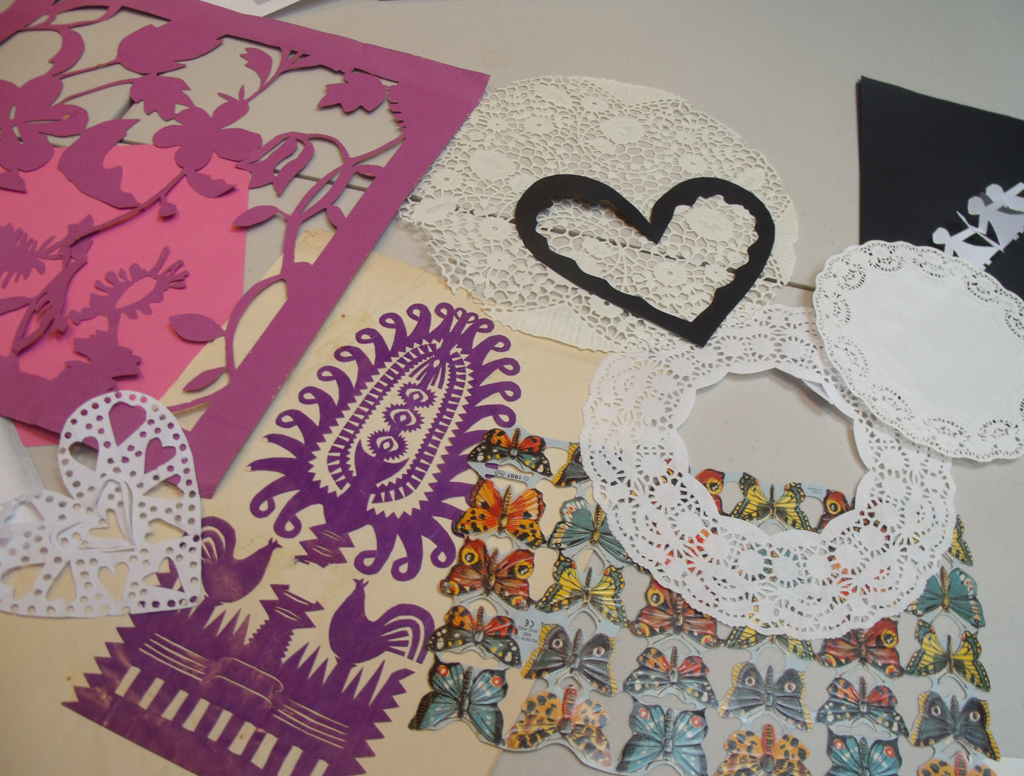
The tutors had been asked to bring in materials and equipment from their own practice, and so when these came out everyone stared to play with different things..

GEDSC DIGITAL CAMERA
pre-cut papers, from scalpel to laser techniques

everyone had very different pieces of inspirational materials…

GEDSC DIGITAL CAMERA
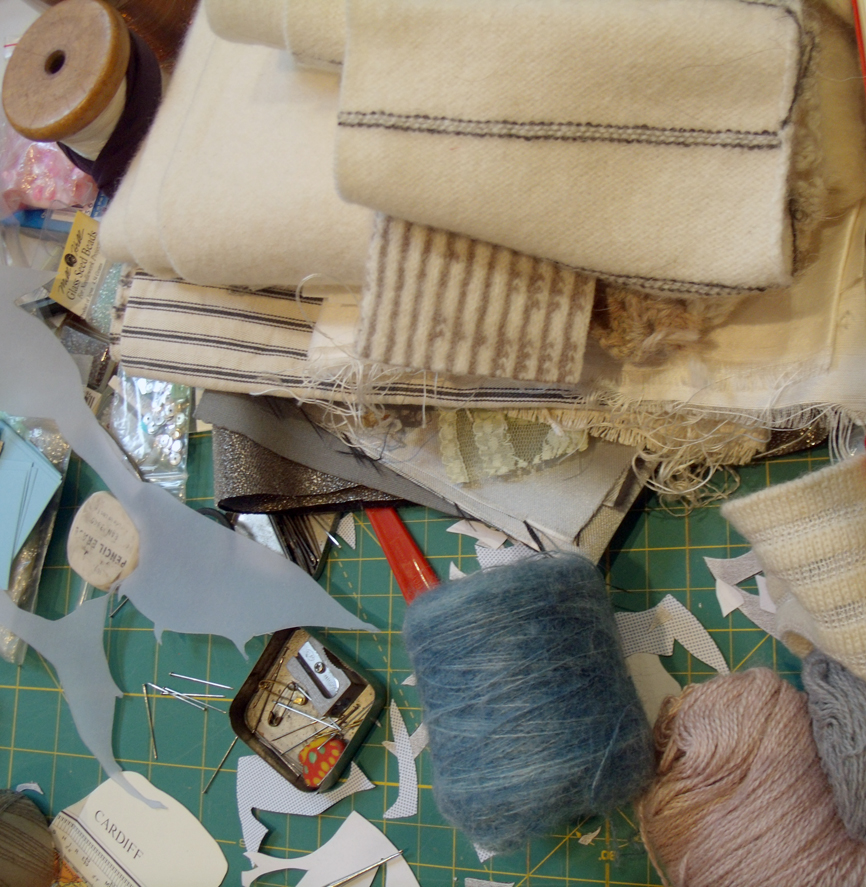
Steph Wooster’s stash of old blankets,woolen yarns, ticking and tracing papers.

the characters of the makers was apparent by the things they chose to bring….

GEDSC DIGITAL CAMERA
Kirsten Hill-Nixon’s felt tweeds and maps

Each person has developed stashes of very personal things and now they had a good excuse to use them…..

GEDSC DIGITAL CAMERA
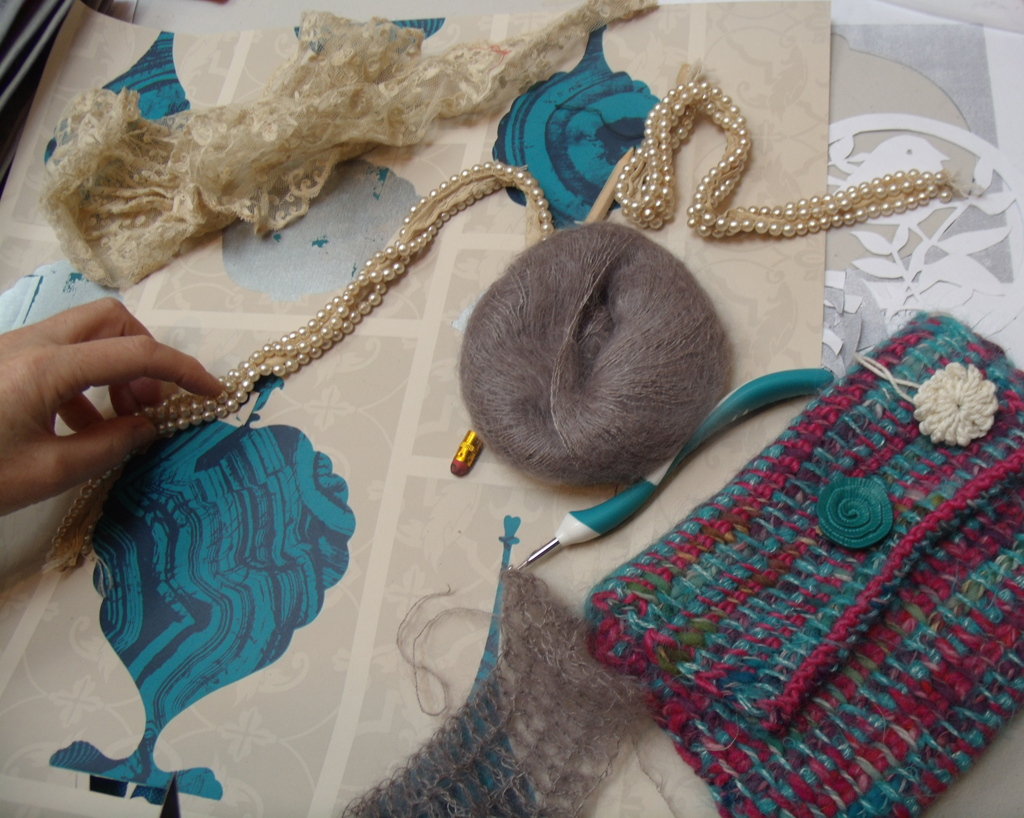
Amanda Jone’s knit and crocheted bead collection

in fact even the boxes and bags the materials had been brought in were inspirational.

GEDSC DIGITAL CAMERA
Decoupage cardboard box.
GEDSC DIGITAL CAMERA
Sophie Bristol’s sewing box of exotic ribbons

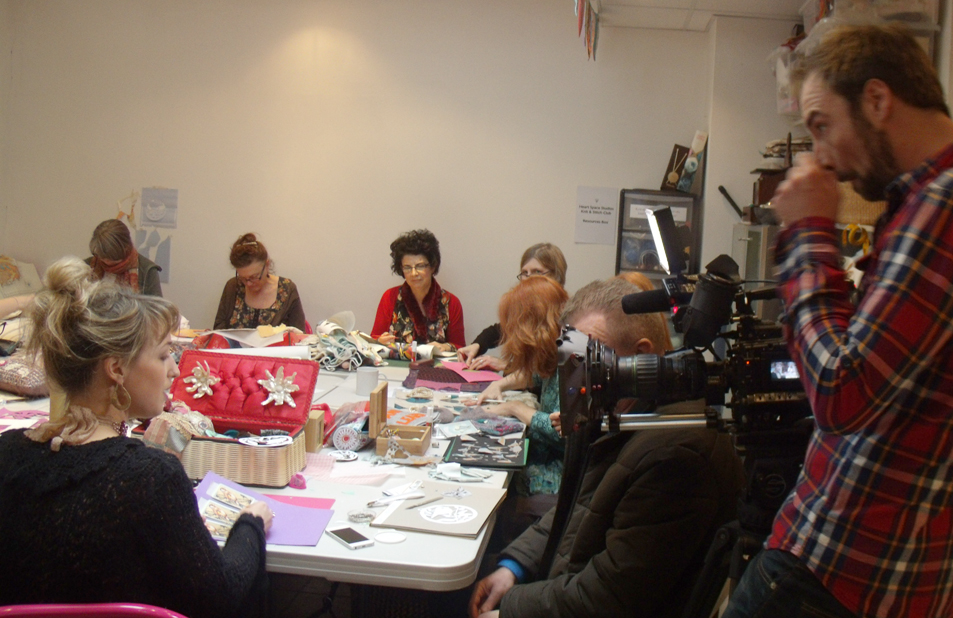
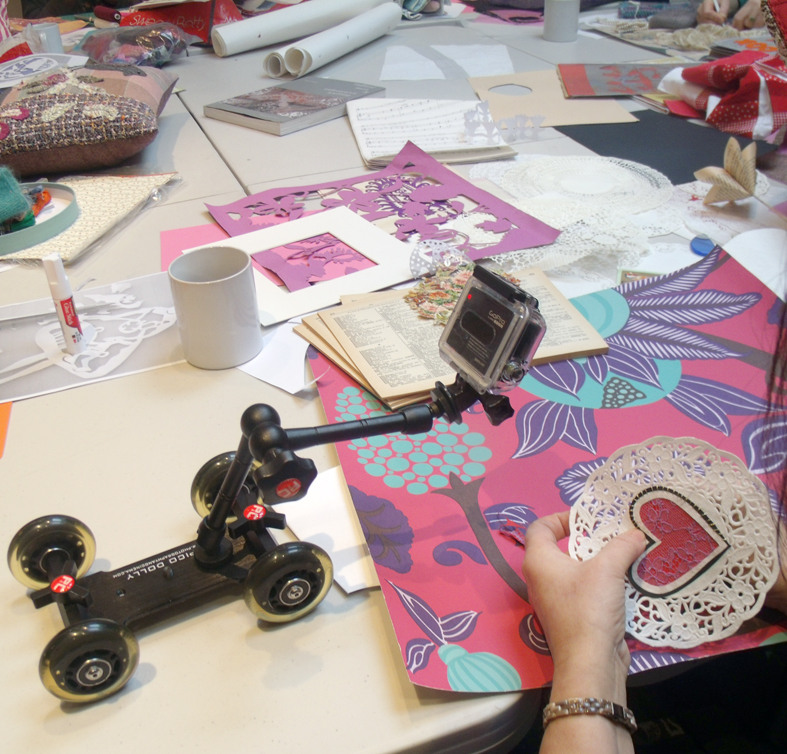
Just as we were getting started we were visited by a camera team to record the workshop for the regional daily news programme on ITV.

GEDSC DIGITAL CAMERA
Regional news cameraman filming the workshop

Sophie and I were interviewed separately about various aspects of the how Heart Space works, she was fluent and received a round of applause from the group, but I was told by the interviewer that they had lots of ‘sound bites’ from me – I think this is a polite way of saying  I didn’t exactly answer the questions.

GEDSC DIGITAL CAMERA
roving close-up camera checking Debby’s work

But we were all intrigued by the roving miniature camera used to get close-ups of the techniques were using. Back to work after the excitement and after we had given 5 top tips for beginners – more of which later…..

GEDSC DIGITAL CAMERA
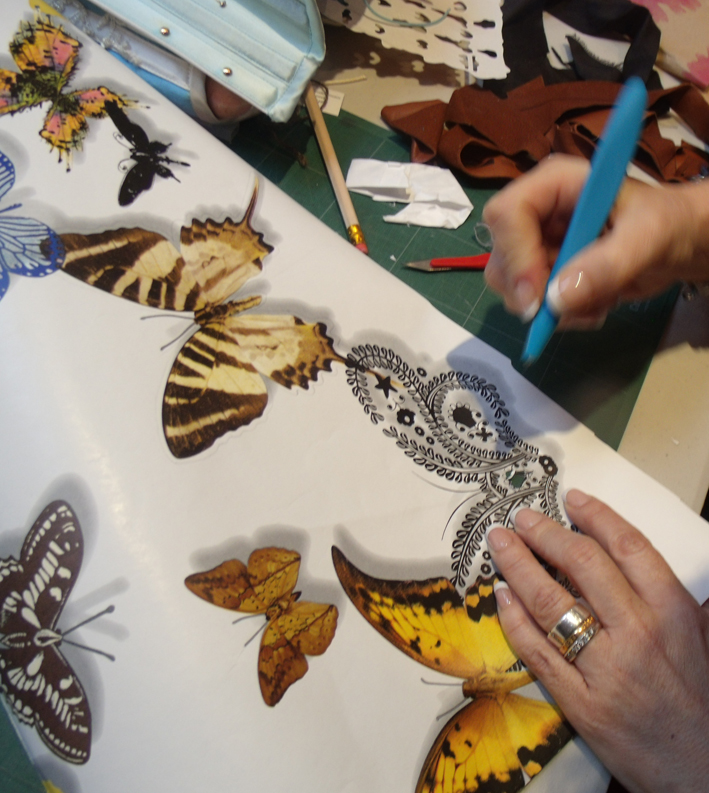
Lisa Keating starts to cut into a butterfly motif out of a modern photographic wallpaper.

Once the filming was over everyone suddenly seemed to be energised by what they could achieve in the day, they each had to make 1 sample heart picture that would ideally lead to a few other versions when they went home, when framed all this work will make up the Valentine’s exhibition for Heart Space Studios

GEDSC DIGITAL CAMERA
everywghere Libby Bultler’s beaded wallpaper heart

I was really pleased to see that Libby, who volunteers helping to generate our publicity, used the techniques I had taught at the first session of the Crazy Beading course that run on alternate Saturday mornings – really good to see how simple ideas can be adapted to new materials.

GEDSC DIGITAL CAMERA
Avril Best’s wallpaper and woollen materials
GEDSC DIGITAL CAMERA
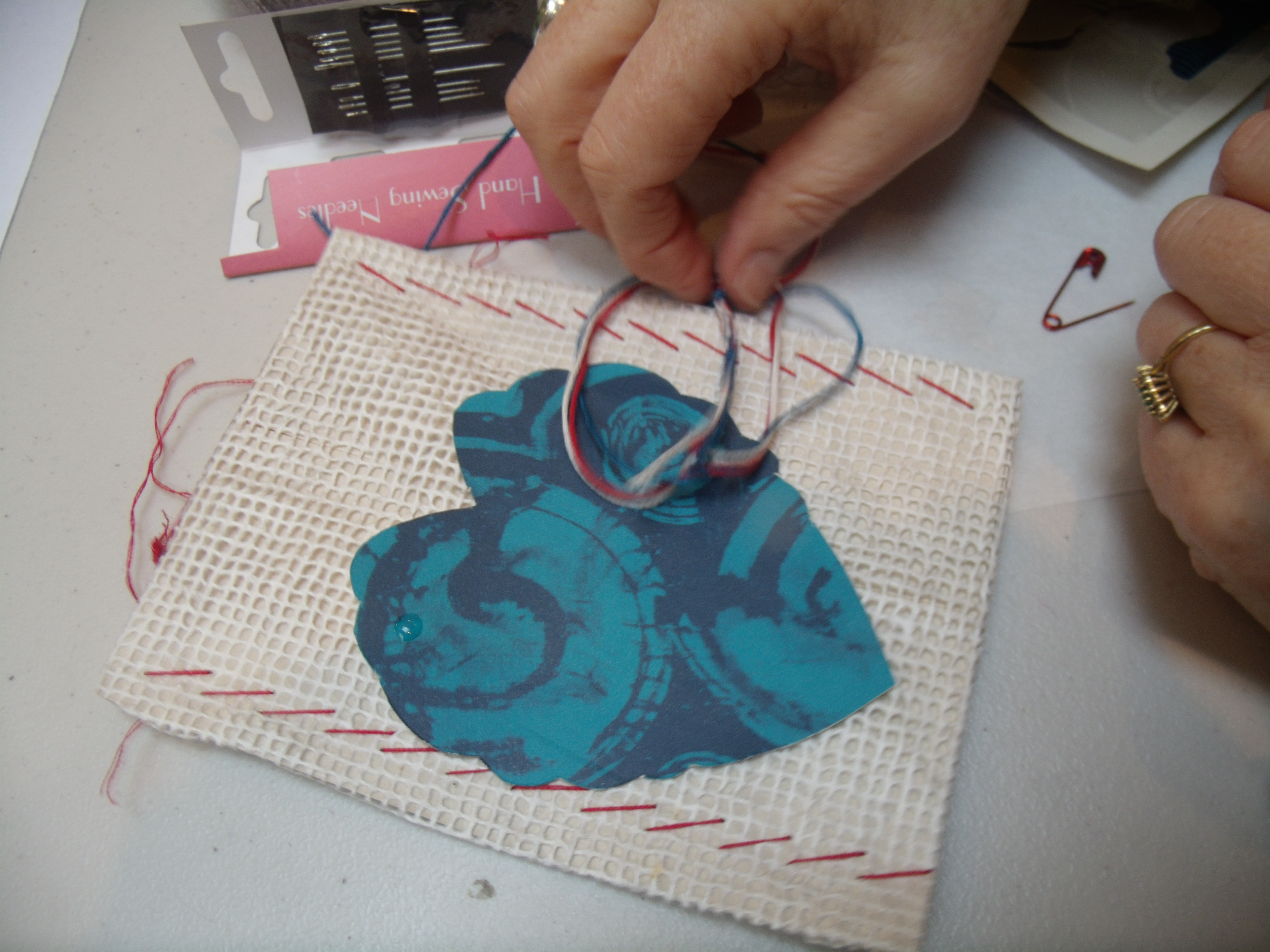
Avril’s cut paper turquoise heart stitched onto Japanese washi paper

Suddenly hearts started to appear on all the work sites.

GEDSC DIGITAL CAMERA
Steph Wooster’s seagull legs and heart applique

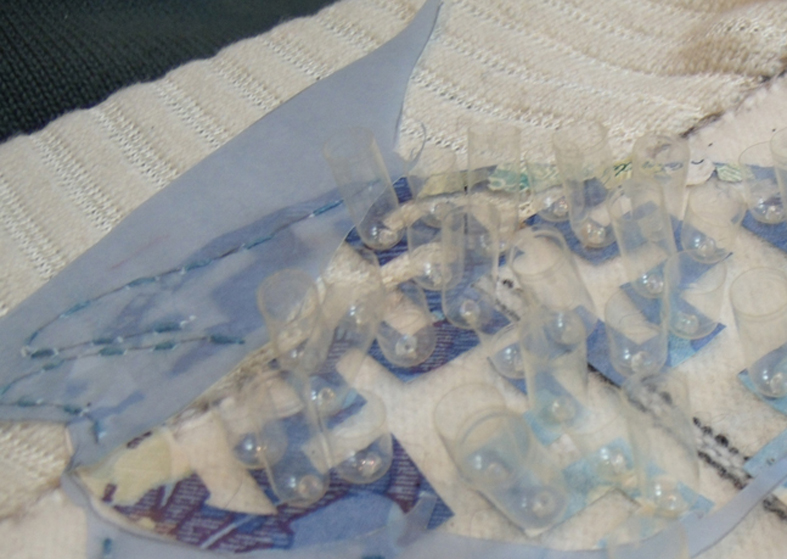
a close – up reveals a really strange use of mixed media – now who would have thought that medicine capsules could look so glamorous?

GEDSC DIGITAL CAMERA
medicine capsules or new type of sequin?

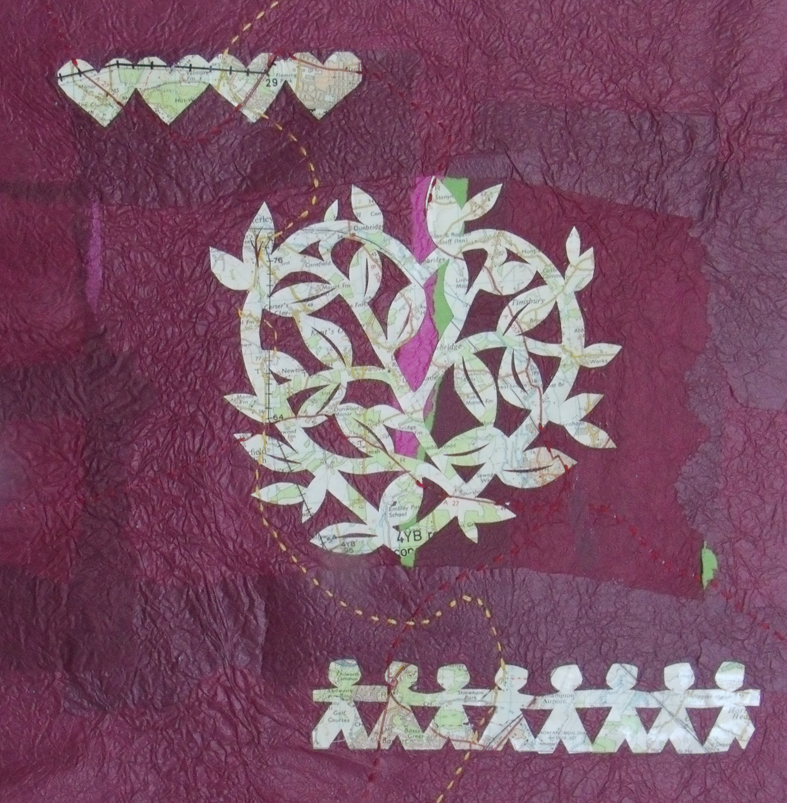
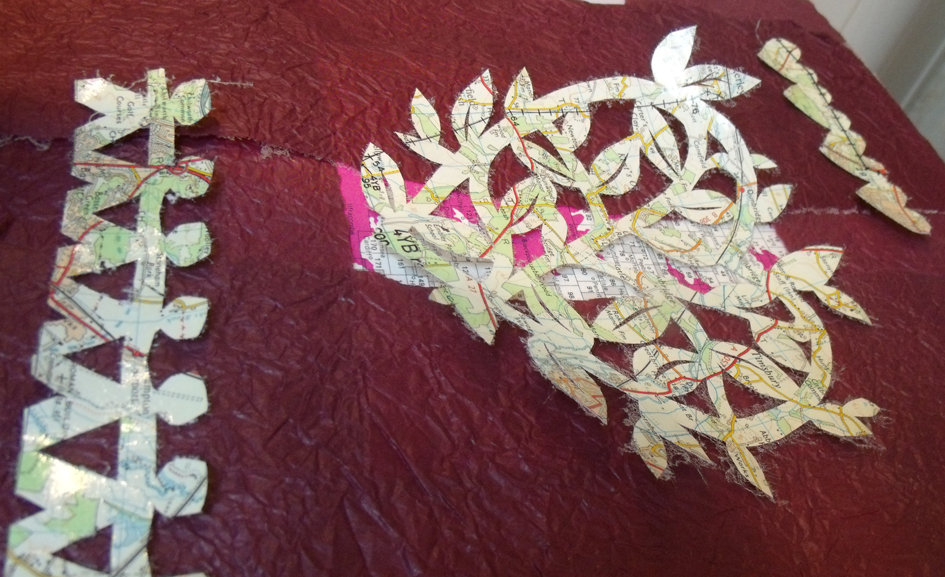
a really interesting idea emerged from Kirsten, she placed hearts and figures either side of a large decorative heart all of which she had cut from maps, I liked the idea that she could make links between the hearts and the figures using the map as a route……..

GEDSC DIGITAL CAMERA
maps to link hearts and people? Kirsten Hill Nixon

the simplest hearts are often very successful – these stitched, printed, miniature bunting strips are just so desirable.

GEDSC DIGITAL CAMERA
choices to make for developing finished work

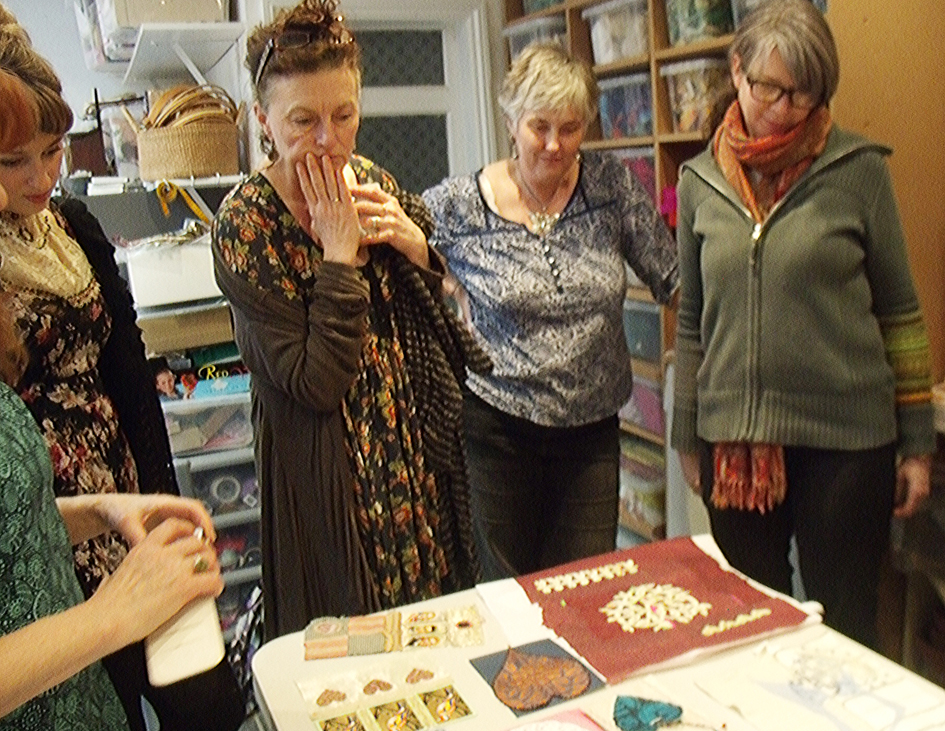
When the sampling session was finished everyone set their work out for viewing by everyone – several people were determined to get more work for next week – which apart from St Valentine’s day celebration is the 3rd anniversary of the opening Heart Space Studios.

GEDSC DIGITAL CAMERA
some of the group assessing the finished samples – where to go next – doesn’t look too hopeful does it?

Well they all promised to send or bring work for exhibition by the end of the week – so the next post will show the results….Oh and the 5 top tips for staring to make with textiles,

1 when threading a needle 1) cut the needle end of the thread at a 45% angle
2 when threading a needle 2) lick both the end of the thread and the eye of the needle

3 use circular needles to knit garments – you only ever have to make the basic knit stitch ( not alternate with rows of purl) and there are fewer seams to stitch up.

4 use the best possible materials you can afford – always.

5 press as you go when making any garments (this is also my own favourite rule)

Left Hand Drawing

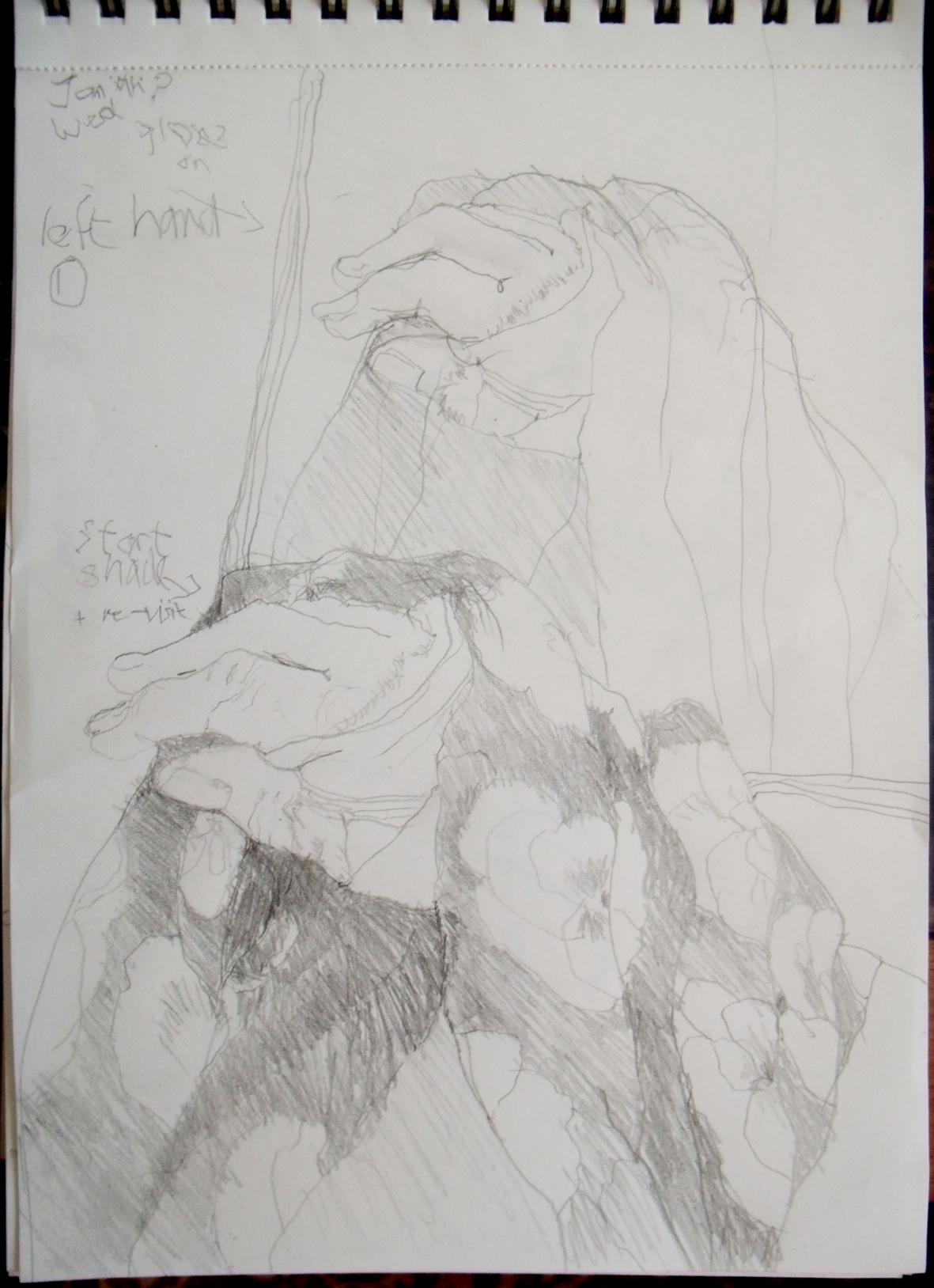
first left hand drawing
this is the first drawing with my left hand, compare quality of drawing to writing!

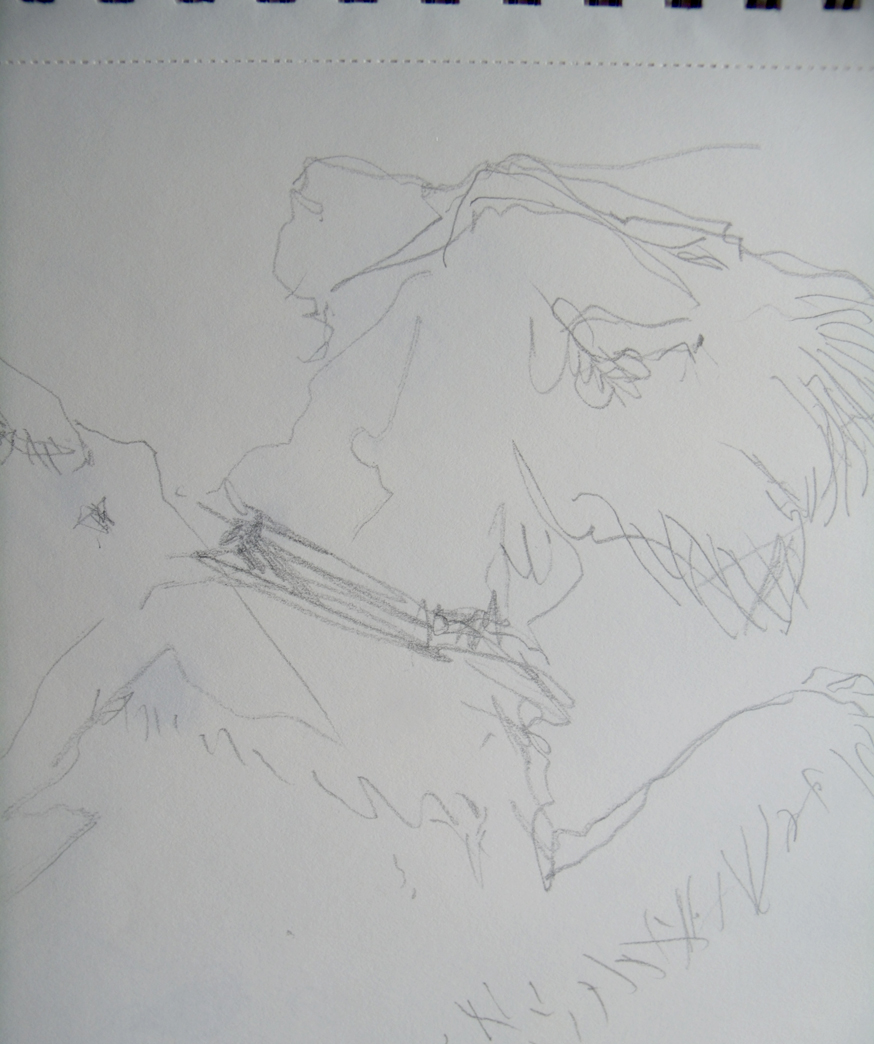
Practice What You Preach, is a good motto to live by: so soon after I broke my right wrist, I decided to start drawing with my left hand – as left or  weaker hand drawing is one the basic exercises that I often employ when teaching drawing to a group of nervous beginners as it levels out the drawing ability of everyone.

As you can see I decided to make linear observational drawings of the very thing that was ruling my life, the cast, sling and inert fingers of my right hand, also it would stay in position until I was finished. The first drawing took more than an hour to complete – a really long time for an A4 page of black and white line work. I used a propelling pencil, the first thing to hand, so the range of marks was restricted – but this turned out to be a useful restriction.

This first drawing has all the hallmarks of a weak drawing having been revised – I decided to make a continual line drawing, ie not taking my hands off the page as I seemed to have lost the innate sense of proportion enjoyed with my right hand, I couldn’t trust my judgement of angles and distances between the elements of the hand and arm. When I had finished the first lower drawing it looked really weak and wobbly and lost on the page, so I filled in the background of the scarf – this took a lot of time, my left hand has no strength and the shading looked scribbled instead of nuanced to describe the density of the fabric and the contours of the folds. Then I drew a line drawing of the first drawing, I was surprised that these clumsy drawings do sill look like my work…drawing is like handwriting.

second left hand drawing
my second sling line drawing

The second drawing appears simpler because I had more confidence after drawing for an hour and I used an eraser as a drawing tool – a very blunt instrument in my left hand. Still keeping the continuous line as a discipline this study suffers from overdrawing – a thing I absolutely hate in anyone’s drawing . The second firmer line that covers the first attempt is invariably clumsy and the drawing looks stilted ( see fingers); better a light wispy drawing than a second deader line. But even the writing is a bit more controlled. I also began to change the way of describing the fabrics, the dotted lines are my version of the crepe bandage.

third left hand drawing
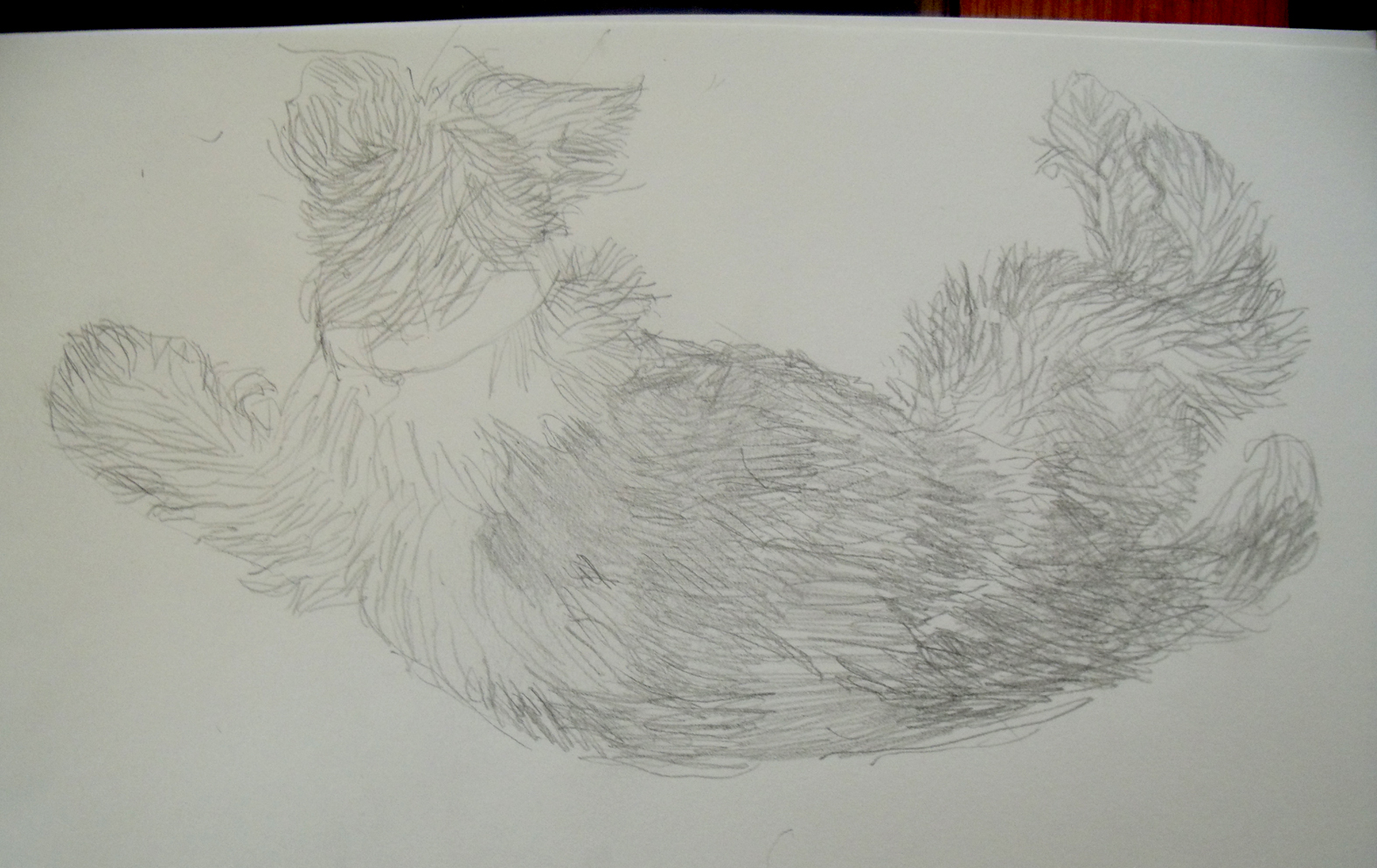
my third drawing – sleeping terriers.

Deciding on making descriptive pencil marks rather than the continuous line drawings, the next day I embarked on drawing my dogs. I was confined to the sitting room to keep my arm still and propped above my heart to try to alleviate the bruising, and they had taken to settling down in front of the fire where they snoozed all day, although they often just got up and walked away mid drawing.  The full length sleeping dog drawing above looks exactly like my dog Daisy, but not at all like my usual drawings.

I have written frustrated comments around the page – “line easier than shading” but I was finding that shading with a softer drawing pencil meant that I had very little control of the angle of the point – it was like drawing while looking in a mirror. The lines are fuzzy with the pencil lead wearing down quickly as I worked, I was unable to manipulate a sharpener – let alone a knife. The surface is getting rubbed with my left arm as I work and looks really lifeless.When using pencils I rely on the range of different tones available from even an HB pencil – but they rely on pressure to make them.

forth terrier drawing
Daisy lying down

Reverting to the propelling pencil I attempted to make a more linear study of the dog’s fur; the way it grows is one the most interesting things to draw. I tried to add shading to the line without resorting to smudging and rubbing to get darker marks, but my left hand does not have the strength of my right to press down for a blacker thicker line. Again this drawing seems clumsy because of how I chose to make my marks I simply can’t use many of the refined marks available with my right hand. I reverted to my line drawings – they made me feel better!

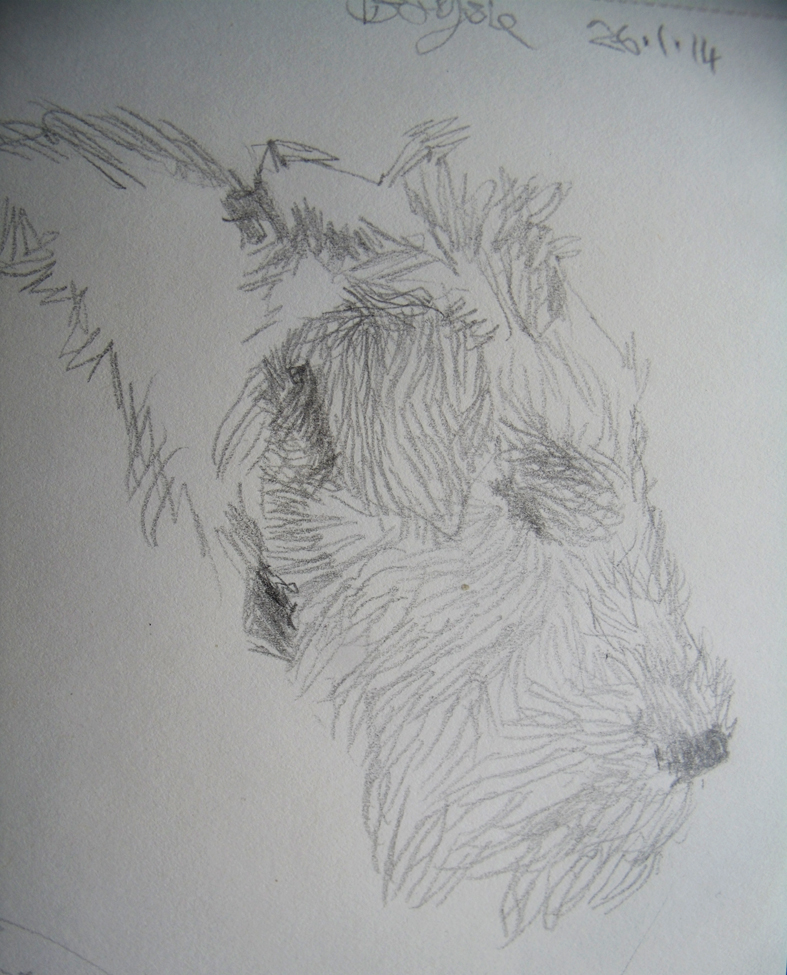
line drawing terrier head
my reversion to line drawing for Boysie’s head.

Now this really started me thinking about how I relate to my drawings, they aren’t just a useful tool to free the ideas in my head – although this is their most useful service to me; they actually explain the world I see to me and to everyone else who cares to look – they are the most direct and personal extension of me. I have spent a long time (way over the 10,000 hours required to make a craft skill second nature to the maker)  developing a fluent style of drawing, almost shorthand, that enables me to both understand what I see and/or imagine. Look at my drawings and you will see who else I am – beyond the person in front of you – and they are how I want to be seen. Heck!

head of sleeping terrier
more recent left hand drawing of Boysie’s sleeping head

2 weeks on and I have started drawing the dogs again. My right hand, still in the cast, has some movement but it is too painful to use often. The drawing of the sleeping terrier above is a fair portrait of Boysie and also my line has become more descriptive. I am learning to make smaller studies, not expect too much – must remember to deal with details when teaching beginners.

Sleeping terrier
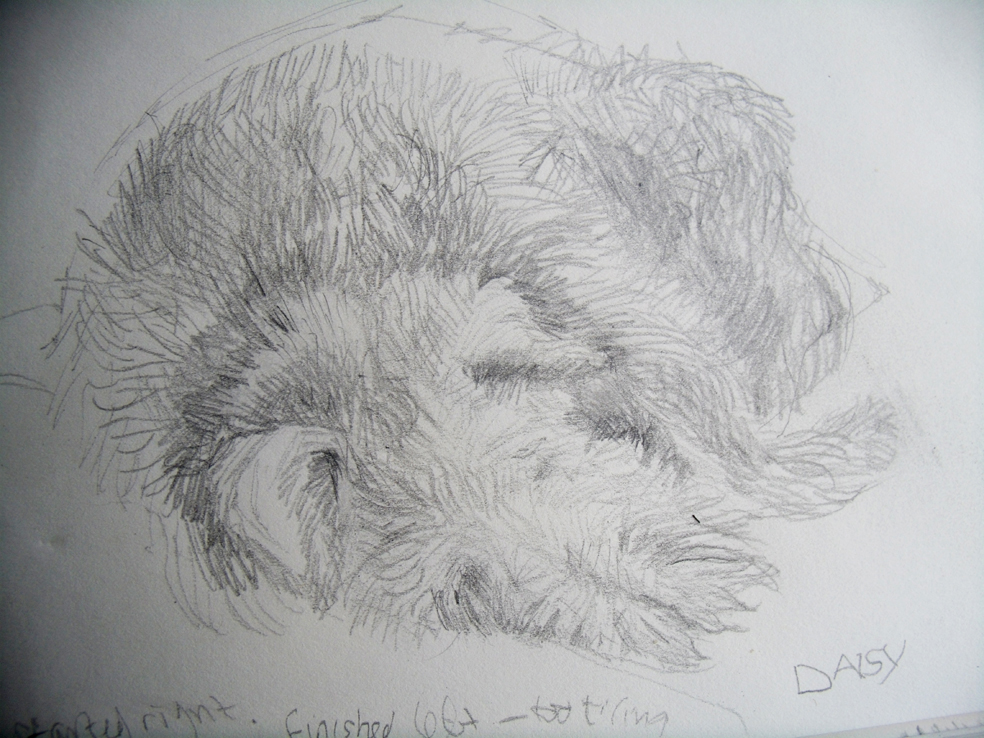
Daisy asleep on Sofa next to me. using both left and right hands

Although these drawings are still very clumsy to my mind and painfully slow to make  – they are of my scraggy terriers and friends can recognise them individually. The sleeping dogs above were both started with my right hand, I mapped out the whole area to be drawn first using my right hand, you can just see the outline. Now whether my belief in the outline made me feel more secure to use my left hand to work the details or whether using my left hand for the last month has given me more control I do not know – but these are drawings that do not look like they are made with the weaker hand.

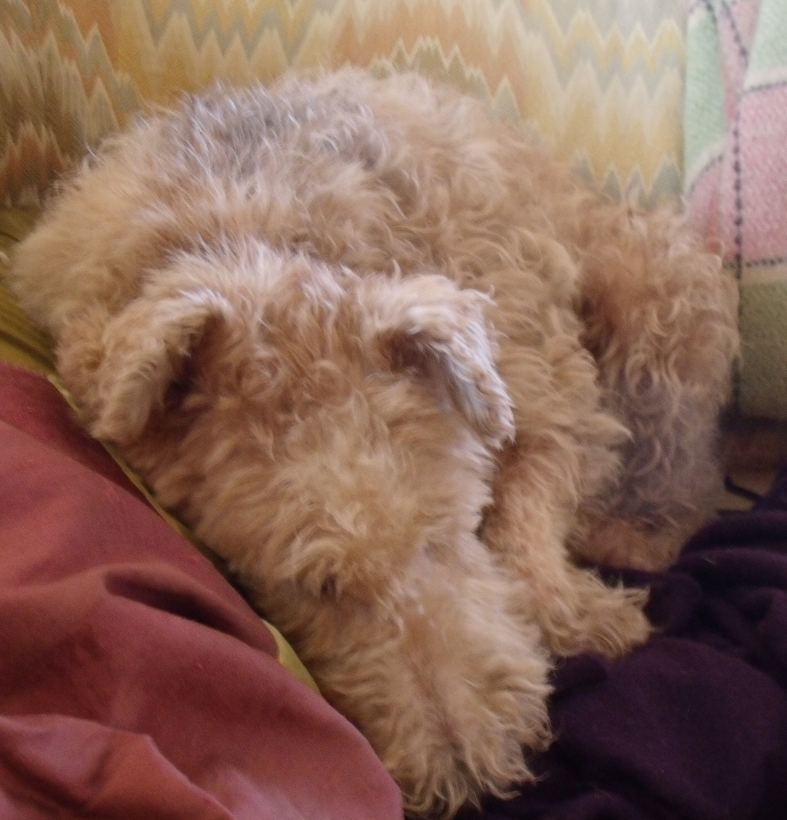
But just so that you can see  the model that I worked from, enabling you to judge if I am back to my fluent line – here is Daisy still asleep long after I had finished the study above.

sleeping dog daisy
my dog daisy – still asleep

There are all sorts of things written about drawing with your weaker hand – you are more in touch with your inner being, using the opposite side of the brain unearths alternative visions etc. All I have to say is that it is very slow, very demoralising to begin with and completely exhausting – just like learning to draw with your strong hand!

Bling Slings

GEDSC DIGITAL CAMERA
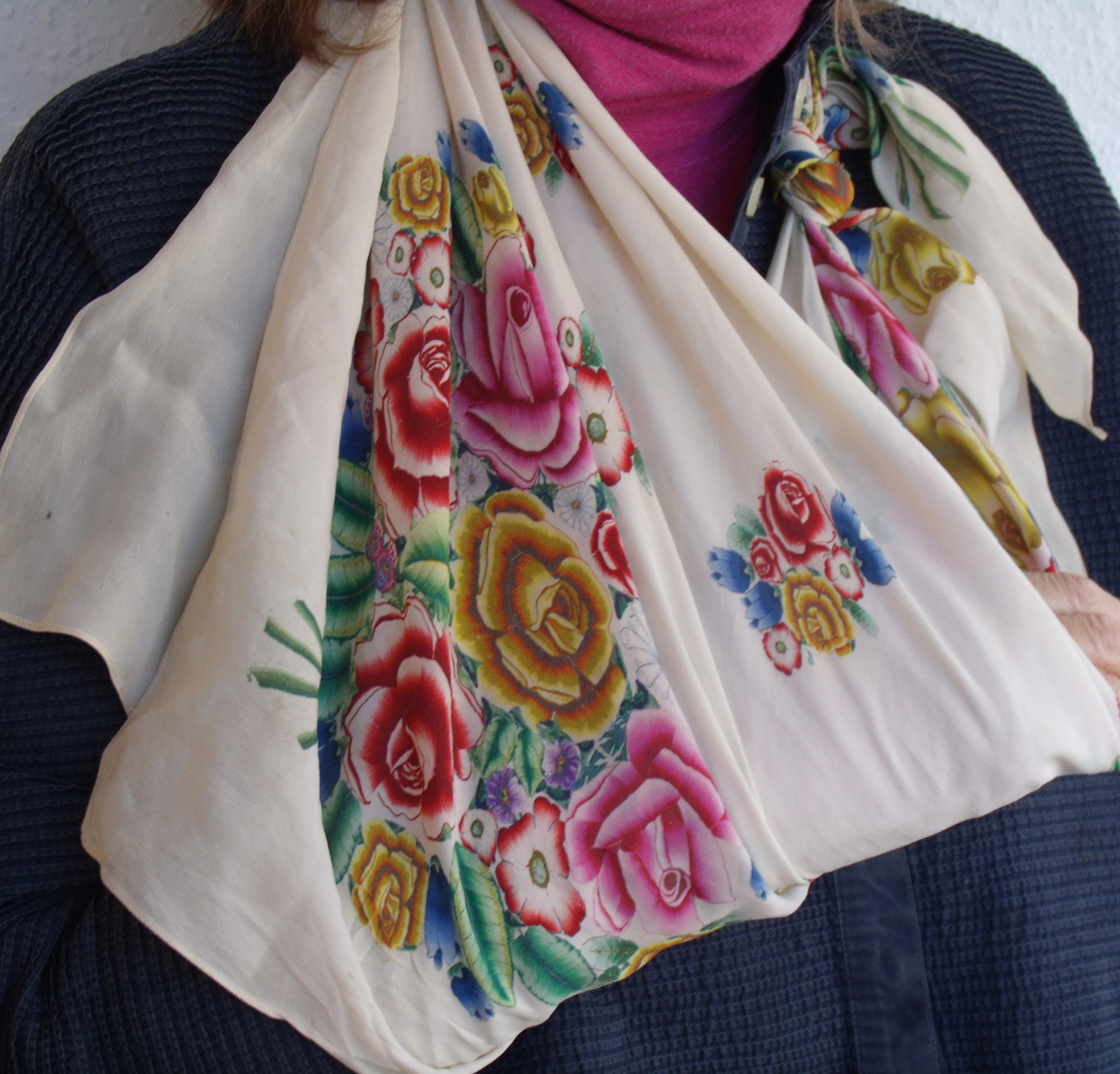
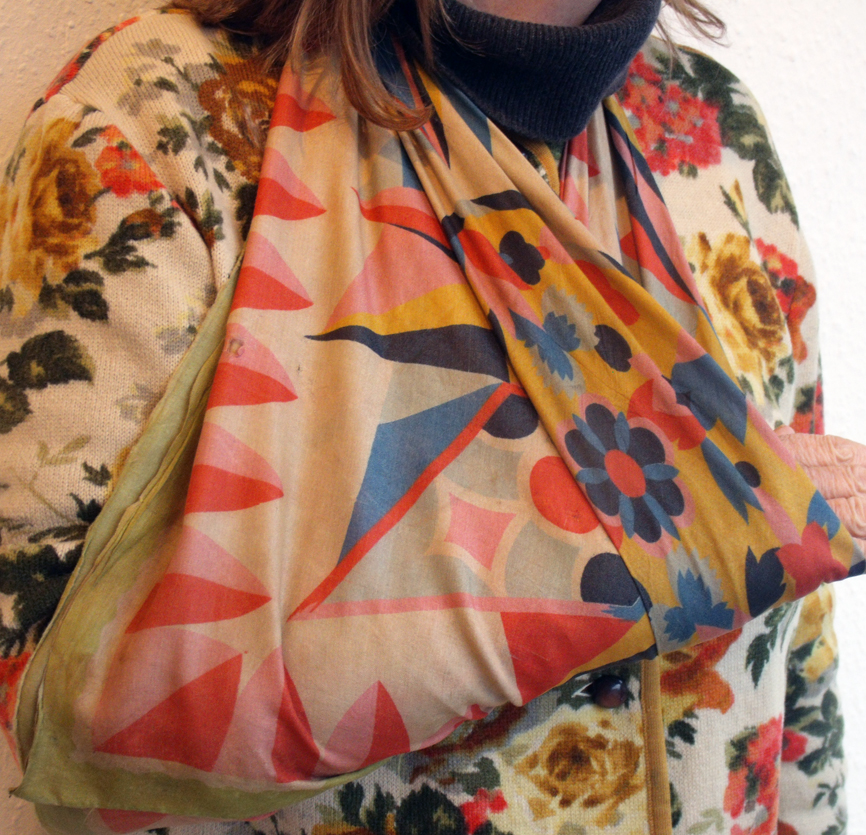
my vintage rose bouquet printed headscarf

To celebrate my return to posting my blogs I am showing a small selection of decorative arm slings – yes dear readers I have a broken wrist, my right wrist; so there has been no writing, stitching and perhaps worst of all no drawing/doodling/scribbling for more than a month now. But I determined to make something visually interesting for HER WORK from the whole unhappy event as soon as I could manage to use my Mac beyond typing/tapping with my left hand

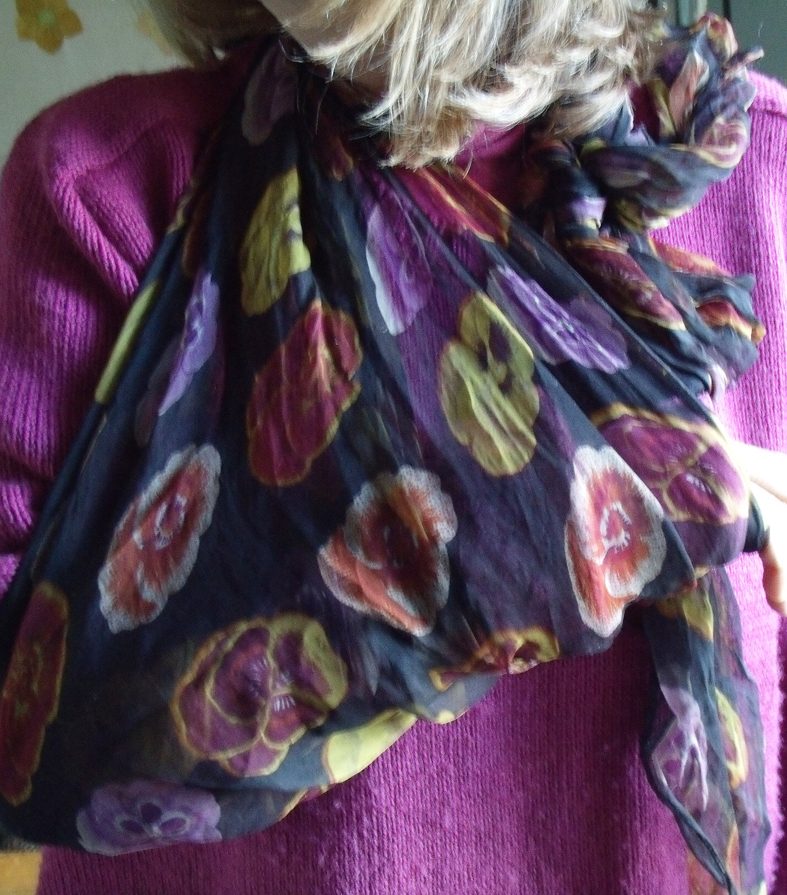
pansy sling
my old favourite pansy scarf

Sensing a dressing -up opportunity I got rid of the NHS white cotton sling as soon as I could – like the next day, and instructed my husband, Steve, to take pictures each morning of mt slings. The commercial alternatives for the longer term support were in  dreary colours  – as if you wanted to hide the injured limb – I want everyone to see clearly my affliction and Keep Clear! So I determined to find alternatives from my stash of both vintage and modern scarves, let’s face it any excuse to dress up !

                              
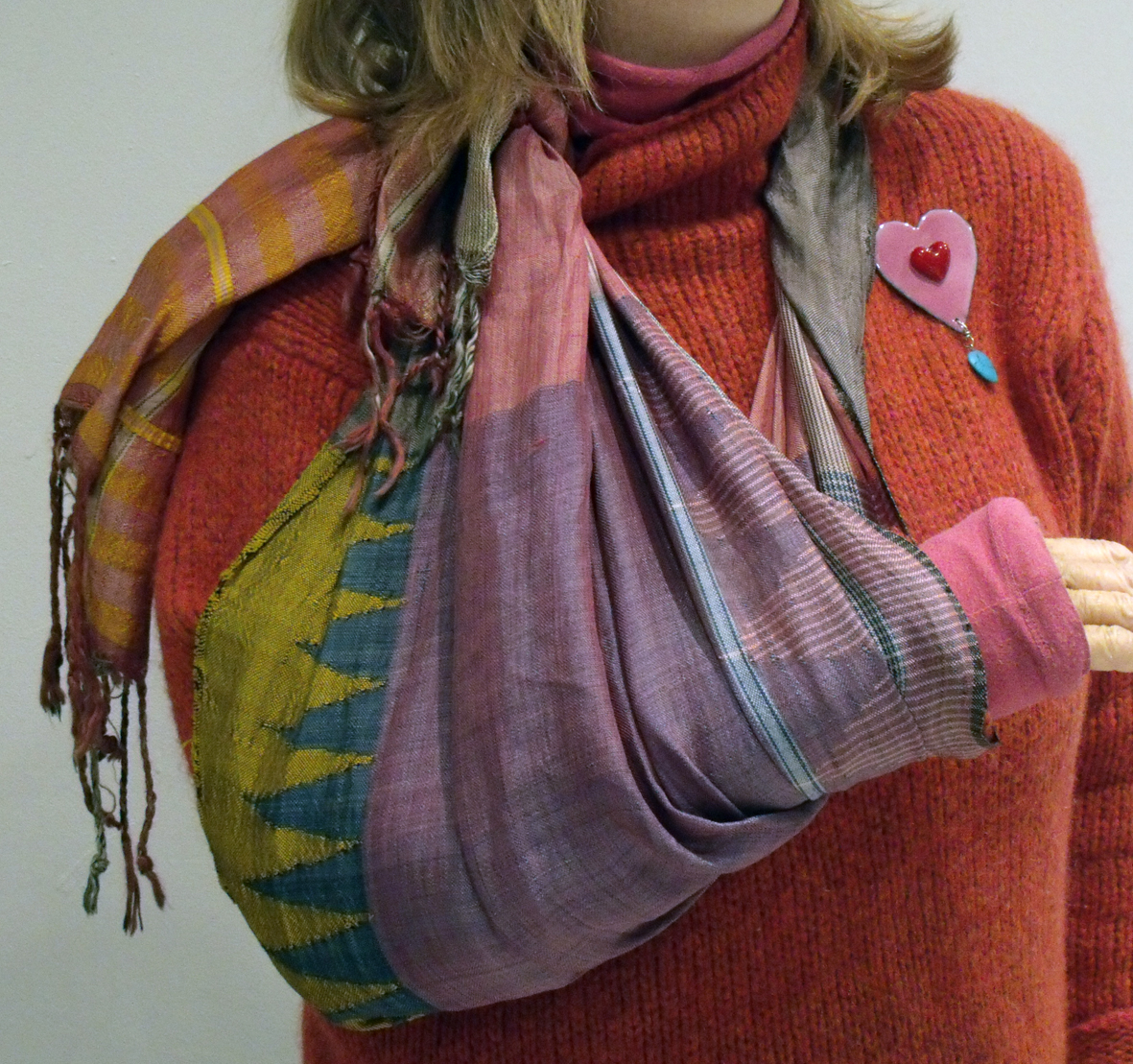
woven silk sling
my shot silk woven scarf with my co-ordinated enamel heart brooch and new pink cast

in fact I welcomed the opportunity to wear these old scarves, using them as slings affords much more are pattern to seen, tied around the neck only a small area is glimpsed if you have long hair.

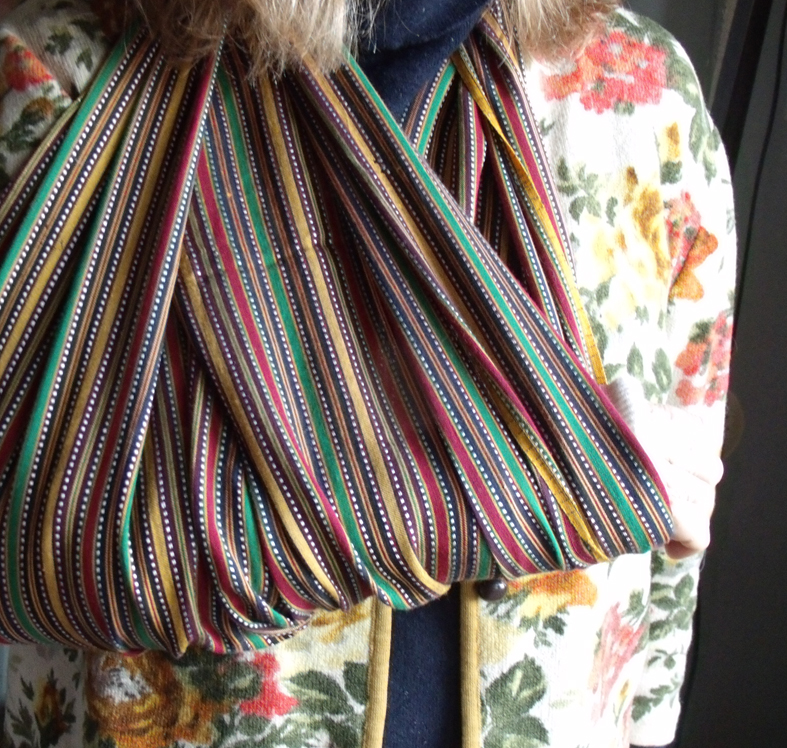
woven striped sling
a really wide and draped stole sling

the really wide slings hide my new bright pink cast when it doesn’t tone with the clothes.

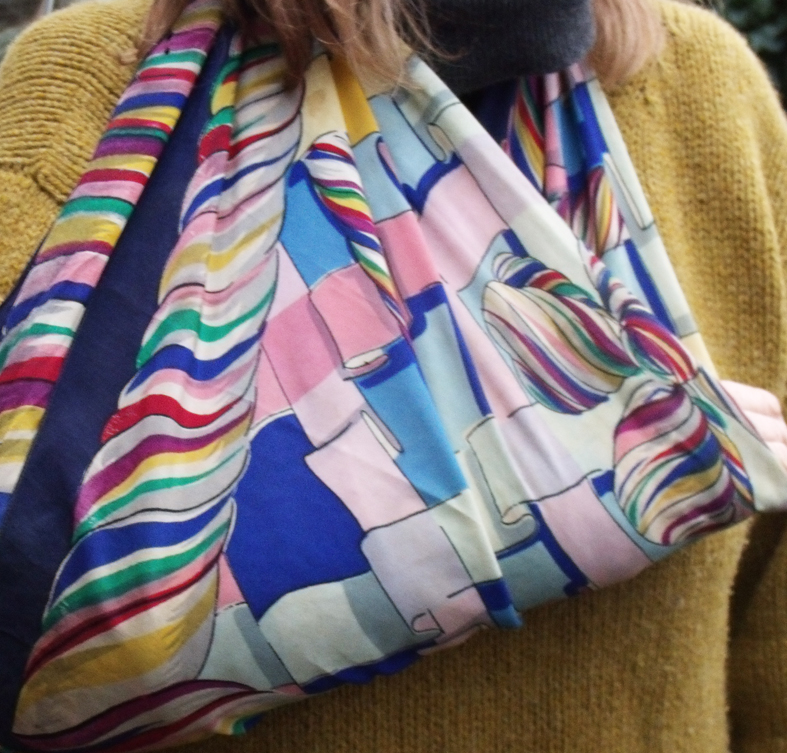
vintage 1950's scarf sling.
vintage 1950’s printed scarf sling

I am especially pleased to be able to wear the original art deco head square, very dynamic and such unusual colours and pattern clash.

art deco silk scarf
my art deco scarf looks so modern worn like this

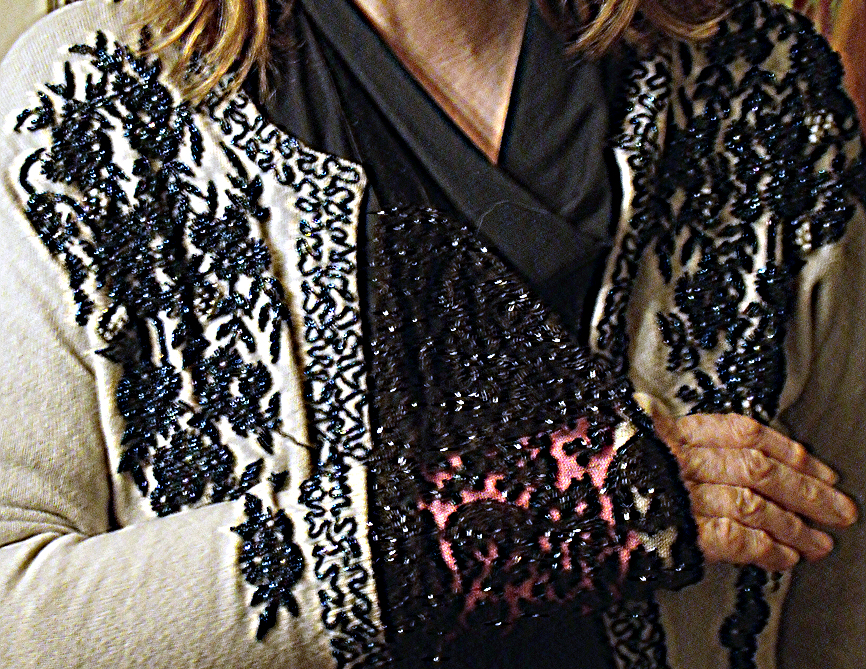
and last but not least my actual ‘bling sling’ which is a length of vintage black beaded net, that I had previously stitched to a length of velvet ribbon in order to wear as a belt.  I went  to a party, the only party of the season that I had managed to attend; and I apologise for this bleary image but this was taken after the party had finished and we were both a bit tired and emotional,

black beaded bling sling
the original bling sling with my vintage beaded cardigan

Crazy Barcelona

cb5
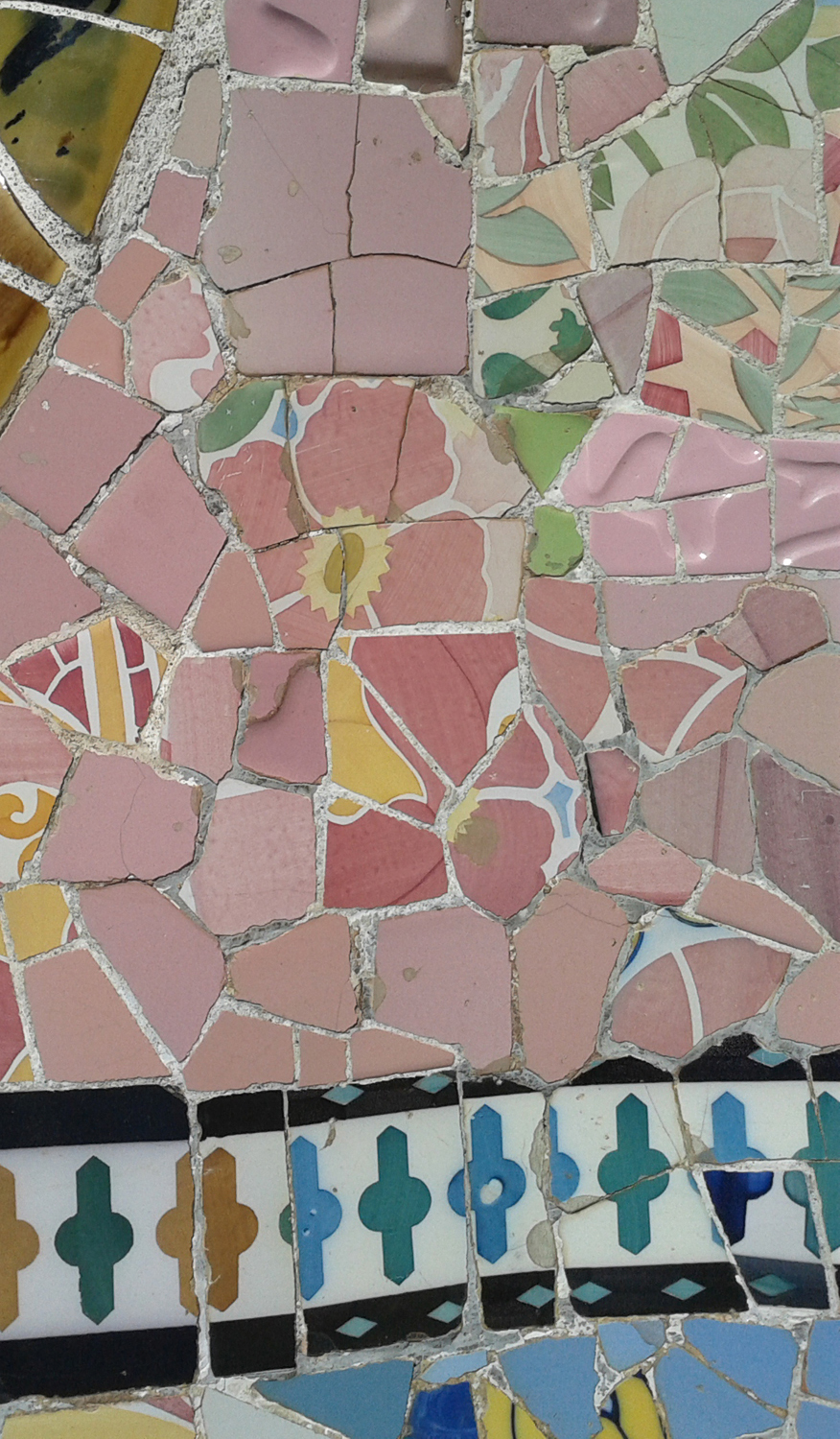
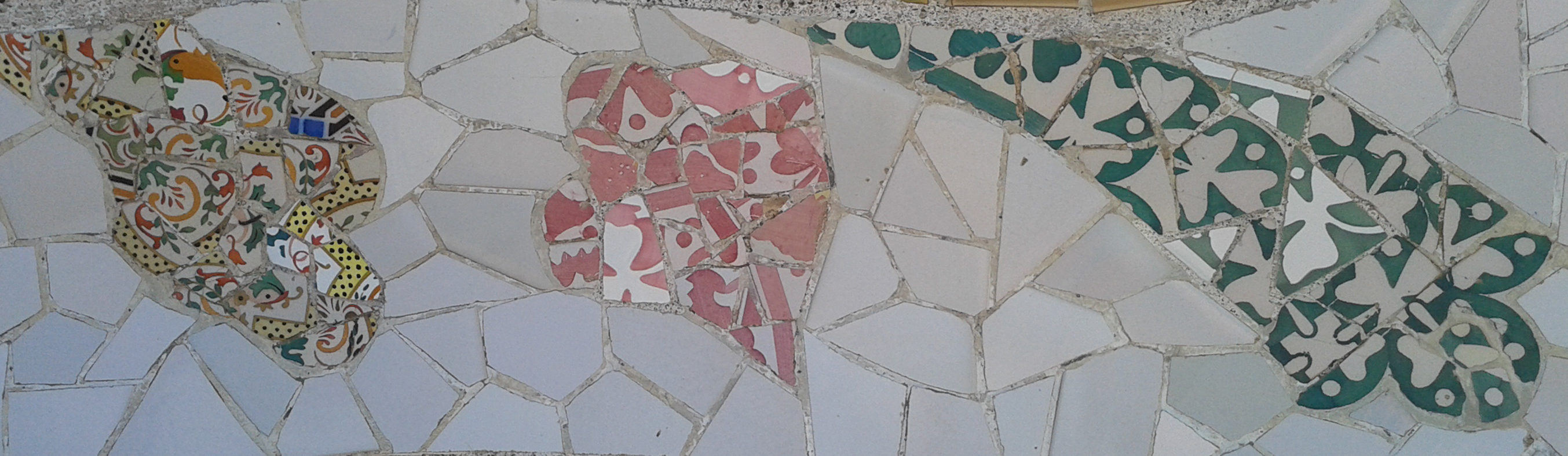
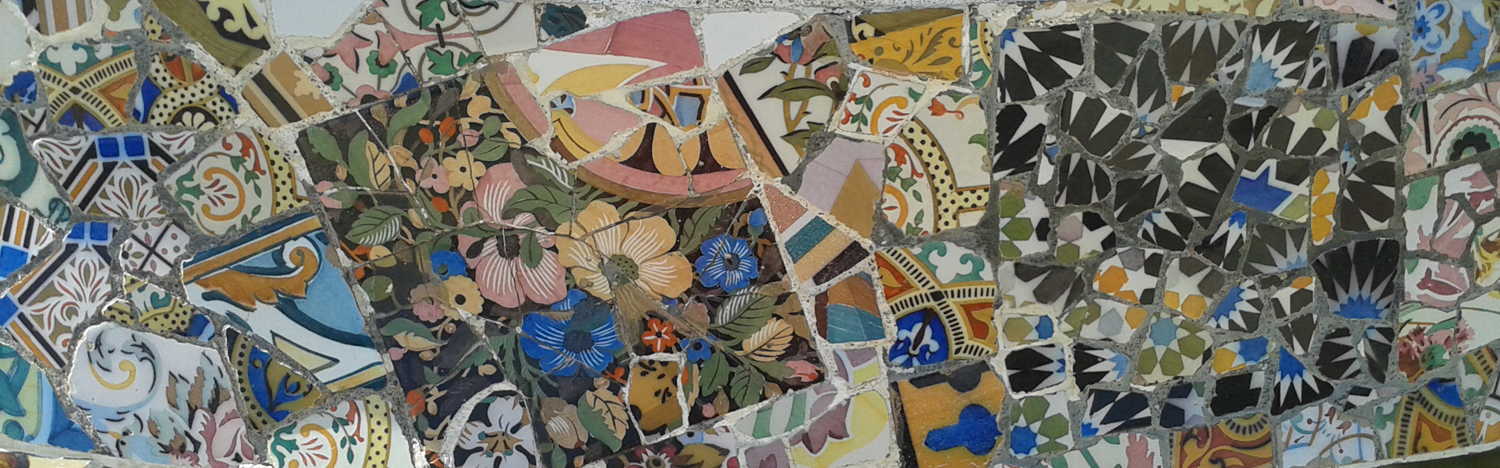
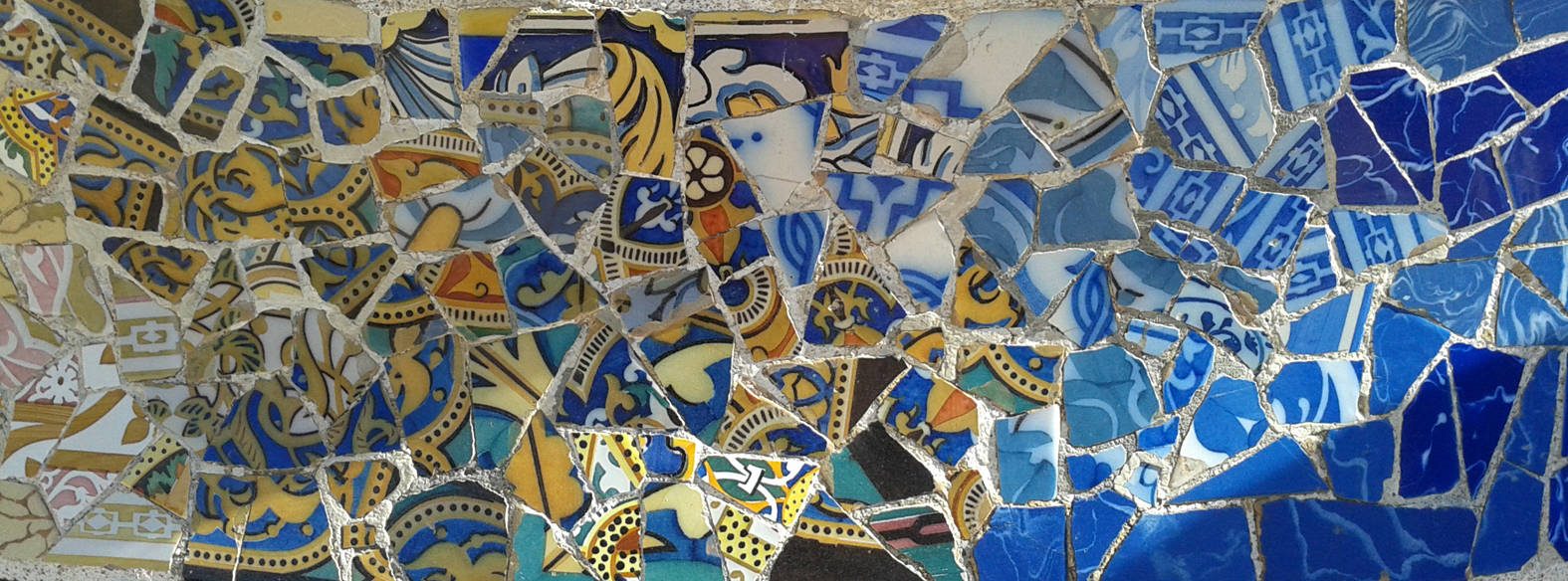
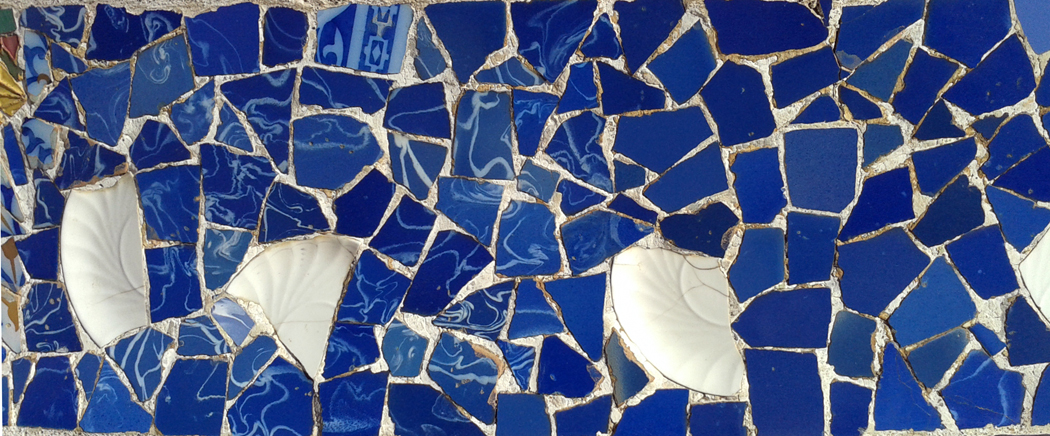
crazy mosaic by Antoni Gaudi at Parc Guell, Barcelona

Crazy Barcelona – crazy patchworks everywhere, but not in fabric – in ceramic, stone and marble. OK then, crazy mosaics, but whatever you call them there is no better place to appreciate them than at Parc Geull, designed and built by Antoni Gaudi in the first 14 years of the 19th century. I have seen images of these mosaics before but never appreciated the size and the sheer exuberance of the patterns.

cb15
undulating crazy seating on the terrace
039
view of the entrance to Parc Geull from the crazy mosaic seating

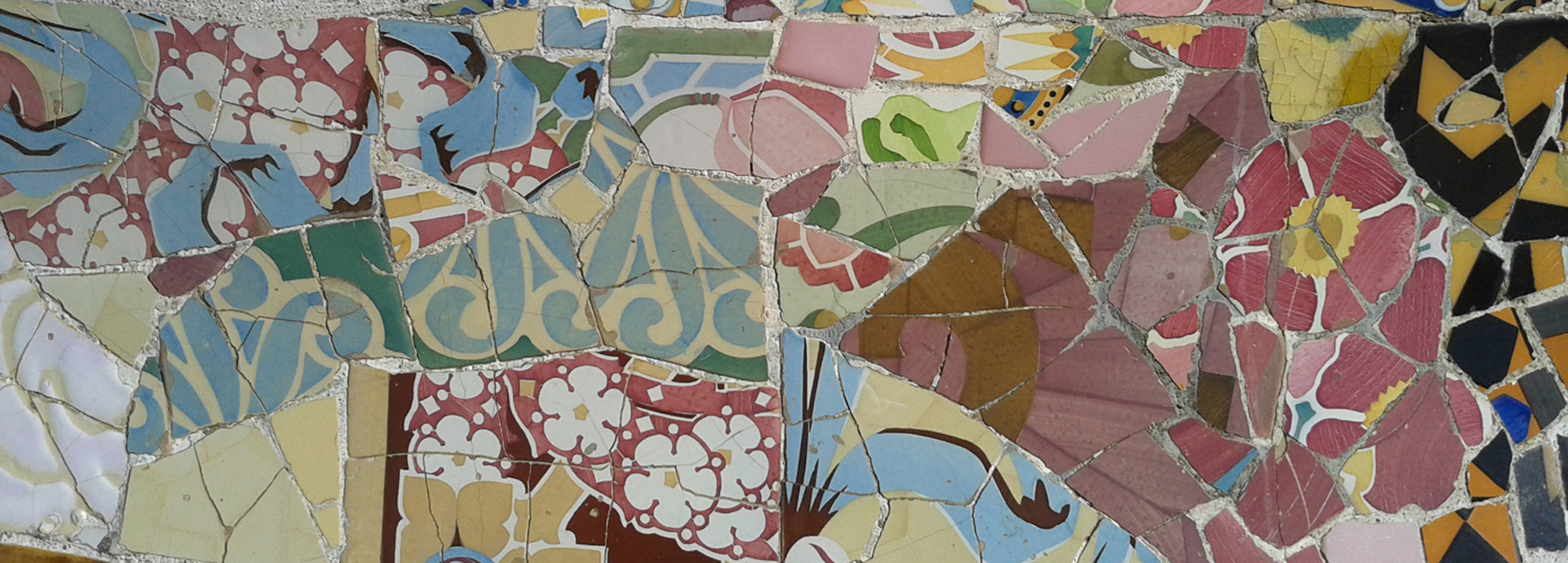
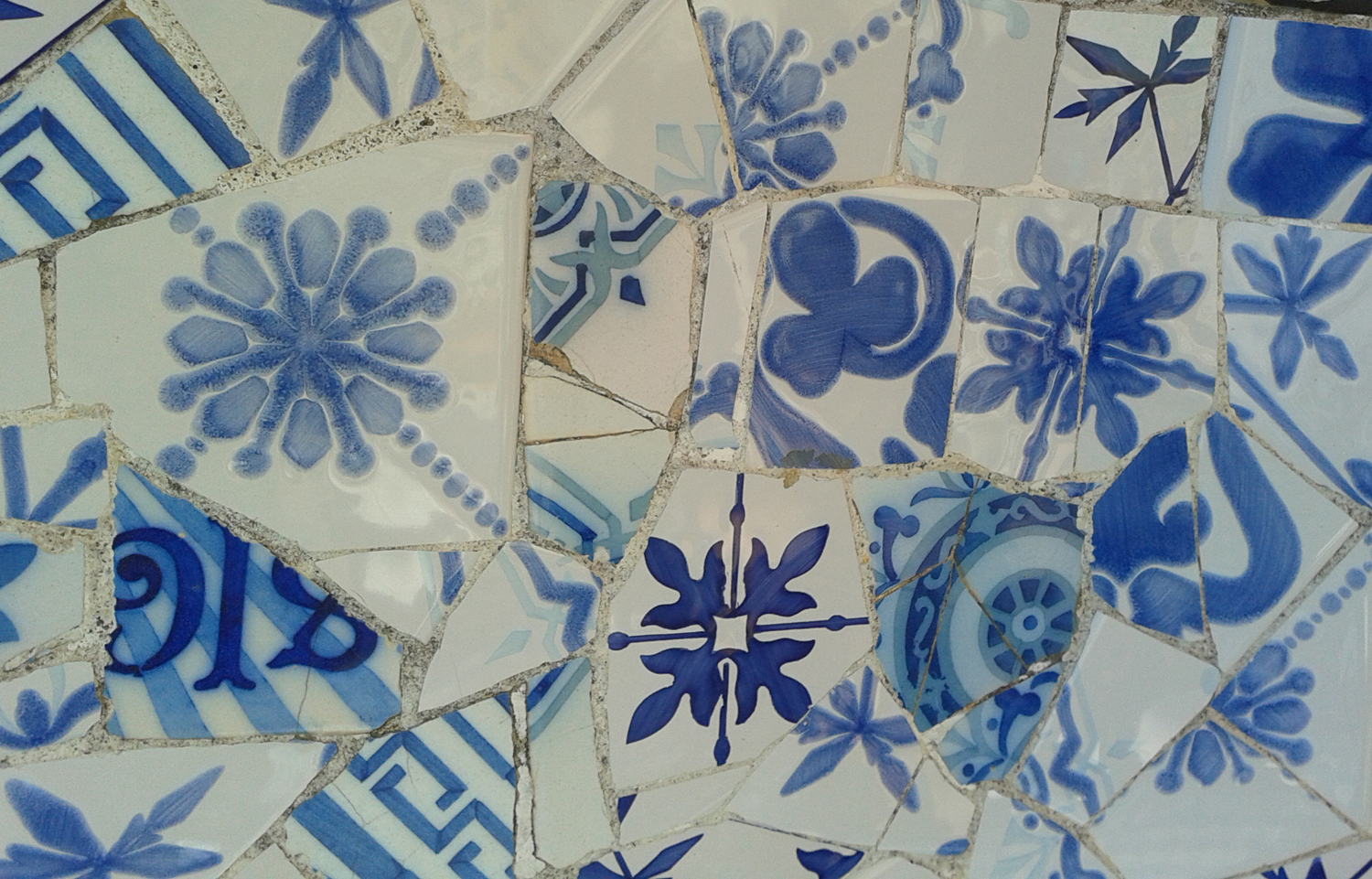
I was delighted to see broken plates, tiles, and rounded roof ridge tiles put together in a myriad of ways, some where just pretty with sections with large flowers that had been broken but kept intact when cemented together and then surrounded by all shades of one background colour. Here is inspiration indeed, but immediately I thought of the Crazy Embroidery classes that I teach at Heart Space Studios, lots of new ideas to create crazy samplers.

031
broken flowered ceramic tiles  and plates with narrow borders

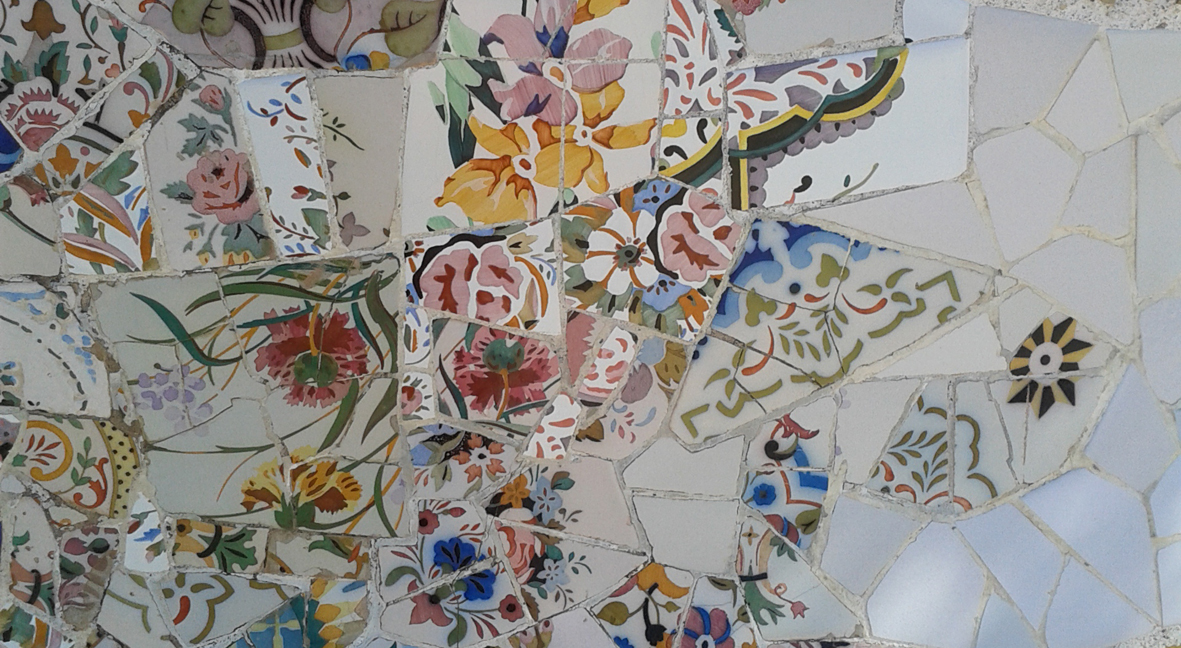
I started to see how the sustained patterning of the whole site didn’t just merge into one long visual porridge; there were sections of patterns with plain areas between them and the way that the patterns started to drift into plain areas was really brilliantly handled…

cb1
chintz patterns give way to a plain white area.

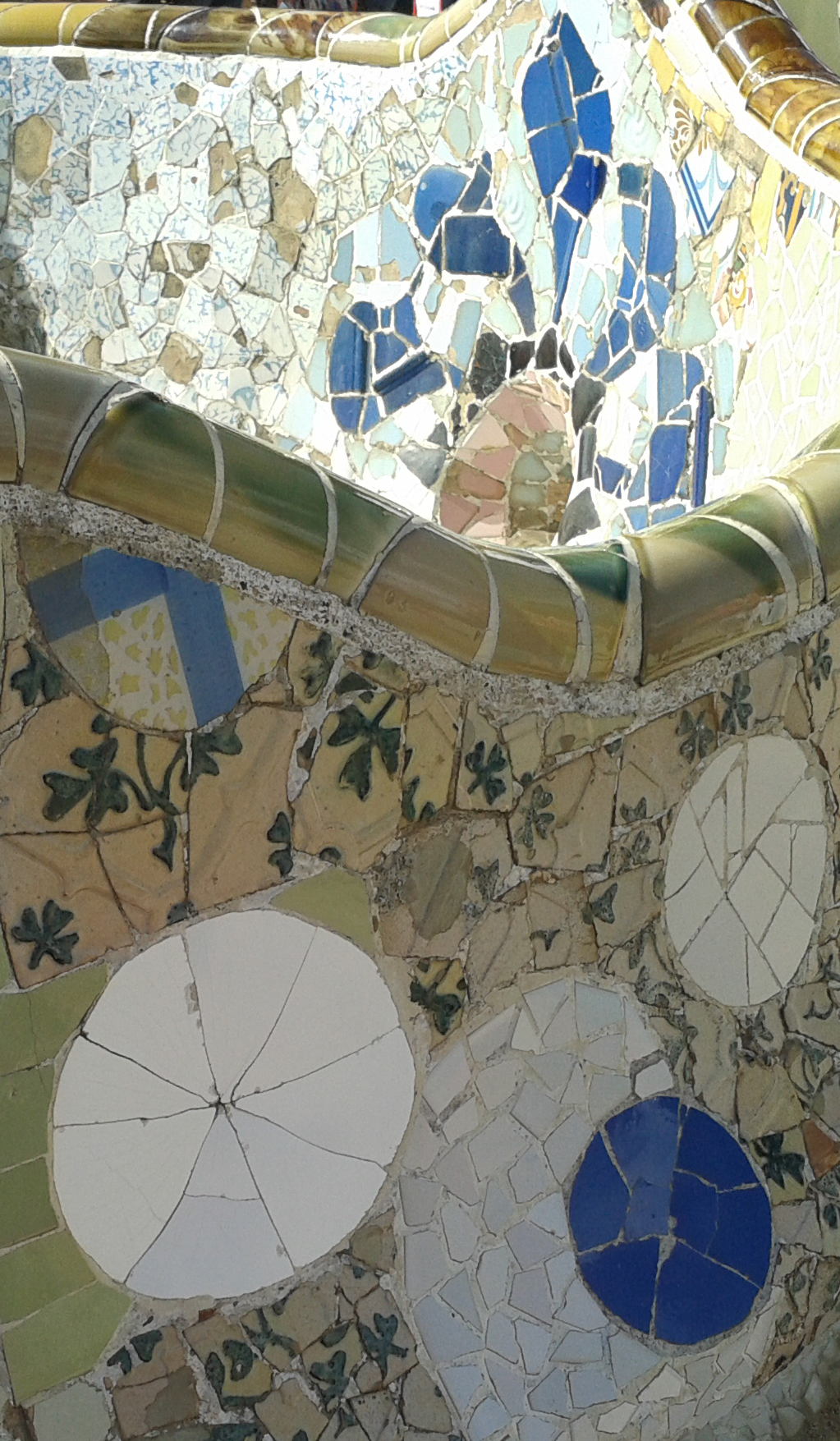
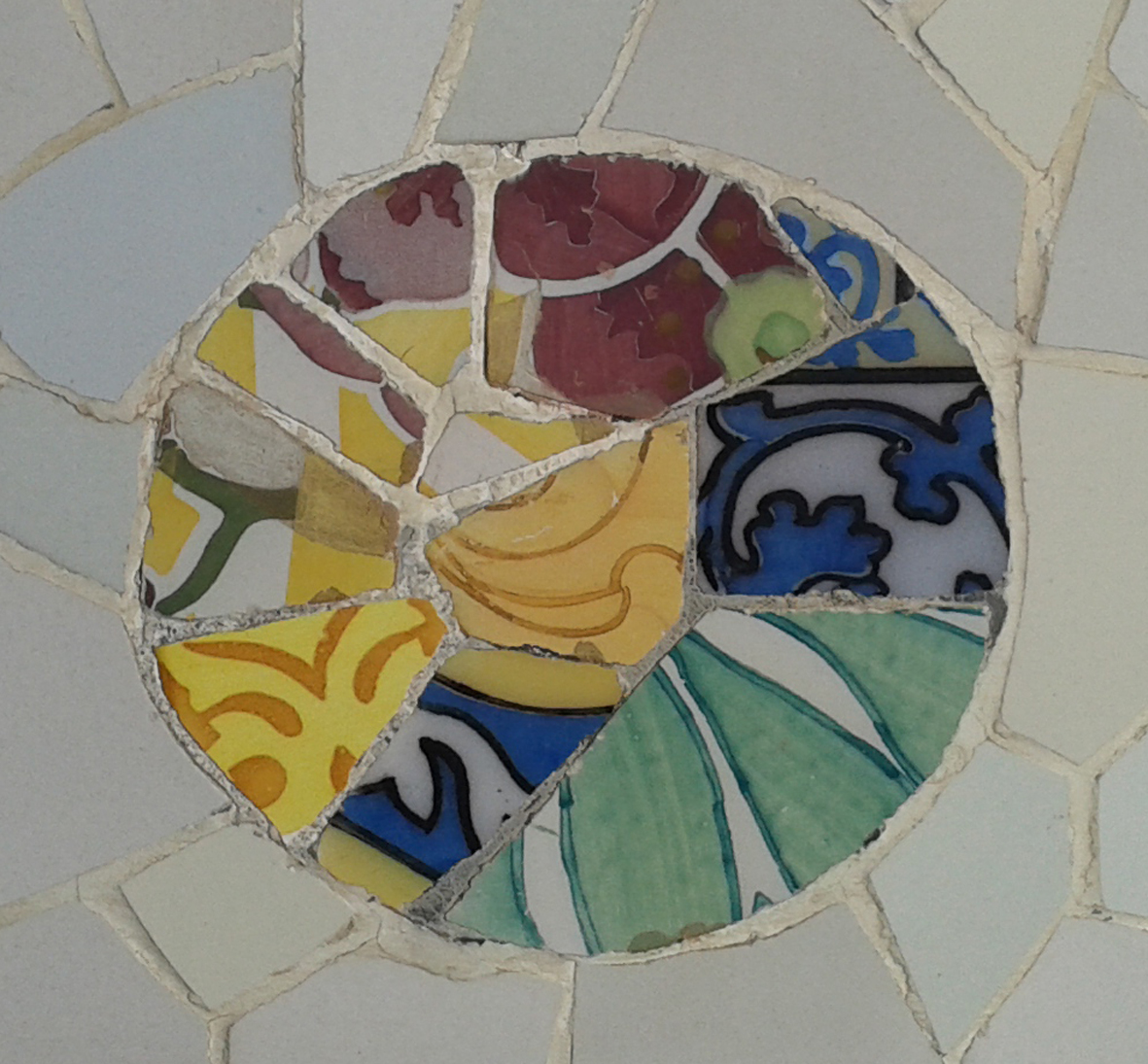
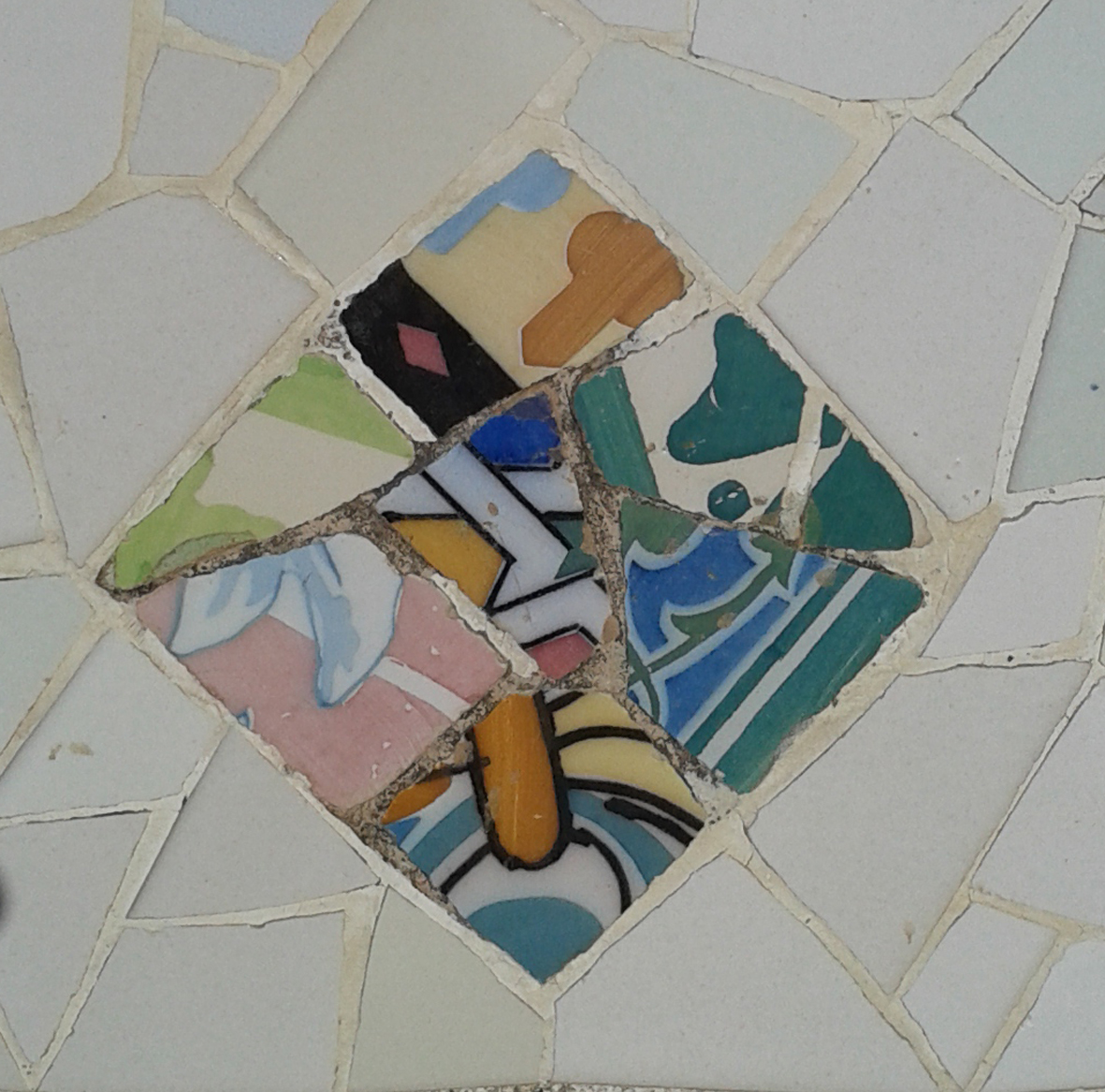
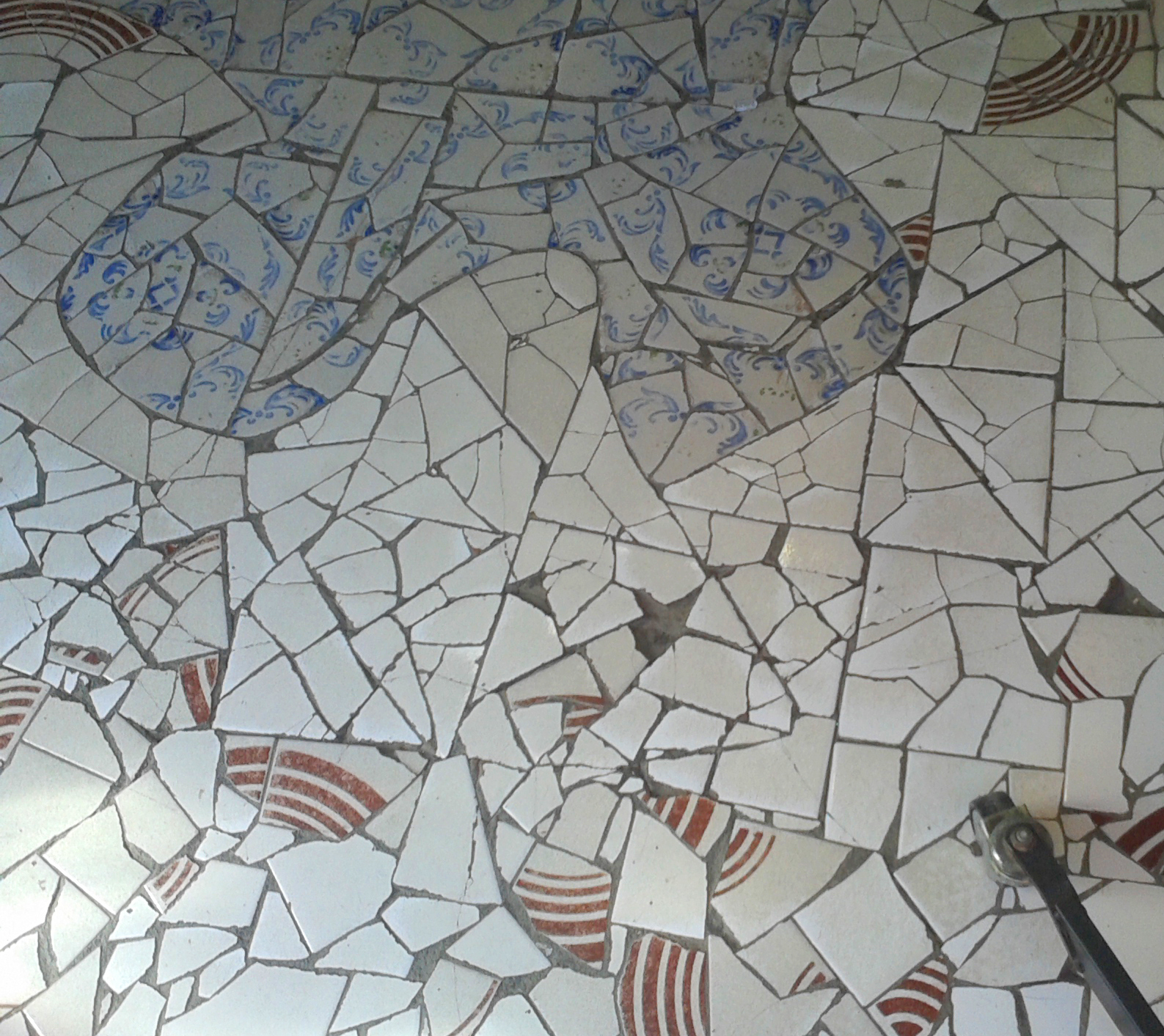
Sometimes the crazy patches were confined to simple shapes and surrounded by a sea of broken ceramics in a wide range of whites, the use of white ceramics when fired and glazed to produce many different variations is a major feature in this garden.

cb2
circle of crazy within white surround
cb4
diamond of crazy with mixed white surround
cb14
many different crazy whites shapes make for gentle and cool seating surfaces

there were other more fluid shapes contained by the white ground….

cb8
amorphous paisley shapes
cb12
commas placed in a line around the base of a column

I also really enjoyed seeing patterns within patterns,

cb11
patterns within patterns

I really like these wonky squares set in a sea of crazy patterns; the makers must have had such a good time doing this work. Transitions from patterns to solid colours was just masterful in places

cb3
this transition from rich colour to single coloured patterns is masterful

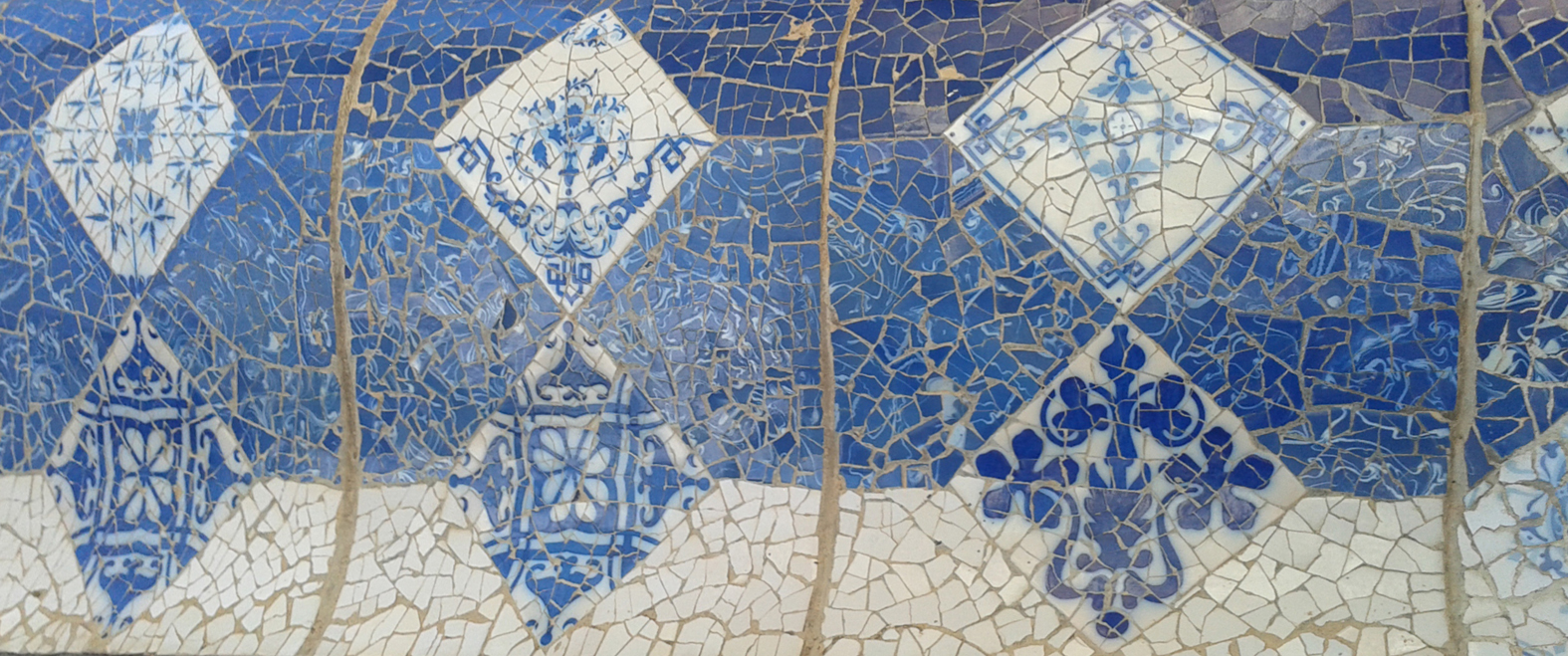
in fact the single coloured sections were simply beautiful – here is a range of crazy blue patterns

cb6
broken plates in a sea of blue
034
typical Spanish hand painted blue tiles
052
refined diamond designs on blue and white striped ground

while most of the ceramic patterns are traditional in flavour there were also some more abstract patterning to be found,

041
abstract patterns must have looked strange in the early 1900’s

but this whole set of designs is made from re-cycled materials, apart from the abundance of beautiful old and broken patterned tiles from the Spanish ceramic factories, I was happy to see this poorly fired plate used to good effect.

cb10
poorly fired glazed plate has been put to good use.

After an hour of my visit I started to see evidence of Crazy everywhere..

cbground2
the sandy ground in the park is impressed with crazy patterns

looking down at the sandy pathways I saw crazy patterns impressed by the soles of many different shoes, and once out of the park, everywhere I looked was Crazy Heaven.

056
the Crazy cafe floor
057
and the Crazy marbled walls

So now I have decided to try to develop some of these ideas into new Crazy Patchwork designs for cushion cover designs to show Hugh Ehrman at Ehrman Tapestry company for their future collections.

Knitwear – but not as you know it!

GEDSC DIGITAL CAMERA
feather collar by Stephanie Wooster

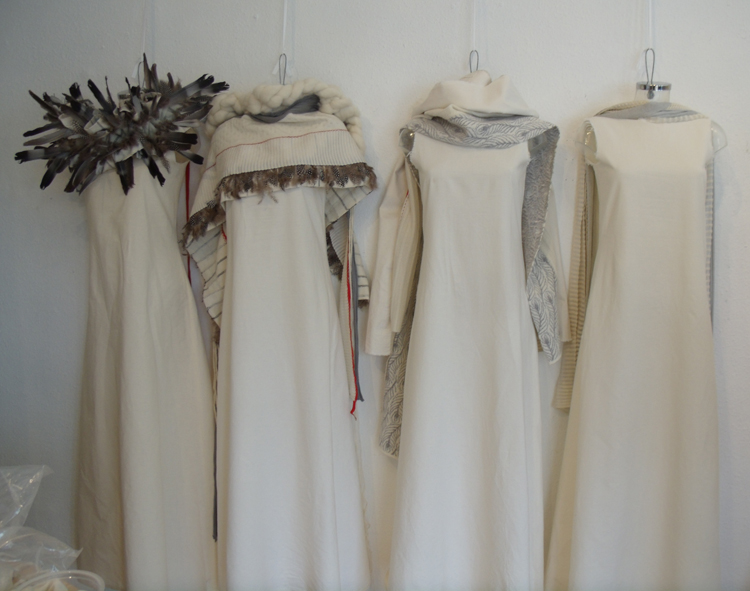
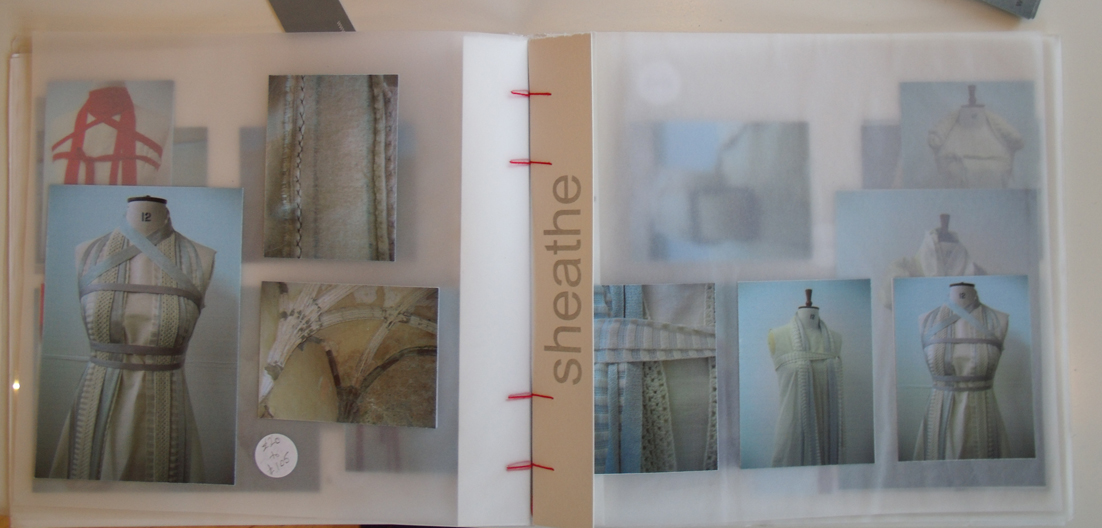
We have a wonderful new exhibition at Heart Space Studios. It is a collection by Stephanie Wooster  ( who conducts unusual knit workshops with us) developed from her MA studies and it concerns itself with wrapping, tying and generally caressing the upper body. the names of the different pieces tell how they are perceived by the maker – Swaddle, Swathe, Shawl, Sheath, Mantle, Shroud. The work is embroidered, felted, machine knitted, plaited and patch-worked together, with feathers, braids and calico. It sets a calm but slightly surreal feeling to our small gallery space.

GEDSC DIGITAL CAMERA
Steph starts to set up her exhibition

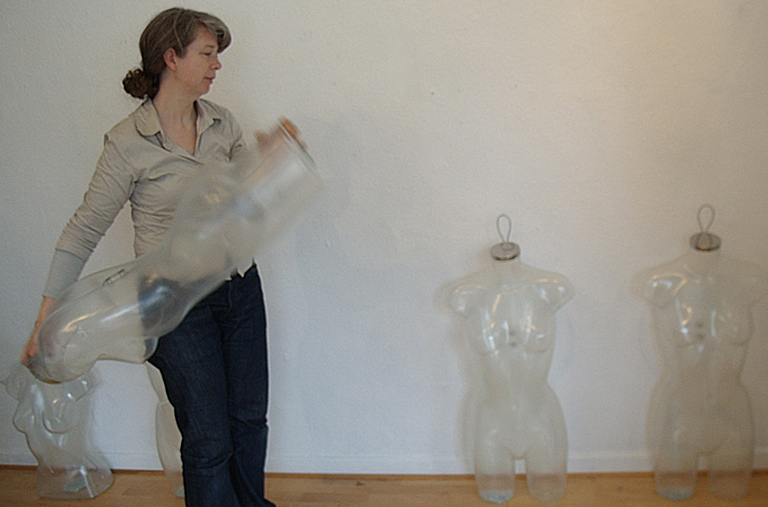
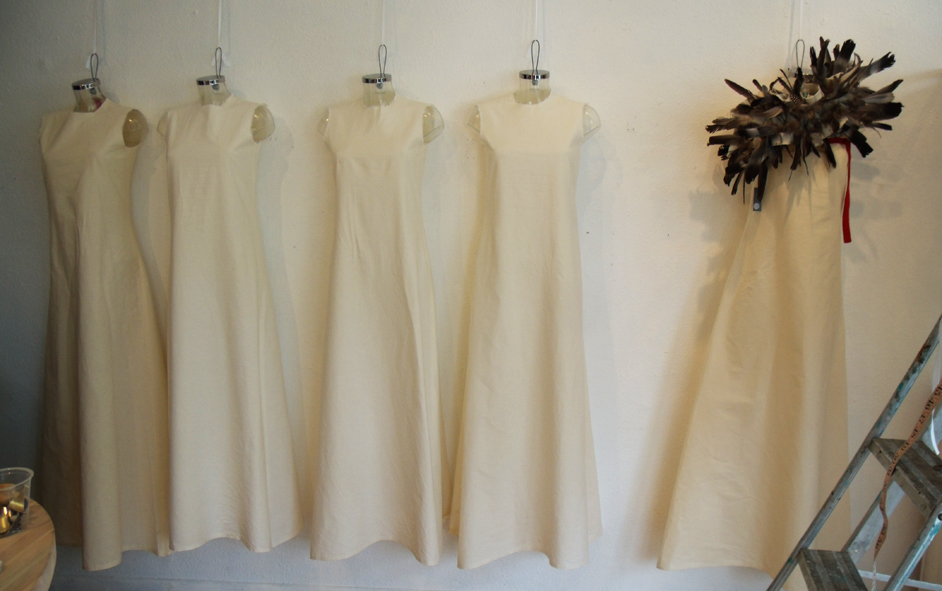
The first things brought in were  a series of clear plastic torsos which were then dressed in simple calico shifts before being hung on the wall.

GEDSC DIGITAL CAMERA
The calico shifts or shrouds?

then Steph started to dress them up; first the dramatic feathered collar was placed to set the atmosphere….

GEDSC DIGITAL CAMERA
scarves and stoles begin to be layered

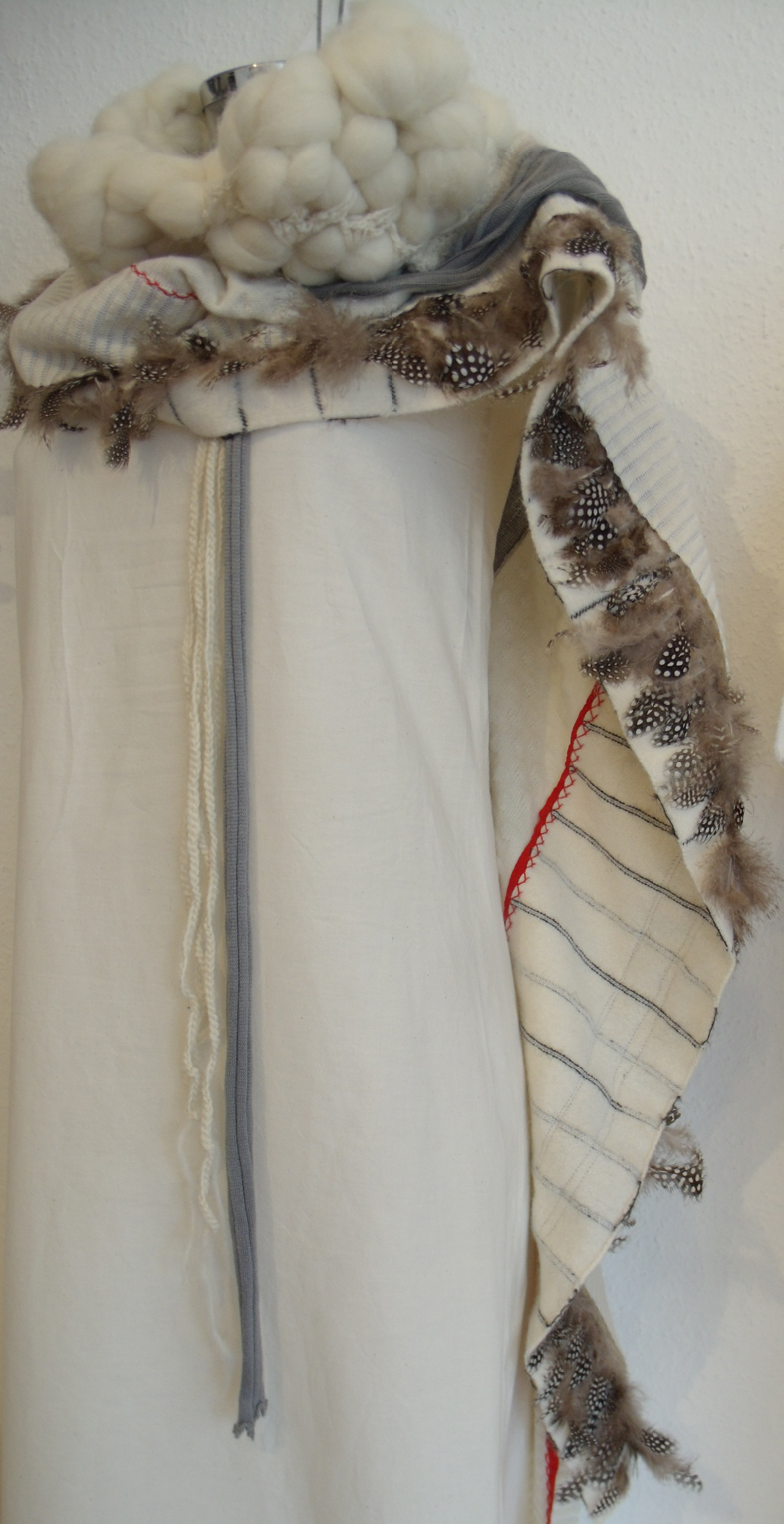
Then out came feathered scarves, stoles and wraps, hand knitted and coiled hanks of wool, even felted knitting with feathers as the motif….

GEDSC DIGITAL CAMERA
felted feather design on machine knitted wrap.

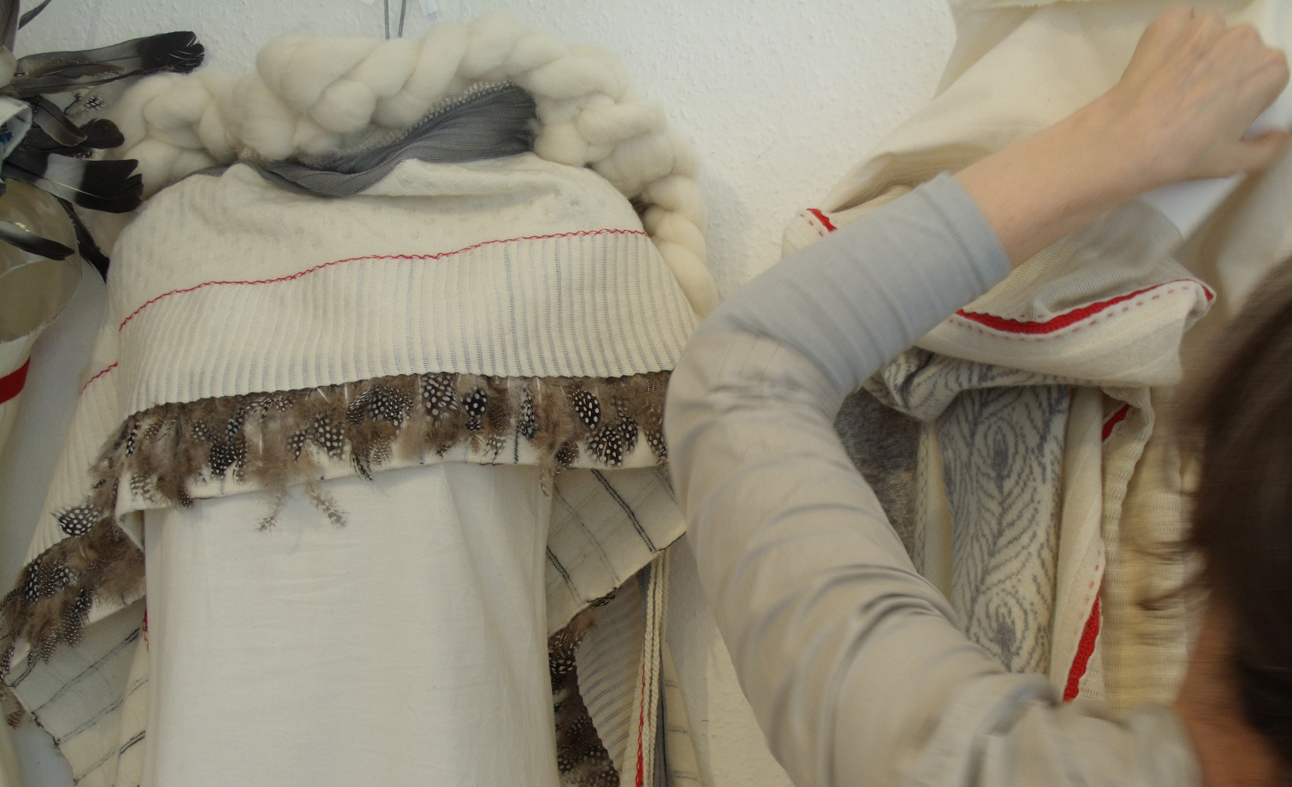
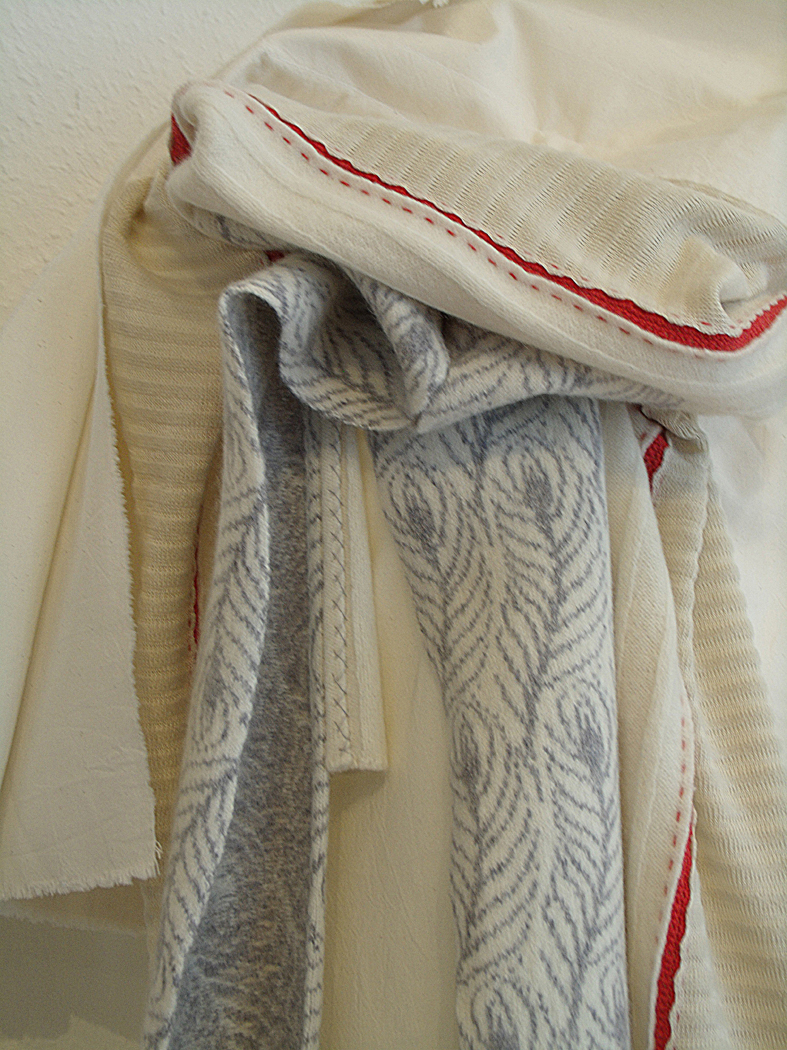
the large wraps, shawls or scarves, call them what you will – are made from several different textiles and hand stitched or even embroidered together often using a red knitted braid as a backing, this causes interesting lines to be drawn around the body when draped.

GEDSC DIGITAL CAMERA
the feathered scarf with plaited woolen collar

the row of 4 pieces are really powerful and entice people to study them up close and personal…viewers are not quite sure what they are seeing, are these felted woven blankets, some unusual woolen ticking or  simple striped knitting?

GEDSC DIGITAL CAMERA
row of 4 pieces awaiting the extra exhibits.

When this group were placed Steph brought out a whole range of very finely machine knitted lengths in different colours and combinations, these can to worn any which way – I like them draped around the neck as an elegant sort of knitted necklace.

GEDSC DIGITAL CAMERA
wall of fine knitted necklaces in brilliant colours and pattern combinations.

We like to have exhibitions of selling stuff at Heart Space, and most of these pieces are for sale, but Steph also brought a selection of beautifully refined knitted ribbons, that are carefully joined at the back so that they always behave well when draped! This is  what I like to have for sale in the studios, exciting but wearable pieces with an edge, not fashion but style!

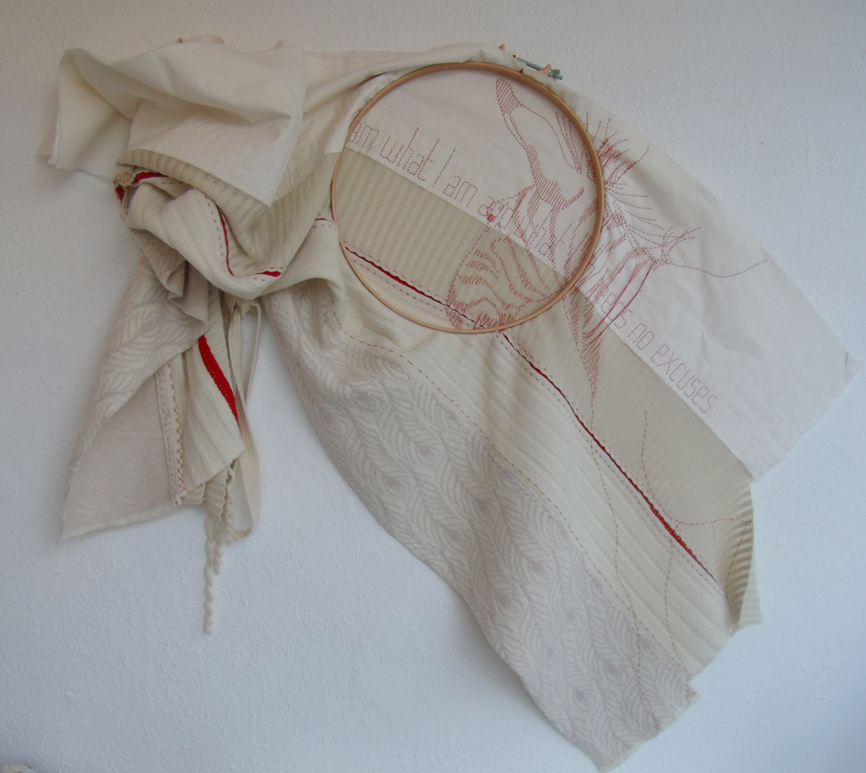
Also seen in far right of the picture is another knitted and embroidered piece ” I am what I am”

GEDSC DIGITAL CAMERA
wall mounted scarf with embroidery ” I am what I am..”

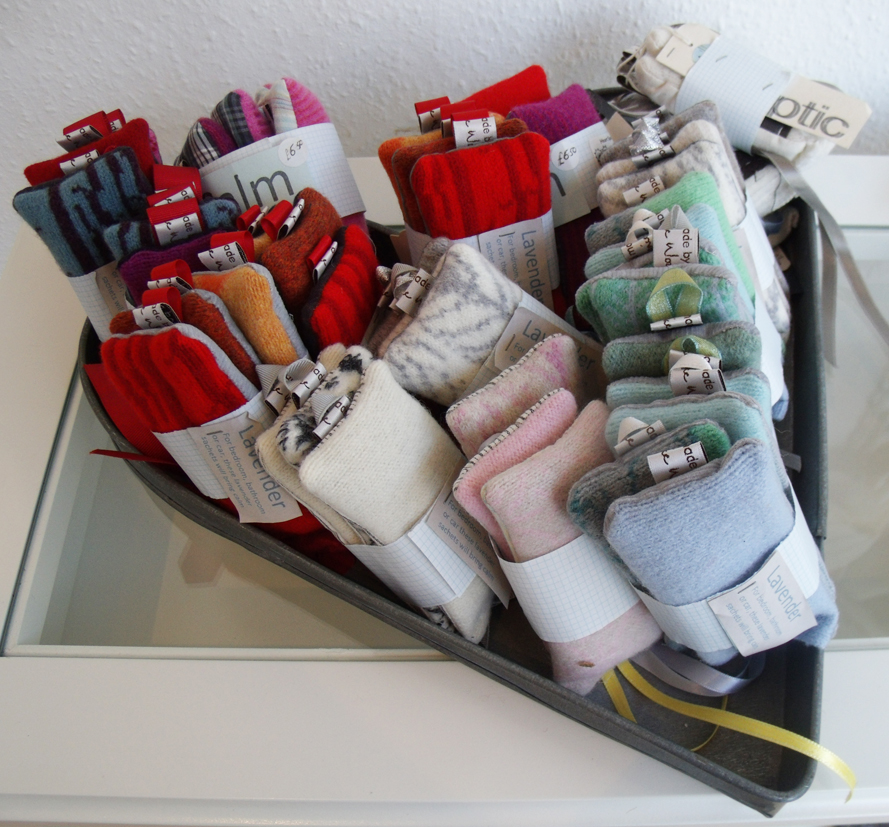
this was made for another exhibition and shown earlier in the year , Mending at the Museum, it was really good to see it again with these earlier pieces and interesting to see how new work develops out of completely different stimuli. Steph has also made a series of mixed media hot water bottle covers, developed from her samples at the Heart Space Mixed Media workshop earlier in the year, with more of her hand warmers( it is Autumn after all) and these have specially colour co-ordinated to the exhibition.

GEDSC DIGITAL CAMERA
colour-co-ordinated hand warmers – heat them first in the microwave!

This is what intrigues me about many successful textile makers and designers, they can develop many different types of work, from applied art pieces for museum exhibitions, to practical hand crafted things for everyday use. This is the way many of us manage to make our living while finding time and energy to research and develop our own personal work. In fact without the research and development of private passions many new and commercial designs would never see the light of day.

GEDSC DIGITAL CAMERA
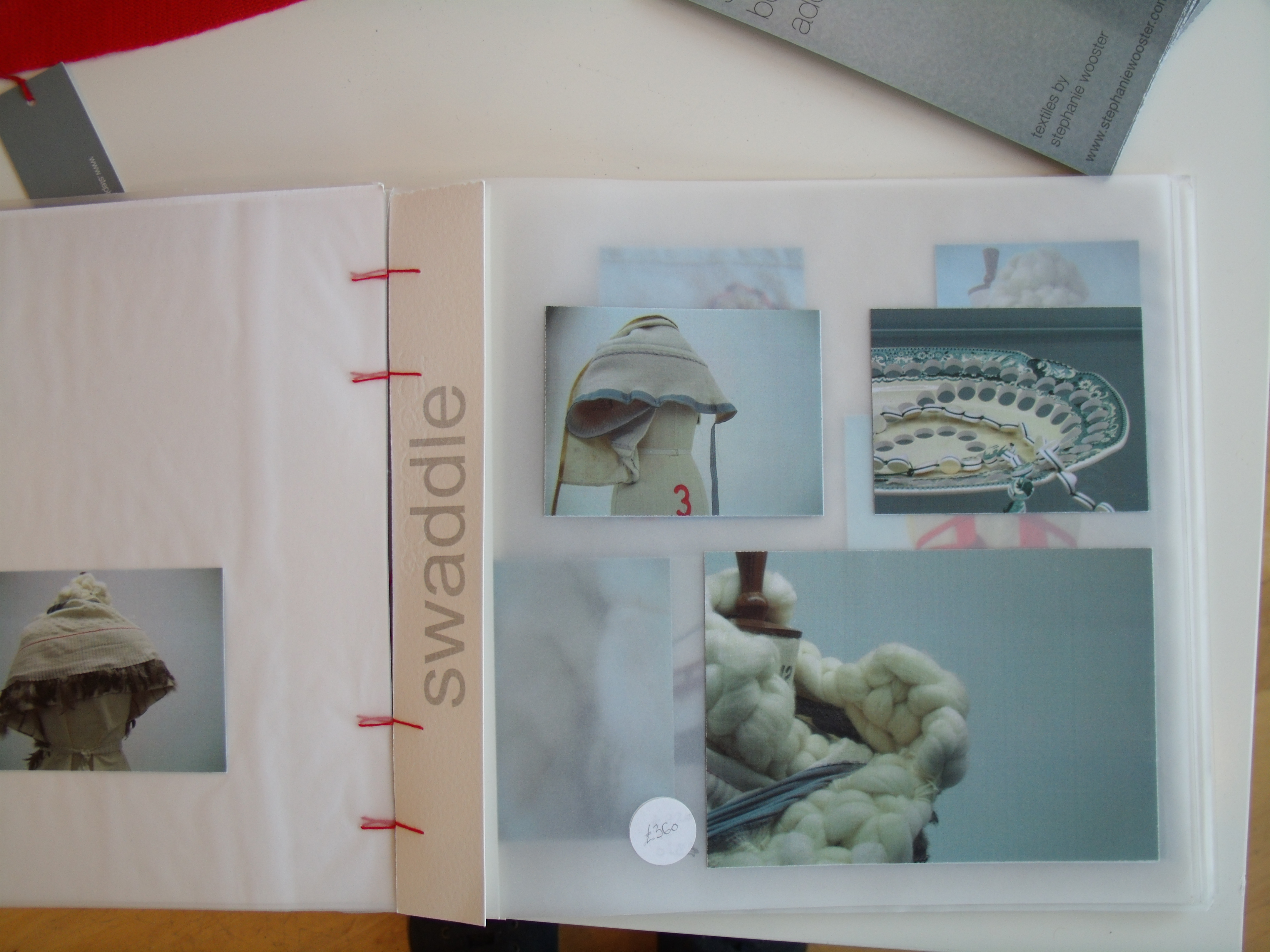
work book showing stages of making as well as research inspiration for the collection.

Looking through this book lets us see how Steph links all sorts of unusual images and ideas and then literally knits them together to make new and exciting wearable textiles.

GEDSC DIGITAL CAMERA

Ribbon Felted Flowers

OLYMPUS DIGITAL CAMERA
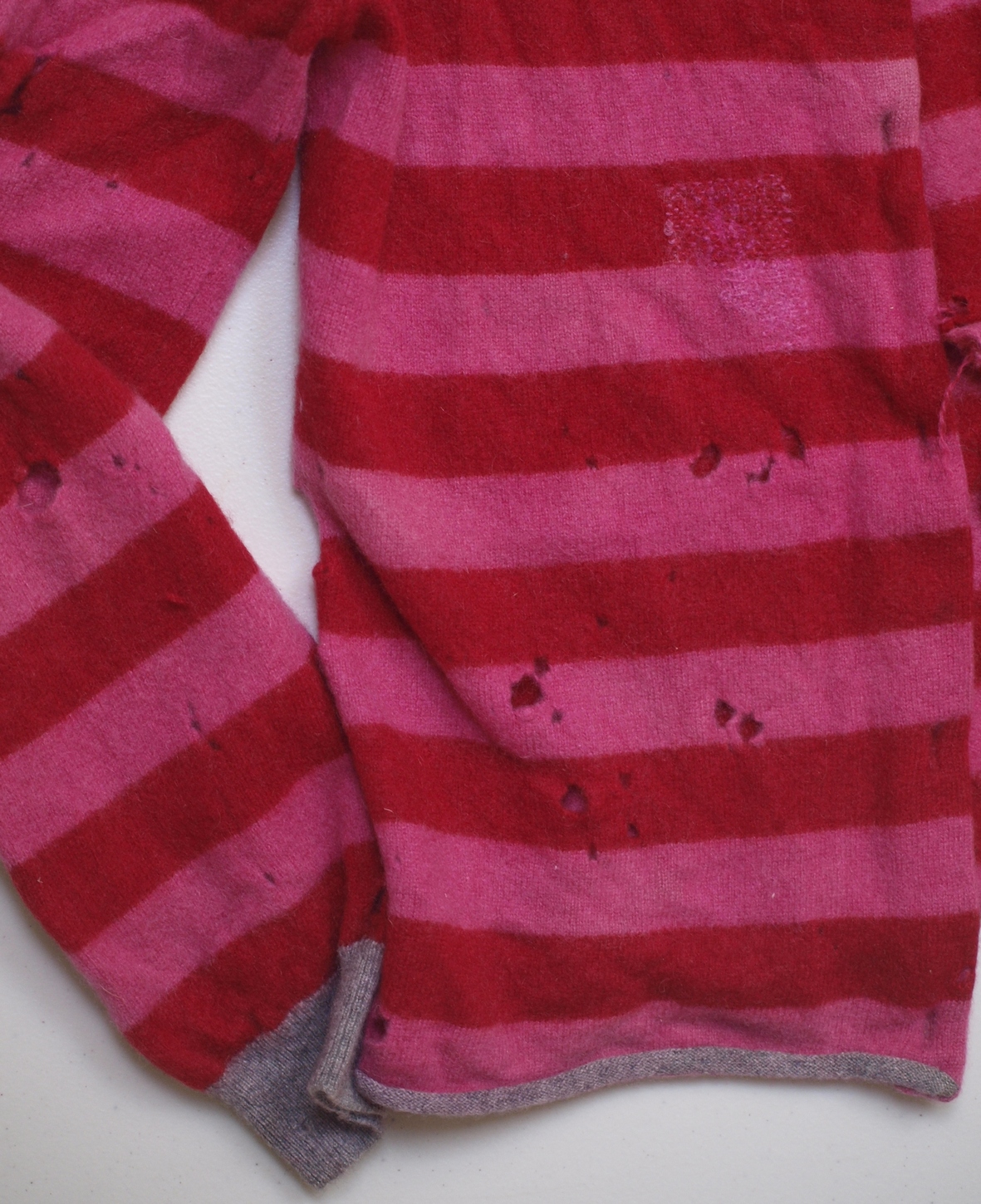
my totally moth eaten cashmere cardigan – but with darning still intact!

This is a sad story with a happy ending. My favourite cardigan that was included in my first ever post, Make Do and Mend, where I proudly showed the careful darning that I wore with pride, sadly,  got lost. When I eventually found it pushed to the bottom of my laundry basket (don’t ask) it was totally ruined even beyond my restorative darning powers.
I decided to felt it by boiling it twice. The colours are so vibrant that I just had to try to find a use for it and I found the perfect solution when designing with some lovely felted woolen blanket flowers that Kirsten Hill-Nixon had brought along as a new idea for a class at Heart Space Studios.

GEDSC DIGITAL CAMERA
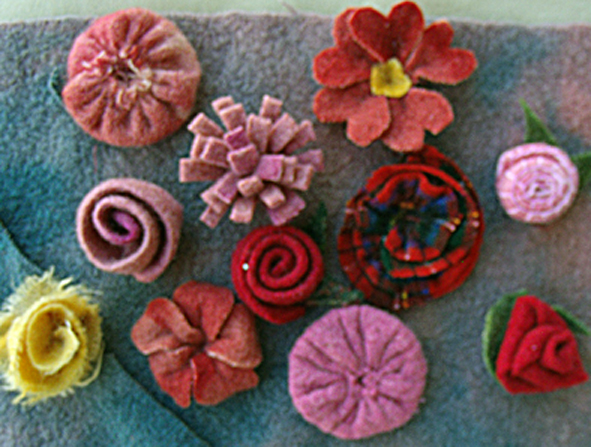
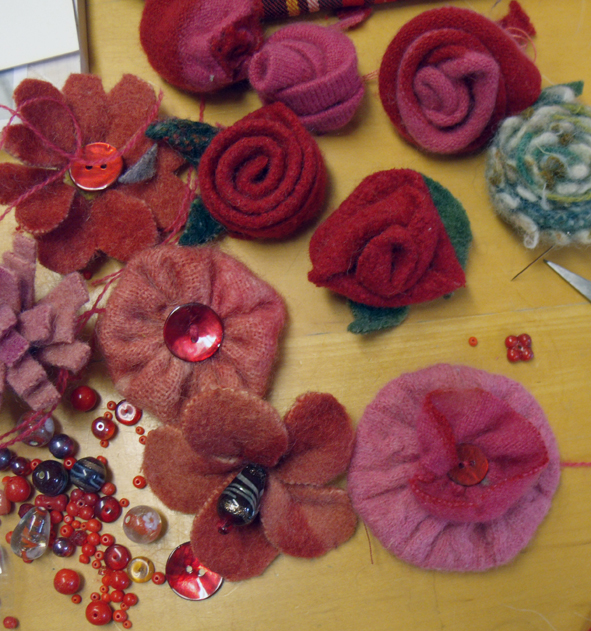
the reds and pink  selection- I really like the tartan rose.
GEDSC DIGITAL CAMERA
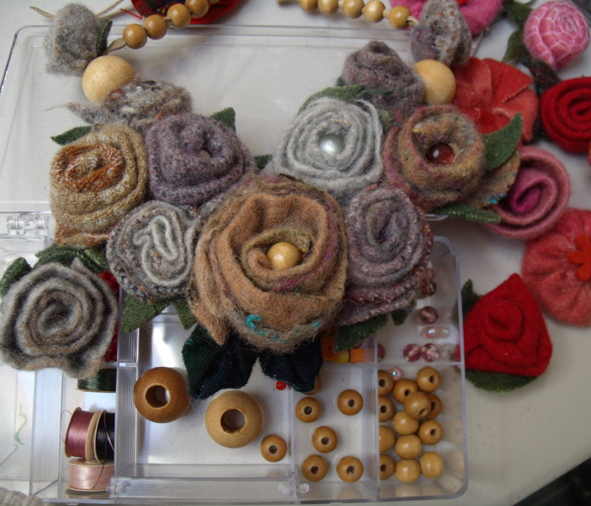
the neutral colour selection

 Kirsten will make the flowers in the morning class and I will develop the design and make session with them in the afternoon…but first I had to design something with what she had brought me, and she had brought me a whole selection of disparate flower heads – just as I has asked her to.

I made 2 colour sets of flowers. the neutrals were really soft and wooly, very tactile and I thought first to just make a heart out of them – well I would wouldn’t I? and in fact this is a really nice idea I may go back to…..

GEDSC DIGITAL CAMERA
sewing on some beaded and buttoned centres

But then I imagined them as adorning a woolly winter jumper or cardigan, they aren’t heavy but they are bulky and a brooch seemed better than stitching them to a piece of clothing. But I had been given so many flowers that I soon decided on a necklace….

GEDSC DIGITAL CAMERA
Kirsten’s red flowers arranged as necklace

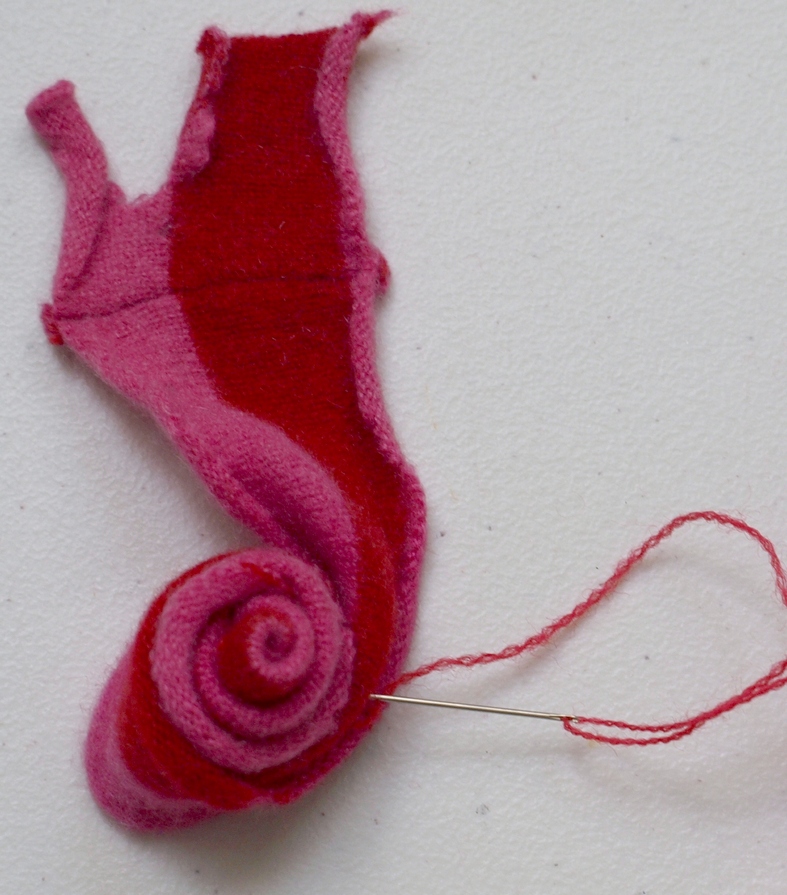
I set to work but when stitching them together without a backing fabric, soon realized that I needed just a few more roses….then I remembered my old ruined cardigan. I cut the sleeves into ribbons of different coloured stripes and stared to stitch the rose buds by simply rolling and folding the strips to suggest overlapping rose petals.

OLYMPUS DIGITAL CAMERA
cut strips of sleeve being curled to start roses
OLYMPUS DIGITAL CAMERA
stitching the rolled rose securely with matching fine wool thread

I had used this system many times as it is so easy – you just need to stitch as you go and control the folded edge,  I found the way to do it in a vintage dressmaking manual from the 1930’s; the natural affinity to roll for cut knitting really helps the rose petal effect. I was starting to see a new life for all my old felted woolens.

GEDSC DIGITAL CAMERA
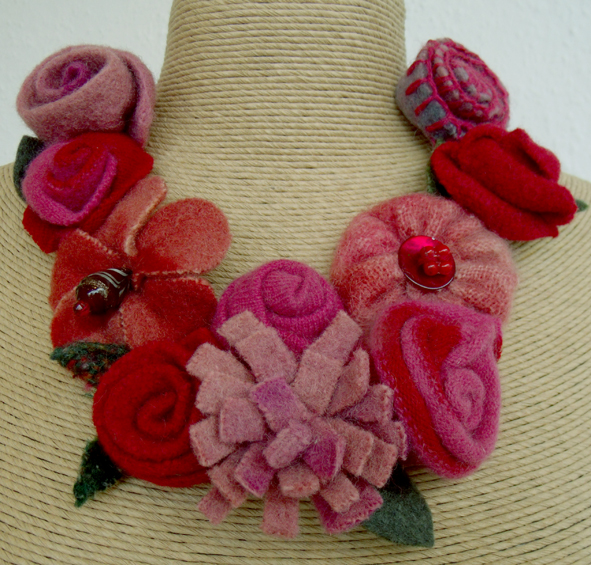
the finished necklace –

I inserted my knitted roses between Kirsten’s more substantial felt blanket ones, ( I really like her use of the blanket stitched edge for a fat rolled rose). She had provided leaves as well so they helped make the reds even stronger. Then I simply stitched 2 suede strips for ties onto the last roses and there it is – now for the neutral necklace.

GEDSC DIGITAL CAMERA
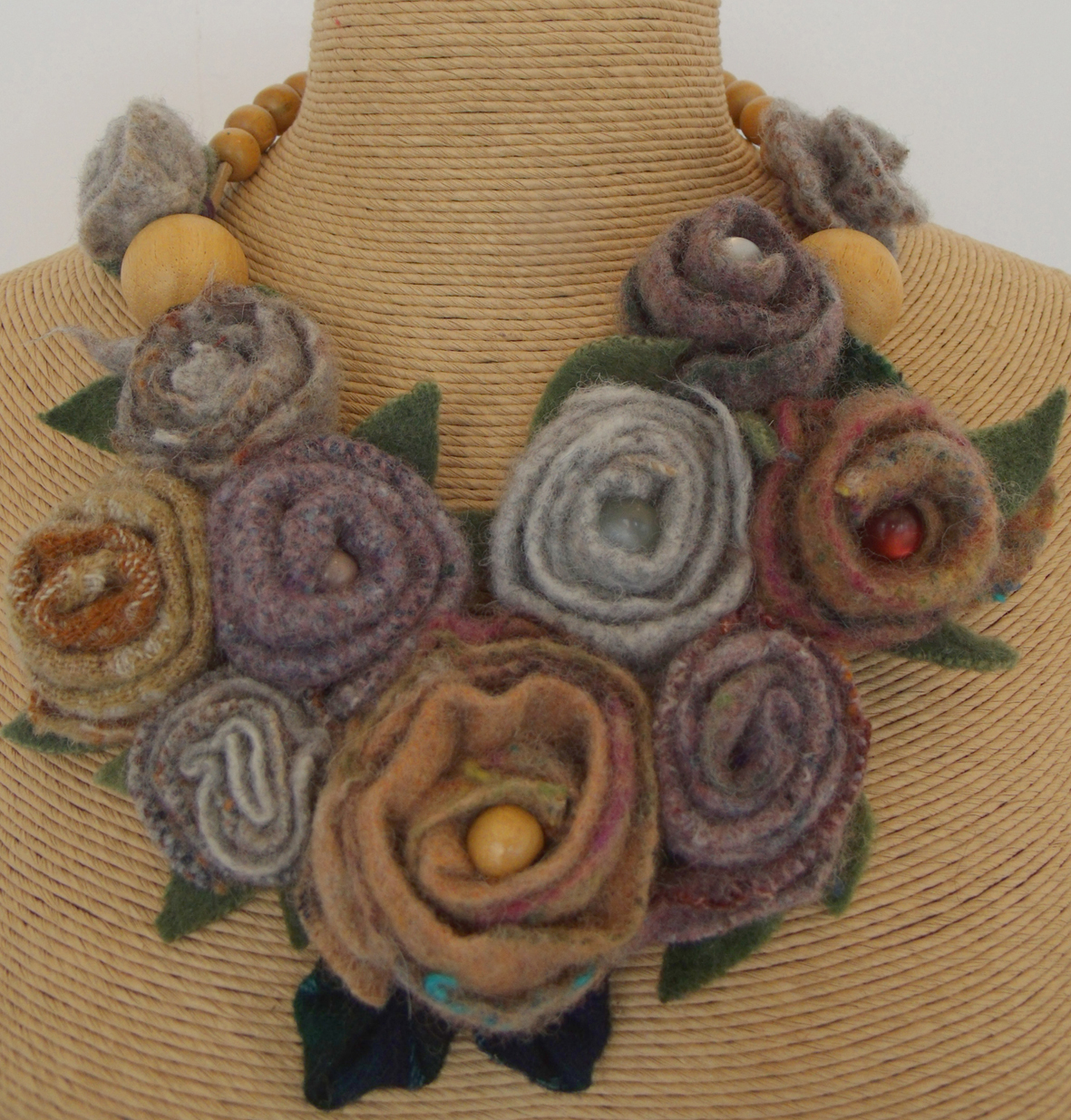
the neutral necklace made of different blankets and added wooden beads.

this time I added wooden beads by threading them onto the leather strips to make a more decorative finish. Kirsten had filled some of the centres of the flowers with soft glowing beads so I added some wooden ones as well, the soft tones and texture of the wood feels just right for this sort of fabric.

GEDSC DIGITAL CAMERA
finished felted blanket necklace

I was really getting into my stride, and now I just want to make more of these simple flowers pieces and I didn’t use the lively red tartan rose – so now I need to pluck up courage to felt my  tartans and paisley scraps to use with my old washed out jumpers……