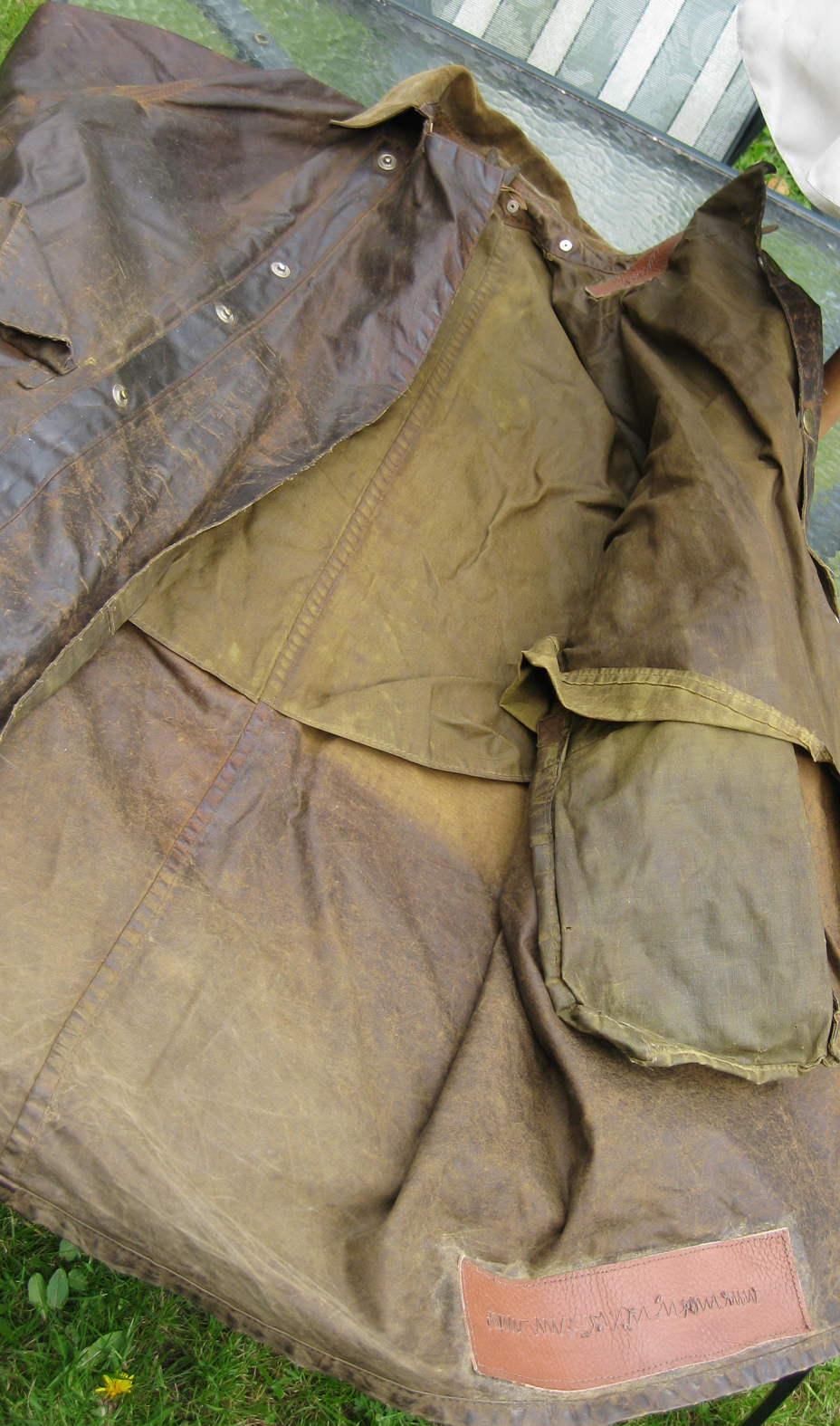
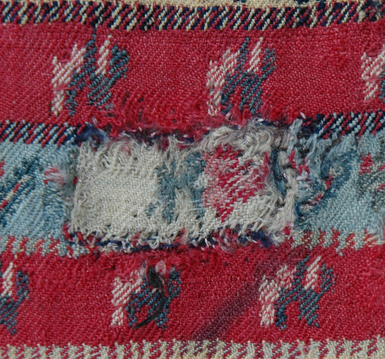
I must have inherited a mending gene, these pictures have just been mailed to me by my niece, Jo Haigh and they are of my father’s old patched and mended Barbour fishing jacket. Jo had been given it for riding in when a teenager by my brother, Alan, who had inherited on my father’s death.
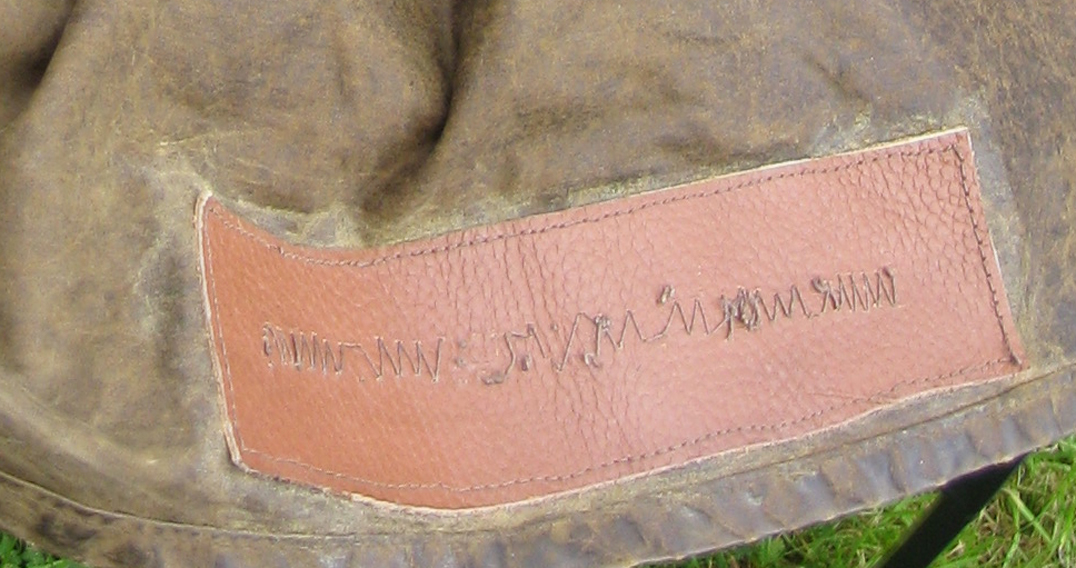
Now my brother says he can remember buying the coat with my father – they were both serious anglers – and he even helped to sew the patches on it, I doubt this bit, but it might explain the distressing zig – zag stitched leather patch below.
I can also clearly remember stitching this coat; under my Father’s precise instructions and measurements, I inserted large plastic poachers’ pockets to the inside – each just big enough to hold a trout.
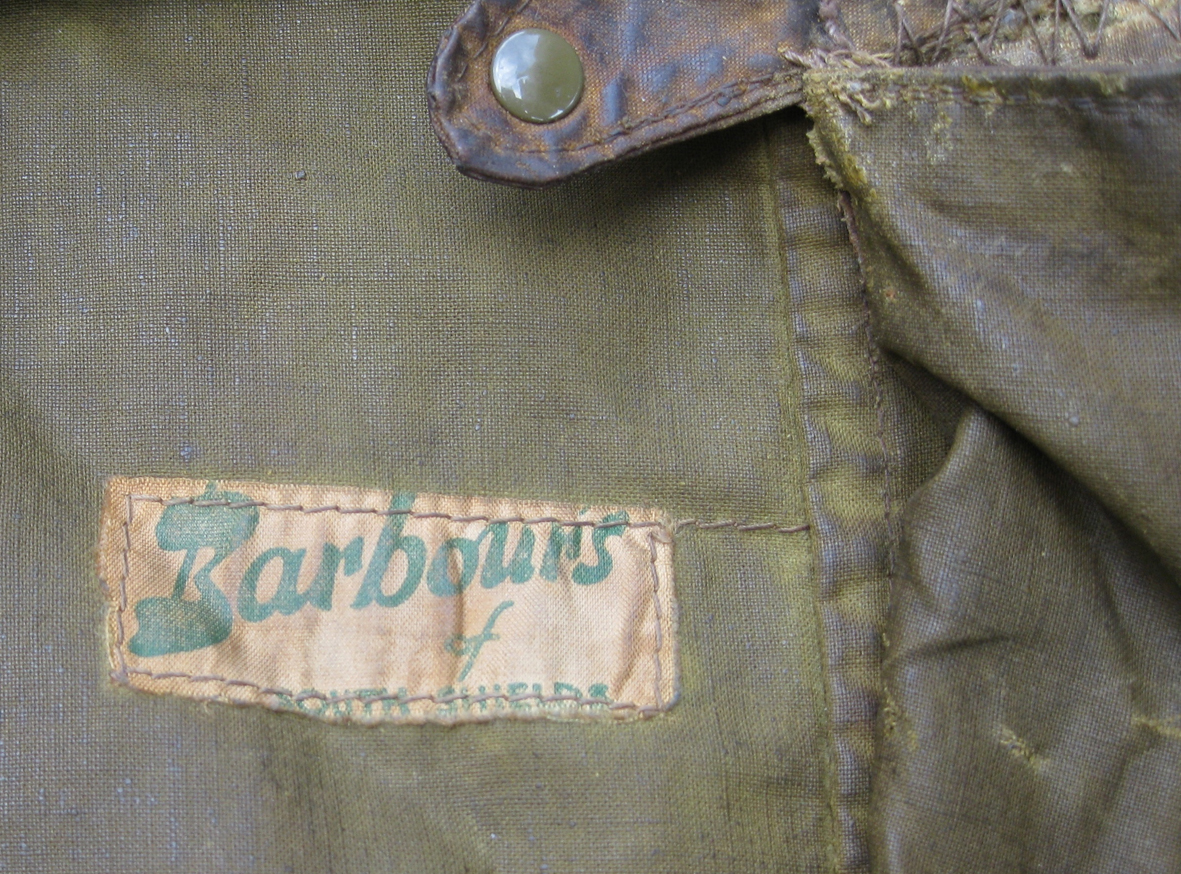
At the time she received the coat, Jo says she just loved wearing it because it wasn’t all shiny and new like everyone elses’ riding gear and it was so patched she felt like a pirate…always a fanciful girl. Later, intrigued by the coat she looked it up on the internet and the label showed it was made and bought around 1960, which makes sense as I can remember sewing those pockets when I was a student in the late ’60’s.
The patches were definitely made to last, not only are they all machine stitched on the outside in carefully toning thread (you don’t want to draw any attention to yourself with an odd bright colour when out fishing – in fact my father’s entire wardrobe was in muted tones of what we called “lovat green” with the occasional grey or rust woven in) but inside, these are reinforced with leather patches – definitely a belt and braces job.
The last time I saw the coat must have been in the 1970’s when my father was still out and about wearing it, by which time I had left home to study and work in London.
But as soon as I saw these pictures I could smell the coat, a sort of mixture of wet grass and fresh river fish combined with that strange sinus clearing smell of waterproofed cloth. Immediately I was back at home on the Wirral, and for an instant my father was before me…how weird – but as Jo remarks “the things you hang onto always seem to have a story behind them”
This is the first story of the Darning Archive, there are more to follow – so if you have a mending tale just send me a message below.
Last week I went with a group of fellow members from ” Textile Forum South West” to several of the venues in the Stroud International Textile Festival 2010, which goes on until the 23rd May. Visiting this festival is always fascinating as it brings some of the most prestigious textile artists in the world to this small Gloustershire town and there are exhibitions in shop windows, church halls and open studios. But we also wanted to see our members’ work, which was shown in various venues, so I have to say from the off, that this is quite a biased view of things. I always feel a little nervous of viewing exhibitions by people I know, especially if I don’t know their work – I obviously want to see it out of sheer curiosity but what will it be like? and say I don’t like it – well “like” isn’t exactly what I mean, but will I be able to appreciate it – will it alter my view of the person?
“CURIOUS DRAWERS” the Brunel Broderers exhibition.
So first we visited the Brunel Broderer’s, a small eclectic group who are celebrating their 20th anniversary this year. The title CURIOUS DRAWERS made me slightly nervous as well, embroiderers love closets and chests of drawers, usually the smaller the better which can lead so easily to the twee and fanciful. Several of my fellow committee members were showing here, some I knew well and some I had just met. Would their work be a match to my opinions of them made when working together; the one thing we rarely do is talk about our own work, when we have committee meeting there is so much stuff to get organised for the future of the Forum.
But I have seen Liz Harding’s work before and this was the first exhibit I saw, a sturdy brightly painted chest of drawers opening to reveal all sorts of stuff, maps, string, leaves a “cabinet of curiosities” collected from walks with her boxer dog Tiggy. Above this, was a large scale embroidery in dyed and hand stitched organdie, referencing the contents of one of the drawers, a work in progress.
So far so good, this work reflected and strengthened my impression of her work which is developed from her own found materials and based on strong drawing and stitching skills. I thought that the panel was handsome and though simple in design, very subtle and rich in its construction and colour. I hope that there are more to see in this series.
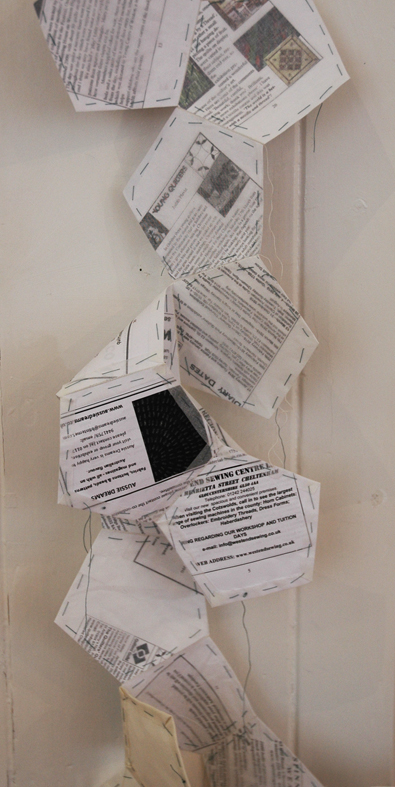
The next set of work I reacted to strongly was by Kay Swancutt, because here I recognised some of my own research into historical textiles, patchwork papers, which are used for the backings of English hand- sewn patchworks. Kay seems as intrigued as I am by these incidental documents.
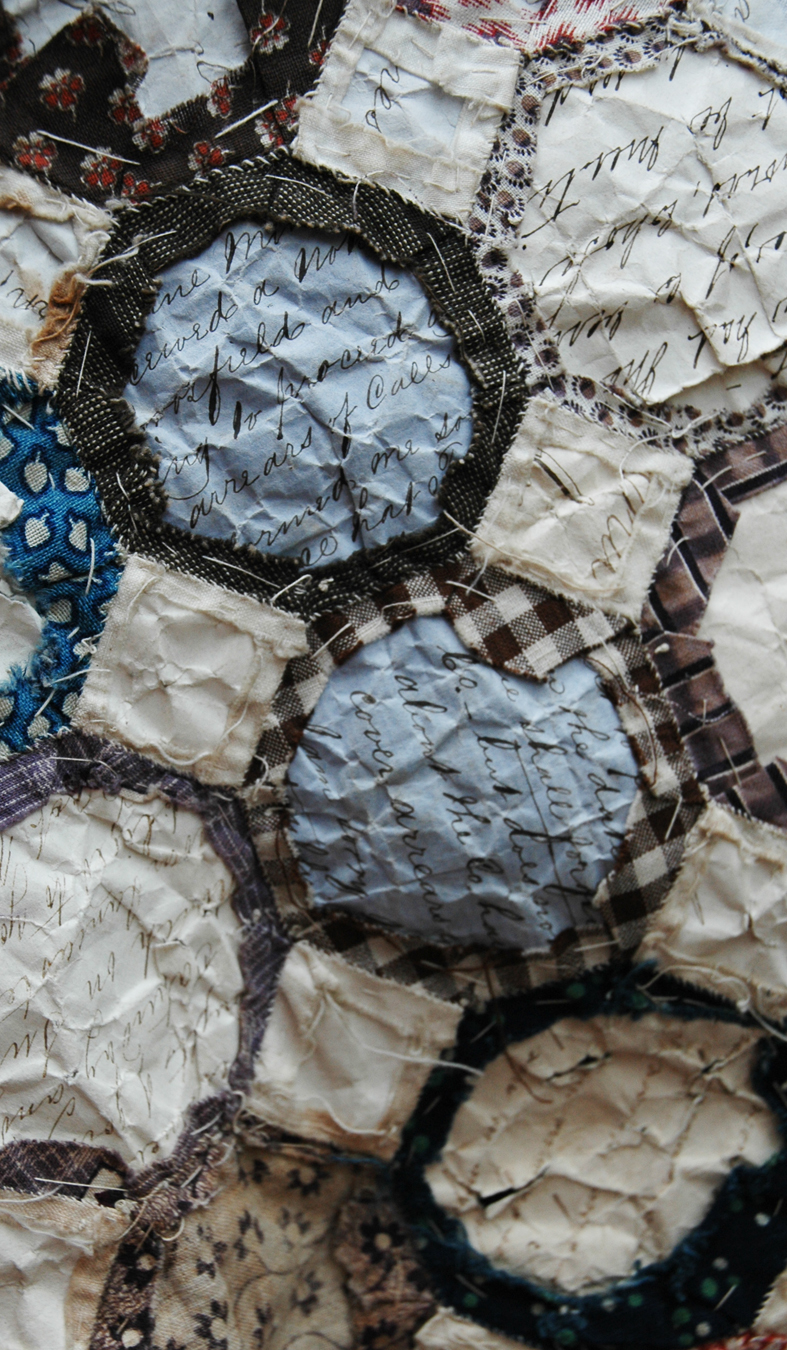
I am never sure how I feel at first when I see work that is based in the same research as my own, it ranges from “oh Hell, that’s really great – why didn’t I see that? to ” oh no, I am just too late to get making my piece as people will think I have copied this one” Of course neither of these reactions makes any sense at all, we all work from out of our traditions in some form of another even if it is to completely reject it – you have to know what you are reacting to. What got me about this exhibit was that her work was so elegant and I know mine is destined to become a full- on colour fest, more in keeping with an original sample – a traditional piece of Victorian mosaic patchwork which I am currently working from to make a “Secret Security Blanket”. I was also intrigued by Kay’s work as I hadn’t known what to expect and here was something so very connected to my own – must talk to her next time we meet.
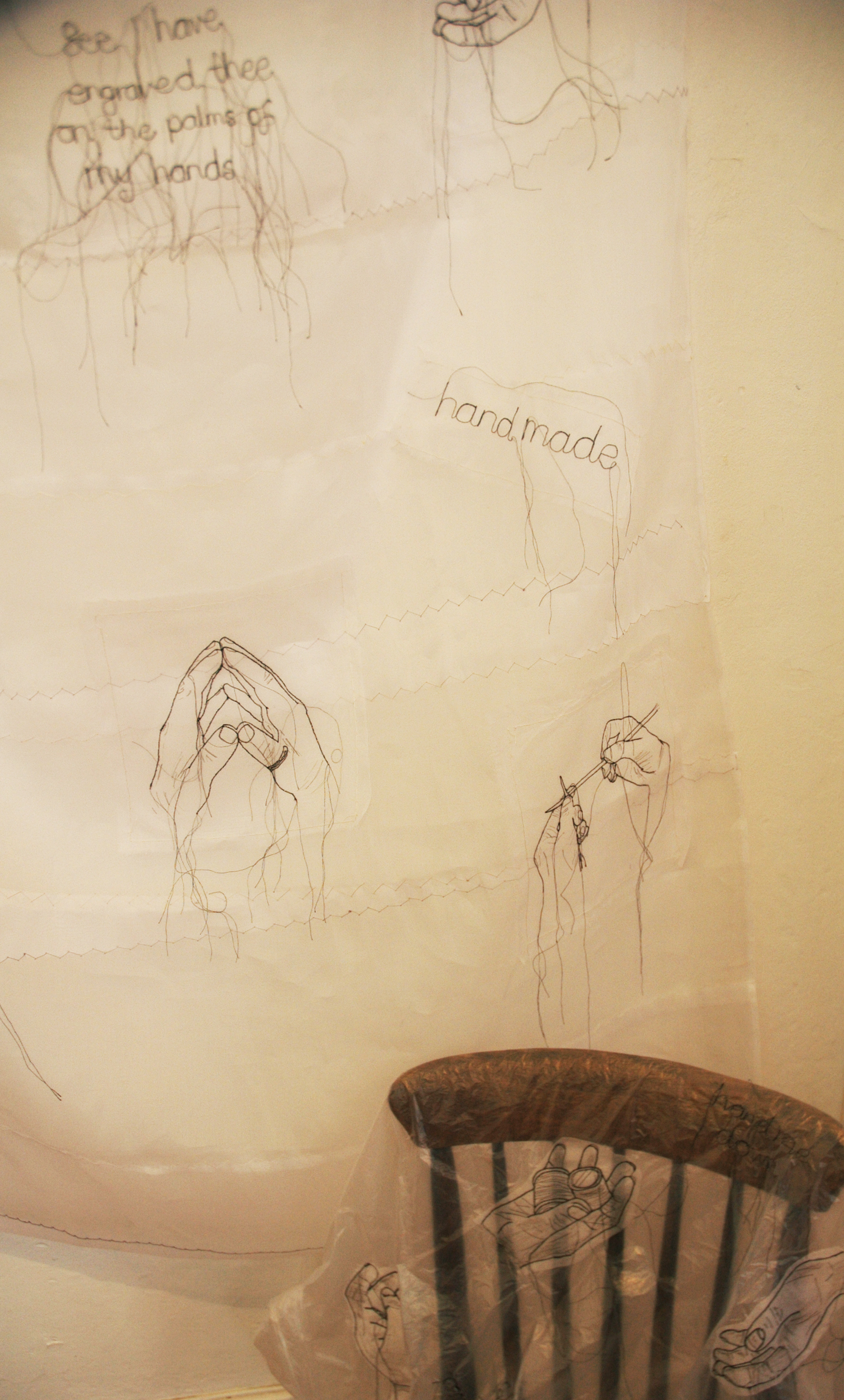
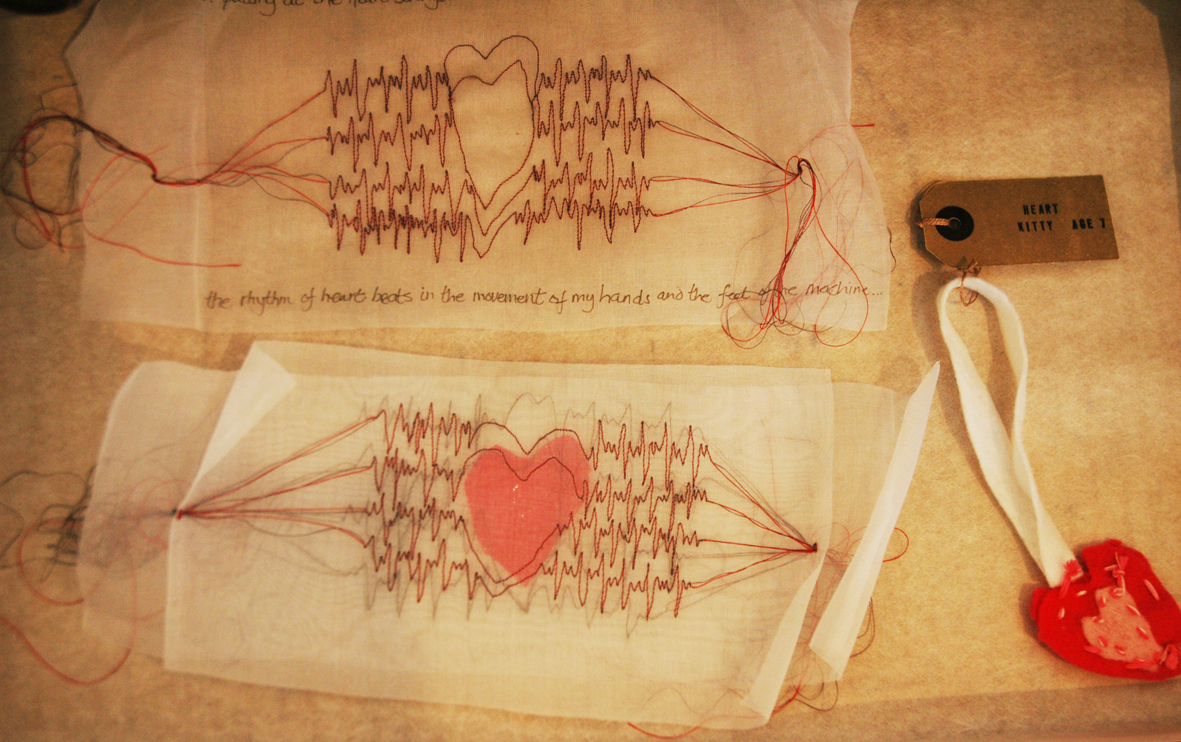
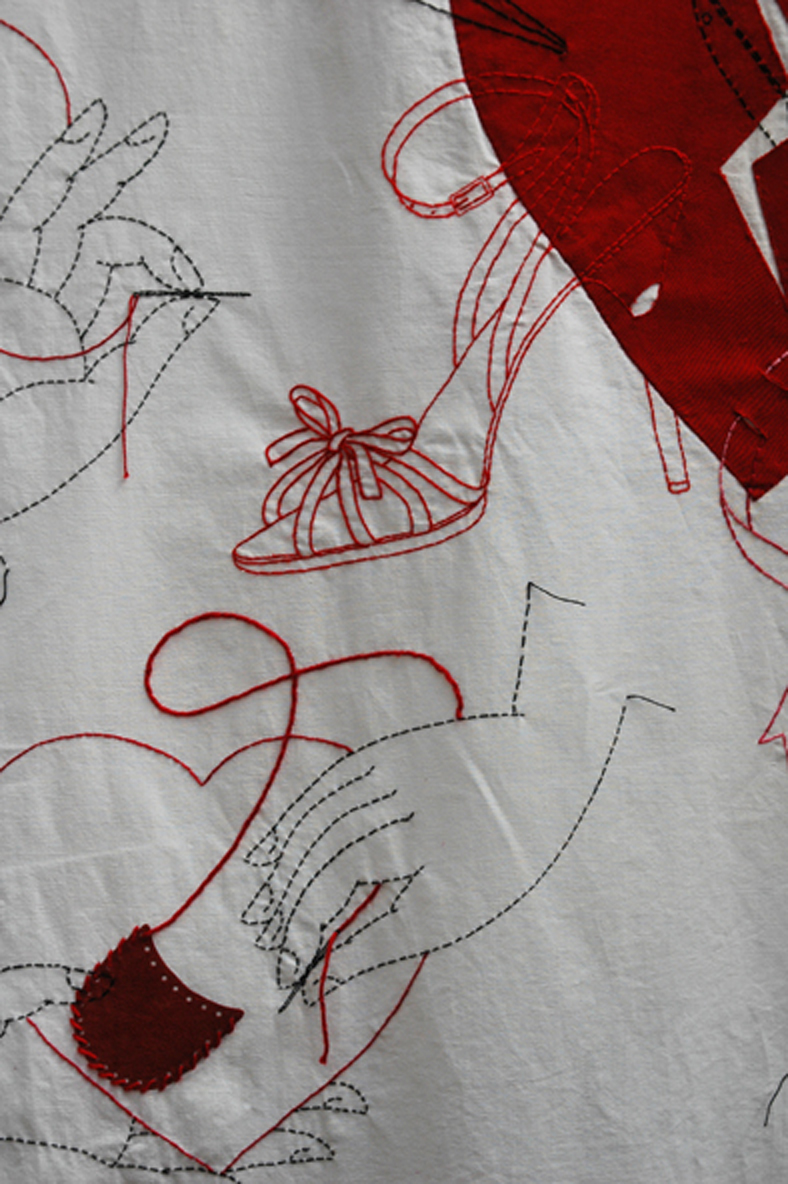
Then another real shock, Susi Bancroft’s embroidered hands complete with messages, the hands stitched by machine (phew- not quite the same as mine then) but definitely in the act of making stuff and with messages written all over the background. My last piece of work has a similar look to it although the ideas behind it are totally different, and even spookier when I looked into the drawers below it what did I see but embroidered hearts….
drawer of embroidered hearts,a stitched response of a family treasure, the tiny red heart made by a child.
my recent embroidery, “counterpane – mending broken hearts”
Now this is weird because I had just met Susi the previous day at a meeting, so I had no idea of what to expect. But how fascinating to have found such strong connections to my own current work from both of these people, they will be aware if each others’ work but they are both new to me; but we have such connected ideas which we are using for different reasons in different contexts, maybe we should consider some sort of collaboration or a meeting just to discuss and cross reference.
But the most surprising thing was almost the last piece of work I looked at, a large dark chest of drawers drilled and waiting to be stitched by anyone who fancied it, bold, colourful and fun to watch as people responded to it. This was by Alison Harper, a quiet and considered person who I have known for almost a year. I had expected her interactive work to be as ethereal as she seems, but then I saw another set of drawers by her….made of the thinnest tissue paper and delicately stacked – that’s definitely more in keeping with my perception of her – must ask her about the stitched drawer piece though.
Alison Harper. interactive stitching for more curious drawers
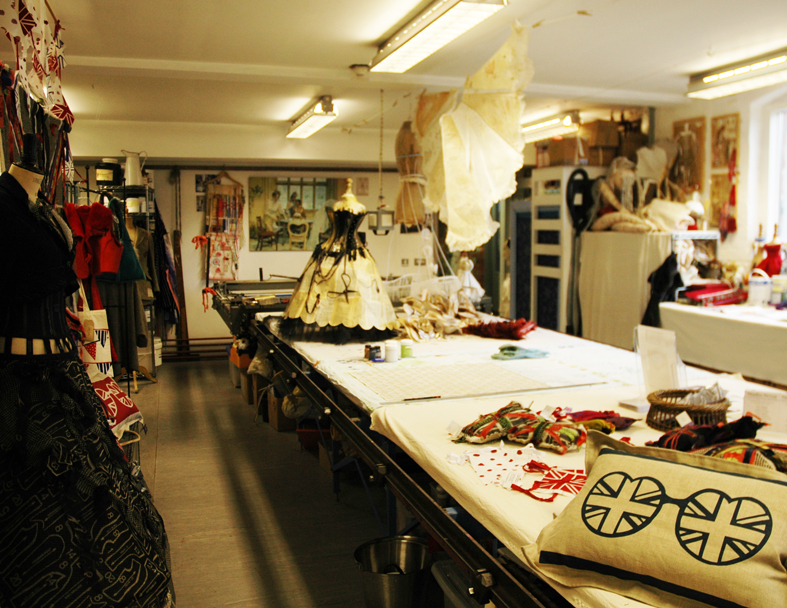
Now we went off to see an open studio The Textile Studio, in the middle of Stroud, part of a mixed arts studio complex called Stroud Valleys Artspace. Here I felt at home, I worked with printed textile design students on a B.A. course in Bristol for many years and I could sense that this was a busy and productive space, spruced up for the occasion but still vibrant and full of a good energy. This really made me consider why I work at home alone, but I need my own space to really be able to concentrate for hours at a time when stitching by hand and thinking about the work, here there would be too much to look at and distraction by good company.
long view down the print table at The Textile Studio at Stroud Valleys Artspace
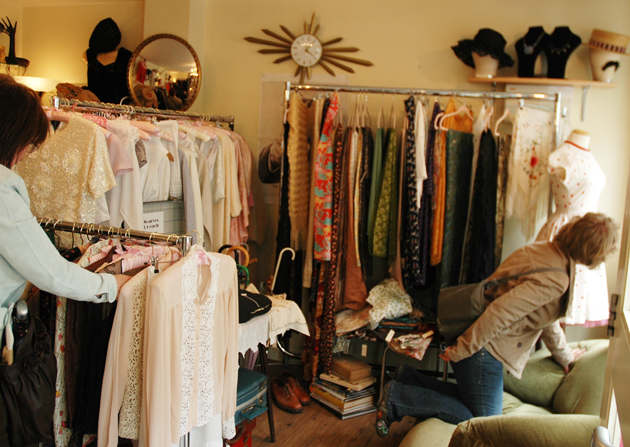
Next was the journey to the park to see the main exhibition but on the way we swerved into a delightful vintage clothes and textiles shop aptly called Strangeness and Charm. We descended on the stock like a flock of chattering birds, riffling through racks of delicious printed dresses and embroidered and beaded blouses oohing and aahing at the fake jewellry and tiny feathered hats which some of us remembered our mothers wearing at weddings
Strangeness and Charm – vintage clothing and textiles at Gloucester Road Stroud
Then off to the other side of the town and across a park to see the main event, Vision into Colour, an exhibition mainly of the work of Edinburgh tapestry weavers – it was really vibrant – COLOUR COLOUR COLOUR -what a change from usual. For years I have wandered around so many textile exhibitions feeling starved of colour, I usually have to go immediately and buy myself an ice cream to remedy my sensory deprivation – now how wonderful to see so much refined and unusual colour, if you can go and visit this show at Gallery 1 Museum in the Park, Stratford Park, Stroud.
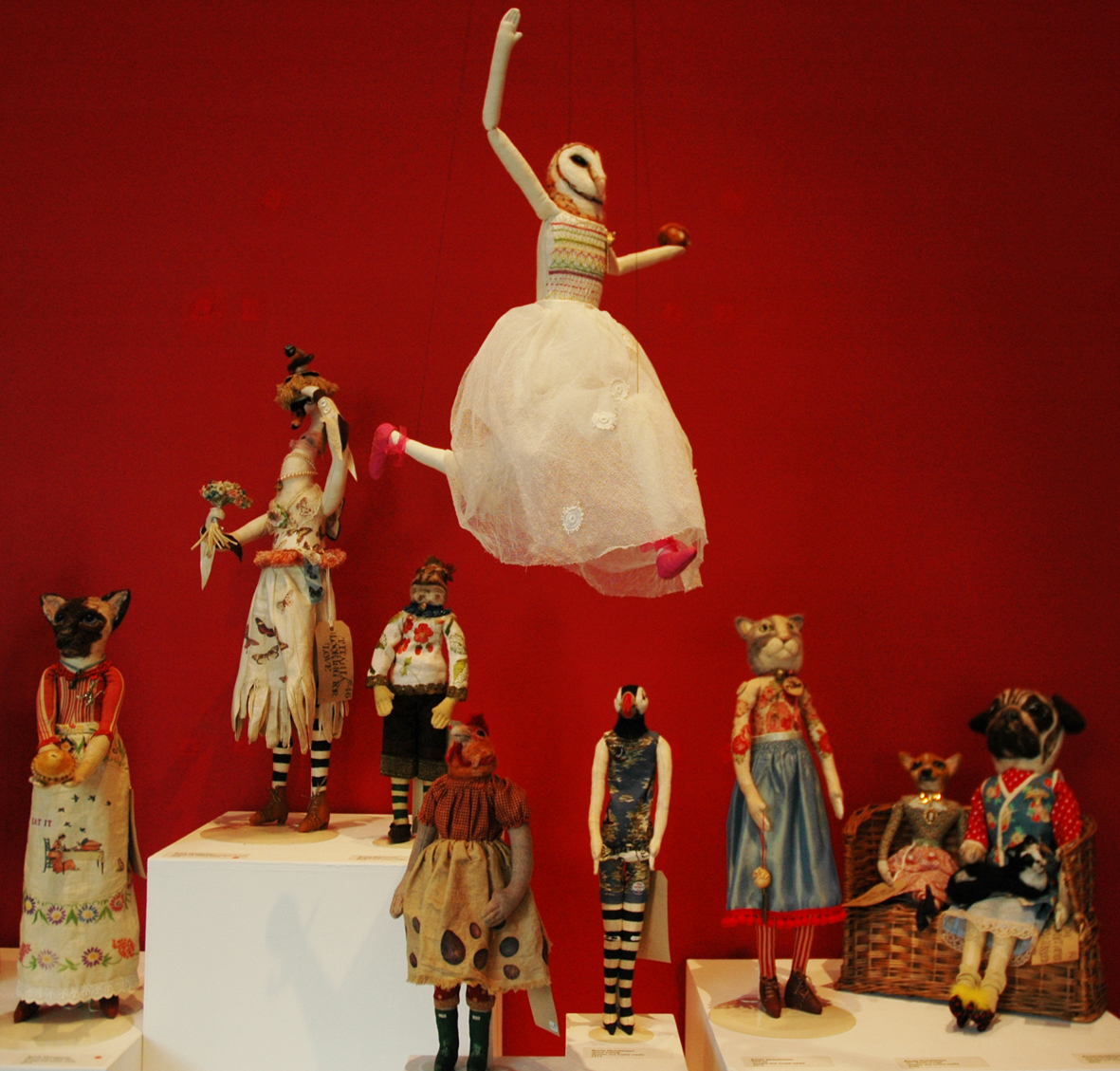
Annie Hutchinson’s collection of curiosities are beautifully made with wonderful fabrics.
But the one set of work that really spoke to me exhibited near the entrance of the gallery, a tableaux by a local maker Annie Hutchinson. She says she works with recycled memories stitched with mementos, signs and symbols – well that resonates with me, but the work is really curious, sort of a cross between the stitched monkey (see Commissions) and those terrible Victorian stuffed animals, like stoats or even worse – frogs, which are fully clothed and made into tableaux, sitting around a dinner table or something equally bizarre. However this work is as evocative and charming as it is unsettling, like all true fairy tales.
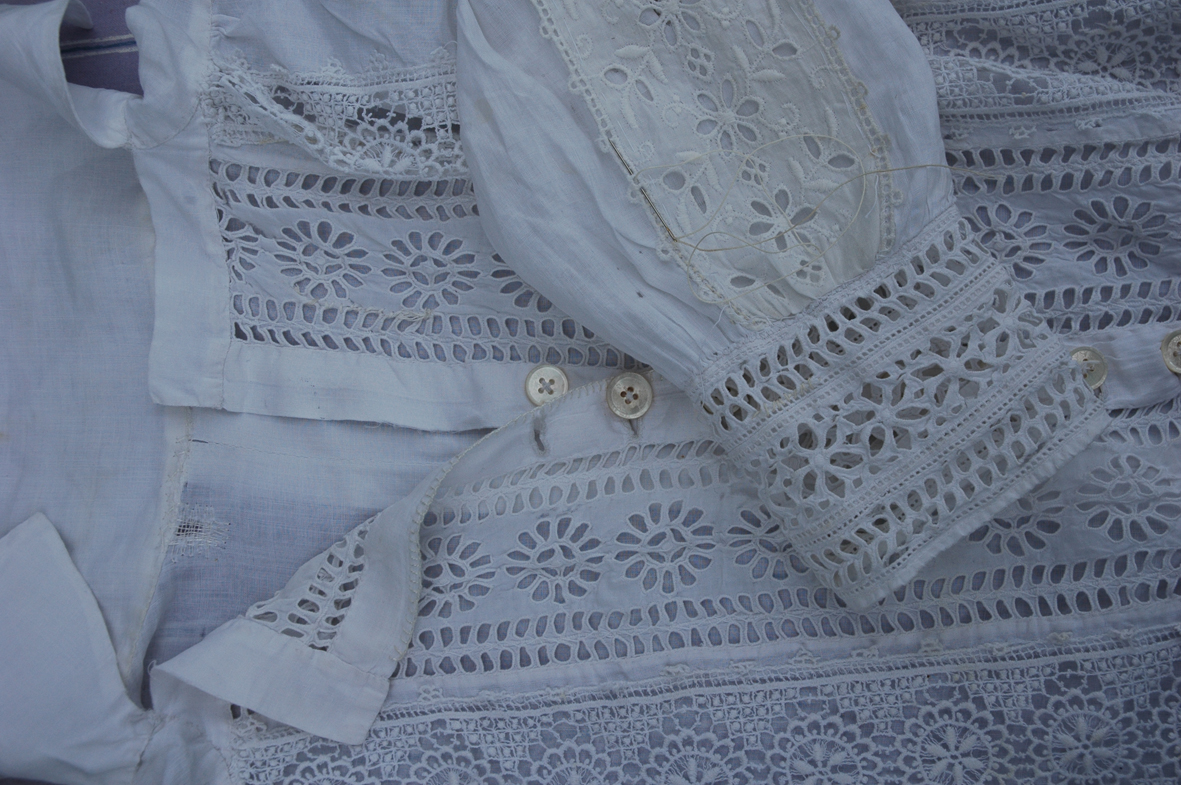
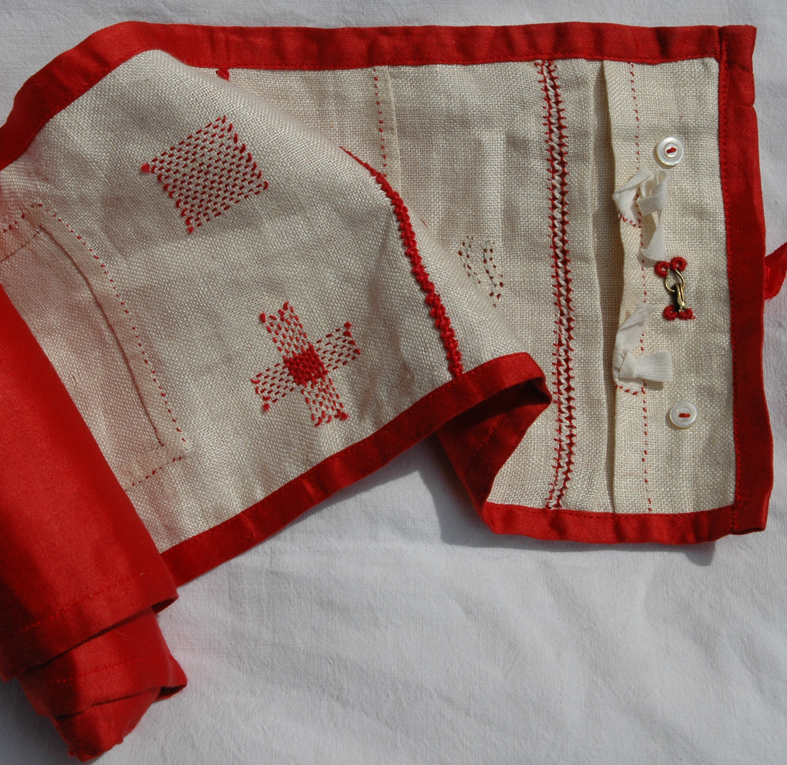
This is my favourite piece of clothing, a Victorian blouse with Broderie Anglaise insertions, all made by hand. I bought it about 15 years ago in an antique market in Bath and have worn it so much that it is slowly disintegrating. I am trying to preserve it by patching, darning and mending all the holes, tears and frayed edges. When it first started to tear I inserted extra machine – lace panels, but later I decided to make all the mends by hand. I think that this makes it appear more valued; in our throw away society I feel strongly that mending is an indication of worth.
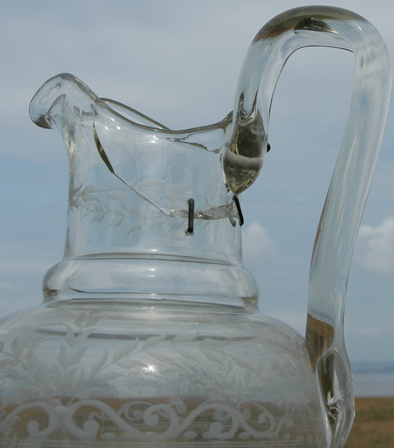
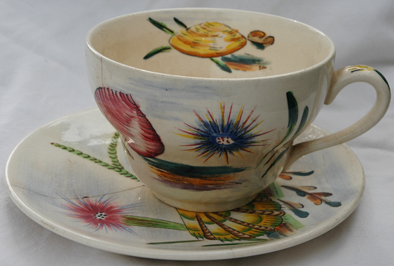
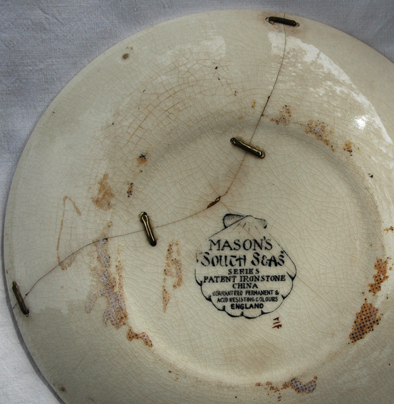
And I have always liked conspicuously mended ceramic and glass items, the metal bands that hold this hand cut and engraved water jug and the hand painted cup and saucer are testament that these pieces were valued so highly by their owners that difficult and expensive methods have been employed to extend their life. I really bought the water jug because of the rivets, initially I was reassured by this care and attention that it was worth the price I paid and also that I could still use it, which I have been doing for more than 20 years.
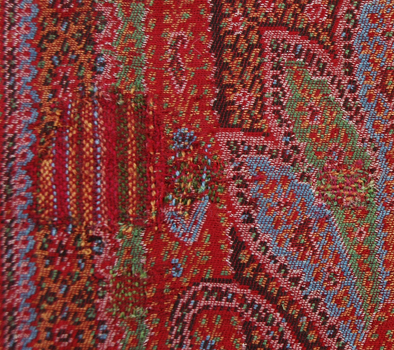
Sadly the only way I can afford some of the textiles I want is to buy them when they are practically worn out. I have rescued several Paisley shawls, some were already carefully, repaired but one beauty I am repairing myself…but instead of trying to copy the design, so that the mending is hidden I am darning the holes simply and obviously using very carefully matching coloured woolen yarns
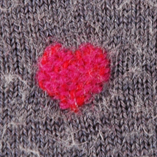
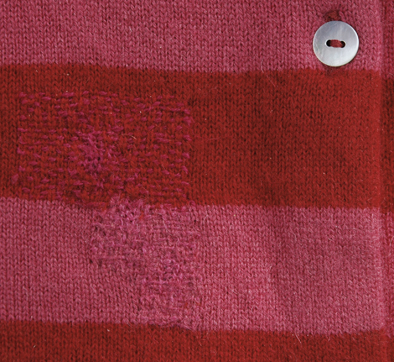
Has anyone suffered from the dreaded wool moth lately? My clothes and textile collection was under siege last year. My favourite cashmere woollies (collected at T.K.Max) seemed to be the dish of the day. So I am working my way through these and stitching some very conspicuous darns, in fact I am considering making darning designs for the plainer ones – although the tiny heart, .5 cm. wide, the result of a glue accident when I was probable mending something else.
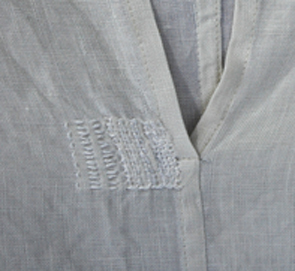
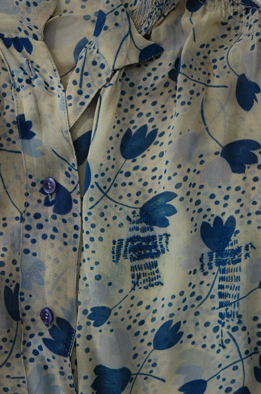
Below are some more of my rescued clothes, an old linen shirt which had pulled apart at the seam and the vintage silk blouse is badly stained, but still lovely.
But on reflection – when I was a fashion and textile student at Liverpool Art College in the 1960’s, I made a paper wedding dress, reasoning that it would only be worn once and then could be thrown away. Some 40+ years later I have changed my attitude to disposability and my current embroidery practice revolves around mending, patching, protecting, conserving. Even a casual look at old sewing manuals will show the change of attitude to mending and preserving clothes and household fabrics, in the books from the 19th and early 20th century there are many and various darning techniques for all sorts of materials. But it becomes apparent that excepting illustrations of Darning Samplers for collectors, this detailed information started to decrease during the 1960’s and by the end of the century mending of any description ceases to be shown in popular sewing manuals. I suspect that the corresponding and continuing rise in the national divorce rate is not a coincidence.