Flower Show

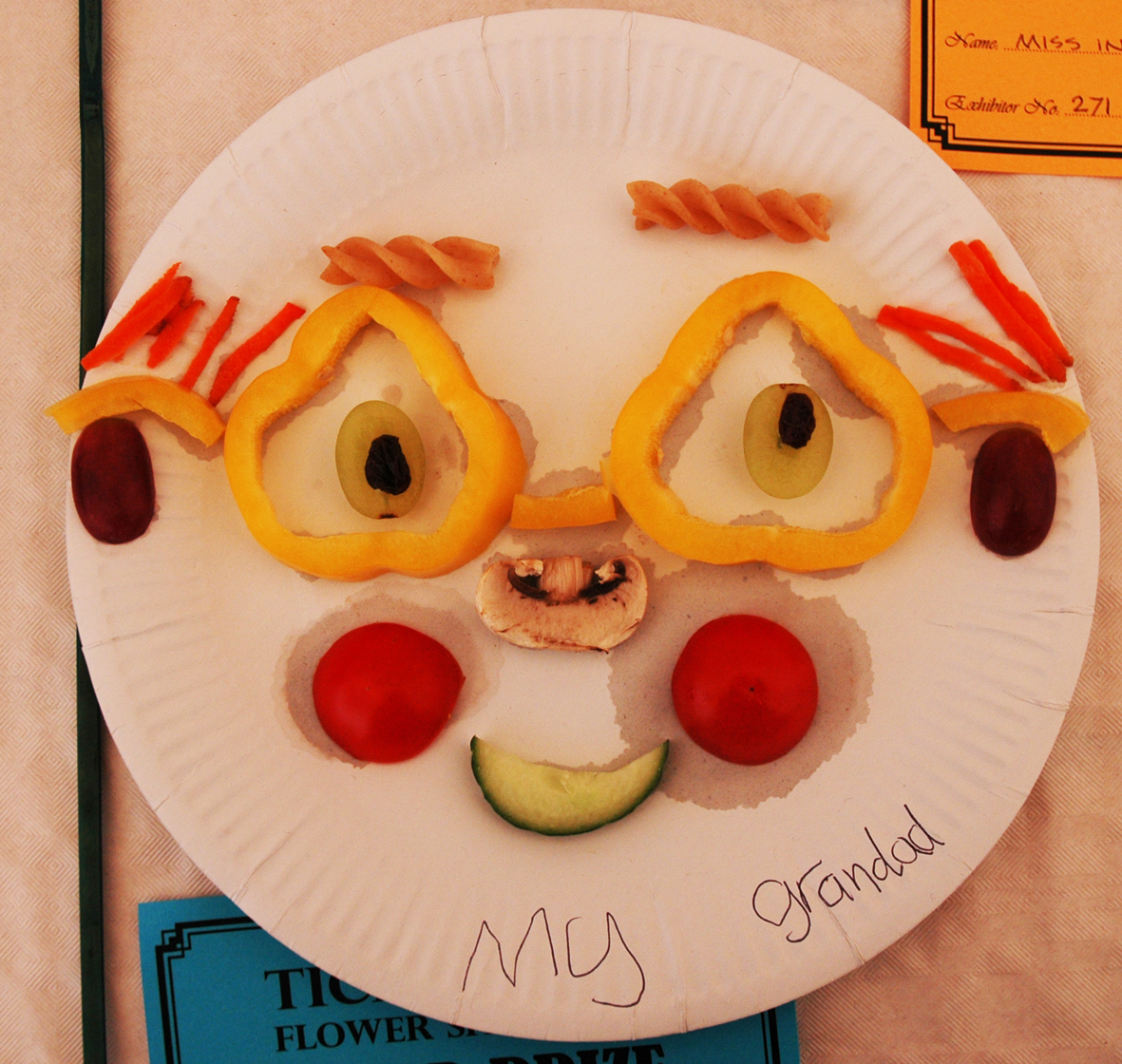
class 172 "edible face on a plate". 5-7 years inclusive

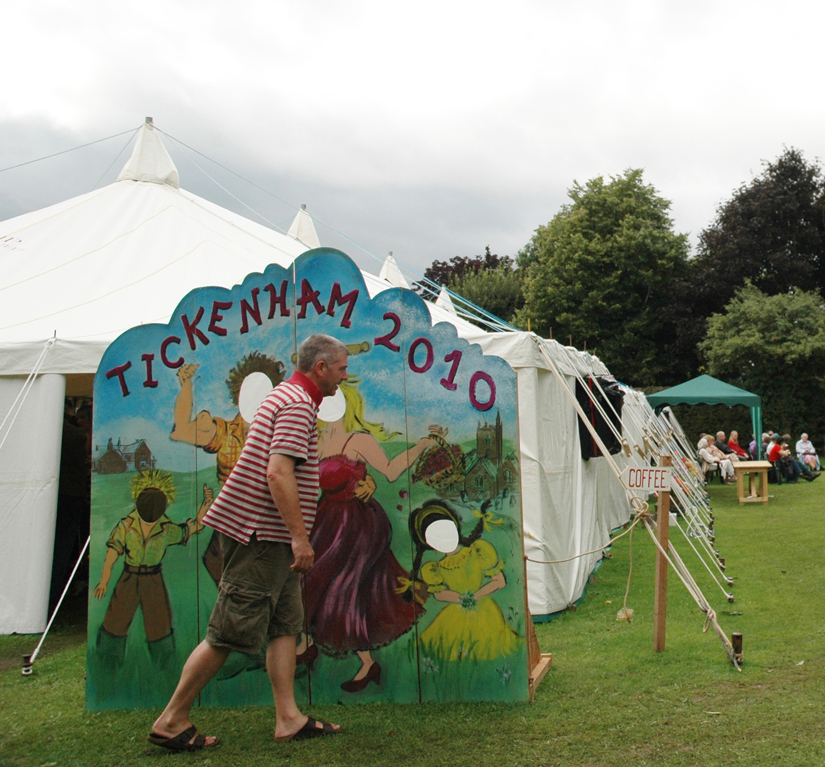
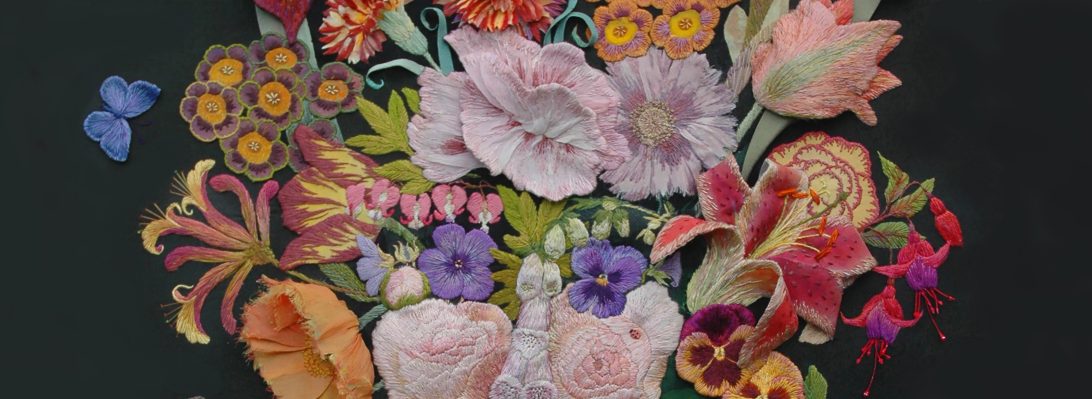
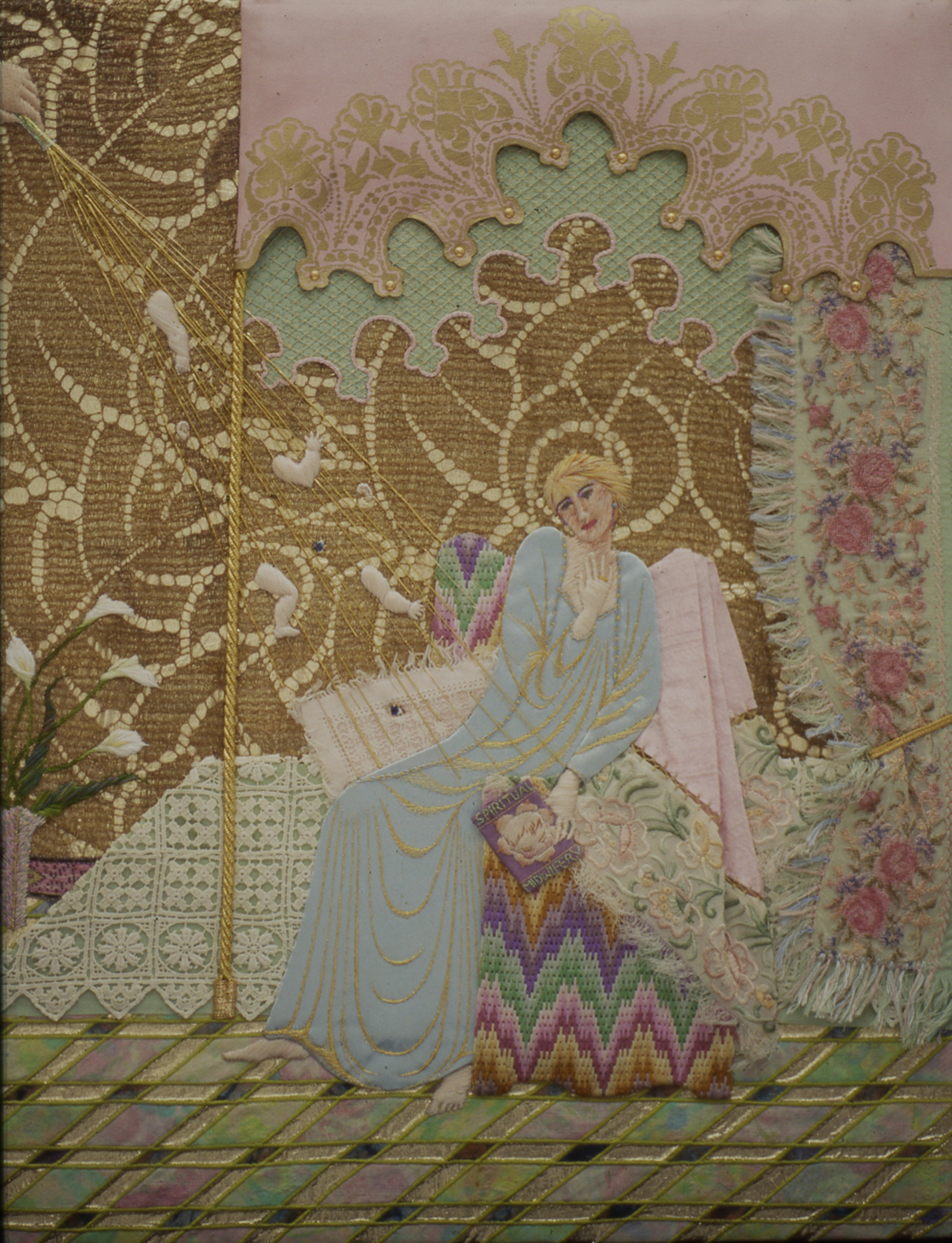
This is the season for flower shows in England and here in Somerset there are lots to visit,  so last Saturday I went to a neighbouring village, Tickenham, just to see how it compares to the Portishead show – which is the best in the district and had inspired a set of embroideries which I made some time ago…. more of which later.

When I arrived the first view was of the small marquee set in a field with lots of other tents and awnings with stalls selling things, a brass band played, there were queues for ice creams, cream teas and home-made cakes – so far so good.

perfect photographic opportunity at the flower and produce show

I really like the shows in marquees the best – the air smells of flowers and crushed grass and the light inside is perfect for enhancing the exhibits. Sometimes at the posh flower – arranging shows such as Harrogate in Yorkshire, they hire wedding marquees which have draped walls of ruched fabrics…but plain canvas gives the best light.

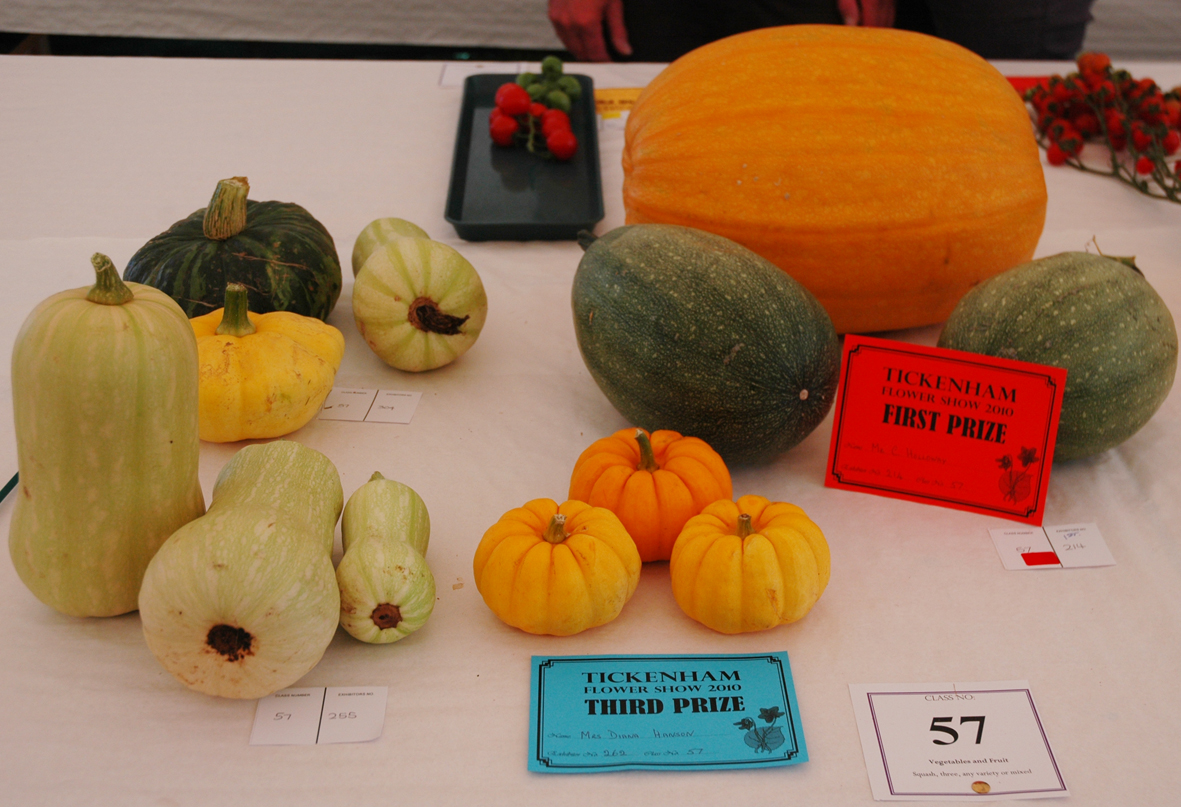
marrows glow in the marquee

Although the main point of these shows are the vegetable and flower competitions, I prefer the other stuff; children’s gardens on a plate or  seed tray;

miniature flower garden in a seed tray

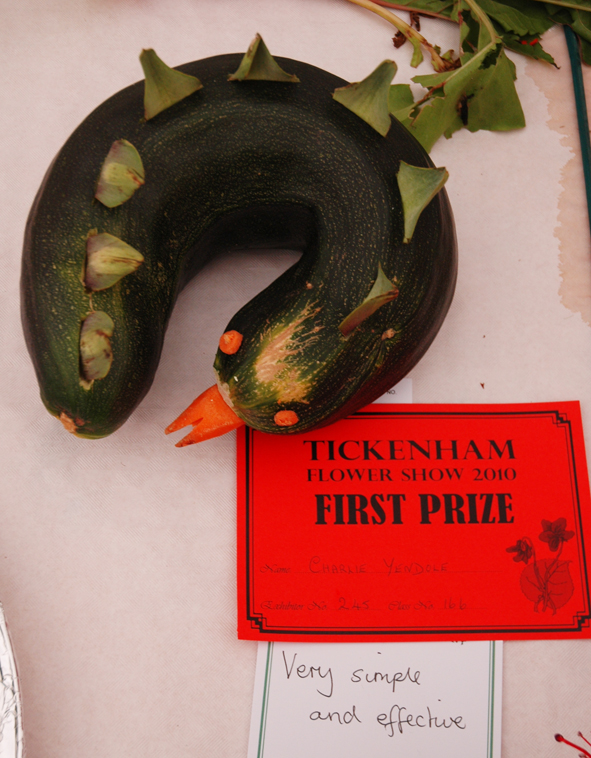
surreal faces and animals made from vegetables. But  My Grandad at the head of the blog only received a third prize – what do the judges think they are doing? The display that won – and it was excellent – was praised for being “simple and effective” – but who wants ‘simple and effective’ on a wet Saturday afternoon at a flower show – we want exuberance, competition, prizes for fun, colour, imagination and originality. In all the many shows I visited I have never before seen a child’s vegetable portrait.

simple and effective monster!

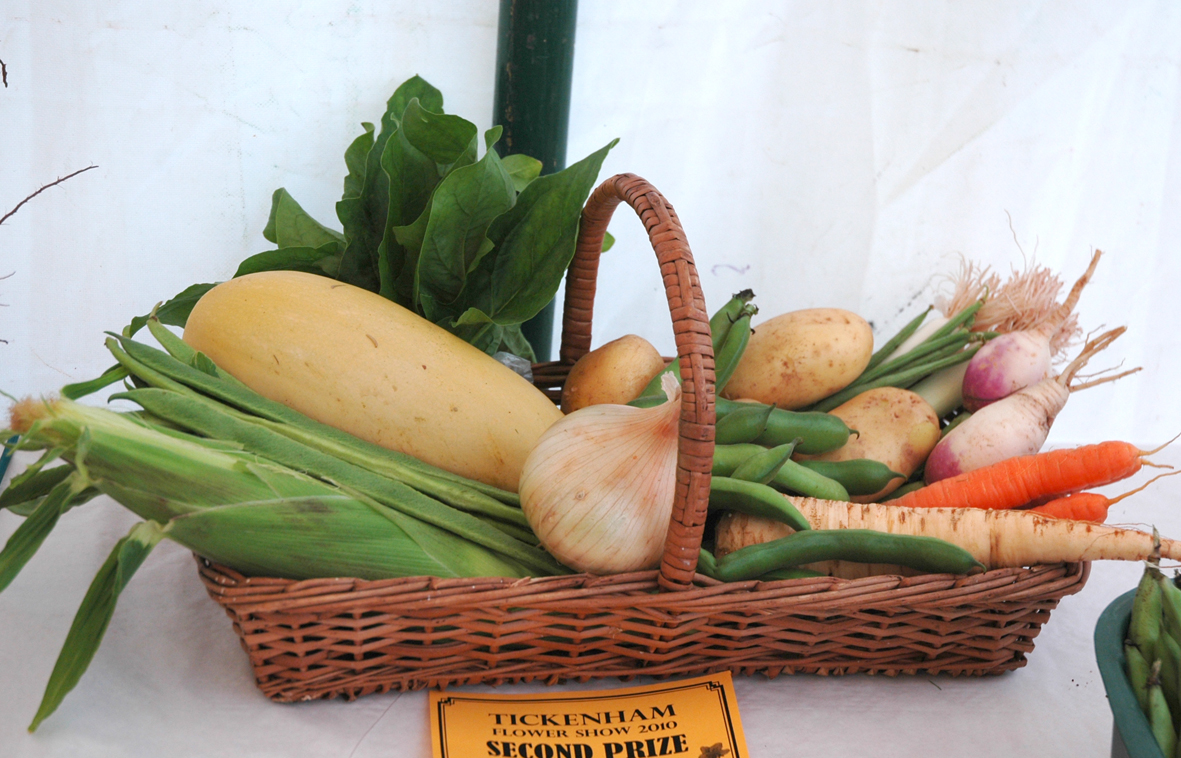
So when I went to the shows for inspiration I wasn’t looking for “refined” I was looking for ideas and arguments about how we manipulate the natural world for our own benefits  and as I saw the baskets of vegetables and those marrows on Saturday,  I remembered my own versions of these exhibits.

basket of prize vegetables at Tickenham show

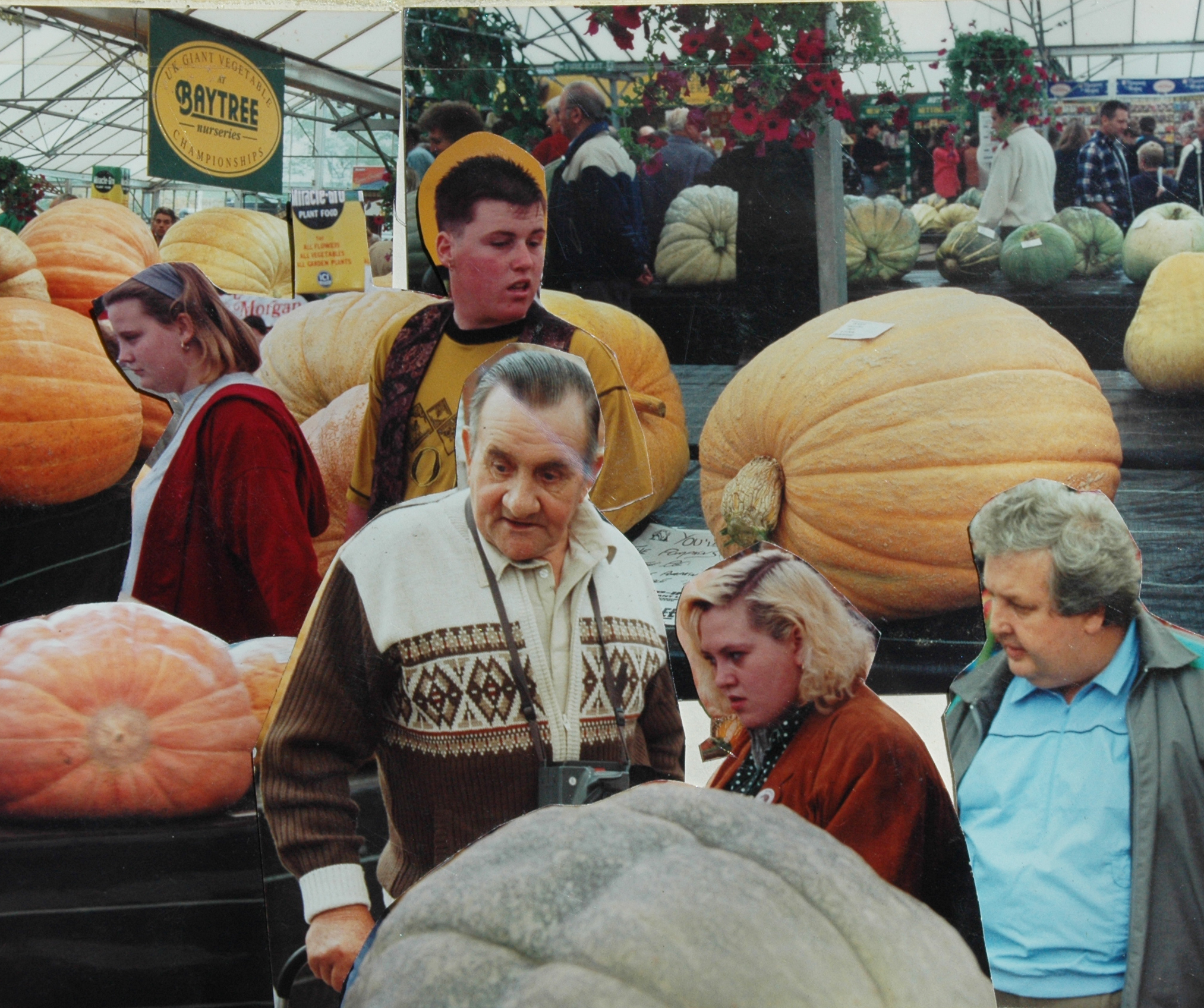
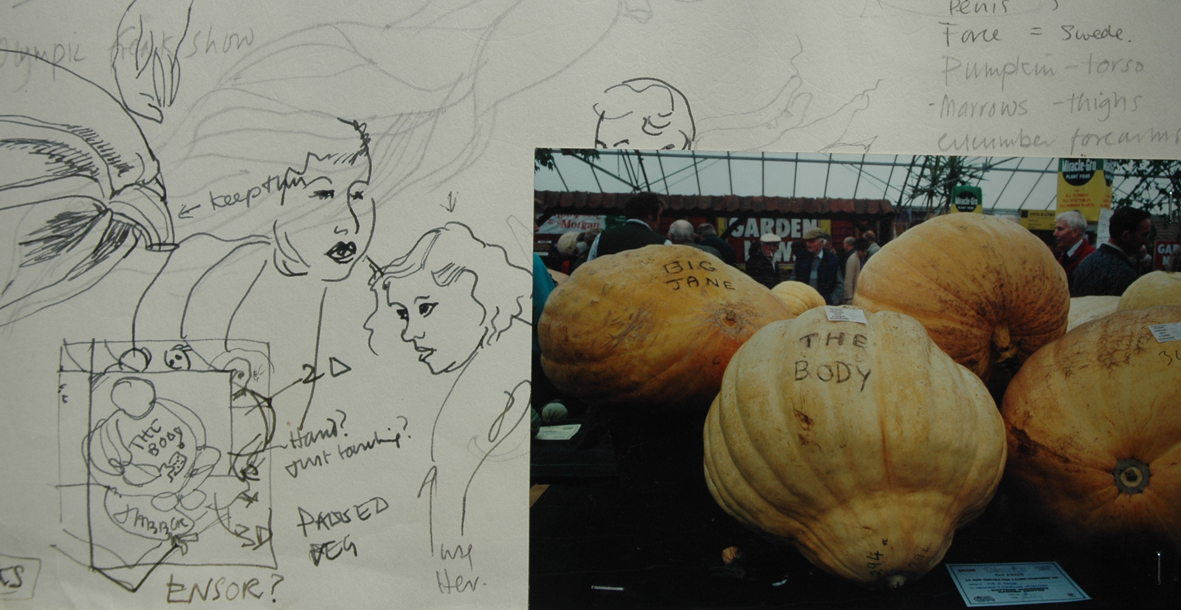
I went to the giant vegetable show in Lincolnshire where I had expected to just see larger versions of the above…but there was something else going on.

photographic collage of the giant vegetable show

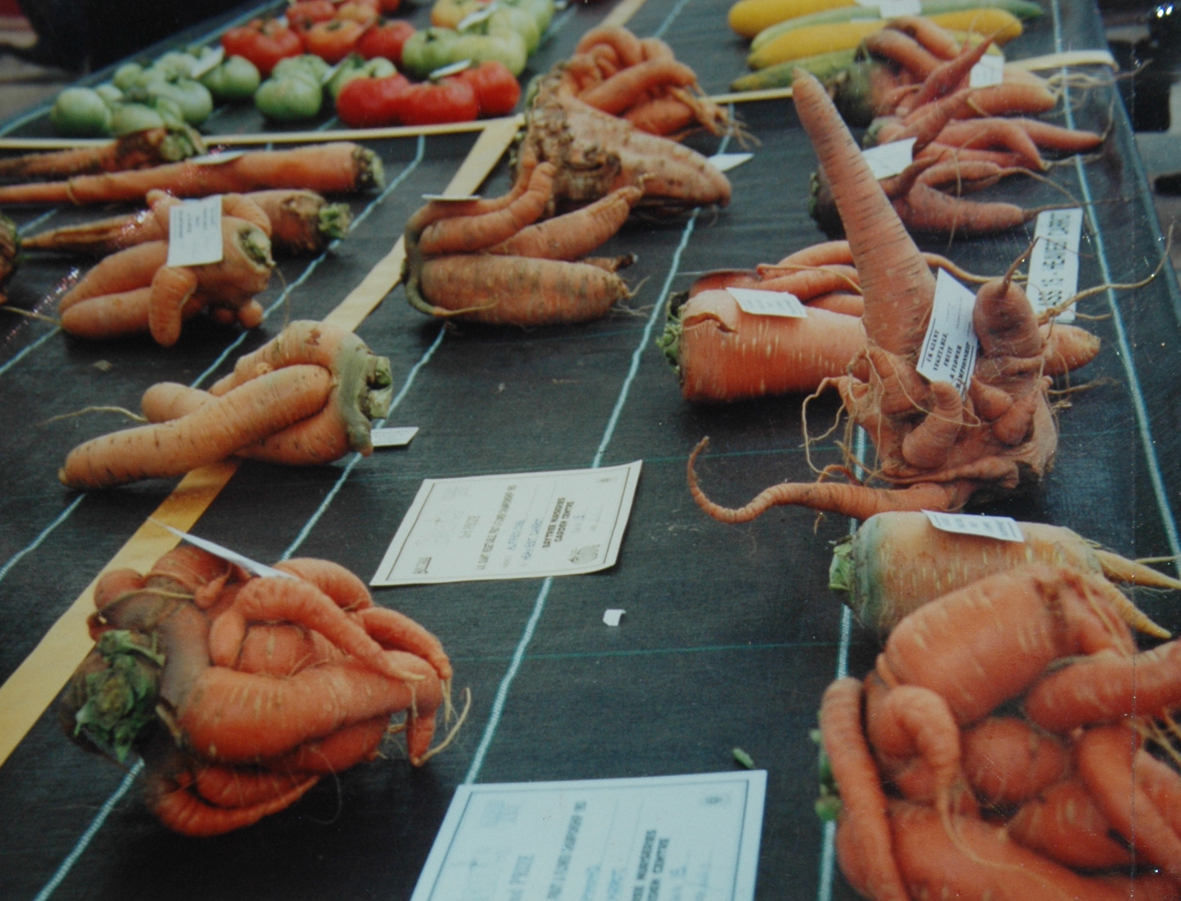
The marquees where hot and humid but the smell was of rotting vegetation, huge marrows and mis-shapen pumpkins often carved with names, it made us think we had wandered into a vegetable porn show. My original idea of a sort of giant Green Man was replaced by a lecherous freak of nature –  and it was so obvious that everyone else saw what we saw and were comparing these vegetables to body “parts”.

drawing from collage with the scarified bodies of the pumpkins
the heaviest carrots

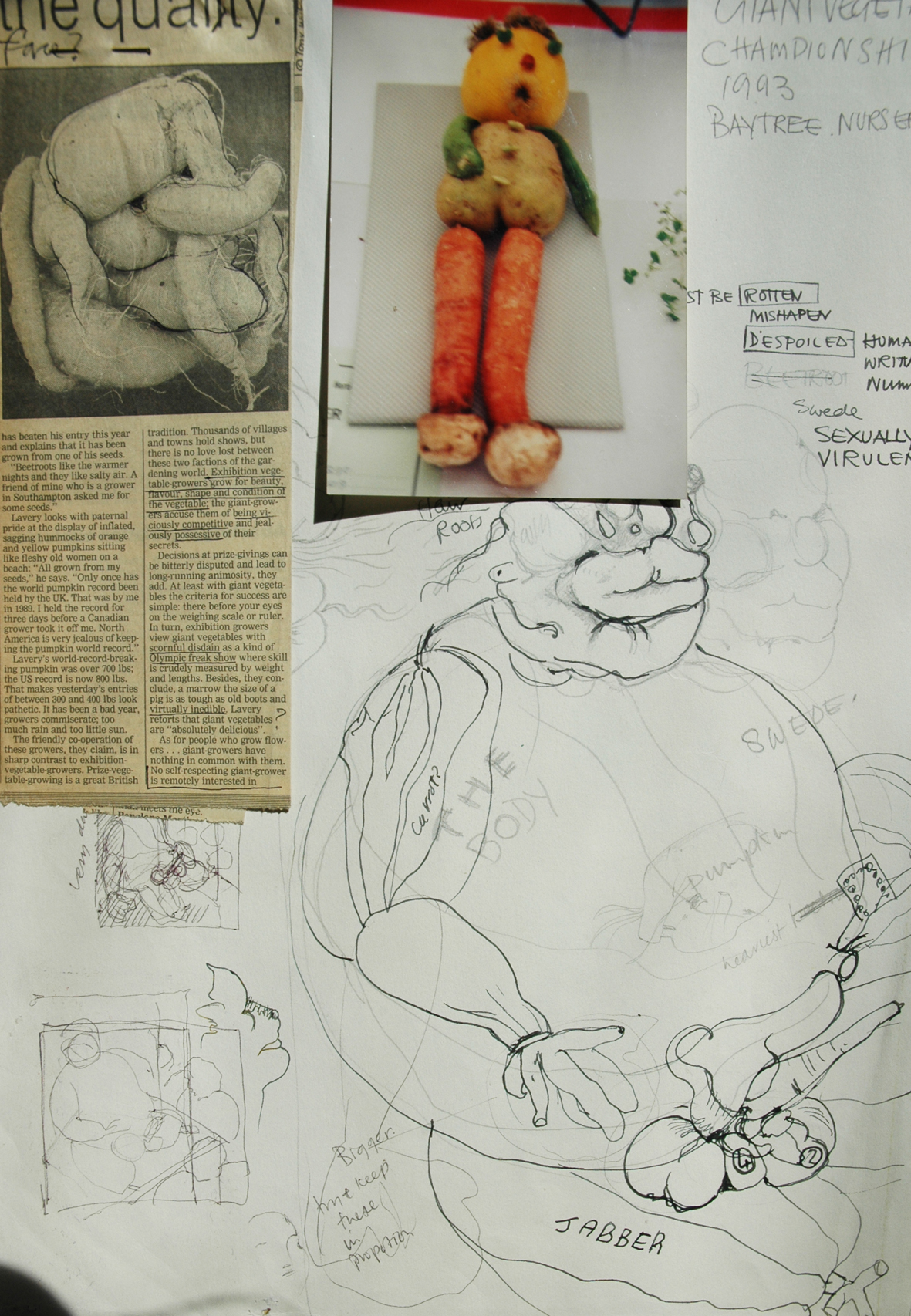
I think you can see where I was heading………

drawing for Giant Vegetable Man

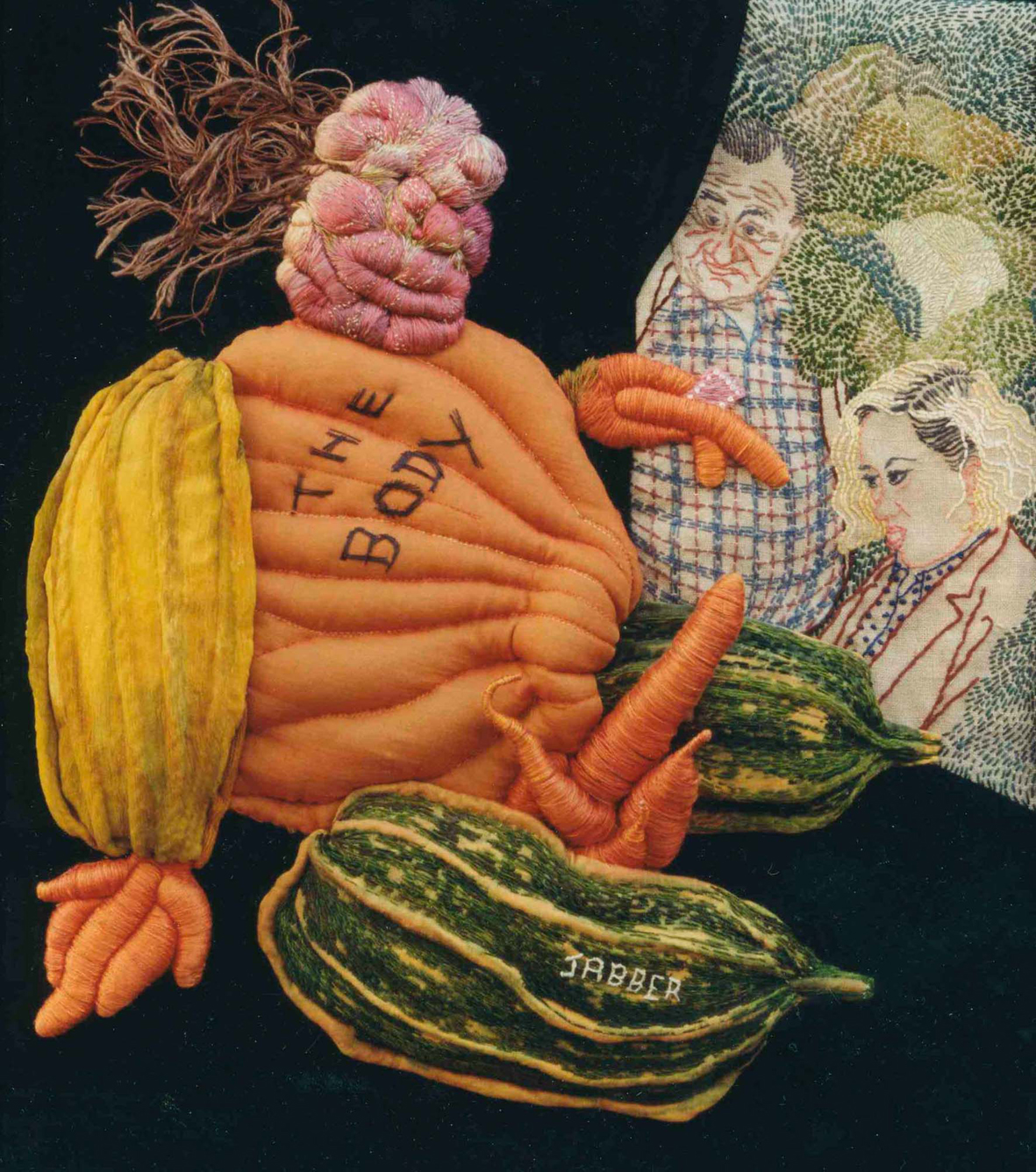
The drawing for the vegetable man above was constructed from various vegetables exhibited at the show, all chosen for their grossness and sexual connotations. In the embroidery, below, I have put the man in a booth with a curtain that can be drawn aside, a convention of the popular freak shows in 18th and 19th century Britain. He holds a packet of birth control pills; apparently one grower had stolen his wife’s pills  because they had made her retain water and put on weight  – so he mashed them up as a liquid feed for his Heaviest Marrow exhibit – honestly this is true, I invented nothing for any of the embroideries in this collection, I merely re – arranged the visual facts.  Below, the onlookers are being enveloped by a marauding cabbage.

the freak show vegetable man in his booth.

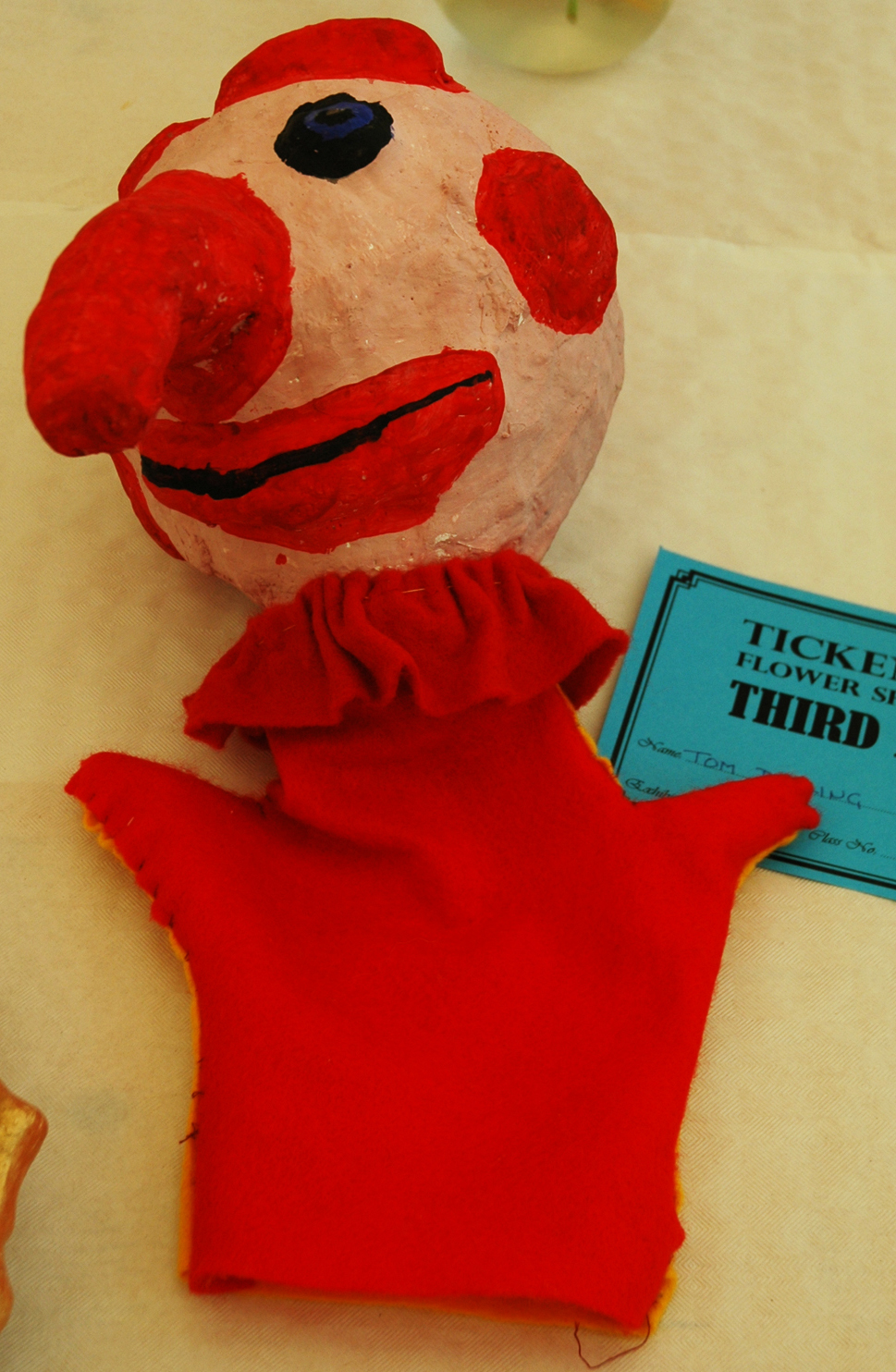
But to get back to the Tickenham show and the wrongful distribution of prizes. Can you believe that this hand puppet only made third prize in Class 184 – for 8-11 years inclusive – “Anything you like – you made it, let’s see it”?  I think he has such presence and holds the true spirit of Mr Punch that he is in a class of his own.

puppet in class 183 for 8-11 years inclusive

In future blogs there will be more stories from the flower shows which gave rise to The Flora Embroideries.

Samplers

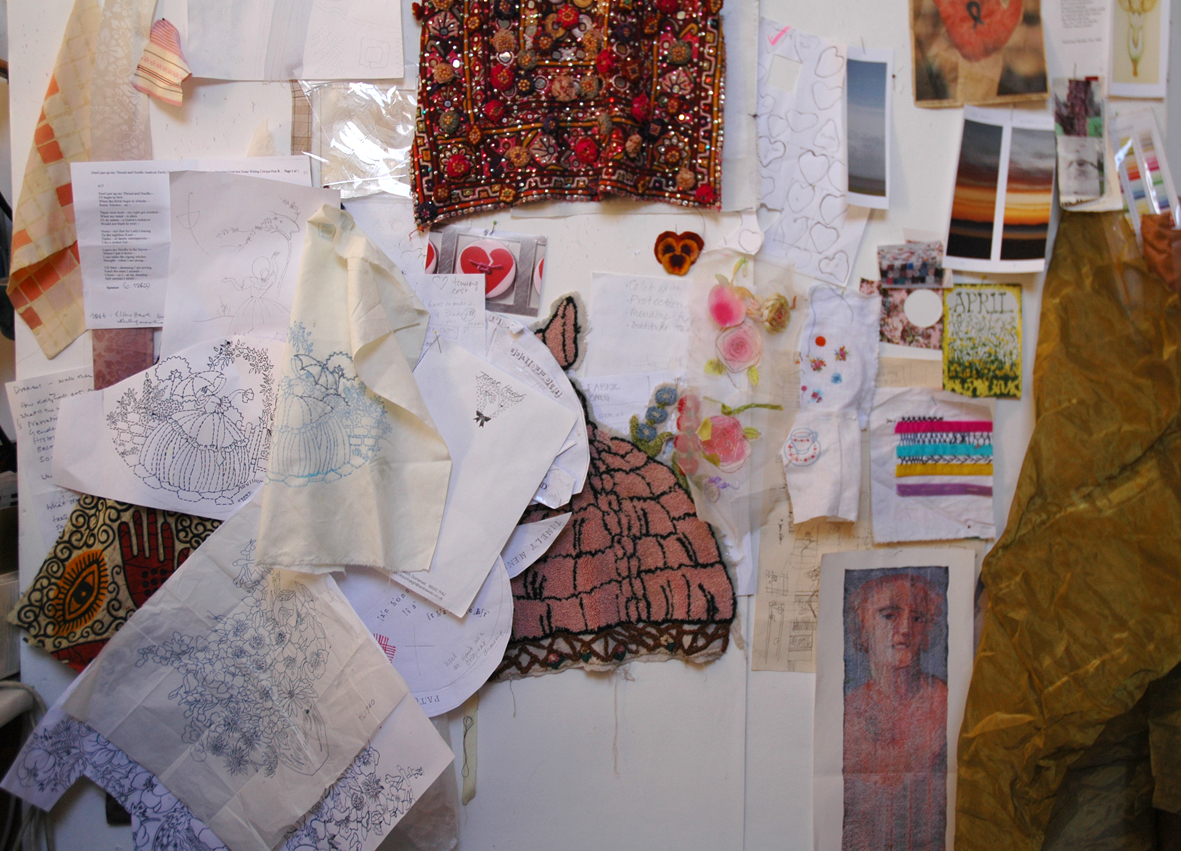
my studio wall of current samplers

I am in a difficult position at the moment because I have a whole set of different projects and commissions all at the sampling stage; this is not good news for anyone who is trying for a smoothly running working life. Usually I aim to have one or 2 ongoing sets of work at the ‘mind in neutral’ stage for when I embark on a new piece of work; by which I mean that the work is at the point where it is being manufactured, whether by stitching, enamelling or constructing…this is when you can think about the work as it is slowly progressing or mull over the next piece you will be making. Time to let ideas settle and allow solutions of sampling problems – see last 2 blogs – to rise to the surface.

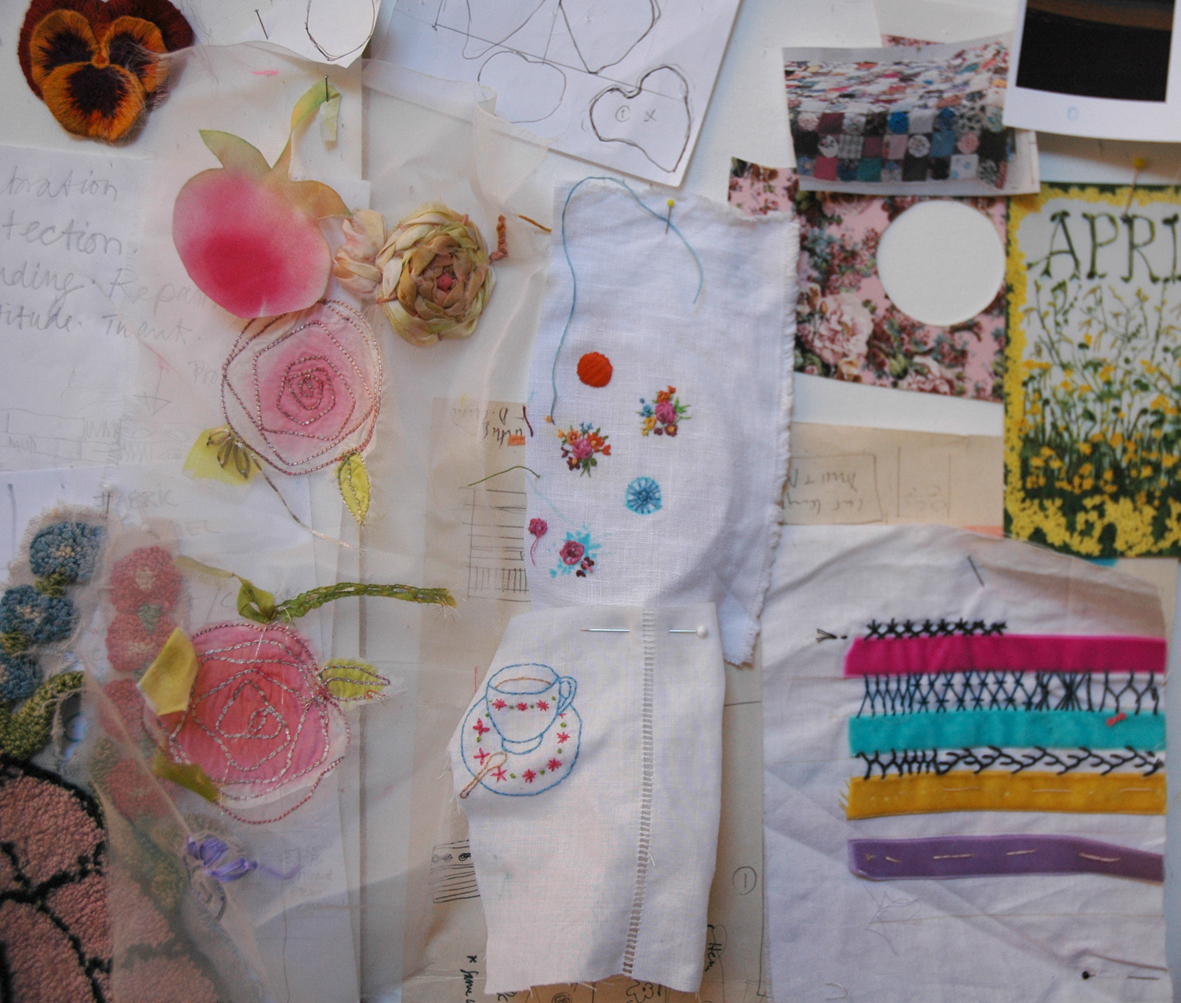
detail of studio wall with samples for stitching book and original enamel skies joining sample.

But I have 4 main projects starting up at the same time, one is the enamel skies – my own work – so it is now having to take a back seat, but it was necessary to start it, as a website featuring the work is about to go live – it is for North Somerset Arts Week in May next year; 2 is a possible commission for a book on stitching; 3 is the Sheet of Dreams from Make it Through the Night project, again my own work and started in an attempt to get it going so I could just sit and stitch something between the drawing and development of the stitching book – keep up – 4  is another ongoing commission which will need to be kick started again when the artist comes back from her holiday next week after several weeks’ break. Oh and there are the stitched ceramics I am doing with Hanne Rysgaard, so that’s 5.

first illustration samples to size for the pages of a proposed stitching book

And all are at the sampler stage and all need attention – the same sort of attention. So my workrooms are full of bits and pieces of sampled new ideas, good ideas, failed ideas, hopeful ideas, anything to try to get me focussed on the jobs in hand.

The most important project this week is the book presentation as it has to have 3 spreads, or double pages, with all the stitched designs, illustrations, technical diagrams and information organised in time to get it to the art editor who will sort out the overall look of the finished book for printingto show it to hopeful publishers at the Frankfurt book fair in October –  as you can see I have been influenced by the work I did with Hanne on the tablecloth – or rather my commissioning editor was…….

The idea of samplers being the traditional regimented rows of perfect stitching is of no practical use to me. The samplers we see in museums had more to do with  illustrating young girls’ good behaviour and patience than their creative ability to problem solve  – which is how I see the sampling process,  an absolutely key component of any making project. I usually collect my samples together and pin or stick them into my work books when I have finished the project. They are often all the evidence that is left of my commissioned work, apart from the pictures of the finished image. But until that happens they are pinned to a wall as constant reference.

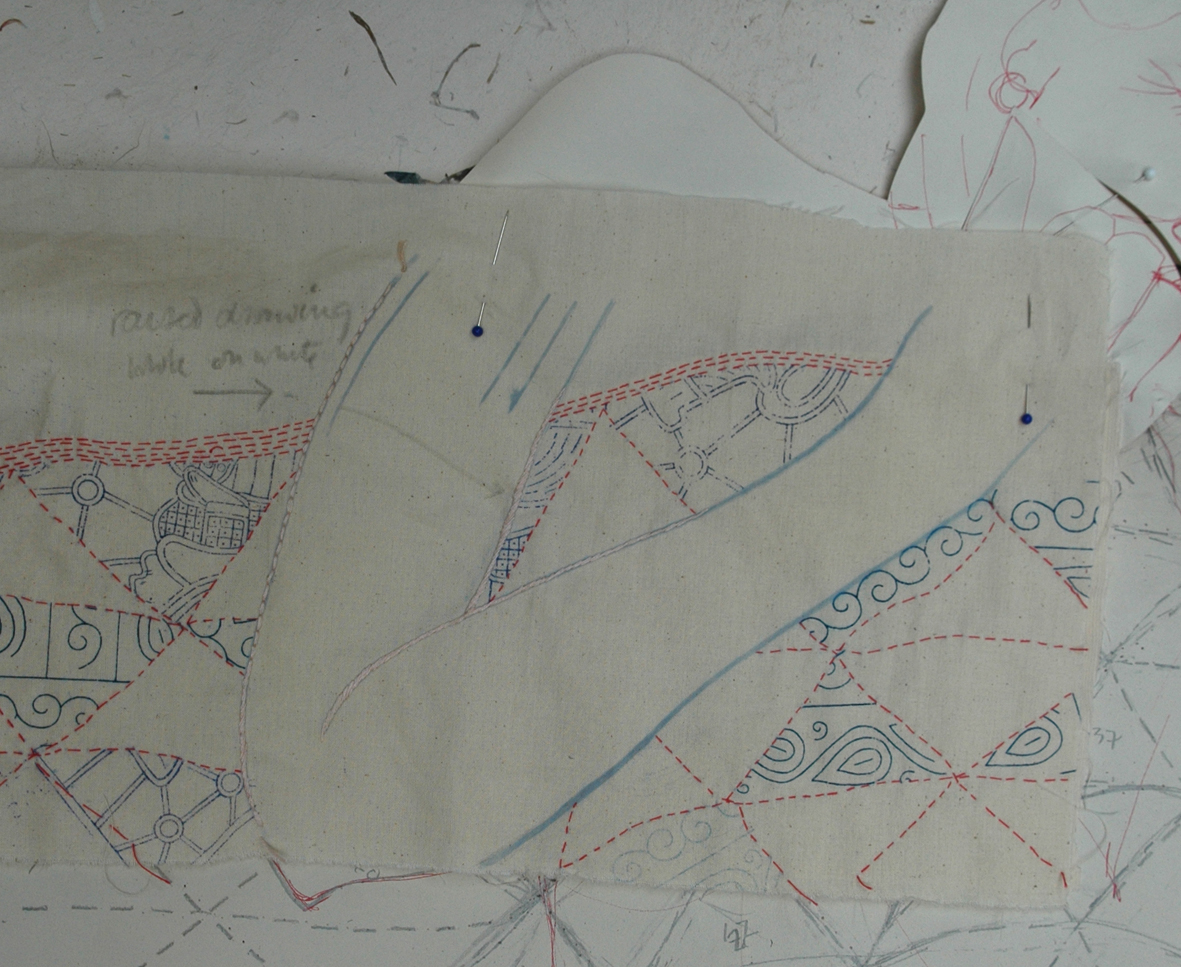
printed and stitched sampler for the next Sheet of Dreams embroidery, pinned to a full scale collaged drawing

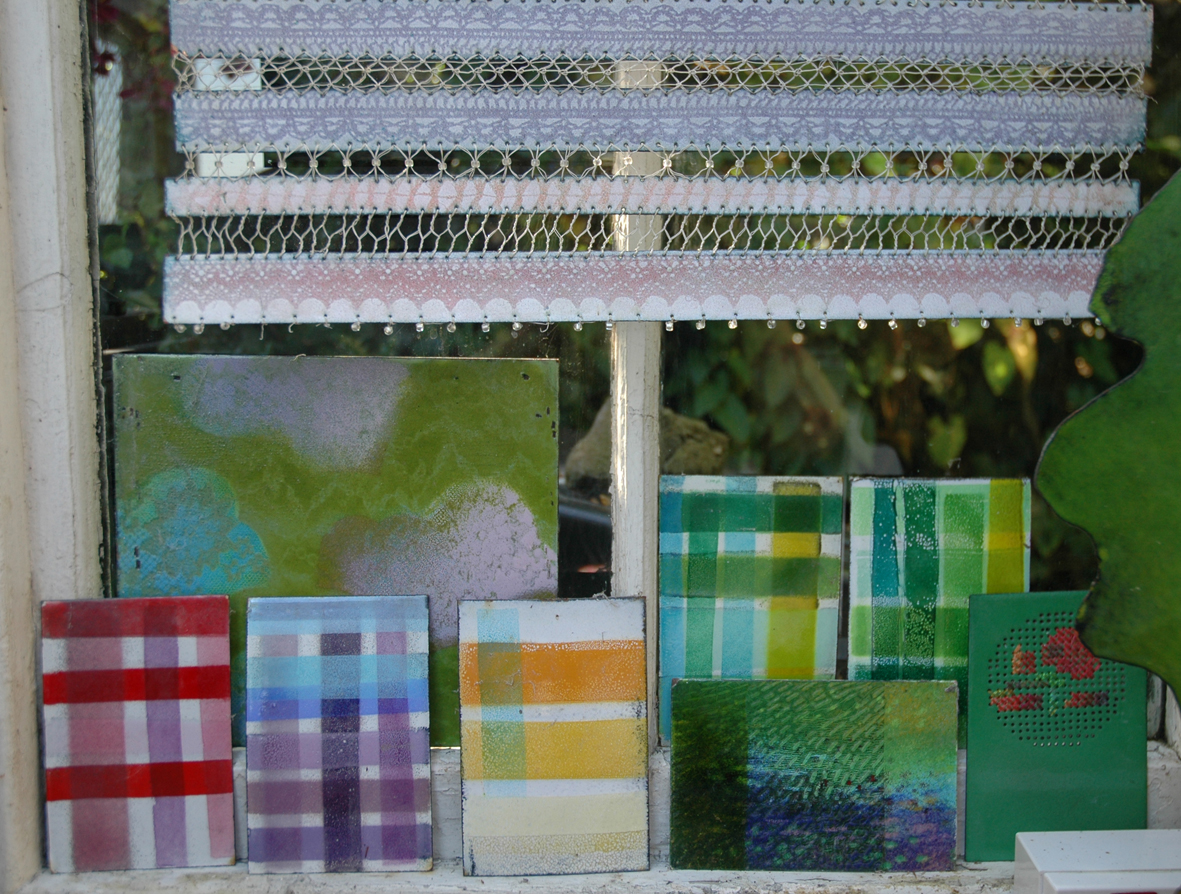
In my enamel workroom though things are even livelier, enamel is impervious to light and weather so I keep all my old samples on view, they are constantly referred to and I think it amusing that even my metal and glass samples look like mad gingham fabrics.

window sill in enamel studio full of samples for colour references, with stitched wire sampler above

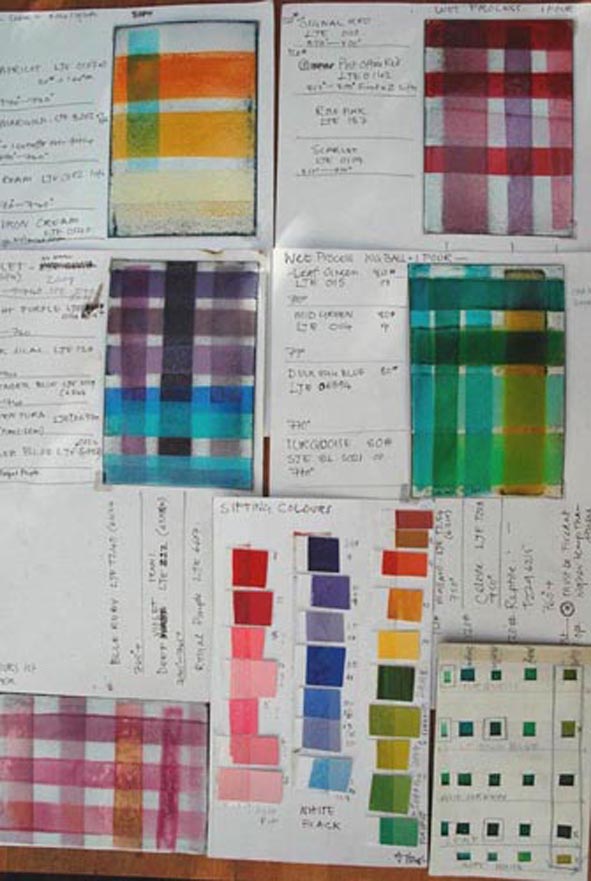
I use these colours so often that I do not need the notes that I made for the first colour samples, I know the properties of each colour well enough.

original set of coloured enamel samples in work book - with their recipes, before they became part of the reference in the studio

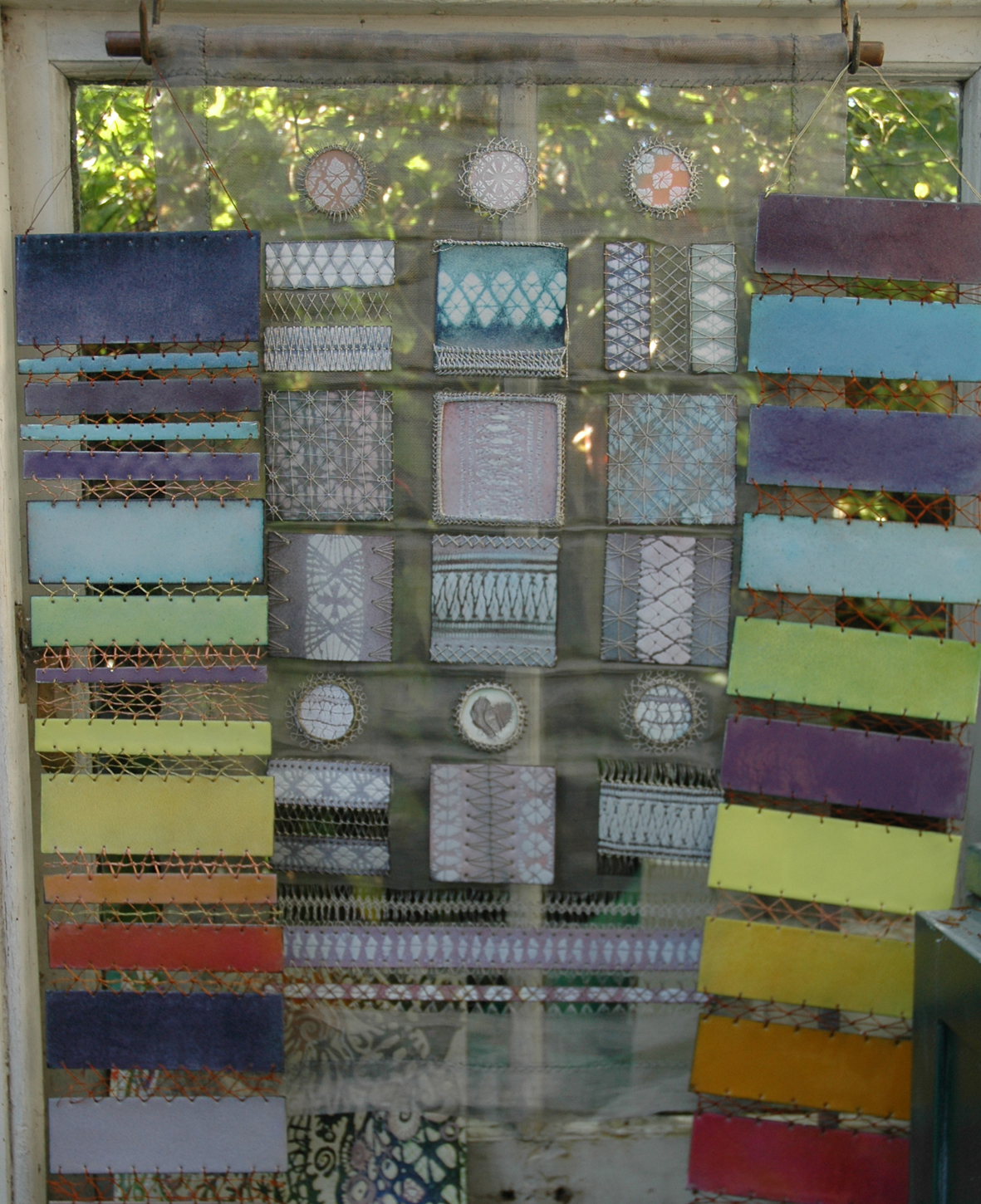
All around the enamel studio samples are set out, here the enamel skies are hanging next to my first large stitched steel sampler,

more samplers ready for reference in enamel studio

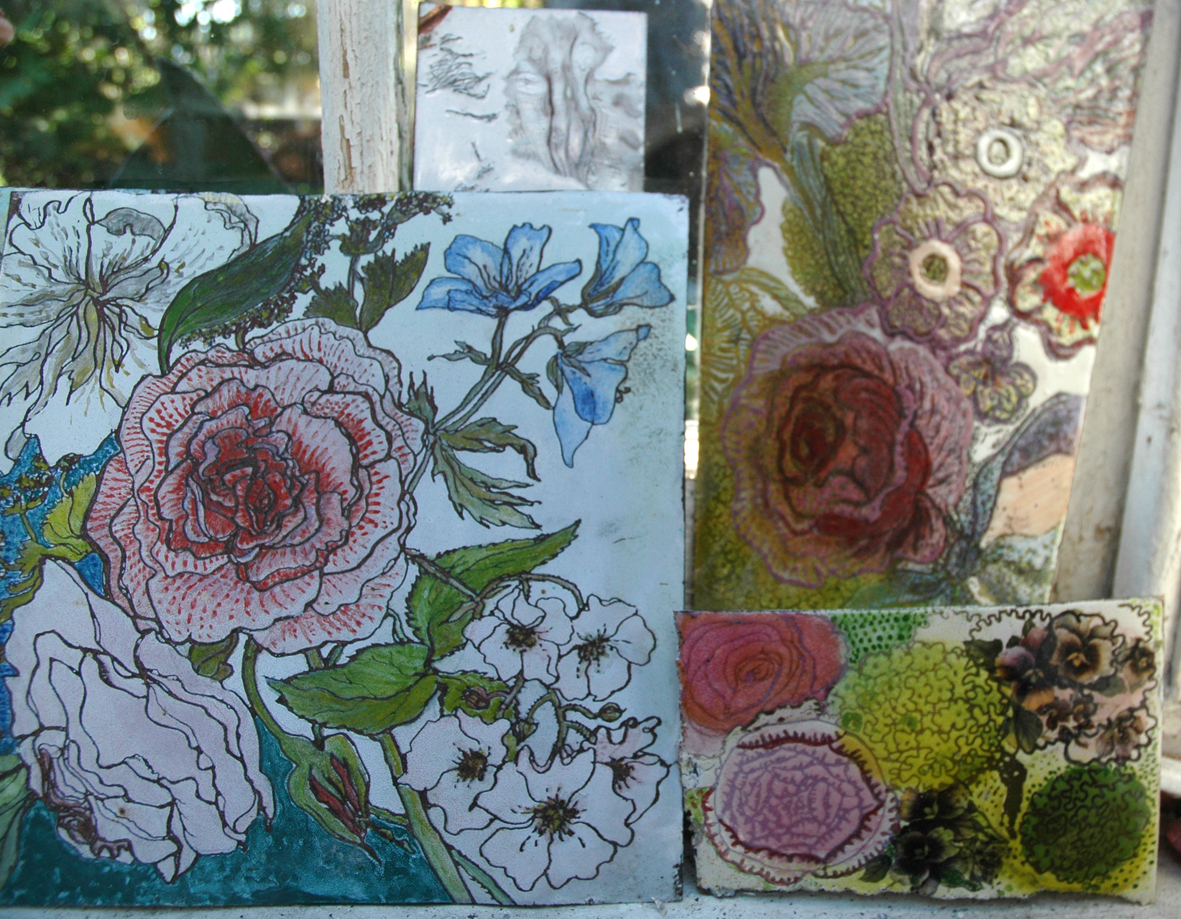
and on another windowsill are placed the drawn and painted samplers I made for the Chintz Collection in the Enamel Garden (see the Gallery Pages) sadly these are the only flowers displayed in my old conservatory.

Stitched Enamelled Skies

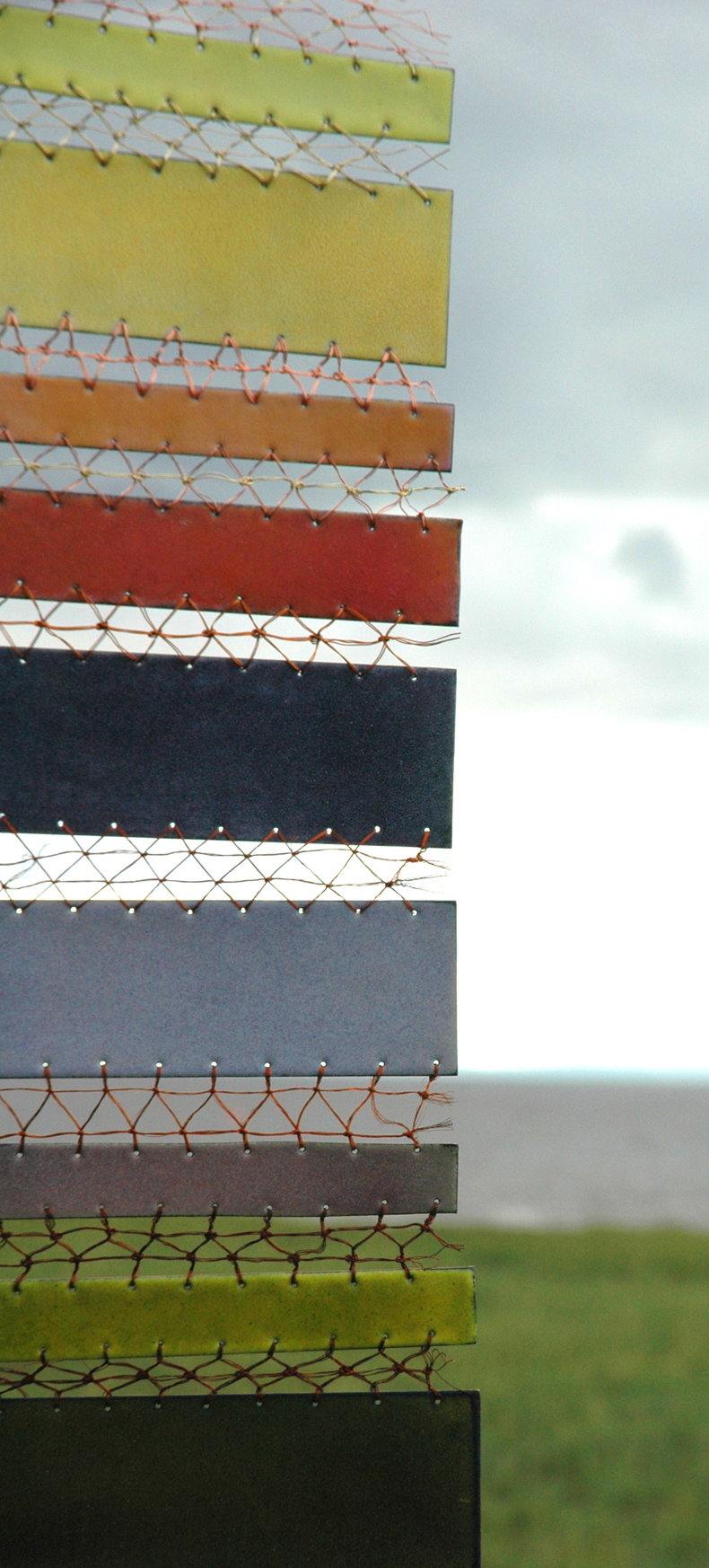
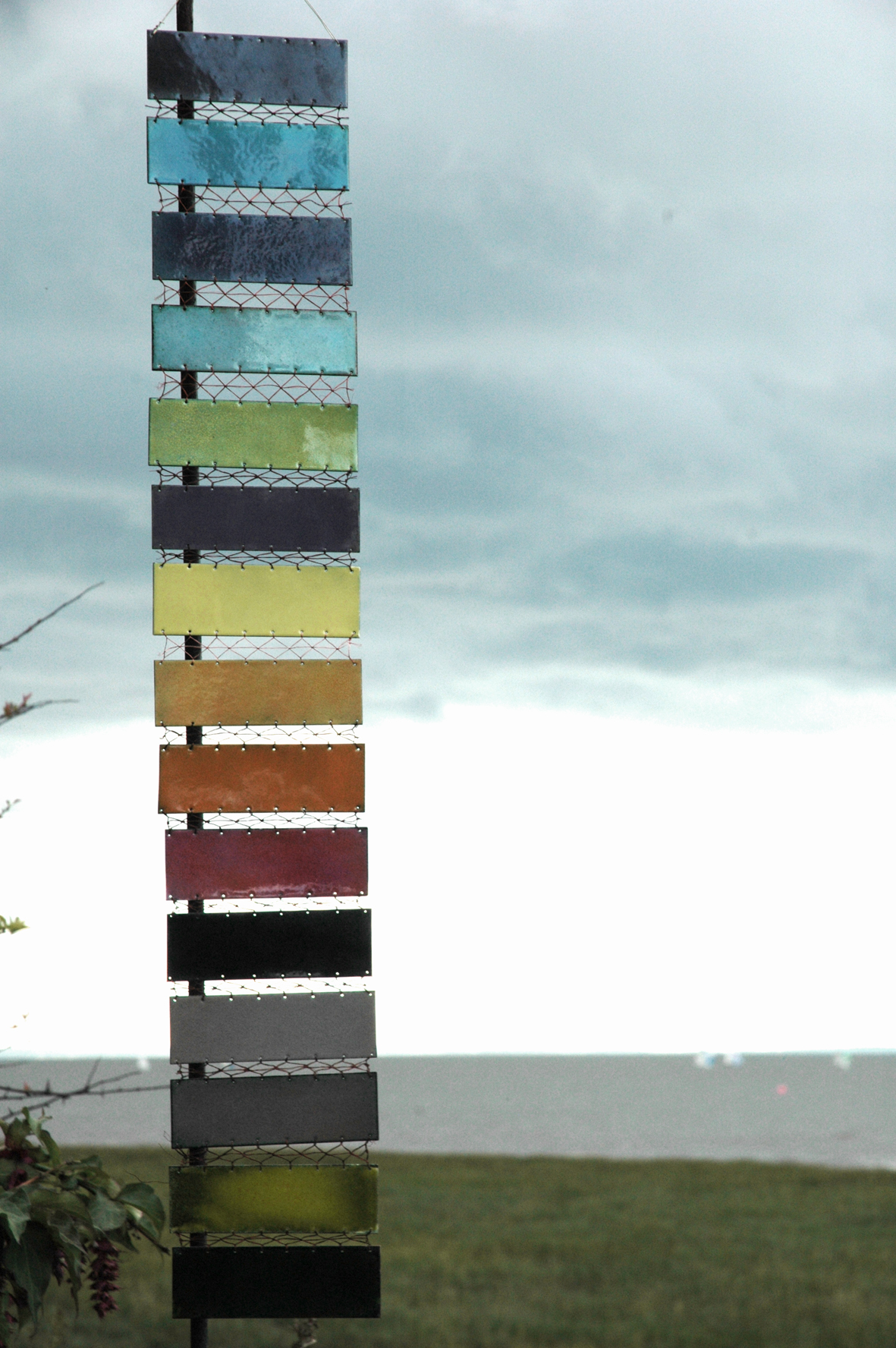
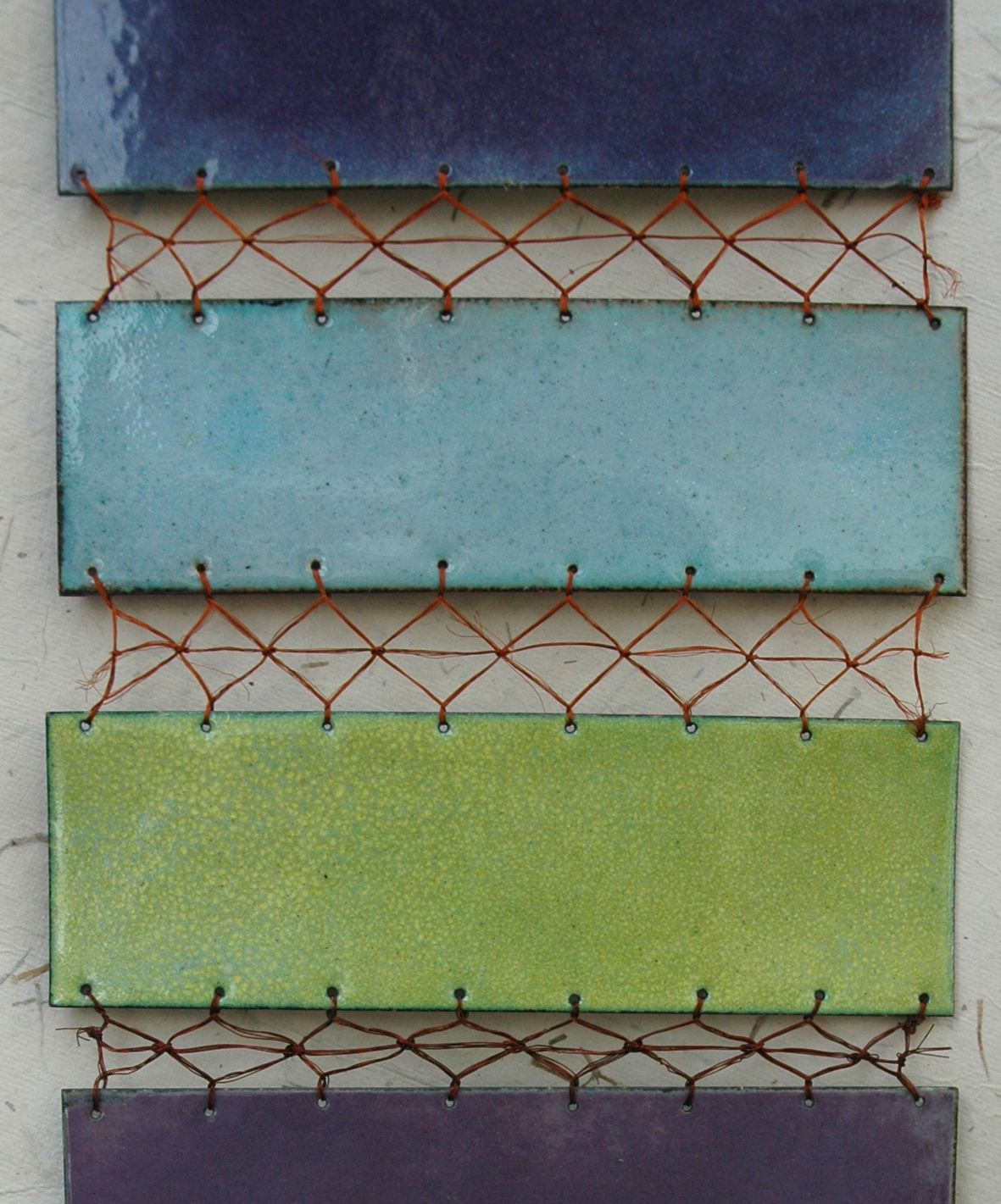
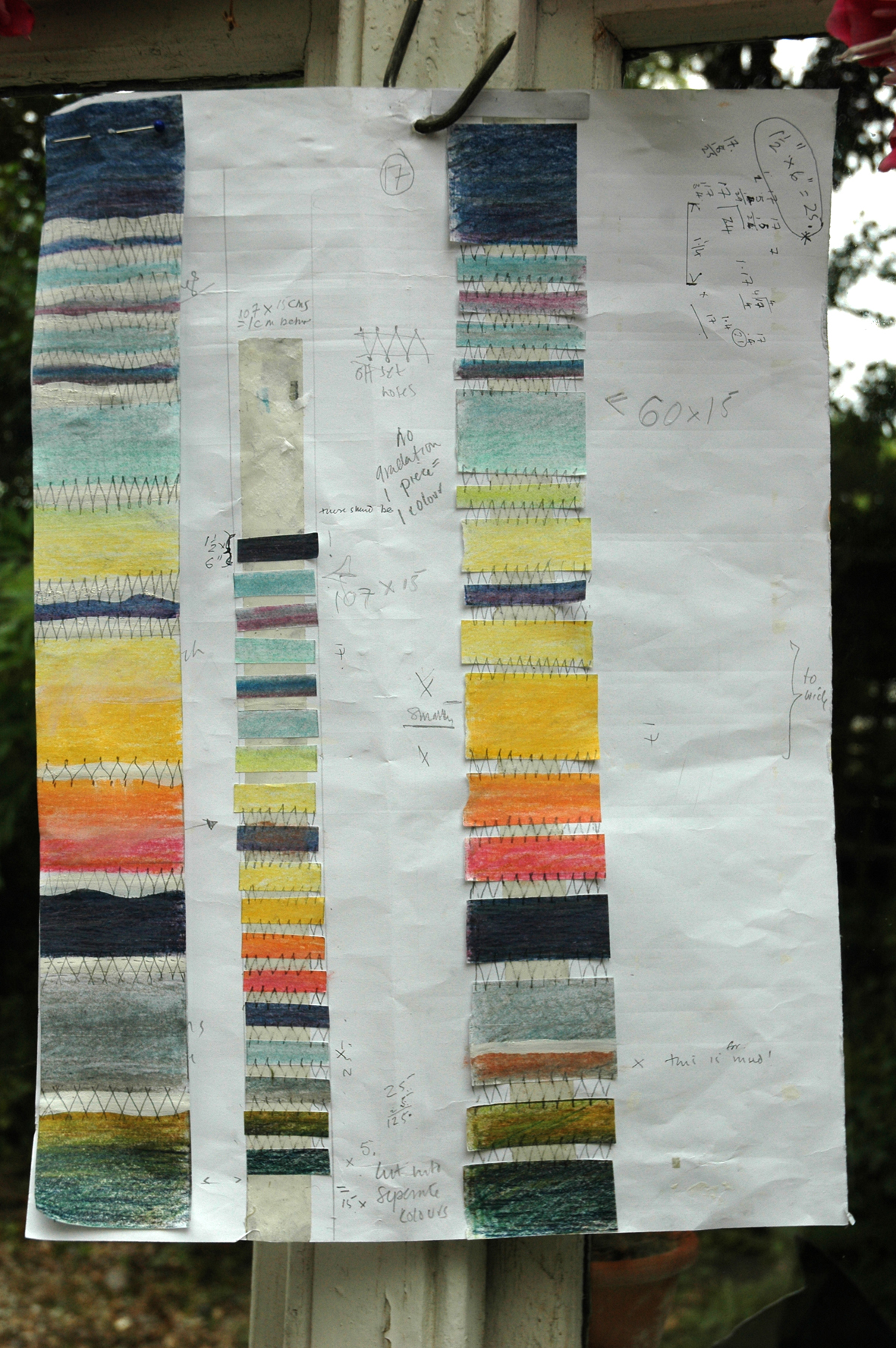
One week on and I have finally finished stitching the sky samplers. The work has made me reconsider my initial ideas and now I am thinking how to develop this new work. I have envisaged these pieces for several months and thought that I knew how they would look, but these samples are not working as well as I imagined. I am not sure if this is just a matter of scale, they are quite small – one is 15x60cms and the other 15x90cms, other enamel panels I have made using this stitched technique are much bigger and have more presence. So I probably need to leave them alone and view them in a few days/weeks time to gauge my reaction. But I did make several decisions that I am certain about.
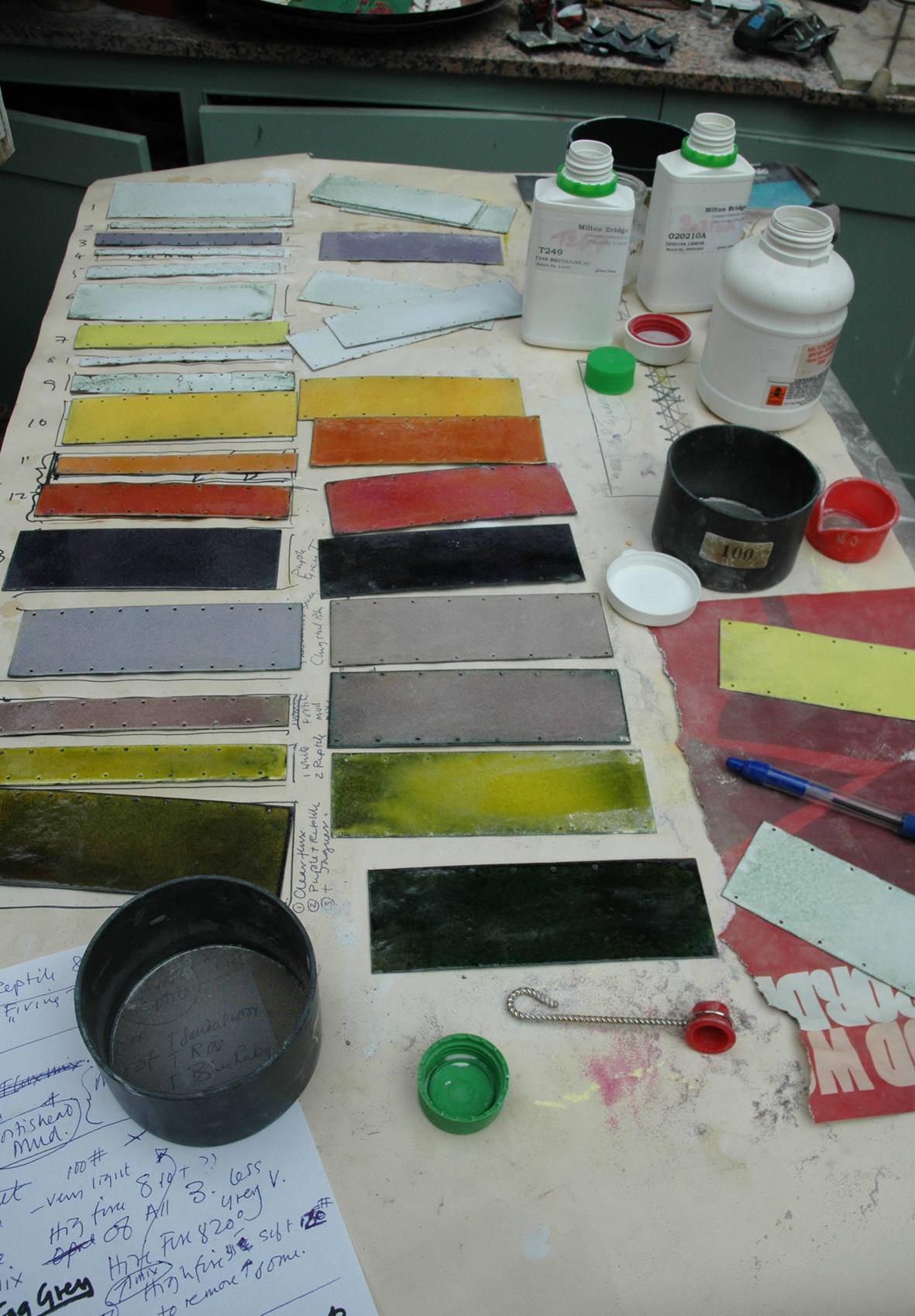
I decided to keep the stripes in different widths, as opposed to the same size blocks as in commercial  colour charts, but I am not sure that I need so many stripes as more interesting effects may be gained by the gradation of the colours in one stripe – so the yellow sky stripe would be wider and go from rich coral pink through apricot to yellow to cream. but I will loose the lovely slinky movement of the strips, I will need to sample further…..

But these samples are successful in giving me the technical information I need:- an initial colour gamut to work from – I made the same size sample into a the colour reference with each recipe on the back. The glossy surface of the enamel has been chemically treated to make it matte, this also softens and distances the colours.

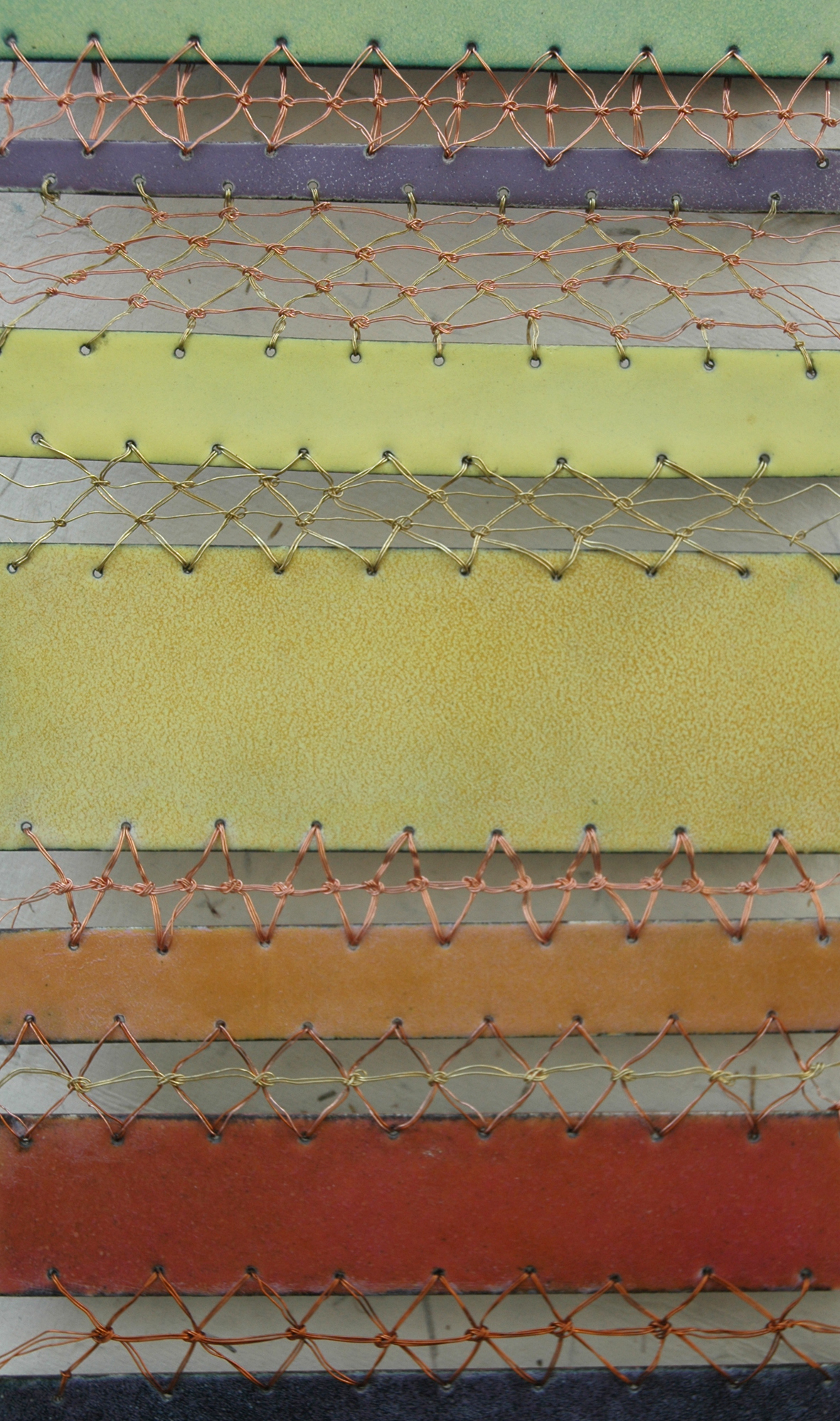
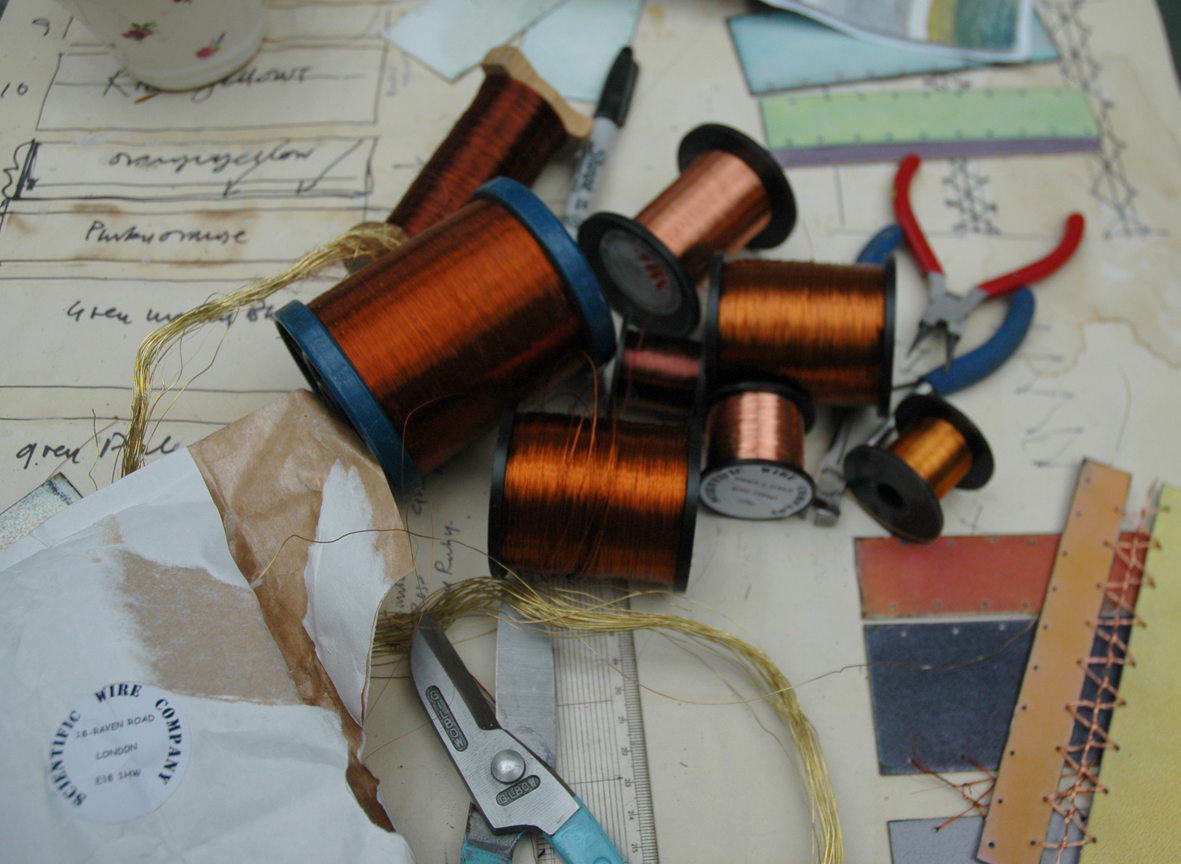
I decided that the actual stitching will be uniform throughout as in the sample on the left, and to use only copper coloured wires, from pale to dark, to unify the stitching; and I tested to find the best gauge of wire to use. So I ordered  more wire from the Scientific Wire Company web site and it came in time for me to complete the work within my self imposed deadline of a week.

When stitching the pieces with the wire, I did consider whether I was actually stitching or threading – but why do I want to stitch this particular work – is it because I just want to make enamel fabric to this format again? The original stitched strip enamel hangings can be seen in the Gallery section of the blog.

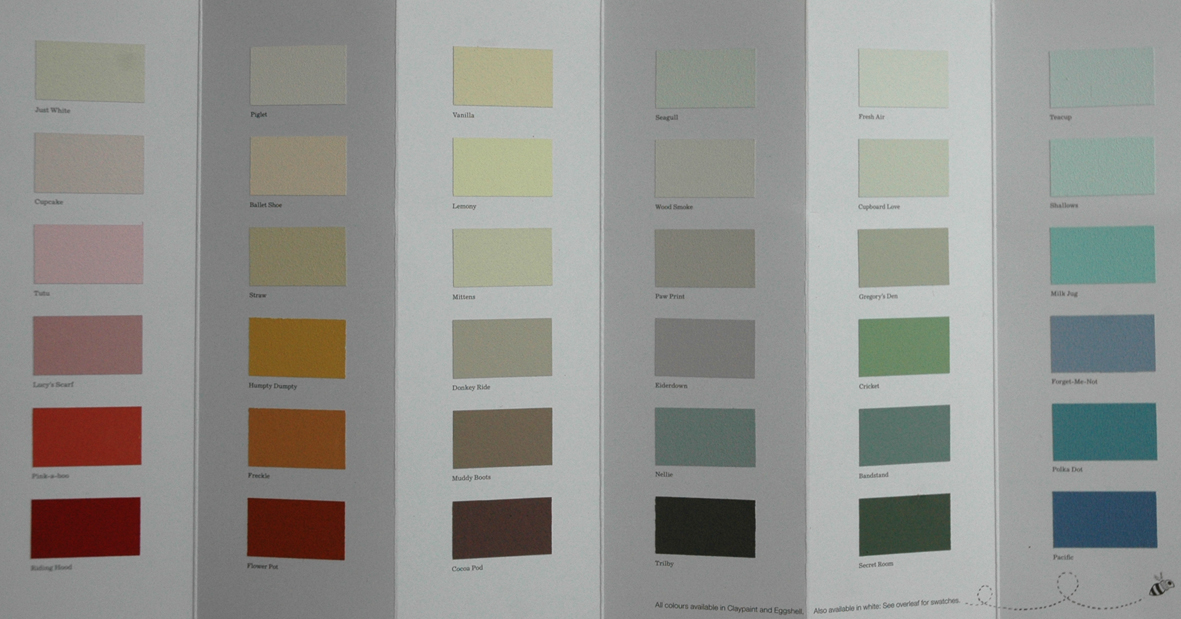
By chance I have just received a new paint chart, the idea that first made me see a way of using my original sky drawings, and  I realised that what is so alluring here are those perfect rectangles of pristine colour, whether in paint, silk or woolen threads they give us a sense of order and are in fact complete entities in themselves.

So how will my simple strips of colour give the impression of a whole sky and why do I want to do this? to contain it? to claim it? to make a version of it for myself, in a size I can manage? The sky is limitless, I am trying to convey the beauty of the colour in a tiny fragment -or does it need to be big – on the scale of a window? Maybe I should make a whole series of different striped skies and hang them side by side as in the chart layout?

So here it is – the dilemma of  making your own work from your own ideas – do you allow the work a life of its own and let it lead you where it will or do you stay faithful to your original idea and ignore all the possibilities that making affords you?  At present the sky samples fall between these 2 options, which is why I am not sure how to continue just yet. And significantly it is being developed just as an idea, not a product as yet. I have heard writers talk of the characters in their novels who suddenly take on their own life and guide the story, is this what I need to let happen?

Anyone got anything to say to me about this?

Enamelling Skies

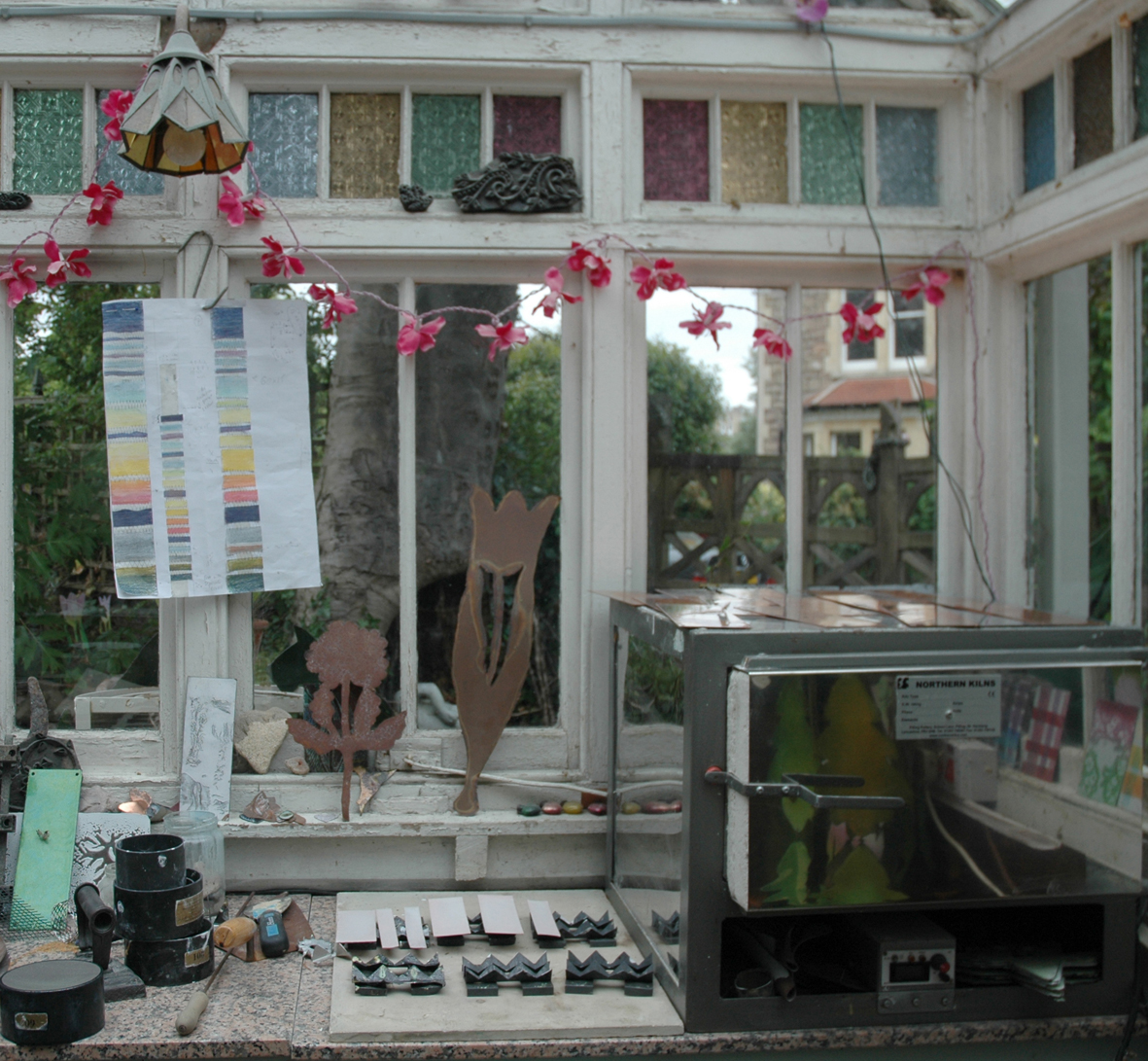
enamel studio with colour chart and everything neat and clean ready to start firing in the small kiln

I took advantage of the first dull day in recent weeks to start enamelling the cut copper samples for the Sky project. My enamel studio is based in an old conservatory- simply because this was the only space suitable to house the larger kiln and the required water and electricity supplies on the ground floor – but it faces south and gets very hot and even hotter when the kilns are firing, so I tend to enamel in cooler weather

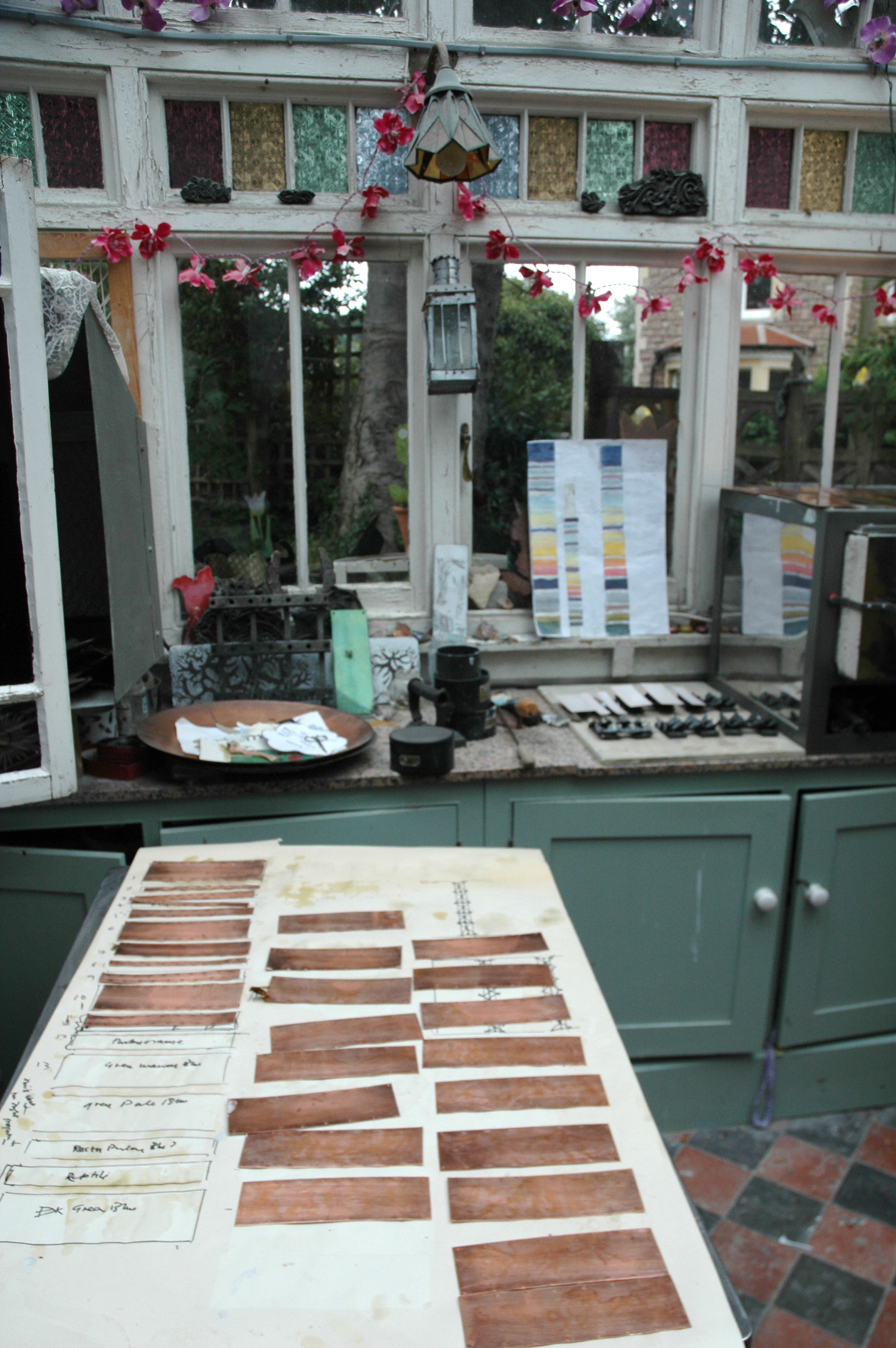
sample copper blanks laid out ready for firing

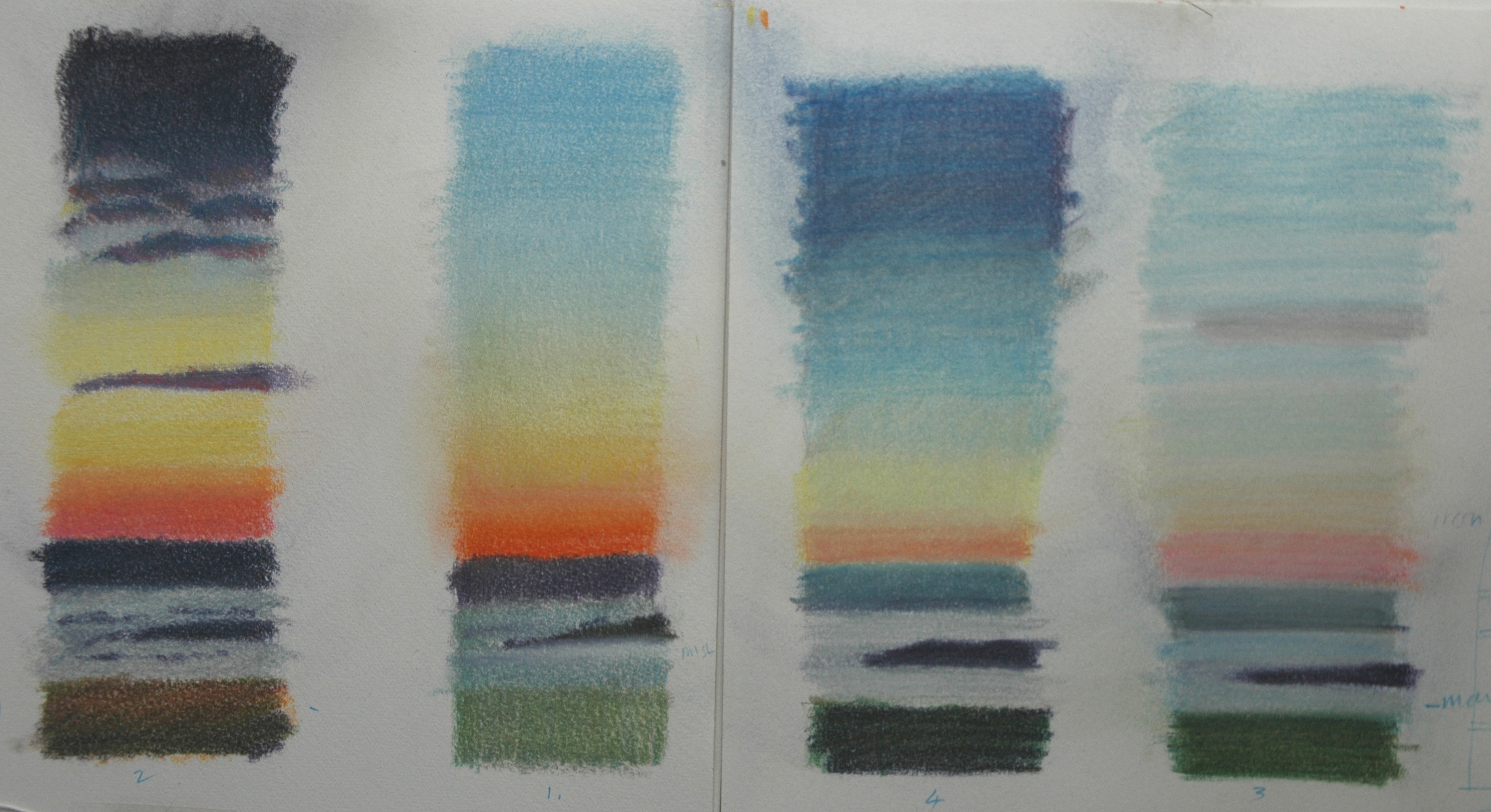
I had drawn up several colour studies for this work as I am not sure whether I want to have the stripes of the sky sized in relation to the drawings or seen simply as a colour chart – hence the 2 sets of samples opposite. Each sample had been cut, drilled and cleaned in preparation for firing, now I had to make up the colour recipes from one of my sky studies shown in the previous blog, Severn Seas Skies. What I find fascinating about enamel and what drew me to want to make this work is that using several transparent colours over different ground colours it is possible to achieve subtle and glowing tones, perfect for describing the coloured air of the sky. The sky I chose to work from is the first sky on the left of the picture below, plenty of scope to run through a gamut of contrasting colours.

sketches of dawn skies from 2009

The actual colour chart that I worked from can be seen below, it is as close as I can make using my pastel crayons which can be blended into many subtle shades. I will have to buy some more enamels later when I start the big pieces but meanwhile I work with what I have, this way I can discover some interesting outcomes and learn a lot. Making colour with enamel is not the same as using any paint I work with, I suspect it is like using glazes in tempera or certain types of oil paints, but I find it most like silk screen-printing which can be used for the over printing of transparent colours.

color chart hanging in studio window

One of the things to get used to with enamel is imagining the colours before you have fired them, some pale colours are just white in powder form, and sometimes different batches of the same colour  look totally different in the packages than the last batch you worked with – they always fire the well enough though. But it takes a long time to get used to all of this specially if you are a colour-control-freak.

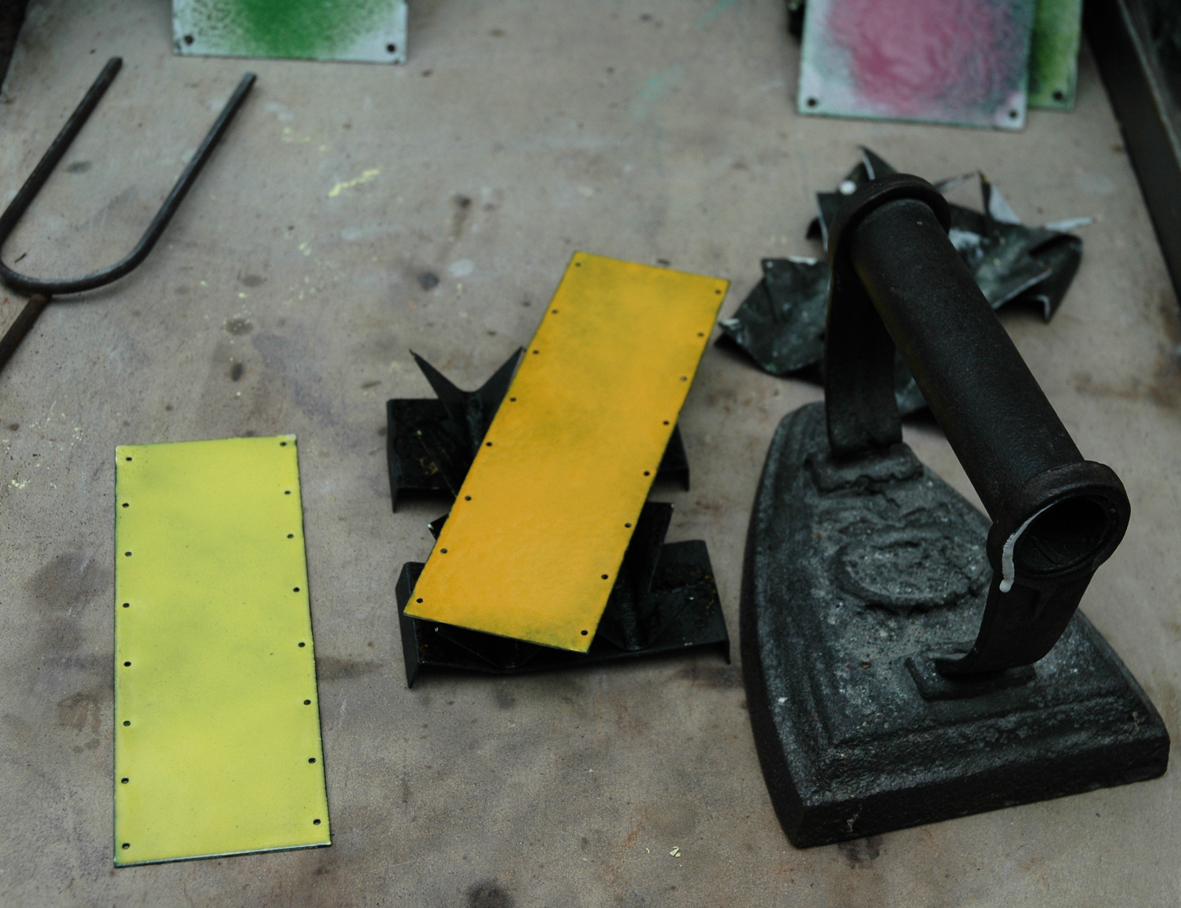
colour difference between cold and hot enamel, the old flat iron is to keep the plates from bowing when cooling, I found this one after a long search round junk shops - like 'Wagon Wheels', it looked a lot smaller than I remembered.

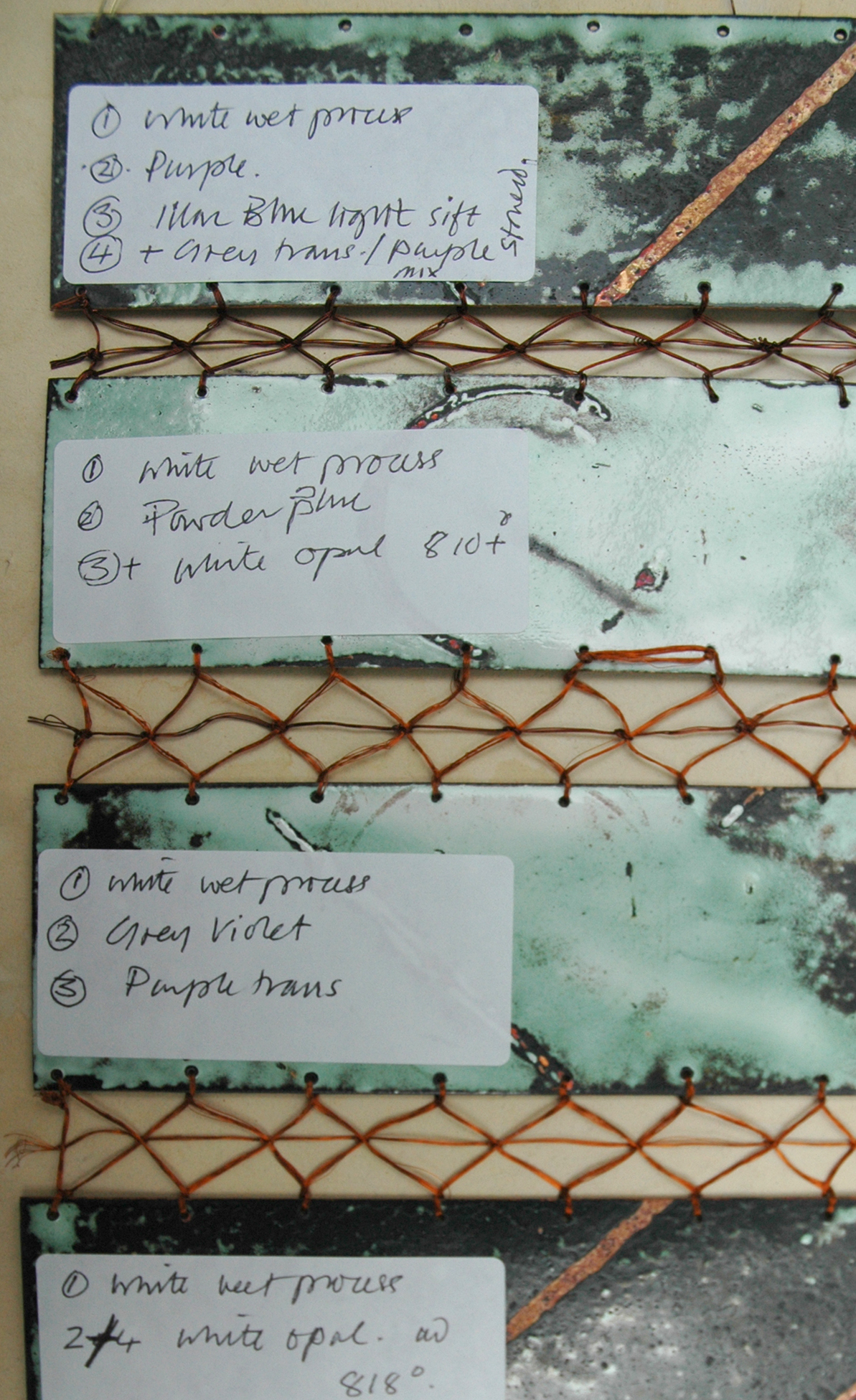
I try to write the colour recipes down as I develop them, the scribbled notes can be seen below showing the half way stage of the sampling session.

midway through the enamelling with written recipes, colours, firing times and sieve meshes observed

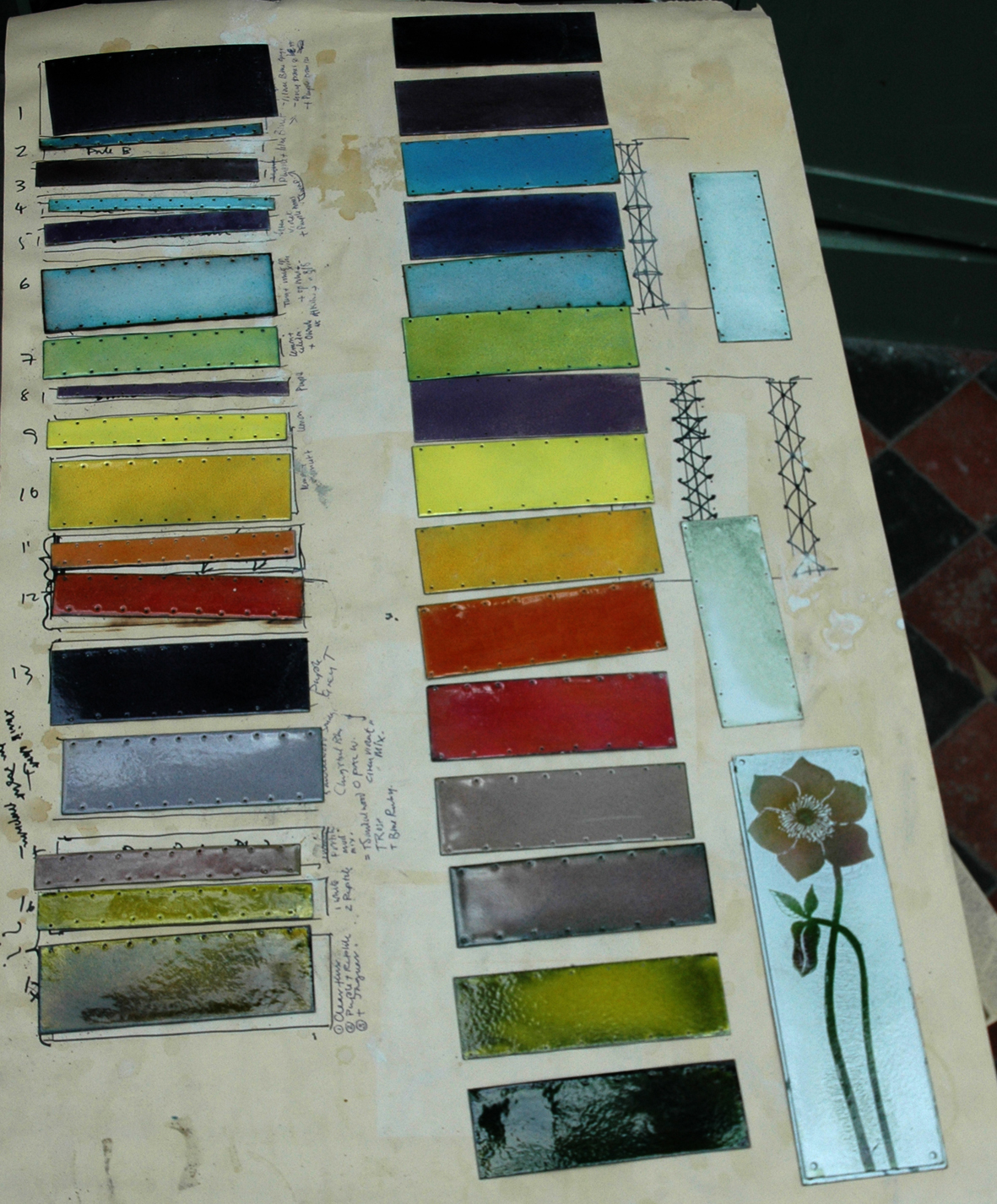
By the end of enamelling I have the 2 sets of samples and the recipes are sorted, but one unexpected and useful thing is that the 2 colours I made for the muddy water of the estuary are similar to a paint sample I was given for a commission to make a set of door plates, the hellebore doorplate is shown next to the colours below…..and most poetically, the enamels that make up this particular mud shade are called Sandlewood, Blue Ruby and Rose.

finished sample colours and hellebore door plate in tones of "Portishead Mud"

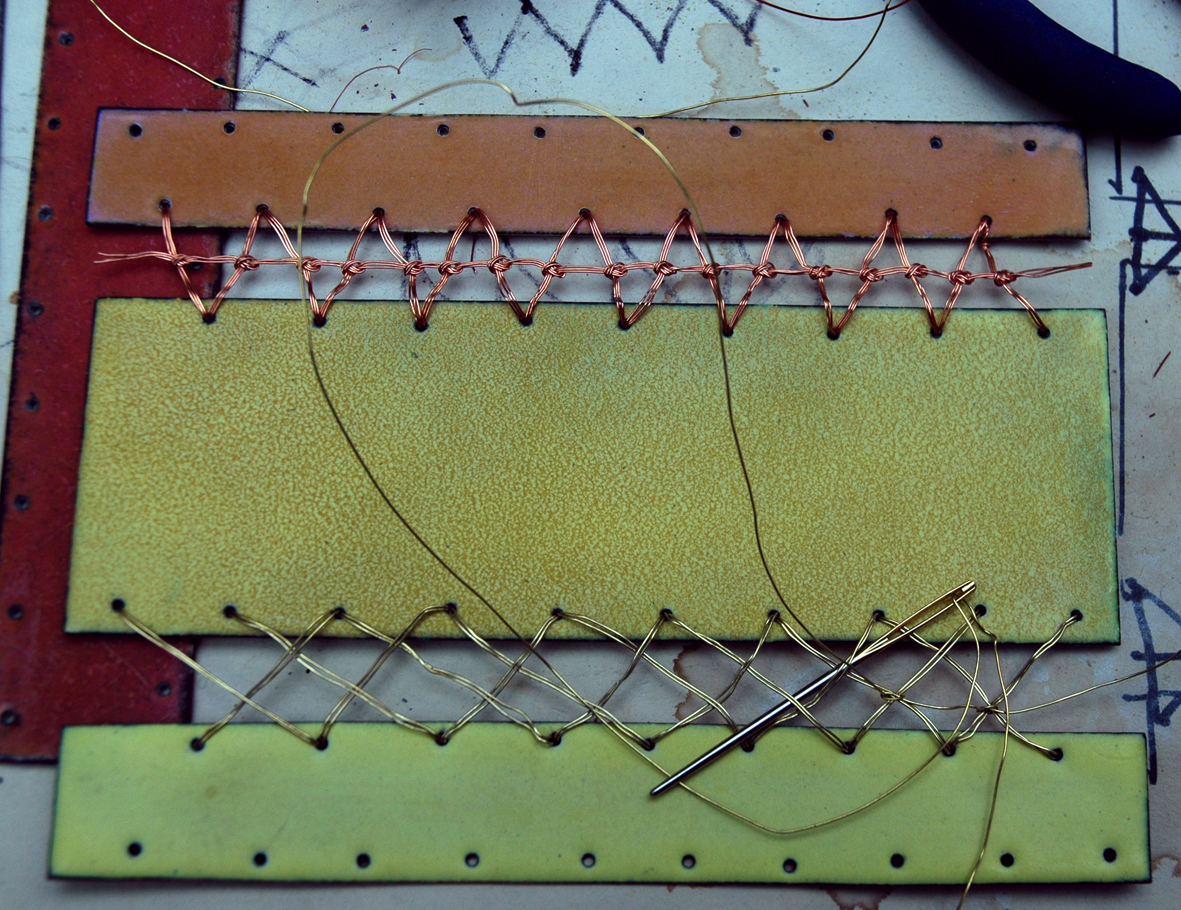
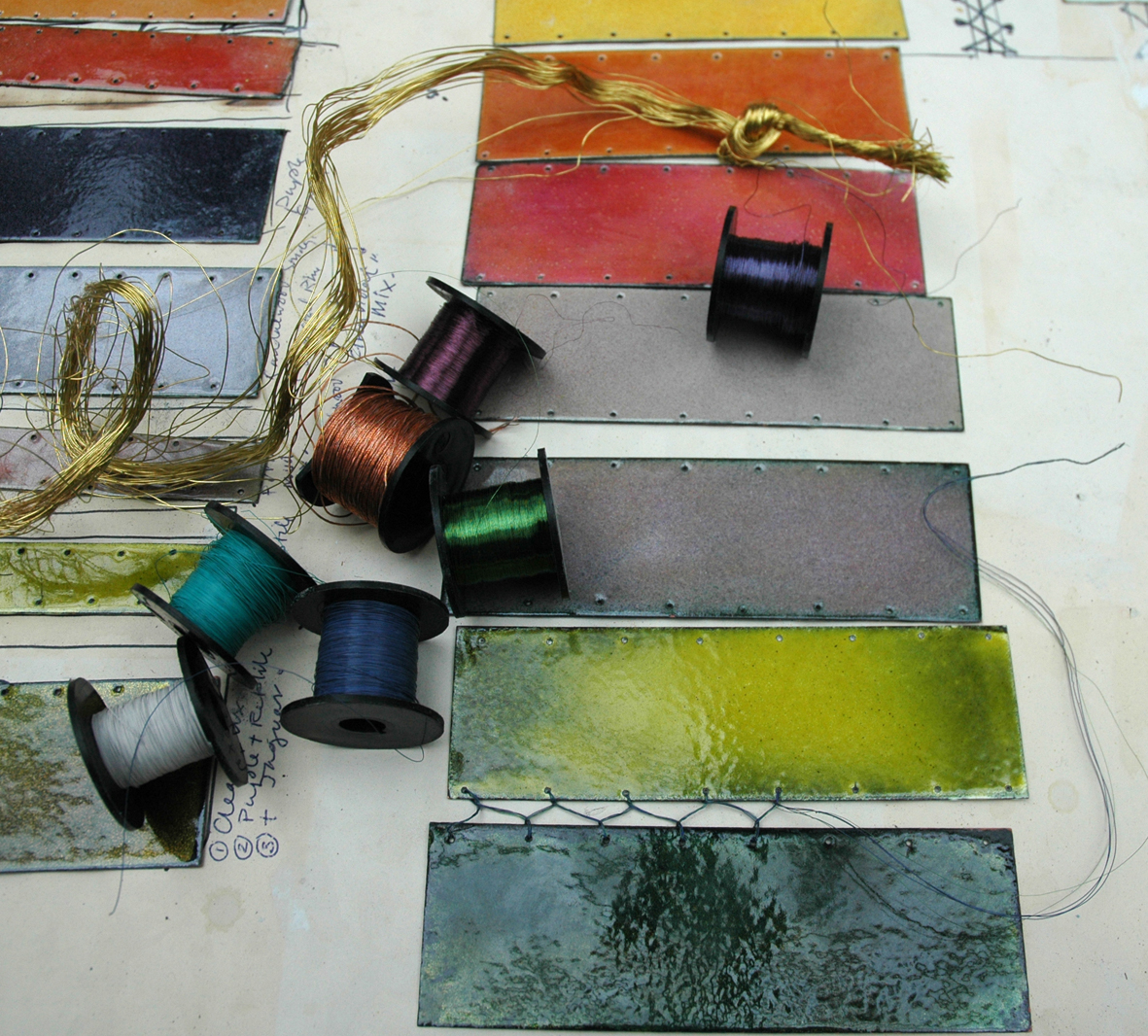
Now my next task is to decide the colour and thickness of the  wires for  stitching the plates together to form a panel; the first idea of muted blues and greens isn’t working…..and I feel I may need to get rid of the shine – I will keep you posted on my progress.

Sample stitching with coloured wires.

Embroidered Ceramics.

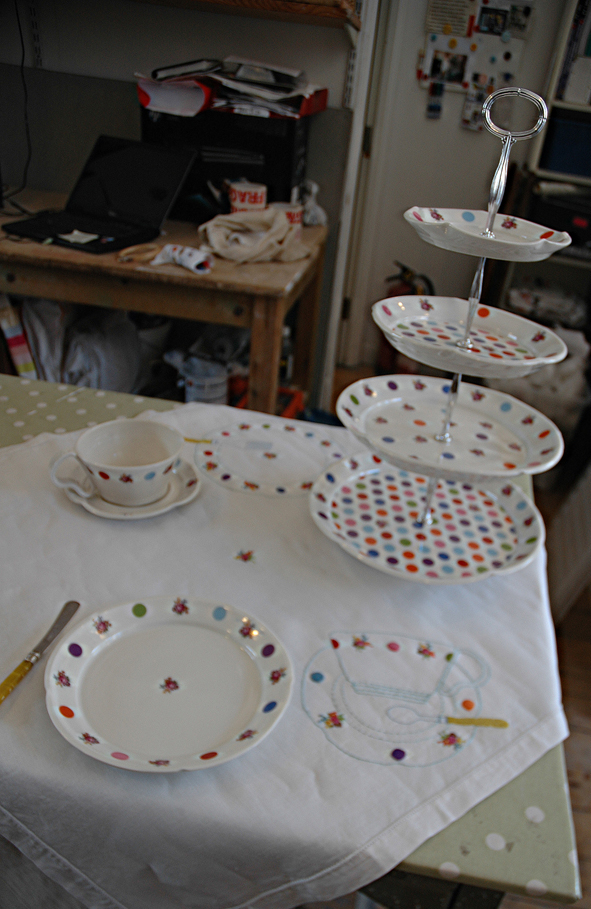
I have just spent a couple of days doing a proper embroidery – stitching flowers and spots onto a table-cloth for Hanne Rysgaard to display her ceramics. She is showing large selection of her current work in the Aberystwyth Arts Centre shop, from mid August to mid September. I offered do this the last time I was working in her studio, as she was just preparing to make all the stock for this exhibition. I thought that a stitched version of her pieces would make a good centre-piece for the collection.

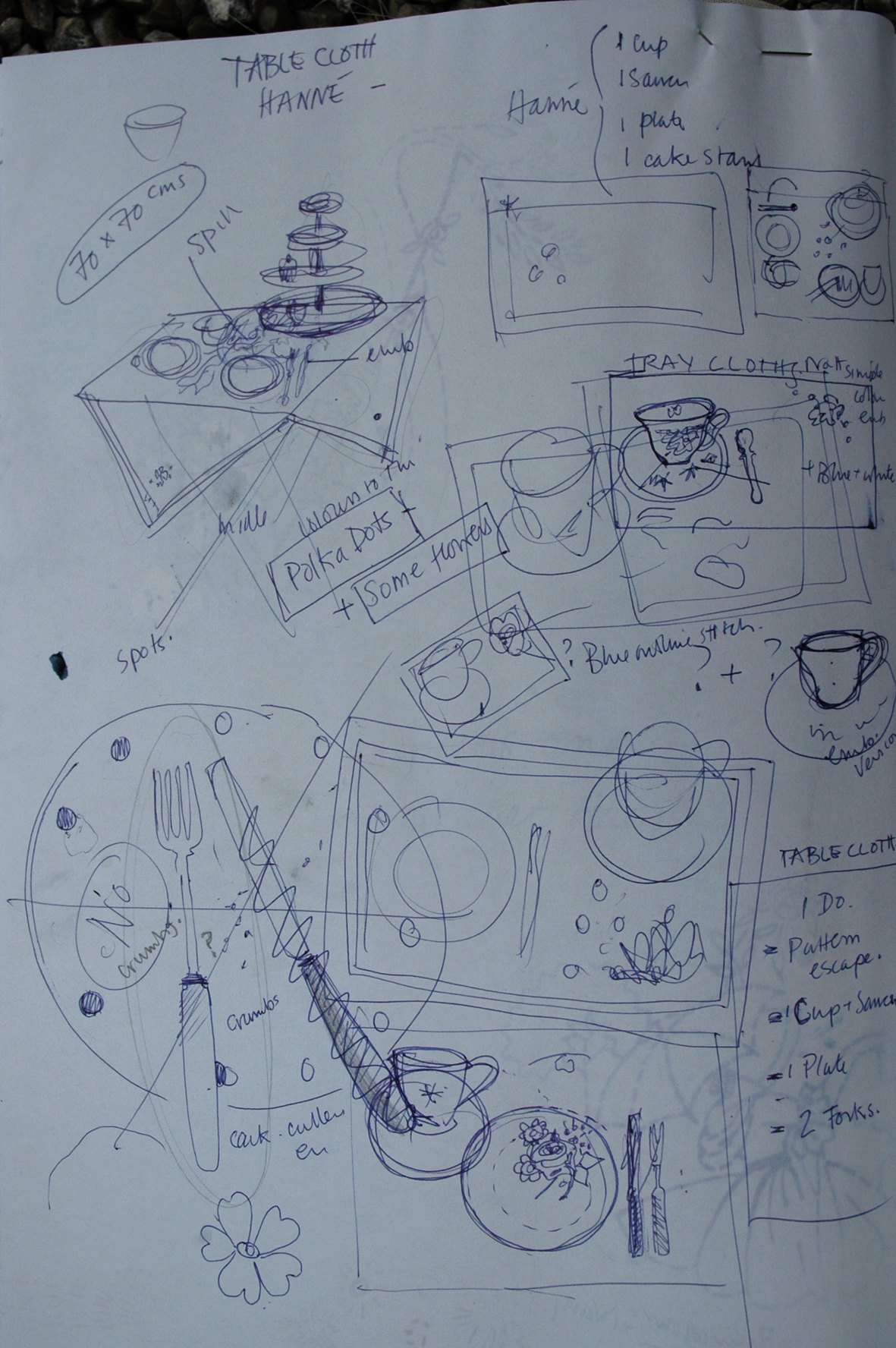
first ball point drawings for Hanne's table cloth

While speaking to her over a cup of tea, I put a few ideas down in my work-book; this is real “back of the envelope” stuff, using a ball point pen – which is always good to draw with, but the sometimes the line it leaves is a bit sleazy –  and as often happens the very first idea was the one I used. Hanne immediately liked the whole idea, actually I think she just liked me drawing it out for her. But I do feel that when you get the initial idea for a piece of work, the first drawings, even if just scribbles, contain an energy that subsequent studies don’t, and if referred back to they can often re-assure you through the inevitable time when you doubt your decision to make the work.
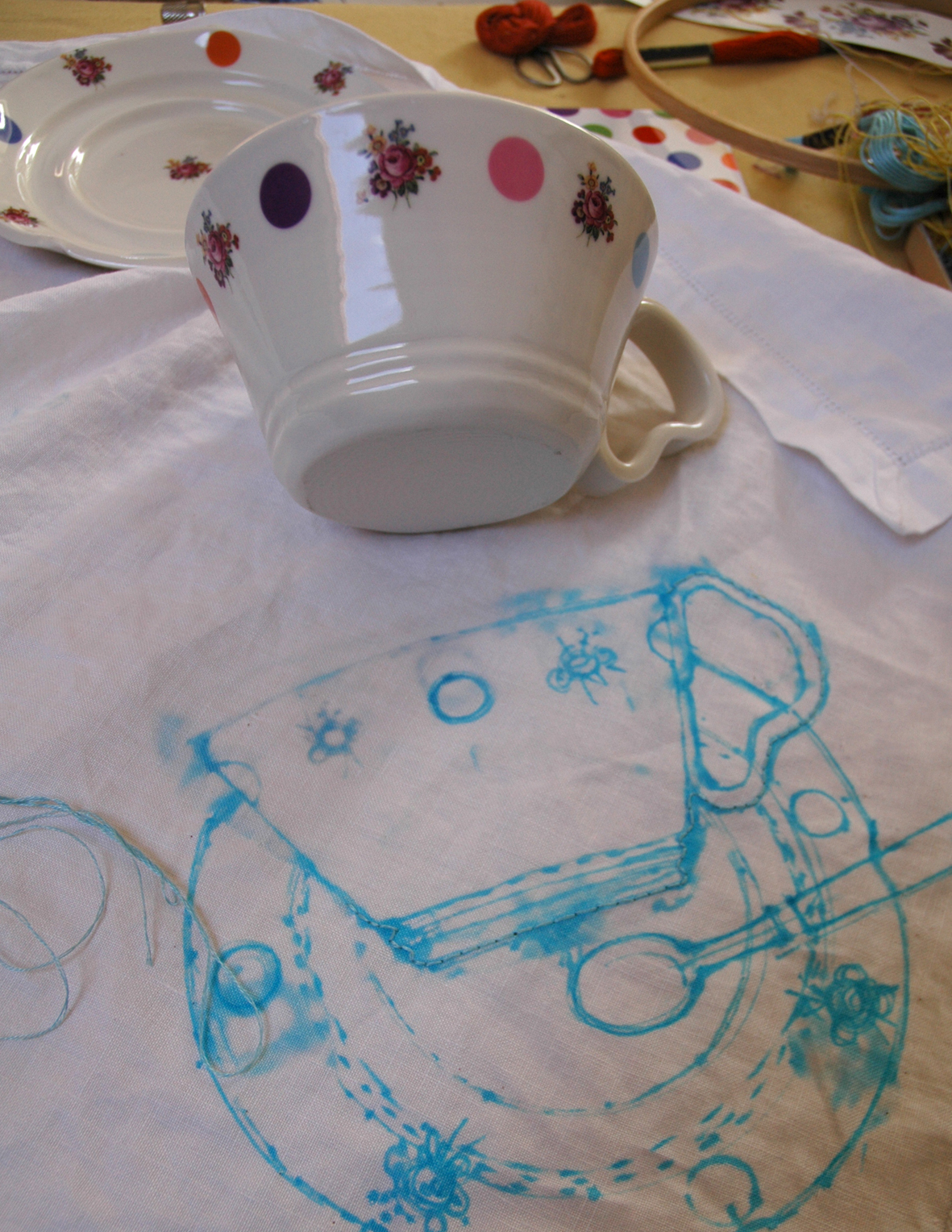
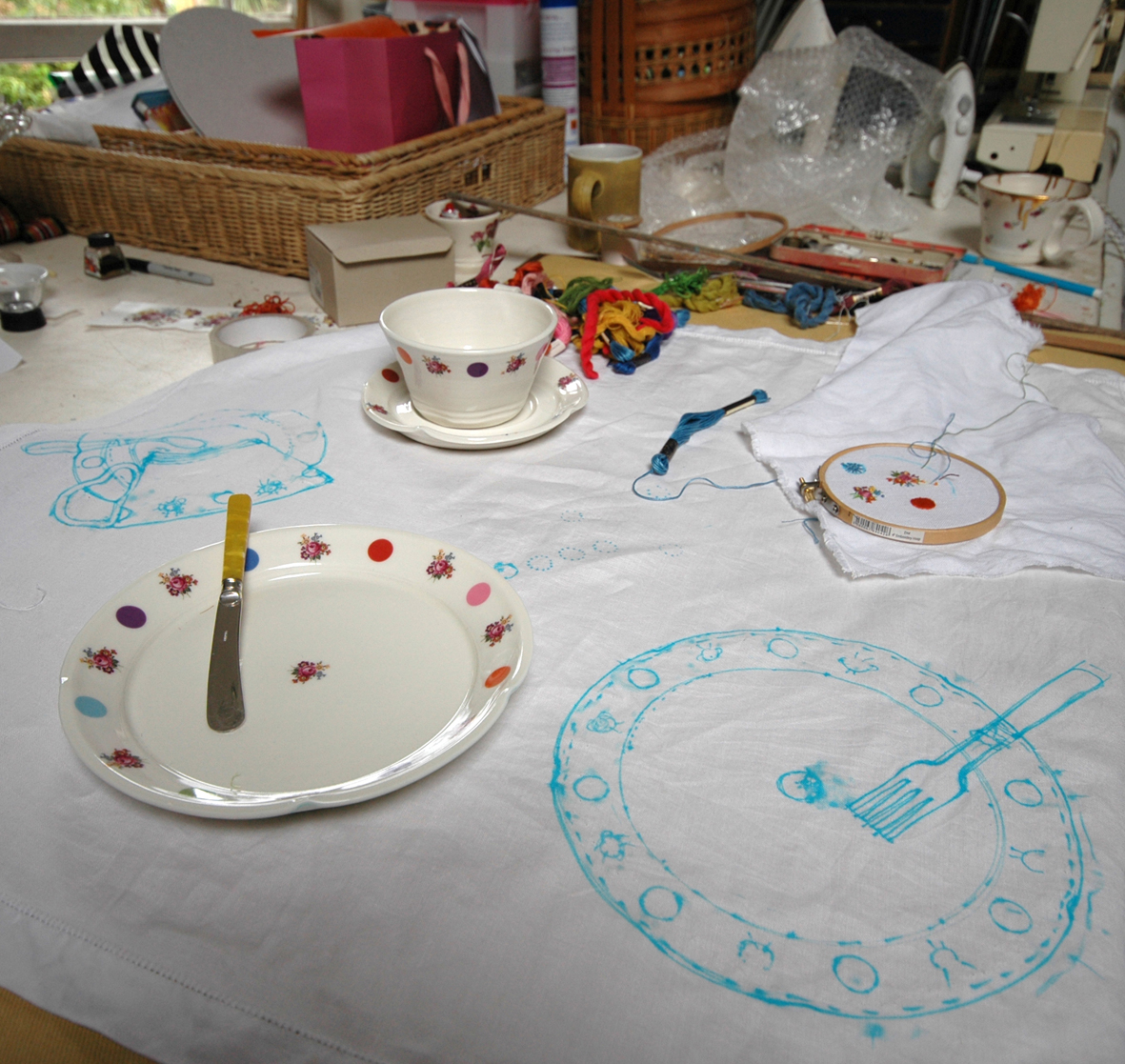
The next drawings were on the linen tea-cloth in water erasable pen, Hanne made the actual pieces for me to work from and I took them home to my studio and set them out to draw around.

table cloth set out in studio

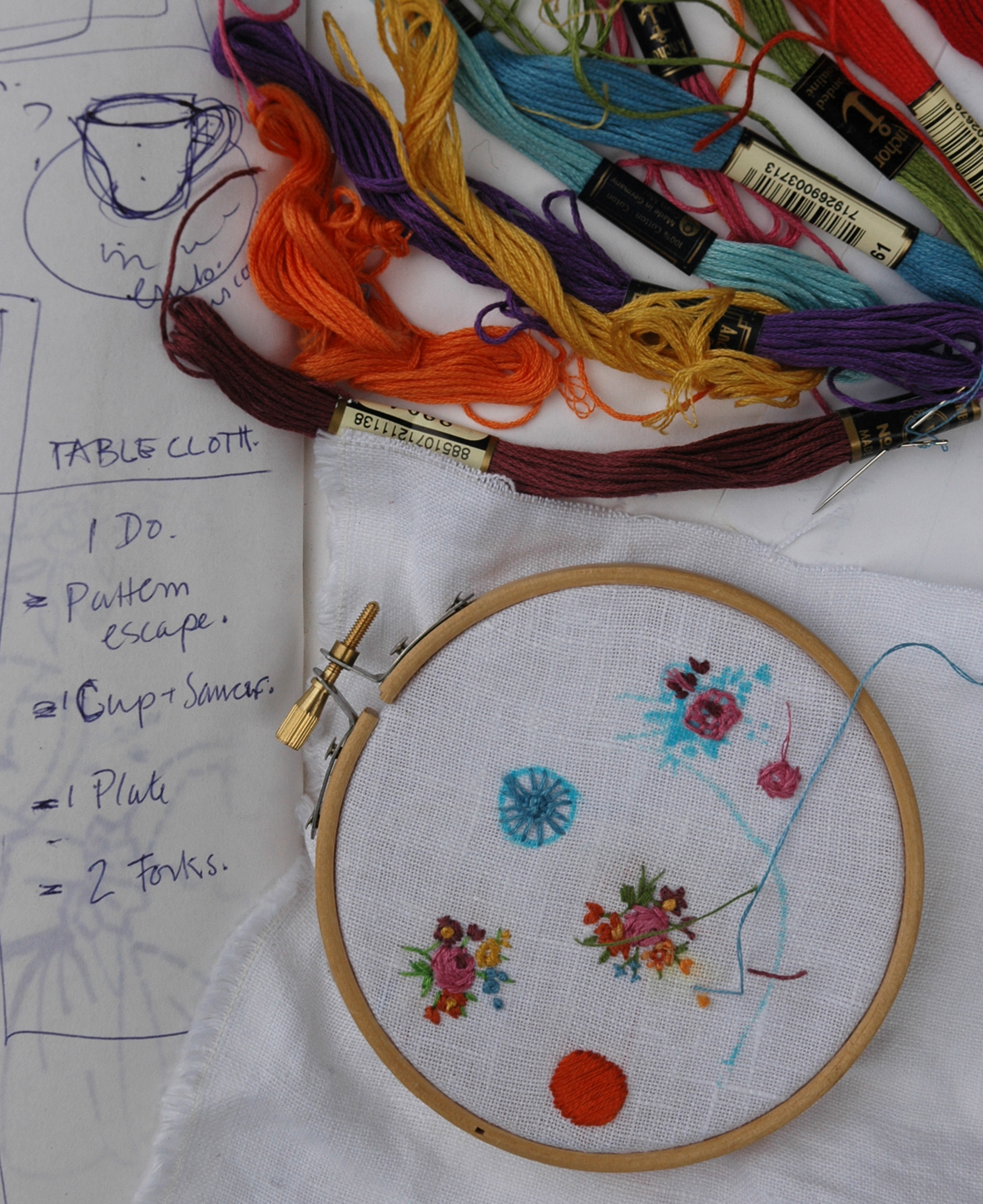
The tiny flower arrangement was quite a challenge to stitch, it was a bunch of roses and auriculas with a few forget-me-nots, quite difficult to copy within a 2 cm. spot and this had to be repeated 13 times…..by comparison the spots were easy-peasy though they are all slightly wonky.

stitched sample for spots and flowers.

While the flowers and spots had to be stretched for the embroidery I always prefer to stitch without a hoop and the outlines of the ceramics are freely stitched, so much easier to handle. I feel that the hand stitching looks right for the hand-made quality of the ceramics.

embroidering the outlines on the un-stretched linen

Once the embroidery was finished, washed and pressed I delivered it and it was a relief when Hanne just whooped with delight when she saw it. It was immediately set out at the back of the gallery/shop at Blaze, where we both set about taking pictures.

Hanne looking impressed with my embroidered version of her work

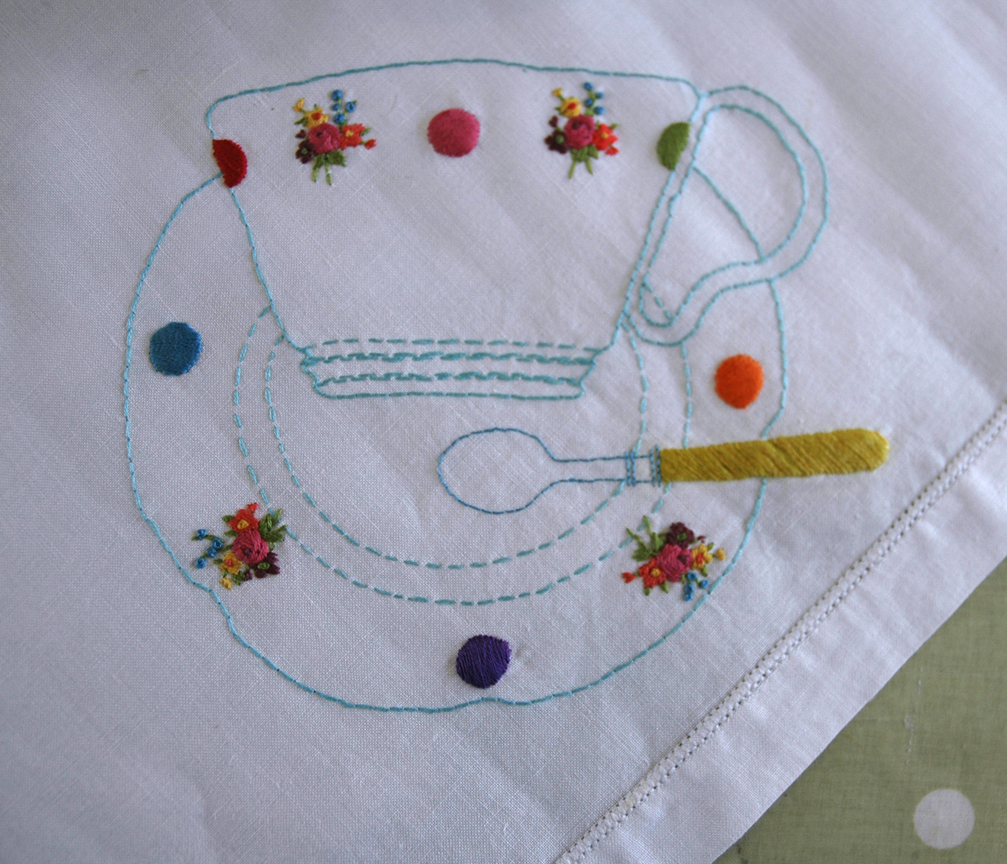
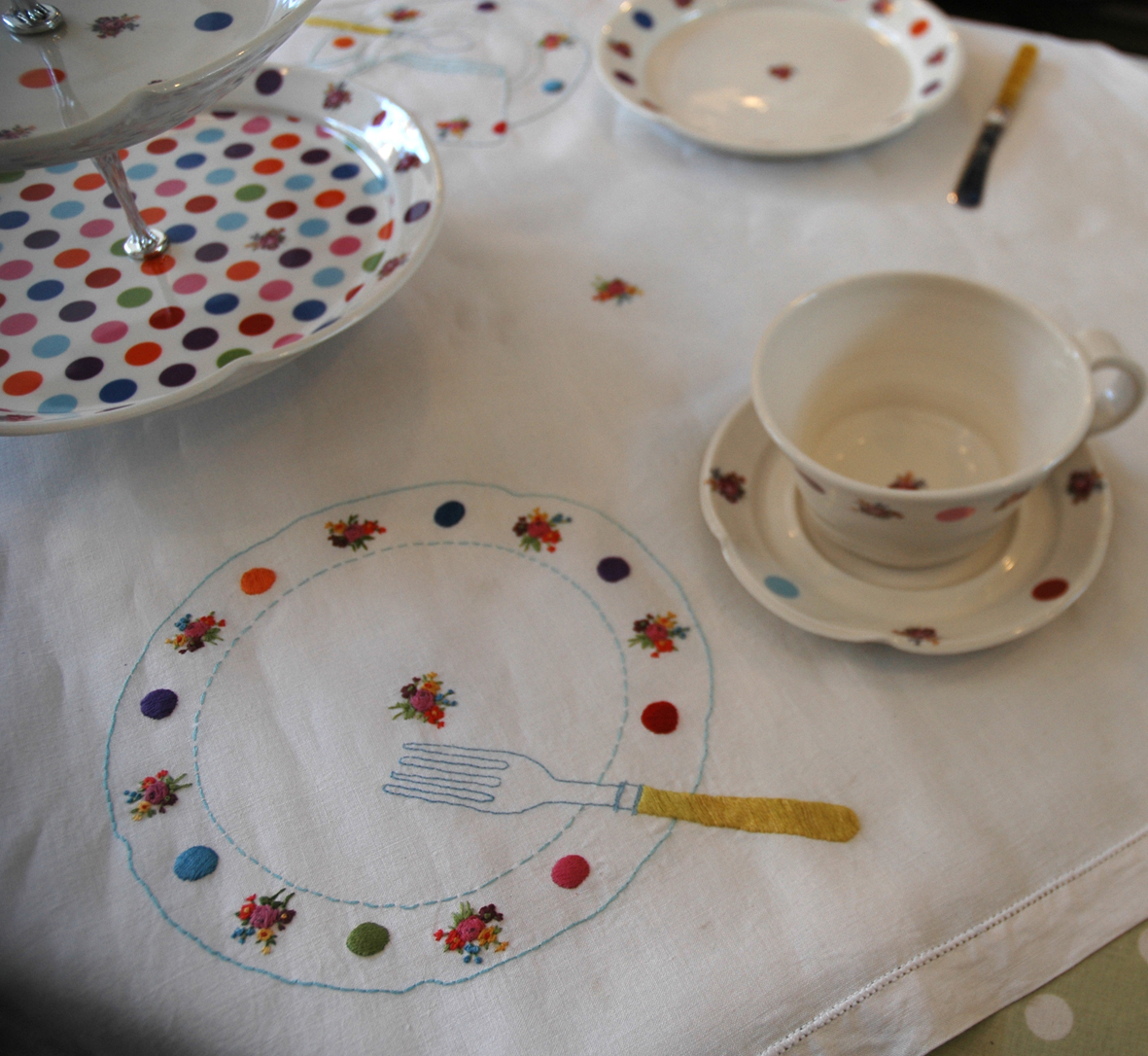
Here is a close up of a section of the cloth complete with the embroidered cake fork, the real butter knife used as the reference, can just be seen in the background.

close up of embroidered tea cloth

and here is a view of the whole set with the magnificent 4 tiered cake stand.

More than Mending

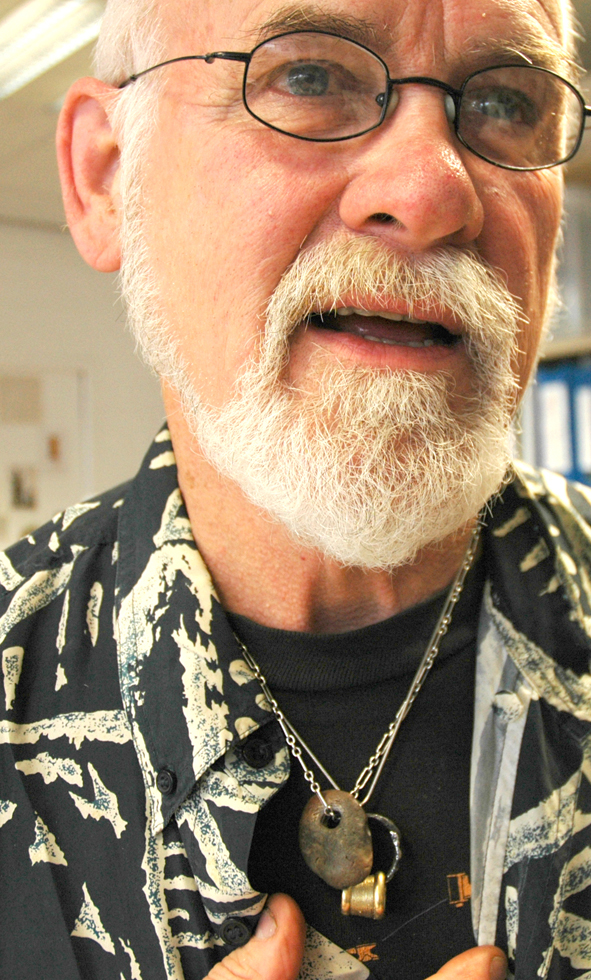
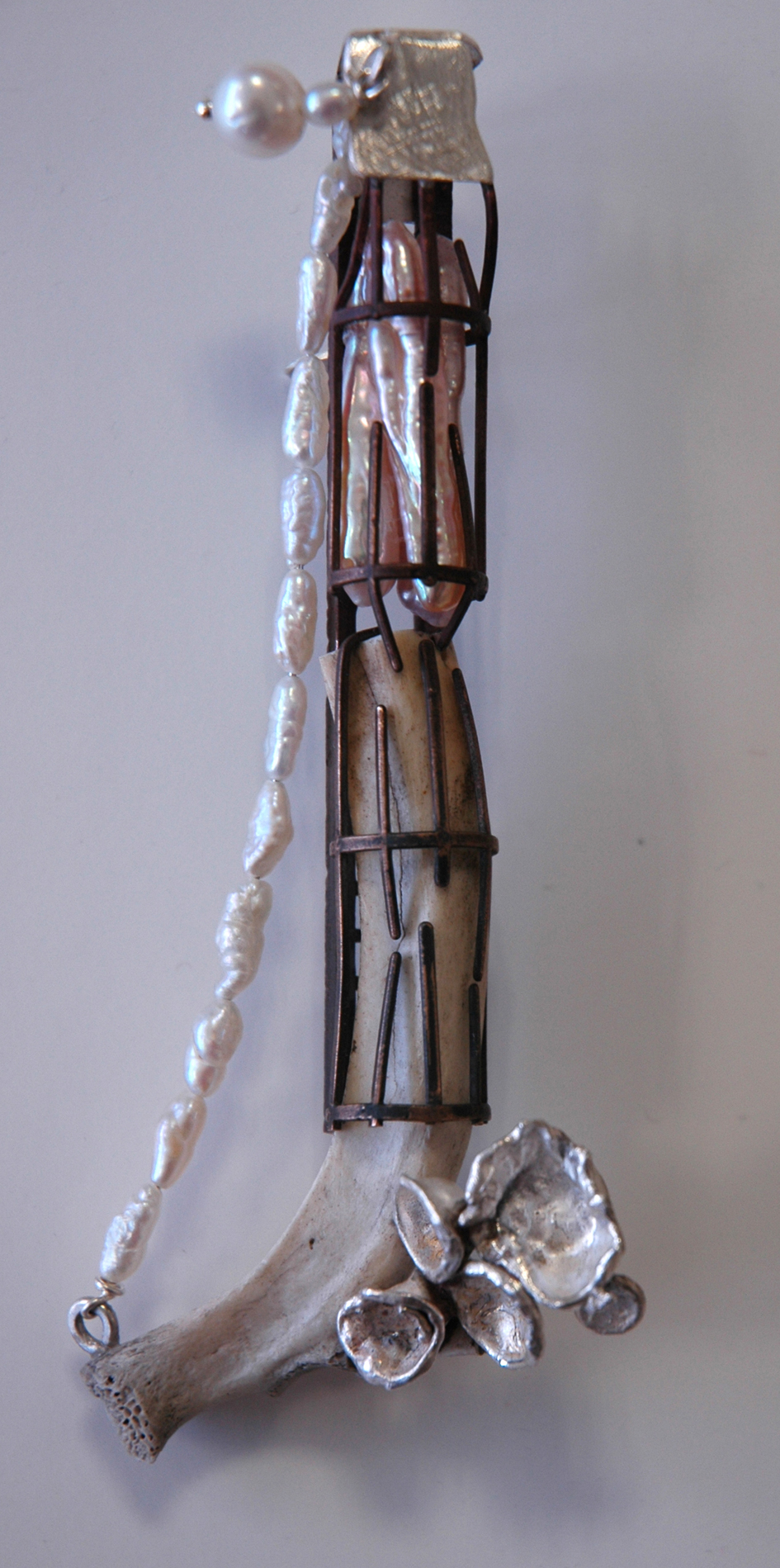
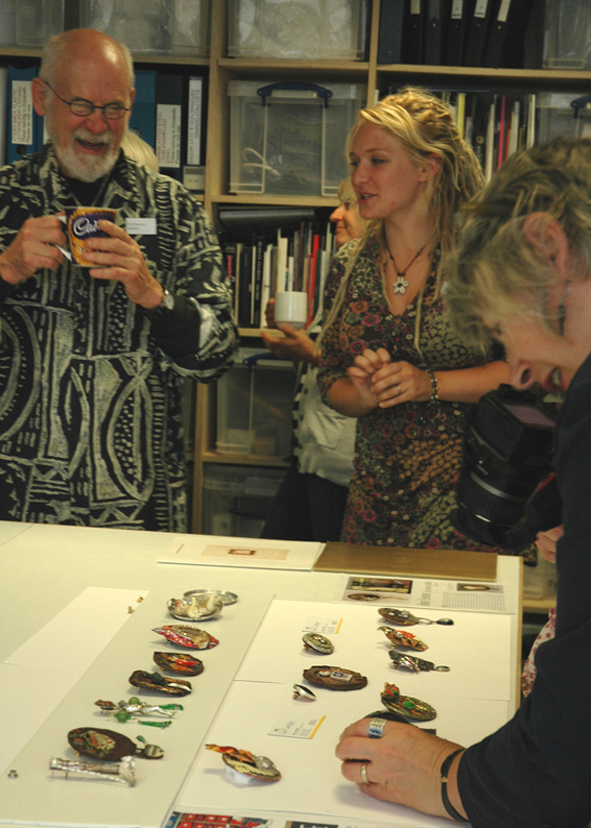
I recently attended a symposium run by Jessica Turrell a Research Fellow at UWE.Bristol, to view and discuss new research into ideas and techniques for making vitreous enamel more readily available for jewellers. At the end of the day the delegates were invited to view work by Robert Ebendorf, the Carol Grotnes Belk Distinguished Professor for the School or Art at East Carolina University, hereafter known as Bob. He had been conducting an applied arts workshop at the Enamel Research department which culminated in the symposium.

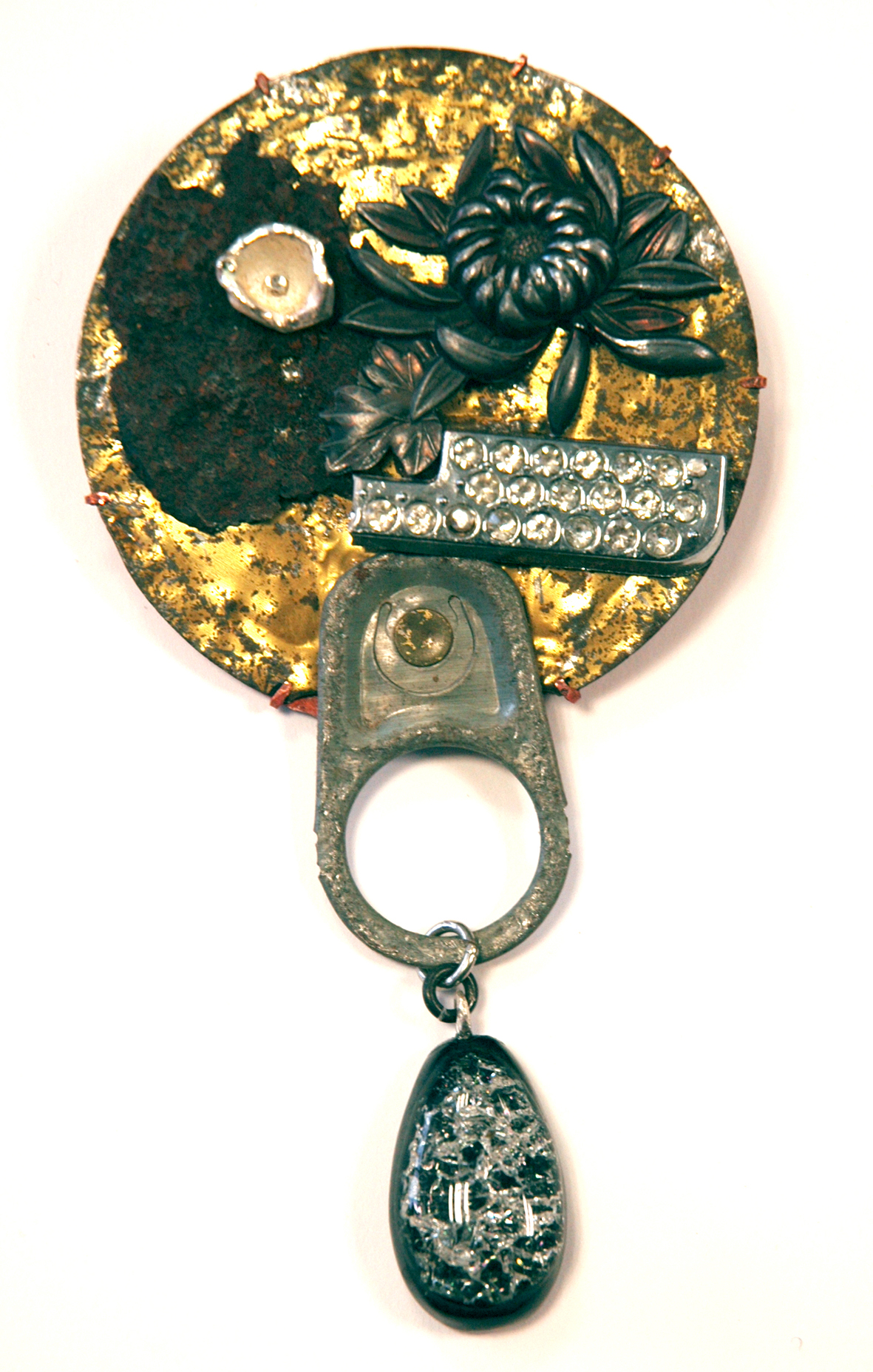
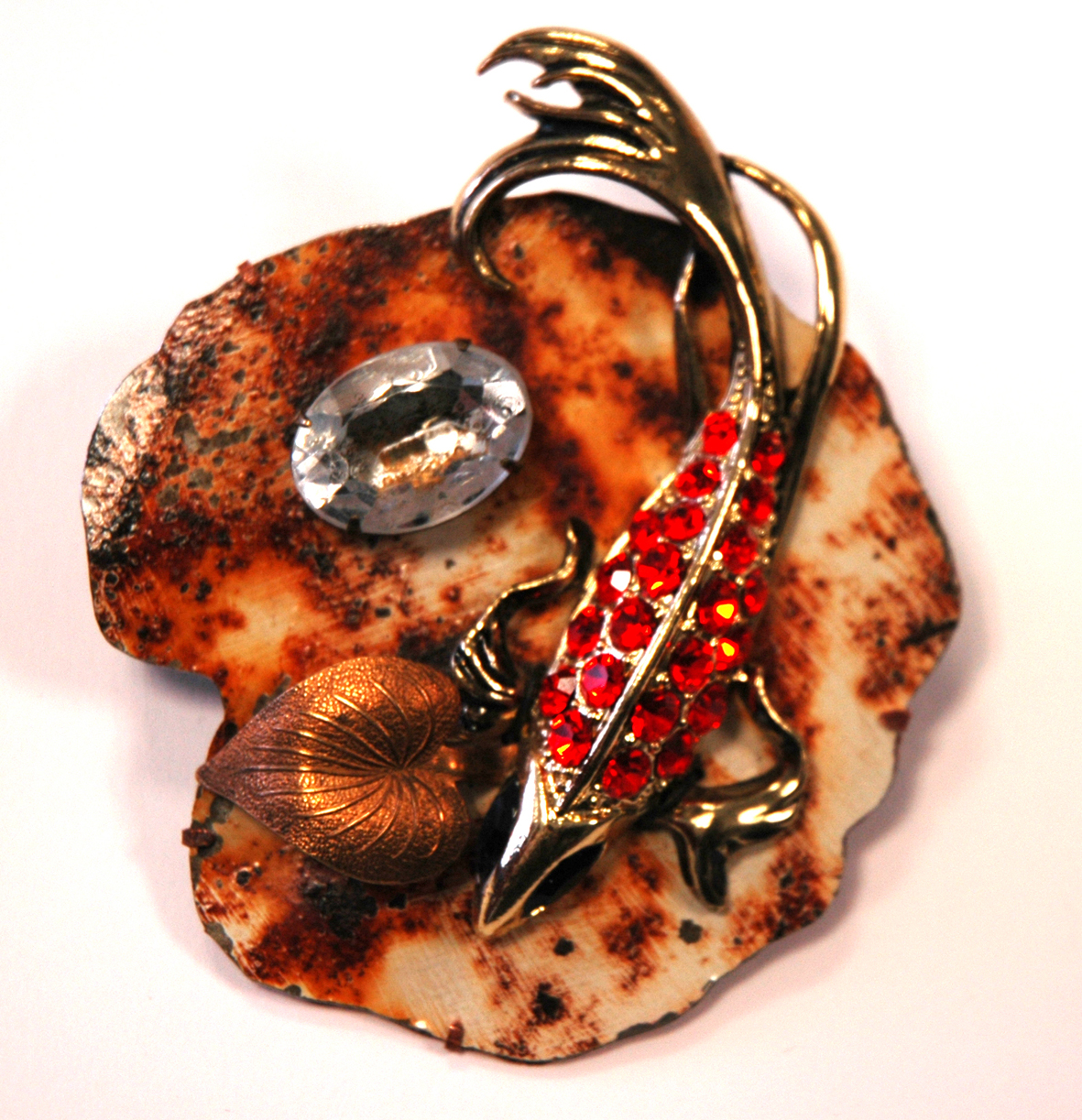
Working as a teacher, metal smith and jeweller Bob Ebendorf has been a major influence on the American craft movement since the 1960’s and is notable for his use of found objects – it was a radical departure from the traditions of jewellry making in the 1970’s when he pioneered the use of non – precious materials (think road-kill and rubbish) with conventional jewellry making techniques and materials.  His work is rich and expressive and covers jewellry, assemblages, drawings and objects.

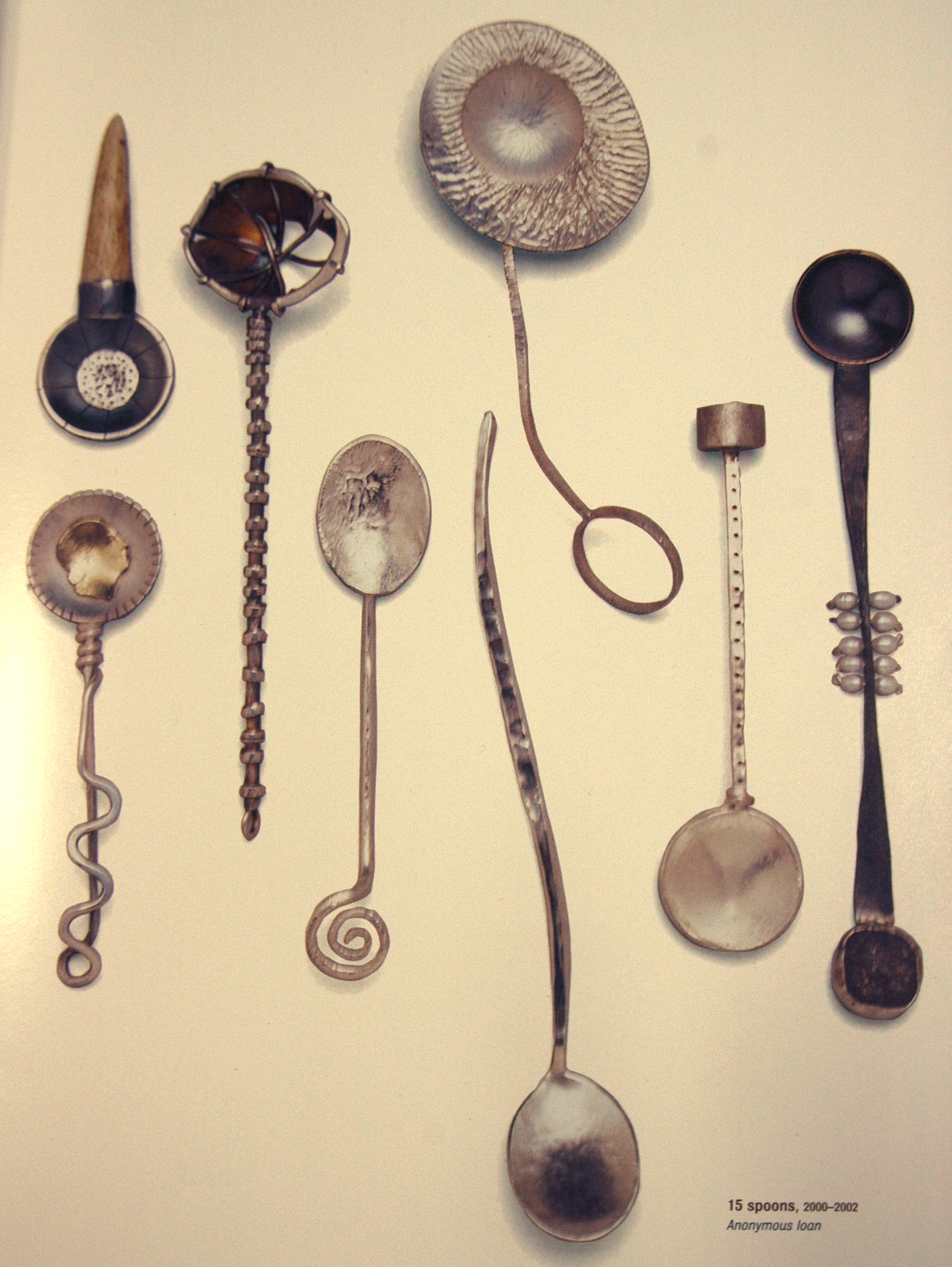
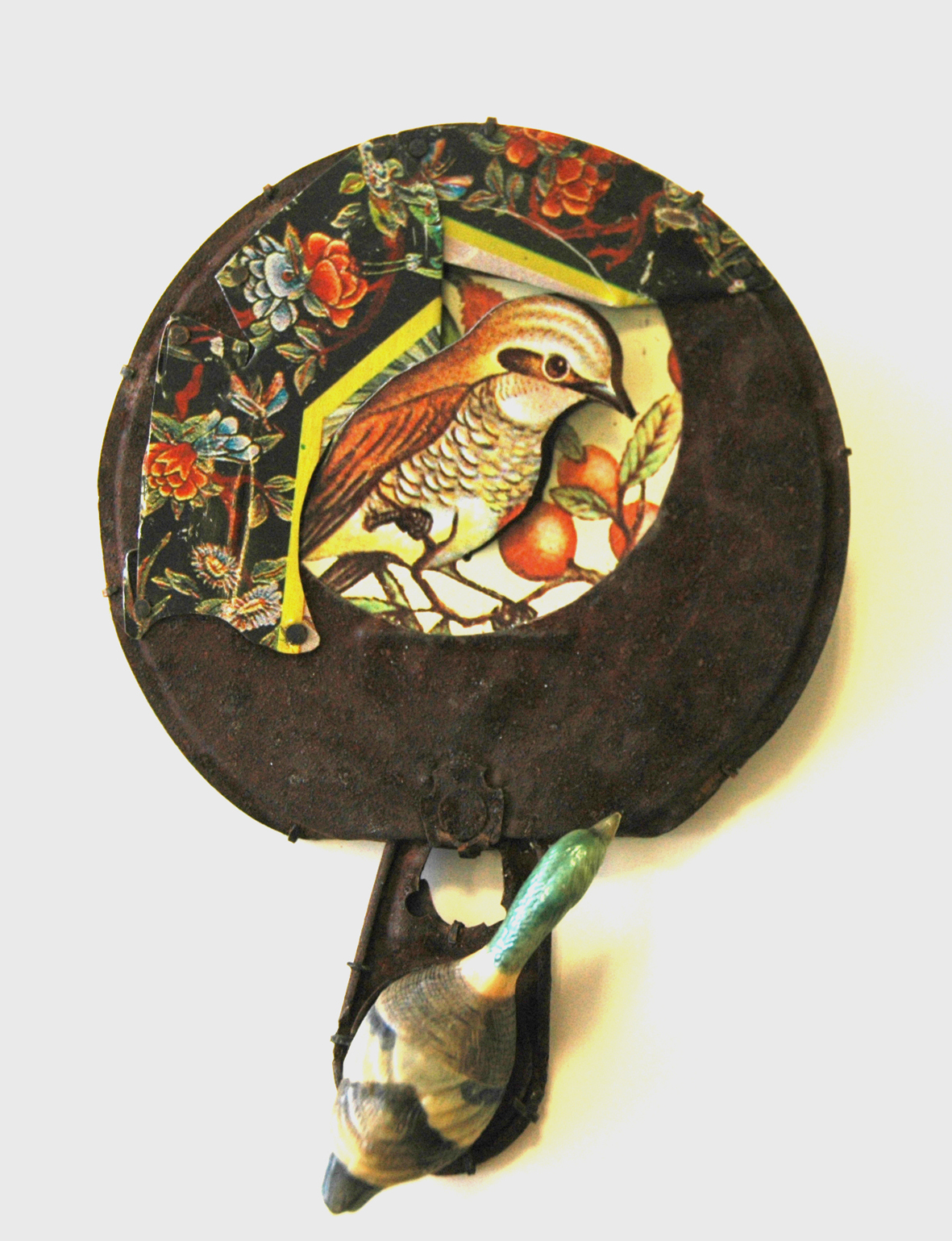
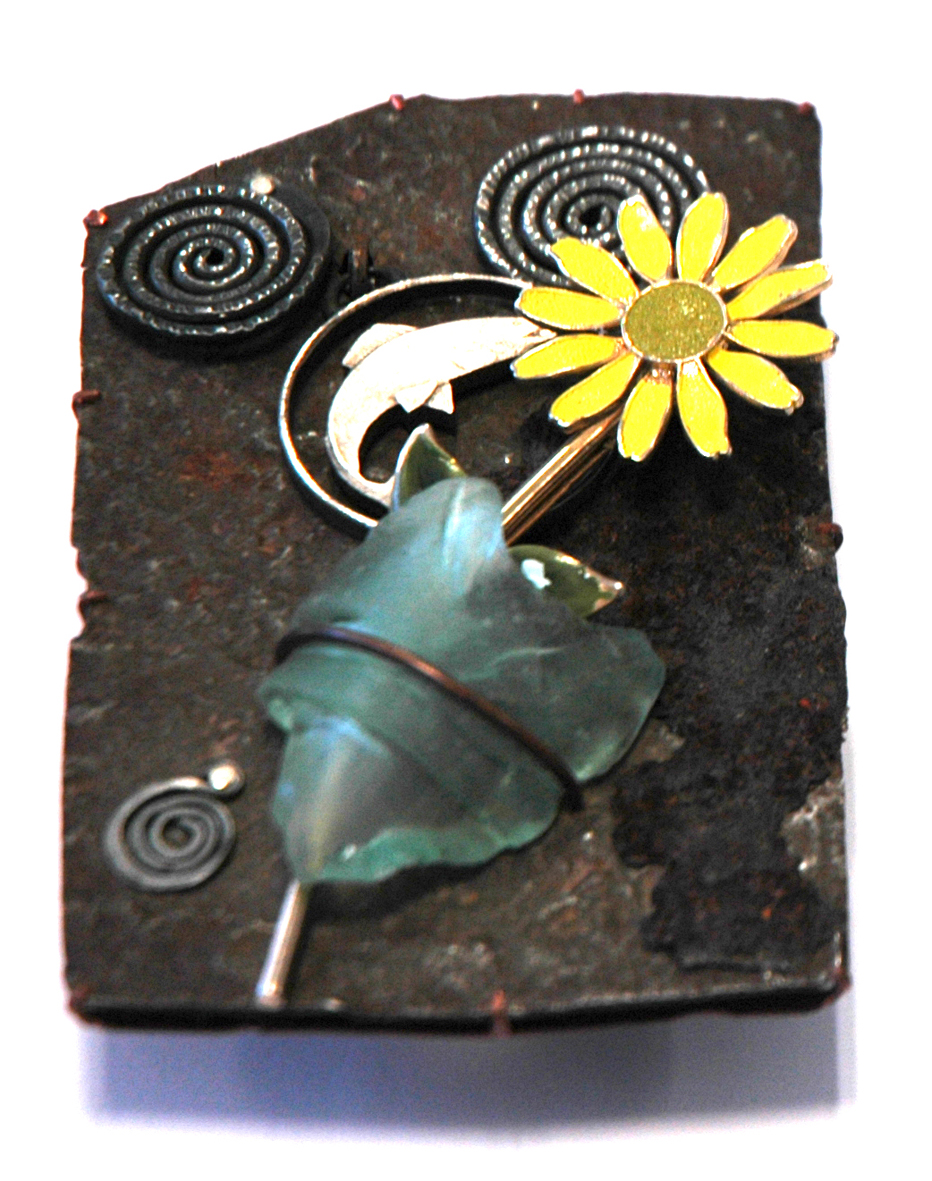
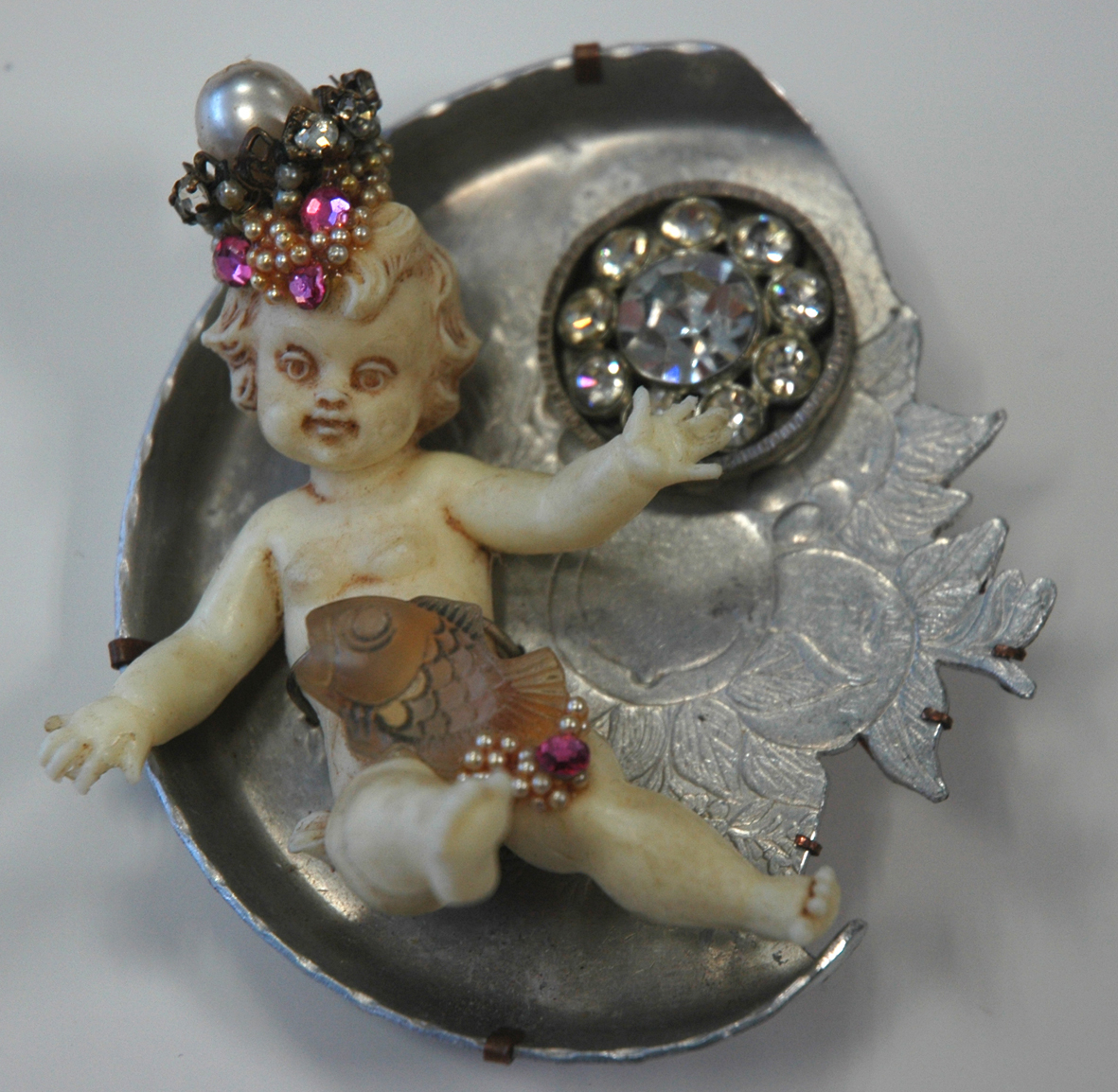
The work he displayed was as amusing and disturbing as it was desirable. Sparkling jewels adorn and glowing metals encase bones, stones, broken glass and plastics with fresh water pearls, enamel badges and bijou jewellry. When I first saw them I thought ” well these are glamorous – but what am I looking at? On close inspection the sparkling jewels are old paste brooches in leery colours and the metals are squashed and rusted tins, but all are put together with purposeful, elegant and traditional jewellers’ techniques. The effect is reminiscent of tiny collages or appliques of glistening fabrics. Rich patterns collide and overlap on charred and rusting metal, his balance is precarious but it never falters.

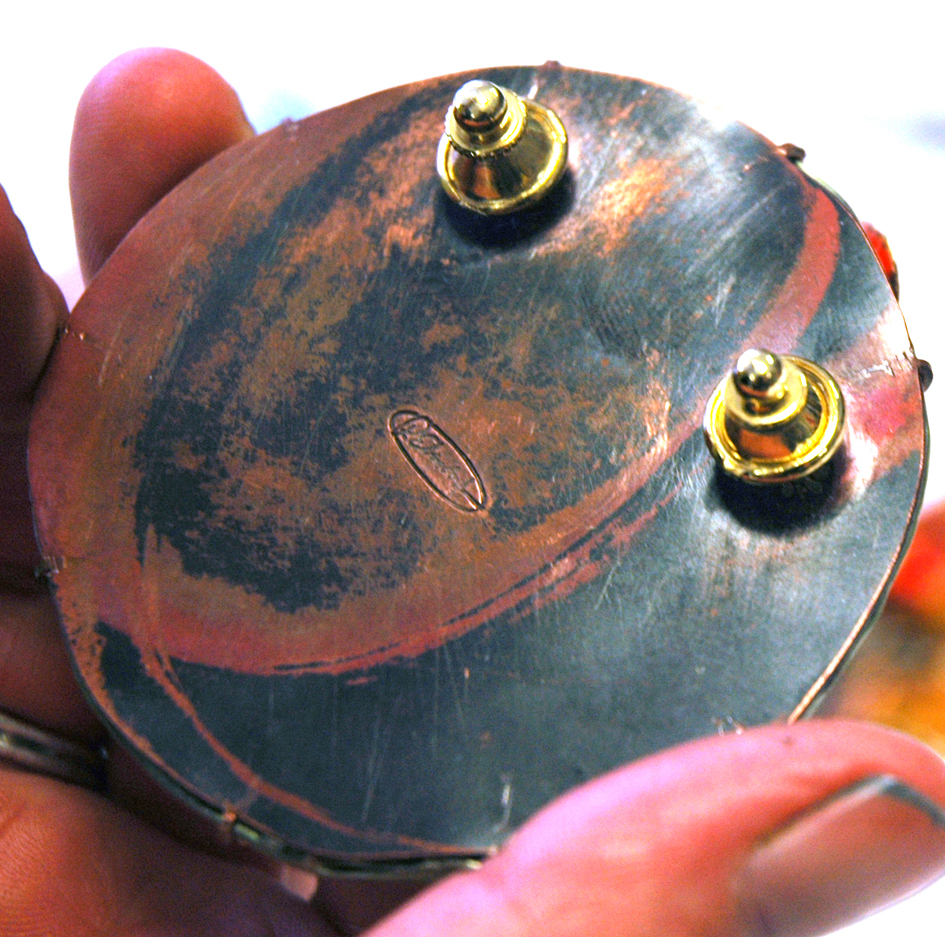
I think many textile makers have flirted with the idea of making jewellry, I certainly have, embroidery and jewellry can share the same small-scale, precious, decorative qualities – but what is always a swine to deal with and often the weakness that lets the whole effect down – is the finish.The backings in particular are so hard to organise and make stable, also the back of a brooch can be more personal than the front, only the wearer sees it, or the person who gives it. So turning these curious designs over it was reassuring and an added pleasure to see the  consideration to the finish of each piece.

The quality of his making also alerts us to look again at his findings:- the exquisite printed tin bird, so carefully cut and released from its bower…..

the trapped bone and pink baroque pearl encased together forever in a finely wrought metal cage……

the artless flower brooch wrapped up in sea glass, everything is transformed…

and these re-assembled objects speak to different people of different things; time is spent considering possible hidden meanings in the juxtapositions of the small objects and all the while we are delighted by the inventiveness of the maker.

Speaking to Bob about  the pieces I said that I thought in some way he had mended all these discarded, disregarded and disparate things by recycling them into other ways of being. The dictionary definitions of mending include ‘to improve’ and ‘to restore to a sound condition’ and restoration includes the idea of resurrection, replacement and rehabilitation – certainly these wonderful wonky brooches demonstrate the transforming powers of invention, playfulness and intuitive skilled making.

I feel that the way in which he assembles the parts has much to do with how a textile practitioner works, colour is one of the  elements that visually binds his work together; so with that thought and the mending I feel there is reason enough for including his work in a textile blog – also Bob has influenced my thinking about my own practice when I have attended his past workshops for ETC

Part of the pleasure of going to such events, even when they are not directly related your own work, is the chance to catch up with other makers and meet new people you feel might have similar interests. The audience consisted of jewelers, educationists and makers in several different disciplines and as most people wear something they have made it is usually rewarding to start a conversation……

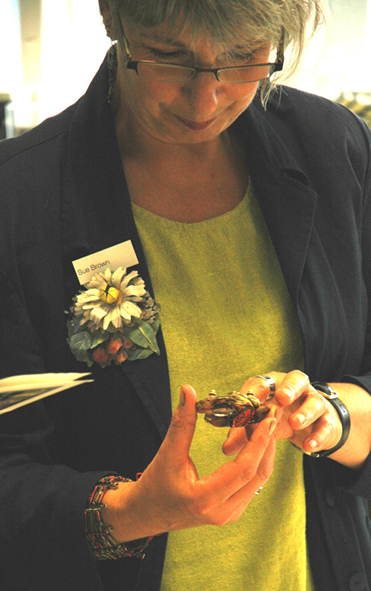
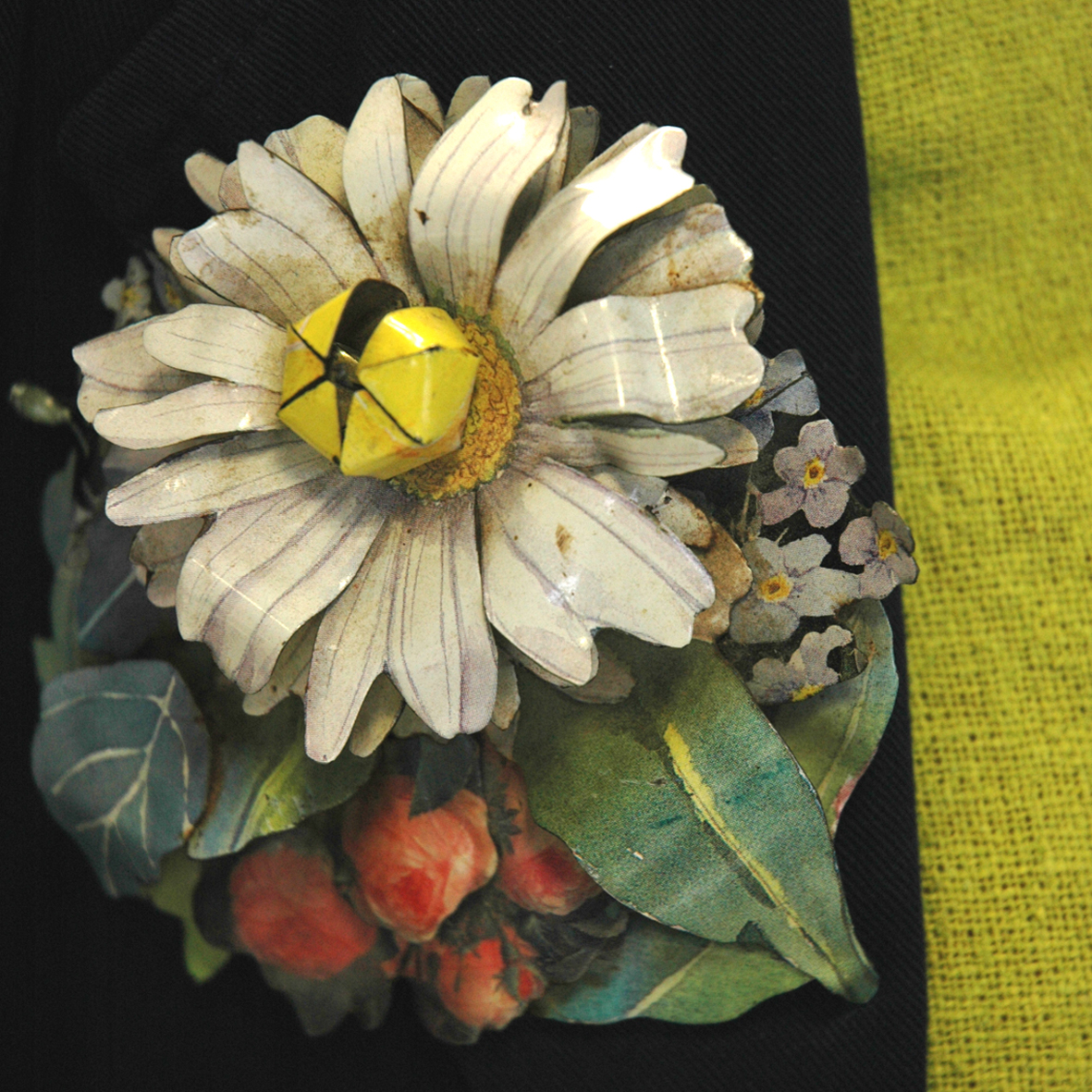
however the most stunning brooch for me was not made by the wearer but purchased some time ago, it looked as if it was a second cousin to Bob’s work and it belonged to a print-maker, Sue Brown who is currently conducting a love affair with vitreous enamel….check out the enamel butterfly collection on her blog.

Fabric Enamel/Enamel Fabric

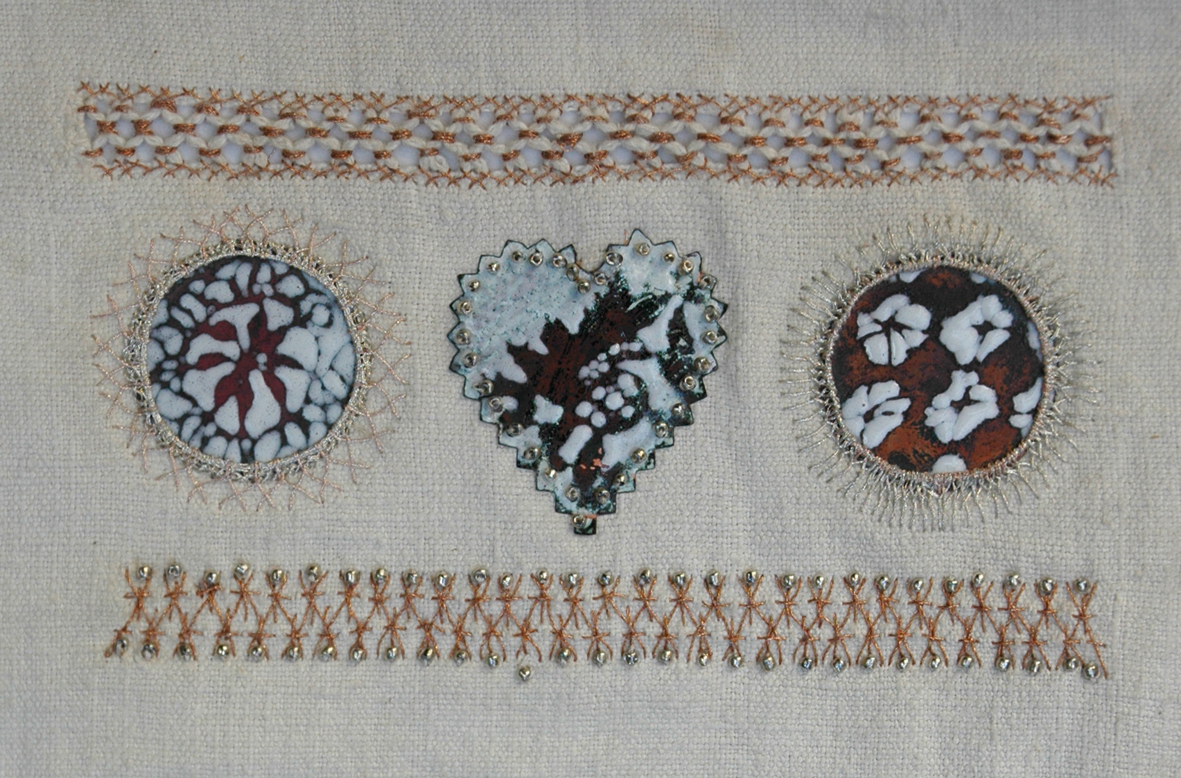
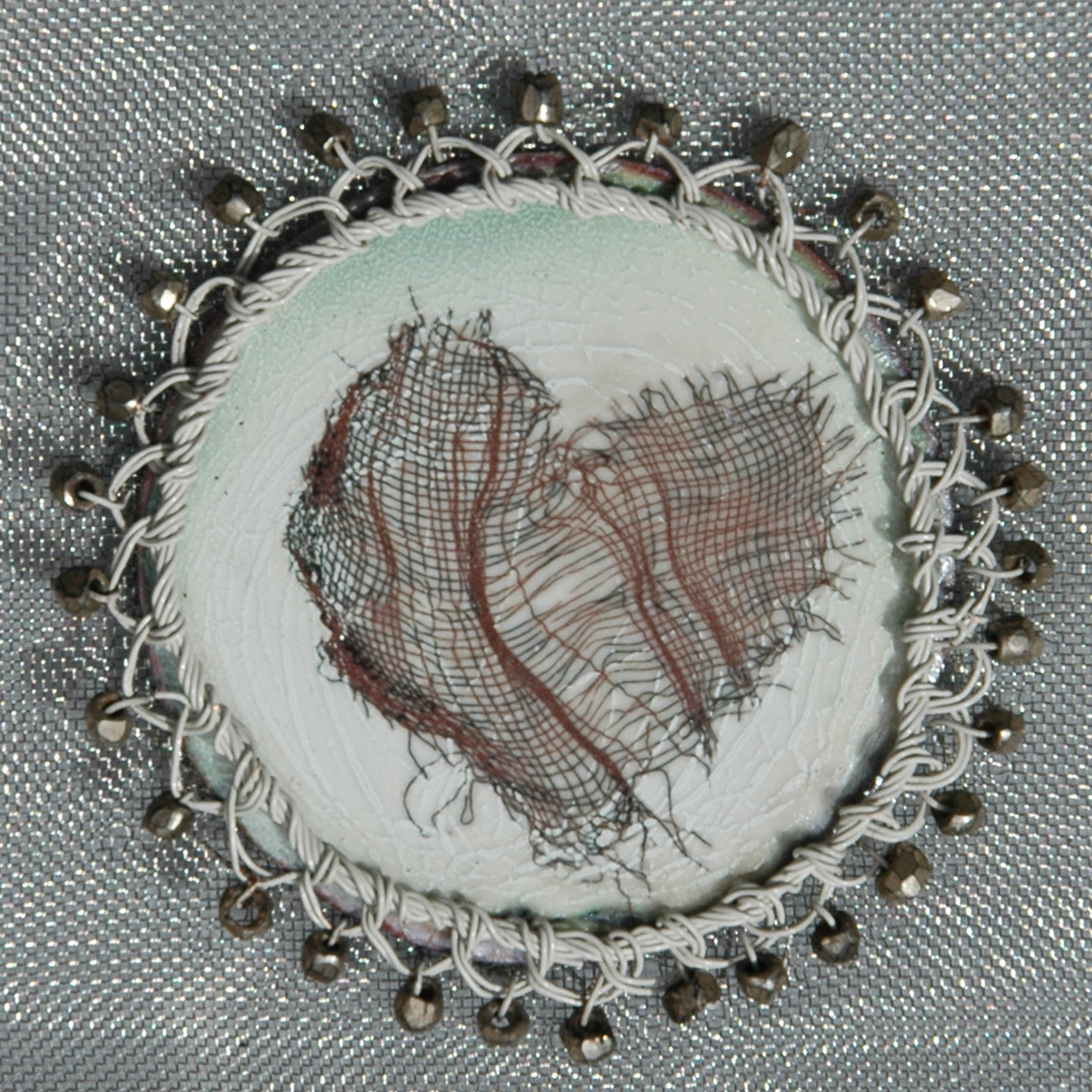
fabric enamel heart

I am slowly including all my recent stitched work into the blog. Sorting through the Embroidered Enamels for the Gallery Pages I thought I should show the research underpinning what has become a main preoccupation for me, enamel fabric or fabric enamel  – whichever way round – they are difficult, expensive and time consuming to make but I will never tire of developing them.

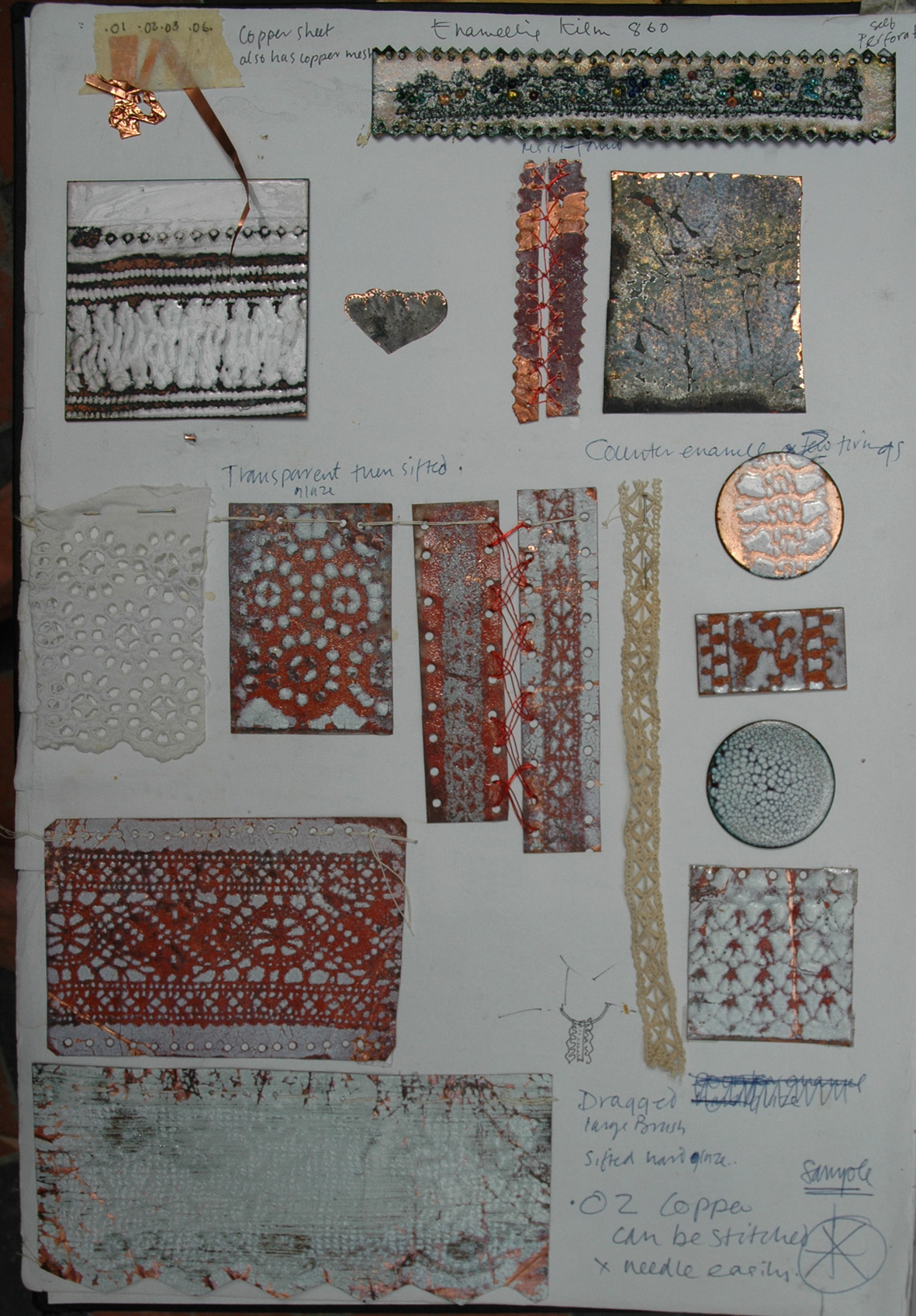
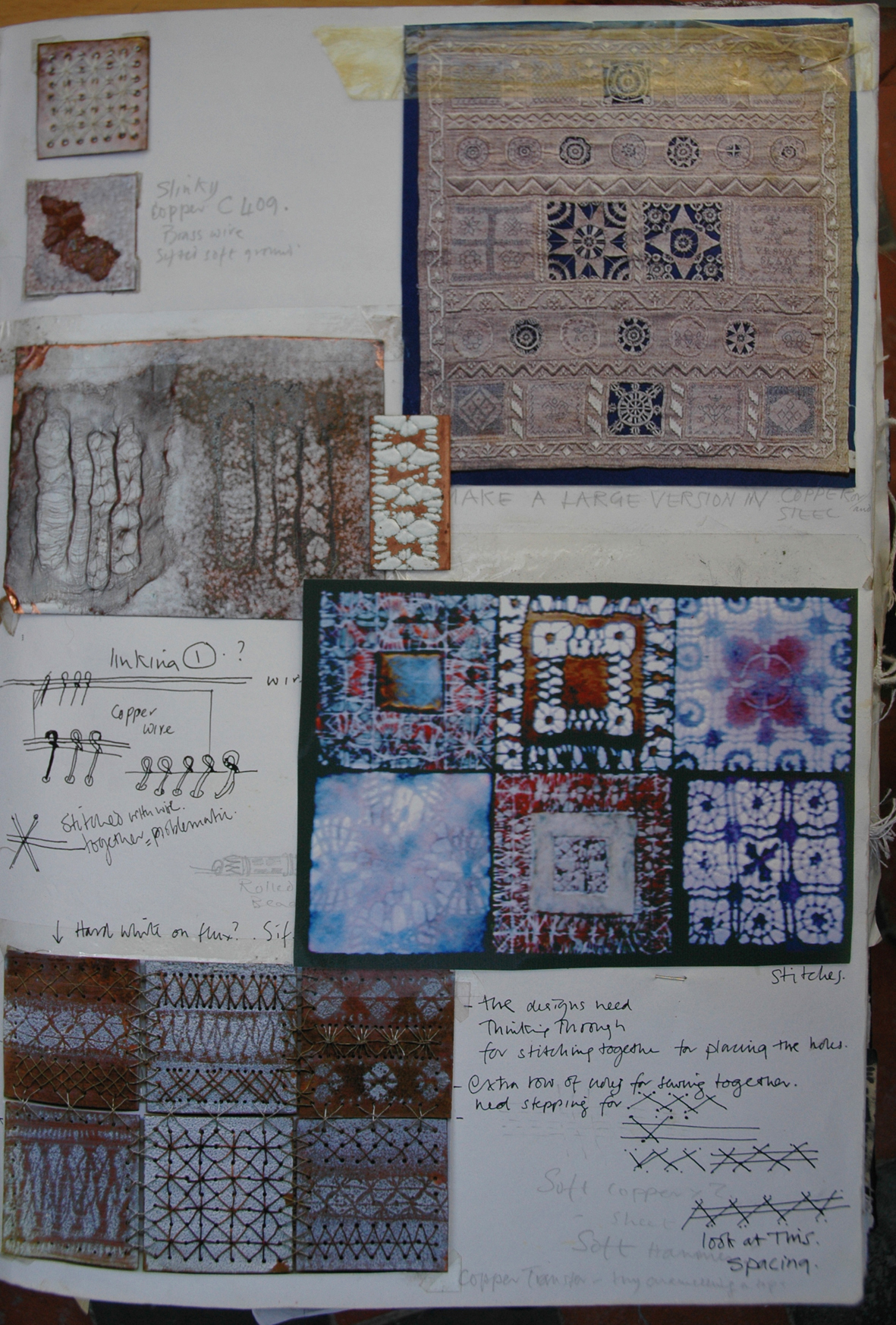
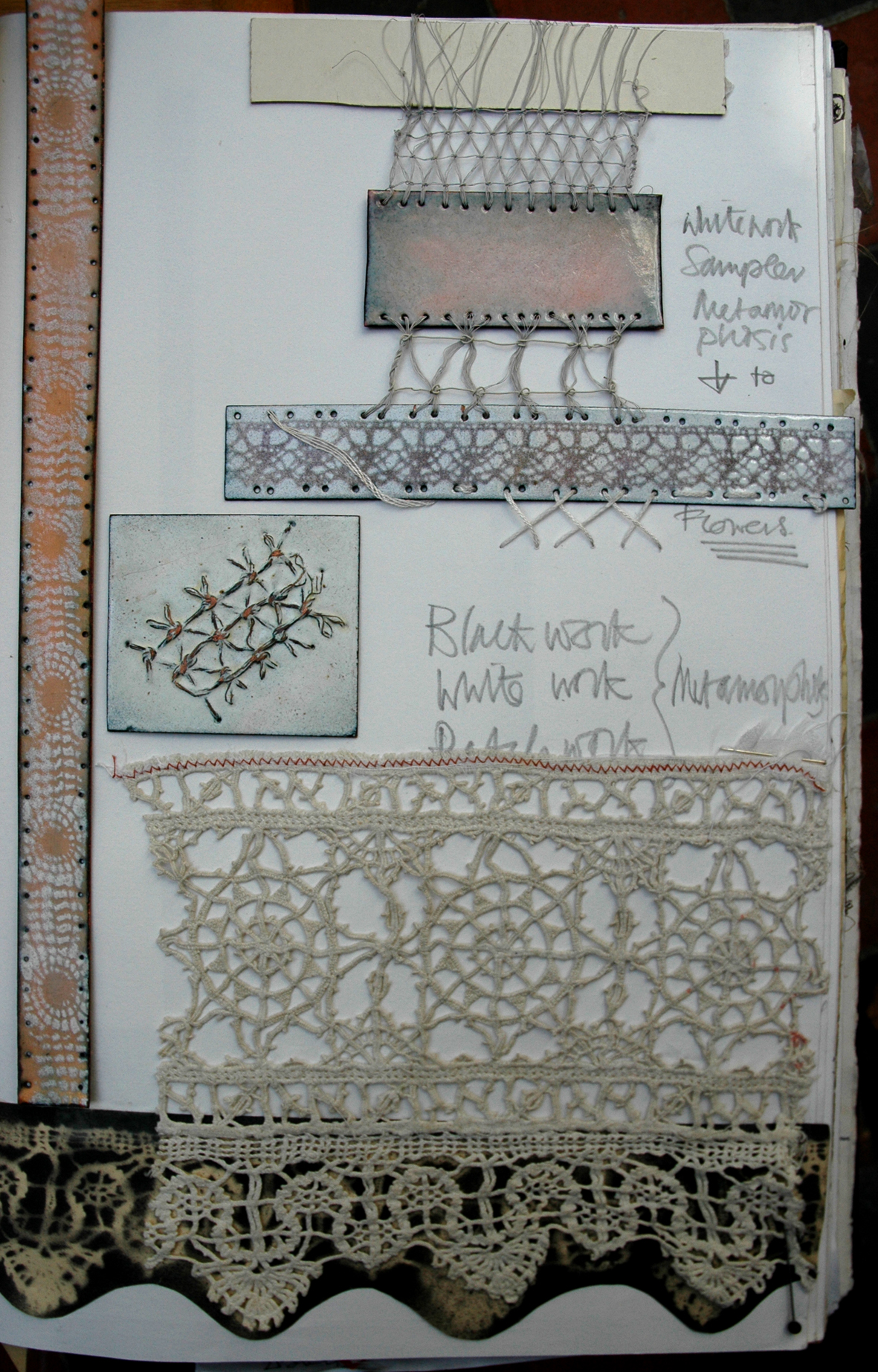
first page of enamel research work book

The first pages of my enamel research book show how I referenced fabrics to pattern and construct the strips of enamelled copper to look and behave like fabric. This now looks very focused and organised, but I only remember being absolutely lost amidst the wealth of ideas and accompanying technical information I was having to assimilate. The temperatures of the kiln were mind numbing; I cook on an AGA so have no idea of any cooking temperatures, what exactly does 800 degrees feel like – pretty damned hot – more to the point, an open kiln at that temperature looks scary as well.

workbook page of stitched copper plate and mesh samples

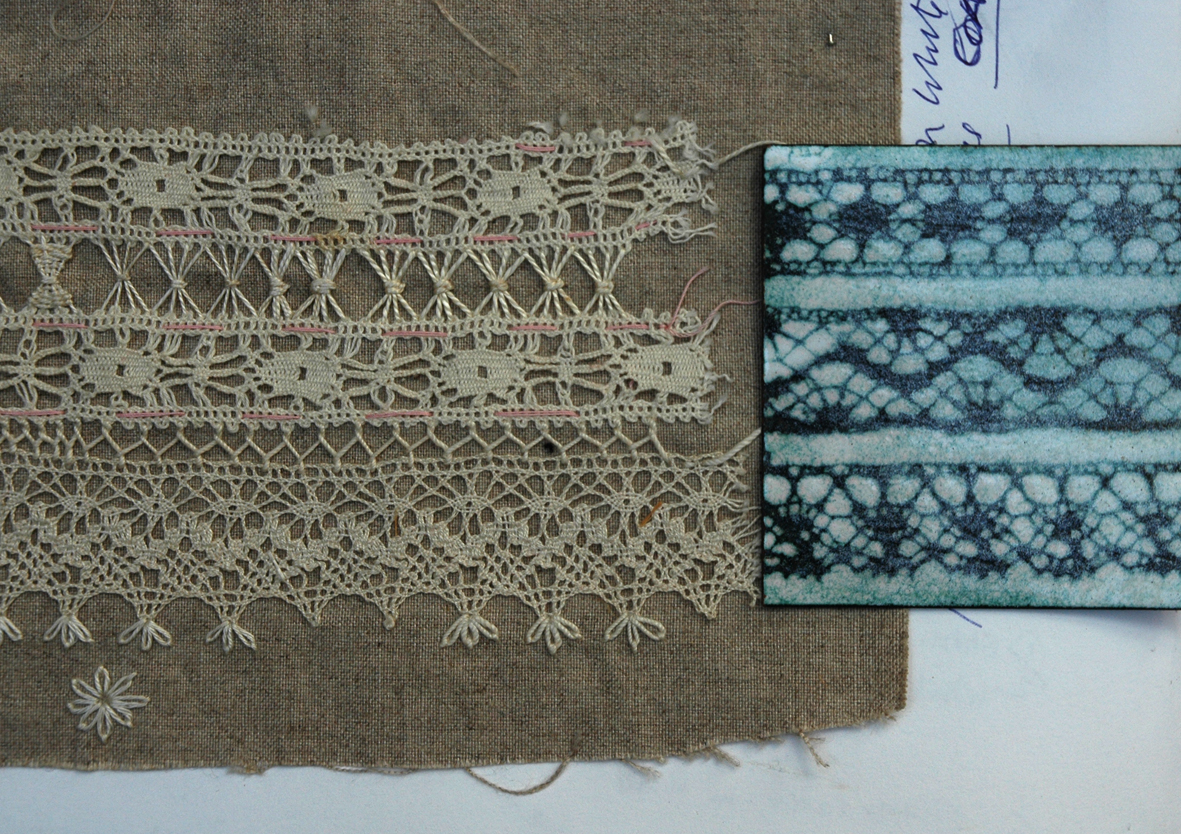
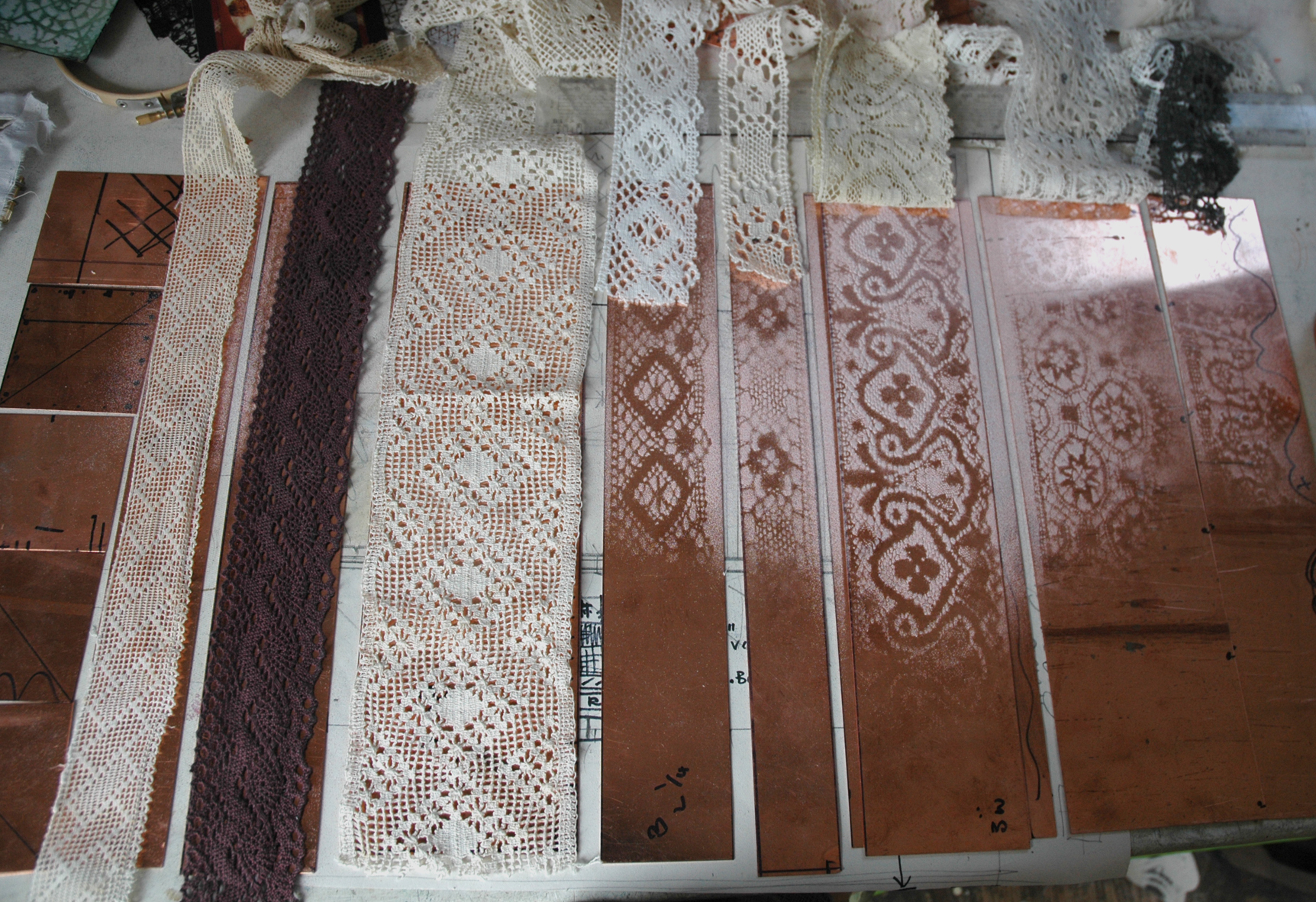
At the research department at UWE. Bristol I was surrounded by researchers into enamel who were were making such exciting and unusual things and I didn’t realize at the time that I was working with enamellers at the forefront of innovation into this craft,  and I was being given the chance to develop textile techniques within their research area. I was both excited and daunted but decided to stick with what I knew, stencilling and stitching. I used lace, Broidery Anglaise, crochet, any fabric that was patterned with hole and I drilled holes in the metal plates, prior to enamelling, in order to stitch. I hated this drilling; to stitch even moderately neatly you have to drill very neatly and you have to sort out all the placements first…my work books are full of stitch diagrams ….so how else can I get these plates onto the fabric without the drilling?

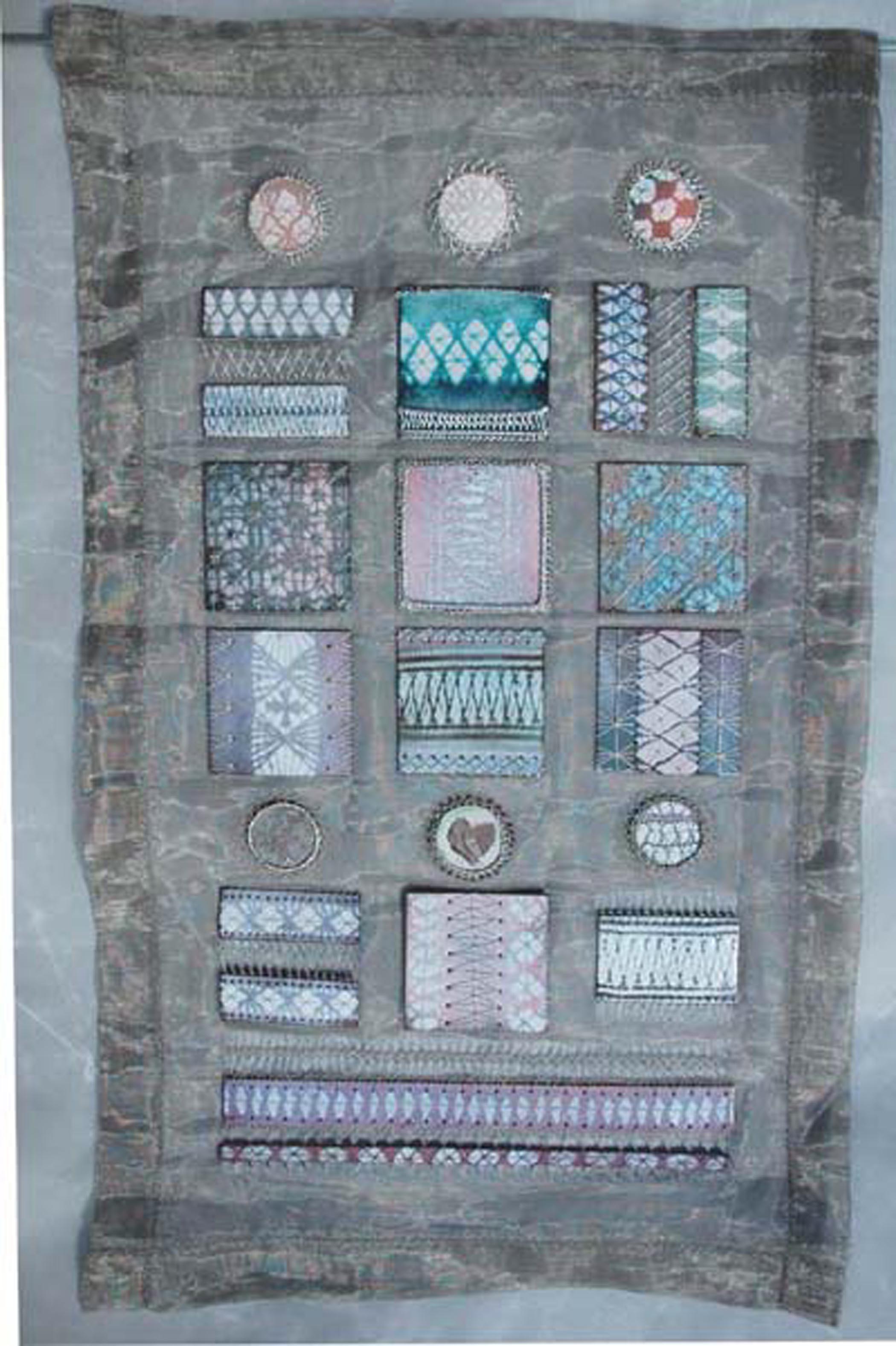
enamelled copper shapes appliqued as shisha mirrors onto drawn - thread worked heavy linen ground

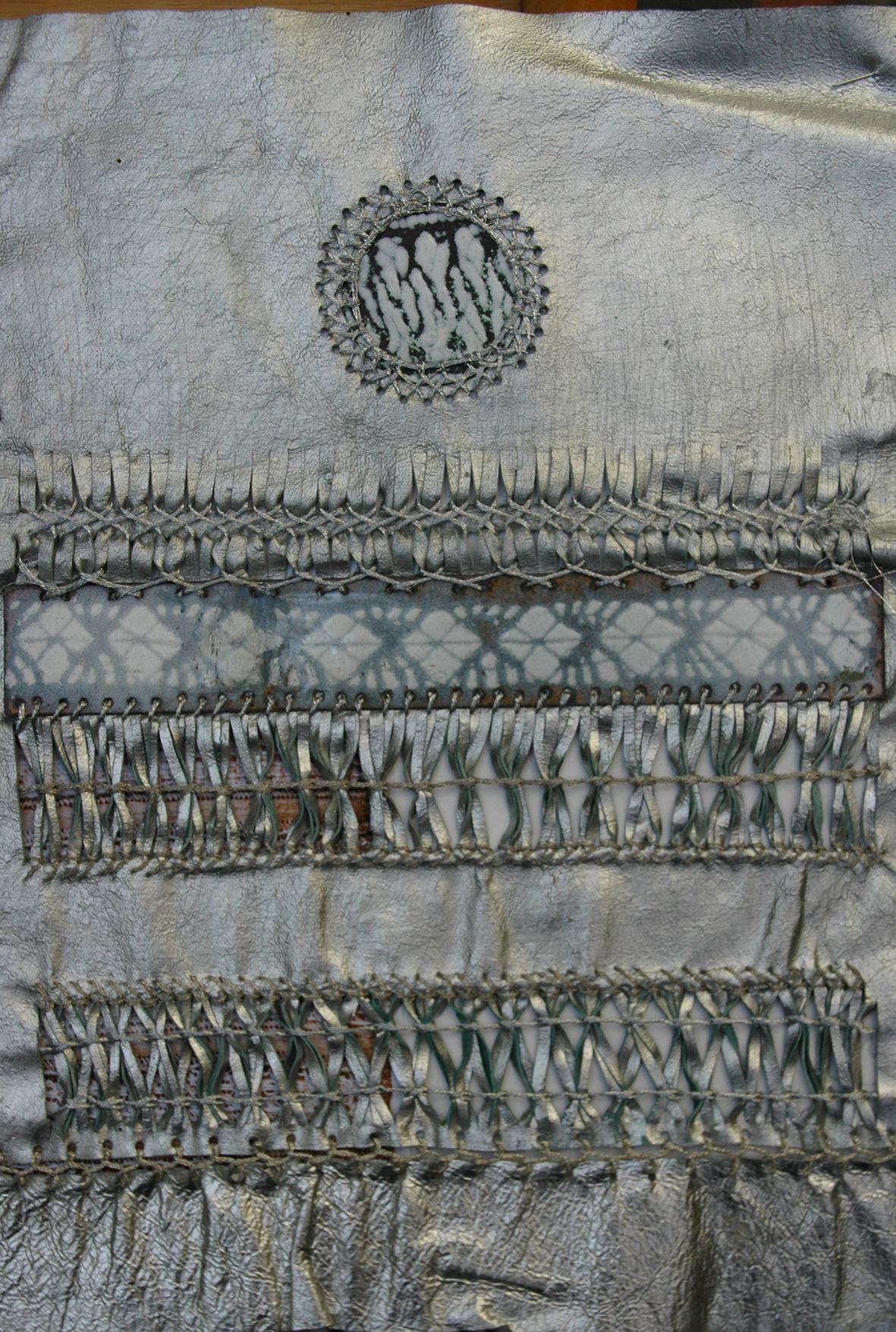
metallic leather applique and cut work sample

It ocurred to me that the small metal shapes were like shisha mirrors, found on Indian fabrics so I started to applique them into position using this technique. Fabric grounds were really too lightweight to carry the metal shapes and when they are heavy enough they become very coarse so I tried other materials; the metallic leathers were the most successful and I have several large hides waiting for an opportunity to be decorated. Meanwhile I decided  look at metal fabrics which, being woven, are more amenable to being worked like traditional textiles.

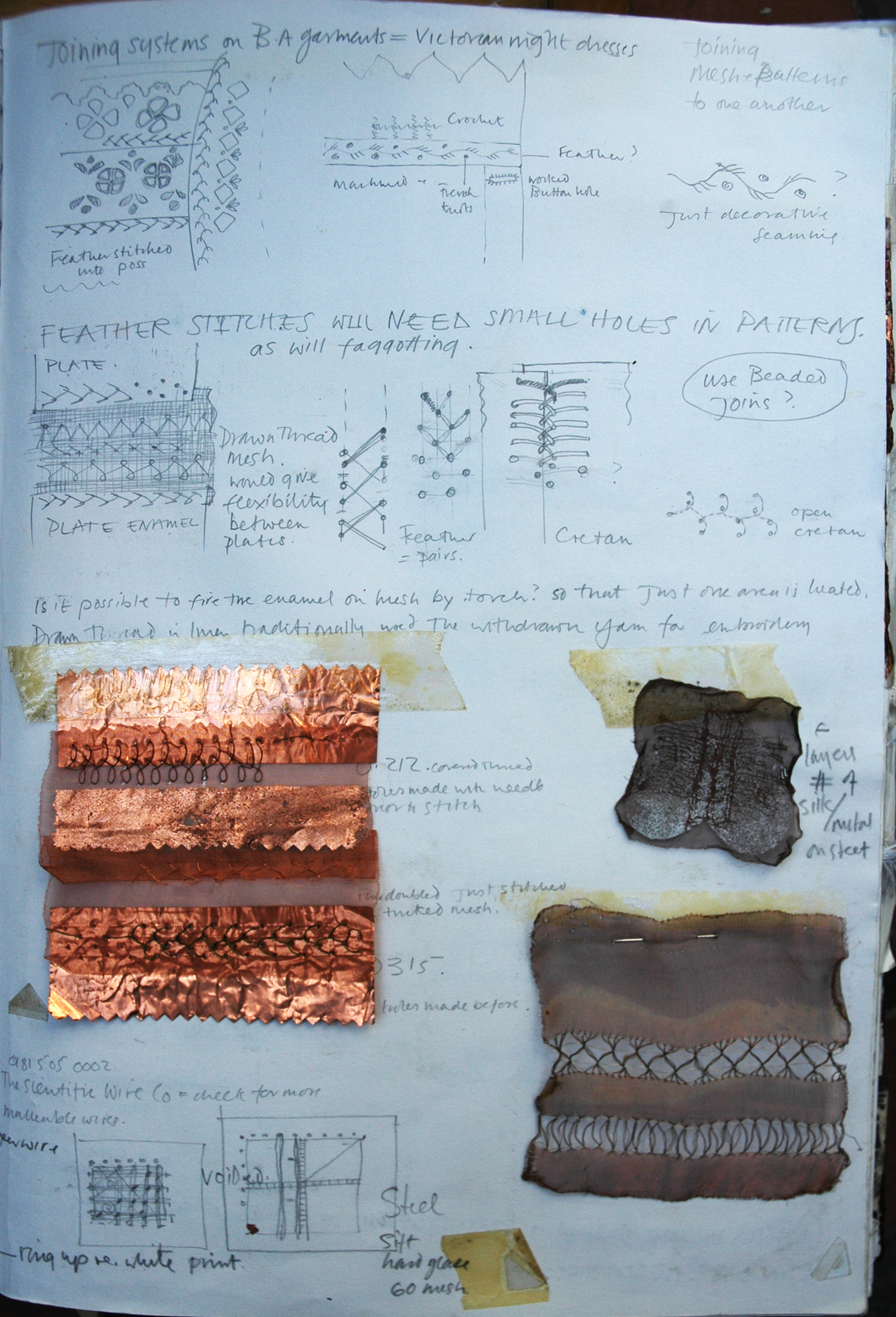
work book with drawn thread and insertion stitched samples

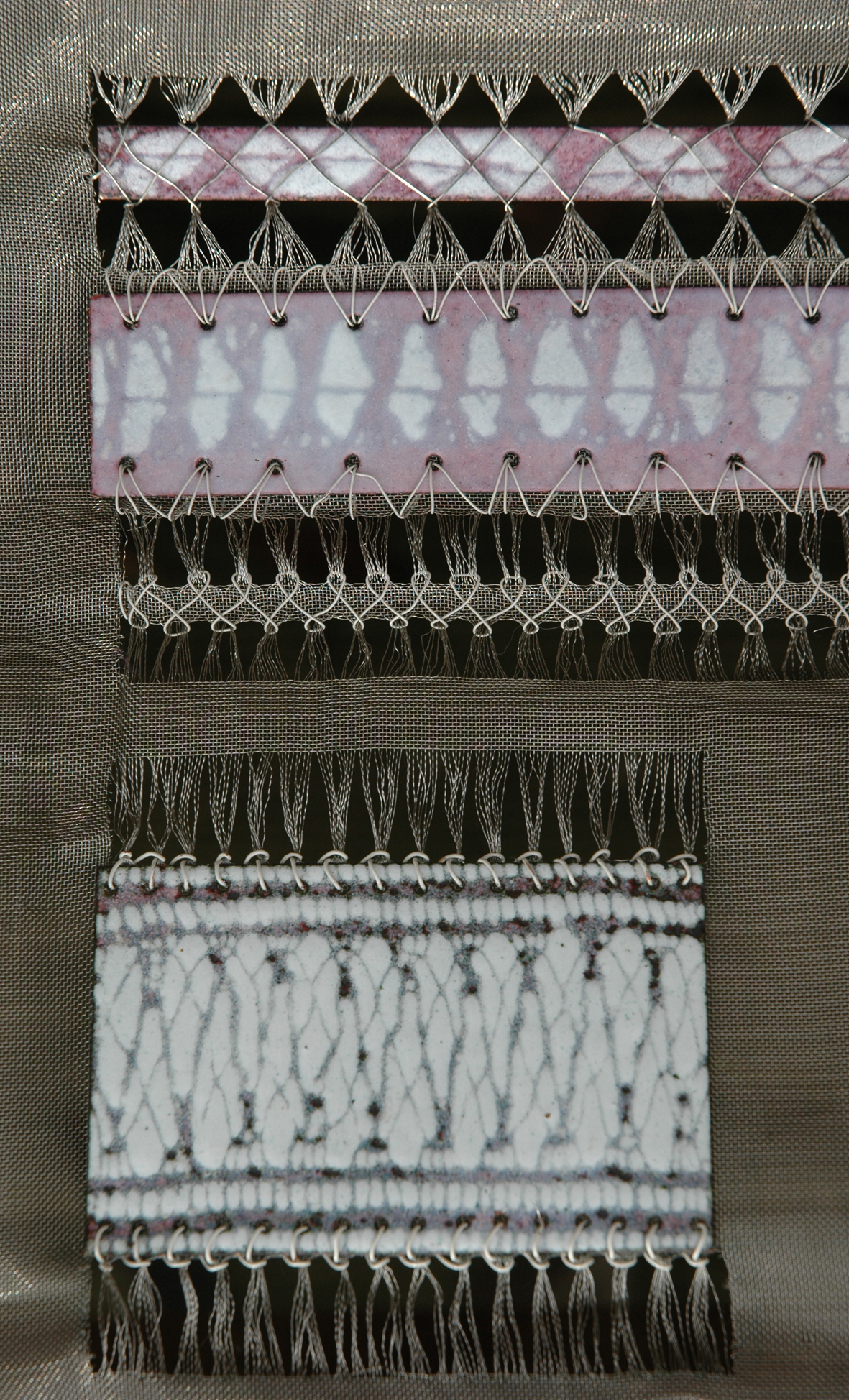
I bought some amazing woven metal fabrics from The Cloth Clinic, the owner – and at the time a fellow researcher at UWE Bristol, Janet Stoyel – let me buy some of her specially woven fabrics –  sadly no more were made available to me after this. But I used these particular fabrics to make a series or samples based on traditional white work sewing. The  embroidered scrap of copper below is from this collection of metals as are most of the metal fabric samples in the work books; although some of these metals are available elsewhere the Cloth Clinic’s fabrics are really special and worth looking our for. But cost and unavailability of these metal fabrics made me rethink how I could develop these ideas, I even thought of taking up weaving some for myself from copper and steel wire on a small frame…still a possibility…….

scrap of copper fabric with drawn thread work and printed foil.

Eventually, after about 18 months I felt confident to design and make a stainless steel, white enamel sampler .It is based on white-work traditional embroidery designs  and vintage fabrics have been used as stencils. The different colours are made by heat reacting with the copper at different temperatures of the individual kiln firings and only white enamels were used for this. The applique and shisha techniques were again used and the ground has  had drawn – thread – work worked into it – very hard on both the eyes and the fingers – the stitching is in steel and copper wire.

larger enamelled copper and stainless steel white work sampler

upside down detail of steel sampler.

detail of enamelled copper mesh heart - well what other emblem did you expect to find?

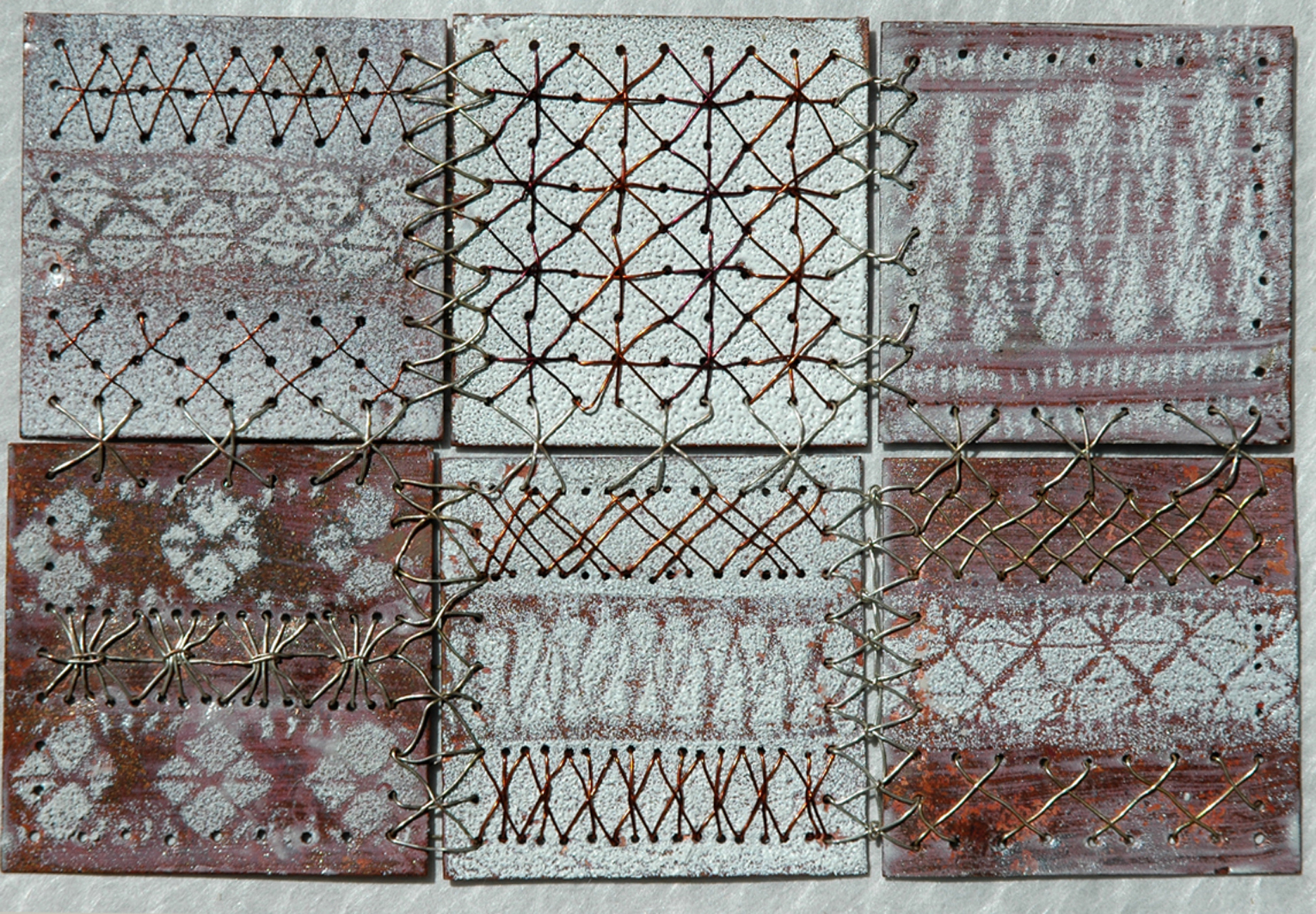
Another idea which I had also been developing is patchwork enamel, I had quickly worked out that this was the easiest way to produce enamel fabric, but the thought of drilling all those holes to stitch the plates together, put me off – but now I was used to working with the metals so I returned to a small sample I had made in the first year of my enamelling experiments.

patchwork enamel sampler stitched and embroidered in wire.

I made a larger and simpler version of the sample above and the piece of fabric is about 90cms square, a yard of fabric.The separate plates are stencilled and then stitched together with white coated copper wire, suddenly I had a piece of  fabric that draped when held in my hands. Below is the page from my research book with one of the stretched crocheted fabrics used to stencil patterns onto the copper plates.

workbook record of first large patchwork enamel fabric panel

I looked again at other types of samplers which could be developed into drape- able fabrics…this small design below was for embellishing espadrilles in a book I had written called White on White by Coats Crafts UK now sadly out of print. I developed a strip sampler as with this type of construction the stitched strips of enamel can be rolled and it behaves much more like fabric, this led me to many more developments, one of which will be used for the Severn Seas Skies hangings featured in the last posting on the blog.

small sample for espadrille decoration

workbook page of stitched strip samples for white work patchwork.
The size of the copper strips has recently become much larger as I have experimented with the amount of weight that the rows of stitched wire can carry. I can eventually make very large sheets of fabric using this method, at present they are about 2 metres long but only 34 cms. wide, this is all my small kiln will accomadate, but I could get up to half a metre wide in my large kin – it would weigh an awful lot though.

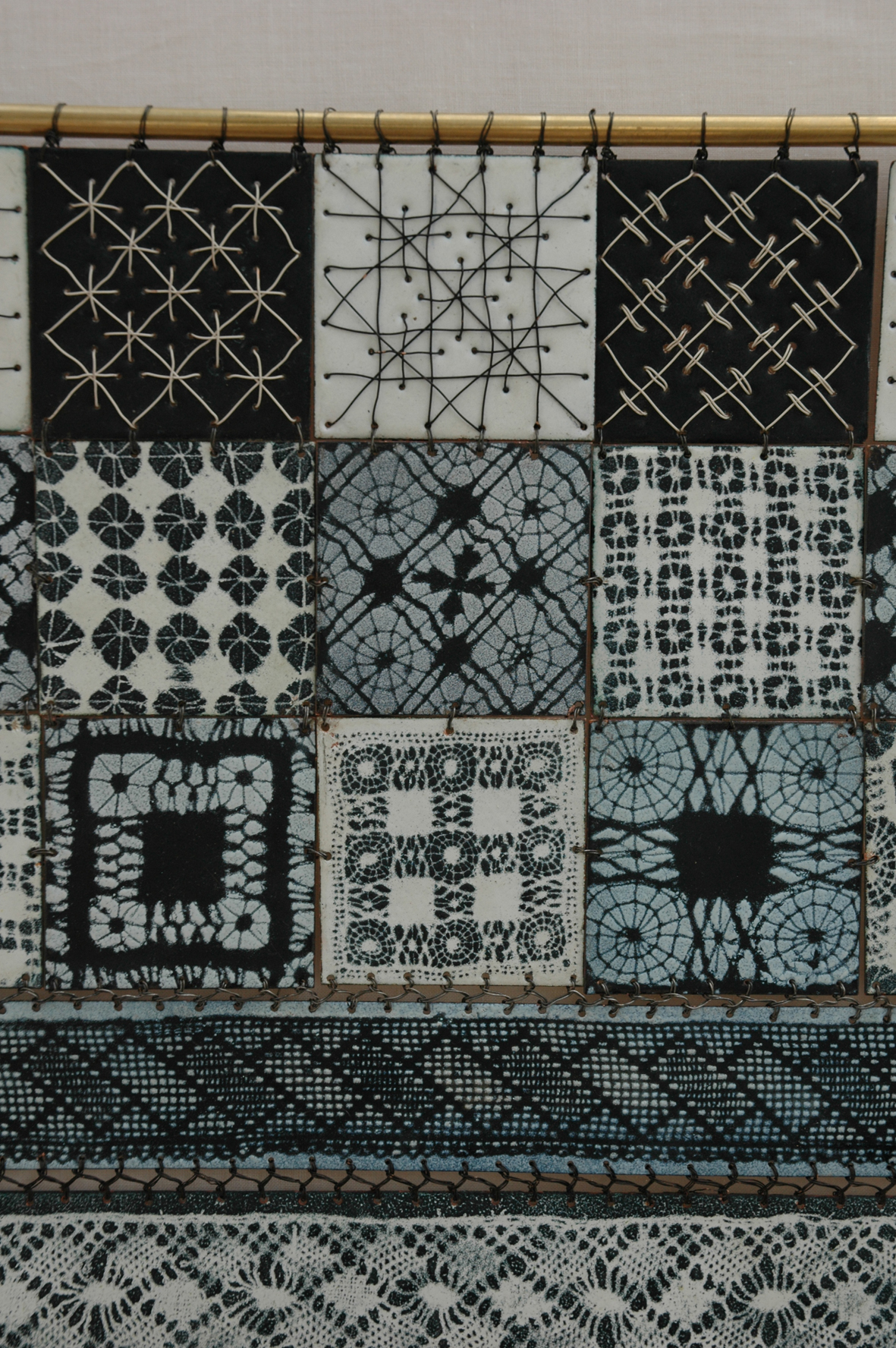
trying out stencil designs for the Black Work Patchwork hanging

detail of top of Black Work Patchwork, with stitched and stencilled enamel.

Severn Sea Skies

June early morning sky from the bedroom window.

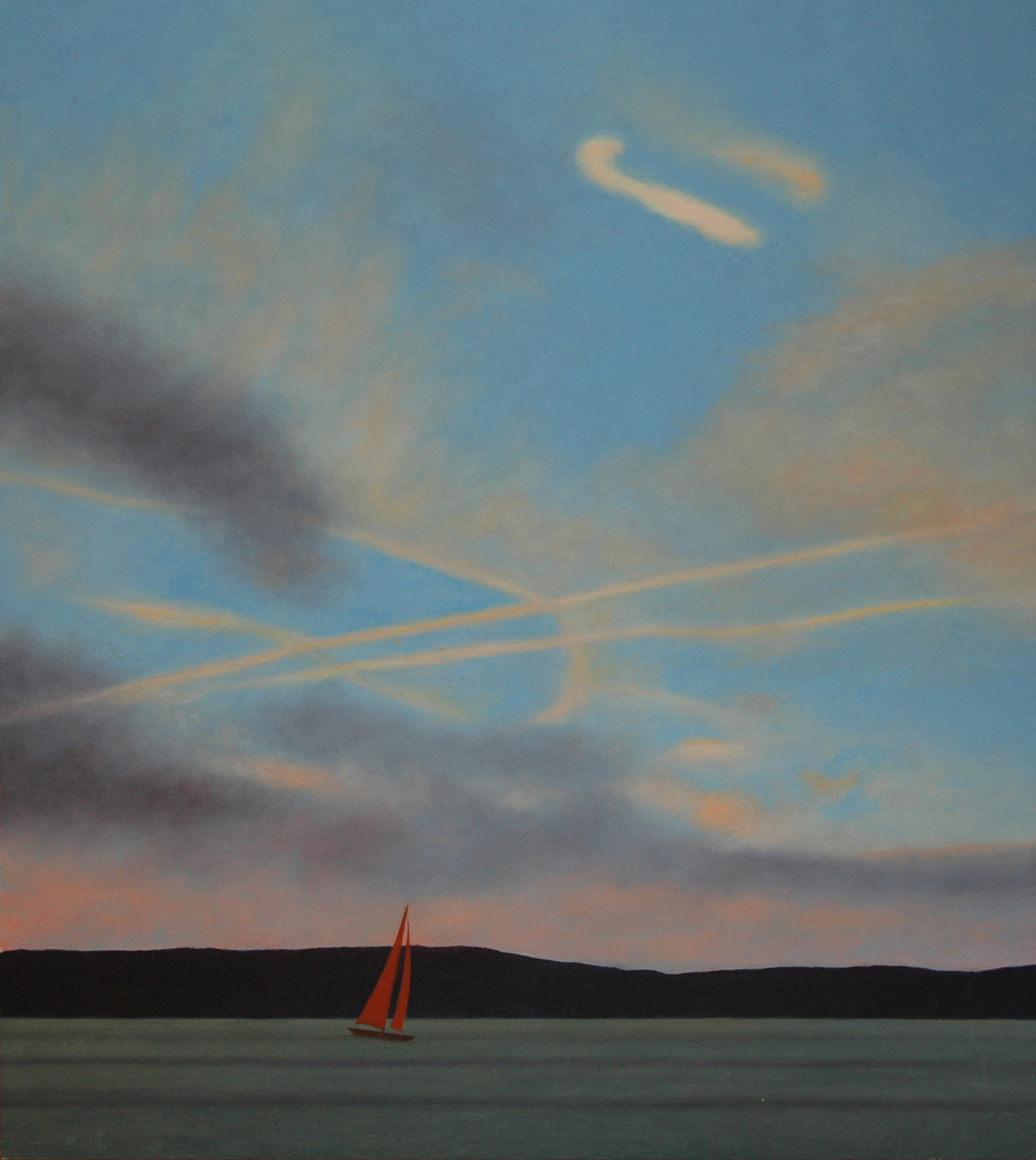
For the past 22 years I have simply enjoyed the views over the Bristol Channel, which flows past a salt marsh just beyond the garden wall of our house in Portishead, North Somerset.My husband, Stephen Jacobson, has regularly painted the views of  the sea and landscapes which surround the house, while I have simply enjoyed the ever-changing light, skies and tidal waters of the estuary.

Red Sail & Sunset, Stephen Jacobson, oil on board

most recent early morning drawing of sky - June 2010

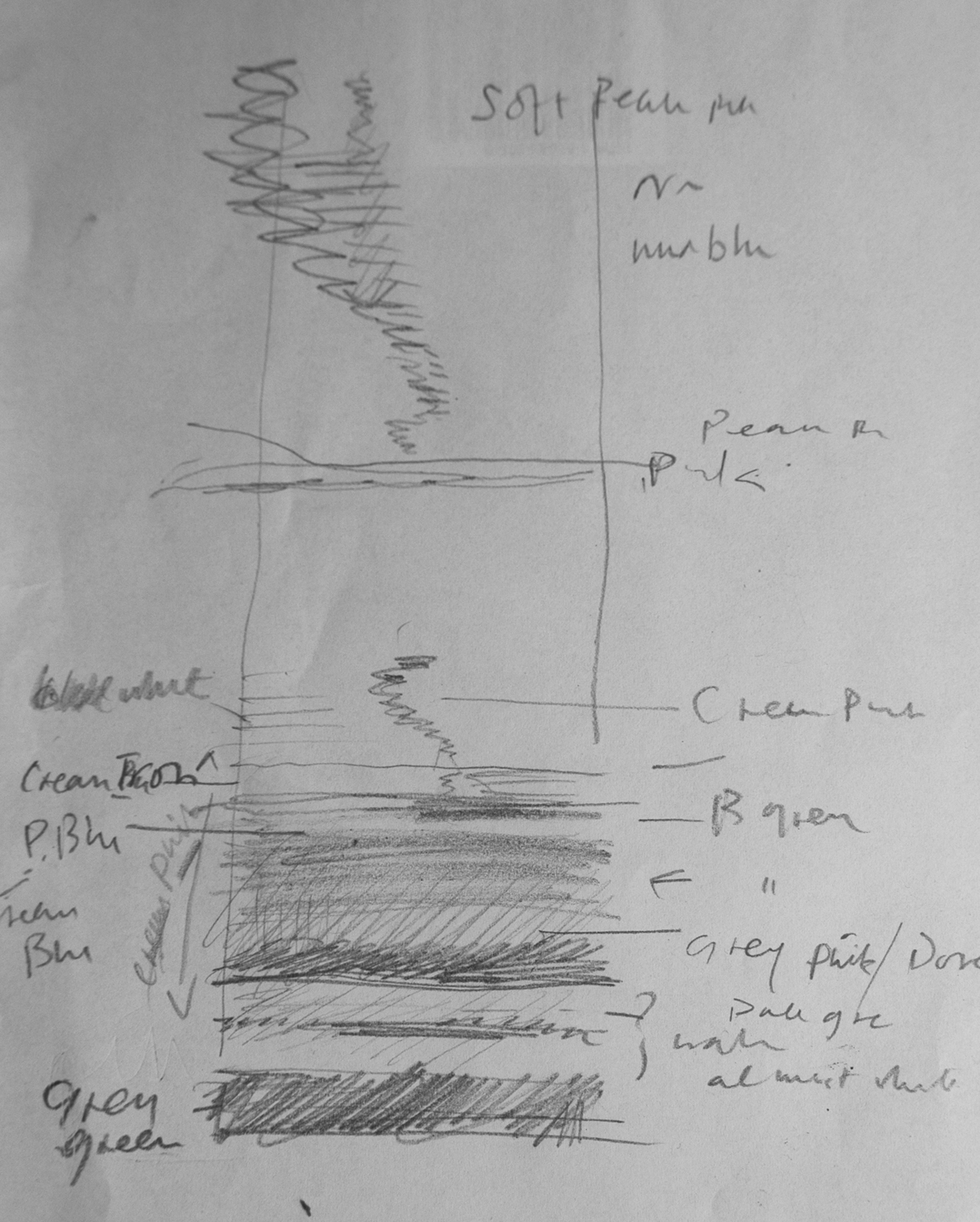
But about a year ago I started to make notes of the early morning and late evening skies looking towards the Welsh hills. At first when ever I woke up very early and just before rolling over back to sleep, I made quick notes of the colours, they were so stunningly beautiful I just wanted to remember them later – the notes were really just lists or stripes of colour, the marsh, the water, the hills, the sky striations of clouds or simply the blend of colours from reds of the sunrise up through to the blues of the morning sky. Then I made pastel colour studies from the pencilled lists later on, before the image in my head had disappeared.

pastel colour studies made from pencil notes

In the evenings I took photographs of any good sunset, well just after it had set, as the sky lights up in warm gold and pink striations as the light catches the underside of the clouds and vapour trails. I then started to take photographs during the day, trying to keep a record of the changing light and tides. But interestingly, when we had the recent ban on air travel due to the Volcanic dust threat, the skies here were not at all spectacular, it appears that most of these striations are in reality, vapour trails.

September sky looking towards Wales.

early evening sky at high tide

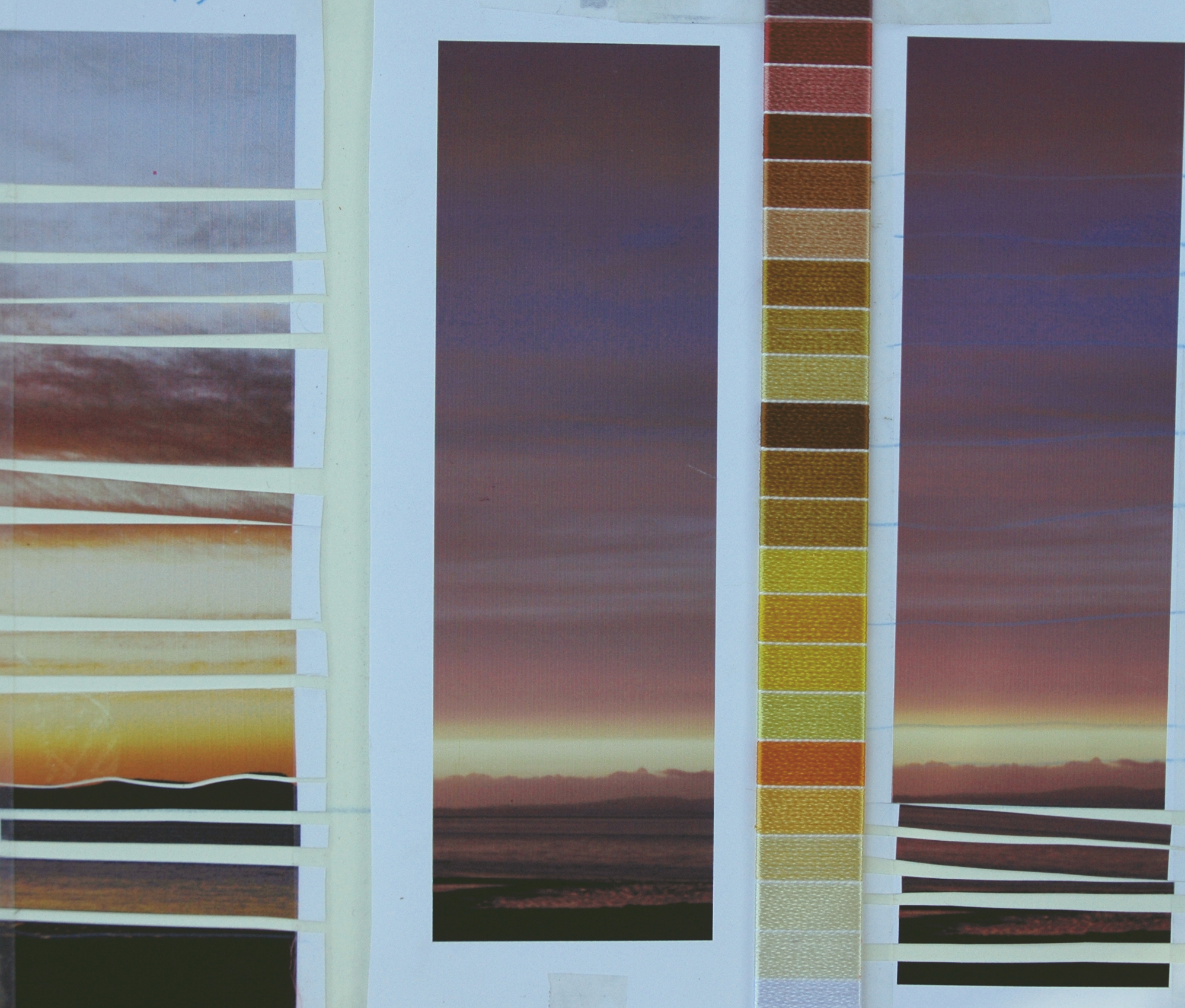
I had no idea or real wish to make any work from these notes, I just kept them in a work book and sometimes cropped the photographs to make them conform to same shape as the scribbled morning lists. I did think that they reminded me of the strips of coloured yarns in my various colour charts and pinned some of them into a work-book. The strip shape, I realised later, has been suggested by a narrow window strip made by glazing bars on either side of the main windows of the house, this design is a feature of many of the older houses in the town.
studies of skies in work book with embroidery thread colour chart

Then late last year I went to see an exhibition at Tate Liverpool called Colour Chart: Reinventing Colour, 1950 to Today, and it was full of colour chart paintings from the early American painters of the 50’s and 60’s. Here were simple colour strips and squares on white grounds, they were just like the embroidery thread charts. I decided that at the first opportunity I would develop some larger pieces of work, using the charts as a device for putting the strips of colour together but was it to be in enamel or embroidery?

Eventually the opportunity has presented itself, I am going to make a series of large enamel panels which can hang in other people’s gardens, evoking the wonderful skies we get here. They will be made for the North Somerset Arts Week, as an open studio exhibition. Six other artists who live in this area of Portishead and are inspired by the estuary to make their work, are exhibiting under the title of The Severn Sea – the old name given to this particular wide stretch of the Bristol channel formed by the  confluence of the rivers Severn and Avon. So watch this space for further developments, I have about 10 months to produce the new work and it has to be done in odd moments between my other projects and commissions. Meanwhile I will leave you with yet another striped sky taken a few days ago.

The latest after - sunset over the Welsh hills - taken early June 2010.

My Enamelled Garden

the enamel garden in my own garden

I have been working on the Pages Gallery section of the blog to show other aspects of my work, and to make some sense of how I could develop this site further I went for a consultation with David Abbott at Chesapeake Design in Bristol, who specialises in Word Press systems. I have already got the Hearts section organised for the Pages Gallery, but now I want to start to show other areas of my work which are important to me, like my enamelled garden.

The Enamelled Garden was a research and development project, funded by Arts Council England, that I undertook several years ago. The idea was to develop my stitched work into another medium, vitreous enamel, and I undertook to develop “collections” of different types of fabrics to decorate large scale metal sculptures for gardens.

large wool embroidery of Lytes Cary in Somerset, 2001

enamel topiary hedges sculptures.

Japanese stencil collection.

lace collection in my garden

The collections comprised, embroidery, lace, chintz, Japanese stencils, crewel-work and darned topiary. The decoration was taken from my past work which has always featured traditional embroidery designs and techniques. I liked the idea of making weather resistant textile designs – enamel can last indefinitely – unlike fabric when exposed to light and weather.

I wanted to take the fabric  flowers back to the garden

detail of embroidered and beaded collection with Fox Terrier.

I had the original steel plates laser cut and ground – coated by the commercial vitreous enamelling company A.J.Wells, who undertake innovative work with artists and designers in their workshop /studios on the isle of Wight. I then made the decorative additions at the Enamel Research Department run by Elizabeth Turrel at UWE. Bristol. Elizabeth kindly consented to act as my technical advisor. The size of the plates to be enamelled were up to 60 cms wide, most enamelling kilns are very small as this is a craft medium used mostly by jewellery makers. The kiln at UWE is  industrial size taking metal plates up to almost 2 metres in length. I also cut copper shapes using a hand held plasma cutter at the university metal centre, it was a tough and challenging learning curve. Not least bcause I had to enamel all the backs of the garden sculptures, usually enamels are placed into jewellry or framed, here the backs would be viewed from all angles

selection af enamelled backs of garden pieces.

embroidered and beaded collection

the first samples for the pansy faces, cut by a hand held plasma gun.

The whole of the finished garden project and the later additions are now included in Pages Gallery. It has been widely exhibited, I have lectured about it several times and it profoundly changed my working practice. I am now the proud owner of 2 enamel kilns, my small kiln takes plates up to 30×30 cms and my large kiln will take a piece of metal 45 x 60 cms – just about half a yard of fabric! Both these kilns were made to order from the Northern Kilns Company, as was the industrial sized UWE kiln. The garden however now lives with me as part of a constantly changing set of sculpture in my own garden, the pieces get moved about as and when I need some changes, and they are particularly useful in the winter even though they are now well weathered by all the wind, spray and water that the Bristol Channel throws over our garden wall.

crewel - work collection

the first garden flower - cross stitched rose in coloured wire.

Originally I had decided to embroider the entire garden, so my first piece was this cross stitched rose, it took 3 days to stitch in wire and that was after a week spent, cutting, drilling just under 300 holes and then enamelling – the skin on my hands was shredded while stitching the wire; 5 stitches at a time was all I could manage as the copper wire broke with the friction of the repeated action entailed in stitching. Time to re-think, the next set of flowers was beaded and appliqued into position, this lead to many variations.

selection of small white beaded flower heads, destined to become brooches.

enamelled single flower on camellia bush in summer.

Once I had placed the enamels into my own garden I had lots more ideas; the original garden had been planned on paper to enable me to create costs for the grant and working patterns for the metal workers. Left to my own devices things started to develop. Copper distorts in the heat of the kiln, now instead of trying to flatten it I just let it happen more, suddenly the leaves had a life of their own.

crewel work leaves twist and turn around their copper tube stems.

Last year 2009 I opened my garden to the public as part of North Somerset Arts Week and so I set out all  of the garden pieces out and made lots of new sculpture for it as well.

potted topiary terriers keep guard over the estuary.

seascape iris seen against the inspirational view form the garden.

I worked with a garden designer Julie Dunne, of Trug design company,  and she helped to get the garden more balanced to integrate the enamels more easily into the existing scheme. She recommended making a series of irises that reflected the colours and striations of the sea scape. On her advice I made some garden screens, enamel hangings tied together with wire they led me to make a series of other stitched enamel panels ( watch out for these later) the Quercus Curtain was first trialed on the open studio garden week.

quercus curtain sample hanging in early spring garden 2009

Even the small wood store at the back of the house and which is stocked with wood washed up onto the beach in the winter gales, was  decorated for Arts week.

the wood store with enamel flowers and candlesticks

Below is an arrangement of enamels in pots for the North Somerset Arts open studio week, things tend to just get rearranged on a regular basis.

enamel topiary and flowers outside enamel studio

I can just be seen talking to visitors in the enamel studio, and by chance when I looked at the visitors I realised they were Angela and Alban, whose wonderful garden in Somerset I visited this weekend was open for the National Garden scheme. This has been featured on Rosemary Murphy’s blog Share my Garden, where I can be found hiding behind a pair of sunglasses and a sun hat all “dressed up like a dish of fish”, to quote Rosemary. I’m wearing a pink frock which I recently swapped with Kay from Blaze gallery for a bag of my best fabric scraps for making her jewellry – the dress had belonged to Hanne but she had given it to Kay to cut up for her beads but then I saw it and tried it on…….but that’s all another story.