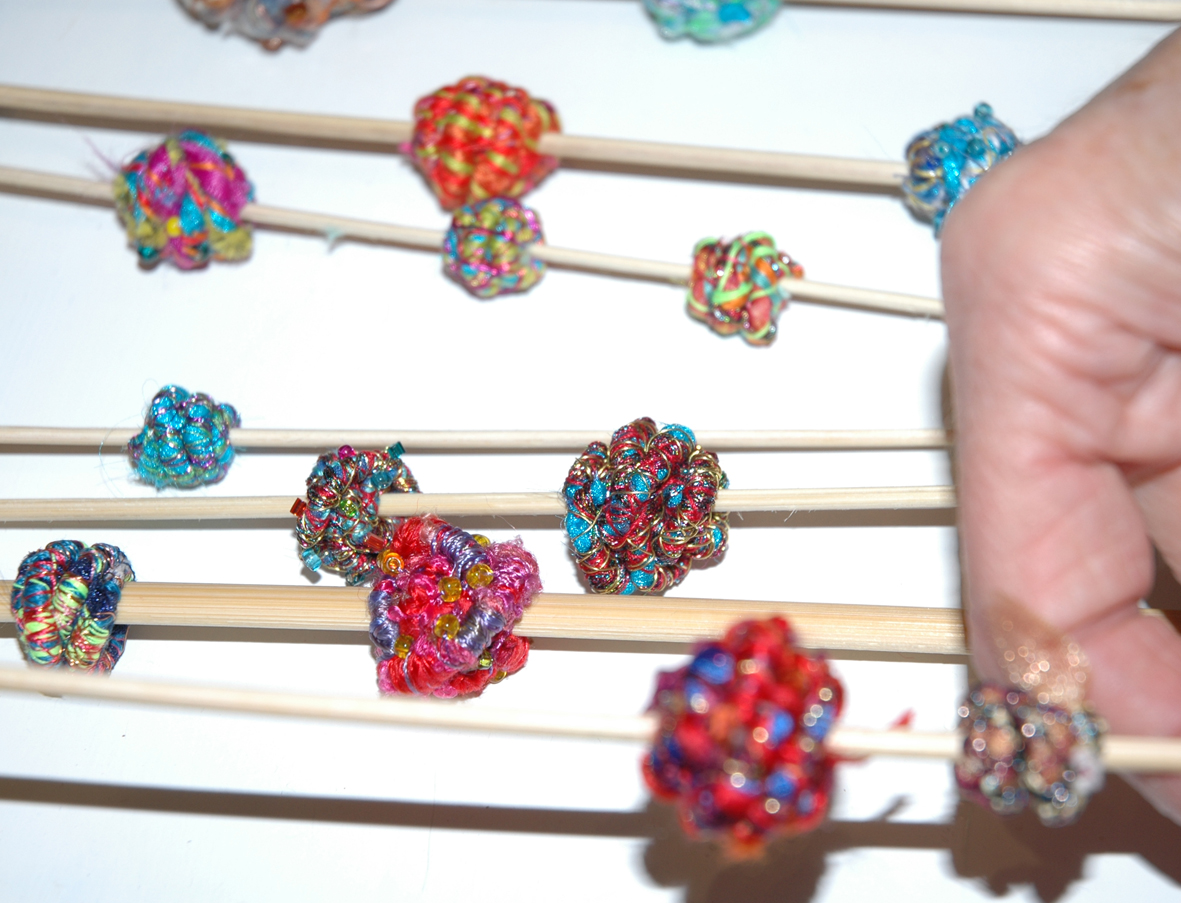
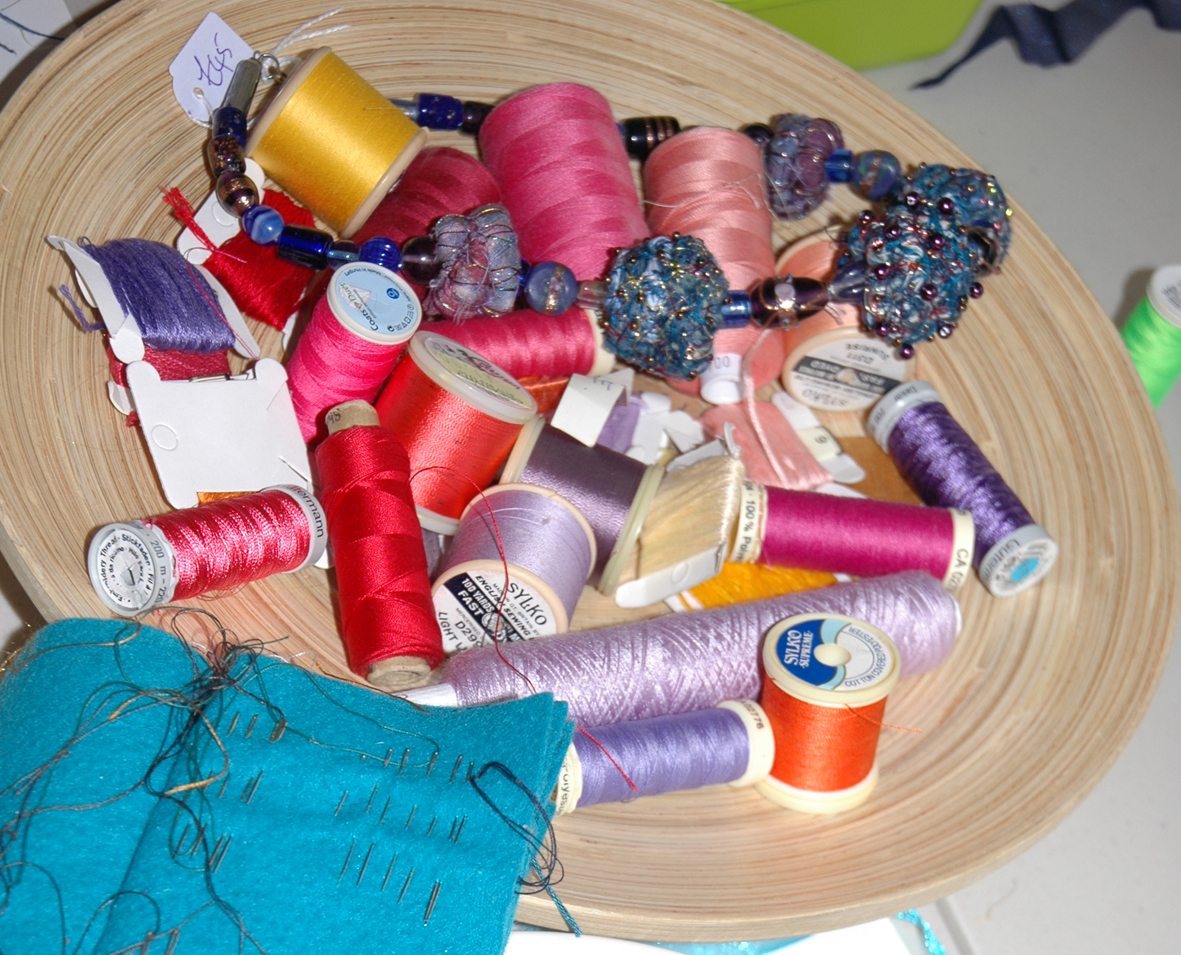
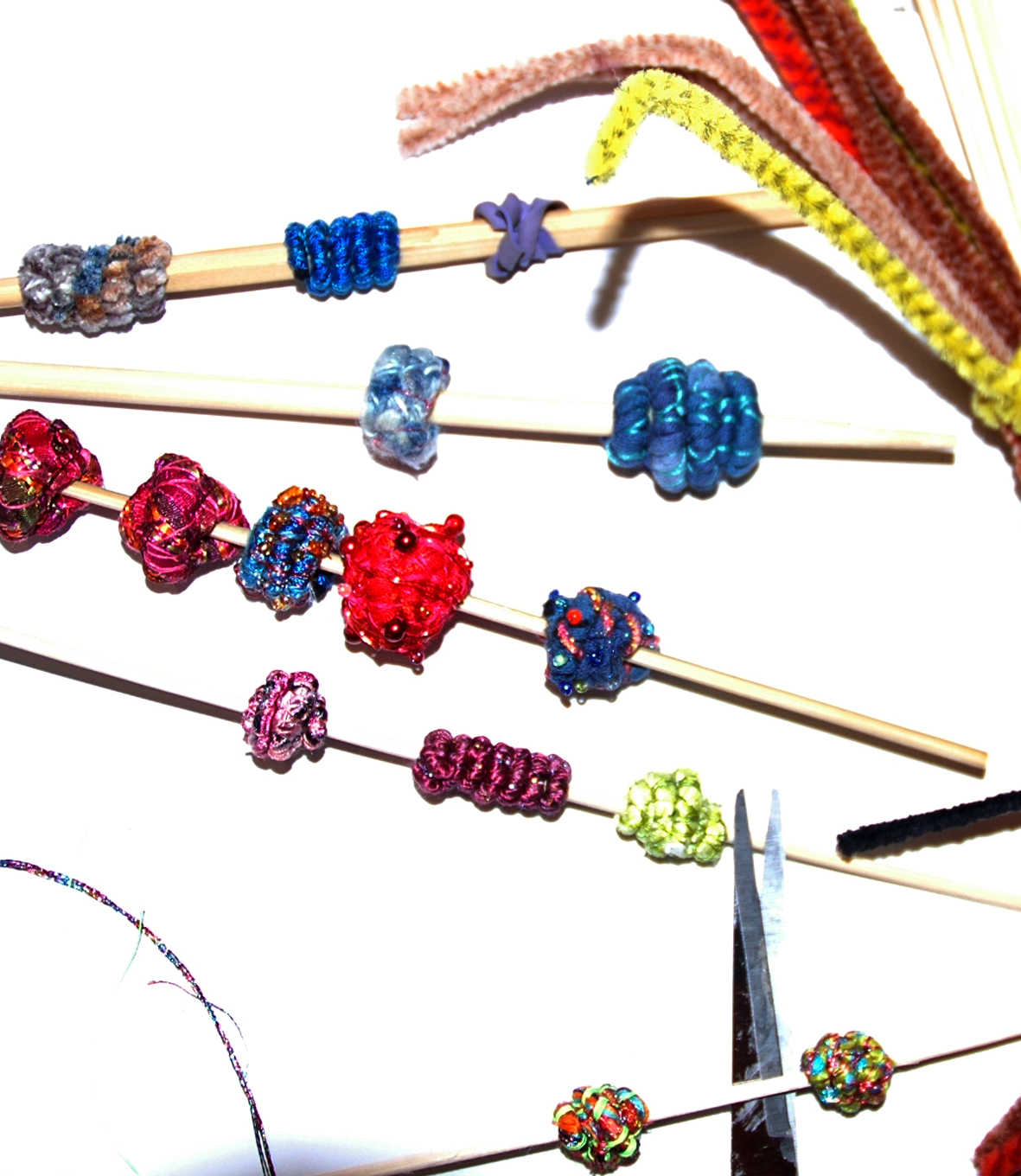
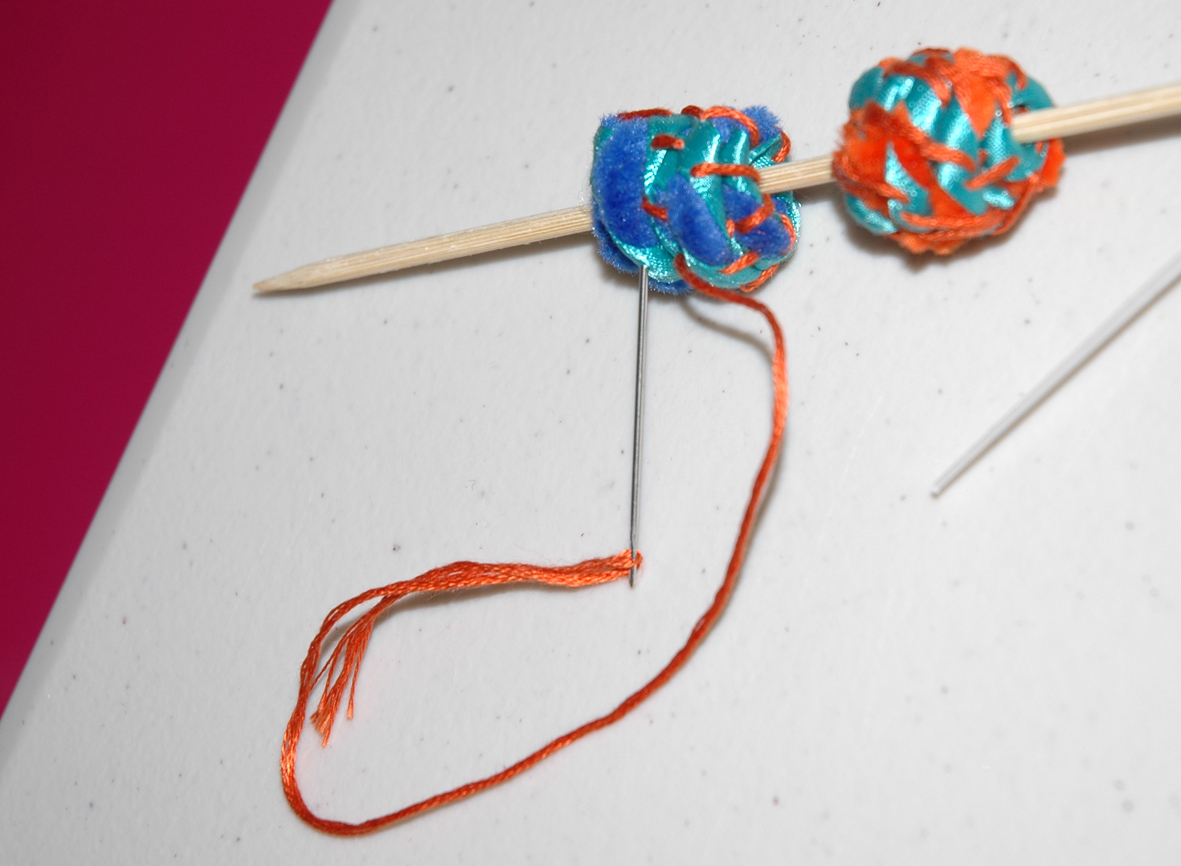
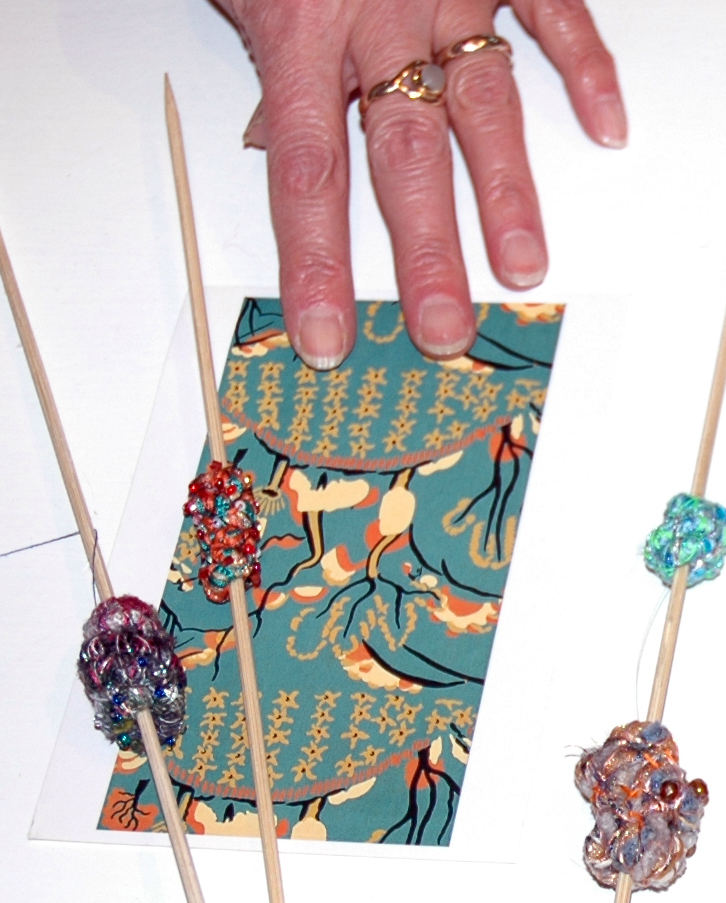
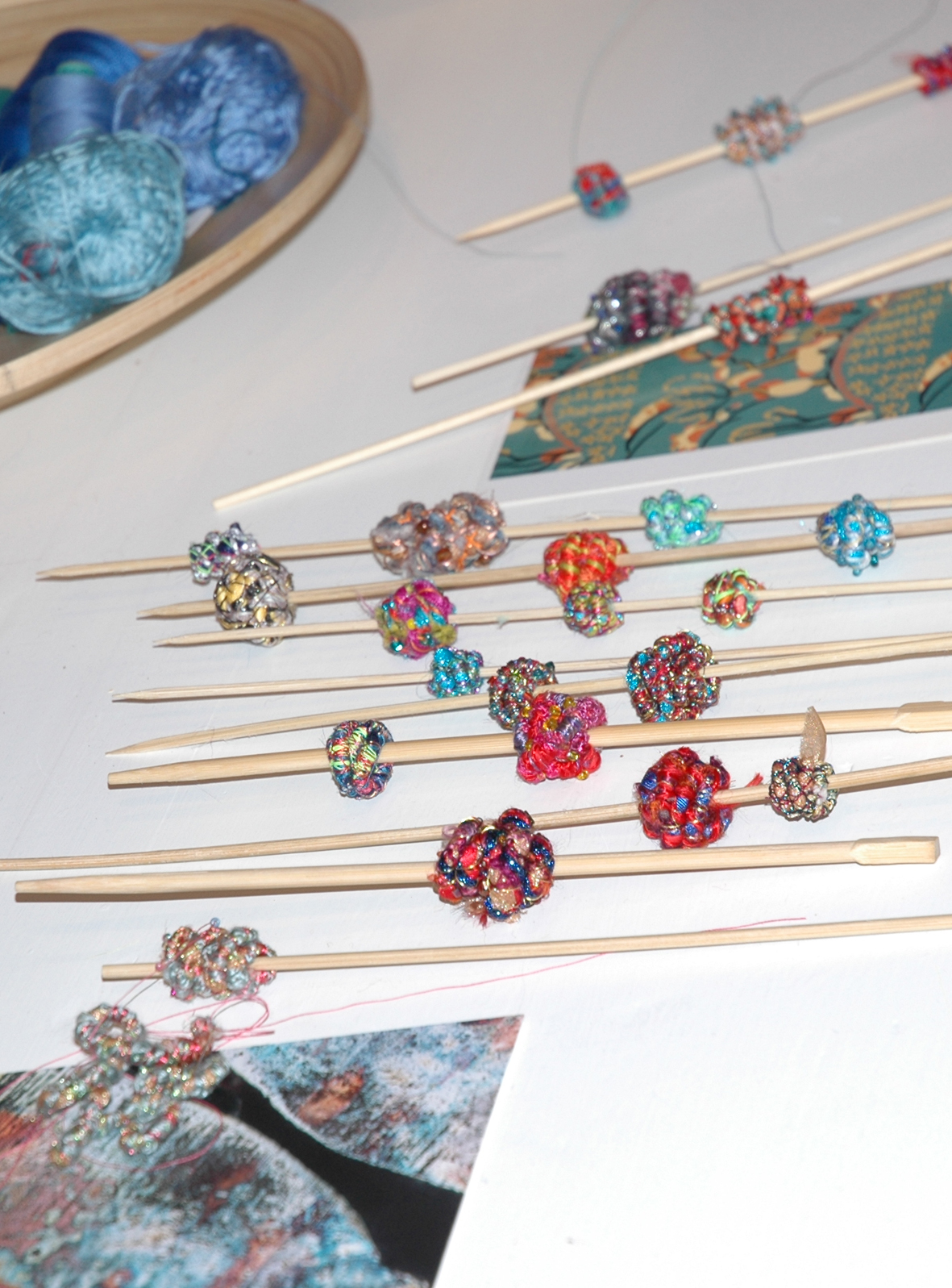
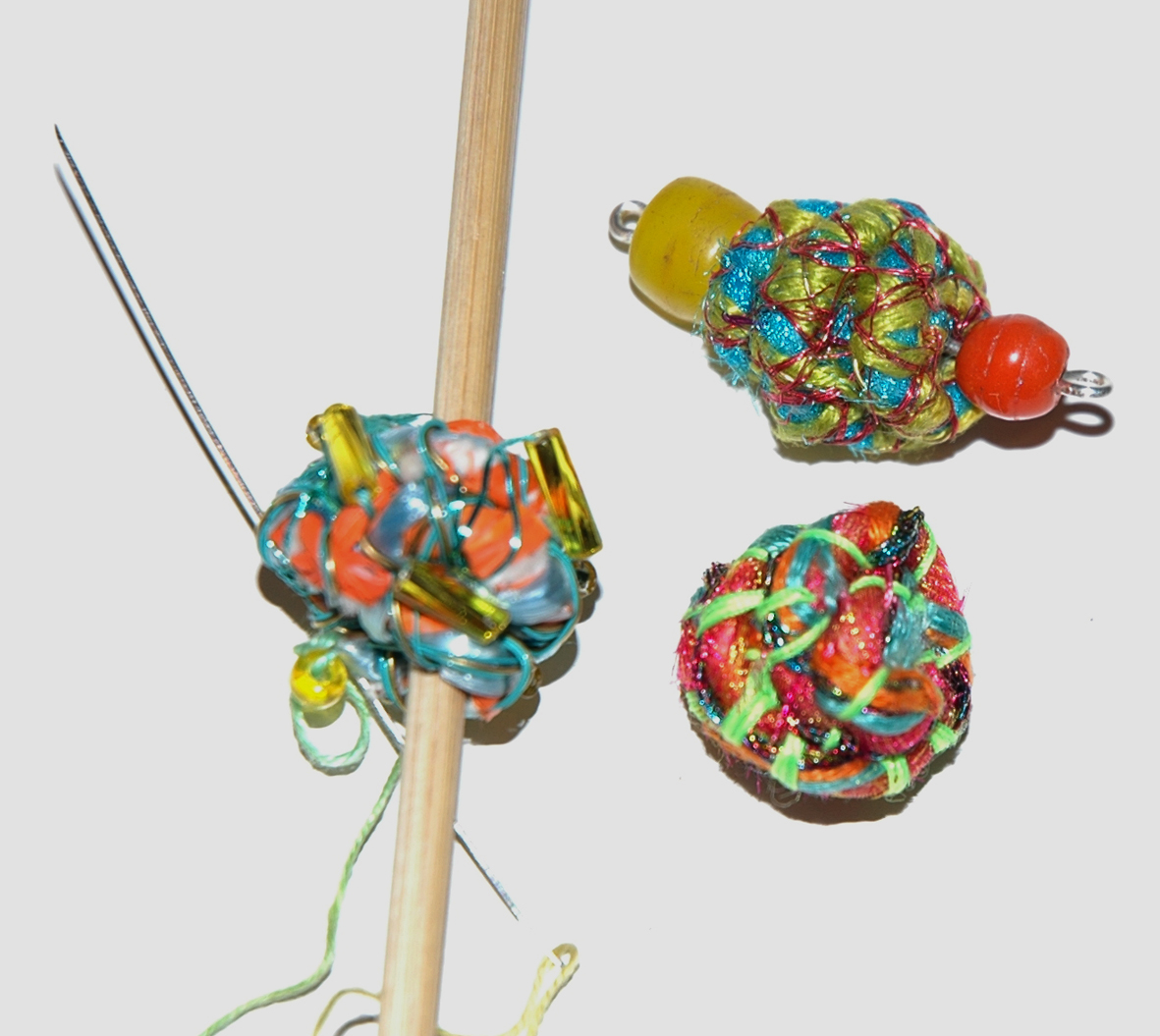
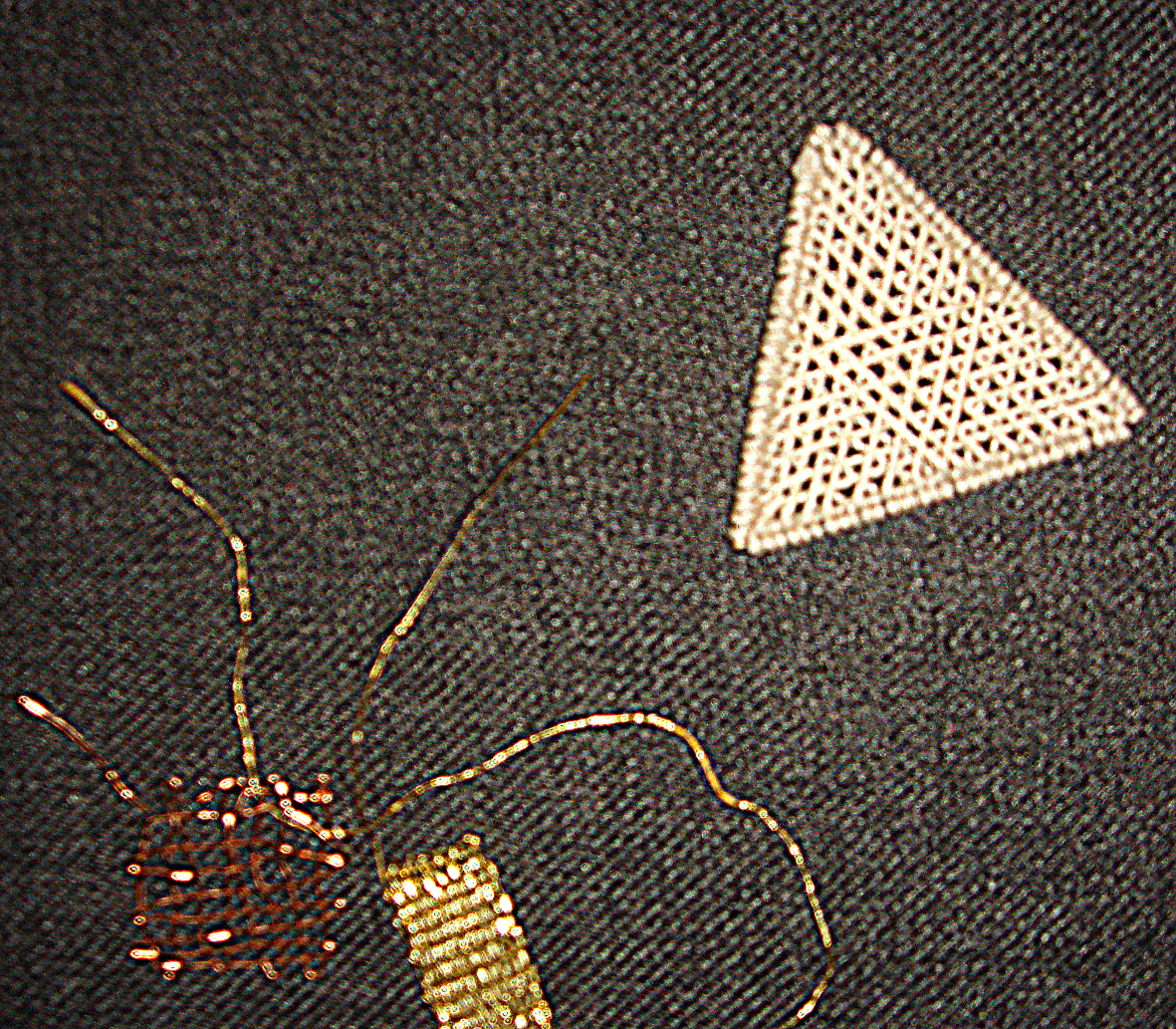
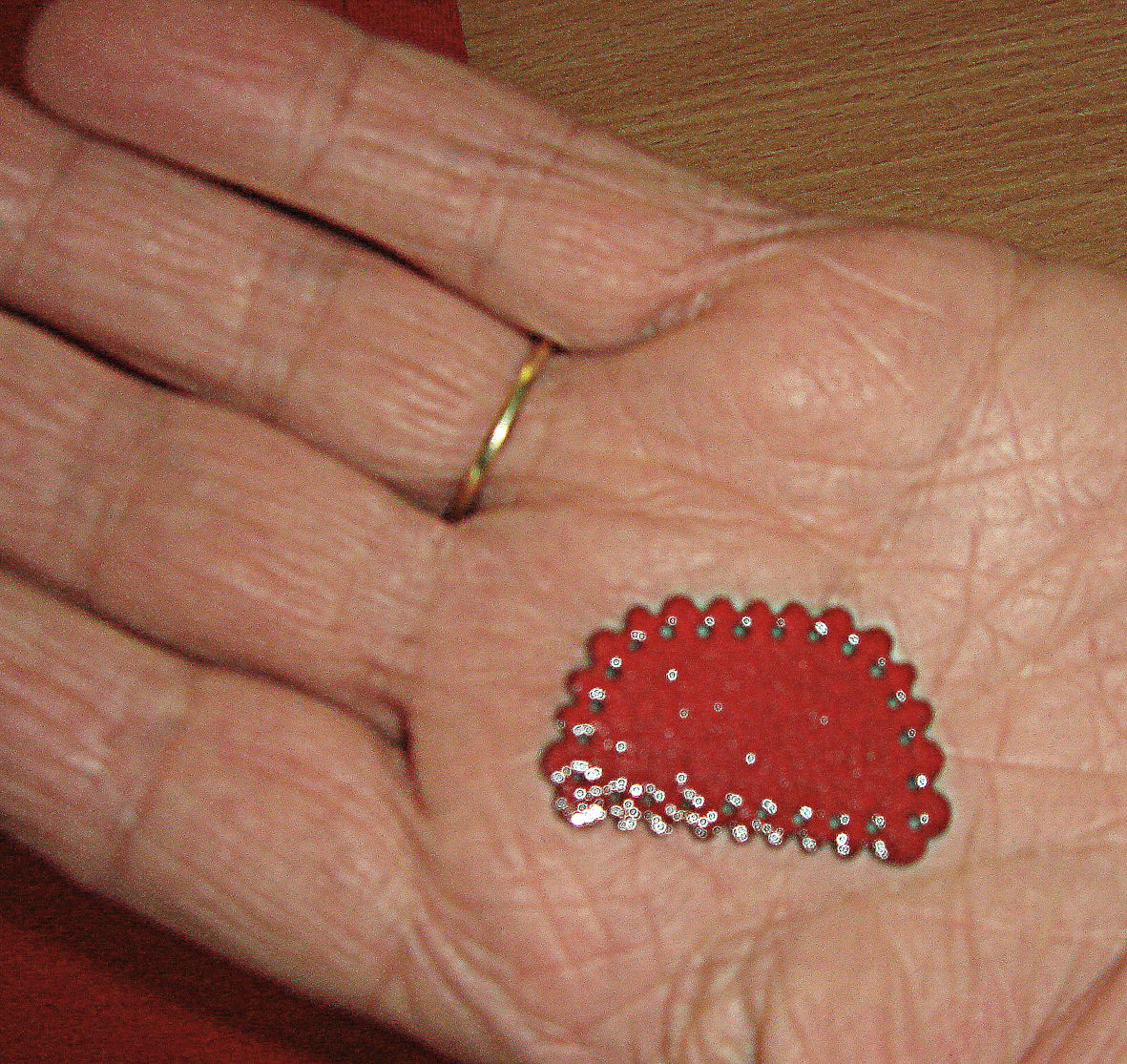
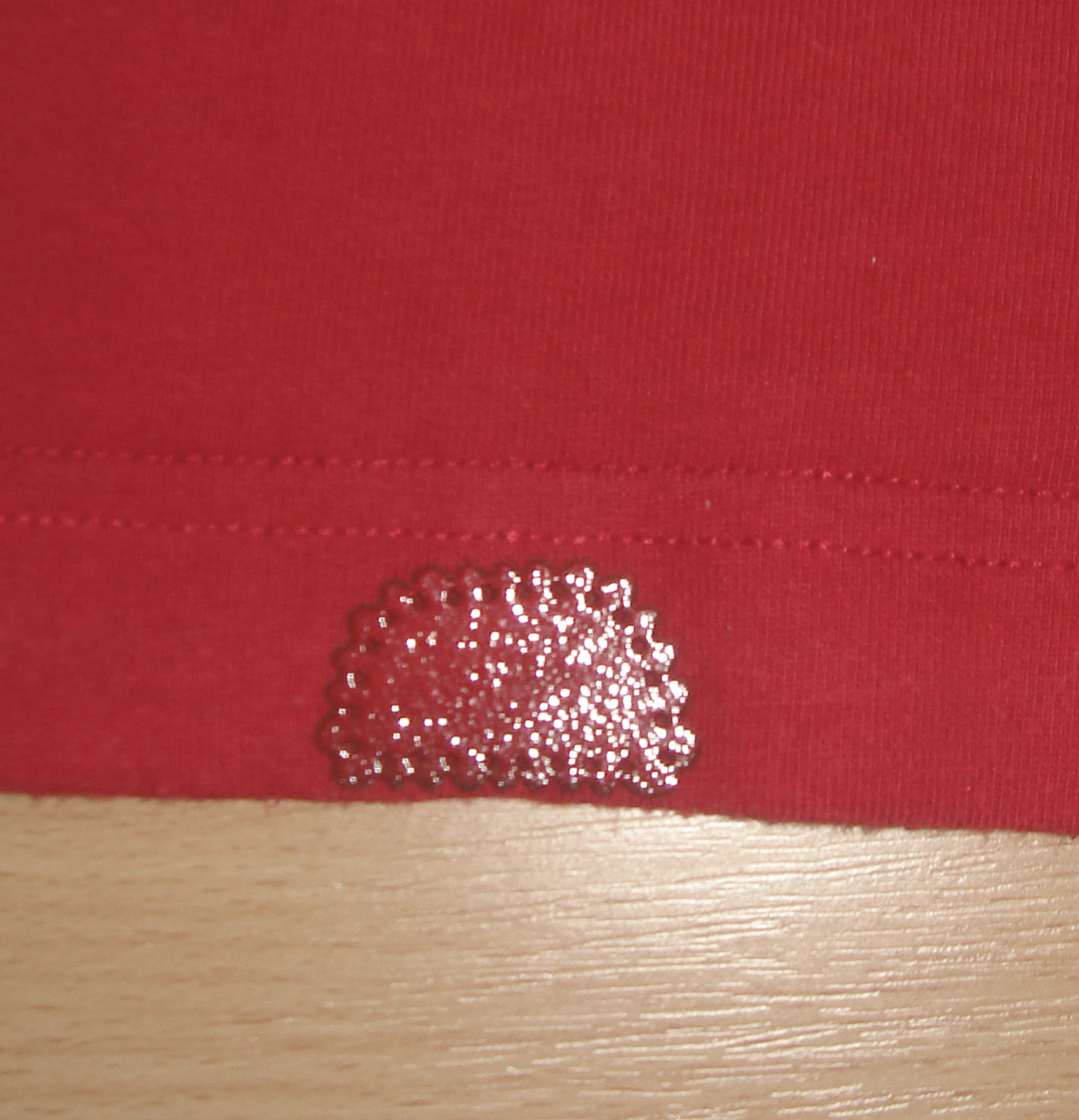
The first day of classes for Heart Space Studios – making beads in the morning and jewellry from them in the afternoon. The first tutor Patricia Brownen gave us all a demonstration using pipe cleaners, strips of fabrics, threads, wires and tiny beads. Above are several of the first beads we made, still on the skewers, waiting to be threaded.
We were given a wooden skewer to wrap the materials around (pencils can also be used) and Patricia demonstrated how the beads were made using several fabrics, threads and wires and secured by stitching. Then she let us loose on a variety of sumptuous fabrics and threads she had brought along – the pipe cleaners determine the size of the bead
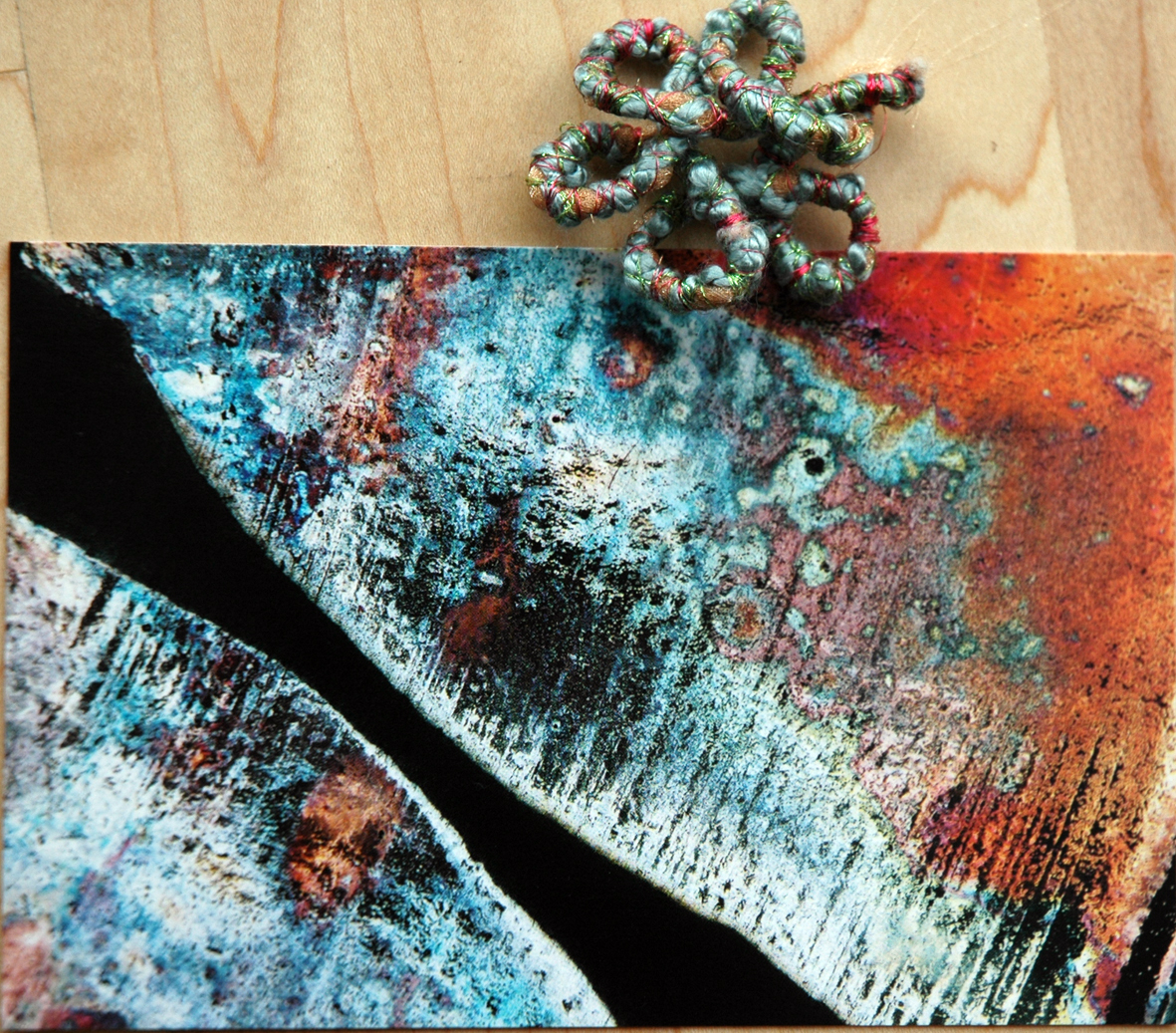
To get us started she supplied some postcards with beautiful coloured images that she had collected, several people developed their colours using these. I thought it was useful if you then made a whole series of beads just using different variations of the chosen colours, then all the beads would co-ordinate for a necklace – once a designer……
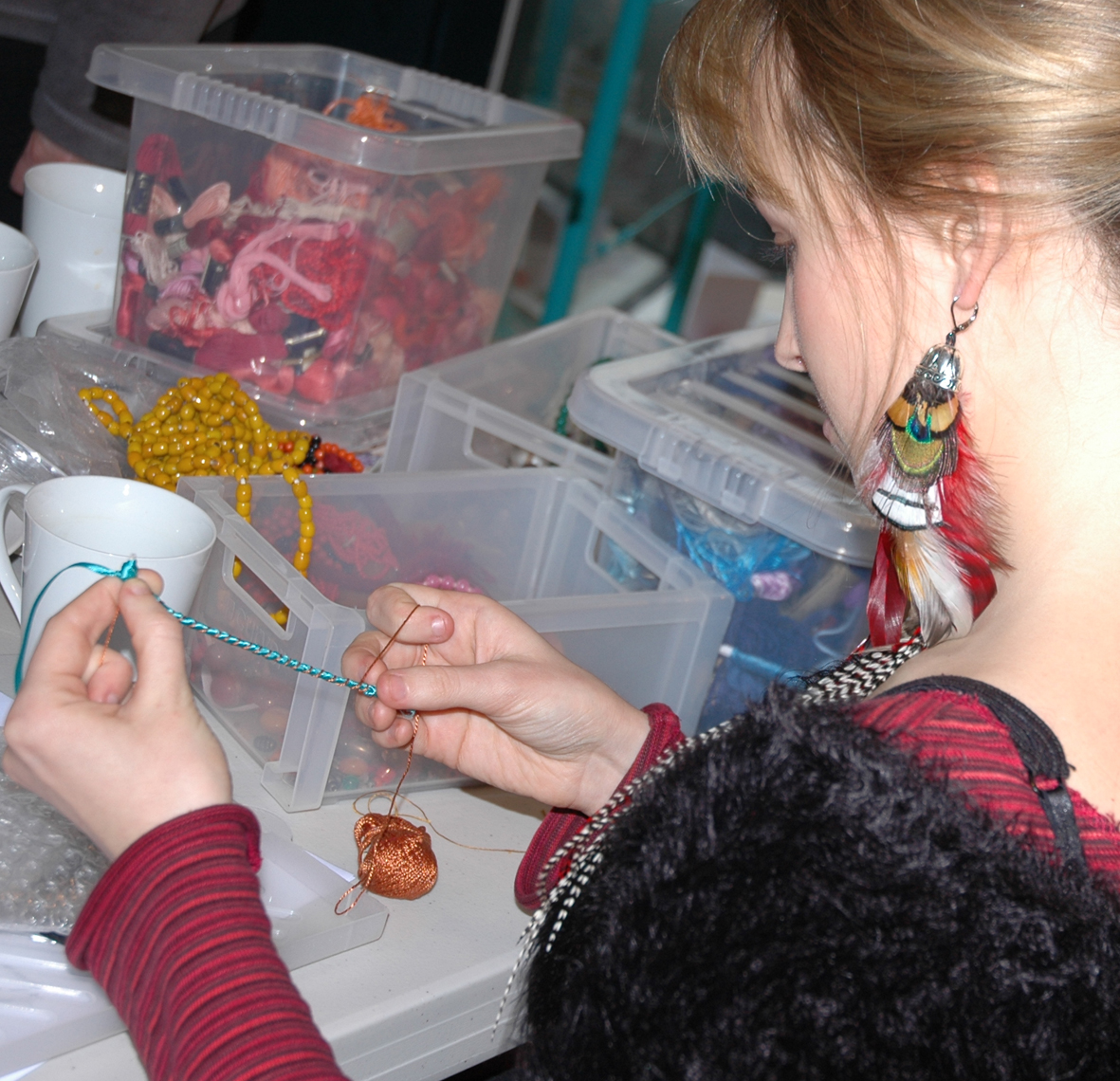
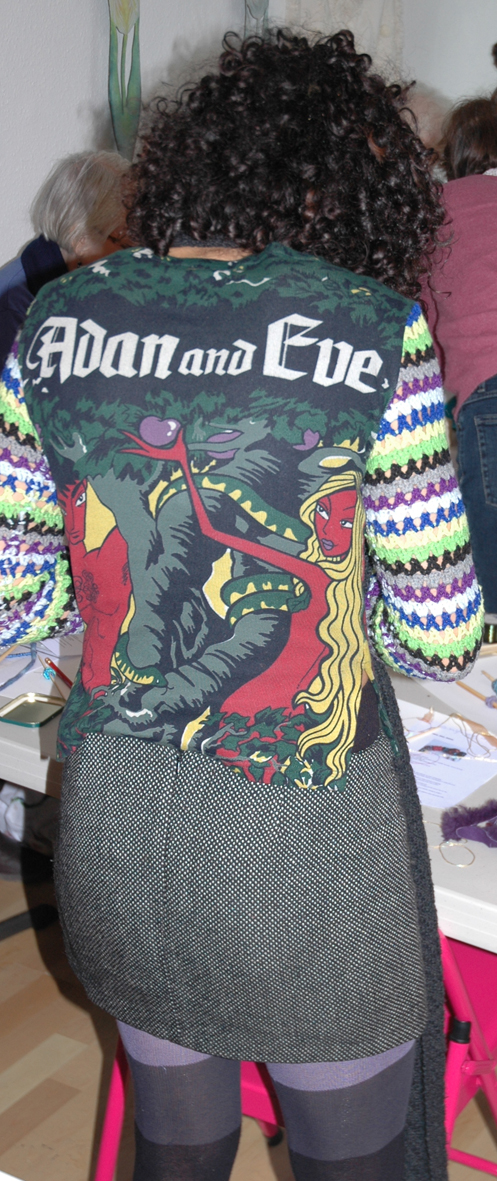
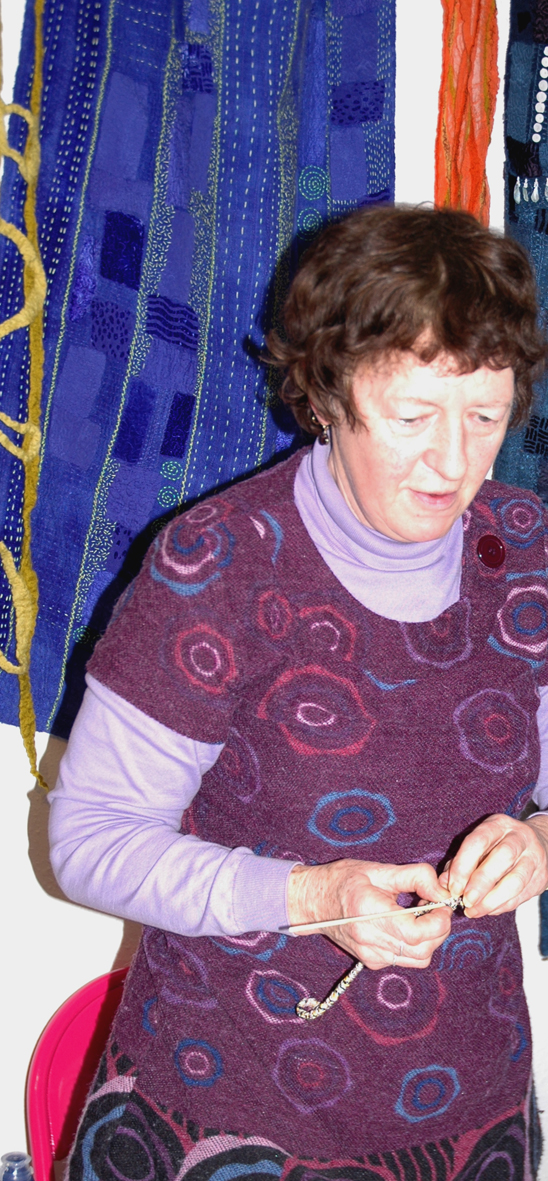
Some of the students were as interesting to look at as the beads we were making and several people stood up to make, as I do when in my own studio.
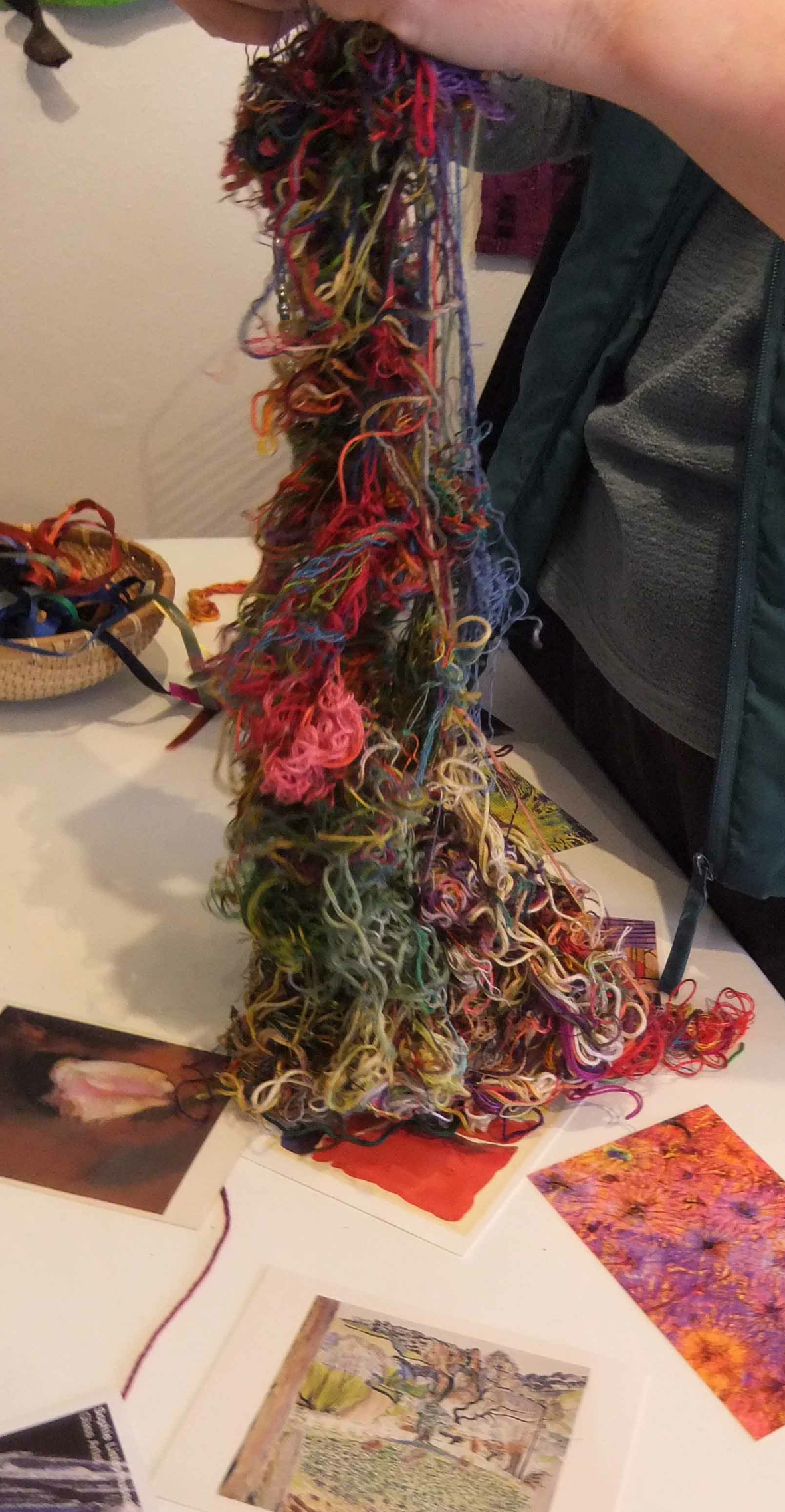
I had brought in my ravel of silk ends, which looks like a bower bird’s nest but is the leftovers of 30 years stitching in silk, people swooped on it for single threads of shining colour
By the end of the morning we had all made about 3 or 4 beads and here are a selection, some of the students stayed on to make jewellery from them at the afternoon class
Even I managed to make 3 beads between serving teas, checking phone calls, ordering food for lunch and everything else that goes into an enjoyable day’s making for the students at Heart Space.
The afternoon’s jewellry making will be posted on my next blog…….
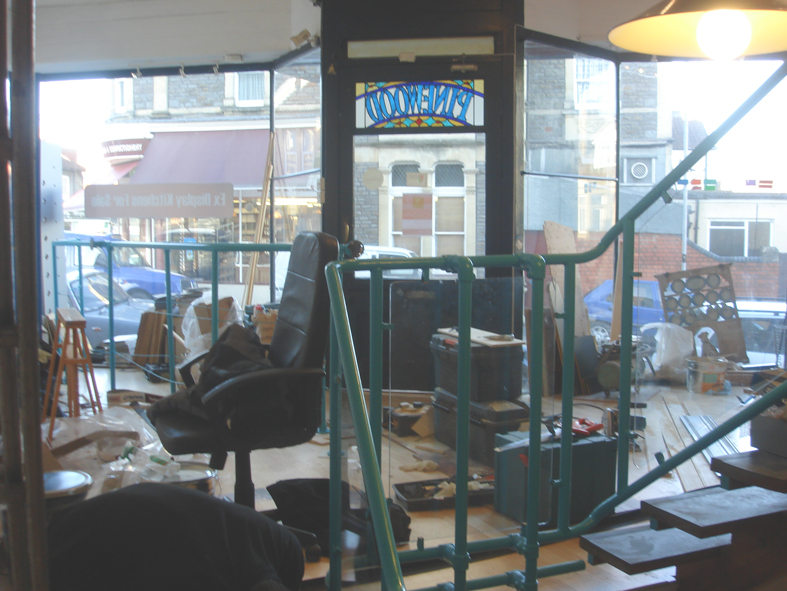
Above is my latest “work in progress” – Heart Space Studios – where all things textile will be taught, designed, drawn, made, displayed and sold. It is in the Redland district of Bristol and last week it looked like this.
the week before the opening, new floor being laid
I decided to open this studio after I was asked several times by several people for drawing and stitching classes. So late last year I took the plunge and just 3 months later here we are at the opening day of our new venture – in what was a kitchen showroom and obviously, given the name, as close to Valentine’s day as possible. Last Saturday, 12th February, saw us with the first studio space up and running. Most of the last few months have been stripping out and selling kitchens and bathrooms ripping up floors and wallpaper and applying for planning permission and then putting down floors, repainting and decorating and making timetables and buying signs and chairs and tables and tea urns and cups and having websites built and changing telephones and email addresses and NOT STITCHING.
One of the several fellow tutors in this venture decided to have a Tea and Textiles opening, which is a regular meeting event for Textile Forum South West. The teas were served with an array of the most lovely cakes and biscuits, either bought locally or brought by friends, who all rallied round to help on the day.
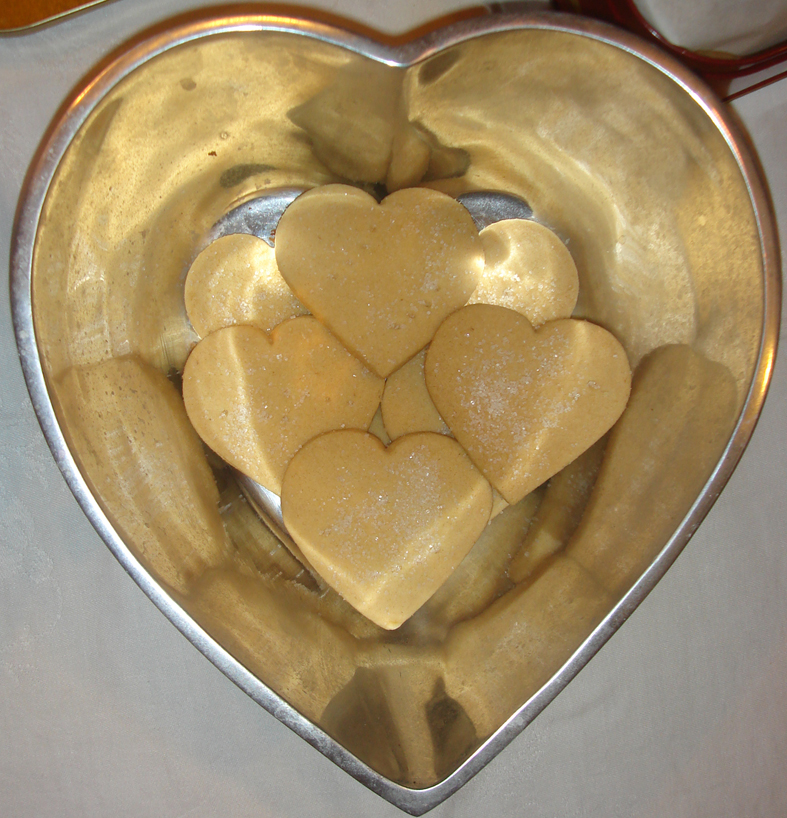
Rosemary's tiny heart cakes
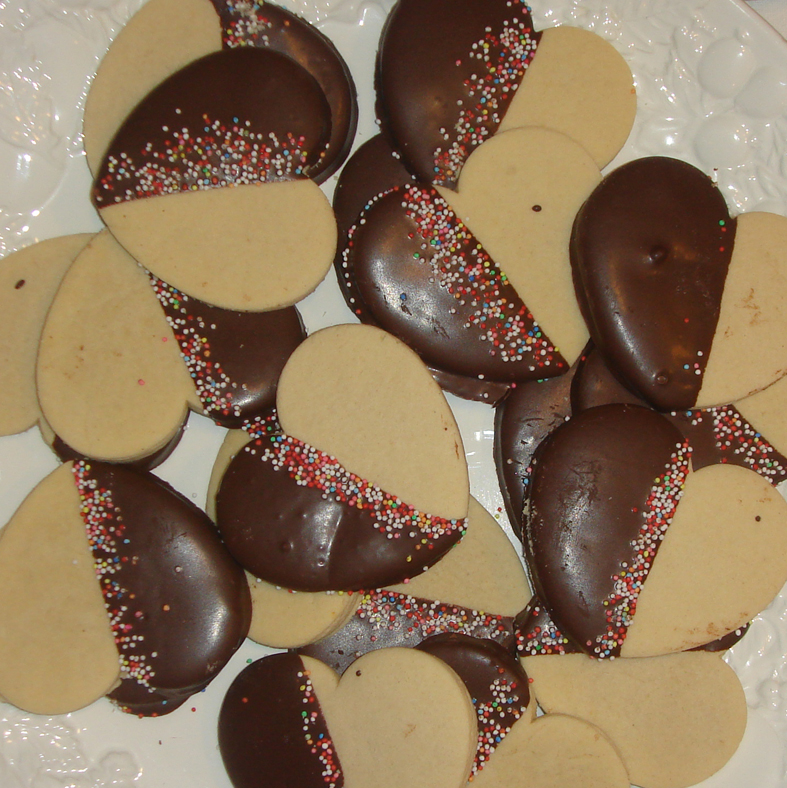
Rebecca's delicious shortbread
bought from the Split Tin bakery opposite the studios
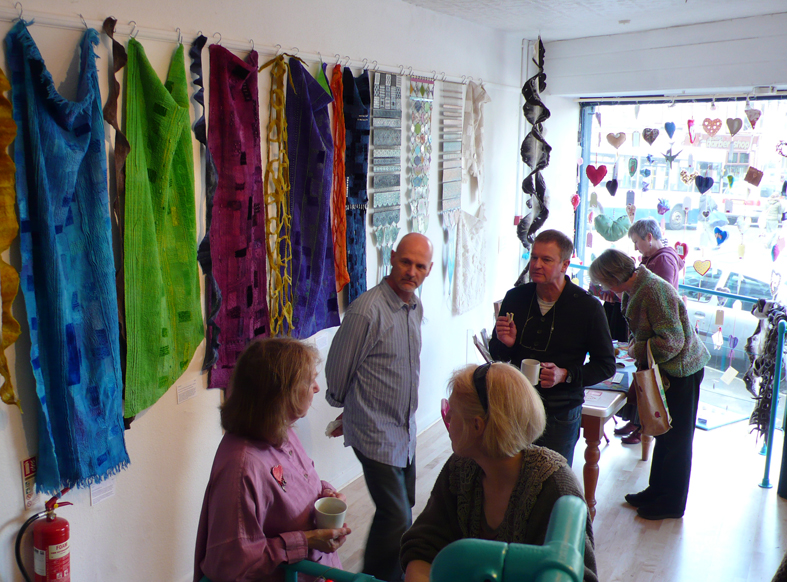
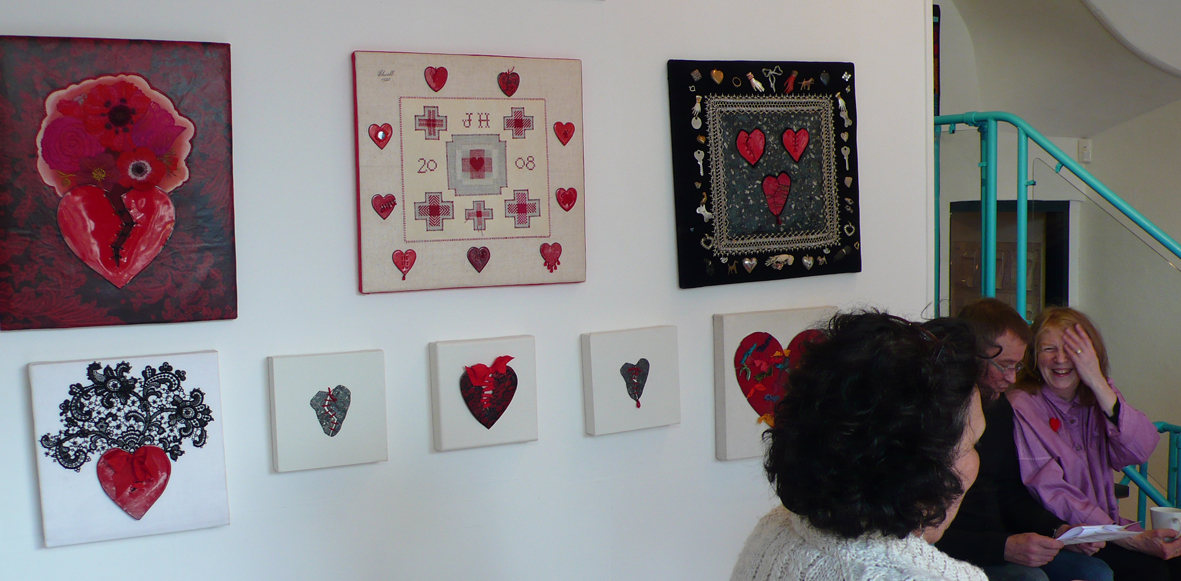
We put up an exhibition of the work by some of the tutors who will be teaching the classes, a mixed bag of stuff so I just went for colour.
wall of hangings, Liz Hewitt's dyed and embroidered cottons, Janet Clarke's felts
as did many other people in one form or another..
Liz Hewitt and Teresa Searle with patchwork quilt by Jan Hassard between
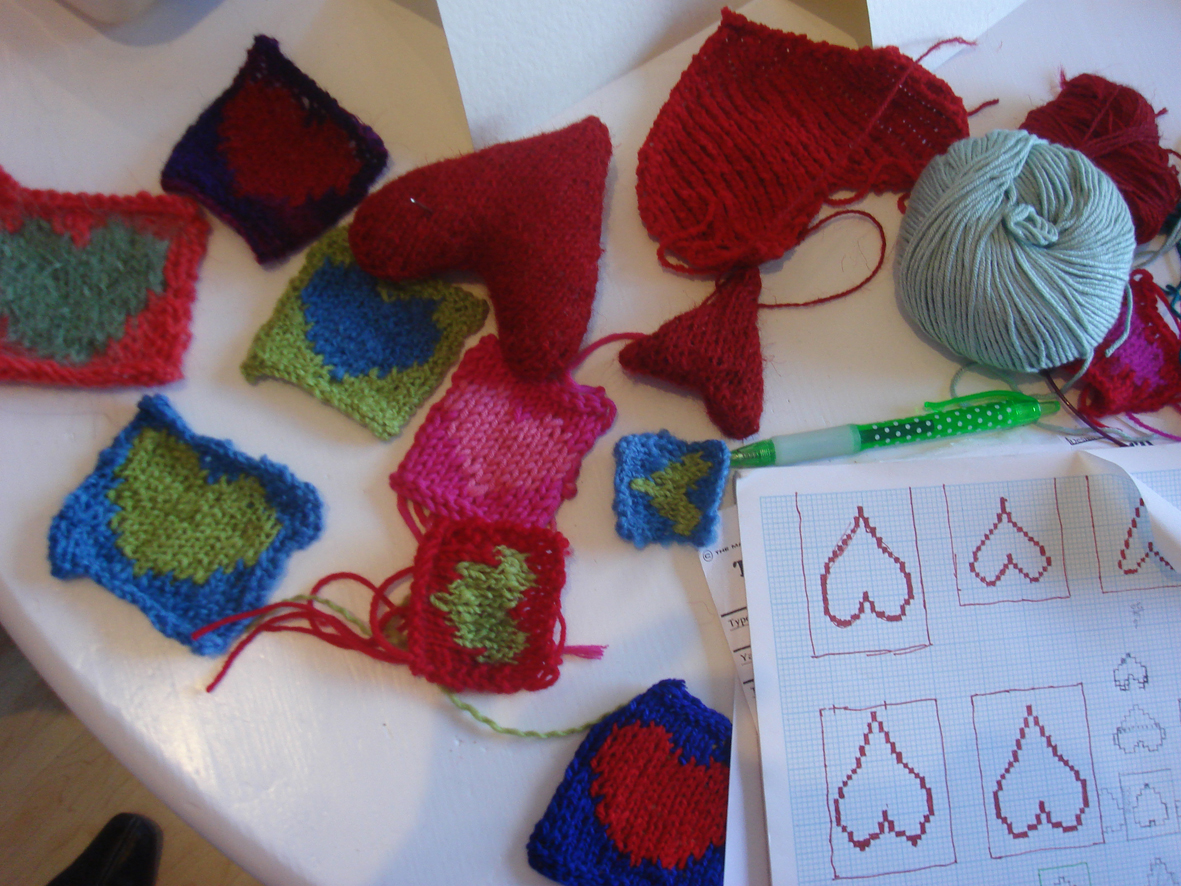
There were lots of samples of other workshops displayed so that people could see what they were signing up for..
knitted heart patches by Sharne Lott
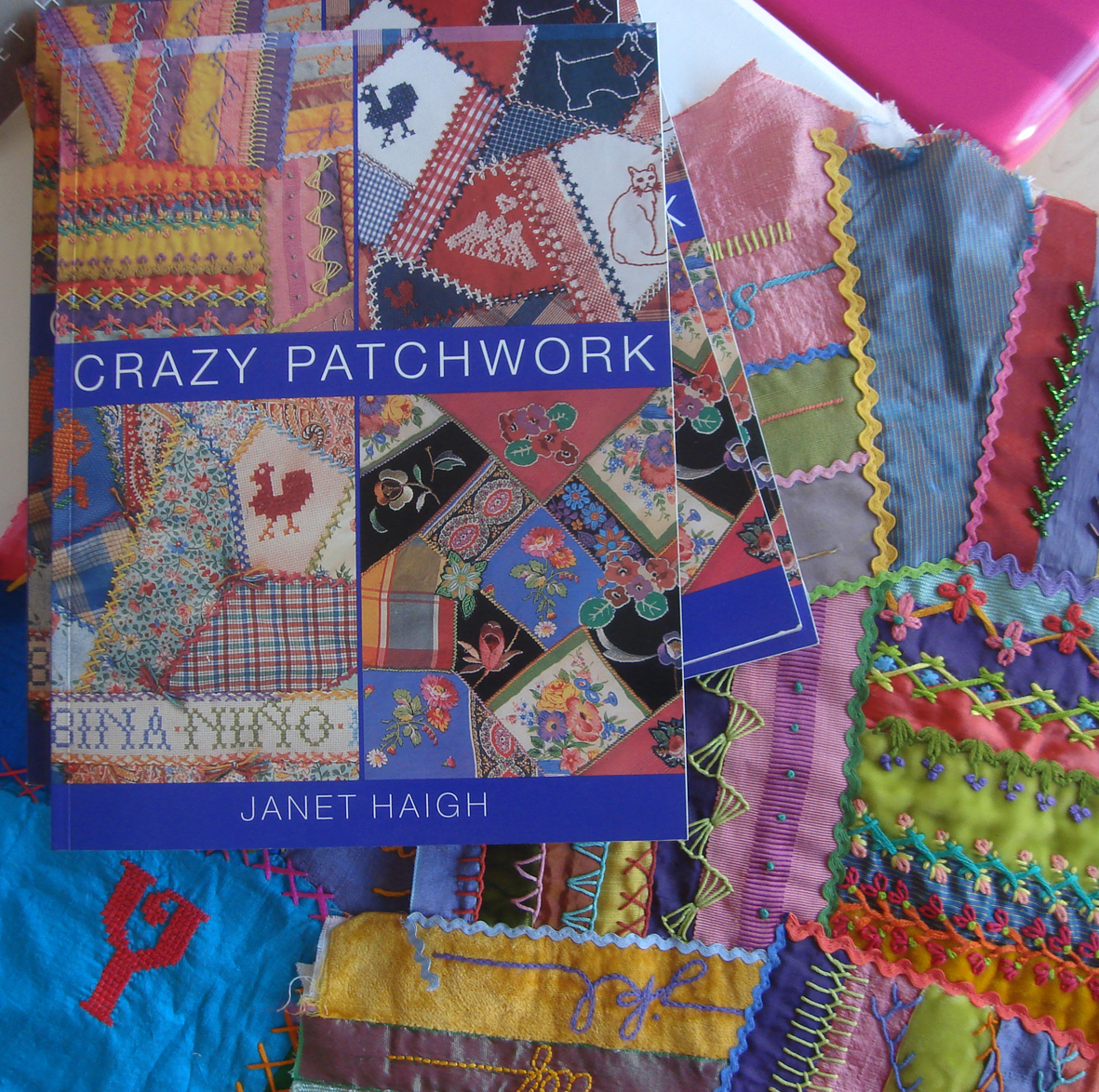
my crazy patchwork samplers and book
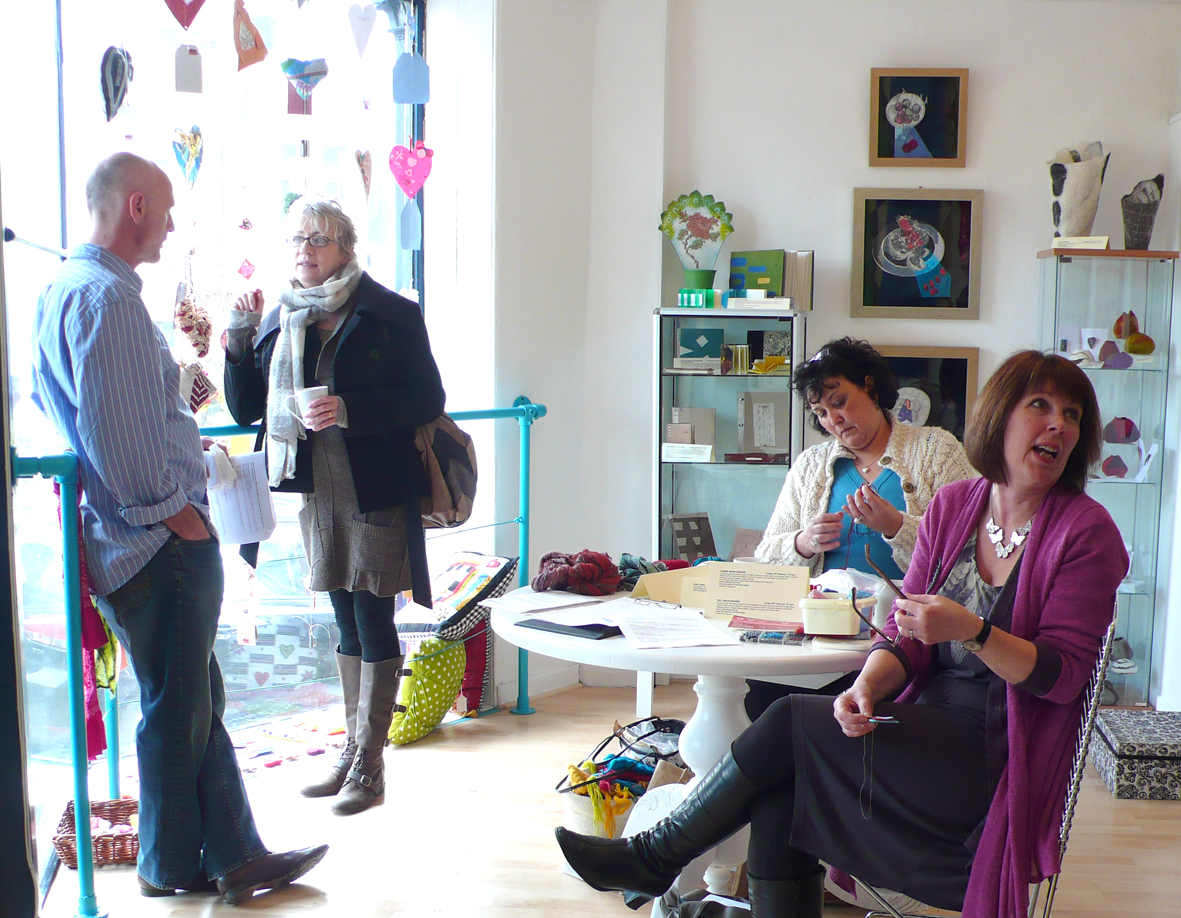
Sharne Lott, knitter turned jeweller and Debbie Bird, applied artist, made things…..
Sharne knitting and Debbie talking
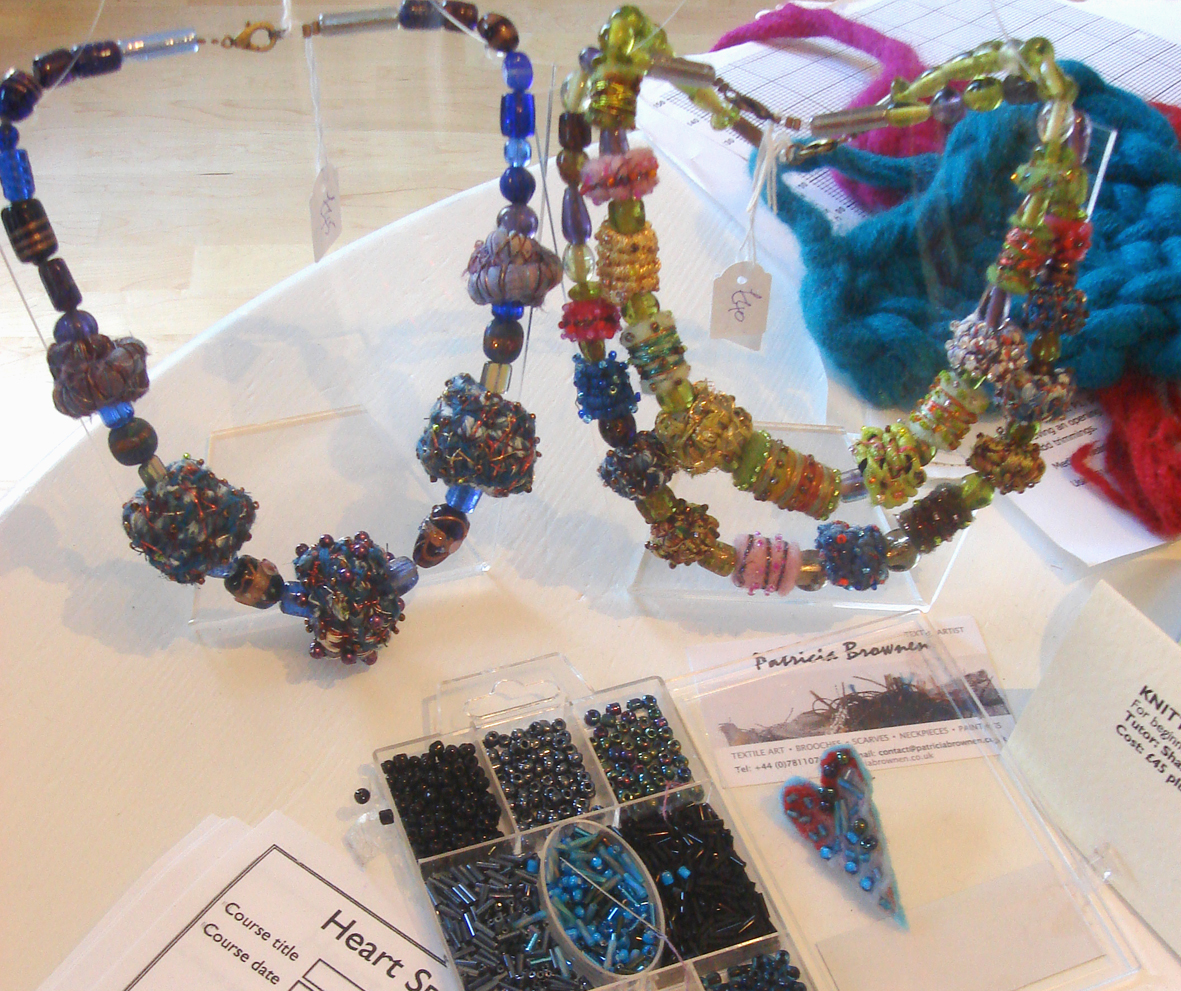
Later some hand-made beads arrived from Patricia Brownen who had come to my first drawing class wearing one of her necklaces – I signed her up on the spot for our first workshop on Friday 18th February…we have already got several people signed up for this – me included!
hand embroidered beads by Patricia Brownen.
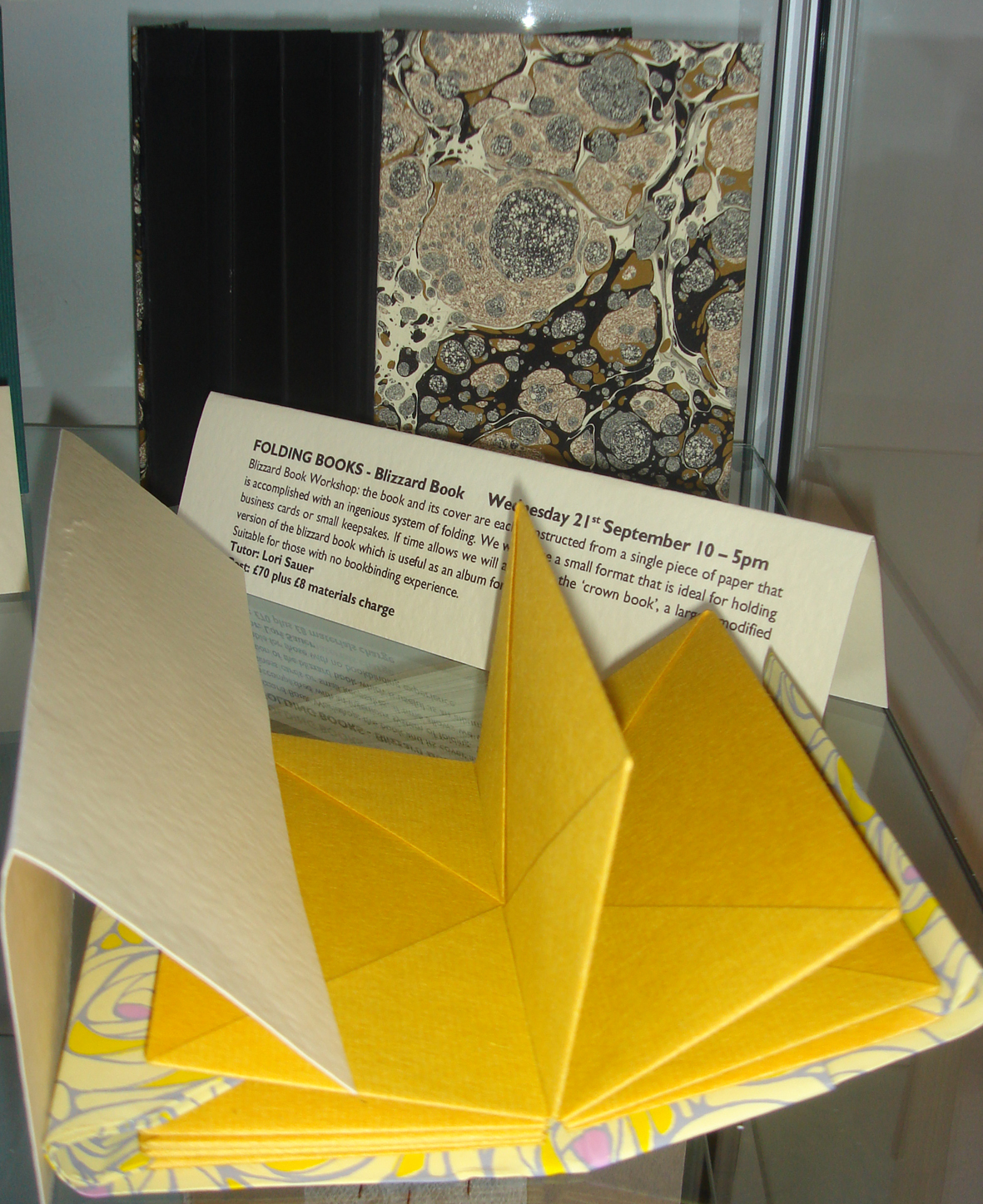
Textile is such a wide discipline to me that absolutely anything involving stitching will be taught, so I was extremely pleased when bookbinder Lori Sauer expressed an interest in conducting classes at Heart Space later in the year.
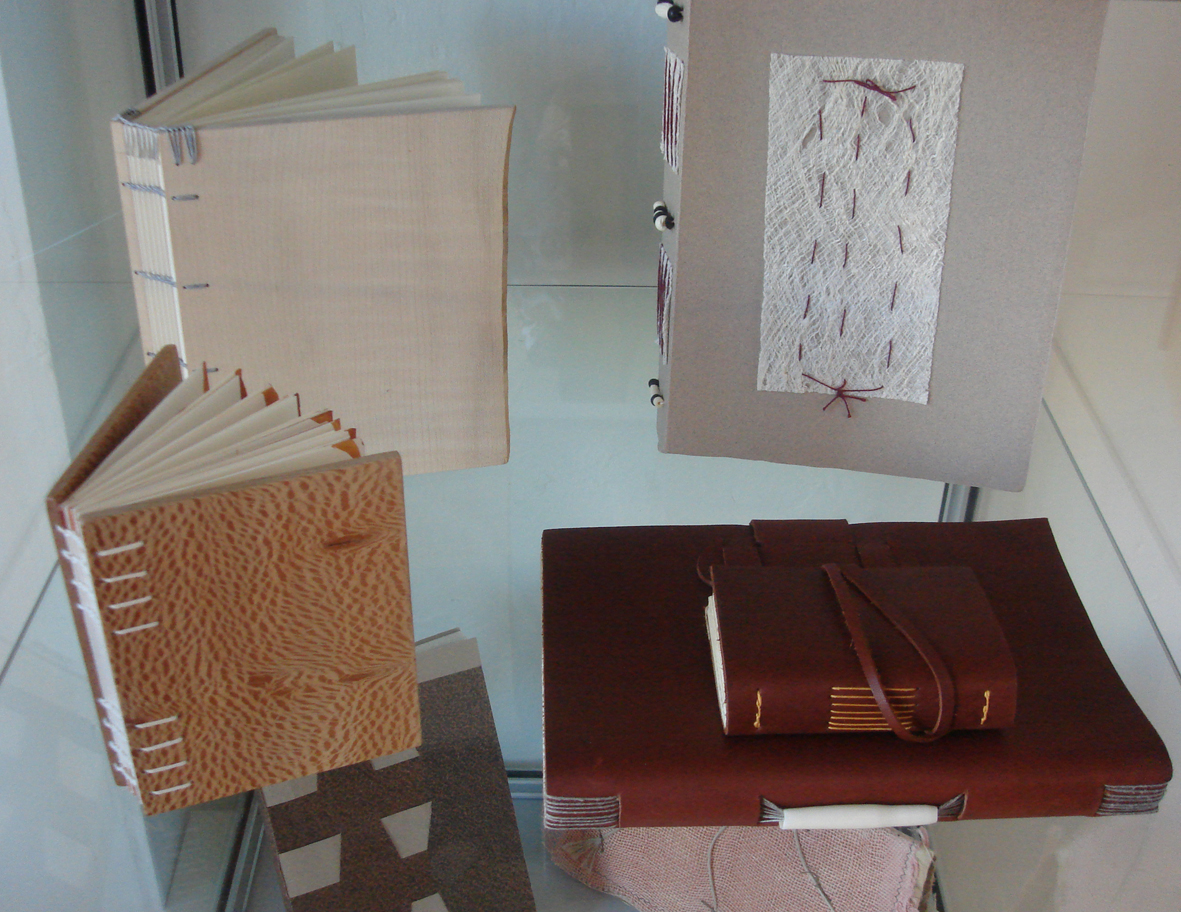
samples of books made by Lori Sauer
stitched leather and wood book bindings by Lori Sauer
Felt making is very popular and many people are wanting to sign up to these classes, we are making them a regular weekly class along with stitching, drawing and patch-working. Janet Clarke, who I first met last year at an Xmas party, is taking the major wet – felting workshops; but she also turned out to help get the studio together, putting up the Heart Felt exhibition in the windows with jeweller Hazel Sutton.
felt hanging and vessels by Janet Clarke.
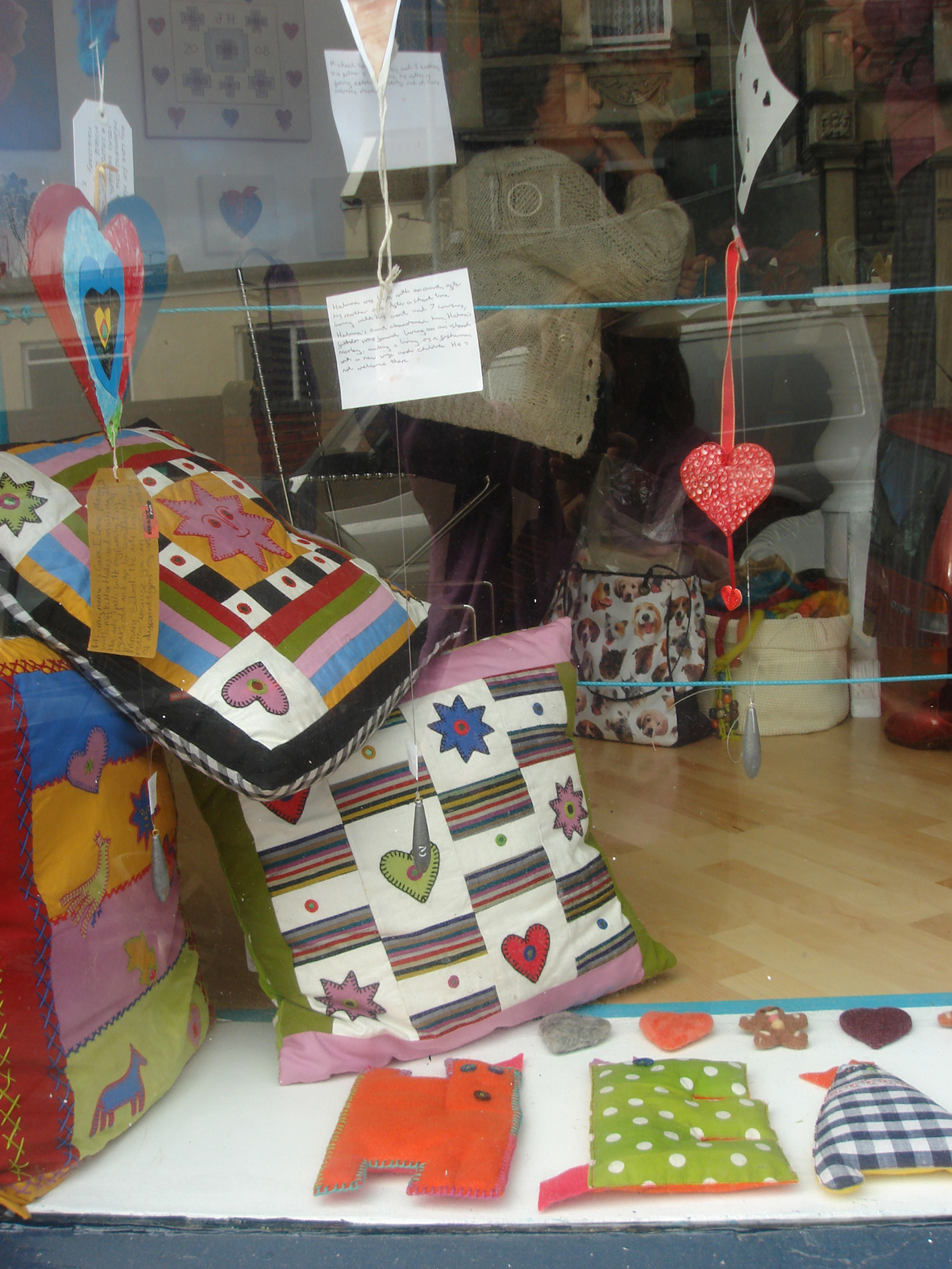
One of the main things I want to achieve with Heart Space workshops is to introduce people to the basics of designing textiles, not just making for making’s sake – nothing wrong with this – but I feel that designing for a purpose is a surer way to focus and develop ideas and skills, so one of the simplest of our one day taster workshops will be to design and make cushion covers – and here are some of mine in the window, plus the alphabet animals I designed for the parent and child’s Saturday classes.
cushions and alphabet animals in window
I have to show this rare photograph of me laughing with Martin Remmers, an old friend and book seller, who has offered to help set up a reference library of all things stitch-based for the students to use.
my hearts exhibition and me laughing with Martin Remmers
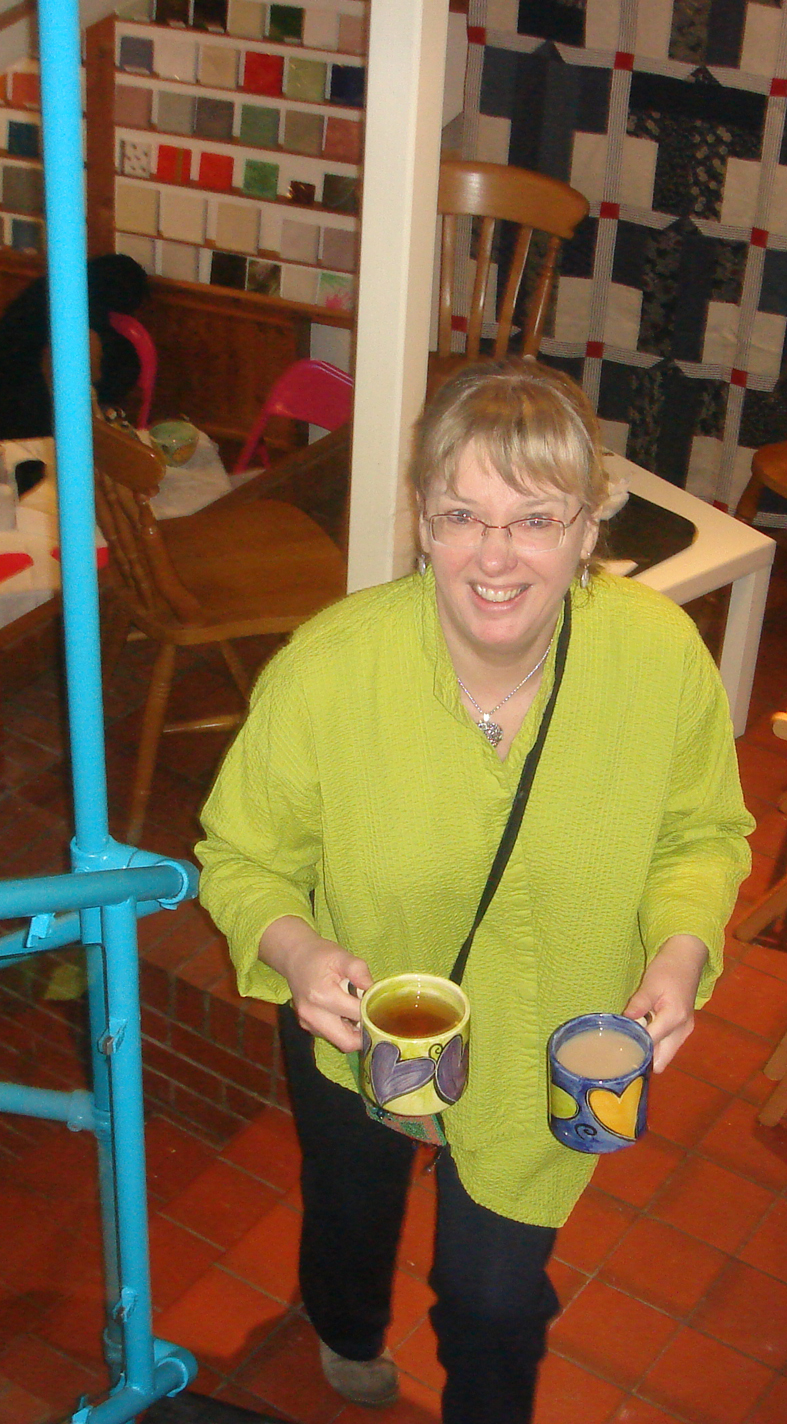
Also a typical picture of partner Liz Hewitt, who organises everything and who goaded me into taking all this on in the first place.
Liz with heart mugs of tea.
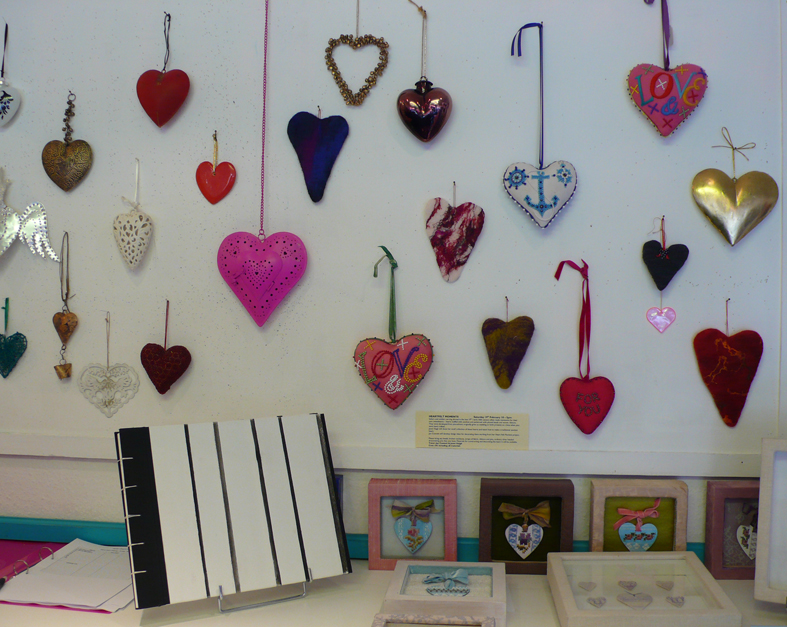
And last but not least, my temporary display of hearts from different people – this is being taken down today Valentine’s day, and shelving for the fabrics, yarns and ribbons will be put up – as inspiration and use for all the students of Heart Space Studios
heart wall with examples of stuffed and beaded hearts our first Saturday workshop
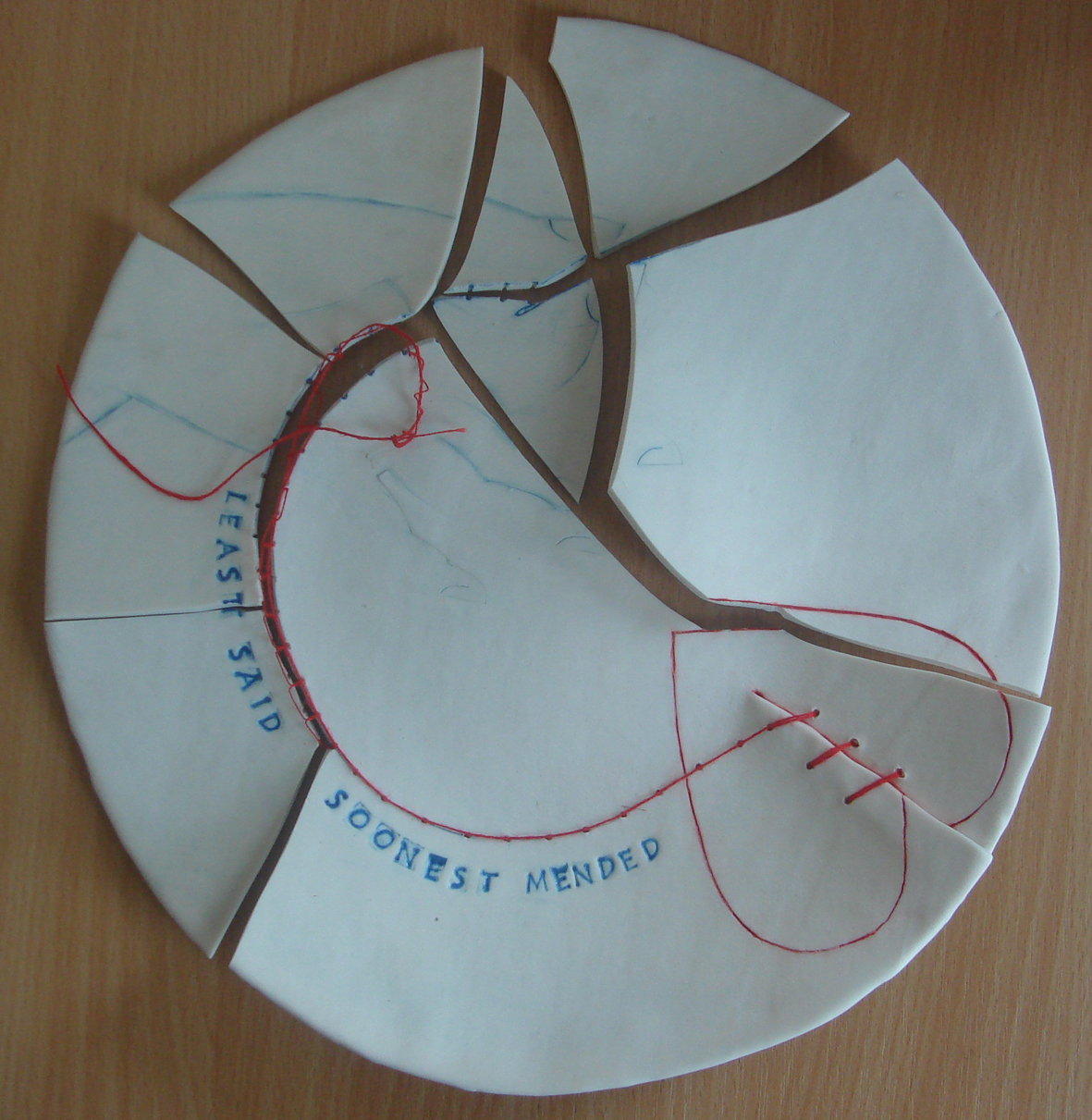
I had called a meeting of the Stitch and Think group who are working towards an exhibition around the idea of mending – a reminder that they had all promised to have working samples ready for early March – I was ahead of the game I had made several pieces of porcelain with mending mottoes on and was feeling pretty confident that I had done enough….then getting out of my car to go into the meeting I dropped the carrier bag containing all 4 porcelain plates. KERACK! My passenger Basil Kardasis said “Thank f… it wasn’t me who did that —– this has happened for a reason Janet”. quick thinking on his behalf but I felt strangely elated.
the inspirational break
When I unpacked the bag of broken bits, only one plate had survived – my W H Auden poem plate – more of which later. But on seeing my pile of broken crocks the group became animated, they fell on the pieces re-arranging back into plates and all said they preferred them broken, because now I have proper mending to consider not just simulated, contrived and controlled versions. For myself I felt sick – I was so proud of those plates; then, OK – move on; then, suddenly – FREE ! I no longer felt I had to remake them in a way that would not compromise Hanne Rysgaard’s standards, Hanne had helped me make the plates and she is a stickler for skilled work. So now just my handkerchiefs with the embroidered mending mottoes will be developed for the exhibition, as the group thought they were a better idea – leaving the plates as research development. Meanwhile, jeweller Syann van Niftrik, had started to look at the way the stitching had been exposed by the break…
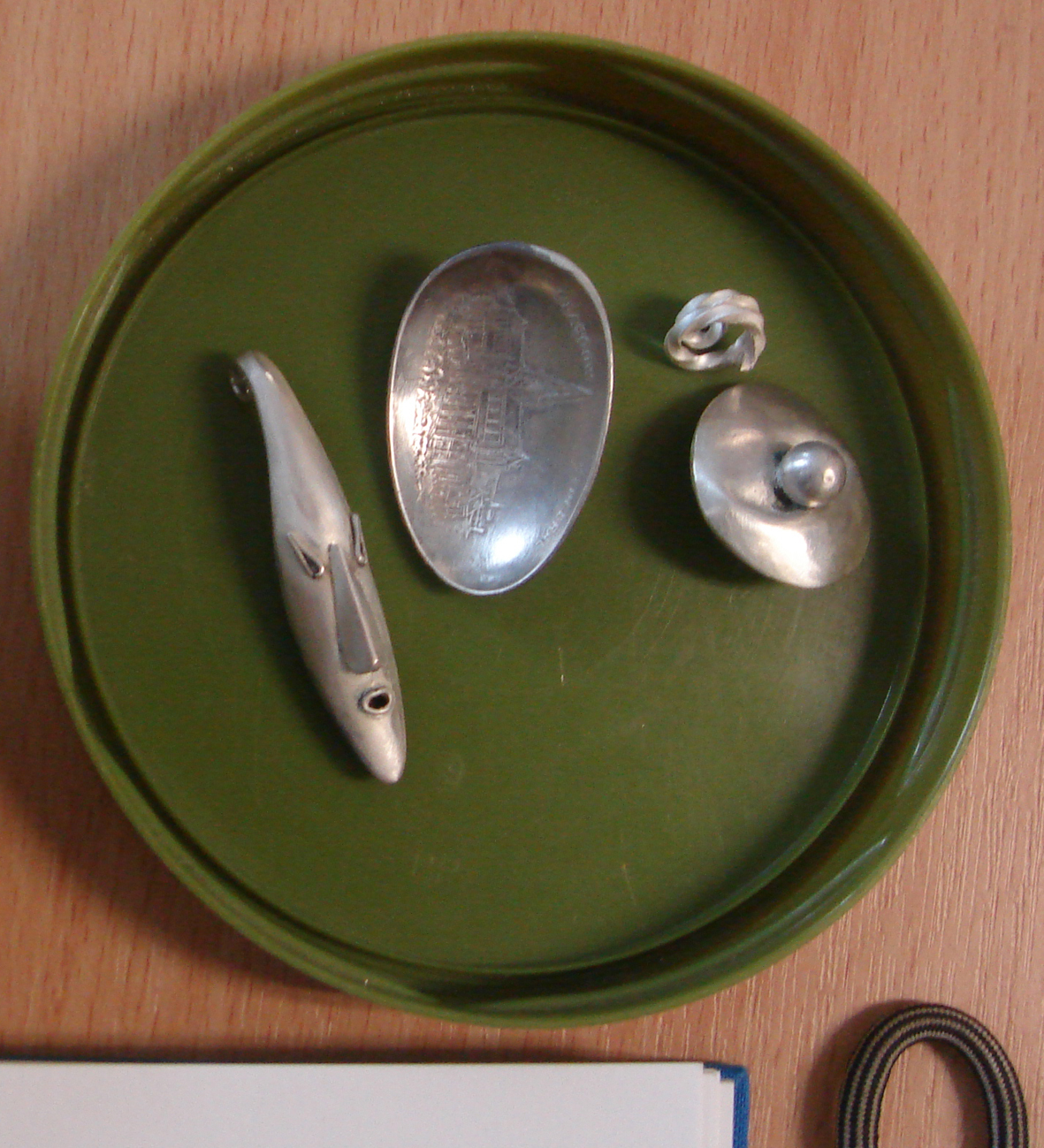
Syann van Niftrik’s mended silver objects.
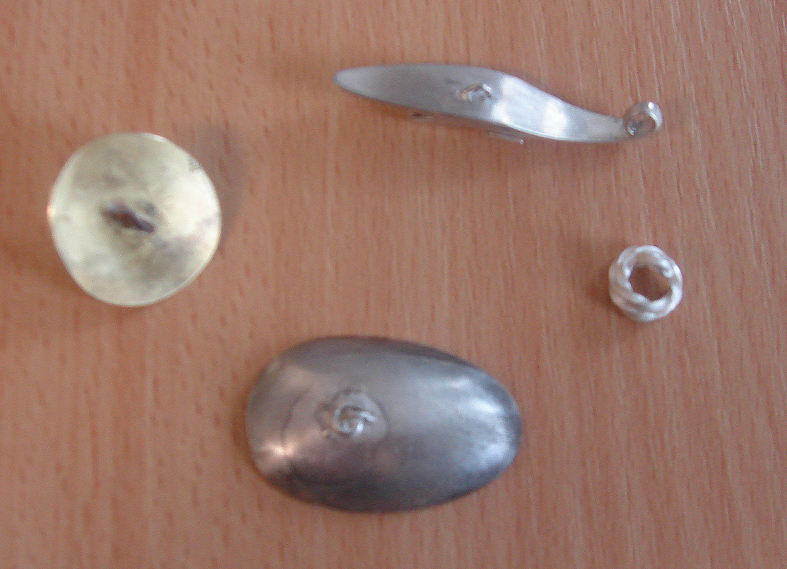
she photographed it saying I had given her a great idea – well it’s an ill wind. The work Syann had brought with her in response to the museum visit was a set of buttons, made in one afternoon, from various cast off metal objects from her studio. She had soldered loops onto their backs to make them useful.
soldered backs of the buttons
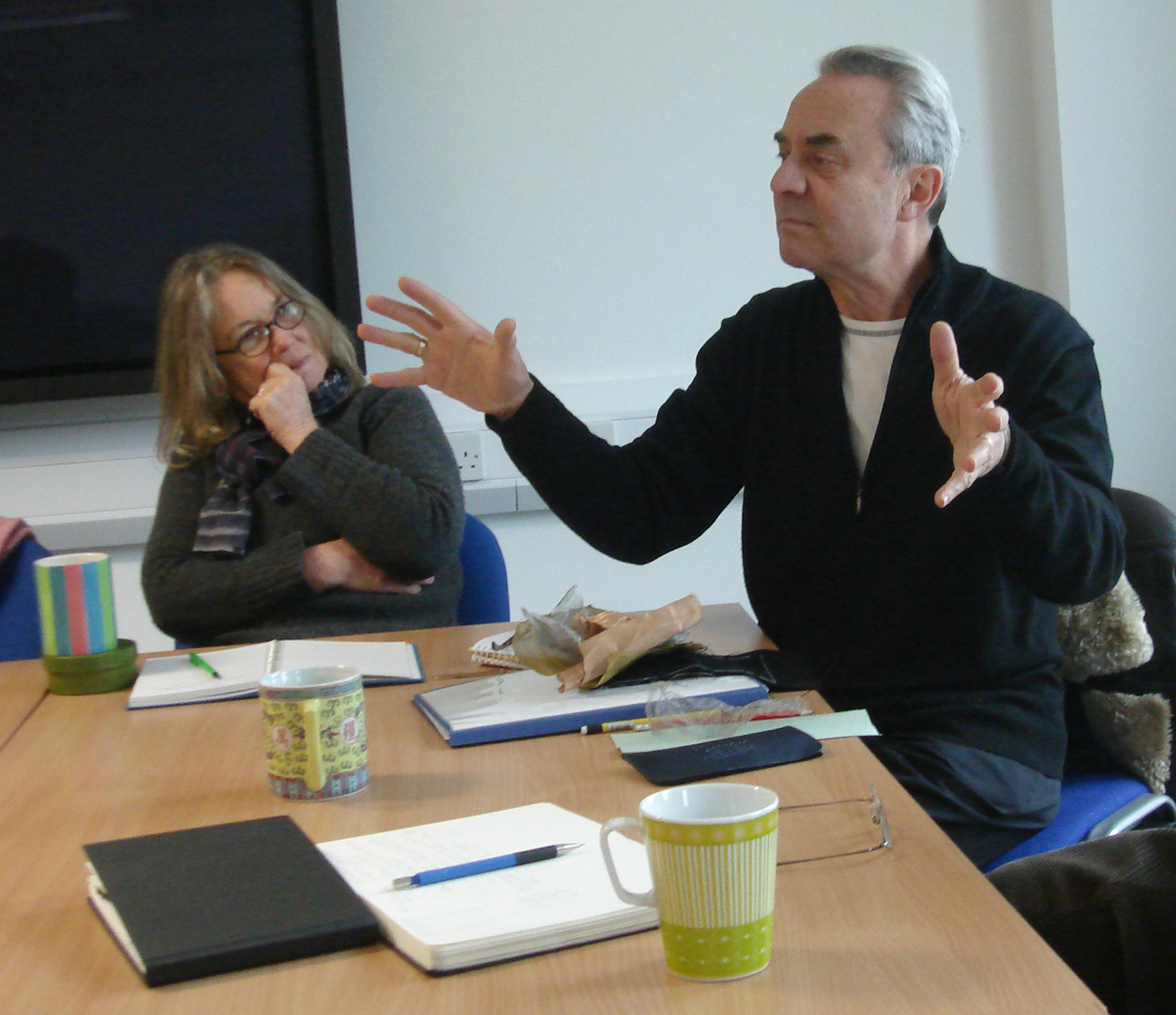
Syann van Niftrik watches as Basil Kardasis holds forth
But when she saw my broken plate it reminded her of the carapace of Chinese Cracker fireworks for the Chinese New Year celebrations, so she now is planning to make cages of wire in the form of the exposed linen stitches – to put together as necklaces.
The button idea has developed through a collaboration with Syann, Basil Kardasis and Dail Behennah – they have been not exactly working together on an idea for making buttons to fasten a collection of significant fabrics to fashion into a garment. Basil talked about a maxim of his father’s, who was a tailor – a decently made buttonhole was truly important – you could die if it is poorly made. Think about this.
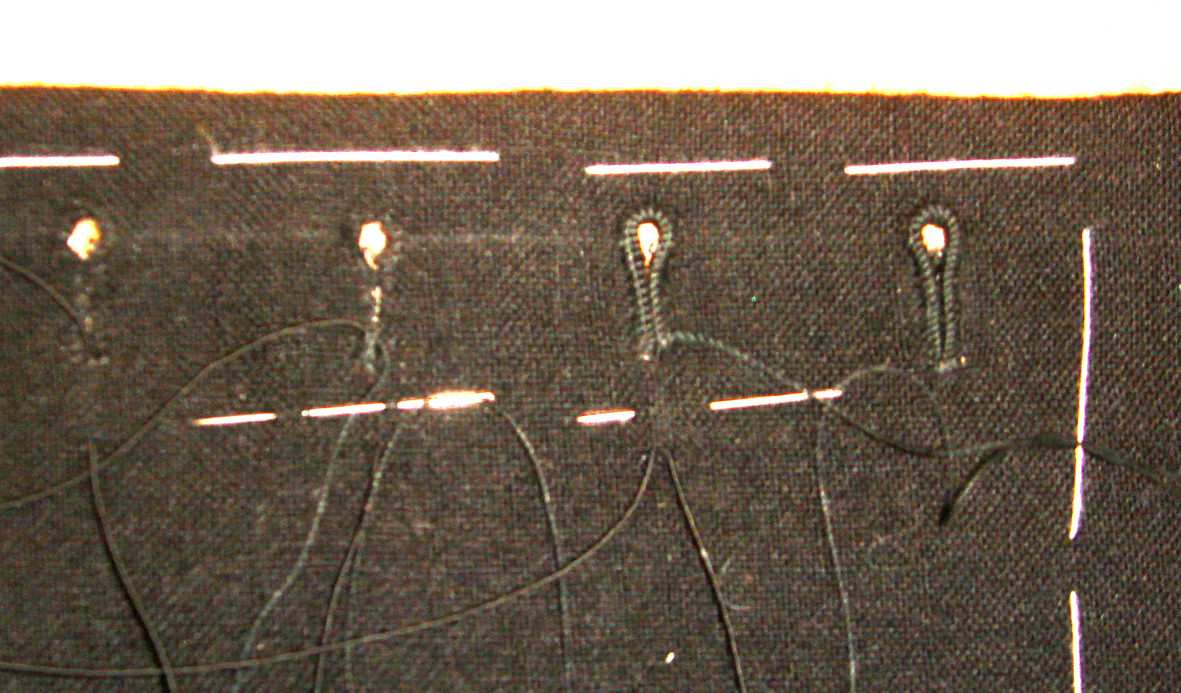
buttonhole sampler (detail)
So he has found an old sampler of how to make tailored buttonholes and and has requested us all to bring him pieces of fabric which we feel are personally significant and he will buttonhole them all together to make a sort of group portrait – I think!
Meanwhile Dail Behennah had been looking at developing her mending jewellry or rather jewellry to hide moth holes, she has been using sewing dictionaries to develop different shapes to stitch in precious metal wires. Below are her pieces base, the lower one based on the arrow head used in tailored garments to strengthen edges of pleats and pockets. The Bristol Mending Samplers have been a real source of inspiration.
Dail Behennah – gold and copper wire mends to hide moth holes and stains
new shape for repairs jewellry Dail Behennah
Another decorative and functional mending system has been devised by Matt Benton, Matt works in several media but uses vitreous enamel for much of his work. He has made mend shaped small enamel plates with drilled holes all ready to be stitched onto a worn area of a garment.
enamel shape tailor made to stitch into position Matt Benton
drilled enamel shape placed into position for stitching
While everyone seems to have been inspired by the mending idea, one maker hates the idea of mending anything to use again. Hanne Rysgaard, who I have been working and talking with throughout our collaboration, admitted that she thought that anything broken should be discarded, in fact she thought that using broken things was a sign of disrespect for the user – she put it very succinctly “I am worth the best things” and “broken things have lost their energy” these statements caused much argument between us, and although she can see the worth of mending for sentimental reasons (in fact I recently spent some time darning her damaged but favourite red winter scarf ) she still feels that to surround yourself with broken things is disrespectful.
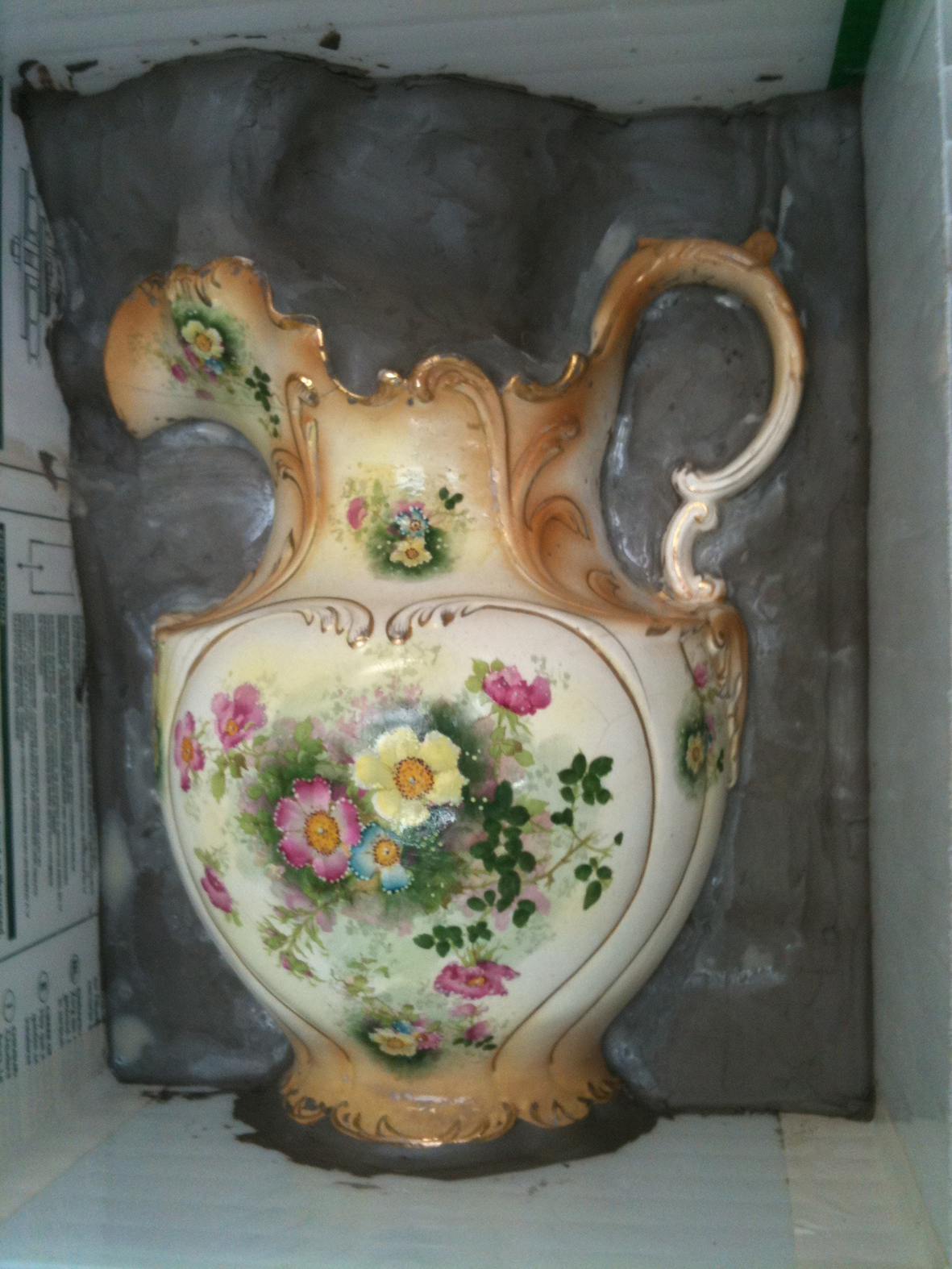
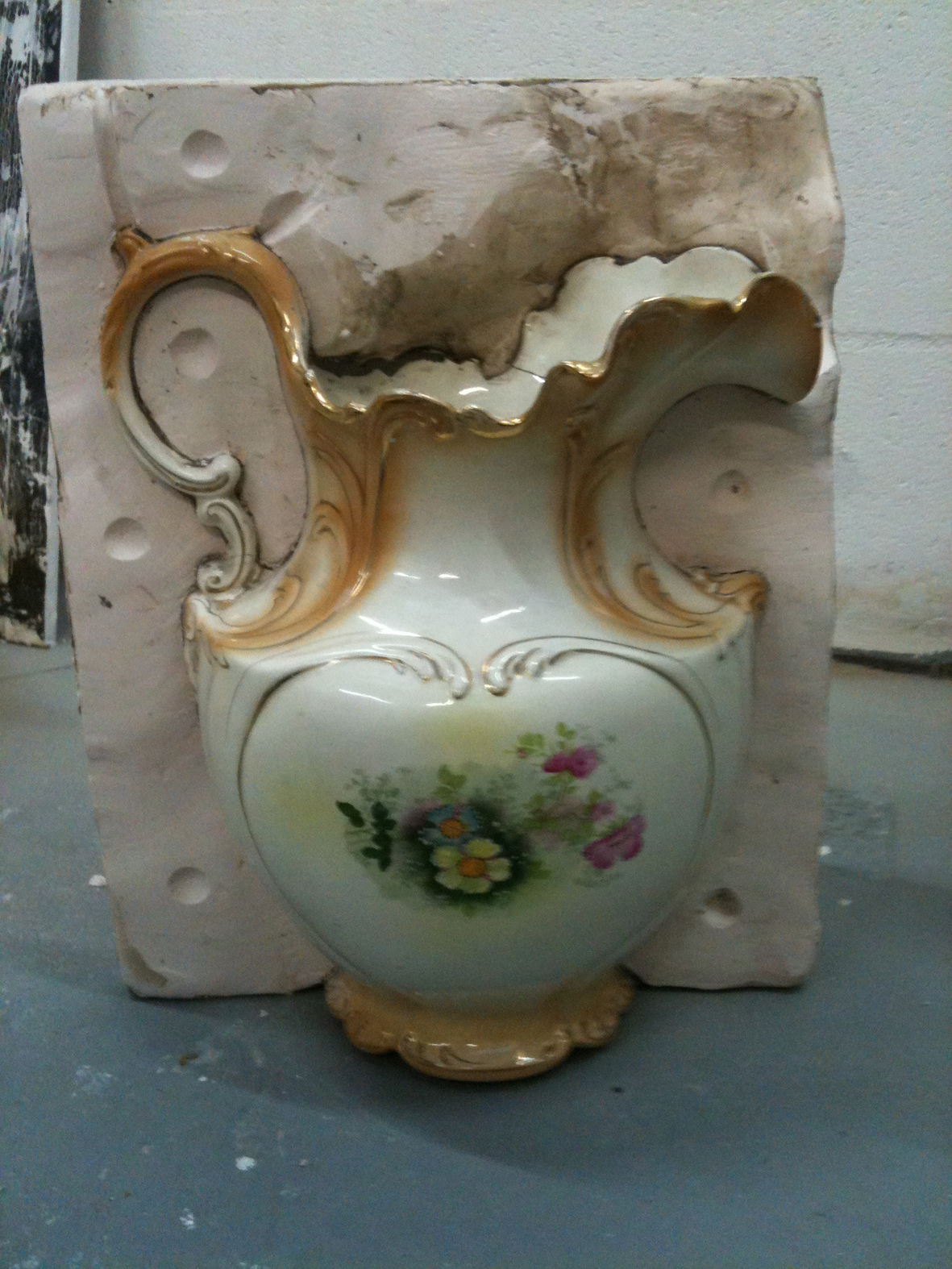
recasting the beautiful cracked jug – Hanne Rysgaard
So what will she make for the exhibition then? She has bought a large and beautiful wash jug and bowl which is only slightly cracked – and as I pointed out to her she would not have wanted to buy it if it at the unbroken price – but she wants to remake this, so is in the middle of casting a mold to give rebirth to a damaged but lovely object – but will she leave evidence of this break?
back of jug with the break clearly seen inside neck
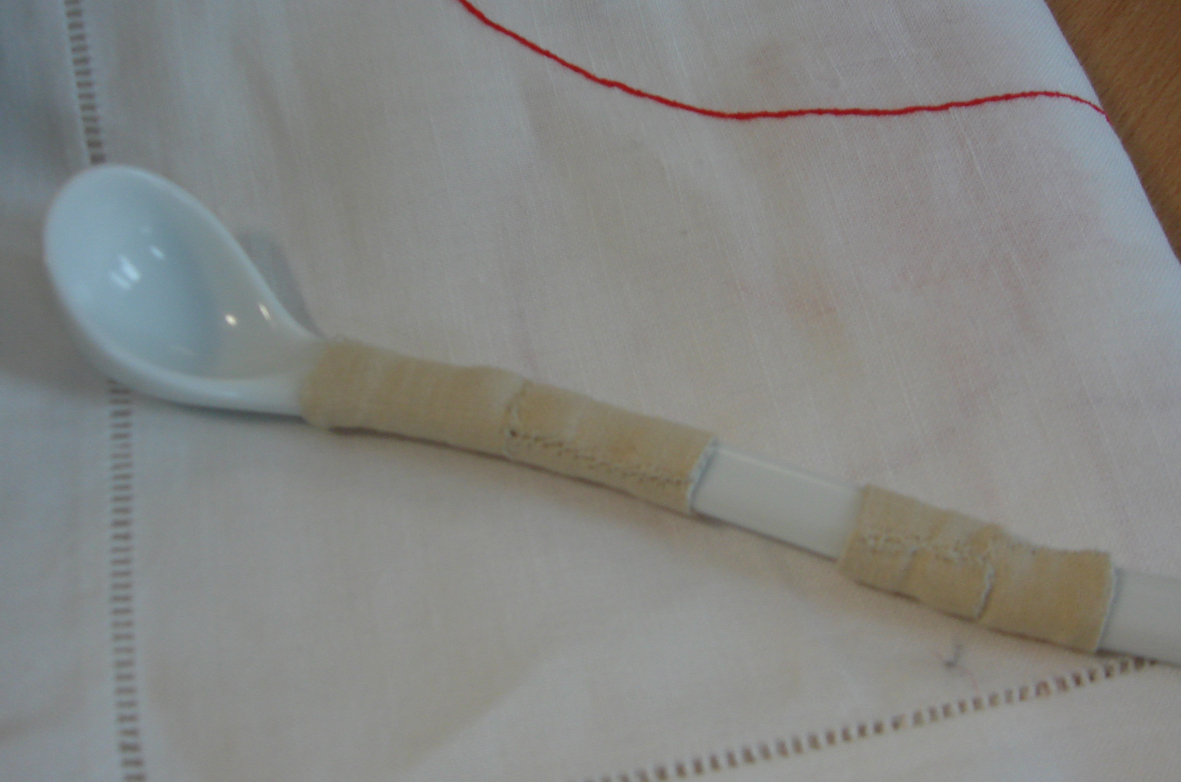
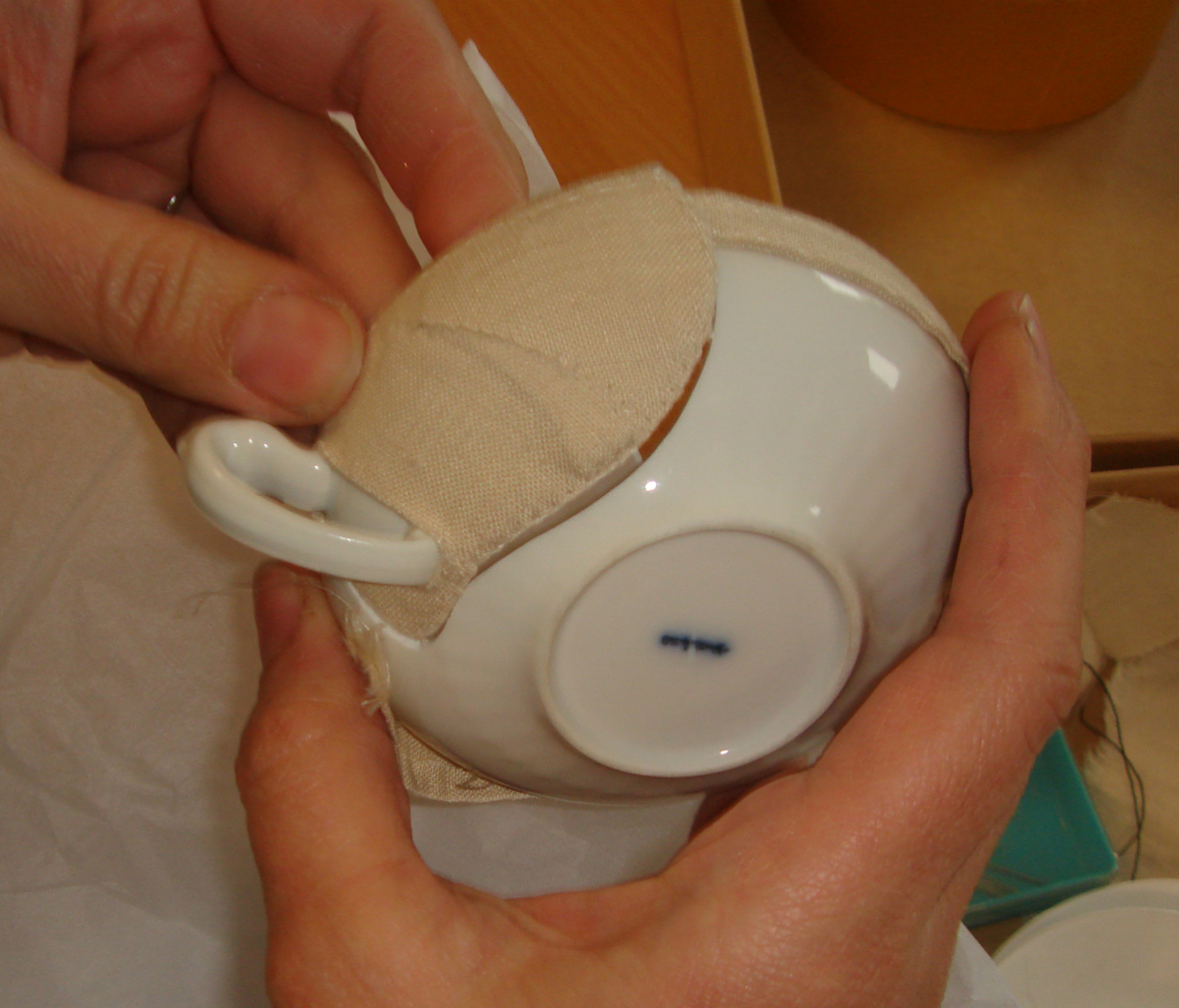
Other makers are embracing the idea of sewn mending wholeheartedly, Jess Turrell,a jeweller and enameller has mended broken crockery by stitching linen covers and it looks like she may cover a whole tea set! This spoon is useless now and she calls it “inappropriate mending”
inappropriate mending – Jess Turrell.
stitched patch for broken cup Jess Turrell
the cups and saucers have become un-useable but several of the group thought they had attained another aesthetic value…oops the slippery slope of the values of art v craft emerge…….moving swiftly on, all the stitchers were impressed by her precise work in fabric, she has an instinctive feel for elegant making with disparate materials.
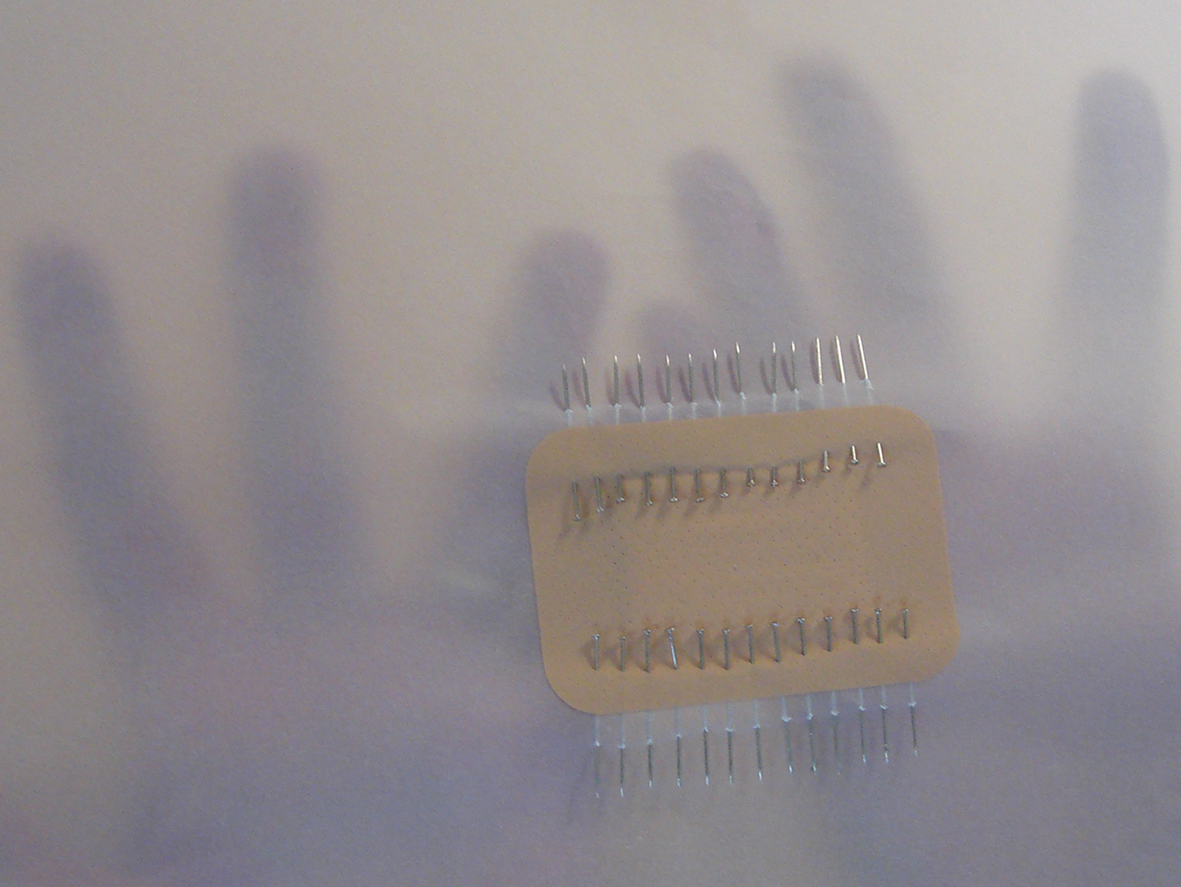
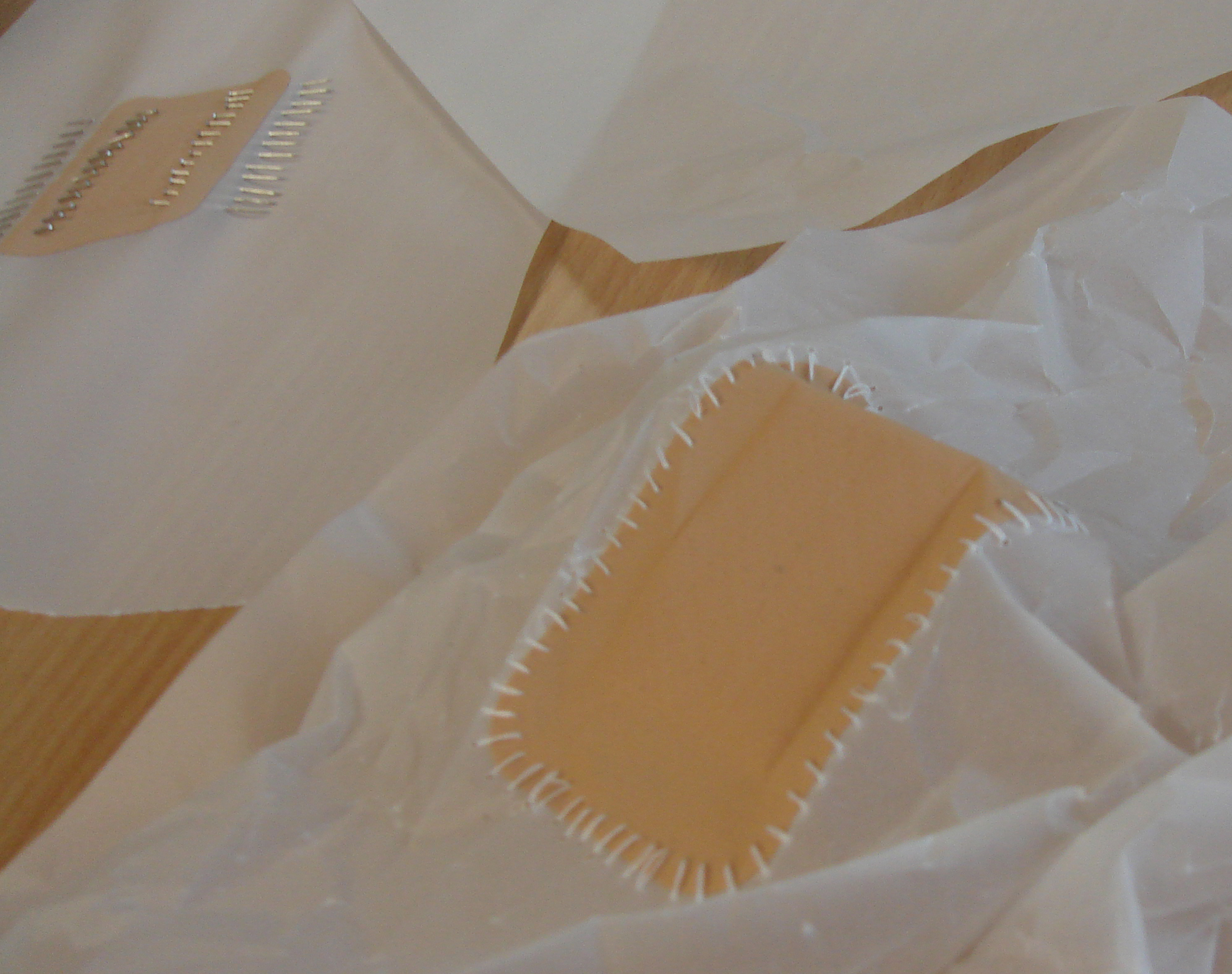
As does Jilly Morris who is an applied artist working across a variety of materials, but here is researching the idea of skin which, for humans, is the area most often in need of mending. She also looked at sticking plasters – below she has pinned them into position onto a sheet of tracing paper liking the translucency akin to areas of our skin.
pinned plasters – Jilly morris
stitched plasters – Jilly Morris
Playing with the idea of the transparent papers she is was advised by most of the textile makers to move towards making her mending ideas in fine animal skins, parchments, seudes and kid leathers which we have given her to play with.
Two makers are using this project to develop areas for their advanced degree studies and both have stayed close to their own materials. Steph Wooster is a knitter and designer, undergoing an MA by Research at UWE Bristol, she showed us some large pieces of patchworks that have been based on the use of straight- jackets
Steph Wooster hugging her straight-jacket inspired samples while Hanne Rysgaard looks on
hand stitched sampling for patchworks Steph Wooster
I won’t go into the details but she has developed the fabrics while researching at a local hospital’s archives; she found the jackets were copiously mended through constant use. Controversially for the group, she thinks that one overlooked benefit in the use of the straight jackets is that the patient has to hug him/herself…………..and that before the use of these garments the patients were chained in cellars. However this has lead to the sampling of some sumptuous fabrics
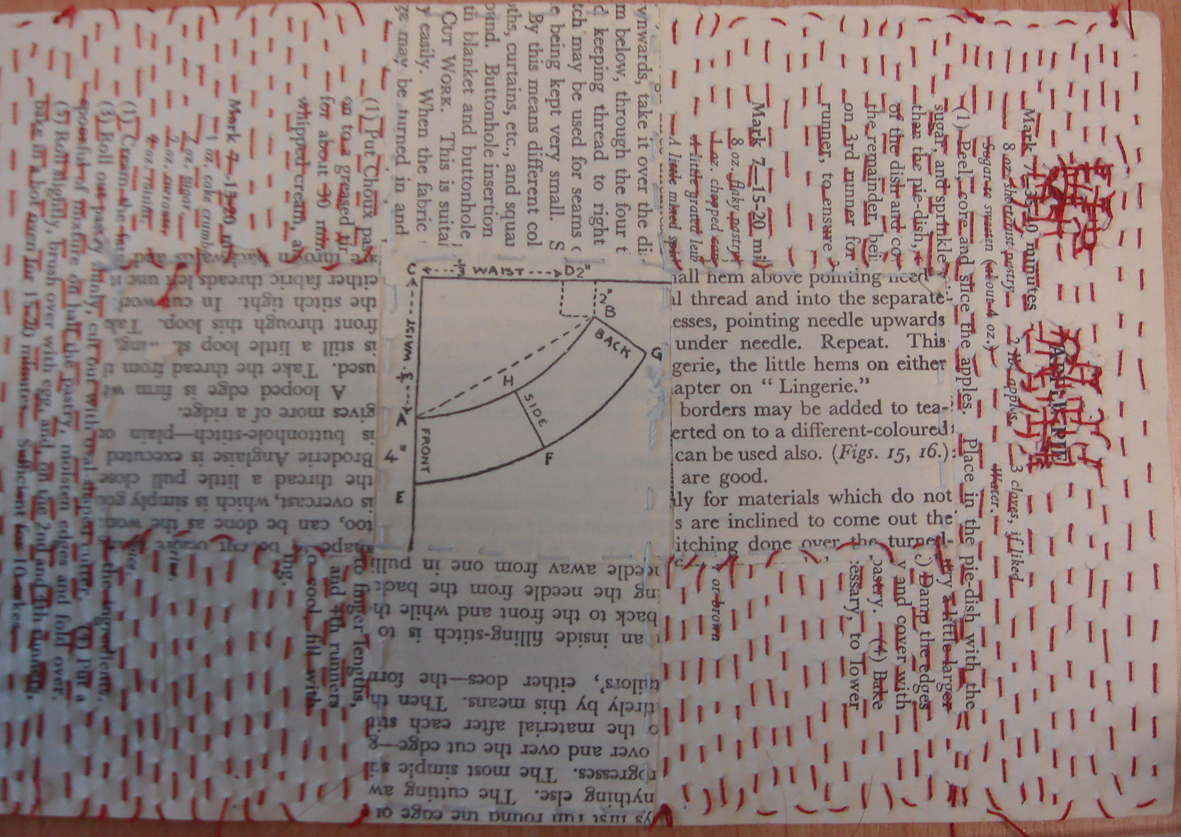
darned and patched mending diagrams – Dawn Mason
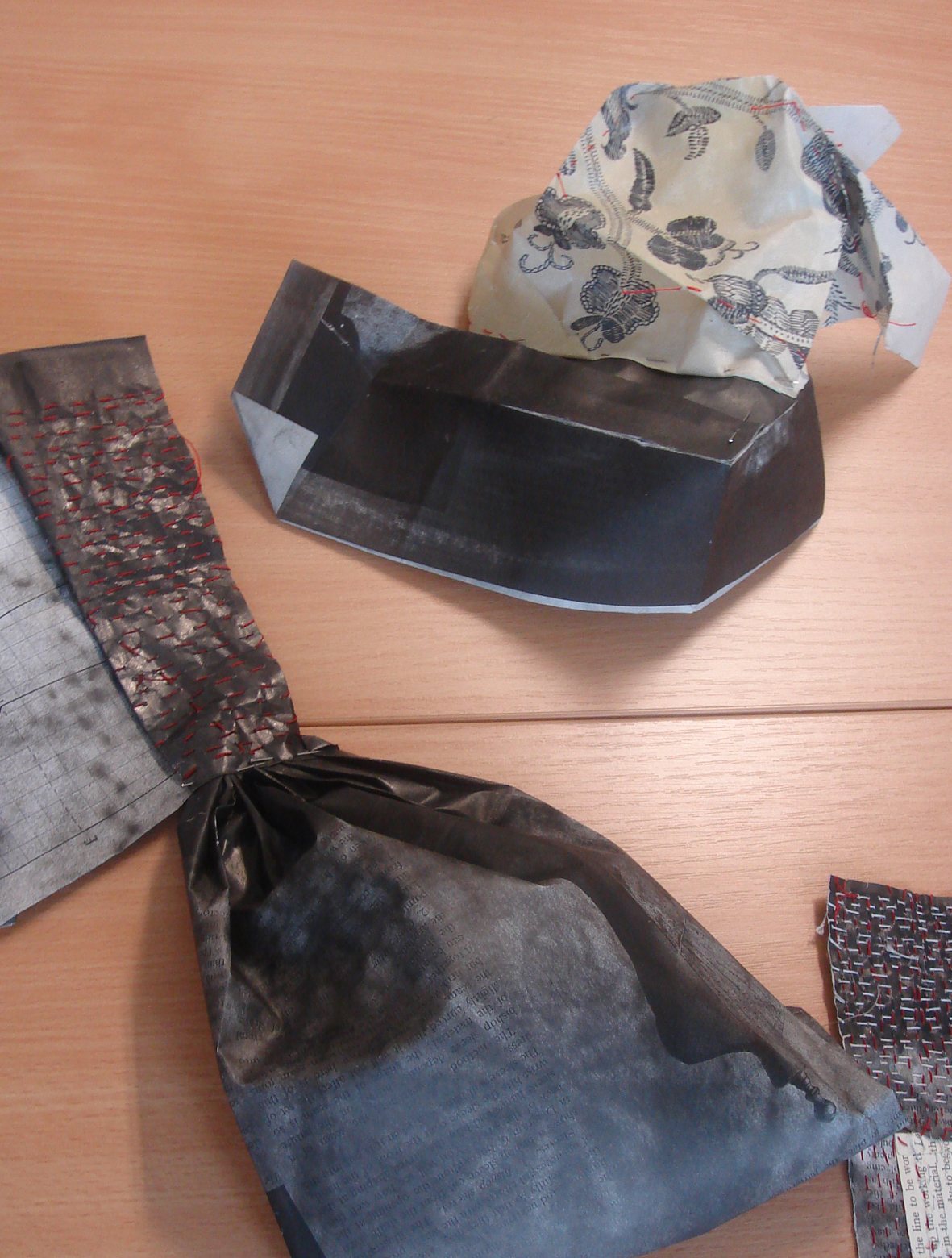
Dawn Mason is studying part time for her Ph.D by Practice, she is course leadr in Drawing and Applied Ats at UWE. and she has used the old making manuals to develop pieced papers which are darned, patched and stitched together. She talked of feeling a sense of loss for the present society’s skill base when looking at the original mending samplers. she is currently researching gauntlet making out of the papers she is stitching together, so maybe a move into 3 dimensions is developing.
hand sized mending papers – work in progress Dawn Mason
Whatever else is thought of in the old practices of mending it certainly is proving a rich research area for all these different makers, The group has truly become more than the sum of its parts, we were all fascinated by the different aspects each maker had discovered for them selves and the truths we had to uncover to start to explain our thinking behind the making.